Cleveland - Art
to
8
151
113
156
93
165
Overall Width
to
Overall Height
to
8
45
408
217
5
16
37
39
22
29
66
48
27
20
8
166
132
44
25
19
18
6
5
4
280
236
40
267
113
108
81
74
56
51
48
41
38
31
28
26
23
21
15
11
11
11
11
436
207
122
122
95
60
49
46
30
26
364
36
229,068
155,746
Item Ships From: Cleveland
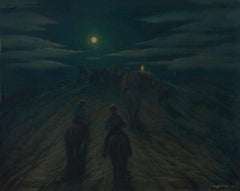
Night Riders, Mid-20th Century Surrealist Landscape w/ Horse
Riders
Located in Beachwood, OH
Hugh M. Poe (American, 1902-1973)
Night Riders, 1962
Oil on artist's board
Signed lower right
20 x 25 inches
26.75 x 31.75 inches, framed
Condition: Craquelure throughout. There are...
Category
1960s Surrealist Cleveland - Art
Materials
Oil

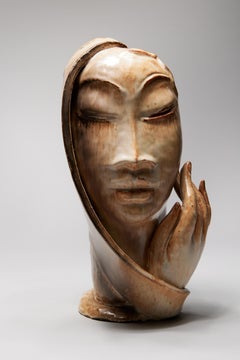
Bust of Josephine Baker, Mid-Century Ceramic Female Face
By Vally Wieselthier
Located in Beachwood, OH
Attributed to Vally Wieselthier (Austrian-American, 1895-1945)
Bust of Josephine Baker, c. 1930
Ceramic
Stamped on base
11.5 x 5.5 x 5.5 inches
Vally Wieselthier (1895 Vienna--1945 ...
Category
1930s Cleveland - Art
Materials
Ceramic
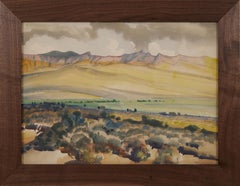
Flats Near Pueblo Isleta, New Mexico, 20th Century Western Landscape
By Frank Wilcox
Located in Beachwood, OH
Frank Nelson Wilcox (American, 1887–1964)
Flats Near Isleta, c. 1937
Watercolor on paper
Signed lower right, titled verso
14.5 x 20 inches
18.5 x 24 inches framed
Frank Nelson Wil...
Category
1930s American Modern Cleveland - Art
Materials
Watercolor
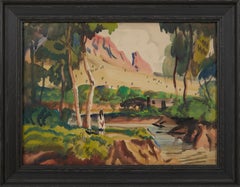
At Isleta, New Mexico Western Landscape Painting, 20th Century Cleveland School
By Frank Wilcox
Located in Beachwood, OH
Frank Nelson Wilcox (American, 1887–1964)
At Isleta, New Mexico, c. 1937
Watercolor on paper
Signed lower right, titled verso
15 x 20 inches
Frank Nelson Wilcox (October 3, 1887 – A...
Category
1930s Cleveland - Art
Materials
Watercolor
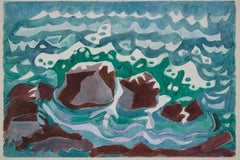
Small Craft Advisory, 20th Century Abstract Figural Seascape, Cleveland Artist
By Kenneth Marcus Hugh
Located in Beachwood, OH
Kenneth Marcus Hugh (American, 1916-2011)
Small Craft Advisory
Watercolor on paper
Signed lower right
15 in. h. x 22.5 in. w., image
20.25 in. h. x...
Category
20th Century Cleveland - Art
Materials
Watercolor
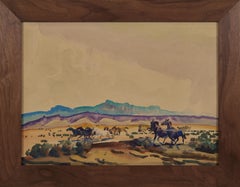
Wild Horses, Arizona, Early 20th Century Western Landscape, Cleveland School
By Frank Wilcox
Located in Beachwood, OH
Frank Nelson Wilcox (American, 1887–1964)
Wild Horses, Arizona, 1937
Watercolor on paper
Signed and dated lower right, titled verso
15 x 20 inches
18 x 24 inches framed
Frank Nelso...
Category
1930s American Modern Cleveland - Art
Materials
Watercolor
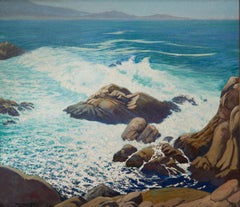
Winter Water, Large Seascape of Point Lobos, Monterey, California Shore
By Ferdinand Burgdorff
Located in Beachwood, OH
Ferdinand Burgdorff (American, 1881-1975)
Winter Water, c. 1930
Oil on masonite
Signed lower left, titled verso
40 x 46 inches
43 x 49.25 inches, framed
Written Verso: Along the Pac...
Category
1930s Cleveland - Art
Materials
Oil
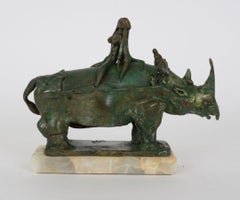
Female Nude Godiva Riding a Rhinoceros Sculpture, 20th Century
By John Kearney
Located in Beachwood, OH
John W. Kearney (American, 1924-2014)
Godiva on a Rhinoceros
Bronze
Signed with monogram to base
6.5 x 3 x 8.5 inches
Born in Omaha, Nebraska, he studied at the Cranbrook Acadamy of...
Category
Late 20th Century Cleveland - Art
Materials
Bronze
Flood in Venice, Italian Artist, Humorous Landscape/Seascape Scene
By Louis Bosa
Located in Beachwood, OH
Louis Bosa (American, 1905-1981)
Flood in Venice, c. 1970
Oil on canvas
Signed Bosa lower left and verso
34 x 50.5 inches
40.5 x 56.5 inches, framed
Exhibited: 148th Annual Exhibiti...
Category
1970s Cleveland - Art
Materials
Oil
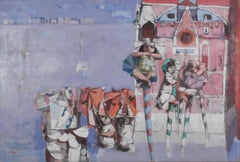
Mid-Century Ceramic Sculpture of a Seated Female, Cleveland School Artist
Located in Beachwood, OH
Walter Sinz (American, 1881-1966)
Seated Female, c. 1940
Ceramic
6 x 3.5 x 3.5 inches
Walter A. Sinz was an American sculptor born in Cleveland, Ohio on July 13, 1881. Sinz’s fathe...
Category
1940s Cleveland - Art
Materials
Ceramic
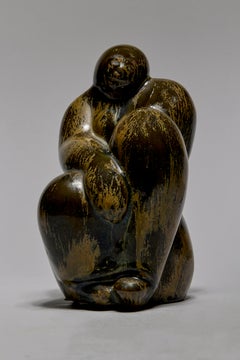
Nuns in My Studio, Self-Portrait, 20th Century Italian-American Artist
By Louis Bosa
Located in Beachwood, OH
Louis Bosa (American, 1905-1981)
Nuns in My Studio
Oil on canvas
Signed lower right
10 x 14 inches
15.5 x 19.5 inches, framed
Born in Codroipo, a small village only a few miles from...
Category
Late 20th Century Cleveland - Art
Materials
Oil
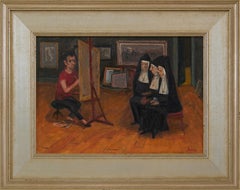
Meditation on African Sculpture, mid-century figural abstract painting
By Beni E. Kosh
Located in Beachwood, OH
Beni E. Kosh/Charles Elmer Harris (American, 1917-1993)
Meditation on African Sculpture, 1957
Oil on found wood panel
Signed and dated lower left
20 x 15 inches
Charles Elmer Harris...
Category
1950s Modern Cleveland - Art
Materials
Oil
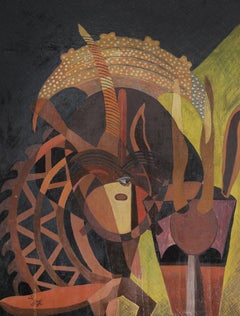
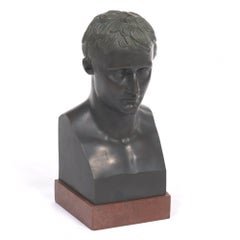
19th Century Bronze Bust of Young Napoleon as Caesar
By Antonio Canova
Located in Beachwood, OH
After Antonio Canova (Italian, 1757-1822)
Bust of Young Napoleon as Caesar, 19th Century
Hallow cast bronze with verdigris patina, attached to rouge...
Category
19th Century Cleveland - Art
Materials
Marble, Bronze
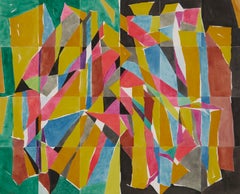
Big Town, Large Colorful Abstract Geometric Painting, Cleveland School Artist
By Kenneth Marcus Hugh
Located in Beachwood, OH
Kenneth Marcus Hugh (American, 1916-2011)
Big Town
Watercolor on paper
Signed lower left
48 in. h. x 60 in. w., image
48.5 in. h. x 60.5 in. w., fr...
Category
20th Century Abstract Cleveland - Art
Materials
Watercolor
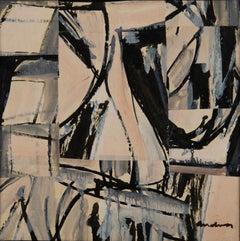
Mirror, abstract expressionist painting by Cleveland School artist
By Richard Andres
Located in Beachwood, OH
Richard Andres
American, 1927-2013
Mirror, 1984
acrylic and ink on paper mounted on canvas
signed lower right, dated and titled verso
12 x 12 inches
Richard Andres was born in Buff...
Category
1980s Abstract Expressionist Cleveland - Art
Materials
Ink, Acrylic
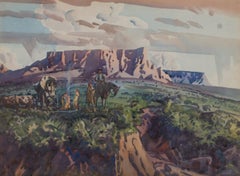
Gilbert
s Camp, Western Painting, Mid 20th Century, Cleveland School Artist
By Frank Wilcox
Located in Beachwood, OH
Frank Nelson Wilcox (American, 1887-1964)
Gilbert's Camp, c. 1941
Watercolor on Whatman board
Signed lower right
22 x 30 inches
Frank Nelson Wilcox (October 3, 1887 – April 17, 1964) was a modernist American artist and a master of watercolor. Wilcox is described as the "Dean of Cleveland School painters," though some sources give this appellation to Henry Keller or Frederick Gottwald. Wilcox was born on October 3, 1887 to Frank Nelson Wilcox, Sr. and Jessie Fremont Snow Wilcox at 61 Linwood Street in Cleveland, Ohio. His father, a prominent lawyer, died at home in 1904 shortly before Wilcox' 17th birthday. His brother, lawyer and publisher Owen N. Wilcox, was president of the Gates Legal Publishing Company or The Gates Press. His sister Ruth Wilcox was a respected librarian.
In 1906 Wilcox enrolled from the Cleveland School of Art under the tutelage of Henry Keller, Louis Rorimer...
Category
1940s American Modern Cleveland - Art
Materials
Watercolor
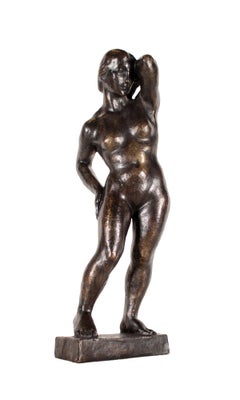
Italian Bronze Sculpture of Nude Woman, Mid 20th Century
Located in Beachwood, OH
Mario Spampinato (Italian 1912–2000)
Nude
Bronze
Signed on base
17.5 in. h. x 5.75 in. w. x 6 in. d.
The artist was born, raised and trained in Italy. During one of his exhibits (at San Marcos in Rome) the Director of a New York Gallery asked him to come to New York to work for him. The American Consul, before issuing his visa, asked Spampinato to create a bust of him. In exchange, the Consul paid for his passage on the boat to New York. In New York, he worked with his brother Clemente Spampinato who is a well known sculptor as well.
After moving to Chicago in 1954, he discovered that there was no foundry in the Midwest that could cast his bronzes. So, he opened his own foundry called the Spampinato Art Foundry, casting in the lost wax process. He also started his own private school (Spampinato Art Workshop, Ltd) and did some teaching at the University of Chicago and conducted seminars at Lawrence University in Kansas.
Many of his own works are pictured and cataloged in Volumes 2 & 3 of Bronzes: Sculptors and Founders, 1800-1930 by Harold Berman.
Between 1959 and 1967, Spampinato recast a number of Charles M Russell...
Category
Mid-20th Century Cleveland - Art
Materials
Bronze
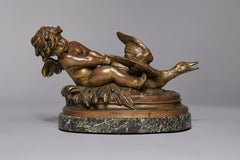
Swan Baby, 19th Century Bronze
Marble Sculpture of Cherub Riding Swan
Located in Beachwood, OH
Auguste Moreau (French, 1834-1917)
Swan Baby, 19th Century
Bronze with reddish gold patination mounted on verdigris marble base
Signed on base
6 x 9.5 x 5 inches
Auguste Moreau was...
Category
19th Century Cleveland - Art
Materials
Marble, Bronze
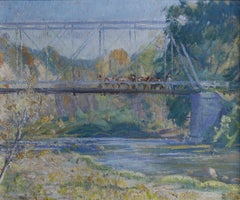
Return to the Stables, Gates Mills, Ohio, Summer Landscape with Bridge
River
Located in Beachwood, OH
Frank Luis Jirouch (American, 1878-1970)
Return to the Stables, Gates Mills, Ohio, c. 1925-30
Oil on canvas board
Signed lower right
14 in. h. x 16 in. w....
Category
1920s American Impressionist Cleveland - Art
Materials
Oil
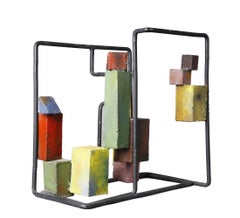
Abstract Cityscape Sculpture, Mid 20th Century
Located in Beachwood, OH
Abstract Cityscape, c. 1950-60
Painted mixed metal
19.25 in. h. x 19.5 in. w. x 11.5 in. d.
Category
1950s Abstract Cleveland - Art
Materials
Metal
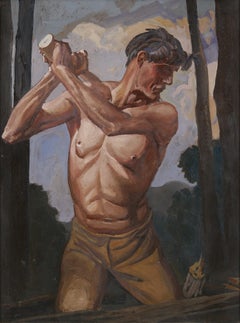
The Wood Chopper, Brecksville, Ohio, Early 20th Century Cleveland School
By Frank Wilcox
Located in Beachwood, OH
Frank Nelson Wilcox (American, 1887-1964)
The Wood Chopper, Brecksville, Ohio, c. 1917
Oil on masonite
33 x 24 inches
"We were fortunate in that the two farms in Brecksville were still open to our visits. The urbanization of the township was then only beginning and we spent several summers there where I tried to capture something of the rural peace so soon to be erased from the countryside." - Wilcox
Exhibited: “Water Colors and Oils by Frank N. Wilcox,” Cleveland Museum of Art, January 1937.
Frank Nelson Wilcox (October 3, 1887 – April 17, 1964) was a modernist American artist and a master of watercolor. Wilcox is described as the "Dean of Cleveland School...
Category
1910s American Modern Cleveland - Art
Materials
Oil
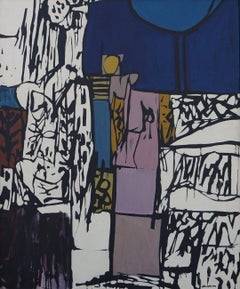
Panama Garden, Mid-century abstract expressionist modern work
By Richard Andres
Located in Beachwood, OH
Richard Andres (American, 1927-2013)
Panama Garden, c. 1964
acrylic on canvas
signed lower right, signed and titled verso
46 x 38 inches
Richard Andres was born in Buffalo, New York in 1927. A graduate of the Cleveland Institute of Art in 1950, he was immediately drafted and served for two years in the army as a mural painter. He received his Master of Arts from Kent State in 1961. A frequent exhibitor at galleries and museums and winner of multiple May Show prizes, Andres taught art in the Cleveland Public Schools for 28 years, as well as teaching the University of Buffalo, the Cleveland Institute of Art and the Western Reserve University.
Very little in Richard Andres’ childhood would have predicted his love of classical music, mid-century-modern architecture and certainly not his lifelong passion for art and in particular abstract art. Richard’s father, Raymond, had no more than a third-grade education, and his mother, Clara, was one of thirteen children – only three of whom lived into adulthood and none of whom attended high school.
They lived, when Richard was a boy, in a dingy area of Buffalo, NY in a walk-up apartment situated above a tavern. Raymond and Clara supplemented the income from their factory jobs in the bar downstairs with Raymond playing ragtime on the piano and Clara serving drinks. This often left Richard and his two older brothers at home alone to fend for themselves. The two older boys, Raymond and Russell, were - unlike Richard- rather rough and tumble and entertained themselves with stickball, boxing and the like. Richard, on the other hand, from a very young age liked to draw, or better yet even, to paint with the small set of watercolors he received for Christmas one year. Paper, however, at the height of the depression, was hard to come by. Luckily, Clara used paper doilies as decoration for the apartment and Richard would contentedly paint and then cut up doilies, gluing the pieces together to create collages.
At eight-years-old, he discovered the Albright-Knox Museum (then known as the Albright Art Gallery) and spent several hours a week there studying the paintings. He was particularly fond of Charles Burchfield‘s landscapes, enamored with their ‘messiness’ and thinking that they somehow captured more ‘feeling’ than works he was previously familiar with. For his tenth Christmas, he asked for and received a ‘how-to’ paint book by Elliot O’Hare. Through this self-teaching, he assembled the portfolio needed for acceptance to Buffalo Technical High School where he studied Advertising Arts. In his Junior year, he was encouraged to enter a watercolor painting, “Two Barns,” in the national 1944-45 Ingersoll Art Award Contest and was one of twelve grand prize winners – each one winning one hundred dollars. More importantly the painting was exhibited at the Carnegie Institute Galleries, which resulted in his winning a national scholarship to the Cleveland School of Art (The Cleveland Art Institute).
He flourished at the art school under the tutelage of faculty members such as Carl Gaertner, as well as that of visiting artists such as William Sommer and Henry George Keller. He would say in later years that Gaertner, in particular, influenced his attitude toward life as well as art. “Gaertner,” Andres said, “believed that there was no need to be a ‘tortured artist’, that an artist should rather enjoy beauty, family, and life in general.” Free to spend his days as he chose, he wandered the Cleveland Art Museum for most of the hours he was not attending classes or painting; the remaining time was spent drinking coffee at a local hangout with art school friends – which is where he met fellow Henry Keller scholarship winner, Avis Johnson. Richard was immediately smitten with Avis, but being rather shy, it took him the entire summer of 1948 to build up his courage to ask her out. Over that summer he ‘thought about Avis’ and worked in a diner to save money. He also used the hundred-dollar prize money won in High School to visit the first Max Beckmann retrospective in the United States at the City Art Museum in St. Louis. Over a half century later he spoke of that exhibit with a reverence usually reserved for spiritual matters, “I walked in and it was like nothing I had ever seen before... the color...It just glowed.”
Returning to campus in the Fall, the first thing he did was go to the coffee shop in hopes of finding Avis. He did, and she, upon seeing him, realized that she was also smitten with him. They quickly became known as ‘the couple’ on campus, and a year later, with Richard being drafted for the Korean war, they were quickly married by a Justice of the Peace, celebrating after with family at Avis’s Cleveland home. As a gift, faculty member John Paul Miller...
Category
1960s Abstract Expressionist Cleveland - Art
Materials
Acrylic
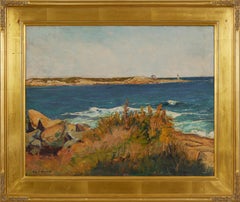
Cape Ann Coast, Seascape/Landscape Western Massachusetts, Cleveland School
By George Adomeit
Located in Beachwood, OH
George Gustav Adomeit (American, 1879-1967)
Cape Ann Coast, 1922
Oil on canvas
Signed lower left
20 x 24 inches
20.5 x 24.5 inches, framed
A major painter of American scene subjects...
Category
1920s Cleveland - Art
Materials
Oil
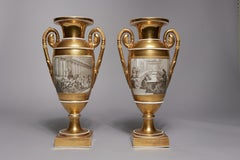
Pair of French Porcelain de Paris Gold Urns with Scenes of Roman History
Located in Beachwood, OH
Pair of French Porcelain de Paris Gold Urns with Scenes of Roman History, Early 19th Century
13 x 6.5 x 5 inches
The base of one urn states “Tibrius Gracchus Ferme Le Temple De Satu...
Category
Early 19th Century Cleveland - Art
Materials
Porcelain
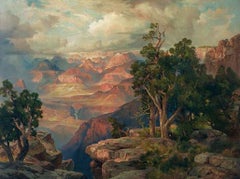
THOMAS MORAN Grand Canyon of Arizona from Hermit Rim Road 1912 Chromolithograph
By Thomas Moran
Located in Rancho Santa Fe, CA
IN PRISTINE CONDITION.
A color Chromolithograph published by the Atchison, Topeka and Santa Fe Railroad in 1912 after the original oil painting, “Gr...
Category
1910s Hudson River School Cleveland - Art
Materials
Paper, Lithograph
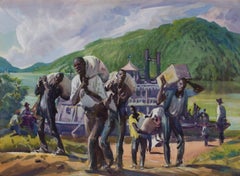
Stevedores, Ohio River, Early 20th Century Cleveland School Artist
By Frank Wilcox
Located in Beachwood, OH
Frank Nelson Wilcox (American, 1887-1964)
Stevedores, Ohio River, c. 1920
Watercolor on paper
Signed lower right
21.5 x 29. 5 inches
"The trip Otto Ege and I made from Pittsburgh to Marietta by riverboat and then by train to Mammoth Cave, was the next high spot in my artistic explorations. We saw something of the Old Southern river life on the way - the roustabouts, the showboat and river town life at Point Pleasant, and then to the sombre tonal mysteries of the Cave. These sights added much to my pictorial vocabulary..." - Frank Wilcox
Frank Nelson Wilcox (October 3, 1887 – April 17, 1964) was a modernist American artist and a master of watercolor. Wilcox is described as the "Dean of Cleveland School...
Category
1920s American Modern Cleveland - Art
Materials
Watercolor
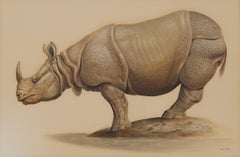
Large Rhinoceros, 20th Century Magical Realism, Cleveland School Artist
By Paul Riba
Located in Beachwood, OH
Paul Riba (American, 1912-1977)
Rhino
Oil on paper
Signed lower right
22.5 x 29 inches
27.5 x 34.25 inches, framed
Paul Riba was a painter of Magic Realism. He explored the unreal ...
Category
20th Century Surrealist Cleveland - Art
Materials
Oil
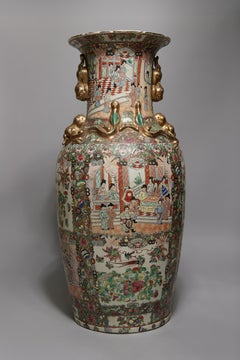
Monumental Chinese Famille Rose Medallion Vase, 20th Century
Located in Beachwood, OH
Monumental Chinese Famille Rose Medallion Vase, 20th Century
Porcelain
36 x 18 inches
Famille rose is an 18th century Chinese porcelain, characterized by its pink-colored enamel.
Category
20th Century Cleveland - Art
Materials
Porcelain
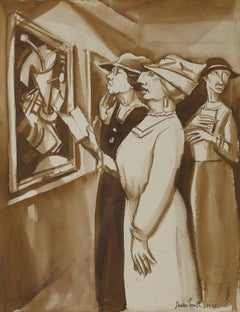
In the Art Gallery, Early 20th Century Watercolor, Women Viewing Painting
Located in Beachwood, OH
Jules Andre Smith (American, 1880-1959)
In the Art Gallery, 1936
Watercolor and pen and ink
Signed Andre Smith, 1936 lower right
10.75 x 8.5 inches
20.25 x 17.25 inches, framed
Jule...
Category
1930s Cleveland - Art
Materials
Ink, Watercolor, Pen
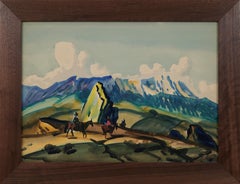
Nearing the Peaks, Early 20th Century Mountainous Western Landscape
By Frank Wilcox
Located in Beachwood, OH
Frank Nelson Wilcox (American, 1887–1964)
Nearing the Peaks, 1937
Watercolor on paper
Signed and dated lower right
15 x 20 inches
18.5 x 24 inches framed
Frank Nelson Wilcox (Octo...
Category
1930s American Modern Cleveland - Art
Materials
Watercolor
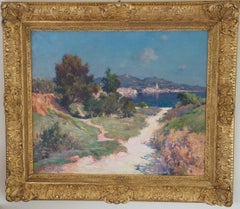
Antoine Ponchin View of Martigues France French Impressionist oil painting 1918
By Antoine Ponchin
Located in Rancho Santa Fe, CA
A lovely, 1918, French Impressionist oil painting depicting a view of the town of Martigues, France by Antoine Ponchin (1872-1933).
Antoine Ponchin was a landscapist, achieving the...
Category
1910s Impressionist Cleveland - Art
Materials
Canvas, Oil
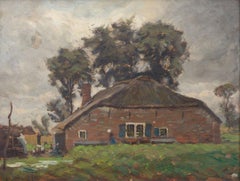
Landscape Scene with Barn and Trees, Late 19th Century, Ohio Artist
By Addison Thomas Millar
Located in Beachwood, OH
Addison Thomas Millar (American, 1860-1913)
Barn scene, 1892
Oil on board
Signed and dated lower left
10.25 x 13.5 inches
15 x 18.5 inches, framed
Addison Thomas Millar was an American painter and artist; best known for his genre scenes and Orientalist paintings.
He was born to William H. Millar and Permelia Kennedy Millar. His father had emigrated to the United States from Scotland in 1845. He grew up in Warren, Ohio. During his primary education, he took some painting lessons from John Bell, a local landscape painter.
In his late teens, he won three consecutive awards from The Youth's Companion, in their annual art contests. This prompted his parents to allow him to go to Cincinnati to take formal lessons from the genre painter, De Scott Evans...
Category
1890s Cleveland - Art
Materials
Oil
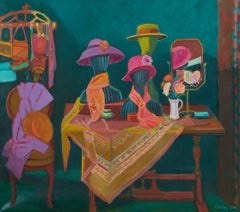
Hats, Vibrant 21st century turquoise, pink, purple still life interior scene
By Joseph O
Sickey
Located in Beachwood, OH
Work sold to benefit the CLEVELAND INSTITUTE OF ART
Joseph B. O’Sickey (American, 1918–2013)
Hats, 2000
Oil on canvas
Signed and dated lower right
48 x 54 inches
Joseph O'Sickey, ...
Category
Early 2000s Post-Impressionist Cleveland - Art
Materials
Oil
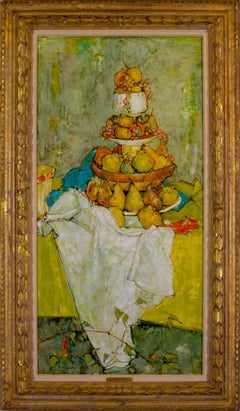
Pears and Peppers, Vibrant 20th Century Still-Life Painting, French Artist
By André Vignoles
Located in Beachwood, OH
André Vignoles (French, 1920-2017)
Pears and Peppers, 1957
Oil on canvas
Signed and dated lower left
48 in. h. x 28 in. w., as framed
39 in. h. x 19 in. w., canvas
André Vignoles wa...
Category
1950s Post-Impressionist Cleveland - Art
Materials
Oil
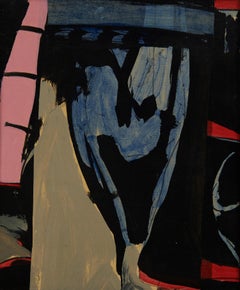
20th century abstract expressionist oil painting by Cleveland School artist
By Richard Andres
Located in Beachwood, OH
Richard Andres
American, 1927-2013
acrylic and ink on paper mounted on canvas
12 x 10 inches
Note: Small dent in canvas. See pictures for details.
Richard Andres was born in Buffal...
Category
1980s Abstract Expressionist Cleveland - Art
Materials
Ink, Acrylic
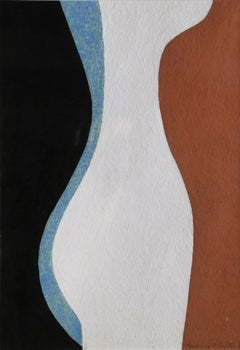
Torso No. 3, Mid-Century Figural Abstract Acrylic Painting, Ohio artist
By Clarence Holbrook Carter
Located in Beachwood, OH
Clarence Holbrook Carter (American, 1904-2000)
Torso No. 3, 1967
Acrylic on paper
Signed and dated lower right
13 x 9 inches
21 x 17 inches
A mid-century figural abstract painting.
Clarence Holbrook Carter achieved a level of national artistic success that was nearly unprecedented among Cleveland School artists of his day, with representation by major New York dealers...
Category
1960s American Modern Cleveland - Art
Materials
Acrylic
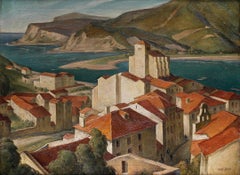
20th Century Spanish Seaside Village (Cadaques Catalonia), Cleveland School
By Rolf Stoll
Located in Beachwood, OH
Rolf Stoll (American, 1892-1978)
Spanish Seaside Village (Cadaques Catalonia)
Oil on canvas
Signed lower right
28 x 38 inches
Exhibited: The 11th Annual May Show, Cleveland Museum of Art, 1929
Rolf Stoll, a painter of figure subjects, landscapes and floral still lifes, was an important member of the Cleveland art scene during the second quarter of the century. He was also an influential teacher, as well as one of Ohio’s foremost portrait painters.
Rolf Stoll was born in Heidelberg, Germany, in 1892. As a boy, he attended a military academy, during which time he developed an interest in art. He received his early formal training at the Academy of Fine Arts in Karlsruhe and at the Academy of Fine Arts in Stuttgart. He emigrated to the United States in 1912, settling in New York City. A decade later, after studying at the school of the National Academy of Design and supporting himself by working as a commercial artist, Stoll decided to leave New York. Upon the recommendation of Warren Pryor, one of his teachers, he decided to move to Cleveland, Ohio. After arriving in Cleveland, Rolf Stoll continued to work as a commercial artist. However, in 1926, he joined the faculty of the Cleveland School of Art, where he taught drawing. Two years later Stoll was appointed head of the school’s portrait painting department. A talented portraitist, Stoll’s sitters included industrialists, community leaders and many prominent members of Cleveland and Ohio society, as well as over twenty faculty members from Case Western Reserve University. Stoll also gave portrait classes at the John Huntington Polytechnic Institute from 1926 to 1953. In his male portraits especially, he was admired for his ability to convey the dignity of his sitter’s professional position without sacrificing individuality. As noted by one contemporary reviewer, Stoll was a “master of rich color, a searching student of human types, a forceful portrayer of all that the face reveals of the mind and the soul.” In addition to his activity as a portraitist, Rolf Stoll painted figure subjects and floral still lifes. He was also known for his views of the Ohio countryside and Canada. Stoll also painted views of Spain and depictions of Spanish peasants, inspired by an extended trip to that country (1926), during which time he was entertained by the famous Spanish portrait painter, Ignacio Zuloaga. Moving easily between oil and watercolor, Stoll worked in an direct realist style, combining his characteristic firm draftsmanship with the use of simplified forms and decorative color.
Rolph Stoll was a member of the Cleveland Society of Artists, the Cleveland Print Club...
Category
1920s Cleveland - Art
Materials
Oil
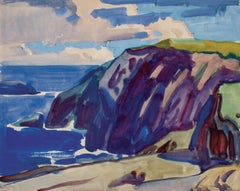
Cliffs at Paramé, France, 20th century seascape
landscape watercolor
By Frank Wilcox
Located in Beachwood, OH
Frank Nelson Wilcox (American, 1887-1964)
Cliffs at Paramé, France, c. 1926
Watercolor on paper
Signed lower right
14 x 17.5 inches
Frank Nelson Wilcox (October 3, 1887 – April 17...
Category
1920s American Modern Cleveland - Art
Materials
Watercolor
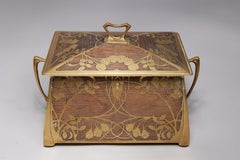
Erhard
Söhne Art Nouveau Jugendstil Jewelry Casque w/ Inlaid Brass Rose Design
Located in Beachwood, OH
Erhard & Söhne, 19th Century
Art Nouveau Jugendstil Casque with Inlaid Brass Rose Design, c. 1904
6 x 9 x 6 inches
The company Erhard & sons was established by Carl Gottlieb Erhard ...
Category
Early 1900s Cleveland - Art
Materials
Brass
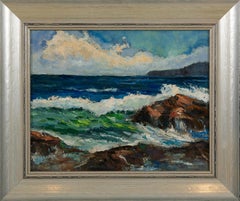
Coastal Scene, 20th Century Seascape, Cleveland School Artist
By George Adomeit
Located in Beachwood, OH
George Gustav Adomeit (American, 1879-1967)
Coastal Scene
Oil on canvas
Signed lower left
19 x 23 inches
21.5 x 25.5 inches, framed
A major painter of American scene subjects, Georg...
Category
20th Century American Modern Cleveland - Art
Materials
Oil
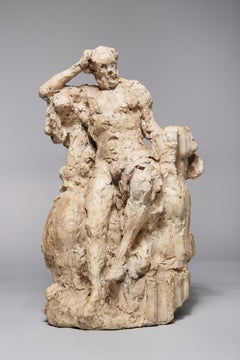
Model Study for Truth Sculpture at NY Public Library of Seated Man
By Frederick William MacMonnies
Located in Beachwood, OH
Frederick William MacMonnies (American, 1863-1937)
Model Study for Truth, c. 1910-14
Painted plaster
16.5 x 9.25 x 7.5 inches
For the 1920 sculpture for the New York Public Library
...
Category
1910s Cleveland - Art
Materials
Plaster
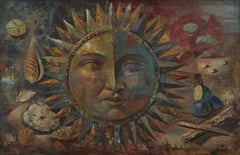
The Sun, 20th Century Magic Realism Painting by Cleveland School Artist
By Paul Riba
Located in Beachwood, OH
Paul Riba (American, 1912-1977)
The Sun
Oil on masonite
Signed lower right, titled verso
14 x 21.5 inches
20.75 x 28.25 inches, framed
Paul Riba was a painter of Magic Realism. He ...
Category
20th Century Surrealist Cleveland - Art
Materials
Masonite, Oil
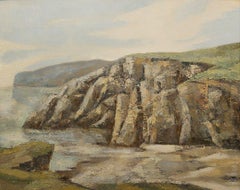
Rocky Cove, Mid-20th Century Landscape/Seascape by Cleveland School artist
By Carl Frederick Gaertner
Located in Beachwood, OH
Carl Frederick Gaertner (American, 1898-1952)
Rocky Cove, 1947
Oil on canvas
Signed lower left
24 x 30 inches
31 x 37 inches, framed
Carl Gaer...
Category
1940s Cleveland - Art
Materials
Oil
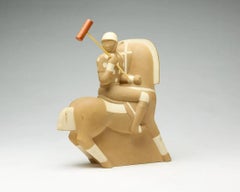
Early 20th Century Ceramic Sculpture of a Polo Player and Horse
By Waylande Gregory
Located in Beachwood, OH
Waylande Gregory (American, 1905-1971)
Polo Player, c. 1930s
Ceramic
Inscribed signature on bottom
11 x 8.5 inches
Waylande Gregory was considered a major American sculptor during the 1930's, although he worked in ceramics, rather than in the more traditional bronze or marble. Exhibiting his ceramic works at such significant American venues for sculpture as the Whitney Museum of American Art in New York City and at the venerable Pennsylvania Academy of the Fine Arts in Philadelphia, he also showed his ceramic sculptures at leading New York City galleries. Gregory was the first modern ceramist to create large scale ceramic sculptures, some measuring more than 70 inches in height. Similar to the technique developed by the ancient Etruscans, he fired his monumental ceramic sculptures only once.
Gregory was born in 1905 in Baxter Springs, Kansas and was something of a prodigy. Growing up on a ranch near a Cherokee reservation, Gregory first became interested in ceramics as a child during a native American burial that he had witnessed. He was also musically inclined. In fact, his mother had been a concert pianist and had given her son lessons. At eleven, he was enrolled as a student at the Kansas State Teacher's College, where he studied carpentry and crafts, including ceramics.
Gregory's early development as a sculptor was shaped by the encouragement and instruction of Lorado Taft, who was considered both a major American sculptor as well as a leading American sculpture instructor. In fact, Taft's earlier students included such significant sculptors as Bessie Potter Vonnoh and Janet Scudder. But, Taft and his students had primarily worked in bronze or stone, not in clay; and, Gregory's earliest sculptural works were also not in ceramics. In 1924, Gregory moved to Chicago where he caught the attention of Taft. Gregory was invited by Taft to study with him privately for 18 months and to live and work with him at his famed "Midway Studios." The elegant studio was a complex of 13 rooms that overlooked a courtyard. Taft may have been responsible for getting the young man interested in creating large scale sculpture. However, by the 1920's, Taft's brand of academic sculpture was no longer considered progressive. Instead, Gregory was attracted to the latest trends appearing in the United States and Europe. In 1928 he visited Europe with Taft and other students.
"Kid Gregory," as he was called, was soon hired by Guy Cowan, the founder of the Cowan Pottery in Cleveland, Ohio, to become the company's only full time employee. From 1928 to 1932, Gregory served as the chief designer and sculptor at the Cowan Pottery. Just as Gregory learned about the process of creating sculpture from Taft, he literally learned about ceramics from Cowan. Cowan was one of the first graduates of Alfred, the New York School of Clayworking and Ceramics. Alfred had one of the first programs in production pottery. Cowan may have known about pottery production, but he had limited sculptural skills, as he was lacking training in sculpture. The focus of the Cowan Pottery would be on limited edition, table top or mantle sculptures. Two of the most successful of these were Gregory's "Nautch Dancer," (fig. 1) and his "Burlesque Dancer," (fig. 2). He based both sculptures on the dancing of Gilda Gray, a Ziegfield Follies girl.
Gilda Gray was of Polish origin and came to the United States as a child. By 1922, she would become one of the most popular stars in the Follies. After losing her assets in the stock market crash of 1929, she accepted other bookings outside of New York, including Cleveland, which was where Gregory first saw her onstage. She allowed Gregory to make sketches of her performances from the wings of the theatre. She explained to Gregory, "I'm too restless to pose." Gray became noted for her nautch dance, an East Indian folk dance. A nautch is a tight, fitted dress that would curl at the bottom and act like a hoop. This sculpture does not focus on Gray's face at all, but is more of a portrait of her nautch dance. It is very curvilinear, really made of a series of arches that connect in a most feminine way.
Gregory created his "Burlesque Dancer" at about the same time as "Nautch Dancer." As with the "Nautch Dancer," he focused on the movements of the body rather than on a facial portrait of Gray. Although Gregory never revealed the identity of his model for "Burlesque Dancer," a clue to her identity is revealed in the sculpture's earlier title, "Shimmy Dance." The dancer who was credited for creating the shimmy dance was also Gilda Gray. According to dance legend, Gray introduced the shimmy when she sang the "Star Spangled Banner" and forgot some of the lyrics, so, in her embarrassment, started shaking her shoulders and hips but she did not move her legs. Such movement seems to relate to the "Burlesque Dancer" sculpture, where repeated triangular forms extend from the upper torso and hips. This rapid movement suggests the influence of Italian Futurism, as well as the planar motion of Alexander Archipenko, a sculptor whom Gregory much admired.
The Cowan Pottery was a victim of the great depression, and in 1932, Gregory changed careers as a sculptor in the ceramics industry to that of an instructor at the Cranbrook Academy in Bloomfield Hills, Michigan. Cranbrook was perhaps the most prestigious place to study modern design in America. Its faculty included the architect Eliel Saarinen and sculptor Carl Milles.
Although Gregory was only at Cranbrook for one and one half years, he created some of his finest works there, including his "Kansas Madonna" (fig. 3). But, after arriving at Cranbrook, the Gregory's had to face emerging financial pressures. Although Gregory and his wife were provided with complimentary lodgings, all other income had to stem from the sale of artworks and tuition from students that he, himself, had to solicit. Gregory had many people assisting him with production methods at the Cowan Pottery, but now worked largely by himself. And although he still used molds, especially in creating porcelain works, many of his major new sculptures would be unique and sculpted by hand, as is true of "Kansas Madonna." The scale of Gregory's works were getting notably larger at Cranbrook than at Cowan.
Gregory left the surface of "Kansas Madonna" totally unglazed. Although some might object to using a religious title to depict a horse nursing its colt, it was considered one of Gregory's most successful works. In fact, it had a whole color page illustration in an article about ceramic sculpture titled, "The Art with the Inferiority Complex," Fortune Magazine, December, 1937. The article notes the sculpture was romantic and expressive and the sculpture was priced at $1,500.00; the most expensive sculpture in the article. Gregory was from Kansas, and "Kansas Madonna" should be considered a major sculptural document of Regionalism.
Gregory and his wife Yolande moved to New Jersey in the summer of 1933. And the artist began construction on his new home in the Watchung Mountains of Bound Brook (Warren today) in 1938. His enormous, custom kiln was probably constructed at the start of 1938. Gregory's new sculptures were the largest ceramic sculptures in western art, in modern times. To create these works of ceramic virtuosity, the artist developed a "honeycomb" technique, in which an infrastructure of compartments was covered by a ceramic "skin."
Science and atomic energy were a theme in Gregory's most significant work, the "Fountain of the Atom" (fig. 4), at the 1939 New York's World Fair. This major work included twelve monumental ceramic figures at the fairground entrance from the newly constructed railway entrance, giving the work great visibility and prominence. The framework of the fountain itself was of steel and glass bricks. It consisted of a bluish green pool which was sixty five feet in diameter. Above it were two concentric circular tiers, or terraces, as Gregory called them; the first wider than the second. On the first terrace were eight "Electrons," comprised of four male and four female terra cotta figures, each approximately 48 inches high. These relate to the valance shell of the atom. Above them on a narrower terrace, were the much larger and heavier terra cotta figures depicting the four elements, each averaging about 78 inches in height and weighing about a ton and a half. Of the four, "Water" and "Air" were male, while "Earth" and "Fire" were female. This terrace represents the nucleus of the atom. In the center of the fountain, above the "Elements," was a central shaft comprised of sixteen glass tubes from which water tumbled down from tier to tier. At the top, a colorful flame burned constantly. The glass block tiers were lit from within, the whole creating a glowing and gurgling effect. Since the fair was temporary, the figures could be removed after its closing. But the credit for the design of the structure of the fountain belongs to collaborator Nembhard Culin, who was responsible for several other structures on the fair grounds as well.
Although Gregory created a figure of "Fire" for the "Fountain of the Atom," he also executed a second, slightly smaller but more defined version which he exhibited at various locations (including Cranbrook, Baltimore Museum, etc.) in 1940-1941, during the second year of the fair (fig.5). Measuring 61 inches in height, "Fire" may be a metaphor for sexual energy, as well as atomic energy. Gregory stated, "Fire is represented by an aquiline female figure being consumed in endless arabesques of flame."
Portraiture was also a significant focus of Gregory's sculpture. Gregory produced many commissioned portraits of local people as well as celebrities. He created Albert Einstein's portrait from life (fig. 6, ca. 1940) after Einstein had seen Gregory's "Fountain of the Atom." He also sculpted some of the leading figures in entertainment, including 2 sculptures of Henry Fonda, who became a personal friend.
Gregory also sculpted a series of idealized female heads, both in terra cotta and in porcelain. These include "Girl with Olive" (ca. 1932) and "Cretan Girl;"(ca. 1937) both are very reductive and almost abstract works that call to mind Constantine Brancusi's "Mademoiselle Pogany" (1912, Philadelphia Museum of Art). But perhaps one of his most original female heads is "Head of a Child" (fig. 7, ca. 1933), a sensitive white glazed terra cotta portrayal with elaborately crafted braded hair, was originally created as one of a pair.
Gregory also produced sculptural works for the Works Progress Administration. The WPA was a work relief project that greatly helped artists during the great depression. Founded by the Federal Government in 1935, an estimated 2500 murals were produced. Among these public works were the iconic post office murals. But, among the painted murals were also sculptural relief murals including Gregory's "R.F.D.," 1938, for the Columbus, Kansas Post Office. But, Gregory's largest WPA relief...
Category
1930s Cleveland - Art
Materials
Ceramic
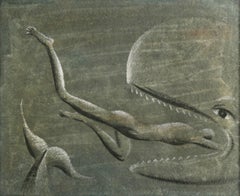
Dichotomy, mid-century figural abstract green oil painting
By Clarence Holbrook Carter
Located in Beachwood, OH
Clarence Holbrook Carter (American, 1904-2000)
Dichotomy, 1962
Oil on paper
Signed and dated upper left
20 x 25 inches
Mid-century figural abstract green painting of woman swimming ...
Category
1960s American Modern Cleveland - Art
Materials
Oil
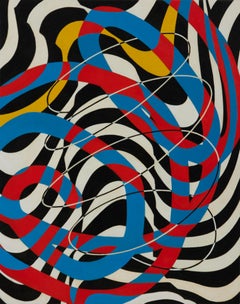
Colorful Abstract Geometrical Late 20th Century Painting by Ohio Artist
Located in Beachwood, OH
James Massena March (American, 1953-2021)
Untitled
Oil on canvas
30 x 24 inches
"My paintings are about space, form and energy. I generally start ...
Category
Late 20th Century Abstract Cleveland - Art
Materials
Oil
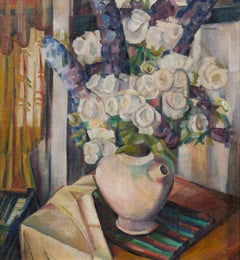
Canterbury Bells Floral Still Life, Female Cubist Artist, Cleveland School
Located in Beachwood, OH
Clara Deike (American, 1881-1965)
Canterbury Bells, c. 1932
Oil on canvas
26 x 24 inches
31.25 x 29.5 inches, framed
Exhibited: The Women's Art Club of Cleveland, 1932
A graduate of...
Category
1930s Cubist Cleveland - Art
Materials
Oil
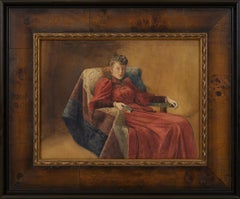
Portrait of Seated Woman Reading Julia Maud De Forest, Late 19th Century
Located in Beachwood, OH
Ora Coltman (American, 1858-1940)
Julia Maud De Forest, 1898
Watercolor on paper
Signed and dated upper left
9.25 x 12.75 inches
15 x 18.25 inches, framed
Ora Coltman was born in 18...
Category
1890s Cleveland - Art
Materials
Watercolor
Untitled Mid Century Abstract Oil Painting New York Artist
By John Opper
Located in Beachwood, OH
John Opper (American, 1908 - 1994)
Untitled, 1959
Oil on board
Signed and dated lower right
14.75 in. h x 18 in. w.
20 in. h. x 24.5 in. w., as framed
John Opper described the 1930s...
Category
1950s Abstract Cleveland - Art
Materials
Oil
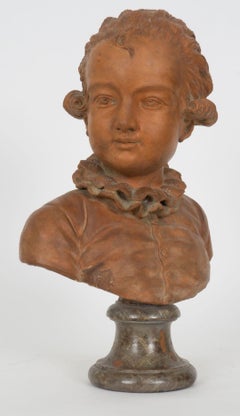
Terracotta Bust of a Young Gentleman, Late 18th Century French Sculpture
Located in Beachwood, OH
After Philippe-Laurent Roland (French, 1746-1816)
Bust of a Young Man, 1772
Terra cotta set on painted wood pedestal
Signed and dated at back
16.5 x 11 x 8 inches
Philippe-Laurent R...
Category
1770s Cleveland - Art
Materials
Terracotta
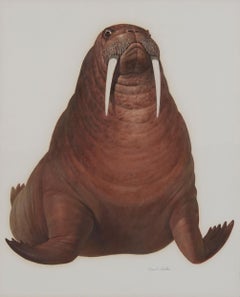
Walrus Oil Painting, 20th Century Magical Realism Artist, Cleveland School
By Paul Riba
Located in Beachwood, OH
Paul Riba (American, 1912-1977)
Walrus
Oil on paper
Signed lower right
29.25 x 24.5 inches
34.75 x 30 inches, framed
Paul Riba was a painter of Magic Realism. He explored the unrea...
Category
Mid-20th Century Surrealist Cleveland - Art
Materials
Oil
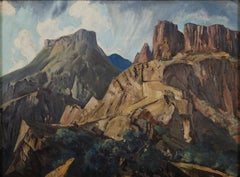
Riders Through the Canyon, Mid-Century Western Landscape, Cleveland School
By Frank Wilcox
Located in Beachwood, OH
Riders Through the Canyon, c. 1941
Oil on board
Signed lower right
24 x 32.25 inches
"Also, on this second trip the significant colors of the Southwest became apparent - the prep...
Category
1940s American Modern Cleveland - Art
Materials
Oil
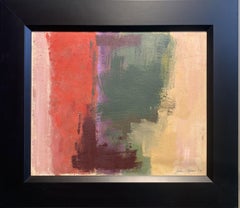
20th century abstract still life by Cleveland School artist
By Joseph O
Sickey
Located in Beachwood, OH
Work sold to benefit the CLEVELAND INSTITUTE OF ART
Joseph B. O’Sickey (American, 1918–2013)
Still Life
Oil and graphite on paper
Signed lower left
12.25 x 1...
Category
Late 20th Century Post-Impressionist Cleveland - Art
Materials
Oil, Graphite
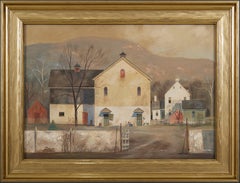
Dutch Farmyard, Pennsylvania Landscape w/ Houses and Mountains
By Paul Riba
Located in Beachwood, OH
Paul Riba (American 1912-1977)
Dutch Farmyard, Pennsylvania
Tempera on board
Signed lower right
9.75 x 14 inches
12.75 x 16.75 inches, framed
Provenance: The Estate of Mary Clark Roc...
Category
Mid-20th Century Cleveland - Art
Materials
Tempera
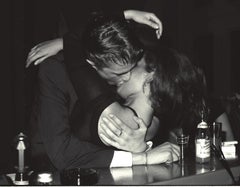
Berlin Kiss by Harry Benson
By Harry Benson
Located in Woodmere, OH
Harry Benson was born near Glasgow, Scotland. The photographer was assigned to travel with the Beatles on their first American tour in 1964. His iconic photograph shows the band in a gleeful pillow fight in a hotel room. Benson has photographed every U.S. president from Eisenhower to Barack Obama. He was feet away when Bobby Kennedy was assassinated; in the room when Nixon resigned; with Martin Luther King, Jr. on the Meredith march; and with Coretta Scott King...
Category
1990s Cleveland - Art
Materials
Archival Pigment
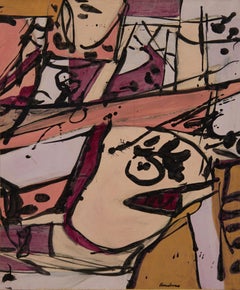
20th century abstract expressionist oil painting by Cleveland School artist
By Richard Andres
Located in Beachwood, OH
Richard Andres
American, 1927-2013
Untitled, c. 1980
acrylic and ink on paper mounted on canvas
signed lower right
24 x 20 inches
25 x 21 inches, framed
Note: Minor abrasion on lowe...
Category
1980s Abstract Expressionist Cleveland - Art
Materials
Ink, Acrylic
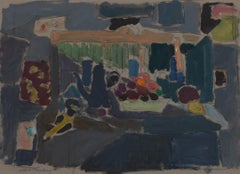
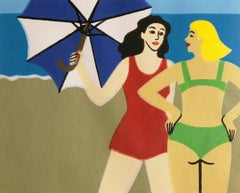
Beach Talk Scene, Late 20th Century Vibrant Print by Cleveland Artist
Located in Beachwood, OH
Gretchen Troibner (American, Born 1953)
Beach Talk, 1997
Silkscreen on paper
Signed and dated lower right, numbered 1/10 lower left
10 x 12.5 inches
20 x 22.5 inches, framed
Gretche...
Category
1990s Cleveland - Art
Materials
Screen
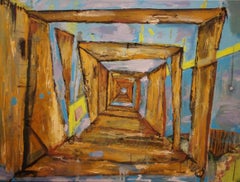
Hallways I, Mixed Media on Canvas
By Joey Thate
Located in Yardley, PA
Hallway inspired from painter David Schnell :: Mixed Media :: Abstract :: This piece comes with an official certificate of authenticity signed by the art...
Category
2010s Abstract Cleveland - Art
Materials
Mixed Media
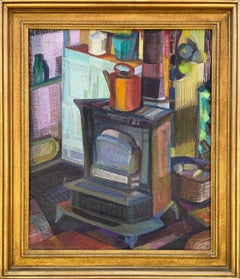
Studio Stove, Colorful Cubist Oil painting, Cleveland School female artist
Located in Beachwood, OH
Clara Deike (American, 1881-1964)
My Studio Stove, 1936
Oil on canvas
Signed and dated lower right, titled verso
23.5 x 19.5 inches
29.75 x 25.5 inches, f...
Category
1930s Cubist Cleveland - Art
Materials
Oil
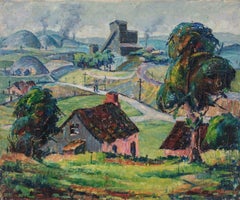
20th Century Bucks County Colorful Landscape Painting, Italian artist
By Louis Bosa
Located in Beachwood, OH
Louis Bosa (American, 1905–1981)
Bucks County, 1934
Oil on canvas
Signed and dated lower right
17.5 x 21.5 inches
25.5 x 29 inches, framed
Born in Codroipo, a small village only a f...
Category
1930s Expressionist Cleveland - Art
Materials
Oil
Still Thinking About These?
All Recently ViewedMore Ways To Browse
Wes Anderson Art
West Indies Painting
Woodstock Ny Paintings
Zane Gray
1970s Seascape Oil Painting
A Grimshaw
Adam Barland
Air France Afrique
Alden Bryan
Amanda Acker
Antique Chinese Watercolor Landscape
Anton Genberg
Anton Sipos
Appalachian Painting
Army Navy Poster
Art Contemporary Fuschia
Arthur Walker Redgate
B Harvey