Continental Europe - Figurative Sculptures
to
229
1,642
555
431
161
388
Overall Width
to
Overall Height
to
122
210
645
2,200
31
15
43
69
15
59
36
32
39
52
34
1,719
185
141
68
68
38
31
19
13
11
4
2
2
1,338
853
800
587
584
417
314
265
241
190
123
112
109
104
84
84
84
83
78
77
2,004
1,692
423
357
270
100
73
56
55
54
1
23
3,177
5,322
3,606
Item Ships From: Continental Europe
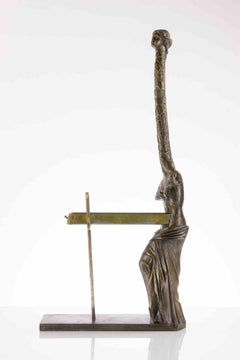
Venus à Giraffe - Sculpture by Salvador Dalí - 1973
By Salvador Dalí
Located in Roma, IT
Bronze, dark and brown patina, realized in 1973.
Dali's printed signature in on the plinth.
Edition 616/1000 on the side.
Foundry stamp "Fonderia Venturi". Published by Euro Art.
...
Category
1970s Surrealist Continental Europe - Figurative Sculptures
Materials
Bronze

$7,145 Sale Price
30% Off
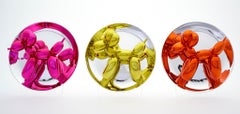
Balloon Dogs (mixed edition numbers) - Jeff Koons, Porcelain, Contemporary, Art
By Jeff Koons
Located in Zug, CH
Balloon Dogs Set of 3 (mixed edition numbers) - Jeff Koons, Contemporary, 21st Century, Sculpture, Decor, Limited Edition
Limoges porcelain with chromatic metalized coating
Edition ...
Category
2010s Contemporary Continental Europe - Figurative Sculptures
Materials
Porcelain
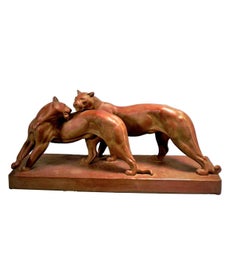
Terracotta Panthers Statue by Réne Rochard (1906 -1984)
By Irénée Rochard
Located in Gent, VOV
Panters
An imposing statue of a couple of panters by Irenée Rochard (1906-1884). A fine quality, much sought-after terracotta which was edited by Reveyrolis Paris. Before casting, ...
Category
Mid-20th Century Art Deco Continental Europe - Figurative Sculptures
Materials
Terracotta
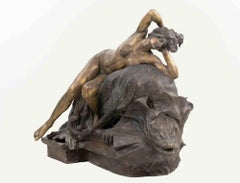
Naiad - Sculpture by Mario Rutelli - 1905
Located in Roma, IT
This bronze sculpture is a model of the one of the Naiads of the Fountain of the Naiads in Piazza Esedra, Rome, Italy.
Realized by Mario Rutelli in 1905 ca.
Very good condition.
Category
Early 1900s Modern Continental Europe - Figurative Sculptures
Materials
Bronze
$13,451 Sale Price
30% Off
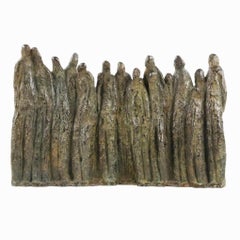
Group II by Delphine Brabant - Figurative bronze sculpture, human silhouettes
By Delphine Brabant
Located in Paris, FR
Group II is a bronze sculpture by contemporary artist Delphine Brabant, dimensions are 17 × 26 × 6 cm (6.7 × 10.2 × 2.4 in).
The sculpture is signed and numbered, it is part of a li...
Category
2010s Contemporary Continental Europe - Figurative Sculptures
Materials
Bronze
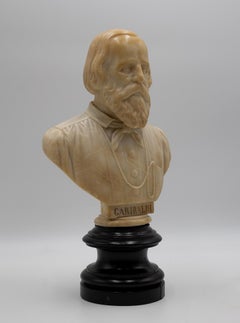
Portrait of Giuseppe Garibaldi - Original Marble Sculpture - Late 19th Century
Located in Roma, IT
This Portrait go Giuseppe Garibaldi is an original decorative marble sculpture realized in Italy by Italian manufacture during the end of the XIX century.
The alabaster marble sta...
Category
Late 19th Century Modern Continental Europe - Figurative Sculptures
Materials
Marble
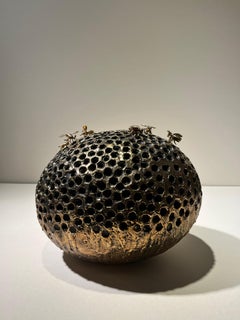
Bronze naturalistic bee hive indoor sculpture
Located in Milan, IT
The elegant and significant sculpture is made of bronze.
The artist has been working for over twenty years on the world of bees (and in general on those species of animals that need...
Category
2010s Naturalistic Continental Europe - Figurative Sculptures
Materials
Ceramic
Minerva driving her chariot
By Emmanuel Fremiet
Located in PARIS, FR
"Minerva driving her chariot"
by Emmanuel Fremiet (1824-1910)
Very beautiful group in bronze with old gilded patina
Cast by BARBEDIENNE
France
circa 1900
height : 54 cm
length : 54...
Category
Early 1900s French School Continental Europe - Figurative Sculptures
Materials
Bronze
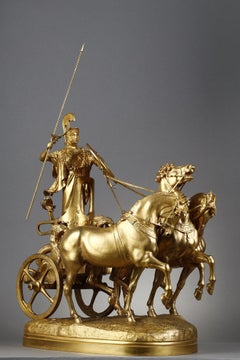
ANCIENT ROMAN MARBLE RELIEF FRAGMENT
Located in Milan, IT
ANCIENT ROMAN MARBLE RELIEF FRAGMENT
Rome, 1st Century b.C.
marble
23 x 15 x 5 cm without base
9 x 6 x 2 in
Category
15th Century and Earlier Continental Europe - Figurative Sculptures
Materials
Marble
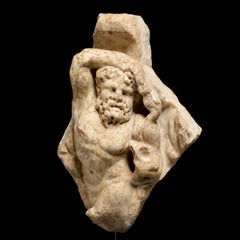
3 Standing Figures IV by Pierre Yermia - Contemporary bronze sculpture
By Pierre Yermia
Located in Paris, FR
3 standing figures IV is a bronze sculpture by French contemporary artist Pierre Yermia, dimensions are 61 × 22 × 17 cm (24 × 8.7 × 6.7 in).
The sculpture is signed and numbered, i...
Category
Early 2000s Contemporary Continental Europe - Figurative Sculptures
Materials
Bronze
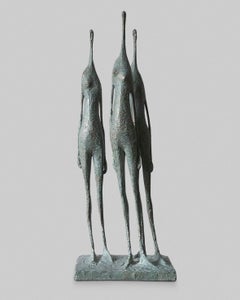
Bon Santé.
By Arman
Located in Malmo, SE
Limited Edition 30 ex.
Free shipment worldwide.
Acquired directly from the artist.
Arman explores reality. He strives to transform and sublimate artefacts into works of art. Ev...
Category
1990s Contemporary Continental Europe - Figurative Sculptures
Materials
Epoxy Resin, Plexiglass
$7,205
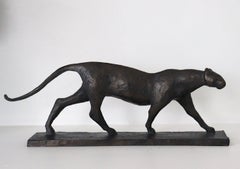
Feline V by Pierre Yermia - Contemporary Animal Sculpture, bronze
By Pierre Yermia
Located in Paris, FR
Feline V is a bronze sculpture by French contemporary artist Pierre Yermia which represents a walking feline (a leopard, a jaguar or a cheetah).
Dimensions: H 6.7 x L 18.1 x W 3.1 i...
Category
2010s Contemporary Continental Europe - Figurative Sculptures
Materials
Bronze
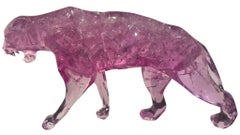
Panthère Crystal Clear Full Fractal 110 cm
By Richard Orlinski
Located in PARIS, FR
Richard Orlinski is the best-selling French contemporary artist worldwide since 2015 (according to Artprice).
This panther sculpture is an original work of art created in 2025.
It i...
Category
2010s Contemporary Continental Europe - Figurative Sculptures
Materials
Epoxy Resin
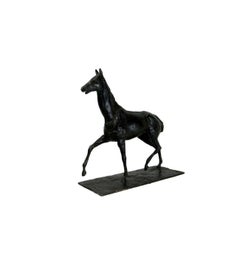
Edgar Degas (1834 – 1917), Bronze cast +« Cheval marchant au pas relevé »
By Edgar Degas
Located in Gent, VOV
« Cheval marchant au pas relevé » (Horse walking at a high pace)
Bronze with dark brown patina bearing the stamp of the signature "Degas", numbered IV/IX and dated 1998. Posthumous lost wax casting as of 1998. Stamp of Valsuani.
The work is a sought-after rarity in terms of Degas’ sculptures. This bronze is distinguished by the fact that it is a Valsuani bronze, meaning it faithfully records Degas’ wax version’s as it appeared at the time of its creation. Most Degas' bronzes that are found on the market were cast by Hébrard – these serialized bronzes are surmoulages, or “aftercasts,” that were cast from the modèle bronzes currently in the Norton Simon Museum (Pasadena). Because these bronzes are second generation, they are smaller and far less detailed than the current bronze.
This example, however, was cast by Valsuani from a plaster that was taken directly from Degas’ waxes, according to scholarship by the art historian Dr. Gregory Hedberg. These plasters were created by Degas’ sculptor friend Albert Bartholomé shortly after Degas completed his wax figurines. Thus, they record the earliest versions of Degas’ wax sculptures, before they were damaged by time or handling, and before Degas himself altered the works. The Hébrard bronzes...
Category
Late 20th Century Impressionist Continental Europe - Figurative Sculptures
Materials
Bronze
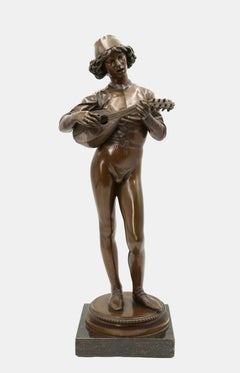
Florentine singer / - The Renaissance of the Renaissance -
By Paul Dubois
Located in Berlin, DE
Paul Dubois (1829 Nogent-sur-Seine - 1905 Paris), Florentine singer, 1865. Light brown patinated bronze with cast round plinth mounted on a square marble base (3.5 cm high). Total height 53 cm. Bronze dimensions: 49.5 cm (height) x 20 cm (length) x 10 cm (width), weight 5.6 kg. Inscribed on the plinth "P.[aul] DUBOIS", dated "1865", with the foundry's mark "F. BARBEDIENNE FONDEUR" and the signet "REDUCTION MECANIQUE A. COLLAS".
- Patina very occasionally darkened, lute with loss of one tuning peg, otherwise in excellent condition.
- The renaissance of the Renaissance -
The bronze is a precisely executed and masterfully cast contemporary reduction of Paul Dubois 155 cm tall masterpiece "Florentine Singer", which is exhibited in the Musée d'Orsay and for which the artist was awarded the Medal of Honor at the Paris Salon in 1865. The work acted as a beacon, and was followed by a plethora of depictions of juveniles.
Inspired by Donatello and Luca della Robbia, but also by painters such as Piero della Francesca, Benozzo Gozzoli, and Pinturicchio, the "Florentine Singer" is not an epigonal work that pays homage to a vanished era, but a successful attempt to draw vitality from the art of the past and thus give it new life.
The effect of vitality is the core of Italian Renaissance art theory. In order to fulfill itself as art, art had to appear like nature. This naturalism also characterizes the "Florentine Singer". The young man appears to have been taken from life, which is reinforced by the momentary nature of his action. He has just struck a now fading chord. In addition, the natural appearance is enhanced by the detailed shaping of the figurative details, such as the laces with the slightly curved leather of the shoes, the belt buckle, or the ornamentation on the body of the lute. Even the fingernails are clearly defined. Unlike the Renaissance, however, the effect of liveliness here is not based on the "discovery" of nature and the human body, but primarily on the rediscovery of the art of the Quattrocento. The liveliness of the artwork is therefore at the same time a revitalization of this art, so that we can speak of a Renaissance of the Renaissance, just as the Pre-Raphaelites in England at the same time transferred the Quattrocento to contemporary art.
Dubois takes on the most difficult of all subjects, the depiction of singing through silent sculpture. He was preceded in this by Luca della Robbia and Donatello with their pulpits of singers created in the 1430s in the Museo dell'Opera del Duomo in Florence. Compared to these works, the physiognomy of Dubois singer is far less animated, yet he also depicts singing in a convincing manner. He uses the whole body. He takes the ancient contrapposto, which was essential to Renaissance sculpture, and transforms the standing leg-playing posture into a late medieval S-swing, giving the body an elegant beauty and at the same time setting it in melodic motion. In the equally elegant finger position, the music is expressed in a much more literal way with the beating of the lute. Finally, the musicality of the sculpture culminates in the face with the mouth open to sing.
Through the act of singing, which is a great challenge to the artistic will to depict perfect beauty, the gracefulness of the classical face is not diminished, but enhanced. Starting from the face with the singing mouth and the gaze absorbed by the sounds, the inner vitality spreads, giving the bronze sculpture an intense aura, enhanced by the music. Dubois transfers the beauty of the Renaissance to the musical, sublimating the visible sculpture to the invisible of music.
He took up the challenge of transcending the Renaissance with the Renaissance, thus responding to the Querelle des Anciens et des Modernes, which arose at the end of the 17th century around the French Academy and remained virulent into the 19th century, in which antiquity was regarded either as an unattainable ideal or as a standard to be surpassed. With his work, Dubois proved that the Renaissance, which had championed the art of the ancients, could lead to a new renaissance of art.
About the artist
Paul Dubois' great-uncle was the famous French Baroque sculptor Jean-Baptiste Pigalle, in whose footsteps the talented great-nephew followed. When he debuted at the Paris Salon in 1858, he signed his work "Dubois-Pigalle". At his father's request, however, he first studied law before devoting himself to sculpture under the tutelage of François Christophe Armand Toussaint in 1856 and entering the École des Beaux-Arts in 1858. From 1859 to 1863, he lived in Rome and traveled to Naples and Florence. Inspired by Florentine art of the quattrocento, Dubois initiated a school-forming neo-Florentine style that combined the elegantly simple forms of youthful grace with a precise wealth of detail.Two purchases by the French state (“envois de Rome”) were made during his stay in Rome, which brought him recognition in Paris. After his return there, he quickly became an internationally sought-after artist.
Dubois was also active as a creator of monuments. His most famous work is the equestrian statue of Joan of Arc (1896) on the forecourt of Reims Cathedral. He was also a sought-after portraitist who produced around 50 busts and - Dubois was also a passionate painter - around 100 portraits in oil.
From 1873 to 1878 he was curator of the Museum du Luxembourg, in 1876 he became a member of the Institut de France and from 1878 to 1905 he was director of the École des Beaux-Arts.
In 1865, Dubois was awarded the Paris Salon Medal of Honor for his “Florentine Singer”. In 1867 he became Chevalier, in 1874 Officier, in 1886 Commandeur of the Légion d'honneur, which awarded Dubois the Grande Croix in 1896.
Selected Bibliography
Stole, Elmar: Paul Dubois. In: Saur. Allgemeines Künstlerlexikon, vol. 30, Munich - Leipzig 2001, pp. 677-678.
GERMAN VERSION
Paul Dubois (1829 Nogent-sur-Seine - 1905 Paris), Florentinischer Sänger, 1865. Hellbraun patinierte Bronze mit gegossener runder Plinthe auf quadratischem Marmorsockel montiert (3,5 cm Höhe). Gesamthöhe 53 cm. Maße der Bronze: 49,5 cm (Höhe) x 20 cm (Länge) x 10 cm (Breite), Gewicht 5,6 kg. Auf der Plinthe mit „P.[aul] DUBOIS“ bezeichnet, auf „1865“ datiert, mit dem Gießereistempel „F. BARBEDIENNE FONDEUR“ und dem Signet „REDUCTION MECANIQUE A. COLLAS“ versehen.
- Patina sehr vereinzelt nachgedunkelt, Laute mit Verlust eines Stimmwirbels, ansonsten ausgezeichnet erhalten.
- Die Renaissance...
Category
1860s Realist Continental Europe - Figurative Sculptures
Materials
Bronze
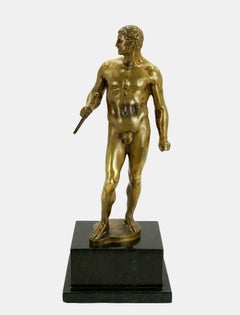
Naked warrior with short sword / - The New Hercules -
Located in Berlin, DE
Hermann Volz (1847 Karlsruhe - 1914 ibid.), Naked warrior with short sword, c. 1935. Partially (?) patinated bronze with cast plinth mounted on a black marble base (6.8 cm high). 32....
Category
1930s Art Deco Continental Europe - Figurative Sculptures
Materials
Bronze
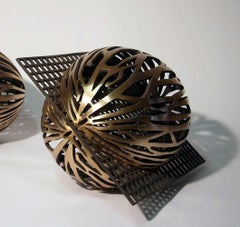
Urbanut II by Ondřej Oliva - Bronze sculpture, contrasts, figurative, organic
By Ondřej Oliva
Located in Paris, FR
Urbanut II is a bronze sculpture by contemporary Czech sculptor Ondřej Oliva, dimensions are 40 × 50 × 40 cm (15.7 × 19.7 × 15.7 in).
This artwork is from a limited edition of 6, eac...
Category
2010s Contemporary Continental Europe - Figurative Sculptures
Materials
Bronze
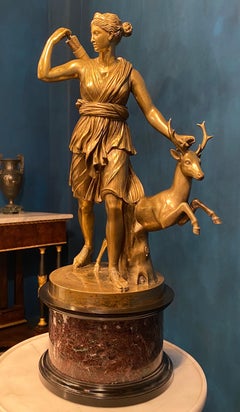
Grand Tour Bronze Sculpture of Diana Goddess of the Hunt Signed B. Boschetti.
Located in Rome, IT
Grand Tour Fine Group of Sculpture in Bronze after a Louvre Diana of Versailles or Artemis, Goddess of the Hunt.
Diana is represented at the hunt, hastening forward, as if in pursui...
Category
Mid-19th Century Academic Continental Europe - Figurative Sculptures
Materials
Bronze
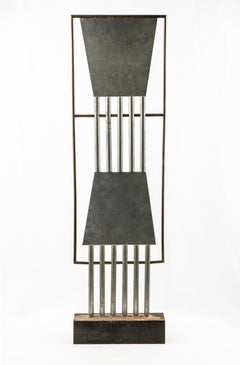
Geometric Composition - Sculpture by Giuseppe Pulvirenti - 1984
Located in Roma, IT
Geometric Composition is a sculpture realized in 1984 by Giuseppe Pulvirenti (Siracusa, Sicily, 1959).
Made in Italy.
Steel.
Signed and dated: G. Pulvirenti 84.
The sculpture de...
Category
1980s Modern Continental Europe - Figurative Sculptures
Materials
Metal
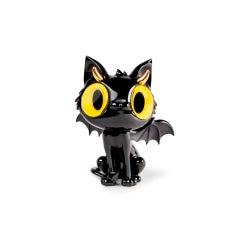
Little Devil Cat Sculpture, Designed by Javier Calleja and Lladro.
By Javier Calleja
Located in Madrid, MD
Javier Calleja – Little Devil Cat, Lladró, Limited Edition
Porcelain and glass sculpture, signed and numbered by the artist.
This playful and contemporary sculpture is the result of...
Category
21st Century and Contemporary Contemporary Continental Europe - Figurative Sculptures
Materials
Porcelain, Glass
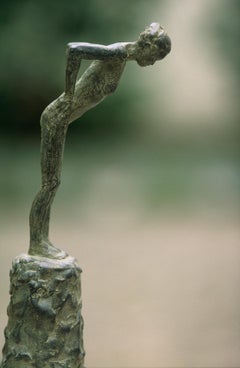
Attitude III by Marine de Soos - Female nude bronze sculpture, contemporary
By Marine de Soos
Located in Paris, FR
Attitude III is a bronze sculpture by French contemporary artist Marine de Soos, dimensions are 41.5 × 14 × 18 cm (16.3 × 5.5 × 7.1 in).
The sculpture is signed and numbered, it is ...
Category
2010s Contemporary Continental Europe - Figurative Sculptures
Materials
Bronze
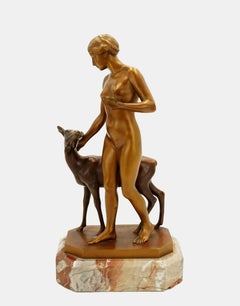
Forest idyll / - Soulmate -
By Rudolf Kaesbach
Located in Berlin, DE
Rudolf Kaesbach (1873 Gladbach - 1955 Berlin), Forest idyll, around 1915. Bronze, gold and golden brown patina, with cast plinth, mounted on a marble base (5 cm high), total height 36 cm, dimensions of the bronze: 31 cm (height) x 17 cm (length) x 12 cm (width). Weight 4,6 kg, signed on the plinth "R.[udolf] KAESBACH".
- a few rubbed areas, overall in excellent condition for its age
- Soulmate -
The bronze sculpture depicts a young woman in an intimate exchange with a deer that accompanies her. The animal pauses to turn toward her, while the nude beauty slows her pace to look into the deer's eyes and tenderly caress it with her hand. The woman and the deer are in inner harmony. Even though her lips remain motionless, she speaks the language of the animal with which she is deeply connected.
The golden patina, which contrasts with the more naturalistic coloring of the deer, gives the young woman the appearance of a saint, even if she cannot be identified as such. At the same time, she evokes memories of Diana, the goddess of the hunt, or a nymph. But she lacks the ferocity. In her innocent naivety, she is more like a vestal virgin, who is not at home in the solitude of the forest. And yet, the young beauty, moving unclothed in the heart of nature, looks like a priestess with her hair tied up and a carefully carried bowl on her way to a sacred grove.
In order to open up the above-mentioned associations, Kaesbach deliberately designed the female figure in such a way that she cannot be identified as a specific person. He has created an allegory of natural femininity, characteristic of Art Nouveau, in which the deer is far more than a companion animal. It displays the same gracefulness as the young woman, and the inner resemblance between the two makes the deer appear as her other self. In animal terms, it embodies her inner being, which also gives the deer an allegorical character.
About the artist
Rudolf Kaesbach studied sculpture at the Hanau Academy and worked in a bronze foundry in Paris in 1900. In order to work as an independent artist, he opened a workshop in Düsseldorf, where he cast bronzes from models he designed. In 1902 he made his debut at the German National Art Exhibition in Düsseldorf. The following year Kaesbach went to the academy in Brussels. There he was inspired by contemporary Belgian sculpture, especially the work of Constantin Meunier. He moved to Berlin, where he opened a studio in the villa district of Grunewald and devoted himself to life-size marble sculptures and the design of bronzes. From 1911, he regularly presented his works at the major art exhibitions in Berlin, as well as in Düsseldorf and Malmö. Between 1936 and 1939, he also created models for the Rosenthal porcelain factory. From 1939 to 1944, Kaesbach was represented at the major German art exhibitions in Munich.
GERMAN VERSION
Rudolf Kaesbach (1873 Gladbach - 1955 Berlin), Waldidyll, um 1915. Gold und goldbraun patinierte Bronze mit gegossener Plinthe, auf einem Marmorsockel montiert (5 cm Höhe), Gesamthöhe 36 cm, Maße der Bronze: 31 cm (Höhe) x 17 cm (Länge) x 12 cm (Breite). Gewicht 4,6 kg, auf der Plinthe mit „R.[udolf] KAESBACH“ signiert.
- vereinzele beriebene Stellen, insgesamt in einem altersgemäß ausgezeichneten Zustand
- Seelenverwandtschaft -
Die Bronzeplastik veranschaulicht eine junge Frau im innigen Austausch mit einem sie begleitenden Reh. Das Tier hält inne, um sich zu ihr hochzuwenden, während die nackte Schönheit ihren Schritt verlangsamt, um dem Reh ebenfalls in die Augen zu schauen und es zärtlich mit der Hand zu liebkosen. Die Frau und das Reh sind in einem inneren Gleichklang. Auch wenn ihre Lippen unbewegt bleiben, spricht sie die Sprache des Tieres, mit dem sie auf eine tief empfundene Weise verbunden ist.
Die im Kontrast zur naturalistischeren Einfärbung des Rehs aufstrahlende goldfarbene Patina lässt die junge Frau wie eine Heilige erscheinen, auch wenn sich nicht als Heilige identifizierbar ist. Zugleich ruft sie Erinnerungen an die Jagdgöttin Diana oder eine Nymphe hervor. Dafür fehlt ihr allerdings die Wildheit. In ihrer unschuldigen Naivität gemahnt sie vielmehr an eine Vestalin, die freilich nicht in der Waldeinsamkeit zu Hause ist. Und doch wirkt die sich unbekleidet im Herzen der Natur bewegende junge Schönheit wie eine Priesterin, die sich mit hochgebundenem Haar und der vorsichtig getragenen Schale und dem Wege zu einem Heiligen Hain befindet.
Um die gennannten Assoziationen zu eröffnen, hat Kaesbach die Frauenfigur bewusst so gestaltet, dass sie nicht als konkrete Person identifizierbar ist. Damit hat er eine für den Jugendstil charakteristische Allegorie natürlicher Weiblichkeit geschaffen, bei der das Reh weit mehr als ein Begleittier ist. Es weist dieselbe grazile Anmut wie die junge Frau auf und der innere Gleichklag der beiden lässt das Reh als ihr anderen Ich erscheinen. Es verkörpert – ins Animalische übertragen - ihr inneres Wesen, wodurch auch dem Reh ein allegorischer Charakter zukommt.
zum Künstler
Rudolf Kaesbach studierte an der Akademie Hanau Bildhauerei und war im Jahr 1900 in einer Pariser Bronzegießerei tätig. Um sich als eigenständiger Künstler betätigen zu können, eröffnete er in Düsseldorf eine Werkstatt, in der er Bronzen nach selbstentworfenen Modellen goss. 1902 debütierte er auf der Deutschen Nationalen Kunstaustellung in Düsseldorf. Im Folgejahr ging Kaesbach an die Akademie nach Brüssel. Dort wurde er von der zeitgenössischen belgischen Bildhauerei, insbesondere vom Werk Constantin Meuniers, inspiriert. Zurückgekehrt zog er nach Berlin, wo er im Villenviertel Grunewald ein Atelier eröffnete und sich neben dem Entwurf für Bronzen der lebensgroßen Marmorbildhauerei widmete. Ab 1911 präsentierte er seine Werke regelmäßig auf den Großen Berliner Kunstausstellungen, aber auch in Düsseldorf und Malmö. Zwischen 1936 und 1939 fertigte er zudem Modelle für die Porzellan-Manufaktur Rosenthal an. Von 1939 bis 1944 war...
Category
1910s Jugendstil Continental Europe - Figurative Sculptures
Materials
Bronze
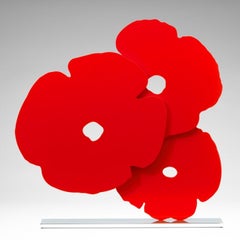
Red Poppies - Contemporary, 21st Century, Sculpture, Poppies, Flower, Red
By Donald Sultan
Located in Zug, CH
Donald Sultan, Red Poppies
Contemporary, 21st Century, Sculpture, Poppies, Flower, Red
Painted aluminum on polished aluminum base
Edition of 25
62 x 61 x 7.6 cm (24.5 x 24.2 x 3 in)
Signed, dated, numbered, and titled, accompanied by Certificate of Authenticity
In mint condition, as acquired from the publisher
In the original packaging
PLEASE NOTE: Edition numbers could vary from the one shown in the pictures.
"Red Poppies" is a sculpture of painted aluminum on a polished aluminum base, belonging to Sultan’s famous Flower series. The artist is credited for the revival of the still life tradition where the image is deconstructed to the basic elements, thus Sultan’s work remains both abstract and representational.
"Most of my ideas were to put imagery back into abstract painting. Some of the ones that look the most abstract are...
Category
2010s Contemporary Continental Europe - Figurative Sculptures
Materials
Steel
$24,740 Sale Price
20% Off
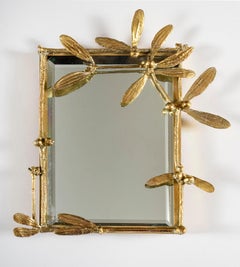
"Gui" Mirror, Claude Lalanne, Les Lalanne, Design, Gilded, Mirror
By Claude Lalanne
Located in Geneva, CH
CLAUDE LALANNE
"Gui" Mirror, circa 1980-1985
Edition Artcurial I Ed. 58/450 pcs
Gilt bronze, bevelled glass
22 x 17 cm I 8 5/8 x 6 3/4 in
Signed, stamped and numbered on the back : c...
Category
20th Century Post-War Continental Europe - Figurative Sculptures
Materials
Bronze
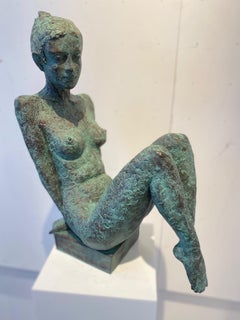
At the Water (Am Wasser) contemporary bronze sculpture, nude female lifted legs
By Susanne Kraisser
Located in Hamburg, DE
"At the Water" is a larger free-standing bronze sculpture, suitable both for the inside and outside. Edition 18, signed, numbered and dated on the bottom. Certificate.
The sculptress Susanne Kraisser is to be considered as part of the great modern figurative tradition. She was born in 1977 in Rosenheim, Southern Germany. She studied both at the Academy of Fine Arts Nuremberg and the University of Arts in Bremen. She graduated with distinction in 2007 in Nuremberg and received her Diploma with distinction in 2008 in Bremen. She has won numerous awards and exhibits nationally as well as internationally.
Artist Statement: For me, sculpture is particularly shape and material, volume and size, space, movement and statics.
I focus on the ‘female body’, presenting it either as an intimate miniature or on a monumental scale – each time as a solitary figure.
In terms of content, my work focuses on identifying and combining polarities, such as instability and strength, fragility and solidity, activity and passivity, movement and statics, balance and volume, and dependence and autarchy.
I work predominantly with the materials bronze, aluminium and wood. The small miniatures are made from wax and are then cast in bronze as part of what is known as the wax smelting process. Large-scale pieces are similarly cast in aluminium or created directly out of wood. The various work processes and tools determine the appearance of the surface; for wax, it’s my hands, and for wood, it’s my chainsaw.
Each material is a new challenge for me. My previous wood-sculpting studies involved respecting the material’s limits to create craft of solid quality in keeping with the material.
But this is where the intense discussion and its limit become clear. I fight with the material, and a lot of things go wrong. It becomes my opponent, whose limits I test out and reset if necessary. Cautious movements requiring a lot of physical tension are maintained without losing their inner dynamics.
Amidst the often harmonious external form is a harsh dissonance evidenced by the rough, fragmented design...
Category
21st Century and Contemporary Contemporary Continental Europe - Figurative Sculptures
Materials
Bronze
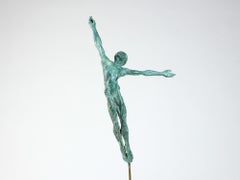
Dancer “Attraction” II by Yann Guillon - Figurative bronze sculpture, man, torso
By Yann Guillon
Located in Paris, FR
Danseur Attirance II is a bronze sculpture by contemporary artist Yann Guillon, dimensions are 35 × 23 × 9 cm (13.8 × 9.1 × 3.5 in). Height of the sculpture with the metal base: 51 c...
Category
2010s Contemporary Continental Europe - Figurative Sculptures
Materials
Bronze
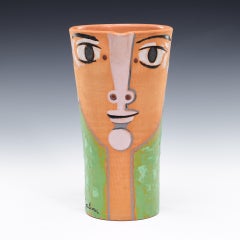
Visage .
By Jean Cocteau
Located in CANNES, FR
JEAN COCTEAU (1889 - 1963 )
" Visage "
signed :
" jean Cocteau "( lower left )
inscribed and numbered 6/30
édition originale de jean Cocteau .
Atelier Madeline -Jolly ( undern...
Category
1950s Art Deco Continental Europe - Figurative Sculptures
Materials
Ceramic
$36,510 Sale Price
20% Off
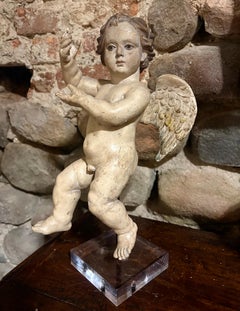
Scultura Barocca di Angelo in Terracotta Policroma Italia XVIII secolo
Located in Pistoia, IT
Scultura in terracotta policroma raffigurante un angelo alato, Italia, XVIII secolo.
L'angelo è plasmato con grande maestria, dalle forme rotonde tipiche del Barocco italiano. Gli ...
Category
1730s Baroque Continental Europe - Figurative Sculptures
Materials
Terracotta
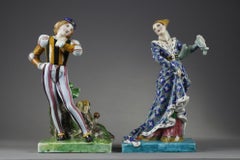
Courtly Love
By Theodore Deck
Located in PARIS, FR
"Courtly Love"
by Théodore Deck (1823-1891)
Rare pair of figurines representing two lovers in the Middle Ages
Polychrome glazed ceramic
Each stamped "Th.Deck" on the underside
Fran...
Category
Late 19th Century French School Continental Europe - Figurative Sculptures
Materials
Ceramic
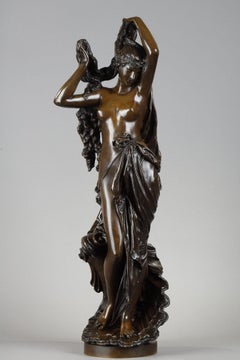
The Birth of Venus
By Albert-Ernest Carrier-Belleuse 1
Located in PARIS, FR
The Birth of Venus
by Albert-Ernest CARRIER-BELLEUSE (1824-1887)
Bronze sculpture with nuanced dark brown patina
signed "A. Carrier-Belleuse"
cast by Denière
France
circa 1870
he...
Category
Late 19th Century French School Continental Europe - Figurative Sculptures
Materials
Bronze
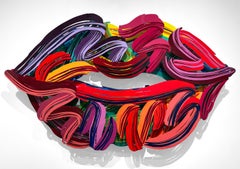
Graffiti Lips
By David Gerstein
Located in PARIS, FR
3D wall sculpture by David Gerstein built on 3 consecutives layers
It is made of cutout steel and painted by the artist with great movement and colors combinations.
This is an iconic...
Category
21st Century and Contemporary Pop Art Continental Europe - Figurative Sculptures
Materials
Steel
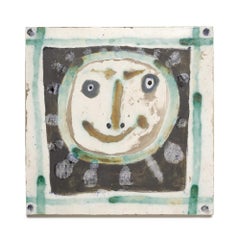
Tête Solaire, Pablo Picasso, Unique Ceramic, 1950
s, Earthenware, Design, Tile
By Pablo Picasso
Located in Geneva, CH
Tête Solaire, Pablo Picasso, Unique Ceramic, 1950's, Earthenware, Design, Tile
Tête solaire II
Unique work
27.01.1956
Large white earthenware tile, green stripes on white enamel on ...
Category
1950s Post-War Continental Europe - Figurative Sculptures
Materials
Ceramic, Earthenware
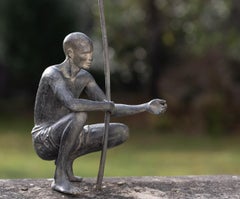
Palabres (Small) by Marine de Soos - Bronze sculpture, figurative, man
By Marine de Soos
Located in Paris, FR
Palabres (Small) is a bronze sculpture by French contemporary artist Marine de Soos, dimensions are 35 × 20.5 × 26 cm (13.8 × 8.1 × 10.2 in).
The sculpture is signed and numbered, it...
Category
2010s Contemporary Continental Europe - Figurative Sculptures
Materials
Bronze
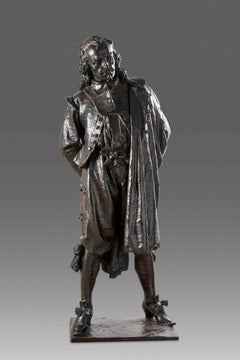
Il Bernini - Sculpture by Ambrogio Borghi - 1884
Located in Roma, IT
The bronze proposed here was initially presented in November 1878 at the Competition for the Encouragement of Brera. It is therefore one of the first celebratory works of the sculptor Ambrogio Borghi...
Category
1880s Modern Continental Europe - Figurative Sculptures
Materials
Bronze
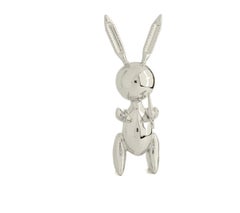
Balloon Rabbit XL - Silver
By After Jeff Koons
Located in Pampilhosa da Serra, PT
An edition of the famous ‘Balloon Rabbit’ After
Material: zinc alloy.
Comes with its original box and certificate of authenticity.
From a Limited Edition of 500, unique number eng...
Category
21st Century and Contemporary Pop Art Continental Europe - Figurative Sculptures
Materials
Metal
Wooden Sculptures Roman Soldiers Rome 18th Century Italy Art Gold
Located in Riva del Garda, IT
Wooden sculptures depicting a pair of full-length Roman soldiers
Rome, 18th century
Carved and gilded wood (walnut?)
Dimensions: Maximum height (at lance) 62 cm./ Maximum width: 28 ...
Category
18th Century Old Masters Continental Europe - Figurative Sculptures
Materials
Gold

$6,519 Sale Price
20% Off
Summer Coolness (Sommerkälte) life-size contemporary bronze sculpture of female
By Susanne Kraisser
Located in Hamburg, DE
"Summer Coolness" is a large free-standing bronze sculpture, suitable both for the inside and outside. Edition 8, signed, numbered and dated on the bottom. Comes with Certificate and...
Category
21st Century and Contemporary Contemporary Continental Europe - Figurative Sculptures
Materials
Bronze
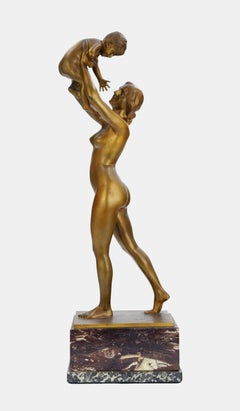
Mother Happiness / - The ecstasy of maternal joy -
Located in Berlin, DE
Johannes Boese (1856 Ostrog - 1917 Berlin), Mutterglück, um 1910. Goldbraun patinierte Bronze auf gegossener rechteckiger Plinthe, montiert auf zweifarbigem Marmorsockel (9,5 cm Höhe...
Category
1910s Art Nouveau Continental Europe - Figurative Sculptures
Materials
Bronze
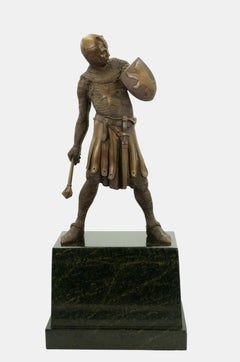
Crusader with shield and mace / - Ready to strike -
Located in Berlin, DE
Josef Moest (1873 Cologne - 1914 Rath), Crusader with shield and mace, around 1910. Bronze on a black marble pedestal (19 cm high). 57.5 cm (total height) x 21 cm (width) x 12 cm (de...
Category
1910s Realist Continental Europe - Figurative Sculptures
Materials
Bronze
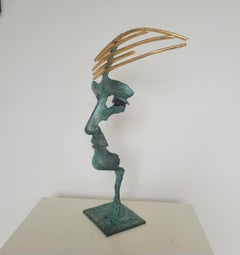
Composer
s head. Contemporary bronze sculpture, Limited edition, Italian artist
By Antonio Giancaterino
Located in Warsaw, PL
Contemporary figurative with abstract element patinated bronze sculpture pture by Italian artist Antonio Giancaterino. Sculpture is an artistic portrait that looks more or less abstr...
Category
2010s Other Art Style Continental Europe - Figurative Sculptures
Materials
Bronze
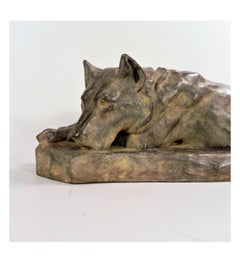
German Shepherd Dog - Georges-lucien Guyot
Located in Gent, VOV
"German Shepherd Dog - Georges-lucien Guyot "
A bronze cast of a resting German Shepard Dog, by Georges-Lucien Guyot (1885-1973). An early work, and a cast of 1920 with a brown pati...
Category
Early 20th Century Modern Continental Europe - Figurative Sculptures
Materials
Bronze
Baroque Roman sculptor - 17th century bronze sculpture - Mars Warrior
Located in Varmo, IT
Gilded bronze sculpture - Mars, god of War. Rome, 17th century.
9 x 9 x h 31 cm.
Entirely in cast, chiseled and gilded bronze, resting on an ebonized wooden pedestal decorated with...
Category
Mid-17th Century Baroque Continental Europe - Figurative Sculptures
Materials
Bronze

$4,203 Sale Price
41% Off
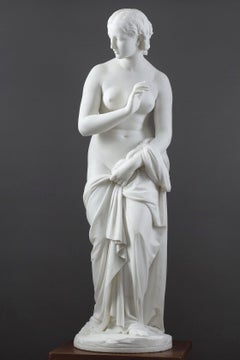
Musidora
Located in PARIS, FR
"Musidora"
by Odoardo FANTACCHIOTTI (1809-1877)
Sculpture made in white Carrara marble
signed on the side on the base " O. Fantacchiotti "
Italy
around 1862
height 110 cm
diameter ...
Category
1860s Italian School Continental Europe - Figurative Sculptures
Materials
Marble
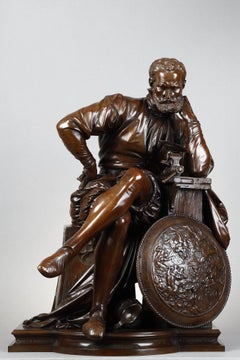
Benvenuto Cellini
Located in PARIS, FR
Benvenuto Cellini
attributed to Jules SALMSON (1823-1902)
Bronze with a dark brown patina
unsigned
old edition cast
Titled "Benvenuto Cellini"
Bears on two plaques mentionning "Souv...
Category
Late 19th Century French School Continental Europe - Figurative Sculptures
Materials
Bronze
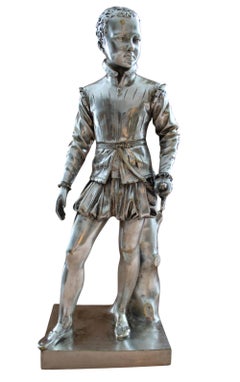
Henry IV child, King of France, after the original from Francois Joseph Bosio
By Ferdinand Barbedienne
Located in Riga, LV
Henry IV child, King of France, after the original from Francois Joseph Bosio (1768-1845).
Bronze, silver plated.
Category
19th Century Realist Continental Europe - Figurative Sculptures
Materials
Bronze
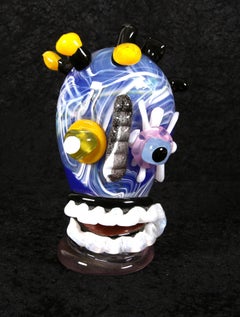
Murano Glass Sculpture Abstract Face Handcrafted by Paul Kostabi
Located in Winterswijk, NL
This unique Murano glass sculpture by Paul Kostabi is a unique example of Venetian craftsmanship. Mouth-blown and hand-cut at the Hofmeister Glass Factory in Amberg, it is a truly un...
Category
21st Century and Contemporary Abstract Expressionist Continental Europe - Figurative Sculptures
Materials
Glass, Blown Glass
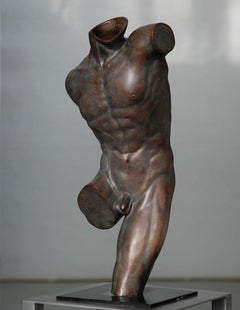
Sogno di Parole Bronze Sculpture Nude Male Figure Classic Contemporary Mythology
By Margot Homan
Located in Utrecht, NL
Sogno di Parole Bronze Sculpture Nude Male Figure Classic Contemporary Mythology
The sculptures of Margot Homan (1956, Oss, the Netherlands) show a perfect command of the old craft ...
Category
21st Century and Contemporary Contemporary Continental Europe - Figurative Sculptures
Materials
Bronze
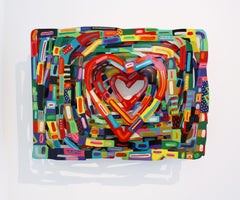
Heartbeat
By David Gerstein
Located in PARIS, FR
David Gerstein's Heartbeat is a striking three-layer wall sculpture that captures the pulse of life through vibrant colors and dynamic shapes. The piece combines a rhythmic design wi...
Category
21st Century and Contemporary Pop Art Continental Europe - Figurative Sculptures
Materials
Metal
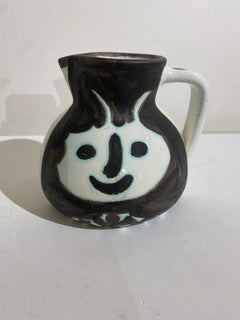
Pichet Têtes, by Picasso, Pitcher, 1950
s, Edition, Black and white, Design
By Pablo Picasso
Located in Geneva, CH
Pichet Têtes, by Picasso, Pitcher, 1950's, Edition, Black and white, Design
Pichet Têtes
Ed. 500 pcs
1956
White earthenware, decoration with oxidized par...
Category
1950s Post-War Continental Europe - Figurative Sculptures
Materials
Ceramic, Earthenware
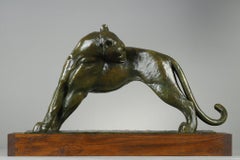
Panther licking
By André Vincent Becquerel
Located in PARIS, FR
Panther licking
by André-Vincent BECQUEREL (1893-1981)
A bronze sculpture with nuanced green patina
Signed on the base " Becquerel "
Old edition cast
Presented on a wooden base
Fra...
Category
1930s French School Continental Europe - Figurative Sculptures
Materials
Bronze
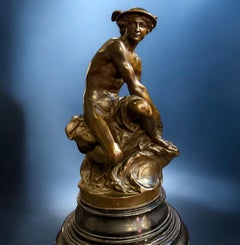
Fabulous Italian Neoclassical Marble Sculpture of Hermes
Located in Rome, IT
19th century French finely chiseled bronze figure of Hermes .
Signed Pigalle G . Cuspinera
Hermes , the messenger of the gods, is sitting on a rock, ready to leap up. He is att...
Category
19th Century Academic Continental Europe - Figurative Sculptures
Materials
Bronze
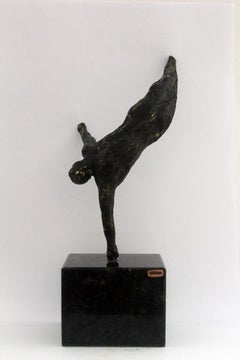
$6,725 Sale Price
20% Off
An acrobat. Bronze figurative sculpture, Nude, Dynamic Composition, Polish art
By Ryszard Piotrowski
Located in Warsaw, PL
Contemporary bronze sculpture on a marble base made by Polish artist Ryszard Piotrowski. The artwork depicts human figure in an acrobatic pose. It is very dynamic. The surface is tex...
Category
21st Century and Contemporary Other Art Style Continental Europe - Figurative Sculptures
Materials
Bronze
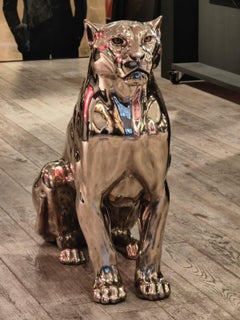
Jaguar Bronze Sculpture Polished Wild Animal In Stock
By Chris Tap
Located in Utrecht, NL
Jaguar Bronze Sculpture Polished Wild Animal In Stock
Chris Tap (1973, Amsterdam, the Netherlands) attended university where he studied economy and cul...
Category
21st Century and Contemporary Contemporary Continental Europe - Figurative Sculptures
Materials
Bronze
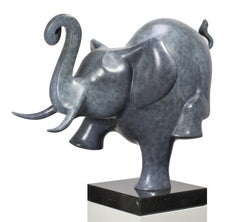
Dansende Olifant no.2 Dancing Elephant Bronze Sculpture Contemporary In Stock
By Evert den Hartog
Located in Utrecht, NL
Dansende Olifant no.2 Dancing Elephant Bronze Sculpture Contemporary In Stock
Evert den Hartog (born in Groot-Ammers, The Netherlands in 1949) followed his education to be a sculpto...
Category
21st Century and Contemporary Contemporary Continental Europe - Figurative Sculptures
Materials
Bronze
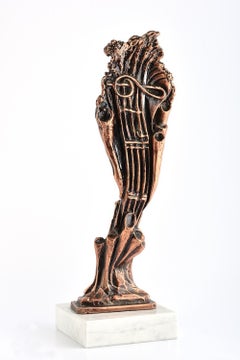
The Music - Original Travertine Sculpture by Benedetto Robazza - 2000s
Located in Roma, IT
The Music - Sculpture is a magnificent artwork realized by the Italian artist Benedetto Robazza (Rome, 1936-2020).
Travertine sculpture realized by the fusion of auburn pewter. Limited edition of 15 exemplars.
Dimensions: cm 11 x 11 x 3 (base); cm 9 x 5 x 32 (sculpture).
Very good conditions.
This sculpture is a splendid creation by one of the most appreciated sculptors all over the world. Bendetto Robazza was a great sculptor but also a talented portrait painter, demanded among the politicians, people in finance, the military, ecclesiastical and showbusiness world: he had the honour of being invited to portray American President Regan, whose bust is displayed in in the prestigious Roosevelt room in the White House. He enjoyed portraying big stars of yesterday and today: Rudolf Valentino...
Category
Early 2000s Continental Europe - Figurative Sculptures
Materials
Travertine
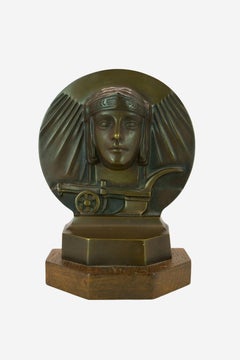
Sun God Ra / - The Light of Knowledge -
Located in Berlin, DE
Anonymous, Sun God Ra (bookend), 16 x 13.5 x 6 cm (depiction), 17.5 x 13.5 x 8 cm (with pedestal), patinated brass, c. 1935.
- Nose slightly rubbed, otherwise very good condition
...
Category
1930s Art Deco Continental Europe - Figurative Sculptures
Materials
Brass
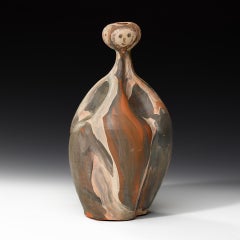
Bouteille Tête de femme
Located in CANNES, FR
Jules Agard ( 1905 - 1986 )
" Tête de femme "
Sculpture surréaliste réalisée en terre rouge de Salernes et
montée au tour . le corps est bombé et creusé alternativement . le col se...
Category
1970s Surrealist Continental Europe - Figurative Sculptures
Materials
Ceramic
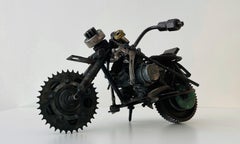
Late 20th Century Contemporary Metal Assemblage Racing Motorcycle Sculpture
Located in Frederiksberg C, DK
The sculpture is attributed to Swedish artist Bob Pasterkamp (1952-) who has created similar pieces during the 1990s and early 2000s.
An inspirational contemporary sculpture is composed of various metal objects such as an old bicycle...
Category
Late 20th Century Assemblage Continental Europe - Figurative Sculptures
Materials
Metal
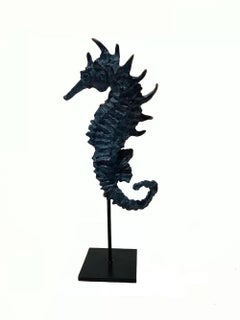
Ultramarine Seahorse I by Chésade - Bronze sculpture, animal, seahorse, ocean
By Chésade
Located in Paris, FR
Ultramarine Seahorse I is a unique bronze sculpture by contemporary artist Chésade, dimensions are 25 × 10.5 × 6 cm (9.8 × 4.1 × 2.3 in). The specified dimensions include the stand a...
Category
21st Century and Contemporary Contemporary Continental Europe - Figurative Sculptures
Materials
Bronze
Scène de tauromachie, Picasso, 1950
s, edition, earthenware, terracotta, scene
By Pablo Picasso
Located in Geneva, CH
Scène de tauromachie, Picasso, 1950's, edition, earthenware, terracotta, scene
Scène de tauromachie
Ed.274/500 pcs
1957
Red earthenware clay, eng...
Category
1950s Post-War Continental Europe - Figurative Sculptures
Materials
Earthenware, Terracotta