Continental Europe - Western European Rugs
to
148
Width
to
Length
to
1,707
1,237
23
933
259
90
79
10
8
5
5
3
3
2
2
2
20
158
1,059
1,730
166
545
333
14
11
61
41
31
59
65
130
56
31
2,656
2,191
507
444
185
2,967
3,901
3,198
2,967
1,481
1,761
2,147
755
719
709
703
318
106
42
40
39
Item Ships From: Continental Europe
Handmade Vintage Caucasian Kazak Rug 3.7
x 5.9
, 1940s - 2B108
Located in Bordeaux, FR
Capture the bold, enduring spirit of the Caucasus with this striking Vintage Kazak Rug, hand-knotted from luxurious wool in the 1940s. This piece embodies the classic Kazak aesthetic...
Category
1940s French Vintage Continental Europe - Western European Rugs
Materials
Wool

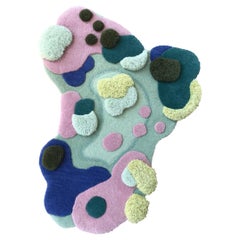
Contemporary, Wild Colourful Carpet, Spring Cloud by Alfie Furry Friends
Located in 1204, CH
Spring cloud is a soft spot for walls or floor. Our memories of nature is what we will build our future habitats out of. This is a spring memory of tactile warmth. Colors of joy and new beginnings.
Sold as rug, but can on request come with hanging system.
Hand tufted and embroidered wool. The layers of different heights are sculpted to create a lush textured lanscape. The rug has a rich cotton back-
Hand tufted and embroidered wool. The layers of different heights are sculpted to create a lush textured lanscape. The rug has a rich cotton back- ing and is finished with a hand applied embroidery stitch. The wool yarns are collected factory leftovers from The Netherlands, India and Nepal. Depend- ing on avaliablitiy of yarns small color variations can appear.
My name is Alfhild Kulper. I am a Swedish artist and designer, aiming to create physical representations of the soft spots in our minds.
I graduated from Central Saint Martins University of the Arts London 10 years ago. And have since lived in the Netherlands, working as a fashion designer for the dutch brand Viktor & Rolf. In 2019 I started making textile art under the name Alfie’s Fuzzy Friends...
Category
2010s Dutch Continental Europe - Western European Rugs
Materials
Wool
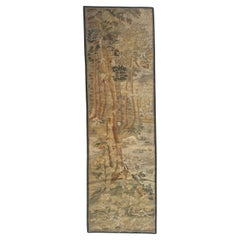
Pretty antique Antique French Needlepoint Panel Tapestry
Located in Saint Ouen, FR
Beautiful late 19th century needlepoint tapestry with nice design of the forest with vegetation and beautiful light colors with the hues of yellow, green, brown and white, entirely h...
Category
Late 19th Century French Aubusson Antique Continental Europe - Western European Rugs
Materials
Wool, Silk
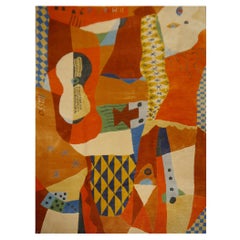
Large Art Line Rug After Pablo Picasso Hand Knotted Wool Excellent Condition
By (after) Pablo Picasso
Located in Lohr, Bavaria, DE
A beautiful vintage design carpet by ART LINE, hand knotted using finest Tibetan wool in 6.6 x 9.6 ft / 300 x 200 cm, Design after Pablo Picasso
Cubism is a style in art history that developed from the avant-garde in painting in France around 1906. Well-known founders are Pablo Picasso and Georges Braque.
This vintage rug is in excellent condition and a rare piece on the market.
The feel is soft and cozy thanks to the use of the fine material. The rug is approx. 1/4-1/3 inch high.
Cubistic design carpet hand knotted.
Collection: Djoharian Design
Colors: Orange, Beige, Blue
Pile: Wool
Size: 300 x 200 cm
Fringe: Yes, on both sides
Underfloor heating: Suitable
Perfect for loft or Industrial modern rooms...
Category
1990s Nepalese Modern Continental Europe - Western European Rugs
Materials
Wool
Handmade Antique Persian Malayer Rug 3.9
x 4.11
, 1920s - 2B96
Located in Bordeaux, FR
Artistry from the Heart of Persia
Step into a piece of textile history with this captivating antique Persian Malayer rug, hand-knotted from fine wool circa the 1920s. Originating fro...
Category
1920s French Vintage Continental Europe - Western European Rugs
Materials
Wool
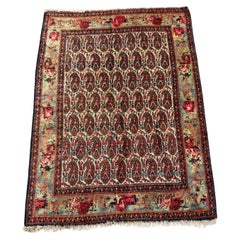
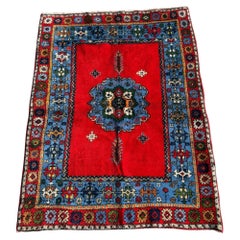
Handmade Antique Moroccan Berber Rug 3.11
x 5
, 1920s - 2B105
Located in Bordeaux, FR
Command attention in your space with this incredibly vibrant Handmade Antique Moroccan Berber Rug. A true piece of North African textile history, this rug was hand-knotted around the...
Category
1920s French Vintage Continental Europe - Western European Rugs
Materials
Wool
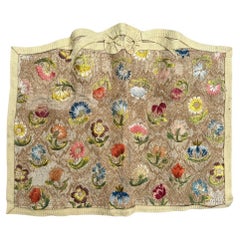
Pretty antique Hungarian embroidery tissue
Located in Saint Ouen, FR
Beautiful antique hungarian embroidered tissue fragment , with beautiful designs of flowers and with nice natural colours, entirely hand embroide...
Category
Early 19th Century Hungarian Aubusson Antique Continental Europe - Western European Rugs
Materials
Silk
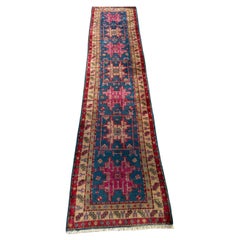
Handmade Vintage Caucasian Kazak Runner Rug 2.4
x 9.9
, 1950s - 2B102
Located in Bordeaux, FR
Introduce a bold splash of color and tribal artistry with this exquisite Handmade Vintage Caucasian Kazak Runner. Dating from the 1950s, this runner is a testament to the enduring ap...
Category
1950s French Vintage Continental Europe - Western European Rugs
Materials
Wool
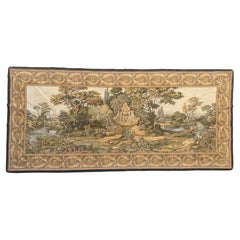
pretty vintage French jacquard tapestry « the fountain »
Located in Saint Ouen, FR
Discover the elegance of this exquisite French tapestry featuring a charming scene of a fountain in nature among the trees which are surrounded by rivers. All this is surrounded by b...
Category
Early 20th Century French Aubusson Continental Europe - Western European Rugs
Materials
Wool, Cotton, Acrylic
French Aubusson Rug 19th century – 138x182 – No. 1584
By Aubusson Manufacture
Located in Paris, FR
Rug From The Aubusson Manufactory,
Napoleon III
Period: 19th century
Condition: Perfect condition
Material: Wool
This magnificent carpet, having benefited from a deep cleaning ...
Category
1860s French Aubusson Antique Continental Europe - Western European Rugs
Materials
Wool
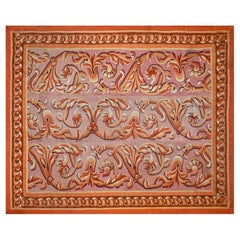
Danish RYA wool rug by Hojer Eksport Wilton 1970s
By Hojer Eksport Wilton
Located in Firenze, FI
Danish carpet produced by Hojer Eksport Wilton in the 1970s, with various warm tones of orange. Vintage made with a high-quality Danish RYA weaving technique, in pure wool.
Design...
Category
1970s Danish Vintage Continental Europe - Western European Rugs
Materials
Wool
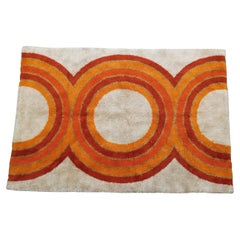
Custom Hand knotted Rug, after Wassily Kandinsky “Composition VIII”. Wool, silk
By (after) Wassily Kandinsky
Located in Munich, DE
Custom hand knotted rug based on the painting “Composition VIII” by Bauhaus master painter Wassily Kandinsky.
Rug size (listed here): 280 x 200 cm / 9.2 x 6.6 ft
Material: fine wool.
Quality: Tibetan handknotted in 150 knots per square inch.
Very exact translation of the original artwork as a handknotted rug, created by weaving approx. 1.3 million knots per hand or the rug in the listed size.
Approx. 230 000 handmade knots per square meter.
Colors: 26 custom-dyed colors.
Main colors in the rug: warm base in ivory cream and abstract composition in the main colours dark orchid purple, sky blue and steel blue, golden yellow, maroon brown and saddle brown, firebrick red and dark sea green.
Sustainable and certified fair-trade artisanal production. Label Step fair-trade partners.
This elegant, lively rug is made entirely by hand using traditional weaving techniques.
Numbered limited edition of maximum 100 fine handmade rugs with this art piece. Each rug comes with a sewn-on label with an image of the artist’s signature and numbered by hand, per order.
This beautiful rug can also be ordered in even more luxurious materials like pure silk or mohair, and in plant-based materials like Tencel and linen. A combination of materials is possible as well. Production time may increase for these options, depending on material availability.
Production time for this rug is between is approximately 12-14 weeks. For environmental reasons and to provide our full bespoke service, our rugs are always made to order.
-- About the artwork on which this rug is based: “Composition VIII”:
Wassily Kandinsky created “Composition VIII” in 1923. The painting represents the Kandinsky’s transition from his Munich style of Expressionism to abstract geometric form and structure and is considered a peak in his work during that period.
“Composition VIII” is characterized by the use of tools such as compasses and rulers to draw circular and parallel-linear geometric shapes. This technique was influenced by the Russian painter Alexander Mikhailovich Rodchenko...
Category
21st Century and Contemporary Indian Bauhaus Continental Europe - Western European Rugs
Materials
Other


$4,432 Sale Price
20% Off
Pretty vintage French Aubusson style Jacquard Tapestry
Located in Saint Ouen, FR
"Discover the timeless elegance of this exquisite vintage French tapestry featuring a galant scene featuring women and men in a country picnic.
Elevate your space with the charm of t...
Category
Mid-20th Century French Aubusson Continental Europe - Western European Rugs
Materials
Wool, Cotton, Acrylic
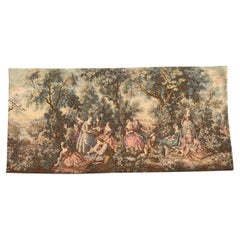
21st Century Art Deco Elie Saab Maison Wool and Bamboo Silk Monogram Rug, Italy
By Elie Saab, Carlo Colombo
Located in Mariano Comense, CO
21st century Art Deco Elie Saab Maison wool and bamboo silk monogram rug, Italy
The Elie Saab crest, a distinctive element of the Elie Saab universe, becomes the focal point of this impressive and scenographic PALMIER Rug, created in partnership with Sahrai. Inspired by an imperial and royal pattern synonyms with luxury and innate elegance, the crest represents the initials of Elie Saab creating a seal that portrays the brand’s identity and is embellished on gowns and accessories reflecting sophistication and distinction. Combining the distinctive Elie Saab crest with the shapes and colours inspired by the natural elements of the Middle Eastern landscapes...
Category
2010s Italian Art Deco Continental Europe - Western European Rugs
Materials
Wool, Silk
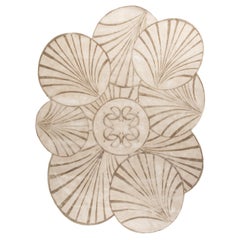
Pretty mid 20th century french Aubusson tapestry « autumn ferns » by Le Guen
By atelier robert four
Located in Saint Ouen, FR
Discover the timeless elegance of the Fougères d’Automne « autumn ferns » titled limited edition wall tapestry from Manufacture Robert Four in Aubusson, France. This exquisite piece,...
Category
Mid-20th Century French Aubusson Continental Europe - Western European Rugs
Materials
Wool, Cotton
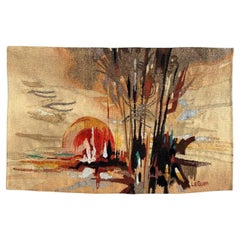
Vintae modernist rug, 1970s - Belgium
Located in Leuven, Vlaams Gewest
Beautiful seventies rug with orange/brown/beige colours from the seventies period.
Lovely vintage decorative piece.
Very good condition.
1970's - Belgium
Good condition.
Dimens...
Category
1970s Belgian Mid-Century Modern Vintage Continental Europe - Western European Rugs
Materials
Wool
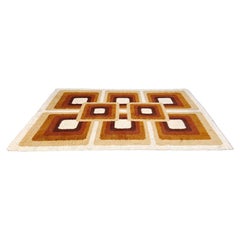
1980s Gorgeous Geometric Italian Woolen Rug by Missoni for T&J Vestor
By Ottavio Missoni
Located in Milano, IT
1980s Gorgeous rug by Missoni for T&J Vestor. Pure wool Made in Italy. In excellent condition like new. This rug is a true example of amazing Italian and has Missoni label. It has b...
Category
1980s Italian Mid-Century Modern Vintage Continental Europe - Western European Rugs
Materials
Wool
$1,320 Sale Price
20% Off
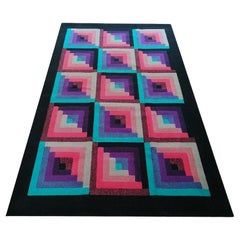
Handmade Artist Mural Made of Jute, 1960s Scandinavia
Located in Nürnberg, Bayern
Handmade Artist Mural Made of Jute, 1960s Scandinavia
Category
1960s Scandinavian Mid-Century Modern Vintage Continental Europe - Western European Rugs
Materials
Jute
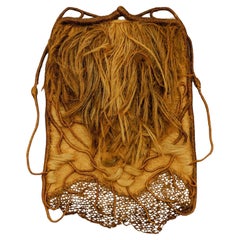
1980s Gorgeous Woolen Rug by Ottavio Missoni. Made in Italy
By Ottavio Missoni
Located in Milano, IT
1980s Gorgeous rug by Missoni for T&J Vestor. Pure wool Made in Italy. In excellent condition like new. This rug is a true example of amazing Italian and has Missoni label. It has be...
Category
1980s Italian Mid-Century Modern Vintage Continental Europe - Western European Rugs
Materials
Wool
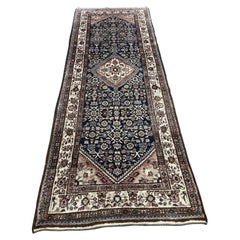
Handmade Antique Persian Hamadan Runner Rug 3.5
x 9.4
1920s - 1N79
Located in Bordeaux, FR
Authentic Village Craft: Antique Handmade Persian Hamadan Wool Runner
Step into the enduring legacy of Persian village weaving with this authentic handmade antique Hamadan rug, craft...
Category
1920s French Vintage Continental Europe - Western European Rugs
Materials
Wool
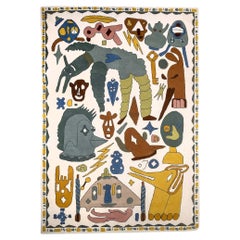
Jaime Hayon
Troupe
Rug for Nanimarquina
By Jaime Hayon, Nanimarquina
Located in Tilburg, NL
Jaime Hayon 'Troupe' Rug for Nanimarquina. New, current production. 170 x 240cm.
Crazy, dreamlike and with a sense of humor, resembling a party: such is Jaime Hayon's new collecti...
Category
21st Century and Contemporary Spanish Mid-Century Modern Continental Europe - Western European Rugs
Materials
Wool
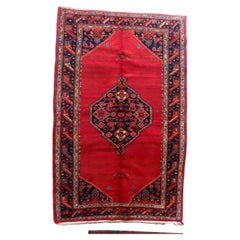
Handmade Vintage Persian Hamadan Rug 4.5
x 6.9
, 1960s - 1C1180
Located in Bordeaux, FR
Mid-Century Hand-Knotted Hamadan Rug, Wool, 4.5' x 6.9'
Exceptional Vintage Hamadan Rug (Middle East), Circa 1960s
Bring a piece of rich textile history into your home with this stun...
Category
1960s French Vintage Continental Europe - Western European Rugs
Materials
Wool
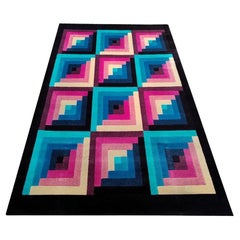
Tappeto Iconico Design Italiano Contemporaneo Blu by Deanna Comellini 200x300 cm
By Deanna Comellini
Located in Bologna, IT
"Kama" è un tappeto rivoluzionato entrato nella storia del design firmato Deanna Comellini, fondatrice e Art Director dell'azienda pioniere del tappeto contemporaneo G.T.DESIGN.
"Ka...
Category
2010s Indian Modern Continental Europe - Western European Rugs
Materials
Other
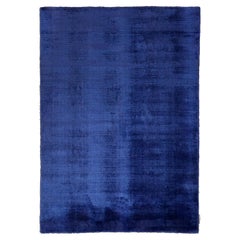
1980s Gorgeous Geometric Italian Woolen Rug by Missoni for T&J Vestor
By Ottavio Missoni
Located in Milano, IT
1980s Gorgeous rug by Missoni for T&J Vestor. Pure wool Made in Italy. In excellent condition like new. Signed at the bottom. This rug is a true example of amazing Italian design.
Di...
Category
1980s Italian Mid-Century Modern Vintage Continental Europe - Western European Rugs
Materials
Wool
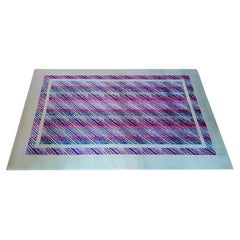
$1,248 Sale Price
20% Off
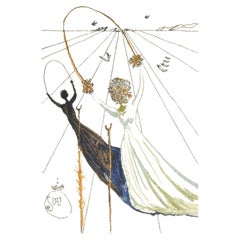
20th Century White and Blue Alice in Wonderland Salvador Dalí Rug, ca 1977
By Ege Axminster A/S
Located in Firenze, IT
Probably there would have been no better artist to illustrate a story as beautiful as surreal, like that of Alice in Wonderland. Let’s talk about Salvador Dali (1904-1989), the Spanish artist who changed the concept of 20th-century art. As an admirer of Freud, Salvador Dali is known for the use of symbolism and recurring objects in all of his works. This carpet, made by the well-known EGE AXMINSTER carpet factory from a 1969 painting, presents Alice jumping rope in a long fluttering dress with her head and hands represented as a bouquet and her symbolic shadow figure next to her. The dark grid lines fixed on an ivory field vanish at an escape point behind the mountains in the distance. Birds, abstract figures and a smaller secondary person dot the background in the distance. Dali’s signature...
Category
Late 20th Century Danish Continental Europe - Western European Rugs
Materials
Wool
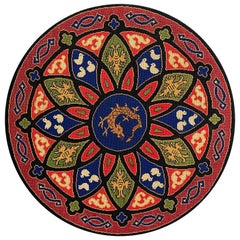
Bobyrug’s Beautiful Antique French Needlepoint Round Tapestry
Located in Saint Ouen, FR
Nice antique French tapestry with beautiful design and nice colors, entirely hand embroidered with needlepoint method with wool and silk, assembled on a wooden panel.
✨✨✨
"Experienc...
Category
Late 19th Century French Aubusson Antique Continental Europe - Western European Rugs
Materials
Wool, Silk
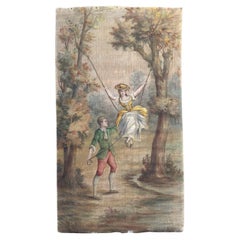
Pretty antique tapestry cardboard hand painted panel
Located in Saint Ouen, FR
Pretty 19th century French tapestry cardboard with a nice design of swing game featuring a young man standing pushing a young girl sitting on the swing. At a setting in the woods, be...
Category
Late 19th Century French Romantic Antique Continental Europe - Western European Rugs
Materials
Cotton, Linen
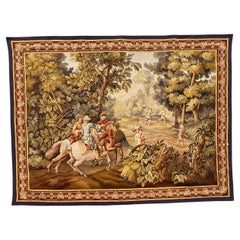
Bobyrug’s Wonderful Fine Antique French Aubusson Tapestry
Located in Saint Ouen, FR
Very beautiful and fine Aubusson tapestry with a nice design of royal Court with knights, and very beautiful colors, entirely and finely handwoven with wool and silk, at the famous B...
Category
Early 20th Century French Aubusson Continental Europe - Western European Rugs
Materials
Wool, Silk
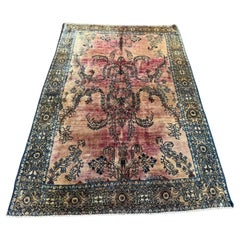
Handmade Antique Persian Sarouk Rug 4
x 6
, 1890s - 2B94
Located in Bordeaux, FR
An exceptionally rare and elegant example of pre-1900 Persian artistry, this antique Sarouk rug (c. 1890s) is a masterful work, highly coveted for its sophisticated composition and e...
Category
1890s French Antique Continental Europe - Western European Rugs
Materials
Wool
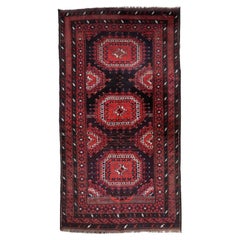
Antique Hand-Knotted Afghan Baluch Rug in Red And Brown 3.8
x 6.9
- 1C1195
Located in Bordeaux, FR
A captivating and authentic antique Baluch tribal rug, hand-knotted from wool and originating from Afghanistan, dating to the 1920s. This piece exemplifies the distinct artistry of t...
Category
1920s French Vintage Continental Europe - Western European Rugs
Materials
Wool
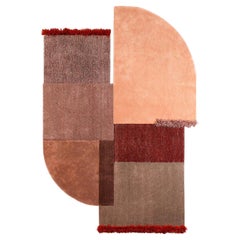
Selce #4 Emathite Red Rug by Studio Salaris by Carpet Edition
By Carpet Edition
Located in Milan, IT
A stunning combination of earth tones graces the surface of this asymmetrical rug designed by Studio Solaris and part of the Selce Collection. Contemporary and unconventional, this p...
Category
2010s Italian Continental Europe - Western European Rugs
Materials
Textile
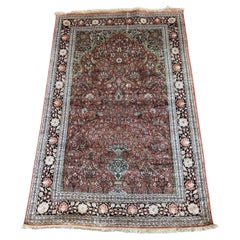
Handmade Antique Persian Kashan Silk Rug 4.1
x 6.2, 1930s - 2B90
Located in Bordeaux, FR
A masterpiece of Persian weaving, this antique Kashan prayer rug, crafted entirely from lustrous, fine-knotted 100% silk, is an item of exceptional beauty and religious significance....
Category
1930s French Vintage Continental Europe - Western European Rugs
Materials
Silk
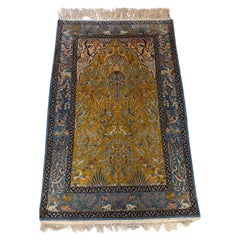
Handmade Antique Persian Isfahan Rug 3.1
x 5.2, 1930s - 2B88
Located in Bordeaux, FR
This beautiful and highly collectible antique Persian Isfahan rug, hand-knotted in the 1930s, features the sacred and celebrated "Tree of Life" motif. The Isfahan region is renowned ...
Category
1930s French Vintage Continental Europe - Western European Rugs
Materials
Wool
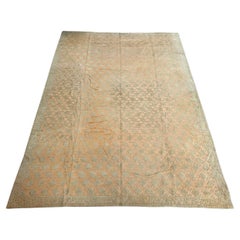
Large mid century French Cogolin rug
Located in Saint Ouen, FR
Beautiful mid century French Cogolin rug with a nice decorative and simple design, with a white pile of design on the orange foundation, hand made by wool on wool foundation
Damage...
Category
Mid-20th Century French Art Deco Continental Europe - Western European Rugs
Materials
Wool
Pretty Vintage Aubusson Style Jacquard Tapestry
Located in Saint Ouen, FR
Very pretty mid century French tapestry with nice galant design and beautiful colors, woven on the Jacquard looms woven with wool and cotton.
✨✨✨
"Experience the epitome of luxury a...
Category
Mid-20th Century French Aubusson Continental Europe - Western European Rugs
Materials
Wool, Cotton
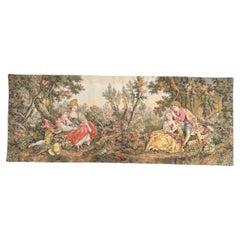
Beautiful antique french handwoven Aubusson tapestry « thousand flowers »
By Aubusson Manufacture
Located in Saint Ouen, FR
Discover the timeless elegance of this early 20th-century French Aubusson tapestry featuring a captivating design inspired by the 15th-century museum tapestry « Mille Fleurs »
This ...
Category
Mid-20th Century French Aubusson Continental Europe - Western European Rugs
Materials
Wool, Cotton, Silk
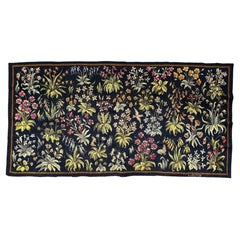
Dahlia Rug by Volver Studios
Located in Geneve, CH
Dahlia Rug by Volver Studios
Dimensions: W 250 x L 350 cm.
Materials: Wool and bamboo.
Available in seven size options: 90 x 240 cm, 140 x 200 cm, 170 x 240 cm, 200 x 300 cm, 250 x ...
Category
2010s Norwegian Post-Modern Continental Europe - Western European Rugs
Materials
Wool, Bamboo
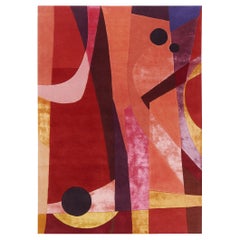
$6,358 / item
Frencheantique Carpet From The Savonnerie Manufactory Circa 1940 - No. 1588
By Savonnerie
Located in Paris, FR
Carpet From The Savonnerie Manufactory, 20th Century, Circa 1940 - 353x217 Cm - No. 1588
Artist: Manufacture De La Savonnerie
Period: 20th century
Condition: Perfect condition
Materi...
Category
1940s French French Provincial Vintage Continental Europe - Western European Rugs
Materials
Wool
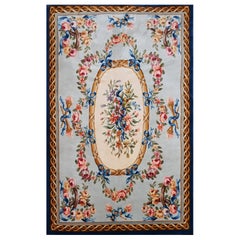
Rollakan Iris Wool Rug Petrol
Located in Stockholm, SE
A collection that celebrates traditional Scandinavian women’s craftsmanship, inspired by Swedish folk traditions in a modern contemporary interpretation. With its patterns and techni...
Category
2010s Indian Modern Continental Europe - Western European Rugs
Materials
Jute
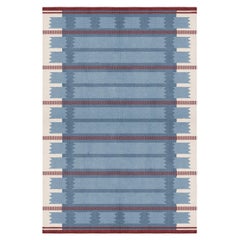
$2,758 / item
Rare Abstract Modernist Carpet by Antonin Kybal, 1948
By Antonín Kybal 1
Located in Praha, CZ
Step into postwar Czech design with this exceptional rug by Antonín Kybal, created in 1948. Kybal, a pivotal figure in mid-century Europe textile art, is celebrated for his innovativ...
Category
1940s Czech Mid-Century Modern Vintage Continental Europe - Western European Rugs
Materials
Wool
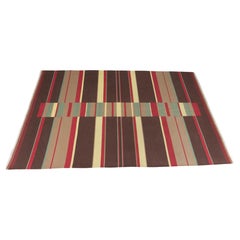
Pretty vintage French Aubusson style Jacquard Tapestry
Located in Saint Ouen, FR
"Discover the timeless elegance of this exquisite vintage French tapestry featuring a captivating scene of pastoral love, showing a couple in countryside with the nature and a river ...
Category
Mid-20th Century French Aubusson Continental Europe - Western European Rugs
Materials
Wool, Cotton, Acrylic

pretty vintage French medieval design screen printed tapestry «gallant parties»
Located in Saint Ouen, FR
Nice vintage French hand printed tapestry with beautiful medieval design and beautiful colors. Discover a stunning mid-20th-century tapestry, meticulously hand-printed on a cotton fo...
Category
Mid-20th Century French Aubusson Continental Europe - Western European Rugs
Materials
Cotton, Wool
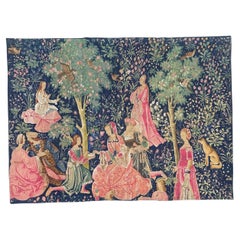
Pretty antique Century French Aubusson style Jacquard Tapestry
Located in Saint Ouen, FR
Very pretty antique french Aubusson style tapestry with beautiful design from the nature with an eagle. Woven on Jacquard loom with wool and cotton.
✨✨✨
"Experience the epitome of lu...
Category
Early 20th Century French Aubusson Continental Europe - Western European Rugs
Materials
Wool, Cotton
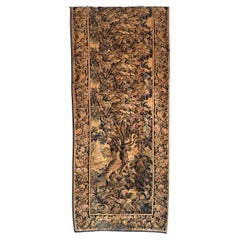
Pretty Vintage Aubusson Style Jacquard Tapestry
Located in Saint Ouen, FR
Beautiful vintage French Aubusson style tapestry with a nice design . and with beautiful colours, entirely woven with wool And cotton on Jacquard looms
✨✨✨
"Experience the epitome o...
Category
Mid-20th Century French Aubusson Continental Europe - Western European Rugs
Materials
Wool, Cotton
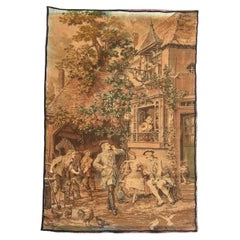
Original Abstract Scandinavian High Pile Abstract Rya Rug Carpet, Finland, 1960s
By Ege Rya, Verner Panton
Located in Kirchlengern, DE
Article:
High pile Rya rug
Decade:
1960s
Origin:
Scandinavia Sweden
Material:
100% wool
This rug is a great example of 1960s pop art interior. Made in high quality Rya ...
Category
Mid-20th Century Swedish Mid-Century Modern Continental Europe - Western European Rugs
Materials
Cotton
$2,027 Sale Price
24% Off
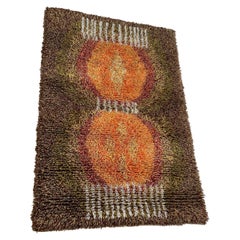
Luxury Natural Shape Hand-Dyed European Sheepskin Large Art Rug by Carine Boxy
Located in Geneve, CH
Luxury Natural Shape Hand-Dyed European Sheepskin Large Art Rug by Carine Boxy
Dimensions: 390 x 300 cm
Materials: Naturally dyed sheepskin
Size and color can be customized upon requ...
Category
2010s Belgian Modern Continental Europe - Western European Rugs
Materials
Sheepskin
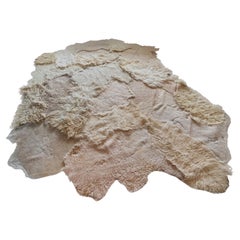
Swedish Mid-Century Rölakan Rug Handwoven Wool Carpet
Located in Haddonfield, NJ
A Mid-Century Modern vintage handmade Swedish carpet in wool featuring a geometric pattern. This greenish colored Scandinavian rug is made and signed by MJ from 1950 and 1970 and thi...
Category
1960s Swedish Scandinavian Modern Vintage Continental Europe - Western European Rugs
Materials
Wool
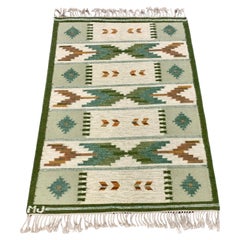
Outstanding Art Deco Chinese Rug with Cubist Border by Nichols
Co.
By Nichols
Located in Milan, IT
Only a very limited group of the carpets woven during the thirties at the Tianjin city looms are decorated by geometric patterns typical of the Art Deco period. Some of these rare pi...
Category
1930s Chinese Art Deco Vintage Continental Europe - Western European Rugs
Materials
Wool
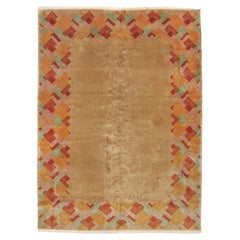
Vanità Flower Polychrome Poly-Blend Rug by Ken Scott
By Carpet Edition
Located in Milan, IT
Textural and chromatic dynamism maximize the decorative impact of this superb flower-shaped artisan rug. Part of an original Collection where art, fashion, and design seamlessly inte...
Category
2010s Italian Continental Europe - Western European Rugs
Materials
Wool
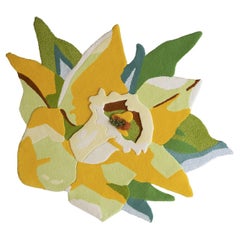
Pretty vintage French Aubusson style Jacquard Tapestry
Located in Saint Ouen, FR
"Discover the timeless elegance of this exquisite vintage French tapestry featuring a galant scene.
Elevate your space with the charm of this beautifully crafted and woven tapestry,...
Category
Mid-20th Century French Aubusson Continental Europe - Western European Rugs
Materials
Wool, Cotton, Acrylic
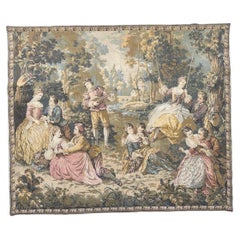
Zebra-Striped Printed Leather Rug Black
White
By Sitap Carpet Couture
Located in Milan, IT
The Zebra-Striped Printed Leather Black & White Rug takes inspiration from the appeal of the animalier style. A timeless pattern full of character will make this accessory the hero i...
Category
2010s Italian Continental Europe - Western European Rugs
Materials
Leather
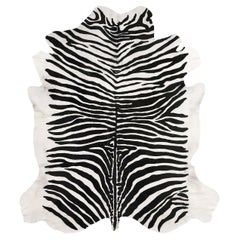
$2,280 / item
Modernist Aubusson Rug in the Neo Baroque Style Signed JF
By André Arbus
Located in Milan, IT
One of the main trajectories of French Modernism was dedicated towards a revival of a classical iconography. Motivated from a reaction towards the often rigid and austere mood of the...
Category
1930s French Baroque Revival Vintage Continental Europe - Western European Rugs
Materials
Wool
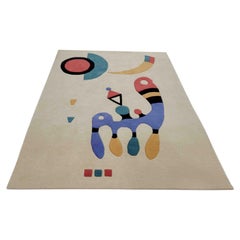
Custom Hand Tufted Rug, after Wassily Kandinsky “Composition” (1944) Limited Ed.
By (after) Wassily Kandinsky
Located in Munich, DE
Custom hand tufted rug based on the artwork “Composition”, painted by Wassily Kandinsky in 1944.
Sustainable and certified fair-trade artisanal prod...
Category
21st Century and Contemporary Indian Bauhaus Continental Europe - Western European Rugs
Materials
Wool
$1,413 Sale Price
20% Off
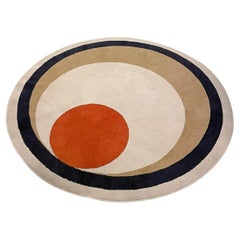
Mid-Century Modern Round Graphic Rug, 1970s
Located in Brussels, BE
Mid-Century Modern Round Graphic Rug, 1970s
Category
1970s Mid-Century Modern Vintage Continental Europe - Western European Rugs
Materials
Fabric
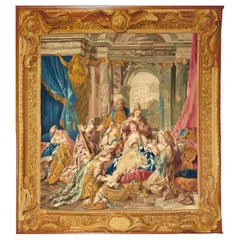
Tapestry Royal Manufacture of Aubusson, Louis XVI period 1738 at the Gobelins
By Aubusson Manufacture
Located in Madrid, ES
Tapestry from the Royal Manufacture of Aubusson, Louis XVI period , made in 1738 at the Gobelins
One panel from a series of Gobelins tapestries depicting the History of Esther, illustrating Esther seated and attended by handmaidens, one washing her feet in golden basin, another fastening a bracelet, another offering a mirror, all observed by Mordecai, woven in the workshop of Michele Audran after a design by J. F. de Troy.
The Toilet of Esther c.1778-85.Royal Collection Trust-Queens Audience Chamber
Windsor Castle
The Sketches for the Esther Cycle by Jean-François de Troy (1736)
“and the maid was fair and beautiful; whom Mor’decai, ..., took for his own daughter.” (Est. 2:7)
A supple and undulating genius, both a flattering portraitist and a prolix history painter, as well as a brilliant genre painter, in a gallant or worldly vein, Jean-François de Troy (Paris, 1679 – Rome, 1752), solicited, although he had passed the threshold of old age, a new royal commission up to his ambitions. To obtain it, he submitted – successfully - for the approval of the Bâtiments du roi (administration), seven modelli painted in 1736 with his usual alacrity.
Inspired by one of the most novelistic texts of the Old Testament, the Book of Esther, these sketches in a rapid and virtuoso manner were transformed by the artist, between 1737 and 1740 into large cartoons intended to serve as models for the weavers of the Gobelins factory. Showing undeniable ease and skill in the composition in perfect harmony with the sensitivities of the times, the tapestry set met with great success.
The Story of Esther perfectly corresponded to the plan of the Bâtiments du roi to renew the repertoire of tapestry models used for the weavers of the royal factories while it also conformed to the tastes of Louis XV’s subjects for a fantastical Orient, the set for a dramatic tale in which splendour, love and death were combined. Indeed, no tapestry set was woven in France during the 18th century as often as that of Esther.
The series of modelli painted by de Troy during the year 1736 looks to the history of French painting and decoration under Louis XV as much as it does the history of the Gobelins. It probably counts among the most important rococo pictorial groups to have remained in private hands. First the Biblical source illustrated by De Troy which constitutes the base of one of the richest iconographical traditions of Western art will be considered. Then the circumstances and specific character of French civilisation during the reigns of Louis XIV and Louis XV which contributed to making the theme of Esther a relevant subject, both attractive to contemporaries and remarkably in line with the sensitivities of the time will be elucidated.
An examination of the exceptional series of sketches united here, the cartoons and the tapestries that they anticipate as well as a study of their reception will close this essay. The Book of Esther: A scriptural source at the source of rich iconography.
The origin of the Esther tapestry set by Jean-François de Troy – origin and creation of a masterpiece
According to the evidence of one of the artist’s early biographers, the chevalier de Valory, author of a posthumous elegy of the master, read at the Académie royale de peinture et de sculpture on 6 February 1762, it was apparently due to early16 rivalry with François Lemoyne (1688-1737), his younger colleague who had precisely just been appointed First Painter to the King in 1736, that had encouraged François de Troy to seek a commission allowing him to show off his ease and his promptitude at the expense of a rival who was notoriously laborious: “M. De Troy, retaining some resentment of the kind of disadvantage which he believed to have suffered compared with his emulator looked to regain some territory by making use of the facility his rival did not possess.
Lemoyne was excessively long in the creation of his works,and M. De Troy of a rare celerity: consequently, with this particular talent, the latter offered to the court to make paintings appropriate to be executed at the Gobelins Factory; and it is to this circumstance that we owe the beautiful series of the Story of Esther, which would be sufficient alone to give him a great reputation.”17 Beyond the suspicion inspired by the topos, which still constitutes, more or less, a tale of rivalries between artists in ancient literature, there is probably some truth in what Valory reports although A.-J. Dezalier d’Argenville (who indicates rather spitefully that de Troy did not hesitate to “cut prices” to impose himself, benefitting from the productivity assured by the unlikely rapidity of his brush)18 proves to be more evasive: “As he looked to busy himself, he had offered to make the paintings that serve as models for the King’s tapestries cheaply: which did not please his colleagues.
He was given a choice of two tapestry series to be made and he took the Story of Esther and that of Jason”.19 Whether or not the choice was actually left to de Troy (which would appear rather casual on the royal administration’s part all the same), it seems likely that the artist, whose contemporaries extol his “fire”, as the faculty of invention was then called, must have ardently aspired to the possibility of using on a very large scale the “creative genius” with which Dezallier d’Argenville credits him. The decoration of the private apartments, the fashion for which Louis XV had promoted at Versailles and Fontainebleau, offered little opportunity to excel in this area. Other than painting for altarpieces, only tapestries could allow comparison with Lemoyne who had been granted – unfortunately for him – a major decoration: the enormous ceiling of the Hercules Room at Versailles. Favoured by the recent improvement in France’s financial situation, the revival of patronage offered de Troy a commission fitting for him, in a field in which, however, he had hardly any experience.
Anxious to renew the repertoire of models available to the Gobelins factory, the Duc d’Antin, surintendant des Bâtiments du roi from 1708 to 1736 followed by his successor, Philibert Orry comte de Vignory, gave him the task of producing seven large cartoons inspired by the Book of Esther corresponding to the brilliant sketches or modelli which de Troy had produced in one go, or almost (very few preparatory drawings can in fact be linked to the Esther cycle and all seem to be at the execution stage of the cartoons).20 Subjected to the approval of the Administration des Bâtiments according to the procedure in use for projects being planned for the Gobelins, sketches made rapidly during 1736 were approved and the project launched immediately. Thereupon came the news of François Lemoyne’s death, who, ground down by work and a victim of his private torment, committed suicide on 4 June 1737.
Against all expectations, de Troy did not replace his rival in the position of First Painter (which remained vacant until the appointment of Charles Coypel in January 1747), which would perhaps have made him too obviously the beneficiary of the drama. The awarding of the position of Director of the French Academy in Rome came to console him while he had already produced (or he was in the process of finishing), in Paris, three of the seven cartoons of the cycle (The Fainting of Esther finished in 1737 and the Toilet and Coronation of Esther, both finished in 1738).
De Troy, we can see, did not follow the order of the narrative but began with the subjects which apparently offered the least difficulty because he had already depicted them, or because they fall into a strong pictorial tradition (such is the case especially for the Fainting of Esther). He had hardly settled at the Palazzo Mancini in August 1738, when his first task which awaited the new director of the French Academy naturally consisted of honouring the royal commission and finishing without delay the final cartoons of the Story of Esther after the sketches he must have taken with him. As prompt as ever, de Troy discharged himself of the execution of the four remaining cartoons in only two years, by beginning with the largest format which allowed him to strike the imagination and to impose himself as soon as he arrived on the Roman stage: the Triumph of Mor’decai which was finished in 1739 (like Esther’s Banquet).
The following year, the Mor’decai's Disdain and The Sentencing of Haman were brought to an end in the same Neo-Venetian style, obviously tributary to Veronese with its choice of “open” monumental architecture which is characteristic of the entire cycle.21 The series, it should be noted, was almost augmented with some additional scenes in the mid 1740s. Indeed, the first tapestry set finished at the Gobelins in 1744 proved to be unsuitable for the arrangement of the Dauphine’s apartments at Versailles for which it had been intended to decorate the walls the following year (cf infra). Informed of this, de Troy, considering that the story of Esther offered “several good subjects,” immediately offered to illustrate one or new subject among those “which could appear to be the most interesting”.
The directeur des Bâtiments Orry, who managed the State’s accounts, obviously judged it less costly to have one of the tapestries widened to fill in the end of the Dauphine’s bedroom,22 which has probably deprived us of very original compositions, because de Troy had already illustrated the most famous themes, those that benefitted from a strongly established iconographical tradition and from which it was not easy to deviate
The Tapestry Set of the Story of Esther
Placed on the tapestry looms of the Gobelins at the end of the 1730s in Michel Audran’s workshop, the cycle created by de Troy aroused true infatuation. The few hundred tapestries made between 1738 and 1797 – all in high-warp tapestry and woven in wool and silk except for four in low-warp made in Neilson’s workshop – show the impressive success of a tapestry set that was without any doubt the most frequently woven of the 18th century in France.
29 Only three cartoons had been delivered by de Troy in 1738 when the first tapestry set was begun by Audran under the expert eye of Jean-Baptiste Oudry to whom the Directeur général des bâtiments, Philibert Orry had assigned the (weekly) supervision of the weaving. During the summer of 1738, the piece of the Fainting of Esther, which Oudry judged to be admirable, was finished.
During the winter of 1742, Oudry informed Orry that about two ells of the Triumph of Mor’decai had been made “with no faults”,that the Coronation of Esther was finished and that the Esther at her Toilet “a very gracious tapestry” was “a little over half” finished. Exhibited at Versailles in 1743, these two last pieces were admired by Louis XV and the Court.
On 3 December 1744, the set of seven tapestries was finally delivered to the Garde Meuble. It was intended, the honour was not slight, to decorate the apartments of the Infanta Maria Teresa Rafaela of Spain whose marriage to the young Dauphin Louis-Ferdinand had been fixed for the following year (it took place on 23 February 1745). Apparently it was thought that the theme of Esther the biblical heroine and wife of a foreign sovereign was appropriate for the apartments of the Spanish Dauphine.
As early as the month of March, the architect Ange-Jacques Gabriel informed de Troy that her grand cabinet was decorated with the “Esther tapestry set” specifying however that “for lack of two small or one large piece, we have not been able to decorate the end of the room”. This difficulty led immediately to the Banquet episode being woven a second time in two parts (they were delivered to the Garde-Meuble on 30 December 1746) to garnish the panels on each side of the bed of the Dauphine who would hardly enjoy them (she died on 22 July 1746 and the decoration was installed for the new Dauphine Maria Josepha of Saxony).
The appearance of the set’s remarkable border, which imitated a richly sculpted wooden frame, should be mentioned. Conceived in 1738 by the ornamentalist Pierre Josse-Perrot and used in the later weavings until 1768, it tended to reinforce the resolutely painterly appearance of the tapestry set which, in this regard, pushed the art of tapestry as far as its ultimate mimetic possibilities. With the exception of Mor’decai's Disdain which had been removed earlier, the “editio princeps” of the story of Esther (from then on in nine pieces) remained at Versailles until the Revolution. Of the eight surviving tapestries, four are at the chateau of Compiègne and four belong today to the Mobilier National. No less than seven tapestry sets reputed to be complete (one of them in fact only had six tapestries) would be produced officially at the Gobelins up to 1772.
Literature:
1- The Œuvres mêlées of an emulator of Racine, the Abbé Augustin NADAL thus include an Esther. Divertissement spiritual which is exactly contemporary with Jean François de Troy’s cycle since it was performed in 1735 and published in Paris three years later.
2-Le Siècle de Louis XIV, 1751, 1785 ed., p. 96-97 for French ed.
3- Lemoyne and de Troy had been obliged to share the First Prize in the competition organised in 1727 between the most prominent history painters of the Académie Royale.
4- Mémoires…, pub. L. DUSSIEUX et al., 1854, II, p.265.
5-The fact that de Troy, at the risk of falling out with his colleagues, did not hesitate to make use of prices in order to convince the new directeur des Bâtiments Philibert Orry, is confirmed by Mariette who adds tersely “it caused much shouting” (pub. 1851-1860, II, p. 103).
6- Abrégé de la vie des plus fameux peintres…, ed. 1762, IV, p. 368-369 20 Early comments on the painter are inclined to present him as a kind of “pure painter”, doing without the medium of drawing, a few intermediary studies between the Esther sketches and the large cartoons at the Louvre nevertheless show that de Troy used red chalk (see in the catalogue, the notice for the Meal of Esther and Ahasuerus under the entry drawing) to change one or other figure.
7-C. GASTINEL-COURAL (cat. exp. PARIS, 1985, p. 9-13) as well as the article by J. VITTET, exh. cat. LA ROCHE-GUYON, 2001, p. 51-55.
8-The Hermitage in St. Petersburg conserves five tapestries of these two royal gifts whose provenance still awaits elucidation (as far as we are aware). In 1766, the Grand Marshal of Russia, Count Razumovski (or Razamowski), acquired the Fainting and the Banquet extracted from the sixth weaving (J. VITTET, 2001, p. 53).
9- Lettres écrites de Suisse, d’Italie…,quoted by J. VITTET, op. cit., p. 54.
10-The tapestry set remained in the hands of a branch of the Hapsburg-Lorraine family until 1933 (ibid. P. 54).
11-Quoted by Chr. LERIBAULT, 2002, p. 97, note 269.
12-Y. CANTAREL-BESSON, 1992, p. 241.
Catalogue
The Esther at her Toilet
Oil on canvas, 57 x 51 cm Provenance: Painted in 1736 at the same time as the six other modelli of the Story of Esther intended to be presented, for approval, to the direction des Bâtiments du Roi; perhaps identifiable among a lot of sketches by Jean-François de Troy in the post mortem inventory of the amateur, historian and critic Claude-Henri Watelet (1718-1786) drawn up on 13 January 1786 and following days (A.N. T 978, n° 30) then in the sale of the property of the deceased, Paris, 12 June 1786, n° 33; Paris, François Marcille Collection (who owned a series of six sketches from which the Triumph of Mor’decai was missing, see infra); Paris, Marcille Sale, Hôtel Drouot, 12-13 January 1857, n° 36; Asnières, Mme de Chavanne de Palmassy ( ?) collection; Paris, Galerie Cailleux; Paris, Humbert de Wendel collection (acquired from the Galerie Cailleux in 1928); by inheritance in the same family; Paris, Sotheby’s, 23 June 2011, n° 61. In order not to add unnecessarily to the technical commentary on each work, the catalogue raisonné by Chr. Leribault which contains a substantial bibliography on the series should be referred to. The other bibliographical references only concern the publications and exhibitions to have appeared and been presented more recently. Bibliography and Exhibitions: Chr. LERIBAULT, 2002, n° P. 247 (repr.); E. LIMARDO DATURI, 2004, p. 28; Exh. cat. NANTES, 2011, p. 138, n° 34, referred to in note 1; Sotheby’s catalogue, Tableaux anciens et du XIXe siècle, 23 June 2011, n° 61 (repr.).
Related Works:
Tapestry cartoon: The cartoon (oil on canvas, 329 x 320 cm), the third made by the artist in Paris after the sketches had been approved by the direction des Bâtiments, is in the Louvre (Inv. 8315). It previously bore the painter’s signature and the date 1738 (inscriptions which are found on the tapestries). The royal administration paid 1600 livres for it on 21 June 1738 and it was exhibited at the Salon in the year of its creation.
Summary Biography
1679 (27 January): Baptism in Paris (Parish of St. Nicolas du Chardonnet) of Jean-François de Troy, son of the painter François de Troy and Jeanne Cotelle, sister of the painter Jean II Cotelle.
1696-1698: Studies (apparently rather turbulent) at the Académie royale de peinture et de sculpture.
1698-1708: First trip to Italy. Is obliged to leave Rome in January 1711 after a tempestuous affair (a duel?), de Troy extends the traditional Roman experience as a pensionnaire at the Académie de France by also visiting Tuscany where he stays for a long time, Venice (his art in face has a strongly Venetian character) and Genoa.
1708: De Troy (whose father had been elected Director of the Académie royale de peinture et de sculpture on 7 July) is agréé and immediately received at the Académie with Apollo and Diana Piercing with their Arrows the Children of Niobe (Montpellier, Musée Fabre) on 28 July.
1710: First royal commission, paid for on 10 May (a sketch representing “the Promotion of the Order of the Holy Spirit” for the tapestry series of the History of the King).
1716: Jean-François de Troy is elected Assistant Professor at the Academy.
1720: He is appointed Professor.
1723: The artist creates the double portrait of Louis XV...
Category
Early 18th Century French Baroque Antique Continental Europe - Western European Rugs
Materials
Wool, Silk
Pretty vintage French needlepoint tapestry, « Moses saved from the Nile »
Located in Saint Ouen, FR
"Experience the timeless elegance of this exquisite French Aubusson style tapestry, capturing the essence of a biblical episode, where Moses in his cradle is pulled from the waters o...
Category
Mid-20th Century French Aubusson Continental Europe - Western European Rugs
Materials
Wool, Silk
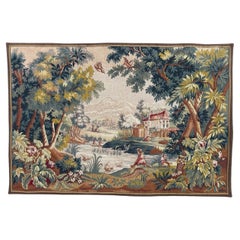
Pretty Vintage Aubusson Style Jacquard Tapestry, Lauragais Landscape
Located in Saint Ouen, FR
Beautiful vintage French Aubusson style tapestry with a nice design of Lauragais Landscape.
Bring a little reminder of nature into your country decor with this Lauragais Landscape ta...
Category
Mid-20th Century French Aubusson Continental Europe - Western European Rugs
Materials
Wool, Cotton
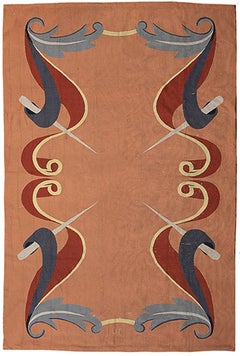
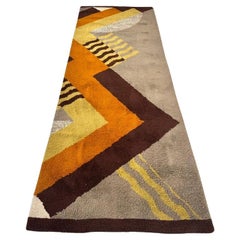
Art Deco Rug
Located in Brussels, BE
Art Deco Rug
Category
Early 20th Century European Art Deco Continental Europe - Western European Rugs
Materials
Wool
$3,963
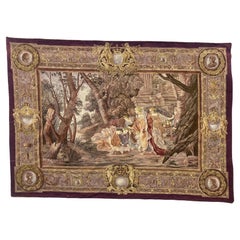
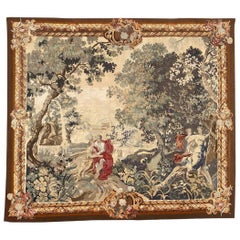
Bobyrug’s Wonderful Antique French Aubusson Tapestry
Located in Saint Ouen, FR
Very beautiful mid century original French Aubusson tapestry with nice romantic design and beautiful colors, entirely hand woven with wool a...
Category
Mid-20th Century French Aubusson Continental Europe - Western European Rugs
Materials
Wool, Silk
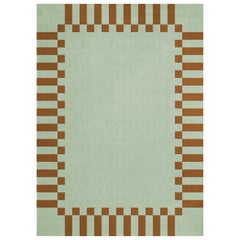
Teklan Frame Wool Rug Pistachio Camel
Located in Stockholm, SE
This product is part of the Prism Palette collection, an exclusive collaboration between LAYERED and the Scandinavian visionary artist and designer Tekla Evelina Severin, known as Te...
Category
2010s Indian Modern Continental Europe - Western European Rugs
Materials
Wool
$2,035 / item
Still Thinking About These?
All Recently ViewedMore Ways To Browse
Derain Gilles
Discus Statue
Dodo Bird
Dogon Ladder
Dough Boxes
Dragon Ware
Dresden Porcelain Figurines
Dresser Box Porcelain
Dresser With Tambour Door
Dressers with Shelves
Drexel Heritage Desk
Drexel Pecan Furniture
Driftwood Horse
Drinking Glasses Used
Duck Decanter
Dunhill Cigarette Lighters Vintage
Eagle Head Sculpture
Eagle Lectern