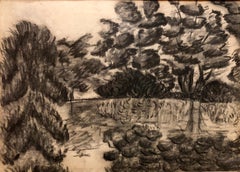
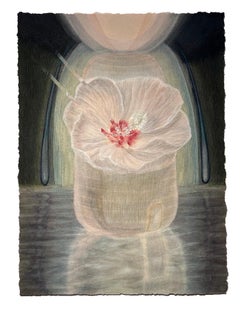
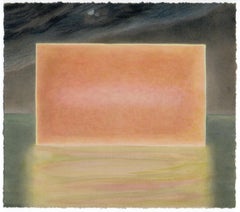
Continental US - Landscape Drawings and Watercolors

to
463
1,322
1,055
696
259
135
Overall Width
to
Overall Height
to
10
214
2,176
1,061
55
50
100
180
153
233
227
147
164
184
10
824
581
423
145
77
61
51
48
19
9
5
5
5
1
2,333
991
140
888
819
653
401
320
319
298
285
278
255
210
167
154
141
129
122
118
107
99
93
2,490
2,353
1,799
442
394
140
66
53
43
36
1,401
430
3,467
5,163
3,470
Item Ships From: Continental US
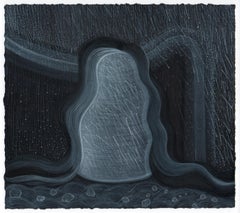
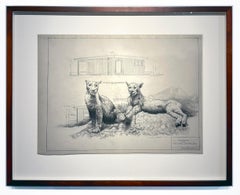
Sentinel - Mountain Lions in Graphite on Antique Vellum Architectural Drawing
By Don Pollack
Located in Chicago, IL
Over a hundred years ago, my grandfather registered as a homesteader with the Department of the Interior Land Office in Buffalo, Wyoming. Building a cabin on a remote 640 acre plat,...
Category

21st Century and Contemporary Contemporary Continental US - Landscape Drawings and Watercolors

Materials

Vellum, Graphite

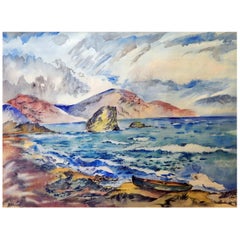
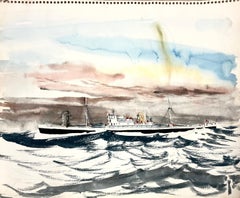
David Burliuk Signed Watercolor, 1947, Seascape
By David Burliuk
Located in Phoenix, AZ
Unframed watercolor painting by Russian/New York artist David Burliuk (1882-1967) Beautiful vivid color, in excellent condition and signed lower left. Inscribed and dated 1947 on the...
Category

Mid-20th Century Continental US - Landscape Drawings and Watercolors

Materials

Paper

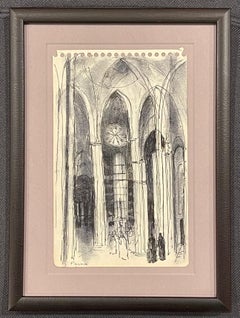
UNTITLED SKETCHBOOK DRAWING #17
By William Thon
Located in Portland, ME
Thon, William (American, 1906-2000) UNTITLED SKETCHBOOK DRAWING #17. Ink on paper, not dated, but circa 1960s. Unsigned.The sketchbook identified by an Estate label on its cover. 5 x...
Category

Mid-20th Century Continental US - Landscape Drawings and Watercolors

Materials

Ink

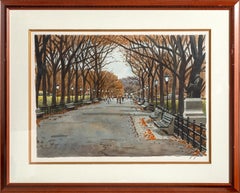
Central Park in Fall, Framed Photorealist Watercolor Painting
Located in Long Island City, NY
Artist: Unknown Title: Central Park in Fall Medium: Watercolor on paper, signed lower right Image Size: 17.5 x 25 inches Frame Size: 28 x 35 inches Watercolor of The Mall in Centra...
Category

1980s American Modern Continental US - Landscape Drawings and Watercolors

Materials

Watercolor

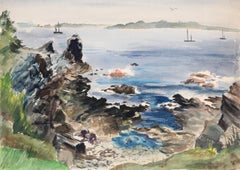
Eve Nethercott, "Cape Elizabeth", New England Landscape
By Eve Nethercott
Located in Long Island City, NY
Eve Nethercott Title: Cape Elizabeth, Portland (P6.5) Date: 1951 Medium: Watercolor on paper Paper Size: 18 x 24 inches
Category

1950s American Impressionist Continental US - Landscape Drawings and Watercolors

Materials

Watercolor

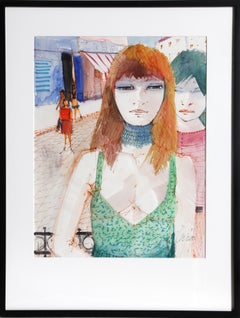
High Fashion Paris Women, Framed Watercolor Painting by Charles Levier
By Charles Levier
Located in Long Island City, NY
Artist: Charles Levier, French (1920 - 2003) Title: Red Head Year: circa 1965 Medium: Watercolor, signed l.r. Image Size: 19.5 x 15.5 inches Size: 28 x 21.5 inches
Category

1960s Fauvist Continental US - Landscape Drawings and Watercolors

Materials

Watercolor

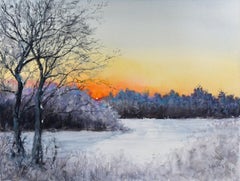
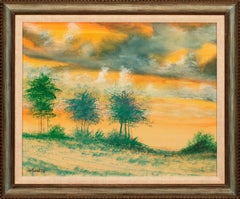
Winter Sunset, Original Painting
By Judy Mudd
Located in San Francisco, CA

Artist Comments
Bare trees in the foreground stand against a softly colored sky transitioning from a warm, glowing orange to a gentle yellow. A path cuts through the scene, w...

Category

21st Century and Contemporary Impressionist Continental US - Landscape Drawings and Watercolors

Materials

Watercolor

ISLAND-PERCY PRIEST - Landscape Painting of Nashville Tennessee Lake - Oil
Located in Signal Mountain, TN
Coming soon
Category

2010s Contemporary Continental US - Landscape Drawings and Watercolors

Materials

Oil, Archival Paper

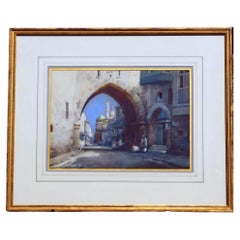
Noel Leaver Original Watercolor, circa 1920 s, Orientalist Subject
By Noel Harry Leaver 1
Located in Phoenix, AZ
Watercolor by British artist Noel Leaver (1889-1951). Beautiful Orientalist subject in excellent condition - framed. Measures: 11" H x 15" W. Frame: 19 3/4...
Category

1920s Continental US - Landscape Drawings and Watercolors

Materials

Paint

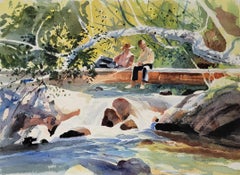
Boys Fishing From a Log, Watercolor by Chet Reneson, Old Lyme, Connecticut
Located in Grand Rapids, MI
Chet Reneson (American, Born 1934) Signed: Reneson (Lower, Right) " Boys Fishing From a Log " Watercolor on Paper 22 5/8" x 30 1/8" Loose sheet, in excellent original condition. Reneson’s work has been featured on the covers of Sporting Classics, Gray’s Sporting Journal, Sports Afield and several others. He is a past member of the Old Lyme Art Association and the Connecticut Watercolor Association. He was the Atlantic Salmon...
Category

20th Century Continental US - Landscape Drawings and Watercolors

Materials

Paper, Watercolor

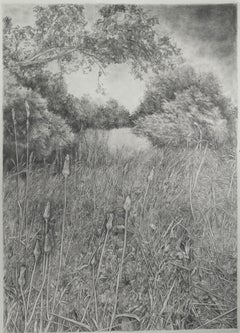
Conceptual Realist Drawing Floral Wheat Delicate Detailed American female artist
By Amanda Besl
Located in Buffalo, NY
An original contemporary graphite drawing by American contemporary female artist Amanda Besl. Diana's Field 2, 2018 Graphite on paper 34 × 24 in 86.4 × 61 cm This work was created ...
Category

2010s Realist Continental US - Landscape Drawings and Watercolors

Materials

Paper, Graphite

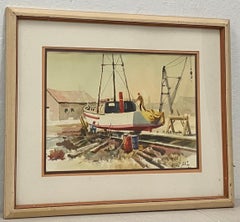
Jake Lee "Out for Repairs" Original Watercolor C.1987
By Jake Lee
Located in San Francisco, CA
Jake Lee "Out for Repairs" Original Watercolor C.1987 Original watercolor on paper Dimensions 19" wide x 13" high The distressed period frame is included...
Category

Late 20th Century Continental US - Landscape Drawings and Watercolors

Materials

Watercolor

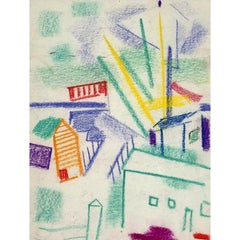
Colorful early modernist cityscape drawing by a San Francisco Bay Area artist
By Erle Loran
Located in Colfax, CA
A fun and brightly color abstract city view by Erle Loran. This work is an early one for the artist, and comes to us from the estate of the artist, through a chain of art dealers t...
Category

Mid-20th Century Abstract Continental US - Landscape Drawings and Watercolors

Materials

Oil Pastel

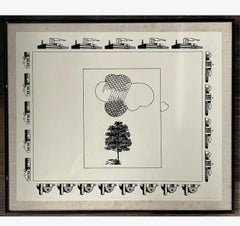
Rare Original 1967 Minimalist Mod Pop Art Allan D Arcangelo Unique Ink Drawing
Located in Surfside, FL
Allan D'Arcangelo (American/New York, 1930-1998), 1967 Cloud and Tree Note affixed to back Frame: 16 X 19 Image: 14 X 17 Hand signed in pencil and dated lower right 1967, titled bot...
Category

1960s Pop Art Continental US - Landscape Drawings and Watercolors

Materials

Paper, Ink

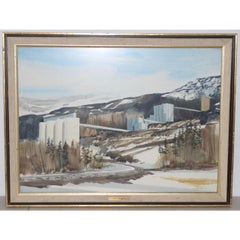
Jack Hambleton Snowy Industrial Landscape Watercolor c.1970
Located in San Francisco, CA
Jack Hambleton (1916-1988) Snowy Industrial Landscape Watercolor c.1970 Original watercolor on paper by Canadian artist Jack Hambleton...
Category

Mid-20th Century Impressionist Continental US - Landscape Drawings and Watercolors

Materials

Watercolor

Monhegan Path, Summer
Located in New York, NY
Albert Wein had a retrospective and he was called a classical modernist by art critics. He is primarily regarded as one of America's great sculptors but he loved doing drawings, wat...
Category

1940s American Modern Continental US - Landscape Drawings and Watercolors

Materials

Watercolor

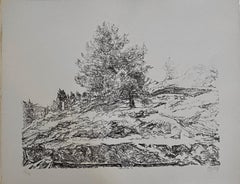
NEWRY
Located in Portland, ME
Barr, Wyatt. NEWRY. Drawing, Charcoal and ink wash on Arches 300lb. Hot Press Watercolor paper, 2014. The subject is a hillside next to Step Falls in Newry, Maine. Signed and dated. ...
Category

2010s Realist Continental US - Landscape Drawings and Watercolors

Materials

Charcoal, Ink

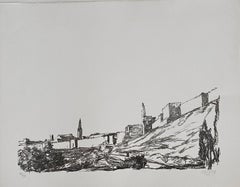
Avigdor Arikha Modernist Israeli Lithograph Jerusalem Landscape Bezalel School
By Avigdor Arikha
Located in Surfside, FL
Hand signed in pencil and hand numbered lithograph on fine French Arches paper. Jerusalem Landscape. Avigdor Arikha (April 28, 1929 – April 29, 2010) was a Romanian-born French–Isra...
Category

1970s Modern Continental US - Landscape Drawings and Watercolors

Materials

Lithograph

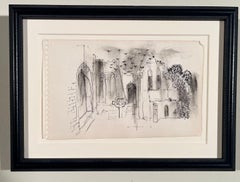
UNTITLED SKETCHBOOK DRAWING #5
By William Thon
Located in Portland, ME
Thon, William (American, 1906-2000) UNTITLED SKETCHBOOK DRAWING #5. Ink on paper, not dated, but circa 1960s. Unsigned.The sketchbook identified by an Estate label on its cover. 5 x ...
Category

Mid-20th Century Continental US - Landscape Drawings and Watercolors

Materials

Ink

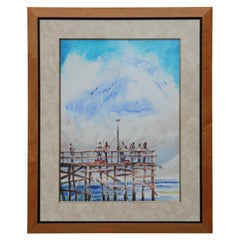
"Trout Clouds" Watercolor Impressionist Galveston Pier Landscape Painting
Located in Houston, TX
Watercolor coastal landscape painting with fishermen on a pier. The painting is done in an impressionist style and is signed by the artist in the lower corner. On the back of the piece is the title and date. The work is framed in a light wooden frame with a tan matte. Dimensions without Frame: H 33 in x W 24 in. Artist Biography: Charles Criner was born in the small East Texas town...
Category

Early 2000s Contemporary Continental US - Landscape Drawings and Watercolors

Materials

Watercolor

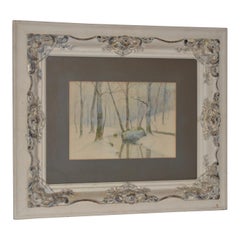
Rufus Way Smith Winter Forest Landscape Watercolor c.1880
Located in San Francisco, CA
Rufus Way Smith Winter Forest Landscape Watercolor c.1880 Beautiful 19th century watercolor by listed American artist Rufus Way Smith (1840-1900). Or...
Category

Late 19th Century Impressionist Continental US - Landscape Drawings and Watercolors

Materials

Watercolor

[untitled] Street Scene with Fruit Vendor.
By Emilio Sanchez
Located in New York, NY
Emilio Sanchez (1921-1999) created [untitled] “STREET SCENE WITH FRUIT VENDOR” in circa 1950. This unsigned watercolor and came to us directly from the Sanchez estate. It is stamped on the verso "Estate of Emilio Sanchez." This piece is in good to very good condition and painted to the paper's edge. The paper size is 14.88 x 15.25 inches (37.6 x 38.6 cm). “Best known for his architectural paintings and lithographs, Emilio Sanchez (1921-1999) explored the effects of light and shadow to emphasize the abstract geometry of his subjects. His artwork encompasses his Cuban heritage...
Category

1950s American Modern Continental US - Landscape Drawings and Watercolors

Materials

Watercolor, Graphite

Aqueous Humor, Original Painting
By Dwight Smith
Located in San Francisco, CA

Artist Comments
When you focus on classic automobiles, their designs often resemble human features. This yellow vehicle, for example, seems to radiate a cheerful, almost huma...

Category

21st Century and Contemporary Realist Continental US - Landscape Drawings and Watercolors

Materials

Watercolor

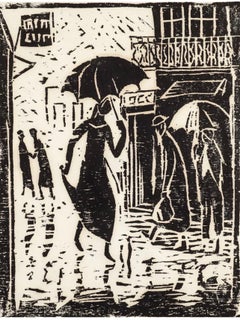
Woodblock Print Polish Israeli Artist Azriel Awret Rainy Street Jerusalem Israel
By Irene Awret
Located in Surfside, FL
Awret, Azriel (Polish Israeli, 1910-2010), Rainy Street in Jerusalem, Woodblock print, 9.75 x 7.5 inches, pencil hand signed and numbered 35/60, framed measuring 19.5 x 14.25 inches. Azriel Awret was born in Lodz, Poland, and moved to Belgium where he lived in Brussels. He married an Aryan woman, Anna Louisa Bonhiere, which saved him from deportation. But in January 1943 he was interned in Malines camp. Awret was an engineer, so he was given employment as an electrician. While in Malines he met Irène Spicker, who was working in the Mahlerstube (art workshop). They married after the war and moved to Israel, settling in Safed and continuing their artistic activity. Today they divide their time between Israel and the United States. The Beit Lohamei Haghetaot (The Ghetto Fighters’ House Museum) art collection includes works by Awret from his time in Malines. These works depict various aspects of life in Malines, including figures of internees. They were donated by the artist. He collaborated with his wife in a naif, folk art style. Irène Awret...
Category

1950s Expressionist Continental US - Landscape Drawings and Watercolors

Materials

Woodcut

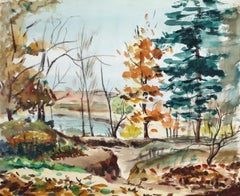
Eve Nethercott, "Fall", New England Landscape
By Eve Nethercott
Located in Long Island City, NY
Fall (P6.8) Eve Nethercott American (1925–2015) Date: 1951 Watercolor on Paper Size: 18 x 22 in. (45.72 x 55.88 cm)
Category

1950s American Impressionist Continental US - Landscape Drawings and Watercolors

Materials

Watercolor

Waterlilies on Lake Temescal, Original Painting
By Catherine McCargar
Located in San Francisco, CA

Artist Comments
A variety of plants thrive around Lake Temescal, nestled in the Oakland Hills of the California Bay Area. The lush greenery reflects in the still water, addin...

Category

21st Century and Contemporary Impressionist Continental US - Landscape Drawings and Watercolors

Materials

Watercolor

Avigdor Arikha Modernist Israeli Lithograph Jerusalem Landscape Bezalel School
By Avigdor Arikha
Located in Surfside, FL
Hand signed in pencil and hand numbered lithograph on fine French Arches paper. Jerusalem Landscape. Avigdor Arikha (April 28, 1929 – April 29, 2010) was a Romanian-born French–Isra...
Category

1970s Modern Continental US - Landscape Drawings and Watercolors

Materials

Lithograph

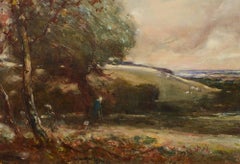
Figure by the Sea
By Thomas William Morley
Located in Wiscasset, ME
A listed 19th century British artist and Barbizon School painter, Thomas W. Morley's Figure by the Sea captures the color, technique, softness of form and tonal qualities indicative ...
Category

Late 19th Century Barbizon School Continental US - Landscape Drawings and Watercolors

Materials

Watercolor

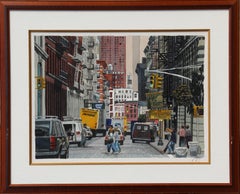
Soho, Mercer Street - Framed Photorealist Watercolor on Paper
Located in Long Island City, NY
Artist: Unknown Title: University Floral Design Medium: Watercolor on paper, signed lower right Image Size: 17.5 x 25 inches Frame Size: 28 x 35 inches Street scene watercolor by an...
Category

1980s American Realist Continental US - Landscape Drawings and Watercolors

Materials

Watercolor

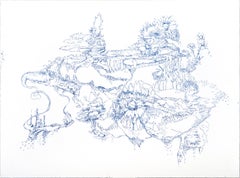
Kathleen Beausoleil, Rejuvinate, 2013, blue ink on paper, landscape drawing
Located in New York, NY
Kathleen Beausoleil lives and works in Fair Haven, NJ. Primarily working in oil paint, her works focus on what it means to be a social being. Beausoleil received a 2022 Fellowship fr...
Category

2010s Abstract Continental US - Landscape Drawings and Watercolors

Materials

Paper, Ink

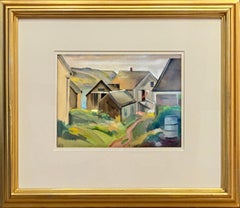
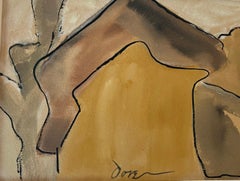
"Barns" Watercolor Mid-20th Century Modern Abstract Realism Excellent Provenance
By Arthur Dove
Located in New York, NY
"Barns" Watercolor Mid-20th Century Modern Abstract Realism Excellent Provenance Arthur Dove (1880-1946) "Barns" 5 x 7 inches Watercolor on paper, 19...
Category

1940s American Modern Continental US - Landscape Drawings and Watercolors

Materials

Paper, Watercolor

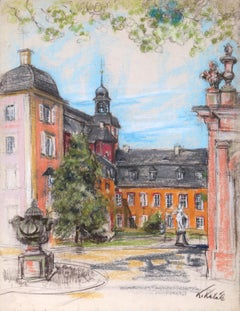
Courtyard with Sculpture, Pastel Drawing by Kamil Kubik
By Kamil Kubik
Located in Long Island City, NY
Courtyard with Sculpture by Kamil Kubik, Czech/American (1930–2011) Pastel on Paper, signed l.r. Size: 19.5 x 25.5 in. (49.53 x 64.77 cm)
Category

1990s Contemporary Continental US - Landscape Drawings and Watercolors

Materials

Paper, Pastel

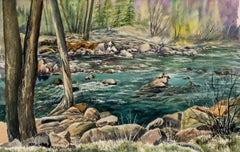
Mabel Feucht “Colorado Stream” Vintage Colorado Landscape Watercolor Painting
Located in Denver, CO
Colorado Stream by Mabel Feucht (1901–1992) is a captivating original watercolor painting that beautifully depicts a tranquil Colorado landscape. A gently flowing stream winds throug...
Category

20th Century American Impressionist Continental US - Landscape Drawings and Watercolors

Materials

Watercolor

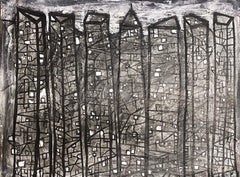
City Landscape #2, black and white monochromatic urban architectural abstraction
By Mauricio Trenard Sayago
Located in Brooklyn, NY
acrylic on archival Canson watercolor paper Mauricio Trenard is an artist, educator and arts activist. He says this series is of great interest to him, as it offers the potential ...
Category

Early 2000s Abstract Geometric Continental US - Landscape Drawings and Watercolors

Materials

Acrylic, Archival Paper

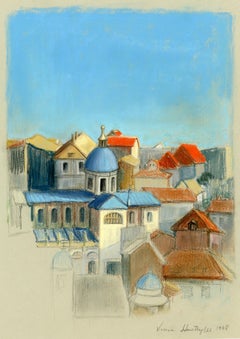
Italian Cityscape
By Victoria Hutson Huntley
Located in Fairlawn, OH
Italian Cityscape Pastel on Strathmore paper, 1968 Signed and dated lower right with the estate signature with the initials RH Image size: 13 3/4 x 10 inches Condition: Excellent Pro...
Category

1960s Realist Continental US - Landscape Drawings and Watercolors

Materials

Pastel

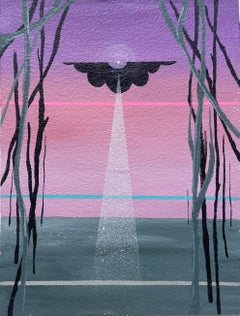
They Can t Steal Us (2016), Gouache acrylic on watercolor paper, UFO landscape
By Keith Garcia
Located in Jersey City, NJ
"They Can't Steal Us" (2016) by Keith Garcia Gouache & acrylic on 8x6" watercolor paper Matted in shadowbox frame (measures 10.75 x 8.75 x 1") Pastel palette with neon and earth tone...
Category

21st Century and Contemporary Street Art Continental US - Landscape Drawings and Watercolors

Materials

Acrylic, Gouache, Archival Paper

Impressionist Cityscape, "Sunday Morning Stroll"
Located in San Diego, CA
This is a one of a kind original impressionist cityscape watercolor painting by southern California artist, Duke Windsor. It is framed as pictured. Its framed dimensions are 20.5" x ...
Category

2010s Impressionist Continental US - Landscape Drawings and Watercolors

Materials

Watercolor

Impressionist Cityscape, "At Sunrise Way, Turn Right"
Located in San Diego, CA
This is a one of a kind original impressionist cityscape watercolor painting by southern California artist, Duke Windsor. It is framed as pictured. Its framed dimensions are 27.5" x ...
Category

2010s Impressionist Continental US - Landscape Drawings and Watercolors

Materials

Watercolor

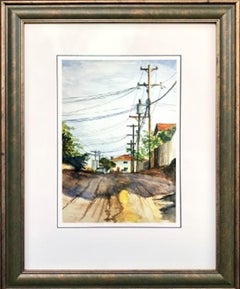
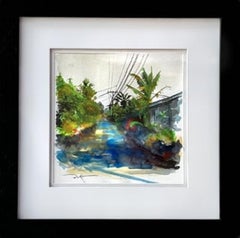
Impressionist Cityscape, "Palms (Study)"
Located in San Diego, CA
This is a one of a kind original impressionist cityscape watercolor painting by southern California artist, Duke Windsor. It is framed as pictured. Its framed dimensions are 14" x 14...
Category

2010s Impressionist Continental US - Landscape Drawings and Watercolors

Materials

Watercolor

Mom (Lake Hemet?), black and white portrait of woman looking out at landscape
By Charles Buckley
Located in New York, NY
Charles Buckley sources images from the fifties and using acrylic ink, carefully renders familiar scenes of the everyday with lines of varying thicknesses. The subjects run the gamut...
Category

2010s Contemporary Continental US - Landscape Drawings and Watercolors

Materials

Paper, Graphite

UNTITLED (DRAWING OF A BOAT #2; LIKELY IN ITALY)
By William Thon
Located in Portland, ME
Thon, William (American, 1906-2000).; UNTITLED (DRAWING OF A BOAT #2; LIKELY IN ITALY). Ink and watercolor on paper. Not dated. Unsigned. 14 x 17 inches. In excellent condition. From...
Category

Mid-20th Century Continental US - Landscape Drawings and Watercolors

Materials

Ink

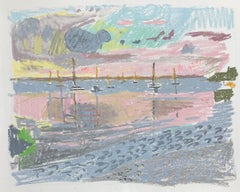
"Pink reflection, pastel" seascape painting of boats in the harbor at sunset
By Kelly Carmody
Located in Sag Harbor, NY
Kelly Carmody (b. 1977, Massachusetts) Rooted in realism, Carmody’s compositions start very traditional in subject and composition; however, she further transforms her skilled hand b...
Category

21st Century and Contemporary American Impressionist Continental US - Landscape Drawings and Watercolors

Materials

Paper, Pastel

UNTITLED SKETCHBOOK DRAWING #15
By William Thon
Located in Portland, ME
Thon, William (American, 1906-2000) UNTITLED SKETCHBOOK DRAWING #15. Ink on paper, not dated, but circa 1960s. Unsigned.The sketchbook identified by an Estate label on its cover. 5 x...
Category

Mid-20th Century Continental US - Landscape Drawings and Watercolors

Materials

Ink

Cloud Record - Puffy Clouds and Light , Watercolor and Gouache on Paper, Framed
By Christina Haglid
Located in Chicago, IL
My work is about something I wish I could have seen, imaginary worlds, a commentary on awe that is inspired by nature, science, and history. Objects in my work are a stand in for the...
Category

21st Century and Contemporary Contemporary Continental US - Landscape Drawings and Watercolors

Materials

Watercolor, Gouache, Archival Paper

Bent Rainbow - Weather Phenomenon Scene, Watercolor Gouache on Paper, Framed
By Christina Haglid
Located in Chicago, IL
My work is about something I wish I could have seen, imaginary worlds, a commentary on awe that is inspired by nature, science, and history. Objects in my work are a stand in for the...
Category

21st Century and Contemporary Contemporary Continental US - Landscape Drawings and Watercolors

Materials

Watercolor, Gouache, Archival Paper

Landscape (Crawford Notch, New Hampshire)
By Wes Olmsted
Located in Buffalo, NY
An original watercolor painting by Westley "Wes" Olmsted. This work is currently featured in the exhibition Man of Extremes at Benjaman Gallery in Buffalo, NY. Westley G. Olmsted (1934-2011) was a painter and sculptor. He was born in Buffalo, New York, and was a distant relative Frederick Law Olmsted...
Category

1970s Modern Continental US - Landscape Drawings and Watercolors

Materials

Watercolor

Eve Nethercott, "Barile", New England Landscape
By Eve Nethercott
Located in Long Island City, NY
Artist: Eve Nethercott Title: Barile (P6.55) Date: 1949 Watercolor on Paper Size: 13 x 19 in. (33.02 x 48.26 cm) Trailing over the hills of green grass underneath lush trees, the di...
Category

1950s American Impressionist Continental US - Landscape Drawings and Watercolors

Materials

Watercolor

Cincinnati Ohio cityscape drawing WPA era
Located in Wilton Manors, FL
Beautiful original drawing by American artist, Albert Sway (b.1913). Cincinnati Cityscape, ca. 1935. Ink on paper measures 10 x 15 inches. Signed lower left. Good condition with no d...
Category

1930s American Realist Continental US - Landscape Drawings and Watercolors

Materials

Paper, Ink

"Sheepshead, Brooklyn, Long Island" Oscar Bluemner, Modernist Watercolor
By Oscar Bluemner
Located in New York, NY
Oscar Bluemner Sheepshead, Long Island, 1907 Signed with the artist's conjoined initials "OB" and dated "4-30 - 5 - 30" / "Aug 3, 07" Watercolor on paper 6 x 10 inches Provenance: J...
Category

Early 1900s American Modern Continental US - Landscape Drawings and Watercolors

Materials

Paper, Watercolor

"CHATEAU IN EAGLE PASS" TEXAS
Located in San Antonio, TX
Edith Maskey Died Circa 2022 Comfort Artist Image Size: 14.5 x 23.5 Frame Size: 23.75 x 33 Medium: Conte Crayon "Chateau in Eagle Pass" "It is a blessing ...
Category

20th Century American Impressionist Continental US - Landscape Drawings and Watercolors

Materials

Crayon

UNTITLED (FARM SCENE)
Located in Portland, ME
Smith, Jules Andre (American, 1880-1959). UNTITLED (FARM SCENE). Watercolor on heavy paper. Not dated. Signed, lower right 13 x 18 inches. In very good condition.
Category

Mid-20th Century Continental US - Landscape Drawings and Watercolors

Materials

Watercolor

Grocery Store (1930s), Lee Dubin
By Lee Dubin
Located in Fairfield, CT
Artist: Lee Dubin Title: Grocery Store (1930s) Year: 2013 Medium: Watercolor and graphite on paper Size: 19.5 x 24 inches Condition: Excellent Inscriptio...
Category

2010s American Realist Continental US - Landscape Drawings and Watercolors

Materials

Color Pencil, Graphite

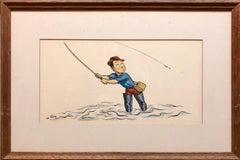
Whimsical Fishing Illustration Cartoon 1938 Mt Tremblant Ski Lodge William Steig
By William Steig (b.1907)
Located in Surfside, FL
Lighthearted Illustration of Outdoor Pursuits This one of a fisherman signed "W. Steig" Provenance: from Mrs. Joseph B. Ryan, Commissioned by Joe Ryan for the bar at his ski resort, Mount Tremblant Lodge, in 1938. Mont Tremblant, P.Q., Canada Watercolor and ink on illustration board, sights sizes 8 1/2 x 16 1/2 in., framed. In 1938 Joe Ryan, described as a millionaire from Philadelphia, bushwhacked his way to the summit of Mont Tremblant and was inspired to create a world class ski resort at the site. In 1939 he opened the Mont Tremblant Lodge, which remains part of the Pedestrian Village today. This original illustration is on Whatman Illustration board. the board measures 14 X 22 inches. label from McClees Galleries, Philadelphia, on the frame backing paper. William Steig, 1907 – 2003 was an American cartoonist, sculptor, and, in his later life, an illustrator and writer of children's books. Best known for the picture books Sylvester and the Magic Pebble, Abel's Island, and Doctor De Soto, he was also the creator of Shrek!, which inspired the film series of the same name. He was the U.S. nominee for both of the biennial, international Hans Christian Andersen Awards, as a children's book illustrator in 1982 and a writer in 1988. Steig was born in Brooklyn, New York in 1907, and grew up in the Bronx. His parents were Polish-Jewish immigrants from Austria, both socialists. His father, Joseph Steig, was a house painter, and his mother, Laura Ebel Steig, was a seamstress who encouraged his artistic leanings. As a child, he dabbled in painting and was an avid reader of literature. Among other works, he was said to have been especially fascinated by Pinocchio.He graduated from Townsend Harris High School at 15 but never completed college, though he attended three, spending two years at City College of New York, three years at the National Academy of Design and a mere five days at the Yale School of Fine Arts before dropping out of each. Hailed as the "King of Cartoons" Steig began drawing illustrations and cartoons for The New Yorker in 1930, producing more than 2,600 drawings and 117 covers for the magazine. Steig, later, when he was 61, began writing children's books. In 1968, he wrote his first children's book. He excelled here as well, and his third book, Sylvester and the Magic Pebble (1969), won the Caldecott Medal. He went on to write more than 30 children's books, including the Doctor DeSoto series, and he continued to write into his nineties. Among his other well-known works, the picture book Shrek! (1990) formed the basis for the DreamWorks Animation film Shrek (2001). After the release of Shrek 2 in 2004, Steig became the first sole-creator of an animated movie franchise that went on to generate over $1 billion from theatrical and ancillary markets after only one sequel. Along with Maurice Sendak, Saul Steinberg, Ludwig Bemelmans and Laurent de Brunhofff his is one of those rare cartoonist whose works form part of our collective cultural heritage. In 1984, Steig's film adaptation of Doctor DeSoto directed by Michael Sporn was nominated for the Academy Award for Best Animated Short Film. As one of the most admired cartoonists of all time, Steig spent seven decades drawing for the New Yorker magazine. He touched generations of readers with his tongue–in–cheek pen–and–ink drawings, which often expressed states of mind like shame, embarrassment or anger. Later in life, Steig turned to children's books, working as both a writer and illustrator. Steig's children's books were also wildly popular because of the crazy, complicated language he used—words like lunatic, palsied, sequestration, and cleave. Kids love the sound of those words even if they do not quite understand the meaning. Steig's descriptions were also clever. He once described a beached whale as "breaded with sand." Throughout the course of his career, Steig compiled his cartoons and drawings into books. Some of them were published first in the New Yorker. Others were deemed too dark to be printed there. Most of these collections centered on the cold, dark psychoanalytical truth about relationships. They featured husbands and wives fighting and parents snapping at their kids. His first adult book, Man About Town, was published in 1932, followed by About People, published in 1939, which focused on social outsiders. Sick of Each Other, published in 2000, included a drawing depicting a wife holding her husband at gunpoint, saying, "Say you adore me." According to the Los Angeles Times, fellow New Yorker artist...
Category

1930s American Modern Continental US - Landscape Drawings and Watercolors

Materials

India Ink, Watercolor, Illustration Board

"Meadow" Original Watercolor on Paper Landscape by William Verdult, Framed
By William Verdult
Located in Encino, CA
"Meadow," an original watercolor on paper by William Verdult, is a piece for the true collector. The artist's genius reflects a fiery artistic approach that inspires unexplored feeli...
Category

1970s Contemporary Continental US - Landscape Drawings and Watercolors

Materials

Watercolor

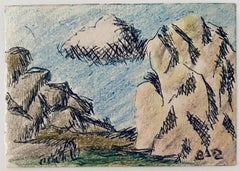
Pastel, Ink Drawing Rocks And Cloud Landscape Jewish American Modernist WPA
By Ben-Zion Weinman
Located in Surfside, FL
Miniature Landscape Provenance: Virginia Field, Arts administrator; New York, N.Y. Assistant director for Asia House gallery. (she was friends with John von Wicht and Andy Warhol) Born in 1897, Ben-Zion Weinman...
Category

Mid-20th Century Expressionist Continental US - Landscape Drawings and Watercolors

Materials

Pastel, Ink, Watercolor

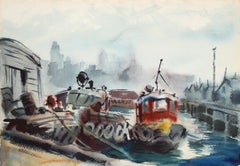
Tugboat and City Street, Double-sided Watercolor by Eve Nethercott
By Eve Nethercott
Located in Long Island City, NY
Tugboat and City Street (28) Eve Nethercott, American (1925–2015) Date: circa 1960 Two-Sided Watercolor Size: 15 in. x 22 in. (38.1 cm x 55.88 cm)
Category

1950s American Impressionist Continental US - Landscape Drawings and Watercolors

Materials

Watercolor

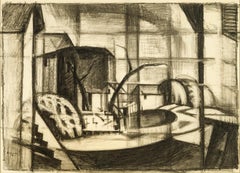
Study for Old Canal, Red and Blue (Rockaway, Morris Canal)
By Oscar Florianus Bluemner
Located in New York, NY
Oscar Bluemner was a German and an American, a trained architect who read voraciously in art theory, color theory, and philosophy, a writer of art criticism both in German and English, and, above all, a practicing artist. Bluemner was an intense man, who sought to express and share, through drawing and painting, universal emotional experience. Undergirded by theory, Bluemner chose color and line for his vehicles; but color especially became the focus of his passion. He was neither abstract artist nor realist, but employed the “expressional use of real phenomena” to pursue his ends. (Oscar Bluemner, from unpublished typescript on “Modern Art” for Camera Work, in Bluemner papers, Archives of American Art, Smithsonian Institution, as cited and quoted in Jeffrey R. Hayes, Oscar Bluemner [1991], p. 60. The Bluemner papers in the Archives [hereafter abbreviated as AAA] are the primary source for Bluemner scholars. Jeffrey Hayes read them thoroughly and translated key passages for his doctoral dissertation, Oscar Bluemner: Life, Art, and Theory [University of Maryland, 1982; UMI reprint, 1982], which remains the most comprehensive source on Bluemner. In 1991, Hayes published a monographic study of Bluemner digested from his dissertation and, in 2005, contributed a brief essay to the gallery show at Barbara Mathes, op. cit.. The most recent, accessible, and comprehensive view of Bluemner is the richly illustrated, Barbara Haskell, Oscar Bluemner: A Passion for Color, exhib. cat. [New York: Whitney Museum of American Art, 2005.]) Bluemner was born in the industrial city of Prenzlau, Prussia, the son and grandson of builders and artisans. He followed the family predilection and studied architecture, receiving a traditional and thorough German training. He was a prize-winning student and appeared to be on his way to a successful career when he decided, in 1892, to emigrate to America, drawn perhaps by the prospect of immediate architectural opportunities at the Chicago World’s Fair, but, more importantly, seeking a freedom of expression and an expansiveness that he believed he would find in the New World. The course of Bluemner’s American career proved uneven. He did indeed work as an architect in Chicago, but left there distressed at the formulaic quality of what he was paid to do. Plagued by periods of unemployment, he lived variously in Chicago, New York, and Boston. At one especially low point, he pawned his coat and drafting tools and lived in a Bowery flophouse, selling calendars on the streets of New York and begging for stale bread. In Boston, he almost decided to return home to Germany, but was deterred partly because he could not afford the fare for passage. He changed plans and direction again, heading for Chicago, where he married Lina Schumm, a second-generation German-American from Wisconsin. Their first child, Paul Robert, was born in 1897. In 1899, Bluemner became an American citizen. They moved to New York City where, until 1912, Bluemner worked as an architect and draftsman to support his family, which also included a daughter, Ella Vera, born in 1903. All the while, Oscar Bluemner was attracted to the freer possibilities of art. He spent weekends roaming Manhattan’s rural margins, visiting the Bronx, Brooklyn, Queens, and New Jersey, sketching landscapes in hundreds of small conté crayon drawings. Unlike so many city-based artists, Bluemner did not venture out in search of pristine countryside or unspoiled nature. As he wrote in 1932, in an unsuccessful application for a Guggenheim Fellowship, “I prefer the intimate landscape of our common surroundings, where town and country mingle. For we are in the habit to carry into them our feelings of pain and pleasure, our moods” (as quoted by Joyce E. Brodsky in “Oscar Bluemner in Black and White,” p. 4, in Bulletin 1977, I, no. 5, The William Benton Museum of Art, Storrs, Connecticut). By 1911, Bluemner had found a powerful muse in a series of old industrial towns, mostly in New Jersey, strung along the route of the Morris Canal. While he educated himself at museums and art galleries, Bluemner entered numerous architectural competitions. In 1903, in partnership with Michael Garven, he designed a new courthouse for Bronx County. Garven, who had ties to Tammany Hall, attempted to exclude Bluemner from financial or artistic credit, but Bluemner promptly sued, and, finally, in 1911, after numerous appeals, won a $7,000 judgment. Barbara Haskell’s recent catalogue reveals more details of Bluemner’s architectural career than have previously been known. Bluemner the architect was also married with a wife and two children. He took what work he could get and had little pride in what he produced, a galling situation for a passionate idealist, and the undoubted explanation for why he later destroyed the bulk of his records for these years. Beginning in 1907, Bluemner maintained a diary, his “Own Principles of Painting,” where he refined his ideas and incorporated insights from his extensive reading in philosophy and criticism both in English and German to create a theoretical basis for his art. Sometime between 1908 and 1910, Bluemner’s life as an artist was transformed by his encounter with the German-educated Alfred Stieglitz, proprietor of the Little Galleries of the Photo-Secession at 291 Fifth Avenue. The two men were kindred Teutonic souls. Bluemner met Stieglitz at about the time that Stieglitz was shifting his serious attention away from photography and toward contemporary art in a modernist idiom. Stieglitz encouraged and presided over Bluemner’s transition from architect to painter. During the same period elements of Bluemner’s study of art began to coalesce into a personal vision. A Van Gogh show in 1908 convinced Bluemner that color could be liberated from the constraints of naturalism. In 1911, Bluemner visited a Cézanne watercolor show at Stieglitz’s gallery and saw, in Cézanne’s formal experiments, a path for uniting Van Gogh’s expressionist use of color with a reality-based but non-objective language of form. A definitive change of course in Bluemner’s professional life came in 1912. Ironically, it was the proceeds from his successful suit to gain credit for his architectural work that enabled Bluemner to commit to painting as a profession. Dividing the judgment money to provide for the adequate support of his wife and two children, he took what remained and financed a trip to Europe. Bluemner traveled across the Continent and England, seeing as much art as possible along the way, and always working at a feverish pace. He took some of his already-completed work with him on his European trip, and arranged his first-ever solo exhibitions in Berlin, Leipzig, and Elberfeld, Germany. After Bluemner returned from his study trip, he was a painter, and would henceforth return to drafting only as a last-ditch expedient to support his family when his art failed to generate sufficient income. Bluemner became part of the circle of Stieglitz artists at “291,” a group which included Marsden Hartley, John Marin, and Arthur Dove. He returned to New York in time to show five paintings at the 1913 Armory Show and began, as well, to publish critical and theoretical essays in Stieglitz’s journal, Camera Work. In its pages he cogently defended the Armory Show against the onslaught of conservative attacks. In 1915, under Stieglitz’s auspices, Bluemner had his first American one-man show at “291.” Bluemner’s work offers an interesting contrast with that of another Stieglitz architect-turned-artist, John Marin, who also had New Jersey connections. The years after 1914 were increasingly uncomfortable. Bluemner remained, all of his life, proud of his German cultural legacy, contributing regularly to German language journals and newspapers in this country. The anti-German sentiment, indeed mania, before and during World War I, made life difficult for the artist and his family. It is impossible to escape the political agenda in Charles Caffin’s critique of Bluemner’s 1915 show. Caffin found in Bluemner’s precise and earnest explorations of form, “drilled, regimented, coerced . . . formations . . . utterly alien to the American idea of democracy” (New York American, reprinted in Camera Work, no. 48 [Oct. 1916], as quoted in Hayes, 1991, p. 71). In 1916, seeking a change of scene, more freedom to paint, and lower expenses, Bluemner moved his family to New Jersey, familiar terrain from his earlier sketching and painting. During the ten years they lived in New Jersey, the Bluemner family moved around the state, usually, but not always, one step ahead of the rent collector. In 1917, Stieglitz closed “291” and did not reestablish a Manhattan gallery until 1925. In the interim, Bluemner developed relationships with other dealers and with patrons. Throughout his career he drew support and encouragement from art cognoscenti who recognized his talent and the high quality of his work. Unfortunately, that did not pay the bills. Chronic shortfalls were aggravated by Bluemner’s inability to sustain supportive relationships. He was a difficult man, eternally bitter at the gap between the ideal and the real. Hard on himself and hard on those around him, he ultimately always found a reason to bite the hand that fed him. Bluemner never achieved financial stability. He left New Jersey in 1926, after the death of his beloved wife, and settled in South Braintree, Massachusetts, outside of Boston, where he continued to paint until his own death in 1938. As late as 1934 and again in 1936, he worked for New Deal art programs designed to support struggling artists. Bluemner held popular taste and mass culture in contempt, and there was certainly no room in his quasi-religious approach to art for accommodation to any perceived commercial advantage. His German background was also problematic, not only for its political disadvantages, but because, in a world where art is understood in terms of national styles, Bluemner was sui generis, and, to this day, lacks a comfortable context. In 1933, Bluemner adopted Florianus (definitively revising his birth names, Friedrich Julius Oskar) as his middle name and incorporated it into his signature, to present “a Latin version of his own surname that he believed reinforced his career-long effort to translate ordinary perceptions into the more timeless and universal languages of art” (Hayes 1982, p. 189 n. 1). In 1939, critic Paul Rosenfeld, a friend and member of the Stieglitz circle, responding to the difficulty in categorizing Bluemner, perceptively located him among “the ranks of the pre-Nazi German moderns” (Hayes 1991, p. 41). Bluemner was powerfully influenced in his career by the intellectual heritage of two towering figures of nineteenth-century German culture, Johann Wolfgang von Goethe and Georg Wilhelm Friedrich Hegel. A keen student of color theory, Bluemner gave pride of place to the formulations of Goethe, who equated specific colors with emotional properties. In a November 19, 1915, interview in the German-language newspaper, New Yorker Staats-Zeitung (Abendblatt), he stated: I comprehend the visible world . . . abstract the primary-artistic . . . and after these elements of realty are extracted and analyzed, I reconstruct a new free creation that still resembles the original, but also . . . becomes an objectification of the abstract idea of beauty. The first—and most conspicuous mark of this creation is . . . colors which accord with the character of things, the locality . . . [and which] like the colors of Cranach, van der Weyden, or Durer, are of absolute purity, breadth, and luminosity. . . . I proceed from the psychological use of color by the Old Masters . . . [in which] we immediately recognize colors as carriers of “sorrow and joy” in Goethe’s sense, or as signs of human relationship. . . . Upon this color symbolism rests the beauty as well as the expressiveness, of earlier sacred paintings. Above all, I recognize myself as a contributor to the new German theory of light and color, which expands Goethe’s law of color through modern scientific means (as quoted in Hayes 1991, p. 71). Hayes has traced the global extent of Bluemner’s intellectual indebtedness to Hegel (1991, pp. 36–37). More specifically, Bluemner made visual, in his art, the Hegelian world view, in the thesis and antithesis of the straight line and the curve, the red and the green, the vertical and the horizontal, the agitation and the calm. Bluemner respected all of these elements equally, painting and drawing the tension and dynamic of the dialectic and seeking ultimate reconciliation in a final visual synthesis. Bluemner was a keen student of art, past and present, looking, dissecting, and digesting all that he saw. He found precedents for his non-naturalist use of brilliant-hued color not only in the work Van Gogh and Cezanne, but also in Gauguin, the Nabis, and the Symbolists, as well as among his contemporaries, the young Germans of Der Blaue Reiter. Bluemner was accustomed to working to the absolute standard of precision required of the architectural draftsman, who adjusts a design many times until its reality incorporates both practical imperatives and aesthetic intentions. Hayes describes Bluemner’s working method, explaining how the artist produced multiple images playing on the same theme—in sketch form, in charcoal, and in watercolor, leading to the oil works that express the ultimate completion of his process (Hayes, 1982, pp. 156–61, including relevant footnotes). Because of Bluemner’s working method, driven not only by visual considerations but also by theoretical constructs, his watercolor and charcoal studies have a unique integrity. They are not, as is sometimes the case with other artists, rough preparatory sketches. They stand on their own, unfinished only in the sense of not finally achieving Bluemner’s carefully considered purpose. The present charcoal drawing is one of a series of images that take as their starting point the Morris Canal as it passed through Rockaway, New Jersey. The Morris Canal industrial towns that Bluemner chose as the points of departure for his early artistic explorations in oil included Paterson with its silk mills (which recalled the mills in the artist’s childhood home in Elberfeld), the port city of Hoboken, Newark, and, more curiously, a series of iron ore mining and refining towns, in the north central part of the state that pre-dated the Canal, harkening back to the era of the Revolutionary War. The Rockaway theme was among the original group of oil paintings that Bluemner painted in six productive months from July through December 1911 and took with him to Europe in 1912. In his painting journal, Bluemner called this work Morris Canal at Rockaway N.J. (AAA, reel 339, frames 150 and 667, Hayes, 1982, pp. 116–17), and exhibited it at the Galerie Fritz Gurlitt in Berlin in 1912 as Rockaway N. J. Alter Kanal. After his return, Bluemner scraped down and reworked these canvases. The Rockaway picture survives today, revised between 1914 and 1922, as Old Canal, Red and Blue (Rockaway River) in the collection of the Hirshhorn Museum and Sculpture Garden, Smithsonian Institution, Washington D. C. (color illus. in Haskell, fig. 48, p. 65). For Bluemner, the charcoal expression of his artistic vision was a critical step in composition. It represented his own adaptation of Arthur Wesley’s Dow’s (1857–1922) description of a Japanese...
Category

20th Century American Modern Continental US - Landscape Drawings and Watercolors

Materials

Paper, Charcoal

Modern Polish Jewish Pencil Drawing Modernist Landscape
By Jehudith Sobel
Located in Surfside, FL
Jehudith Sobel (1924-2012 ) Polish/Jewish artist (also known as Judyta Sobel) Judith Sobel was born in Lwow, Poland in 1924. After Word War II she attended the Academy of Fine Arts in Lodz, Poland from 1947-1950, where she studied with the famous Abstract Constructivist, Wladyslaw Strzeminski and Stefan Wegner from whom she learned the principles of Modern Art as per the European Cubists. She was also part of the First Exhibit of Modern Art in Krakow in 1948/1949. From Poland she emigrated to Israel, where she exhibited and was collected by the major art museums of Israel including the Museum of Modern Art at Haifa. In 1956, Sobel came to New York on a scholarship and before that she lived in France for two years. Same year she received the First Prize at the Exhibition in the Saks Gallery...
Category

1960s Modern Continental US - Landscape Drawings and Watercolors

Materials

Paper, Carbon Pencil

Midnight Nest, Surreal Landscape, Watercolor Gouache on Paper, Framed
By Christina Haglid
Located in Chicago, IL
My work is about something I wish I could have seen, imaginary worlds, a commentary on awe that is inspired by nature, science, and history. Objects in my work are a stand in for the...
Category

21st Century and Contemporary Contemporary Continental US - Landscape Drawings and Watercolors

Materials

Watercolor, Gouache, Archival Paper

Monolith No. 5, Surreal Botanical, Watercolor Gouache on Paper, Framed
By Christina Haglid
Located in Chicago, IL
Christina Haglid Monolith No. 5 watercolor and gouache on paper 8h x 9w in 20.32h x 22.86w cm CMH071 Artist's Statement Tiny Sanctuaries There has always been an intersection betwee...
Category

21st Century and Contemporary Contemporary Continental US - Landscape Drawings and Watercolors

Materials

Watercolor, Gouache, Archival Paper

Still Thinking About These?

All Recently Viewed