Continental US - Prints and Multiples

to
12,477
16,692
9,111
11,717
7,449
5,805
Overall Width
to
Overall Height
to
9,616
6,873
6,120
4,474
2,813
1,387
1,165
1,106
743
559
518
340
275
95
557
508
490
433
356
963
2,222
33,288
14,484
425
507
1,305
1,204
1,505
3,037
4,439
7,069
5,516
3,131
621
29,567
17,264
3,625
18,117
9,640
5,795
5,644
5,611
4,659
3,339
2,950
2,110
2,096
1,832
1,715
1,692
1,688
1,688
1,488
1,383
1,307
1,267
1,146
18,990
8,235
7,740
7,306
3,455
8,867
13,527
50,982
51,015
36,886
Item Ships From: Continental US
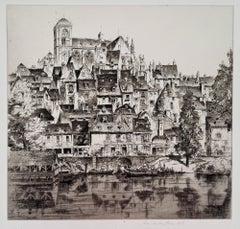
Cathedral de Saint Julien le Mans
By John Taylor Arms
Located in Middletown, NY
Etching on antique cream laid paper with a deckle edge, 9 1/8 x 9 3/4 inches (232 x 248 mm); sheet 12 1/8 x 12 3/4 inches (307 x 323 mm), full margins. Signed and dated in pencil in ...
Category

Early 20th Century American Modern Continental US - Prints and Multiples

Materials

Handmade Paper, Laid Paper, Etching

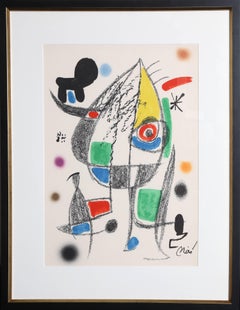
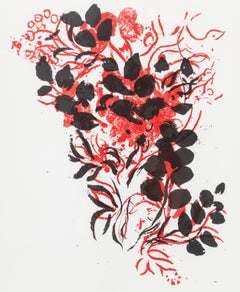
Maravillas con Variaciones Acrosticas (No 22), Modern Lithograph by Joan Miro
By Joan Miró
Located in Long Island City, NY
Artist: Joan Miro, Spanish (1893 - 1983) Title: Maravillas con Variaciones Acrosticas en el jardin de Miro (Number 22) Year: 1975 Medium: Lithograph, signed in the plate Edition: 150...
Category

1970s Modern Continental US - Prints and Multiples

Materials

Lithograph

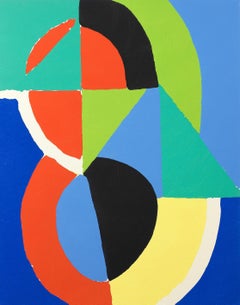
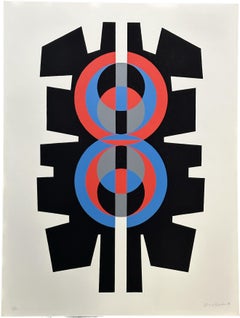
Sonia Delaunay, Untitled, from XXe Siecle, 1956
By Sonia Delaunay
Located in Southampton, NY
This exquisite lithograph and pochoir by Sonia Delaunay (1885–1979), titled Sans titre (Untitled), from the album XXe Siecle, Nouvelle serie, No. 7 (double), Juin 1956, originates fr...
Category

1950s Orphist Continental US - Prints and Multiples

Materials

Lithograph

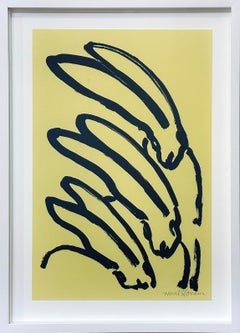
Hunt Slonem "Lemon Bunnies" Lithograph
By Hunt Slonem
Located in Boston, MA
Artist: Slonem, Hunt Title: Lemon Bunnies Series: Bunnies Date: 2017 Medium: Lithograph on Paper Unframed Dimensions: 24" x 16" Framed Dimensions: 29" x 22" Signature: Signed...
Category

2010s Contemporary Continental US - Prints and Multiples

Materials

Lithograph

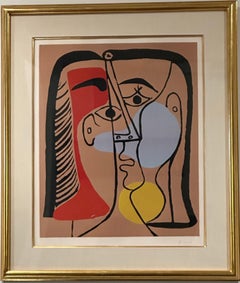
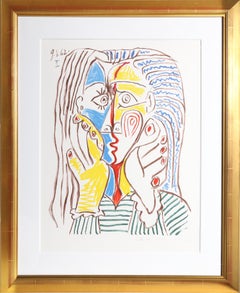
Pablo Picasso, "Grand Tête" original linocut in colors, hand signed
By Pablo Picasso
Located in Chatsworth, CA
Grand Tête, Portrait of Jacqueline with sleek hair Color linocut printed in beige, yellow, red, blue, and black on cream wove paper with Arches watermark Numbered 14/50 from the edit...
Category

1960s Modern Continental US - Prints and Multiples

Materials

Linocut

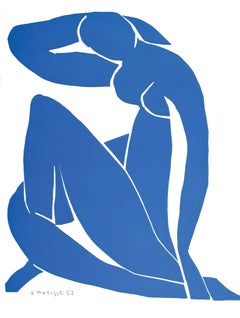
Henri Matisse, Blue Nude XII, from Verve, Revue Artistique, 1958 (after)
By Henri Matisse
Located in Southampton, NY
This exquisite lithograph after Henri Matisse (1869–1954), titled Nu Bleu XII (Blue Nude XII), from Verve, Revue Artistique et Litteraire, Vol. IX, No. 35–36, originates from the 195...
Category

1950s Modern Continental US - Prints and Multiples

Materials

Lithograph

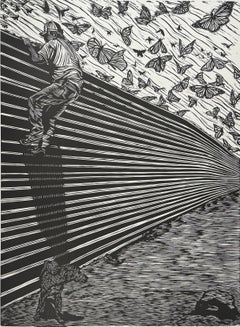
Si Se Puede, by Juan Fuentes
By Juan Fuentes
Located in Palm Springs, CA
Medium: linocut Year: 2023 Image Size: 18 x 24 inches Edition Size: 10 Undocumented immigrants scaling the wall to enter the United States, against a backdrop of butterflies flying ...
Category

2010s Contemporary Continental US - Prints and Multiples

Materials

Linocut

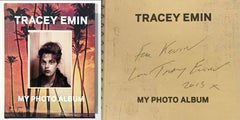
Tracey Emin: My Photo Album (Hand signed, inscribed and dated by Tracey Emin)
By Tracey Emin
Located in New York, NY
Tracey Emin Tracey Emin: My Photo Album (Hand signed, inscribed and dated by Tracey Emin), 2013 Hardback monograph (hand signed, inscribed to Kevin and dated by Tracey Emin) Warmly signed, inscribed and dated by Tracey Emin on the title page 9 × 7 1/4 × 1 inches Warmly signed, inscribed to Kevin and dated by Tracey Emin on the title page Tracey signed this for the present owner at an official book signing in New York back in 2013, so provenance is direct. Publisher's blurb: My Photo Album is a journey through the life of British artist Tracey Emin using photographs from her personal collection. Edited from the albums she has kept from an early age, this visual autobiography contains some amazing images: Tracey sharing a pram as a baby with her twin Paul, her bus-pass photo aged 14, a ‘glamour’ shoot as a semi-naked art...
Category

2010s Contemporary Continental US - Prints and Multiples

Materials

Ink, Mixed Media, Lithograph, Offset

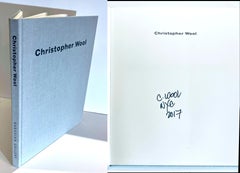
Gagosian Gallery hardback monograph (hand signed by Christopher Wool)
By Christopher Wool
Located in New York, NY
Christopher Wool (hand signed by Christopher Wool), 2006 Cloth hardback monograph (hand signed by Christopher Wool) Hand signed and dated 2017 by Christopher Wool on the half title p...
Category

Early 2000s Minimalist Continental US - Prints and Multiples

Materials

Paper, Ink, Mixed Media, Lithograph, Offset

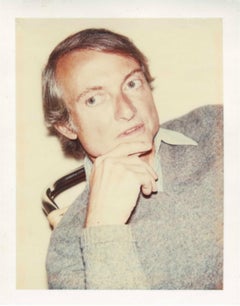
Unique portrait of Roy Lichtenstein, Authenticated by the Andy Warhol Foundation
By Andy Warhol
Located in New York, NY
Andy Warhol Portrait of Roy Lichtenstein, 1975 Polaroid dye-diffusion print Authenticated by the Andy Warhol Foundation for the Visual Arts, bears the Foundation stamp verso Frame included: Framed in white wood frame with UV plexiglass; with die-cut window in the back to show official Warhol Foundation authentication stamp and text Measurements: 9 9/16 x 8 9/16 x 9/16 inches (frame) 3 1/2 x 2 3/4 inches (window) 4.16 x 3.15 inches (Artwork) Authenticated and stamped by the Estate of Andy Warhol/Warhol Foundation for the Visual Arts An impressive piece of Pop Art history! A must-have for fans and collectors of both Andy Warhol and Roy Lichtenstein: This is a unique, authenticated color Polaroid taken by one Pop Art legend, Andy Warhol, of his most formidable contemporary and, in many respects, rival, Roy Lichtenstein. One of only a few portraits Andy Warhol took of Roy Lichtenstein, during one tense photo shoot. Both iconic artists, colleagues and, perhaps lesser known to the public, rivals, would be represented at the time by the renowned Leo Castelli Gallery. The truth is - they were really more rivals than friends. (the rivalry intensified when Warhol, who was working with Walt Disney, discovered that Lichtenstein painted Mickey Mouse before he did!!) Leo Castelli was committed to Roy Lichtenstein, and, it's easy to forget today, wasn't that interested in Warhol as he considered Lichtenstein the greater talent and he could relate better with Roy on a personal level. However, Ivan Karp, who worked at Castelli, was very interested in Warhol, as were some powerful European dealers, as well as many wealthy and influential American and European collectors. That was the start of Warhol's bypassing the traditional gallery model - so that dealers like Castelli could re-discover him after everybody else had. Warhol is known to have taken hundreds of self-portrait polaroid photographs - shoe boxes full - and he took many dozens of images of celebrities like Blondie and Farrah Fawcett. But only a small number of photographic portraits of fellow Pop Art legend Roy Lichtenstein -- each unique,- are known to have appeared on the market over the past half a century - all from the same photo session. This is one of them. There is another Polaroid - from this same (and only) sitting, in the permanent collection of the Getty Museum in California. There really weren't any other collaborations between these two titans, making the resulting portrait from this photo session extraordinary. It is fascinating to study Roy Lichtenstein's face and demeanor in this photograph, in the context of the great sense of competition, but perhaps even greater, albeit uneasy respect, these two larger than life Pop art titans had for each other: Like Leo Castelli, Roy Lichtenstein was Jewish of European descent; whereas Warhol was Catholic and quintessentially American, though also of European (Polish) descent. They were never going to be good friends, but this portrait, perhaps even arranged by Leo Castelli, represents an uneasy acknowledgement there would be room at the top for both of them. Floated, framed with die cut back revealing authentication details, and ready to hang. Measurements: 9 9/16 x 8 9/16 x 9/16 inches (frame) 3 1/2 x 2 3/4 inches (window) 4.16 x 3.15 inches (sheet) Authenticated by the Estate of Andy Warhol/The Andy Warhol Foundation for the Visual Arts. Estate Stamped: Stamped with the Andy Warhol Estate, Warhol Foundation for the Visual Arts stamp, numbered "B 512536P", with the Estate of Andy Warhol stamp and inscribed UP on the reverse. Bears the Warhol Foundation unique inventory number. Roy Lichtenstein Biography Roy Lichtenstein was one of the most influential and innovative artists of the second half of the twentieth century. He is preeminently identified with Pop Art, a movement he helped originate, and his first fully achieved paintings were based on imagery from comic strips and advertisements and rendered in a style mimicking the crude printing processes of newspaper reproduction. These paintings reinvigorated the American art scene and altered the history of modern art. Lichtenstein’s success was matched by his focus and energy, and after his initial triumph in the early 1960s, he went on to create an oeuvre of more than 5,000 paintings, prints, drawings, sculptures, murals and other objects celebrated for their wit and invention. Roy Fox Lichtenstein was born on October 27, 1923, in New York City, the first of two children born to Milton and Beatrice Werner Lichtenstein. Milton Lichtenstein (1893–1946) was a successful real estate broker, and Beatrice Lichtenstein (1896–1991), a homemaker, had trained as a pianist, and she exposed Roy and his sister Rénee to museums, concerts and other aspects of New York culture. Roy showed artistic and musical ability early on: he drew, painted and sculpted as a teenager, and spent many hours in the American Museum of Natural History and the Museum of Modern Art. He played piano and clarinet, and developed an enduring love of jazz, frequenting the nightspots in Midtown to hear it. Lichtenstein attended the Franklin School for Boys, a private junior high and high school, and was graduated in 1940. That summer he studied painting and drawing from the model at the Art Students League of New York with Reginald Marsh. In September he entered Ohio State University (OSU) in Columbus in the College of Education. His early artistic idols were Rembrandt, Daumier and Picasso, and he often said that Guernica (1937; Museo Reina Sofía, Madrid), then on long-term loan to the Museum of Modern Art, was his favorite painting. Even as an undergraduate, Lichtenstein objected to the notion that one set of lines (one person’s drawings) “was considered brilliant, and somebody’s else’s, that may have looked better to you, was considered nothing by almost everyone.”i Lichtenstein’s questioning of accepted canons of taste was encouraged by Hoyt L. Sherman, a teacher whom he maintained was the person who showed him how to see and whose perception-based approach to art shaped his own. In February 1943, Lichtenstein was drafted, and he was sent to Europe in 1945. As part of the infantry, he saw action in France, Belgium and Germany. He made sketches throughout his time in Europe and, after peace was declared there, he intended to study at the Sorbonne. Lichtenstein arrived in Paris in October 1945 and enrolled in classes in French language and civilization, but soon learned that his father was gravely ill. He returned to New York in January 1946, a few weeks before Milton Lichtenstein died. In the spring of that year, Lichtenstein went back to OSU to complete his BFA and in the fall he was invited to join the faculty as an instructor. In June 1949, he married Isabel Wilson Sarisky (1921–80), who worked in a cooperative art gallery in Cleveland where Lichtenstein had exhibited his work. While he was teaching, Lichtenstein worked on his master’s degree, which he received in 1949. During his second stint at OSU, Lichtenstein became closer to Sherman, and began teaching his method on how to organize and unify a composition. Lichtenstein remained appreciative of Sherman’s impact on him. He gave his first son the middle name of “Hoyt,” and in 1994 he donated funds to endow the Hoyt L. Sherman Studio Art Center at OSU. In the late 1940s and early 1950s, Lichtenstein began working in series and his iconography was drawn from printed images. His first sustained theme, intimate paintings and prints in the vein of Paul Klee that poked lyrical fun at medieval knights, castles and maidens, may well have been inspired by a book about the Bayeux Tapestry. Lichtenstein then took an ironic look at nineteenth-century American genre paintings he saw in history books, creating Cubist interpretations of cowboys and Indians spiked with a faux-primitive whimsy. As with his most celebrated Pop paintings of the 1960s, Lichtenstein gravitated toward what he would characterize as the “dumbest” or “worst” visual item he could find and then went on to alter or improve it. In the 1960s, commercial art was considered beneath contempt by the art world; in the early 1950s, with the rise of Abstract Expressionism, nineteenth-century American narrative and genre paintings were at the nadir of their reputation among critics and collectors. Paraphrasing, particularly the paraphrasing of despised images, became a paramount feature of Lichtenstein’s art. Well before finding his signature mode of expression in 1961, Lichtenstein called attention to the artifice of conventions and taste that permeated art and society. What others dismissed as trivial fascinated him as classic and idealized—in his words, “a purely American mythological subject matter.”ii Lichtenstein’s teaching contract at OSU was not renewed for the 1951–52 academic year, and in the autumn of 1951 he and Isabel moved to Cleveland. Isabel Lichtenstein became an interior decorator specializing in modern design, with a clientele drawn from wealthy Cleveland families. Whereas her career blossomed, Lichtenstein did not continue to teach at the university level. He had a series of part-time jobs, including industrial draftsman, furniture designer, window dresser and rendering mechanical dials for an electrical instrument company. In response to these experiences, he introduced quirkily rendered motors, valves and other mechanical elements into his paintings and prints. In 1954, the Lichtensteins’ first son, David, was born; two years later, their second child, Mitchell, followed. Despite the relative lack of interest in his work in Cleveland, Lichtenstein did place his work with New York dealers, which always mattered immensely to him. He had his first solo show at the Carlebach Gallery in New York in 1951, followed by representation with the John Heller Gallery from 1952 to 1957. To reclaim his academic career and get closer to New York, Lichtenstein accepted a position as an assistant professor at the State University of New York at Oswego, in the northern reaches of the state. He was hired to teach industrial design, beginning in September 1957. Oswego turned out to be more geographically and aesthetically isolated than Cleveland ever was, but the move was propitious, for both his art and his career. Lichtenstein broke away from representation to a fully abstract style, applying broad swaths of pigment to the canvas by dragging the paint across its surface with a rag wrapped around his arm. At the same time, Lichtenstein was embedding comic-book characters figures such as Mickey Mouse and Donald Duck in brushy, expressionistic backgrounds. None of the proto-cartoon paintings from this period survive, but several pencil and pastel studies from that time, which he kept, document his intentions. Finally, when he was in Oswego, Lichtenstein met Reginald Neal, the new head of the art department at Douglass College, the women’s college of Rutgers University, in New Brunswick, New Jersey. The school was strengthening and expanding its studio art program, and when Neal needed to add a faculty member to his department, Lichtenstein was invited to apply for the job. Lichtenstein was offered the position of assistant professor, and he began teaching at Douglass in September 1960. At Douglass, Lichtenstein was thrown into a maelstrom of artistic ferment. With New York museums and galleries an hour away, and colleagues Geoffrey Hendricks and Robert Watts at Douglass and Allan Kaprow and George Segal at Rutgers, the environment could not help but galvanize him. In June 1961, Lichtenstein returned to the idea he had fooled around with in Oswego, which was to combine cartoon characters from comic books with abstract backgrounds. But, as Lichtenstein said, “[I]t occurred to me to do it by mimicking the cartoon style without the paint texture, calligraphic line, modulation—all the things involved in expressionism.”iii Most famously, Lichtenstein appropriated the Benday dots, the minute mechanical patterning used in commercial engraving, to convey texture and gradations of color—a stylistic language synonymous with his subject matter. The dots became a trademark device forever identified with Lichtenstein and Pop Art. Lichtenstein may not have calibrated the depth of his breakthrough immediately but he did realize that the flat affect and deadpan presentation of the comic-strip panel blown up and reorganized in the Sherman-inflected way “was just so much more compelling”iv than the gestural abstraction he had been practicing. Among the first extant paintings in this new mode—based on comic strips and illustrations from advertisements—were Popeye and Look Mickey, which were swiftly followed by The Engagement Ring, Girl with Ball and Step-on Can with Leg. Kaprow recognized the energy and radicalism of these canvases and arranged for Lichtenstein to show them to Ivan Karp, director of the Leo Castelli Gallery. Castelli was New York’s leading dealer in contemporary art, and he had staged landmark exhibitions of Jasper Johns and Robert Rauschenberg in 1958 and Frank Stella in 1960. Karp was immediately attracted to Lichtenstein’s paintings, but Castelli was slower to make a decision, partly on account of the paintings’ plebeian roots in commercial art, but also because, unknown to Lichtenstein, two other artists had recently come to his attention—Andy Warhol and James Rosenquist—and Castelli was only ready for one of them. After some deliberation, Castelli chose to represent Lichtenstein, and the first exhibition of the comic-book paintings was held at the gallery from February 10 to March 3, 1962. The show sold out and made Lichtenstein notorious. By the time of Lichtenstein’s second solo exhibition at Castelli in September 1963, his work had been showcased in museums and galleries around the country. He was usually grouped with Johns, Rauschenberg, Warhol, Rosenquist, Segal, Jim Dine, Claes Oldenburg, Robert Indiana and Tom Wesselmann. Taken together, their work was viewed as a slap in the face to Abstract Expressionism and, indeed, the Pop artists shifted attention away from many members of the New York School. With the advent of critical and commercial success, Lichtenstein made significant changes in his life and continued to investigate new possibilities in his art. After separating from his wife, he moved from New Jersey to Manhattan in 1963; in 1964, he resigned from his teaching position at Douglass to concentrate exclusively on his work. The artist also ventured beyond comic book subjects, essaying paintings based on oils by Cézanne, Mondrian and Picasso, as well as still lifes and landscapes. Lichtenstein became a prolific printmaker and expanded into sculpture, which he had not attempted since the mid-1950s, and in both two- and three-dimensional pieces, he employed a host of industrial or “non-art” materials, and designed mass-produced editioned objects that were less expensive than traditional paintings and sculpture. Participating in one such project—the American Supermarket show in 1964 at the Paul Bianchini Gallery, for which he designed a shopping bag—Lichtenstein met Dorothy Herzka (b. 1939), a gallery employee, whom he married in 1968. The late 1960s also saw Lichtenstein’s first museum surveys: in 1967 the Pasadena Art Museum initiated a traveling retrospective, in 1968 the Stedelijk Musem in Amsterdam presented his first European retrospective, and in 1969 he had his first New York retrospective, at the Solomon R. Guggenheim Museum. Wanting to grow, Lichtenstein turned away from the comic book subjects that had brought him prominence. In the late 1960s his work became less narrative and more abstract, as he continued to meditate on the nature of the art enterprise itself. He began to explore and deconstruct the notion of brushstrokes—the building blocks of Western painting. Brushstrokes are conventionally conceived as vehicles of expression, but Lichtenstein made them into a subject. Modern artists have typically maintained that the subject of a painting is painting itself. Lichtenstein took this idea one imaginative step further: a compositional element could serve as the subject matter of a work and make that bromide ring true. The search for new forms and sources was even more emphatic after 1970, when Roy and Dorothy Lichtenstein bought property in Southampton, New York, and made it their primary residence. During the fertile decade of the 1970s, Lichtenstein probed an aspect of perception that had steadily preoccupied him: how easily the unreal is validated as the real because viewers have accepted so many visual conceptions that they don’t analyze what they see. In the Mirror series, he dealt with light and shadow upon glass, and in the Entablature series, he considered the same phenomena by abstracting such Beaux-Art architectural elements as cornices, dentils, capitals and columns. Similarly, Lichtenstein created pioneering painted bronze sculpture that subverted the medium’s conventional three-dimensionality and permanence. The bronze forms were as flat and thin as possible, more related to line than volume, and they portrayed the most fugitive sensations—curls of steam, rays of light and reflections on glass. The steam, the reflections and the shadow were signs for themselves that would immediately be recognized as such by any viewer. Another entire panoply of works produced during the 1970s were complex encounters with Cubism, Futurism, Purism, Surrealism and Expressionism. Lichtenstein expanded his palette beyond red, blue, yellow, black, white and green, and invented and combined forms. He was not merely isolating found images, but juxtaposing, overlapping, fragmenting and recomposing them. In the words of art historian Jack Cowart, Lichtenstein’s virtuosic compositions were “a rich dialogue of forms—all intuitively modified and released from their nominal sources.”v In the early 1980s, which coincided with re-establishing a studio in New York City, Lichtenstein was also at the apex of a busy mural career. In the 1960s and 1970s, he had completed four murals; between 1983 and 1990, he created five. He also completed major commissions for public sculptures in Miami Beach, Columbus, Minneapolis, Paris, Barcelona and Singapore. Lichtenstein created three major series in the 1990s, each emblematic of his ongoing interest in solving pictorial problems. The Interiors, mural-sized canvases inspired by a miniscule advertisement in an Italian telephone...
Category

1970s Pop Art Continental US - Prints and Multiples

Materials

Polaroid

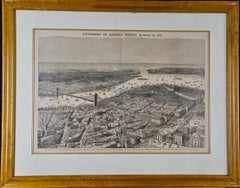
1870 View of Proposed Brooklyn Bridge and New York City
By Theodore R. Davis
Located in Alamo, CA
This framed engraving entitled "Birds-eye View of the Southern End of New York and Brooklyn, Showing the Projected Suspension-Bridge Over the East River, From the Western Terminus in Printing-House Square, New York" by Theodore R. Davis (1840–1894) was published as a supplement of Harper's Weekly, November 19, 1870. The print is presented in a maple frame and a double mat. The frame measures 23.5" high, 29" wide and 0.75" deep. There is a vertical center fold and additional vertical lines, where wood engraving blocks were joined for the printing process. It is in excellent condition. This framed image depicting New York in 1870 was a centerfold for the November 19, 1870 issue of Harper's Weekly. It includes the site and eventual appearance of the East River New York-Brooklyn Bridge; the name later shortened to the Brooklyn Bridge. The print was issued eleven months after the start of construction of the bridge on January 2, 1870, which would take another 12.5 years to complete. When this view was drawn, work on the bridge was all below ground, constructing the supports for the bridge’s towers. Labels in the upper portion of the print identify locations in the background including "Light Ship...
Category

Late 19th Century Naturalistic Continental US - Prints and Multiples

Materials

Woodcut

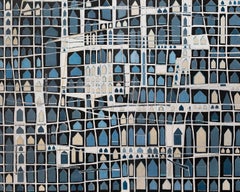
"Neighbors, " Limited Edition Giclee Print, 24" x 30"
By Sofie Swann
Located in Westport, CT
This Limited Edition abstract print, "Neighbors," by Sofie Swann measures 24" x 30" and is an edition of 95. Printed on canvas, this giclee ships rolled ready to be stretched and fra...
Category

2010s Abstract Continental US - Prints and Multiples

Materials

Digital, Giclée

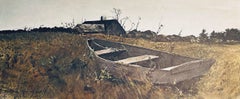
Andrew Wyeth, Teel’s Island, from The Four Seasons (after)
By Andrew Wyeth
Located in Southampton, NY
This exquisite lithograph after Andrew Wyeth (1917–2009), titled Teel’s Island, originates from the distinguished 1962 folio The Four Seasons: Paintings and Drawings by Andrew Wyeth....
Category

1960s American Realist Continental US - Prints and Multiples

Materials

Lithograph

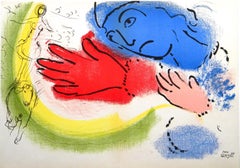
"Woman Circus Rider" original lithograph
By Marc Chagall
Located in Henderson, NV
Medium: original lithograph. Catalogue reference: Mourlot 153. Printed by Mourlot Frères in an edition of 2000 for the Dix Ans d'Edition issue of Derrière le Miroir in 1956, publishe...
Category

1950s Continental US - Prints and Multiples

Materials

Lithograph

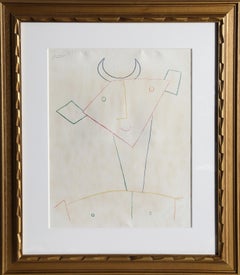
Buste de Faune, Modern Stencil after Pablo Picasso
By Pablo Picasso
Located in Long Island City, NY
Pablo Picasso, After, Spanish (1881 - 1973) - Buste de Faune. Portfolio: Femme et Faunes, Year: 1956, Medium: Pochoir, signed in the plate, Edition: 200, Size: 19.5 x 16 in. (49.53 x...
Category

1950s Modern Continental US - Prints and Multiples

Materials

Stencil

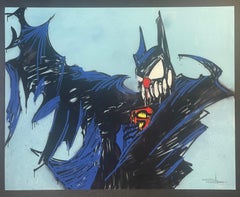
Olaolu Slawn "Batman" Print Contemporary Street Artist, 2025
Located in Draper, UT
Olaolu Akeredolu-Ale better known as Olaolu Slawn is a British Nigerian artist and designer. He began his career working at Wafflesncream, Nigeria’s first skate shop, catching the at...
Category

2010s Street Art Continental US - Prints and Multiples

Materials

Giclée

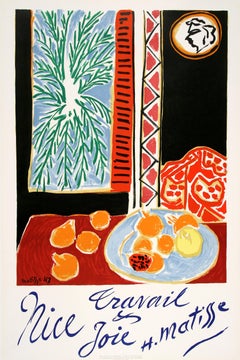
Original Henri Matisse Travel Vintage Poster for Nice France Created in 1947 Tra
By Henri Matisse
Located in Boca Raton, FL
Nice Travail et Joie is a 1947 French travel poster by master artist, Henri Matisse. This travel poster was created exclusively for the city of Nice, where Matisse settled towards th...
Category

1940s Continental US - Prints and Multiples

Materials

Lithograph

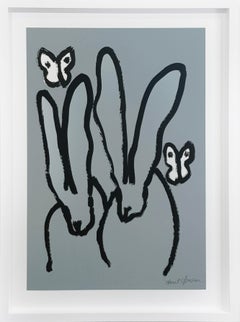
Hunt Slonem "Early Spring Bunnies" Bunnies, Butterflies
By Hunt Slonem
Located in Boston, MA
Artist: Slonem, Hunt Title: Early Spring Bunnies Series: Bunnies Date: 2025 Medium: Lithograph on Paper Unframed Dimensions: 24" x 16" Framed Dimensions: 29" x 22" x 1.25" Sig...
Category

2010s Contemporary Continental US - Prints and Multiples

Materials

Lithograph

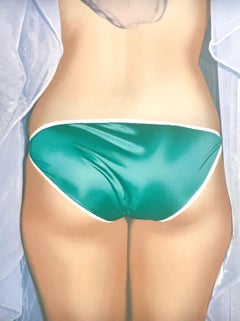
Jill, John Kacere
By John Kacere
Located in Fairfield, CT
Artist: John Kacere (1930-1999) Title: Jill Year: 1979 Edition: 166/300, plus proofs Medium: Lithograph on Waterford paper Size: 29.75 x 22.25 inches Inscription: Signed by the artis...
Category

1970s Pop Art Continental US - Prints and Multiples

Materials

Lithograph

Jill, John Kacere
Jill, John Kacere
$1,596 Sale Price
20% Off
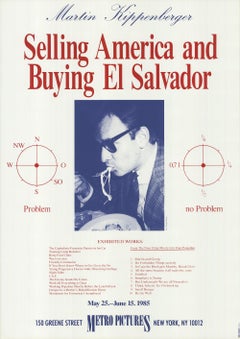
1985 Martin Kippenberger Selling America and Buying El Salvador Offset Print
By Martin Kippenberger
Located in Brooklyn, NY
Paper Size: 33.75 x 24 inches ( 85.725 x 60.96 cm )?Image Size: 13 x 9 inches ( 33.02 x 22.86 cm )?Framed: No?Condition: A-: Near Mint, very light signs of handling??Additional Details: Original exhibition poster for Martin Kippenberger...
Category

1980s Contemporary Continental US - Prints and Multiples

Materials

Offset

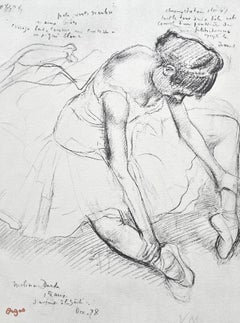
Degas, Melina Darde, Ten Ballet Sketches (after)
By Edgar Degas
Located in Fairfield, CT
Medium: Lithograph and stencil on vélin paper Year: 1945 Paper Size: 17 x 13 inches Inscription: Signed in the plate and unnumbered, as issued Notes: From the folio, Degas, Ten Balle...
Category

1940s Impressionist Continental US - Prints and Multiples

Materials

Lithograph

Visage, Cubist Portrait Lithograph after Pablo Picasso
By Pablo Picasso
Located in Long Island City, NY
Grabbing the faces of one another, the two women in this Pablo Picasso print tenderly kiss one another. Seen in profile view from the position of the viewer, the scene is loving albe...
Category

1980s Cubist Continental US - Prints and Multiples

Materials

Lithograph

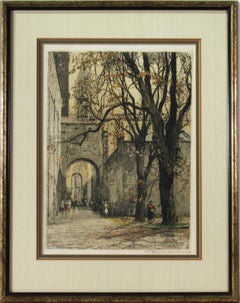
Cityscape
Located in San Francisco, CA
This artwork titled "Cityscape" c.1930 is an original color etching on wove paper by Austrian/American artist Tana Kasimir Hoernes, 1887-1972. It is hand signed in pencil by the artist. The image (plate mark) size is 12.75 x 9.15 inches, framed size is 19.35 x 15.25 inches. Custom framed in a silver with brown patina frame, with light grey matting and green and red filet. It is in excellent condition, About the artist: Tanna Kasimir...
Category

Mid-20th Century Realist Continental US - Prints and Multiples

Materials

Etching

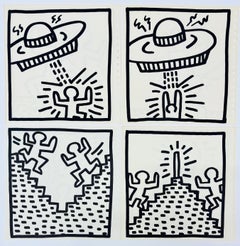
Keith Haring Tony Shafrazi gallery 1982 (set of 4 printed works)
By Keith Haring
Located in NEW YORK, NY
Keith Haring Tony Shafrazi 1982: set of 6 printed works: A set of six, individual, double-sided lithographic inserts from the seminal, spiral bound 1982 Keith Haring Tony Shafrazi ca...
Category

1980s Pop Art Continental US - Prints and Multiples

Materials

Lithograph, Offset

1970 Signed Limited Edition Large Screen Print V
By Jimmy Ernst
Located in Rochester Hills, MI
Jimmy Ernst  Plate IV - 1970 Print - Screen Print on Heavy Paper 28'' x 37'' inches Edition: Signed in pencil and numbered 125/125 Jimmy Ernst’s artwork was influenced by a number of powerful talents and vital currents in the art of his time. Son of Max Ernst, Jimmy drew upon the biomorphic and surreal compositions of his father, as well as Arp, Klee, André Breton, and Lyonel Feininger. His mature oil paintings, which emerged in the 1950s and 1960s, reflect the Atomic Age aesthetic of the period. Often, they resemble crystals or webs; many look like vast labyrinths and are interpreted as symbols of the unconscious mind. Ernst was always interested in spirituality and drew inspiration from indigenous American art...
Category

1970s Abstract Continental US - Prints and Multiples

Materials

Screen

Chasing the Light- 60x40 Black White Photography Wild Horses Mustangs Unsigned
By Shane Russeck
Located in Los Angeles, CA
This is a contemporary black and white photograph of Northern California Wild Mustangs. "They represent the ultimate expression of American freedom" 60 x 40 Signed edition of 10...
Category

21st Century and Contemporary Continental US - Prints and Multiples

Materials

Archival Pigment

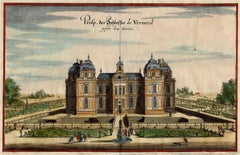
Chateau de Verneuil
By Matthäus Merian the Elder
Located in Middletown, NY
Engraving with hand coloring and heightening in watercolor on two leaves of expertly conjoined handmade laid paper, one leaf with a large watermark a feathered dragon, 7 1/4 x 11 1/4...
Category

Mid-17th Century Old Masters Continental US - Prints and Multiples

Materials

Watercolor, Handmade Paper, Engraving

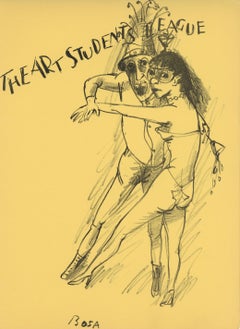
original lithograph
By Louis Bosa
Located in Henderson, NV
Medium: original lithograph. This lithograph is from the rare 1951 "Improvisations" portfolio, published by the Artists Equity Association of New York on the occasion of the 1951 Spr...
Category

1950s Continental US - Prints and Multiples

Materials

Lithograph

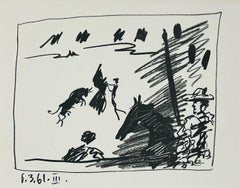
Jeu de la Cape (III), from A Los Toros Avec Picasso
By Pablo Picasso
Located in Washington, DC
Artist: Pablo Picasso Title: Jeu de la Cape (III) Portfolio: A Los Toros Avec Picasso Medium: Transfer lithograph Date: 1961 Edition: Unnumbered Frame Size: 17 1/4" x 19 3/4" Sheet S...
Category

1960s Abstract Continental US - Prints and Multiples

Materials

Lithograph

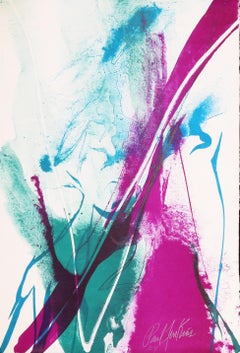
Seeing Voices 1, Abstract Lithograph by Paul Jenkins
By Paul Jenkins
Located in Long Island City, NY
A lithograph from the portfolio "Seeing Voices", a collection that also includes several poems. This abstract piece by Paul Jenkins is signed and numbered on the front of the print i...
Category

1960s Continental US - Prints and Multiples

Materials

Lithograph

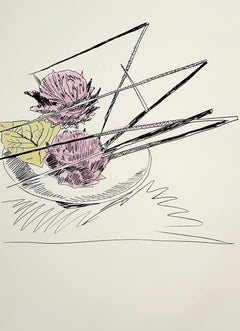
Flowers (Hand-Colored)
By Andy Warhol
Located in Washington, DC
Artist: Andy Warhol Title: Flowers (Hand-Colored) Medium: Screenprint hand-colored with watercolor on white wove paper Date: 1974 Edition: 238/250 Sheet Size: 40 7/8" x 27 1/4" Signa...
Category

1970s Pop Art Continental US - Prints and Multiples

Materials

Watercolor, Screen

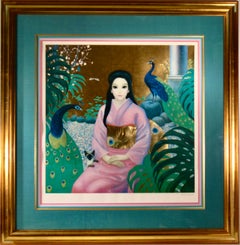
Madame Butterfly
By Margaret Keane
Located in San Francisco, CA
This artwork titled "Madame Butterfly" 1986, is an original color serigraph with gold addition by noted American artist Margaret Keane, 1927-2022. It is hand signed and numbered HH 109/150 in pencil by the artist. The image size is 24 x 24 inches, framed size is 39.5 x 38.5 inches. Custom framed in a wooden gold frame, with green fabric matting, gold color bevel and three different colors fillet. It is in excellent condition, the frame have some minor restorations, barely visible. About the artist. Margaret D. H. Keane was born 1927 in Tennessee, and attributes her deep respect for the Bible and inspirations of her artwork to the relationship with her grandmother. She later became one of Jehovah's Witnesses, which she said changed her life for the better. In the 1960s, Margaret Keane's artwork was sold under the name of her husband, Walter Keane. He locked her in a room and forced her to paint,while taking credit for her work. Conflict over that issue was cited as one of the reasons they divorced. Neither wanting to relinquish rights to the artwork, Walter and Margaret's divorce proceedings went all the way to federal court. At the hearing, Margaret created a painting in front of the judge to prove that she was the artist. Walter declined to paint before the court, citing a sore shoulder. In 1986, the courts sided with her, enabling her to paint under her own name. Her works while living in her husband's shadow tended to depict sad children in a dark setting, but after divorcing, moving to Hawaii, and becoming one of Jehovah's Witnesses, her paintings took on a happier, brighter style. Keane is a fixture in popular culture. Some of her well-known fans over the years have included actresses Joan Crawford and Natalie Wood, whom she painted portraits of; filmmaker Tim Burton, who commissioned Keane to paint Lisa Marie; and animator Craig McCracken, whose characters the Powerpuff Girls are based on Keane's 'waifs'; additionally the Girls' schoolteacher is named "Ms. Keane". Cultural references • The American television comedy show Saturday Night Live once had a skit that featured her work, during the time when it was thought to be by her husband, as a parody of the reaction against modern art (e.g., Cubism or the New York Armory Show). "People don't look like that!" one comedian shrieks, before the picture in question was shown to the camera and audience as the punch line. • In Woody Allen's 1973 comedy Sleeper, the people of the future consider Keane to be one of the greatest artists in history, one of many references mocking the popular culture of the seventies. • Late Night with Conan O'Brien has "bumper" art in her style depicting a glum Conan O'Brien at his desk, next to a dog. • Weird Al Yankovic's song Velvet Elvis, in which the narrator says he needs "no pictures of Mexican kids with those really big eyes or dogs playing poker". • In season 3, episode 20 of 90210 (Women on the Verge), Annie is described as looking "like a Keane painting...
Category

Late 20th Century American Realist Continental US - Prints and Multiples

Materials

Screen

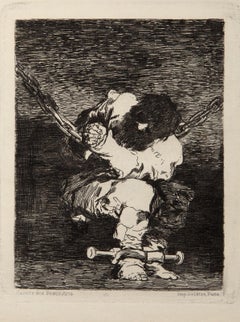
The Custody is as Barbarous as The Crime, Etching by Francisco de Goya
By Francisco Goya
Located in Long Island City, NY
Francisco de Goya, Spanish (1746 - 1828) - The Custody is as Barbarous as The Crime, Year: circa 1810, Medium: Etching and burin on cream laid paper, Image Size: 3.75 x 3 inches, Si...
Category

1810s Surrealist Continental US - Prints and Multiples

Materials

Etching

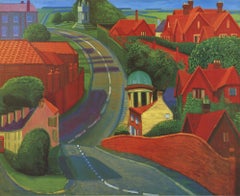
David Hockney The Road to York Through Sledmere 1997
By David Hockney
Located in Brooklyn, NY
In The Road to York Through Sledmere, David Hockney transforms a familiar Yorkshire scene into something luminous and almost enchanted. The brilliant red brick of the buildings aroun...
Category

1990s Continental US - Prints and Multiples

Materials

Offset

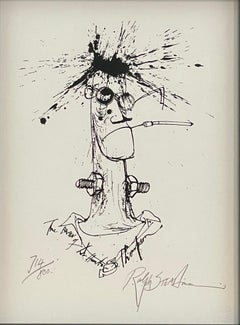
Brain of Hunter S. Thompson
By Ralph Steadman
Located in Hollywood, FL
Artist: Ralph Steadman Title: Brain of Hunter S. Thompson Medium: One color silkscreen on White Rising Stonehenge Deckle Edge Paper Size: 11 x15 Inches Edition: of 800 Year: 2010 No...
Category

Early 2000s Surrealist Continental US - Prints and Multiples

Materials

Silk, Screen

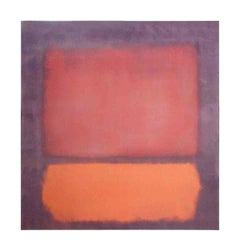
Mark Rothko Untitled (1962) 1998
By Mark Rothko
Located in Brooklyn, NY
This impressive large-format poster features Mark Rothko’s evocative painting Untitled (1962), capturing the essence of his signature abstract expressionist style. Published by Unive...
Category

1990s Continental US - Prints and Multiples

Materials

Offset

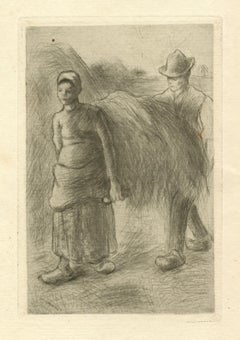
"Paysans portant du foin" original etching
By Camille Pissarro
Located in Henderson, NV
Medium: original etching and drypoint. Catalogue reference Delteil 126. Printed on laid paper in 1900 and published in Paris by Henri Floury as the frontispiece for Gustave Geffroy's...
Category

Early 1900s Impressionist Continental US - Prints and Multiples

Materials

Etching

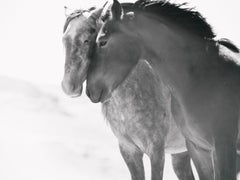
Soulmates 36x48 Black White Photography of Wild Horses Mustang Photograph
By Shane Russeck
Located in Los Angeles, CA
This is a contemporary black and white photograph of Northern California Wild Mustangs. "They represent the ultimate expression of American freedom" 36 x 48 Archival paper and inks ...
Category

21st Century and Contemporary Continental US - Prints and Multiples

Materials

Archival Pigment

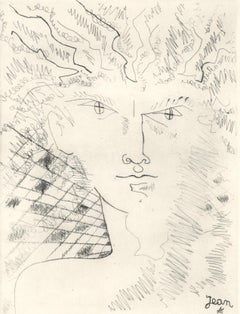
Jean Cocteau, Untitled, from Alternation, 1946
By Jean Cocteau
Located in Southampton, NY
This exquisite etching by Jean Cocteau (1889–1963), titled Sans titre (Untitled), from the album Alternance (Alternation), originates from the 1946 edition published by Le Gerbier, P...
Category

1940s Modern Continental US - Prints and Multiples

Materials

Engraving

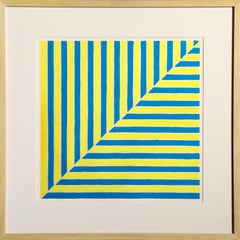
Untitled (Rabat), Geometric Abstract Screenprint by Frank Stella 1964
By Frank Stella
Located in Long Island City, NY
An original screenprint by Frank Stella from X + X (Ten Works by Ten Painters) published in 1964 by Wadsworth Atheneum, CT. The print was printed by Ives-Sillman, CT and referenced i...
Category

1960s Abstract Geometric Continental US - Prints and Multiples

Materials

Screen

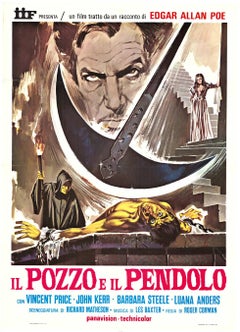
Original The Pit and the Pendulum vintage Italian movie poster
Located in Spokane, WA
Original The Pit and the Pendulum “Il Pozzo e Il Pendolo” vintage Italian movie poster. Linen backed in very good condition, ready to fr...
Category

1970s Gothic Continental US - Prints and Multiples

Materials

Offset

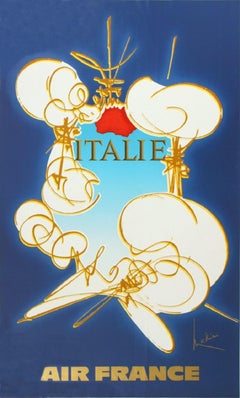
1971 After Georges Mathieu Air France: Italie Contemporary France
By Georges Mathieu
Located in Brooklyn, NY
Paper Size: 39.25 x 23.5 inches ( 99.695 x 59.69 cm ) Image Size: 39.25 x 23.5 inches ( 99.695 x 59.69 cm ) Framed: No Condition: D: Heavy signs of wear, Torn, Damaged. SOLD AS IS...
Category

1970s Continental US - Prints and Multiples

Materials

Offset

Alexander Calder, Untitled, from Derriere le miroir, 1966
By Alexander Calder
Located in Southampton, NY
This exquisite lithograph by Alexander Calder (1898–1976), titled Sans titre (Untitled), from the folio Derriere le miroir, No. 156, originates from the 1966 edition published by Mae...
Category

1960s Modern Continental US - Prints and Multiples

Materials

Lithograph

Pablo Picasso, Bacchanal, from The Double Flute, 1967 (after)
By Pablo Picasso
Located in Southampton, NY
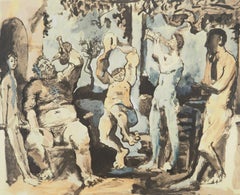
This exquisite lithograph and pochoir after Pablo Picasso (1881–1973), titled Bacchanale (Bacchanal), from the folio Picasso, La flute double, 16 Dessins, Aquarelles Lavis (The Doubl...
Category

1960s Cubist Continental US - Prints and Multiples

Materials

Lithograph, Stencil

(after) André Marchand - lithograph
By André Marchand
Located in Henderson, NV
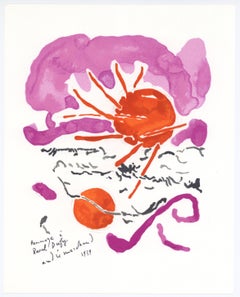
Medium: lithograph (after the watercolor). André Marchand was one of the artists who contributed compositions to Marcelle Oury's "Lettre à mon peintre" in homage to Raoul Dufy. This ...
Category

1960s Continental US - Prints and Multiples

Materials

Lithograph

A black and white cat play with a mouse, from Le Chat Noir
By Théophile Alexandre Steinlen
Located in Fairlawn, OH
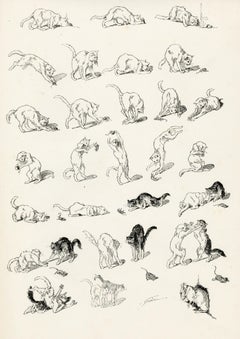
A black and white cat play with a mouse, from Le Chat Noir Gillotage chromotype, 1898 Signed in the image lower right (see photo) An impression of this image is in the collection of ...
Category

1890s Impressionist Continental US - Prints and Multiples

Materials

Other Medium

Tremendous Years of Recurrence - Abstract Geology Encaustic Monotype, 2024
By Laura Moriarty
Located in Kent, CT
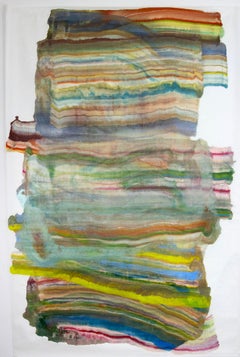
In this contemporary encaustic monotype, layers of pigmented beeswax on a scroll of lightweight mulberry paper create an undulating composition suggesting layers of the earth's crust...
Category

2010s Contemporary Continental US - Prints and Multiples

Materials

Encaustic, Archival Paper, Monotype

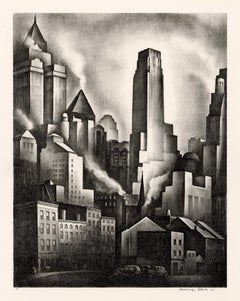
Financial District , New York City — American Modernism
By Howard Norton Cook
Located in Myrtle Beach, SC
Howard Cook, 'Financial District', lithograph, 1931, edition 75, Duffy 155. A fine, richly-inked impression, on cream wove paper, the full sheet with wide margins (2 3/4 to 5 5/8 inches), in excellent condition. Image size 13 5/16 x 10 3/8 inches (338 x 264 mm); sheet size 23 x 16 inches (584 x 406 mm). Matted to museum standards, unframed. Literature: 'American Master Prints from the Betty and Douglas Duffy Collection', the Trust for Museum Exhibitions, Washington, D.C., 1987. Collections: Crystal Bridges Museum of American Art, Library of Congress, Metropolitan Museum of Art, Philadelphia Museum of Art, Smithsonian American Art Museum. ABOUT THE ARTIST Howard Norton Cook (1901-1980) was one of the best-known of the second generation of artists who moved to Taos. A native of Massachusetts, he studied at the Art Students League in New York City and at the Woodstock Art Colony. Beginning his association with Taos in 1926, he became a resident of the community in the 1930s. During his career, he received two Guggenheim Fellowships and was elected an Academician in the National Academy of Design. He earned a national reputation as a painter, muralist, and printmaker. Cook’s work in the print mediums received acclaim early in his career with one-person exhibitions at the Denver Art Museum (1927) and the Museum of New Mexico (1928). He received numerous honors and awards over the years, including selection in best-of-the-year exhibitions sponsored by the American Institute of Graphics Arts, the Brooklyn Museum, the Society of American Etchers, and the Philadelphia Print Club. His first Guggenheim Fellowship took him to Taxco, Mexico in 1932 and 1933; his second in the following year enabled him to travel through the American South and Southwest. Cook painted murals for the Public Works of Art Project in 1933 and the Treasury Departments Art Program in 1935. The latter project, completed in Pittsburgh, received a Gold Medal from the Architectural League of New York. One of his most acclaimed commissions was a mural in the San Antonio Post Office in 1937. He and Barbara Latham settled in Talpa, south of Taos, in 1938 and remained there for over three decades. Cook volunteered in World War II as an Artist War Correspondent for the US Navy, where he was deployed in the Pacific. In 1943 he was appointed Leader of a War Art Unit...
Category

1930s American Modern Continental US - Prints and Multiples

Materials

Lithograph

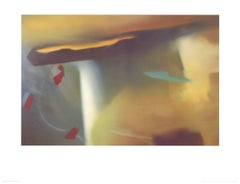
Gerhard Richter Abstrakte Bilder Vintage
By Gerhard Richter
Located in Brooklyn, NY
This reproduction of Abstrakte Bilder (No Text) by Gerhard Richter, a key work from the artist's acclaimed "Abstract Paintings" series, captures the essence of Richter's approach to ...
Category

Early 2000s Contemporary Continental US - Prints and Multiples

Materials

Offset

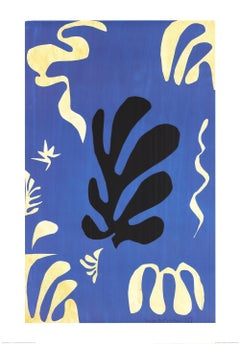
Henri Matisse Composition Fond Bleu 1996- Offset Lithograph
By Henri Matisse
Located in Brooklyn, NY
Printed in Italy by Egim in 1996, based on Matisse's 1951 original work. Paper Size: 39.25 x 27.5 inches ( 99.695 x 69.85 cm ) Image Size: 34.5 x 21.75 inches ( 87.63 x 55.245 cm )...
Category

1990s Continental US - Prints and Multiples

Materials

Offset

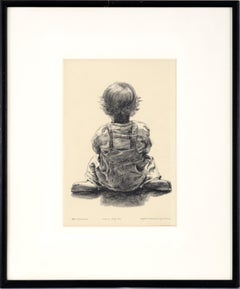
"The Little One" - Rare Signed Figurative Lithograph in Ink on Paper
Located in Soquel, CA
"The Little One" - Figurative Lithograph in Ink on Paper Bold lithograph by Eugene Hawkins (American, b. 1933). A young child is kneeling, facing away ...
Category

1960s American Modern Continental US - Prints and Multiples

Materials

Paper, Ink, Lithograph

Marc Chagall, Untitled, from The Lithographs of Chagall, 1969
By Marc Chagall
Located in Southampton, NY
This exquisite lithograph by Marc Chagall (1887–1985), titled Sans titre (Untitled), from the album The Lithographs of Chagall, Volume III, originates from the 1969 edition published...
Category

1960s Expressionist Continental US - Prints and Multiples

Materials

Lithograph

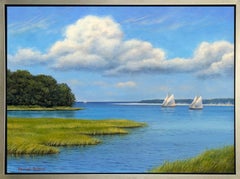
"Sound Bound, " Framed Limited Edition Giclee Print, 30" x 40"
By Daniel Pollera
Located in Westport, CT
This traditional seascape Limited Edition print by Daniel Pollera captures a coastal summer scene with swaying grass in what appears to be a bay. Sailboats with white sails are visib...
Category

2010s Realist Continental US - Prints and Multiples

Materials

Digital, Giclée

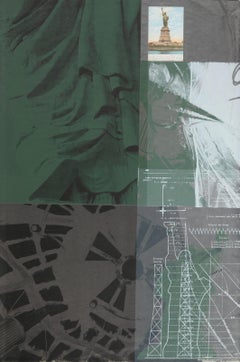
Statue of Liberty, Conceptual Art Screenprint by Robert Rauschenberg
By Robert Rauschenberg
Located in Long Island City, NY
This print by Robert Rauschenberg is part of an 8-piece portfolio published by The New York Graphic Society in 1983 and includes works from Red Grooms, Robert Indiana, Alex Katz, R.B...
Category

1980s Conceptual Continental US - Prints and Multiples

Materials

Screen

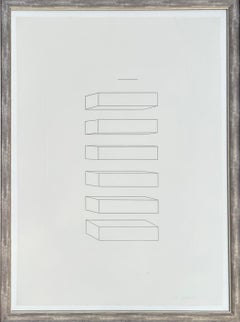
Sculptor Donald Judd #77, (Schellmann 82) signed/n Minimalist etching, Framed
By Donald Judd
Located in New York, NY
Donald Judd Untitled #82, 1974 from a portfolio of six works Etching on German etching paper with deckled edges Hand signed and numbered 7/35 by the artist on the front Catalogue Rai...
Category

1970s Minimalist Continental US - Prints and Multiples

Materials

Etching

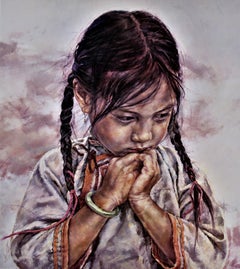
Little Chinese Girl
By Ming Wai
Located in San Francisco, CA
This artwork "Little Chinese Girl" 1982 in a color off set lithograph by renown Chinese/American artist Wai Ming A.K.A Lo Hing Kwok, b.1938. It is hand signed an inscribed A.C (Hors Commerce) in pencil by the artist. The image size is 24.5 x 22 inches, sheet size is 28 x 24.5 inches. It is in excellent condition, has never been framed. About the artist: Wai Ming, was born in Canton, South China on November 11, 1938, the son of a school master with nine children. Extremely poor as a child, he was raised in Hong Kong enduring many hardships amidst a chaotic environment of war and refugee settlements. Wai Ming's love for art flourished and he developed his drawing techniques without any art education, just painting what he saw. In the 1960s, Ming found representation in Hong Kong and also took the unusual step of opening his own gallery to display his work in. His primary interest being to capture images of life in fishing villages, or 'fish-folk', who have retained traditional Chinese culture, his work was at home with the sensibilities of many art buyers in Hong Kong. Crossing the ocean in his mid-30s, Wai Ming arrived in San Francisco from Hong Kong in 1974. There, he experienced initial resistance from galleries and the official art world for a variety of reasons, but was ultimately embraced by dealer Jack Swanson...
Category

Late 20th Century Realist Continental US - Prints and Multiples

Materials

Lithograph

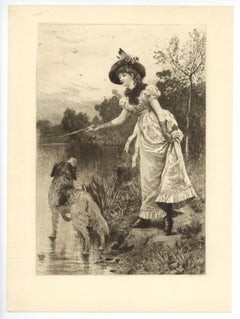
"Fetch It, Sir" original etching
By Hamilton Hamilton
Located in Henderson, NV
Medium: original etching. This impression was printed in 1888 for the "Ten Original Etchings by the Best American Artists" portfolio and published by Estes and Lauriat. Image size: 1...
Category

1880s Continental US - Prints and Multiples

Materials

Etching

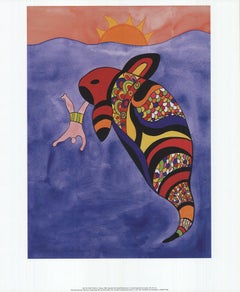
Niki de Saint Phalle Shamu, the Orca Whale 2011- Vintage
By Niki de Saint Phalle
Located in Brooklyn, NY
This high-quality reproduction of Shamu by Niki de Saint Phalle captures the artist’s iconic blend of bold color, whimsical design, and expressive form. Featuring the beloved orca wh...
Category

2010s Contemporary Continental US - Prints and Multiples

Materials

Offset

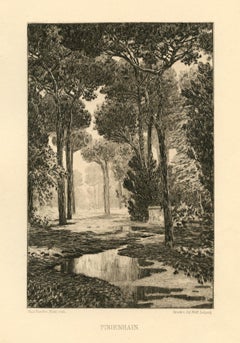
"Pinienhain" original etching
Located in Henderson, NV
Medium: original etching. Printed in 1900 and published in Leipzig, Germany for Zeitschrift für Bildende Kunst. This impression is printed on cream wove paper, and the image size is ...
Category

Early 1900s Realist Continental US - Prints and Multiples

Materials

Etching

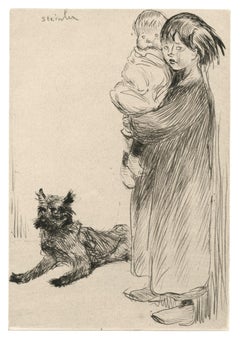
"La grande sœur" original drypoint
By Théophile Alexandre Steinlen
Located in Henderson, NV
Medium: original etching and drypoint. Catalogue reference: Sanchez and Seydoux 1913-10. Printed in 1913 and published in Paris by Gazette des Beaux-Arts. Sheet size: 8 1/2 x 6 inche...
Category

1910s Continental US - Prints and Multiples

Materials

Etching

Still Thinking About These?

All Recently Viewed