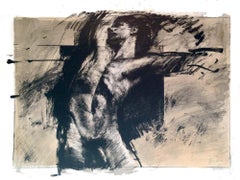
Continental US - Nude Prints
to
203
473
204
303
118
94
Overall Width
to
Overall Height
to
229
200
167
151
62
61
40
16
9
6
6
5
1
54
29
28
26
23
12
25
948
228
17
38
42
45
22
77
82
215
171
87
7
730
423
31
785
469
327
300
198
171
165
146
112
45
44
41
37
35
33
21
20
18
18
18
511
301
150
111
82
200
245
1,214
1,215
1,055
Item Ships From: Continental US
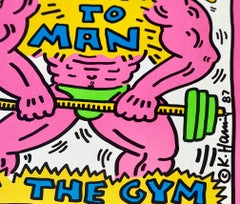
1980s Keith Haring Vinyl Record Art (vintage Keith Haring 1987)
By Keith Haring
Located in NEW YORK, NY
Keith Haring record art 1987:
A rare vinyl art cover featuring original artwork by Keith Haring. Truly vibrant colors that make for stand-out wall art. Looks very cool framed.
Off-...
Category
1980s Pop Art Continental US - Nude Prints
Materials
Lithograph, Offset
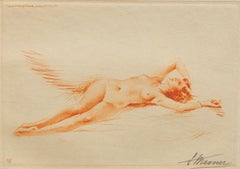
French Etching Reclining Nude Woman by Suzanne Meunier Dated 1934
By Suzanne Meunier
Located in Rochester, NY
Vintage pinup nude. French etching by Suzanne Meunier. Signed and dated 1934. Framed.
Suzanne Meunier (1888–1979), French artist
This Suzanne Meunier was a French painter, engraver,...
Category
Early 20th Century Continental US - Nude Prints
Materials
Paper
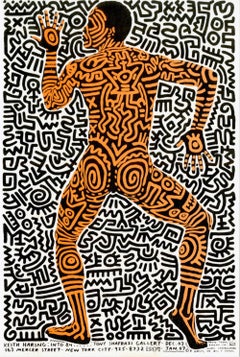
Keith Haring Into 84 (Keith Haring Tony Shafrazi announcement card)
By Keith Haring
Located in NEW YORK, NY
Keith Haring Painted Man:
Original 1983 announcement card for Keith Haring’s well-documented exhibition, Keith Haring 'Into 84' at Tony Shafrazi Gallery, New York, 1983. For this series Haring borrowed Jones' body — from head to toe — as the canvas to his work. A bodily canvas defined by much of the bold pictograms characteristic of Haring's artistic signature. Photos by Haring's long-time friend and collaborator Tseng Kwong Chi.
Off-set printed, 1983.
Dimensions: 6 x 4 inches.
Some minor fading to the reverse; otherwise very good overall condition with strong colors.
Literature: Keith Haring: Posters (Prestel pub.)
Further About
In 1983 Keith Haring teamed up with award-winning choreographer and dancer Bill T. Jones, founder of the Bill T. Jones/Arnie Zane Dance Company. Keith and Bill met in London in 1983 at a time when the graffiti artist was opening a major show at the Robert Fraser Gallery, and together they produced a series of exceptional collaborations in both performance and drawing.
Related Categories
Keith Haring dancer. Ballet. Keith Haring Figurative Drawings. Keith Haring Into 84 poster. Keith Haring and Tony Shafrazi. Haring Shafrazi.
Category
1980s Pop Art Continental US - Nude Prints
Materials
Offset, Lithograph
Figurative Picasso Etching,
Sculpteur et Modèle Debout
, 1933
By Pablo Picasso
Located in New York, NY
Pablo Picasso's "Sculpteur et modèle debout" (1933), (which translates to "Sculptor and Model Standing") is a striking example of his exploration of the human form and his innovative...
Category
1930s Surrealist Continental US - Nude Prints
Materials
Paper, Etching
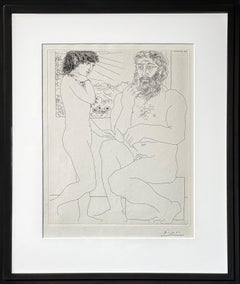
Jardin des Supplices V, Modern Lithograph by Auguste Rodin
By Auguste Rodin
Located in Long Island City, NY
Auguste Rodin, French (1840 - 1917) - Jardin des Supplices V, Year: 1902, Medium: Lithograph with chine cole, signed in the plate, Image Size: 12.25 x 9 inches, Size: 17.5 x 13.25 i...
Category
Early 1900s Modern Continental US - Nude Prints
Materials
Lithograph
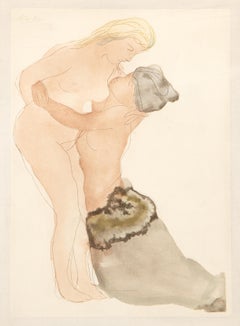
Composition, Éloge de Gromaire, Marcel Gromaire
By Marcel Gromaire
Located in Southampton, NY
Lithograph on vélin du Marais paper. Inscription: unsigned and unnumbered, as issued. Good condition with centerfold, as issued. Notes: From the volume, Éloge de Gromaire, 1958. Publ...
Category
1950s Modern Continental US - Nude Prints
Materials
Lithograph

$716 Sale Price
20% Off
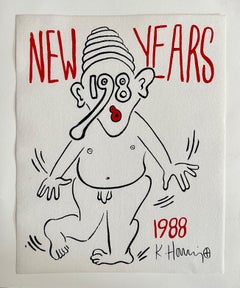
New Years 1988, Keith Haring Pop Art Nude Color Silkscreen Print Invitation
By Keith Haring
Located in Surfside, FL
Artist: Keith Haring, American (1958 - 1990)
Title: New Year's Invitation 1988
Year: 1988
Medium: Silkscreen on Paper
Image Size: 11 x 8 inches
This bears a printed signature. It is not hand signed as issued.
Keith Allen Haring (May 4, 1958 – February 16, 1990) was an American artist and social activist whose work responded to the New York City street culture of the 1980s by expressing concepts of birth, death, sexuality, and war.
Haring's work was often heavily political and his imagery has become a widely recognized visual language of the 20th century.
Keith Haring was born in Reading, Pennsylvania, on May 4, 1958. He was raised in Kutztown, Pennsylvania, by his mother Joan Haring, and father Allen Haring, an engineer and amateur cartoonist. He had three younger sisters, Kay, Karen and Kristen. Haring became interested in art at a very early age spending time with his father producing creative drawings. His early influences included Walt Disney cartoons, Dr. Seuss, Charles Schulz, and the Looney Tunes characters in The Bugs Bunny Show. In Haring's teenage years, he left his religious background behind and hitchhiked across the country, selling vintage t-shirts and experimenting with drugs. He studied commercial art from 1976 to 1978 at Pittsburgh's Ivy School of Professional Art but lost interest in it. He made the decision to leave after having read Robert Henri's The Art Spirit (1923) which inspired him to concentrate on his own art.
Haring had a maintenance job at the Pittsburgh Center for the Arts and was able to explore the art of Jean Dubuffet, Jackson Pollock, and Mark Tobey. His most critical influences at this time were a 1977 retrospective of the work of Pierre Alechinsky and a lecture by the sculptor Christo in 1978. Alechinsky's work, connected to the international Expressionist group CoBrA, gave Haring confidence to create larger paintings of calligraphic images. Christo introduced him to the possibilities of involving the public with his art. Haring's first important one-man exhibition was in Pittsburgh at the Center for the Arts in 1978.
He moved to New York to study painting at the School of Visual Arts. He studied semiotics with Bill Beckley as well as exploring the possibilities of video and performance art. Profoundly influenced at this time by the writings of William Burroughs, he was inspired to experiment with the cross-referencing and interconnection of images.
He first received public attention with his public art in subways. Starting in 1980, he organized exhibitions at Club 57, which were filmed by the photographer Tseng Kwong Chi. Around this time, "The Radiant Baby" became his symbol. His bold lines, vivid colors, and active figures carry strong messages of life and unity. He participated in the Times Square Exhibition and drew animals and human faces for the first time. That same year, he photocopied and pasted provocative collages made from cut-up and recombined New York Post headlines around the city. In 1981, he sketched his first chalk drawings on black paper and painted plastic, metal, and found objects.
By 1982, Haring had established friendships with fellow emerging artists Futura 2000, Kenny Scharf, Madonna and Jean-Michel Basquiat. He created more than 50 public works between 1982 and 1989 in dozens of cities around the world. His "Crack is Wack" mural, created in 1986, is visible from New York's FDR Drive. He got to know Andy Warhol, who was the theme of several of Haring's pieces, including "Andy Mouse". His friendship with Warhol would prove to be a decisive element in his eventual success.
In December 2007, an area of the American Textile Building in the TriBeCa neighborhood of New York City was discovered to contain a painting of Haring's from 1979.
In 1984, Haring visited Australia and painted wall murals in Melbourne (such as the 1984 'Detail-Mural at Collingwood College, Victoria') and Sydney and received a commission from the National Gallery of Victoria and the Australian Centre for Contemporary Art to create a mural which temporarily replaced the water curtain at the National Gallery. He also visited and painted in Rio de Janeiro, the Musée d'Art Moderne de la Ville de Paris, Minneapolis and Manhattan.[9] He became politically active, designing a Free South Africa poster...
Category
20th Century Contemporary Continental US - Nude Prints
Materials
Mixed Media, Screen
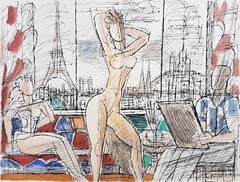
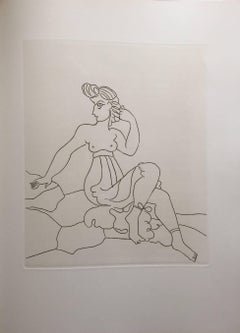
Erotic Female Nude - Etching from Le Satyricon
By André Derain
Located in Surfside, FL
This offering is for one etching.
---
Derain was born in 1880 in Chatou, Yvelines, Île-de-France, just outside Paris. In 1895 Derain began to study on his own, contrary to claims tha...
Category
20th Century Continental US - Nude Prints
Materials
Etching
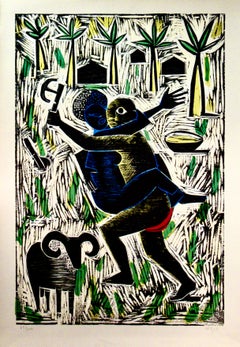
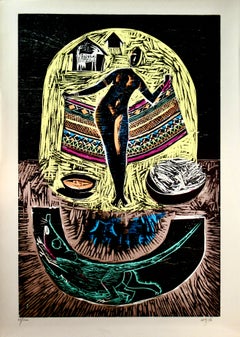
"Lendas Africanas Da Bahia" from the suite.
Located in San Francisco, CA
This artwork titled " Lendas Africanas Da Bahia" from the suite, 1978, is an original colors woodcut by renown Brazilian/Argentinian artist Hector Julio Paride Barnabo Carybe, 1911-1997. It is hand signed and numbered 83/200 in pencil by the artist. The Wood block mark (image) is 23.65 x 15.75 inches, sheet size is 26.75 x 19 inches. It is in excellent condition, has never been framed. It will be shipped in a 8 inches diameter heavy duty tube.
About the artist:
Héctor Julio Páride Bernabó (7 February 1911 – 2 October 1997) was an Argentine-Brazilian artist, researcher, writer, historian and journalist. His nickname and artistic name, Carybé, a type of piranha, comes from his time in the scouts. He died of heart failure after the meeting of a candomblé community's lay board of directors, the Cruz Santa Opô Afonjá Society, of which he was a member.
Quick Facts Born, Died ...
Carybé
Born
Héctor Julio Páride Bernabó
7 February 1911
Lanús, Argentina
Died
2 October 1997 (aged 86)
Salvador, Bahia, Brazil
Nationality
Brazilian
Known for
Painter, engraver, draughtsman, illustrator, potter, sculptor, mural painter, researcher, historian and journalist
Close
He produced thousands of works, including paintings, drawings, sculptures and sketches. He was an Obá de Xangô, an honorary position at Ilê Axé Opô Afonjá.
Orixá Panels in the Afro-Brazilian Museum in Salvador
Some of Carybé's work can be found in the Afro-Brazilian Museum in Salvador: 27 cedar panels representing different orixás or divinities of the Afro-Brazilian religion candomblé. Each panel shows a divinity with their associated implements and animal. The work was commissioned by the former Banco da Bahia S.A., now Banco BBM S.A., which originally installed them in its branch on Avenida Sete de Setembro in 1968.
Murals at Miami International Airport
American Airlines, Odebrecht and the Miami-Dade Aviation Department partnered to install two of Carybé's murals at Miami International Airport. They have been displayed in the American Airlines terminal at John F. Kennedy International Airport in New York since 1960. The 16.5 x 53-foot murals were accredited when Carybé won the first and the second prize in a contest of public art pieces for JFK airport.
As its terminal at that airport was due for demolition, American Airlines donated the murals to Miami-Dade County, and Odebrecht invested in a project to remove, restore, transport and install the murals at Miami International Airport.
The mural "Rejoicing and Festival of the Americas" portrays colorful scenes from popular festivals throughout the Americas, and "Discovery and Settlement of the West" depicts the pioneers’ journey into the American West.
Carybé's Woodcuts in Gabriel García Márquez's Books
Carybé illustrated four books by the Colombian writer Gabriel García Márquez, including One Hundred Years of Solitude, The Autumn of the Patriarch, Chronicle of a Death Foretold, and Love in the Time of Cholera "Carybé: um mestre da cultura baiana". ArqBahia Arquitetura, design, arte e lifestyle (in Brazilian Portuguese). 26 April 2023.. In particular, the woodcuts in One Hundred Years of Solitude are well-known for providing a visual image of the fictional town of Macondo, where the story takes place. The illustrations depict the colorful and winding houses, the railway bridge, and the hot and humid climate of the region, contributing to the reader's immersion in the story.
Carybé's woodcuts are, therefore, an important part of Gabriel García Márquez's literary legacy, bringing a visual dimension to his stories that further enriches the reader's experience.
Timeline
1911 — Birth in Lanús, Argentina.
1919 — Moved to Brazil.
1921 — The name Carybé is first given to him by the Clube do Flamengo scouts group, in Rio de Janeiro.
1925 — Beginning of his artistic endeavours, going to the pottery workshop of his elder brother, Arnaldo Bernabó, in Rio de Janeiro.
1927–1929 — Studies at the National School of Fine Arts, in Rio de Janeiro.
1930 — Worked for the newspaper Noticias Gráficas, in Buenos Aires, Argentina.
1935–1936 — Works with the writer Julio Cortázar and as a draughtsman for the El Diario newspaper.
1938 — Sent to Salvador by newspaper Prégon.
1939 — First collective exhibition, with the artist Clemente Moreau, at the Buenos Aires City Museum of Fine Arts, Argentina; illustrates the book Macumba, Relatos de la Tierra Verde, by Bernardo Kardon, published by Tiempo Nuestro.
1940 — Illustrates the book Macunaíma, by Mário de Andrade.
1941 — Draws the Esso Almanach, the payment for which allows him to set on a long journey through Uruguay, Brazil, Bolivia, and Argentina.
1941–1942 — Study trip around several South American countries.
1942 — Illustration for the book La Carreta by Henrique Amorim, published by El Ateneo (Buenos Aires, Argentina).
1943 — Together with Raul Brié, translates the book Macunaíma, by Mário de Andrade, into Spanish; produces the illustrations for the works Maracatu, Motivos Típicos y Carnavalescos, by Newton Freitas, published by Pigmaleon, Luna Muerta, by Manoel Castilla, published by Schapire, and Amores de Juventud, by Casanova Callabero; also publishes and illustrates Me voy al Norte, for the quarterly magazine Libertad Creadora; awarded First Prize by the Cámara Argentina del Libro (Argentine Book Council) for the illustration of the book Juvenília, by Miguel Cané (Buenos Aires, Argentina).
1944 — Illustrates the books The Complete Poetry of Walt Whitmann and A Cabana do Pai Tomás, both published by Schapire ; as well as and Los Quatro Gigantes del Alma by Mira y Lopez, Salvador BA; attends capoeira classes, visits candomblé meetings and makes drawings and paintings.
1945 — Does the illustrations for Daniel Defoe's Robinson Crusoe, for the Viau publishing house.
1946 — Helps in setting up the Tribuna da Imprensa newspaper, in Rio de Janeiro.
1947 — Works for the O Diário Carioca newspaper, in Rio de Janeiro.
1948 — Produces texts and illustrations for the book Ajtuss, Ediciones Botella al Mar (Buenos Aires, Argentina).
1949–1950 — Invited by Carlos Lacerda to work at the Tribuna da Imprensa, in Rio de Janeiro.
1950 — Invited by the Education Secretary Anísio Teixeira, moves to Bahia, and produces two panels for the Carneiro Ribeiro Education Center (Park School), in Salvador, Bahia.
1950–1997 — Settles in Salvador, Bahia.
1950–1960 — Actively participate in the plastic arts renewal movement, alongside Mário Cravo Júnior, Genaro de Carvalho, and Jenner Augusto.
1951 — Produces texts and illustrations for the works of the Coleção Recôncavo, published by Tipografia Beneditina and illustrations for the book, Bahia, Imagens da Terra e do Povo, by Odorico Tavares, published by José Olímpio in Rio de Janeiro; for the latter work he receives the gold medal at the 1st Biennial of Books and Graphic Arts.
1952 — Makes roughly 1,600 drawings for the scenes of the movie O Cangaceiro, by Lima Barreto; also works as the art director and as an extra on the film (São Paulo, SP).
1953 — Illustrations for the book A Borboleta Amarela, by Rubem Braga, published by José Olímpio (Rio de Janeiro, RJ).
1955 — Illustrates the work O Torso da Baiana, edited by the Modern Art Museum of Bahia.
1957 — Produces etchings, with original designs, for the special edition of Mário de Andrade's Macunaíma, published by the Sociedade dos 100 Bibliófilos do Brasil.
1958 — Makes an oil painting mural for the Petrobras Office in New York, USA; illustrates the book As Três Mulheres de Xangô, by Zora Seljan, published by Editora G. R. D. (Rio de Janeiro, RJ); Receives a scholarship grant in New York, USA.
1959 — Takes part in the competition for the New York International Airport panels project, in New York, USA, winning first and second prizes.
1961 — Illustrates the book Jubiabá, by Jorge Amado, published by Martins Fontes (São Paulo, SP).
1963 — Awarded the title of Honorary Citizen of Salvador, Bahia.
1965 — Illustrates A Muito Leal e Heróica Cidade de São Sebastião do Rio de Janeiro, published by Raymundo Castro Maya (Rio de Janeiro, RJ).
1966 — With Jorge Amado, co-authors Bahia, Boa Terra Bahia, published by Image (Rio de Janeiro, RJ); writes and illustrates the book Olha o Boi, published by Cultrix (São Paulo, SP).
1967 — Receives the Odorico Tavares Prize – Best Plastic Artist of 1967, in a competition ran by the state government to stimulate the development of plastic arts in Bahia; makes the Orixás Panels for the Banco da Bahia (currently at the UFBA Afro-Brazilian Museum) (Salvador, BA).
1968 — Illustrates the books Carta de Pero Vaz de Caminha ao Rei Dom Manuel, published by Sabiá (Rio de Janeiro) and Capoeira Angolana, by Waldeloir Rego, published by Itapoã (Bahia).
1969 — Produces the illustrations for the book Ninguém Escreve ao Coronel, by Gabriel Garcia Marquez, published by Sabiá (Rio de Janeiro, RJ).
1970 — Illustrates the books O Enterro do Diabo and Os Funerais de Mamãe Grande, published by Sabiá (Rio de Janeiro, RJ), Agotimé her Legend, by Judith Gleason, published by Grossman Publishers (New York, USA).
1971 — Illustrates the books One Hundred Years of Solitude, by Gabriel Garcia Marquez and A Casa Verde by Mario Vargas Llosa, both published by Sabiá (Rio de Janeiro, RJ); produces texts and illustrations for the book Candomblé da Bahia, published by Brunner (São Paulo, SP).
1973 — Illustrations for Gabriel Garcia Marquez's A Incrível e Triste História de Cândida Erendira e sua Avó Desalmada (Rio de Janeiro, RJ); paints the mural for the Legislative Assembly and the panel for the Bahia State Secretary of the Treasury.
1974 — Produces woodcuts for the book Visitações da Bahia, published by Onile.
1976 — Illustrates the book O Gato Malhado e a Andorinha Sinhá: uma história de amor, by Jorge Amado (Salvador, BA); receives the title of Knight of the Order of Merit of Bahia.
1977 — Certified with the Honor for Afro-Brazilian Cult Spiritual Merit, Xangô das Pedrinhas ao Obá de Xangô Carybé (Magé, RJ).
1978 — Makes the concrete sculpture Oxóssi, in the Catacumba Park; illustrates the book A Morte e a Morte de Quincas Berro D´Água, by Jorge Amado, published by Edições Alumbramento (Rio de Janeiro, RJ).
1979 — Produces woodcuts for the book Sete Lendas Africanas da Bahia, published by Onile.
1980 — Designs the costumes and scenery for the ballet Quincas Berro D´Água, at the Teatro Municipal in Rio de Janeiro.
1981 — Publication of the book Iconografia dos Deuses Africanos no Candomblé da Bahia (Ed. Raízes), following thirty years of research.
1982 — Receives the title of Honorary Doctor of the Federal University of Bahia.
1983 — Makes the panel for the Brazilian Embassy in Lagos, Nigeria.
1984 — Receives the Jerônimo Monteiro Commendation – Level of Knight (Espírito Santo); receives the Castro Alves Medal of Merit, granted by the UFBA Academy of Arts and Letters; makes the bronze sculpture Homenagem à mulher baiana (Homage to the Bahian woman), at the Iguatemi Shopping Center (Salvador, BA).
1985 — Designs the costumes and sets for the spectacle La Bohème, at the Castro Alves Theater; illustrates the book Lendas Africanas dos Orixás, by Pierre Verger, published by Currupio.
1992 — Illustrates the book O sumiço da santa: uma história de feitiçaria, by Jorge Amado (Rio de Janeiro, RJ).
1995 — Illustration of the book O uso das plantas na sociedade iorubá, by Pierre Verger (São Paulo, SP).
1996 — Making of the short film Capeta Carybé, by Agnaldo Siri Azevedo, adapted from the book O Capeta Carybé, by Jorge Amado, about the artist Carybé, who was born in Argentina and became the most Bahian of all Brazilians.
1997 — Illustration of the book Poesias de Castro Alves.
Exhibitions
ммIndividual Exhibitions:
1943 — Buenos Aires (Argentina) — First individual exhibition, at the Nordiska Gallery
1944 — Salta (Argentina) — at the Consejo General de Educacion
1945 — Salta (Argentina) — Amigos del Arte, Buenos Aires (Argentina) — Motivos de América, at the Amauta Gallery, Rio de Janeiro RJ — individual exhibition at the IAB/RJ
1947 — Salta (Argentina) — Agrupación Cultural Femenina
1950 — Salvador BA — First individual exhibit in Bahia, at the Bar Anjo Azul; São Paulo SP — MASP.
1952 — São Paulo SP — MAM/SP
1954 — Salvador BA — Oxumaré Gallery
1957 — New York (USA) — Bodley Gallery; Buenos Aires (Argentina) — Bonino Gallery * 1958 - New York (USA) — Bodley Gallery
1962 — Salvador BA - MAM/BA
1963 — Rio de Janeiro RJ — Bonino Gallery
1965 — Rio de Janeiro RJ — Bonino Gallery
1966 — São Paulo SP — Astrea Gallery
1967 — Rio de Janeiro RJ — Santa Rosa Gallery
1969 — London (England) — Varig Airlines
1970 — Rio de Janeiro RJ — Galeria da Praça
1971 — Rio de Janeiro RJ — MAM/RJ, São Paulo SP — A Galeria; Belo Horizonte MG, Brasília DF, Curitiba PR, Florianopolis SC, Porto Alegre RS, Rio de Janeiro RJ and São Paulo SP — The Orixás Panel (exhibition tour), at the Casa da Cultura in Belo Horizonte, MAM/DF, the Public Library of Paraná, the Legislative Assembly of Santa Catarina State, the Legislative Assembly of Rio Grande do Sul, MAM/RJ and MAM/SP
1972 — The Orixás Panel in Fortaleza CE — at the Ceará Federal University Art Museum, and in Recife PE — at the Santa Isabel Theater
1973 — São Paulo SP — A Galeria
1976 — Salvador BA — at the Church of the Nossa Senhora do Carmo Convent
1980 — São Paulo SP — A Galeria
1981 — Lisbon (Portugal) — Cassino Estoril
1982 — São Paulo SP — Renot Art Gallery, São Paulo SP — A Galeria
1983 — New York (USA) — Iconografia dos Deuses Africanos no Candomblé da Bahia, The Caribbean Cultural Center
1984 — Philadelphia (USA) — Art Institute of Philadelphia; Mexico — Museo Nacional de Las Culturas; São Paulo SP — Galeria de Arte André
1986 — Lisbon (Portugal) — Cassino Estoril; Salvador BA — As Artes de Carybé, Núcleo de Artes Desenbanco
1989 — Lisbon (Portugal) — Cassino Estoril; São Paulo SP — MASP
1995 — São Paulo SP — Documenta Galeria de Arte, São Paulo SP — Casa das Artes Galeria, Campinas SP — Galeria Croqui, Curitiba PR — Galeria de Arte Fraletti e Rubbo, Belo Horizonte MG — Nuance Galeria de Arte, Foz do Iguaçu PR — Ita Galeria de Arte, Porto Alegre RS — Bublitz Decaedro Galeria de Artes, Cuiabá MT — Só Vi Arte Galeria, Goiânia GO — Época Galeria de Arte, São Paulo SP — Artebela Galeria Arte Molduras, Fortaleza CE — Galeria Casa D'Arte, Salvador BA — Oxum Casa de Arte
Collective Exhibitions:
1939 — Buenos Aires (Argentina) — Carybé and Clemente Moreau Exhibition, at the Museo Municipal de Belas Artes
1943 — Buenos Aires (Argentina) — 29th Salon de Acuarelistas y Grabadores — first prize
1946 — Buenos Aires (Argentina) — Drawings by Argentine Artists, at the Kraft Gallery
1948 — Washington (USA) — Artists of Argentina, at the Pan American Union Gallery
1949 — Buenos Aires (Argentina) — Carybé and Gertrudis Chale, at the Viau Gallery; Salvador BA — Bahian Showroom of Fine Arts, at the Hotel Bahia
1950 — Salvador BA — 2nd Bahian Showroom of Fine Arts; São Paulo SP — MAM/SP
1951 — São Paulo SP — 1st São Paulo Art Biennial, Trianon Pavilion.
1952 — Salvador BA — 3rd Bahian Showroom of Fine Arts, at Belvedere da Sé; São Paulo SP — MAM/SP
1953 — Recife PE — Mario Cravo Júnior and Carybé, at the Santa Isabel Theater; São Paulo SP — 2nd São Paulo Art Biennial, at MAM/SP
1954 — Salvador BA — 4th Bahian Showroom of Fine Arts, at the Hotel Bahia. — Bronze medal
1955 — São Paulo SP — 3rd São Paulo Art Biennial, at MAM/SP — first prize for drawing
1956 — Salvador BA — Modern Artists of Bahia, at the Oxumaré Gallery; Venice (Italy) — 28th Venice Biennial
1957 — Rio de Janeiro RJ — 6th National Modern Art Show — exemption from the jury; São Paulo SP — Artists from Bahia, at the MAM/SP
1958 — San Francisco (USA) — Works by Brazilian Artists, at the Fine Arts Museums of San Francisco, Washington and New York (USA) — Works by Brazilian Artists, at the Pan American Union and the MoMA
1959 — Seattle (USA) — 30th International Exhibition, at the Seattle Art Museum; Salvador BA — Modern Artists of Bahia, at the Dentistry School.
1961 — São Paulo SP — 6th São Paulo Art Biennial, at MAM/SP — special room
1963 — Lagos (Nigeria) — Brazilian Contemporary Artists, at the Nigerian Museum; São Paulo SP — 7th São Paulo Art Biennial Bienal, at the Fundação Bienal
1964 — Salvador BA — Christmas Exhibition, at the Galeria Querino
1966 — Baghdad (Iraq) — collective exhibition sponsored by the Calouste Gulbenkian Foundation; Madrid (Spain) — Artists of Bahia, at the Hispanic Culture Institute; Rome (Italy) — Piero Cartona Palace; Salvador BA — 1st National Biennial of Plastic Arts (Bienal da Bahia) — special room; Salvador BA — Draughtsmen of Bahia, at the Convivium Gallery
1967 — Salvador BA — Christmas Exhibition at the Panorama Art Gallery; São Paulo SP — Artists of Bahia, at the A Gallery
1968 — São Paulo SP — Bahian Artists, at the A Gallery
1969 — London (England) — Tryon Gallery; São Paulo SP — 1st Panorama of Current Brazilian Art at the MAM/SP; São Paulo SP — Carybé, Carlos Bastos...
Category
Late 20th Century Modern Continental US - Nude Prints
Materials
Woodcut
Nude with Stockings (BU 04)
By Thomas Ruff
Located in New York, NY
Iris print on heavy white wove paper. Signed and numbered 42/50 in pencil by Ruff.
Category
Early 2000s Contemporary Continental US - Nude Prints
Materials
Color
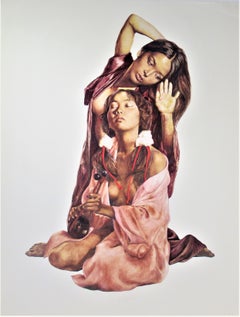
Two Native American Girls
By Popo and Ruby Lee
Located in San Francisco, CA
This artwork "two Native American Girls" c. 1990 is a color offset lithograph by noted artists Popo and Ruby Lee, b.1940. It is Hand signed and numbered 501/750 in pencil by the arti...
Category
Late 20th Century American Realist Continental US - Nude Prints
Materials
Lithograph
Nude Dancer — 1920s Modernism
By Boris Lovet-Lorski
Located in Myrtle Beach, SC
Boris Lovet-Lorski, Untitled (Nude Dancer in Modernist Stage-setting), lithograph, edition 250, 1929. Signed and numbered 20 in pencil. Number 20 of Volume ...
Category
1920s Art Deco Continental US - Nude Prints
Materials
Lithograph

Original "The World Amuses Me With You." vintage movie poster
Located in Spokane, WA
This is a movie poster, but we have it in the gallery with our ski posters, so we have it in our "sports" category. Z Toba Bawi Mnie Swiat With You The World Is Fun
It is a great...
Category
1980s 85 New Wave Continental US - Nude Prints
Materials
Offset

$478 Sale Price
20% Off
Man Ray, Composition, Man Ray (after)
By Man Ray
Located in Southampton, NY
Lithograph on vélin paper. Inscription: unsigned and unnumbered, as issued. Good condition. Notes: From the folio, Man Ray, 1984. Published by Centre National des Arts Plastiques, Ni...
Category
1980s Surrealist Continental US - Nude Prints
Materials
Lithograph
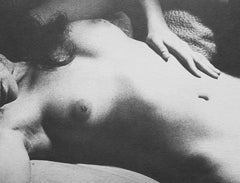
$716 Sale Price
20% Off
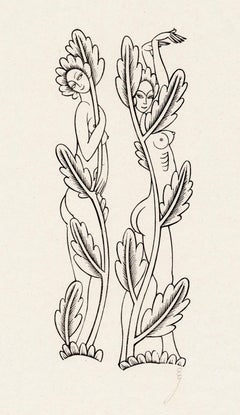
Naked Girl in Spray, Head Thrown Back
— 1930s Modernist Female Nude
By Eric Gill
Located in Myrtle Beach, SC
Eric Gill, 'Naked Girl in Spray, Head Thrown Back to Left, Four Leaves' and 'Naked Girl in Spray, Head Upright, Hands Over Head', wood engraving, 1930, edit...
Category
1930s Art Deco Continental US - Nude Prints
Materials
Woodcut
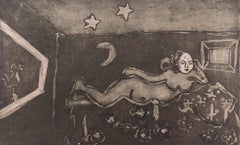
$960 Sale Price
20% Off
Cosmic Embrace
, San Francisco Bay Area Modernist, Atelier 63 Woman Artist
By Jane Voitle Mellin
Located in Santa Cruz, CA
Stamped verso with certification of authenticity for Jane Voitle Mellin (American, born 1952). and created circa 1975.
An atmospheric, sugar-lift aquatint showing a young woman, nud...
Category
1970s Continental US - Nude Prints
Materials
Paper, Aquatint
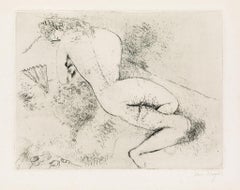
Akt mit Fächer
By Marc Chagall
Located in New York, NY
A superb, richly-inked impression of an early etching and drypoint. With burr throughout and crisp plate edges. First state (of 2). Edition of 100. Signed in pencil by Chagall. Print...
Category
1920s Expressionist Continental US - Nude Prints
Materials
Drypoint, Etching
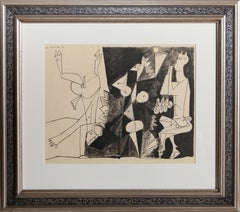
Hommage á la Nymphe, Cubist Collotype and Pochoir after Pablo Picasso
By Pablo Picasso
Located in Long Island City, NY
Between the years of 1946 and 1956, Pablo Picasso pulled concepts from his earlier creations, a series of drawings and watercolor, in order to form Faune a La Diaule, 1956. Pablo Pic...
Category
1950s Continental US - Nude Prints
Materials
Stencil
$3,750 Sale Price
25% Off
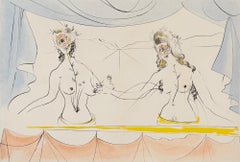
Ladies of the Renaissance
By Salvador Dalí
Located in Washington, DC
Artist: Salvador Dali
Title: Ladies of the Renaissance
Medium: Drypoint and aquatint in color on paper
Year: 1971
Edition: IV/L
Sheet Size: 22 7/8" x 31 1/8"
Image Size: 15 1/2" x 22...
Category
1970s Surrealist Continental US - Nude Prints
Materials
Lithograph
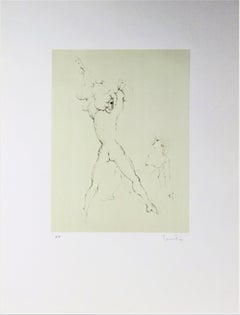
Femmes en Costumes II
By Leonor Fini
Located in San Francisco, CA
Artist: Leonor Fini
Title: Femmes en Costumes
Year: c.1970
Medium: Original color engraving
Edition: Inscribed E.A (Epreuve d'Artiste, Artist Proof) in pencil
Paper: Arches paper
Ima...
Category
1970s Surrealist Continental US - Nude Prints
Materials
Engraving
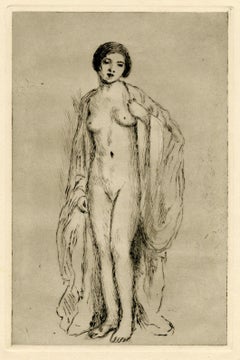
Standing Female Nude
By Frederick Carl Frieseke
Located in Fairlawn, OH
Standing Female Nude
Drypoint, c. 1910
Unsigned
Estate authentication on verso (see photo)
Estate authentication verso by Frances Frieseke Kilmer (Mrs. Kenton Kilmer, 1914-1998) (see photo)
Probably depicts the artist's wife, the artist's favorite model
Extremely rare original drypoint by Frieseke
Printed with selective inking to highlight the figure
Condition: excellent
Image/Plate size: 10 x 6 5/8 inches
Frame size: 19 1/4 x 15 3/4 inches
Provenance: Estate of the Artist
By descent to his daughter Frances
Hirschl & Adler Gallery, Stock No. APG 1106.3D-B (see photo)
Biography
Frederick Carl Frieseke was born on April 7, 1874, in Owosso, Michigan. After studying for a short while at the Art Institute of Chicago and the Art Students League in New York, Frieseke left for France in 1898, and almost all of his career was spent as an expatriate, with ties to the United States maintained through his New York dealer, William MacBeth, and by occasional visits to America. Following the pattern of innumerable young Americans, he enrolled at the Academie Julian where he studied with Benjamin Constant (1845-1902) and Jean-Paul Laurens (1838-1921). He appears to have had at least brief contact with and to have been influenced by James McNeill Whistler, who had recently opened his Academie Carmen in Paris.
By 1900 Frieseke was spending summers in the town of Giverny, made famous by the residence of Monet and subsequently by other artists, among them many Americans. In 1906, the year after his marriage to Sarah O'Bryan, he leased a house once occupied by the American Impressionist Theodore Robinson. Although the property was adjacent to Monet's, Frieseke had only limited contact with the French master. Instead he apparently found Pierre Auguste Renoir the most influential of all the Impressionists. Frieseke's Giverny house and garden, as settings for a series of female models, provided nearly all of his subject matter for the next thirty years, although in 1930 he made a series of watercolors of Florida scenes remembered from his childhood and painted some Swiss landscapes. After World War I, the artist and his family settled in Normandy.
Frieseke's career falls roughly into three stages. In the first, figures most clearly show his academic training and draughtsmanship. Gradually these evolve into the most common images of the next decade, comprised of loosely-applied blotches of bright color. The vast majority of these show their subjects in the garden, standing among the flowers, taking tea, or just basking in the sun. Others include models in colorful, light-filled interiors. In Frieseke's latest paintings, the figures very often appear indoors, their forms are given greater solidity, and the brushwork is less broken.
At the height of his career, in the 1910s and early 1920s, Frieseke was perhaps the most popular of all living American artists. He received numerous awards and medals and saw his work purchased by private collectors and major museums. Decades after the initial introduction of Impressionism by Monet and his contemporaries, Frieseke assumed this style for his work, choosing to ignore the newer artistic movements of the early twentieth century. Nevertheless, his paintings were acclaimed in both the United States and in Europe. In 1904 he won a silver medal at the St. Louis Universal Exposition and a gold medal at Munich. He was elected a member of the Société National des Beaux Arts in 1908 and the National Academy of Design in 1912. Seventeen of his canvases were featured at the Venice Biennale in 1909 and he won the Grand Prize at the Panama-Pacific International Exposition in 1915. He was commissioned to execute several murals, including one for the New York store of John Wanamaker, one of his most loyal patrons.
He died on August 28, 1939, at his home in Normandy, in the town of Le Mesnil sur Blangy. In the decades following his death, however, after artistic tastes had changed considerably, his work was nearly forgotten until it received renewed attention as interest in American Impressionism grew in the 1960s Courtesy National Gallery of Art, Washington
Etchings by Frederick Carl Frieseke include The Balcony and Standing Female Nude. Frieseke was an American Impressionist painter who was popular in the 1910s and 1920s.
Etchings by Frederick Carl Frieseke:
The Balcony: An etching by Frieseke from 1904
Standing Female Nude
Other paintings by Frederick Carl Frieseke:
The Garden Parasol...
Category
1910s American Impressionist Continental US - Nude Prints
Materials
Drypoint
Male Nude, Photorealist Lithograph by Lowell Nesbitt
By Lowell Nesbitt
Located in Long Island City, NY
Artist: Lowell Blair Nesbitt, American (1933 - 1993)
Titles: Male Nude 3
Year: 1979
Medium: Lithograph, signed and numbered in pencil
Edition: 175
Paper Size: 44 x 30 in. (111.76 ...
Category
1970s Expressionist Continental US - Nude Prints
Materials
Lithograph
Etreinte, Surrealist Etching by André Masson
By André Masson
Located in Long Island City, NY
André Masson, French (1896 -1987) - Etreinte, Year: 1955, Medium: Etching, signed and numbered in pencil, Edition: Epreuve d'Artiste, Image Size: 7 x 10.75 inches, Size: 10 x 13...
Category
1950s Surrealist Continental US - Nude Prints
Materials
Etching
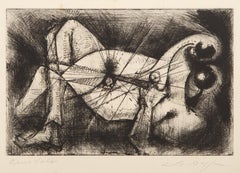
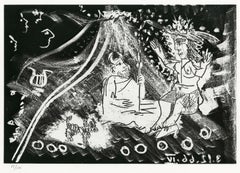
Plate IV, Le Cocu Magnifique
By Pablo Picasso
Located in Fairlawn, OH
Plate IV, Le Cocu Magnifique
etching & aquatint, 1968
Unsigned on the print
Signed on the portfolio justification page (see photo)
From the unsigned edition of 200 impressions printe...
Category
1960s French School Continental US - Nude Prints
Materials
Aquatint
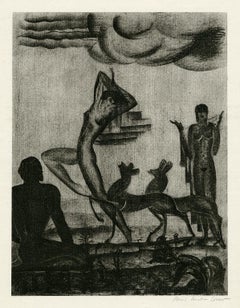
Untitled (Nude Dancer) — 1920s Modernism
By Boris Lovet-Lorski
Located in Myrtle Beach, SC
Boris Lovet-Lorski, 'Untitled (Nude Dancer)', lithograph, edition 250, 1929. Signed and numbered 12 in pencil. Number 12 of Volume 2, a series of 10 lithogr...
Category
1920s Art Deco Continental US - Nude Prints
Materials
Lithograph
The Magicians Vanite
By Salvador Dalí
Located in Hollywood, FL
ARTIST: Salvador Dali
TITLE: The Magicians Vanite
MEDIUM: Etching
SIGNED: Hand Signed
PUBLISHER: Editions Argillet, Paris
EDITION NUMBER: 39/100
MEASUREMENTS: Paper: 11.2" x 1...
Category
1960s Surrealist Continental US - Nude Prints
Materials
Etching
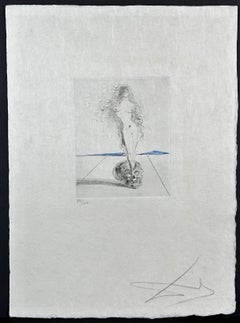
Rendez-Vous — Early 20th-Century Modernism
By Boris Lovet-Lorski
Located in Myrtle Beach, SC
Boris Lovet-Lorski, Untitled (Rendez-Vous), lithograph, edition 250, 1929. Signed in pencil. Signed in the stone, lower right. From a suite of 10 lithographs published by the artist ...
Category
1920s American Modern Continental US - Nude Prints
Materials
Lithograph
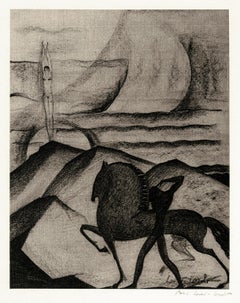
3 Biennale Internationale de L
estampe, France 1968 Miss American Indiana poster
By Richard Lindner
Located in New York, NY
Richard Lindner
3 Biennale Internationale de L'estampe (International Biennale of Graphic Arts), Miss American Indian, 1968
Silkscreen on wove paper
Unnumbered
35 1/2 × 23 1/2 inches...
Category
1960s Pop Art Continental US - Nude Prints
Materials
Screen
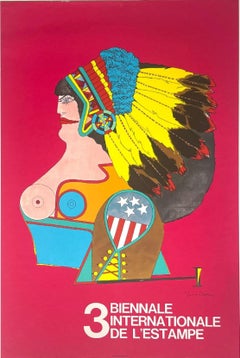
Geisha Skateboard Triptych(suite of three silkscreen skateboards numbered 55/150
By Nobuyoshi Araki
Located in New York, NY
Nobuyoshi Araki
Geisha Skateboard Triptych, ca. 2014
Set of (3) Skateboards of Silkscreen on 7 ply Canadian Maplewood Deck
Signed in plate, Each signed on the deck and hand numbered ...
Category
2010s Contemporary Continental US - Nude Prints
Materials
Wood, Maple, Screen
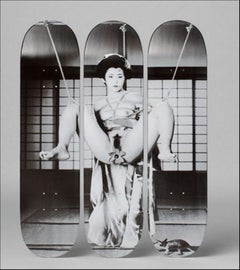
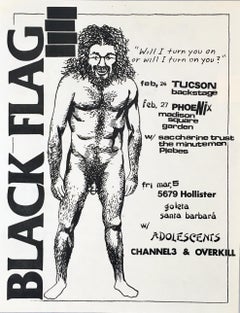
Raymond Pettibon Black Flag 1982 postmarked (Raymond Pettibon punk flyer)
By Raymond Pettibon
Located in NEW YORK, NY
Raymond Pettibon Black Flag:
1982 Raymond Pettibon illustrated Black Flag punk flyer published on the occasion of: Black Flag, Saccharine Trust, The Minutemen...
Category
1980s Pop Art Continental US - Nude Prints
Materials
Offset, Lithograph
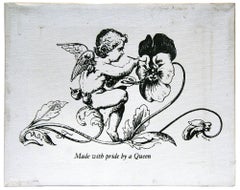
Made with Pride by a Queen
Located in New York, NY
Nayland Blake
Made with Pride by a Queen
1989
Silkscreen on canvas
8 x 10 inches; 20 x 25 cm
Edition of 50
Initialed, dated, and numbered in ink (lower ...
Category
1980s Contemporary Continental US - Nude Prints
Materials
Screen, Canvas
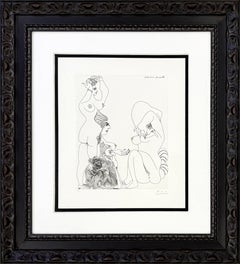
Vieil Homme Avec Magicien Evoquant Trois Odalisques (Bl. 1486, Ba. 1501)
By Pablo Picasso
Located in Aventura, FL
Etching on BFK Rives paper, Plate 6 from series 347. Hand signed lower right by Pablo Picasso. Hand numbered 18/50 lower left (there were also 17 artist's proofs). Sheet size: 24 ...
Category
1960s Cubist Continental US - Nude Prints
Materials
Paper, Etching
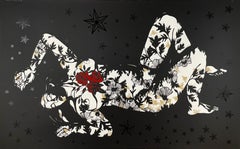
$28,000 Sale Price
20% Off
Inner Landscape, by Sonia Romero
By Sonia Romero
Located in Palm Springs, CA
Signed, titled and numbered by the artist. This is the last remaining print in the edition.
Sonia Romero is a full time artist living and working in East Los Angeles. She received h...
Category
2010s Contemporary Continental US - Nude Prints
Materials
Screen
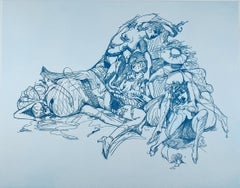
Study for a Monument in the Heroic/Erotic/Academic/Comic Style Claes Oldenburg
By Claes Oldenburg
Located in New York, NY
This sensuous and playful scene is characteristic of Oldenburg’s printmaking ouevre: a veritable heap of women displaying various expressions of ecstasy and repose. The loose sketches were drawn directly onto the plate by the artist, a master draftsman whose erotic etchings are largely unknown. The composition is based on the drawing: Clinical Study, Towards a Heroic-Erotic Monument in the Academic/Comic Style, 1965, ball-point pen on paper, 20 x 40 in. / 60 x 101.6 cm.
*This print was etched in six gorgeous inks, each in an edition of ten: take your pick of color!*
Oldenburg had an interest in imaginary monuments: he famously conceptualized works such as “Ball”, an unbuilt monument conceived of in 1967 which imagined two ballcocks – the round mechanism in a toilet tank...
Category
1970s Modern Continental US - Nude Prints
Materials
Etching
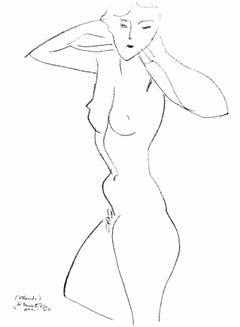
Henri Matisse, Claude, Nude Woman, from Derriere le Miroir, 1952 (after)
By Henri Matisse
Located in Southampton, NY
This exquisite lithograph after Henri Matisse (1869–1954), titled Claude, Femme nue (Claude, Nude Woman), originates from the 1952 folio Derriere le Miroir, No. 46–47, published by M...
Category
1950s Modern Continental US - Nude Prints
Materials
Lithograph
$716 Sale Price
20% Off
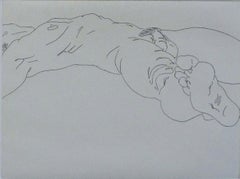
SLM I, single line etching of male nude by Fernando Reyes
By Fernando Reyes
Located in Palm Springs, CA
Male nude etching, from a series of 6 male and 6 female images.
In January 2018, the Mexican Museum in San Francisco mounted an exhibition An Artist’s Evolution, a retrospective which has elevated Fernando’s exposure in the SF Bay Area...
Category
21st Century and Contemporary Contemporary Continental US - Nude Prints
Materials
Etching
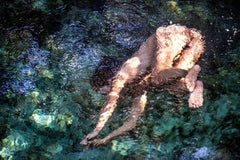
"Deep Dive"- Colorful Nude in Water Photo
By John Mazlish
Located in Brooklyn, NY
Underwater nude shot from above a small cenote in Tulum, Mexico. Other size prints, framing options and print methods (such as fine art paper or face mounted plexiglass) available up...
Category
2010s Contemporary Continental US - Nude Prints
Materials
Metal
Rooftop Sunbather, Nude Screenprint by Hilo Chen
By Hilo Chen
Located in Long Island City, NY
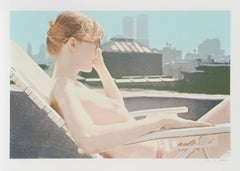
A topless woman basking in the sun on an NYC rooftop. In the distance behind her, the twin towers are visible.
Artist: Hilo Chen
Title: Rooftop Sunbather from the City Scapes Portfo...
Category
1980s Photorealist Continental US - Nude Prints
Materials
Screen
Seated Nude (version 1) from the portfolio Maillol: Sculpture and Lithography)
By Aristide Maillol
Located in New York, NY
Aristide Maillol
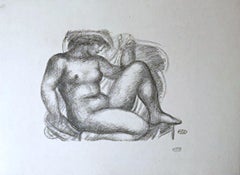
Seated Nude (version 1) from the portfolio Aristide Maillol: Sculpture and Lithography, 1925
Lithograph on watermarked paper
12 1/2 × 19 1/2 inches
Edition AP
Hand-s...
Category
1920s Realist Continental US - Nude Prints
Materials
Lithograph
CLÉMENT CYCLES Lithograph, Woman on Bicycle, Moon, French Advertising Art 52"
By Pal (Jean de Paléologue)
Located in Union City, NJ
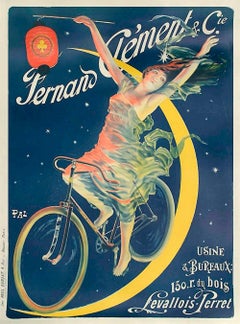
CLÉMENT CYCLES is a fine art lithograph re-creation after the original French advertising poster created by PAL(Jean de Paleologue) for Fernand Clément Bicycle Co., France.
Hand craf...
Category
1990s Art Nouveau Continental US - Nude Prints
Materials
Lithograph
$480 Sale Price
20% Off
"Woman" Nude Figurative Etching
Located in Soquel, CA
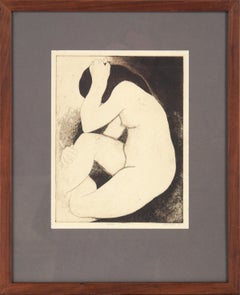
Elegant nude by Suzanne Aubin Ledrew (American, b. 1942). The woman in this piece is seated, with her hand covering her face and head, turned partially away from the viewer. There is a lovely contract between the background and the figure, creating a negative shape out of the woman's body.
Titled "WOMAN" in the lower center.
Signed and dated "AUBIN LEDREW 74" in the lower right corner.
Presented in a new grey mat with a wood frame.
Image size: 12"H x 9"W
Suzanne Addicott (nee Aubin Ledrew) (American, b. 1942) graduated from California College of the Arts with a BFA in Painting and Drawing. She is an artist and teacher at Studio9...
Category
1970s Modern Continental US - Nude Prints
Materials
Paper, Ink
$636 Sale Price
20% Off
"Lendas Africanas Da Bahia" from the suite.
Located in San Francisco, CA
This artwork titled " Lendas Africanas Da Bahia" from the suite, 1978, is an original colors woodcut by renown Brazilian/Argentinian artist Hector Julio Paride Barnabo Carybe, 1911-1997. It is hand signed and numbered 83/200 in pencil by the artist. The Wood block mark (image) is 23.65 x 15.75 inches, sheet size is 26.75 x 19 inches. It is in excellent condition, has never been framed. It will be shipped in a 8 inches diameter heavy duty tube.
About the artist:
Héctor Julio Páride Bernabó (7 February 1911 – 2 October 1997) was an Argentine-Brazilian artist, researcher, writer, historian and journalist. His nickname and artistic name, Carybé, a type of piranha, comes from his time in the scouts. He died of heart failure after the meeting of a candomblé community's lay board of directors, the Cruz Santa Opô Afonjá Society, of which he was a member.
Quick Facts Born, Died ...
Carybé
Born
Héctor Julio Páride Bernabó
7 February 1911
Lanús, Argentina
Died
2 October 1997 (aged 86)
Salvador, Bahia, Brazil
Nationality
Brazilian
Known for
Painter, engraver, draughtsman, illustrator, potter, sculptor, mural painter, researcher, historian and journalist
Close
He produced thousands of works, including paintings, drawings, sculptures and sketches. He was an Obá de Xangô, an honorary position at Ilê Axé Opô Afonjá.
Orixá Panels in the Afro-Brazilian Museum in Salvador
Some of Carybé's work can be found in the Afro-Brazilian Museum in Salvador: 27 cedar panels representing different orixás or divinities of the Afro-Brazilian religion candomblé. Each panel shows a divinity with their associated implements and animal. The work was commissioned by the former Banco da Bahia S.A., now Banco BBM S.A., which originally installed them in its branch on Avenida Sete de Setembro in 1968.
Murals at Miami International Airport
American Airlines, Odebrecht and the Miami-Dade Aviation Department partnered to install two of Carybé's murals at Miami International Airport. They have been displayed in the American Airlines terminal at John F. Kennedy International Airport in New York since 1960. The 16.5 x 53-foot murals were accredited when Carybé won the first and the second prize in a contest of public art pieces for JFK airport.
As its terminal at that airport was due for demolition, American Airlines donated the murals to Miami-Dade County, and Odebrecht invested in a project to remove, restore, transport and install the murals at Miami International Airport.
The mural "Rejoicing and Festival of the Americas" portrays colorful scenes from popular festivals throughout the Americas, and "Discovery and Settlement of the West" depicts the pioneers’ journey into the American West.
Carybé's Woodcuts in Gabriel García Márquez's Books
Carybé illustrated four books by the Colombian writer Gabriel García Márquez, including One Hundred Years of Solitude, The Autumn of the Patriarch, Chronicle of a Death Foretold, and Love in the Time of Cholera "Carybé: um mestre da cultura baiana". ArqBahia Arquitetura, design, arte e lifestyle (in Brazilian Portuguese). 26 April 2023.. In particular, the woodcuts in One Hundred Years of Solitude are well-known for providing a visual image of the fictional town of Macondo, where the story takes place. The illustrations depict the colorful and winding houses, the railway bridge, and the hot and humid climate of the region, contributing to the reader's immersion in the story.
Carybé's woodcuts are, therefore, an important part of Gabriel García Márquez's literary legacy, bringing a visual dimension to his stories that further enriches the reader's experience.
Timeline
1911 — Birth in Lanús, Argentina.
1919 — Moved to Brazil.
1921 — The name Carybé is first given to him by the Clube do Flamengo scouts group, in Rio de Janeiro.
1925 — Beginning of his artistic endeavours, going to the pottery workshop of his elder brother, Arnaldo Bernabó, in Rio de Janeiro.
1927–1929 — Studies at the National School of Fine Arts, in Rio de Janeiro.
1930 — Worked for the newspaper Noticias Gráficas, in Buenos Aires, Argentina.
1935–1936 — Works with the writer Julio Cortázar and as a draughtsman for the El Diario newspaper.
1938 — Sent to Salvador by newspaper Prégon.
1939 — First collective exhibition, with the artist Clemente Moreau, at the Buenos Aires City Museum of Fine Arts, Argentina; illustrates the book Macumba, Relatos de la Tierra Verde, by Bernardo Kardon, published by Tiempo Nuestro.
1940 — Illustrates the book Macunaíma, by Mário de Andrade.
1941 — Draws the Esso Almanach, the payment for which allows him to set on a long journey through Uruguay, Brazil, Bolivia, and Argentina.
1941–1942 — Study trip around several South American countries.
1942 — Illustration for the book La Carreta by Henrique Amorim, published by El Ateneo (Buenos Aires, Argentina).
1943 — Together with Raul Brié, translates the book Macunaíma, by Mário de Andrade, into Spanish; produces the illustrations for the works Maracatu, Motivos Típicos y Carnavalescos, by Newton Freitas, published by Pigmaleon, Luna Muerta, by Manoel Castilla, published by Schapire, and Amores de Juventud, by Casanova Callabero; also publishes and illustrates Me voy al Norte, for the quarterly magazine Libertad Creadora; awarded First Prize by the Cámara Argentina del Libro (Argentine Book Council) for the illustration of the book Juvenília, by Miguel Cané (Buenos Aires, Argentina).
1944 — Illustrates the books The Complete Poetry of Walt Whitmann and A Cabana do Pai Tomás, both published by Schapire ; as well as and Los Quatro Gigantes del Alma by Mira y Lopez, Salvador BA; attends capoeira classes, visits candomblé meetings and makes drawings and paintings.
1945 — Does the illustrations for Daniel Defoe's Robinson Crusoe, for the Viau publishing house.
1946 — Helps in setting up the Tribuna da Imprensa newspaper, in Rio de Janeiro.
1947 — Works for the O Diário Carioca newspaper, in Rio de Janeiro.
1948 — Produces texts and illustrations for the book Ajtuss, Ediciones Botella al Mar (Buenos Aires, Argentina).
1949–1950 — Invited by Carlos Lacerda to work at the Tribuna da Imprensa, in Rio de Janeiro.
1950 — Invited by the Education Secretary Anísio Teixeira, moves to Bahia, and produces two panels for the Carneiro Ribeiro Education Center (Park School), in Salvador, Bahia.
1950–1997 — Settles in Salvador, Bahia.
1950–1960 — Actively participate in the plastic arts renewal movement, alongside Mário Cravo Júnior, Genaro de Carvalho, and Jenner Augusto.
1951 — Produces texts and illustrations for the works of the Coleção Recôncavo, published by Tipografia Beneditina and illustrations for the book, Bahia, Imagens da Terra e do Povo, by Odorico Tavares, published by José Olímpio in Rio de Janeiro; for the latter work he receives the gold medal at the 1st Biennial of Books and Graphic Arts.
1952 — Makes roughly 1,600 drawings for the scenes of the movie O Cangaceiro, by Lima Barreto; also works as the art director and as an extra on the film (São Paulo, SP).
1953 — Illustrations for the book A Borboleta Amarela, by Rubem Braga, published by José Olímpio (Rio de Janeiro, RJ).
1955 — Illustrates the work O Torso da Baiana, edited by the Modern Art Museum of Bahia.
1957 — Produces etchings, with original designs, for the special edition of Mário de Andrade's Macunaíma, published by the Sociedade dos 100 Bibliófilos do Brasil.
1958 — Makes an oil painting mural for the Petrobras Office in New York, USA; illustrates the book As Três Mulheres de Xangô, by Zora Seljan, published by Editora G. R. D. (Rio de Janeiro, RJ); Receives a scholarship grant in New York, USA.
1959 — Takes part in the competition for the New York International Airport panels project, in New York, USA, winning first and second prizes.
1961 — Illustrates the book Jubiabá, by Jorge Amado, published by Martins Fontes (São Paulo, SP).
1963 — Awarded the title of Honorary Citizen of Salvador, Bahia.
1965 — Illustrates A Muito Leal e Heróica Cidade de São Sebastião do Rio de Janeiro, published by Raymundo Castro Maya (Rio de Janeiro, RJ).
1966 — With Jorge Amado, co-authors Bahia, Boa Terra Bahia, published by Image (Rio de Janeiro, RJ); writes and illustrates the book Olha o Boi, published by Cultrix (São Paulo, SP).
1967 — Receives the Odorico Tavares Prize – Best Plastic Artist of 1967, in a competition ran by the state government to stimulate the development of plastic arts in Bahia; makes the Orixás Panels for the Banco da Bahia (currently at the UFBA Afro-Brazilian Museum) (Salvador, BA).
1968 — Illustrates the books Carta de Pero Vaz de Caminha ao Rei Dom Manuel, published by Sabiá (Rio de Janeiro) and Capoeira Angolana, by Waldeloir Rego, published by Itapoã (Bahia).
1969 — Produces the illustrations for the book Ninguém Escreve ao Coronel, by Gabriel Garcia Marquez, published by Sabiá (Rio de Janeiro, RJ).
1970 — Illustrates the books O Enterro do Diabo and Os Funerais de Mamãe Grande, published by Sabiá (Rio de Janeiro, RJ), Agotimé her Legend, by Judith Gleason, published by Grossman Publishers (New York, USA).
1971 — Illustrates the books One Hundred Years of Solitude, by Gabriel Garcia Marquez and A Casa Verde by Mario Vargas Llosa, both published by Sabiá (Rio de Janeiro, RJ); produces texts and illustrations for the book Candomblé da Bahia, published by Brunner (São Paulo, SP).
1973 — Illustrations for Gabriel Garcia Marquez's A Incrível e Triste História de Cândida Erendira e sua Avó Desalmada (Rio de Janeiro, RJ); paints the mural for the Legislative Assembly and the panel for the Bahia State Secretary of the Treasury.
1974 — Produces woodcuts for the book Visitações da Bahia, published by Onile.
1976 — Illustrates the book O Gato Malhado e a Andorinha Sinhá: uma história de amor, by Jorge Amado (Salvador, BA); receives the title of Knight of the Order of Merit of Bahia.
1977 — Certified with the Honor for Afro-Brazilian Cult Spiritual Merit, Xangô das Pedrinhas ao Obá de Xangô Carybé (Magé, RJ).
1978 — Makes the concrete sculpture Oxóssi, in the Catacumba Park; illustrates the book A Morte e a Morte de Quincas Berro D´Água, by Jorge Amado, published by Edições Alumbramento (Rio de Janeiro, RJ).
1979 — Produces woodcuts for the book Sete Lendas Africanas da Bahia, published by Onile.
1980 — Designs the costumes and scenery for the ballet Quincas Berro D´Água, at the Teatro Municipal in Rio de Janeiro.
1981 — Publication of the book Iconografia dos Deuses Africanos no Candomblé da Bahia (Ed. Raízes), following thirty years of research.
1982 — Receives the title of Honorary Doctor of the Federal University of Bahia.
1983 — Makes the panel for the Brazilian Embassy in Lagos, Nigeria.
1984 — Receives the Jerônimo Monteiro Commendation – Level of Knight (Espírito Santo); receives the Castro Alves Medal of Merit, granted by the UFBA Academy of Arts and Letters; makes the bronze sculpture Homenagem à mulher baiana (Homage to the Bahian woman), at the Iguatemi Shopping Center (Salvador, BA).
1985 — Designs the costumes and sets for the spectacle La Bohème, at the Castro Alves Theater; illustrates the book Lendas Africanas dos Orixás, by Pierre Verger, published by Currupio.
1992 — Illustrates the book O sumiço da santa: uma história de feitiçaria, by Jorge Amado (Rio de Janeiro, RJ).
1995 — Illustration of the book O uso das plantas na sociedade iorubá, by Pierre Verger (São Paulo, SP).
1996 — Making of the short film Capeta Carybé, by Agnaldo Siri Azevedo, adapted from the book O Capeta Carybé, by Jorge Amado, about the artist Carybé, who was born in Argentina and became the most Bahian of all Brazilians.
1997 — Illustration of the book Poesias de Castro Alves.
Exhibitions
ммIndividual Exhibitions:
1943 — Buenos Aires (Argentina) — First individual exhibition, at the Nordiska Gallery
1944 — Salta (Argentina) — at the Consejo General de Educacion
1945 — Salta (Argentina) — Amigos del Arte, Buenos Aires (Argentina) — Motivos de América, at the Amauta Gallery, Rio de Janeiro RJ — individual exhibition at the IAB/RJ
1947 — Salta (Argentina) — Agrupación Cultural Femenina
1950 — Salvador BA — First individual exhibit in Bahia, at the Bar Anjo Azul; São Paulo SP — MASP.
1952 — São Paulo SP — MAM/SP
1954 — Salvador BA — Oxumaré Gallery
1957 — New York (USA) — Bodley Gallery; Buenos Aires (Argentina) — Bonino Gallery * 1958 - New York (USA) — Bodley Gallery
1962 — Salvador BA - MAM/BA
1963 — Rio de Janeiro RJ — Bonino Gallery
1965 — Rio de Janeiro RJ — Bonino Gallery
1966 — São Paulo SP — Astrea Gallery
1967 — Rio de Janeiro RJ — Santa Rosa Gallery
1969 — London (England) — Varig Airlines
1970 — Rio de Janeiro RJ — Galeria da Praça
1971 — Rio de Janeiro RJ — MAM/RJ, São Paulo SP — A Galeria; Belo Horizonte MG, Brasília DF, Curitiba PR, Florianopolis SC, Porto Alegre RS, Rio de Janeiro RJ and São Paulo SP — The Orixás Panel (exhibition tour), at the Casa da Cultura in Belo Horizonte, MAM/DF, the Public Library of Paraná, the Legislative Assembly of Santa Catarina State, the Legislative Assembly of Rio Grande do Sul, MAM/RJ and MAM/SP
1972 — The Orixás Panel in Fortaleza CE — at the Ceará Federal University Art Museum, and in Recife PE — at the Santa Isabel Theater
1973 — São Paulo SP — A Galeria
1976 — Salvador BA — at the Church of the Nossa Senhora do Carmo Convent
1980 — São Paulo SP — A Galeria
1981 — Lisbon (Portugal) — Cassino Estoril
1982 — São Paulo SP — Renot Art Gallery, São Paulo SP — A Galeria
1983 — New York (USA) — Iconografia dos Deuses Africanos no Candomblé da Bahia, The Caribbean Cultural Center
1984 — Philadelphia (USA) — Art Institute of Philadelphia; Mexico — Museo Nacional de Las Culturas; São Paulo SP — Galeria de Arte André
1986 — Lisbon (Portugal) — Cassino Estoril; Salvador BA — As Artes de Carybé, Núcleo de Artes Desenbanco
1989 — Lisbon (Portugal) — Cassino Estoril; São Paulo SP — MASP
1995 — São Paulo SP — Documenta Galeria de Arte, São Paulo SP — Casa das Artes Galeria, Campinas SP — Galeria Croqui, Curitiba PR — Galeria de Arte Fraletti e Rubbo, Belo Horizonte MG — Nuance Galeria de Arte, Foz do Iguaçu PR — Ita Galeria de Arte, Porto Alegre RS — Bublitz Decaedro Galeria de Artes, Cuiabá MT — Só Vi Arte Galeria, Goiânia GO — Época Galeria de Arte, São Paulo SP — Artebela Galeria Arte Molduras, Fortaleza CE — Galeria Casa D'Arte, Salvador BA — Oxum Casa de Arte
Collective Exhibitions:
1939 — Buenos Aires (Argentina) — Carybé and Clemente Moreau Exhibition, at the Museo Municipal de Belas Artes
1943 — Buenos Aires (Argentina) — 29th Salon de Acuarelistas y Grabadores — first prize
1946 — Buenos Aires (Argentina) — Drawings by Argentine Artists, at the Kraft Gallery
1948 — Washington (USA) — Artists of Argentina, at the Pan American Union Gallery
1949 — Buenos Aires (Argentina) — Carybé and Gertrudis Chale, at the Viau Gallery; Salvador BA — Bahian Showroom of Fine Arts, at the Hotel Bahia
1950 — Salvador BA — 2nd Bahian Showroom of Fine Arts; São Paulo SP — MAM/SP
1951 — São Paulo SP — 1st São Paulo Art Biennial, Trianon Pavilion.
1952 — Salvador BA — 3rd Bahian Showroom of Fine Arts, at Belvedere da Sé; São Paulo SP — MAM/SP
1953 — Recife PE — Mario Cravo Júnior and Carybé, at the Santa Isabel Theater; São Paulo SP — 2nd São Paulo Art Biennial, at MAM/SP
1954 — Salvador BA — 4th Bahian Showroom of Fine Arts, at the Hotel Bahia. — Bronze medal
1955 — São Paulo SP — 3rd São Paulo Art Biennial, at MAM/SP — first prize for drawing
1956 — Salvador BA — Modern Artists of Bahia, at the Oxumaré Gallery; Venice (Italy) — 28th Venice Biennial
1957 — Rio de Janeiro RJ — 6th National Modern Art Show — exemption from the jury; São Paulo SP — Artists from Bahia, at the MAM/SP
1958 — San Francisco (USA) — Works by Brazilian Artists, at the Fine Arts Museums of San Francisco, Washington and New York (USA) — Works by Brazilian Artists, at the Pan American Union and the MoMA
1959 — Seattle (USA) — 30th International Exhibition, at the Seattle Art Museum; Salvador BA — Modern Artists of Bahia, at the Dentistry School.
1961 — São Paulo SP — 6th São Paulo Art Biennial, at MAM/SP — special room
1963 — Lagos (Nigeria) — Brazilian Contemporary Artists, at the Nigerian Museum; São Paulo SP — 7th São Paulo Art Biennial Bienal, at the Fundação Bienal
1964 — Salvador BA — Christmas Exhibition, at the Galeria Querino
1966 — Baghdad (Iraq) — collective exhibition sponsored by the Calouste Gulbenkian Foundation; Madrid (Spain) — Artists of Bahia, at the Hispanic Culture Institute; Rome (Italy) — Piero Cartona Palace; Salvador BA — 1st National Biennial of Plastic Arts (Bienal da Bahia) — special room; Salvador BA — Draughtsmen of Bahia, at the Convivium Gallery
1967 — Salvador BA — Christmas Exhibition at the Panorama Art Gallery; São Paulo SP — Artists of Bahia, at the A Gallery
1968 — São Paulo SP — Bahian Artists, at the A Gallery
1969 — London (England) — Tryon Gallery; São Paulo SP — 1st Panorama of Current Brazilian Art at the MAM/SP; São Paulo SP — Carybé, Carlos Bastos...
Category
Late 20th Century Modern Continental US - Nude Prints
Materials
Woodcut
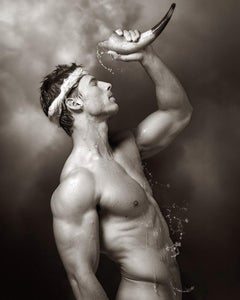
Water Horn, by Mark Jenkins
By Mark Jenkins
Located in Palm Springs, CA
Traditional photographic techniques mixed with digital manipulation work to create slightly surreal homoerotic imagery for the prints in Jenkins' Liquid series. Signed, titled and nu...
Category
Early 2000s Contemporary Continental US - Nude Prints
Materials
Digital
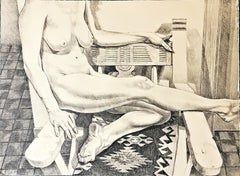
Nude in New Mexico, lithograph, hand signed/N by renowned realist painter
By Philip Pearlstein
Located in New York, NY
PHILIP PEARLSTEIN
Nude in New Mexico, 1984
Lithograph on art paper
31 3/5 × 40 3/4 inches
Signed, titled, dated and numbered in graphite pencil from the limited edition of only 65. (48/65)
Unframed
Philip Pearlstein was born in Pittsburgh, PA, in 1924 and came to New York with Andy Warhol - his first roommate. In 1941, his junior year in high school, he received his first recognition when awarded first and third prizes in Scholastic Magazine's 14th National High School Art Exhibition. Upon graduation from high school in 1942, he enrolled in the Carnegie Institute of Technology but the draft limited his attendance to one year. After discharge from the army in 1946, he returned to Carnegie Tech where he studied with Robert Lepper, Balcomb Green and Samuel Rosenberg...
Category
1980s Realist Continental US - Nude Prints
Materials
Lithograph
"Lendas Africanas Da Bahia" from the suite.
Located in San Francisco, CA
This artwork titled " Lendas Africanas Da Bahia" from the suite, 1978, is an original colors woodcut by renown Brazilian/Argentinian artist Hector Julio Paride Barnabo Carybe, 1911-1997. It is hand signed and numbered 83/200 in pencil by the artist. The Wood block mark (image) is 23.65 x 15.75 inches, sheet size is 26.75 x 19 inches. It is in excellent condition, has never been framed. It will be shipped in a 8 inches diameter heavy duty tube.
About the artist:
Héctor Julio Páride Bernabó (7 February 1911 – 2 October 1997) was an Argentine-Brazilian artist, researcher, writer, historian and journalist. His nickname and artistic name, Carybé, a type of piranha, comes from his time in the scouts. He died of heart failure after the meeting of a candomblé community's lay board of directors, the Cruz Santa Opô Afonjá Society, of which he was a member.
Quick Facts Born, Died ...
Carybé
Born
Héctor Julio Páride Bernabó
7 February 1911
Lanús, Argentina
Died
2 October 1997 (aged 86)
Salvador, Bahia, Brazil
Nationality
Brazilian
Known for
Painter, engraver, draughtsman, illustrator, potter, sculptor, mural painter, researcher, historian and journalist
Close
He produced thousands of works, including paintings, drawings, sculptures and sketches. He was an Obá de Xangô, an honorary position at Ilê Axé Opô Afonjá.
Orixá Panels in the Afro-Brazilian Museum in Salvador
Some of Carybé's work can be found in the Afro-Brazilian Museum in Salvador: 27 cedar panels representing different orixás or divinities of the Afro-Brazilian religion candomblé. Each panel shows a divinity with their associated implements and animal. The work was commissioned by the former Banco da Bahia S.A., now Banco BBM S.A., which originally installed them in its branch on Avenida Sete de Setembro in 1968.
Murals at Miami International Airport
American Airlines, Odebrecht and the Miami-Dade Aviation Department partnered to install two of Carybé's murals at Miami International Airport. They have been displayed in the American Airlines terminal at John F. Kennedy International Airport in New York since 1960. The 16.5 x 53-foot murals were accredited when Carybé won the first and the second prize in a contest of public art pieces for JFK airport.
As its terminal at that airport was due for demolition, American Airlines donated the murals to Miami-Dade County, and Odebrecht invested in a project to remove, restore, transport and install the murals at Miami International Airport.
The mural "Rejoicing and Festival of the Americas" portrays colorful scenes from popular festivals throughout the Americas, and "Discovery and Settlement of the West" depicts the pioneers’ journey into the American West.
Carybé's Woodcuts in Gabriel García Márquez's Books
Carybé illustrated four books by the Colombian writer Gabriel García Márquez, including One Hundred Years of Solitude, The Autumn of the Patriarch, Chronicle of a Death Foretold, and Love in the Time of Cholera "Carybé: um mestre da cultura baiana". ArqBahia Arquitetura, design, arte e lifestyle (in Brazilian Portuguese). 26 April 2023.. In particular, the woodcuts in One Hundred Years of Solitude are well-known for providing a visual image of the fictional town of Macondo, where the story takes place. The illustrations depict the colorful and winding houses, the railway bridge, and the hot and humid climate of the region, contributing to the reader's immersion in the story.
Carybé's woodcuts are, therefore, an important part of Gabriel García Márquez's literary legacy, bringing a visual dimension to his stories that further enriches the reader's experience.
Timeline
1911 — Birth in Lanús, Argentina.
1919 — Moved to Brazil.
1921 — The name Carybé is first given to him by the Clube do Flamengo scouts group, in Rio de Janeiro.
1925 — Beginning of his artistic endeavours, going to the pottery workshop of his elder brother, Arnaldo Bernabó, in Rio de Janeiro.
1927–1929 — Studies at the National School of Fine Arts, in Rio de Janeiro.
1930 — Worked for the newspaper Noticias Gráficas, in Buenos Aires, Argentina.
1935–1936 — Works with the writer Julio Cortázar and as a draughtsman for the El Diario newspaper.
1938 — Sent to Salvador by newspaper Prégon.
1939 — First collective exhibition, with the artist Clemente Moreau, at the Buenos Aires City Museum of Fine Arts, Argentina; illustrates the book Macumba, Relatos de la Tierra Verde, by Bernardo Kardon, published by Tiempo Nuestro.
1940 — Illustrates the book Macunaíma, by Mário de Andrade.
1941 — Draws the Esso Almanach, the payment for which allows him to set on a long journey through Uruguay, Brazil, Bolivia, and Argentina.
1941–1942 — Study trip around several South American countries.
1942 — Illustration for the book La Carreta by Henrique Amorim, published by El Ateneo (Buenos Aires, Argentina).
1943 — Together with Raul Brié, translates the book Macunaíma, by Mário de Andrade, into Spanish; produces the illustrations for the works Maracatu, Motivos Típicos y Carnavalescos, by Newton Freitas, published by Pigmaleon, Luna Muerta, by Manoel Castilla, published by Schapire, and Amores de Juventud, by Casanova Callabero; also publishes and illustrates Me voy al Norte, for the quarterly magazine Libertad Creadora; awarded First Prize by the Cámara Argentina del Libro (Argentine Book Council) for the illustration of the book Juvenília, by Miguel Cané (Buenos Aires, Argentina).
1944 — Illustrates the books The Complete Poetry of Walt Whitmann and A Cabana do Pai Tomás, both published by Schapire ; as well as and Los Quatro Gigantes del Alma by Mira y Lopez, Salvador BA; attends capoeira classes, visits candomblé meetings and makes drawings and paintings.
1945 — Does the illustrations for Daniel Defoe's Robinson Crusoe, for the Viau publishing house.
1946 — Helps in setting up the Tribuna da Imprensa newspaper, in Rio de Janeiro.
1947 — Works for the O Diário Carioca newspaper, in Rio de Janeiro.
1948 — Produces texts and illustrations for the book Ajtuss, Ediciones Botella al Mar (Buenos Aires, Argentina).
1949–1950 — Invited by Carlos Lacerda to work at the Tribuna da Imprensa, in Rio de Janeiro.
1950 — Invited by the Education Secretary Anísio Teixeira, moves to Bahia, and produces two panels for the Carneiro Ribeiro Education Center (Park School), in Salvador, Bahia.
1950–1997 — Settles in Salvador, Bahia.
1950–1960 — Actively participate in the plastic arts renewal movement, alongside Mário Cravo Júnior, Genaro de Carvalho, and Jenner Augusto.
1951 — Produces texts and illustrations for the works of the Coleção Recôncavo, published by Tipografia Beneditina and illustrations for the book, Bahia, Imagens da Terra e do Povo, by Odorico Tavares, published by José Olímpio in Rio de Janeiro; for the latter work he receives the gold medal at the 1st Biennial of Books and Graphic Arts.
1952 — Makes roughly 1,600 drawings for the scenes of the movie O Cangaceiro, by Lima Barreto; also works as the art director and as an extra on the film (São Paulo, SP).
1953 — Illustrations for the book A Borboleta Amarela, by Rubem Braga, published by José Olímpio (Rio de Janeiro, RJ).
1955 — Illustrates the work O Torso da Baiana, edited by the Modern Art Museum of Bahia.
1957 — Produces etchings, with original designs, for the special edition of Mário de Andrade's Macunaíma, published by the Sociedade dos 100 Bibliófilos do Brasil.
1958 — Makes an oil painting mural for the Petrobras Office in New York, USA; illustrates the book As Três Mulheres de Xangô, by Zora Seljan, published by Editora G. R. D. (Rio de Janeiro, RJ); Receives a scholarship grant in New York, USA.
1959 — Takes part in the competition for the New York International Airport panels project, in New York, USA, winning first and second prizes.
1961 — Illustrates the book Jubiabá, by Jorge Amado, published by Martins Fontes (São Paulo, SP).
1963 — Awarded the title of Honorary Citizen of Salvador, Bahia.
1965 — Illustrates A Muito Leal e Heróica Cidade de São Sebastião do Rio de Janeiro, published by Raymundo Castro Maya (Rio de Janeiro, RJ).
1966 — With Jorge Amado, co-authors Bahia, Boa Terra Bahia, published by Image (Rio de Janeiro, RJ); writes and illustrates the book Olha o Boi, published by Cultrix (São Paulo, SP).
1967 — Receives the Odorico Tavares Prize – Best Plastic Artist of 1967, in a competition ran by the state government to stimulate the development of plastic arts in Bahia; makes the Orixás Panels for the Banco da Bahia (currently at the UFBA Afro-Brazilian Museum) (Salvador, BA).
1968 — Illustrates the books Carta de Pero Vaz de Caminha ao Rei Dom Manuel, published by Sabiá (Rio de Janeiro) and Capoeira Angolana, by Waldeloir Rego, published by Itapoã (Bahia).
1969 — Produces the illustrations for the book Ninguém Escreve ao Coronel, by Gabriel Garcia Marquez, published by Sabiá (Rio de Janeiro, RJ).
1970 — Illustrates the books O Enterro do Diabo and Os Funerais de Mamãe Grande, published by Sabiá (Rio de Janeiro, RJ), Agotimé her Legend, by Judith Gleason, published by Grossman Publishers (New York, USA).
1971 — Illustrates the books One Hundred Years of Solitude, by Gabriel Garcia Marquez and A Casa Verde by Mario Vargas Llosa, both published by Sabiá (Rio de Janeiro, RJ); produces texts and illustrations for the book Candomblé da Bahia, published by Brunner (São Paulo, SP).
1973 — Illustrations for Gabriel Garcia Marquez's A Incrível e Triste História de Cândida Erendira e sua Avó Desalmada (Rio de Janeiro, RJ); paints the mural for the Legislative Assembly and the panel for the Bahia State Secretary of the Treasury.
1974 — Produces woodcuts for the book Visitações da Bahia, published by Onile.
1976 — Illustrates the book O Gato Malhado e a Andorinha Sinhá: uma história de amor, by Jorge Amado (Salvador, BA); receives the title of Knight of the Order of Merit of Bahia.
1977 — Certified with the Honor for Afro-Brazilian Cult Spiritual Merit, Xangô das Pedrinhas ao Obá de Xangô Carybé (Magé, RJ).
1978 — Makes the concrete sculpture Oxóssi, in the Catacumba Park; illustrates the book A Morte e a Morte de Quincas Berro D´Água, by Jorge Amado, published by Edições Alumbramento (Rio de Janeiro, RJ).
1979 — Produces woodcuts for the book Sete Lendas Africanas da Bahia, published by Onile.
1980 — Designs the costumes and scenery for the ballet Quincas Berro D´Água, at the Teatro Municipal in Rio de Janeiro.
1981 — Publication of the book Iconografia dos Deuses Africanos no Candomblé da Bahia (Ed. Raízes), following thirty years of research.
1982 — Receives the title of Honorary Doctor of the Federal University of Bahia.
1983 — Makes the panel for the Brazilian Embassy in Lagos, Nigeria.
1984 — Receives the Jerônimo Monteiro Commendation – Level of Knight (Espírito Santo); receives the Castro Alves Medal of Merit, granted by the UFBA Academy of Arts and Letters; makes the bronze sculpture Homenagem à mulher baiana (Homage to the Bahian woman), at the Iguatemi Shopping Center (Salvador, BA).
1985 — Designs the costumes and sets for the spectacle La Bohème, at the Castro Alves Theater; illustrates the book Lendas Africanas dos Orixás, by Pierre Verger, published by Currupio.
1992 — Illustrates the book O sumiço da santa: uma história de feitiçaria, by Jorge Amado (Rio de Janeiro, RJ).
1995 — Illustration of the book O uso das plantas na sociedade iorubá, by Pierre Verger (São Paulo, SP).
1996 — Making of the short film Capeta Carybé, by Agnaldo Siri Azevedo, adapted from the book O Capeta Carybé, by Jorge Amado, about the artist Carybé, who was born in Argentina and became the most Bahian of all Brazilians.
1997 — Illustration of the book Poesias de Castro Alves.
Exhibitions
ммIndividual Exhibitions:
1943 — Buenos Aires (Argentina) — First individual exhibition, at the Nordiska Gallery
1944 — Salta (Argentina) — at the Consejo General de Educacion
1945 — Salta (Argentina) — Amigos del Arte, Buenos Aires (Argentina) — Motivos de América, at the Amauta Gallery, Rio de Janeiro RJ — individual exhibition at the IAB/RJ
1947 — Salta (Argentina) — Agrupación Cultural Femenina
1950 — Salvador BA — First individual exhibit in Bahia, at the Bar Anjo Azul; São Paulo SP — MASP.
1952 — São Paulo SP — MAM/SP
1954 — Salvador BA — Oxumaré Gallery
1957 — New York (USA) — Bodley Gallery; Buenos Aires (Argentina) — Bonino Gallery * 1958 - New York (USA) — Bodley Gallery
1962 — Salvador BA - MAM/BA
1963 — Rio de Janeiro RJ — Bonino Gallery
1965 — Rio de Janeiro RJ — Bonino Gallery
1966 — São Paulo SP — Astrea Gallery
1967 — Rio de Janeiro RJ — Santa Rosa Gallery
1969 — London (England) — Varig Airlines
1970 — Rio de Janeiro RJ — Galeria da Praça
1971 — Rio de Janeiro RJ — MAM/RJ, São Paulo SP — A Galeria; Belo Horizonte MG, Brasília DF, Curitiba PR, Florianopolis SC, Porto Alegre RS, Rio de Janeiro RJ and São Paulo SP — The Orixás Panel (exhibition tour), at the Casa da Cultura in Belo Horizonte, MAM/DF, the Public Library of Paraná, the Legislative Assembly of Santa Catarina State, the Legislative Assembly of Rio Grande do Sul, MAM/RJ and MAM/SP
1972 — The Orixás Panel in Fortaleza CE — at the Ceará Federal University Art Museum, and in Recife PE — at the Santa Isabel Theater
1973 — São Paulo SP — A Galeria
1976 — Salvador BA — at the Church of the Nossa Senhora do Carmo Convent
1980 — São Paulo SP — A Galeria
1981 — Lisbon (Portugal) — Cassino Estoril
1982 — São Paulo SP — Renot Art Gallery, São Paulo SP — A Galeria
1983 — New York (USA) — Iconografia dos Deuses Africanos no Candomblé da Bahia, The Caribbean Cultural Center
1984 — Philadelphia (USA) — Art Institute of Philadelphia; Mexico — Museo Nacional de Las Culturas; São Paulo SP — Galeria de Arte André
1986 — Lisbon (Portugal) — Cassino Estoril; Salvador BA — As Artes de Carybé, Núcleo de Artes Desenbanco
1989 — Lisbon (Portugal) — Cassino Estoril; São Paulo SP — MASP
1995 — São Paulo SP — Documenta Galeria de Arte, São Paulo SP — Casa das Artes Galeria, Campinas SP — Galeria Croqui, Curitiba PR — Galeria de Arte Fraletti e Rubbo, Belo Horizonte MG — Nuance Galeria de Arte, Foz do Iguaçu PR — Ita Galeria de Arte, Porto Alegre RS — Bublitz Decaedro Galeria de Artes, Cuiabá MT — Só Vi Arte Galeria, Goiânia GO — Época Galeria de Arte, São Paulo SP — Artebela Galeria Arte Molduras, Fortaleza CE — Galeria Casa D'Arte, Salvador BA — Oxum Casa de Arte
Collective Exhibitions:
1939 — Buenos Aires (Argentina) — Carybé and Clemente Moreau Exhibition, at the Museo Municipal de Belas Artes
1943 — Buenos Aires (Argentina) — 29th Salon de Acuarelistas y Grabadores — first prize
1946 — Buenos Aires (Argentina) — Drawings by Argentine Artists, at the Kraft Gallery
1948 — Washington (USA) — Artists of Argentina, at the Pan American Union Gallery
1949 — Buenos Aires (Argentina) — Carybé and Gertrudis Chale, at the Viau Gallery; Salvador BA — Bahian Showroom of Fine Arts, at the Hotel Bahia
1950 — Salvador BA — 2nd Bahian Showroom of Fine Arts; São Paulo SP — MAM/SP
1951 — São Paulo SP — 1st São Paulo Art Biennial, Trianon Pavilion.
1952 — Salvador BA — 3rd Bahian Showroom of Fine Arts, at Belvedere da Sé; São Paulo SP — MAM/SP
1953 — Recife PE — Mario Cravo Júnior and Carybé, at the Santa Isabel Theater; São Paulo SP — 2nd São Paulo Art Biennial, at MAM/SP
1954 — Salvador BA — 4th Bahian Showroom of Fine Arts, at the Hotel Bahia. — Bronze medal
1955 — São Paulo SP — 3rd São Paulo Art Biennial, at MAM/SP — first prize for drawing
1956 — Salvador BA — Modern Artists of Bahia, at the Oxumaré Gallery; Venice (Italy) — 28th Venice Biennial
1957 — Rio de Janeiro RJ — 6th National Modern Art Show — exemption from the jury; São Paulo SP — Artists from Bahia, at the MAM/SP
1958 — San Francisco (USA) — Works by Brazilian Artists, at the Fine Arts Museums of San Francisco, Washington and New York (USA) — Works by Brazilian Artists, at the Pan American Union and the MoMA
1959 — Seattle (USA) — 30th International Exhibition, at the Seattle Art Museum; Salvador BA — Modern Artists of Bahia, at the Dentistry School.
1961 — São Paulo SP — 6th São Paulo Art Biennial, at MAM/SP — special room
1963 — Lagos (Nigeria) — Brazilian Contemporary Artists, at the Nigerian Museum; São Paulo SP — 7th São Paulo Art Biennial Bienal, at the Fundação Bienal
1964 — Salvador BA — Christmas Exhibition, at the Galeria Querino
1966 — Baghdad (Iraq) — collective exhibition sponsored by the Calouste Gulbenkian Foundation; Madrid (Spain) — Artists of Bahia, at the Hispanic Culture Institute; Rome (Italy) — Piero Cartona Palace; Salvador BA — 1st National Biennial of Plastic Arts (Bienal da Bahia) — special room; Salvador BA — Draughtsmen of Bahia, at the Convivium Gallery
1967 — Salvador BA — Christmas Exhibition at the Panorama Art Gallery; São Paulo SP — Artists of Bahia, at the A Gallery
1968 — São Paulo SP — Bahian Artists, at the A Gallery
1969 — London (England) — Tryon Gallery; São Paulo SP — 1st Panorama of Current Brazilian Art at the MAM/SP; São Paulo SP — Carybé, Carlos Bastos...
Category
Late 20th Century Modern Continental US - Nude Prints
Materials
Woodcut
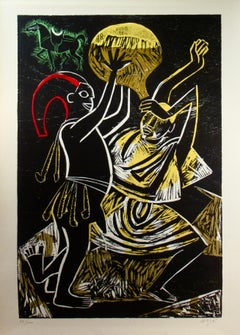
Etching Nude
Located in Houston, TX
Etching of nude figure by French artist Tisson, 2001. Signed lower right.
Original artwork on paper displayed on a white mat with a gold border. Mat fits a standard-size frame. A...
Category
Early 2000s Continental US - Nude Prints
Materials
Etching
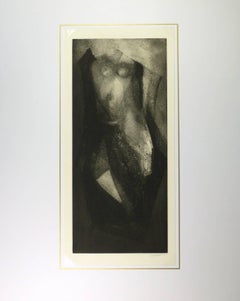
Three Native American Girls
By Popo and Ruby Lee
Located in San Francisco, CA
This artwork "Three Native American Girls" c. 1990 is a color offset lithograph by noted artists Popo and Ruby Lee, b.1940. It is Hand signed and numbered 2/750 in pencil by the arti...
Category
Late 20th Century American Realist Continental US - Nude Prints
Materials
Lithograph
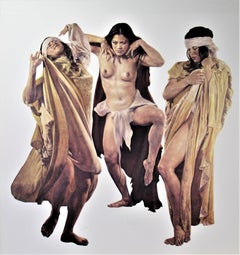
L
Espagne assassinée from Solidarité, Surrealist Etching by Andre Masson
By André Masson
Located in Long Island City, NY
Andre Masson, French (1896 - 1987) - L'Espagne assassinee from Solidarite, Year: 1938, Medium: Etching on wove paper, signed and numbered in pencil, Edition: 1/15, Image Size: 9.25 ...
Category
1930s Surrealist Continental US - Nude Prints
Materials
Etching
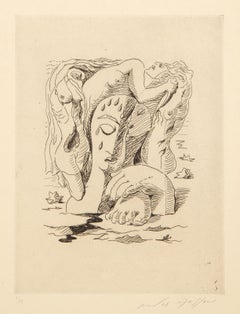
Gerard Garouste
Scenes of a Room (No Text)
1983- Vintage
Located in Brooklyn, NY
Original first edition exhibition poster for Gerard Garouste’s show at Leo Castelli and Sperone Westwater Galleries, New York, held February 5–26, 1983. Printed in Italy, with photog...
Category
1980s Contemporary Continental US - Nude Prints
Materials
Offset
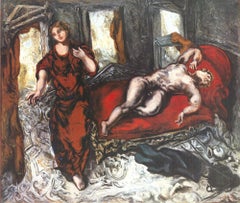
Nu bleu, la grenouille (Blue Nude, The Frog)
By (after) Henri Matisse
Located in Washington, DC
Artist: Henri Matisse (after)
Title: Nu bleu, la grenouille (Blue Nude, The Frog)
Portfolio: The Last Works of Henri Matisse
Medium: Lithograph
Date: 195...
Category
1950s Continental US - Nude Prints
Materials
Lithograph
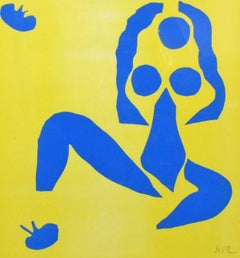
Tension, by Miguel Angel Reyes
By Miguel Angel Reyes
Located in Palm Springs, CA
Serigraph of male nude on top of power line, by gay Chicano artist Miguel Angel Reyes. Signed and numbered, edition of 61. Image refers to the tensions of being gay and from a trad...
Category
1990s Contemporary Continental US - Nude Prints
Materials
Screen
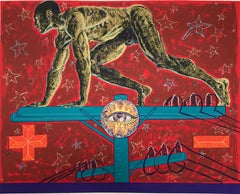
Male Acrobat, Impressionist Lithograph by Auguste Rodin
By Auguste Rodin
Located in Long Island City, NY
Auguste Rodin, French (1840 - 1917) - Male Acrobat, Year: 1902, Medium: Lithograph on Japon, signed in the plate, Image Size: 9 x 8 inches, Size: 13 x 10 in. (33.02 x 25.4 cm), Refe...
Category
Early 1900s Impressionist Continental US - Nude Prints
Materials
Lithograph
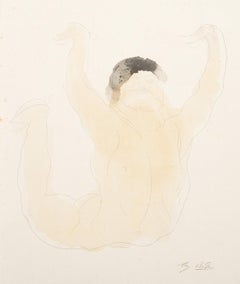
1982 Gay Olympic Games
By Rob Anderson
Located in Palm Springs, CA
Signed and numbered in pencil in lower right hand margin. Proposed edition of 1000 (edition never completed).
This print is an interesting piece of history, as the United States Oly...
Category
1980s Continental US - Nude Prints
Materials
Screen
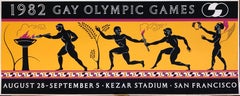
$480 Sale Price
20% Off
Sueño de un Boy Scout by Ray Smith surreal nude print in green and yellow
By Ray Smith
Located in New York, NY
Ray Smith elucidates the "Dream of a Boy Scout" in this surreal green, red, and yellow wood cut print. A woman with two faces sits nude within a diamond-shaped gold field of color, reaching up with her hand and out with her leg to touch the corners of the diamond, which each nestle a light fixture.
Sueño de un Boy Scout, 1988-9
Woodcut in black, red and green, on oiled Japon, signed and dated in black ink, numbered 1/30 (there were also 3 artist's proofs)
25 x 39 in.
Per the Broad: "Ray Smith’s paintings incorporate surrealistic and animistic tendencies informed by his Latin heritage as well as deep study of the history of modern art. Smith was born near the Texas/Mexico border...
Category
1980s Pop Art Continental US - Nude Prints
Materials
Woodcut
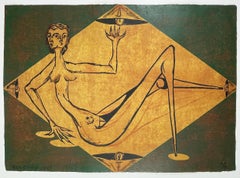
From Portfolio "Twilight" with Karin Szekessy
By Paul Wunderlich
Located in Kansas City, MO
Paul Wunderlich
From Portfolio "Twilight" with Karin Szekessy
Year: 1971
Medium: Phototype (Lichtdruck)
Edition: 125
Size: 33 x 25 in.
Publisher: A.A.A....
Category
1970s Modern Continental US - Nude Prints
Materials
Black and White
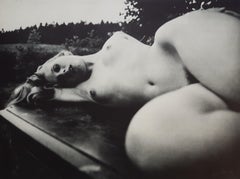
$490 Sale Price
30% Off
SLM II, male nude etching by Fernando Reyes
By Fernando Reyes
Located in Palm Springs, CA
Male nude etching, from a series of 6 male and 6 female images.
Signed, titled and numbered , by the artist. Edition of 50.
In January 2018, the Mexican Museum in San Francisco mounted an exhibition An Artist’s Evolution, a retrospective which has elevated Fernando’s exposure in the SF Bay Area...
Category
21st Century and Contemporary Contemporary Continental US - Nude Prints
Materials
Etching
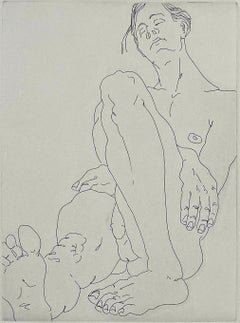
Brunelleschi, Composition, La Leçon d
amour dans un parc (after)
By Umberto Brunelleschi
Located in Southampton, NY
Lithograph and stencil on vélin d’Arches paper. Unsigned and unnumbered, as issued. Good condition. Notes: From the volume, La Leçon d'amour dans un parc, 1933. Published by Éditions...
Category
1930s Modern Continental US - Nude Prints
Materials
Lithograph, Stencil
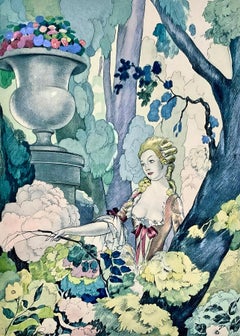
$1,436 Sale Price
20% Off
The Gathering (top middle), male nude linocut by Fernando Reyes
By Fernando Reyes
Located in Palm Springs, CA
This is a unique working proof for one of six images that comprise the group of prints called The Gathering. Signed and titled in pencil, Working Proof III, aside from the edition.
...
Category
21st Century and Contemporary Contemporary Continental US - Nude Prints
Materials
Woodcut
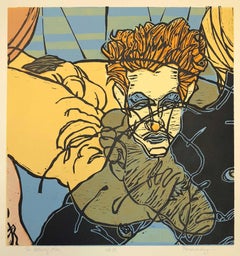
Advance notice, Nude Art Screenprint by Michael Knigin
By Michael Knigin
Located in Long Island City, NY
Michael Knigin, American (1942 - 2011) - Advance notice, Year: 1980, Medium: Screenprint, signed and numbered in pencil, Edition: 300, AP, Image Size: 17 x 26.5 inches, Size: 21...
Category
1980s Pop Art Continental US - Nude Prints
Materials
Screen
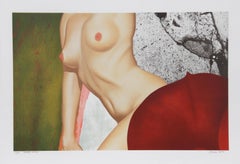
Lifting, male nude lithograph by Trevor Southey
By Trevor Southey
Located in Palm Springs, CA
Male nude lithograph by Trevor Southey.
Lifting is a striking lithograph by the South African-born, Utah-based artist Trevor Southey, celebrated for his masterful draftsmanship and ...
Category
1990s Contemporary Continental US - Nude Prints
Materials
Lithograph