Europe - Prints
to
7,649
17,987
3,586
17,518
343
126
Height
to
Width
to
272
250
135
77
64
51
44
27
20
18
18
13
11
9
8
4
3
5,218
9,639
2,661
469
1,026
575
510
223
57
131
137
75
65
119
238
92
98
17,724
584
221
200
158
5,799
1,526
1,473
865
853
17,987
17,663
17,968
102
91
81
76
60
Item Ships From: Europe
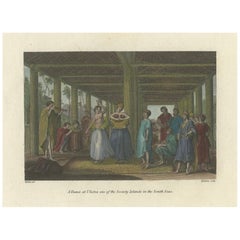
A Dance at Ulietea – Society Islands Scene from Cook’s Voyages, c.1784
Located in Langweer, NL
A Dance at Ulietea – Society Islands Scene from Cook’s Voyages, c.1784
This finely hand-colored copper engraving titled A Dance at Ulietea, one of the Society Islands in the South S...
Category
Late 18th Century English Antique Europe - Prints
Materials
Paper
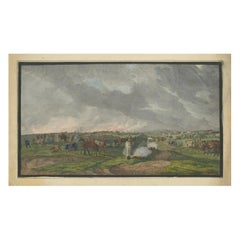
Napoleonic Military Encampment - Hand-Coloured Panoramic Aquatint, c1810
Located in Langweer, NL
Napoleonic Military Encampment Hand-Coloured Aquatint Panoramic c1810
A large early 19th-century hand-coloured aquatint depicting a military encampment during the Napoleonic era. Th...
Category
Early 19th Century French Antique Europe - Prints
Materials
Paper
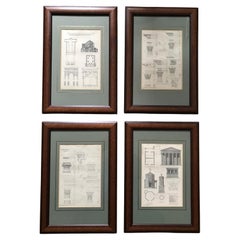
4 Classic Architectural Antique Prints from Steel Engravings dated 1850 Framed
Located in London, GB
This is a stunning set of 4 Greek Architectural steel engraved plates printed in 1850 with Olive colour hand cut mount with hand painted Gold line and professionally framed in 2014 i...
Category
1850s British Victorian Antique Europe - Prints
Materials
Glass, Fruitwood, Paper

$1,451 Sale Price / set
30% Off
Prince Henry
s Naval and Land Battle during the Seven Years
War Engraved, 1667
Located in Langweer, NL
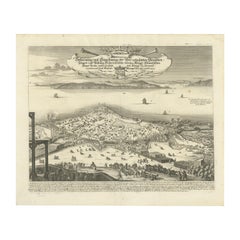
The engraving depicts the assault and capture of the Danish fortress Friderichsodde (now known as Fredericia) located on the island of Fyn. The scene, captured on October 24, 1657, vividly illustrates the Swedish main army's takeover under the command of General Carl Gustaf Wrangel. This historical event is meticulously documented in the artwork, which showcases not only the military action but also the strategic landscape and fortifications characteristic of the time.
Erik Jönsson Graf von Dahlberg, the artist behind this work, was a prominent Swedish field marshal, architect, and fortress builder. Born in 1625 and passing in 1703, Dahlberg's contributions to military and architectural fields were significant. He was renowned for his detailed and artistically valuable drawings which served as the basis for large-scale copperplate engravings. These engravings are of substantial topographical and architectural historical importance as they provide a detailed visual account of Swedish territories during the era.
In 1661, Dahlberg began work on his magnum opus—a comprehensive geographical and historical depiction of Swedish territories, which received royal privileges. His journey in 1667-1668 to Paris for the engraving of the initial plates reflects the international scope and ambition of his project. However, the work was intermittently paused when Dahlberg was tasked in 1674 with overseeing all Swedish fortress constructions, a role that significantly impacted his career and works. The project resumed and was published in 1684, highlighting a significant period of Swedish history and military achievements under his visual documentation.
MORE ABOUT THE BATTLE:
The image is an intricate engraving depicting a battle scene. Based on the details and the text in the cartouche, the scene illustrates a significant historical battle involving Prussian forces. The presence of multiple ships and extensive fortifications suggests a combined land and naval engagement.
Key Features in the Engraving:
1. Land Battle: The forefront of the image shows numerous troops, artillery pieces, and cavalry in action, depicting the intensity and scale of the land combat.
2. Naval Elements: Ships in the background indicate that this battle had a naval component, which would have been crucial for controlling trade routes or strategic waterways.
3. Fortifications: Extensive fortifications, including bastions and protective walls, suggest a well-defended location, possibly a city or a significant stronghold.
Historical Context:
From the text, it appears the battle involves "Prinz Heinrich," referring to Prince Henry of Prussia, who was an influential military leader during the reign of his brother, Frederick the Great. Under Frederick’s rule, Prussia engaged in several key conflicts, including the Seven Years' War (1756-1763), which saw major battles across Europe and involved complex alliances.
Given the level of detail and the era suggested by the style of ships and fortifications, the battle was of the significant engagements during the Seven Years' War, where Prince Henry played a critical role. His campaigns often involved maneuvering to protect Prussia from multiple fronts, including naval engagements in the Baltic.
Interpretation:
This engraving serves not only as a historical document but also as a piece of propaganda, likely glorifying the prowess and strategic capabilities of the Prussian military...
Category
1670s Antique Europe - Prints
Materials
Paper
$440 Sale Price
20% Off
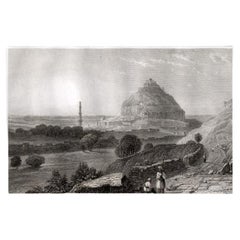
Antique Print of Daulatabad Fort, India, 1836
Located in Langweer, NL
Antique print titled 'Dowlutabad (Ostindien)'. View of Daulatabad. Originates from 'Meyers Universum'.
Artists and Engravers: Joseph Meyer (May 9, 1796 - June 27, 1856) was a Ger...
Category
19th Century Antique Europe - Prints
Materials
Paper
$76 Sale Price
20% Off
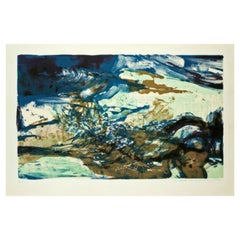
Zao Wou-Ki, Abstract Lithograph, Zhào Wújí - Chinese Art - 1976
By Zao Wou-Ki
Located in SAINT-OUEN-SUR-SEINE, FR
Lithograph-Wou Ki-Zhào W-J', 1976
Additional Details:
Materials and Techniques: Lithography
Printed in 6 colours.
Size:
Image size: 40.0 x 67.0 cm
Paper Size 50 x 76 cm
Edition of 99 and 15 Hors Commerce proofs and 15 Artist’s proofs on Arches paper
Artist’s signature and date bottom right
Artist’s proof E. A. bottom left
Printed : Bellini, Paris, France
Published : Ediciones Poligrafa, Barcelona Spain
Zao Wou-Ki (1920 - 2013) was a Chinese painter and printmaker naturalized French in 1964.
He was a member of the Académie des Beaux-Arts in Paris and is one of the most successful Chinese painters.
Zao Wou-Ki graduated from the China Academy of Art in Hangzhou, the most famous art school in China, where he studied under Lin Fengmian...
Category
20th Century Spanish Modern Europe - Prints
Materials
Paper
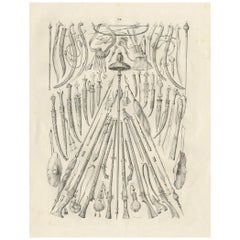
Antique Oriental Arms and Daggers Study from Maximilian in Bavaria, 1846
Located in Langweer, NL
Antique Oriental Arms and Daggers Study from Maximilian in Bavaria, 1846
This exceptionally rich and visually striking 19th-century Orientalist engraving presents a comprehensive st...
Category
Mid-19th Century Antique Europe - Prints
Materials
Paper
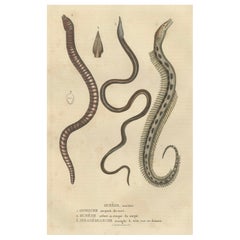
Aquatic Elegance: Brittle Star, Zebra Moray Eel, and Blind Cave Eel, 1845
Located in Langweer, NL
The engraving illustrates three marine creatures:
1. **Ophiure serpent de mer** - This is likely an ophiuroid, commonly known as a brittle star. These are echinoderms, related to st...
Category
1840s Antique Europe - Prints
Materials
Paper
$229 Sale Price
20% Off
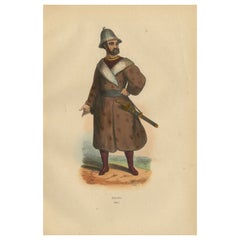
Traditional Eleuth Warrior Attire in 1844 Hand-Colored Lithograph
Located in Langweer, NL
Title: "Traditional Eleuth Warrior Attire in 1844 Lithograph"
Description:
This hand-colored lithograph titled *Eleuthe* (Eleuth) portrays a man from the Eleuth tribe, a subgroup of the Oirat Mongols. The image is part of Auguste Wahlen's "Moeurs, Usages et Costumes de tous les Peuples de Monde" (Customs, Manners, and Dress of All the Peoples of the World), published in 1844.
The print was created by an anonymous engraver after Wahlen's designs, with notable contributions from artists such as Evrard Duverger, L. Markaert, and R. King. The lithograph is enhanced with Arabic gum on vellum paper, adding a bright gloss and deepening the colors.
Notable Features of the Attire:
- Helmet: The warrior wears a distinctive helmet, possibly crafted from metal or leather, which suggests a readiness for battle. The helmet design is typical of Mongolian and Central Asian tribes, providing protection while maintaining mobility.
- Coat: The long, fur-lined coat is characteristic of the Eleuths, suited to the cold climates of Central Asia. The coat is intricately patterned, showcasing both practicality and status.
- Sword: The sword hanging by his side is a symbol of his warrior class. The hilt appears to be ornately decorated, hinting at a higher social rank or experience in battle.
Cultural and Historical Insight:
The Eleuth people were part of the broader Oirat confederation of nomadic Mongols who lived in what is now Xinjiang and parts of Central Asia. Their warrior culture was highly developed, and this lithograph captures the essence of a soldier's dress during the 19th century. The attire shown here reflects both the harsh environment and the martial lifestyle that characterized their existence.
Keywords for Searching:
People searching for prints like this might use terms such as "Eleuth warrior lithograph," "Wahlen 1844 Mongolian print...
Category
1840s Antique Europe - Prints
Materials
Paper
$114 Sale Price
20% Off
Authentic Japanese Wood Block Print Kikyo by Masao Ido 1989
Located in Weesp, NL
This authentic 1989 Japanese woodblock print titled "Kikyō" (Balloon Flower) by Masao Ido is a rare and exquisite piece that embodies the essence of eternal love, sincerity, and eleg...
Category
1980s Japanese Mid-Century Modern Vintage Europe - Prints
Materials
Paper
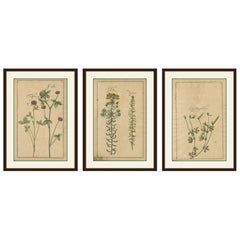
Rare 17th Century Botanicals – Trifolium, Gula Degener
Lotus, Leipzig, c.1690
Located in Langweer, NL
Rivinus botanicals: Trifolium, “Gula / degener” & Lotus tetragonolobos, Leipzig, 1690s
Set of three late-17th/early-18th-century botanical copper engravings with period hand-colour,...
Category
Late 17th Century German Antique Europe - Prints
Materials
Paper
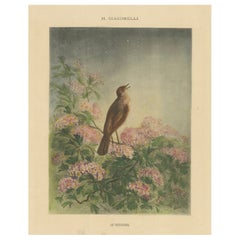
The Nightingale
s Song - Giacomelli’s Floral and Avian Art, Circa 1891
Located in Langweer, NL
The Nightingale's Song - Giacomelli’s Floral and Avian Art, Circa 1891
This beautiful print, titled "Le Rossignol" (The Nightingale), captures a moment of pure elegance as a nightin...
Category
1890s Antique Europe - Prints
Materials
Paper
$315 Sale Price
20% Off
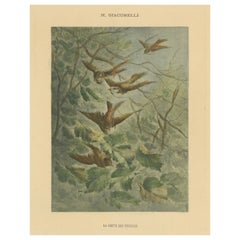
Autumn Flight - Giacomelli’s Sparrows in Falling Leaves, Circa 1891
Located in Langweer, NL
Autumn Flight - Giacomelli’s Sparrows in Falling Leaves, Circa 1891
This evocative print, titled "La Chute des Feuilles" (The Falling of the Leaves), is a beautiful representation o...
Category
1890s Antique Europe - Prints
Materials
Paper
$315 Sale Price
20% Off
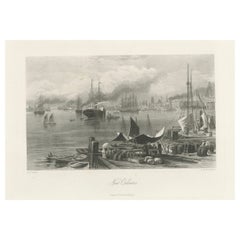
New Orleans Harbor, Mississippi River Shipping and Steamers – Engraving ca.1850
Located in Langweer, NL
New Orleans Harbor, Mississippi River Shipping and Steamers – Antique Engraving
This finely engraved 19th-century view presents a bustling panorama of New Orleans seen from the Miss...
Category
Mid-19th Century British Antique Europe - Prints
Materials
Paper
Set of 8 Original Vintage Flower Fairy Prints, circa 1930
Located in St Annes, Lancashire
Wonderful set of 8 flower fairy prints
Lovely bright colors
After the artwork by Cicely Mary Barker
Published by Blackie
Son
Unframed.
The measurement given is the paper s...
Category
Early 20th Century English Europe - Prints
Materials
Paper

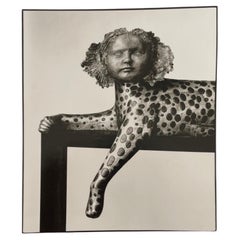
François-xavier Lalanne and Claude Lalanne, Sphinx
By François-Xavier Lalanne
Located in Saint ouen, FR
François-Xavier Lalanne (1927-2008) and Claude Lalanne (1925-1919), Sphinx, 2005
Techniques : gelatin silver print hand signed by François Xavier Lalanne, in perfect condition
Dime...
Category
Early 2000s European Europe - Prints
Materials
Paper
Pair “Faux Bamboo” Frames With Old Italian Shell Prints With Overwritten Text.
Located in Prato, Tuscany
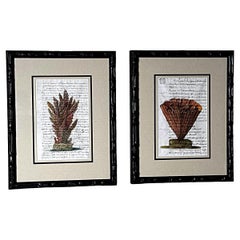
Please read the entire description carefully, as we strive to provide complete technical and historical details to ensure the authenticity of our objects. These two “faux bamboo” frames enclose color prints on paper, depicting compositions of marine corals in strange and rare shapes. The print on the left depicts a seaweed-shaped coral, with intricate details reminiscent of some species of the genus Acropora; the composition on the right depicts a coral belonging to the Gorgonian family, with the peculiarity of being depicted coiled on itself. These colored prints, made in Italy, date from a time when naturalists and illustrators created detailed plates to document and study marine flora and fauna, and can be dated between 1750 and 1770. Their uniqueness lies in the fact that they were used as a medium for writing a text (a letter)at the same time or shortly thereafter. Antique color prints with handwritten text on the entire surface represent an example of an ancient practice called manuscript on image or illustrated manuscript. This technique was widespread in various eras and contexts, both artistic and practical. In medieval manuscripts, it was common to embellish texts with elaborate miniatures, illustrations, and initial letters, often in color. Although not entirely identical, this practice reflects the historical interest in the integration of text and image. During the Victorian period and into the early 1900s, it was common to write letters and messages on picture postcards, often embellished with colorful images and decorations, with lettering covering part or all of the illustration. Japanese ukiyo-e prints often combined images with poems or handwritten descriptions, and this practice spread between the 17th and 19th centuries. Modern and contemporary artists have taken up and reinterpreted this tradition: for example, German artist Anselm Kiefer has created works that combine images with handwritten text across the entire surface. In short, handwriting on color prints was not as common as simple illustrations, but there are numerous historical and modern examples of how text and image can be combined in unique and creative ways. Another notable detail of our prints is that the one on the right has the price “5 soldi” imprinted at the top. The "soldo" is a historical Italian currency with a long and rich history. The soldo originated in the Middle Ages, with the first documented issuance dating back to the Carolingian Empire, around 800 AD. The term “soldo” derives from the Latin word “solidus,” which was a Roman gold coin...
Category
Mid-18th Century Italian Other Antique Europe - Prints
Materials
Faux Bamboo, Paper
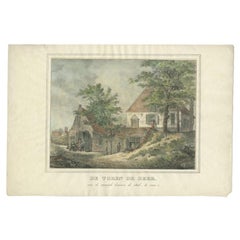
Antique Print of Tower
de Beer
in Utrecht, The Netherlands, c.1830
Located in Langweer, NL
Antique print Utrecht titled 'De Toren de Beer'. Old print with a view of tower De Beer (the Bear), a wall tower near the Plompetoren in Utrecht, the Netherlands. Originates from 'Af...
Category
19th Century Antique Europe - Prints
Materials
Paper
$114 Sale Price
20% Off
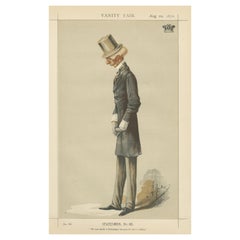
Victorian Military Statesman – Vanity Fair Political Portrait, 1870
Located in Langweer, NL
Victorian Military Statesman – Vanity Fair Political Portrait, 1870
Description: Published August 20, 1870, this Vanity Fair portrait depicts a former soldier turned statesman, emph...
Category
1870s British Antique Europe - Prints
Materials
Paper
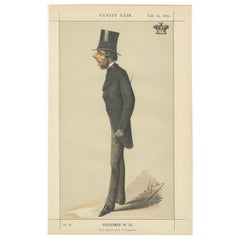
Victorian Industrial Magnate – Vanity Fair Statesmen Caricature, 1870
Located in Langweer, NL
Victorian Industrial Magnate – Vanity Fair Statesmen Caricature, 1870
Issued July 16, 1870, this Vanity Fair portrait depicts a powerful industrial figure, reflecting the growing in...
Category
1870s British Antique Europe - Prints
Materials
Paper
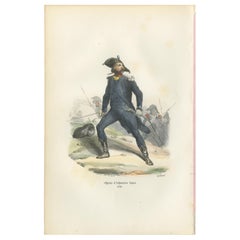
Napoleonic Light Infantry Officer 1795, French Military Uniform Print, 1843
Located in Langweer, NL
Napoleonic Light Infantry Officer 1795, French Military Uniform Print, 1843
This finely hand-colored 19th-century engraving depicts an officer of the French light infantry (infanterie légère) in 1795, during the crucial transitional years of the French Revolutionary Wars that directly shaped the rise of Napoleon Bonaparte. Shown in an animated combat stance, sword drawn and leading his men forward, the officer embodies the aggressive, mobile tactics that became a defining feature of Napoleonic warfare.
Light infantry units played a vital role in Napoleon’s armies, operating as skirmishers, scouts, and advance troops. Their flexibility, speed, and independence marked a clear break from the rigid linear tactics of earlier European armies. The uniform shown here—simpler yet purposeful—reflects the pragmatic military reforms of the Revolutionary period that Napoleon later perfected and expanded across Europe.
This print originates from *Histoire de l’Empereur Napoléon* by P.-M. Laurent de l’Ardèche, published in Paris in 1843. The illustrations are based on designs by Horace Vernet, the most important military artist of 19th-century France and the definitive visual chronicler of Napoleon and his era. Vernet’s work is renowned for its historical accuracy, clarity of movement, and enduring influence on the iconography of Napoleonic history.
Produced during the great Napoleonic revival of the mid-19th century, this engraving combines documentary precision with romantic heroism. It is particularly well suited for collectors of Napoleonic material, French military history, and antique uniform...
Category
1840s French Antique Europe - Prints
Materials
Paper
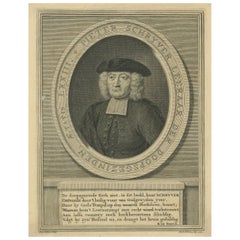
Portrait of Pieter Schrijver – Mennonite Preacher, Engraving by J.Folkema, 1739
Located in Langweer, NL
Portrait of Pieter Schrijver – Mennonite Preacher, Engraving by Jacob Folkema, 1739
This finely detailed 18th-century portrait depicts Pieter Schrijver (1663–1706), a prominent Dutc...
Category
Mid-18th Century Dutch Antique Europe - Prints
Materials
Paper
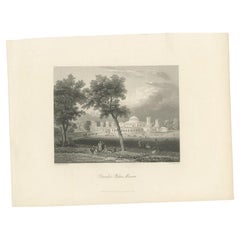
Antique Print of Petrovsky Palace in Moscow, Russia, circa 1850
Located in Langweer, NL
Antique print titled 'Peterskoi Palace, Moscow'. Steel engraving of Petrovsky Palace, Moscow, Russia. This print originates from 'Payne's Universum'.
Artists and Engravers: A.H. P...
Category
19th Century Antique Europe - Prints
Materials
Paper
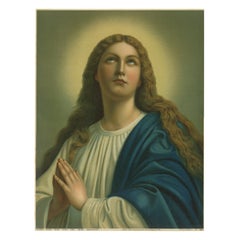
Holy Mary in Prayer – Antique German Marian Chromolithograph, 1904
Located in Langweer, NL
Jesus Appears to Mary Magdalene – Antique German Chromolithograph, c. 1895
This striking late 19th-century German chromolithograph depicts the moving biblical moment in which the risen Christ appears to Mary Magdalene following the Resurrection. Christ is shown standing in quiet majesty, halo radiant with divine light, His right hand placed gently over His heart in a gesture of compassion and reassurance. Mary Magdalene kneels before Him with deep devotion, her long flowing hair and rich garments emphasizing both humility and reverence.
The composition is set within a tranquil garden landscape, traditionally associated with the Resurrection narrative, reinforcing the spiritual symbolism of rebirth, forgiveness, and divine mercy. Christ’s red tunic and deep blue mantle radiate warmth and solemnity, while the soft golden halo creates a luminous focal point that draws the eye immediately to His face.
This scene, known in Christian tradition as *Noli Me Tangere* (“Touch Me Not”), represents one of the most emotionally powerful moments of the Gospel story. It became a highly favored subject in Catholic devotional art of the late 19th century, commonly displayed in prayer corners, chapels, religious schools, and family interiors.
Produced using high-quality chromolithography, this print achieves exceptional painterly depth, with delicate shading in the flesh tones, refined folds in the drapery, and beautifully layered landscape colors. The gold highlights of the halos and the saturated reds and blues are especially well preserved, reflecting the superior production standards of German devotional publishers during this period.
This is a visually commanding and spiritually meaningful artwork, highly desirable for Catholic collectors, sacred art interiors, and serious devotional art collections.
CONDITION REPORT
Good antique condition overall. Light, even age toning to the paper consistent with late 19th-century chromolithographs. Minor edge wear and very gentle corner softening visible upon close inspection. No major stains, no tears, and no restoration observed. Colors remain strong and vivid.
FRAMING TIPS
This print will display beautifully in a classic gilt or softly antiqued gold wooden frame to echo the sacred halo tones. For a more restrained interior, a dark walnut or black lacquer frame with a wide ivory mat and museum glass will create a dramatic devotional presentation.
TECHNIQUE
Chromolithography
MAKER
German devotional publisher, Germany, circa 1895
KEYWORD BLOCK
Jesus and Mary Magdalene, Noli Me Tangere, resurrection scene, antique catholic print...
Category
Early 20th Century German Europe - Prints
Materials
Paper
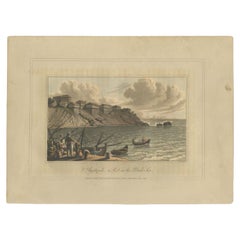
Antique Print of Agatopoli or nowadays Ahtopol in Bulgaria, 1818
Located in Langweer, NL
Antique print titled 'Agatopoli - a Port in the Black Sea'. Old print of Agatopoli, a port in the Black Sea.
Agatopoli, identified today with the city of Ahtopol in Bulgaria, was...
Category
19th Century Antique Europe - Prints
Materials
Paper
$124 Sale Price
20% Off
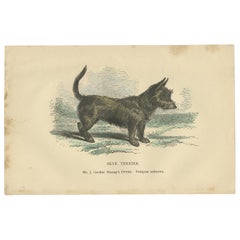
Antique Dog Print of a Skyre Terrier, circa 1890
Located in Langweer, NL
Antique print titled 'Skye Terrier'. Dog print of a skye terrier. Published circa 1890.
Category
Late 19th Century Antique Europe - Prints
Materials
Paper
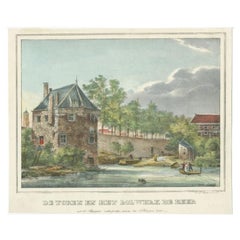
Antique Print of Tower
de Beer
in Utrecht, City in The Netherlands, circa 1830
Located in Langweer, NL
Antique print Utrecht titled 'De Toren en het Bolwerk de Beer'. Old print with a view of the tower and rampart De Beer (The Bear) and the Plompetoren, as well as the Begijne watergat...
Category
19th Century Antique Europe - Prints
Materials
Paper
$143 Sale Price
20% Off
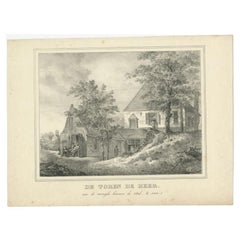
Antique Uncoloured Print of Tower
De Beer
in Utrecht, the Netherlands, C.1830
Located in Langweer, NL
Antique print Utrecht titled 'De Toren de Beer'. Old print with a view of tower De Beer (the Bear), a wall tower near the Plompetoren in Utrecht, the Netherlands. Originates from 'Af...
Category
19th Century Antique Europe - Prints
Materials
Paper
$105 Sale Price
20% Off
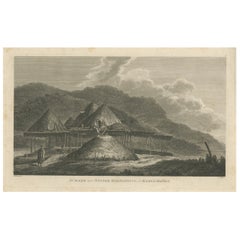
Antique Print of Summer and Winter Habitations in Kamchatka, Russia, 1784
Located in Langweer, NL
Experience Kamchatka: 'Summer and Winter Habitations' Print from Cook & King's Pacific Ocean Voyage
This antique print, titled 'Summer and Winter Habitations in Kamchatka,' offers a...
Category
Late 18th Century Antique Europe - Prints
Materials
Paper
$315 Sale Price
20% Off
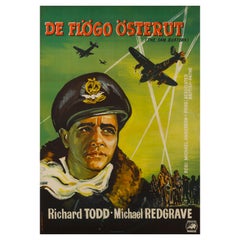
The Dam Busters / De Flogo Osterut
Located in London, GB
Original Swedish film poster for The Dam Busters 1955. This British epic war film was directed by Michael Anderson, and stars Richard Todd and Michael Redg...
Category
1950s Swedish Vintage Europe - Prints
Materials
Paper
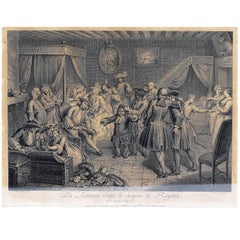
Rare Burlesque Engraving print Rancor Cuts the Hat of Ragotin, 18th Century
Located in Beuzevillette, FR
Engraving by Louis de Surgis de Surugue after a painting by Jacques Dumont dit Le Romain.
It is part of a series of 16 engravings illustrating "Le Rom...
Category
Early 18th Century French Antique Europe - Prints
Materials
Paper
$555 Sale Price
74% Off
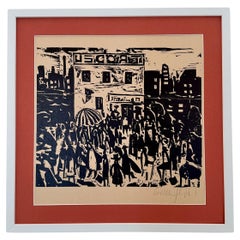
1920s Style Berlin Street Scene, Black Woodcut on Paper, Framed, 1973
Located in Berlin, DE
"Transport yourself to the vibrant streets of 1920s Berlin with this captivating black woodcut on paper, delicately framed and preserved since its creation in 1973. The artwork encap...
Category
1970s German Bauhaus Vintage Europe - Prints
Materials
Glass, Beech, Paint, Paper
$727 Sale Price
20% Off
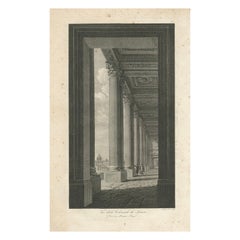
Vue de la Colonnade du Louvre – Architectural Engraving by Baltard, circa 1800
Located in Langweer, NL
Vue de la Colonnade du Louvre – Architectural Engraving by Louis-Pierre Baltard
An elegant architectural engraving by Louis-Pierre Baltard (1764–1846), titled Vue de la Colonnade du...
Category
Early 1800s French Antique Europe - Prints
Materials
Paper
Antique Print of a Fortress and Prison in Siberia, Russia, 1768
Located in Langweer, NL
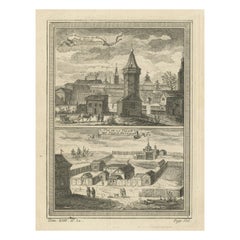
Antique print titled 'Vue de l'Ostrog du Waywode (..)'. Copper engraving of the Fortress of the voivode (local ruler) of Beryozovo, Siberia. Below, a view of the Prison of Prince Men...
Category
18th Century Antique Europe - Prints
Materials
Paper
$277 Sale Price
20% Off
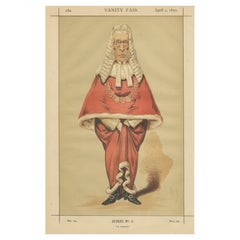
Victorian Judge in Robes – Vanity Fair Judges Series No. 4, 1870
Located in Langweer, NL
Victorian Judge in Robes – Vanity Fair Judges Series No. 4, 1870
Description: Published April 2, 1870, this striking Vanity Fair portrait belongs to the Judges series. The figure is...
Category
1870s British Antique Europe - Prints
Materials
Paper
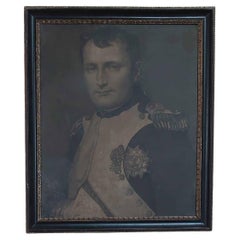
Original Antique Framed Print of Napoleon Bonaparte After David. French C.1800
Located in St Annes, Lancashire
Wonderful image of Napoleon Bonaparte after Jacques Louis David
Aquatint. Published C.1800
On paper applied to card
Old Hogarth frame
Slight restoration above the hair. Shown in ...
Category
Early 1800s English Empire Antique Europe - Prints
Materials
Paper
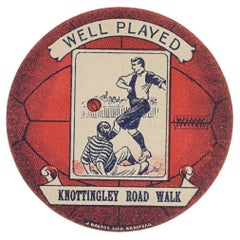
Baines Football Trade Card, Knottingley Road Walk, Well Played
Located in Oxfordshire, GB
Baines football trade card, Knottingley road walk. Well played.
A rare circular football trade card in the shape of a leather football ball. Made by the toy shop owner from Bradford, John Baines. Baines went on to produce not only football cards but eventually covered scores of different sports, from golf, cricket, tennis to horse racing and bowls, and just about any kind of sporting affiliations in just about every city, town and village in the UK. The cards were promoted in various prize competitions like finding certain "medal cards", collection a certain amount of empty packets. One could always submit a mini essay on sport with the winner having their writing printed on the backs of the cards. Hence why the backs are so varied and different.
The Baines card offered for sale is printed in a red tone with a picture of two football players, one on the ground having just tried to tackle his opponent, to the front with the words 'Well Played, Knottingley Road Walk'. To the reverse 'BAINES' Gold Medal Football Cards, We Guarantee to give every week during our three months' Competition, 50 Jerseys, Shirts or Sweaters. Boys are requested to CAREFULLY READ SHOW BILLS...
Category
Early 20th Century British Sporting Art Europe - Prints
Materials
Paper
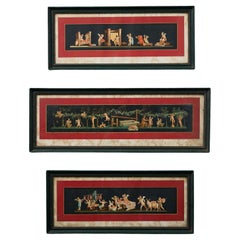
Three 19th Century Geramia Discanno Hand Coloured Lithographs Depicting Pompeii
Located in Wormelow, Herefordshire
A set of three 19th century Geramia Discanno hand coloured lithographs, captured from the walls of Pompeii. The frescoes are believed to be prints from a book published in 1890 by on...
Category
Late 19th Century Italian Neoclassical Antique Europe - Prints
Materials
Glass, Wood, Paper
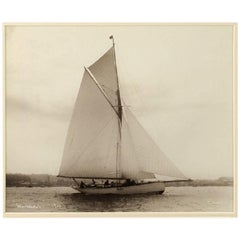
Early silver gelatin photograph print of the Gaff rigged yacht Wayward by Beken
Located in Lymington, Hampshire
Yacht Wayward, early silver gelatin photographic print by Beken of Cowes.
Category
Early 1900s English Antique Europe - Prints
Materials
Paper
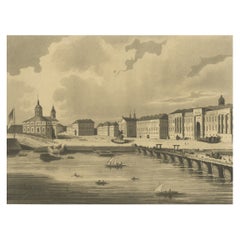
Antique Print of Saint Isaac
S Square in St Petersburg, Russia, c.1810
Located in Langweer, NL
Antique print titled 'The Place of St. Isaac'. View of Saint Isaac's Square, in Saint Petersburg, Russia. A city square sprawling between the Mariinsky Pal...
Category
19th Century Antique Europe - Prints
Materials
Paper
$325 Sale Price
20% Off
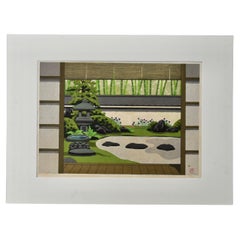
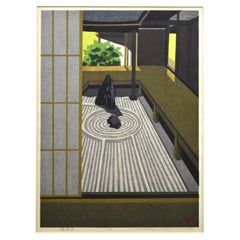
Ryōgen-in Garden Kyoto by Masao Ido
Located in Weesp, NL
Traditional 1986 Japanese wood block print of one of the 5 gardens of the Ryōgen-in, a sub temple of the Daitoku-ji Buddhist complex, located in Kita-ku, Kyoto, Japan, constructed in 1502.
Signed and numbered 126/150 in pencil by the artist.
Measurements wooden frame : W.48 x H.63 x D.3 cm.
The print will be shipped insured overseas in a custom made wooden case. Cost of insured transport to the US, Euro 245, is case included.
Colors may slightly vary due to photographic lighting sources or your monitor settings.
Masao Ido...
Category
1980s Japanese Japonisme Vintage Europe - Prints
Materials
Paper
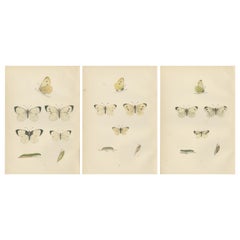
Winged Elegance: Stages of Lepidopteran Grace, Published in 1890
Located in Langweer, NL
These are original plates coloured by hand from the sixth edition of the publication with title: 'A History of British Butterflies' by Morris. Published in London in 1890. .
These i...
Category
1890s Antique Europe - Prints
Materials
Paper
$181 Sale Price / item
20% Off
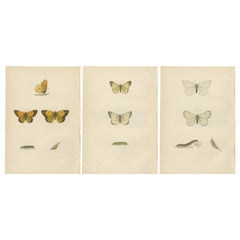
Metamorphosis Montage: The Life Stages of a Butterfly, 1890
Located in Langweer, NL
The images are hand-colored plates from "A History of British Butterflies" by Morris, showcasing three distinct butterfly species: the Clouded Yellow, the Pale Clouded Yellow, and th...
Category
1890s Antique Europe - Prints
Materials
Paper
$181 Sale Price / item
20% Off
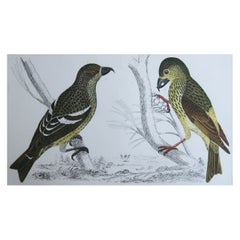
Original Antique Print of Crossbills, 1847
Unframed
Located in St Annes, Lancashire
Great image of crossbills
Unframed. It gives you the option of perhaps making a set up using your own choice of frames.
Lithograph after Cpt. brown with original hand color.
...
Category
1840s English Folk Art Antique Europe - Prints
Materials
Paper
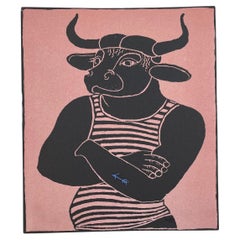
François-xavier Lalanne and Claude Lalanne, Minotaure
By François-Xavier Lalanne
Located in Saint ouen, FR
François-Xavier Lalanne (1927-2008) Minotaure, 2005
Techniques : watercolored woodcut, hand signed in pencil by François Xavier Lalanne, in perfect condition
Dimensions of the pa...
Category
Early 2000s French Modern Europe - Prints
Materials
Paper
$3,351 Sale Price
30% Off
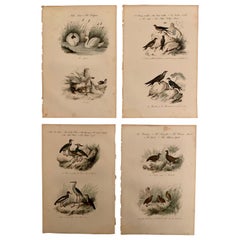
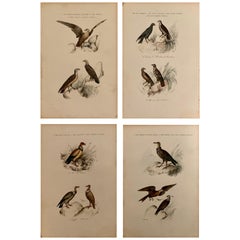
Set of 4 European Hand Colored Prints of Birds from 1830
Located in Haddonfield, NJ
A set of 4 hand colored birds prints, from 1830. By Comte, Achille Joseph (1802-1866),
"Keepsake d´histoire naturelle. Description des oiseaux. Suivie d´un exposé de l art de les pré...
Category
1830s French Biedermeier Antique Europe - Prints
Materials
Paper
$476 Sale Price / set
20% Off
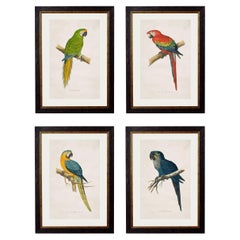
Set of FOUR Macaws Prints originally Circa 1838 in Rectangular Frames, New
By John James Audubon
Located in Lincoln, Lincolnshire
These are a set of FOUR digitally remastered prints of Macaws, hand coloured framed prints, originally from Circa 1864.
Prints of this style were...
Category
2010s British Victorian Europe - Prints
Materials
Glass, Wood, Paper
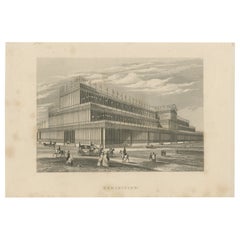
Antique Print of the Crystal Palace, London, circa 1840
Located in Langweer, NL
Antique print titled 'Exhibition'. Steel engraved view of the Crystal Palace, known for the Great Exhibition, London. Source unknown, to be determined.
...
Category
19th Century Antique Europe - Prints
Materials
Paper
$62 Sale Price
20% Off
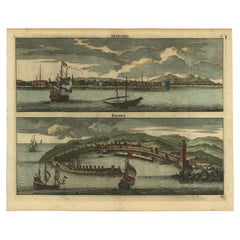
Rare
Old Panoramic Views of Stanchio, Greece and the Island of Rhodes, 1698
Located in Langweer, NL
Antique print titled Stanchio Rhodus.
Original antique print showing panoramic views of Stanchio, Greece and the Island of Rhodes, both with ships.
First edition in French, firs...
Category
1690s Dutch Antique Europe - Prints
Materials
Paper
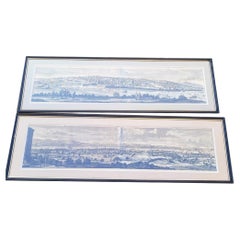
Panoramic Views Of Jerusalem In Scio, Framed Engravings, 19th Century
Located in MARSEILLE, FR
Pair of very large framed engravings representing panoramic views of the cities of Jerusalem and Scio (or Chios).
Some stains, foxing, tears and folds. 19th century period.
20...
Category
19th Century French Other Antique Europe - Prints
Materials
Paper
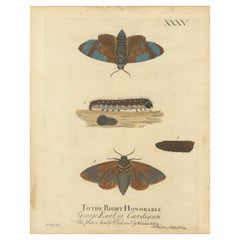
Moth Metamorphosis Dedicated to Earl of Cardigan, 1724
Located in Langweer, NL
This illustration is from Eleazar Albin's work, as indicated by the signature "E. Albin del.", meaning "drawn by Eleazar Albin". It is a plate from his series on natural history, spe...
Category
1720s Antique Europe - Prints
Materials
Paper
$248 Sale Price
20% Off
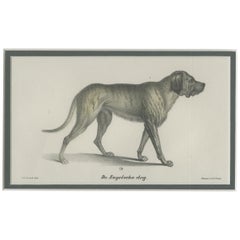
Antique Print of an English Mastiff Dog by Schinz
1845
Located in Langweer, NL
Antique print titled 'De Engelsche Dog'. Original antique print of an English Mastiff (?) dog. This print originates from 'Volledige Natuurlijke Histor...
Category
Mid-19th Century Antique Europe - Prints
Materials
Paper
$95 Sale Price
20% Off
Antique Print of the Bolshoi Theatre in Saint Petersburg, Russia, ca.1810
Located in Langweer, NL
Description: Antique print titled 'The Stone Theatre at St. Petgersbourg'. View ofthe Bolshoi Theatre in Saint Petersburg, Russia. In 1886 the building was declared unsafe and, at th...
Category
1810s Antique Europe - Prints
Materials
Paper
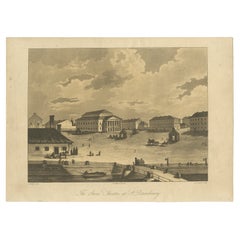
Antique Print of Saint Isaac
s Square, in Saint Petersburg, Russia, ca.1810
Located in Langweer, NL
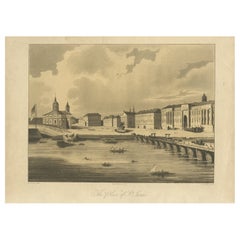
Description: antique print titled 'The Place of St. Isaac'. View of Saint Isaac's Square, in Saint Petersburg or St Petersbourg, Russia. A city square spra...
Category
1810s Antique Europe - Prints
Materials
Paper
Pastoral Elegance: Ulrik Thersner
s 1824 Aquatint of Djursholm Castle
Located in Langweer, NL
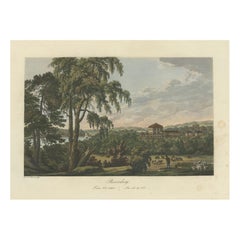
This beautiful original hand-colored antique print, made by Ulrik Thersner in 1824, is a fine example of his work. Thersner, known for his detailed and atmospheric landscapes, would have drawn this view of Djursholm Castle with great care, capturing not only the architectural features of the castle but also the surrounding natural landscape and pastoral life, as seen in the foreground with figures and livestock.
The aquatint technique allowed Thersner to produce gradations of tone that give the print a remarkable depth and a lifelike quality, a characteristic that was particularly prized in the early 19th century for the way it mimicked the subtleties of watercolor paintings.
The composition of the print, with the castle situated amidst the verdant trees and the inclusion of human and animal figures, creates a harmonious balance between the built environment and the natural world, reflecting the romantic sensibilities of the time. The view "from the S.E. angle" provides a unique perspective of the castle, emphasizing its prominence and setting within the landscape.
As a historical document, the print serves as a valuable visual record of Djursholm Castle and its environs in the early 1800s. As an artwork, it stands as a testament to Thersner's skill as an artist and his contribution to the tradition of Swedish topographical art.
More about the maker:
Ulrik Thersner was a multifaceted individual, having an impactful military career alongside his work as a draftsman and topographer. Born on April 2, 1779, in Kyrkslätt parish in Finland, Thersner began his military service early, becoming a ship's boy in the Swedish navy at the tender age of seven. His naval service during Gustav III's Russian War...
Category
1820s Antique Europe - Prints
Materials
Paper
$428 Sale Price
34% Off
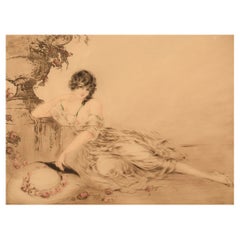
Louis Icart, Etching on Paper, "at the Urn", Dated 1923
Located in København, Copenhagen
Louis Icart (1888-1950). Etching on paper. "At the Urn". Dated 1923.
Visible dimensions: 44 x 33 cm.
Total dimensions: 48 x 38 cm.
The frame measures: 1.5 cm.
In excellent condit...
Category
1920s French Art Deco Vintage Europe - Prints
Materials
Paper
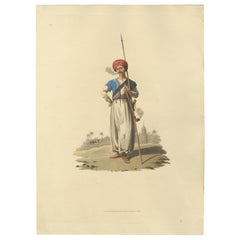
Antique Print Mameluke of Grand Seignior, the Military Costume of Turkey, 1818
Located in Langweer, NL
This print is from 'The Military Costume of Turkey. Illustrated by A Series of Engravings. From Drawings made on the Spot. Dedicated by Permission to His Excellency the Minister of t...
Category
1810s Antique Europe - Prints
Materials
Paper
$622 Sale Price
20% Off
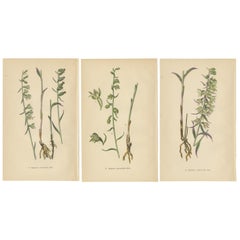
Epipactis Spectrum: A Botanical Study from 1904
Located in Langweer, NL
This collage contains three botanical illustrations from the book 'Abbildungen der in Deutschland und den angrenzende Gebieten vorkommenden Grundformen der ORCHIDEEN-ARTEN' by Walter...
Category
Early 1900s Antique Europe - Prints
Materials
Paper
Set Of 4 European Hand Colored Prints Of Birds From 1830
Located in Haddonfield, NJ
A set of 4 hand colored birds prints, from 1830. By Comte, Achille Joseph (1802-1866),
"Keepsake d´histoire naturelle. Description des oiseaux. Suivie d´un exposé de l art de les pré...
Category
1830s French Biedermeier Antique Europe - Prints
Materials
Paper
$476 Sale Price / set
20% Off
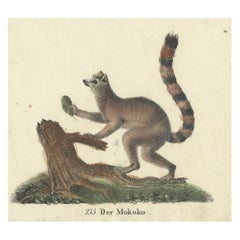
Original Antique Animal Print of a Ring-Tailed Lemur
Lemur Catta
Monkey, 1833
Located in Langweer, NL
Original antique print titled 'Der Mokoko'. Antique print of a mokoko or Ring-tailed lemur (Lemur catta).
The ring-tailed lemur (Lemur catta) is a large strepsirrhine primate and ...
Category
Mid-19th Century Antique Europe - Prints
Materials
Paper
$229 Sale Price
20% Off
Still Thinking About These?
All Recently ViewedMore Ways To Browse
Japanese Brush Painting
Japanese Compact
Japanese Dragon Screen
Japanese Edo Screen 4 Panels
Japanese Glass Door
Japanese Guanyin
Japanese Inlay Table
Japanese Lacquered Miniature
Japanese Lobster
Japanese Makie Lacquer
Japanese Natsume
Japanese Oshie
Japanese Pagoda Sculpture
Japanese Painting Irises
Japanese Satsuma Urn
Japanese Screen Kyoto
Japanese Screen With Birds
Japanese Shippo Vase