Geneva - Art
to
523
1,409
588
688
226
141
Overall Width
to
Overall Height
to
15
131
2,599
307
20
35
80
92
184
269
418
274
111
118
14
891
443
227
109
103
89
52
48
31
19
17
4
1
1
1,653
1,174
90
1,101
583
439
333
321
306
292
251
208
140
120
111
97
93
87
85
81
78
69
67
1,708
1,422
617
248
234
187
118
82
79
60
1,049
244
229,205
155,575
Item Ships From: Geneva
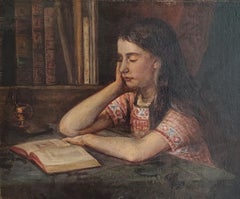
Young girl reading
Located in Genève, GE
Work on canvas
Category
Late 19th Century Geneva - Art
Materials
Oil

$1,068
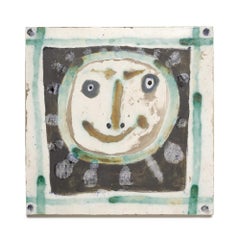
Tête Solaire, Pablo Picasso, Unique Ceramic, 1950
s, Earthenware, Design, Tile
By Pablo Picasso
Located in Geneva, CH
Tête Solaire, Pablo Picasso, Unique Ceramic, 1950's, Earthenware, Design, Tile
Tête solaire II
Unique work
27.01.1956
Large white earthenware tile, green stripes on white enamel on ...
Category
1950s Post-War Geneva - Art
Materials
Ceramic, Earthenware
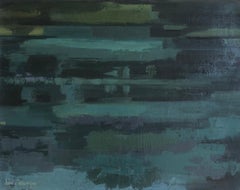
The pond
Located in Genève, GE
Work on canvas
White wooden frame
52.5 x 67.5 x 4 cm
Category
1980s Abstract Geneva - Art
Materials
Oil
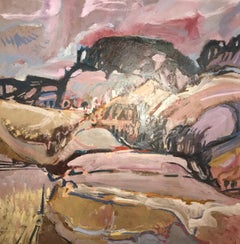
Landscape as far as the eye can see - n°6 by Jean Krillé - Oil on wood 100x100
By Jean Krille
Located in Geneva, CH
Of Germanic descent, the painter Jean Krillé was born in 1923 in Switzerland. His father, writer and poet, oriented him towards art and culture. From the age of 16, he enrolled at th...
Category
1980s Neo-Expressionist Geneva - Art
Materials
Oil
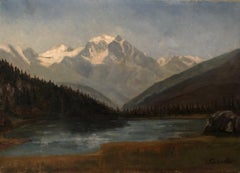
Mont Blanc from Sallanches
Located in Genève, GE
Work on canvas
Category
Early 20th Century Geneva - Art
Materials
Oil
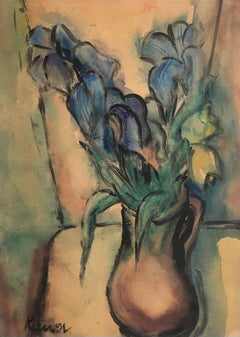
Bouquet in vase
Located in Genève, GE
Work on cardboard
Golden wooden frame
72 x 57.5 x 2.5 cm
Category
Mid-20th Century Geneva - Art
Materials
Watercolor
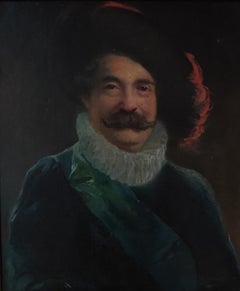
Man in musketeer outfit
Located in Genève, GE
Illegible signature
Work on canvas
Black wooden frame
67 x 57.5 x 3.5 cm
Category
Mid-20th Century Geneva - Art
Materials
Oil
$2,282
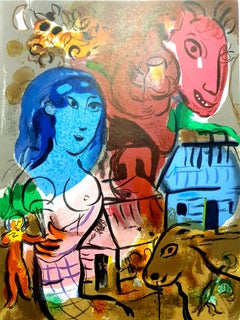
Marc Chagall - Homage to Marc Chagall - Original Lithograph
By Marc Chagall
Located in Collonge Bellerive, Geneve, CH
Marc Chagall
Original Lithograph
1969
From the revue XXe Siecle, edition of 12,000
Unsigned, as issued
Dimensions: 32 x 24
Condition : Excellent
Reference: Mourlot 572
Marc Chagall (born in 1887)
Marc Chagall was born in Belarus in 1887 and developed an early interest in art. After studying painting, in 1907 he left Russia for Paris, where he lived in an artist colony on the city’s outskirts. Fusing his own personal, dreamlike imagery with hints of the fauvism and cubism popular in France at the time, Chagall created his most lasting work—including I and the Village (1911)—some of which would be featured in the Salon des Indépendants exhibitions. After returning to Vitebsk for a visit in 1914, the outbreak of WWI trapped Chagall in Russia. He returned to France in 1923 but was forced to flee the country and Nazi persecution during WWII. Finding asylum in the U.S., Chagall became involved in set and costume design before returning to France in 1948. In his later years, he experimented with new art forms and was commissioned to produce numerous large-scale works. Chagall died in St.-Paul-de-Vence in 1985.
The Village
Marc Chagall was born in a small Hassidic community on the outskirts of Vitebsk, Belarus, on July 7, 1887. His father was a fishmonger, and his mother ran a small sundries shop in the village. As a child, Chagall attended the Jewish elementary school, where he studied Hebrew and the Bible, before later attending the Russian public school. He began to learn the fundamentals of drawing during this time, but perhaps more importantly, he absorbed the world around him, storing away the imagery and themes that would feature largely in most of his later work.
At age 19 Chagall enrolled at a private, all-Jewish art school and began his formal education in painting, studying briefly with portrait artist Yehuda Pen. However, he left the school after several months, moving to St. Petersburg in 1907 to study at the Imperial Society for the Protection of Fine Arts. The following year, he enrolled at the Svanseva School, studying with set designer Léon Bakst, whose work had been featured in Sergei Diaghilev's Ballets Russes. This early experience would prove important to Chagall’s later career as well.
Despite this formal instruction, and the widespread popularity of realism in Russia at the time, Chagall was already establishing his own personal style, which featured a more dreamlike unreality and the people, places and imagery that were close to his heart. Some examples from this period are his Window Vitebsk (1908) and My Fianceé with Black Gloves (1909), which pictured Bella Rosenfeld, to whom he had recently become engaged.
The Beehive
Despite his romance with Bella, in 1911 an allowance from Russian parliament member and art patron Maxim Binaver enabled Chagall to move to Paris, France. After settling briefly in the Montparnasse neighborhood, Chagall moved further afield to an artist colony known as La Ruche (“The Beehive”), where he began to work side by side with abstract painters such as Amedeo Modigliani and Fernand Léger as well as the avant-garde poet Guillaume Apollinaire. At their urging, and under the influence of the wildly popular fauvism and cubism, Chagall lightened his palette and pushed his style ever further from reality. I and the Village (1911) and Homage to Apollinaire (1912) are among his early Parisian works, widely considered to be his most successful and representative period.
Though his work stood stylistically apart from his cubist contemporaries, from 1912 to 1914 Chagall exhibited several paintings at the annual Salon des Indépendants exhibition, where works by the likes of Juan Gris, Marcel Duchamp and Robert Delaunay were causing a stir in the Paris art world. Chagall’s popularity began to spread beyond La Ruche, and in May 1914 he traveled to Berlin to help organize his first solo exhibition, at Der Sturm Gallery. Chagall remained in the city until the highly acclaimed show opened that June. He then returned to Vitebsk, unaware of the fateful events to come.
War, Peace and Revolution
In August 1914 the outbreak of World War I precluded Chagall’s plans to return to Paris. The conflict did little to stem the flow of his creative output, however, instead merely giving him direct access to the childhood scenes so essential to his work, as seen in paintings such as Jew in Green (1914) and Over Vitebsk (1914). His paintings from this period also occasionally featured images of the war’s impact on the region, as with Wounded Soldier (1914) and Marching (1915). But despite the hardships of life during wartime, this would also prove to be a joyful period for Chagall. In July 1915 he married Bella, and she gave birth to a daughter, Ida, the following year. Their appearance in works such as Birthday (1915), Bella and Ida by the Window (1917) and several of his “Lovers” paintings give a glimpse of the island of domestic bliss that was Chagall’s amidst the chaos.
To avoid military service and stay with his new family, Chagall took a position as a clerk in the Ministry of War Economy in St. Petersburg. While there he began work on his autobiography and also immersed himself in the local art scene, befriending novelist Boris Pasternak, among others. He also exhibited his work in the city and soon gained considerable recognition. That notoriety would prove important in the aftermath of the 1917 Russian Revolution when he was appointed as the Commissar of Fine Arts in Vitebsk. In his new post, Chagall undertook various projects in the region, including the 1919 founding of the Academy of the Arts. Despite these endeavors, differences among his colleagues eventually disillusioned Chagall. In 1920 he relinquished his position and moved his family to Moscow, the post-revolution capital of Russia.
In Moscow, Chagall was soon commissioned to create sets and costumes for various productions at the Moscow State Yiddish Theater, where he would paint a series of murals titled Introduction to the Jewish Theater as well. In 1921, Chagall also found work as a teacher at a school for war orphans. By 1922, however, Chagall found that his art had fallen out of favor, and seeking new horizons he left Russia for good.
Flight
After a brief stay in Berlin, where he unsuccessfully sought to recover the work exhibited at Der Sturm before the war, Chagall moved his family to Paris in September 1923. Shortly after their arrival, he was commissioned by art dealer and publisher Ambroise Vollard to produce a series of etchings for a new edition of Nikolai Gogol's 1842 novel Dead Souls. Two years later Chagall began work on an illustrated edition of Jean de la Fontaine’s Fables, and in 1930 he created etchings for an illustrated edition of the Old Testament, for which he traveled to Palestine to conduct research.
Chagall’s work during this period brought him new success as an artist and enabled him to travel throughout Europe in the 1930s. He also published his autobiography, My Life (1931), and in 1933 received a retrospective at the Kunsthalle in Basel, Switzerland. But at the same time that Chagall’s popularity was spreading, so, too, was the threat of Fascism and Nazism. Singled out during the cultural "cleansing" undertaken by the Nazis in Germany, Chagall’s work was ordered removed from museums throughout the country. Several pieces were subsequently burned, and others were featured in a 1937 exhibition of “degenerate art” held in Munich. Chagall’s angst regarding these troubling events and the persecution of Jews in general can be seen in his 1938 painting White Crucifixion.
With the eruption of World War II, Chagall and his family moved to the Loire region before moving farther south to Marseilles following the invasion of France. They found a more certain refuge when, in 1941, Chagall’s name was added by the director of the Museum of Modern Art (MOMA) in New York City to a list of artists and intellectuals deemed most at risk from the Nazis’ anti-Jewish campaign. Chagall and his family would be among the more than 2,000 who received visas and escaped this way.
Haunted Harbors
Arriving in New York City in June 1941, Chagall discovered that he was already a well-known artist there and, despite a language barrier, soon became a part of the exiled European artist community. The following year he was commissioned by choreographer Léonide Massine to design sets and costumes for the ballet Aleko, based on Alexander Pushkin’s “The Gypsies” and set to the music of Pyotr Ilyich Tchaikovsky.
But even as he settled into the safety of his temporary home, Chagall’s thoughts were frequently consumed by the fate befalling the Jews of Europe and the destruction of Russia, as paintings such as The Yellow Crucifixion...
Category
1960s Surrealist Geneva - Art
Materials
Lithograph
Coffee on the terrace
Located in Genève, GE
Work on cardboard
Golden wooden frame
42 x 57 x 3.3 cm
Category
Late 20th Century Italian School Geneva - Art
Materials
Oil
A park
Located in Genève, GE
Work on cardboard
Plaster and gilded wood frame
46 x 55.5 x 5 cm
Category
Mid-19th Century Old Masters Geneva - Art
Materials
Oil
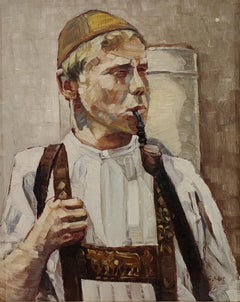
$1,068
Alpine Shepherd and his pipe
Located in Genève, GE
Work on wood
Beige wooden frame
44.5 x 36.5 x 1 cm
Category
Mid-20th Century Geneva - Art
Materials
Oil
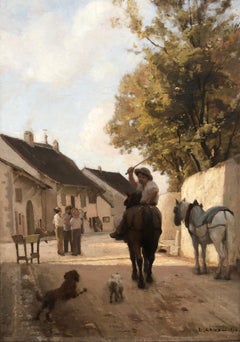
Village in the Geneva countryside
Located in Genève, GE
Work on wood
Golden wooden frame
57 x 44.5 x 5 cm
Category
1870s Old Masters Geneva - Art
Materials
Oil
Natale in Sicilia
By Giulio D
Angelo
Located in Genève, GE
Work on wood
Beige wooden frame
50 x 53 x 3.5 cm
Category
1940s Italian School Geneva - Art
Materials
Oil
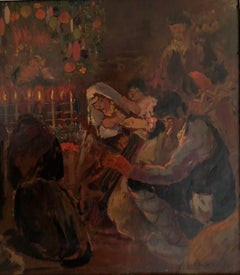
Swan ride
Located in Genève, GE
Work on canvas
Category
1920s Geneva - Art
Materials
Oil
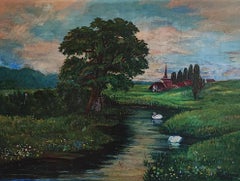
"Gros de Vaud" by Claude Sauthier - Oil on Wood - 73x54 cm
Located in Geneva, CH
Claude Sauthier was born in Geneva, Switzerland, in 1929 and passed away in the same city in 2016. He studied at the Geneva School of Decorative Arts and initially worked as a graphi...
Category
1970s Modern Geneva - Art
Materials
Wood, Oil
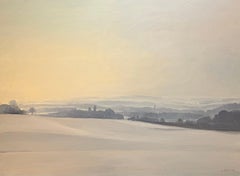
Jean Miotte - Abstract Composition - Original Aquatint Engraving
By Jean Miotte
Located in Collonge Bellerive, Geneve, CH
Jean Miotte - Rare Original Aquatint Engraving
Title: Abstract Composition
Dimensions: 76 x 56 cm
Jean Miotte, 1926 - 2016
Miotte came of artistic age in the decade after World War...
Category
1970s Abstract Expressionist Geneva - Art
Materials
Aquatint
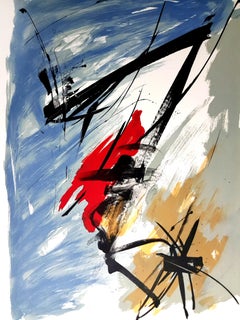
Indoor genre scene
Located in Genève, GE
Work on canvas
Brown carved wooden frame
71 x 91 x 5 cm
Category
Early 20th Century Italian School Geneva - Art
Materials
Oil
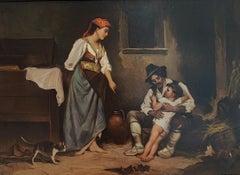
$1,741
Jean Cocteau - The Kiss - Original Lithograph
By Jean Cocteau
Located in Collonge Bellerive, Geneve, CH
Original Lithograph by Jean Cocteau
Title: The Kiss
Signed in the plate
Dimensions: 32 x 25.5 cm
Edition: 200
1959
Publisher: Bibliophiles Du Palais
Unnumbered as issued
Category
1950s Modern Geneva - Art
Materials
Lithograph
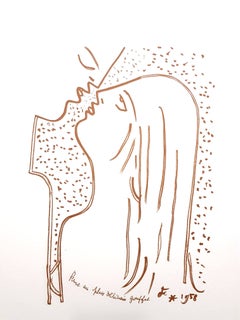
Jenkell - Wrapping Bonbon Red - Sculpture
By Laurence Jenkell
Located in Collonge Bellerive, Geneve, CH
Laurence Jenkell
Wrapping Bonbon Red
Plexiglas Sculpture
I/I
Signed and Numbered
Dimensions: 90 x 33 x 28 cm
Laurence Jenkell lives and works in Vallauris, in the French Alpes-maritimes. Self-taught, she started to create on her own in the middle of the 90s. Her artistic research led her to experiment with various techniques such as inclusion, dripping, firing, casting, etc.
After multiple attempts, she successfully mastered and dominated Plexiglas, obtaining the “wrapping” technique, which will allow her to produce the Candy sculpture...
Category
2010s Geneva - Art
Materials
Plexiglass
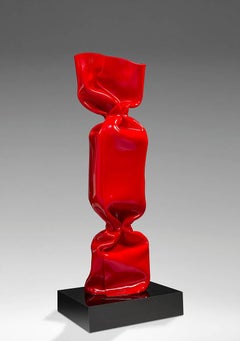
The Gate in the Countryside
Located in Genève, GE
Dimension with frame : 55 x 63.5 x 6.5 cm
The Gate in the Countryside
This work depicts a serene and captivating landscape, featuring a simple yet elegant metal gate at the center of...
Category
Mid-20th Century Impressionist Geneva - Art
Materials
Oil, Canvas
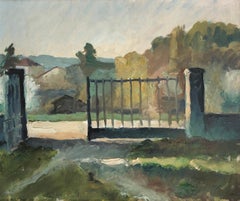
Village of Beton-Bazoche
Located in Genève, GE
Work on canvas
Golden wooden frame
68.5 x 84 x 3 cm
Category
Mid-20th Century Modern Geneva - Art
Materials
Oil
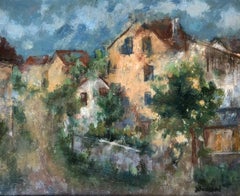
Still life with wicker baskets
Located in Genève, GE
Work on wood
Golden wooden frame
74 x 87 x 5 cm
Category
1970s Geneva - Art
Materials
Oil
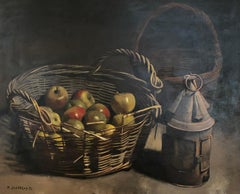
Autumn walk
Located in Genève, GE
Work on cardboard
Beige wooden frame
48 x 40.5 x 3.8 cm
Category
1910s Geneva - Art
Materials
Oil
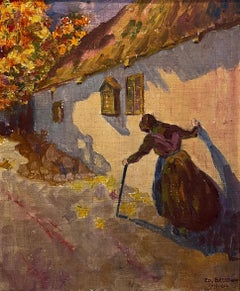
Return from swimming to the beach
By Armand Cacheux
Located in Genève, GE
Work on paper
Light green wooden frame with glass pane
34.6 x 28.5 x 1.7 cm
Category
Mid-20th Century Geneva - Art
Materials
Crayon, Watercolor
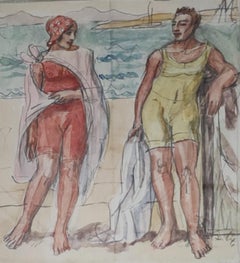
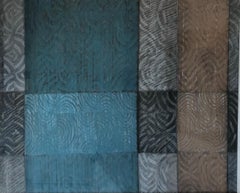
Patchwork
Located in Genève, GE
Work on paper
White wooden frame with glass pane
88 x 105 x 3 cm
Category
1990s Abstract Geneva - Art
Materials
Pastel
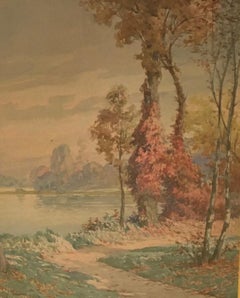
Lakeside in autumn
Located in Genève, GE
Work on paper
White wooden frame with glass pane
73 x 60 x 3 cm
Category
Mid-20th Century Geneva - Art
Materials
Watercolor
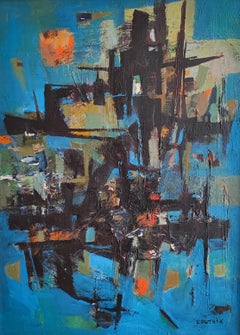
Abstract composition
Located in Genève, GE
Work on canvas
Beige frame
Dimensions with frame : 92 x 71 x 2.5 cm
This abstract work immediately captures attention with its bold interplay of colors and shapes. The vivid blue ba...
Category
Mid-20th Century Abstract Geneva - Art
Materials
Canvas, Oil
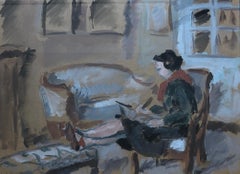
Lady writing
Located in Genève, GE
Work on paper
Wooden frame with glass pane
49.5 x 62 x 2 cm
Category
20th Century Geneva - Art
Materials
Watercolor
$1,032
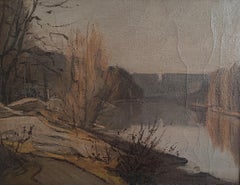
River landscape
By Marius Chambaz
Located in Genève, GE
Work on canvas
Wooden frame and gilded plaster
70 x 86 x 6 cm
Category
1930s Geneva - Art
Materials
Oil
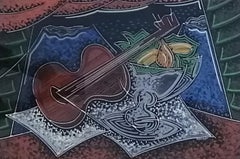
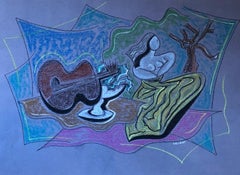
Still life with guitar and bowl of fruit
Located in Genève, GE
Work on paper
Black plastic frame with glass window
Dimension with frame 58 x 72.5 x 3 cm
This bold work presents a reinvented still life, captivating the eye with its expert use of ...
Category
Mid-20th Century Italian School Geneva - Art
Materials
Gouache, Pastel
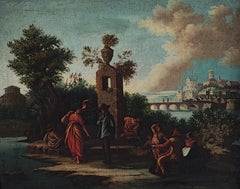
Lively landscape along the Tiber, Italy
Located in Genève, GE
Work on canvas
Golden molded wooden frame
60 x 72.5 x 5.5 cm
Category
Early 19th Century Italian School Geneva - Art
Materials
Oil
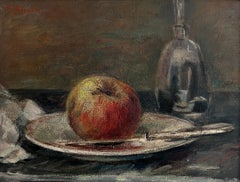
Still life with apple and carafe
Located in Genève, GE
Work on canvas
Beige wooden frame with golden borders
44.5 x 52.5 x 5 cm
Category
Mid-20th Century Modern Geneva - Art
Materials
Oil
Still life with guitar and statue
Located in Genève, GE
Work on paper
Black plastic frame with glass window
48.5 x 60 x 2 cm
Category
Mid-20th Century Italian School Geneva - Art
Materials
Gouache
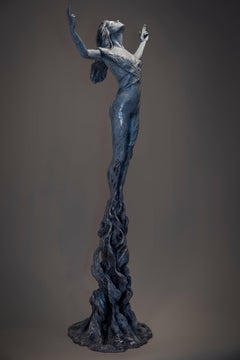
Ian Edwards - Born within Fire - Original Signed Bronze Sculpure
By Ian Edwards
Located in Collonge Bellerive, Geneve, CH
Ian Edwards - Born within Fire - Original Signed Bronze Sculpure
Dimensions: 160 x 60 x 60 cm
Edition of 12
Edwards’ practice expresses the power and determination of human endeav...
Category
2010s Contemporary Geneva - Art
Materials
Bronze
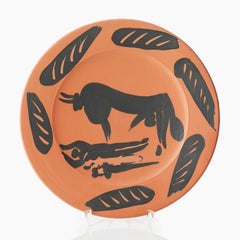
Scène de tauromachie, Picasso, 1950
s, edition, earthenware, terracotta, scene
By Pablo Picasso
Located in Geneva, CH
Scène de tauromachie, Picasso, 1950's, edition, earthenware, terracotta, scene
Scène de tauromachie
Ed.274/500 pcs
1957
Red earthenware clay, eng...
Category
1950s Post-War Geneva - Art
Materials
Earthenware, Terracotta
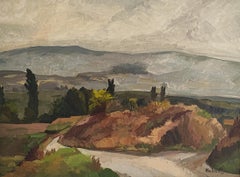
Landscape of Avusy, Geneva
Located in Genève, GE
Work on canvas
Wooden frame
69 x 89.5 x 2.5 cm
Category
1970s Modern Geneva - Art
Materials
Oil
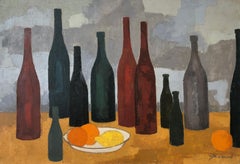
Bottles and cut of oranges and lemon
Located in Genève, GE
Work on canvas
Category
Late 20th Century Modern Geneva - Art
Materials
Oil
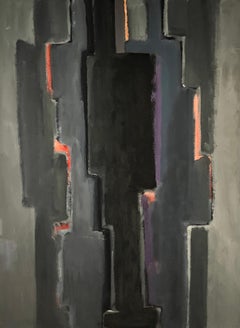
Wear of time 1
Located in Genève, GE
Work on canvas
White wooden frame
52.3 x 41.7 x 2.8 cm
Category
1980s Abstract Geneva - Art
Materials
Oil
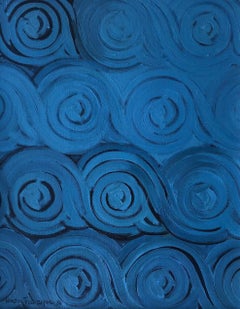
"Présence" Collection - N°1 by Gilbert Pauli - Acrylic on Jute - 110x150 cm
By Gilbert Pauli
Located in Geneva, CH
Born in 1944 in the canton of Fribourg, Gilbert Pauli currently lives in Geneva, where he devotes himself to painting and sculpture, a passion he developed from his childhood. His fa...
Category
21st Century and Contemporary Contemporary Geneva - Art
Materials
Acrylic, Jute
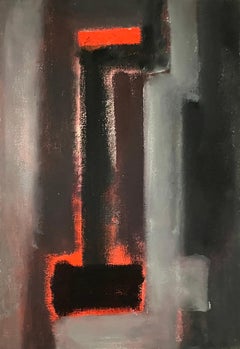
"Présence" Collection - N°12 by Gilbert Pauli - Acrylic on Jute - 100x70 cm
By Gilbert Pauli
Located in Geneva, CH
Born in 1944 in the canton of Fribourg, Gilbert Pauli currently lives in Geneva, where he devotes himself to painting and sculpture, a passion he developed from his childhood. His fa...
Category
21st Century and Contemporary Contemporary Geneva - Art
Materials
Jute, Acrylic
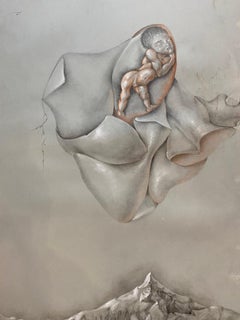
Surrealist composition of José Gerson n°1 - Drawing 67x46 cm
Located in Geneva, CH
Work on paper without frame
Category
1970s Surrealist Geneva - Art
Materials
Carbon Pencil
$240 Sale Price
20% Off
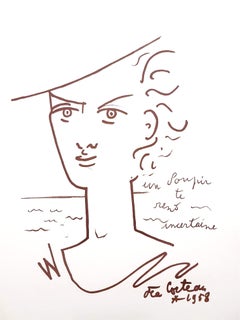
Jean Cocteau - Woman Portrait - Original Lithograph
By Jean Cocteau
Located in Collonge Bellerive, Geneve, CH
Original Lithograph by Jean Cocteau
Title: Woman Portrait
Signed in the plate
Dimensions: 32 x 25.5 cm
Edition: 200
1959
Publisher: Bibliophiles Du Palais
Unnumbered as issued
Category
1950s Modern Geneva - Art
Materials
Lithograph
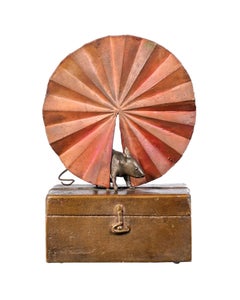
La Diva, Claude Lalanne, Sculpture, Design, Les Lalanne
By Claude Lalanne
Located in Geneva, CH
CLAUDE LALANNE (1925-2019)
La Diva, 1997
Ed. 6/8 pcs
Bronze and copper
22 x 15.5 x 10.5 cm I 8 5/8 x 6 1/8 x 4 1/8 in
Numbered, monogrammed, signed and dated : 6/8, Cl, Lalanne, 97
...
Category
20th Century Surrealist Geneva - Art
Materials
Bronze, Copper
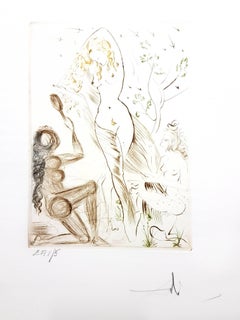
Decameron - Portfolio of 10 Original Signed Engravings by Salvador Dali
By Salvador Dalí
Located in Collonge Bellerive, Geneve, CH
Portfolio of 10 Original Signed Engravings by Salvador Dali
Title: Decameron
Signed in Pencil by Salvador Dali
Dimensions: 45 x 32 cm
Edition EA 1/5
1972
References : Field 72-8 (p. ...
Category
1970s Surrealist Geneva - Art
Materials
Engraving
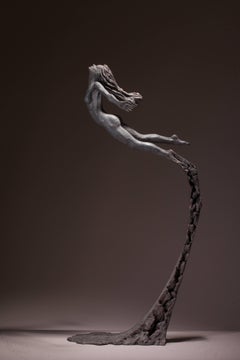
Ian Edwards - Leap Within Faith - Original Signed Bronze Sculpure
By Ian Edwards
Located in Collonge Bellerive, Geneve, CH
Ian Edwards - Leap Within Faith - Original Signed Bronze Sculpure
Dimensions: 170 x 55 x 40 cm
Edition of 12
Edwards’ practice expresses the power and determination of human endea...
Category
2010s Contemporary Geneva - Art
Materials
Bronze
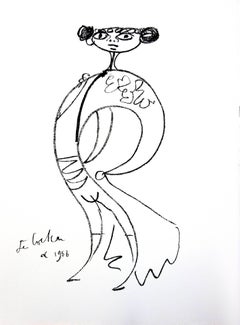
Jean Cocteau - Surrealist Torrero - Original Lithograph
By Jean Cocteau
Located in Collonge Bellerive, Geneve, CH
Original Lithograph by Jean Cocteau
Title: Taureaux
Signed in the plate
Dimensions: 40 x 30 cm
Edition: 200
Luxury print edition from the portfolio of Trinckvel
1965
From the last po...
Category
1960s Modern Geneva - Art
Materials
Lithograph
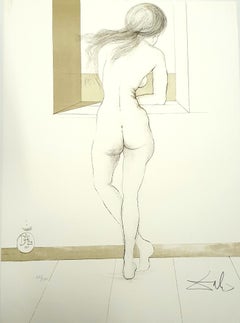
Salvador Dali - Nude at the Window - Original Handsigned Lithograph
By Salvador Dalí
Located in Collonge Bellerive, Geneve, CH
Salvador Dali - Nude at the Window - Original Handsigned Lithograph
Dimensions: 76.5 x 57 cm
1970
Signed in pencil and numbered
Edition : /CXX
References : Field 70-8
Salvador Dali
Salvador Dali was born as the son of a prestigious notary in the small town of Figueras in Northern Spain. His talent as an artist showed at an early age and Salvador Felipe Jacinto Dali received his first drawing lessons when he was ten years old. His art teachers were a then well known Spanish impressionist painter, Ramon Pichot and later an art professor at the Municipal Drawing School. In 1923 his father bought his son his first printing press.
Dali began to study art at the Royal Academy of Art in Madrid. He was expelled twice and never took the final examinations. His opinion was that he was more qualified than those who should have examined him.
In 1928 Dali went to Paris where he met the Spanish painters Pablo Picasso and Joan Miro. He established himself as the principal figure of a group of surrealist artists grouped around Andre Breton, who was something like the theoretical "schoolmaster" of surrealism. Years later Breton turned away from Dali accusing him of support of fascism, excessive self-presentation and financial greediness.
By 1929 Dali had found his personal style that should make him famous the world of the unconscious that is recalled during our dreams. The surrealist theory is based on the theories of the psychologist Dr. Sigmund Freud. Recurring images of burning giraffes and melting watches...
Category
1970s Surrealist Geneva - Art
Materials
Lithograph
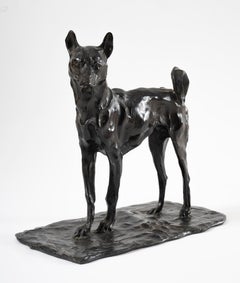
Chien d
Annam, Bugatti, Sculpture, Animal, Design, Bronze, Fine Art
By Rembrandt Bugatti
Located in Geneva, CH
REMBRANDT BUGATTI (1884 - 1916)
Chien d'Annam
A.A Hebrard Foundry
Bronze with brown shaded patina
26 x 29.5 cm x 14.5 cm
Signed, stamped and numbered on the base : R.Bugatti, Cire P...
Category
20th Century Modern Geneva - Art
Materials
Bronze
Jean Cocteau - Olé - Original Lithograph
By Jean Cocteau
Located in Collonge Bellerive, Geneve, CH
Jean Cocteau - Olé - Original Lithograph
1934
Signed and dated in the plate
Numbered in pencil
Edition : /200
Dimensions: 50 x 33 cm
Provenance : Succession Dermit, Cocteau's heir
Category
1930s Modern Geneva - Art
Materials
Lithograph

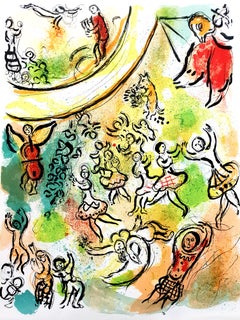
Frontispiece for "Le Plafond de l
Opéra de Paris"
By Marc Chagall
Located in Collonge Bellerive, Geneve, CH
Marc Chagall
Original Lithograph
Frontispiece for the book "Le Plafond de l'Opéra de Paris (The Ceiling of the Paris Opera)" by Jacques Lassaigne (Paris...
Category
1960s Surrealist Geneva - Art
Materials
Lithograph
Domergue - Naked - Original Signed Lithograph
By Jean-Gabriel Domergue
Located in Collonge Bellerive, Geneve, CH
Original Lithograph by Jean-Gabriel Domergue
Title: Naked
Signed
Dimensions: 40 x 31 cm
1956
Edition of 197
This artwork is part of the famous portfolio "La Parisienne"
Jean-Gabrie...
Category
1950s Impressionist Geneva - Art
Materials
Lithograph

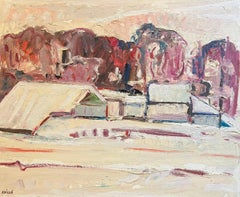
Landscape 139 by Jean Krille - Oil on Canvas board 50x60 cm
By Jean Krille
Located in Geneva, CH
Jean Krillé’s paintings are known for their expressive use of color and dynamic, abstract forms, blending realism with abstraction in his depictions of nature. His landscapes often f...
Category
Late 20th Century Expressionist Geneva - Art
Materials
Canvas, Oil, Cardboard
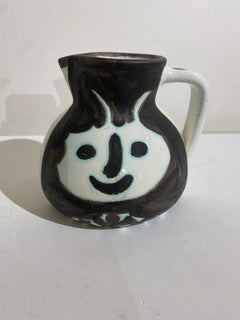
Pichet Têtes, by Picasso, Pitcher, 1950
s, Edition, Black and white, Design
By Pablo Picasso
Located in Geneva, CH
Pichet Têtes, by Picasso, Pitcher, 1950's, Edition, Black and white, Design
Pichet Têtes
Ed. 500 pcs
1956
White earthenware, decoration with oxidized par...
Category
1950s Post-War Geneva - Art
Materials
Ceramic, Earthenware
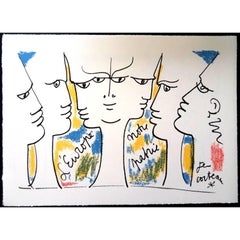
Jean Cocteau - Jean Monnet
s Vision - Original Lithograph
By Jean Cocteau
Located in Collonge Bellerive, Geneve, CH
Original Lithograph by Jean Cocteau
Title: Jean Monnet's Vision
Signed in the stone/printed signature
Dimensions: 33 x 46 cm
Edition: 200
Luxury print edit...
Category
1960s Modern Geneva - Art
Materials
Lithograph
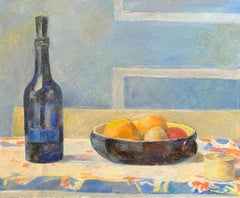
Blue Bottle by Fernand Blondin - Oil on Canvas - 50x61 cm
Located in Geneva, CH
Fernand Blondin (1887-1967) was a Swiss painter and teacher, celebrated for his depictions of idyllic rural life, interiors, female nudes, portraits, still-lifes, religious subjects ...
Category
Mid-20th Century Symbolist Geneva - Art
Materials
Canvas, Oil
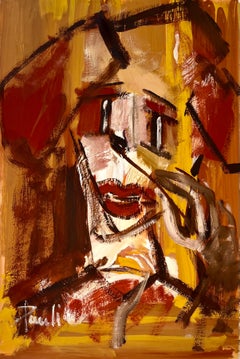
"Curling" by Gilbert Pauli - Gouache on Paper - 48x32 cm
By Gilbert Pauli
Located in Geneva, CH
Born in the canton of Friborg, Gilbert Pauli (1944 - 2020) lived in Geneva, where he devoted himself to painting and sculpture, a passion he developed since childhood. His favorite t...
Category
1990s Contemporary Geneva - Art
Materials
Paper, Gouache
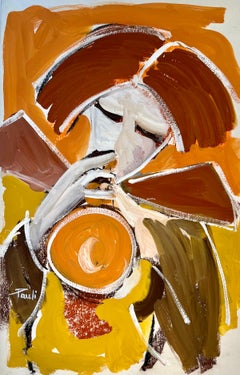
"Brass" by Gilbert Pauli - Gouache on Paper - 48x32 cm
By Gilbert Pauli
Located in Geneva, CH
Born in the canton of Friborg, Gilbert Pauli (1944 - 2020) lived in Geneva, where he devoted himself to painting and sculpture, a passion he developed since childhood. His favorite t...
Category
1990s Modern Geneva - Art
Materials
Paper, Gouache
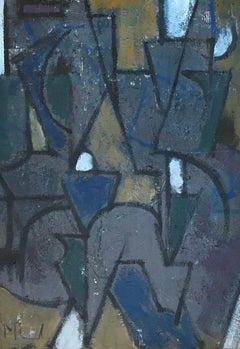
Abstract Composition - Oil on canvas 34x46 cm
Located in Geneva, CH
Work on canvas
Wooden frame with golden patina
56,5 x 43,5 x 3,5 cm
Monogram M.R
Category
Mid-20th Century Abstract Geneva - Art
Materials
Oil
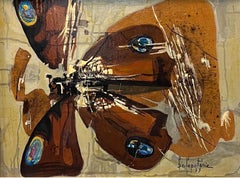
Butterfly by Paul Delapoterie - Oil on wood 49x63 cm
Located in Geneva, CH
Paul Delapoterie, born in 1930, is a painter from Geneva, Switzerland. His work spans various styles, including abstract landscapes, figurative portraits, and surrealist pieces. Know...
Category
Mid-20th Century Modern Geneva - Art
Materials
Wood, Oil
$1,256 Sale Price
20% Off
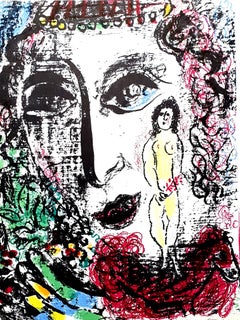
Marc Chagall - Original Lithograph
By Marc Chagall
Located in Collonge Bellerive, Geneve, CH
Marc Chagall
Original Lithograph
1963
Dimensions: 32 x 24 cm
Reference: Chagall Lithographe 1957-1962. VOLUME II.
Condition : Excellent
Marc Chagall (born in 1887)
Marc Chagall was born in Belarus in 1887 and developed an early interest in art. After studying painting, in 1907 he left Russia for Paris, where he lived in an artist colony on the city’s outskirts. Fusing his own personal, dreamlike imagery with hints of the fauvism and cubism popular in France at the time, Chagall created his most lasting work—including I and the Village (1911)—some of which would be featured in the Salon des Indépendants exhibitions. After returning to Vitebsk for a visit in 1914, the outbreak of WWI trapped Chagall in Russia. He returned to France in 1923 but was forced to flee the country and Nazi persecution during WWII. Finding asylum in the U.S., Chagall became involved in set and costume design before returning to France in 1948. In his later years, he experimented with new art forms and was commissioned to produce numerous large-scale works. Chagall died in St.-Paul-de-Vence in 1985.
The Village
Marc Chagall was born in a small Hassidic community on the outskirts of Vitebsk, Belarus, on July 7, 1887. His father was a fishmonger, and his mother ran a small sundries shop in the village. As a child, Chagall attended the Jewish elementary school, where he studied Hebrew and the Bible, before later attending the Russian public school. He began to learn the fundamentals of drawing during this time, but perhaps more importantly, he absorbed the world around him, storing away the imagery and themes that would feature largely in most of his later work.
At age 19 Chagall enrolled at a private, all-Jewish art school and began his formal education in painting, studying briefly with portrait artist Yehuda Pen. However, he left the school after several months, moving to St. Petersburg in 1907 to study at the Imperial Society for the Protection of Fine Arts. The following year, he enrolled at the Svanseva School, studying with set designer Léon Bakst, whose work had been featured in Sergei Diaghilev's Ballets Russes. This early experience would prove important to Chagall’s later career as well.
Despite this formal instruction, and the widespread popularity of realism in Russia at the time, Chagall was already establishing his own personal style, which featured a more dreamlike unreality and the people, places and imagery that were close to his heart. Some examples from this period are his Window Vitebsk (1908) and My Fianceé with Black Gloves (1909), which pictured Bella Rosenfeld, to whom he had recently become engaged.
The Beehive
Despite his romance with Bella, in 1911 an allowance from Russian parliament member and art patron Maxim Binaver enabled Chagall to move to Paris, France. After settling briefly in the Montparnasse neighborhood, Chagall moved further afield to an artist colony known as La Ruche (“The Beehive”), where he began to work side by side with abstract painters such as Amedeo Modigliani and Fernand Léger as well as the avant-garde poet Guillaume Apollinaire. At their urging, and under the influence of the wildly popular fauvism and cubism, Chagall lightened his palette and pushed his style ever further from reality. I and the Village (1911) and Homage to Apollinaire (1912) are among his early Parisian works, widely considered to be his most successful and representative period.
Though his work stood stylistically apart from his cubist contemporaries, from 1912 to 1914 Chagall exhibited several paintings at the annual Salon des Indépendants exhibition, where works by the likes of Juan Gris, Marcel Duchamp and Robert Delaunay were causing a stir in the Paris art world. Chagall’s popularity began to spread beyond La Ruche, and in May 1914 he traveled to Berlin to help organize his first solo exhibition, at Der Sturm Gallery. Chagall remained in the city until the highly acclaimed show opened that June. He then returned to Vitebsk, unaware of the fateful events to come.
War, Peace and Revolution
In August 1914 the outbreak of World War I precluded Chagall’s plans to return to Paris. The conflict did little to stem the flow of his creative output, however, instead merely giving him direct access to the childhood scenes so essential to his work, as seen in paintings such as Jew in Green (1914) and Over Vitebsk (1914). His paintings from this period also occasionally featured images of the war’s impact on the region, as with Wounded Soldier (1914) and Marching (1915). But despite the hardships of life during wartime, this would also prove to be a joyful period for Chagall. In July 1915 he married Bella, and she gave birth to a daughter, Ida, the following year. Their appearance in works such as Birthday (1915), Bella and Ida by the Window (1917) and several of his “Lovers” paintings give a glimpse of the island of domestic bliss that was Chagall’s amidst the chaos.
To avoid military service and stay with his new family, Chagall took a position as a clerk in the Ministry of War Economy in St. Petersburg. While there he began work on his autobiography and also immersed himself in the local art scene, befriending novelist Boris Pasternak, among others. He also exhibited his work in the city and soon gained considerable recognition. That notoriety would prove important in the aftermath of the 1917 Russian Revolution when he was appointed as the Commissar of Fine Arts in Vitebsk. In his new post, Chagall undertook various projects in the region, including the 1919 founding of the Academy of the Arts. Despite these endeavors, differences among his colleagues eventually disillusioned Chagall. In 1920 he relinquished his position and moved his family to Moscow, the post-revolution capital of Russia.
In Moscow, Chagall was soon commissioned to create sets and costumes for various productions at the Moscow State Yiddish Theater...
Category
1960s Surrealist Geneva - Art
Materials
Lithograph
Still Thinking About These?
All Recently ViewedMore Ways To Browse
Woodstock Ny Paintings
Zane Gray
1970s Seascape Oil Painting
A Grimshaw
Adam Barland
Air France Afrique
Alden Bryan
Amanda Acker
Antique Chinese Watercolor Landscape
Anton Genberg
Anton Sipos
Art Contemporary Fuschia
Bauer Canvas Oil
Beach Cottage Paintings
Beatles Lithograph
Ben Avram
Bernard Martin
Black And Tan Terrier