Geneva - Art
to
523
1,409
588
688
227
141
Overall Width
to
Overall Height
to
15
131
2,600
307
20
35
80
92
184
269
418
274
111
118
14
891
443
227
109
108
91
52
48
31
19
17
4
1
1
1,653
1,175
90
1,101
583
439
333
321
307
292
252
208
140
121
111
97
93
87
86
81
78
69
67
1,709
1,423
617
248
234
187
118
82
79
60
1,050
244
229,087
155,592
Item Ships From: Geneva
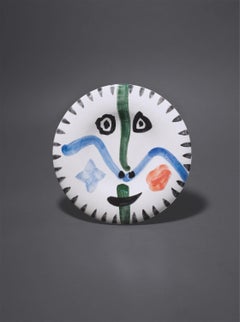
Visage no.111 (A.R. 476), Pablo Picasso, Design, Ceramic, Madoura
By Pablo Picasso
Located in Geneva, CH
PABLO PICASSO
Visage no.111 (A.R. 476), 1963
Ed. 500 pcs
Decor with engobes and enamel under cover black, green, blue and red decor
D. 25.5 cm I D. 10 in
D. 33.2 cm I D. 13 1/8 in (...
Category
20th Century Modern Geneva - Art
Materials
Ceramic, Earthenware

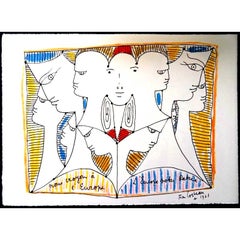
Jean Cocteau - Europe
s Diversity - Original Lithograph
By Jean Cocteau
Located in Collonge Bellerive, Geneve, CH
Original Lithograph by Jean Cocteau
Title: Europe's Diversity
Signed in the plate
Dimensions: 33 x 46 cm
Edition: 200
Luxury print edition from the portfolio of Sciaky
1961
Jean Coc...
Category
1960s Modern Geneva - Art
Materials
Lithograph
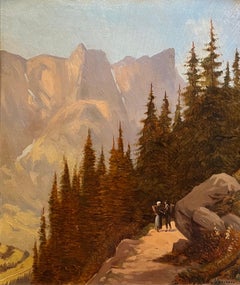
"Pines and Mountains" by Perrenoud - Oil on Masonite - 45.5x38 cm
Located in Geneva, CH
Artwork sold with frame (59.5 x 51 x 5 cm)
No informations about the artist
Category
Mid-20th Century Modern Geneva - Art
Materials
Masonite, Oil
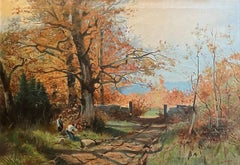
"Autumn Park" by L. Berthet - Oil on Canvas - 67x91 cm
Located in Geneva, CH
Artwork sold with frame (84 x 111 x 7 cm)
Category
20th Century Modern Geneva - Art
Materials
Canvas, Oil
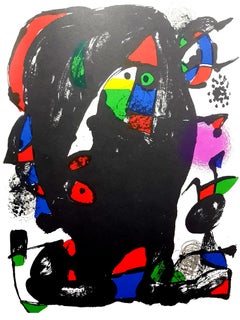
Joan Miro - Original Abstract Lithograph
By Joan Miró
Located in Collonge Bellerive, Geneve, CH
Joan Miro Miro Original Abstract Lithograph
Artist: Joan Miro
Medium: Original lithograph on Rives vellum
Portfolio: Miro Lithographe IV
Year: 1981
Edition: 150
Image Size: 10" x 13"...
Category
1970s Abstract Geneva - Art
Materials
Lithograph
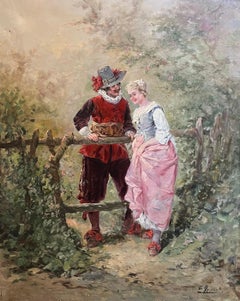
"The Conqueror" by Unknown Artist - Oil on Canvas - 91x71 cm
Located in Geneva, CH
Artwork sold with frame (104 x 85 x 5 cm)
Category
Late 19th Century Impressionist Geneva - Art
Materials
Canvas, Oil
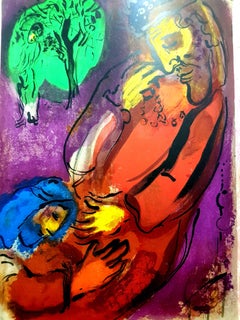
Marc Chagall - Colorful Bible - Original Lithograph
By Marc Chagall
Located in Collonge Bellerive, Geneve, CH
Marc Chagall, Original Lithograph depicting an instant of the Bible.
Technique: Original lithograph in colours
Year: 1956
Sizes: 35,5 x 26 cm / 14" x 10.2" (sheet)
Published by: Édit...
Category
1950s Modern Geneva - Art
Materials
Lithograph
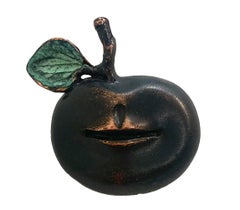
Pomme Bouche, Brooch, Claude Lalanne, French, Design, 1990
s, Bronze, Jewels
By Claude Lalanne
Located in Geneva, CH
Pomme Bouche, Brooch, Claude Lalanne, French, Design, 1990's, Bronze, Jewels
Brooch Pomme Bouche
1990
Edition Arthus-bertrand, Paris
Bronze with a golden...
Category
1990s Art Nouveau Geneva - Art
Materials
Bronze
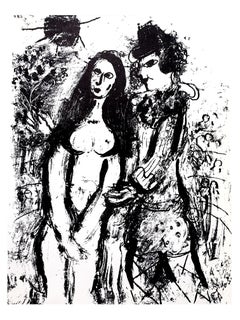
Marc Chagall - Original Lithograph
By Marc Chagall
Located in Collonge Bellerive, Geneve, CH
Marc Chagall
Original Lithograph
1963
Dimensions: 32 x 24 cm
Unsigned, as published in "Chagall Lithographe 1957-1962. VOLUME II"
Edition of several thousand
Condition : Excellent
M...
Category
1960s Surrealist Geneva - Art
Materials
Lithograph
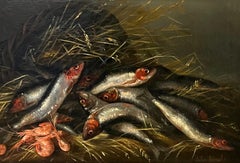
"Fishing Day" by Julie Bonabe - Oil on Canvas - 61x40 cm
Located in Geneva, CH
Artwork sold with frame (55 x 75 x 4 cm)
Category
Late 19th Century Realist Geneva - Art
Materials
Canvas, Oil
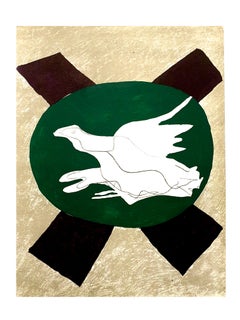
Georges Braque - Birds - Original Lithograph
By Georges Braque
Located in Collonge Bellerive, Geneve, CH
Georges Braque - Birds - Original Lithograph
Published in the deluxe art review, XXe Siecle
1958
Dimensions: 32 x 24 cm
Publisher: G. di San Lazzaro.
Unsigned and unumbered as issued
Category
1950s Modern Geneva - Art
Materials
Lithograph
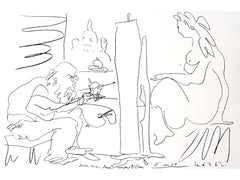
Pablo Picasso - The Painter and His Model - Original Lithograph
By Pablo Picasso
Located in Collonge Bellerive, Geneve, CH
Original Lithograph - Pablo Picasso
Title: The Painter and His Model
This is unsigned and unnumbered, as issued
From the book/portfolio "Regards sur Paris"
Published by André Saure...
Category
1960s Modern Geneva - Art
Materials
Lithograph
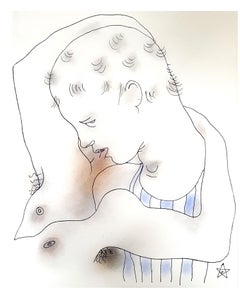
Jean Cocteau - White Book - Original Handcolored Lithograph
By Jean Cocteau
Located in Collonge Bellerive, Geneve, CH
Jean Cocteau
White Book - Autobiography about Cocteau's discovery of his homosexuality. The book was first published anonymously and created a scandal.
Original Handcolored Lithograp...
Category
1930s Modern Geneva - Art
Materials
Lithograph
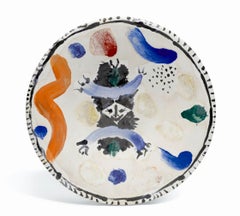
Petit masque central, Pablo Picasso, 1960
s, Unique, Design, Plate, Theater
By Pablo Picasso
Located in Geneva, CH
Petit masque central, Pablo Picasso, 1960's, Unique, Design, Plate, Theater
Petit masque central
Unique work
16.5.63
Painted and partially glazed ceramic
D. 25.4 cm / 9.8 in.
D. 33 ...
Category
1960s Post-War Geneva - Art
Materials
Ceramic, Earthenware
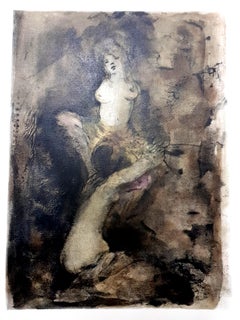
Leonor Fini - Pleasure - Original Lithograph
By Leonor Fini
Located in Collonge Bellerive, Geneve, CH
Leonor Fini - Pleasure - Original Lithograph
The Flowers of Evil
1964
Conditions: excellent
Edition: 500
Dimensions: 46 x 34 cm
Editions: Le Cercle du Livre Précieux, Paris
Unsigne...
Category
1960s Modern Geneva - Art
Materials
Lithograph
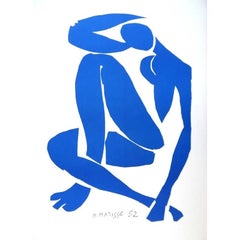
after Henri Matisse, "Sitting Blue Nude"
By Henri Matisse
Located in Collonge Bellerive, Geneve, CH
Lithograph after Henri Matisse - Sitting Blue Nude
Artist : after Henri MATISSE
Edition of 200
76 x 56 cm
With stamp of the Succession Matisse
References : Artvalue - Succession Ma...
Category
1950s Modern Geneva - Art
Materials
Lithograph
Marc Chagall - La Vache Bleue (Blue Cow) - Original Lithograph
By Marc Chagall
Located in Collonge Bellerive, Geneve, CH
Marc Chagall - Original Lithograph
La Vache Bleue (The Blue Cow)
From the unsigned, unnumbered lithograph printed in the literary review XXe Siecle
1967
See Mourlot 488
Dimensions: 32 x 24 cm
Publisher: G. di San Lazzaro.
Marc Chagall (born in 1887)
Marc Chagall was born in Belarus in 1887 and developed an early interest in art. After studying painting, in 1907 he left Russia for Paris, where he lived in an artist colony on the city’s outskirts. Fusing his own personal, dreamlike imagery with hints of the fauvism and cubism popular in France at the time, Chagall created his most lasting work—including I and the Village (1911)—some of which would be featured in the Salon des Indépendants exhibitions. After returning to Vitebsk for a visit in 1914, the outbreak of WWI trapped Chagall in Russia. He returned to France in 1923 but was forced to flee the country and Nazi persecution during WWII. Finding asylum in the U.S., Chagall became involved in set and costume design before returning to France in 1948. In his later years, he experimented with new art forms and was commissioned to produce numerous large-scale works. Chagall died in St.-Paul-de-Vence in 1985.
The Village
Marc Chagall was born in a small Hassidic community on the outskirts of Vitebsk, Belarus, on July 7, 1887. His father was a fishmonger, and his mother ran a small sundries shop in the village. As a child, Chagall attended the Jewish elementary school, where he studied Hebrew and the Bible, before later attending the Russian public school. He began to learn the fundamentals of drawing during this time, but perhaps more importantly, he absorbed the world around him, storing away the imagery and themes that would feature largely in most of his later work.
At age 19 Chagall enrolled at a private, all-Jewish art school and began his formal education in painting, studying briefly with portrait artist Yehuda Pen. However, he left the school after several months, moving to St. Petersburg in 1907 to study at the Imperial Society for the Protection of Fine Arts. The following year, he enrolled at the Svanseva School, studying with set designer Léon Bakst, whose work had been featured in Sergei Diaghilev's Ballets Russes. This early experience would prove important to Chagall’s later career as well.
Despite this formal instruction, and the widespread popularity of realism in Russia at the time, Chagall was already establishing his own personal style, which featured a more dreamlike unreality and the people, places and imagery that were close to his heart. Some examples from this period are his Window Vitebsk (1908) and My Fianceé with Black Gloves (1909), which pictured Bella Rosenfeld, to whom he had recently become engaged.
The Beehive
Despite his romance with Bella, in 1911 an allowance from Russian parliament member and art patron Maxim Binaver enabled Chagall to move to Paris, France. After settling briefly in the Montparnasse neighborhood, Chagall moved further afield to an artist colony known as La Ruche (“The Beehive”), where he began to work side by side with abstract painters such as Amedeo Modigliani and Fernand Léger as well as the avant-garde poet Guillaume Apollinaire. At their urging, and under the influence of the wildly popular fauvism and cubism, Chagall lightened his palette and pushed his style ever further from reality. I and the Village (1911) and Homage to Apollinaire (1912) are among his early Parisian works, widely considered to be his most successful and representative period.
Though his work stood stylistically apart from his cubist contemporaries, from 1912 to 1914 Chagall exhibited several paintings at the annual Salon des Indépendants exhibition, where works by the likes of Juan Gris, Marcel Duchamp and Robert Delaunay were causing a stir in the Paris art world. Chagall’s popularity began to spread beyond La Ruche, and in May 1914 he traveled to Berlin to help organize his first solo exhibition, at Der Sturm Gallery. Chagall remained in the city until the highly acclaimed show opened that June. He then returned to Vitebsk, unaware of the fateful events to come.
War, Peace and Revolution
In August 1914 the outbreak of World War I precluded Chagall’s plans to return to Paris. The conflict did little to stem the flow of his creative output, however, instead merely giving him direct access to the childhood scenes so essential to his work, as seen in paintings such as Jew in Green (1914) and Over Vitebsk (1914). His paintings from this period also occasionally featured images of the war’s impact on the region, as with Wounded Soldier (1914) and Marching (1915). But despite the hardships of life during wartime, this would also prove to be a joyful period for Chagall. In July 1915 he married Bella, and she gave birth to a daughter, Ida, the following year. Their appearance in works such as Birthday (1915), Bella and Ida by the Window (1917) and several of his “Lovers” paintings give a glimpse of the island of domestic bliss that was Chagall’s amidst the chaos.
To avoid military service and stay with his new family, Chagall took a position as a clerk in the Ministry of War Economy in St. Petersburg. While there he began work on his autobiography and also immersed himself in the local art scene, befriending novelist Boris Pasternak, among others. He also exhibited his work in the city and soon gained considerable recognition. That notoriety would prove important in the aftermath of the 1917 Russian Revolution when he was appointed as the Commissar of Fine Arts in Vitebsk. In his new post, Chagall undertook various projects in the region, including the 1919 founding of the Academy of the Arts. Despite these endeavors, differences among his colleagues eventually disillusioned Chagall. In 1920 he relinquished his position and moved his family to Moscow, the post-revolution capital of Russia.
In Moscow, Chagall was soon commissioned to create sets and costumes for various productions at the Moscow State Yiddish Theater, where he would paint a series of murals titled Introduction to the Jewish Theater as well. In 1921, Chagall also found work as a teacher at a school for war orphans. By 1922, however, Chagall found that his art had fallen out of favor, and seeking new horizons he left Russia for good.
Flight
After a brief stay in Berlin, where he unsuccessfully sought to recover the work exhibited at Der Sturm before the war, Chagall moved his family to Paris in September 1923. Shortly after their arrival, he was commissioned by art dealer and publisher Ambroise Vollard to produce a series of etchings for a new edition of Nikolai Gogol's 1842 novel Dead Souls. Two years later Chagall began work on an illustrated edition of Jean de la Fontaine’s Fables, and in 1930 he created etchings for an illustrated edition of the Old Testament, for which he traveled to Palestine to conduct research.
Chagall’s work during this period brought him new success as an artist and enabled him to travel throughout Europe in the 1930s. He also published his autobiography, My Life (1931), and in 1933 received a retrospective at the Kunsthalle in Basel, Switzerland. But at the same time that Chagall’s popularity was spreading, so, too, was the threat of Fascism and Nazism. Singled out during the cultural "cleansing" undertaken by the Nazis in Germany, Chagall’s work was ordered removed from museums throughout the country. Several pieces were subsequently burned, and others were featured in a 1937 exhibition of “degenerate art” held in Munich. Chagall’s angst regarding these troubling events and the persecution of Jews in general can be seen in his 1938 painting White Crucifixion.
With the eruption of World War II, Chagall and his family moved to the Loire region before moving farther south to Marseilles following the invasion of France. They found a more certain refuge when, in 1941, Chagall’s name was added by the director of the Museum of Modern Art (MOMA) in New York City to a list of artists and intellectuals deemed most at risk from the Nazis’ anti-Jewish campaign. Chagall and his family would be among the more than 2,000 who received visas and escaped this way.
Haunted Harbors
Arriving in New York City in June 1941, Chagall discovered that he was already a well-known artist there and, despite a language barrier, soon became a part of the exiled European artist community. The following year he was commissioned by choreographer Léonide Massine to design sets and costumes for the ballet Aleko, based on Alexander Pushkin’s “The Gypsies” and set to the music of Pyotr Ilyich Tchaikovsky.
But even as he settled into the safety of his temporary home, Chagall’s thoughts were frequently consumed by the fate befalling the Jews of Europe and the destruction of Russia, as paintings such as The Yellow Crucifixion...
Category
1960s Surrealist Geneva - Art
Materials
Lithograph
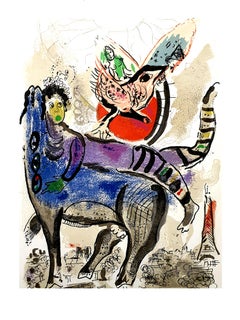
Jean Cocteau - White Book - Original Handcolored Lithograph
By Jean Cocteau
Located in Collonge Bellerive, Geneve, CH
Jean Cocteau
White Book - Autobiography about Cocteau's discovery of his homosexuality. The book was first published anonymously and created a scandal.
Original Handcolored Lithograp...
Category
1930s Modern Geneva - Art
Materials
Lithograph
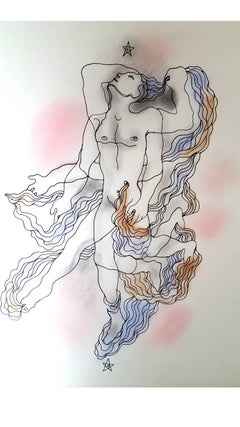
Jean Cocteau - Colorful Portrait - Original Lithograph
By Jean Cocteau
Located in Collonge Bellerive, Geneve, CH
Original Lithograph by Jean Cocteau
Title: Taureaux
Dimensions: 40 x 30 cm
Edition: 200
Luxury print edition from the portfolio of Trinckvel
1965
Jean Cocteau
Writer, artist and fi...
Category
1960s Modern Geneva - Art
Materials
Lithograph
"Geneva Countryside" by J-P George - Oil on cardboard 16x31 cm
Located in Geneva, CH
Oil on cardboard sold with frame
Total size with frame 24x39 cm
Jean-Philippe GEORGE-JULLIARD is an artist born in Switzerland in 1818 and died in 1888. His works have been sold at ...
Category
Mid-19th Century Realist Geneva - Art
Materials
Oil
Gustave Singier - Abstract Fish - Original Lithograph
By Gustave Singier
Located in Collonge Bellerive, Geneve, CH
Gustave Singier - Abstract Fish - Original Lithograph
Conditions: excellent
32 x 24 cm
1955
From XXe siècle, San Lazzaro
Unsigned and unumbered as issued
Category
1950s Contemporary Geneva - Art
Materials
Lithograph
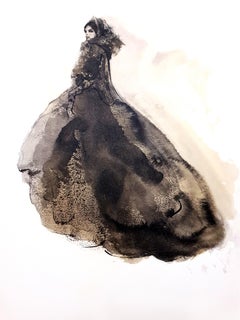
Leonor Fini - Dressed-up - Original Lithograph
By Leonor Fini
Located in Collonge Bellerive, Geneve, CH
Leonor Fini - Dressed-up - Original Lithograph
The Flowers of Evil
1964
Conditions: excellent
Edition: 500
Dimensions: 46 x 34 cm
Editions: Le Cercle du Livre Précieux, Paris
Unsig...
Category
1960s Modern Geneva - Art
Materials
Lithograph
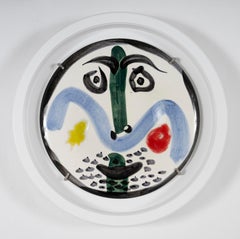
Visage no.130 (A.R. 479), Pablo Picasso, Design, Ceramic, Madoura
By Pablo Picasso
Located in Geneva, CH
PABLO PICASSO
Visage no.130 (A.R. 479), 1963
Ed. 176/500 pcs
White earthenware clay, decoration in engobes and enamel under glaze
D. 25.5 cm I D. 10 in
D. 33.5 cm I D. 13 1/4 in (wi...
Category
20th Century Modern Geneva - Art
Materials
Ceramic, Earthenware
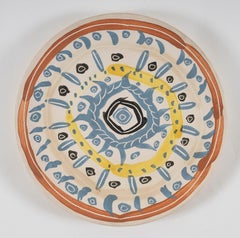
Motif spiralé (A.R. 404), Pablo Picasso, Design, Ceramic, Madoura
By Pablo Picasso
Located in Geneva, CH
PABLO PICASSO (1881-1973)
Motif spiralé (A.R. 404), 1957
Ed. 6/500 pcs
White earthenware clay, decoration in engobes, knife engraved, glazed underside
D. 24.2 cm I D. 9 1/2 in
Stampe...
Category
20th Century Post-War Geneva - Art
Materials
Ceramic, Clay, Earthenware, Faience
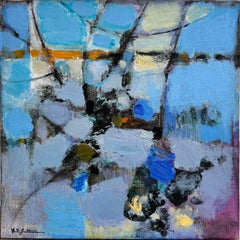
The pond with nine willow trees
By Maurice Élie Sarthou
Located in Genève, GE
Maurice Élie Sarthou (1911–1999) — L’Étang au Neuf Saule, 1961
Oil on canvas
Signed lower left: M. E. Sarthou
Titled and dated on the reverse: “L’Étang au Neuf Saule, 1961”
In this l...
Category
1960s Abstract Geneva - Art
Materials
Canvas, Oil
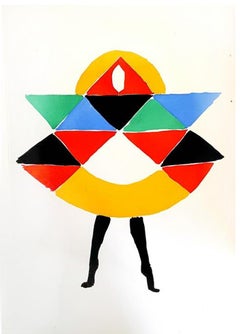
Living Painting - Colour Pochoir
By (after) Sonia Delaunay
Located in Collonge Bellerive, Geneve, CH
Full-page, colour pochoir after costume designs by Sonia Delaunay.
Edition 331/500 copies on Velin Aussedat
Dimensions: 28.5 x 19.5 cm.
From 27 Living Paintings. [Milano, Edizioni d...
Category
1960s Abstract Geometric Geneva - Art
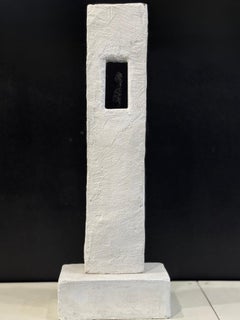
Tektite
By Gilbert Pauli
Located in Geneva, CH
Born in 1944 in the canton of Fribourg, Gilbert Pauli lived in Geneva, where he devoted himself to painting and sculpture, a passion he developed from his childhood. His favorite the...
Category
21st Century and Contemporary Contemporary Geneva - Art
Materials
Iron
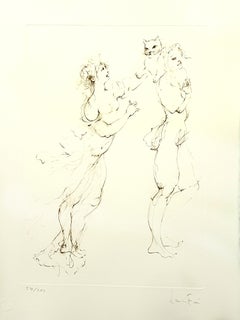
Leonor Fini - Playful Cat - Original Handsigned Lithograph
By Leonor Fini
Located in Collonge Bellerive, Geneve, CH
Leonor Fini - Playful Cat - Original Handsigned Lithograph
Les Elus de la Nuit
1986
Conditions: excellent
Handsigned and Numbered
Edition: 230
Dimensions: 38 x 28 cm
Editions: Trinc...
Category
1980s Modern Geneva - Art
Materials
Lithograph
Joan Miro - Original Abstract Lithograph
By Joan Miró
Located in Collonge Bellerive, Geneve, CH
Joan Miro Miro Original Abstract Lithograph
Artist: Joan Miro
Medium: Original lithograph on Rives vellum
Portfolio: Miro Lithographe IV
...
Category
1970s Abstract Geneva - Art
Materials
Lithograph
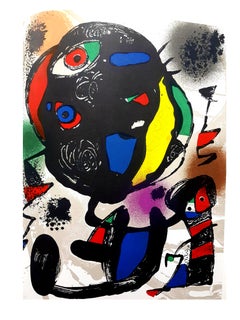
after Jean Dubuffet - Man - Pochoir
By Jean Dubuffet
Located in Collonge Bellerive, Geneve, CH
after Jean Dubuffet - Man - Pochoir
1960
Dimensions: 32 x 25 cm
Edition: G. di San Lazzaro.
From the art review XXème siècle
Unsigned and unumbered as issued
Category
1960s Modern Geneva - Art
Materials
Stencil
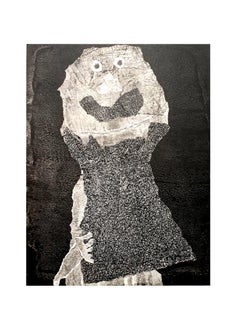
Salvador Dali - The Giant Beliagog
By Salvador Dalí
Located in Collonge Bellerive, Geneve, CH
Salvador Dali - The Giant Beliagog - Original Etching
Dimensions: 45 x 33 cm
Edition: 125
1970
Signed in pencil.
On Arches Vellum
References : Field 70-10 (p. 60-61)
Category
1970s Surrealist Geneva - Art
Materials
Etching
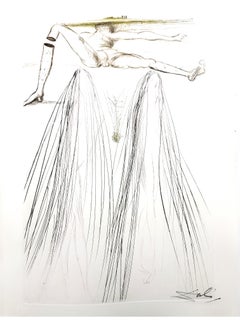
Jean Cocteau - The Elegant Toreador - Original Lithograph
By Jean Cocteau
Located in Collonge Bellerive, Geneve, CH
Original Lithograph by Jean Cocteau
Title: The Elegant Toreador
1961
Dimensions: 28 x 38 cm
Lithograph made for the portfolio "Gitans et Corridas" published by Société de D...
Category
1960s Modern Geneva - Art
Materials
Lithograph
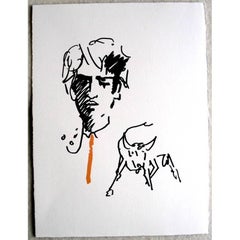
Salvador Dali - Oysters and Nude
By Salvador Dalí
Located in Collonge Bellerive, Geneve, CH
Salvador Dali - Oysters and Nude - Original Etching
Dimensions: 38 x 28 cm
Edition: 390
1967
On Rives Vellum
References : Field 67-4 (p. 32-33) / Michler & Lopsinger 174 to 187.
Category
1960s Surrealist Geneva - Art
Materials
Etching
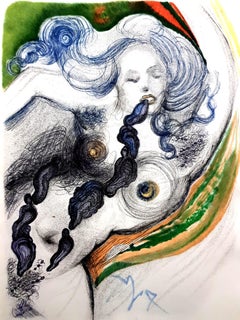
Backlight at Huémoz by Ernest Voegeli - Oil on Canvas 46x55 cm
By Ernest Voegeli
Located in Geneva, CH
Ernest Voegeli is an artist who has found his path through a combination of solid technique and a clear, insightful approach to color, form, and composition. While his work is primar...
Category
Mid-20th Century Modern Geneva - Art
Materials
Canvas, Oil

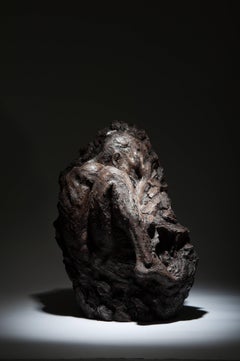
Ian Edwards - Within Unfolding - Original Signed Bronze Sculpure
By Ian Edwards
Located in Collonge Bellerive, Geneve, CH
Ian Edwards - Within Unfolding - Original Signed Bronze Sculpure
Dimensions: 34 x 25 x 20 cm
Edition of 12
Edwards’ practice expresses the power and determination of human endeavo...
Category
2010s Contemporary Geneva - Art
Materials
Bronze
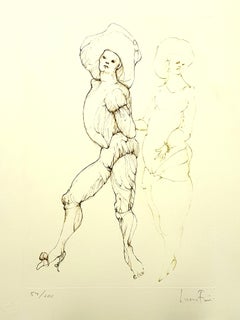
Leonor Fini - Friends - Original Handsigned Lithograph
By Leonor Fini
Located in Collonge Bellerive, Geneve, CH
Leonor Fini - Friends - Original Handsigned Lithograph
Les Elus de la Nuit
1986
Conditions: excellent
Handsigned and Numbered
Edition: 230
Dimensions: 38 x 28 cm
Editions: Trinckvel...
Category
1980s Modern Geneva - Art
Materials
Lithograph
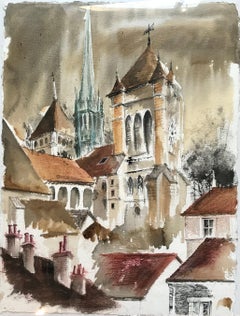
Cathédrale Saint Pierre Genève by Pierre Duc - Watercolor
By Pierre Duc
Located in Geneva, CH
Watercolor paper
Brown wooden frame with plexiglass
85,5 x 65,7 x 2 cm
Category
Late 20th Century Academic Geneva - Art
Materials
Watercolor, Pencil
Marc Chagall - Moses - Original Lithograph
By Marc Chagall
Located in Collonge Bellerive, Geneve, CH
Marc Chagall, Original Lithograph depicting an instant of the Bible.
Technique: Original lithograph in colours
Year: 1956
Sizes: 35,5 x 26 cm / 14" x 10.2" (sheet)
Published by: Éditions de la Revue Verve, Tériade, Paris
Printed by: Atelier Mourlot, Paris
Documentation / References: Mourlot, F., Chagall Lithograph [II] 1957-1962, A. Sauret, Monte Carlo 1963, nos. 234 and 257
Marc Chagall (born in 1887)
Marc Chagall was born in Belarus in 1887 and developed an early interest in art. After studying painting, in 1907 he left Russia for Paris, where he lived in an artist colony on the city’s outskirts. Fusing his own personal, dreamlike imagery with hints of the fauvism and cubism popular in France at the time, Chagall created his most lasting work—including I and the Village (1911)—some of which would be featured in the Salon des Indépendants exhibitions. After returning to Vitebsk for a visit in 1914, the outbreak of WWI trapped Chagall in Russia. He returned to France in 1923 but was forced to flee the country and Nazi persecution during WWII. Finding asylum in the U.S., Chagall became involved in set and costume design before returning to France in 1948. In his later years, he experimented with new art forms and was commissioned to produce numerous large-scale works. Chagall died in St.-Paul-de-Vence in 1985.
The Village
Marc Chagall was born in a small Hassidic community on the outskirts of Vitebsk, Belarus, on July 7, 1887. His father was a fishmonger, and his mother ran a small sundries shop in the village. As a child, Chagall attended the Jewish elementary school, where he studied Hebrew and the Bible, before later attending the Russian public school. He began to learn the fundamentals of drawing during this time, but perhaps more importantly, he absorbed the world around him, storing away the imagery and themes that would feature largely in most of his later work.
At age 19 Chagall enrolled at a private, all-Jewish art school and began his formal education in painting, studying briefly with portrait artist Yehuda Pen. However, he left the school after several months, moving to St. Petersburg in 1907 to study at the Imperial Society for the Protection of Fine Arts. The following year, he enrolled at the Svanseva School, studying with set designer Léon Bakst, whose work had been featured in Sergei Diaghilev's Ballets Russes. This early experience would prove important to Chagall’s later career as well.
Despite this formal instruction, and the widespread popularity of realism in Russia at the time, Chagall was already establishing his own personal style, which featured a more dreamlike unreality and the people, places and imagery that were close to his heart. Some examples from this period are his Window Vitebsk (1908) and My Fianceé with Black Gloves (1909), which pictured Bella Rosenfeld, to whom he had recently become engaged.
The Beehive
Despite his romance with Bella, in 1911 an allowance from Russian parliament member and art patron Maxim Binaver enabled Chagall to move to Paris, France. After settling briefly in the Montparnasse neighborhood, Chagall moved further afield to an artist colony known as La Ruche (“The Beehive”), where he began to work side by side with abstract painters such as Amedeo Modigliani and Fernand Léger as well as the avant-garde poet Guillaume Apollinaire. At their urging, and under the influence of the wildly popular fauvism and cubism, Chagall lightened his palette and pushed his style ever further from reality. I and the Village (1911) and Homage to Apollinaire (1912) are among his early Parisian works, widely considered to be his most successful and representative period.
Though his work stood stylistically apart from his cubist contemporaries, from 1912 to 1914 Chagall exhibited several paintings at the annual Salon des Indépendants exhibition, where works by the likes of Juan Gris, Marcel Duchamp and Robert Delaunay were causing a stir in the Paris art world. Chagall’s popularity began to spread beyond La Ruche, and in May 1914 he traveled to Berlin to help organize his first solo exhibition, at Der Sturm Gallery. Chagall remained in the city until the highly acclaimed show opened that June. He then returned to Vitebsk, unaware of the fateful events to come.
War, Peace and Revolution
In August 1914 the outbreak of World War I precluded Chagall’s plans to return to Paris. The conflict did little to stem the flow of his creative output, however, instead merely giving him direct access to the childhood scenes so essential to his work, as seen in paintings such as Jew in Green (1914) and Over Vitebsk (1914). His paintings from this period also occasionally featured images of the war’s impact on the region, as with Wounded Soldier (1914) and Marching (1915). But despite the hardships of life during wartime, this would also prove to be a joyful period for Chagall. In July 1915 he married Bella, and she gave birth to a daughter, Ida, the following year. Their appearance in works such as Birthday (1915), Bella and Ida by the Window (1917) and several of his “Lovers” paintings give a glimpse of the island of domestic bliss that was Chagall’s amidst the chaos.
To avoid military service and stay with his new family, Chagall took a position as a clerk in the Ministry of War Economy in St. Petersburg. While there he began work on his autobiography and also immersed himself in the local art scene, befriending novelist Boris Pasternak, among others. He also exhibited his work in the city and soon gained considerable recognition. That notoriety would prove important in the aftermath of the 1917 Russian Revolution when he was appointed as the Commissar of Fine Arts in Vitebsk. In his new post, Chagall undertook various projects in the region, including the 1919 founding of the Academy of the Arts. Despite these endeavors, differences among his colleagues eventually disillusioned Chagall. In 1920 he relinquished his position and moved his family to Moscow, the post-revolution capital of Russia.
In Moscow, Chagall was soon commissioned to create sets and costumes for various productions at the Moscow State Yiddish...
Category
1950s Modern Geneva - Art
Materials
Lithograph
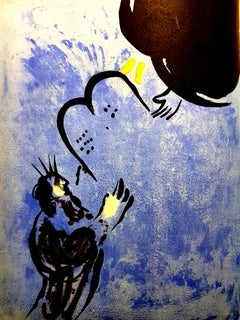
Jean Cocteau - Strength - Original Lithograph
By Jean Cocteau
Located in Collonge Bellerive, Geneve, CH
Original Lithograph by Jean Cocteau
Title: Taureaux
Signed in the plate
Dimensions: 40 x 30 cm
Edition: 200
Luxury print edition from the portfolio of Trinckvel
1965
From the last po...
Category
1960s Modern Geneva - Art
Materials
Lithograph
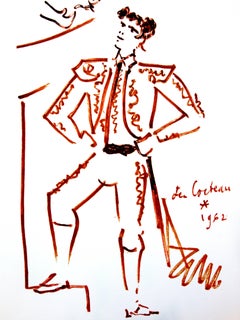
Marc Chagall - Bath-Sheba at the Feet of David - Original Handsigned Etching
By Marc Chagall
Located in Collonge Bellerive, Geneve, CH
Marc Chagall - Bath-Sheba at the Feet of David - Original Handsigned Etching
1958
Printed by Tériade
Dimensions: 54 x 39 cm
Handsigned and numbered
handcolored
Edition: 100
Reference: Cramer 30.
Etching with hand-coloring, circa 1930, initialled in pencil, numbered 75/100 (there were also twenty hors-commerce copies) , published 1958 by Tériade, Paris, on Arches wove paper
Marc Chagall (born in 1887)
Marc Chagall was born in Belarus in 1887 and developed an early interest in art. After studying painting, in 1907 he left Russia for Paris, where he lived in an artist colony on the city’s outskirts. Fusing his own personal, dreamlike imagery with hints of the fauvism and cubism popular in France at the time, Chagall created his most lasting work—including I and the Village (1911)—some of which would be featured in the Salon des Indépendants exhibitions. After returning to Vitebsk for a visit in 1914, the outbreak of WWI trapped Chagall in Russia. He returned to France in 1923 but was forced to flee the country and Nazi persecution during WWII. Finding asylum in the U.S., Chagall became involved in set and costume design before returning to France in 1948. In his later years, he experimented with new art forms and was commissioned to produce numerous large-scale works. Chagall died in St.-Paul-de-Vence in 1985.
The Village
Marc Chagall was born in a small Hassidic community on the outskirts of Vitebsk, Belarus, on July 7, 1887. His father was a fishmonger, and his mother ran a small sundries shop in the village. As a child, Chagall attended the Jewish elementary school, where he studied Hebrew and the Bible, before later attending the Russian public school. He began to learn the fundamentals of drawing during this time, but perhaps more importantly, he absorbed the world around him, storing away the imagery and themes that would feature largely in most of his later work.
At age 19 Chagall enrolled at a private, all-Jewish art school and began his formal education in painting, studying briefly with portrait artist Yehuda Pen. However, he left the school after several months, moving to St. Petersburg in 1907 to study at the Imperial Society for the Protection of Fine Arts. The following year, he enrolled at the Svanseva School, studying with set designer Léon Bakst, whose work had been featured in Sergei Diaghilev's Ballets Russes. This early experience would prove important to Chagall’s later career as well.
Despite this formal instruction, and the widespread popularity of realism in Russia at the time, Chagall was already establishing his own personal style, which featured a more dreamlike unreality and the people, places and imagery that were close to his heart. Some examples from this period are his Window Vitebsk (1908) and My Fianceé with Black Gloves (1909), which pictured Bella Rosenfeld, to whom he had recently become engaged.
The Beehive
Despite his romance with Bella, in 1911 an allowance from Russian parliament member and art patron Maxim Binaver enabled Chagall to move to Paris, France. After settling briefly in the Montparnasse neighborhood, Chagall moved further afield to an artist colony known as La Ruche (“The Beehive”), where he began to work side by side with abstract painters such as Amedeo Modigliani and Fernand Léger as well as the avant-garde poet Guillaume Apollinaire. At their urging, and under the influence of the wildly popular fauvism and cubism, Chagall lightened his palette and pushed his style ever further from reality. I and the Village (1911) and Homage to Apollinaire (1912) are among his early Parisian works, widely considered to be his most successful and representative period.
Though his work stood stylistically apart from his cubist contemporaries, from 1912 to 1914 Chagall exhibited several paintings at the annual Salon des Indépendants exhibition, where works by the likes of Juan Gris, Marcel Duchamp and Robert Delaunay were causing a stir in the Paris art world. Chagall’s popularity began to spread beyond La Ruche, and in May 1914 he traveled to Berlin to help organize his first solo exhibition, at Der Sturm Gallery. Chagall remained in the city until the highly acclaimed show opened that June. He then returned to Vitebsk, unaware of the fateful events to come.
War, Peace and Revolution
In August 1914 the outbreak of World War I precluded Chagall’s plans to return to Paris. The conflict did little to stem the flow of his creative output, however, instead merely giving him direct access to the childhood scenes so essential to his work, as seen in paintings such as Jew in Green (1914) and Over Vitebsk (1914). His paintings from this period also occasionally featured images of the war’s impact on the region, as with Wounded Soldier (1914) and Marching (1915). But despite the hardships of life during wartime, this would also prove to be a joyful period for Chagall. In July 1915 he married Bella, and she gave birth to a daughter, Ida, the following year. Their appearance in works such as Birthday (1915), Bella and Ida by the Window (1917) and several of his “Lovers” paintings give a glimpse of the island of domestic bliss that was Chagall’s amidst the chaos.
To avoid military service and stay with his new family, Chagall took a position as a clerk in the Ministry of War Economy in St. Petersburg. While there he began work on his autobiography and also immersed himself in the local art scene, befriending novelist Boris Pasternak, among others. He also exhibited his work in the city and soon gained considerable recognition. That notoriety would prove important in the aftermath of the 1917 Russian Revolution when he was appointed as the Commissar of Fine Arts in Vitebsk. In his new post, Chagall undertook various projects in the region, including the 1919 founding of the Academy of the Arts. Despite these endeavors, differences among his colleagues eventually disillusioned Chagall. In 1920 he relinquished his position and moved his family to Moscow, the post-revolution capital of Russia.
In Moscow, Chagall was soon commissioned to create sets and costumes for various productions at the Moscow State Yiddish Theater, where he would paint a series of murals titled Introduction to the Jewish Theater as well. In 1921, Chagall also found work as a teacher at a school for war orphans. By 1922, however, Chagall found that his art had fallen out of favor, and seeking new horizons he left Russia for good.
Flight
After a brief stay in Berlin, where he unsuccessfully sought to recover the work exhibited at Der Sturm before the war, Chagall moved his family to Paris in September 1923. Shortly after their arrival, he was commissioned by art dealer and publisher Ambroise Vollard to produce a series of etchings for a new edition of Nikolai Gogol's 1842 novel Dead Souls. Two years later Chagall began work on an illustrated edition of Jean de la Fontaine’s Fables, and in 1930 he created etchings for an illustrated edition of the Old Testament, for which he traveled to Palestine to conduct research.
Chagall’s work during this period brought him new success as an artist and enabled him to travel throughout Europe in the 1930s. He also published his autobiography, My Life (1931), and in 1933 received a retrospective at the Kunsthalle in Basel, Switzerland. But at the same time that Chagall’s popularity was spreading, so, too, was the threat of Fascism and Nazism. Singled out during the cultural "cleansing" undertaken by the Nazis in Germany, Chagall’s work was ordered removed from museums throughout the country. Several pieces were subsequently burned, and others were featured in a 1937 exhibition of “degenerate art” held in Munich. Chagall’s angst regarding these troubling events and the persecution of Jews in general can be seen in his 1938 painting White Crucifixion.
With the eruption of World War II, Chagall and his family moved to the Loire region before moving farther south to Marseilles following the invasion of France. They found a more certain refuge when, in 1941, Chagall’s name was added by the director of the Museum of Modern Art (MOMA) in New York City to a list of artists and intellectuals deemed most at risk from the Nazis’ anti-Jewish campaign. Chagall and his family would be among the more than 2,000 who received visas and escaped this way.
Haunted Harbors
Arriving in New York City in June 1941, Chagall discovered that he was already a well-known artist there and, despite a language barrier, soon became a part of the exiled European artist community. The following year he was commissioned by choreographer Léonide Massine to design sets and costumes for the ballet Aleko, based on Alexander Pushkin’s “The Gypsies” and set to the music of Pyotr Ilyich Tchaikovsky.
But even as he settled into the safety of his temporary home, Chagall’s thoughts were frequently consumed by the fate befalling the Jews of Europe and the destruction of Russia, as paintings such as The Yellow Crucifixion...
Category
1960s Surrealist Geneva - Art
Materials
Etching
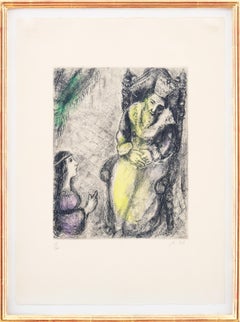
Poisson Chiné (A.R. 170), Pablo Picasso, Design, Ceramic, Madoura
By Pablo Picasso
Located in Geneva, CH
PABLO PICASSO
Poisson chiné (A.R. 170), 1952
Ed. 200 pcs
White earthenware clay, decoration in engobes under partial brushed glaze. Grege, blue, mat green
Stamped on the back : Edi...
Category
Mid-20th Century Modern Geneva - Art
Materials
Ceramic
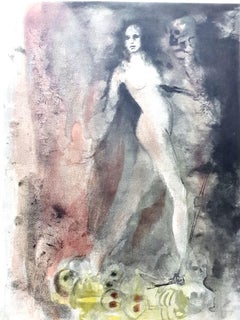
Leonor Fini - Walking on Death - Original Lithograph
By Leonor Fini
Located in Collonge Bellerive, Geneve, CH
Leonor Fini - Walking on Death - Original Lithograph
The Flowers of Evil
1964
Conditions: excellent
Edition: 500
Dimensions: 46 x 34 cm
Editions: Le Cercle du Livre Précieux, Paris...
Category
1960s Modern Geneva - Art
Materials
Lithograph
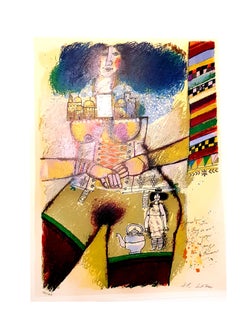
Théo Tobiasse - Jerusalem Inside - Original Lithograph with Collage
By Théo Tobiasse
Located in Collonge Bellerive, Geneve, CH
Théo Tobiasse
Title: Jerusalem roule le long de ma gorge
Signed and Numbered
Dimensions: 57 x 76 cm
Information : Edition of 175
Condition : Excellent
Category
1980s Surrealist Geneva - Art
Materials
Lithograph
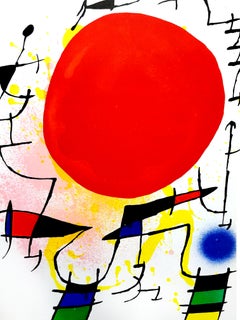
Joan Miro - Abstract Lithograph
By Joan Miró
Located in Collonge Bellerive, Geneve, CH
Joan Miro Miro Abstract Lithograph
Artist: Joan Miro
Plate III from “Miro Lithographs I”
Medium: Lithograph on Rives vellum
Year: 1972
Image Size: 10" x ...
Category
1970s Abstract Geneva - Art
Materials
Lithograph
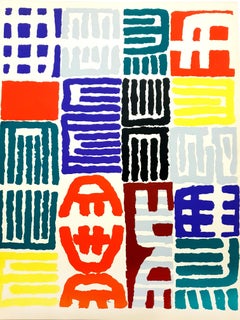
Giuseppe Capogrossi - Stencil
By Guiseppe Capogrossi
Located in Collonge Bellerive, Geneve, CH
Giuseppe Capogrossi - Stencil
1958
Dimensions: 32 x 25 cm
Edition: G. di San Lazzaro.
Giuseppe Capogrossi
B. 1900, ROME; D. 1972, ROME
Giuseppe C...
Category
1950s Abstract Expressionist Geneva - Art
Materials
Lithograph
Venus - Limoges Porcelain Blue and Gold
By (after) Salvador Dali
Located in Collonge Bellerive, Geneve, CH
Limoges porcelain in "Bleu de Sèvres" and gold.
Artist: Salvador Dali
Exclusive limited edition to 2000 copies "Raynaud & Co. Limoges", France, 1968.
"Silhouette de Faust" drawn by...
Category
1960s Modern Geneva - Art
Materials
Porcelain
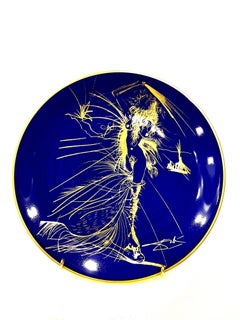
Enrico Baj - Lithograph
By Enrico Baj
Located in Collonge Bellerive, Geneve, CH
Enrico Baj - Original Lithograph
Colorful Abstraction
1962
From the art revue XXe Siecle
Dimensions: 32 x 24
Edition: G. di San Lazzaro.
Unsigned and unumbered as issued
Category
1960s Modern Geneva - Art
Materials
Lithograph
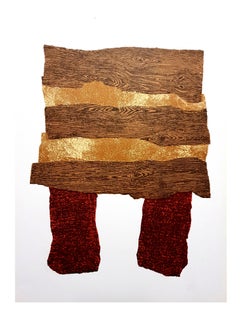
Jean Cocteau - Bull Portrait - Original Lithograph
By Jean Cocteau
Located in Collonge Bellerive, Geneve, CH
Original Lithograph by Jean Cocteau
Title: Taureaux
Signed in the plate
Dimensions: 40 x 30 cm
Edition: 200
Luxury print edition from the portfolio of Trinckvel
1965
Jean Cocteau
W...
Category
1960s Modern Geneva - Art
Materials
Lithograph
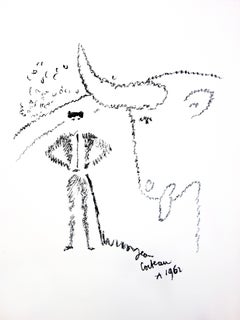
Jean Cocteau - Mother and Son - Original Lithograph
By Jean Cocteau
Located in Collonge Bellerive, Geneve, CH
Original Lithograph by Jean Cocteau
Title: Taureaux
Signed in the plate
Dimensions: 40 x 30 cm
Edition: 200
Luxury print edition from the portfolio of Trinckvel
1965
Jean Cocteau
W...
Category
1960s Modern Geneva - Art
Materials
Lithograph
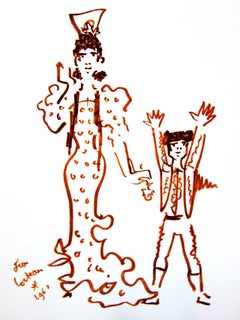
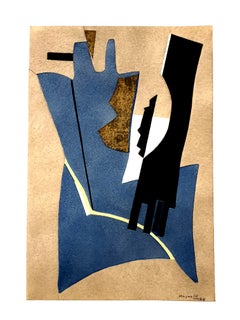
(after) Alberto Magnelli - Composition - Pochoir
By Alberto Magnelli
Located in Collonge Bellerive, Geneve, CH
(after) Alberto Magnelli
Untitled (Cubist Composition) after the collage
Pochoir on paper
Conditions: excellent
32 x 24 cm
1956
Printed by Daniel Jacomet for XXe Siecle (issue number...
Category
1950s Abstract Geometric Geneva - Art
Materials
Stencil
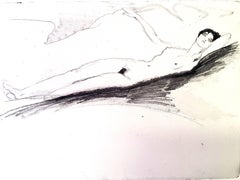
Jean Gabriel Domergue - Lying Naked - Original Etching
By Jean-Gabriel Domergue
Located in Collonge Bellerive, Geneve, CH
Original Etching by Jean-Gabriel Domergue
Dimensions: 33 x 25 cm
1924
Edition of 100
This artwork is part of the famous portfolio The Afternoon of a Faun.
Jean-Gabriel Domergue
Jea...
Category
1920s Impressionist Geneva - Art
Materials
Lithograph
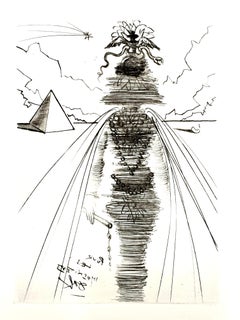
Salvador Dali - Cleopatra - Original Etching
By Salvador Dalí
Located in Collonge Bellerive, Geneve, CH
Salvador Dali - Cleopatra
Original Etching
Dimensions: 28x 18.7cm
1969
Edition: /165
Plate signed
References : Field 68-7-I page 48
Category
1960s Surrealist Geneva - Art
Materials
Etching
Jimmy Nelson - Kaisut Desert, Kenya - Signed
By Jimmy Nelson
Located in Collonge Bellerive, Geneve, CH
Jimmy Nelson
Nyerere, Loingo, Lewangum & Lepokodou Kaisut Desert, Kenya
Chromogenic print on dibond. 80 x 120 cm (107.5 x 147 cm). Signed in felt tip pen as well as detailed notes on the subject and on the edition on an artist's label affixed to the reverse of the mount.
Edition 3/6
Framed.
Accompanied by photographer's certificate, dated 18.09.2015
Literature: Jimmy Nelson, Before they pass away, Kempen 2013, ill. pp. 218
Jimmy Nelson (Sevenoaks, Kent, 1967)
started working as a photographer
in 1987. Having spent 10 years at a
Jesuit boarding school in the North
of England, he set off on his own to
traverse the length of Tibet on foot.
The journey lasted a year and upon his
return his unique visual diary, featuring
revealing images of a previously
inaccessible Tibet, was published to
wide international acclaim.
Soon after, he was commissioned to
cover a variety of culturally newsworthy
themes, ranging from the Russian
involvement in Afghanistan and the
ongoing strife between India and
Pakistan in Kashmir to the beginning of
the war in former Yugoslavia.
In early 1994 he and his Dutch wife
produced Literary Portraits...
Category
2010s Contemporary Geneva - Art

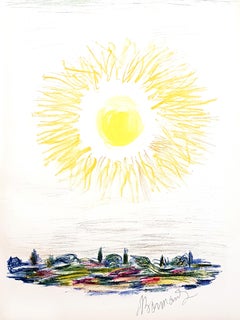
Pierre Bonnard - The Sun - Original Lithograph
By Pierre Bonnard
Located in Collonge Bellerive, Geneve, CH
Pierre Bonnard - The Sun
Original Lithograph
Dimensions: 32 x 24 cm
Verve . Revue Artistique et Litteraire. Vol. V, Nos 17 et 18.
Signed in the plate
Unumbered as issued
Category
1940s Modern Geneva - Art
Materials
Lithograph
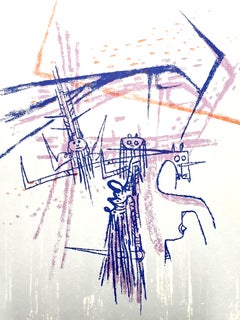
Wifredo Lam - Knight - Original Lithograph
By Wifredo Lam
Located in Collonge Bellerive, Geneve, CH
Wifredo Lam - Knight - Original Lithograph
Published in the deluxe art review, XXe Siecle
1963
Dimensions: 32 x 24 cm
Publisher: G. di San Lazzaro.
Unsigned and unumbered as issued
Category
1960s Post-Modern Geneva - Art
Materials
Lithograph
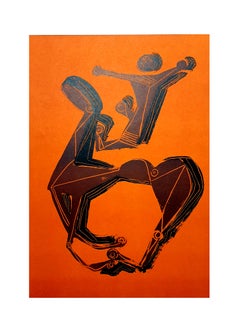
Marino Marini - Rider - Original Lithograph
By Marino Marini
Located in Collonge Bellerive, Geneve, CH
Marino Marini - Rider - Original Lithograph
1955
Dimensions: 32 x 24 cm
From the art review XXe siècle
Unsigned and unumbered as issued
Category
1950s Surrealist Geneva - Art
Materials
Lithograph
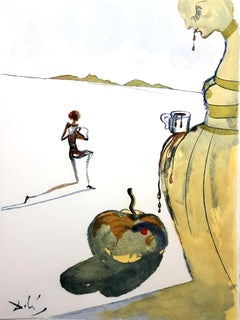
Salvador Dali - Cup of Chocolate
By Salvador Dalí
Located in Collonge Bellerive, Geneve, CH
Salvador Dali - Cup of Chocolate - Original Etching
Dimensions: 38 x 28 cm
Edition: 390
1967
On Rives Vellum
References : Field 67-4 (p. 32-33) / Michler & Lopsinger 174 to 187.
Category
1960s Surrealist Geneva - Art
Materials
Etching
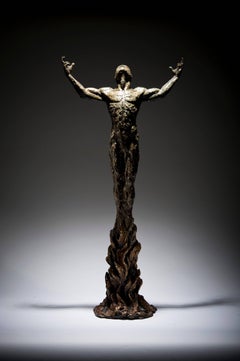
Ian Edwards - Born within Fire - Original Signed Bronze Sculpure
By Ian Edwards
Located in Collonge Bellerive, Geneve, CH
Ian Edwards - Born within Fire - Original Signed Bronze Sculpure
Dimensions: 160 x 60 x 60 cm
Edition of 12
Edwards’ practice expresses the power and determination of human endeav...
Category
2010s Contemporary Geneva - Art
Materials
Bronze
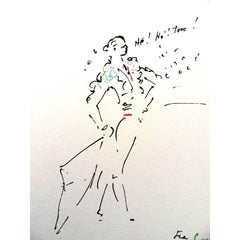
Jean Cocteau - He ! He! Toro - Original Lithograph
By Jean Cocteau
Located in Collonge Bellerive, Geneve, CH
Original Lithograph by Jean Cocteau
Title: He ! He! Toro
1961
Dimensions: 38 x 28 cm
Lithograph made for the portfolio "Gitans et Corridas" published by Société de Diffusion Artistiq...
Category
1960s Modern Geneva - Art
Materials
Lithograph
Antoine Poncet - Unique Signed Granite Sculpture
By Antoine Poncet
Located in Collonge Bellerive, Geneve, CH
Antoine Poncet
Unique Granite Sculpture.
Black Patina
Signed
Dimensions: 62,5 cm L : 35 cm P : 25 cm
Antoine Poncet, Swiss (1928 - )
Born in 1928
Member of the Institute
Grands...
Category
1990s Abstract Geneva - Art
Materials
Granite

Still Thinking About These?
All Recently ViewedMore Ways To Browse
Woodstock Ny Paintings
Zane Gray
1970s Seascape Oil Painting
A Grimshaw
Adam Barland
Air France Afrique
Alden Bryan
Amanda Acker
Antique Chinese Watercolor Landscape
Anton Genberg
Anton Sipos
Art Contemporary Fuschia
Bauer Canvas Oil
Beach Cottage Paintings
Beatles Lithograph
Ben Avram
Bernard Martin
Black And Tan Terrier