Geneva - Figurative Prints
to
23
508
68
93
2
3
Overall Width
to
Overall Height
to
380
174
31
28
20
15
1
107
65
54
43
36
1
659
14
1
27
26
54
128
244
105
38
1
577
96
428
299
277
156
142
113
92
78
50
27
16
16
14
14
14
14
13
13
13
13
414
185
32
19
13
6
3
19,306
17,439
Item Ships From: Geneva
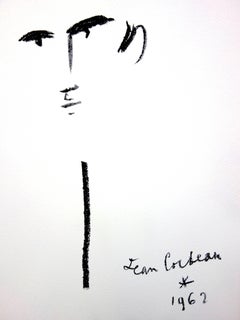
Jean Cocteau - Portrait - Original Lithograph
By Jean Cocteau
Located in Collonge Bellerive, Geneve, CH
Original Lithograph by Jean Cocteau
Title: Taureaux
Signed in the plate
Dimensions: 40 x 30 cm
Edition: 200
Luxury print edition from the portfolio of Trinckvel
1965
Jean Cocteau
W...
Category
1960s Modern Geneva - Figurative Prints
Materials
Lithograph

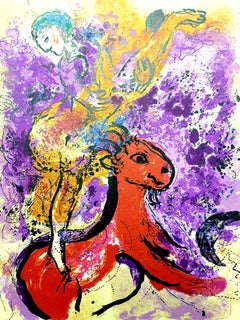
Marc Chagall - The Red Rider - Original Lithograph
By Marc Chagall
Located in Collonge Bellerive, Geneve, CH
Marc Chagall - Original Lithograph
The Red Rider
From the unsigned, unnumbered lithograph printed in the literary review XXe Siecle
1957
See Mourlot 191
Dimensions: 32 x 24 cm
Publisher: G. di San Lazzaro.
Marc Chagall (born in 1887)
Marc Chagall was born in Belarus in 1887 and developed an early interest in art. After studying painting, in 1907 he left Russia for Paris, where he lived in an artist colony on the city’s outskirts. Fusing his own personal, dreamlike imagery with hints of the fauvism and cubism popular in France at the time, Chagall created his most lasting work—including I and the Village (1911)—some of which would be featured in the Salon des Indépendants exhibitions. After returning to Vitebsk for a visit in 1914, the outbreak of WWI trapped Chagall in Russia. He returned to France in 1923 but was forced to flee the country and Nazi persecution during WWII. Finding asylum in the U.S., Chagall became involved in set and costume design before returning to France in 1948. In his later years, he experimented with new art forms and was commissioned to produce numerous large-scale works. Chagall died in St.-Paul-de-Vence in 1985.
The Village
Marc Chagall was born in a small Hassidic community on the outskirts of Vitebsk, Belarus, on July 7, 1887. His father was a fishmonger, and his mother ran a small sundries shop in the village. As a child, Chagall attended the Jewish elementary school, where he studied Hebrew and the Bible, before later attending the Russian public school. He began to learn the fundamentals of drawing during this time, but perhaps more importantly, he absorbed the world around him, storing away the imagery and themes that would feature largely in most of his later work.
At age 19 Chagall enrolled at a private, all-Jewish art school and began his formal education in painting, studying briefly with portrait artist Yehuda Pen. However, he left the school after several months, moving to St. Petersburg in 1907 to study at the Imperial Society for the Protection of Fine Arts. The following year, he enrolled at the Svanseva School, studying with set designer Léon Bakst, whose work had been featured in Sergei Diaghilev's Ballets Russes. This early experience would prove important to Chagall’s later career as well.
Despite this formal instruction, and the widespread popularity of realism in Russia at the time, Chagall was already establishing his own personal style, which featured a more dreamlike unreality and the people, places and imagery that were close to his heart. Some examples from this period are his Window Vitebsk (1908) and My Fianceé with Black Gloves (1909), which pictured Bella Rosenfeld, to whom he had recently become engaged.
The Beehive
Despite his romance with Bella, in 1911 an allowance from Russian parliament member and art patron Maxim Binaver enabled Chagall to move to Paris, France. After settling briefly in the Montparnasse neighborhood, Chagall moved further afield to an artist colony known as La Ruche (“The Beehive”), where he began to work side by side with abstract painters such as Amedeo Modigliani and Fernand Léger as well as the avant-garde poet Guillaume Apollinaire. At their urging, and under the influence of the wildly popular fauvism and cubism, Chagall lightened his palette and pushed his style ever further from reality. I and the Village (1911) and Homage to Apollinaire (1912) are among his early Parisian works, widely considered to be his most successful and representative period.
Though his work stood stylistically apart from his cubist contemporaries, from 1912 to 1914 Chagall exhibited several paintings at the annual Salon des Indépendants exhibition, where works by the likes of Juan Gris, Marcel Duchamp and Robert Delaunay were causing a stir in the Paris art world. Chagall’s popularity began to spread beyond La Ruche, and in May 1914 he traveled to Berlin to help organize his first solo exhibition, at Der Sturm Gallery. Chagall remained in the city until the highly acclaimed show opened that June. He then returned to Vitebsk, unaware of the fateful events to come.
War, Peace and Revolution
In August 1914 the outbreak of World War I precluded Chagall’s plans to return to Paris. The conflict did little to stem the flow of his creative output, however, instead merely giving him direct access to the childhood scenes so essential to his work, as seen in paintings such as Jew in Green (1914) and Over Vitebsk (1914). His paintings from this period also occasionally featured images of the war’s impact on the region, as with Wounded Soldier (1914) and Marching (1915). But despite the hardships of life during wartime, this would also prove to be a joyful period for Chagall. In July 1915 he married Bella, and she gave birth to a daughter, Ida, the following year. Their appearance in works such as Birthday (1915), Bella and Ida by the Window (1917) and several of his “Lovers” paintings give a glimpse of the island of domestic bliss that was Chagall’s amidst the chaos.
To avoid military service and stay with his new family, Chagall took a position as a clerk in the Ministry of War Economy in St. Petersburg. While there he began work on his autobiography and also immersed himself in the local art scene, befriending novelist Boris Pasternak, among others. He also exhibited his work in the city and soon gained considerable recognition. That notoriety would prove important in the aftermath of the 1917 Russian Revolution when he was appointed as the Commissar of Fine Arts in Vitebsk. In his new post, Chagall undertook various projects in the region, including the 1919 founding of the Academy of the Arts. Despite these endeavors, differences among his colleagues eventually disillusioned Chagall. In 1920 he relinquished his position and moved his family to Moscow, the post-revolution capital of Russia.
In Moscow, Chagall was soon commissioned to create sets and costumes for various productions at the Moscow State Yiddish Theater, where he would paint a series of murals titled Introduction to the Jewish Theater as well. In 1921, Chagall also found work as a teacher at a school for war orphans. By 1922, however, Chagall found that his art had fallen out of favor, and seeking new horizons he left Russia for good.
Flight
After a brief stay in Berlin, where he unsuccessfully sought to recover the work exhibited at Der Sturm before the war, Chagall moved his family to Paris in September 1923. Shortly after their arrival, he was commissioned by art dealer and publisher Ambroise Vollard to produce a series of etchings for a new edition of Nikolai Gogol's 1842 novel Dead Souls. Two years later Chagall began work on an illustrated edition of Jean de la Fontaine’s Fables, and in 1930 he created etchings for an illustrated edition of the Old Testament, for which he traveled to Palestine to conduct research.
Chagall’s work during this period brought him new success as an artist and enabled him to travel throughout Europe in the 1930s. He also published his autobiography, My Life (1931), and in 1933 received a retrospective at the Kunsthalle in Basel, Switzerland. But at the same time that Chagall’s popularity was spreading, so, too, was the threat of Fascism and Nazism. Singled out during the cultural "cleansing" undertaken by the Nazis in Germany, Chagall’s work was ordered removed from museums throughout the country. Several pieces were subsequently burned, and others were featured in a 1937 exhibition of “degenerate art” held in Munich. Chagall’s angst regarding these troubling events and the persecution of Jews in general can be seen in his 1938 painting White Crucifixion.
With the eruption of World War II, Chagall and his family moved to the Loire region before moving farther south to Marseilles following the invasion of France. They found a more certain refuge when, in 1941, Chagall’s name was added by the director of the Museum of Modern Art (MOMA) in New York City to a list of artists and intellectuals deemed most at risk from the Nazis’ anti-Jewish campaign. Chagall and his family would be among the more than 2,000 who received visas and escaped this way.
Haunted Harbors
Arriving in New York City in June 1941, Chagall discovered that he was already a well-known artist there and, despite a language barrier, soon became a part of the exiled European artist community. The following year he was commissioned by choreographer Léonide Massine to design sets and costumes for the ballet Aleko, based on Alexander Pushkin’s “The Gypsies” and set to the music of Pyotr Ilyich Tchaikovsky.
But even as he settled into the safety of his temporary home, Chagall’s thoughts were frequently consumed by the fate befalling the Jews of Europe and the destruction of Russia, as paintings such as The Yellow Crucifixion...
Category
1950s Surrealist Geneva - Figurative Prints
Materials
Lithograph
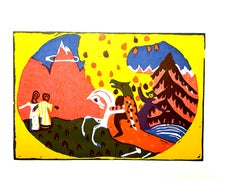
Wassily Kandinsky - Horse Knight - Original Etching
By Wassily Kandinsky
Located in Collonge Bellerive, Geneve, CH
Wassily Kandinsky - Horse Knight - Original Etching
32 x 24 cm
1966
From the art review XXe siècle, San Lazzaro
Unsigned and unumbered as issued
Category
1960s Abstract Geometric Geneva - Figurative Prints
Materials
Etching
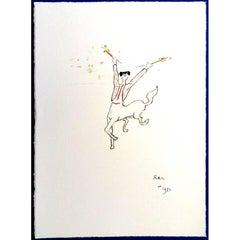
Jean Cocteau - The Picador - Original Lithograph
By Jean Cocteau
Located in Collonge Bellerive, Geneve, CH
Original Lithograph by Jean Cocteau
Title: The Picador
1961
Dimensions: 38 x 28 cm
Printed signature
Lithograph made for the portfolio "Gitans et Corridas" published by Soc...
Category
1960s Modern Geneva - Figurative Prints
Materials
Lithograph
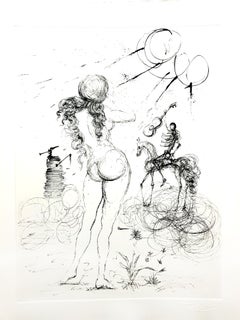
Salvador Dali - Nude at the Window - Original Handsigned Lithograph
By Salvador Dalí
Located in Collonge Bellerive, Geneve, CH
Salvador Dali - Nude at the Window - Original Handsigned Lithograph
Dimensions: 76.5 x 57 cm
1970
Signed in pencil and numbered
Edition : /CXX
References : Field 70-8
Salvador Dali
Salvador Dali was born as the son of a prestigious notary in the small town of Figueras in Northern Spain. His talent as an artist showed at an early age and Salvador Felipe Jacinto Dali received his first drawing lessons when he was ten years old. His art teachers were a then well known Spanish impressionist painter, Ramon Pichot and later an art professor at the Municipal Drawing School. In 1923 his father bought his son his first printing press.
Dali began to study art at the Royal Academy of Art in Madrid. He was expelled twice and never took the final examinations. His opinion was that he was more qualified than those who should have examined him.
In 1928 Dali went to Paris where he met the Spanish painters Pablo Picasso and Joan Miro. He established himself as the principal figure of a group of surrealist artists grouped around Andre Breton, who was something like the theoretical "schoolmaster" of surrealism. Years later Breton turned away from Dali accusing him of support of fascism, excessive self-presentation and financial greediness.
By 1929 Dali had found his personal style that should make him famous the world of the unconscious that is recalled during our dreams. The surrealist theory is based on the theories of the psychologist Dr. Sigmund Freud. Recurring images of burning giraffes and melting watches...
Category
1970s Surrealist Geneva - Figurative Prints
Materials
Lithograph
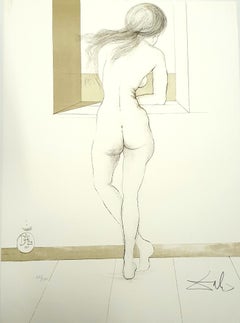
Jean Cocteau - Portrait - Original Lithograph
By Jean Cocteau
Located in Collonge Bellerive, Geneve, CH
Original Lithograph by Jean Cocteau
Title: Taureaux
Signed in the plate
Dimensions: 40 x 30 cm
Edition: 200
Luxury print edition from the portfolio of Trinckvel
1965
Jean Cocteau
W...
Category
1960s Modern Geneva - Figurative Prints
Materials
Lithograph
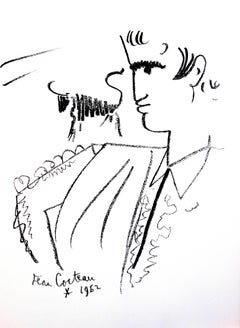
Pablo Picasso - The Painter - Lithograph
By Pablo Picasso
Located in Collonge Bellerive, Geneve, CH
Pablo Picasso - Lithograph
Title: Painter and his Model
From the illustrated book "Regards sur Paris" (Paris: André Sauret, 1962)
Pulled from the folio numbered 85 from the edition o...
Category
1960s Modern Geneva - Figurative Prints
Materials
Lithograph
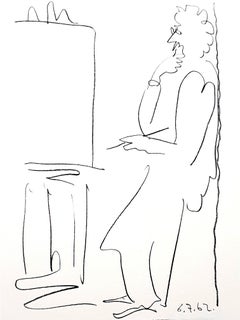
Jean Cocteau - Bulls - Original Lithograph
By Jean Cocteau
Located in Collonge Bellerive, Geneve, CH
Original Lithograph by Jean Cocteau
Title: Taureaux
Signed in the plate
Dimensions: 40 x 30 cm
Edition: 200
Luxury print edition from the portfolio of Trinckvel
1965
Jean Cocteau
W...
Category
1960s Modern Geneva - Figurative Prints
Materials
Lithograph
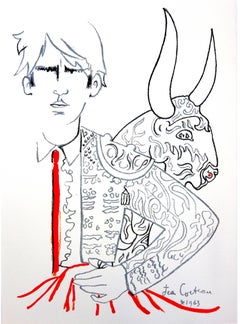
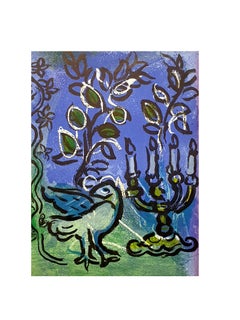
Marc Chagall - The Candlestick - Original Lithograph
By Marc Chagall
Located in Collonge Bellerive, Geneve, CH
The Candlestick, from Jean Leymarie, Vitraux pour Jérusalem (Jerusalem Windows), André Sauret, Monte Carlo, 1962 (see M. 366-72; see C. books ...
Category
1960s Surrealist Geneva - Figurative Prints
Materials
Lithograph
Jean Cocteau - Olé - Original Lithograph
By Jean Cocteau
Located in Collonge Bellerive, Geneve, CH
Jean Cocteau - Olé - Original Lithograph
1934
Signed and dated in the plate
Numbered in pencil
Edition : /200
Dimensions: 50 x 33 cm
Provenance : Succession Dermit, Cocteau's heir
Category
1930s Modern Geneva - Figurative Prints
Materials
Lithograph

Jean Jansem - Original Etching
By Jean Jansem
Located in Collonge Bellerive, Geneve, CH
Jean Jansem - Original Etching
Title: Loneliness
Dimensions: 40 x 30 cm
Edition of 175
Paper: vélin de Rives
1974
Unsigned and unumbered as issued
Category
1970s Modern Geneva - Figurative Prints
Materials
Etching
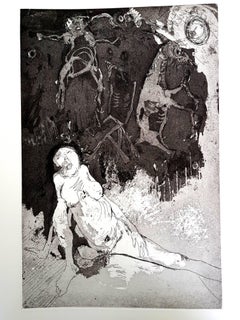
Domergue - Naked - Original Signed Lithograph
By Jean-Gabriel Domergue
Located in Collonge Bellerive, Geneve, CH
Original Lithograph by Jean-Gabriel Domergue
Title: Naked
Signed
Dimensions: 40 x 31 cm
1956
Edition of 197
This artwork is part of the famous portfolio "La Parisienne"
Jean-Gabrie...
Category
1950s Impressionist Geneva - Figurative Prints
Materials
Lithograph

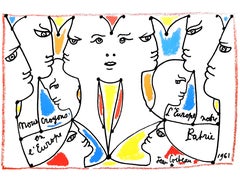
Jean Cocteau (after) - Europe Our Country - Lithograph
By Jean Cocteau
Located in Collonge Bellerive, Geneve, CH
Lithograph after a drawing by Jean Cocteau
Title: Europe Our Country
Signed in the plate
Dimensions: 33 x 46 cm
Edition: 600
Luxury print edition from the portfolio of Sciaky
1961
Category
1960s Post-Modern Geneva - Figurative Prints
Materials
Lithograph
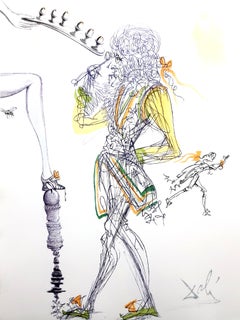
Salvador Dali - The Vision - Original Lithograph
By Salvador Dalí
Located in Collonge Bellerive, Geneve, CH
Salvador Dali - The Vision - Original Lithograph
Joseph FORET, Paris, 1957
PRINTER : Detruit.
SIGNATURE : plate signed by Dali.
LIMITED : 233 copies.
SIZE : 41 x 33 cm
REFERENCES ...
Category
1950s Surrealist Geneva - Figurative Prints
Materials
Lithograph

Salvador Dali - Six Eggs
By Salvador Dalí
Located in Collonge Bellerive, Geneve, CH
Salvador Dali - Six Eggs - Original Etching
Dimensions: 38 x 28 cm
Edition: 390
1967
On Rives Vellum
References : Field 67-4 (p. 32-33) / Michler & Lopsinger 174 to 187.
Category
1960s Surrealist Geneva - Figurative Prints
Materials
Etching
Jean Cocteau - Woman
s Profile - Original Lithograph
By Jean Cocteau
Located in Collonge Bellerive, Geneve, CH
Original Lithograph by Jean Cocteau
Title: Profil
Signed in the plate
Dimensions: 65 x 44 cm
Category
1950s Surrealist Geneva - Figurative Prints
Materials
Lithograph
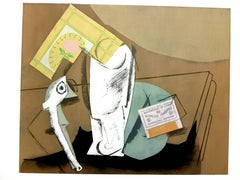
After Pablo Picasso - Cubist Still Life - Pochoir
By (after) Pablo Picasso
Located in Collonge Bellerive, Geneve, CH
After Pablo Picasso - Cubist Still Life - Pochoir
Dimensions: 48.5 x 36 cm
1962
Edition of 260
Daniel Jacomet, LEDA, Editions d'Art
Pablo Picasso
Picasso is not just a man and his ...
Category
1960s Modern Geneva - Figurative Prints
Materials
Lithograph
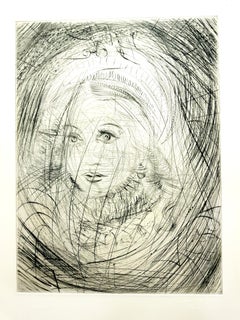
Salvador Dali - Marguerite - Original Etching
By Salvador Dalí
Located in Collonge Bellerive, Geneve, CH
Salvador Dali - Marguerite - Original Etching from "Faust" suite
Stamped signature, as issued
From the standard edition of 731
Edition number 7
Dimensions: 38,5 x 28,5 cm
Edition Arg...
Category
1960s Surrealist Geneva - Figurative Prints
Materials
Etching
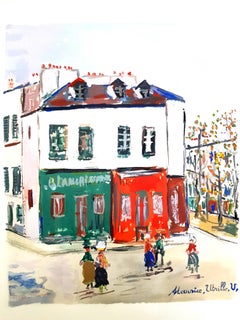
Inspired Village of Montmartre - Pochoir
By (after) Maurice Utrillo
Located in Collonge Bellerive, Geneve, CH
(after) Maurice Utrillo
Inspired Village of Montmartre
Pochoir with printed signature
Edition of 490
Dimensions: 39 x 30 cm
Information : This print was created for the portfolio "Le Village inspiré, Chronique de la bohème de Montmartre (1920-1950) " published by Vertex in 1950
Condition : Excellent
Maurice Utrillo (1883 - 1955)
The French painter Maurice Utrillo was born as the illegitimate son of the painter Suzanne Valladon in Paris on December 26, 1883. He was adopted by the Catalan art critic Miguel Utrillo...
Category
1950s Modern Geneva - Figurative Prints
Materials
Stencil
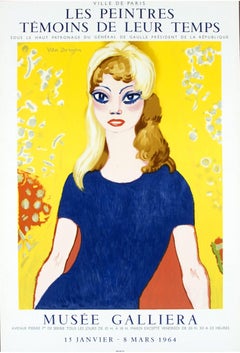
Brigitte Bardot - Exhibition Poster
By (After) Kees van Dongen
Located in Collonge Bellerive, Geneve, CH
Kees Van Dongen - Brigitte Bardot - Vintage Exhibition Poster
Vintage Brigitte Bardot, exhibition poster for "Les Peintres Témoins de leur Temps" at G...
Category
1960s Modern Geneva - Figurative Prints
Materials
Lithograph
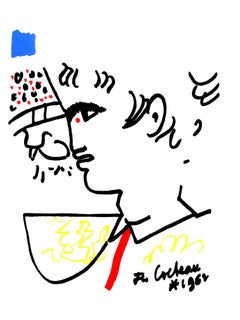
Jean Cocteau - Portrait - Original Lithograph
By Jean Cocteau
Located in Collonge Bellerive, Geneve, CH
Original Lithograph by Jean Cocteau
Title: Taureaux
Signed in the plate
Dimensions: 40 x 30 cm
Edition: 200
Luxury print edition from the portfolio of Trinckvel
1965
Jean Cocteau
W...
Category
1960s Modern Geneva - Figurative Prints
Materials
Lithograph
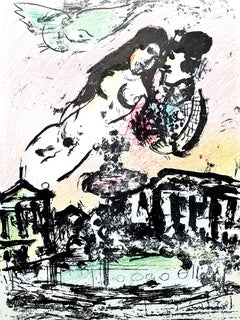
Marc Chagall - Original Lithograph
By Marc Chagall
Located in Collonge Bellerive, Geneve, CH
Marc Chagall
Original Lithograph
1963
Dimensions: 32 x 24 cm
Reference: Chagall Lithographe 1957-1962. VOLUME II.
Condition : Excellent
Marc Chagall (born in 1887)
Marc Chagall was born in Belarus in 1887 and developed an early interest in art. After studying painting, in 1907 he left Russia for Paris, where he lived in an artist colony on the city’s outskirts. Fusing his own personal, dreamlike imagery with hints of the fauvism and cubism popular in France at the time, Chagall created his most lasting work—including I and the Village (1911)—some of which would be featured in the Salon des Indépendants exhibitions. After returning to Vitebsk for a visit in 1914, the outbreak of WWI trapped Chagall in Russia. He returned to France in 1923 but was forced to flee the country and Nazi persecution during WWII. Finding asylum in the U.S., Chagall became involved in set and costume design before returning to France in 1948. In his later years, he experimented with new art forms and was commissioned to produce numerous large-scale works. Chagall died in St.-Paul-de-Vence in 1985.
The Village
Marc Chagall was born in a small Hassidic community on the outskirts of Vitebsk, Belarus, on July 7, 1887. His father was a fishmonger, and his mother ran a small sundries shop in the village. As a child, Chagall attended the Jewish elementary school, where he studied Hebrew and the Bible, before later attending the Russian public school. He began to learn the fundamentals of drawing during this time, but perhaps more importantly, he absorbed the world around him, storing away the imagery and themes that would feature largely in most of his later work.
At age 19 Chagall enrolled at a private, all-Jewish art school and began his formal education in painting, studying briefly with portrait artist Yehuda Pen. However, he left the school after several months, moving to St. Petersburg in 1907 to study at the Imperial Society for the Protection of Fine Arts. The following year, he enrolled at the Svanseva School, studying with set designer Léon Bakst, whose work had been featured in Sergei Diaghilev's Ballets Russes. This early experience would prove important to Chagall’s later career as well.
Despite this formal instruction, and the widespread popularity of realism in Russia at the time, Chagall was already establishing his own personal style, which featured a more dreamlike unreality and the people, places and imagery that were close to his heart. Some examples from this period are his Window Vitebsk (1908) and My Fianceé with Black Gloves (1909), which pictured Bella Rosenfeld, to whom he had recently become engaged.
The Beehive
Despite his romance with Bella, in 1911 an allowance from Russian parliament member and art patron Maxim Binaver enabled Chagall to move to Paris, France. After settling briefly in the Montparnasse neighborhood, Chagall moved further afield to an artist colony known as La Ruche (“The Beehive”), where he began to work side by side with abstract painters such as Amedeo Modigliani and Fernand Léger as well as the avant-garde poet Guillaume Apollinaire. At their urging, and under the influence of the wildly popular fauvism and cubism, Chagall lightened his palette and pushed his style ever further from reality. I and the Village (1911) and Homage to Apollinaire (1912) are among his early Parisian works, widely considered to be his most successful and representative period.
Though his work stood stylistically apart from his cubist contemporaries, from 1912 to 1914 Chagall exhibited several paintings at the annual Salon des Indépendants exhibition, where works by the likes of Juan Gris, Marcel Duchamp and Robert Delaunay were causing a stir in the Paris art world. Chagall’s popularity began to spread beyond La Ruche, and in May 1914 he traveled to Berlin to help organize his first solo exhibition, at Der Sturm Gallery. Chagall remained in the city until the highly acclaimed show opened that June. He then returned to Vitebsk, unaware of the fateful events to come.
War, Peace and Revolution
In August 1914 the outbreak of World War I precluded Chagall’s plans to return to Paris. The conflict did little to stem the flow of his creative output, however, instead merely giving him direct access to the childhood scenes so essential to his work, as seen in paintings such as Jew in Green (1914) and Over Vitebsk (1914). His paintings from this period also occasionally featured images of the war’s impact on the region, as with Wounded Soldier (1914) and Marching (1915). But despite the hardships of life during wartime, this would also prove to be a joyful period for Chagall. In July 1915 he married Bella, and she gave birth to a daughter, Ida, the following year. Their appearance in works such as Birthday (1915), Bella and Ida by the Window (1917) and several of his “Lovers” paintings give a glimpse of the island of domestic bliss that was Chagall’s amidst the chaos.
To avoid military service and stay with his new family, Chagall took a position as a clerk in the Ministry of War Economy in St. Petersburg. While there he began work on his autobiography and also immersed himself in the local art scene, befriending novelist Boris Pasternak, among others. He also exhibited his work in the city and soon gained considerable recognition. That notoriety would prove important in the aftermath of the 1917 Russian Revolution when he was appointed as the Commissar of Fine Arts in Vitebsk. In his new post, Chagall undertook various projects in the region, including the 1919 founding of the Academy of the Arts. Despite these endeavors, differences among his colleagues eventually disillusioned Chagall. In 1920 he relinquished his position and moved his family to Moscow, the post-revolution capital of Russia.
In Moscow, Chagall was soon commissioned to create sets and costumes for various productions at the Moscow State Yiddish Theater...
Category
1960s Surrealist Geneva - Figurative Prints
Materials
Lithograph
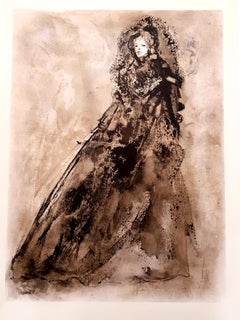
Leonor Fini - Original Lithograph
By Leonor Fini
Located in Collonge Bellerive, Geneve, CH
Leonor Fini - Original Lithograph
The Flowers of Evil
1964
Conditions: excellent
Edition: 500
Dimensions: 46 x 34 cm
Editions: Le Cercle du Livre Précieux, Paris
Unsigned and unumb...
Category
1960s Modern Geneva - Figurative Prints
Materials
Lithograph
Salvador Dali - King Marc
By Salvador Dalí
Located in Collonge Bellerive, Geneve, CH
Salvador Dali - King Marc - Original Etching
Dimensions: 45 x 33 cm
Edition: 125
1970
Signed in pencil.
On Arches Vellum
References : Field 70-10 (p. 60-61)
Category
1970s Surrealist Geneva - Figurative Prints
Materials
Etching
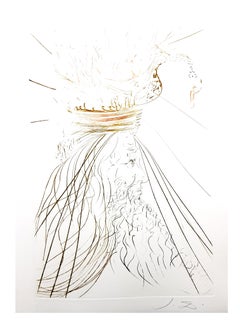
Salvador Dali - Freud with a Snail
s Head - Original Signed Engraving
By Salvador Dalí
Located in Collonge Bellerive, Geneve, CH
Salvador Dali - Freud with a Snail's Head - Original Signed Engraving
Handsigned in pencil and Numbered
Edition: F195/195
- Printer: Atelier Rigal.
- Paper: Rives vellum ; each etch...
Category
1970s Surrealist Geneva - Figurative Prints
Materials
Etching
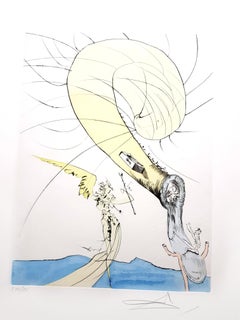
Théo Tobiasse - A train - Original Lithograph
By Théo Tobiasse
Located in Collonge Bellerive, Geneve, CH
Théo Tobiasse
Title: C'est un train portant un parfum d'odalisque
Signed and Numbered
Dimensions: 57 x 76 cm
Information : Edition of 175
Condition : E...
Category
1980s Surrealist Geneva - Figurative Prints
Materials
Lithograph
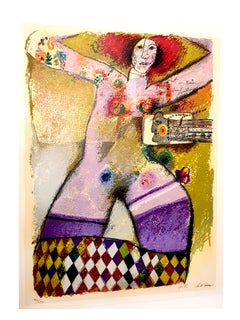
Salvador Dali - La Fontaine Portrait - Handsigned Engraving
By Salvador Dalí
Located in Collonge Bellerive, Geneve, CH
Salvador Dali - La Fontaine Portrait - Handsigned Engraving
1974
Hand signed by Dali
Edition: /250
The dimensions of the image are 22.8 x 15.7 inches on 31 x 23.2 inch paper
Referenc...
Category
1970s Surrealist Geneva - Figurative Prints
Materials
Drypoint, Aquatint
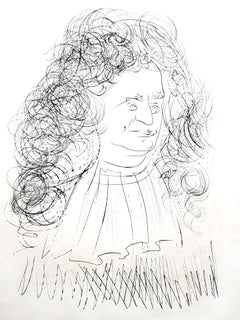
Salvador Dali - Nude, Horse and Death
By Salvador Dalí
Located in Collonge Bellerive, Geneve, CH
Salvador Dali - Nude, Horse and Death - Original Etching
Dimensions: 38 x 28 cm
Edition: 235
1967
embossed signature
On Arches Vellum
References : Field 67-10 (p. 34-35)
Category
1960s Surrealist Geneva - Figurative Prints
Materials
Etching
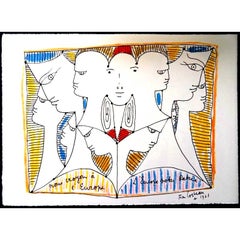
Jean Cocteau - Europe
s Diversity - Original Lithograph
By Jean Cocteau
Located in Collonge Bellerive, Geneve, CH
Original Lithograph by Jean Cocteau
Title: Europe's Diversity
Signed in the plate
Dimensions: 33 x 46 cm
Edition: 200
Luxury print edition from the portfolio of Sciaky
1961
Jean Coc...
Category
1960s Modern Geneva - Figurative Prints
Materials
Lithograph
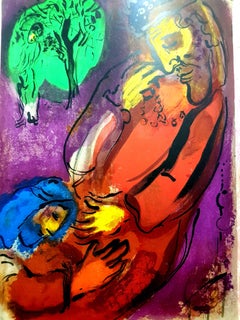
Marc Chagall - Colorful Bible - Original Lithograph
By Marc Chagall
Located in Collonge Bellerive, Geneve, CH
Marc Chagall, Original Lithograph depicting an instant of the Bible.
Technique: Original lithograph in colours
Year: 1956
Sizes: 35,5 x 26 cm / 14" x 10.2" (sheet)
Published by: Édit...
Category
1950s Modern Geneva - Figurative Prints
Materials
Lithograph
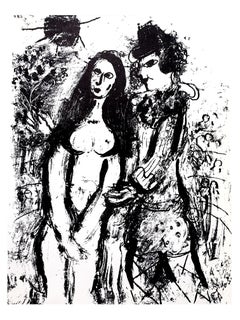
Marc Chagall - Original Lithograph
By Marc Chagall
Located in Collonge Bellerive, Geneve, CH
Marc Chagall
Original Lithograph
1963
Dimensions: 32 x 24 cm
Unsigned, as published in "Chagall Lithographe 1957-1962. VOLUME II"
Edition of several thousand
Condition : Excellent
M...
Category
1960s Surrealist Geneva - Figurative Prints
Materials
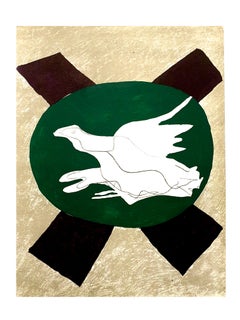
Lithograph
Georges Braque - Birds - Original Lithograph
By Georges Braque
Located in Collonge Bellerive, Geneve, CH
Georges Braque - Birds - Original Lithograph
Published in the deluxe art review, XXe Siecle
1958
Dimensions: 32 x 24 cm
Publisher: G. di San Lazzaro.
Unsigned and unumbered as issued
Category
1950s Modern Geneva - Figurative Prints
Materials
Lithograph
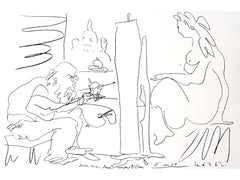
Pablo Picasso - The Painter and His Model - Original Lithograph
By Pablo Picasso
Located in Collonge Bellerive, Geneve, CH
Original Lithograph - Pablo Picasso
Title: The Painter and His Model
This is unsigned and unnumbered, as issued
From the book/portfolio "Regards sur Paris"
Published by André Saure...
Category
1960s Modern Geneva - Figurative Prints
Materials
Lithograph
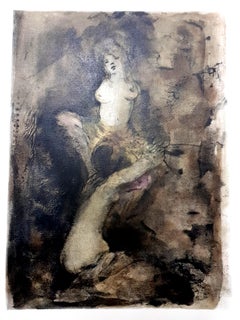
Leonor Fini - Pleasure - Original Lithograph
By Leonor Fini
Located in Collonge Bellerive, Geneve, CH
Leonor Fini - Pleasure - Original Lithograph
The Flowers of Evil
1964
Conditions: excellent
Edition: 500
Dimensions: 46 x 34 cm
Editions: Le Cercle du Livre Précieux, Paris
Unsigne...
Category
1960s Modern Geneva - Figurative Prints
Materials
Lithograph
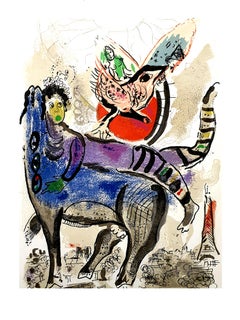
Marc Chagall - La Vache Bleue (Blue Cow) - Original Lithograph
By Marc Chagall
Located in Collonge Bellerive, Geneve, CH
Marc Chagall - Original Lithograph
La Vache Bleue (The Blue Cow)
From the unsigned, unnumbered lithograph printed in the literary review XXe Siecle
1967
See Mourlot 488
Dimensions: 32 x 24 cm
Publisher: G. di San Lazzaro.
Marc Chagall (born in 1887)
Marc Chagall was born in Belarus in 1887 and developed an early interest in art. After studying painting, in 1907 he left Russia for Paris, where he lived in an artist colony on the city’s outskirts. Fusing his own personal, dreamlike imagery with hints of the fauvism and cubism popular in France at the time, Chagall created his most lasting work—including I and the Village (1911)—some of which would be featured in the Salon des Indépendants exhibitions. After returning to Vitebsk for a visit in 1914, the outbreak of WWI trapped Chagall in Russia. He returned to France in 1923 but was forced to flee the country and Nazi persecution during WWII. Finding asylum in the U.S., Chagall became involved in set and costume design before returning to France in 1948. In his later years, he experimented with new art forms and was commissioned to produce numerous large-scale works. Chagall died in St.-Paul-de-Vence in 1985.
The Village
Marc Chagall was born in a small Hassidic community on the outskirts of Vitebsk, Belarus, on July 7, 1887. His father was a fishmonger, and his mother ran a small sundries shop in the village. As a child, Chagall attended the Jewish elementary school, where he studied Hebrew and the Bible, before later attending the Russian public school. He began to learn the fundamentals of drawing during this time, but perhaps more importantly, he absorbed the world around him, storing away the imagery and themes that would feature largely in most of his later work.
At age 19 Chagall enrolled at a private, all-Jewish art school and began his formal education in painting, studying briefly with portrait artist Yehuda Pen. However, he left the school after several months, moving to St. Petersburg in 1907 to study at the Imperial Society for the Protection of Fine Arts. The following year, he enrolled at the Svanseva School, studying with set designer Léon Bakst, whose work had been featured in Sergei Diaghilev's Ballets Russes. This early experience would prove important to Chagall’s later career as well.
Despite this formal instruction, and the widespread popularity of realism in Russia at the time, Chagall was already establishing his own personal style, which featured a more dreamlike unreality and the people, places and imagery that were close to his heart. Some examples from this period are his Window Vitebsk (1908) and My Fianceé with Black Gloves (1909), which pictured Bella Rosenfeld, to whom he had recently become engaged.
The Beehive
Despite his romance with Bella, in 1911 an allowance from Russian parliament member and art patron Maxim Binaver enabled Chagall to move to Paris, France. After settling briefly in the Montparnasse neighborhood, Chagall moved further afield to an artist colony known as La Ruche (“The Beehive”), where he began to work side by side with abstract painters such as Amedeo Modigliani and Fernand Léger as well as the avant-garde poet Guillaume Apollinaire. At their urging, and under the influence of the wildly popular fauvism and cubism, Chagall lightened his palette and pushed his style ever further from reality. I and the Village (1911) and Homage to Apollinaire (1912) are among his early Parisian works, widely considered to be his most successful and representative period.
Though his work stood stylistically apart from his cubist contemporaries, from 1912 to 1914 Chagall exhibited several paintings at the annual Salon des Indépendants exhibition, where works by the likes of Juan Gris, Marcel Duchamp and Robert Delaunay were causing a stir in the Paris art world. Chagall’s popularity began to spread beyond La Ruche, and in May 1914 he traveled to Berlin to help organize his first solo exhibition, at Der Sturm Gallery. Chagall remained in the city until the highly acclaimed show opened that June. He then returned to Vitebsk, unaware of the fateful events to come.
War, Peace and Revolution
In August 1914 the outbreak of World War I precluded Chagall’s plans to return to Paris. The conflict did little to stem the flow of his creative output, however, instead merely giving him direct access to the childhood scenes so essential to his work, as seen in paintings such as Jew in Green (1914) and Over Vitebsk (1914). His paintings from this period also occasionally featured images of the war’s impact on the region, as with Wounded Soldier (1914) and Marching (1915). But despite the hardships of life during wartime, this would also prove to be a joyful period for Chagall. In July 1915 he married Bella, and she gave birth to a daughter, Ida, the following year. Their appearance in works such as Birthday (1915), Bella and Ida by the Window (1917) and several of his “Lovers” paintings give a glimpse of the island of domestic bliss that was Chagall’s amidst the chaos.
To avoid military service and stay with his new family, Chagall took a position as a clerk in the Ministry of War Economy in St. Petersburg. While there he began work on his autobiography and also immersed himself in the local art scene, befriending novelist Boris Pasternak, among others. He also exhibited his work in the city and soon gained considerable recognition. That notoriety would prove important in the aftermath of the 1917 Russian Revolution when he was appointed as the Commissar of Fine Arts in Vitebsk. In his new post, Chagall undertook various projects in the region, including the 1919 founding of the Academy of the Arts. Despite these endeavors, differences among his colleagues eventually disillusioned Chagall. In 1920 he relinquished his position and moved his family to Moscow, the post-revolution capital of Russia.
In Moscow, Chagall was soon commissioned to create sets and costumes for various productions at the Moscow State Yiddish Theater, where he would paint a series of murals titled Introduction to the Jewish Theater as well. In 1921, Chagall also found work as a teacher at a school for war orphans. By 1922, however, Chagall found that his art had fallen out of favor, and seeking new horizons he left Russia for good.
Flight
After a brief stay in Berlin, where he unsuccessfully sought to recover the work exhibited at Der Sturm before the war, Chagall moved his family to Paris in September 1923. Shortly after their arrival, he was commissioned by art dealer and publisher Ambroise Vollard to produce a series of etchings for a new edition of Nikolai Gogol's 1842 novel Dead Souls. Two years later Chagall began work on an illustrated edition of Jean de la Fontaine’s Fables, and in 1930 he created etchings for an illustrated edition of the Old Testament, for which he traveled to Palestine to conduct research.
Chagall’s work during this period brought him new success as an artist and enabled him to travel throughout Europe in the 1930s. He also published his autobiography, My Life (1931), and in 1933 received a retrospective at the Kunsthalle in Basel, Switzerland. But at the same time that Chagall’s popularity was spreading, so, too, was the threat of Fascism and Nazism. Singled out during the cultural "cleansing" undertaken by the Nazis in Germany, Chagall’s work was ordered removed from museums throughout the country. Several pieces were subsequently burned, and others were featured in a 1937 exhibition of “degenerate art” held in Munich. Chagall’s angst regarding these troubling events and the persecution of Jews in general can be seen in his 1938 painting White Crucifixion.
With the eruption of World War II, Chagall and his family moved to the Loire region before moving farther south to Marseilles following the invasion of France. They found a more certain refuge when, in 1941, Chagall’s name was added by the director of the Museum of Modern Art (MOMA) in New York City to a list of artists and intellectuals deemed most at risk from the Nazis’ anti-Jewish campaign. Chagall and his family would be among the more than 2,000 who received visas and escaped this way.
Haunted Harbors
Arriving in New York City in June 1941, Chagall discovered that he was already a well-known artist there and, despite a language barrier, soon became a part of the exiled European artist community. The following year he was commissioned by choreographer Léonide Massine to design sets and costumes for the ballet Aleko, based on Alexander Pushkin’s “The Gypsies” and set to the music of Pyotr Ilyich Tchaikovsky.
But even as he settled into the safety of his temporary home, Chagall’s thoughts were frequently consumed by the fate befalling the Jews of Europe and the destruction of Russia, as paintings such as The Yellow Crucifixion...
Category
1960s Surrealist Geneva - Figurative Prints
Materials
Lithograph
Gustave Singier - Abstract Fish - Original Lithograph
By Gustave Singier
Located in Collonge Bellerive, Geneve, CH
Gustave Singier - Abstract Fish - Original Lithograph
Conditions: excellent
32 x 24 cm
1955
From XXe siècle, San Lazzaro
Unsigned and unumbered as issued
Category
1950s Contemporary Geneva - Figurative Prints
Materials
Lithograph
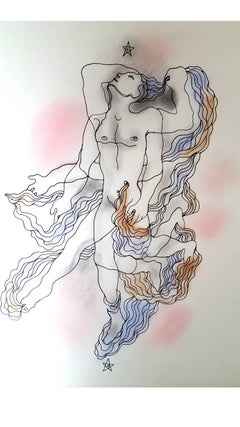
Jean Cocteau - White Book - Original Handcolored Lithograph
By Jean Cocteau
Located in Collonge Bellerive, Geneve, CH
Jean Cocteau
White Book - Autobiography about Cocteau's discovery of his homosexuality. The book was first published anonymously and created a scandal.
Original Handcolored Lithograp...
Category
1930s Modern Geneva - Figurative Prints
Materials
Lithograph
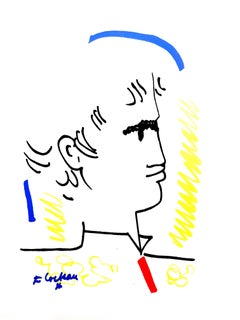
Jean Cocteau - Colorful Portrait - Original Lithograph
By Jean Cocteau
Located in Collonge Bellerive, Geneve, CH
Original Lithograph by Jean Cocteau
Title: Taureaux
Dimensions: 40 x 30 cm
Edition: 200
Luxury print edition from the portfolio of Trinckvel
1965
Jean Cocteau
Writer, artist and fi...
Category
1960s Modern Geneva - Figurative Prints
Materials
Lithograph
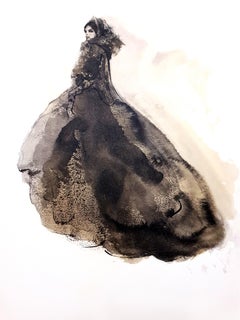
Leonor Fini - Dressed-up - Original Lithograph
By Leonor Fini
Located in Collonge Bellerive, Geneve, CH
Leonor Fini - Dressed-up - Original Lithograph
The Flowers of Evil
1964
Conditions: excellent
Edition: 500
Dimensions: 46 x 34 cm
Editions: Le Cercle du Livre Précieux, Paris
Unsig...
Category
1960s Modern Geneva - Figurative Prints
Materials
Lithograph
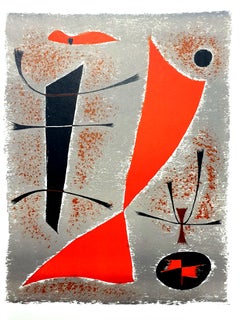
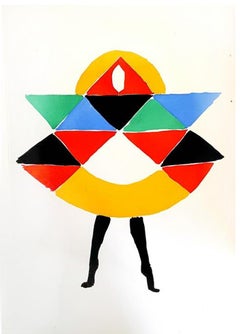
Living Painting - Colour Pochoir
By (after) Sonia Delaunay
Located in Collonge Bellerive, Geneve, CH
Full-page, colour pochoir after costume designs by Sonia Delaunay.
Edition 331/500 copies on Velin Aussedat
Dimensions: 28.5 x 19.5 cm.
From 27 Living Paintings. [Milano, Edizioni d...
Category
1960s Abstract Geometric Geneva - Figurative Prints
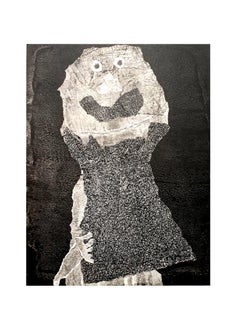
after Jean Dubuffet - Man - Pochoir
By Jean Dubuffet
Located in Collonge Bellerive, Geneve, CH
after Jean Dubuffet - Man - Pochoir
1960
Dimensions: 32 x 25 cm
Edition: G. di San Lazzaro.
From the art review XXème siècle
Unsigned and unumbered as issued
Category
1960s Modern Geneva - Figurative Prints
Materials
Stencil
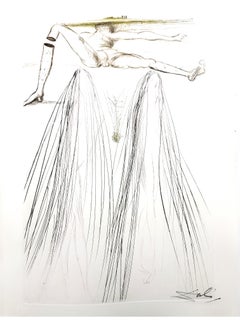
Salvador Dali - The Giant Beliagog
By Salvador Dalí
Located in Collonge Bellerive, Geneve, CH
Salvador Dali - The Giant Beliagog - Original Etching
Dimensions: 45 x 33 cm
Edition: 125
1970
Signed in pencil.
On Arches Vellum
References : Field 70-10 (p. 60-61)
Category
1970s Surrealist Geneva - Figurative Prints
Materials
Etching
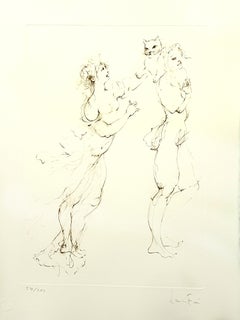
Leonor Fini - Playful Cat - Original Handsigned Lithograph
By Leonor Fini
Located in Collonge Bellerive, Geneve, CH
Leonor Fini - Playful Cat - Original Handsigned Lithograph
Les Elus de la Nuit
1986
Conditions: excellent
Handsigned and Numbered
Edition: 230
Dimensions: 38 x 28 cm
Editions: Trinc...
Category
1980s Modern Geneva - Figurative Prints
Materials
Lithograph
Salvador Dali - Sator from "Faust"
By Salvador Dalí
Located in Collonge Bellerive, Geneve, CH
Salvador Dali - Sator, from "Faust"
Original Etching
Embossed signature
From the edition of 731
Dimensions: 38,5 x 28,5 cm
1969
References : Field 69-1 K / Michler & Lopsinger 305
Salvador Dali
Salvador Dali was born as the son of a prestigious notary in the small town of Figueras in Northern Spain. His talent as an artist showed at an early age and Salvador Felipe Jacinto Dali received his first drawing lessons when he was ten years old. His art teachers were a then well known Spanish impressionist painter, Ramon Pichot and later an art professor at the Municipal Drawing School. In 1923 his father bought his son his first printing press.
Dali began to study art at the Royal Academy of Art in Madrid. He was expelled twice and never took the final examinations. His opinion was that he was more qualified than those who should have examined him.
In 1928 Dali went to Paris where he met the Spanish painters Pablo Picasso and Joan Miro. He established himself as the principal figure of a group of surrealist artists grouped around Andre Breton, who was something like the theoretical "schoolmaster" of surrealism. Years later Breton turned away from Dali accusing him of support of fascism, excessive self-presentation and financial greediness.
By 1929 Dali had found his personal style that should make him famous the world of the unconscious that is recalled during our dreams. The surrealist theory is based on the theories of the psychologist Dr. Sigmund Freud. Recurring images of burning giraffes and melting watches became the artist's surrealist trademarks. His great craftsmanship allowed him to execute his paintings in a nearly photo-realistic style. No wonder that the artist was a great admirer of the Italian Renaissance painter Raphael.
Salvador Dali and Gala.
Meeting Gala was the most important event in the artist's life and decisive for his future career. She was a Russian immigrant and ten years older than Dali. When he met her, she was married to Paul Eluard.
Gala decided to stay with Dali. She became his companion, his muse, his sexual partner, his model in numerous art works and his business manager. For him she was everything. Most of all Gala was a stabilizing factor in his life. And she managed his success in the 1930s with exhibitions in Europe and the United States.
Gala was legally divorced from her husband in 1932. In 1934 Dali and Gala were married in a civil ceremony...
Category
1960s Surrealist Geneva - Figurative Prints
Materials
Etching
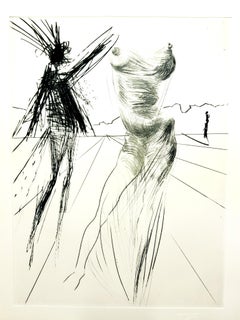
Salvador Dali - Oysters and Nude
By Salvador Dalí
Located in Collonge Bellerive, Geneve, CH
Salvador Dali - Oysters and Nude - Original Etching
Dimensions: 38 x 28 cm
Edition: 390
1967
On Rives Vellum
References : Field 67-4 (p. 32-33) / Michler & Lopsinger 174 to 187.
Category
1960s Surrealist Geneva - Figurative Prints
Materials
Etching
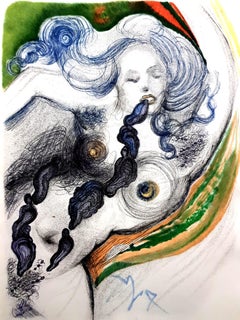
Leonor Fini - Friends - Original Handsigned Lithograph
By Leonor Fini
Located in Collonge Bellerive, Geneve, CH
Leonor Fini - Friends - Original Handsigned Lithograph
Les Elus de la Nuit
1986
Conditions: excellent
Handsigned and Numbered
Edition: 230
Dimensions: 38 x 28 cm
Editions: Trinckvel...
Category
1980s Modern Geneva - Figurative Prints
Materials
Lithograph
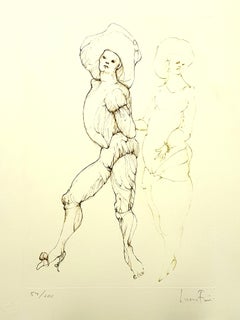
Marc Chagall - Moses - Original Lithograph
By Marc Chagall
Located in Collonge Bellerive, Geneve, CH
Marc Chagall, Original Lithograph depicting an instant of the Bible.
Technique: Original lithograph in colours
Year: 1956
Sizes: 35,5 x 26 cm / 14" x 10.2" (sheet)
Published by: Éditions de la Revue Verve, Tériade, Paris
Printed by: Atelier Mourlot, Paris
Documentation / References: Mourlot, F., Chagall Lithograph [II] 1957-1962, A. Sauret, Monte Carlo 1963, nos. 234 and 257
Marc Chagall (born in 1887)
Marc Chagall was born in Belarus in 1887 and developed an early interest in art. After studying painting, in 1907 he left Russia for Paris, where he lived in an artist colony on the city’s outskirts. Fusing his own personal, dreamlike imagery with hints of the fauvism and cubism popular in France at the time, Chagall created his most lasting work—including I and the Village (1911)—some of which would be featured in the Salon des Indépendants exhibitions. After returning to Vitebsk for a visit in 1914, the outbreak of WWI trapped Chagall in Russia. He returned to France in 1923 but was forced to flee the country and Nazi persecution during WWII. Finding asylum in the U.S., Chagall became involved in set and costume design before returning to France in 1948. In his later years, he experimented with new art forms and was commissioned to produce numerous large-scale works. Chagall died in St.-Paul-de-Vence in 1985.
The Village
Marc Chagall was born in a small Hassidic community on the outskirts of Vitebsk, Belarus, on July 7, 1887. His father was a fishmonger, and his mother ran a small sundries shop in the village. As a child, Chagall attended the Jewish elementary school, where he studied Hebrew and the Bible, before later attending the Russian public school. He began to learn the fundamentals of drawing during this time, but perhaps more importantly, he absorbed the world around him, storing away the imagery and themes that would feature largely in most of his later work.
At age 19 Chagall enrolled at a private, all-Jewish art school and began his formal education in painting, studying briefly with portrait artist Yehuda Pen. However, he left the school after several months, moving to St. Petersburg in 1907 to study at the Imperial Society for the Protection of Fine Arts. The following year, he enrolled at the Svanseva School, studying with set designer Léon Bakst, whose work had been featured in Sergei Diaghilev's Ballets Russes. This early experience would prove important to Chagall’s later career as well.
Despite this formal instruction, and the widespread popularity of realism in Russia at the time, Chagall was already establishing his own personal style, which featured a more dreamlike unreality and the people, places and imagery that were close to his heart. Some examples from this period are his Window Vitebsk (1908) and My Fianceé with Black Gloves (1909), which pictured Bella Rosenfeld, to whom he had recently become engaged.
The Beehive
Despite his romance with Bella, in 1911 an allowance from Russian parliament member and art patron Maxim Binaver enabled Chagall to move to Paris, France. After settling briefly in the Montparnasse neighborhood, Chagall moved further afield to an artist colony known as La Ruche (“The Beehive”), where he began to work side by side with abstract painters such as Amedeo Modigliani and Fernand Léger as well as the avant-garde poet Guillaume Apollinaire. At their urging, and under the influence of the wildly popular fauvism and cubism, Chagall lightened his palette and pushed his style ever further from reality. I and the Village (1911) and Homage to Apollinaire (1912) are among his early Parisian works, widely considered to be his most successful and representative period.
Though his work stood stylistically apart from his cubist contemporaries, from 1912 to 1914 Chagall exhibited several paintings at the annual Salon des Indépendants exhibition, where works by the likes of Juan Gris, Marcel Duchamp and Robert Delaunay were causing a stir in the Paris art world. Chagall’s popularity began to spread beyond La Ruche, and in May 1914 he traveled to Berlin to help organize his first solo exhibition, at Der Sturm Gallery. Chagall remained in the city until the highly acclaimed show opened that June. He then returned to Vitebsk, unaware of the fateful events to come.
War, Peace and Revolution
In August 1914 the outbreak of World War I precluded Chagall’s plans to return to Paris. The conflict did little to stem the flow of his creative output, however, instead merely giving him direct access to the childhood scenes so essential to his work, as seen in paintings such as Jew in Green (1914) and Over Vitebsk (1914). His paintings from this period also occasionally featured images of the war’s impact on the region, as with Wounded Soldier (1914) and Marching (1915). But despite the hardships of life during wartime, this would also prove to be a joyful period for Chagall. In July 1915 he married Bella, and she gave birth to a daughter, Ida, the following year. Their appearance in works such as Birthday (1915), Bella and Ida by the Window (1917) and several of his “Lovers” paintings give a glimpse of the island of domestic bliss that was Chagall’s amidst the chaos.
To avoid military service and stay with his new family, Chagall took a position as a clerk in the Ministry of War Economy in St. Petersburg. While there he began work on his autobiography and also immersed himself in the local art scene, befriending novelist Boris Pasternak, among others. He also exhibited his work in the city and soon gained considerable recognition. That notoriety would prove important in the aftermath of the 1917 Russian Revolution when he was appointed as the Commissar of Fine Arts in Vitebsk. In his new post, Chagall undertook various projects in the region, including the 1919 founding of the Academy of the Arts. Despite these endeavors, differences among his colleagues eventually disillusioned Chagall. In 1920 he relinquished his position and moved his family to Moscow, the post-revolution capital of Russia.
In Moscow, Chagall was soon commissioned to create sets and costumes for various productions at the Moscow State Yiddish...
Category
1950s Modern Geneva - Figurative Prints
Materials
Lithograph
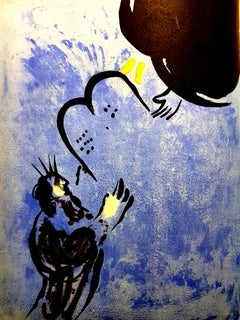
Pablo Picasso (after) Helene Chez Archimede - Wood Engraving
By (after) Pablo Picasso
Located in Collonge Bellerive, Geneve, CH
Pablo Picasso (after)
Helene Chez Archimede
Medium: engraved on wood by Georges Aubert
Dimensions: 44 x 33 cm
Portfolio: Helen Chez Archimede
Year: 1955
Edition: 240 (Here it is on...
Category
1950s Cubist Geneva - Figurative Prints
Materials
Lithograph
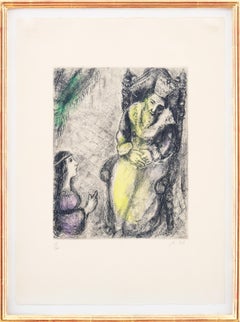
Marc Chagall - Bath-Sheba at the Feet of David - Original Handsigned Etching
By Marc Chagall
Located in Collonge Bellerive, Geneve, CH
Marc Chagall - Bath-Sheba at the Feet of David - Original Handsigned Etching
1958
Printed by Tériade
Dimensions: 54 x 39 cm
Handsigned and numbered
handcolored
Edition: 100
Reference: Cramer 30.
Etching with hand-coloring, circa 1930, initialled in pencil, numbered 75/100 (there were also twenty hors-commerce copies) , published 1958 by Tériade, Paris, on Arches wove paper
Marc Chagall (born in 1887)
Marc Chagall was born in Belarus in 1887 and developed an early interest in art. After studying painting, in 1907 he left Russia for Paris, where he lived in an artist colony on the city’s outskirts. Fusing his own personal, dreamlike imagery with hints of the fauvism and cubism popular in France at the time, Chagall created his most lasting work—including I and the Village (1911)—some of which would be featured in the Salon des Indépendants exhibitions. After returning to Vitebsk for a visit in 1914, the outbreak of WWI trapped Chagall in Russia. He returned to France in 1923 but was forced to flee the country and Nazi persecution during WWII. Finding asylum in the U.S., Chagall became involved in set and costume design before returning to France in 1948. In his later years, he experimented with new art forms and was commissioned to produce numerous large-scale works. Chagall died in St.-Paul-de-Vence in 1985.
The Village
Marc Chagall was born in a small Hassidic community on the outskirts of Vitebsk, Belarus, on July 7, 1887. His father was a fishmonger, and his mother ran a small sundries shop in the village. As a child, Chagall attended the Jewish elementary school, where he studied Hebrew and the Bible, before later attending the Russian public school. He began to learn the fundamentals of drawing during this time, but perhaps more importantly, he absorbed the world around him, storing away the imagery and themes that would feature largely in most of his later work.
At age 19 Chagall enrolled at a private, all-Jewish art school and began his formal education in painting, studying briefly with portrait artist Yehuda Pen. However, he left the school after several months, moving to St. Petersburg in 1907 to study at the Imperial Society for the Protection of Fine Arts. The following year, he enrolled at the Svanseva School, studying with set designer Léon Bakst, whose work had been featured in Sergei Diaghilev's Ballets Russes. This early experience would prove important to Chagall’s later career as well.
Despite this formal instruction, and the widespread popularity of realism in Russia at the time, Chagall was already establishing his own personal style, which featured a more dreamlike unreality and the people, places and imagery that were close to his heart. Some examples from this period are his Window Vitebsk (1908) and My Fianceé with Black Gloves (1909), which pictured Bella Rosenfeld, to whom he had recently become engaged.
The Beehive
Despite his romance with Bella, in 1911 an allowance from Russian parliament member and art patron Maxim Binaver enabled Chagall to move to Paris, France. After settling briefly in the Montparnasse neighborhood, Chagall moved further afield to an artist colony known as La Ruche (“The Beehive”), where he began to work side by side with abstract painters such as Amedeo Modigliani and Fernand Léger as well as the avant-garde poet Guillaume Apollinaire. At their urging, and under the influence of the wildly popular fauvism and cubism, Chagall lightened his palette and pushed his style ever further from reality. I and the Village (1911) and Homage to Apollinaire (1912) are among his early Parisian works, widely considered to be his most successful and representative period.
Though his work stood stylistically apart from his cubist contemporaries, from 1912 to 1914 Chagall exhibited several paintings at the annual Salon des Indépendants exhibition, where works by the likes of Juan Gris, Marcel Duchamp and Robert Delaunay were causing a stir in the Paris art world. Chagall’s popularity began to spread beyond La Ruche, and in May 1914 he traveled to Berlin to help organize his first solo exhibition, at Der Sturm Gallery. Chagall remained in the city until the highly acclaimed show opened that June. He then returned to Vitebsk, unaware of the fateful events to come.
War, Peace and Revolution
In August 1914 the outbreak of World War I precluded Chagall’s plans to return to Paris. The conflict did little to stem the flow of his creative output, however, instead merely giving him direct access to the childhood scenes so essential to his work, as seen in paintings such as Jew in Green (1914) and Over Vitebsk (1914). His paintings from this period also occasionally featured images of the war’s impact on the region, as with Wounded Soldier (1914) and Marching (1915). But despite the hardships of life during wartime, this would also prove to be a joyful period for Chagall. In July 1915 he married Bella, and she gave birth to a daughter, Ida, the following year. Their appearance in works such as Birthday (1915), Bella and Ida by the Window (1917) and several of his “Lovers” paintings give a glimpse of the island of domestic bliss that was Chagall’s amidst the chaos.
To avoid military service and stay with his new family, Chagall took a position as a clerk in the Ministry of War Economy in St. Petersburg. While there he began work on his autobiography and also immersed himself in the local art scene, befriending novelist Boris Pasternak, among others. He also exhibited his work in the city and soon gained considerable recognition. That notoriety would prove important in the aftermath of the 1917 Russian Revolution when he was appointed as the Commissar of Fine Arts in Vitebsk. In his new post, Chagall undertook various projects in the region, including the 1919 founding of the Academy of the Arts. Despite these endeavors, differences among his colleagues eventually disillusioned Chagall. In 1920 he relinquished his position and moved his family to Moscow, the post-revolution capital of Russia.
In Moscow, Chagall was soon commissioned to create sets and costumes for various productions at the Moscow State Yiddish Theater, where he would paint a series of murals titled Introduction to the Jewish Theater as well. In 1921, Chagall also found work as a teacher at a school for war orphans. By 1922, however, Chagall found that his art had fallen out of favor, and seeking new horizons he left Russia for good.
Flight
After a brief stay in Berlin, where he unsuccessfully sought to recover the work exhibited at Der Sturm before the war, Chagall moved his family to Paris in September 1923. Shortly after their arrival, he was commissioned by art dealer and publisher Ambroise Vollard to produce a series of etchings for a new edition of Nikolai Gogol's 1842 novel Dead Souls. Two years later Chagall began work on an illustrated edition of Jean de la Fontaine’s Fables, and in 1930 he created etchings for an illustrated edition of the Old Testament, for which he traveled to Palestine to conduct research.
Chagall’s work during this period brought him new success as an artist and enabled him to travel throughout Europe in the 1930s. He also published his autobiography, My Life (1931), and in 1933 received a retrospective at the Kunsthalle in Basel, Switzerland. But at the same time that Chagall’s popularity was spreading, so, too, was the threat of Fascism and Nazism. Singled out during the cultural "cleansing" undertaken by the Nazis in Germany, Chagall’s work was ordered removed from museums throughout the country. Several pieces were subsequently burned, and others were featured in a 1937 exhibition of “degenerate art” held in Munich. Chagall’s angst regarding these troubling events and the persecution of Jews in general can be seen in his 1938 painting White Crucifixion.
With the eruption of World War II, Chagall and his family moved to the Loire region before moving farther south to Marseilles following the invasion of France. They found a more certain refuge when, in 1941, Chagall’s name was added by the director of the Museum of Modern Art (MOMA) in New York City to a list of artists and intellectuals deemed most at risk from the Nazis’ anti-Jewish campaign. Chagall and his family would be among the more than 2,000 who received visas and escaped this way.
Haunted Harbors
Arriving in New York City in June 1941, Chagall discovered that he was already a well-known artist there and, despite a language barrier, soon became a part of the exiled European artist community. The following year he was commissioned by choreographer Léonide Massine to design sets and costumes for the ballet Aleko, based on Alexander Pushkin’s “The Gypsies” and set to the music of Pyotr Ilyich Tchaikovsky.
But even as he settled into the safety of his temporary home, Chagall’s thoughts were frequently consumed by the fate befalling the Jews of Europe and the destruction of Russia, as paintings such as The Yellow Crucifixion...
Category
1960s Surrealist Geneva - Figurative Prints
Materials
Etching
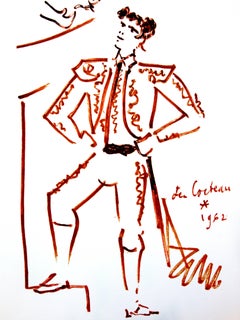
Jean Cocteau - Strength - Original Lithograph
By Jean Cocteau
Located in Collonge Bellerive, Geneve, CH
Original Lithograph by Jean Cocteau
Title: Taureaux
Signed in the plate
Dimensions: 40 x 30 cm
Edition: 200
Luxury print edition from the portfolio of Trinckvel
1965
From the last po...
Category
1960s Modern Geneva - Figurative Prints
Materials
Lithograph
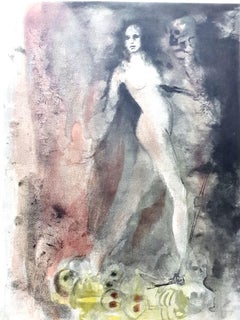
Leonor Fini - Walking on Death - Original Lithograph
By Leonor Fini
Located in Collonge Bellerive, Geneve, CH
Leonor Fini - Walking on Death - Original Lithograph
The Flowers of Evil
1964
Conditions: excellent
Edition: 500
Dimensions: 46 x 34 cm
Editions: Le Cercle du Livre Précieux, Paris...
Category
1960s Modern Geneva - Figurative Prints
Materials
Lithograph
Théo Tobiasse - Jerusalem Inside - Original Lithograph with Collage
By Théo Tobiasse
Located in Collonge Bellerive, Geneve, CH
Théo Tobiasse
Title: Jerusalem roule le long de ma gorge
Signed and Numbered
Dimensions: 57 x 76 cm
Information : Edition of 175
Condition : Excellent
Category
1980s Surrealist Geneva - Figurative Prints
Materials
Lithograph
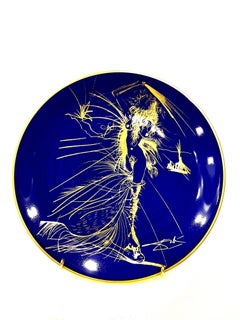
Venus - Limoges Porcelain Blue and Gold
By (after) Salvador Dali
Located in Collonge Bellerive, Geneve, CH
Limoges porcelain in "Bleu de Sèvres" and gold.
Artist: Salvador Dali
Exclusive limited edition to 2000 copies "Raynaud & Co. Limoges", France, 1968.
"Silhouette de Faust" drawn by...
Category
1960s Modern Geneva - Figurative Prints
Materials
Porcelain
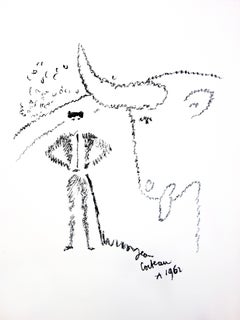
Jean Cocteau - Bull Portrait - Original Lithograph
By Jean Cocteau
Located in Collonge Bellerive, Geneve, CH
Original Lithograph by Jean Cocteau
Title: Taureaux
Signed in the plate
Dimensions: 40 x 30 cm
Edition: 200
Luxury print edition from the portfolio of Trinckvel
1965
Jean Cocteau
W...
Category
1960s Modern Geneva - Figurative Prints
Materials
Lithograph
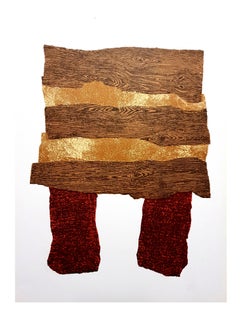
Enrico Baj - Lithograph
By Enrico Baj
Located in Collonge Bellerive, Geneve, CH
Enrico Baj - Original Lithograph
Colorful Abstraction
1962
From the art revue XXe Siecle
Dimensions: 32 x 24
Edition: G. di San Lazzaro.
Unsigned and unumbered as issued
Category
1960s Modern Geneva - Figurative Prints
Materials
Lithograph
Jean Cocteau - Mother and Son - Original Lithograph
By Jean Cocteau
Located in Collonge Bellerive, Geneve, CH
Original Lithograph by Jean Cocteau
Title: Taureaux
Signed in the plate
Dimensions: 40 x 30 cm
Edition: 200
Luxury print edition from the portfolio of Trinckvel
1965
Jean Cocteau
W...
Category
1960s Modern Geneva - Figurative Prints
Materials
Lithograph
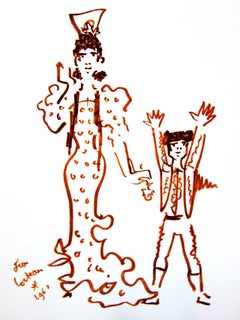
Jean Gabriel Domergue - Lying Naked - Original Etching
By Jean-Gabriel Domergue
Located in Collonge Bellerive, Geneve, CH
Original Etching by Jean-Gabriel Domergue
Dimensions: 33 x 25 cm
1924
Edition of 100
This artwork is part of the famous portfolio The Afternoon of a Faun.
Jean-Gabriel Domergue
Jea...
Category
1920s Impressionist Geneva - Figurative Prints
Materials
Lithograph
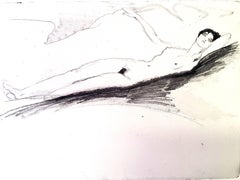
Salvador Dali - Cleopatra - Original Etching
By Salvador Dalí
Located in Collonge Bellerive, Geneve, CH
Salvador Dali - Cleopatra
Original Etching
Dimensions: 28x 18.7cm
1969
Edition: /165
Plate signed
References : Field 68-7-I page 48
Category
1960s Surrealist Geneva - Figurative Prints
Materials
Etching
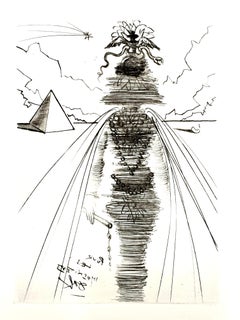
Pierre Bonnard - The Sun - Original Lithograph
By Pierre Bonnard
Located in Collonge Bellerive, Geneve, CH
Pierre Bonnard - The Sun
Original Lithograph
Dimensions: 32 x 24 cm
Verve . Revue Artistique et Litteraire. Vol. V, Nos 17 et 18.
Signed in the plate
Unumbered as issued
Category
1940s Modern Geneva - Figurative Prints
Materials
Lithograph
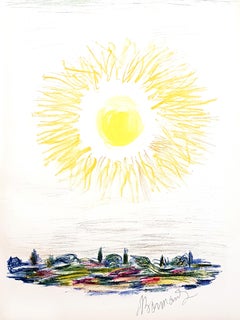
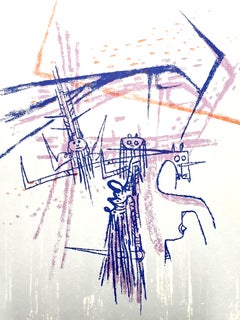
Wifredo Lam - Knight - Original Lithograph
By Wifredo Lam
Located in Collonge Bellerive, Geneve, CH
Wifredo Lam - Knight - Original Lithograph
Published in the deluxe art review, XXe Siecle
1963
Dimensions: 32 x 24 cm
Publisher: G. di San Lazzaro.
Unsigned and unumbered as issued
Category
1960s Post-Modern Geneva - Figurative Prints
Materials
Lithograph
Still Thinking About These?
All Recently ViewedMore Ways To Browse
Annette Ollivary
Annika Tucksmith
Anthony Alonso
Anthony Brunelli
Anthony Gibbs On Sale
Anthony Rickards On Sale
Antique Fishing Pole
Antique Orchard Painting
Antique Original Paintings Boston
Antique Peddlers Cart
Antique Pioneer Wagons
Antique Sexton
Antique Sock Stretchers
Ariane Wyss
Armand Fouquet
Arthur Maynard
Arthur Prince Spear
Artist Alan King