Miami - Drawings and Watercolor Paintings

to
61
301
140
57
31
21
Overall Width
to
Overall Height
to
3
396
151
16
17
34
39
42
37
38
38
44
64
163
56
36
33
33
33
21
16
7
3
1
319
217
14
376
244
130
125
117
114
79
66
31
24
24
23
22
19
17
16
13
13
12
12
324
312
266
200
124
108
20
8
8
8
149
14
18,767
18,191
Item Ships From: Miami
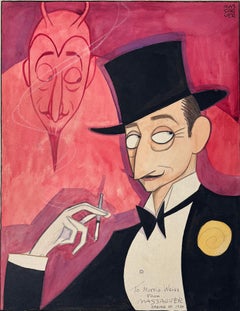
Cuban Artist - Caricature of Adolphe Menjou Debonair Devil
Located in Miami, FL
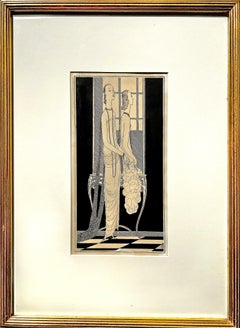
Framed Cuban Artist/Caricaturist Conrado Walter Massaguer presents Hollywood star Adolphe Menjou in a satirical dual portrait. In the foreground, the subject is seen in a dapper top hat, tux, fashionable cigarette and boutonnière, and is shown as being the epitome of being stylishly debonair. To make a larger point about this subject, Massaguer paints a cast shadow of Menjou as a burning red devil who studies his alter ego from above. Keeping with the artist's sarcasm, we see the good and bad in one image. Works by Massaguer are rare and this work is in keeping with his signature style. This work was most likely done on assignment for Life Magazine, Cosmopolitan, The New Yorker or Vanity Fair. Signed upper right. Inscribe lower right. Titled on verso. Unframed, Slight bend to board; toning to board; scattered faint foxing; pin point abrasions to margins, not affecting image. 19-1/2 x 15-1/8 inches board size. Conrado Walter Massaguer y Diaz was a Cuban artist, political satirist, and magazine publisher. He is considered a student of the Art Nouveau. He was the first caricaturist in the world to broadcast his art on television.He was first caricaturist to exhibit on Fifth Avenue. He was the first caricaturist in the world to exhibit his caricatures on wood. He, and his brother Oscar, were the first magazine publishers in the world to use photolithographic printing. Self portrait of Conrado Walter Massaguer, depicted on a carrousel ride, with the devil over his left shoulder and an angel over his right. (1945) He created the magazine Social with his brother Oscar to showcase Cuban artistic talent. The duo later created the magazine Carteles, which became for a period the most popular magazine in Cuba, which was purchased by Miguel Ángel Quevedo in 1953. In his life, he met and drew caricatures of Franklin D. Roosevelt, Walt Disney, Albert Einstein, the King of Spain, and many others.[ In sum total, he was the author of more than 28 thousand caricatures and drawings.Ernest Hemingway once had to refrain himself from punching Massaguer in the face after the artist drew an unflattering caricature of him. The dictator Gerardo Machado, however, did not punch Massaguer for his own unflattering caricature - he had the artist deported. He was one of the most internationally renowned Cuban artists of his day, and his art is still regularly featured in galleries across the Western Hemisphere and Europe. Early life Massaguer was born on October 18, 1889, in Cárdenas, Cuba.[In 1892, his family moved to Havana. When the Cuban War of Independence broke out, Massaguer's family escaped the country. From 1896 to 1908, he lived in Mérida, Mexico. However, during this time, his parents enrolled him in the New York Military Academy, where he stayed during school years. In 1905, after graduating the military academy, he briefly attended the San Fernando school in Havana, where he was tutored by Ricardo de la Torriente and Leopoldo Romañach. In 1906, less than a year later, he returned to the family home in Mexico. Career as artist Early career While living in Yucatán, Mexico, Massaguer published his first caricatures in local newspapers and magazines. These included La Campana, La Arcadia, and the Diario Yucateco. In 1908, he moved back to Havana. After returning to the island in 1908, Massaguer began mingling with Havana's aristocratic circles, forming close friendships with some of the city's most powerful and influential men, as well as winning the favor of many women who were quickly charmed by him. Massaguer, largely self-taught, honed his style using the avant-garde techniques he studied from the European and American magazines that were widely available in Cuba at the time. Cover of the immensely popular Cuban magazine El Figaro, drawn by Massaguer in 1909. This cover depicts two bumbling, incompetent American tourists to the island. He started drawing for El Fígaro, and was featured prominently on the cover in 1909. After two years of refining his craft, Havana announced a poster contest aimed at attracting North American tourists to stay in the city during the winter months. Notable figures like Leopoldo Romañach, Armando Menocal, Rodríguez Morey, Jaime Valls, and others also entered the competition. The jury was particularly impressed by the modern execution and creative solution of one piece, signed by Massaguer, who was relatively unknown at the time. The jury deliberations caused a great controversy.[5] The prize was ultimately awarded to the Galician painter Mariano Miguel, who had recently married the daughter of Nicolás Rivero, the wealthy owner of the conservative newspaper Diario de la Marina. Although Massaguer received only an honorable mention, the fraud scandal caused such an uproar that his name quickly entered the public spotlight, and he became an overnight sensation. In 1910, he became co-owner of the advertising agency Mercurio, with Laureano Rodríguez Castells. At Mercurio, he led the Susini cigar campaign, and earned substantial wealth. Massaguer has been described as a restless man, in both mind and body.After earning enough money from his art to begin traveling, he was almost always doing so. He constantly traveled between New York City and Havana, Mexico and France, Europe and the Americas. In 1911, his reputation among the Havana socialites solidified when he organized his own first public caricature exhibit, and also the first Caricature Salon ever held in the Americas, hosted at Athenaeum of Havana (the Ateneo), and the Círculo de La Habana. Other exhibitors here included Maribona, Riverón, Portell Vilá, Valer, Botet, Barsó, García Cabrera, Carlos Fernández, Rafael Blanco, and Hamilton de Grau. "Messaguer Visits Broadway." Caricatures of theatrical and literary figures. Elsie Janis, Raymond Hitchcock, S. Jay Kaufman (columnist), Ibanez, author of The Four Horsemen, and Frances White In 1912, in the New York American Journal, he published his first Broadway drawings. From 1913 to 1918, he was an editor for Gráfico. Social Main article: Social (magazine) Cover of the magazine Social, July 7, 1923 In 1916, he created the magazine Social with his brother, Oscar H. Massaguer. Social's contributors included Guillén Carpentier, Chacón y Calvo, Enrique José Varona and others.Social has been described as Massaguer's great love in the magazine industry, and was the property that historians say he cared the most about. Social was an innovative magazine, being the first magazine in the world to use a modern printing process called photolithographic printing. Social set cultural trends, not only in the fashion of Cuba, but in art, politics, and Cuban identity.[11] Social catered to a certain aesthetic in Cuba - that of the sophisticated elite socialite - but Massaguer would also use this magazine to ridicule and jibe against that same class of society when he found their personalities worthy of his contempt. In Social, readers could find a variety of content, including short stories, avant-garde poetry, art reviews, philosophical essays, and serialized novels, as well as articles on interior design, haute couture, and fashion. Occasionally, the magazine also featured reports on sports such as motor racing, rowing, tennis, and horse riding.The cultural promotion efforts of both Massaguer and Emilio Roig de Leuchsenring are evident in the magazine. Notably, this period overlaps with their involvement in the Minorista Group, which was then at the forefront of the country's intellectual life.[5] Many contributors were devoted members of the group, leading some experts to consider Social as the cultural voice of the Minoristas. One of the features of Social magazine was its section called "Massa Girls," which was a play on his own name, and pronounced with a glottal 'g' in a similar fashion to the letter in Massaguer.[12] Massaguer drew women as independent and free-thinking, and never drew the woman celebrity as a caricature of herself, but as a free agent surrounded by caricatures.[11] However, Massaguer himself has been described as a womanizer in his personal life, and hesitant to fully embrace every facet of women's liberation. In 1916, he also established la Unión de Artes Gráficas and the advertising agency Kesevén Anuncios.[9] The art critic Bernardo González Barroa wrote: “Massaguer has solved the problem of working hard, living comfortably off what his art produces and not missing any artistic, sporting or social event. His broad, childish laugh, of a carefree individual who carries his luck hidden in a pocket, appears everywhere for the moment, disguising the pranks of pupils that lurk, mock and, finally, flash with satisfaction at finding the characteristic point after having analyzed a soul... Massaguer's personality is beginning to solidify now. He has been the best-known and most popular caricaturist for a long time, but his technique had not reached the security, the mastery of values that he presents in his latest works, which is very natural and explainable”[5] Carteles Main article: Carteles Cover of the magazine Carteles, November 29, 1931 In 1919, Massaguer and his brother created the magazine Carteles.[9] Carteles gained the widest circulation of any magazine in Latin America, and the most popular magazine in Cuba for a time, until that title was claimed by Revista Bohemia. Carteles remained in print until July 1960.This magazine showcased Cuban commerce, art, sports, and social life before the revolution. In 1924, Carteles took a more political turn, with articles criticizing Gerardo Machado's government. it became a prime example of the humor and graphic design employed by artists like Horacio Rodríguez Suria and Andrés García...
Category

1930s Art Nouveau Miami - Drawings and Watercolor Paintings

Materials

Ink, Watercolor, Illustration Board

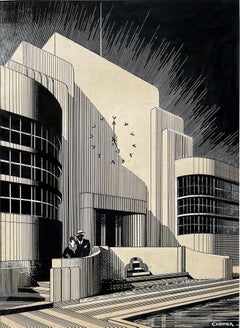
Art Deco Couple In Front of Black and White Art Deco Architecture
Located in Miami, FL
Art Deco Illustrator Charles Perry Weimer creates a powerfully graphic depiction of a 1930s couple in front of a classic Art Deco building with a...
Category

1930s Art Deco Miami - Drawings and Watercolor Paintings

Materials

Paper, Ink

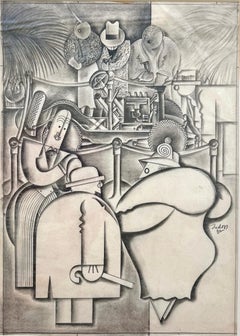
Art Deco Automobile Exhibition- Classic Cars
Located in Miami, FL
Legendary Life Magazine Art Director and Illustrator Charles Tudor depicts a vibrant 1930s Automobile Exhibition. In the background, four onlookers are shown studying a vehicle. At ...
Category

1930s Art Deco Miami - Drawings and Watercolor Paintings

Materials

Paper, Pencil, Graphite

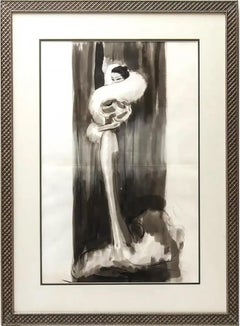
Vogue Magazine Illustration
Located in Miami, FL
"Mademoiselle X" story illustration for Vogue February 1, 1934, watercolor and ink, reverse signed in pencil "Benito for Madame X," pencil inscription "Feb.1, 1934 / Page 51 / 316," ...
Category

1930s Art Deco Miami - Drawings and Watercolor Paintings

Materials

Paper, Ink, Watercolor

Untitled
Located in Miami, FL
Untitled is a one-of-a-kind mixed media artwork by contemporary artist Vanessa Prager, renowned for her intricate and expressive figurative pieces. This captivating drawing features ...
Category

2010s Miami - Drawings and Watercolor Paintings

Materials

Ballpoint Pen

Untitled
Untitled
$2,472 Sale Price
20% Off
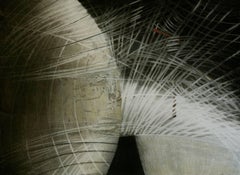
"Sphere 2" - Black White abstract drawing (pencil and charcoal on paper).
By Kathleen Cammarata
Located in Miami, FL
Pencil, colored pencil and charcoal on paper. Note: The painting shown on the wall may not be proportional to the room size.
Category

Early 2000s Abstract Miami - Drawings and Watercolor Paintings

Materials

Charcoal, Pencil, Paper, Carbon Pencil, Color Pencil
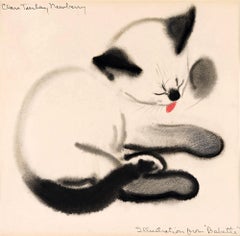
Babette the Cat, Female Illustrator
Located in Miami, FL
A stylized cat named Babette is depicted licking her paw. It is rendered in black and white, which bears the influence of Asian art in its simplicity of line, use of wash, and bleedi...
Category

1930s American Impressionist Miami - Drawings and Watercolor Paintings

Materials

Paper, Crayon, Watercolor, Pencil

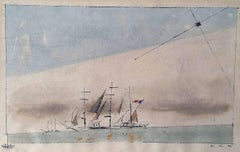
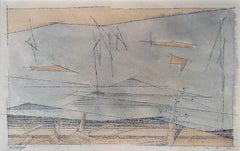
Bauhaus . Untitled (French Barque under Staysail)
By Lyonel Feininger
Located in Miami, FL
Bauhaus Iconic work by the master or Cubism and Expressionism Dalzell Hatfield Gallery, Los Angeles Bonhams, Exhibited: Moller Fine Art, "Precision ...
Category

1940s Expressionist Miami - Drawings and Watercolor Paintings

Materials

Watercolor, Pencil

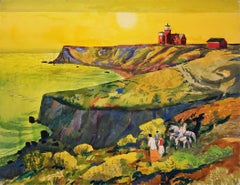
Summertime - Martha s Vineyard - Sunset Golden Sky and Red Lighthouse
By Millard Sheets
Located in Miami, FL
Summertime in Martha's Vineyard is drenched in saturated yellows and reds. People in the foreground look out to the sea. Two people on horseback are masterfully rendered in a loose ...
Category

1960s Post-Impressionist Miami - Drawings and Watercolor Paintings

Materials

Watercolor, Board, Pencil

Kelpie of Snooziepool - English Romantic Whimsical Fantasy Ink Watercolor
By William Heath Robinson
Located in Miami, FL
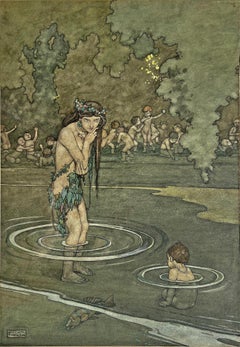
The Kelpie of Snooziepool - William Heath Robinson illustrated this whimsical fantasy work featuring a semi-nude beauty in a pool of water with children. Based on the Metropolitan ...
Category

1920s Post-Impressionist Miami - Drawings and Watercolor Paintings

Materials

Ink, Watercolor

Attractive Young Woman Sitting in Chair and Looking Upwards in Domestic Setting
By Alice Barber Stephens
Located in Miami, FL
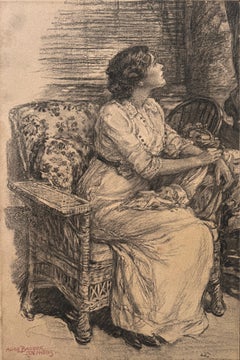
Female Illustrator of the Golden Age Alice Barber Stephens renders in an academic style and women sitting in a chair and responding to something outside of the frame. Signed lower left. Most likely done for a major newsstand magazine like Harper's, Century or Scribner's Monthly. Work is framed under glass in a simple black wood frame. Perhaps period. Matt is new. Frame size: 20.5 x 14.5 From: Wikipedia Alice Barber Stephens (July 1, 1858 – July 13, 1932) was an American painter and engraver, best remembered for her illustrations. Her work regularly appeared in magazines such as Scribner's Monthly, Harper's Weekly, and The Ladies Home Journal. Early life and education Alice Barber was born near Salem, New Jersey. She was the eighth of nine children born to Samuel Clayton Barber and Mary Owen, who were Quakers. She attended local schools until she and her family moved to Philadelphia, Pennsylvania. At age 15 she became a student at the Philadelphia School of Design for Women (now Moore College of Art & Design), where she studied wood engraving. The Women's Life Class (1879), Pennsylvania Academy of the Fine Arts, Philadelphia, Pennsylvania. She was admitted to the Pennsylvania Academy of the Fine Arts in 1876 (the first year women were admitted), studying under Thomas Eakins. Among her fellow students at the Academy were Susan MacDowell, Frank Stephens, David Wilson Jordan, Lavinia Ebbinghausen, Thomas Anshutz, and Charles H. Stephens (whom she would marry). During this time, at the academy, she began to work with a variety of media, including black-and-white oils, ink washes, charcoal, full-color oils, and watercolors. In 1879, Eakins chose Stephens to illustrate an Academy classroom scene for Scribner's Monthly. The resulting work, Women's Life Class, was Stephens' first illustration credit. New Woman As educational opportunities were made more available in the nineteenth century, women artists became part of professional enterprises, including founding their own art associations. Artwork made by women was considered to be inferior by the art world, and to help overcome that stereotype women became "increasingly vocal and confident" in promoting women's work, and thus became part of the emerging image of the educated, modern and freer "New Woman". Artists then, "played crucial roles in representing the New Woman, both by drawing images of the icon and exemplifying this emerging type through their own lives." Alice Barber Stephens, The Women Business, oil, 1897, Brandywine River Museum, Chadds Ford, Pennsylvania One example of overcoming women stereotypes was Stephens' Woman in Business from 1897, which showed how women could focus not only in the home, but also in the economic world.[8] As women began to work, their career choices broadened and illustration became a commendable occupation. People's ideas about education and art started to merge, and the outcome of a certain sensitivity to the arts began to be seen as uplifting and educational. By using illustration as a means to further their practices, women were able to fit the traditional gender role while still being active in their pursuits for the "New Woman". According to Rena Robey of Art Times, "The early feminists began to leave the home to participate in clubs as moral and cultural guardians, focused on cleaning up cities and helping African Americans, impoverished women, working children, immigrants, and other previously ignored groups." Stephens took advantage of the explosion of illustration opportunities, including the opportunity to work from home. Women's education Edwin Forrest House, formerly the home of the Philadelphia School of Design for Women. Throughout the period before the civil war, textile and other decorative work became acceptable occupations for those who aspired to be in the middle class. The Philadelphia School of Design for Women, founded in 1848 by Sarah Worthington Peter was first among a group of women's design schools established in the 1850s and 1860s; others appeared in Boston, New York, Pittsburgh, and Cincinnati. It began as a charitable effort to train needy and deserving young women in textile and wallpaper design, wood engraving, and other salable artistic skills, providing a means for training women who needed wage work. The Pennsylvania Academy of the Fine Arts (PAFA) was established in 1805 by painter and scientist Charles Willson Peale, sculptor William Rush...
Category

Early 1900s Academic Miami - Drawings and Watercolor Paintings

Materials

Charcoal, Board

Woman Daydreaming of her Prince Charming
By Nell Brinkley
Located in Miami, FL
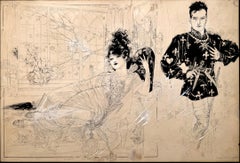
Nell Brinkley was a pioneering woman illustrator for major national publications. She was famous for her "Brinkley Girl" and in the present work she exhibits a classic example. The m...
Category

1920s Romantic Miami - Drawings and Watercolor Paintings

Materials

Paper, Ink, Pen

Female Critic - Female Connosieurs - Scottish Female Artist Illustrator
Located in Miami, FL
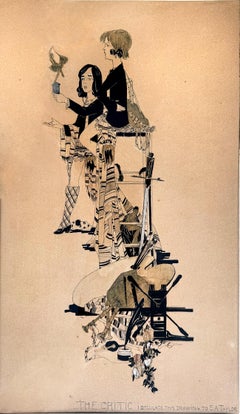
Two young Scottish women wear smart business jackets and fashionable tartan skirts. They are depicted as discerning Art Connoisseurs evaluating a small bronze dancer. The Artist Hele...
Category

1910s Miami - Drawings and Watercolor Paintings

Materials

Silver

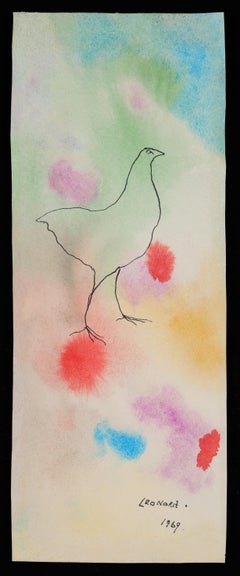
Leonora Carrington, The Transparent Hen
By Leonora Carrington
Located in Miami, FL
Leonora Carrington The Transparent Hen, 1969 Watercolor and ink on paper 11 x 4 in Provenance: Private Collection, Dr. Salomon Grimberg (Gift from the artist). Private Collection, T...
Category

20th Century Surrealist Miami - Drawings and Watercolor Paintings

Materials

Ink, Watercolor, Laid Paper

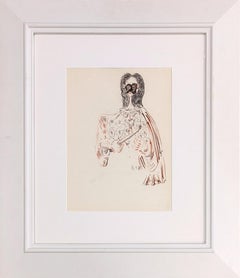
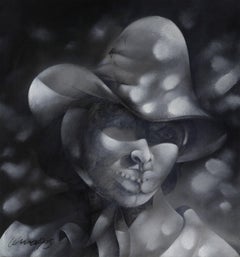
UNTITLED (MASKED FIGURE)
By George Condo
Located in Aventura, FL
Original conte crayon on paper. Dated "12.13.84" central quadrant. Provenance: Barbara Gladstone Gallery, New York. Artwork size 12.5 x 9.5 inches....
Category

1980s Contemporary Miami - Drawings and Watercolor Paintings

Materials

Paper, Crayon

UNTITLED (MASKED FIGURE)
$27,600 Sale Price
20% Off
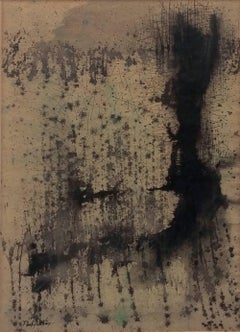
PASAGE
By Paul Jenkins
Located in Aventura, FL
Original watercolor on paper. Hand signed on front by the artist. Additional images are available upon request. Certificate of Authenticity is included. Please do not hesitate to ...
Category

Late 20th Century Abstract Miami - Drawings and Watercolor Paintings

Materials

Paper, Watercolor

PASAGE
PASAGE
$14,000 Sale Price
20% Off
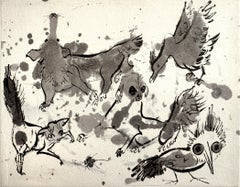
Cat, Dog, Bird, Monkey, Owl, Lady Bug Portrait - Alert Animals Illustration
Located in Miami, FL
British-American painter and Female Illustrator artfully renders six different animals closely grouped on one page. They are seen as individuals, but silhouetted, not relating to one...
Category

1950s American Modern Miami - Drawings and Watercolor Paintings

Materials

Ink, Watercolor, Archival Paper

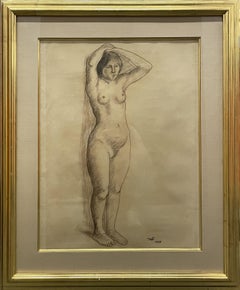
Mujer Desnuda
By Francisco Zúñiga
Located in Miami Beach, FL
Francisco Zúñiga, Mujer Desnuda, 1964 Graphite on paper Image size: 25 x 20 in (63 x 50cm) Framed Zúñiga, primarily known as a sculptor, produced a large number of drawings, often u...
Category

1960s Modern Miami - Drawings and Watercolor Paintings

Materials

Paper, Graphite

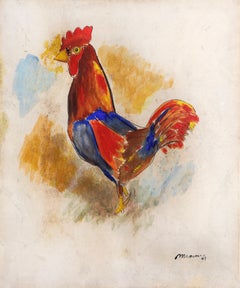
Mariano Rodriguez, Gallo
By Mariano Rodriguez
Located in Miami, FL
Mariano Rodriguez Gallo, 1941 Ink, Tempera, and watercolor on paper 13 x 10 in Signed on the lower right. COA by Mariano Rodriguez Foundation, Madrid. Provenance: Private Collectio...
Category

1940s Modern Miami - Drawings and Watercolor Paintings

Materials

Ink, Tempera, Watercolor, Laid Paper

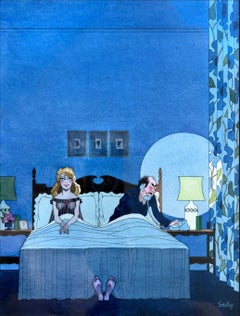
Sexy Evening in Bed Phone Call - Playboy Cartoon Humor - Francis Wilford Smith
Located in Miami, FL
Cartoon art is the original Conceptual Art. Renowned British Illustrator Smilby (Francis Wilford Smith) conceptualizes a Playboy cartoon so good that no caption is needed. The exist...
Category

1970s American Modern Miami - Drawings and Watercolor Paintings

Materials

Ink, Watercolor, Illustration Board

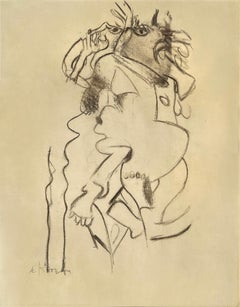
The Thinker
By Willem de Kooning
Located in Miami, FL
A large charcoal-on-paper rendering by arguably one of America's most influential artists. It comes from the pioneering Allan Stone Galleries, who ...
Category

1960s Abstract Expressionist Miami - Drawings and Watercolor Paintings

Materials

Paper, Charcoal

The Thinker
The Thinker
$68,000 Sale Price
20% Off
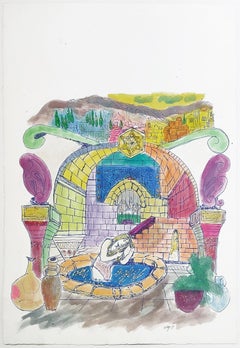
WOMAN IN POOL (JUDAICA ART)
By Amram Ebgi
Located in Aventura, FL
Original watercolor and glitter on paper. Hand signed on front by the artist. Sheet size 21.75 x 15 inches. Artwork is in excellent condition. Certificate of authenticity included. ...
Category

2010s Contemporary Miami - Drawings and Watercolor Paintings

Materials

Paper, Glitter, Watercolor

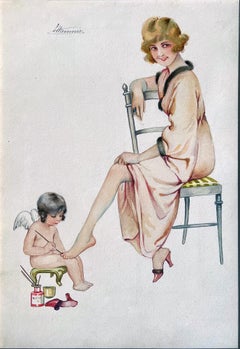
Risque Pedicure by Angel, Les Ongles, Boudoir style, Female Illustration
By Suzanne Meunier
Located in Miami, FL
This Illustration Boudoir style Illustration by Female Illustrator Suzanne Meunier was done on an assignment for a French Postcard. It's a very early ...
Category

1910s Art Nouveau Miami - Drawings and Watercolor Paintings

Materials

Watercolor

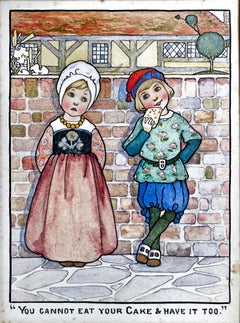
The Wise Book Children s Book Illustration- Woman Illustrator - Arts and Crafts
Located in Miami, FL
This little gem of a compact artwork was executed in the Arts and Crafts style for an interior illustration for "The Wise Book," J.M. Dent & Co, London, 1906. "You can't eat your ca...
Category

Early 1900s Victorian Miami - Drawings and Watercolor Paintings

Materials

Ink, Watercolor, Gouache, Board

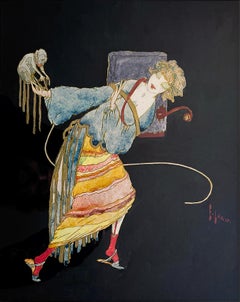
Art Deco Woman Holding Monkey - Female Illustrator
By Elyse Ashe Lord
Located in Miami, FL
Meticulously rendered art deco illustration of a stylized woman ( perhaps Asian ) having a dialog with a small monkey perch on her outstretched arm. ...
Category

1920s Art Deco Miami - Drawings and Watercolor Paintings

Materials

Gold Leaf

Fairy Tale Children s Book Fantasy Illustration in Black and White
Located in Miami, FL
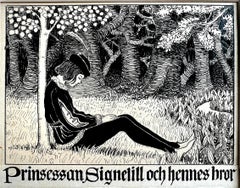
Fantasy illustration for children's book - "Princess Signelill and her brother” from “Sagobok av Elsa Beskow” Ink on paper, High-end archival matted. Unsigned Provenance: The Artis...
Category

1910s Art Nouveau Miami - Drawings and Watercolor Paintings

Materials

Paper, India Ink

Vogue - Elegantly Dressed Women Shopping For Hats Art Nouveau - Female Artist
By Helen Dryden
Located in Miami, FL
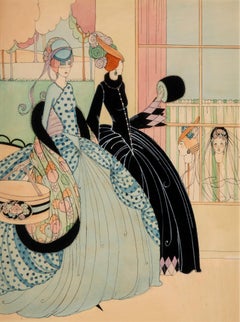
The present work by pioneering female artist Helen Dryden was most likely a cover assignment for Vogue Magazine. It is deftly rendered in a tight linear art nouveau style with flat c...
Category

1920s Miami - Drawings and Watercolor Paintings

Materials

Paper, Ink, Watercolor

Birds at a waterhole, Heron, Flamingos, Swans, Egrets- San Diego Zoo
By Jessie Arms Botke
Located in Miami, FL
The iconic subject matter from Botke's oeuvre often features birds, particularly white peacocks, geese, egrets, and cockatoos. Women artists are on fire and very much in demand today...
Category

1930s Post-Impressionist Miami - Drawings and Watercolor Paintings

Materials

Watercolor, Paper

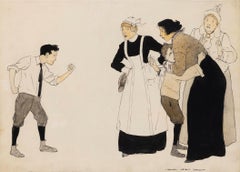
"The Poor Little Bridesmaid" - Female Illustrator - Golden Age of Illustration
Located in Miami, FL
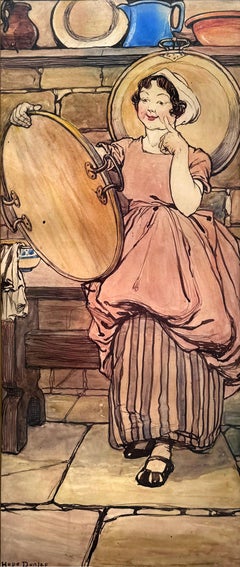
"The poor little bridesmaid ... in her pink cotton gown ... though doubtless, there never was such a pretty girl." A kitchen scene is depicted with a young bridesmaid admiring her f...
Category

1910s American Realist Miami - Drawings and Watercolor Paintings

Materials

India Ink, Watercolor, Pen, Paper

Fashion Model full figure in profile
By Antonio Lopez
Located in Miami, FL
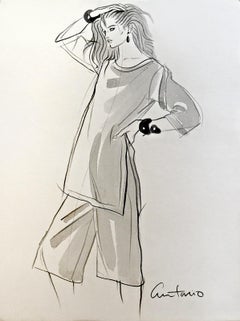
Fashion Illustration. Work is unframed. Free standing heavy watercolor paper loosely hinged to board. Excellent condition.
Category

1980s Contemporary Miami - Drawings and Watercolor Paintings

Materials

Watercolor, Pencil, Paper

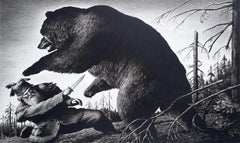
Grizzly Adams, Grizzly bear attacks Frontiersman
By Robert Riggs
Located in Miami, FL
There is a reason why there are few contemporary painters who can paint a portrait of a man and bear this good. It's hard to do. It's easy to throw some paint or spray a mess of graf...
Category

1950s American Realist Miami - Drawings and Watercolor Paintings

Materials

Mixed Media, Graphite

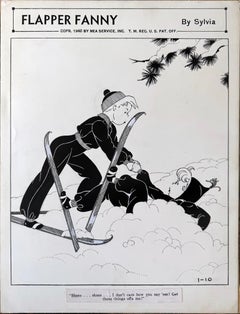
Flapper Fanny - Female Cartoonist of the Golden Age
Located in Miami, FL
Flapper Fanny - Female Cartoonist of the Golden Age Sylvia Sneidman was originally a fashion illustrator, but assumed the helm of the famous jazz-age panel cartoon "Flapper Fanny Sa...
Category

1940s American Modern Miami - Drawings and Watercolor Paintings

Materials

India Ink, Archival Paper

Kitsch Queen of Clubs Playing Card Illustration
Located in Miami, FL
Kitsch illustration of Queen of Clubs Playing Card by Female Illustrator Louise Alston. It's so bad it's good. Signed lower right: Louise Alston Framed Dimensions 25.5 X 18.5 Inches ...
Category

1950s Realist Miami - Drawings and Watercolor Paintings

Materials

Gouache, Illustration Board

Pedro Pablo Oliva Untitled (Cabeza de Guajira) 1975
By Pedro Pablo Oliva
Located in Miami, FL
Pedro Pablo Oliva Untitled (Cabeza de Guajira), 1975 Mixed media on paper Signed to lower left 20 x 19 in
Category

20th Century Contemporary Miami - Drawings and Watercolor Paintings

Materials

Mixed Media

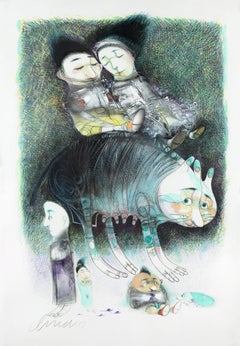
Pedro Pablo Oliva Drawing: Los Dulces Jinetes de mi Memoria
By Pedro Pablo Oliva
Located in Miami, FL
Pedro Pablo Oliva “Los Dulces Jinetes de mi Memoria” 2001 Mixed media on paper 39 x 27.5 in
Category

Early 2000s Surrealist Miami - Drawings and Watercolor Paintings

Materials

Mixed Media

The Bully - Narrative Art by Female Illustrator Golden Age of Illustration
By Maginel Wright Enright Barney
Located in Miami, FL
The present work exhibits a storytelling and illustration art style created before the mass communications age. It was rendered in a flat linear style by the highly talented Maginel ...
Category

1910s American Impressionist Miami - Drawings and Watercolor Paintings

Materials

India Ink, Watercolor, Board

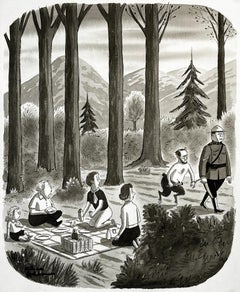
Nonconformist Removed by the State. Satyr / Pan Mythology
Located in Miami, FL
This cartoon by Charles Addams is generations ahead of its time. To get the punch line, the viewer must know the meaning of a Satyr or Pan. Satyr: Part man and part beast. - A male ...
Category

1950s American Realist Miami - Drawings and Watercolor Paintings

Materials

Ink, Watercolor

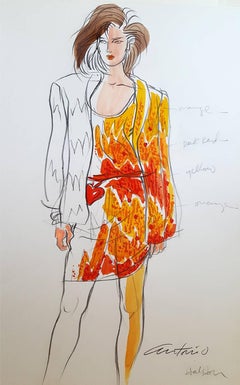
Halston , Vogue Magazine Illustration, Italy
By Antonio Lopez
Located in Miami, FL
Signature: Published Vogue Italy Client Halston Double Signature Signed lower right Antonio Also signed Halston Graphic remarks were written in pencil by Halston. work is elegantly m...
Category

1980s Post-Impressionist Miami - Drawings and Watercolor Paintings

Materials

Paper, Watercolor, Pencil

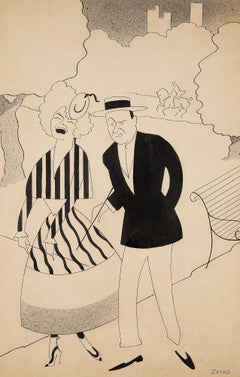
Upscale Couple Illustration Puck magazine Interior - Mexican Illustrator
Located in Miami, FL
Marius de Zayas was born in Veracruz, Mexico and emigrated to New York with his family in 1907. He joined the art staff of the New York Evening World newspaper and quickly became kno...
Category

1910s Art Deco Miami - Drawings and Watercolor Paintings

Materials

India Ink

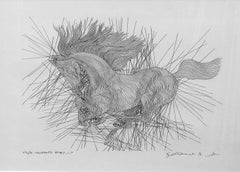
ETUDE COURANTE
By Guillaume Azoulay
Located in Aventura, FL
Original drawing on paper. Hand signed and dated by the artist. Artwork is in excellent condition. Certificate of Authenticity included. All reasonable offers will be considered.
Category

Early 2000s Contemporary Miami - Drawings and Watercolor Paintings

Materials

Paper, Ink, Pencil

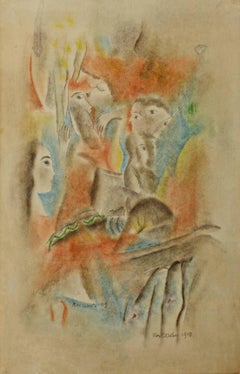
Spring - American Cubism
By Max Weber
Located in Miami, FL
Cubist influence mixed with soft warm colors is on full display in this charming work. Signed twice. 6 Gallery Tags on verso Sotheby's Kennedy Galleries Barbara Mathes Gallery Sid Deutsch Gallery The Downtown Gallery University of Arizona Art...
Category

1910s Cubist Miami - Drawings and Watercolor Paintings

Materials

Pastel

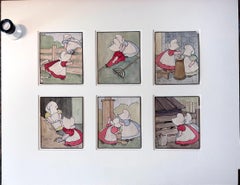
The Sunbonnet Babies - Modernist Female Artist
Located in Miami, FL
Bertha Corbett Melcher's The Sunbonnet Babies, with their flat, minimalist, semi-abstract, and symbolic style, are an early example of American Modernism/Surrealism by a lesser-known female artist/illustrator. The present work demonstrates a delicate balance between abstraction and representation and between the commonplace and the mysterious. Her signature use of a hat or sunbonnet to hide the identity of her subjects is a big conceptual and visual idea that has been overlooked in the fine art canon. The exact meaning of this is unknown, but 120 years after they were done, it resonates as somewhat surrealistic. Her work is a contradiction. She shows innocent children engaging in everyday activity but are depicted in vail of mystery. Why does she not show the faces of her subjects? Watercolor on paper (each) Six drawings in all on one board. 6-1/8 x 5 inches (15.6 x 12.7 cm) (each) One signed; two initialed; three not signed. Six drawing in all on one board. 6-1/8 x 5 inches (15.6 x 12.7 cm) (each) One signed; two initialed; three not signed The Sunbonnet Babies characters were created by illustration Bertha L. Corbett when she was challenged to create a faceless character who nonetheless was engaging and appealing. The characters were a wild hit and appeared in books, comics, and popular collectibles. They also became a popular motif in quilting. Few of Corbett's original drawings for the babies are known to survive, making this a rare offering. From: Wikipedia Sunbonnet Babies are characters created by commercial artist Bertha Corbett Melcher (1872–1950). Sunbonnet Babies featured two girls in pastel colored dresses with their faces covered by sunbonnets. Sunbonnet Babies appeared in books, illustrations and advertisements between the years of 1900 and 1930. Sunbonnet Babies were later used as a popular quilting pattern also known as Sunbonnet Sue.[1] Melcher created a male version of the Sunbonnet Babies, named the 'Overall Boys' in 1905.[2][3] History Bertha L. Corbett Melcher Sunbonnet Babies were created by Bertha Corbett Melcher (1872–1950).[4] Melcher was born in Denver and moved with her family to Minneapolis in the 1880s. Melcher attended art school in Minneapolis with plans to become a commercial artist.[5] She may have also studied with Howard Pyle.[6] By the 1920s, Melcher had moved to Topanga, California.[7][4] Melcher started drawing the Sunbonnet Babies in 1897. The origin of the signature style of the faces being covered by sunbonnets is contested by different members of Melcher's family and by Melcher herself. In an interview, Melcher's brother said their mother suggested Bertha avoid the difficulty of drawing faces by covering them with sunbonnets.[4] Melcher herself said that covering faces allowed her to communicate with body position.[4] Melcher has also said that the design came about in "answer to a friend’s challenge to convey emotion without a face."[2] Melcher published her first book, The Sun-Bonnet Babies in 1900.[3] Later, she shopped her illustrations to publisher Rand McNally of Chicago, and nine subsequent books were written by Eulalie Osgood Grover and illustrated by Bertha Corbett. In 1905, Melcher wrote The Overall Boys.[3] Many of these books were used as primers and used widely in primary schools in the midwest. Melcher used the sunbonnet babies in advertising and later established the Sunbonnet Babies Company. She started a studio to illustrate and create merchandise of the Sunbonnet Babies.[2] The characters also appeared in a comic strip.[2] Quilting Melcher herself did not originate the use of the sunbonnet babies as quilting pattern. The Sunbonnet Babies quilting pattern appeared in textile art 1910's in the Ladies Home Journal 1911–1912 in a quilt stitched by Marie Webster. The pattern was popular during the Great Depression. In the American South, it was often known as "Dutch Doll" until the 1970s.[3] There was also a quilt pattern based on the "Overall Boys," known by the various names including “Overall Bill, “Overall Andy,” “Sunbonnet Sam,” “Suspender Sam,” “Fisherman Jim."[3] Many patterns for quilts and sewing were designed by Ruby Short McKim and published in nationally syndicated newspapers.[8] Sunbonnet Sue became symbolic of 'female innocence and docility'.[9] Linda Pershing collected accounts from women quilters who depicted 'Sues' doing activities such as smoking, wearing more revealing clothing, and subverting feminine stereotypes.[10] In 1979, the “Seamsters Union Local #500," a group of quilters from Lawrence, Kansas, created “The Sun Sets on Sunbonnet Sue," a quilt depicting the character murdered in a variety of ways.[3] Collectibles Sunbonnet Babies merchandise includes school books, valentines cards, postcards, china, and quilts.[2][5][11] Sunbonnet Babies were adapted into three dimensional porcelain collectibles and pottery made by Royal Bayreuth Company in the early 1900s. The Royal Bayreuth China...
Category

Early 1900s American Modern Miami - Drawings and Watercolor Paintings

Materials

Paper, Watercolor

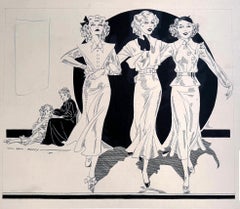
The Three Graces Fantasy Fashion Illustration - Female Illustrator
Located in Miami, FL
For your consideration, we have a pen and ink drawing of an interpretation of The Three Graces, who strike a pose for a 1930s fashion ad. In Greek mythology, they were goddesses w...
Category

1930s American Impressionist Miami - Drawings and Watercolor Paintings

Materials

India Ink, Board

New York City 11 original work on japanese paper color pastel collage charcoal
By Bernardo Navarro Tomas
Located in Miami, FL
Bernardo Navarro Tomas (Cuba, 1977) 'Untitled', 2017 mixed media on Japanese paper 12.3 x 17 in. (31 x 43 cm.) ID: NAA-311 Hand-signed by author
Category

2010s Contemporary Miami - Drawings and Watercolor Paintings

Materials

Paper, Mixed Media, Charcoal, Oil Pastel
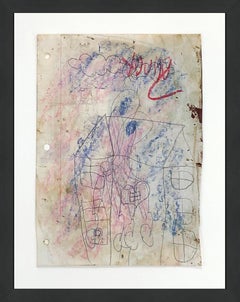
Home Sweet Home (original mixed media on paper)
By Purvis Young
Located in Aventura, FL
Original mixed media drawing on paper. Hand signed on front by Purvis Young. Artwork size 10.375 x 7.875 inches. Frame size approx 16 x 14 inches. Artwork is in excellent conditi...
Category

Late 20th Century Outsider Art Miami - Drawings and Watercolor Paintings

Materials

Paper, Crayon

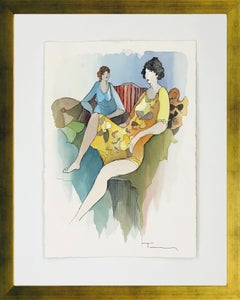
Midday Rest (Watercolor)
By Itzchak Tarkay
Located in Aventura, FL
Original watercolor on paper. Hand signed on front by Tarkay. Sheet size 14 x 10.5 inches. Frame size approx 20 x 16 inches. Artwork is in excellent condition. From the private coll...
Category

Late 20th Century Contemporary Miami - Drawings and Watercolor Paintings

Materials

Paper, Watercolor

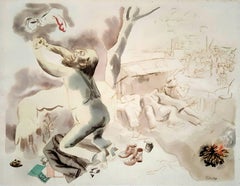
Christus am Oelberg - Christ on the Mount of Olives
By George Grosz
Located in Miami, FL
This work is accompanied by a Photo-certificate and essay from Ralph Jentsch who will include it in his forthcoming catalogue raisonné Signed lower right. Estate stamp on verso....
Category

1930s Dada Miami - Drawings and Watercolor Paintings

Materials

Ink, Watercolor

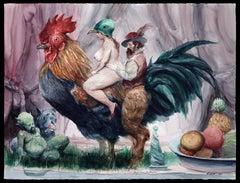
Roberto Fabelo Watercolor: Pequeña fantasía
Located in Miami, FL
Roberto Fabelo Pequeña Fantasia, 1999 Watercolor on paper 22 x 30 in Included a certificate of authenticity by the artist
Category

1990s Surrealist Miami - Drawings and Watercolor Paintings

Materials

Watercolor

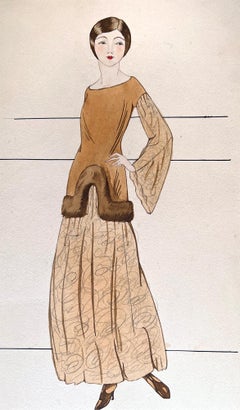
Art Deco Flapper Illustration
Located in Miami, FL
Original Vintage 1920's Ink and Watercolor Fashion Illustration by listed New England artist Harriette (Nutting) Cooper (1901 - 2002). The illustration depicts a lovely young flappe...
Category

1920s Art Deco Miami - Drawings and Watercolor Paintings

Materials

Watercolor, Pencil, Cardboard

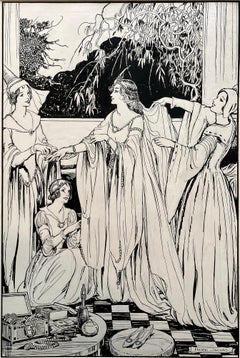
The Court Ladies Dressed Gerda - Women Illustrators
Located in Miami, FL
Women illustrators were alive, well, and quite active in the early 20th century. Most of their production was associated with topics that dealt with the home, children or fairy tales. In this masterfully rendered work in pen and ink, Jacobs displays great technical skill in presenting three maidens dressing a beautiful female member of the Court wearing a tiara. Signed in a cartouche lower right From: Stella Mead, Great Stories from Many Lands, London: James Herbert and Co, 1936, page 78 " Red and White Roses" Provenance: Chris Beetles Work is elegantly matted and not framed. Helen Mary Jacobs was born in Ilford, Essex, the sister of the writer W.W. Jacobs; she studied art at the West Ham...
Category

1930s Art Nouveau Miami - Drawings and Watercolor Paintings

Materials

Ink, Pencil

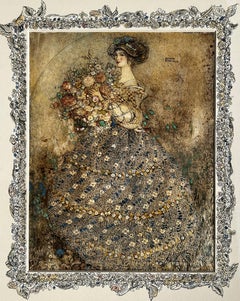
Flora Scottish Female Illustrator Glasgow Girls Pre-Raphaelites
Located in Miami, FL
Annie French was part of the Glasgow Girls group of artists and illustrators who worked in a delicate, feminine, and detailed Art Nouveau and Pre-Raphaelite style. This work, "Flora," is masterfully rendered and decorated with sumptuous floral patterns in the most detailed way. It is signed twice in the upper right quadrant. The mat has a hand-painted decorative border. The work presents better in person, and the viewer can marvel at the minute detail. The Video is overexposed and light and not representative of color. Use still...
Category

Early 1900s Art Nouveau Miami - Drawings and Watercolor Paintings

Materials

Ink, Watercolor, Pencil

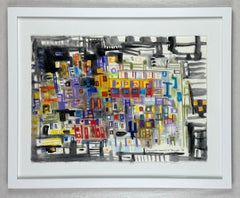
New York City 9 original work on Japanese paper color pastel collage charcoal
By Bernardo Navarro Tomas
Located in Miami, FL
Bernardo Navarro Tomas (Cuba, 1977) 'Untitled', 2017 mixed media on japanese paper 12.3 x 17 in. (31 x 43 cm.) ID: NAA-309 Hand-signed by author
Category

2010s Contemporary Miami - Drawings and Watercolor Paintings

Materials

Paper, Mixed Media

Singer Actress Eva Tanguqy - Mexican Artist, Mexican Writer
Located in Miami, FL
Eva Tanguqy-A Strange Request, New York Evening World newspaper India ink and blue pencil on heavyweight paper 16-1/2 x 10-1/2 inches (41.9 x 26.7 cm) (each, image) Signed lower righ...
Category

1910s Cubist Miami - Drawings and Watercolor Paintings

Materials

Paper, India Ink, Color Pencil

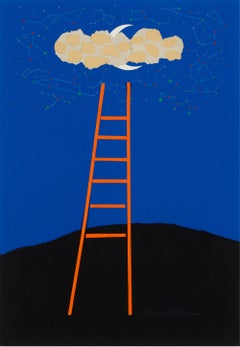
Juilliard School of Music (Ladder) poster - Original art
By Milton Glaser
Located in Miami, FL
Milton Glaser creates a brilliant graphic symbolizing a pathway to success and more. Original art Cut Paper collage and colored pencil 19 1/2 x 13 5/8 Signed to lower edge ‘Milton ...
Category

1980s Contemporary Miami - Drawings and Watercolor Paintings

Materials

Laid Paper, Pencil

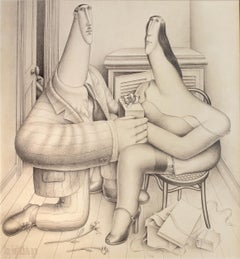
Suitor with Voyeur
By Roy Carruthers
Located in Miami, FL
Roy Carruthers is a brilliant mix of George Tooker and Fernando Botero but with unexpected charm. "The Suitor with Voyeur", A variation of this concept was done in oil twenty years later. "The Venus of Ponte Vedra...
Category

1970s Surrealist Miami - Drawings and Watercolor Paintings

Materials

Graphite

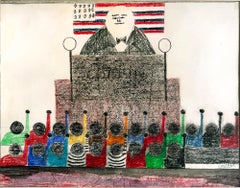
Black Panther Trials - Civil Rights Movement Police Violence African American
Located in Miami, FL
The Black Panther Trials - In this historically significant work, African American Artist Vicent D. Smith functions as an Art Journalist/ Court Reporter as much as a Artist. Here, he depicts, in complete unity, 21 Black Panther Protestors raising their fist of defiance at the White Judge. Smith's composition is about utter simplicity, where the Black Panther Protestors are symmetrically lined up in a confrontation with a Judge whose size is exaggerated in scale. Set against a stylized American Flag, the supercilious Judge gazes down as the protesters as their fists thrust up. Signed Vincent lower right. Titled Panter 21. Original metal frame. Tape on upper left edge of frame. 255 . Panther 21. Framed under plexi. _____________________________ From Wikipedia In 1969-1971 there was a series of criminal prosecutions in New Haven, Connecticut, against various members and associates of the Black Panther Party.[1] The charges ranged from criminal conspiracy to first-degree murder. All charges stemmed from the murder of 19-year-old Alex Rackley in the early hours of May 21, 1969. The trials became a rallying-point for the American Left, and marked a decline in public support, even among the black community, for the Black Panther Party On May 17, 1969, members of the Black Panther Party kidnapped fellow Panther Alex Rackley, who had fallen under suspicion of informing for the FBI. He was held captive at the New Haven Panther headquarters on Orchard Street, where he was tortured and interrogated until he confessed. His interrogation was tape recorded by the Panthers.[2] During that time, national party chairman Bobby Seale visited New Haven and spoke on the campus of Yale University for the Yale Black Ensemble Theater Company.[3] The prosecution alleged, but Seale denied, that after his speech, Seale briefly stopped by the headquarters where Rackley was being held captive and ordered that Rackley be executed. Early in the morning of May 21, three Panthers – Warren Kimbro, Lonnie McLucas, and George Sams, one of the Panthers who had come East from California to investigate the police infiltration of the New York Panther chapter, drove Rackley to the nearby town of Middlefield, Connecticut. Kimbro shot Rackley once in the head and McLucas shot him once in the chest. They dumped his corpse in a swamp, where it was discovered the next day. New Haven police immediately arrested eight New Haven area Black Panthers. Sams and two other Panthers from California were captured later. Sams and Kimbro confessed to the murder, and agreed to testify against McLucas in exchange for a reduction in sentence. Sams also implicated Seale in the killing, telling his interrogators that while visiting the Panther headquarters on the night of his speech, Seale had directly ordered him to murder Rackley. In all, nine defendants were indicted on charges related to the case. In the heated political rhetoric of the day, these defendants were referred to as the "New Haven Nine", a deliberate allusion to other cause-celebre defendants like the "Chicago Seven". The first trial was that of Lonnie McLucas, the only person who physically took part in the killing who refused to plead guilty. In fact, McLucas had confessed to shooting Rackley, but nonetheless chose to go to trial. Jury selection began in May 1970. The case and trial were already a national cause célèbre among critics of the Nixon administration, and especially among those hostile to the actions of the FBI. Under the Bureau's then-secret "Counter-Intelligence Program" (COINTELPRO), FBI director J. Edgar Hoover had ordered his agents to disrupt, discredit, or otherwise neutralize radical groups like the Panthers. Hostility between groups organizing political dissent and the Bureau was, by the time of the trials, at a fever pitch. Hostility from the left was also directed at the two Panthers cooperating with the prosecutors. Sams in particular was accused of being an informant, and lying to implicate Seale for personal benefit. In the days leading up to a rally on May Day 1970, thousands of supporters of the Panthers arrived in New Haven individually and in organized groups. They were housed and fed by community organizations and by sympathetic Yale students in their dormitory rooms. The Yale college dining halls provided basic meals for everyone. Protesters met daily en masse on the New Haven Green across the street from the Courthouse (and one hundred yards from Yale's main gate). On May Day there was a rally on the Green, featuring speakers including Jean Genet, Abbie Hoffman, Jerry Rubin, and John Froines (an assistant professor of chemistry at the University of Oregon). Teach-ins and other events were also held in the colleges themselves. Towards midnight on May 1, two bombs exploded in Yale's Ingalls Rink, where a concert was being held in conjunction with the protests.[4] Although the rink was damaged, no one was injured, and no culprit was identified.[4] Yale chaplain William Sloane Coffin stated, "All of us conspired to bring on this tragedy by law enforcement agencies by their illegal acts against the Panthers, and the rest of us by our immoral silence in front of these acts," while Yale President Kingman Brewster Jr. issued the statement, "I personally want to say that I'm appalled and ashamed that things should have come to such a pass that I am skeptical of the ability of a Black revolutionary to receive a fair trial anywhere in the U.S." Brewster's generally sympathetic tone enraged many of the university's older, more conservative alumni, heightening tensions within the school community. As tensions mounted, Yale officials sought to avoid deeper unrest and to deflect the real possibility of riots or violent student demonstrations. Sam Chauncey has been credited with winning tactical management on behalf of the administration to quell anxiety among law enforcement and New Haven's citizens, while Kurt Schmoke, a future Rhodes Scholar, mayor of Baltimore, MD and Dean of Howard University School of Law, has received kudos as undergraduate spokesman to the faculty during some of the protest's tensest moments. Ralph Dawson, a classmate of Schmoke's, figured prominently as moderator of the Black Student Alliance at Yale (BSAY). In the end, compromises between the administration and the students - and, primarily, urgent calls for nonviolence from Bobby Seale and the Black Panthers themselves - quashed the possibility of violence. While Yale (and many other colleges) went "on strike" from May Day until the end of the term, like most schools it was not actually "shut down". Classes were made "voluntarily optional" for the time and students were graded "Pass/Fail" for the work done up to then. Trial of McLucas Black Panther trial sketch...
Category

1970s American Modern Miami - Drawings and Watercolor Paintings

Materials

Watercolor, Pen, Pencil, Paper

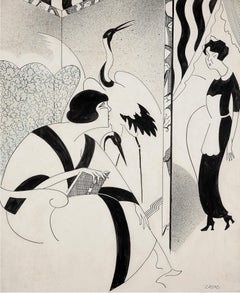
Art Deco Woman before a Mirror - Vogue Magazine Artist
Located in Miami, FL
Fabled Vogue Magazine Cover Artist Eduardo Garcia Benito depicts a perfectly posed long-neck flapper with her reflection in a mirror, Her extrav...
Category

1920s Art Deco Miami - Drawings and Watercolor Paintings

Materials

Paper, Ink

Handsome Couple in Sailboat - Collier s Magazine Illustration
By Earl Oliver Hurst
Located in Miami, FL
Collier's Magazine Illustration Signed lower left Watercolor on board From the Estate of Charles Martignette. Work is framed in a period wood frame Framed under glass Framed to an...
Category

1940s American Modern Miami - Drawings and Watercolor Paintings

Materials

Watercolor, Board

Connecticut Hills
By Lyonel Feininger
Located in Miami, FL
This later work by Lyonel Feininger approaches almost full abstraction. It was executed in 1950 at a crucial moment in American art history. Abstract Expressionism and non-representational art were in full gear and taking the world by storm. Yet Feininger who was associated with the German expressionist groups: Die Brücke...
Category

1990s Abstract Expressionist Miami - Drawings and Watercolor Paintings

Materials

India Ink, Watercolor

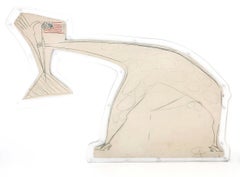
UNTITLED (GIRAFFE)
By Alexander Calder
Located in Aventura, FL
Original crayon and pencil drawing on cut-out paper mounted on board. Hand signed with artist's initials CA. Executed in 1966, this work is registered in the archives of the Calder...
Category

1960s Surrealist Miami - Drawings and Watercolor Paintings

Materials

Paper, Crayon, Pencil

Still Thinking About These?

All Recently Viewed