New York - Landscape Prints

to
3,213
3,093
883
769
417
276
Overall Width
to
Overall Height
to
1,980
501
461
433
296
277
219
198
38
38
20
9
8
8
169
148
100
93
79
64
146
4,615
672
11
16
439
267
254
758
1,007
723
669
204
34
3,175
2,135
125
2,332
1,422
1,143
658
644
614
564
462
459
458
318
247
244
228
198
190
177
169
155
154
3,115
778
502
448
320
272
1,033
5,498
11,209
4,976
Item Ships From: New York
Five (5) city views, 17th Century French School by Winckler and others
Located in Middletown, NY
Paris: c1675. Five engravings: "Une Autre Partie du Palais Villa Mene a Gene" Engraving with hand-coloring, circa 1760-1790, on laid paper, with a Letters watermark (WA....), publis...
Category

Late 17th Century French School New York - Landscape Prints

Materials

Watercolor, Handmade Paper, Engraving
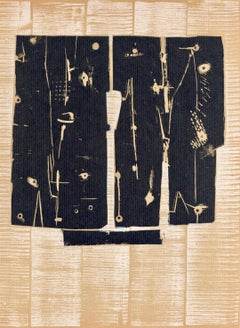
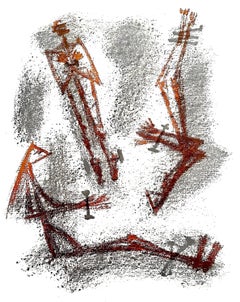
Pietro Consagra, Untitled, from XXe Siecle, 1959
By Pietro Consagra
Located in Southampton, NY
This exquisite woodcut by Pietro Consagra (1920–2005), titled Sans titre (Untitled), from the album XXe Siecle, Nouvelle serie, XXIe Annee, N°13, Noel 1959, originates from the 1959 ...
Category

1950s Modern New York - Landscape Prints

Materials

Woodcut

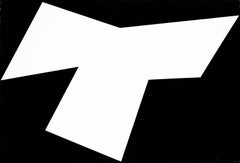
Ellsworth Kelly, Black and White, from Derriere le Miroir, 1958
By Ellsworth Kelly
Located in Southampton, NY
This exquisite lithograph by Ellsworth Kelly (1923–2015), titled Noir et blanc (Black and White), originates from the historic 1958 folio Derriere le Miroir, No. 110. Published by Ma...
Category

1950s Hard-Edge New York - Landscape Prints

Materials

Lithograph

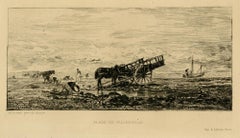
Plage de Villerville
By Charles François Daubigny
Located in Middletown, NY
Paris: Gazette des Beaux-Arts, 1856. Drypoint etching on cream laid paper, 4 7/8 x 8 3/8 inches (124 x 245 mm), full margins. In good condition with light uniform age tone. Fourth s...
Category

Mid-19th Century Realist New York - Landscape Prints

Materials

Drypoint, Etching

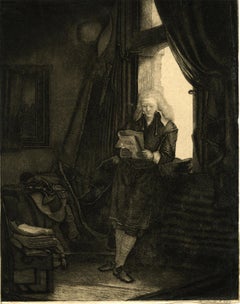
Jan Six by Pierre François Basan, after Rembrandt
By (After) Rembrandt van Rijn
Located in Middletown, NY
Etching on thin laid paper laid down to mid-weight Japon paper, 9 5/8 x 7 9/16 inches (244 x 190 mm), narrow to thread margins. Lettered below the image in the lower right margin wit...
Category

Early 19th Century Old Masters New York - Landscape Prints

Materials

Laid Paper, Etching, Handmade Paper

Jules Pascin, Jeanie Warnod, from Pascin, 1954 (after)
By Jules Pascin
Located in Southampton, NY
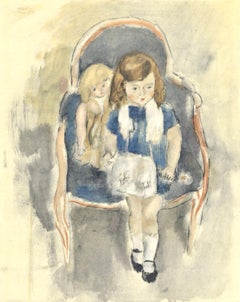
This exquisite lithograph after Jules Pascin (1885–1930), titled Jeanie Warnod, from the album Pascin, originates from the 1954 edition published by Editions du livre, Monte-Carlo, under the direction of Andre Sauret, Editeur, Monte-Carlo, and printed by Mourlot Freres, Paris, March 3, 1954. Jeanie Warnod captures Pascin’s delicate mastery of line and his profound sensitivity to the human form, embodying the poetic lyricism and emotional intimacy that define his work. Executed as a lithograph on grand velin Renage paper, this work measures 12.25 x 9.5 inches. Signed in the plate and unnumbered as issued. The edition exemplifies the refined craftsmanship of Mourlot Freres, Paris, and the exceptional production standards of Editions du livre, Monte-Carlo. Artwork Details: Artist: After Jules Pascin (1885–1930) Title: Jeanie Warnod, from the album Pascin Medium: Lithograph on grand velin Renage paper Dimensions: 12.25 x 9.5 inches (31.1 x 24.1 cm) Inscription: Signed in the plate and unnumbered as issued Date: 1954 Publisher: Editions du livre, Monte-Carlo, under the direction of Andre Sauret, Editeur, Monte-Carlo Printer: Mourlot Freres, Paris Condition: Well preserved, consistent with age and medium Provenance: From the album Pascin, published by Editions du livre, Monte-Carlo, 1954 Notes: Excerpted from the album (translated from French), This album, published under the direction of Andre Sauret, was completed on March 3, 1954. The color plates were executed in the workshops of Mourlot Freres, lithographes, in Paris. Typography of L'Imprimerie Union. The original etchings attached to the C head examples were printed on Roger Lacouriere's presses. The total edition was drawn in MM examples, decomposing as follows: C examples numbered from I to C with III original etchings, MCM examples from CI to MM. About the Publication: Pascin, published in Monte-Carlo in 1954 under the direction of Andre Sauret and printed by Mourlot Freres, Paris, stands as one of the most refined tributes to the artist’s oeuvre within the distinguished postwar series of French art albums. The album combines impeccable lithographic craftsmanship with scholarly presentation, highlighting the poetic subtlety and expressive line central to Pascin’s artistic legacy. Printed on grand velin Renage paper, the publication exemplifies the collaboration between Sauret and Mourlot that defined a generation of fine art editions, uniting artists, printers, and publishers dedicated to preserving the vitality of modern art in print. The album reflects the technical mastery of Mourlot’s atelier—celebrated for its work with Picasso, Matisse, Chagall, Braque, and Léger—while reinforcing Editions du livre’s commitment to producing luxurious, museum-quality publications that captured the spirit and emotion of twentieth-century masters. As a fine art album, Pascin occupies a central place among mid-century European art editions, representing both a celebration of the artist’s humanistic vision and a testament to the collaborative artistry that sustained modern printmaking. About the Artist: Jules Pascin (1885–1930) was a Bulgarian-born French painter and draftsman whose exquisite sensitivity, refined draftsmanship, and poetic vision made him one of the most evocative and influential figures of early modern art. Known as “the Prince of Montparnasse,” Pascin became a central figure of the Ecole de Paris and a defining presence in the bohemian world of early 20th-century Paris. Born Julius Mordecai Pincas in Vidin, Bulgaria, to a wealthy Sephardic Jewish family, he studied in Vienna and Munich before moving to Paris in 1905, where he quickly established himself among the leading modernists of his era, including Pablo Picasso, Amedeo Modigliani, Chaim Soutine, Georges Braque, and Marc Chagall. Deeply influenced by Edgar Degas, Henri de Toulouse-Lautrec, and Paul Cezanne, Pascin created paintings and drawings distinguished by their delicate lines, soft tonal harmonies, and psychological depth. His nudes, portraits, and scenes of Parisian cafe life radiate an atmosphere of quiet intimacy and emotional nuance, capturing the fragility and beauty of human existence. Unlike contemporaries such as Picasso, Joan Miro, Salvador Dali, Wassily Kandinsky, Marcel Duchamp, Alexander Calder, Alberto Giacometti, and Man Ray, who pushed toward abstraction and surrealism, Pascin remained devoted to figuration, exploring the subtleties of light, gesture, and emotion with unmatched tenderness. His works express sensuality without artifice, revealing the vulnerability and inner life of his subjects through line and color that seem to breathe with human feeling. His studio became a gathering place for artists and writers such as Ernest Hemingway, Henry Miller, and Anais Nin, who admired his introspection and his ability to translate psychological complexity into visual poetry. Though his life was marked by emotional turbulence and melancholy, his art radiated a timeless empathy that transcended style, influencing later artists including Balthus, Lucian Freud, Francis Bacon, Egon Schiele, and Eric Fischl, who drew inspiration from his fusion of sensuality, sensitivity, and psychological depth. Today, his works are held in major institutions including the Centre Pompidou, Musee d’Orsay, Tate Modern, and the Museum of Modern Art in New York, where they continue to resonate for their humanism and grace. Standing alongside Picasso, Calder, Giacometti, Dali, Miro, Kandinsky, Duchamp, and Man Ray, Jules Pascin helped define the emotional vocabulary of modern painting, and his legacy endures as one of the most intimate and humanist voices of his century. The highest auction record for Jules Pascin was achieved by Portrait de jeune fille en robe rouge sur fond bleu (1928), which sold for $2,950,500 USD at Sotheby’s, New York, on May 8, 2008, confirming his enduring reputation as one of the most refined, psychologically profound, and collectible artists of modern art history. Jules Pascin Jeanie Warnod Pascin Editions du livre Monte-Carlo 1954 lithograph...
Category

1950s Modern New York - Landscape Prints

Materials

Lithograph

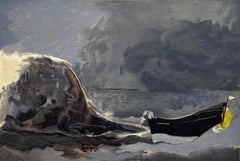
Georges Braque, The Wave, from Varengeville, 1968 (after)
By Georges Braque
Located in Southampton, NY
This exquisite lithograph after Georges Braque (1882–1963), titled La vague (The Wave), originates from the 1968 folio Varengeville, published by Maeght Editeur, Paris, and printed b...
Category

1960s Cubist New York - Landscape Prints

Materials

Lithograph

Big Bambu, signed numbered print based upon Metropolitan Museum installation
Located in New York, NY
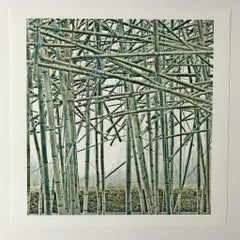
Doug & Mike Starn Big Bambu, BBMet 03.15.2010 K441f, 2010-2011 Epson K3 Ultrachrome inkjet print on gelatin-coated Zerkall paper. Signed. Numbered Signed and numbered from the limited edition of 40. 14 × 14 inches Provenance Acquired from ACRIA, a charitable foundation Donated directly by the artist to the above Unframed Signed and numbered verso (back) from the limited edition of only 40. This archival inkjet print depicts the Starn brothers...
Category

2010s Contemporary New York - Landscape Prints

Materials

Ink, Inkjet

East-West/West-East in Brouq Nature Reserve Qatar (Hand Signed by Richard Serra)
By Richard Serra
Located in New York, NY
Richard Serra East-West/West-East: A Permanent in the Brouq Nature Reserve, Qatar (Hand Signed by Richard Serra), ca. 2014 Superb provenance: donated by the artist to a major contemporary art organization Very rare offset lithograph (Hand Signed by Richard Serra) Boldly signed on the front in black marker by Richard Serra 24 × 36 inches Unframed Sscarce when hand signed by Richard Serra. This work depicts Serra's iconic permanent installation in the desert of Brouq Qatar: East-West/West-East, which has become a famous landmark in Qatar since its installation in 2014. According to the Jewish-born Richard Serra, he had been visiting Qatar for about 12 years, during which he was introduced to the Chairperson of the Qatari Museums Authority and the sister of the new Emir, Sheikha Mayassa, by the architect of the Museum of Islamic Art, IM Pei. It was Sheikh Mayassathat who urged Serra to build a sculpture in the desert. The artist once said it was the most important thing he had ever done. In 2020 the Serra sculpture was famously vandalized. This hand signed print has superb provenance as it was donated directly by the artist to a major charitable foundation and is accompanied by a documentation from a Foundation as well as a COA from the gallery. Richard Serra biography: Obsession is what it comes down to. It is difficult to think without obsession, and it is impossible to create something without a foundation that is rigorous, incontrovertible, and, in fact, to some degree repetitive. Repetition is the ritual of obsession. Repetition is a way to jumpstart the indecision of beginning. To persevere and to begin over and over again is to continue the obsession with work. Work comes out of work. In order to work you must already be working. —Richard Serra One of the most significant artists of his generation, he has produced large-scale, site-specific sculptures for architectural, urban, and landscape settings spanning the globe, from Iceland to New Zealand. Born in 1938 in San Francisco, Richard Serra lives and works in New York and on the North Fork of Long Island. Serra attended the University of California, Berkeley before transferring to the University of California, Santa Barbara graduating with a BA in English literature; he then studied painting at Yale University, New Haven, Connecticut completing both a BFA and MFA. He began showing with Leo Castelli in 1968, and his first solo exhibition in New York was held at the Leo Castelli Warehouse the following year. His first solo museum exhibition was held at the Pasadena Art Museum, California, in 1970. Serra’s sculptures and drawings have been celebrated with two retrospectives at the Museum of Modern Art, New York, twenty years apart: Richard Serra/Sculpture (1986) and Richard Serra Sculpture: Forty Years (2007). He has had solo exhibitions at the Stedelijk Museum, Amsterdam (1977–78); Kunsthalle Tübingen, Germany (1978); Staatliche Kunsthalle Baden-Baden, Germany (1978); Museum Boijmans Van Beuningen, Rotterdam, Netherlands (1980, 2014, and 2017); Centre Pompidou, Paris (1983–84); Museum Haus Lange, Krefeld, Germany (1985); Louisiana Museum, Humlebæk, Denmark (1986); Westfälisches Landesmuseum für Kunst und Kulturgeschichte, Münster, Germany (1987); Städtische Galerie im Lenbachhaus, Munich (1987); Stedelijk Van Abbemuseum, Eindhoven, Netherlands (1988); Bonnefantenmuseum, Maastricht, Netherlands (1990); Kunsthaus Zürich (1990); CAPC Musée d’Art Contemporain, Bordeaux, France (1990); Museo Nacional Centro de Arte Reina Sofía, Madrid (1992); Kunstsammlung Nordrhein-Westfalen, Düsseldorf, Germany (1992); Dia Center for the Arts, New York (1997); Centro de Arte Hélio Oiticica, Rio de Janeiro (1997–98); Trajan’s Market, Rome (1999–2000); Pulitzer Arts Foundation, St. Louis (2003); and Museo Archeologico Nazionale di Napoli, Naples, Italy (2004). In 2005 The Matter of Time (1994–2005), a series of eight large-scale works, was installed permanently at the Guggenheim Museum Bilbao, Spain. For Monumenta 2008, the major site-specific installation Promenade was shown at the Grand Palais, Paris. Three years later the large-scale, site-specific sculpture 7 was permanently installed opposite the Museum of Islamic Art in Doha, Qatar. A major traveling retrospective dedicated to Serra’s drawings was presented at the Metropolitan Museum of Art, New York, San Francisco Museum of Modern Art, and the Menil Collection, Houston (the organizing venue), from 2011 to 2012. In 2014 the Qatar Museums Authority presented a two-venue retrospective survey of Serra’s work, and East-West/West-East (2014) was permanently installed in the Brouq Nature Reserve, Zekreet, Qatar. In 2017 the Museum Wiesbaden, Germany, presented Richard Serra: Props, Films, Early Works; an overview of Serra’s work in film and video was shown at the Kunstmuseum Basel; and recent drawings were featured at the Museum Boijmans Van Beuningen. Serra has participated in numerous major international exhibitions, including Documenta (1972, 1977, 1982, and 1987), and the Biennale di Venezia (1980, 1984, 2001, and 2013), and his work has been included in many Whitney Annuals and Biennials (1968, 1970, 1973, 1977, 1979, 1981, 1995, and 2006). He is the recipient of the Leone d’Oro for lifetime achievement, Biennale di Venezia, Venice (2001); Orden Pour le Mérite...
Category

2010s Minimalist New York - Landscape Prints

Materials

Lithograph, Offset

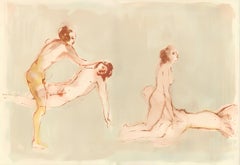
Jules Pascin, Two Nudes, from Pascin, 1954 (after)
By Jules Pascin
Located in Southampton, NY
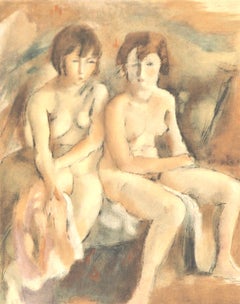
This exquisite lithograph after Jules Pascin (1885–1930), titled Deux nus (Two Nudes), from the album Pascin, originates from the 1954 edition published by Editions du livre, Monte-Carlo, under the direction of Andre Sauret, Editeur, Monte-Carlo, and printed by Mourlot Freres, Paris, March 3, 1954. Deux nus captures Pascin’s delicate mastery of line and his profound sensitivity to the human form, embodying the poetic lyricism and emotional intimacy that define his work. Executed as a lithograph on grand velin Renage paper, this work measures 12.25 x 9.5 inches. Signed in the plate and unnumbered as issued. The edition exemplifies the refined craftsmanship of Mourlot Freres, Paris, and the exceptional production standards of Editions du livre, Monte-Carlo. Artwork Details: Artist: After Jules Pascin (1885–1930) Title: Deux nus (Two Nudes), from the album Pascin Medium: Lithograph on grand velin Renage paper Dimensions: 12.25 x 9.5 inches (31.1 x 24.1 cm) Inscription: Signed in the plate and unnumbered as issued Date: 1954 Publisher: Editions du livre, Monte-Carlo, under the direction of Andre Sauret, Editeur, Monte-Carlo Printer: Mourlot Freres, Paris Condition: Well preserved, consistent with age and medium Provenance: From the album Pascin, published by Editions du livre, Monte-Carlo, 1954 Notes: Excerpted from the album (translated from French), This album, published under the direction of Andre Sauret, was completed on March 3, 1954. The color plates were executed in the workshops of Mourlot Freres, lithographes, in Paris. Typography of L'Imprimerie Union. The original etchings attached to the C head examples were printed on Roger Lacouriere's presses. The total edition was drawn in MM examples, decomposing as follows: C examples numbered from I to C with III original etchings, MCM examples from CI to MM. About the Publication: Pascin, published in Monte-Carlo in 1954 under the direction of Andre Sauret and printed by Mourlot Freres, Paris, stands as one of the most refined tributes to the artist’s oeuvre within the distinguished postwar series of French art albums. The album combines impeccable lithographic craftsmanship with scholarly presentation, highlighting the poetic subtlety and expressive line central to Pascin’s artistic legacy. Printed on grand velin Renage paper, the publication exemplifies the collaboration between Sauret and Mourlot that defined a generation of fine art editions, uniting artists, printers, and publishers dedicated to preserving the vitality of modern art in print. The album reflects the technical mastery of Mourlot’s atelier—celebrated for its work with Picasso, Matisse, Chagall, Braque, and Léger—while reinforcing Editions du livre’s commitment to producing luxurious, museum-quality publications that captured the spirit and emotion of twentieth-century masters. As a fine art album, Pascin occupies a central place among mid-century European art editions, representing both a celebration of the artist’s humanistic vision and a testament to the collaborative artistry that sustained modern printmaking. About the Artist: Jules Pascin (1885–1930) was a Bulgarian-born French painter and draftsman whose exquisite sensitivity, refined draftsmanship, and poetic vision made him one of the most evocative and influential figures of early modern art. Known as “the Prince of Montparnasse,” Pascin became a central figure of the Ecole de Paris and a defining presence in the bohemian world of early 20th-century Paris. Born Julius Mordecai Pincas in Vidin, Bulgaria, to a wealthy Sephardic Jewish family, he studied in Vienna and Munich before moving to Paris in 1905, where he quickly established himself among the leading modernists of his era, including Pablo Picasso, Amedeo Modigliani, Chaim Soutine, Georges Braque, and Marc Chagall. Deeply influenced by Edgar Degas, Henri de Toulouse-Lautrec, and Paul Cezanne, Pascin created paintings and drawings distinguished by their delicate lines, soft tonal harmonies, and psychological depth. His nudes, portraits, and scenes of Parisian cafe life radiate an atmosphere of quiet intimacy and emotional nuance, capturing the fragility and beauty of human existence. Unlike contemporaries such as Picasso, Joan Miro, Salvador Dali, Wassily Kandinsky, Marcel Duchamp, Alexander Calder, Alberto Giacometti, and Man Ray, who pushed toward abstraction and surrealism, Pascin remained devoted to figuration, exploring the subtleties of light, gesture, and emotion with unmatched tenderness. His works express sensuality without artifice, revealing the vulnerability and inner life of his subjects through line and color that seem to breathe with human feeling. His studio became a gathering place for artists and writers such as Ernest Hemingway, Henry Miller, and Anais Nin, who admired his introspection and his ability to translate psychological complexity into visual poetry. Though his life was marked by emotional turbulence and melancholy, his art radiated a timeless empathy that transcended style, influencing later artists including Balthus, Lucian Freud, Francis Bacon, Egon Schiele, and Eric Fischl, who drew inspiration from his fusion of sensuality, sensitivity, and psychological depth. Today, his works are held in major institutions including the Centre Pompidou, Musee d’Orsay, Tate Modern, and the Museum of Modern Art in New York, where they continue to resonate for their humanism and grace. Standing alongside Picasso, Calder, Giacometti, Dali, Miro, Kandinsky, Duchamp, and Man Ray, Jules Pascin helped define the emotional vocabulary of modern painting, and his legacy endures as one of the most intimate and humanist voices of his century. The highest auction record for Jules Pascin was achieved by Portrait de jeune fille en robe rouge sur fond bleu (1928), which sold for $2,950,500 USD at Sotheby’s, New York, on May 8, 2008, confirming his enduring reputation as one of the most refined, psychologically profound, and collectible artists of modern art history. Jules Pascin Deux nus Two Nudes Pascin Editions du livre Monte-Carlo 1954 lithograph...
Category

1950s Modern New York - Landscape Prints

Materials

Lithograph

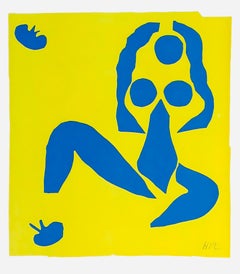
Henri Matisse, Blue Nude, The Frog, from Verve, Revue Artistique, 1958 (after)
By Henri Matisse
Located in Southampton, NY
This exquisite lithograph after Henri Matisse (1869–1954), titled Nu Bleu, La Grenouille (Blue Nude, The Frog), from Verve, Revue Artistique et Litteraire, Vol. IX, No. 35–36, origin...
Category

1950s Modern New York - Landscape Prints

Materials

Lithograph

Leonor Fini, Untitled, from Parallelement, 1969
By Leonor Fini
Located in Southampton, NY
This exquisite lithograph, titled Sans titre (Untitled), by Leonor Fini, from the folio Parallelement (Parallel), Illustre de lithographies originales de Leonor Fini (Illustrated wit...
Category

1960s Modern New York - Landscape Prints

Materials

Lithograph

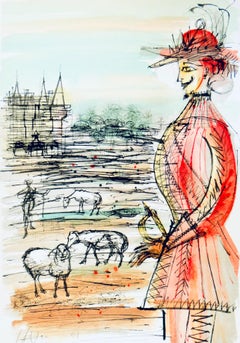
Le berger et le roi, Vingt fables de La fontaine, Jean Carzou
By Jean Carzou
Located in Southampton, NY
Woodcut on vélin d'Arches paper. Inscription: signed in the plate and unnumbered, as issued. Good condition. Notes: from the folio, Vingt fables de La fontaine, 1961. Published by Éd...
Category

1960s Modern New York - Landscape Prints

Materials

Woodcut

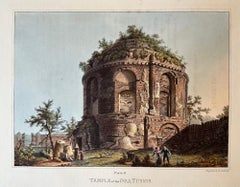
Temple of the Dea Tussis
By Matthew Dubourg
Located in Middletown, NY
London: J. Taylor, 1820. Etching and aquatint with engraving on cream wove paper with a gilded edge, 11 1/2 x 14 3/4 inches (290 x 374 mm), full margins. Small spots of adhesive resi...
Category

Early 19th Century English School New York - Landscape Prints

Materials

Handmade Paper, Engraving, Etching, Aquatint
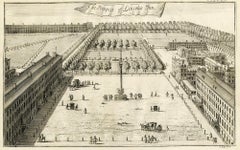
A Prospect of Lincoln s Inn; A Survey of the Cities of London and Westminster
By Johannes Kip
Located in Middletown, NY
A fine prospect image of gardens at Lincoln's Inn, London. A Prospect of Lincoln's Inn; A Survey of the Cities of London and Westminster; The Fountain and Gardens in New Square, Lin...
Category

Early 18th Century English School New York - Landscape Prints

Materials

Handmade Paper, Engraving

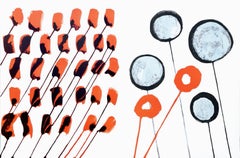
Alexander Calder, Untitled, from Derriere le miroir, 1966
By Alexander Calder
Located in Southampton, NY
This exquisite lithograph by Alexander Calder (1898–1976), titled Sans titre (Untitled), from the folio Derriere le miroir, No. 156, originates from the 1966 edition published by Mae...
Category

1960s Modern New York - Landscape Prints

Materials

Lithograph

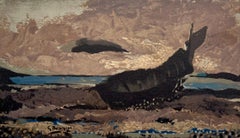
Georges Braque, Black Seascape, from Varengeville, 1968 (after)
By Georges Braque
Located in Southampton, NY
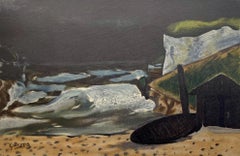
This exquisite lithograph after Georges Braque (1882–1963), titled Marine noire (Black Seascape), originates from the 1968 folio Varengeville, published by Maeght Editeur, Paris, and...
Category

1960s Cubist New York - Landscape Prints

Materials

Lithograph

Georges Braque, The Plow, from Varengeville, 1968 (after)
By Georges Braque
Located in Southampton, NY
This exquisite lithograph after Georges Braque (1882–1963), titled La charrue (The Plow), originates from the 1968 folio Varengeville, published by Maeght Editeur, Paris, and printed...
Category

1960s Cubist New York - Landscape Prints

Materials

Lithograph

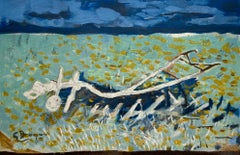
Georges Braque, The Stranded Boat, from Varengeville, 1968 (after)
By Georges Braque
Located in Southampton, NY
This exquisite lithograph after Georges Braque (1882–1963), titled La barque echouee (The Stranded Boat), originates from the 1968 folio Varengeville, published by Maeght Editeur, Pa...
Category

1960s Cubist New York - Landscape Prints

Materials

Lithograph

Keith Haring, Untitled, from Against All Odds, 1990
By Keith Haring
Located in Southampton, NY
This exquisite lithograph by Keith Haring (1958–1990), titled Untitled, from the album Against All Odds, 20 drawings - Oct. 3, 1989 (Against All Odds, 20 drawings - Oct. 3, 1989), or...
Category

1990s Pop Art New York - Landscape Prints

Materials

Lithograph

Henri Laurens, Daphne, from Verve, Revue Artistique, 1953
By Henri Laurens
Located in Southampton, NY
This exquisite lithograph by Henri Laurens (1885–1954), titled Daphne (Daphne), from Verve, Revue Artistique et Litteraire, Vol. VII, No. 27–28, originates from the 1953 issue publis...
Category

1950s Modern New York - Landscape Prints

Materials

Lithograph

Le vieillard et les trois jeunes, Vingt fables de La fontaine, Maurice Brianchon
By Maurice Brianchon
Located in Southampton, NY
Woodcut on vélin d'Arches paper. Inscription: signed in the plate and unnumbered, as issued. Good condition. Notes: from the folio, Vingt fables de La fontaine, 1961. Published by Éd...
Category

1960s Modern New York - Landscape Prints

Materials

Woodcut

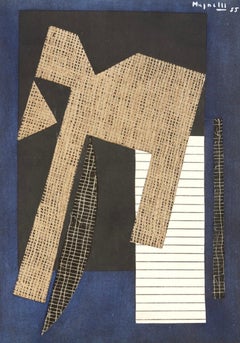
Alberto Magnelli, Pasted Paper, from XXe Siecle, 1957
By Alberto Magnelli
Located in Southampton, NY
This exquisite lithograph by Alberto Magnelli (1888–1971), titled Papel colle (Pasted Paper), from the album XXe Siecle, Nouvelle serie, No. 9 (double), Juin 1957, originates from th...
Category

1950s Cubist New York - Landscape Prints

Materials

Lithograph

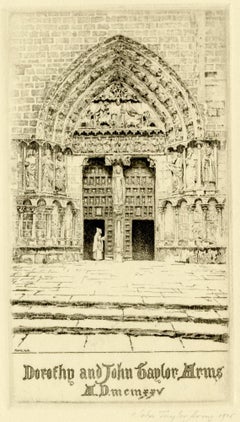
Dorothy and John Taylor Arms M.D. MCMXXV
By John Taylor Arms
Located in Middletown, NY
Etching on cream wove paper 5 7/8 x 3 3/8 inches (150 x 86 mm). Signed and dated in pencil in the lower margin. First state (of 2), before the removal of the inscription in the lowe...
Category

1920s New York - Landscape Prints

Materials

Handmade Paper, Etching

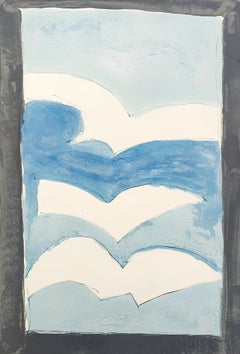
Braque, Composition, Braque Espaces, 13 Dessins, Lavis, Aquarelles (after)
By Georges Braque
Located in Southampton, NY
Lithograph and stencil on vélin papier a la cuve du moulin richard de bas specialement filigrané pour cette édition paper. Inscription: signed in the plate and unnumbered, as issued....
Category

1950s Modern New York - Landscape Prints

Materials

Lithograph, Stencil

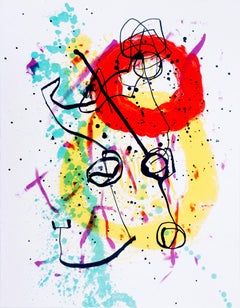
Joan Miro, Untitled, from Tarragona Tapestry, 1972 (after)
By Joan Miró
Located in Southampton, NY
This exquisite lithograph after Joan Miro (1893–1983), titled Sans titre (Untitled), from the folio Tapis De Tarragona, illustrations, Joan Miro (Tarragona Tapestry, Illustrations), ...
Category

1970s Modern New York - Landscape Prints

Materials

Lithograph

Pierre-Auguste Renoir, The Washerwomen, 1951 (after)
By Pierre-Auguste Renoir
Located in Southampton, NY
This exquisite lithograph after Pierre-Auguste Renoir (1841–1919), titled Les Laveuses (The Washerwomen), from the album Les Lithographies de Renoir (The Lithographs of Renoir), orig...
Category

1950s Impressionist New York - Landscape Prints

Materials

Lithograph

Alfred Manessier, Untitled, from Prints from the Mourlot Press, 1964
By Alfred Manessier
Located in Southampton, NY
This exquisite lithograph by Alfred Manessier (1911–1993), titled Sans titre (Untitled), from the album Prints from the Mourlot Press, exhibition sponsored by the French Embassy, cir...
Category

1960s Modern New York - Landscape Prints

Materials

Lithograph

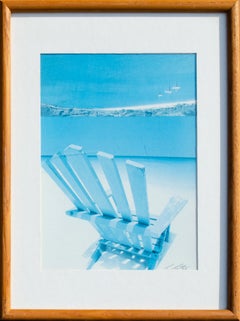
Adirondack Chair Summer Scene by Renee Ritter
By Renee Ritter
Located in New York, NY
Renee Gaylin Ritter (American, b. 1935) Remembering a Summer Past, c. 1990s-2000s Multimedia 16 x 12 in. Framed: 17 x 13 x 1 in. Signed lower right Bio from Renee Ritter's website: I'm a New Yorker, born and bred. I was raised with noise and rush and life all around me. My world was vivid technicolor, and no one ran faster than I did. I met and married the man of my dreams, and had the joys and exasperations of raising a family. And all of these events would have been the colors of my canvas if not for the happy opportunity of being able to spend some years in Japan. Japan is the perfect place to plunk down a New Yorker. While it races along on one level, there is this other part of Japan that forces you to hit the mental brakes until the images racing by slow down enough to actually be seen! Eastern thought is a well from which to draw the pure water that clears the mind and strengthens the soul. I've had the unbelievable pleasure of turning visions into realities, and of having those pieces of me scattered around the world. I'm thrilled that they've found so much acceptance in exhibitions, and I'm humbled at the thought that they hang on the walls of museums. But I have to say that I am most pleased when they speak so loudly to another soul that that person has to bring me home to continue our conversation for years to come. For the last 18 years, I've been a teacher, too. I have all the joys of being able to step back from what I do, and think through the principles I've recognized and the pathways I've wandered. And then to offer those insights to others to help them bring out their own mental images for the rest of us to share. AWARDS National Collage Society, "Postcard Exhibit", Merit Award, 00 National Collage Society, Kent State U, Kent, OH, Merit Award, 99 Hazel Witte...
Category

1990s Contemporary New York - Landscape Prints

Materials

Mixed Media

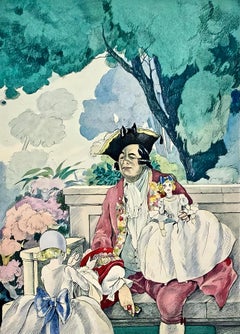
Brunelleschi, Composition, La Leçon d amour dans un parc (after)
By Umberto Brunelleschi
Located in Southampton, NY
Lithograph and stencil on vélin d’Arches paper. Unsigned and unnumbered, as issued. Good condition. Notes: From the volume, La Leçon d'amour dans un parc, 1933. Published by Éditions...
Category

1930s Modern New York - Landscape Prints

Materials

Lithograph, Stencil

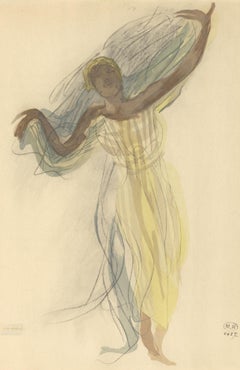
Francois Auguste Rene Rodin, Untitled, from The Varende, 1944 (after)
By Auguste Rodin
Located in Southampton, NY
This exquisite lithograph after Francois Auguste Rene Rodin (1840–1917), titled Sans titre (Untitled), from the folio La Varende, Rodin (La Varende, Rodin), originates from the 1944 ...
Category

1940s Modern New York - Landscape Prints

Materials

Lithograph, Stencil

Raoul Ubac, Summer Landscape, from Derriere le Miroir, 1960
By Raoul Ubac
Located in Southampton, NY
This exquisite lithograph by Raoul Ubac (1910–1985), titled Paysage d'Ete (Summer Landscape), originates from the 1960 folio Derriere le Miroir, No. 119, Poetes, peintres, sculpteurs...
Category

1960s Modern New York - Landscape Prints

Materials

Lithograph

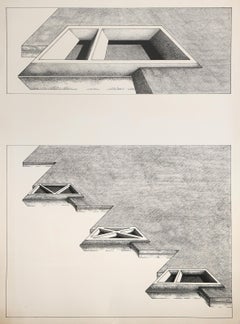
Facade, Conceptual Lithograph by David Richard Smyth
Located in Long Island City, NY
David Richard Smyth, American (1943 - ) - Facade, Year: 1972, Medium: Lithograph, signed, dated and numbered in pencil, Edition: Bon a Tirer, Image Size: 36 x 26.5 inches, Size: ...
Category

1970s Conceptual New York - Landscape Prints

Materials

Lithograph

Georges Braque, Night Birds, from Prints from the Mourlot Press, 1964 (after)
By Georges Braque
Located in Southampton, NY
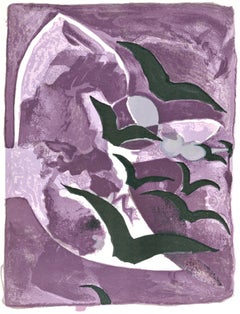
This exquisite lithograph after Georges Braque (1882–1963), titled Oiseaux de nuit (Night Birds), from the album Prints from the Mourlot Press, exhibition sponsored by the French Embassy, circulated by the Traveling Exhibition Service of the National Collection of Fine Arts, Smithsonian Institution 1964–1965, originates from the 1964 edition published by Fernand Mourlot, Paris, in collaboration with the Embassy of France, Washington, D.C., and the Smithsonian Institution, Washington D.C., and printed by Mourlot Freres, Paris, October 27, 1964. This lithograph exemplifies Braque’s poetic exploration of form, balance, and symbolism, merging Cubist structure with lyrical abstraction. In Oiseaux de nuit, the recurring motif of the bird—one of Braque’s most personal and spiritual symbols—embodies freedom, transcendence, and harmony between nature and imagination. Executed as a lithograph on velin d'Arches paper, this work measures 10 x 7.5 inches. Unsigned and unnumbered as issued. The edition exemplifies the refined craftsmanship of Mourlot Freres and reflects Braque’s ability to fuse structural clarity with lyrical mystery. Artwork Details: Artist: After Georges Braque (1882–1963) Title: Oiseaux de nuit (Night Birds), from the album Prints from the Mourlot Press Medium: Lithograph on velin d'Arches paper Dimensions: 10 x 7.5 inches (25.4 x 19.05 cm) Inscription: Unsigned and unnumbered as issued Date: 1964 Publisher: Fernand Mourlot, Paris, in collaboration with the Embassy of France, Washington, D.C., and the Smithsonian Institution, Washington D.C. Printer: Mourlot Freres, Paris Condition: Well preserved, consistent with age and medium Provenance: From the album Prints from the Mourlot Press, published by Fernand Mourlot, Paris, 1964 Notes: Excerpted from the album, This exhibition is a manifestation of Franco-American friendship and we would be very happy if it is of interest to all those who visit it. I wish to thank Mrs. Annemarie Pope for proposing and organizing this exhibition of the work of the artists who have used our press. We are honored that Mr. Herve Alphand, Ambassador of France to the United States, and Mr. Edouard Morot-Sir, Cultural Counsellor at the French Embassy in New York, will sponsor this exhibition. I express to them my thanks and appreciation. As for the artists themselves, who executed the originals contained in this catalogue, I can only say simply, "Thank you." They are all friends. We would have liked to include not just the twenty-four illustrations in this small book, but many more. During the year 1963, we lost three great artists who were faithful friends of our press. Thanks to Mrs. Georges Braque, Mr. Louis Carre, and Mr. Edouard Dermit, who have been able to pay our respects to Georges Braque, Jacques Villon and Jean Cocteau. The great Henri Matisse is also with us, since Mrs. Du-thuit-Matisse and her brothers have allowed us to use an unpublished original lithograph. Thanks to them all for their generosity. —Fernand Mourlot. The lithography at Mourlot printing press by Jean Adhemar, Curator of prints at the Bibliotheque nationale. Acknowledgments, Fernand Mourlot has long been the acknowledged master printer of France in every field, from lithographs to fine books to posters. The unfailing quality of his work commands the respect of museums, collectors, and most important of all, the artists themselves. Every product of his workshop bears the mark of Mourlot's discipline and craft and can truly be called an ideal collaboration between artist and artisan. The result of years of thoughtful planning, this special exhibition presents an accurate portrait of the Mourlot Press. We are greatly indebted to Fernand Mourlot, who made the selection, supervised the production of the catalogue, and gave endless time and energy to the details of preparation. This album was finished in Paris on 27th October 1964. The original lithographs and the reproductions were printed on the presses of Mourlot. The Imprimerie Nationale, Director Andre Brignole, was responsible for the typography. The edition has been limited to MM examples on Velin d'Arches and CC on Velin de Rives, reserved for the artists, the staff and the friends of the Imprimerie Mourlot. About the Publication: Prints from the Mourlot Press, published in Paris by Fernand Mourlot in 1964 in collaboration with the Embassy of France and the Smithsonian Institution, celebrated the profound artistic partnerships that defined 20th-century printmaking. The portfolio accompanied a traveling exhibition organized by the Smithsonian’s National Collection of Fine Arts and presented at major institutions across the United States between 1964 and 1965. Containing twenty-four original lithographs by leading modern artists—including Pablo Picasso, Henri Matisse, Georges Braque, Joan Miro, Marc Chagall, Alexander Calder, Fernand Leger, Fritz Glarner, and Jean Cocteau—the publication chronicled the collaborative artistry of Mourlot Freres, whose Paris workshop elevated lithography to a fine art. Each plate demonstrated the mastery of color, composition, and craftsmanship that defined postwar printmaking, while the edition itself stood as a symbol of Franco-American cultural exchange. About the Artist: Georges Braque (1882–1963) was a French painter, sculptor, and printmaker whose pioneering vision transformed the course of 20th-century art. A central figure in modernism and the co-founder of Cubism alongside Pablo Picasso, Braque redefined visual perception by breaking objects into geometric forms and reassembling them from multiple perspectives, creating a new visual language that bridged the gap between abstraction and reality. His early work was influenced by the vibrant colors and expressive energy of the Fauvist painters Henri Matisse and Andre Derain, before evolving toward the more analytical and structured compositions inspired by Paul Cezanne’s theories of form and perspective. Braque’s collaboration with Picasso between 1908 and 1914 marked one of the most fertile and revolutionary periods in art history, resulting in works that challenged traditional notions of space, depth, and illusion. Throughout his career, Braque maintained a deep interest in harmony, rhythm, and balance, infusing his still lifes, landscapes, and later reliefs with poetic subtlety and intellectual rigor. He moved among a brilliant circle of contemporaries including Pablo Picasso, Henri Matisse, Marc Chagall, Juan Gris, Fernand Leger, and Amedeo Modigliani—artists united in their pursuit of new modes of artistic expression. Braque’s influence extended well beyond his own era, shaping the creative approaches of later modernists such as Alexander Calder, Alberto Giacometti, Salvador Dali, Joan Miro, Wassily Kandinsky, Marcel Duchamp, and Man Ray, all of whom drew inspiration from his structural innovations and aesthetic integrity. His works are held in major museum collections worldwide, including the Museum of Modern Art, the Centre Pompidou, the Tate, and the Guggenheim, where they continue to embody the essence of modern artistic thought and visual poetry. The highest price ever paid for a Georges Braque artwork is approximately 15 million USD, achieved in 2013 at Christie’s New York for Paysage a la Ciotat (1907). Georges Braque Oiseaux...
Category

1960s Cubist New York - Landscape Prints

Materials

Lithograph

Fritz Glarner, Tondo, from Prints from the Mourlot Press, 1964
Located in Southampton, NY
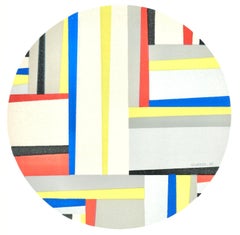
This exquisite lithograph by Fritz Glarner (1899–1972), titled Tondo, from the album Prints from the Mourlot Press, exhibition sponsored by the French Embassy, circulated by the Trav...
Category

1960s Modern New York - Landscape Prints

Materials

Lithograph

Marie Laurencin, Untitled, from Les Biches, 1924
By Marie Laurencin
Located in Southampton, NY
This exquisite lithograph and pochoir by Marie Laurencin (1883–1956), titled Sans titre (Untitled), from the album Les Biches (The Does), originates from the 1924 edition published b...
Category

1920s Modern New York - Landscape Prints

Materials

Lithograph, Stencil

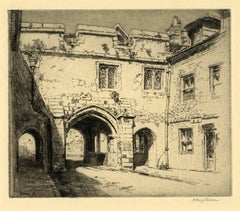
Kingsgate, Winchester
Located in Middletown, NY
Etching on cream wove paper, 8 1/8 x 9 3/4 inches (205 x 246 mm), full margins. Signed in pencil, lower right margin. One minor printing defect appearing as a slightly folded bottom ...
Category

Early 20th Century English School New York - Landscape Prints

Materials

Watercolor, Handmade Paper, Etching

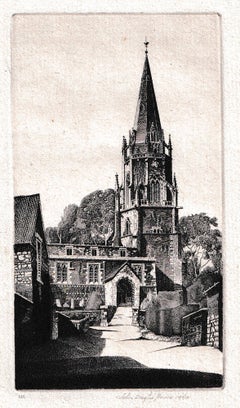
Wilby Church, Northhamptonshire, England
By John Taylor Arms
Located in Middletown, NY
A fine proof impression on antique paper Etching on antique laid paper with a large heraldic watermark. 4 1/4 x 2 3/8 inches (109 x 61mm), full margins. Signed, dated, and inscribed...
Category

Mid-20th Century American Modern New York - Landscape Prints

Materials

Laid Paper, Etching

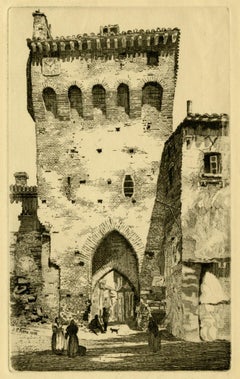
Lescure, Une Tour Des Remparts
By John Taylor Arms
Located in Middletown, NY
Etching on antique laid paper, 6 9/16 x 3 15/16 inches (167 x 100 mm), signed and dated in pencil, lower margin. Potentially a trial proof impression aside from the unsigned edition of 1459. Non-archival tape residue along the top and bottom sheet edges, recto, well outside of image area. Scattered handling creases and general scattered soiling in the margins, minor and unobtrusive. [Fletcher 217]. This work was commissioned by The Architectural Forum...
Category

Mid-20th Century American Modern New York - Landscape Prints

Materials

Handmade Paper, Laid Paper, Etching

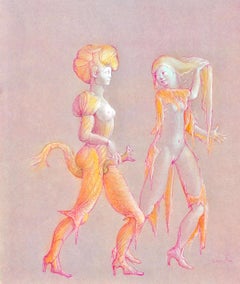
Leonor Fini, Untitled, from Fruits of Passion, 1980 (after)
By Leonor Fini
Located in Southampton, NY
This exquisite heliogravure, titled Sans titre (Untitled), after Leonor Fini, from the album Fruits de la passion, trente-deux variations sur un theme de Leonor Fini (Fruits of Passi...
Category

1980s Surrealist New York - Landscape Prints

Materials

Lithograph

Marie Laurencin, Untitled, from Les Biches, 1924
By Marie Laurencin
Located in Southampton, NY
This exquisite lithograph and pochoir by Marie Laurencin (1883–1956), titled Sans titre (Untitled), from the album Les Biches (The Does), originates from the 1924 edition published b...
Category

1920s Modern New York - Landscape Prints

Materials

Lithograph, Stencil

Composition, Variations sur l imaginaire, Fred Deux
By Fred Deux
Located in Southampton, NY
Lithograph on vélin de Rives paper. Inscription: hand signed and unnumbered, as issued. Good condition. Notes: From the folio, Variations sur l'imaginaire, 1972. Published by Philipp...
Category

1970s Surrealist New York - Landscape Prints

Materials

Lithograph

Maurice Brianchon, Saint-Jean-de-Luz, The Beach, 1964
By Maurice Brianchon
Located in Southampton, NY
This exquisite lithograph by Maurice Brianchon (1899–1979), titled Saint-Jean-de-Luz: la plage (Saint-Jean-de-Luz: The Beach), from the album Prints from the Mourlot Press, exhibitio...
Category

1960s Modern New York - Landscape Prints

Materials

Lithograph

Port of London
By James Duffield Harding
Located in Middletown, NY
A scarce impression of cartographer James Duffield Harding's view of the Port of London as it was in 1834. London: 1834. Lithograph with hand coloring in watercolor on heavy wove p...
Category

Early 19th Century English School New York - Landscape Prints

Materials

Watercolor, Lithograph

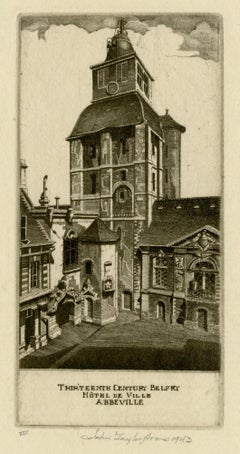
Thirteenth Century Belfry; Hôtel De Ville, Abbeville
By John Taylor Arms
Located in Middletown, NY
Etching on Japon paper, 3 1/2 x 1 3/4 inches (89 x 44 mm), full margins. Signed in pencil and inscribed "III" in the lower margin. Likely an unrecorded trial proof impression from th...
Category

Mid-20th Century American Modern New York - Landscape Prints

Materials

Handmade Paper, Etching

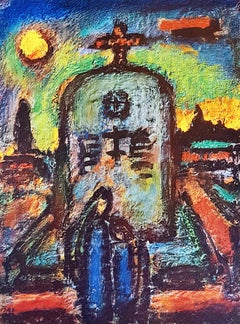
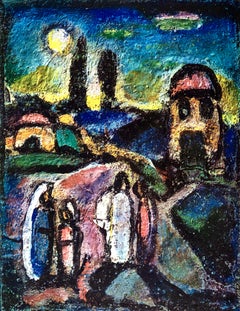
Georges Rouault, Out of the Depths, from Evening Star, 1947 (after)
By Georges Rouault
Located in Southampton, NY
This exquisite heliogravure after Georges Rouault (1871–1958), titled De Profundis (Out of the Depths), from the album Georges Rouault, Stella Vespertina (Evening Star), originates f...
Category

1940s Modern New York - Landscape Prints

Materials

Lithograph

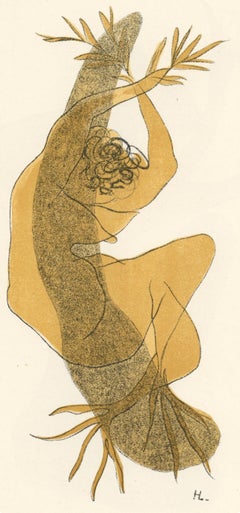
Joan Miro, The Tree-like Woman, from XXe siecle, 1961
By Joan Miró
Located in Southampton, NY
This exquisite lithograph by Joan Miro (1893–1983), titled La Femme Arborescente (The Tree-like Woman), from the album XXe Siecle, Nouvelle serie, XXIIe Annee, No. 16, originates fro...
Category

1960s Surrealist New York - Landscape Prints

Materials

Lithograph

Composition (Vallier 137), Résurrection de l oiseau, Georges Braque
By Georges Braque
Located in Southampton, NY
Lithograph on vélin vélin de Rives paper. Inscription: unsigned and unnumbered, as issued. Good condition. Notes: from the folio, Résurrection de l'oiseau, Georges Braque, 1958. Publ...
Category

1950s Modern New York - Landscape Prints

Materials

Lithograph

Georges Rouault, Christian Pastoral, from Evening Star, 1947 (after)
By Georges Rouault
Located in Southampton, NY
This exquisite heliogravure after Georges Rouault (1871–1958), titled Pastorale Chretienne (Christian Pastoral), from the album Georges Rouault, Stella Vespertina (Evening Star), ori...
Category

1940s Modern New York - Landscape Prints

Materials

Lithograph

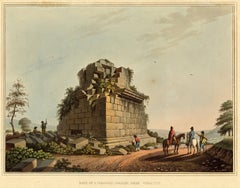
Base of a Colossal Column Near Syracuse, after Luigi Mayer
By Frederick William Watts
Located in Middletown, NY
London: T. Bensley for R. Bowyer, 1810 Hand-colored aquatint on cream wove paper, 9 x 12 3/8 inches (227 x 318 mm), full margins. Scattered light toning and a spray of light spots o...
Category

Early 19th Century English School New York - Landscape Prints

Materials

Handmade Paper, Aquatint

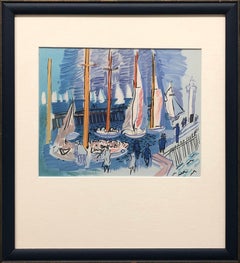
Raoul Dufy Les Regates a Honfleur Vintage Fauvist Mid Century
By (after) Raoul Dufy
Located in Brooklyn, NY
Regates by Raoul Dufy is a lithograph from the book Lettre à mon Peintre by Marcelle Oury, printed on high-quality velin Arjomari paper. The artwork is framed in a navy wood frame wi...
Category

1960s Modern New York - Landscape Prints

Materials

Lithograph

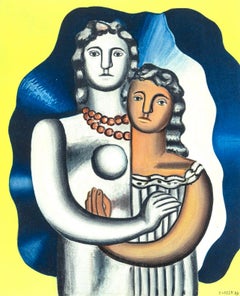
Fernand Leger, The Two Figures, from Derriere le miroir, 1955 (after)
By Fernand Léger
Located in Southampton, NY
This exquisite lithograph after Fernand Leger (1881–1955), titled Le deux figures (The Two Figures), from the folio Derriere le miroir, No. 79-81, originates from the 1955 edition published by Maeght Editeur, Paris, and printed by Mourlot Freres, Paris, 1955. This composition exemplifies Leger’s rhythmic balance of color, form, and movement, translating the mechanical vitality of modern life into a harmonious, humanized geometry. Executed as a lithograph on velin paper, this work measures 15 x 11 inches. Signed in the plate and unnumbered as issued. The edition exemplifies the superb craftsmanship of Mourlot Freres, Paris. Artwork Details: Artist: After Fernand Leger (1881–1955) Title: Le deux figures (The Two Figures), from the folio Derriere le miroir, No. 79-81 Medium: Lithograph on velin paper Dimensions: 15 x 11 inches (38.1 x 27.94 cm) Inscription: Signed in the plate and unnumbered as issued Date: 1955 Publisher: Maeght Editeur, Paris Printer: Mourlot Freres, Paris Condition: Well preserved, consistent with age and medium Provenance: From the folio Derriere le miroir, No. 79-81, published by Maeght Editeur, Paris; printed by Mourlot Freres, Paris, 1955 About the Publication: Derriere le miroir (Behind the Mirror) was one of the most important art publications of the 20th century, created and published by Maeght Editeur in Paris from 1946 to 1982. Founded by the visionary art dealer and publisher Aime Maeght, the series served as both an exhibition catalogue and a work of art in its own right, uniting original lithographs by leading modern and contemporary artists with critical essays, poetry, and design of the highest quality. Printed by master lithographers such as Mourlot Freres and Arte, Derriere le miroir became synonymous with the artistic vanguard of postwar Europe. Each issue was devoted to a single artist or theme and published to accompany exhibitions at the Galerie Maeght in Paris, featuring works by Pablo Picasso, Henri Matisse, Georges Braque, Joan Miro, Marc Chagall, Alexander Calder, Fernand Leger, and Alberto Giacometti, among others. The publication reflected Maeght's belief that art should be both accessible and elevated—an ideal realized through its luxurious production values, meticulous printing, and collaboration with the greatest creative minds of its time. About the Artist: Fernand Leger (1881–1955) was a visionary French painter, sculptor, designer, and filmmaker whose groundbreaking fusion of modern industry, vivid color, and geometric form transformed the course of 20th-century art. Born in Argentan, Normandy, Leger began as an architectural draftsman before studying at the Academie Julian and the Ecole des Beaux-Arts in Paris, where he absorbed the lessons of Paul Cezanne’s structural rigor and the revolutionary ideas of Cubism. Alongside Pablo Picasso and Georges Braque, he became one of the leading innovators of the avant-garde, yet his work stood apart through its embrace of mechanical rhythm, bold contrasts, and industrial modernity—earning him the title “the painter of the machine age.” His art celebrated the beauty of technology, urban life, and the human form rendered in dynamic, interlocking cylinders and planes, evoking the pulse of the modern world. Immersed in the vibrant Parisian art scene, Leger worked in dialogue with peers and contemporaries such as Alexander Calder, Alberto Giacometti, Salvador Dali, Joan Miro, Wassily Kandinsky, Marcel Duchamp, and Man Ray, all of whom shared his commitment to innovation and the reimagining of artistic expression. Beyond painting, Leger’s creative reach extended into film, design, and monumental public art—his 1924 collaboration on Ballet Mecanique with Dudley Murphy and Man Ray remains a landmark of avant-garde cinema. His later works evolved toward greater clarity and monumentality, celebrating the unity of form, color, and humanity through large-scale murals and mosaics that bridged fine art and architecture. Leger’s synthesis of Cubism, Futurism, and abstraction paved the way for movements such as Pop Art and influenced generations of artists including Roy Lichtenstein, Ellsworth Kelly, Robert Indiana, and Alexander Calder, who admired his fusion of structure, energy, and optimism. Today, his works are prized by major museums and collectors worldwide for their bold visual power and enduring modernity. His highest auction record was achieved by La femme en rouge et vert (1914), which sold for 39,241,000 USD at Sotheby’s, New York, on May 7, 2008. After Fernand Leger Le deux figures 1955, Leger Derriere le miroir No. 79-81, Leger Mourlot...
Category

1950s Cubist New York - Landscape Prints

Materials

Lithograph

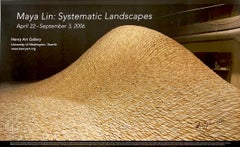
Maya Lin: Systematic Landscapes poster (hand signed and dated)
By Maya Lin
Located in New York, NY
Maya Lin: Systematic Landscapes poster (hand signed and dated), 2006 Offset lithograph poster Hand signed and dated 2006 in black marker by Maya Lin on the front 16 1/2 × 26 inches U...
Category

Early 2000s Contemporary New York - Landscape Prints

Materials

Lithograph, Offset

Composition, Variations sur l imaginaire, Georges Rohner
By Georges Rohner
Located in Southampton, NY
Lithograph on vélin de Rives paper. Inscription: hand signed and unnumbered, as issued. Good condition. Notes: From the folio, Variations sur l'imaginaire, 1972. Published by Philipp...
Category

1970s Surrealist New York - Landscape Prints

Materials

Lithograph

Carl Ashby, Wind Thru the Trees, South Wellfleet, 1991, intaglio, embossed
Located in New York, NY
A native of New Mexico, Carl Ashby (1914-2004) moved to New York City in 1938 following a stint with the Civilian Conservation Corps. He attended the Art Students League and Atelier ...
Category

1990s American Modern New York - Landscape Prints

Materials

Intaglio

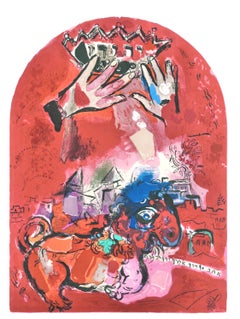
Marc Chagall, Tribe of Judah, from The Jerusalem Windows, 1962 (after)
By Marc Chagall
Located in Southampton, NY
This exquisite lithograph after Marc Chagall (1887–1985), titled Tribe of Judah, from the album Marc Chagall, The Jerusalem Windows, originates from the 1962 edition published by Andre Sauret, Editeur, Paris, and printed by Mourlot Freres, Paris, June 7, 1962. This radiant composition embodies Chagall’s deep engagement with spiritual symbolism and his unparalleled command of color, representing the Tribe of Judah—one of the twelve tribes of Israel—as a luminous expression of strength, faith, and divine grace. Tribe of Judah reflects the artist’s poetic vision, uniting the biblical and the universal through a synthesis of vibrant color and dreamlike form. The composition evokes the transcendent beauty and spiritual energy that define Chagall’s monumental stained-glass windows for the Hadassah-Hebrew University Medical Center in Jerusalem, where light and faith merge into a single radiant harmony. Executed as a lithograph on velin paper, this work measures 15 x 11 inches (38.1 x 27.94 cm). Unsigned and unnumbered as issued. The edition exemplifies the exceptional craftsmanship of the Mourlot Freres atelier, renowned for its collaboration with the most important modern artists of the 20th century. Artwork Details: Artist: After Marc Chagall (1887–1985) Title: Tribe of Judah, from Marc Chagall, The Jerusalem Windows Medium: Lithograph on velin paper Dimensions: 15 x 11 inches (38.1 x 27.94 cm) Inscription: Unsigned and unnumbered as issued Date: 1962 Publisher: Andre Sauret, Editeur, Paris Printer: Mourlot Freres, Paris Condition: Well preserved, consistent with age and medium Provenance: From the album Marc Chagall, The Jerusalem Windows, published by Andre Sauret, Editeur, Paris, June 7, 1962 Notes: Excerpted from the album, This album, which was compiled by Andre Sauret, was completed on June 7, 1962. The texts by Jean Leymarie were composed by hand in "Romain du roi" and were printed by The Imprimerie Nationale de France. The thirty-six preparatory color designs, some of which are in twenty colors, were transferred to the stones by Charles Sorlier under the direction of Marc Chagall. These designs and the two original lithographs by Marc Chagall were printed by Mourlot Freres. The other reproductions and the binding are by Draeger Freres. About the Publication: Marc Chagall, The Jerusalem Windows (Les Vitraux de Jerusalem), published in 1962 by Andre Sauret, Editeur, Paris, stands as one of the artist’s most celebrated illustrated albums and a cornerstone of modern printmaking. The publication documents Chagall’s monumental stained-glass windows created for the synagogue of the Hadassah-Hebrew University Medical Center in Jerusalem—an artistic and spiritual masterpiece dedicated to the twelve tribes of Israel. Conceived in collaboration with master printer Charles Sorlier and the renowned Mourlot Freres atelier, the album compiles the artist’s original color studies through vibrant lithography, achieving a remarkable luminosity that mirrors the glowing transparency of stained glass. The accompanying text by art historian Jean Leymarie offers profound insights into Chagall’s vision, faith, and symbolism. Completed on June 7, 1962, this edition embodies the union of fine art, craftsmanship, and devotion, capturing the transcendent beauty of Chagall’s windows and their universal message of peace and faith. About the Artist: Marc Chagall (1887–1985) was a Belarus-born French painter, printmaker, and designer whose visionary imagination, radiant color, and deeply poetic symbolism made him one of the most beloved and influential artists of the 20th century. Rooted in the imagery of his Jewish heritage and the memories of his childhood in Vitebsk, Chagall’s art wove together themes of faith, love, folklore, and fantasy with a dreamlike modern sensibility. His unique style—merging elements of Cubism, Fauvism, Expressionism, and Surrealism—defied categorization, transforming ordinary scenes into lyrical meditations on memory and emotion. Influenced by Russian icon painting, medieval religious art, and the modern innovations of artists such as Pablo Picasso, Henri Matisse, and Georges Braque, Chagall developed a profoundly personal visual language filled with floating figures, vibrant animals, musicians, and lovers that symbolized the transcendent power of imagination and love. During his early years in Paris, he became an integral part of the Ecole de Paris circle, forming friendships with Amedeo Modigliani, Fernand Leger, and Sonia Delaunay, and his creative spirit resonated with that of his peers and successors—Alexander Calder, Alberto Giacometti, Salvador Dali, Joan Miro, Wassily Kandinsky, Marcel Duchamp, and Man Ray—artists who, like Chagall, sought to push the boundaries of perception, emotion, and form. Over a prolific career that spanned painting, printmaking, stained glass, ceramics, and stage design, Chagall brought an unparalleled poetic sensibility to modern art, infusing even the most abstract subjects with human warmth and spiritual depth. His works are held in the most prestigious museums around the world, including the Museum of Modern Art, the Centre Pompidou, the Tate, and the Guggenheim, where they continue to inspire generations of artists and collectors. The highest price ever paid for a Marc Chagall artwork is approximately $28.5 million USD, achieved in 2017 at Sotheby’s New York for Les Amoureux (1928). Marc Chagall Tribe of Judah, Chagall Jerusalem Windows...
Category

1960s Expressionist New York - Landscape Prints

Materials

Lithograph

Composition, Poèmes insoumis, André Masson
By André Masson
Located in Southampton, NY
Lithograph on vélin de Rives paper. Inscription: unsigned and unnumbered, as issued. Good condition. Notes: From the folio, Poêmes insoumis, 1963. Published by Marc Barbezat, Paris; ...
Category

1960s Surrealist New York - Landscape Prints

Materials

Lithograph

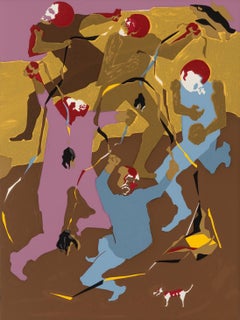
Jacob Lawrence, Playground, from Hiroshima, 1983
By Jacob Lawrence
Located in Southampton, NY
This exquisite silkscreen by Jacob Lawrence (1917–2000), titled Playground, from the album Hiroshima, originates from the 1983 edition published by The Limited Editions Club, New Yor...
Category

1980s Expressionist New York - Landscape Prints

Materials

Screen

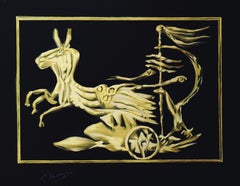
Braque, Le Char de Médée, Œdipe roi de Sophocle (after)
By Georges Braque
Located in Southampton, NY
Lithograph on grand vélin d'Arches pur chiffon spécialement fabriqués paper. Inscription: signed in the plate and unnumbered, as issued. Good condition. Notes: from the folio, Œdipe ...
Category

1980s Modern New York - Landscape Prints

Materials

Lithograph

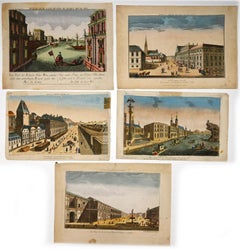
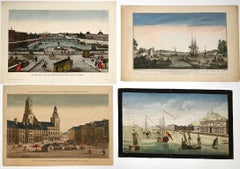
Four 18th Century Optical views of Paris etc.; "Vue des Rives de la Seine ....
Located in Middletown, NY
Four 18th Century Optical views "Vue des Rives de la Seine prise du Pont Neuf à Paris" "Vue de la Place de l'Hôtel de Ville et du Phare à Calais" "Vue de Paris prise du Port de la Co...
Category

Mid-18th Century French School New York - Landscape Prints

Materials

Watercolor, Handmade Paper, Engraving
Still Thinking About These?

All Recently Viewed