Ohio - Art
to
44
883
386
312
153
289
Overall Width
to
Overall Height
to
52
195
1,257
517
53
57
146
130
71
106
189
168
140
55
34
445
327
279
129
55
34
29
24
20
16
8
7
1
948
800
129
567
254
198
192
139
101
99
92
83
80
73
70
55
49
44
38
37
29
28
27
811
299
272
220
220
95
62
57
49
46
557
147
228,995
155,618
Item Ships From: Ohio
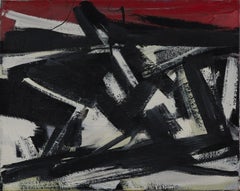
Untitled Black
White Abstract Painting, CoBrA Movement
Located in Beachwood, OH
Theo Wilhelm Wolvecamp (Dutch, 1925 - 1992)
Untitled
Oil on canvas
Signed and numbered 21 verso
15.75 x 19.75 inches
Theo Wilhelm Wolvecamp was a Dutch artist and member of the COBRA group...
Category
Mid-20th Century Abstract Ohio - Art
Materials
Oil
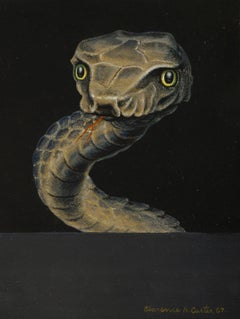
Over and Above Surprise (Serpent), 1960s snake painting, Cleveland School
By Clarence Holbrook Carter
Located in Beachwood, OH
Clarence Holbrook Carter (American, 1904-2000)
Over and Above Surprise (Serpent), 1967
Casein on board
Signed lower right
7.75 x 5.5 inches
Clarence Holbrook Carter achieved a lev...
Category
1960s American Modern Ohio - Art
Materials
Casein
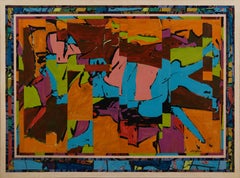
L. S. F. vibrant abstract expressionist painting by Cleveland School artist
By Richard Andres
Located in Beachwood, OH
Richard Andres
American, 1927-2013
L. S. F., 1980
acrylic and ink on paper mounted on canvas
signed lower right, dated and titled verso
48 x 65 inches
48.75 x 65.75 inches, framed
R...
Category
1980s Abstract Expressionist Ohio - Art
Materials
Ink, Acrylic
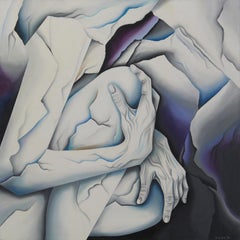
White Stone Surrealist Painting, Late 20th Century, Cleveland Female Artist
Located in Beachwood, OH
Sally Lachina (American, 20th Century)
White Stone, 1994
Acrylic on canvas
Signed and dated lower right, signed, dated and titled verso
42 x 42 inches
Sally Lachina is an American a...
Category
1990s Surrealist Ohio - Art
Materials
Acrylic
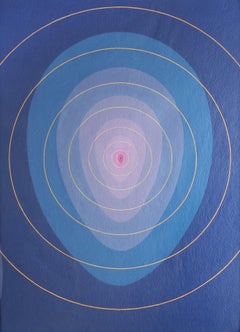
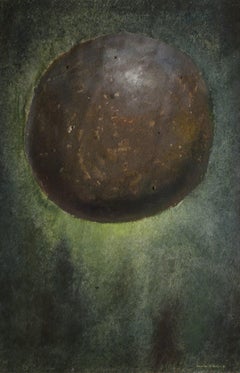
Mandala No. 5, Blue Abstract Ovoid Mid-Century Painting
By Clarence Holbrook Carter
Located in Beachwood, OH
Clarence Holbrook Carter (American, 1904-2000)
Mandala No. 5, 1968
Acrylic on scintilla
Signed on verso
29.5 x 22 inches
Clarence Holbrook Carter achieved a level of national artist...
Category
1960s Abstract Ohio - Art
Materials
Acrylic
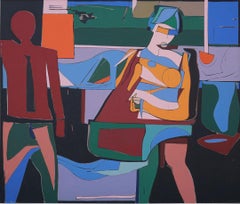
Interior, large, colorful figural abstract red, orange, blue acrylic of couple
By Richard Andres
Located in Beachwood, OH
Richard Andres (American, 1927-2013)
Interior, 1976
acrylic on canvas
signed lower right, signed and titled verso
50 x 59.5 inches
Richard Andres was born in Buffalo, New York in 1927. A graduate of the Cleveland Institute of Art in 1950, he was immediately drafted and served for two years in the army as a mural painter. He received his Master of Arts from Kent State in 1961. A frequent exhibitor at galleries and museums and winner of multiple May Show prizes, Andres taught art in the Cleveland Public Schools for 28 years, as well as teaching the University of Buffalo, the Cleveland Institute of Art and the Western Reserve University.
Very little in Richard Andres’ childhood would have predicted his love of classical music, mid-century-modern architecture and certainly not his lifelong passion for art and in particular abstract art. Richard’s father, Raymond, had no more than a third-grade education, and his mother, Clara, was one of thirteen children – only three of whom lived into adulthood and none of whom attended high school.
They lived, when Richard was a boy, in a dingy area of Buffalo, NY in a walk-up apartment situated above a tavern. Raymond and Clara supplemented the income from their factory jobs in the bar downstairs with Raymond playing ragtime on the piano and Clara serving drinks. This often left Richard and his two older brothers at home alone to fend for themselves. The two older boys, Raymond and Russell, were - unlike Richard- rather rough and tumble and entertained themselves with stickball, boxing and the like. Richard, on the other hand, from a very young age liked to draw, or better yet even, to paint with the small set of watercolors he received for Christmas one year. Paper, however, at the height of the depression, was hard to come by. Luckily, Clara used paper doilies as decoration for the apartment and Richard would contentedly paint and then cut up doilies, gluing the pieces together to create collages.
At eight-years-old, he discovered the Albright-Knox Museum (then known as the Albright Art Gallery) and spent several hours a week there studying the paintings. He was particularly fond of Charles Burchfield‘s landscapes, enamored with their ‘messiness’ and thinking that they somehow captured more ‘feeling’ than works he was previously familiar with. For his tenth Christmas, he asked for and received a ‘how-to’ paint book by Elliot O’Hare. Through this self-teaching, he assembled the portfolio needed for acceptance to Buffalo Technical High School where he studied Advertising Arts. In his Junior year, he was encouraged to enter a watercolor painting, “Two Barns,” in the national 1944-45 Ingersoll Art Award Contest and was one of twelve grand prize winners – each one winning one hundred dollars. More importantly the painting was exhibited at the Carnegie Institute Galleries, which resulted in his winning a national scholarship to the Cleveland School of Art (The Cleveland Art Institute).
He flourished at the art school under the tutelage of faculty members such as Carl Gaertner, as well as that of visiting artists such as William Sommer and Henry George Keller. He would say in later years that Gaertner, in particular, influenced his attitude toward life as well as art. “Gaertner,” Andres said, “believed that there was no need to be a ‘tortured artist’, that an artist should rather enjoy beauty, family, and life in general.” Free to spend his days as he chose, he wandered the Cleveland Art Museum for most of the hours he was not attending classes or painting; the remaining time was spent drinking coffee at a local hangout with art school friends – which is where he met fellow Henry Keller scholarship winner, Avis Johnson. Richard was immediately smitten with Avis, but being rather shy, it took him the entire summer of 1948 to build up his courage to ask her out. Over that summer he ‘thought about Avis’ and worked in a diner to save money. He also used the hundred-dollar prize money won in High School to visit the first Max Beckmann retrospective in the United States at the City Art Museum in St. Louis. Over a half century later he spoke of that exhibit with a reverence usually reserved for spiritual matters, “I walked in and it was like nothing I had ever seen before... the color...It just glowed.”
Returning to campus in the Fall, the first thing he did was go to the coffee shop in hopes of finding Avis. He did, and she, upon seeing him, realized that she was also smitten with him. They quickly became known as ‘the couple’ on campus, and a year later, with Richard being drafted for the Korean war, they were quickly married by a Justice of the Peace, celebrating after with family at Avis’s Cleveland home. As a gift, faculty member John Paul Miller...
Category
1970s Abstract Expressionist Ohio - Art
Materials
Acrylic
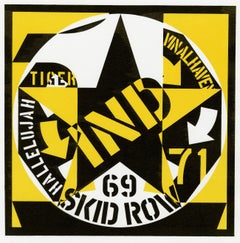
Skid-Row Self Portrait
By Robert Indiana
Located in Fairlawn, OH
Skid Row-Self Portrait
Color lithograph, 1973
Unsigned (as usual)
From: XXe Siecle, Volume XXVV, December 1973
Published by G. di San Lazzaro for A. Maeght, Paris
Printed by Mourlot,...
Category
1970s Pop Art Ohio - Art
Materials
Lithograph
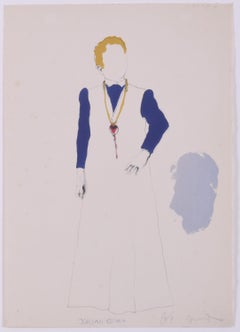
Dorain Gray with Rainbow Scarf
By Jim Dine
Located in Fairlawn, OH
Dorain Gray with Rainbow Scarf
Color lithograph, 1968
Signed in pencil lower center of sheet (see photo)
Annotated by the artist: A/P for Artist's Proof (see photo)
From: The Picture...
Category
1960s Contemporary Ohio - Art
Materials
Lithograph
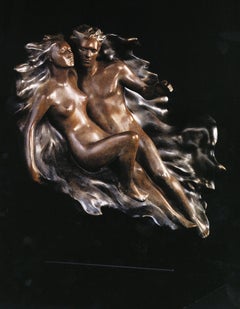
Genesis by Frederick Hart
By Frederick Hart
Located in Woodmere, OH
Frederick Hart is America's greatest figurative sculptor. Not only did he create works of great beauty and gravitas, he was singularly responsible for restoring to American public mo...
Category
1980s Ohio - Art
Materials
Bronze
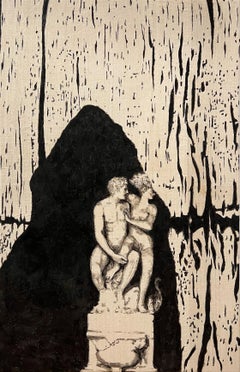
"Tempt Ensemble" (Parisian, black
white, women, monochromatic, sculptures)
By Nicholas Evans
Located in Paris, IDF
TEMPT ENSEMBLE
2022
Paris, France
Originally created as part of Nicholas' solo exhibition "This, and Thereafter (Plumes)," December 10, 2022 - January 7, 2023. The theme illustrated...
Category
21st Century and Contemporary Abstract Ohio - Art
Materials
India Ink, Linen

$2,240 Sale Price
20% Off
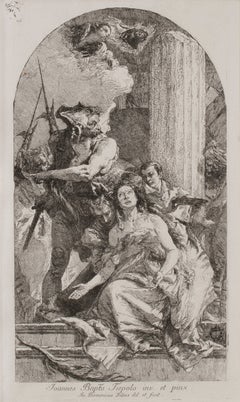
The Martyrdom of Saint Agatha
By Giovanni Domenico Tiepolo
Located in Fairlawn, OH
The Martyrdom of Saint Agatha
after the painting by his father, Giovanni Battista Tiepolo (see photo)
Etching, c. 1780
Signature: unsigned
Watermark: Letter A (similar to Bromberg 4...
Category
1780s Baroque Ohio - Art
Materials
Etching
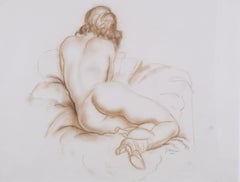
Recling Female Nude, seen from the rear
By Emil Ganso
Located in Fairlawn, OH
Recling Female Nude, seen from the rear
Conte crayon on paper. c. 1936
Signed "Ganso" right (see photo)
Illustrated: Esquire Magazine, "Emil Ganso, Handy Artist", July 1938, pages 58...
Category
1930s American Modern Ohio - Art
Materials
Crayon
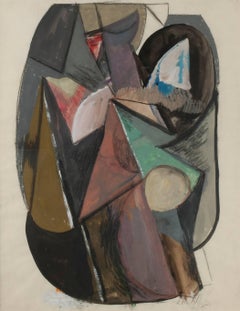
Untitled
By Leon Kelly
Located in Fairlawn, OH
Untitled Cubist Abstraction
Signed and dated lower right
Watercolor, charcoal and gouache on paper, 1922
Provenance: Estate of the Artist
Schroeder, Romero & Sh...
Category
1920s Cubist Ohio - Art
Materials
Charcoal, Watercolor, Gouache
$20,000
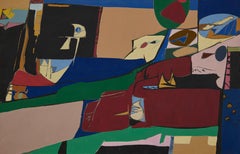
Erie Shore, Large Abstract Expressionist Mid-Century Modern geometric work
By Richard Andres
Located in Beachwood, OH
Richard Andres (American, 1927-2013)
Erie Shore, c. 1975
acrylic on canvas
signed lower right, signed and titled verso
50 x 72 inches
Richard Andres was born in Buffalo, New York in 1927. A graduate of the Cleveland Institute of Art in 1950, he was immediately drafted and served for two years in the army as a mural painter. He received his Master of Arts from Kent State in 1961. A frequent exhibitor at galleries and museums and winner of multiple May Show prizes, Andres taught art in the Cleveland Public Schools for 28 years, as well as teaching the University of Buffalo, the Cleveland Institute of Art and the Western Reserve University.
Very little in Richard Andres’ childhood would have predicted his love of classical music, mid-century-modern architecture and certainly not his lifelong passion for art and in particular abstract art. Richard’s father, Raymond, had no more than a third-grade education, and his mother, Clara, was one of thirteen children – only three of whom lived into adulthood and none of whom attended high school.
They lived, when Richard was a boy, in a dingy area of Buffalo, NY in a walk-up apartment situated above a tavern. Raymond and Clara supplemented the income from their factory jobs in the bar downstairs with Raymond playing ragtime on the piano and Clara serving drinks. This often left Richard and his two older brothers at home alone to fend for themselves. The two older boys, Raymond and Russell, were - unlike Richard- rather rough and tumble and entertained themselves with stickball, boxing and the like. Richard, on the other hand, from a very young age liked to draw, or better yet even, to paint with the small set of watercolors he received for Christmas one year. Paper, however, at the height of the depression, was hard to come by. Luckily, Clara used paper doilies as decoration for the apartment and Richard would contentedly paint and then cut up doilies, gluing the pieces together to create collages.
At eight-years-old, he discovered the Albright-Knox Museum (then known as the Albright Art Gallery) and spent several hours a week there studying the paintings. He was particularly fond of Charles Burchfield‘s landscapes, enamored with their ‘messiness’ and thinking that they somehow captured more ‘feeling’ than works he was previously familiar with. For his tenth Christmas, he asked for and received a ‘how-to’ paint book by Elliot O’Hare. Through this self-teaching, he assembled the portfolio needed for acceptance to Buffalo Technical High School where he studied Advertising Arts. In his Junior year, he was encouraged to enter a watercolor painting, “Two Barns,” in the national 1944-45 Ingersoll Art Award Contest and was one of twelve grand prize winners – each one winning one hundred dollars. More importantly the painting was exhibited at the Carnegie Institute Galleries, which resulted in his winning a national scholarship to the Cleveland School of Art (The Cleveland Art Institute).
He flourished at the art school under the tutelage of faculty members such as Carl Gaertner, as well as that of visiting artists such as William Sommer and Henry George Keller. He would say in later years that Gaertner, in particular, influenced his attitude toward life as well as art. “Gaertner,” Andres said, “believed that there was no need to be a ‘tortured artist’, that an artist should rather enjoy beauty, family, and life in general.” Free to spend his days as he chose, he wandered the Cleveland Art Museum for most of the hours he was not attending classes or painting; the remaining time was spent drinking coffee at a local hangout with art school friends – which is where he met fellow Henry Keller scholarship winner, Avis Johnson. Richard was immediately smitten with Avis, but being rather shy, it took him the entire summer of 1948 to build up his courage to ask her out. Over that summer he ‘thought about Avis’ and worked in a diner to save money. He also used the hundred-dollar prize money won in High School to visit the first Max Beckmann retrospective in the United States at the City Art Museum in St. Louis. Over a half century later he spoke of that exhibit with a reverence usually reserved for spiritual matters, “I walked in and it was like nothing I had ever seen before... the color...It just glowed.”
Returning to campus in the Fall, the first thing he did was go to the coffee shop in hopes of finding Avis. He did, and she, upon seeing him, realized that she was also smitten with him. They quickly became known as ‘the couple’ on campus, and a year later, with Richard being drafted for the Korean war, they were quickly married by a Justice of the Peace, celebrating after with family at Avis’s Cleveland home. As a gift, faculty member John Paul Miller...
Category
1970s Abstract Expressionist Ohio - Art
Materials
Acrylic
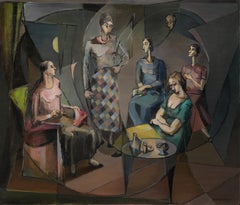
The Meeting, Large Mid-Century Painting of Seated Women, Woman Artist
Located in Beachwood, OH
Eleanor Arnold Clark (American, 1911-1982)
The Meeting
Oil on canvas
Signed lower right
25 x 29 inches
36 x 40 inches, framed
Eleanor Arnold Clark was born in Pittsburgh, Pennsylva...
Category
Mid-20th Century Ohio - Art
Materials
Oil
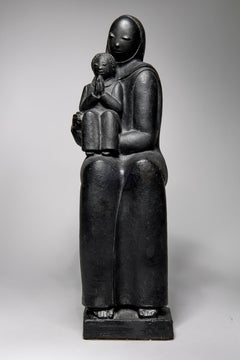
Mother and Child, Mid-20th Century sculpture, Cleveland School Artist
Located in Beachwood, OH
Walter Sinz (American, 1881-1966)
Mother and Child, 1949
Plaster
Signed and dated on base
23.5 x 6 x 9 inches
Walter A. Sinz was an American sculptor born in Cleveland, Ohio on Jul...
Category
1940s Ohio - Art
Materials
Plaster
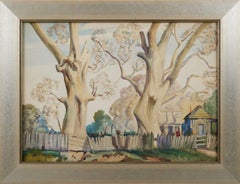
Two Old Pecan Trees, Early 20th Century Landscape, 1st Place May Show Winner
By Frank Wilcox
Located in Beachwood, OH
Frank Nelson Wilcox (American, 1887–1964)
Two Old Pecan Trees, 1932
Watercolor on paper mounted on board
Signed lower right
21 x 28.25 inches
27 x 35.25 inches, as framed
Exhibited: 1932 May Show (1st Place) Cleveland Museum of Art; Poetics of Place: Charles Burchfield and His Contemporaries, 2001 Cleveland Artist's Foundation.
Frank Nelson Wilcox (October 3, 1887 – April 17, 1964) was a modernist American artist and a master of watercolor. Wilcox is described as the "Dean of Cleveland School painters," though some sources give this appellation to Henry Keller or Frederick Gottwald. Wilcox was born on October 3, 1887 to Frank Nelson Wilcox, Sr. and Jessie Fremont Snow Wilcox at 61 Linwood Street in Cleveland, Ohio. His father, a prominent lawyer, died at home in 1904 shortly before Wilcox' 17th birthday. His brother, lawyer and publisher Owen N. Wilcox, was president of the Gates Legal Publishing Company or The Gates Press. His sister Ruth Wilcox was a respected librarian.
In 1906 Wilcox enrolled from the Cleveland School of Art under the tutelage of Henry Keller, Louis Rorimer, and Frederick Gottwald. He also attended Keller's Berlin Heights summer school from 1909. After graduating in 1910, Wilcox traveled and studied in Europe, sometimes dropping by Académie Colarossi in the evening to sketch the model or the other students at their easels, where he was influenced by French impressionism. Wilcox was influenced by Keller's innovative watercolor techniques, and from 1910 to 1916 they experimented together with impressionism and post-impressionism. Wilcox soon developed his own signature style in the American Scene or Regionalist tradition of the early 20th century. He joined the Cleveland School of Art faculty in 1913. Among his students were Lawrence Edwin Blazey, Carl Gaertner, Paul Travis, and Charles E. Burchfield. Around this time Wilcox became associated with Cowan Pottery.
In 1916 Wilcox married fellow artist Florence Bard, and they spent most of their honeymoon painting in Berlin Heights with Keller. They had one daughter, Mary. In 1918 he joined the Cleveland Society of Artists, a conservative counter to the Bohemian Kokoon Arts Club, and would later serve as its president. He also began teaching night school at the John Huntington Polytechnic Institute at this time, and taught briefly at Baldwin-Wallace College.
Wilcox wrote and illustrated Ohio Indian Trails in 1933, which was favorably reviewed by the New York Times in 1934. This book was edited and reprinted in 1970 by William A. McGill. McGill also edited and reprinted Wilcox' Canals of the Old Northwest in 1969. Wilcox also wrote, illustrated, and published Weather Wisdom in 1949, a limited edition (50 copies) of twenty-four serigraphs (silk screen prints) accompanied by commentary "based upon familiar weather observations commonly made by people living in the country."
Wilcox displayed over 250 works at Cleveland's annual May Show. He received numerous awards, including the Penton Medal for The Omnibus, Paris (1920), Fish Tug on Lake Erie (1921), Blacksmith Shop (1922), and The Gravel Pit (1922). Other paintings include The Trailing Fog (1929), Under the Big Top (1930), and Ohio Landscape...
Category
1930s Ohio - Art
Materials
Watercolor
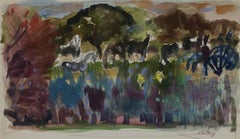
Horses in Landscape, Late 20th Century Watercolor by Cleveland School artist
By Joseph O
Sickey
Located in Beachwood, OH
Work sold to benefit the CLEVELAND INSTITUTE OF ART
Joseph B. O’Sickey (American, 1918–2013)
Horses in Landscape
Watercolor and graphite on paper
Signed lowe...
Category
Late 20th Century Post-Impressionist Ohio - Art
Materials
Watercolor, Graphite
Departing from the System, Mid-Century Geometrical Abstract Mixed Media
By Clarence Holbrook Carter
Located in Beachwood, OH
Clarence Holbrook Carter (American, 1904-2000)
Departing from the System, 1961
Mixed media on paper
Signed and dated lower right
36 x 24 inches
A surrealist mid-century figural abst...
Category
1960s American Modern Ohio - Art
Materials
Mixed Media
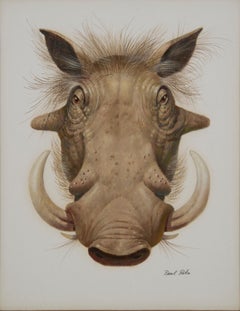
Wart Hog, 20th Century Oil Painting by Magical Surrealist, Cleveland School
By Paul Riba
Located in Beachwood, OH
Paul Riba (American, 1912-1977)
Wart Hog
Oil on paper
Signed lower right
18 x 15 inches
24.25 x 21 inches, framed
Paul Riba was a painter of Magic Realism. He explored the unreal j...
Category
Mid-20th Century Surrealist Ohio - Art
Materials
Oil
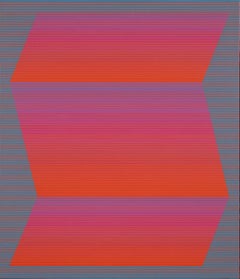
Twist
the Rain Mid-Century OpArt Geometric Painting by Cleveland School artist
By Julian Stanczak
Located in Beachwood, OH
Julian Stanczak (American, 1928-2017)
Twist and the Rain, 1975
acrylic on canvas
signed verso
30 x 24 inches
Julian Stanczak (American, b. November 5, 1928) was an American painter...
Category
1970s Op Art Ohio - Art
Materials
Acrylic
$27,200 Sale Price
20% Off
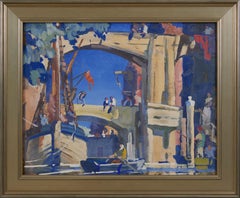
Venetian Canal, Early 20th Century Landscape Scene, Cleveland School Artist
By Frank Wilcox
Located in Beachwood, OH
Venetian Canal, c. 1910-11
Tempera on board
Signed lower right
24 x 30 inches
30 x 36 inches, framed
Frank Nelson Wilcox (October 3, 1887 – April 17, ...
Category
1910s American Modern Ohio - Art
Materials
Tempera
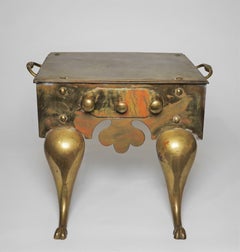
18th Century English Double Handle Footman
Located in Beachwood, OH
English Double Handle Footman, 18th Century
Brass
12 x 18 x 17 inches
Category
18th Century Ohio - Art
Materials
Brass
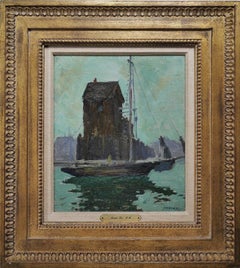
Boat at the End of a Jetty, Seascape Coastal New England Scene
By Jonas Lie
Located in Beachwood, OH
Jonas Lie (American, 1880-1940)
Boat at the End of a Jetty
OIl on canvas board
Signed lower right
12.75 x 10.5 inches
18.75 x 16.75 inches, framed
Jonas Lie was a prolific painter, ...
Category
Early 20th Century American Impressionist Ohio - Art
Materials
Oil
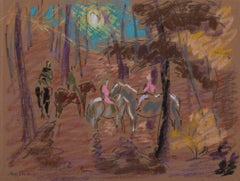
Horseback Riders in Sunny Landscape, 20th Century, Cleveland Artist
By Joseph O
Sickey
Located in Beachwood, OH
Work sold to benefit the CLEVELAND INSTITUTE OF ART
Joseph B. O’Sickey (American, 1918–2013)
Horseback Riders
Pastel on brown paper
Signed lower left
9.5 x 12.5 inches
Joseph O'S...
Category
Late 20th Century Post-Impressionist Ohio - Art
Materials
Pastel
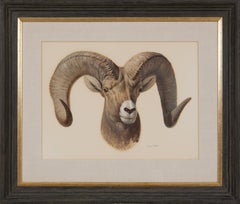
Bighorn Sheep, 20th Century Oil Painting by Magical Surrealist, Cleveland School
By Paul Riba
Located in Beachwood, OH
Paul Riba (American, 1912-1977)
Bighorn Sheep
Oil on paper
Signed lower right
25 x 30.5 inches
30.5 x 36 inches, framed
Paul Riba was a painter of Magic Realism. He explored the un...
Category
20th Century Surrealist Ohio - Art
Materials
Oil
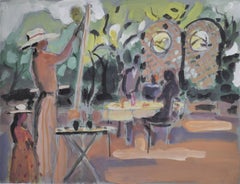
Outdoor Garden Scene of Woman Painting, Late 20th C. Cleveland Female Artist
Located in Beachwood, OH
Algesa O'Sickey (American, 1917-2006)
Woman Painting
Watercolor and ink on green paper
Unsigned
9 x 12 inches
13.75 x 16 inches, framed
Born Algesa D’Agostino on June 4, 1917, Alges...
Category
Late 20th Century Ohio - Art
Materials
Ink, Watercolor
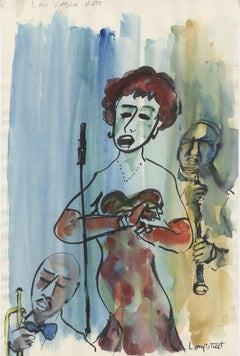
Las Vegas Date
By Stephen Longstreet
Located in Fairlawn, OH
Las Vegas Date
Watercolor, c. 1965
Signed lower right (see photo)
Titled in pencil upper left (see photo)
Condition: Excellent
Image/Sheet size: 17 1/2 x 11 3/8 inches
Provenance: Jo...
Category
1960s Expressionist Ohio - Art
Materials
Watercolor
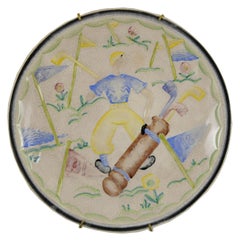
Golf (Wall Plaque)
By Viktor Schreckengost
Located in Fairlawn, OH
Golf (Wall Plaque)
Polychromed ceramic, c. 1930-1
Signed with the artist's initials: VS recto
Very rare, only a few produced prior to the closure of Cowan Pottery
Format: Round ceramic plate, 11 1/4 inches
Designed by the artist while working for Cowan Pottery in 1930. One of Cowan's clients, an interior designer, requested plates decorated with different outdoor activities. Others in the series included "Swimming," "Tennis," "Polo," and "The Hunt."
According to Henry Adams, the number of examples created was very limited due to the closing of Cowan Pottery in 1931. Very rare
Condition: Good, with the usual craquelure of the glazes used.
Note: Industrial design democratizes high style, and Mr. Schreckengost was widely considered among the most democratic industrial designers. He made, quite literally, the stuff of life — things found routinely in homes, backyards and garages in this country and around the world. He designed bicycles for Sears and everyday china for American Limoges...
Category
1930s Art Deco Ohio - Art
Materials
Ceramic
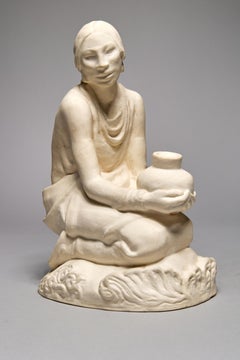
Early 20th Century Cowan Pottery Ceramic Sculpture of a Native American
By F. Luis Mora
Located in Beachwood, OH
F. Luis Mora (American, 1874-1940)
Native American, c. 1930s
Ceramic
Stamped on bottom, Cowan Pottery
9 x 7 x 5 inches
Francis Luis Mora was one of the better-known American artists...
Category
1930s Ohio - Art
Materials
Ceramic
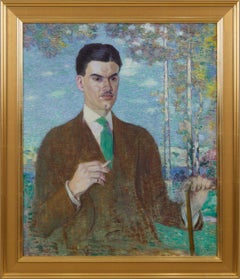
Portrait of De Forest Mellon, Early 20th Century w/ Landscape, Cleveland School
Located in Beachwood, OH
Ora Coltman (American, 1858-1940)
Portrait of De Forest Mellon, 1922
Oil on canvas
Unsigned
30 x 25 inches
35.5 x 30.25 inches, framed
Ora Coltman was born in 1858 in Shelby, Ohio, ...
Category
1920s American Impressionist Ohio - Art
Materials
Oil
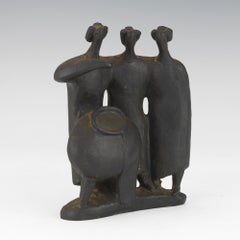
Bubble Bubble Macbeth sculpture, 20th century American bronze
Located in Beachwood, OH
William Mozart McVey (American, 1905-1995)
Bubble Bubble
Cast bronze with brown patina
Signed on back
6.5 x 5 x 2.25 inches
'Double, double toil and tro...
Category
20th Century Ohio - Art
Materials
Bronze
Cityscape of Notre Dame, Paris w/ Seine, 20th Century French Artist
Located in Beachwood, OH
Armand Manago Guerin (French, 1913-1983)
Notre Dame, Paris
Oil on masonite
Signed lower right
23.5 x 28.75 inches
34 x 38.75 inches, framed
The painter known as Armand Manago Guérin...
Category
Mid-20th Century Ohio - Art
Materials
Oil
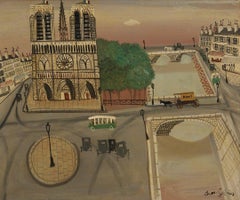
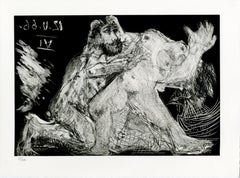
Plate XII, Le Cocu Magnifique
By Pablo Picasso
Located in Fairlawn, OH
Plate XII, Le Cocu Magnifique
Etching & aquatyint, 1968
From the unsigned edition of 200 impressions printed on Rives BFK paper
There is also a signed edition of 30 impressions
The s...
Category
1960s French School Ohio - Art
Materials
Aquatint
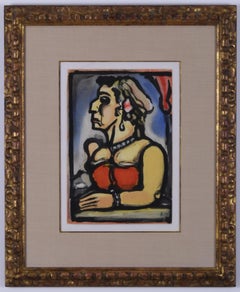
Madame Carmencita, Plate 9
By Georges Rouault
Located in Fairlawn, OH
Madame Carmencita, Plate 9
From: Cirque de l'etoile filante (Circus of the Shooting Star), 1934-1936 (published 1938)
Signed with the artist's initials and dated, lower right of plat...
Category
1930s French School Ohio - Art
Materials
Aquatint
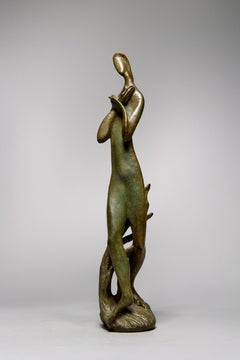
Vernal Equinox, 20th Century Bronze Figure of Woman, Cleveland School Artist
Located in Beachwood, OH
Edris Eckhardt (American, 1905-1998)
Vernal Equinox, c. 1975
Bronze
Signed on base
16.5 x 4 x 3 inches
Born in Cleveland, Ohio January 28, 1905, Edris was given the name Edythe Alin...
Category
1970s American Modern Ohio - Art
Materials
Bronze
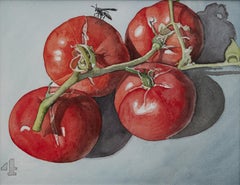
Vegetable Still Life No. 4, Contemporary watercolor by Ohio trompe l
oeil artist
Located in Beachwood, OH
George Mauersberger (American, 20th Century)
Veg 4, 2004
Watercolor on paper
9 x 12 inches
13 x 16 inches, framed
George Mauersberger completed th...
Category
Early 2000s Photorealist Ohio - Art
Materials
Watercolor
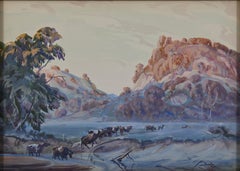
Frosty Dawn, Upstate New York, 20th century American modern watercolor
By Frank Wilcox
Located in Beachwood, OH
Frank Nelson Wilcox (American, 1887-1964)
Frosty Dawn, Upstate New York, c. 1916
Watercolor and gouache on board
Signed lower right
21 x 30 inches
Frank Nelson Wilcox (October 3, 1887 – April 17, 1964) was a modernist American artist and a master of watercolor. Wilcox is described as the "Dean of Cleveland School painters". In 1906 Wilcox enrolled from the Cleveland School of Art...
Category
1910s American Modern Ohio - Art
Materials
Watercolor, Gouache
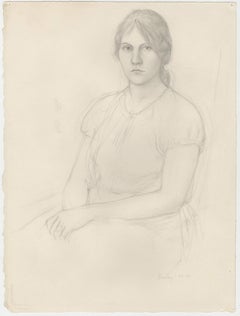
Untitled (Seated Young Woman)
Located in Fairlawn, OH
Untitled (Seated Young Woman)
Graphite on Veritable Papier d'Arches wove paper, 1970
Signed and dated lower right (see photo)
Condition: Excellent
Image/sheet size: 15 x 11 1/4 inch...
Category
1970s American Realist Ohio - Art
Materials
Graphite
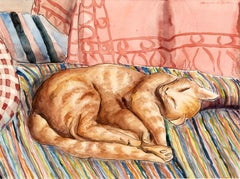
Sleeping Cat, Early 20th Century, Cleveland School Artist
By Clarence Holbrook Carter
Located in Beachwood, OH
Clarence Holbrook Carter (American, 1904-2000)
Sleeping Cat, 1929
Watercolor on paper
Signed and dated upper right
15 x 19 inches
21.25 x 25.25 inches, framed
Clarence Holbrook Car...
Category
1920s American Modern Ohio - Art
Materials
Watercolor
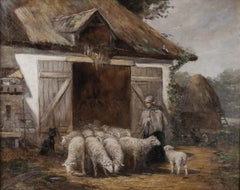
19th Century Landscape of Shepherdess w/ Sheep
Dog, Munich, Cleveland School
By Henry Keller
Located in Beachwood, OH
Henry George Keller (American, 1869–1949)
Shepherdess with Sheep and Dog, Munich, 1891
Oil on canvas
Signed and dated lower left
19 x 24 inches
25 x 30 inches, framed
Keller, a lead...
Category
1890s American Modern Ohio - Art
Materials
Oil
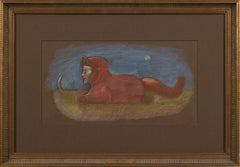
Sphinx and Moon (Self Portrait) 1980s Pastel, Cleveland School Artist
By Mary Spain
Located in Beachwood, OH
Mary Spain (American, 1934-1983)
Sphinx and Moon (Self Portrait), c. 1980
Pastel on paper
9 x 16.5 inches
17. 5 x 25 inches, framed
Set in a realm of fantasy, Mary Spain’s work ex...
Category
1980s Surrealist Ohio - Art
Materials
Pastel
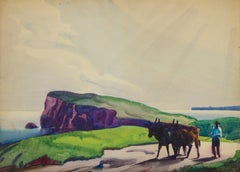
Oxen on Road, Gaspé, Canada, Early 20th Century Cleveland School
By Frank Wilcox
Located in Beachwood, OH
Frank Nelson Wilcox (American, 1887-1964)
Oxen on Road, Gaspé, Canada, 1932
Watercolor on board
Signed and dated lower right
15.25 x 21 inches
Frank Nelson Wilcox (October 3, 1887 – April 17, 1964) was a modernist American artist and a master of watercolor. Wilcox is described as the "Dean of Cleveland School painters," though some sources give this appellation to Henry Keller or Frederick Gottwald. Wilcox was born on October 3, 1887 to Frank Nelson Wilcox, Sr. and Jessie Fremont Snow Wilcox at 61 Linwood Street in Cleveland, Ohio. His father, a prominent lawyer, died at home in 1904 shortly before Wilcox' 17th birthday. His brother, lawyer and publisher Owen N. Wilcox, was president of the Gates Legal Publishing Company or The Gates Press. His sister Ruth Wilcox was a respected librarian.
In 1906 Wilcox enrolled from the Cleveland School of Art under the tutelage of Henry Keller, Louis Rorimer, and Frederick Gottwald. He also attended Keller's Berlin Heights summer school from 1909. After graduating in 1910, Wilcox traveled and studied in Europe, sometimes dropping by Académie Colarossi in the evening to sketch the model or the other students at their easels, where he was influenced by French impressionism. Wilcox was influenced by Keller's innovative watercolor techniques, and from 1910 to 1916 they experimented together with impressionism and post-impressionism. Wilcox soon developed his own signature style in the American Scene or Regionalist tradition of the early 20th century. He joined the Cleveland School of Art faculty in 1913. Among his students were Lawrence Edwin Blazey, Carl Gaertner, Paul Travis, and Charles E. Burchfield. Around this time Wilcox became associated with Cowan Pottery.
In 1916 Wilcox married fellow artist Florence Bard, and they spent most of their honeymoon painting in Berlin Heights with Keller. They had one daughter, Mary. In 1918 he joined the Cleveland Society of Artists, a conservative counter to the Bohemian Kokoon Arts Club, and would later serve as its president. He also began teaching night school at the John Huntington Polytechnic Institute at this time, and taught briefly at Baldwin-Wallace College.
Wilcox wrote and illustrated Ohio Indian Trails in 1933, which was favorably reviewed by the New York Times in 1934. This book was edited and reprinted in 1970 by William A. McGill. McGill also edited and reprinted Wilcox' Canals of the Old Northwest in 1969. Wilcox also wrote, illustrated, and published Weather Wisdom in 1949, a limited edition (50 copies) of twenty-four serigraphs (silk screen prints) accompanied by commentary "based upon familiar weather observations commonly made by people living in the country."
Wilcox displayed over 250 works at Cleveland's annual May Show. He received numerous awards, including the Penton Medal for as The Omnibus, Paris (1920), Fish Tug on Lake Erie (1921), Blacksmith Shop (1922), and The Gravel Pit (1922). Other paintings include The Trailing Fog (1929), Under the Big Top (1930), and Ohio Landscape...
Category
1930s American Modern Ohio - Art
Materials
Watercolor
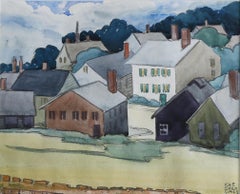
New England Coastal Town Landscape w/ Houses, Cleveland School Woman Artist
Located in Beachwood, OH
Kae Dorn Cass (American, 1901-1971)
New England Coastal Town
Watercolor on paper
Signed lower right
9 in. h. x 11.5 in. w.
17 in. h. x 19 in. w., as framed
Kae Dorn Cass was born...
Category
Mid-20th Century Ohio - Art
Materials
Watercolor
Moraine Valley, Rocky Mountain National Park, Colorado, 20th Century
By Frank Wilcox
Located in Beachwood, OH
Frank Nelson Wilcox (American, 1887-1964)
Moraine Valley, Rocky Mountain National Park, Colorado, c. 1950
Watercolor on paper
Unsigned
19 x 24 inches
Provenance: From the Estate of Frank Nelson Wilcox
Frank Nelson Wilcox (October 3, 1887 – April 17, 1964) was a modernist American artist and a master of watercolor. Wilcox is described as the "Dean of Cleveland School painters," though some sources give this appellation to Henry Keller or Frederick Gottwald. Wilcox was born on October 3, 1887 to Frank Nelson Wilcox, Sr. and Jessie Fremont Snow Wilcox at 61 Linwood Street in Cleveland, Ohio. His father, a prominent lawyer, died at home in 1904 shortly before Wilcox' 17th birthday. His brother, lawyer and publisher Owen N. Wilcox, was president of the Gates Legal Publishing Company or The Gates Press. His sister Ruth Wilcox was a respected librarian.
In 1906 Wilcox enrolled from the Cleveland School of Art under the tutelage of Henry Keller, Louis Rorimer, and Frederick Gottwald. He also attended Keller's Berlin Heights summer school from 1909. After graduating in 1910, Wilcox traveled and studied in Europe, sometimes dropping by Académie Colarossi in the evening to sketch the model or the other students at their easels, where he was influenced by French impressionism. Wilcox was influenced by Keller's innovative watercolor techniques, and from 1910 to 1916 they experimented together with impressionism and post-impressionism. Wilcox soon developed his own signature style in the American Scene or Regionalist tradition of the early 20th century. He joined the Cleveland School of Art faculty in 1913. Among his students were Lawrence Edwin Blazey, Carl Gaertner, Paul Travis, and Charles E. Burchfield. Around this time Wilcox became associated with Cowan Pottery.
In 1916 Wilcox married fellow artist Florence Bard, and they spent most of their honeymoon painting in Berlin Heights with Keller. They had one daughter, Mary. In 1918 he joined the Cleveland Society of Artists, a conservative counter to the Bohemian Kokoon Arts Club, and would later serve as its president. He also began teaching night school at the John Huntington Polytechnic Institute at this time, and taught briefly at Baldwin-Wallace College.
Wilcox wrote and illustrated Ohio Indian Trails in 1933, which was favorably reviewed by the New York Times in 1934. This book was edited and reprinted in 1970 by William A. McGill. McGill also edited and reprinted Wilcox' Canals of the Old Northwest in 1969. Wilcox also wrote, illustrated, and published Weather Wisdom in 1949, a limited edition (50 copies) of twenty-four serigraphs (silk screen prints) accompanied by commentary "based upon familiar weather observations commonly made by people living in the country."
Wilcox displayed over 250 works at Cleveland's annual May Show. He received numerous awards, including the Penton Medal for as The Omnibus, Paris (1920), Fish Tug on Lake Erie (1921), Blacksmith Shop (1922), and The Gravel Pit (1922). Other paintings include The Trailing Fog (1929), Under the Big Top (1930), and Ohio Landscape...
Category
1950s American Modern Ohio - Art
Materials
Watercolor
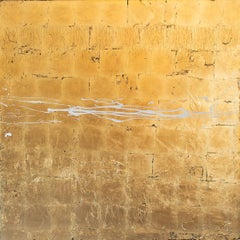
"Golden path of victory", Gold Paintings, 2024
By Addison Jones
Located in Delaware , OH
"Golden path of victory", Gold Paintings, 2024"
"Golden path of victory” is a piece of letter art inspired by a vision she had of walking on a golden path. Addison Jones artwork fea...
Category
2010s Modern Ohio - Art
Materials
Gold, Gold Leaf
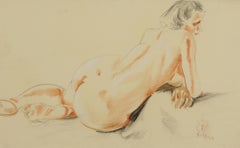
Reclining Female Nude
By Henry George Keller
Located in Fairlawn, OH
Reclining Female Nude
Charcoal and colored chalks with white highlights on tan laid paper, c. 1948
Signed and monogrammed by the artist lower right
(see photo)
A masterpiece dr...
Category
1940s American Modern Ohio - Art
Materials
Chalk
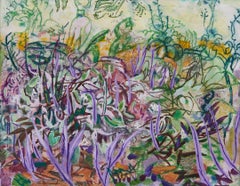
Rain Garden II, Contemporary Figural Abstract Landscape, New York Artist
Located in Beachwood, OH
Cathy Diamond (American, 20th Century)
Rain Garden II, 2023
Pigment dispersion and acrylic on paper
Signed lower left, signed and dated verso
11 x 14 inches
Cathy Diamond currently ...
Category
2010s Ohio - Art
Materials
Acrylic, Pigment
Colorful abstract acrylic collage 20th century painting, New York artist
By Joseph Glasco
Located in Beachwood, OH
Joseph Glasco (American, 1925-1996)
Untitled
1978-81
Acrylic on canvas collage
initialed verso and dated ‘81
48 x 51 inches
Joseph Glasco was born in Paul’s Valley, Oklahoma and gre...
Category
1980s Abstract Expressionist Ohio - Art
Materials
Acrylic
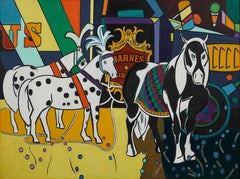
Horses Prepared to Perform and Circus Truck, Contemporary American Modern
By Joseph O
Sickey
Located in Beachwood, OH
Work sold to benefit the CLEVELAND INSTITUTE OF ART
Joseph B. O’Sickey (American, 1918–2013)
Horses Prepared to Perform and Circus Truck, Circus Series, 1991
Oil on canvas
Signed an...
Category
1990s Post-Impressionist Ohio - Art
Materials
Oil
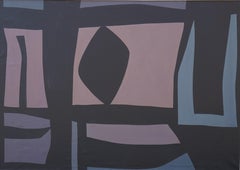
Blue Wall, mid-century abstract expressionist, geometric blue, black
pink work
By Richard Andres
Located in Beachwood, OH
Richard Andres (American, 1927-2013)
Blue Wall, c. 1959
oil on canvas
signed and titled verso
42 x 60 inches
Richard Andres was born in Buffalo, New York in 1927. A graduate of the Cleveland Institute of Art in 1950, he was immediately drafted and served for two years in the army as a mural painter. He received his Master of Arts from Kent State in 1961. A frequent exhibitor at galleries and museums and winner of multiple May Show prizes, Andres taught art in the Cleveland Public Schools for 28 years, as well as teaching the University of Buffalo, the Cleveland Institute of Art and the Western Reserve University.
Very little in Richard Andres’ childhood would have predicted his love of classical music, mid-century-modern architecture and certainly not his lifelong passion for art and in particular abstract art. Richard’s father, Raymond, had no more than a third-grade education, and his mother, Clara, was one of thirteen children – only three of whom lived into adulthood and none of whom attended high school.
They lived, when Richard was a boy, in a dingy area of Buffalo, NY in a walk-up apartment situated above a tavern. Raymond and Clara supplemented the income from their factory jobs in the bar downstairs with Raymond playing ragtime on the piano and Clara serving drinks. This often left Richard and his two older brothers at home alone to fend for themselves. The two older boys, Raymond and Russell, were - unlike Richard- rather rough and tumble and entertained themselves with stickball, boxing and the like. Richard, on the other hand, from a very young age liked to draw, or better yet even, to paint with the small set of watercolors he received for Christmas one year. Paper, however, at the height of the depression, was hard to come by. Luckily, Clara used paper doilies as decoration for the apartment and Richard would contentedly paint and then cut up doilies, gluing the pieces together to create collages.
At eight-years-old, he discovered the Albright-Knox Museum (then known as the Albright Art Gallery) and spent several hours a week there studying the paintings. He was particularly fond of Charles Burchfield‘s landscapes, enamored with their ‘messiness’ and thinking that they somehow captured more ‘feeling’ than works he was previously familiar with. For his tenth Christmas, he asked for and received a ‘how-to’ paint book by Elliot O’Hare. Through this self-teaching, he assembled the portfolio needed for acceptance to Buffalo Technical High School where he studied Advertising Arts. In his Junior year, he was encouraged to enter a watercolor painting, “Two Barns,” in the national 1944-45 Ingersoll Art Award Contest and was one of twelve grand prize winners – each one winning one hundred dollars. More importantly the painting was exhibited at the Carnegie Institute Galleries, which resulted in his winning a national scholarship to the Cleveland School of Art (The Cleveland Art Institute).
He flourished at the art school under the tutelage of faculty members such as Carl Gaertner, as well as that of visiting artists such as William Sommer and Henry George Keller. He would say in later years that Gaertner, in particular, influenced his attitude toward life as well as art. “Gaertner,” Andres said, “believed that there was no need to be a ‘tortured artist’, that an artist should rather enjoy beauty, family, and life in general.” Free to spend his days as he chose, he wandered the Cleveland Art Museum for most of the hours he was not attending classes or painting; the remaining time was spent drinking coffee at a local hangout with art school friends – which is where he met fellow Henry Keller scholarship winner, Avis Johnson. Richard was immediately smitten with Avis, but being rather shy, it took him the entire summer of 1948 to build up his courage to ask her out. Over that summer he ‘thought about Avis’ and worked in a diner to save money. He also used the hundred-dollar prize money won in High School to visit the first Max Beckmann retrospective in the United States at the City Art Museum in St. Louis. Over a half century later he spoke of that exhibit with a reverence usually reserved for spiritual matters, “I walked in and it was like nothing I had ever seen before... the color...It just glowed.”
Returning to campus in the Fall, the first thing he did was go to the coffee shop in hopes of finding Avis. He did, and she, upon seeing him, realized that she was also smitten with him. They quickly became known as ‘the couple’ on campus, and a year later, with Richard being drafted for the Korean war, they were quickly married by a Justice of the Peace, celebrating after with family at Avis’s Cleveland home. As a gift, faculty member John Paul Miller designed and made the simple gold wedding ring Avis wore for their 65 years of marriage. During those 65 years neither wavered in their mutual love, nor in the respect they shared for one another’s art.
The couple lived in a converted chicken coop in Missouri while Richard was in boot camp. At the camp, he would volunteer for any job offered and one of those jobs ended up being painting road signs. His commander noticed how quickly and neatly he worked and gave him more painting work to do - eventually recommending him for a position painting murals for Army offices in Panama. Until her dying day, Avis remained angry that “The army got to keep those fabulous murals and they probably didn’t even know how wonderful they were.” In Panama, their first son, Mark, was born. After Richard’s discharge in 1953, they moved back to the Cleveland area and used the GI bill to attend Kent State gaining his BA in education. The small family then moved briefly to Buffalo, where Richard taught at the Albright Art School and the University of Buffalo – and their second son, Peter, was born. Richard had exhibited work in the Cleveland May Show and the Butler Art Museum during his art school years, and during the years in Buffalo, his work was exhibited at the gallery he had so loved as a child, the Albright Art Gallery.
In 1956, the family moved back to the Cleveland area and Richard began teaching art at Lincoln West High School during the day while working toward his MA in art at Kent State in the evenings. Avis and Richard, with the help of an architect, designed their first home - a saltbox style house in Hudson, Ohio, and in 1958, their third son, Max (after Max Beckmann) was born. Richard enjoyed the consistency of teaching high school as well as the time it gave him to paint on the weekends and during the summer months. In 1961, he received his MA and his daughter, Claire, was born. With a fourth child, the house was much too small, and Avis and Richard began designing their second home. An admirer of MCM architecture, Richard’s favorite example of the style was the Farnsworth house – he often spoke of how the concepts behind this architectural style, particularly that of Mies van der Rohe, influenced his painting.
Andres described himself as a 1950’s...
Category
1950s Abstract Expressionist Ohio - Art
Materials
Oil
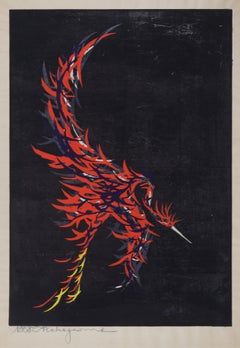
Keshin (Incarnation (Moku)
Located in Fairlawn, OH
Keshin (Incarnation (Moku)
Color woodcut, 1958
Signed and dated lower left in pencil (see photo)
An impression is in the collectionof the Asian Art Museum, No. 2012.93, which is not a richly inked s this impression.
Another impression is in the National Museum of Art, Smithsonian, accession no. S2019.3.1297
A third impression is in the collectionof the Art Gallery of Greater Victoria
This appears to be the best and most colorful impression of the museum holdings.
The image is thought to depict a flying crame
Condition: Wrinkles to large sheet of handmade paper. Not objectionable.
Image size: 29 15/16 x 21 1/4 inches
Sheet size: 37 3/8 x 27 1/4 inches
Reference: Tadashi Nakiyama Life & Work, Plate F
Tadashi Nakayama - Sosaku hanga artist Tadashi Nakayama initially studied oil painting at Tama Art College, but began creating woodblock prints in 1951. In the 1960s, he traveled to Turkey, Greece, England, and Italy, absorbing influences from Persian and Byzantine art and the renaissance master Paolo Ucello. Throughout his long career, his subjects have included flowers, butterflies, women, and perhaps most famously, horses...
Category
1950s Abstract Ohio - Art
Materials
Woodcut
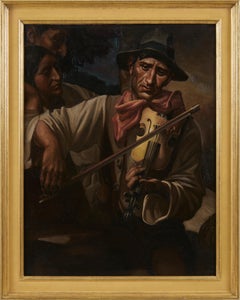
The Stonecutter
s Evening, Early 20th Century American Scene Oil, Man w/ Violin
By Frank Wilcox
Located in Beachwood, OH
Frank Nelson Wilcox (American, 1887-1964)
The Stonecutter's Evening, c. 1915
Oil on canvas
Signed lower right
36 x 27.5 inches
42.25 x 34 inches, framed
Frank Nelson Wilcox (October 3, 1887 – April 17, 1964) was a modernist American artist and a master of watercolor. Wilcox is described as the "Dean of Cleveland School painters," though some sources give this appellation to Henry Keller or Frederick Gottwald. Wilcox was born on October 3, 1887 to Frank Nelson Wilcox, Sr. and Jessie Fremont Snow Wilcox at 61 Linwood Street in Cleveland, Ohio. His father, a prominent lawyer, died at home in 1904 shortly before Wilcox' 17th birthday. His brother, lawyer and publisher Owen N. Wilcox, was president of the Gates Legal Publishing Company or The Gates Press. His sister Ruth Wilcox was a respected librarian.
In 1906 Wilcox enrolled from the Cleveland School of Art under the tutelage of Henry Keller, Louis Rorimer...
Category
1910s American Modern Ohio - Art
Materials
Oil
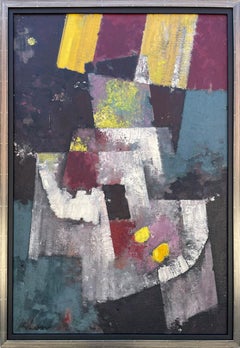
By the Dawn
s Early Light, mid-century abstract black, red, yellow oil painting
By Charles Green Shaw
Located in Beachwood, OH
Charles Green Shaw (American, 1892-1974)
By the Dawn's Early Light, 1955
Oil on masonite
Signed lower left, dated and titled verso
35.5 x 23.75 inches
38 x 26.25 inches, framed
Provenance: The estate of the artist to Charles H. Carpenter
Charles Green Shaw, born into a wealthy New York family, began painting when he was in his mid-thirties. A 1914 graduate of Yale, Shaw also completed a year of architectural studies at Columbia University. During the 1920s Shaw enjoyed a successful career as a freelance writer for The New Yorker, Smart Set and Vanity Fair, chronicling the life of the theater and café society. In addition to penning insightful articles, Shaw was a poet, novelist and journalist. In 1927 he began to take a serious interest in art and attended Thomas Hart Benton's class at the Art Students League briefly in New York. He also studied privately with George Luks, who became a good friend. Once he had dedicated himself to non-traditional painting, Shaw's writing ability made him a potent defender of abstract art.
After initial study with Benton and Luks, Shaw continued his artistic education in Paris by visiting numerous museums and galleries. From 1930 to 1932 Shaw's paintings evolved from a style imitative of Cubism to one directly inspired by it, though simplified and more purely geometric. Returning to the United States in 1933, Shaw began a series of abstracted cityscapes of skyscrapers he called Manhattan Motifs which evolved into his most famous works, the shaped canvases he called Plastic Polygons.
The 1930s were productive years for Shaw. He showed his paintings in numerous group exhibitions, both in New York and abroad, and was also given several one-man exhibitions. Shaw had his first one-man exhibition at the Valentine Dudensing Gallery in New York in 1934, which included 25 Manhattan Motif paintings and 8 abstract works. In the spring of 1935 Shaw was introduced to Albert Gallatin and George L.K. Morris. Gallatin was so impressed with Shaw's work, he broke a policy against solo exhibitions at his museum, the Gallery of Living Art, and offered Shaw an exhibition there. In the summer of 1935 Shaw traveled to Paris with Gallatin and Morris who provided introductions to many great painters. Shaw regularly spent time with John Ferren and Jean Hélion. The following year Gallatin organized an exhibition called Five Contemporary American Concretionists at the Reinhardt Gallery that included Shaw, Ferren, and Morris, Alexander Calder, and Charles Biederman...
Category
1950s Abstract Ohio - Art
Materials
Oil
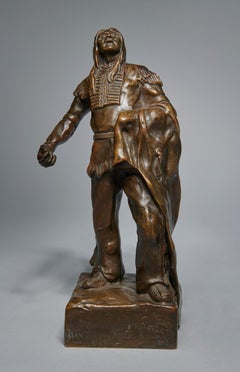
Native American Chief, 20th Century Bronze Sculpture
Located in Beachwood, OH
Max Sandor (Austrian, 1897-1945)
Native American Chief, 20th Century
Bronze
Signed on base
11 x 6 x 4.5 inches
Category
20th Century Ohio - Art
Materials
Bronze
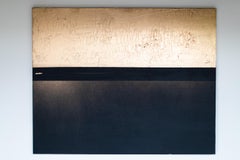
Contemporary Art, Gold and Black Painting, Abstract Paintings-Abundance 904
By Addison Jones
Located in Delaware , OH
Contemporary Art, Gold and Black Painting, Abstract Paintings-Abundance 904
A B O U T T H I S P I E C E :
“Abundance 904” is a piece of letter art inspired by graffiti by Addison Jo...
Category
21st Century and Contemporary Abstract Ohio - Art
Materials
Gold
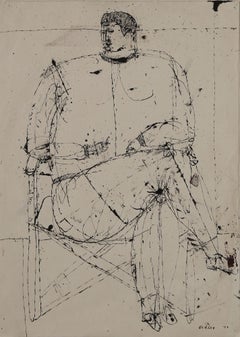
Seated Figure, 20th century figural abstract expressionist ink drawing
By Joseph Glasco
Located in Beachwood, OH
Joseph Glasco (American, 1925-1996)
Seated Figure
1970
India ink on paper
Signed and dated lower right
16 x 11.5 inches
19.5 x 15 inches, framed
Joseph Glasco was born in Paul’s Val...
Category
1970s Abstract Expressionist Ohio - Art
Materials
India Ink
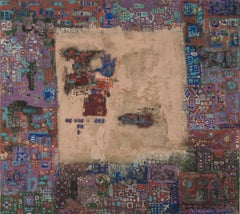
Kandahar
By Virginia Dehn
Located in Fairlawn, OH
Kandahar
Acrylic and mixed media on fabric, c. 1970
Signed by the artist lower right (see photo)
Kandahar is one of the thirty-four provinces of Afghanistan, located in the southern part of the country next to Pakistan. Inspired by the Dehns visit to Afghanistan in the 1960's.
Provenance: Estate of the Artist
Dehn Heirs
Condition: Excellent
Canvas size: 18 x 20 inches
Virginia Dehn
From Wikipedia, the free encyclopedia
Virginia Dehn
Virginia Dehn in her studio in Santa Fe
Virginia Dehn (née Engleman) (October 26, 1922 – July 28, 2005) was an American painter and printmaker. Her work was known for its interpretation of natural themes in almost abstract forms. She exhibited in shows and galleries throughout the U.S. Her paintings are included in many public collections.
Life
Dehn was born in Nevada, Missouri on October 26, 1922.] Raised in Hamden, Connecticut, she studied at Stephens College in Columbia, Missouri before moving to New York City. She met the artist Adolf Dehn while working at the Art Students League. They married in November 1947. The two artists worked side by side for many years, part of a group of artists who influenced the history of 20th century American art. Their Chelsea brownstone was a place where artists, writers, and intellectuals often gathered.
Early career
Virginia Dehn studied art at Stephens College in Missouri before continuing her art education at the Traphagen School of Design, and, later, the Art Students League, both located in New York City. In the mid-1940s while working at the Associated American Artists gallery, she met lithographer and watercolorist Adolf Dehn. Adolf was older than Virginia, and he already enjoyed a successful career as an artist. The two were married in 1947 in a private ceremony at Virginia's parents house in Wallingford, Connecticut.
Virginia and Adolf Dehn
The Dehns lived in a Chelsea brownstone on West 21st Street where they worked side by side. They often hosted gatherings of other influential artists and intellectuals of the 20th century. Among their closest friends were sculptor Federico Castellón and his wife Hilda; writer Sidney Alexander and his wife Frances; artists Sally and Milton Avery; Ferol and Bill Smith, also an artist; and Lily and Georges Schreiber, an artist and writer. Bob Steed and his wife Gittel, an anthropologist, were also good friends of the Dehns. According to friend Gretchen Marple Pracht, "Virginia was a glamorous and sophisticated hostess who welcomed visitors to their home and always invited a diverse crowd of guests..." Despite their active social life, the two were disciplined artists, working at their easels nearly daily and taking Saturdays to visit galleries and view new work.
The Dehns made annual trips to France to work on lithographs at the Atelier Desjobert in Paris. Virginia used a bamboo pen to draw directly on the stone for her lithographs, which often depicted trees or still lifes. The Dehns' other travels included visits to Key West, Colorado, Mexico, and countries such as Greece, Haiti, Afghanistan, and India.
Dehn's style of art differend greatly from that of her husband, though the two sometimes exhibited together. A friend of the couple remarked, "Adolf paints landscapes; Virginia paints inscapes." Virginia Dehn generally painted an interior vision based on her feelings for a subject, rather than a literal rendition of it.] Many of her paintings consist of several layers, with earlier layers showing through. She found inspiration in the Abstract Expressionism movement that dominated the New York and Paris art scenes in the 1950s. Some of her favorite artists included Adolf Gottileb, Rothko, William Baziotes, Pomodoro, and Antonio Tapies.
Dehn most often worked with bold, vibrant colors in large formats. Her subjects were not literal, but intuitive. She learned new techniques of lithography from her husband Adolf, and did her own prints. Texture was very important to her in her work. Her art was influenced by a variety of sources. In the late 1960s she came across a book that included photographs of organic patterns of life as revealed under a microscope. These images inspired her to change the direction of some of her paintings. Other influences on Dehn's art came from ancient and traditional arts of various cultures throughout the world, including Persian miniatures, illuminated manuscripts, Dutch still life painting, Asian art, ancient Egyptian artifacts...
Category
1970s Abstract Ohio - Art
Materials
Acrylic
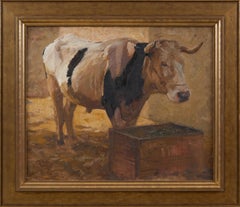
Cattle Series Study, Early 20th Century Bovine/Cow, Cleveland School artist
By Henry George Keller
Located in Beachwood, OH
Henry George Keller (American, 1868-1949)
Cattle Series Study, 1901
Oil on canvas
Signed verso
22 x 26 inches
28.5 x 33 inches, framed
Keller, a leading painter in Cleveland, was born at sea, off Nova Scotia on April 3, 1869. His earliest training was in Karlsruhe, Germany under Hermann Baisch (1846-1894), then at the Cleveland School of Art...
Category
Early 1900s Ohio - Art
Materials
Oil
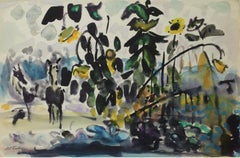
Sunflowers and Horses in Field, 20th Century Landscape Watercolor
By Joseph O
Sickey
Located in Beachwood, OH
Work sold to benefit the CLEVELAND INSTITUTE OF ART
Joseph B. O’Sickey (American, 1918–2013)
Sunflowers in Field
Watercolor on paper
Signed lower left
12.5. ...
Category
Late 20th Century Post-Impressionist Ohio - Art
Materials
Watercolor
Still Thinking About These?
All Recently ViewedMore Ways To Browse
A Grimshaw
Adam Barland
Air France Afrique
Alden Bryan
Amanda Acker
Antique Chinese Watercolor Landscape
Anton Genberg
Anton Sipos
Art Contemporary Fuschia
Bauer Canvas Oil
Beach Cottage Paintings
Ben Avram
Block Print Woman
Bords De La Seine
Bright Day And Painting
Chinese Tiger Painting
Christmas Deer
Christo And Jeanne Claude Wrapped Trees