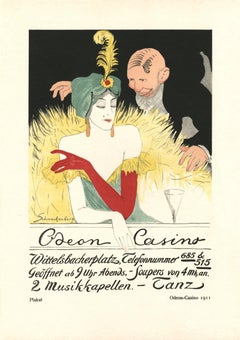
Palm Beach - Figurative Prints
to
3
92
102
53
43
62
Overall Width
to
Overall Height
to
131
53
24
15
11
6
2
1
1
1
45
34
28
22
17
2
43
263
44
42
75
40
17
1
2
6
27
18
7
1
223
127
2
307
176
122
76
73
70
42
39
38
36
35
31
29
22
16
16
16
13
12
9
150
130
24
20
13
143
1
19,286
17,433
Item Ships From: Palm Beach
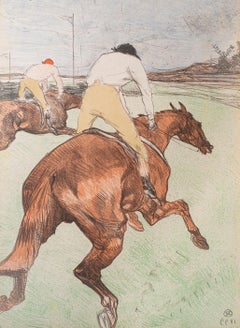
The Jockey
By Henri de Toulouse-Lautrec
Located in Palm Beach, FL
Color lithograph on Chine volant, 1899. Edition of aproximately 112. Printed by H. Stern, Paris. Published by Pierrefort, Paris.
Reference: Wittrock; 308-2nd edition, vol. 2, pg. 6...
Category
1890s Art Nouveau Palm Beach - Figurative Prints
Materials
Lithograph

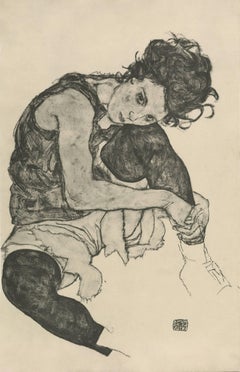
R. Layni, Zeichnungen folio, "Seated Woman with Bent Knee" Collotype plate I
Located in Palm Beach, FL
After Egon Schiele (1890 – 1918), AUSTRIA
“ART CANNOT BE MODERN, ART IS PRIMORDIALLY ETERNAL.” -SCHIELE
Defiantly iconoclastic in life and art, Egon Schiele is esteemed for his mas...
Category
1910s Vienna Secession Palm Beach - Figurative Prints
Materials
Paper
Art Nouveau "Poster for Kunstavsstellung VII" by Fraz von Stuck
By Franz von Stuck
Located in Palm Beach, FL
Note: We highly recommend shipping through 1stDibs for its cost effectiveness, full insurance coverage, and reliable handling. While standard parcel services are an option, the defau...
Category
1890s Art Nouveau Palm Beach - Figurative Prints
Materials
Lithograph

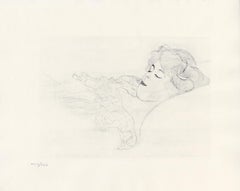
"Sleeping Woman" by Gustav Klimt - Original Print from Courtesans Folio
By Gustav Klimt
Located in Palm Beach, FL
Plate #1 from Gustav Klimt's 1907 "Dialogues of the Courtesans" portfolio, consisting of 15 collotypes on cream japon paper. The drawings in this folio are said to be studies for Kli...
Category
Early 1900s Vienna Secession Palm Beach - Figurative Prints
Materials
Paper
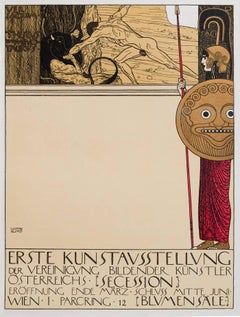
Ottokar Mascha Folio, plate 8: "Poster for the 1st Vienna Secession Exhibition"
By Gustav Klimt
Located in Palm Beach, FL
After GUSTAV KLIMT (1862-1918) THESEUS UND MINOTAURUS, 1898, final design submission for poster advertising the first exhibition of the Vienna Secession, (In Mascha, no. 8) As a cele...
Category
1910s Vienna Secession Palm Beach - Figurative Prints
Materials
Lithograph
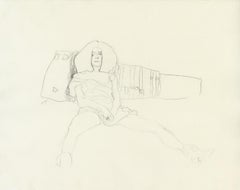
"Seated Woman Semi-nude" by Gustav Klimt - Original Print from Courtesans Folio
By Gustav Klimt
Located in Palm Beach, FL
Plate #2 from Gustav Klimt's 1907 "Dialogues of the Courtesans" portfolio, consisting of 15 collotypes on cream japon paper. The drawings in this folio are said to be studies for Klimt's well-known Water Serpents paintings...
Category
Early 1900s Vienna Secession Palm Beach - Figurative Prints
Materials
Paper
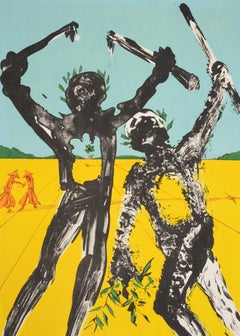
Salvador Dali PEACE AT LAST! Lithograph
By Salvador Dalí
Located in Lake Worth Beach, FL
Artist/Designer; Manufacturer: Salvador Dali (Spanish, 1904-1989)
Marking(s); notes: signed, blind stamp; ed. LVIII/C; 1973
Materials: lithograph on Piera paper
Dimensions (H, W, D):...
Category
1970s Surrealist Palm Beach - Figurative Prints
Materials
Lithograph
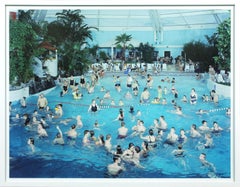
De Haan Kiss offset lithograph by Massimo Vitali. Published by Steidl Verlag.
By Massimo Vitali
Located in Boca Raton, FL
"De Haan Kiss" from "A Portfolio of Landscapes and Figures" offset lithograph. Image of swimmers in pool under dome. Massimo Vitali Steidl Verlag, Götting...
Category
Early 2000s Contemporary Palm Beach - Figurative Prints
Materials
Lithograph, Offset
"Smiling Woman Reclined" by Gustav Klimt - Original Print from Courtesans Folio
By Gustav Klimt
Located in Palm Beach, FL
Plate #14 from Gustav Klimt's 1907 "Dialogues of the Courtesans" portfolio, consisting of 15 collotypes on cream japon paper. The drawings in this folio are said to be studies for Klimt's well-known Water Serpents paintings...
Category
Early 1900s Vienna Secession Palm Beach - Figurative Prints
Materials
Paper
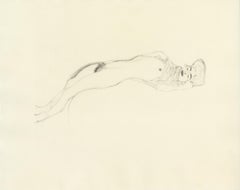
Ottokar Mascha Folio: plate 11 "5th Secession Exhibition Poster" by Kolo Moser
By Koloman Moser
Located in Palm Beach, FL
after KOLOMAN MOSER (1868-1918) 5TH SECESSION EXHIBITION POSTER, 1899, (In Mascha, no. 11) A pivotal figure in early-20th century Austrian ...
Category
1910s Vienna Secession Palm Beach - Figurative Prints
Materials
Lithograph
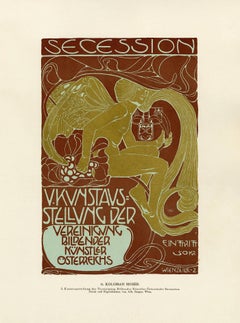
"On Earth as it is in Heaven" Original 1899 Color Lithograph by Alphonse Mucha
By Alphonse Mucha
Located in Palm Beach, FL
Alphonse Mucha worked mainly as a poster artist and became an influential figure of Art Nouveau in late 1890s, when poster illustrations were emerging as popular art form and new pri...
Category
1890s Art Nouveau Palm Beach - Figurative Prints
Materials
Lithograph
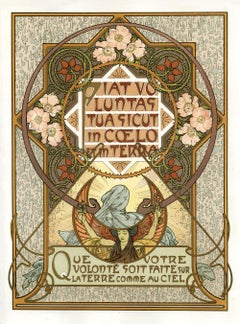
H.O. Miethke Das Werk folio "Life is a Struggle" collotype print
By Gustav Klimt
K.K. Hof-und Staatsdruckerei
Located in Palm Beach, FL
Life is a Struggle (The Golden Knight), no. 10 from the second installment of Das Werk Gustav Klimts
With his golden armor meticulously and faithfully rendered after examples found ...
Category
Early 1900s Vienna Secession Palm Beach - Figurative Prints
Materials
Archival Paper
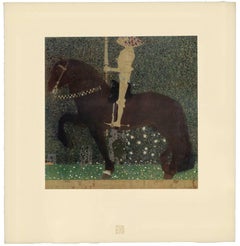
Gerlach
s Allegorien Plate #37: "Music" Lithograph
By Koloman Moser
Located in Palm Beach, FL
Koloman Moser
(1868 –1918), AUSTRIAN
Instead of applying his flair and art education solely to painting, Koloman Moser embodied the idea of Gesamt Kunstwerk (all-embracing art w...
Category
1890s Vienna Secession Palm Beach - Figurative Prints
Materials
Lithograph
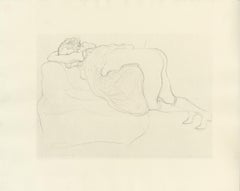
"Woman Leaning Over Chair" by Gustav Klimt - Original Print from Courtesan Folio
By Gustav Klimt
Located in Palm Beach, FL
Plate #8 from Gustav Klimt's 1907 "Dialogues of the Courtesans" portfolio, consisting of 15 collotypes on cream japon paper. The drawings in this folio are said to be studies for Kli...
Category
Early 1900s Vienna Secession Palm Beach - Figurative Prints
Materials
Paper
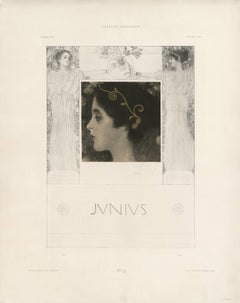
Gerlach
s Allegorien Folio, plate #53: "Junius" Lithograph, Gustav Klimt.
By Gustav Klimt
Located in Palm Beach, FL
Contributors to Gerlach & Schenk’s publications valued design and innovation in the graphic arts just as much as they examined allegories as subject matter for exploration. Here, Gus...
Category
1890s Vienna Secession Palm Beach - Figurative Prints
Materials
Lithograph
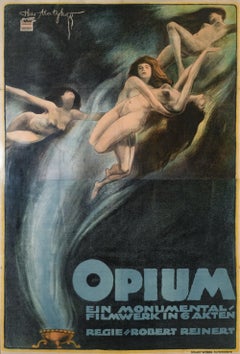
"Opium" Lithograph Poster by Theo Matejko
By Theo Matejko
Located in Palm Beach, FL
Frame is handmade by artist Gail Potocki.
WEAG-Matejko, Printer, Vienna
"In 1919, artist Theo Matejko created this lithograph for Robert Reinert's silent film Opium (starring Conra...
Category
1910s Expressionist Palm Beach - Figurative Prints
Materials
Lithograph
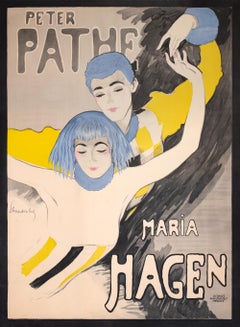
"Peter Pathe Marie Hagan" Original Lithograph Poster by Walter Schnackenberg
By Walter Schnackenberg
Located in Palm Beach, FL
Original vintage lithograph poster with depiction of Munich-based balletic duo Peter Pathe and Maria Hagen. Design by Walter Schnackenberg (German, 1880-1961). A very scarce example....
Category
1910s Art Nouveau Palm Beach - Figurative Prints
Materials
Lithograph
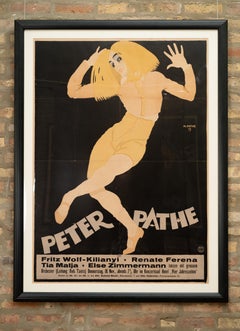
Peter Pathe - Original Lithograph Poster
By Walter Schnackenberg
Located in Palm Beach, FL
PETER PATHE, poster lithograph, Schnackenberg School, 1919, the image features the headline performer, Peter Pathe, in drag wearing a form-fitting button-down jacket, high-waisted shorts buttoning down the front, Mary Jane dance shoes and calf-length white socks; Pathe is depicted in motion with raised jazz hands which frame his bushy-haired heavily made-up face and body curving in dynamic lateral movement with raised front leg turned out; with printed text at the bottom: “PETER PATHE/und/Fritz Wolf-Killanyi * Renate Ferena/Tia Majja * Else Zimmermann tanzenmit grossem/Orchester (Leitung: Rob. Tants) Donnerstag, 18 Nov., amends 71/2 Uhr im Konzertsaal Hotel “Vier Jahreszeiten”/Karten zu Mk. 20. - bis Mk. 3.- bei Alfr. Schmid Nachf., Residenzstr. 7 und Otto Halbreiter, Promendeplatz 16.”; printed text at mid-right: “M. Pathe/19”; marked with the printer’s stamp in the lower right: “Oscar Consee/Kunstanstalt/Munchen/Valley Str./7-9”; the poster is secured by matting and framed with a plexiglass cover, Boston...
Category
1910s Art Nouveau Palm Beach - Figurative Prints
Materials
Lithograph
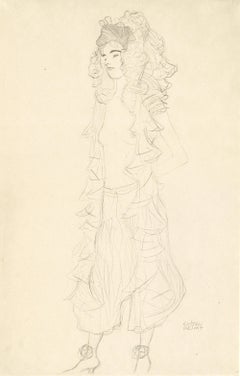
Gustav Klimt "Standing Girl w/Lace Headdress" collotype - Funfundzwanzig folio
By Gustav Klimt
Located in Palm Beach, FL
Title page numbered: 263/450
Category
1910s Vienna Secession Palm Beach - Figurative Prints
Materials
Paper
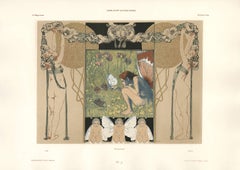
Gerlach
s Allegorien Plate #51: "Summer" Lithograph
By Koloman Moser
Located in Palm Beach, FL
Koloman Moser
(1868 –1918), AUSTRIAN
Instead of applying his flair and art education solely to painting, Koloman Moser embodied the idea of Gesamt Kunstwerk (all-embracing art w...
Category
1890s Vienna Secession Palm Beach - Figurative Prints
Materials
Lithograph
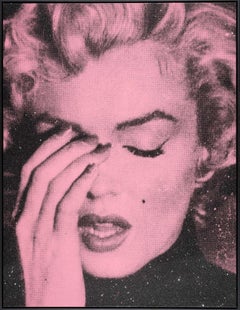
"Marilyn Crying Diamond (Hollywood Pink)" hand-pulled screen print on linen
By Russell Young
Located in Boca Raton, FL
"Marilyn Crying Diamond (Hollywood Pink)" acrylic, oil-based ink and diamond dust hand-pulled screen print on linen by artist Russell Young. Dep...
Category
2010s Contemporary Palm Beach - Figurative Prints
Materials
Linen, Ink, Screen
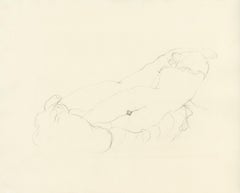
"Sleeping Couple" by Gustav Klimt - Original Print from Courtesans Folio
By Gustav Klimt
Located in Palm Beach, FL
Plate #15 from Gustav Klimt's 1907 "Dialogues of the Courtesans" portfolio, consisting of 15 collotypes on cream japon paper. The drawings in this folio are said to be studies for Kl...
Category
Early 1900s Vienna Secession Palm Beach - Figurative Prints
Materials
Paper
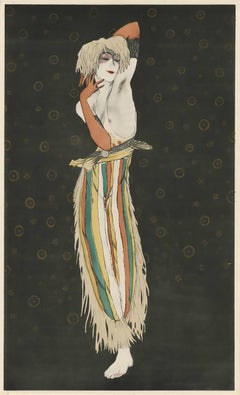
Ballet und Pantomime "Scherzo I", plate #4.
By Walter Schnackenberg
Located in Palm Beach, FL
Walter Schnackenberg’s style changed several times during his long and successful career. Having studied in Munich, the artist traveled often to Paris where he fell under the spell of the Henri de Toulouse-Lautrec’s colorful and sensuous posters depicting theatrical and decadent subjects. Schnackenberg became a regular contributor of similar compositions to the German magazines Jugend and Simplicissimus before devoting himself to the design of stage scenery and costumes. In the artist’s theatrical work, his mastery of form, ornamentation, and Orientalism became increasingly evident. He excelled at combining fluid Art Nouveau outlines, with spiky Expressionist passages, and the postures and patterns of the mysterious East.
In his later years, Schnackenberg explored the unconscious, using surreal subject matter and paler colors that plainly portrayed dreams and visions, some imbued with political connotations. His drawings, illustrations, folio prints, and posters are highly sought today for their exceedingly imaginative qualities, enchanting subject matter, and arresting use of color.
SCHNACKENBERG BALLET UND PANTOMIME...
Category
1920s Art Deco Palm Beach - Figurative Prints
Materials
Paper
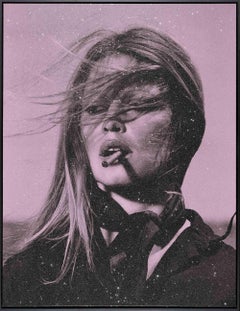
Russell Young "Bardot Supreme (Riviera Rose)" hand-pulled screen print on linen
By Russell Young
Located in Boca Raton, FL
"Bardot Supreme (Riviera Rose)" acrylic, oil-based ink and diamond dust hand-pulled screen print on linen by artist Russell Young. Depicts Brigitte Bardot smoking. Signed Russell You...
Category
2010s Contemporary Palm Beach - Figurative Prints
Materials
Linen, Ink, Screen
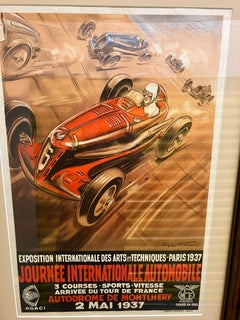
Geo Ham 1937 Paris Race Poster
By Geo Ham
Located in San Francisco, CA
Geo Ham: 1900-1972. Well listed French artist who is best known for his posters of car racing. He has auction results over $32,000 for a single poster. This original lithographic pos...
Category
1930s Palm Beach - Figurative Prints
Materials
Lithograph
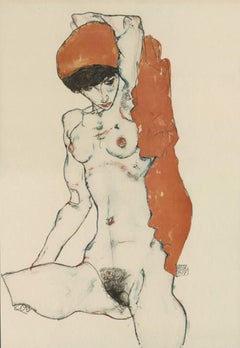
E. Strache, Handzeichnungen, "Seated Female Nude w/Orange Drapery" Collotype
By (after) Egon Schiele
Located in Palm Beach, FL
“ART CANNOT BE MODERN, ART IS PRIMORDIALLY ETERNAL.” -SCHIELE
Defiantly iconoclastic in life and art, Egon Schiele is esteemed for his masterful draftsmanship and precocious insight...
Category
1920s Vienna Secession Palm Beach - Figurative Prints
Materials
Paper
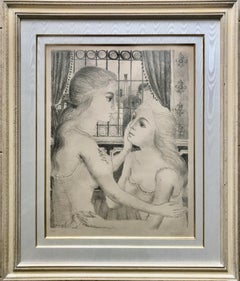
The Secret
By Paul Delvaux
Located in Lake Worth Beach, FL
The Secret 1966
Lithograph on wove paper with watermark arches 20in x 25in (64cm x 50cm), paper size 29inx22in and (39inx33in) framed under glass. Pencil signed and numbered, edition 34/75. Ref. no. 4, in: Cahier Paul Delvaux, no. 1, printed by Mourlot, published by Galerie Bateau Lavoir, Paris.
Paul Delvaux, (born September 23, 1897, Antheit, Liège, Belgium—died July 20, 1994, Veurne), Belgian Surrealist painter and printmaker whose canvases typically portray transfixed nudes and skeletons in mysterious settings.
From 1920 to 1924 Delvaux studied architecture and painting at the Académie des Beaux-Arts in Brussels. His early work was influenced by Post-Impressionism and Expressionism, but after discovering the work of Salvador Dalí, Giorgio de Chirico, and his fellow Belgian René Magritte, Delvaux converted to a Surrealist style in the mid-1930s. He traveled through Italy before World War II, and the Classical architecture he encountered there developed into recurring motifs in his work. During that trip he was also greatly influenced by early 16th-century Italian Mannerist...
Category
1960s Surrealist Palm Beach - Figurative Prints
Materials
Lithograph
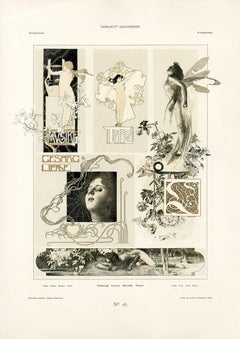
Gerlach
s Allegorien Plate #20: "Song, Love, Music, Dance" Lithograph
By Koloman Moser
Located in Palm Beach, FL
Koloman Moser
(1868 –1918), AUSTRIAN
Instead of applying his flair and art education solely to painting, Koloman Moser embodied the idea of Gesamt Kunstwerk (all-embracing art w...
Category
1890s Vienna Secession Palm Beach - Figurative Prints
Materials
Lithograph
H.O. Miethke Das Werk folio "Portrait of Marie Henneberg" collotype print
By Gustav Klimt
K.K. Hof-und Staatsdruckerei
Located in Palm Beach, FL
DAS WERK GUSTAV KLIMTS, a portfolio of 50 prints, ten of which are multicolor collotypes on chine colle paper laid down on hand-made heavy cream wove paper with deckled edges; under ...
Category
Early 1900s Vienna Secession Palm Beach - Figurative Prints
Materials
Paper
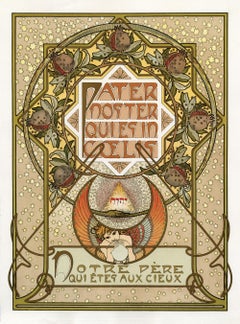
"Our Father Who Art in Heaven" Original 1899 Color Lithograph by Alphonse Mucha
By Alphonse Mucha
Located in Palm Beach, FL
Alphonse Mucha worked mainly as a poster artist and became an influential figure of Art Nouveau in late 1890s, when poster illustrations were emerging as popular art form and new pri...
Category
1890s Art Nouveau Palm Beach - Figurative Prints
Materials
Lithograph
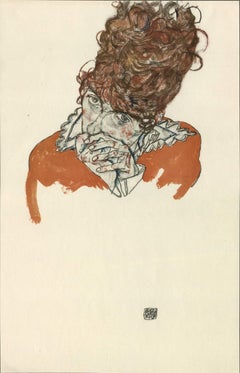
E. Strache, Handzeichnungen folio, "Artist
s Sister-in-Law" Collotype plate
By (after) Egon Schiele
Located in Palm Beach, FL
After Egon Schiele (1890 – 1918), AUSTRIA
“ART CANNOT BE MODERN, ART IS PRIMORDIALLY ETERNAL.” -SCHIELE
Defiantly iconoclastic in life and art, Egon Schiele is esteemed for his mas...
Category
1920s Vienna Secession Palm Beach - Figurative Prints
Materials
Paper
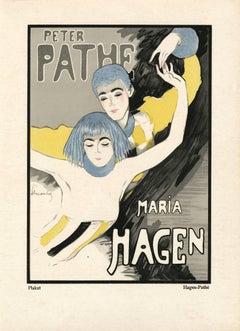
Kostume, Plakate, und Dekorationen, "Hagen-Pathe"
By Walter Schnackenberg
Located in Palm Beach, FL
Walter Schnackenberg’s style changed several times during his long and successful career. Having studied in Munich, the artist traveled often to Paris where he fell under the spell o...
Category
1910s Expressionist Palm Beach - Figurative Prints
Materials
Lithograph
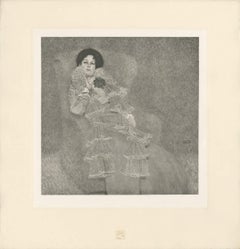
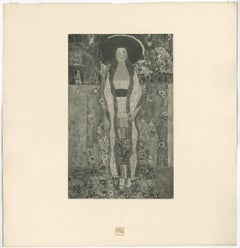
H.O. Miethke Das Werk folio "Portrait of Adele Bloch-Bauer II" collotype print
By Gustav Klimt
K.K. Hof-und Staatsdruckerei
Located in Palm Beach, FL
DAS WERK GUSTAV KLIMTS, a portfolio of 50 prints, ten of which are multicolor collotypes on chine colle paper laid down on hand-made heavy cream wove paper with deckled edges; under ...
Category
Early 1900s Vienna Secession Palm Beach - Figurative Prints
Materials
Paper
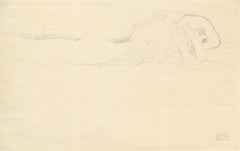
Gustav Klimt "2nd Study for Water Serpents" collotype from Funfundzwanzig folio
By Gustav Klimt
Located in Palm Beach, FL
Title page numbered: 263/450
Category
1910s Vienna Secession Palm Beach - Figurative Prints
Materials
Paper
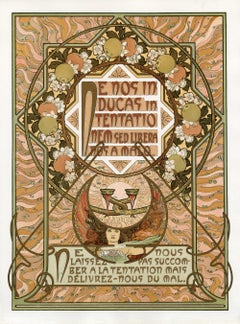
"Lead Us Not Into Temptation" Original 1899 Color Lithograph by Alphonse Mucha
By Alphonse Mucha
Located in Palm Beach, FL
Alphonse Mucha worked mainly as a poster artist and became an influential figure of Art Nouveau in late 1890s, when poster illustrations were emerging as popular art form and new pri...
Category
1890s Art Nouveau Palm Beach - Figurative Prints
Materials
Lithograph
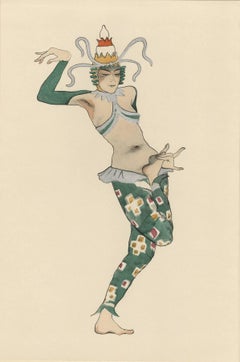
Ballet und Pantomime "Bingha", plate #8.
By Walter Schnackenberg
Located in Palm Beach, FL
Walter Schnackenberg’s style changed several times during his long and successful career. Having studied in Munich, the artist traveled often to Paris where he fell under the spell of the Henri de Toulouse-Lautrec’s colorful and sensuous posters depicting theatrical and decadent subjects. Schnackenberg became a regular contributor of similar compositions to the German magazines Jugend and Simplicissimus before devoting himself to the design of stage scenery and costumes. In the artist’s theatrical work, his mastery of form, ornamentation, and Orientalism became increasingly evident. He excelled at combining fluid Art Nouveau outlines, with spiky Expressionist passages, and the postures and patterns of the mysterious East.
In his later years, Schnackenberg explored the unconscious, using surreal subject matter and paler colors that plainly portrayed dreams and visions, some imbued with political connotations. His drawings, illustrations, folio prints, and posters are highly sought today for their exceedingly imaginative qualities, enchanting subject matter, and arresting use of color.
SCHNACKENBERG BALLET UND PANTOMIME...
Category
1920s Art Deco Palm Beach - Figurative Prints
Materials
Paper
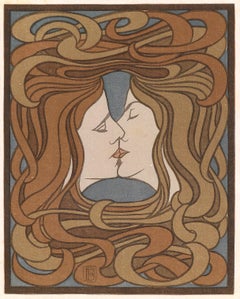
The Kiss
By Peter Behrens
Located in Palm Beach, FL
Artist edition of 38 on Imperial Japon paper. Genossenschaft Pan GmbH, Berlin, publisher; Dr. C Wolf & Sohn, Munich.
Category
1890s Art Nouveau Palm Beach - Figurative Prints
Materials
Woodcut
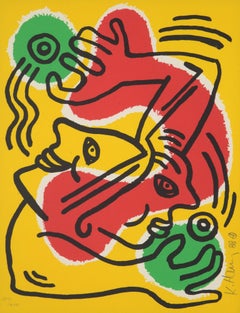
Keith Haring INTERNATIONAL VOLUNTEER DAY Lithograph, Signed Edition
By Keith Haring
Located in Lake Worth Beach, FL
Artist/Designer; Manufacturer: Keith Haring (American, 1958-1990)
Marking(s); notes: signed; ed. 280/1000; 1988
Materials: lithograph
Dimensions (H, W, D): 11.25"h, 8.5"w; 21.5"h, 17...
Category
1980s Pop Art Palm Beach - Figurative Prints
Materials
Lithograph
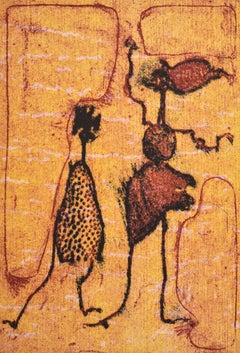
Max Ernst LE RIRE DE POETES Lithograph
By Max Ernst
Located in Lake Worth Beach, FL
Artist/Designer; Manufacturer: Max Ernst (German, 1891-1976)
Marking(s); notes: signed, 473, 4635/2512, marking(s); ed. 44/50; 1969
Materials: lithograph
Dimensions (H, W, D): 10.75"...
Category
20th Century Dada Palm Beach - Figurative Prints
Materials
Lithograph
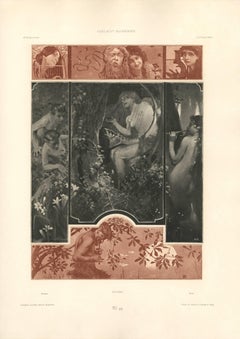
Gerlach
s Allegorien Plate #44: "Music" Lithograph
By Koloman Moser
Located in Palm Beach, FL
Koloman Moser
(1868 –1918), AUSTRIAN
Instead of applying his flair and art education solely to painting, Koloman Moser embodied the idea of Gesamt Kunstwerk (all-embracing art work) by designing architecture, furniture, jewelry, graphics, and tapestries meant to coordinate every detail of an environment. His work transcended the imitative decorative arts of earlier eras and helped to define Modernism for generations to come. Moser achieved a remarkable balance between intellectual structure (often geometric) and hedonistic luxury.
Collaborating with Gustav Klimt and Josef Hoffmann, the artist was an editor and active contributor to Ver Sacrum, (Sacred Spring), the journal of the Viennese Secession that was so prized for its aesthetics and high quality production that it was considered a work of art. The magazine featured drawings and designs in the Jugendstil style (Youth) along with literary contributions from distinguished writers from across Europe. It quickly disseminated both the spirit and the style of the Secession.
In 1903 Moser and Hoffmann founded and led the Wiener Werkstatte (Viennese Workshop) a collective of artisans that produced elegant decorative arts items, not as industrial prototypes but for the purpose of sale to the public. The plan, as idealistic then as now, was to elevate the lives of consumers by means of beautiful and useful interior surroundings.
Moser’s influence has endured throughout the century. His design sensibility is evident from the mid-century modern furniture of the 1950s and ‘60s to the psychedelic rock posters...
Category
1890s Vienna Secession Palm Beach - Figurative Prints
Materials
Lithograph
Gerlach
s Allegorien Plate #30: "Love" Lithograph
By Koloman Moser
Located in Palm Beach, FL
Koloman Moser
(1868 –1918), AUSTRIAN
Instead of applying his flair and art education solely to painting, Koloman Moser embodied the idea of Gesamt Kunstwerk (all-embracing art w...
Category
1890s Vienna Secession Palm Beach - Figurative Prints
Materials
Lithograph
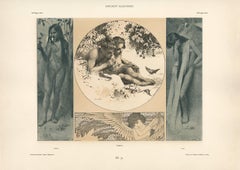
Gerlach
s Allegorien Plate #35: "Love
Wine" Lithograph
By Koloman Moser
Located in Palm Beach, FL
Koloman Moser
(1868 –1918), AUSTRIAN
Instead of applying his flair and art education solely to painting, Koloman Moser embodied the idea of Gesamt Kunstwerk (all-embracing art work) by designing architecture, furniture, jewelry, graphics, and tapestries meant to coordinate every detail of an environment. His work transcended the imitative decorative arts of earlier eras and helped to define Modernism for generations to come. Moser achieved a remarkable balance between intellectual structure (often geometric) and hedonistic luxury.
Collaborating with Gustav Klimt and Josef Hoffmann, the artist was an editor and active contributor to Ver Sacrum, (Sacred Spring), the journal of the Viennese Secession that was so prized for its aesthetics and high quality production that it was considered a work of art. The magazine featured drawings and designs in the Jugendstil style (Youth) along with literary contributions from distinguished writers from across Europe. It quickly disseminated both the spirit and the style of the Secession.
In 1903 Moser and Hoffmann founded and led the Wiener Werkstatte (Viennese Workshop) a collective of artisans that produced elegant decorative arts items, not as industrial prototypes but for the purpose of sale to the public. The plan, as idealistic then as now, was to elevate the lives of consumers by means of beautiful and useful interior surroundings.
Moser’s influence has endured throughout the century. His design sensibility is evident from the mid-century modern furniture of the 1950s and ‘60s to the psychedelic rock posters...
Category
1890s Vienna Secession Palm Beach - Figurative Prints
Materials
Lithograph
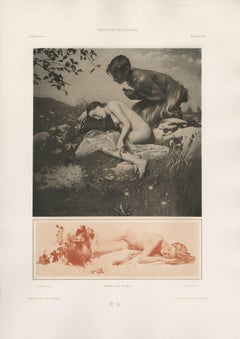
"Laderlappen" Original Lithograph Poster by Walter Schnackenberg
By Walter Schnackenberg
Located in Palm Beach, FL
Printed by Oscar Consee, Munich, 1922
Not much is known about this Stockholm-based cabaret act. Translating literally as Bat Man, we see a young dancer tease an oversized bat wearing a monocle -- a truly bizarre but beautiful design. (text by Jack Rennert)
Walter Schnackenberg’s style changed several times during his long and successful career. Having studied in Munich, the artist traveled often to Paris where he fell under the spell of the Henri de Toulouse-Lautrec’s colorful and sensuous posters depicting theatrical and decadent subjects. Schnackenberg became a regular contributor of similar compositions to the German magazines Jugend and Simplicissimus before devoting himself to the design of stage scenery...
Category
1920s Art Nouveau Palm Beach - Figurative Prints
Materials
Lithograph
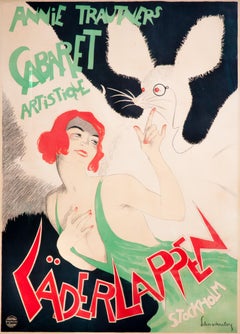
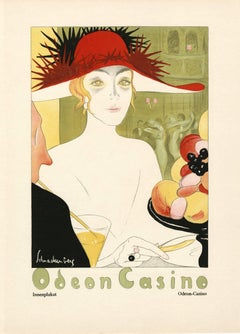
Kostume, Plakate, und Dekorationen, "Odeon-Casino"
By Walter Schnackenberg
Located in Palm Beach, FL
Walter Schnackenberg’s style changed several times during his long and successful career. Having studied in Munich, the artist traveled often to Paris where he fell under the spell of the Henri de Toulouse-Lautrec’s colorful and sensuous posters depicting theatrical and decadent subjects. Schnackenberg became a regular contributor of similar compositions to the German magazines Jugend and Simplicissimus before devoting himself to the design of stage scenery and costumes. In the artist’s theatrical work, his mastery of form, ornamentation, and Orientalism became increasingly evident. He excelled at combining fluid Art Nouveau outlines, with spiky Expressionist passages, and the postures and patterns of the mysterious East.
In his later years, Schnackenberg explored the unconscious, using surreal subject matter and paler colors that plainly portrayed dreams and visions, some imbued with political connotations. His drawings, illustrations, folio prints, and posters are highly sought today for their exceedingly imaginative qualities, enchanting subject matter, and arresting use of color.
SCHNACKENBERG: KOSTUME, PLAKATE UND DEKORATIONEN, a cardboard bound art book consisting of 43 prints of work by Walter Schnackenberg, 30 of which are color lithographs that are signed and some are titled and dated in the plate, as well as black and white prints and photographs with accompanying text by Oskar Bie; lithographs printed at Kunstanstalt Oskar Consee in Munich, other images printed by Gesellschaft Pick & Co. in Munich, the text and cover with color images by Schnackenberg front and verso printed by R. Oldenbourg in Munich; published by Musarion Verlag, Munich, 1920.
The majority of Walter Schnackenberg’s artistic output was destroyed by bomb attacks in Munich in 1944. The highly publicized 2013 auction in New York of the recovered pre-war poster collection once belonging to German poster aficionado, Hans Sachs has reintroduced the world to Walter Schnackenberg’s graphic genius and priceless ephemeral art from a lost era. Besides the museum world, designer Karl Lagerfeld is one of the most prodigious collectors of Schnackenberg. Flipping through the pages of Kostume, Plakate und Dekorationen, it becomes quite clear that Schnackenberg’s collection is ground zero at the crossroads of early modern fashion where the cult of celebrity meets up with dance, music, theater and cabaret, film and the graphic medium. Berlin and Munich under Germany’s Weimar Republic in the first quarter of the 20th century produced just the atmosphere to feed this burgeoning industry. Rising inflation sparked a recklessness to live large for the moment and heightened a desire for escapism. An influx of Indian and East Asian dancers and musicians added to the artsy bohemian cultural mix. A new decadence and tolerance resulted. Film boldly featured provocative subject matter. Cabarets became popular venues giving rise to the demi-monde in which people from all social stations mixed more freely in a thriving underground economy and culture where there was a blurring of boundaries and of social codes. Noted art historian and cultural doyen, Oskar Bie astutely observes in his introduction to Schnackenberg’s publication that what unites the images is fantasy and advertisement. Schnackenberg uses the eye as an instrument to brilliantly construct and convey this double message. His personages never directly confront the viewer. Their eyes gaze off in the distance like those of the screenplayer and film star Hedamaria Scholz in Schnackenberg’s “Die Rodelhexe” movie poster. Their eyes follow the path of a dance composition or become a transfixed and ogling male gaze such as the iconic 1911 Odeon Casino...
Category
1910s Expressionist Palm Beach - Figurative Prints
Materials
Lithograph
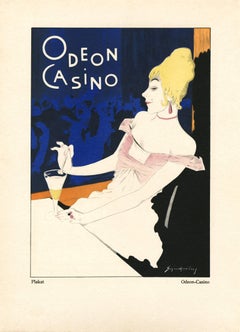
Kostume, Plakate, und Dekorationen, "Odeon-Casino"
By Walter Schnackenberg
Located in Palm Beach, FL
Walter Schnackenberg’s style changed several times during his long and successful career. Having studied in Munich, the artist traveled often to Paris where he fell under the spell of the Henri de Toulouse-Lautrec’s colorful and sensuous posters depicting theatrical and decadent subjects. Schnackenberg became a regular contributor of similar compositions to the German magazines Jugend and Simplicissimus before devoting himself to the design of stage scenery and costumes. In the artist’s theatrical work, his mastery of form, ornamentation, and Orientalism became increasingly evident. He excelled at combining fluid Art Nouveau outlines, with spiky Expressionist passages, and the postures and patterns of the mysterious East.
In his later years, Schnackenberg explored the unconscious, using surreal subject matter and paler colors that plainly portrayed dreams and visions, some imbued with political connotations. His drawings, illustrations, folio prints, and posters are highly sought today for their exceedingly imaginative qualities, enchanting subject matter, and arresting use of color.
SCHNACKENBERG: KOSTUME, PLAKATE UND DEKORATIONEN, a cardboard bound art book consisting of 43 prints of work by Walter Schnackenberg, 30 of which are color lithographs that are signed and some are titled and dated in the plate, as well as black and white prints and photographs with accompanying text by Oskar Bie; lithographs printed at Kunstanstalt Oskar Consee in Munich, other images printed by Gesellschaft Pick & Co. in Munich, the text and cover with color images by Schnackenberg front and verso printed by R. Oldenbourg in Munich; published by Musarion Verlag, Munich, 1920.
The majority of Walter Schnackenberg’s artistic output was destroyed by bomb attacks in Munich in 1944. The highly publicized 2013 auction in New York of the recovered pre-war poster collection once belonging to German poster aficionado, Hans Sachs has reintroduced the world to Walter Schnackenberg’s graphic genius and priceless ephemeral art from a lost era. Besides the museum world, designer Karl Lagerfeld is one of the most prodigious collectors of Schnackenberg. Flipping through the pages of Kostume, Plakate und Dekorationen, it becomes quite clear that Schnackenberg’s collection is ground zero at the crossroads of early modern fashion where the cult of celebrity meets up with dance, music, theater and cabaret, film and the graphic medium. Berlin and Munich under Germany’s Weimar Republic in the first quarter of the 20th century produced just the atmosphere to feed this burgeoning industry. Rising inflation sparked a recklessness to live large for the moment and heightened a desire for escapism. An influx of Indian and East Asian dancers and musicians added to the artsy bohemian cultural mix. A new decadence and tolerance resulted. Film boldly featured provocative subject matter. Cabarets became popular venues giving rise to the demi-monde in which people from all social stations mixed more freely in a thriving underground economy and culture where there was a blurring of boundaries and of social codes. Noted art historian and cultural doyen, Oskar Bie astutely observes in his introduction to Schnackenberg’s publication that what unites the images is fantasy and advertisement. Schnackenberg uses the eye as an instrument to brilliantly construct and convey this double message. His personages never directly confront the viewer. Their eyes gaze off in the distance like those of the screenplayer and film star Hedamaria Scholz in Schnackenberg’s “Die Rodelhexe” movie poster. Their eyes follow the path of a dance composition or become a transfixed and ogling male gaze such as the iconic 1911 Odeon Casino...
Category
1910s Expressionist Palm Beach - Figurative Prints
Materials
Lithograph
R. Layni, Zeichnungen folio, "Torso" Collotype plate IV
Located in Palm Beach, FL
Egon Schiele (1890 – 1918), AUSTRIA
“ART CANNOT BE MODERN, ART IS PRIMORDIALLY ETERNAL.” -SCHIELE
Defiantly iconoclastic in life and art, Egon Schiele is esteemed for his masterful...
Category
1910s Vienna Secession Palm Beach - Figurative Prints
Materials
Paper

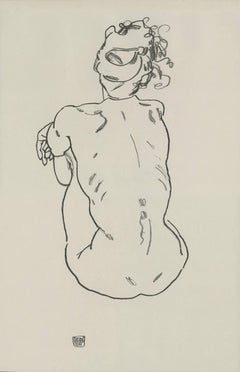
E. Strache, Handzeichnungen folio, "Female Nude, Back View" Collotype plate
By (after) Egon Schiele
Located in Palm Beach, FL
after Egon Schiele (1890 – 1918), AUSTRIA
“ART CANNOT BE MODERN, ART IS PRIMORDIALLY ETERNAL.” -SCHIELE
Defiantly iconoclastic in life and art, Egon Schiele is esteemed for his mas...
Category
1920s Vienna Secession Palm Beach - Figurative Prints
Materials
Paper
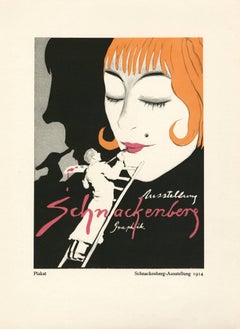
Kostume, Plakate, und Dekorationen, "Schnackenberg-Ausstellung 1914""
By Walter Schnackenberg
Located in Palm Beach, FL
Walter Schnackenberg’s style changed several times during his long and successful career. Having studied in Munich, the artist traveled often to Paris where he fell under the spell o...
Category
1910s Expressionist Palm Beach - Figurative Prints
Materials
Lithograph
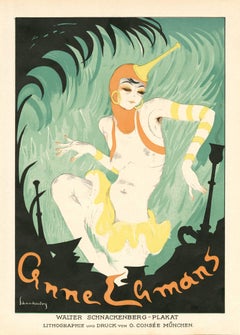
Kostume, Plakate, und Dekorationen, "Anne Lemans"
By Walter Schnackenberg
Located in Palm Beach, FL
Walter Schnackenberg’s style changed several times during his long and successful career. Having studied in Munich, the artist traveled often to Paris where he fell under the spell of the Henri de Toulouse-Lautrec’s colorful and sensuous posters depicting theatrical and decadent subjects. Schnackenberg became a regular contributor of similar compositions to the German magazines Jugend and Simplicissimus before devoting himself to the design of stage scenery and costumes. In the artist’s theatrical work, his mastery of form, ornamentation, and Orientalism became increasingly evident. He excelled at combining fluid Art Nouveau outlines, with spiky Expressionist passages, and the postures and patterns of the mysterious East.
In his later years, Schnackenberg explored the unconscious, using surreal subject matter and paler colors that plainly portrayed dreams and visions, some imbued with political connotations. His drawings, illustrations, folio prints, and posters are highly sought today for their exceedingly imaginative qualities, enchanting subject matter, and arresting use of color.
SCHNACKENBERG: KOSTUME, PLAKATE UND DEKORATIONEN, a cardboard bound art book consisting of 43 prints of work by Walter Schnackenberg, 30 of which are color lithographs that are signed and some are titled and dated in the plate, as well as black and white prints and photographs with accompanying text by Oskar Bie; lithographs printed at Kunstanstalt Oskar Consee in Munich, other images printed by Gesellschaft Pick & Co. in Munich, the text and cover with color images by Schnackenberg front and verso printed by R. Oldenbourg in Munich; published by Musarion Verlag, Munich, 1920.
The majority of Walter Schnackenberg’s artistic output was destroyed by bomb attacks in Munich in 1944. The highly publicized 2013 auction in New York of the recovered pre-war poster collection once belonging to German poster aficionado, Hans Sachs has reintroduced the world to Walter Schnackenberg’s graphic genius and priceless ephemeral art from a lost era. Besides the museum world, designer Karl Lagerfeld is one of the most prodigious collectors of Schnackenberg. Flipping through the pages of Kostume, Plakate und Dekorationen, it becomes quite clear that Schnackenberg’s collection is ground zero at the crossroads of early modern fashion where the cult of celebrity meets up with dance, music, theater and cabaret, film and the graphic medium. Berlin and Munich under Germany’s Weimar Republic in the first quarter of the 20th century produced just the atmosphere to feed this burgeoning industry. Rising inflation sparked a recklessness to live large for the moment and heightened a desire for escapism. An influx of Indian and East Asian dancers and musicians added to the artsy bohemian cultural mix. A new decadence and tolerance resulted. Film boldly featured provocative subject matter. Cabarets became popular venues giving rise to the demi-monde in which people from all social stations mixed more freely in a thriving underground economy and culture where there was a blurring of boundaries and of social codes. Noted art historian and cultural doyen, Oskar Bie astutely observes in his introduction to Schnackenberg’s publication that what unites the images is fantasy and advertisement. Schnackenberg uses the eye as an instrument to brilliantly construct and convey this double message. His personages never directly confront the viewer. Their eyes gaze off in the distance like those of the screenplayer and film star Hedamaria Scholz in Schnackenberg’s “Die Rodelhexe” movie poster. Their eyes follow the path of a dance composition or become a transfixed and ogling male gaze such as the iconic 1911 Odeon Casino...
Category
1910s Expressionist Palm Beach - Figurative Prints
Materials
Lithograph
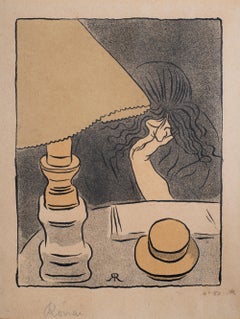
Femme Sous la Lampe (Woman Under the Lamp) signed lithograph; József Rippl-Rónai
Located in Palm Beach, FL
Framed lithograph, signed ("Rónai") and numbered ("no. 50") by the artist. Also includes a silver József Rippl-Rónai coin, made in 1977 for the 50th anniversary of his death.
The li...
Category
1890s Art Nouveau Palm Beach - Figurative Prints
Materials
Lithograph
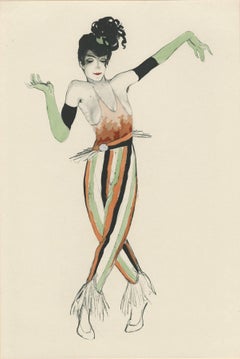
Ballet und Pantomime "Scherzo II", plate #15.
By Walter Schnackenberg
Located in Palm Beach, FL
Walter Schnackenberg’s style changed several times during his long and successful career. Having studied in Munich, the artist traveled often to Paris where he fell under the spell o...
Category
1920s Art Deco Palm Beach - Figurative Prints
Materials
Paper
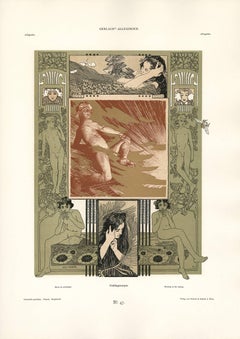
Gerlach
s Allegorien Plate #47: "Morning in the Spring" Lithograph
By Koloman Moser
Located in Palm Beach, FL
Koloman Moser
(1868 –1918), AUSTRIAN
Instead of applying his flair and art education solely to painting, Koloman Moser embodied the idea of Gesamt Kunstwerk (all-embracing art work) by designing architecture, furniture, jewelry, graphics, and tapestries meant to coordinate every detail of an environment. His work transcended the imitative decorative arts of earlier eras and helped to define Modernism for generations to come. Moser achieved a remarkable balance between intellectual structure (often geometric) and hedonistic luxury.
Collaborating with Gustav Klimt and Josef Hoffmann, the artist was an editor and active contributor to Ver Sacrum, (Sacred Spring), the journal of the Viennese Secession that was so prized for its aesthetics and high quality production that it was considered a work of art. The magazine featured drawings and designs in the Jugendstil style (Youth) along with literary contributions from distinguished writers from across Europe. It quickly disseminated both the spirit and the style of the Secession.
In 1903 Moser and Hoffmann founded and led the Wiener Werkstatte (Viennese Workshop) a collective of artisans that produced elegant decorative arts items, not as industrial prototypes but for the purpose of sale to the public. The plan, as idealistic then as now, was to elevate the lives of consumers by means of beautiful and useful interior surroundings.
Moser’s influence has endured throughout the century. His design sensibility is evident from the mid-century modern furniture of the 1950s and ‘60s to the psychedelic rock posters...
Category
1890s Vienna Secession Palm Beach - Figurative Prints
Materials
Paper
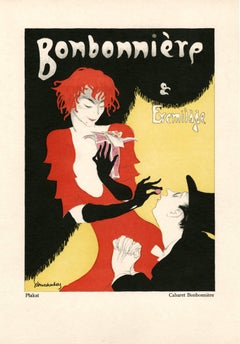
Kostume, Plakate, und Dekorationen, "Cabaret Bonbonniere"
By Walter Schnackenberg
Located in Palm Beach, FL
Walter Schnackenberg’s style changed several times during his long and successful career. Having studied in Munich, the artist traveled often to Paris where he fell under the spell o...
Category
1910s Expressionist Palm Beach - Figurative Prints
Materials
Lithograph
H.O. Miethke Das Werk folio "Beethovan Frieze 1
2" set of collotype prints
By Gustav Klimt
K.K. Hof-und Staatsdruckerei
Located in Palm Beach, FL
DAS WERK GUSTAV KLIMTS, a portfolio of 50 prints, ten of which are multicolor collotypes on chine colle paper laid down on hand-made heavy cream wove paper with deckled edges; under ...
Category
Early 1900s Vienna Secession Palm Beach - Figurative Prints
Materials
Paper
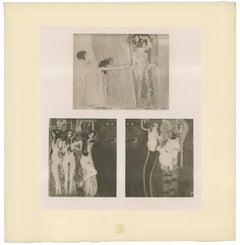
Ballet und Pantomime "Spukgestalt" (Ghostly Figure), plate #12.
By Walter Schnackenberg
Located in Palm Beach, FL
Walter Schnackenberg’s style changed several times during his long and successful career. Having studied in Munich, the artist traveled often to Paris where he fell under the spell o...
Category
1920s Art Deco Palm Beach - Figurative Prints
Materials
Paper
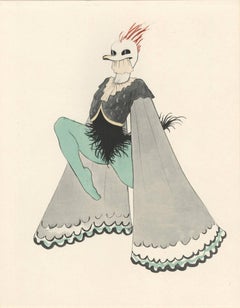
Ballet und Pantomime "Groteske", plate #22.
By Walter Schnackenberg
Located in Palm Beach, FL
Walter Schnackenberg’s style changed several times during his long and successful career. Having studied in Munich, the artist traveled often to Paris where he fell under the spell of the Henri de Toulouse-Lautrec’s colorful and sensuous posters depicting theatrical and decadent subjects. Schnackenberg became a regular contributor of similar compositions to the German magazines Jugend and Simplicissimus before devoting himself to the design of stage scenery and costumes. In the artist’s theatrical work, his mastery of form, ornamentation, and Orientalism became increasingly evident. He excelled at combining fluid Art Nouveau outlines, with spiky Expressionist passages, and the postures and patterns of the mysterious East.
In his later years, Schnackenberg explored the unconscious, using surreal subject matter and paler colors that plainly portrayed dreams and visions, some imbued with political connotations. His drawings, illustrations, folio prints, and posters are highly sought today for their exceedingly imaginative qualities, enchanting subject matter, and arresting use of color.
SCHNACKENBERG BALLET UND PANTOMIME...
Category
1920s Art Deco Palm Beach - Figurative Prints
Materials
Paper
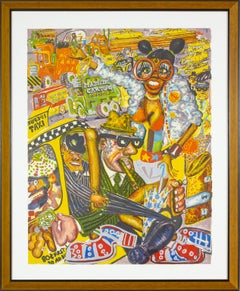
Hand-signed "Taxi Pretzel" lithograph from 1971 "No Gas" portfolio by Red Grooms
By Red Grooms
Located in Boca Raton, FL
"Taxi Pretzel" lithograph by Red Grooms from 1971 "No Gas" portfolio. Hand-signed Red Grooms AP on bottom of shoe on lower right corner. Image size: 27 1/4 x 21 1/2 inches.
Category
1970s Contemporary Palm Beach - Figurative Prints
Materials
Lithograph
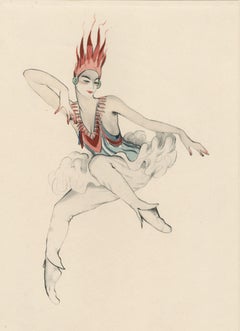
Ballet und Pantomime "Grille" (Cricket), plate #13.
By Walter Schnackenberg
Located in Palm Beach, FL
Walter Schnackenberg’s style changed several times during his long and successful career. Having studied in Munich, the artist traveled often to Paris where he fell under the spell of the Henri de Toulouse-Lautrec’s colorful and sensuous posters depicting theatrical and decadent subjects. Schnackenberg became a regular contributor of similar compositions to the German magazines Jugend and Simplicissimus before devoting himself to the design of stage scenery and costumes. In the artist’s theatrical work, his mastery of form, ornamentation, and Orientalism became increasingly evident. He excelled at combining fluid Art Nouveau outlines, with spiky Expressionist passages, and the postures and patterns of the mysterious East.
In his later years, Schnackenberg explored the unconscious, using surreal subject matter and paler colors that plainly portrayed dreams and visions, some imbued with political connotations. His drawings, illustrations, folio prints, and posters are highly sought today for their exceedingly imaginative qualities, enchanting subject matter, and arresting use of color.
SCHNACKENBERG BALLET UND PANTOMIME...
Category
1920s Art Deco Palm Beach - Figurative Prints
Materials
Paper
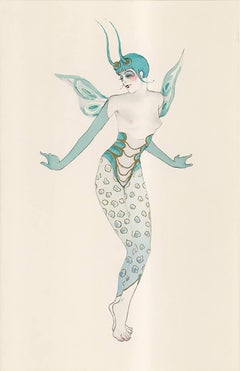
Kostume, Plakate, und Dekorationen, "Läderlappen"
By Walter Schnackenberg
Located in Palm Beach, FL
Walter Schnackenberg’s style changed several times during his long and successful career. Having studied in Munich, the artist traveled often to Paris where he fell under the spell of the Henri de Toulouse-Lautrec’s colorful and sensuous posters depicting theatrical and decadent subjects. Schnackenberg became a regular contributor of similar compositions to the German magazines Jugend and Simplicissimus before devoting himself to the design of stage scenery and costumes. In the artist’s theatrical work, his mastery of form, ornamentation, and Orientalism became increasingly evident. He excelled at combining fluid Art Nouveau outlines, with spiky Expressionist passages, and the postures and patterns of the mysterious East.
In his later years, Schnackenberg explored the unconscious, using surreal subject matter and paler colors that plainly portrayed dreams and visions, some imbued with political connotations. His drawings, illustrations, folio prints, and posters are highly sought today for their exceedingly imaginative qualities, enchanting subject matter, and arresting use of color.
SCHNACKENBERG: KOSTUME, PLAKATE UND DEKORATIONEN, a cardboard bound art book consisting of 43 prints of work by Walter Schnackenberg, 30 of which are color lithographs that are signed and some are titled and dated in the plate, as well as black and white prints and photographs with accompanying text by Oskar Bie; lithographs printed at Kunstanstalt Oskar Consee in Munich, other images printed by Gesellschaft Pick & Co. in Munich, the text and cover with color images by Schnackenberg front and verso printed by R. Oldenbourg in Munich; published by Musarion Verlag, Munich, 1920.
The majority of Walter Schnackenberg’s artistic output was destroyed by bomb attacks in Munich in 1944. The highly publicized 2013 auction in New York of the recovered pre-war poster collection once belonging to German poster aficionado, Hans Sachs has reintroduced the world to Walter Schnackenberg’s graphic genius and priceless ephemeral art from a lost era. Besides the museum world, designer Karl Lagerfeld is one of the most prodigious collectors of Schnackenberg. Flipping through the pages of Kostume, Plakate und Dekorationen, it becomes quite clear that Schnackenberg’s collection is ground zero at the crossroads of early modern fashion where the cult of celebrity meets up with dance, music, theater and cabaret, film and the graphic medium. Berlin and Munich under Germany’s Weimar Republic in the first quarter of the 20th century produced just the atmosphere to feed this burgeoning industry. Rising inflation sparked a recklessness to live large for the moment and heightened a desire for escapism. An influx of Indian and East Asian dancers and musicians added to the artsy bohemian cultural mix. A new decadence and tolerance resulted. Film boldly featured provocative subject matter. Cabarets became popular venues giving rise to the demi-monde in which people from all social stations mixed more freely in a thriving underground economy and culture where there was a blurring of boundaries and of social codes. Noted art historian and cultural doyen, Oskar Bie astutely observes in his introduction to Schnackenberg’s publication that what unites the images is fantasy and advertisement. Schnackenberg uses the eye as an instrument to brilliantly construct and convey this double message. His personages never directly confront the viewer. Their eyes gaze off in the distance like those of the screenplayer and film star Hedamaria Scholz in Schnackenberg’s “Die Rodelhexe” movie poster. Their eyes follow the path of a dance composition or become a transfixed and ogling male gaze such as the iconic 1911 Odeon Casino poster...
Category
1910s Expressionist Palm Beach - Figurative Prints
Materials
Lithograph
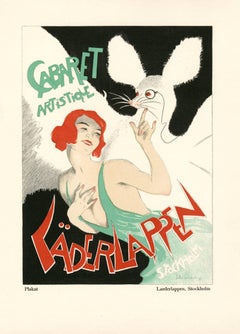
Kostume, Plakate, und Dekorationen, "Odeon-Casino 1911"
By Walter Schnackenberg
Located in Palm Beach, FL
Walter Schnackenberg’s style changed several times during his long and successful career. Having studied in Munich, the artist traveled often to Paris where he fell under the spell of the Henri de Toulouse-Lautrec’s colorful and sensuous posters depicting theatrical and decadent subjects. Schnackenberg became a regular contributor of similar compositions to the German magazines Jugend and Simplicissimus before devoting himself to the design of stage scenery and costumes. In the artist’s theatrical work, his mastery of form, ornamentation, and Orientalism became increasingly evident. He excelled at combining fluid Art Nouveau outlines, with spiky Expressionist passages, and the postures and patterns of the mysterious East.
In his later years, Schnackenberg explored the unconscious, using surreal subject matter and paler colors that plainly portrayed dreams and visions, some imbued with political connotations. His drawings, illustrations, folio prints, and posters are highly sought today for their exceedingly imaginative qualities, enchanting subject matter, and arresting use of color.
SCHNACKENBERG: KOSTUME, PLAKATE UND DEKORATIONEN, a cardboard bound art book consisting of 43 prints of work by Walter Schnackenberg, 30 of which are color lithographs that are signed and some are titled and dated in the plate, as well as black and white prints and photographs with accompanying text by Oskar Bie; lithographs printed at Kunstanstalt Oskar Consee in Munich, other images printed by Gesellschaft Pick & Co. in Munich, the text and cover with color images by Schnackenberg front and verso printed by R. Oldenbourg in Munich; published by Musarion Verlag, Munich, 1920.
The majority of Walter Schnackenberg’s artistic output was destroyed by bomb attacks in Munich in 1944. The highly publicized 2013 auction in New York of the recovered pre-war poster collection once belonging to German poster aficionado, Hans Sachs has reintroduced the world to Walter Schnackenberg’s graphic genius and priceless ephemeral art from a lost era. Besides the museum world, designer Karl Lagerfeld is one of the most prodigious collectors of Schnackenberg. Flipping through the pages of Kostume, Plakate und Dekorationen, it becomes quite clear that Schnackenberg’s collection is ground zero at the crossroads of early modern fashion where the cult of celebrity meets up with dance, music, theater and cabaret, film and the graphic medium. Berlin and Munich under Germany’s Weimar Republic in the first quarter of the 20th century produced just the atmosphere to feed this burgeoning industry. Rising inflation sparked a recklessness to live large for the moment and heightened a desire for escapism. An influx of Indian and East Asian dancers and musicians added to the artsy bohemian cultural mix. A new decadence and tolerance resulted. Film boldly featured provocative subject matter. Cabarets became popular venues giving rise to the demi-monde in which people from all social stations mixed more freely in a thriving underground economy and culture where there was a blurring of boundaries and of social codes. Noted art historian and cultural doyen, Oskar Bie astutely observes in his introduction to Schnackenberg’s publication that what unites the images is fantasy and advertisement. Schnackenberg uses the eye as an instrument to brilliantly construct and convey this double message. His personages never directly confront the viewer. Their eyes gaze off in the distance like those of the screenplayer and film star Hedamaria Scholz in Schnackenberg’s “Die Rodelhexe” movie poster. Their eyes follow the path of a dance composition or become a transfixed and ogling male gaze such as the iconic 1911 Odeon Casino...
Category
1910s Expressionist Palm Beach - Figurative Prints
Materials
Lithograph