Pennsylvania - Figurative Paintings
to
19
297
375
412
266
177
Overall Width
to
Overall Height
to
1
38
1,166
322
39
74
165
161
105
105
39
26
23
27
207
108
27
24
16
3
2
2
1
1
1
917
474
133
1,238
746
723
290
264
246
169
124
123
102
88
68
65
56
48
46
45
41
41
40
1,452
1,064
739
729
416
72
60
34
32
27
1,052
7
22,275
20,814
Item Ships From: Pennsylvania
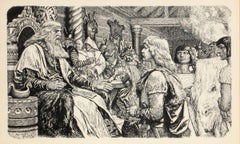
Lief Erikson The Lucky, Book Illustration
By Norman Mills Price
Located in Fort Washington, PA
Approximate Date: 1939
Medium: Ink on Paper
Signature: Signed Lower Left
Dimensions: 7.50" x 12.50"
Leif Erikson The Lucky, Book Illustration, 1939
This...
Category
1930s Pennsylvania - Figurative Paintings
Materials
Ink, Paper
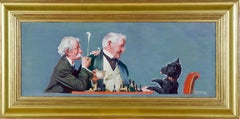
Maxwell House Coffee Illustration
By Norman Rockwell
Located in Fort Washington, PA
Signed by Artist Lower Right
Maxwell House Coffee Illustration
Few artists have ever pulled on our nation's heartstrings, particularly in reference to family and generations, as adeptly as Norman Rockwell. From his earliest advertisements to his patriotic World War II subjects, Rockwell's virtuoso was in his ability to capture the essence of American culture and a view of a more innocent time in our country's history. Rockwell states: "I was showing the America I knew and observed to others who might not have noticed. And perhaps, therefore, this is one function of the illustrator. He can show what has become so familiar that it is no longer noticed. The illustrator thus becomes a chronicler of his time." (as quoted in Norman Rockwell: A Definitive Catalogue, Stockbridge, Massachusetts, 1986, p. xii)
Recognizing the need for reminiscence from young and old alike, Rockwell effectively captures a timeless scene: Here, two old friends gingerly and jovially play a game of chess, sipping coffee as they wait for their furry friend to make the next move. The work is executed in Rockwell's signature descriptive style of finely drawn, clear realism with a wealth of fascinating detail. In discussing his career, Rockwell commented, "I was showing the America I knew and observed to others who might not have noticed. And perhaps, therefore, this is one function of the illustrator. He can show what has become so familiar that it is no longer noticed. The illustrator thus becomes a chronicler of his time." (as quoted in Norman Rockwell: A Definitive Catalogue, Stockbridge, Massachusetts, 1986, p. xii)
Rockwell seemingly utilizes one of his favorite models in the present work-James K. Van Brunt. The artist recalled his initial meeting with Van Brunt in 1924 in New Rochelle, New York: "I remember it was June and it was terribly hot. I was working in my underwear and not getting along too well because my brushes were slippery with perspiration. Suddenly the downstairs door banged and I heard someone come up the stairs treading on each step with a loud, deliberate thump...A tiny old man with a knobby nose, an immense, drooping mustache, and round, heavy-lidded eyes stamped bellicosely into the studio. 'James K. Van Brunt, sir,' he said, saluting me and bowing all at once. 'Five feet two inches tall, sir. The exact height of Napoleon Bonaparte!' And he pushed out his thin little chest, which was encased in a fawn colored vest. 'I have fought the Confederate Army at Antietam, Fredericksburg, and in the Wilderness,' he said. 'I have battled the nations of the Sioux under Dull Knife, Crazy Horse and Sitting Bull. I have fought the Spaniards, sir, in Cuba.' And he rapped his cane on the floor and looked at me very belligerently. Then, having ascertained that I wasn't going to contradict him, he took off his gloves and his wide brimmed hat, laid them on a chair, and patted his mustache. 'This mustache, sir,' he said, 'is eight full inches wide from tip to tip. The ladies, sir, make much of it.' And he winked at me and walked over to my mirror to stare at his mustache." (My Adventures as an Illustrator, New York, 1994, p. 206)
Van Brunt was a consummate professional as a model, carefully practicing his poses in the mirror in advance of a session and, at times, inspiring the idea for the cover illustration. Rockwell stated that he used to suggest a cover almost every time they saw one another and referred to the day when Van Brunt first showed up at his studio as "one of the luckiest days of my life." (My Adventures as an Illustrator, p. 206)
James K. Van Brunt appeared in ten Post covers by Rockwell, as well as countless other paintings used as advertisements, such as the present work. Given Van Brunt's distinctive visage with his mustache, the editor at the Post, George Horace Lorimer, complained. "Rockwell recalled, 'Mr. Lorimer said to me, 'I think you're using that man too much. Everybody's beginning to notice it. Maybe you'd better stop for a while. That mustache of his is too identifiable.' Rockwell informed Van Brunt of the problem, 'If you take off your mustache I can use you again...Otherwise I just can't.' Two weeks later Van...
Category
1920s Pennsylvania - Figurative Paintings
Materials
Oil

Price Upon Request
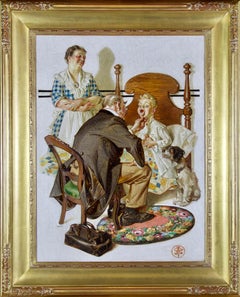
Sore Throat, Saturday Evening Post Cover
By Joseph Christian Leyendecker
Located in Fort Washington, PA
Signed by Artist Lower Right
Saturday Evening Post Cover, November 22, 1930
Category
1930s Pennsylvania - Figurative Paintings
Materials
Oil
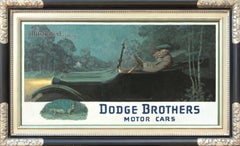
Couple
s 25th Wedding Anniversary
By Norman Rockwell
Located in Fort Washington, PA
Signed by artist lower left corner.
Literature:
Laurie Norton Moffatt, Norman Rockwell: A Definitive Catalogue, Stockbridge, Massachusetts, 1986, vol. I, no. A242, p. 362, illustrated
Notes:
Painted circa 1925. A letter from Norman Rockwell to the Graham family discussing the painting accompanies the lot.In April 1921, Dodge Brothers entered into a burgeoning partnership with the Graham Brothers, an Evansville, Indiana family-run, truck manufacturing business, headed by three siblings, Joseph B., Robert C. and Ray A. Graham. By 1920, their company was building complete truck and bus bodies with various engines which, in April 1921 caught the attention of Dodge’s president, Frederick J. Haynes. Haynes saw the Graham product as a way to get Dodge into the heavy truck business without compromising their own car production. The two companies agreed to have Graham Brothers build trucks solely with Dodge engines and drive trains, and sell them exclusively through Dodge dealerships nationwide. The partnership resulted in a new name, Graham Brothers, Inc., a company relocation to Detroit, and the opening of numerous factories nationwide over the next several years. In 1925, Joseph, Robert and Ray were appointed Dodge directors and executives, and were among the largest stockholders of the company. By 1926, Graham Brothers, Inc. was the largest exclusive truck manufacturer in the world. In later years, the brothers went on to build the Graham-Paige Motors Corporation, further expanding their success in the automotive business.Around 1925, the current painting was commissioned from Normal Rockwell...
Category
1920s Pennsylvania - Figurative Paintings
Materials
Oil
Price Upon Request
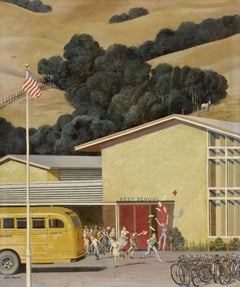
Schools Out, Saturday Evening Post Cover, June 1958
By John Philip Falter
Located in Fort Washington, PA
Medium: Oil on Board
Signature: Signed Lower Left
Dimensions: 23 7/8" x 20.00"
Cover of The Saturday Evening Post, June 21, 1958
Category
1950s Pennsylvania - Figurative Paintings
Materials
Oil, Board
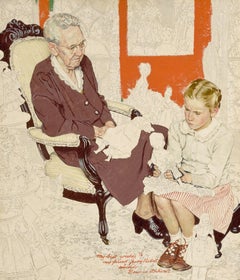
Study for
Grandma
s Doll Collection
By Norman Rockwell
Located in Fort Washington, PA
Medium: Oil on Canvas
Signature: Inscribed: "My best wishes to/my friend Judy Bedell/sincerely/Norman Rockwell
Included with the painting, the dress that the model wore for this pai...
Category
1940s Pennsylvania - Figurative Paintings
Materials
Canvas, Oil
Price Upon Request
The Vigil-at-Arms, Illustration for a poem published in Scribner
s Magazine 1904
By Maxfield Parrish
Located in Fort Washington, PA
The Vigil-at-Arms, illustration for a poem by William Lucius Graves published in Scribner's Magazine, December 1904
Medium: Oil on Canvas
Signature: Signed
Category
Early 1900s Pennsylvania - Figurative Paintings
Materials
Canvas, Oil

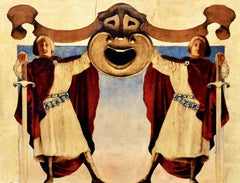
Ivanhoe
By Maxfield Parrish
Located in Fort Washington, PA
Medium: Mixed Media on Board
Signature: Signed on Verso
Contact for dimensions.
Maxfield Parrish created the present work as a playbill to commemorate a performance of Ivanhoe, whi...
Category
20th Century Pennsylvania - Figurative Paintings
Materials
Mixed Media, Board
Price Upon Request
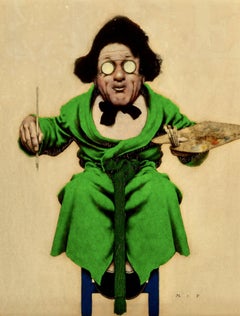
A Dark Futurist
By Maxfield Parrish
Located in Fort Washington, PA
Medium: Oil on Paper Laid on Panel
Signature: Signed Lower Right
Initialed lower right: M.P.
Signed on the reverse: Maxfield Parish
Initialed and numbered by the artist's son on the reverse: M.P. Jr. / No. 68.
When Maxfield Parrish painted the comical A Dark Futurist in 1923 for Life magazine, he had already established himself as America's leading book and magazine illustrator. His early artwork for children's classics like L. Frank Baum's Mother Goose in Prose (1897), Kenneth Grahame's Dream Days (1900), and Eugene Field's Poems of Childhood (1904) popularized his signature atmospheric settings, cobalt blue-and-gold palette, and dreamy figures inhabiting magical worlds. Likewise, his covers for Century, Collier's, Harper's Bazaar, Ladies' Home Journal, Life, and Scribner's Magazine were highly desirous and instantly recognizable, often more stylized than his book imagery; no other journal illustrator could match Parrish's winning combination of precise draftsmanship, strong graphic design, and amusing characters.
According to David Apatoff, Art Critic, The Saturday Evening Post, "Parrish abandoned his customary heavy details and rainbow colors to present a bolder, more high-contrast design silhouetted against a stark white background - a treatment more suitable for a modern magazine cover vying for attention on a crowded newsstand.
A Dark Futurist is silhouetted against a white field with no background or details to prop it up. The composition is carefully centered with only differences in the hands and the artist's necktie to break the symmetry. These are crucial to the success of the design.
Just as important as Parrish's clean, high-contrast style in these pictures is the refreshing humor and sophistication in content, which is usually absent from Parrish's fairytale paintings.
A Dark Futurist shows us a different kind of modernism. Parrish steps out of his timeless fairy tales to tweak one of the most incendiary artistic movements of his day. Futurism, with its militant manifesto and its outspoken artists, was all the rage in Europe. Parrish pokes them, showing a "dark" and anxious futurist with pursed lips and thick glasses, poised to paint but not exactly sure of, or optimistic about, what the 'future' will hold. This suggests that Parrish was alert to, and had opinions about, current events of the day - something one might never guess from his usual subject matter."
In his early Collier's illustrations, Parrish also developed memorable themes that he would return to in his 1920s magazine work. One of his most popular characters was the "seer," or man with keen visual powers, most often depicted as an artist, but also appearing as a tourist, scientist, and philosopher. Parrish's seer was recognizable by particular physical attributes: round glasses, indicating his visual and analytical acuity, and an overcoat and/or hat signifying his role as observer of the outside world.
A Man of Letters, sold last year at Heritage Auctions, was one of the first Life covers Parrish rolled out for Gibson, and he repeated the character of the artist-seer, emphasizing the comic spin, for two later editions: A Dark Futurist (Life, March 1, 1923) captures a Parrish-like artist in foggy round glasses and a long green coat...
Category
1920s Pennsylvania - Figurative Paintings
Materials
Paper, Oil, Panel
Price Upon Request
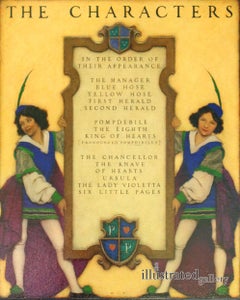
The Knave of Hearts: List of Characters
By Maxfield Parrish
Located in Fort Washington, PA
Medium: Oil on Board
Signature: Signed
Sight Size 20.13" x 16.38", Framed 26.00" x 23.00"
Maxfield Parrish’s popularity as an illustrator began with his early work for magazine publishers. An Easter 1895 cover for Harper’s Bazaar, one of the leading publications of the day, was followed by a successful foray into book illustration beginning in 1897 when Parrish completed illustrations for Frank Baum’s Mother Goose in Prose. His unique style and vivid imagination were well suited to illustrating children’s literature and resulted in numerous commissions. The List of Characters is one of 26 paintings, which appeared as an illustration in Louise Saunders' book, The Knave of Hearts. Lawrence S. Cutler and Judy Goffman Cutler write, “The last book Parrish illustrated, The Knave of Hearts (1924), was his masterpiece. When Parrish discovered this children’s play, he proposed an illustrated edition to Scribner’s, to which the publisher enthusiastically agreed …It was written by Louise Saunders, who was the wife of Maxwell Evarts Perkins of Scribner’s, an important editor in the 20th century and discoverer of authors Thomas Wolfe, Ernest Hemingway, F. Scott Fitzgerald and others. The couple were summer residents at Cornish and close friends of the Parrishes” (Maxfield Parrish and the American Imagists, Edison, New Jersey, 2004, p. 172). According to Coy Ludwig, “The artist’s enthusiasm was shared by the publisher, who requested sketches or more precise information upon which to base a cost analysis, as final approval could not be given until the costs were estimated. Parrish prepared an elaborate dummy or mock-up of the proposed publication, complete with watercolor sketches of the illustrations, and sent it to the publisher early in 1921 …The twenty-six paintings for The Knave of Heartswere executed within three years, and the book, a sumptuous production, was published on October 2, 1925… The volume, selling for ten dollars, was packaged in a telescoping box...
Category
1920s Pennsylvania - Figurative Paintings
Materials
Oil, Board
Price Upon Request
New Year
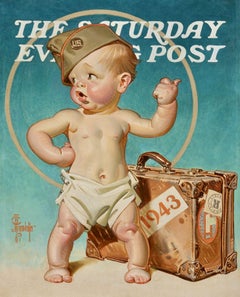
s Baby Hitching to War
By Joseph Christian Leyendecker
Located in Fort Washington, PA
Medium: Oil on Canvas
Signature: Signed Lower Left
The Saturday Evening Post unpublished cover, 1943
The story behind the New Year's Baby Hitching to War is a fascinating one: The...
Category
1940s Pennsylvania - Figurative Paintings
Materials
Canvas, Oil
Price Upon Request
Summer by the Sea, Saturday Evening Post Cover, 1956
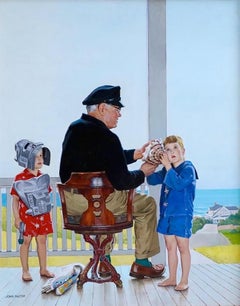
By John Philip Falter
Located in Fort Washington, PA
Medium: Oil on Canvas
Signature: Signed Lower Left
Saturday Evening Post Cover, July 21, 1956
This Falter cover was owned by Sarah Johansen, daughter of John Falter. She is the you...
Category
1950s Pennsylvania - Figurative Paintings
Materials
Canvas, Oil
The Hero, Liberty Magazine Cover
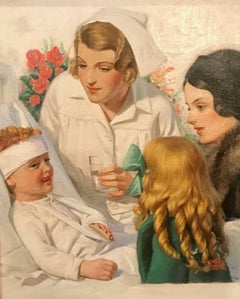
By Leslie Thrasher
Located in Fort Washington, PA
Original cover for Liberty magazine, published February 28, 1931.
After being struck by a car in a hit and run accident, Red Hancock is on his third day of recovery in the hospital....
Category
20th Century Pennsylvania - Figurative Paintings
Materials
Oil, Board
Price Upon Request
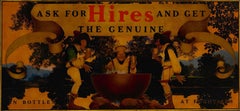
Ask for Hires and Get the Genuine
By Maxfield Parrish
Located in Fort Washington, PA
Medium: Oil on Paper Laid to Board
Signature: Signed with the Artists Initials M.P Lower Center
Coy Ludwig, Maxfield Parrish, New York, 1973, plate 35, p. 133, illustrated in color
Category
1920s Pennsylvania - Figurative Paintings
Materials
Paper, Oil, Board
Price Upon Request
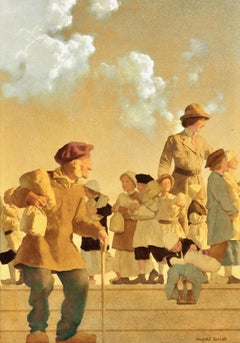
Original Illustration for The Red Cross Advertisement
By Maxfield Parrish
Located in Fort Washington, PA
Medium: Oil on Board
Signature: Signed Lower Right
1 of a 4 part illustration used as a promotional poster
Exhibited:
Chadds Ford, Pennsylvania, Brandywine River Museum, Maxfield ...
Category
20th Century Pennsylvania - Figurative Paintings
Materials
Oil, Board
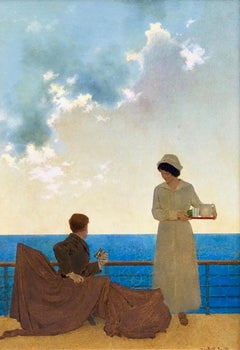
Price Upon Request
Original Illustration for The Red Cross
By Maxfield Parrish
Located in Fort Washington, PA
Medium: Oil on Board
Signature: Signed Lower Right
19.875" x 14.00" Each Panel
1 of a 4 Part Illustration used as a promotional poster
Poster for The Red Cross—Watching...
Category
1910s Pennsylvania - Figurative Paintings
Materials
Oil, Board
Price Upon Request
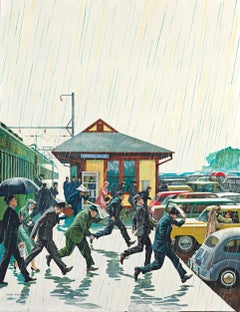
Commuters in the Rain, Post Cover
By John Philip Falter
Located in Fort Washington, PA
Medium: Oil on Masonite
Signature: Signed Lower Left
The present work was published as the cover illustration of the October 7th, 1961 issue of The Saturday Evening Post.
The Post ...
Category
1960s Pennsylvania - Figurative Paintings
Materials
Masonite, Oil
Price Upon Request
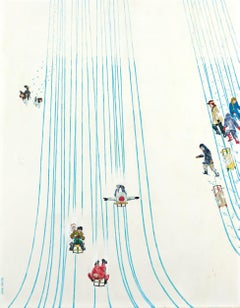
Swell Ride Down, Saturday Evening Post Cover
By John Philip Falter
Located in Fort Washington, PA
Signed Lower left
The present work was published as the cover illustration of the February 3rd, 1962 issue of The Saturday Evening Post.
The Post editors wrote of this cover, “The ...
Category
1960s Pennsylvania - Figurative Paintings
Materials
Masonite, Oil
Price Upon Request
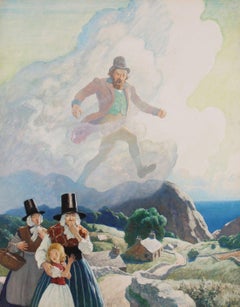
The Man of Wales
By Newell Convers Wyeth
Located in Fort Washington, PA
Signature: Signed Lower Right
Medium: Oil on Handboard
Literature:
Mabelle Glenn et al., eds., The World of Music: Song Programs for Youth; Adventure, Boston, Massachusetts, 1938, illustrated in color opp. p. 64
Douglas Allen...
Category
1930s Pennsylvania - Figurative Paintings
Materials
Oil, Board
Price Upon Request
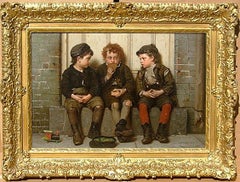
The Monopolist
By John George Brown
Located in Fort Washington, PA
Framed Dimensions: 36.00" x 48.00"
Signature: Signed Lower Right
J.G Brown's "Monopolist" was listed in 1885's Spring Exhibit catalogue of M.A. It was displayed on a panel in The We...
Category
1880s Pennsylvania - Figurative Paintings
Materials
Canvas, Oil
Price Upon Request
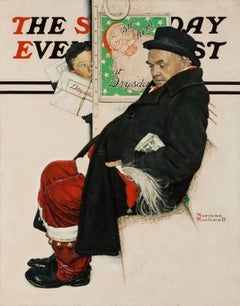
Santa on Train, Saturday Evening Post Cover
By Norman Rockwell
Located in Fort Washington, PA
Date: 1940
Medium: Oil on Canvas
Dimensions: 38.00" x 30.00"
Signature: Signed Lower Right
Original Cover Illustration for The Saturday Evening Post, December 28, 1940
At the heart of this touching and humorous Christmas work which appeared on the December 28, 1940 cover of THE SATURDAY EVENING POST, is the juxtaposition of the heads of the astonished boy holding a Drysdale package, the Drysdale poster of the store Santa in costume, and the drowsy man wearing the Santa pants and boots under his overcoat, obviously on his way home from work. Rockwell’s gift as a storyteller in pictures is displayed here at its best. The simple use of predominantly three colors – red, black and white, and the omission of any extraneous detail, add to the strength of this fine example of illustration art.
Exhibitions
Fort Lauderdale Museum of the Arts, Ford Lauderdale, Florida, Norman Rockwell: A Sixty Year Retrospective, February 11- March 5, 1972.
The Booklyn Museum, March- April 1972
Corcoran Gallery of Art, Washington D.C, May 26, 1972- July 23, 1972
McNay Art Institute, San Antonio, Texas, July 1972- August 1972
M.H De Yound Memorial Museum, Golden State Park, San Francisco, California, Norman Rockwell: A Sixty Year Retrospective, September 9, 1972- September 5, 1972.
Osaka, Japan, Hankyu Department Store, April 4-9, 1975.
Press
The Saturday Evening Post, December 29, 1940, cover illustration.
A.L. Guptill, Norman Rockwell: Illustrator, New York, 1946, p.179, cover illustrated.
T.S. Buechner, Norman Rockwell: Artist and Illustrator, New York, 1970, no. 529, illustrated.
T.S. Buechner, Norman Rockwell: A Sixty Year Retrospective, exhibition catalogue, New York, 1972, p. 78, illustrated.
M. Hart Hennessey and A. Knutson, Norman Rockwell: Pictures for the American People, exhibition catalogue, New York, 1999, p. 160, illustrated. C. Finch, Norman Rockwell’s America...
Category
1940s Pennsylvania - Figurative Paintings
Materials
Canvas, Oil
Price Upon Request
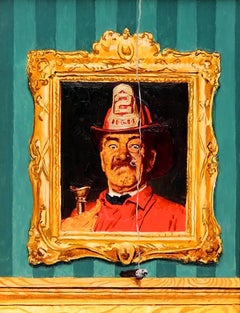
The Fireman, Study for Saturday Evening Post Cover
By Norman Rockwell
Located in Fort Washington, PA
Date: 1944
Medium: Oil and Graphite on Paperboard
Sight Size 14.00" x 11.00", Framed 22.00" x 19.00"
Study for cover of The Saturday Evening Post, May 27, 1944
Norman Rockwell disc...
Category
1940s Pennsylvania - Figurative Paintings
Materials
Paper, Oil, Graphite
Price Upon Request
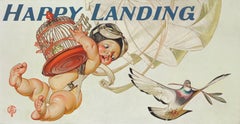
Happy Landing, Amoco Advertisement
By Joseph Christian Leyendecker
Located in Fort Washington, PA
Medium: Oil on Canvas
Signature: Signed Lower Left
Sight Size 20.75" x 40.00", Framed 30.75" x 50.00"
During his over four decades as the preeminent illustrator for The Saturday Evening Post, Joseph Christian Leyendecker's clever illustrations were eagerly anticipated by enthusiastic readership across the country, and none more so than his holiday designs. One of Leyendecker's most celebrated creations was his groundbreaking idea of the New Year's Baby. Originally portrayed as a fleshy sweet-faced child complete with tiny angel wings, the New Year's Baby gradually morphed into a worldly tot acutely aware of the social and political issues facing the nation at the time. In fact, Leyendecker's final Post cover illustration was the 1943 New Year's Baby.
Following the success of these Post covers, the artist was hired to create advertisements for the American Oil Company (AMOCO). Throughout the 1940s and through the final years of his life, Leyendecker produced ads incorporating his famed New Year's Baby into AMOCO advertisements, as in the present work, Happy Landing...
Category
1940s Pennsylvania - Figurative Paintings
Materials
Canvas, Oil
Price Upon Request
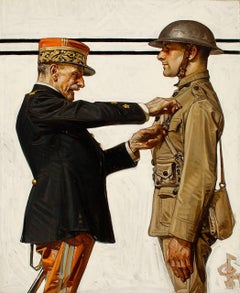
Croix de Guerre, Saturday Evening Post Cover, 1918
By Joseph Christian Leyendecker
Located in Fort Washington, PA
Medium: Oil on Canvas
Dimensions: 28.00" x 21.00;" Framed 36.00" x 29.00"
Signature: Signed Lower Right
Saturday Evening Post Cover, June 29, 1918
Exhibitions:
It's a Man's World,...
Category
1910s Pennsylvania - Figurative Paintings
Materials
Canvas, Oil
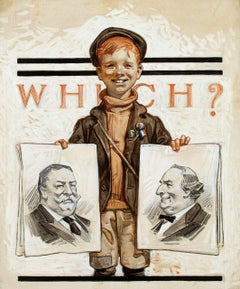
Which One? Saturday Evening Post Cover
By Joseph Christian Leyendecker
Located in Fort Washington, PA
Medium: Oil on Canvas
Signature: Signed Lower Right
Sight Size 28.00" x 24.00", Framed 30.00" x 27.00"
Cover of Saturday Evening Post Magazine, October 31, 1908.
Exhibitions:
It's a Man's World, Illustration Art by and for Men: November 14-17 2012, Illustration House NYC
The National Arts Club NYC Jan 6- 19 2013
Christie's New York, Illustrating America: Norman Rockwell and His Contemporaries, November 30, 2013- January, 2014
Joseph Christian Leyendecker was one of the most famous and prolific illustrators of his time and painted one less cover for The Saturday Evening Post than Norman Rockwell. He was the creator of the cherubic New Year’s Baby and the handsome Arrow Shirt Man who set the style for men’s fashion for decades.
In addition to his beautiful men, women and children, Leyendecker’s covers and advertisements depicted subjects ranging from sports to war to politics. This 1908 Post cover shows a young newsboy holding pictures of William Howard Taft...
Category
Early 1900s Pennsylvania - Figurative Paintings
Materials
Canvas, Oil
Price Upon Request
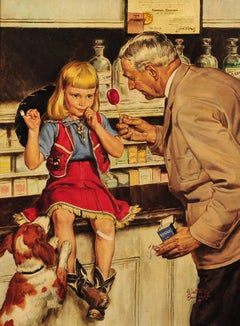
The Druggist
By Walter Martin Baumhofer
Located in Fort Washington, PA
Medium: Oil on Canvas
Signature: Signed Lower Left
Dimensions: 24.00" x 18.00"
Image of a druggist with a young girl and dog.
Category
Mid-20th Century Pennsylvania - Figurative Paintings
Materials
Canvas, Oil
Price Upon Request
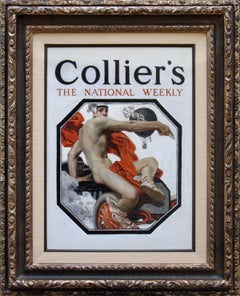
The Speed God Mercury, Collier
s Magazine Cover
By Joseph Christian Leyendecker
Located in Fort Washington, PA
Medium: Oil on Canvas
Signature: Signed Lower Left
Sight Size 29.25" x 21.00", Framed 44.00" x 35.00"
The Speed God Mercury, Collier's Magazine Cover, January 19, 1907
Leyendecker,...
Category
Early 1900s American Modern Pennsylvania - Figurative Paintings
Materials
Oil
Read More
See Kent Monkman’s Magical Realist Take on Frontier History
With a solo show at the Denver Art Museum and a commission from the Met, the Cree Canadian painter has become an international sensation.
Cecilia Vicuña Merges Politics, Science and Spirituality in Her Poetic Art
The Chilean creator, who has been living in exile in New York for decades, is having a major moment, receiving the biggest exhibitions, commissions and awards an artist could dream of.