South Carolina

to
260
991,609
712,698
2,322
1,289
1,285
1,180
735
621
553
489
349
303
278
221
194
185
161
119
112
103
97
95
91
87
79
77
72
70
66
66
62
50
50
42
40
25
23
23
19
19
17
13
13
12
11
10
7
4
3
3
3
1
1
1
929
815
320
72
63
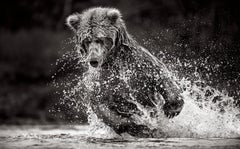
Brown bear diving for a fish in the creek during the annual salmon run
By Drew Doggett
Located in US
"""The Dive"" Brown bear diving for a fish in the creek during the annual salmon run Black and white image of brown bear ready to dive into the water of a remote creek Each year...
Category

2010s Minimalist South Carolina

Materials

Archival Pigment

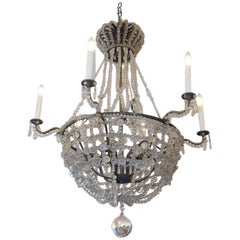
French Silver Bronze Six Arm Crown Canopy Crystal Chandelier w/ Ball Finial 1815
Located in Charleston, SC
French silver over bronze crystal chandelier with six scrolled arms, crown canopy, and terminating with a faceted beaded ball finial, Early 19th Century Chandelier was originally can...
Category

1810s French Louis Philippe Antique South Carolina

Materials

Crystal, Silver, Bronze

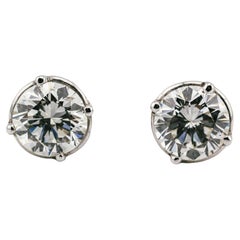
GIA Certified 3.01 K VS2 2.91 J SI1 Diamond Studs Earrings
Located in Simpsonville, SC
Presenting a pair of truly captivating diamond stud earrings, each meticulously crafted and GIA certified for unrivaled quality. These exquisite earrings feature two stunning diamond...
Category

Late 20th Century South Carolina

Materials

Diamond

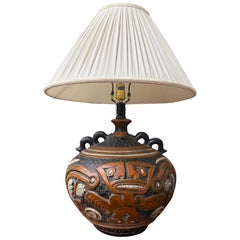
1970’s Rare Tiki Mayan Gods Large Pottery Table Lamp
Located in Charleston, SC
This stunning and funky fresh 1970’s Rare Tiki Mayan Gods Large pottery Table Lamp is in excellent condition with neutral shades of brown and black and cream. It features double sna...
Category

1970s American Brutalist Vintage South Carolina

Materials

Pottery

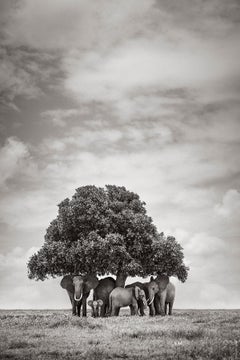
The Gathering - A group of elephants underneath a tree in black and white image
By Drew Doggett
Located in US
"The Gathering" A group of elephants underneath a tree in this stunning black and white image A group of elephants waits out the hottest part of the day under a lone Acacia tortili...
Category

2010s Minimalist South Carolina

Materials

Archival Pigment

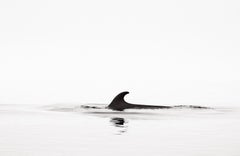
Epic, minimal capture of a whale s fin rising above the still water
By Drew Doggett
Located in US
"""Surface"" Epic, minimal capture of a whale's fin rising above the still water A Minke whale surfaces for a moment with a minimal backdrop of fog and still water The limited ed...
Category

2010s Minimalist South Carolina

Materials

Archival Pigment

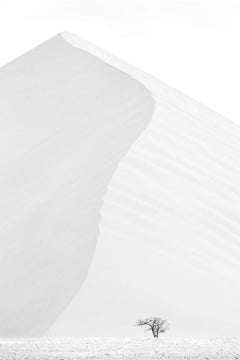
Award-winner, Best Seller, Largest Sand Dunes in the World, Minimal, Monotone
By Drew Doggett
Located in US
"Desert Rising" The lone tree in the foreground helps you understand the immense scale of the sand dunes of Sossusvlei. The print series Dunes: Landscapes Evolving documents the m...
Category

2010s Contemporary South Carolina

Materials

Archival Pigment

12th Street Walls — 1940s New York City
By Armin Landeck
Located in Myrtle Beach, SC
Armin Landeck, '12th Street Walls', etching, edition 100, first state, 1944, Kraeft 93. Signed in pencil. Initialed in the plate lower left. A superb, early impression, with all the ...
Category

1940s American Realist South Carolina

Materials

Drypoint

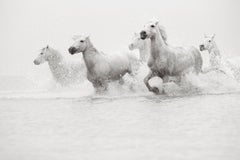
White horse swimming in a profile portrait taken underwater
By Drew Doggett
Located in US
"""Sublime"" White horse swimming in a profile portrait taken underwater Ethereal underwater portrait of a white horse swimming in black and white The print series Band of Rebels:...
Category

2010s Minimalist South Carolina

Materials

Archival Pigment

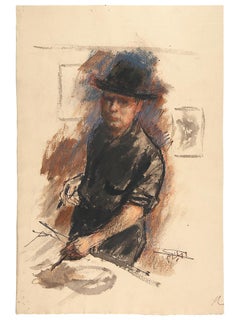
Self-Portrait with Black Hat — Mid-Century American Impressionism
By Robert Philipp
Located in Myrtle Beach, SC
Robert Philipp, 'Self-Portrait with Black Hat', ink and color pastel, c. 1945. Signed in ink, lower right. A fine, spontaneous drawing, on heavy, buff wove paper; the artist's tack holes in the top and bottom left sheet corners, minor rippling in the bottom sheet edge; otherwise in good condition. Image size 16 1/4 x 11 1/4 inches; sheet size 19 1/4 x 12 3/4 inches. Matted to museum standards, unframed. Provenance: Art Students League, from the artist’s personal portfolio. ABOUT THE ARTIST Robert Philipp (1895–1981) was a celebrated American Post-Impressionist painter known for his nudes, still lifes, and portraits. Noted art critic Henry McBride named Philipp one of America's top six painters of his generation. Philipp was an instructor of painting at the Art Students League, New York, for 33 years. Philipp was Secretary of the National Academy of Design, a National Academician, and a Benjamin Franklin Fellow at the Royal Society of Arts in London. His composition and painting style has been compared to the art of Edgar Degas and Pierre Auguste Renoir. In 1940, Philipp was invited to Los Angeles by Hollywood producer Louis B. Mayer to paint portraits of Metro-Goldwyn-Mayer movie stars. The same year, Walter Wanger, producer of ‘The Long Voyage Home’, directed by John Ford and based on plays by Eugene O'Neill, contracted with Reeves Lewenthal, head of the Associated American Artists gallery in Manhattan, to bring nine well-known artists to the set and paint scenes from the movie and portraits of the actors in character. The artists included Robert Philipp, Thomas Hart Benton, Grant Wood, Ernest Fiene, George Schreiber, Luis...
Category

1940s American Modern South Carolina

Materials

Pastel, Ink

Broad Street (Wall Street)
By Bror Julius Olsson Nordfeldt
Located in Myrtle Beach, SC
B.J.O. Nordfeldt, 'Broad Street (Wall Street)', etching, edition not stated, c. 1915. Signed in pencil. A superb impression, with rich burr, selectively wiped plate tone, and inky plate edges, on cream wove paper; the full sheet with margins (3/4 to 1 1/4 inches), in excellent condition. Printed by the artist. Matted to museum standards, unframed. Impressions of this work are in the permanent collections of the Fine Arts Museums of San Francisco, Princeton University, Smithsonian American Art Museum. A view looking down Broad Street past the New York Stock Exchange Building on the right with the columned Federal Hall...
Category

1910s American Impressionist South Carolina

Materials

Etching

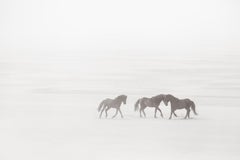
Three wild horses in the mist on their beautiful, untamed home: Sable Island
By Drew Doggett
Located in US
Three wild horses in the mist on their beautiful, untamed home: Sable Island The position of Sable Island makes it incredibly foggy, especially on its shores. Here, three wild horse...
Category

2010s Minimalist South Carolina

Materials

Archival Pigment

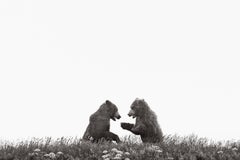
Black and white image of two brown bear cubs playing on a hillside
By Drew Doggett
Located in US
"""Summer's Glory"" Black and white image of two brown bear cubs playing on a hillside Black & white image of two brown bear cubs playing Each year, brown bears descend on a rem...
Category

2010s Minimalist South Carolina

Materials

Archival Pigment

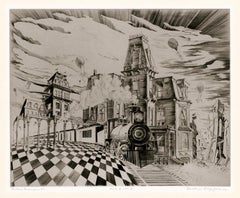
Fantasia Americana, 1880 — Mid-Century American Surrealism
By Lawrence Kupferman
Located in Myrtle Beach, SC
Lawrence Kupferman, 'Fantasia Americana – 1880', drypoint etching with sandground, 1943. Signed, titled, and annotated 'Series A, 1971 2/6' in pencil. A superb, richly-inked impression, on heavy, cream wove paper, with full margins (2 1/2 to 3 1/2 inches); the paper slightly lightened within the original mat opening, otherwise in excellent condition. One of only 6 impressions printed in 1971, with the added sandground grey background tint. Archivally matted to museum standards, unframed. Image size 11 13/16 x 14 3/4 inches; sheet size 18 x 20 1/4 inches. Collections: National Gallery of Art, Zimmerli Art Museum (Rutgers University). ABOUT THE ARTIST Lawrence Kupferman (1909 - 1982) was born in the Dorchester neighborhood of Boston and grew up in a working-class family. He attended the Boston Latin School and participated in the high school art program at the Museum of Fine Arts, Boston. In the late 1920s, he studied drawing under Philip Leslie Hale at the Museum School—an experience he called 'stultifying and repressive'. In 1932 he transferred to the Massachusetts College of Art, where he first met his wife, the artist Ruth Cobb. He returned briefly to the Museum School in 1946 to study with the influential expressionist German-American painter Karl Zerbe. Kupferman held various jobs while pursuing his artistic career, including two years as a security guard at the Museum of Fine Arts, Boston. During the 1930s he worked as a drypoint etcher for the Federal Art Project, creating architectural drawings in a formally realistic style—these works are held in the collections of the Fogg Museum and the Smithsonian American Art Museum. In the 1940s he began incorporating more expressionistic forms into his paintings as he became progressively more concerned with abstraction. In 1946 he began spending summers in Provincetown, Massachusetts, where he met and was influenced by Mark Rothko, Hans Hofmann, Jackson Pollock, and other abstract painters. At about the same time he began exhibiting his work at the Boris Mirski Gallery in Boston. In 1948, Kupferman was at the center of a controversy involving hundreds of Boston-area artists. In February of that year, the Boston Institute of Modern Art issued a manifesto titled 'Modern Art and the American Public' decrying 'the excesses of modern art,' and announced that it was changing its name to the Institute of Contemporary Art (ICA). The poorly conceived statement, intended to distinguish Boston's art scene from that of New York, was widely perceived as an attack on modernism. In protest, Boston artists such as Karl Zerbe, Jack Levine, and David Aronson formed the 'Modern Artists Group' and organized a mass meeting. On March 21, 300 artists, students, and other supporters met at the Old South Meeting House and demanded that the ICA retract its statement. Kupferman chaired the meeting and read this statement to the press: “The recent manifesto of the Institute is a fatuous declaration which misinforms and misleads the public concerning the integrity and intention of the modern artist. By arrogating to itself the privilege of telling the artists what art should be, the Institute runs counter to the original purposes of this organization whose function was to encourage and to assimilate contemporary innovation.” The other speakers were Karl Knaths...
Category

1940s Surrealist South Carolina

Materials

Drypoint, Etching

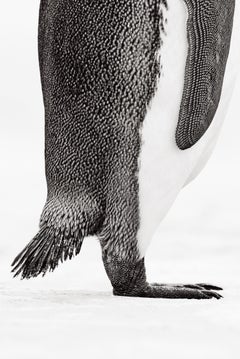
Detailed black and white photograph of a king penguin s bottom half
By Drew Doggett
Located in US
"Of Earth & Ocean II" Detailed black and white photograph of a king penguin's bottom half An exceptionally detailed black and white portrait of a king penguin taken in the Falkland...
Category

2010s Minimalist South Carolina

Materials

Archival Pigment

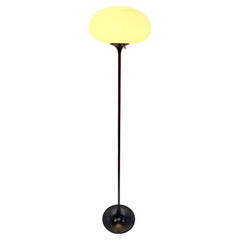
1960s Bill Curry Mushroom Floor Lamp for Laurel
By Laurel Lamp Company, Bill Curry
Located in Charleston, SC
A vintage mushroom floor lamp by Bill Curry for Laurel Lamp Company. Stainless steel base in its original black finish with original Murano glass shade. Three-way switch. Base diam...
Category

Mid-20th Century American Mid-Century Modern South Carolina

Materials

Stainless Steel

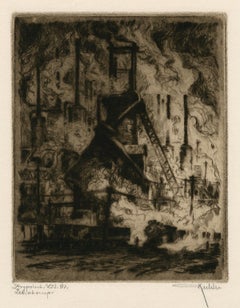
The Furnace — American Expressionism
By Otto Kuhler
Located in Myrtle Beach, SC
Otto Kuhler, 'The Furnace', drypoint, edition 26, 1924, Kennedy 5. Signed and annotated 'Drypoint. Ltd Ed. Del. et imp.' in pencil. Titled in pencil, in the bottom center sheet edge....
Category

1920s American Modern South Carolina

Materials

Drypoint

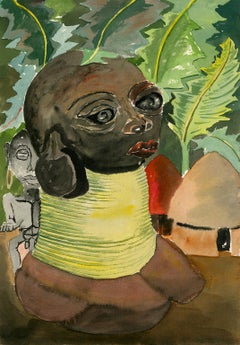
African Idol — Mid-Century African-American artist
By Charles Elmer Harris
Located in Myrtle Beach, SC
Charles Elmer Harris (Beni E. Kosh), Untitled (African Idol), watercolor, c. 1950s. Estate stamped verso, 'Beni E Kosh COLLECTION' and numbered '570' in ink. A fine, spontaneous wat...
Category

1950s American Modern South Carolina

Materials

Watercolor

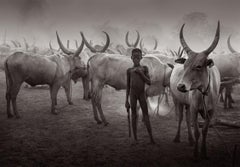
Young Boy Holding a Staff in the Midst of the Mundari Cattle Camp
By Drew Doggett
Located in US
"Lapis at Dusk" Young Mundari boy looking at the camera and holding a stick among the long-horned cattle in the cattle camp on the banks of the Nile In these scenes of life from South Sudan, experience the surreal, roving camps of the Mundari...
Category

2010s Minimalist South Carolina

Materials

Archival Pigment

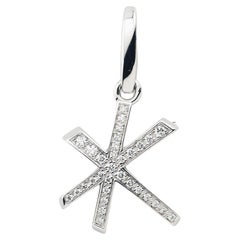
Cartier Diamond 18K White Gold Fireworks Charm Pendant
By Cartier
Located in Simpsonville, SC
The Cartier Diamond 18K White Gold Fireworks Charm Pendant is a radiant celebration of light and elegance, masterfully crafted to capture the essence of a dazzling fireworks display....
Category

21st Century and Contemporary South Carolina

Materials

Diamond, Gold, 18k Gold, White Gold

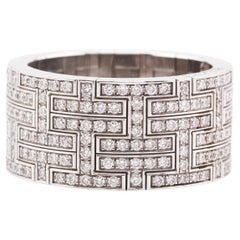
Hermes Kilim Pave Diamond 18k White Gold Wide Band Ring Size 58 8.25
By Hermès
Located in Simpsonville, SC
The Hermès band ring is a masterpiece of luxury and precision. Crafted from 18k white gold, it embodies a sleek and contemporary elegance. The design showcases a wide band that comma...
Category

21st Century and Contemporary South Carolina

Materials

Diamond, Gold, 18k Gold, White Gold

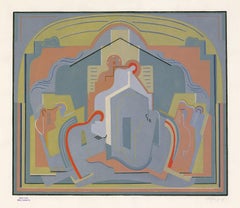
Descente de Croix (Descent from the Cross) — 1920s French Cubism
By Albert Gleizes
Located in Myrtle Beach, SC
Albert Gleizes, 'Descente de Croix', color pochoir, 1928, edition c. 50. Signed and dated in pencil. A fine, painterly impression, with fresh colors, on heavy, cream wove paper; the full sheet with margins (3 to 4 inches), in very good condition. The publisher's ink stamp 'EDITIONS MOLY-SABATA' beneath the image, lower left. Matted to museum standards, unframed. Image size 12 x 14 inches (305 x 356 mm); sheet size 18 x 22 inches (457 x 559 mm). ABOUT THE IMAGE After the 1927 painting 'Descente de Croix', one of three religious-themed works that Gleizes developed as preliminaries for murals at the church at Serrières, France, the project was terminated at its final phase, and Gleizes commissioned master printer Robert Pouyaud to create prints of the paintings, closely overseeing the production. ABOUT THE MEDIUM Pochoir is a refined stencil-based technique employed to create multiples or to add color to prints produced in other mediums. Characterized by its crisp lines and rich color, the print-making process was most popular from the late 19th century through the 1930s, with its center of activity in Paris. The pochoir process began with the analysis of an image’s composition, including color tones and densities. The numerous stencils (made of aluminum, copper, or zinc) necessary to create a complete image were then designed and hand-cut by the 'découpeur.' The 'coloristes' applied watercolor or gouache pigments through the stencils, skillfully employing a variety of different brushes and methods of paint application to achieve the desired depth of color and textural and tonal nuance. The pochoir process, by its handcrafted methodology, resulted in the finished work producing the effect of an original painting, and in fact, each print was unique. ABOUT THE ARTIST Albert Gleizes (1881-1953), born in Paris, France, was a pioneering figure in the development of abstract art and one of the leading proponents of Cubism. His contributions to the art world extended beyond his paintings; he was also a prolific writer and theoretician, advocating for a new approach to art that emphasized the geometric abstraction of form and a departure from representational traditions. Gleizes initially studied painting at the Académie Julian and the École des Beaux-Arts in Paris, where he was exposed to the academic conventions of the time. However, his artistic vision was profoundly influenced by encounters with avant-garde movements, including Fauvism and the work of Paul Cézanne. These influences led Gleizes to experiment with form and color, gradually moving away from traditional representation toward a more abstract and geometric style. After completing his secondary schooling, Gleizes spent four years in the French army and then began pursuing a career as a painter, primarily doing landscapes. Initially influenced by the Impressionists, he was only twenty-one years of age when his work titled ‘La Seine à Asnières’ was exhibited at the Société Nationale des Beaux-Arts in 1902. The following year, he was part of the first Salon d'Automne and soon came under the influence of Fernand Léger, Robert Delaunay, Jean Metzinger, and Henri Le Fauconnier. In 1907, Gleizes and some of his friends pursued the idea of creating a self-supporting community of artists that would allow them to develop their art free of any commercial concerns. For nearly a year, Gleizes  , with other painters, poets, musicians, and writers, lived at a large house in Créteil, but a lack of funds forced them to give up their facility in early 1908, and Gleizes moved temporarily into La Ruche, the artist commune in the Montparnasse Quarter of Paris. In the early 1910s, Gleizes became associated with the Cubist movement, which was spearheaded by artists such as Pablo Picasso and Georges Braque...
Category

1920s Cubist South Carolina

Materials

Stencil

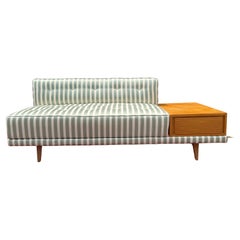
1950s Mid-Century Upholstered Chaise With Attached Table
Located in Charleston, SC
This European mid-century modern Chaise is beautifully upholstered in a green and cream silk blend fabric. I believe this might be a much earlier version of the "svanette" sofa des...
Category

1950s Unknown Scandinavian Modern Vintage South Carolina

Materials

Silk, Upholstery, Beech

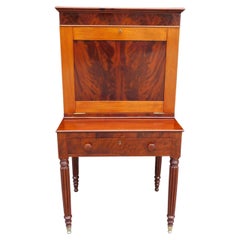
American Southern Mahogany and Leather Plantation Desk with Reeded Legs, C. 1810
Located in Charleston, SC
American Southern Mahogany plantation desk with a molded edge hinged top, upper case with a fall front revealing a leather writing surface with a f...
Category

1810s American American Colonial Antique South Carolina

Materials

Mahogany, Leather, Poplar, Pine

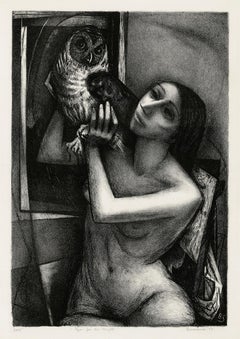
Eyes for the Night — Mid-century American Surrealism
By Benton Murdoch Spruance
Located in Myrtle Beach, SC
Benton Spruance, 'Eyes for the Night', lithograph, 1947, edition 35, Fine and Looney 260. Signed, dated, titled, and annotated 'Ed 35' in pencil. A fine impression, on heavy, cream ...
Category

1940s American Modern South Carolina

Materials

Lithograph

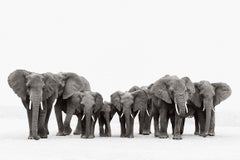
Family of Elephants in Africa, Classic, Iconic, Black and White
By Drew Doggett
Located in US
"Wisdom's Keepers" In this image, a group of elephants appears lined up against a hazy backdrop of fog. It was a perfect yet unexpected scene. Exceptional Creatures is a limited e...
Category

2010s Minimalist South Carolina

Materials

Archival Pigment

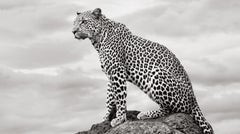
Ethereal portrait of a leopard on a unique rock formation
By Drew Doggett
Located in US
Ethereal portrait of a leopard on a unique rock formation Leopard on top of a rock formation looking out over the territory beyond the frame Exceptional Creatures is a limited edit...
Category

2010s Minimalist South Carolina

Materials

Archival Pigment

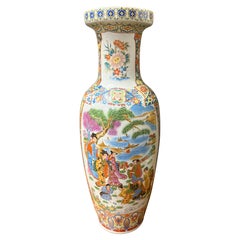
Large Decorated Chinese Vase from Ignoto, 1960
Located in Charleston, SC
Ceramic vase made in China, finely decorated in Satsuma style. The entire body is hand enameled with intricate garden and family vignettes accented in gold. Striking Chinese export ...
Category

Mid-20th Century Chinese Chinese Export South Carolina

Materials

Ceramic

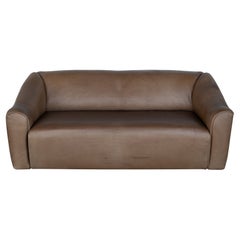
Vintage 1970s DS-47 De Sede Leather Sofa
By De Sede
Located in North Charleston, SC
Vintage 1970s De Sede DS-47 leather sofa. In pretty good condition! Any extensive wear is photographed. The base pulls out to become more of a lounger!
Category

1970s European Vintage South Carolina

Materials

Leather

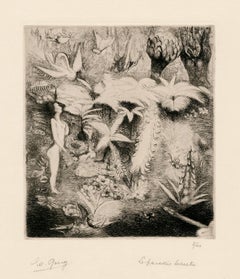
Le Paradis Terrestre (Paradise on Earth) — French Symbolism
By Edouard Goerg
Located in Myrtle Beach, SC
Edouard Goerg, 'Le Paradis Terrestre' (Paradise on Earth), etching, 1931, edition 40. Signed, titled, and numbered '3/40' in pencil. A fine richly-inked impression, on heavy, cream w...
Category

1930s Symbolist South Carolina

Materials

Etching

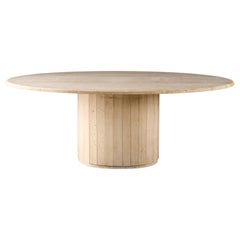
Italian Oval Travertine Dining Table
Located in North Charleston, SC
This is a vintage travertine dining table with a pedestal base, from the late 20th century. The table features an oval, smooth travertine top and a column-like base with vertical gro...
Category

Late 20th Century European South Carolina

Materials

Travertine

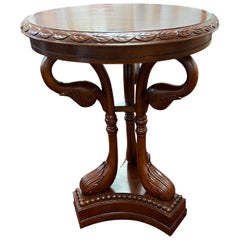
1980s French Directoire Style Cherry Guéridon Side Table With Swan Design
Located in Charleston, SC
A classy French Directoire style guéridon side table with circular top made of high quality cherry. The table features three beautifully carved legs resting on a curved base and ador...
Category

1980s Unknown Directoire Vintage South Carolina

Materials

Cherry

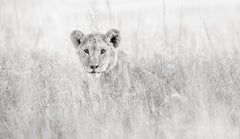
A young lion looks out from the tall grass at something that caught their eye
By Drew Doggett
Located in US
"Youthful Gaze" A young lion looks out from the tall grass at something that caught their eye A lion cub looks out from the tall grass in Kenya in this black and white portrait Ex...
Category

2010s Minimalist South Carolina

Materials

Archival Pigment

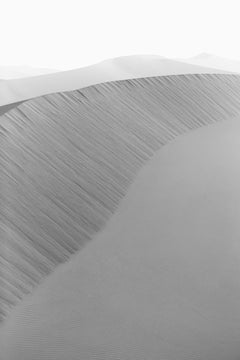
A sand dune in Namibia with a pattern of ripples in it from the wind
By Drew Doggett
Located in US
A sand dune in Namibia with a pattern of ripples in it from the wind A delicate texture appears where the wind whips the sand dunes. This ornate pattern will disappear when the wind...
Category

2010s Minimalist South Carolina

Materials

Archival Pigment

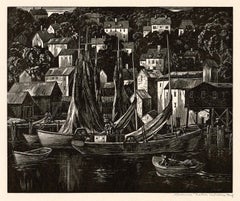
Tranquil Harbor (Gloucester, Massachusetts) — 1950s Cape Ann Regionalism
By Lawrence Wilbur
Located in Myrtle Beach, SC
Lawrence Nelson Wilbur (1897-1988), 'Tranquil Harbor' (Gloucester, Massachusetts), wood engraving, edition 55, 1958. Signed in pencil, and signe...
Category

1950s American Modern South Carolina

Materials

Woodcut

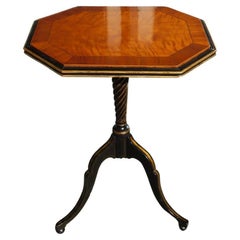
English Regency Painted Gilt Satinwood Inlaid Tripod Candle Stand, Circa 1790
Located in Charleston, SC
English Regency painted and gilt satinwood inlaid tripod candle stand with a spiral ringed pedestal, and resting on curvature splayed legs with bal...
Category

1790s English Regency Antique South Carolina

Materials

Satinwood, Giltwood, Paint

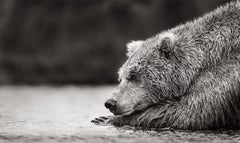
Black and white timeless portrait of a brown bear resting on its paws
By Drew Doggett
Located in US
"""Summer Dream"" Black and white timeless portrait of a brown bear resting on its paws Portrait of a brown bear resting on its paws Each year, brown bears descend on a remote par...
Category

2010s Minimalist South Carolina

Materials

Archival Pigment

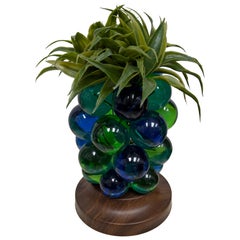
Mid-century Pineapple Lucite Ball Cluster Object
Located in Charleston, SC
A vibrant mid-century decorative grape cluster sculpture, crafted from richly colored Lucite spheres in shades of emerald green and cobalt blue. Resting on a circular wood base, the ...
Category

Mid-20th Century American Mid-Century Modern South Carolina

Materials

Plastic, Acrylic, Lucite, Wood

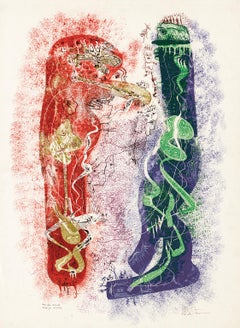
Dialogue Erudite — Mid-century American Surrealism
By Robert Vale Faro
Located in Myrtle Beach, SC
Robert Vale Faro, 'Dialogue Erudite', color lithograph, 1945, edition 16. Signed, dated, titled, and numbered '98' and '4/16' in pen. A fine, richly-inked impression with fresh colors, on heavy, off-white wove paper; full margins (1/2 to 1 1/4 inch), in excellent condition. Image size 20 1/2 x 14 3/8 inches; sheet size 22 1/2 x 17 inches. Scarce. Matted to museum standards, unframed. ABOUT THE ARTIST Robert Vale Faro (1902-1988) was a modernist architect and artist associated with the Chicago Bauhaus. He received his degree in architecture and design from the Armour Institute in Chicago and worked at L'Ecole des Beaux-Arts, Paris, from 1924-27, where he was influenced by Harry Kurt Bieg and Le Corbusier. Upon his return to Chicago, Faro worked with the important modernist Chicago architects George and William Keck under Louis Sullivan. Faro founded the avant-garde printmaking group Vanguard in 1945. The group counted Atelier 17 artists Stanley William Hayter, Sue Fuller...
Category

1940s American Modern South Carolina

Materials

Lithograph

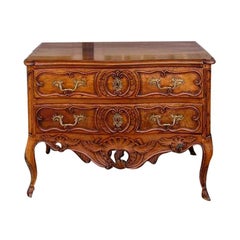
French Provincial Walnut Serpentine Foliage Shell Carved Chest of Drawers 1760
Located in Charleston, SC
French Provincial Walnut serpentine chest of drawers with a molded edge top, decorative carved foliage and shell motif, flanking outset corners, two drawers with the original ormolu ...
Category

1760s French Louis XV Antique South Carolina

Materials

Brass, Ormolu

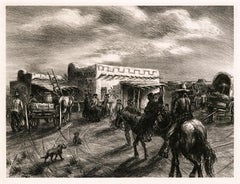
Navajo Trading Post — Southwest Regionalism, American Indian
By Ira Moskowitz
Located in Myrtle Beach, SC
Ira Moskowitz, 'Navajo Trading Post', lithograph, 1946, edition 30, Czestochowski 161. Signed and dated in the stone, lower left. A fine, richly-inked impression, on cream wove paper, with full margins (1 1/2 to 3 1/8 inches). Pale mat line, otherwise in excellent condition. Matted to museum standards, unframed. Image size 11 11/16 x 15 1/2 inches (297 x 395 mm); sheet size 16 5/16 x 191/8 inches (414 x 486 mm). ABOUT THE ARTIST Ira Moskowitz was born in Galicia, Poland, in 1912, emigrating with his family to New York in 1927. He enrolled at the Art Student's League and studied there from 1928-31. In 1935, Moskowitz traveled to Paris and then lived until 1937 in what is now Israel. He returned to the United States in 1938 to marry artist Anna Barry in New York. The couple soon visited Taos and Santa Fe in New Mexico, returning for extended periods until 1944, when they moved there permanently, staying until 1949. During this especially productive New Mexico period, Moskowitz received a Guggenheim fellowship. His work was inspired by the New Mexico landscape and the state’s three cultures (American Southwest, Native American, and Mexican). He focused on Pueblo and Navajo life, producing an extensive oeuvre of authentic American Indian imagery. He and Anna also visited and sketched across the border in Old Mexico. While in the Southwest, Moskowitz flourished as a printmaker while continuing to produce oils and watercolors. Over 100 of Moskowitz’s works depicting Native American ceremonies were used to illustrate the book American Indian Ceremonial Dances by John Collier, Crown Publishers, New York, 1972. After leaving the Southwest, printmaking remained an essential medium for the artist while his focus changed to subject matter celebrating Judaic religious life and customs. These works were well received early on, and Moskowitz was content to stay with them the rest of his life. From 1963 until 1966, Moskowitz lived in Paris, returning to New York City in 1967, where he made his permanent home until he died in 2001. Shortly before his death, Zaplin-Lampert Gallery of Santa Fe staged an exhibition of the artist's works, December 2000 - January 2001. Other one-person shows included the 8th Street Playhouse, New York, 1934; Houston Museum, 1941; and the San Antonio Museum, 1941. The artist’s work was included in exhibitions at the Art Students League, Art Institute of Chicago, Philadelphia Print Club, College Art Association (promotes excellence in scholarship and teaching), and the International Exhibition of Graphic Arts (shown at MOMA, 1955). Moskowitz’s lithographs of American Indian...
Category

1940s American Modern South Carolina

Materials

Lithograph

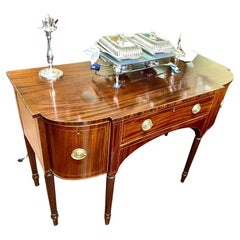
Fine Geo. III English figured mahogany Hepplewhite style bowfront sideboard
Located in CHARLESTON, SC
A very fine, delightful sized Antique English Geo. III figured mahogany Hepplewhite style sideboard with handsome boxwood line inlay, square tapered legs upon modified spade feet. S...
Category

Early 19th Century English Hepplewhite Antique South Carolina

Materials

Boxwood, Mahogany

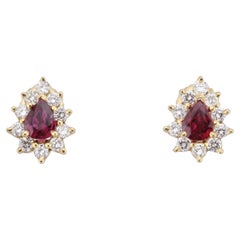
Tiffany Co. Ruby Diamond 18k Yellow Gold Stud Earrings
By Tiffany Co.
Located in Simpsonville, SC
Exemplifying timeless elegance and exceptional craftsmanship, these exquisite Tiffany & Co. Ruby and Diamond Halo Stud Earrings evoke the grace and sophistication of a bygone era. Cr...
Category

1980s Vintage South Carolina

Materials

Diamond, Ruby, Gold, 18k Gold, Yellow Gold
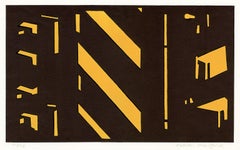
Third Avenue Elevated #1 — Mid-century Precisionist Abstraction
By Ralston Crawford
Located in Myrtle Beach, SC
Ralston Crawford, 'Third Avenue Elevated #1', lithograph, 1951, edition 55. Freeman L51.4. Signed, titled and numbered '48/55' in pencil. A fine, richly-inked impression, with rich ...
Category

1950s Abstract South Carolina

Materials

Lithograph

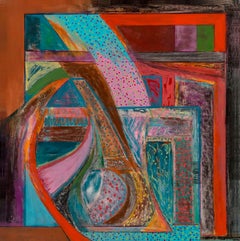
Cascade — Contemporary African American Artist
Located in Myrtle Beach, SC
Ralph Arnold, 'Cascade', mixed media: acrylic, pencil, conté crayon, marker, oil; 1986-88. Signed 'Arnold' and dated '86-88' in pencil, lower right. A fin...
Category

1980s Abstract Geometric South Carolina

Materials

Conté, Oil, Acrylic, Felt Pen

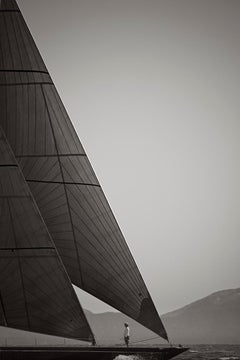
J-Class Racing Yacht Shamrock and Sailor in Europe, Iconic, Classic, Nautical
By Drew Doggett
Located in US
"Shamrock Rising" With a lone sailor standing on deck, the famed racing yacht Shamrock looks extraordinary. The nautical print series Sail: Majesty at Sea is an intimate look at t...
Category

2010s Contemporary South Carolina

Materials

Archival Pigment

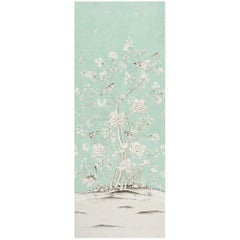
Schumacher by Mary McDonald Chinois Palais Wallpaper Mural in Aquamarine
By Mary McDonald, Schumacher
Located in New York, NY
Inspired by an antique Chinese silk panel, this design features exotic birds and cherry blossoms and is true to the original scale. Available as a printed linen and a wallcovering. ...
Category

21st Century and Contemporary British Chinoiserie South Carolina

Materials

Paper

Fine Early 19th C. Geo. III Figured Mahogany Bowfront Hepplewhite Sideboard
Located in CHARLESTON, SC
An extraordinary Period late 18th/early 19th Century Antique English Geo. III figured mahogany Bowfront Sideboard standing on square, tapered legs terminating in spade feet. The sid...
Category

Early 19th Century English Hepplewhite Antique South Carolina

Materials

Brass

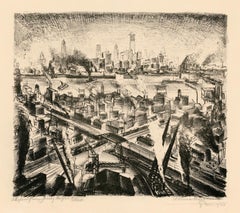
Skyline from Jersey Heights — 1930s Modernism
By Adriaan Lubbers
Located in Myrtle Beach, SC
Adriaan Lubbers, 'Skyline from Jersey Heights', lithograph, 1930, edition 25. Signed, titled, and numbered '4/XXV' in pencil. Dated 'Paris 1930' in pencil. A fine impression, on crea...
Category

1930s Modern South Carolina

Materials

Lithograph

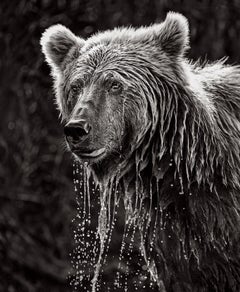
Black white image of brown bear after diving into water
By Drew Doggett
Located in US
"""River Titan"" Black & white image of brown bear after diving into water Brown bear dripping water after diving into creek Each year, brown bears descend on a remote part of the...
Category

2010s Minimalist South Carolina

Materials

Archival Pigment

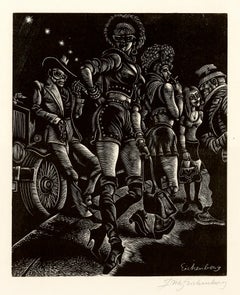
The Pimp — Graphic Modernism
By Fritz Eichenberg
Located in Myrtle Beach, SC
Fritz Eichenberg, 'The Pimp', wood engraving, 1980, artist's proof before the edition. Signed in pencil. Signed in the block, lower right. A fine, richly-inked impression, on cream wove paper, with full margins (2 3/16 to 3 1/2 inches), in excellent condition. Archivally sleeved, unmatted. Image size 12 x 9 3/4 inches (305 x 248 mm); sheet size 18 x 14 inches (457 x 356 mm). ABOUT THE ARTIST Fritz Eichenberg (1901–1990) was a German-American illustrator and arts educator who worked primarily in wood engraving. His best-known works were concerned with religion, social justice, and nonviolence. Eichenberg was born to a Jewish family in Cologne, Germany, where the destruction of World War I helped to shape his anti-war sentiments. He worked as a printer's apprentice and studied at the Municipal School of Applied Arts in Cologne and the Academy of Graphic Arts in Leipzig, where he studied under Hugo Steiner-Prag. In 1923 he moved to Berlin to begin his career as an artist, producing illustrations for books and newspapers. In his newspaper and magazine work, Eichenberg was politically outspoken and sometimes wrote and illustrated his reporting. In 1933, the rise of Adolf Hitler drove Eichenberg, who was a public critic of the Nazis, to emigrate with his wife and children to the United States. He settled in New York City, where he lived most of his life. He worked in the WPA Federal Arts Project and was a member of the Society of American Graphic Artists. In his prolific career as a book illustrator, Eichenberg portrayed many forms of literature but specialized in works with elements of extreme spiritual and emotional conflict, fantasy, or social satire. Over his long career, Eichenberg was commissioned to illustrate more than 100 classics by publishers in the United States and abroad, including works by renowned authors Dostoyevsky, Tolstoy, Charlotte and Emily Brontë, Poe, Swift, and Grimmelshausen. He also wrote and illustrated books of folklore and children's stories. Eichenberg was a long-time contributor to the progressive magazine The Nation, his illustrations appearing between 1930 and 1980. Eichenberg’s work has been featured by such esteemed publishers as The Heritage Club, Random House, Book of the Month Club, The Limited Editions Club, Kingsport Press, Aquarius Press, and Doubleday. Raised in a non-religious family, Eichenberg had been attracted to Taoism as a child. Following his wife's unexpected death in 1937, he turned briefly to Zen Buddhist meditation, then joined the Religious Society of Friends in 1940. Though he remained a Quaker until his death, Eichenberg was also associated with Catholic charity work through his friendship with Dorothy Day...
Category

1980s American Modern South Carolina

Materials

Woodcut

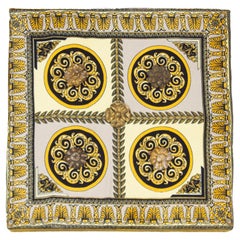
Vintage Italian Gold Scarf with 18th Century Floral Motifs on Canvas
By Interi
Located in Dublin, Dalkey
Italian vintage scarf decorated with five 18th century Italian gold-leaf wood motifs, pressed to canvas with a surrounding antique coordinating Italian church braid. This piece is p...
Category

18th Century Italian Rococo Antique South Carolina

Materials

Gold Leaf

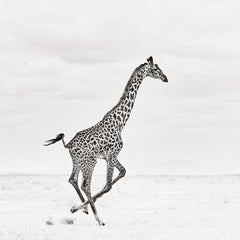
A Single Giraffe Runs Across the Plains in Africa
By Drew Doggett
Located in US
"Flight" A giraffe runs across the parched Earth near Amboseli National Park, Kenya Exceptional Creatures is a limited edition print series documenting the most extraordinary anim...
Category

2010s Contemporary South Carolina

Materials

Archival Pigment

A lone white horse photographed against formations of snow in the background
By Drew Doggett
Located in US
A lone white horse photographed against formations of snow in the background Sometimes, it felt like the Icelandic horses were posing. They ap...
Category

2010s Minimalist South Carolina

Materials

Archival Pigment

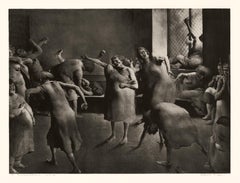
Psychopathic Ward — Socially-Conscious Realism
By Robert Riggs
Located in Myrtle Beach, SC
Robert Riggs, 'Psychopathic Ward', 2-color lithograph, c. 1940, edition c. 50, Beall 60, Bassham 78. Signed, titled, and numbered '14' in pencil. Signed in the stone, lower right. A ...
Category

1940s Realist South Carolina

Materials

Lithograph

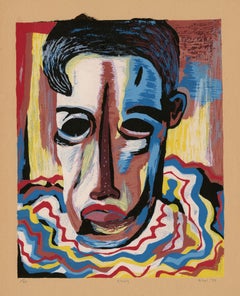
Clown — WPA American Expressionism
By Leon Bibel
Located in Myrtle Beach, SC
Leon Bibel, 'Clown', color serigraph, 1939, edition 20. Signed, dated, titled, and numbered '/20' in pencil. A fine, richly-inked, painterly impression, with fresh colors, on buff la...
Category

1930s American Modern South Carolina

Materials

Screen

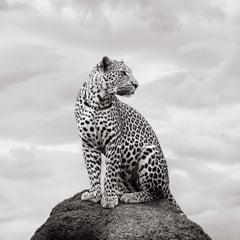
Black white portrait of a leopard looking to the right atop a rock in Kenya
By Drew Doggett
Located in US
Ethereal portrait of a leopard sitting majestically atop a rock, looking at something to the right out of frame Exceptional Creatures is a limit...
Category

2010s Minimalist South Carolina

Materials

Archival Pigment

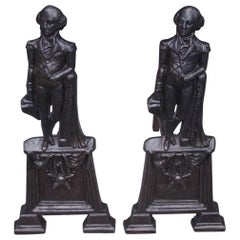
Pair of American Cast Iron George Washington Campaign Andirons, Circa 1840
Located in Charleston, SC
Pair of American cast iron George Washington andirons with GW campaigning in Military attire erected on decorative star plinths with step b...
Category

1840s American American Empire Antique South Carolina

Materials

Iron

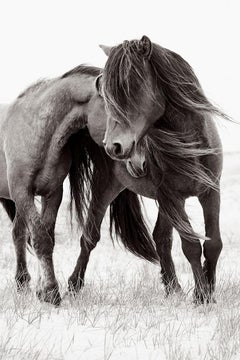
Two Wild Horses on Sable Island Nuzzling, Calming, Vertical, Ethereal
By Drew Doggett
Located in US
"Caress" Signs of affection on Sable Island between the horses include nuzzling, like in this image here. The print series Discovering the Horses of Sable Island...
Category

2010s Contemporary South Carolina

Materials

Archival Pigment

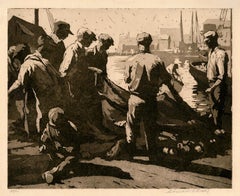
Mending Nets — Cape Ann Regionalism, Rockport
Located in Myrtle Beach, SC
Christian Dull, 'Mending Nets', aquatint, c. 1930, edition 50. Signed and numbered '50/-' in pencil. A fine impression, on cream laid paper, the full sheet with margins (1/2 to 1 1/2...
Category

1920s American Modern South Carolina

Materials

Aquatint

Still Thinking About These?

All Recently Viewed