South Carolina

to
260
989,350
711,976
2,322
1,289
1,286
1,180
735
621
553
489
350
303
278
221
194
185
161
119
112
103
97
95
91
87
79
77
72
70
66
66
62
50
50
42
40
25
23
23
19
19
17
13
13
12
11
10
7
4
3
3
3
1
1
1
929
815
320
73
63
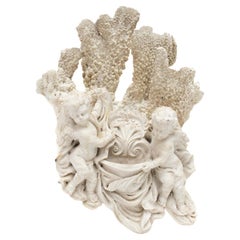
18th Century Italian Holy Water Font with Angels Framed with Fossil Coral
By Interi
Located in Dublin, Dalkey
18th century Italian holy water font with two angels framed with polished agate coral wings on fossil coral.  The Italian holy water front is from a historical Italian church and is...
Category

18th Century Italian Rococo Antique South Carolina

Materials

Agate, Coral

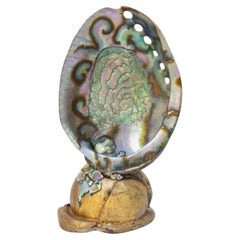
Iridescent Abalone Shell on 18th Century Italian Gilded Base with Baroque Pearls
By Interi
Located in Dublin, Dalkey
Iridescent abalone shell mounted on an 18th century Italian gilded and hand-carved base with baroque pearls. Abalone shells or "Haliotis Iris" are shells with an interior of iridesc...
Category

18th Century Italian Modern Antique South Carolina

Materials

Abalone, Wood, Giltwood

Black and white profile image of a beautiful horse swimming in clear water
By Drew Doggett
Located in US
"""Tranquility"" Black and white profile image of a beautiful horse swimming in clear water Profile image of a dark horse swimming in crystal clear water taken, captured underwate...
Category

2010s Minimalist South Carolina

Materials

Archival Pigment

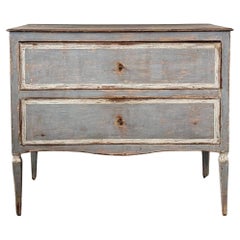
18th century Italian Neoclassical Painted Chest Of Drawers
Located in Charleston, SC
Charming 18th century Italian Neoclassical style painted chest of drawers having two long drawers with white decorative trimmings, raised on square tapering legs, that gives to its g...
Category

18th Century Neoclassical Antique South Carolina

Materials

Wood, Paint

Rain at Shinagawa, Ryoshimachi — Showa-era Woodblock Print
By Kawase Hasui
Located in Myrtle Beach, SC
Kawase Hasui, 'Rain at Shinagawa, Ryoshimachi' from the series 'Selection of Views of the Tokaido', woodblock print, 1931. A very fine, atmospheric impression, with fresh colors; the...
Category

1930s Showa South Carolina

Materials

Woodcut

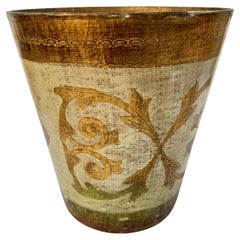
Mid 20th Century Wooden Italian Florentine White and Gold Giltwood Wastebasket
Located in Cordova, SC
This exquisite 1950s vintage Florentine wastebasket, crafted in Italy, showcases the timeless elegance of mid-century design. Made from carved giltwood, it features an ornate floral ...
Category

1950s Italian Other Vintage South Carolina

Materials

Wood, Paint, Giltwood

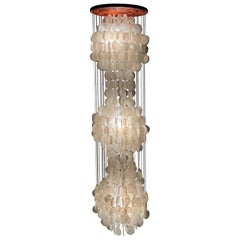
1960s Italian Capiz Shell Chandelier in the Style of Verner Panton
Located in Cordova, SC
Spectacular three tier capiz shell chandelier, reminiscent of Panton’s 1964 ‘3DM’ design, is made circa 1965. The circular capiz shell discs are mounted on a wooden ceiling plate by ...
Category

1960s Vintage South Carolina

Materials

Other

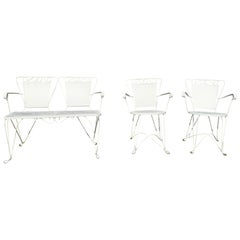
Mid Century Modern Metal Outdoor Furniture Set- 3 Pieces
By Salterini
Located in Cordova, SC
This three piece outdoor furniture set is a timeless piece of furniture. Composed of durable metal that has been primed and painted and ready to be used on your porch or in your gard...
Category

1950s Unknown Mid-Century Modern Vintage South Carolina

Materials

Iron

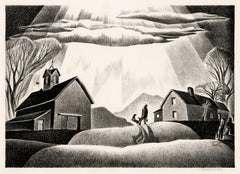
Partners — Mid-Century Modernist Regionalism
By Dale Nichols
Located in Myrtle Beach, SC
Dale Nichols, 'Partners', lithograph, edition 250, 1950. Signed in pencil. A fine, richly-inked impression, on cream wove paper; the full sheet with margins (7/8 to 1 5/8 inches); tw...
Category

1950s American Modern South Carolina

Materials

Lithograph

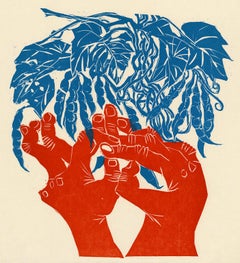
Drop of Life — from Solitude for Henry David Thoreau s Walden
Located in Myrtle Beach, SC
Naoko Matsubara, 'Drop of Life' for the portfolio 'Solitude', color woodcut, 1971. A fine impression with fresh, vivid colors, on cream laid Japan paper, the full sheet with margins,...
Category

1970s Modern South Carolina

Materials

Woodcut

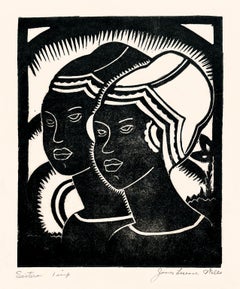
Sisters — Renowned Black American, Harlem Renaissance Artist
Located in Myrtle Beach, SC
James Lesesne Wells, 'Sisters', linocut, edition not stated but small, 1928. Signed, titled, and annotated 'imp' in pencil. A fine impression on off-white wove Japan paper, with wide margins (1 7/8 to 3 3/4 inches), in excellent condition. Printed by the artist. Very scarce. Matted to museum standards, unframed. Image size 8 3/16 x 6 3/4 inches (208 x 171 mm); sheet size 13 1/2 x 10 3/4 inches (343 x 273 mm). Exhibition and Literature: 'Narratives of African American Art and Identity: The David C. Driskell Collection,' The Art Gallery at the University of Maryland, extensive touring exhibition, 1998-2000. Collections: Pennsylvania Academy of the Fine Arts, Smithsonian Institution (Anacostia Community Museum). ABOUT THE ARTIST “Wells is more than an artist with a deep concern for his fellow man. He carries many of his themes a step further into an apocalyptic world, a world of revelation and shifting lights. … He works on large blocks in a bold free style. … His work has a vigor, therefore, that is not often used in the medium today.” —Jacob Kainen (painter, critic, and collector) from Richard J. Powell’s 1986 essay Phoenix Ascending: The Art of James Lesesne Wells. James Lesesne Wells was an American painter, printmaker, educator, and pioneering figure of the Harlem Renaissance, whose work established a vital connection between African heritage, modernist form, and African American cultural identity. Known for his innovative use of linoleum and woodblock printing, Wells played a key role in shaping 20th-century African American art and inspired countless students throughout his lengthy career as a teacher at Howard University. Born in Atlanta, Georgia, Wells' early exposure to the arts came through church and community, where African American cultural traditions were central. He pursued formal artistic training at Lincoln University in Pennsylvania (earning a B.A. in 1924), followed by studies at the Pennsylvania Academy of the Fine Arts and the Barnes Foundation, where he encountered European modernists as well as traditional African sculpture, which profoundly influenced his style. Wells moved to New York in the late 1920s, swiftly immersing himself in the lively artistic and intellectual scene of Harlem. There, he became associated with artists, writers, and thinkers of the Harlem Renaissance, contributing to the growth of Black cultural identity. Considered a mentor to many famed artists of the Harlem Renaissance, Wells served as director of a summer art workshop in Harlem where his assistants included Charles Alston, Jacob Lawrence, and Palmer Hayden...
Category

1920s American Modern South Carolina

Materials

Linocut

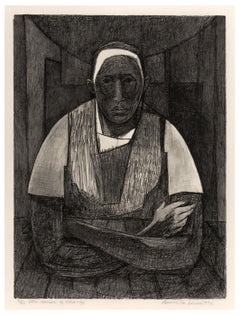
The House of Shango — African American artist
By Samella Lewis
Located in Myrtle Beach, SC
Samella Sanders Lewis, 'The House of Shango', lithograph, 1992, edition 60. Signed, dated, titled, and numbered '31/60' in pencil. A superb, richly-inked impression, on Arches cream wove paper; the full sheet with margins (1 1/4 to 3 1/2 inches), in excellent condition. Image size 24 x 18 inches (610 x 457 mm); sheet size 30 inches x 22 1/4 inches (762 x 565 mm). Archivally matted to museum standards, unframed. ABOUT THIS WORK “The title of this piece is an unmistakable harkening to African roots. Shango is a religious practice with origins in Yoruba (Nigerian) belief, deifying a god of thunder by the same name. Shango has been adopted in the Caribbean, most notably in Trinidad and Tobago, a fact that underscores the importance of transnationalism to Samella Lewis’s piece. Her work often grapples with issues of race in the U.S., and The House of Shango is no exception. Through a reliance on the gradual transformation of Shango—one that took place across continents and time—Lewis’s piece forms a powerful link between black Americans and their African and Caribbean counterparts. The figure depicted in the piece appears to emerge, quite literally, from the house of Shango. Given the roots and transformative process of the religion, The House of Shango can draw attention to the historical intersections to which black American culture is indebted.” —Laura Woods, Scripps College, Ruth Chander Williamson Gallery, Collection Highlights, 2018 ABOUT THE ARTIST Samella Lewis’ lifelong career as an artist, art historian, critic, curator, collector, and advocate of African American art has helped empower generations of artists in the United States and worldwide, earning her the designation “the Godmother of African American art.” Born and raised in Jim Crow era New Orleans, Lewis began her art education at Dillard University in 1941, transferring to Hampton University in Virginia, where she earned her B. A. and master's degrees. She completed her master's and a doctorate in art history and cultural anthropology at Ohio State University in 1951, becoming the first female African American to earn a doctorate in fine art and art history. Lewis taught art at Morgan State University while completing her doctorate. She became the first Chair of the Fine Arts Department at Florida A&M University in 1953. That same year Lewis also became the first African American to convene the National Conference of African American artists held at Florida A&M University. She was a professor at the State University of New York, California State University, Long Beach, and at Scripps College in Claremont, California. Lewis co-founded, with Bernie Casey, the Contemporary Crafts Gallery in Los Angeles in 1970. In 1973, she served on the selection committee for the exhibition BLACKS: USA: 1973 held at the New York Cultural Center. Samella Lewis's 1969 catalog 'Black Artists on Art', featured accomplished black artists typically overlooked in mainstream art galleries. She said of the book, "I wanted to make a chronology of African American artists, and artists of African descent, to document our history. The historians weren't doing it. It was really about the movement." From the 1960s through the 1970s, her work, which included lithographs, linocuts, and serigraphs, reflected her concerns with the values of human dignity, democracy, and freedom of expression. Between 1969 and 70, Lewis and E.J. Montgomery were consultants for a groundbreaking exhibition at the Oakland Public L designed to create greater awareness of African American history and art. Lewis was the founder of the International Review of African American Art in 1975. In 1976, she founded the Museum of African-American Art with a group of artistic, academic, business, and community leaders in Los Angeles, California. Lewis, the museum’s senior curator, organized exhibitions and developed new ways of educating the public about African American art. She celebrated African American art as an 'art of experience’ inspired by the artists’ lives. And she espoused the concept of African American art as an 'art of tradition', urging museums to explore the African roots of African American art. In 1984, Lewis produced an extensive monograph on Elizabeth Catlett, her beloved mentor at Dillard University. Lewis has been collecting art since 1942, focusing primarily on the WPA era and work created during the Harlem Renaissance. Pieces from her collection were acquired by the Hampton University Museum in Virginia, the world’s earliest collection of African American fine art...
Category

1990s Realist South Carolina

Materials

Lithograph

Lapwing on a Tree Stump — Japanese Woodblock kachō-ga
By Ohara Koson
Located in Myrtle Beach, SC
Ohara Koson, 'Lapwing on a Tree Stump', color woodblock, c. 1920s. Signed 'Koson' in black ink with the artist’s red seal beneath, lower right. A superb, skillfully-inked impression,...
Category

Early 1900s Showa South Carolina

Materials

Woodcut

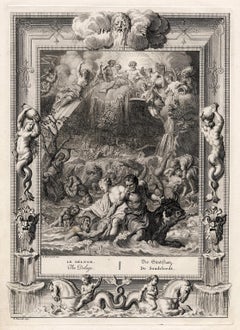
The Deluge from The Temple of the Muses — 18th Century Engraving
By Bernard Picart
Located in Myrtle Beach, SC
Bernard Picart, 'The Deluge' from 'The Temple of the Muses', engraving, 1730. Signed in the plate and dated '1730' lower left. Titled in French, English, German, and Dutch. A superb...
Category

1730s Baroque South Carolina

Materials

Engraving

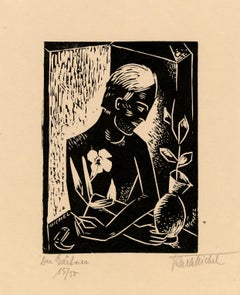
Der Gartner (The Gardener) — German Expressionism
By Karl Michel
Located in Myrtle Beach, SC
Karl Michel, 'Der Gartner' (The Gardener), woodcut, c. 1925. Signed, titled, and numbered '15/50' in pencil. Signed in the block, lower left and right. A fine, richly-inked impression on buff wove paper, with full margins (1 1/2 to 2 3/4 inches), in excellent condition. Matted to museum standards, unframed. Scarce. Image size 5 1/4 x 3 7/8 inches (133 x 98 mm); sheet size 10 x 7 3/4 inches (254 x 198 mm). ABOUT THE ARTIST Karl Michel (1889-1984) was a noted graphic designer and expressionist printmaker during Germany's pre-Nazi Weimar Republic (1919 - 1933). In 1920, his work was featured in the influential German graphic design magazine Das Plakat...
Category

1920s Expressionist South Carolina

Materials

Woodcut

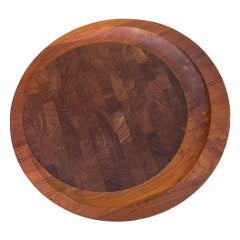
Vintage Danish Dansk Teak Cutting Board Tray Platter by Jens H. Quistgaard
By Jens Quistgaard, Dansk
Located in Cordova, SC
Mid-Century Modern footed cutting board tray in teak designed by Jens H. Quistgaard for Dansk, Denmark. This versatile piece is the perfect tool for carving and serving featuring a h...
Category

Mid-20th Century Danish Mid-Century Modern South Carolina

Materials

Teak

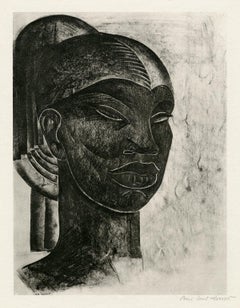
Portrait of an African Woman — 1920s Modernism
By Boris Lovet-Lorski
Located in Myrtle Beach, SC
Boris Lovet-Lorski, Untitled (Portrait of an African Woman), lithograph, edition 250, 1929. Signed and numbered 13 in pencil. Number 13 of Volume 2, a series of 10 lithographs publis...
Category

1920s Art Deco South Carolina

Materials

Lithograph

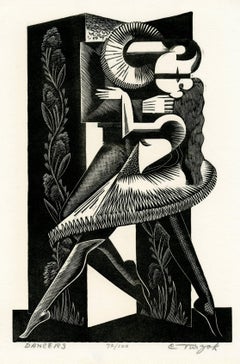
Dancers — 1930s American Modernism
By Charles Turzak
Located in Myrtle Beach, SC
Charles Turzak, 'Dancers', 1939, wood engraving, edition 100. Signed, titled, and numbered 72/100 in pencil. A fine, richly-inked impression, on off-white Japan paper, with full marg...
Category

Mid-20th Century Art Deco South Carolina

Materials

Woodcut

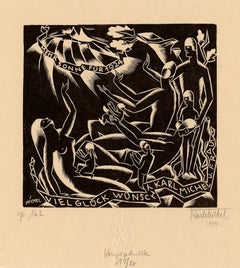
Mehr Sonne fur 1924 (More Sun for 1924)— German Expressionism
By Karl Michel
Located in Myrtle Beach, SC
Karl Michel, 'Mehr Sonne fur 1924. Viel Gluck Wunscht Karl Michel U. Frau', woodcut, 1924, edition 20. Signed, dated, and numbered 'op. 162' and '15/20' in pencil. Signed in the image, lower left. A fine, richly-inked impression on buff wove paper, with full margins (1 1/2 to 2 3/4 inches), in very good condition. Printed by the artist. Scarce. Matted to museum standards, unframed. New Year's Greeting – English translation: "More Sun for 1924. Good Luck Wishes from Karl Michel and his Wife." Image size 4 5/8 x 4 3/4 inches (118 x 121 mm); sheet size 7 3/4 x 10 inches (198 x 254 mm). ABOUT THE ARTIST Karl Michel (1889-1984) was a noted graphic designer and expressionist printmaker during Germany's pre-Nazi Weimar Republic (1919-1933). Michel’s work was the subject of a feature article in the influential German graphic design magazine Das Plakat...
Category

1920s Expressionist South Carolina

Materials

Woodcut

World Class Racing Yacht in the Atlantic Ocean, Best-Seller, Movement
By Drew Doggett
Located in US
"Nautical Stripes" This best-selling black and white photograph features the renowned 12-Meter boat Northern Light on the open seas. The nautical print series Sail: Majesty at Se...
Category

2010s Contemporary South Carolina

Materials

Archival Pigment

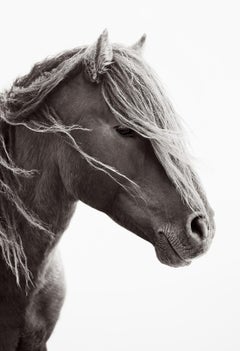
A lone wild and free horse on Sable Island is a breathtaking sight
By Drew Doggett
Located in US
A lone wild and free horse on Sable Island is a breathtaking sight Fashion-inspired portrait of one of the horses that roams freely on Sable Island The print series Discovering the...
Category

2010s Minimalist South Carolina

Materials

Archival Pigment

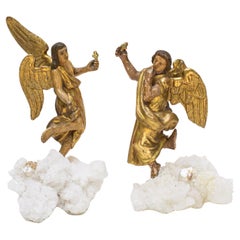
Pair of 18th Century Italian Dancing Angels with Baroque Pearls on Aragonite
By Interi
Located in Dublin, Dalkey
Pair of 18th century Italian dancing angels with coordinating baroque pearls on aragonite crystal clusters. The dancing angels are hand-carved wood, polychromed and gilded, original...
Category

18th Century Italian Rococo Antique South Carolina

Materials

Rock Crystal, Gold Leaf

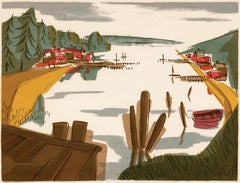
River View — Mid-Century American Modernism
By Edward August Landon
Located in Myrtle Beach, SC
Edward Landon 'River View, color serigraph, 1942, edition 50, Ryan 159. Signed in pencil in the image, lower right. Titled, dated, and annotated '9 COLORS – 50 PRINTS' in the screen,...
Category

1940s American Modern South Carolina

Materials

Screen

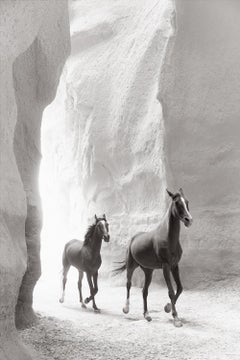
Black and white image of a mare and her foal walking into a slot canyon
By Drew Doggett
Located in US
"Black and white image of a mare and her foal walking into a slot canyon An inspiring capture of a mare and her young foal walk into an ethereal slot canyon This powerful global s...
Category

2010s Minimalist South Carolina

Materials

Archival Pigment

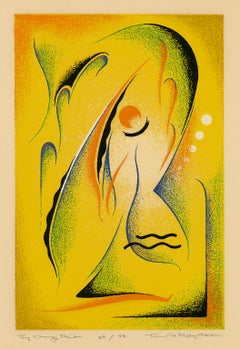
The Orange Point — Mid-Century Modernism
By Thomas A. Robertson
Located in Myrtle Beach, SC
Thomas A. Robertson, 'The Orange Point', color serigraph, edition 54, 1941. Signed, titled, and annotated 'Ed/54' in pencil. A fine impression, with fresh colors, on buff wove paper;...
Category

1940s American Modern South Carolina

Materials

Screen

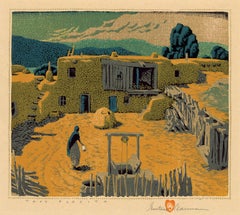
Taos Placita — American Southwest Regionalist Masterwork
By Gustave Baumann
Located in Myrtle Beach, SC
Gustave Baumann, 'Taos Placita', color woodcut, 1947, edition 125. Baumann 132. Signed, titled, and numbered '20-125' in pencil; with the artist’s Hand-in-Heart chop. A superb, richly-inked impression, with fresh colors, on fibrous oatmeal wove paper; the full sheet with margins (2 to 3 1/8 inches); slight rippling at the left sheet edge, in excellent condition. Matted to museum standards, unframed. Image size 9 5/8 x 11 1/4 inches (244 x 286 mm); sheet size 13 1/4 x 17 inches (337 x 432 mm). Collections: Harwood Museum of Art, New Mexico Museum of Art, Phoenix Art Museum, Scottsdale Art Museum, Wichita Art Museum. ABOUT THE ARTIST Gustave Baumann (1881-1971) was a renowned printmaker and a leading figure of the American color woodcut revival whose exquisite craftsmanship and vibrant imagery captured the essence of the Southwest. "A brilliant printmaker, Baumann brought to the medium a full mastery of the craft of woodworking that he acquired from his father, a German cabinetmaker. This craftsmanship was coupled with a strong artistic training that resulted in the handsome objects we see in the exhibition today. After discovering New Mexico in 1918, Baumann began to explore in his woodblock prints of this period the light. color, and architectural forms of that landscape. His prints of this period are among the most beautiful and poetic images of the American West." —Lewis I. Sharp, Director, Denver Art Museum Baumann, the son of a craftsman, immigrated to the United States from Germany with his family when he was ten, settling in Chicago. From 1897 to 1904, he studied in the evenings at the Art Institute of Chicago, working in a commercial printmaking shop during the day. In 1905, he returned to Germany to attend the Kunstwerbe Schule in Munich, where he decided on a career in printmaking. He returned to Chicago in 1906 and worked for a few years as a graphic designer of labels. Baumann made his first prints in 1909 and exhibited them at the Art Institute of Chicago the following year. In 1910, he moved to the artists’ colony in Nashville, Indiana, where he explored the creative and commercial possibilities of a career as a printmaker. In 1915, he exhibited his color woodcuts at the Panama-Pacific International Exposition in San Francisco, winning the gold medal. Among Baumann’s ongoing commercial activities was his work for the Packard Motor Car Company from 1914 to 1920 where he produced designs, illustrations, and color woodcuts until 1923. In 1919, Baumann’s printmaking work dominated the important exhibition of American color woodcuts at the Detroit Institute of Arts. Twenty-six of his prints were included, far more than the works of any other artist. A set of his blocks, a preparatory drawing, and seven progressive proofs complemented the exhibition. That same year, Baumann worked in New York and, over the summer, in Provincetown, Massachusetts. His airy images of Cape Cod employed soft, pastel colors and occasionally showed the influence of the white-line woodcut technique. Many of his Chicago artist friends had traveled to the southwest, and Baumann became intrigued by their paintings, souvenirs, and stories of an exotic place named Taos, New Mexico. In the summer of 1918, he spent the summer in Taos sketching and painting before visiting Santa Fe. Paul Walter, the director of the Museum of New Mexico, offered him a studio in the museum's basement. Inspired by the rugged beauty of the Southwest—the vibrant colors and dramatic landscapes of the region became a central theme in his work, influencing his artistic style and subject matter for the remainder of his career. Later in the decade, he traveled to the West Coast and made prints of California landscape. Baumann's prints became synonymous with the Southwest, capturing the spirit of its place in America's identity with a unique sense of authenticity and reverence. His iconic images of desert vistas, pueblo villages, and indigenous cultures served as visual tributes to the region's rich cultural heritage, earning him a dedicated following among collectors and curators alike. A true craftsman and artist, Baumann completed every step of the printmaking process himself, cutting each block, mixing the inks, and printing every impression on the handmade paper he selected. His dedication to true craftsmanship and his commitment to preserving the integrity of his artistic vision earned him widespread acclaim and recognition within the art world. About the vibrant colors he produced, Baumann stated, “A knowledge of color needs to be acquired since they don’t all behave the same way when ground or mixed...careful chemistry goes into the making of colors, with meticulous testing for permanence. While complicated formulae evolve new colors, those derived from Earth and metal bases are still the most reliable.” In the 1930s, Baumann became interested in puppet theater. He designed and carved his own marionettes and established a little traveling company. From 1943 to 1945, the artist carved an altarpiece for the Episcopal Church of the Holy Faith in Santa Fe. In 1952, a retrospective exhibition of his prints was mounted at the New Mexico Museum of Fine Arts. Throughout his prolific career, Baumann executed nearly four hundred color woodcuts. Baumann’s woodcuts...
Category

1940s American Modern South Carolina

Materials

Woodcut

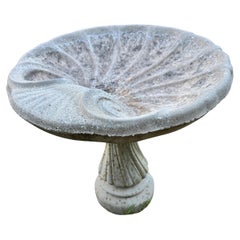
Vintage Cement Shel Motif Bird Bath With Base - 2 Pieces
Located in Cordova, SC
Concrete bird bath with a shell motif. The top and the base are two separate pieces, but fit snuggly together so it won’t topple over. Some wear to the interior of the bird bath. Som...
Category

1950s American Hollywood Regency Vintage South Carolina

Materials

Cement

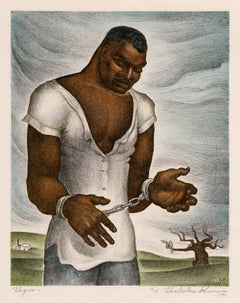
Negro — California WPA Social Realism – Slavery
Located in Myrtle Beach, SC
Nicholas Panesis, 'Negro', 1934, color lithograph, edition 18. Signed, dated, titled, and numbered 8/28 in pencil. Initialed in the stone, lower right. A fine impression, with fresh colors, on buff wove paper, with margins (1 1/8 to 2 3/8 inches). Minor glue staining at the extreme sheet edges verso, where previously taped (not visible recto), otherwise in excellent condition. Very scarce. Matted to museum standards, unframed. Image size 10 5/8 x 8 1/2 inches; (270 x 216 mm); sheet size 14 13/16 x 10 15/16 inches (376 x 278 mm). Created for the California Works Progress Administration, Federal Art Project (WPA). Impressions of this work are held in the public collections of La Salle University Art Museum (Philadelphia), U.S. General Services Administration, and Weisman Art Museum (University of Minnesota). ABOUT THE ARTIST Born in Massachusetts, Nicholas Panesis (1913-1967) studied art at Syracuse University, NY, and went on to teach ceramics at Alfred University, NY. Panesis moved to San Francisco in the early 1930s shortly before settling in Los Angeles, where he worked for different animation studios...
Category

1930s American Realist South Carolina

Materials

Lithograph

Beautiful Morning Light on the Pacific Coast, Iconic, Classic, Americana
By Drew Doggett
Located in US
"Coastal Rays" In this best-selling print, the mist of the Pacific Northwest lends a textural effect to the air and light. Experience the photographic journey through the cultura...
Category

2010s Contemporary South Carolina

Materials

Archival Pigment

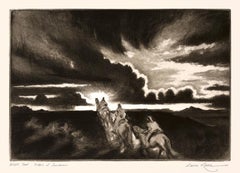
Riders at Sundown — Mid-Century Southwest Regionalism
By Gene Kloss
Located in Myrtle Beach, SC
'Riders at Sundown', aquatint and drypoint, edition 75, 1953, Kloss 451. Signed, titled, and annotated 'Artist's Proof' in pencil. A superb, richly-inked, atmospheric impression, in ...
Category

1950s American Modern South Carolina

Materials

Drypoint, Aquatint

Antique Platinum Diamond Omega Ladies Wrist Watch Vintage Art Deco
Located in Greer, SC
" Lady's dress watch by Omega measures 6.5 inches long. It weighs 13.3 pennyweights. It has a rectangular platinum case measuring 13.62 by 13.21 mm with bead set round diamond lugs. ...
Category

Early 20th Century Unknown Art Deco South Carolina

Materials

Diamond, Platinum

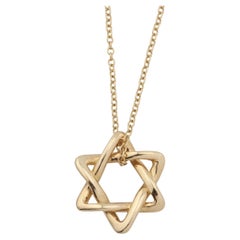
Tiffany Co. Elsa Peretti 18K Gold 12mm Small Star of David Pendant Necklace
By Tiffany Co.
Located in Simpsonville, SC
Maybe?? The Tiffany Co. Elsa Peretti Star of David 18K Yellow Gold Necklace Pendant is a dazzling and meaningful piece of jewelry that beautifully combines iconic design with...
Category

21st Century and Contemporary South Carolina

Materials

Gold, 18k Gold, Yellow Gold

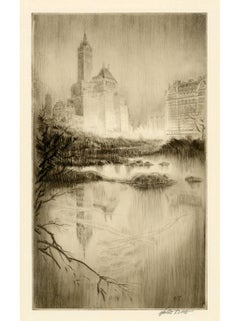
The Plaza, Sunset Glow
By Walter Tittle
Located in Myrtle Beach, SC
'The Plaza, Sunset Glow', drypoint, c. 1920s, edition not stated. Signed in pencil and initialed in the plate, lower right. Titled 'The Plaza, Sunset' and annotated 'no. 165' in ink, in the bottom left sheet corner. A superb, luminous impression in dark brown ink, with selectively wiped plate tone; on cream wove paper; the full sheet with margins (1 to 2 1/4 inches). Pale tape stains on the top sheet edge, recto, well away from the image, otherwise in excellent condition. Matted to museum standards, unframed. A view across 'The Pond' in New York City's Central Park, toward Grand Army Plaza...
Category

1920s American Impressionist South Carolina

Materials

Drypoint

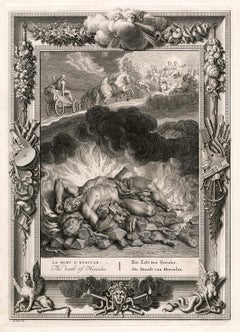
The Death of Hercules from The Temple of the Muses — 18th Century Engraving
By Bernard Picart
Located in Myrtle Beach, SC
Bernard Picart, 'The Death of Hercules' from 'The Temple of the Muses', engraving, 1730. Signed in the plate, lower left. Titled in French, English, German, and Dutch. A superb, rich...
Category

1730s Baroque South Carolina

Materials

Engraving

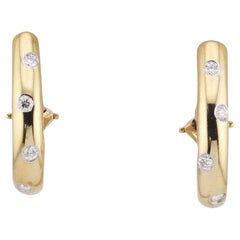
Tiffany Co. Etoile Diamond 18k Gold Platinum Hoop Earrings
By Tiffany Co.
Located in Simpsonville, SC
A timeless blend of elegance and everyday luxury, the Tiffany Co. Etoile Hoop Earrings embody the refined sophistication that defines the house’s celebrated design legacy. Craf...
Category

Late 20th Century South Carolina

Materials

Diamond, Gold, 18k Gold, Platinum

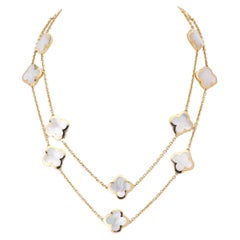
Van Cleef Arpels Pure Alhambra White MOP 18K Yellow Gold 14 Motif Necklace BP
By Van Cleef Arpels
Located in Simpsonville, SC
Van Cleef Arpels Pure Alhambra White Mother-of-Pearl 18K Yellow Gold 14-Motif Necklace w/ Box Certificate Experience the timeless elegance of Van Cleef Arpels with...
Category

21st Century and Contemporary South Carolina

Materials

Pearl, Gold, 18k Gold, Yellow Gold

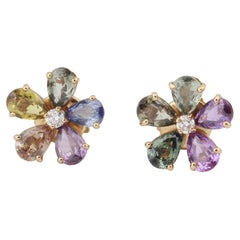
Bulgari Sapphire Diamond 18K Yellow Gold Flower Earrings
By Bulgari
Located in Simpsonville, SC
Elevate your jewelry collection with these exquisite Bulgari Sapphire and Diamond Flower Earrings, a radiant example of the house’s iconic creativity and vibrant design language. C...
Category

21st Century and Contemporary South Carolina

Materials

White Diamond, Sapphire, Gold, 18k Gold, Yellow Gold
Gianmaria Buccellati Rare Vintage Sterling Silver Turtle Trinket Pill Box
By Buccellati
Located in Simpsonville, SC
Discover the charm and artistry of Italian master craftsmanship with this Gianmaria Buccellati Rare Vintage Sterling Silver Turtle Trinket/Pill Box. Exquisitely handcrafted, this del...
Category

20th Century South Carolina

Materials

Sterling Silver

19th century, English wire and brass nursery fender
Located in Charleston, SC
English wiring brass nursery fender late 19th century
Category

Late 19th Century English Edwardian Antique South Carolina

Materials

Brass, Wire

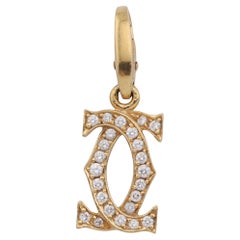
Cartier Diamond 18K Yellow Gold Double C-Logo Charm Pendant
By Cartier
Located in Simpsonville, SC
Elevate your style with the Cartier Diamond 18 Karat Yellow Gold Double C-Logo Charm, a symbol of timeless elegance and luxury. This exquisite charm seamlessly blends Cartier's iconi...
Category

Late 20th Century South Carolina

Materials

Diamond, Gold, 18k Gold, Yellow Gold

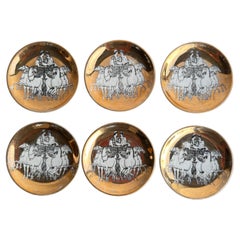
Piero Fornasetti Gilded Porcelain Chariot Coasters or Nut Dishes Vintage- 6 pcs
By Fornasetti
Located in Cordova, SC
Vintage mid century modern Fornasetti coasters, set of six (6) of chariots with horses with gold gilding. Some noticeable wear to the gold coloring on the faces of the coasters. No c...
Category

1960s Italian Mid-Century Modern Vintage South Carolina

Materials

Ceramic

Buccellati Rare Vintage Sterling Silver Turtle Small Trinket Pill Box
By Buccellati
Located in Simpsonville, SC
The Buccellati Rare Vintage Sterling Silver Turtle Small Pill Box is a beautifully crafted and unique collectible that embodies the exquisite artistry and meticulous craftsmanship fo...
Category

20th Century South Carolina

Materials

Sterling Silver

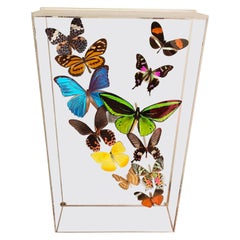
1970s Sam Trophia Acrylic Lucite Butterfly Shadowbox Taxidermy
Located in Cordova, SC
1970s Sam Trophia lucite / acrylic shadow box which depicts a dozen different butterfly beauty preserved and suspended in art form in a spectrum of ...
Category

1970s American Other Vintage South Carolina

Materials

Lucite

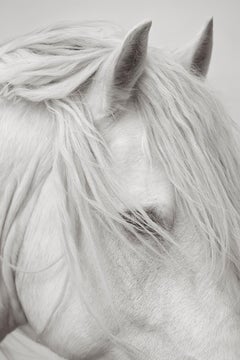
Portrait of a White Horse, Black and White Photography, Ethereal, Fashion
By Drew Doggett
Located in US
"Ethere" This best-selling, award-winning image is an intimate portrait of an iconic all-white horse native to the Camargue region in the South of France. The award-winning print ...
Category

2010s Contemporary South Carolina

Materials

Archival Pigment

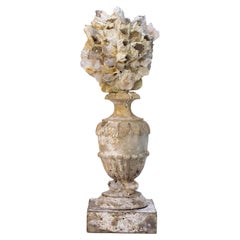
Sculptural 17th Century Florence Fragment with a Fossil Shell and Crystals
By Interi
Located in Dublin, Dalkey
Sculptural 17th century hand-carved Florence Fragment mounted with a fossil shell with barnacles and adorned with crystals. This fragment is from a church in Florence. It was found ...
Category

17th Century Italian Baroque Antique South Carolina

Materials

Rock Crystal

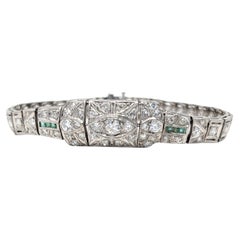
Antique Art Deco Bracelet Platinum Diamond Emerald Vintage Estate Jewelry
Located in Greer, SC
"Lady's Art Deco emerald and diamond link bracelet is platinum, stamped Platinum, bright finish, good condition, weighs 10.6 pennyweights. Center is rectangular shaped graduating 11....
Category

Early 20th Century Unknown Art Deco South Carolina

Materials

Diamond, Emerald, Platinum

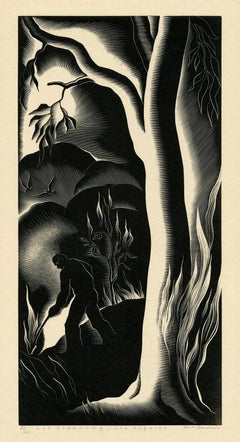
Lot Cleaning, Los Angeles — 1930s Modernism
By Paul Landacre
Located in Myrtle Beach, SC
'Lot Cleaning, Los Angeles', wood engraving, edition 60, Zeitlin & Ver Brugge 69. Signed, titled and numbered '51/60' in pencil. A brilliant, black impression, on Kitakata Japan pape...
Category

1930s American Modern South Carolina

Materials

Woodcut

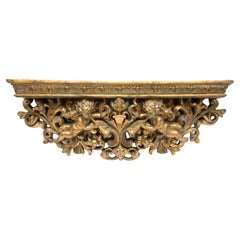
19th Century Italian Giltwood Shelf with Carved Angels
By Interi
Located in Dublin, Dalkey
19th century Italian giltwood shelf with angel and rococo-style carvings. The piece came from an important palazzo in Tuscany. It has faint green verdigris underlay with the gold l...
Category

19th Century Italian Rococo Revival Antique South Carolina

Materials

Gold Leaf

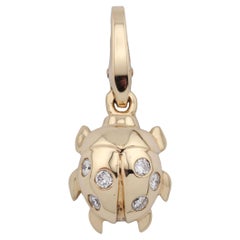
Cartier Diamond 18k Yellow Gold Ladybug Charm Pendant
By Cartier
Located in Simpsonville, SC
Embrace the enchanting allure of this Cartier Diamond 18k Yellow Gold Ladybug Charm Pendant, circa 2000. Meticulously crafted, this pendant is a testament to Cartier's legacy of crea...
Category

21st Century and Contemporary Contemporary South Carolina

Materials

White Diamond, Gold, 18k Gold, Yellow Gold
Louis Vuitton Vintage 18k White Gold Key Charm Pendant
By Louis Vuitton
Located in Simpsonville, SC
Introducing the Louis Vuitton White Gold Key Pendant, a refined piece that embodies elegance and craftsmanship. This exquisite charm necklace is a testament to Louis Vuitton's dedica...
Category

20th Century South Carolina

Materials

Gold, 18k Gold, White Gold

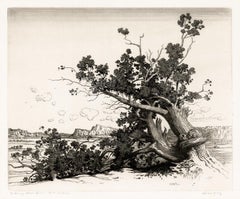
Old Cedars – Early New Mexico Landscape, Southwest Regionalism
By George Elbert Burr
Located in Myrtle Beach, SC
George Elbert Burr, 'Old Cedars – New Mexico', etching, 1920, edition 40, Seeber 218. Signed and annotated '(c) George Elbert Burr Del. et Imp.' in pencil. ...
Category

1920s Realist South Carolina

Materials

Etching

Cartier Trinity 18K Gold Cross Charm Pendant
By Cartier
Located in Simpsonville, SC
Celebrate timeless elegance with this authentic Cartier Trinity Cross Pendant, a refined expression of the Maison’s iconic three-tone harmony. The Cartier 18K Gold Cross Charm Pendan...
Category

Late 20th Century South Carolina

Materials

Gold, 18k Gold, Rose Gold, White Gold, Yellow Gold

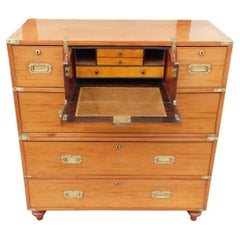
English Camphor Wood Military Campaign Chest with Fitted Interior Desk, C. 1810
Located in Charleston, SC
English camphor wood and mahogany military campaign chest with an upper case central fitted hinged fall front secretary desk revealing a leather writing surface, flanking pigeon hole...
Category

1810s English Campaign Antique South Carolina

Materials

Brass

Tiffany Co. Elsa Peretti Rare Pod Sterling Silver Pill Box Pillbox
By Tiffany Co.
Located in Simpsonville, SC
A stunning and highly collectible piece from one of Tiffany’s most beloved designers: the Elsa Peretti “Pod” pill box in solid sterling silver. Elevate your collection with this ex...
Category

21st Century and Contemporary Contemporary South Carolina

Materials

Sterling Silver

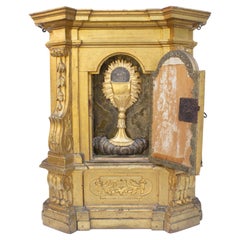
18th Century Italian Gilded Tabernacle with a Hand-Carved Chalice Fragment
By Interi
Located in Dublin, Dalkey
18th century Italian gilded and hand-carved tabernacle adorned with an 18th century Italian gilt chalice and Sabina Faye Braxton gaufrage fabric. This tabernacle once belonged in a h...
Category

18th Century Italian Rococo Antique South Carolina

Materials

Gold Leaf

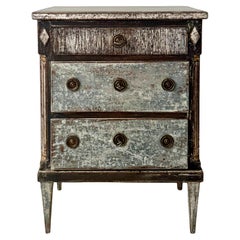
18th Century Swedish Neoclassical Period Painted Chest of Drawer
Located in Charleston, SC
A charming unusual small proportioned Neoclassical chest of drawers from 18th-century Sweden in muted blue-blackish tone. The chest comprises three drawers, including a top drawer wi...
Category

18th Century Swedish Neoclassical Antique South Carolina

Materials

Bronze

Zentsuji Temple in the Rain — from the series Collected Views of Japan II
By Kawase Hasui
Located in Myrtle Beach, SC
Kawase Hasui, 'Zentsuji Temple in the Rain' from the seres 'Collected Views of Japan II', color woodblock print, 1937. Signed Hasui in black ink, with the artist’s red seal Kawase, ...
Category

1930s Showa South Carolina

Materials

Woodcut

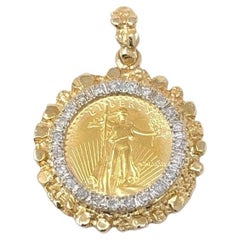
22k Gold US 5 Dollar Lady Liberty Coin in 14k Diamond Gold Frame Pendant
Located in Greer, SC
Stunning 22k gold 5 Dollar Lady Liberty coin in a 14k yellow gold and diamond frame pendant. Measures 1.25 inches from top to bottom by .9 inch in width and 3mm in depth. Stamped / h...
Category

20th Century Unknown South Carolina

Materials

Diamond, 14k Gold, 22k Gold, Yellow Gold
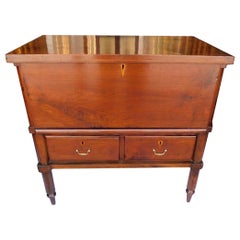
American Federal Southern Walnut Hinged Two Drawer Inlaid Sugar Chest, VA C 1820
Located in Charleston, SC
American Federal Southern walnut hinged top sugar chest with oval string inlays, two flanking drawers with brass pulls, central diamond escutcheons, and resting on the original turne...
Category

1820s American Federal Antique South Carolina

Materials

Brass

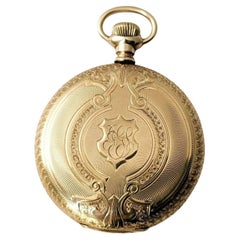
Antique 14k Solid Yellow Gold Waltham Pocket Watch Keystone Hunter Case Monogram
By Waltham
Located in Greer, SC
Beautifully crafted antique Waltham pocket watch in a stunning solid 14k yellow gold hunters case by Keystone. This pocket watch is circa late 1800's to early 1900's and features a monogram front with floral back, very ornately engraved. Hefty in size measuring 2 inches in diameter by half an inch in depth, 2.7 inches in total length with the bow and crown. This classic pocket watch winds up...
Category

Early 20th Century Unknown South Carolina

Materials

14k Gold, Yellow Gold

Still Thinking About These?

All Recently Viewed