South Korea
to
1
989,099
711,326
465
450
299
197
56
49
42
36
21
19
18
10
5
3
2
1
143
50
11
8
7
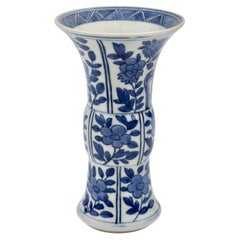
Ancient Gu Shape Blue And White Vase, Qing Dynasty, Kangxi Era, Circa 1690
Located in seoul, KR
An attractive GU vase hand painted in cobalt blue with typical kangxi flower panels painting separated by lined borders.
Period : Qing Dynasty, Kangxi Period
Production Date : 1690-1699
Made in : Jingdezhen
Destination : Netherland
Found/Acquired : Southeast Asia , South China Sea, Vung Tau ship
Size : 14cm (Height) x 8.5cm (Diameter)
Condition : Excellent
Reference : Double checked with reference to the original catalogues
1) Christies Amsterdam 1992 - Vung Tau Cargo / Christies
2) Qing Dynasty Export Blue and White from Vung Tau Cargo(淸代外销靑花瓷) / Guangxi Fine Art Publishing House
3) Asian Ceramic Found along Maritime Silk Route / National Maritime Museum of Korea
* Vung Tau Cargo Porcelain...
Category
1690s Vietnamese Qing Antique South Korea
Materials
Ceramic
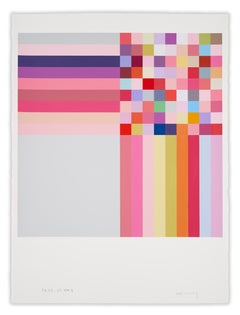
Subset 0304 (Abstract Painting)
By Kyong Lee
Located in London, GB
This compelling series, initiated in winter 2024, serves as a visual diary reflecting fluctuating inner emotions during a period of significant political and social transition in Sou...
Category
2010s Abstract South Korea
Materials
Paper, Acrylic
Emotional Color Change 55 (Abstract Painting)
By Kyong Lee
Located in London, GB
This work will be shipped rolled.
Emotional Color Change series combines colour and language to visually represent the external environment. The process involves mixing two or three...
Category
2010s Abstract South Korea
Materials
Canvas, Acrylic
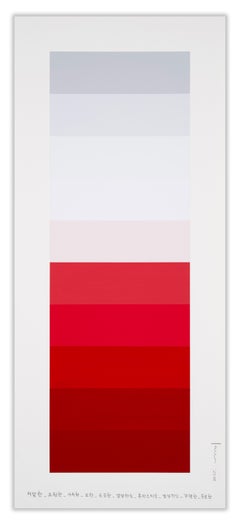
Emotional color chart 229 (Abstract Painting)
By Kyong Lee
Located in London, GB
This series, started in 2016 conveys a color and emotional language and is inspired by the series Color as Adjective, a series of drawings and paintings that are visual representatio...
Category
2010s Abstract South Korea
Materials
Paper, Acrylic, Pencil
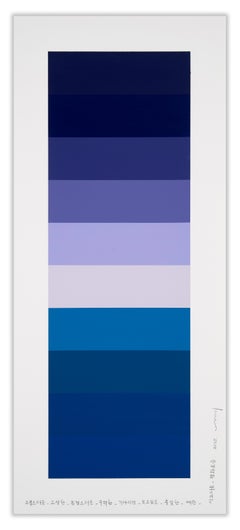
Emotional color chart 224 (Abstract Painting)
By Kyong Lee
Located in London, GB
This series, started in 2016 conveys a color and emotional language and is inspired by the series Color as Adjective, a series of drawings and paintings that are visual representatio...
Category
2010s Abstract South Korea
Materials
Paper, Acrylic, Pencil
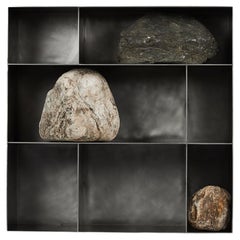
Solid Dark Stainless Steel Wall Object with Natural Stones by Lee Sisan
Located in Geneve, CH
Proportions of Stone Wall Object by Lee Sisan
Dimensions: W 60 x D 60 x H 26 cm
Materials: Stainless steel, natural stone.
Each piece is made to order and uses natural stones, so pl...
Category
2010s South Korean Modern South Korea
Materials
Stone, Stainless Steel
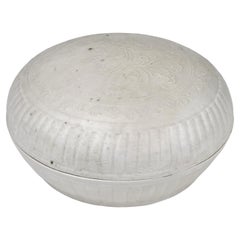
White-glazed Circular Box and Cover, Qing Dynasty, Kangxi Era, Circa 1690
Located in seoul, KR
White glazed box from the Qing dynasty Vung Tau cargo. An identical piece is included on page 459 of the Vung Tau catalog titled 'Christies Amsterdam 19...
Category
1690s Vietnamese Qing Antique South Korea
Materials
Ceramic, Porcelain
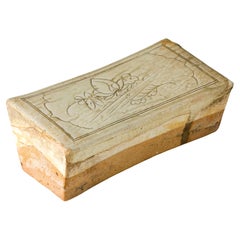
Cizhou Rectangular Pillow with Carved Decoration, Yuan Dynasty
Located in seoul, KR
Cizhou ware is known for its robust forms and freely applied decoration, often featuring a white slip under clear glaze. The pillow is rectangular, with a slightly curved top surface to accommodate the head of the sleeper. The decoration on this pillow features an incised design, delineated with fine lines to create a clear and simplistic representation. The motif includes floral elements, likely peony or chrysanthemum, and foliage, which were popular during the Song and Yuan periods. The carving is subtle yet skillful, showing the artistry and aesthetic preferences of the era.
Period : Yuan Dynasty, 13th-14th Century
Type : Pillow
Medium : Cizhou Ware
Provenance : Acquired in late 1990s from Hongkong
Reference :
1) Datong Museum - Cizhou Pillow...
Category
15th Century and Earlier Hong Kong Antique South Korea
Materials
Pottery, Stoneware
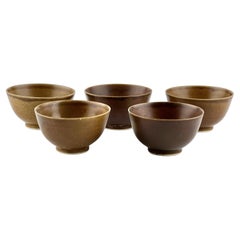
Brown Glazed Teabowls from Ca Mau Ship, Qing Dynasty, Yongzheng Era
Located in seoul, KR
These teabowls feature a simple yet elegant form, finished with a brown glaze that creates a smooth, subtle sheen. They have thin, evenly crafted walls and a small, stable footring t...
Category
18th Century Vietnamese Qing Antique South Korea
Materials
Ceramic
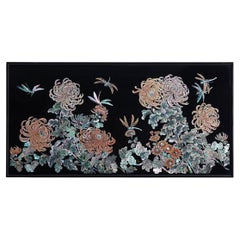
Handcrafted Painting on Wood Panel by Arijian Chrysanthemum 03
Located in Namyangju-si, KR
Wall Decor Handcrafted Mother of Pearl Chrysanthemum Painting on Wood Panel by Arijian.
Category
2010s South Korean South Korea
Materials
Wood
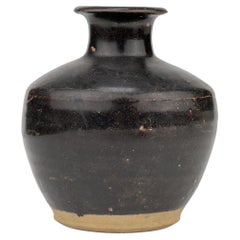
Black glazed bottle, Late Ming Era(16-17th century)
Located in seoul, KR
Black glazed bottle from the late Ming dynasty binh thuan cargo. An identical piece is included on page 146 of the Bin Thuan catalog titled 'The Age of Disco...
Category
16th Century Vietnamese Ming Antique South Korea
Materials
Pottery
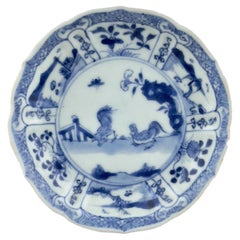
Chicken Pattern Blue and White Saucer c 1725, Qing Dynasty, Yongzheng Era
Located in seoul, KR
Two roosters are depicted with great precision and skill, surrounded by a landscape featuring rocks and a railing. The motif of roosters and natural elements is traditionally symboli...
Category
1720s Vietnamese Qing Antique South Korea
Materials
Ceramic, Porcelain
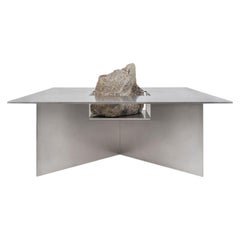
Contemporary Linear Stainless Steel Bench with Natural Stone by Lee Sisan
Located in Geneve, CH
Proportions of stone bench by Lee Sisan, 2020
Dimensions: W 96 x D 96 x H 35 cm
Materials: Stainless steel, natural stone.
Each piece is made to ...
Category
2010s South Korean Modern South Korea
Materials
Stone, Steel
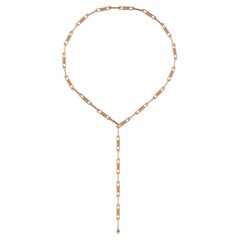
Multi-Cognac Diamonds Necklace of SOONHEE ( size S : Length 48 cm)
Located in 종로구, SO
** This product is made to order, and therefore, it is non-exchangeable and non-refundable.
** Due to the nature of gemstones, the actual color of the product may differ from the co...
Category
2010s South Korean Artist South Korea
Materials
White Diamond, Brown Diamond, 18k Gold
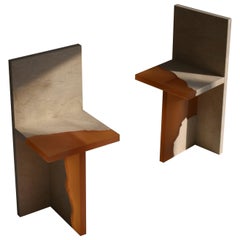
Set of Crystal Marble Fragment Chair by Jang Hea Kyoung
By Jang Hea Kyoung
Located in Geneve, CH
Set of crystal marble fragment chair by Jang Hea Kyoung
Artist: Jang Hea Kyoung
Materials: Crystal resin and marble
Dimensions: 33 x 34 x 74 cm
Ja...
Category
2010s Korean Organic Modern South Korea
Materials
Marble
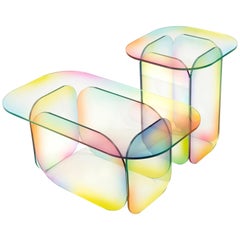
Set of 2 Candy Dichroic Glass Coffee Table Sculpted by Studio-Chacha
Located in Geneve, CH
Set of 2 candy Dichroic glass coffee table sculpted by Studio-Chacha
Dimensions: 40 x 40 x 56 cm
45 x 80 x 40 cm
Materials: Glass with film
Studi...
Category
2010s South Korean Modern South Korea
Materials
Glass
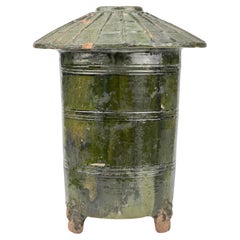
Funerary Model of a Granary, Han dynasty
Located in seoul, KR
Cylindrical vessel on three animal-shaped feet (dragon or snake), wall with profile grooves, roof. Ceramic with green transparent glaze. "Iridescence" is observed in surface.
Period...
Category
15th Century and Earlier Hong Kong Han Antique South Korea
Materials
Stoneware
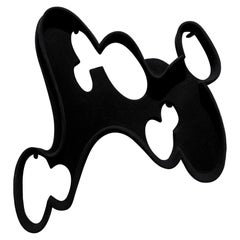
Pliability Decorative Object in Black Glazed Ceramic by Ain Choi
Located in Geneve, CH
Pliability Decorative Object in Black Glazed Ceramic by Ain Choi
Dimensions: D 9 x W 42 x H 48 cm.
Materials: Ceramic.
Waves are particularly fascinating to me among those topics. A...
Category
2010s South Korean Post-Modern South Korea
Materials
Ceramic
Two Glazed Court Attendants, Ming Period (1368-1644)
Located in seoul, KR
Two finely hollow-moulded terracotta statuettes from ancient China, dating to the Ming Dynasty. The figure is depicted standing, dressed in long, flowing robes, painted in vibrant blue or green and deep amber yellow. The hair is styled into an elaborate top-knot, painted in a muted brown. Areas left unpainted would have been 'cold-painted' after firing, contrasting with the vivid fired blue or green and amber pigments. The figure is shown with the left hand raised to the chest, as if holding something, possibly an offering or incense. Figurines like this were placed in tombs to guide the deceased on their journey to the afterlife.
The Ming Dynasty was known for its exceptional artistic achievements, partly due to its economic prosperity. Since the Han Dynasty, it was customary to bury terracotta miniatures of everyday objects with the deceased. These items, known as mingqi, or "spirit utensils" and "vessels for ghosts," were believed to help and assist the deceased in the afterlife. Mingqi were crafted in the form of cooking utensils, miniature replicas of houses, temples, furniture, and other items. Anthropomorphic and zoomorphic terracotta figures were also popular, designed to assist, entertain, and recreate the living world for the deceased.
Period: Ming Dynasty
Medium: Green/blue-glazed Pottery
Type: Figure
Provenance : Acquired in late 1990s from Hongkong
Reference :
1) Ancient & Oriental - Terracotta Tomb Attendants
(Type : Highly related)
2) La Maison De La Petite Sara S.r.l. - Archaeology section - A Black glazed Terracotta Statuette, Servant with Trumpet, Ming Dynasty
(Price realised : 700 GBP / Type : Highly related)
* Ming Dynasty Glazed Pottery Figures
Ming Dynasty glazed pottery figures are renowned for their bold color palette, intricate detailing, and lifelike forms, distinguishing them from earlier traditions. These figures, which depict officials, warriors, animals, and mythical creatures, are characterized by high-gloss lead-based glazes in green, amber, ochre, and sancai (three-color) combinations. The thickly applied glaze pools in recesses, creating depth and enhancing sculptural details. With dynamic postures, expressive facial features, and meticulously rendered drapery, these figures reflect the period’s advancement in ceramic craftsmanship, offering a greater sense of movement and realism compared to the rigid and stylized forms of earlier dynasties.
A defining characteristic of Ming glazed pottery is its elaborate surface detailing, often achieved through raised relief elements and contrasting glazes. Equestrian figures, for example, feature carefully sculpted saddles, harnesses, and decorative embellishments, while human figures are adorned with intricate robes and headdresses. The large scale of these tomb figures, often more imposing than those from previous periods, underscores the increasing importance of funerary art during the Ming era. Unlike later Qing Dynasty figures...
Category
15th Century and Earlier Hong Kong Ming Antique South Korea
Materials
Pottery

Brown-Glazed Moulded Box And Cover, Fujian Kiln, Yuan-Ming Dynasty
Located in seoul, KR
The circular domed cover moulded with a brown glaze that falls short of the straight foot. The pattern on the left features a central circular design with simple shapes and lines car...
Category
15th Century and Earlier Chinese Ming Antique South Korea
Materials
Pottery
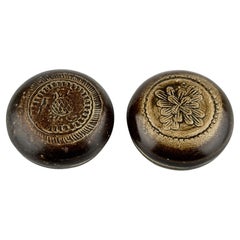
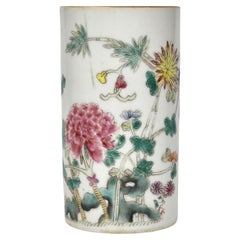
Famille Rose Hongxian Marked Sleeve Vase With Flowers, Republic Period
Located in seoul, KR
A stunning 20th-century Chinese Famille Rose vase, also known as a hatstand, from the Republic period, is adorned with a detailed Hongxian mark on the bottom. This vase features exqu...
Category
20th Century Hong Kong Qing South Korea
Materials
Ceramic, Porcelain
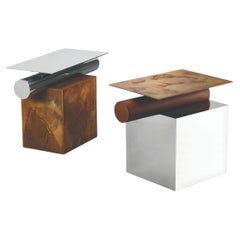
Set of 2 Gwol Side Tables by Lee Jung Hoon
Located in Geneve, CH
Set of 2 Gwol side table by Lee Jung Hoon
Dimensions: D80 x W33 x H52cm and D60 x W40 x H52 cm
Materials: Stainless steel, Iron Corrosion.
This work is designed under the theme ...
Category
2010s Korean Post-Modern South Korea
Materials
Stainless Steel, Iron

$15,876 / set
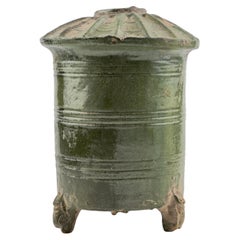
Funerary Model of a Granary, Han dynasty
Located in seoul, KR
Cylindrical vessel on three animal-shaped feet (dragon or snake), wall with profile grooves, roof. pottery with green lead glaze. "Iridescence" is observed in surface.
Period : Han...
Category
15th Century and Earlier Hong Kong Han Antique South Korea
Materials
Pottery
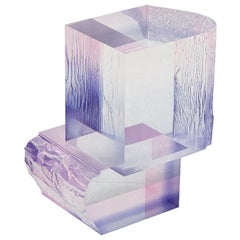
Crystal Series Raw Side Edition Acrylic Table, Pink/ Blue Ombre/ Transparent
Located in Beverly Hills, CA
Crystal Series is a work inspired from nature. Yoon was especially inspired by the sky’s beautiful and rich colors, specifically those from sunset and s...
Category
2010s Korean South Korea
Materials
Acrylic
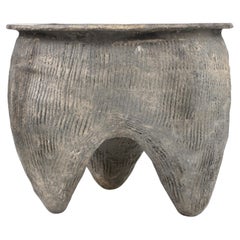
Tripod in the shape of a bronze vessel li, Zhou or Shang dynasty
Located in seoul, KR
The tri-lobed shape and combed ridges of this cooking pot increased heating efficiency by maximizing the vessel’s surface area. The shape of a bronze vessel li, with the body rising out of three hollow pointed legs to a wide moiuth with splayed-out rim. The exterior is covered with cord impressed pattern. The surface shows signs of oxidation from being buried in the soil for a long time.
Period: Zhou or Shang dynasty circa 1000 B.C.E.
Medium : Grey earthenware with impressed decoration
Type : Tripod vessel
Size : 29cm (Height) x 35cm(Diameter)
Condition : Good
Provenance : Acquired in late 1990s from Hongkong
Reference :
1) V&A Museum - ACCESSION NUMBER C.87-1954
2) Smithsonian National Museum of Asian Art - ACCESSION NUMBER F1984.13
3) The University of Chicago - OBJECT NUMBER 1989.1
4) The MET - Accession Number: 1972.275.5
5) Kyoto National Museum - Three-footed Earthenware Vessel
* Shang Dynasty Pottery (1600-1046 BCE)
The Shang dynasty, known for its significant advancements in bronze casting, also produced notable pottery. Shang pottery is characterized by its practical use and simple designs, reflecting the utilitarian needs of the society. The pottery from this period includes both coarse wares used for everyday purposes and fine, high-quality ceramics used in ritualistic contexts. Common forms include jars, bowls, and cups, often with a dark, burnished surface. One distinctive feature of Shang pottery is the use of gray clay, and many pieces display clear signs of oxidation, giving them a unique, mottled appearance. The decorations were typically incised or stamped, featuring geometric patterns, zoomorphic designs, and motifs that are also seen in Shang bronze...
Category
15th Century and Earlier Hong Kong Antique South Korea
Materials
Pottery
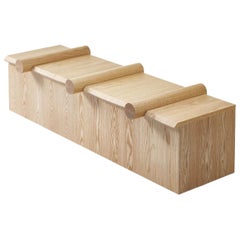
Heritage Giwa Sideboard by Lee Jung Hoon
Located in Geneve, CH
Heritage Giwa sideboard by Lee Jung Hoon
Dimensions: D 163.2 x W 53 x H 41.1 cm
Materials: Red oak
The Heritage series, created by designer Lee Jung-hoon is a collection of scul...
Category
2010s Korean Post-Modern South Korea
Materials
Oak
$15,347 / item
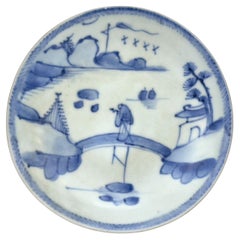
Passing Boat And Bridge
Blue And White Saucer C 1725, Qing Dynasty, Yongzheng
Located in seoul, KR
With a medallion of two boats sailing together, passing an island on which a solitary figure stands by or on a bridge, the rim with a narrow heringbone pattern, the reverse glazed ca...
Category
Late 17th Century Vietnamese Qing Antique South Korea
Materials
Ceramic, Porcelain
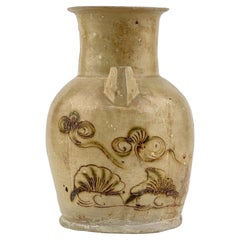
Changsha ewer, Tang Dynasty(618-907)
Located in seoul, KR
Changsha Ware has distinct and recognizable designs and motifs. Painted designs often depict flowers, vines, clouds and mountain landscapes. Some painting is simply splotches of colo...
Category
15th Century and Earlier Hong Kong Tang Antique South Korea
Materials
Stoneware
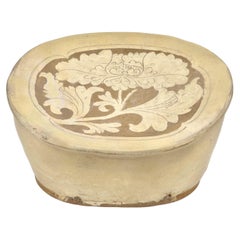
Cizhou carved bean-shaped pillow, Song-Jin Dynasty, 11th-12th century
Located in seoul, KR
Crafted from fine clay, the pillow's surface boasts a sophisticated carved design featuring a floral motif that is both symmetrical and organic. The interplay of the earthy tones and...
Category
15th Century and Earlier Hong Kong Chinoiserie Antique South Korea
Materials
Stoneware
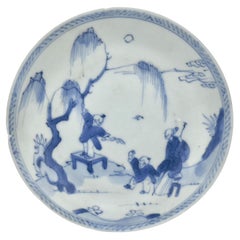
Leaf Passing Blue and White Saucer Circa 1725, Qing Dynasty, Yongzheng Reign
Located in seoul, KR
The ceramic portrays a tranquil scene set against a backdrop typical of the Shan Shui tradition, which emphasizes the symbiotic relationship between humans and nature. In the center ...
Category
1720s Vietnamese Qing Antique South Korea
Materials
Ceramic, Porcelain
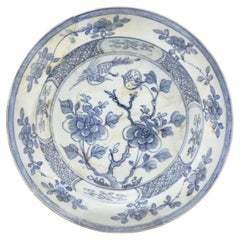
Blue and White Bowl Circa 1725, Qing Dynasty, Yongzheng Era
Located in seoul, KR
Bowl decorated with beautiful floral and bird pattern. Cracks on surface due to underwater excavation condition. Relatively rare piece among Ca Mau ship pieces.
Period : Qing Dynast...
Category
1720s Vietnamese Qing Antique South Korea
Materials
Ceramic, Porcelain
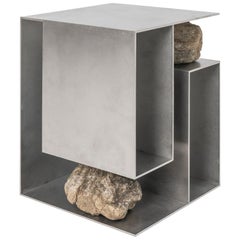
Contemporary Linear Stainless Steel Table with Natural Stones by Lee Sisan
Located in Geneve, CH
Proportions of stone stool 04 by Lee Sisan
2020
Dimensions: W 36 x D 36 x H 45 cm
Materials: Stainless steel, natural stone
Each piece is made to order and uses natural stones, so...
Category
2010s South Korean Modern South Korea
Materials
Stone, Steel
Heritage Gwol Stool by Lee Jung Hoon
Located in Geneve, CH
Heritage Gwol Stool by Lee Jung Hoon
Dimensions: D46 x W16.3 x H43.5cm
Materials: Stainless Steel, Steel, Granite, Maple.
The Heritage series, created by designer Lee Jung-hoon...
Category
2010s Korean Post-Modern South Korea
Materials
Granite, Steel, Stainless Steel
$4,762 / item
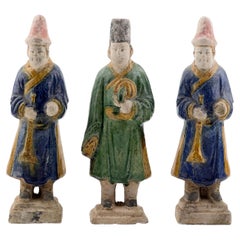
Three Glazed Figures of Musicians, Ming Period (1368-1644)
Located in seoul, KR
Statues of Chinese musicians crafted from terracotta, featuring glazes in green, blue with nice condition. Set on rectangular bases. Compared to other figures, musician figures are relatively rare, two figures with distinctive instrument from that era.
Period: Ming Dynasty
Medium: Green and Blue glazed Pottery
Type: Figure
Provenance : Acquired in early 2000s from Hongkong
Reference :
1) V&A Museum - Accession number C.1501913
(Type : Closely related)
* Ming Dynasty Glazed Pottery Figures
Ming Dynasty glazed pottery figures are renowned for their bold color palette, intricate detailing, and lifelike forms, distinguishing them from earlier traditions. These figures, which depict officials, warriors, animals, and mythical creatures, are characterized by high-gloss lead-based glazes in green, amber, ochre, and sancai (three-color) combinations. The thickly applied glaze pools in recesses, creating depth and enhancing sculptural details. With dynamic postures, expressive facial features, and meticulously rendered drapery, these figures reflect the period’s advancement in ceramic craftsmanship, offering a greater sense of movement and realism compared to the rigid and stylized forms of earlier dynasties.
A defining characteristic of Ming glazed pottery is its elaborate surface detailing, often achieved through raised relief elements and contrasting glazes. Equestrian figures, for example, feature carefully sculpted saddles, harnesses, and decorative embellishments, while human figures are adorned with intricate robes and headdresses. The large scale of these tomb figures, often more imposing than those from previous periods, underscores the increasing importance of funerary art during the Ming era. Unlike later Qing Dynasty figures...
Category
15th Century and Earlier Hong Kong Ming Antique South Korea
Materials
Pottery
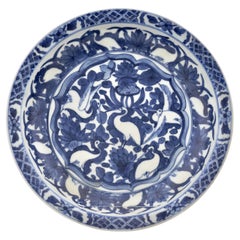
Blue and White
Cranes in pond
Dish, Qing Dynasty, Kangxi Era, Circa 1690
Located in seoul, KR
At the center, it features five elegant cranes depicted against a pond setting, each portrayed in varying postures. The background harmoniously incorporates lotus flowers and other aquatic plants. Cranes in East Asian culture symbolize purity, longevity, and loyalty, and their depiction here enhances the themes of peace and harmony. The outer rim of the plate is encircled by a continuous lattice border, within which are alternately placed floral and geometric patterns, delicately executed.
Period : Qing Dynasty, Kangxi Period
Production Date : 1690-1699
Made in : Jingdezhen
Destination : Netherland
Found/Acquired : Southeast Asia , South China Sea, Vung Tau ship
Size : 20cm (Diameter) x 3.5cm (Height)
Condition : Excellent
Reference : Double checked with reference to the original catalogues
1) Christies Amsterdam 1992 - Vung Tau Cargo / Christies
2) Qing Dynasty Export Blue and White(淸代外销靑花瓷) - Vung Tau Cargo Catalogue / Guangxi Fine Art Publishing House
3) Asian Ceramic Found along Maritime Silk Route / National Maritime Museum of Korea
* Vung Tau Cargo Porcelain...
Category
1690s Vietnamese Qing Antique South Korea
Materials
Ceramic, Porcelain
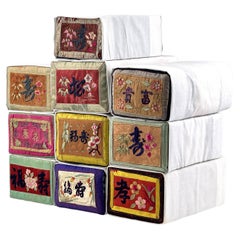
Ten Auspicious Korean Traditional Embroidered Pillows
Located in seoul, KR
Ten traditional embroidered pillows given by a bride to her husband as part of her dowry during marriage in Korea's modern era. These embroidered designs convey auspicious messages r...
Category
19th Century Korean Antique South Korea
Materials
Fabric
Apsara Carved Limestone Stele with Extremely Rare
Oolitic silica
, Wei Dynasty
Located in seoul, KR
The small dots apparent on the surface of this stone stele are indicative of an oolitic silica structure or oolites formed in what is known as "Oolitic chert." The same phenomenon can also be observed in the Tang Dynasty Limestone Stele at the Asian Art Museum in San Francisco. This formation occurs gradually over the course of thousands to several hundred thousand years within the soil or sea. Similar structures are commonly found in ancient fossils or arrowheads. Ancient peoples chose certain types of stones for tool-making, preferring materials that were easier to work with and could be sharpened effectively. This predilection is believed to be the reason why oolitic silica structures are frequently found in ancient arrowheads.
The development of these oolitic silica structures is a very slow process involving the accumulation of siliceous layers around particulates. This phenomenon, where silica reacts with water to form layers around a nucleus, occurs under specific chemical and physical conditions. Typically, it takes thousands to hundreds of thousands of years for silica to gradually accumulate in layers through contact with moisture, a process that requires a precise harmony of many variables, including chemical conditions, temperature, pressure, pH, and biological activity.
It is known that no other stele with such a silica structure has been identified to date, serving not only as evidence of its authenticity but also significantly enhancing the rarity of this piece.
This stele appears to be a stone sculpture of an apsara, a celestial nymph from Buddhist and Hindu traditions. Despite its fragmentary state, the sculpture conveys grace and movement. The apsara is captured in a dynamic pose, perhaps once part of a larger tableau, playing a flute-like instrument.
The black stand was made in Hong Kong at the time of the acquisition.
Date : Northern Wei/Eastern Wei Dynasty(386~550)
Size : 22cm (Height) x 16cm(diameter)
Condition : Good (oolites dots on surface)
Provenance : Acquired in late 1990s from Hongkong
Reference :
1) Sotheby's New York 20 March 2018 - Jingyatang Treasures Of Chinese Buddhist...
Category
15th Century and Earlier Hong Kong Han Antique South Korea
Materials
Stone, Limestone

Diamond Link Bracelet of SOONHEE (Size 15.5 ~ 19.5cm)
Located in 종로구, SO
** This product is made to order, and therefore, it is non-exchangeable and non-refundable.
** Due to the nature of gemstones, the actual color of the product may differ from the co...
Category
2010s South Korean Artist South Korea
Materials
Brown Diamond, 18k Gold
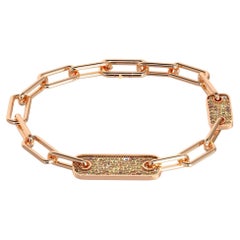
$10,600 / item
Layered Steel Coffee Table i by Hyungshin Hwang
Located in Geneve, CH
Layered steel coffee table I by Hyungshin Hwang
Dimensions: D 138 x W 138 x H 42 cm
Materials: stainless steel
Layered Series is the main theme and concept of work of Hwang, who...
Category
2010s Korean Post-Modern South Korea
Materials
Stainless Steel
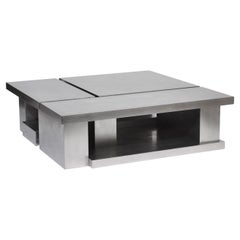
$29,107 / item
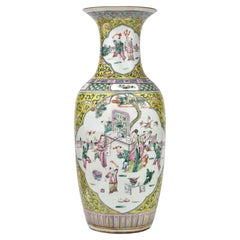
A large yellow ground famille rose vase, Late Qing Period.
Located in seoul, KR
Porcelain painted in overglaze polychrome enamels, yellow ground.
Period: Qing Dynasty(19th century)
Type: Vase
Medium: Famille rose
Size : 58cm(Height) x 19.5cm(Mouth Diameter)
Con...
Category
19th Century East Asian Qing Antique South Korea
Materials
Ceramic
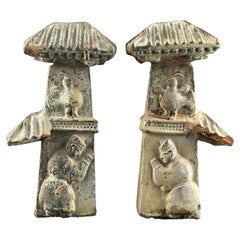
Gate Pillar, Han Dynasty(206BC-220AD)
Located in seoul, KR
The Han Dynasty gate pillar held by the Asian Art Museum in San Francisco and this gate pillar are the only known examples of their type worldwide, highlighting its extraordinary rar...
Category
15th Century and Earlier Hong Kong Han Antique South Korea
Materials
Earthenware
$7,980 / set
Changsha Bowl from Belitung Ship, Tang Dynasty
Located in seoul, KR
The edges have been dipped in four places with brown, probably iron-oxide. The well of the bowl is freely painted in deep green and coffee coloured brown. These are characteristic fe...
Category
15th Century and Earlier Indonesian Tang Antique South Korea
Materials
Pottery
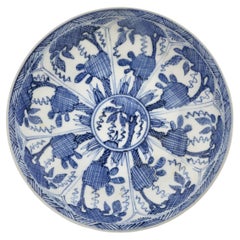
Blue and White Saucer, Qing Dynasty, Kangxi Era, Circa 1690
Located in seoul, KR
It features a complex design with a central circular motif surrounded by eight petal-like sections, each intricately adorned with various botanical and geometric patterns, creating a symmetrical arrangement.
The number 8 in Chinese culture is associated with prosperity and is considered very auspicious. This may reflect the traditional Chinese cosmological concept of the "Bagua," which are eight trigrams used in Taoist philosophy to represent fundamental principles of reality, seen in various aspects of Chinese culture, including the I Ching and Feng Shui.
The central circle with radiating petals is also a representation of perfect geometric harmony, reflecting the balance and unity which are key elements in Chinese aesthetics. The use of symmetry and balance is seen as a way to represent the harmony of the universe.
Period : Qing Dynasty, Kangxi Period
Production Date : 1690-1699
Made in : Jingdezhen
Destination : Netherland
Found/Acquired : Southeast Asia , South China Sea, Vung Tau ship
Size : 12.5cm (Diameter)
Condition : Excellent
Reference : Double checked with reference to the original catalogues
1) Christies Amsterdam 1992 - Vung Tau Cargo / Christies
2) Qing Dynasty Export Blue and White(淸代外销靑花瓷) - Vung Tau Cargo Catalogue / Guangxi Fine Art Publishing House
3) Asian Ceramic Found along Maritime Silk Route / National Maritime Museum of Korea
* Vung Tau Cargo Porcelain...
Category
1690s Vietnamese Qing Antique South Korea
Materials
Ceramic
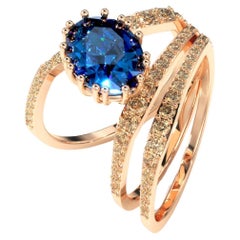
London Blue Topaz ring of SOONHEE (Size 44.2~62.7)
Located in 종로구, SO
** This product is made to order, and therefore, it is non-exchangeable and non-refundable.
** Due to the nature of gemstones, the actual color of the product may differ from the co...
Category
2010s South Korean Artist South Korea
Materials
Brown Diamond, Blue Topaz, 18k Gold
$4,000 / item
A Large Straw Glazed Pottery Figure of a Solider
Located in seoul, KR
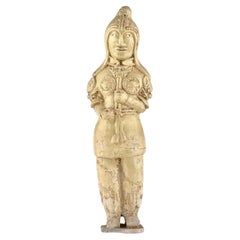
This well-modeled ceramic figure depicts a Scythian warrior in full armor, likely serving as a standard bearer. The warrior stands upright on a thin rectangular base, with clenched f...
Category
15th Century and Earlier Hong Kong Tang Antique South Korea
Materials
Straw
Rare Cizhou
Mandarin duck and Reishi mushroom
Painted Pillow, Jin-Song Dynasty
Located in seoul, KR
Mandarin ducks symbolize eternal love and fidelity in East Asian culture, often representing marital harmony as they are believed to mate for life. Reishi mushrooms, known as symbols of longevity and health, are revered in traditional Asian medicine for their association with immortality and have been used for centuries to promote vitality and strengthen the immune system.
The orange glaze is commonly found on Cizhou-type tiger pillows. The attached materials indicate that this tiger pillow is from the same period and shares the same color tone as the one housed in the Baoji Bronzeware Museum, a national museum located in Shaanxi Province. Considering the glaze color, painting style, and shape, it is speculated that this piece was used by the imperial court.
Period : Jin-Song Dynasty(12-13th century)
Type : Pillow
Medium : Cizhou Ware
Size : 28 cm(Width), 30cm(Vertical), 16cm(Height)
Provenance : Acquired in late 1990s from Hongkong
Reference
1) Christies Hongkong 9 OCT 2019 - The Pavilion Sale - Chinese Ceramics and Works of Art Including the Quek Kiok Lee Collection
(Price realised : HKD 225,000 / Type : related)
2) The Baoji Bronzeware Museum, Shaanxi Province - Tiger Cizhou Pillow...
Category
15th Century and Earlier Hong Kong Antique South Korea
Materials
Pottery
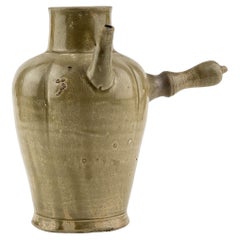
Celadon Ewer with Straight Handle, Tang to Northern Song Dynasty
Located in seoul, KR
Celadon-glazed ewer characterized by its simple and functional design. The piece features a straight handle extending horizontally from the body and a short spout for pouring liquids...
Category
15th Century and Earlier Hong Kong Tang Antique South Korea
Materials
Celadon
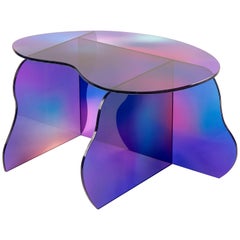
Aurora Dichroic Glass Table Sculpted by Studio-Chacha
Located in Geneve, CH
Dichroic glass table sculpted by Studio-Chacha
Dimensions: 85.5 x 69 x 40 cm
Materials: Glass, film
Studio-Chacha is a high-end art furniture...
Category
2010s South Korean Modern South Korea
Materials
Glass
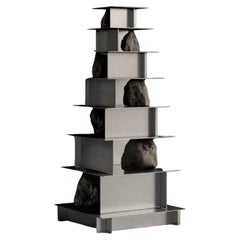
Proportions of Stone Shelf Level 07 by Lee Sisan
Located in Geneve, CH
Proportions of stone shelf level 07 by Lee Sisan
Dimensions: W 76 x D 76 x H 160 cm
Materials: stainless steel, natural stone
Each piece is made to or...
Category
2010s South Korean Modern South Korea
Materials
Stone, Steel
$37,309 / item
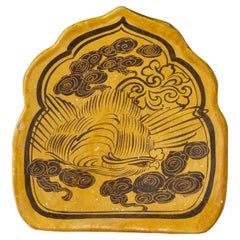
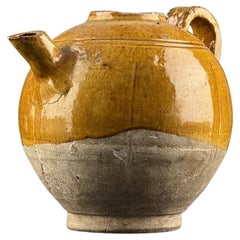
Amber-Glazed Pottery Ewer, Tang-Liao Dynasty (7-12th Century)
Located in seoul, KR
This historical piece features a robust, rounded body with a broad shoulder tapering down to a narrower base. The glaze, characterized by its rich amber hue, covers most of the vessel, while the lower part remains unglazed, exposing the rough, textured clay beneath.
Date : Tang-Liao Dynasty(7-12th century)
Type : Amber-glazed pottery
Provenance : Acquired in late 1990s from Hongkong
Reference :
1) Christies Newyork 1–15 DEC 2015 - Exquisite Splendor: Chinese Ceramics And Works Of Art - Lot 49
(Price realised : 5,250 USD / Type : Closely related)
2) Christies Newyork 18–27 MAR 2015 - The Collection of Robert Hatfield Ellsworth...
Category
15th Century and Earlier Hong Kong Tang Antique South Korea
Materials
Pottery
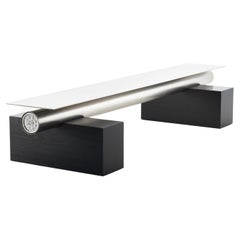
Heritage Bench by Lee Jung Hoon
Located in Geneve, CH
Heritage Bench by Lee Jung Hoon
Dimensions: D 60 x W 200 x H 36.5 cm
Materials: Granite, Ash, Stainless Steel.
The Heritage series, created by designer...
Category
2010s Korean Post-Modern South Korea
Materials
Granite, Stainless Steel
$11,907 / item
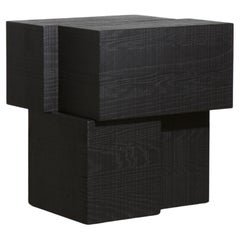
Black Layered Oak Wood Stool by Hyungshin Hwang
Located in Geneve, CH
Black layered oak wood stool by Hyungshin Hwang.
Dimensions: D 36 x W 30 x H 45 cm.
Materials: ebonized red oak.
Layered Series is the main theme a...
Category
2010s Korean Post-Modern South Korea
Materials
Oak
$5,292 / item
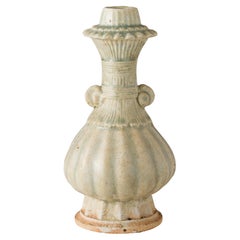
Porcelain with transparent pale-bluish (qingbai-type) glaze, Yuan Dynasty
Located in seoul, KR
This piece is shaped like a lotus bud, featuring a gracefully undulating body and intricate geometric patterns. The neck is adorned with finely incised dense lines, adding visual var...
Category
15th Century and Earlier Hong Kong Antique South Korea
Materials
Ceramic, Porcelain
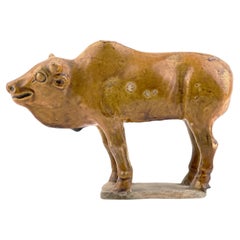
Amber-Glazed Pottery Figure of Sacred Bull
Located in seoul, KR
Naturalistically modelled, standing on a rectangular base with head facing forward and short tail curled to one side, incised details and covered overall in a rich chestnut glaze sav...
Category
15th Century and Earlier Hong Kong Tang Antique South Korea
Materials
Pottery
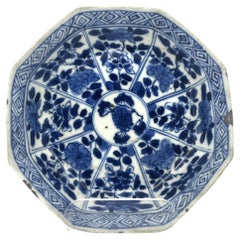
Mid-size Octagonal Saucer, Qing Dynasty, Kangxi era, circa 1690.
Located in seoul, KR
The design features a central medallion surrounded by eight panels, each intricately painted with traditional Chinese botanical and floral motifs.
The number 8 in Chinese culture is associated with prosperity and is considered very auspicious. This may reflect the traditional Chinese cosmological concept of the "Bagua," which are eight trigrams used in Taoist philosophy to represent fundamental principles of reality, seen in various aspects of Chinese culture, including the I Ching and Feng Shui.
The central circle with radiating petals is also a representation of perfect geometric harmony, reflecting the balance and unity which are key elements in Chinese aesthetics. The use of symmetry and balance is seen as a way to represent the harmony of the universe.
Period : Qing Dynasty, Kangxi Period
Production Date : 1690-1699
Made in : Jingdezhen
Destination : Netherland
Found/Acquired : Southeast Asia , South China Sea, Vung Tau...
Category
1690s Vietnamese Qing Antique South Korea
Materials
Ceramic
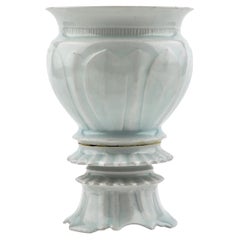
Qingbai Lotus Censer, Song Dynasty
Located in seoul, KR
This exquisite Qingbai piece, acquired in Hong Kong in the late 1990s, is a high-quality artifact from the Southern Song Dynasty, likely produced at the Hutian Kiln. The base exhibit...
Category
15th Century and Earlier Hong Kong Antique South Korea
Materials
Ceramic
Changsha Bowl from Belitung Ship, Tang Period
Located in seoul, KR
The edges have been dipped in four places with brown, probably iron-oxide. The well of the bowl is freely painted in deep green and coffee coloured brown. These are characteristic fe...
Category
15th Century and Earlier Indonesian Tang Antique South Korea
Materials
Pottery

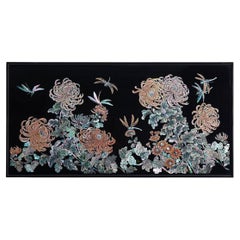
Wall Decor Handcrafted Painting on Wood Panel by Arijian Chrysanthemum 03
By Jian Yoo, Arijian
Located in Namyangju-si, KR
Wall Decor handcrafted mother of pearl Chrysanthemum painting on wood panel by Arijian.
Category
2010s South Korean South Korea
Materials
Wood
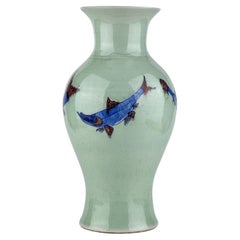
Underglaze Blue and Copper Red Yuhuchunping, Late Qing Dynasty
Located in seoul, KR
This Qing Dynasty Yuhuchunping features a soft pale green glaze applied evenly across its surface, exhibiting fine crackles that enhance its aged character. The vase has a gracefully...
Category
19th Century Hong Kong Qing Antique South Korea
Materials
Ceramic
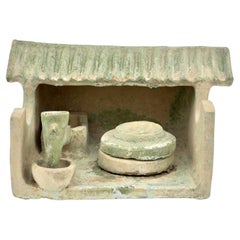
Milling Shed pottery with Green Glaze, Eastern Han Dynasty
Located in seoul, KR
Made from the standard orange earthenware body of Han green glazed tomb models, this miniature milling station features a circular millstone and a foot...
Category
15th Century and Earlier Hong Kong Han Antique South Korea
Materials
Earthenware, Pottery