South Korea - Asian Art and Furniture

to
11,214
5,363
286
7
4
266
16
4
7
271
72
51
42
30
293
197
143
96
88
293
287
293
3
1
1
Item Ships From: South Korea
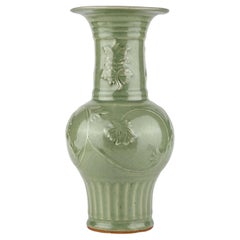
A Rare Longquan Celadon Peony Vase Yuan-Ming Dynasty
Located in seoul, KR
This vase features a traditional vase coated with a clear and rich green celadon glaze. A fine network of crazing covers the surface. The neck is adorned with raised vine motifs, whi...
Category

15th Century and Earlier East Asian Ming Antique South Korea - Asian Art and Furniture

Materials

Celadon

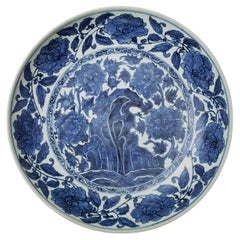
Large Rare Blue and White with Rockwork and Flowers Dish, Early Qing dynasty
Located in seoul, KR
This dish features a rockwork design that was popular during the Mid to Late Ming dynasties. The blue-and-white underglaze effectively captures the vibrant tones typical of the late Ming and early Qing periods. The detailed depiction of flowers, leaves, and rockwork is both rich and vivid. Due to its excavation from the seabed, the glaze in the central area shows signs of wear, particularly compared to the more preserved sides of the dish. Although it was soaked in hot water to remove the salt at the time of acquisition, slight salt residue remains on the surface. Period : Qing Dynasty(Presumably Kangxi or Yongzheng Period) Type : Dish Medium : Blue and White glaze Condition : Excellent(slight salt residue remains on the surface, and the glaze is worn primarily around the edges.) Provenance: Southeast Asia, South China Sea from Shipwreck in early 2000s Reference : 1) Christies Newyork 22 MAR 2018 - The Studio of the Clear Garden: Chinese Ceramics and Works of Art - Lot 604 (Price realised : USD 732,500 / Type : related - Ming style) 2) Sotheby's London 4 November 2020 - Imperial Porcelain – A Private Collection - Lot 19 (Price realised : GBP 75,600 / Type : related - Yuan style) 3) Asian Art Museum, San Francisco - Object number B60P88 (Type : related - Ming style) 4) Art Institute Chicago - Reference Number 1997.390 - Large Foliate Dish with Garden Rock and Plants (Type : Closely related) * Yuan-Ming Style from Qing Dynasty During the Qing dynasty, many ceramics were produced that imitated the styles of the Ming and Yuan dynasties. This practice was not mere imitation but a creative endeavor to inherit and innovate upon past techniques and styles. Qing dynasty ceramicists mastered the exceptional techniques of Ming and Yuan ceramics and used them as a foundation to develop more advanced works. Particularly, Yuan dynasty blue and white porcelain...
Category

Early 18th Century Vietnamese Qing Antique South Korea - Asian Art and Furniture

Materials

Ceramic, Porcelain

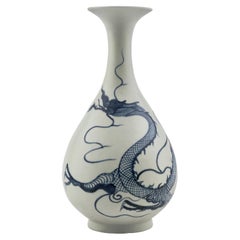
Blue And White Yuan-style ‘Dragon’ Bottle Vase, Yuhuchunping, Early Qing dynasty
Located in seoul, KR
The vase is delicately potted featuring a pear-shaped body that rests on a slightly flared foot and extends upward into a trumpet-shaped neck. Its exterior showcases a dynamic, three-clawed dragon in stride amidst flames. This piece reflects a similar style to Yuan dynasty Yuhuchunping dragon vases, while reinterpreting certain details, such as the sharp and simplified shape of the dragon's head, the distinctive straight design of its claws, and the intricate depiction of the dragon’s scales. The sticker on the base indicates that the absolute age was determined through radiological mechanical appraisal using the quantum absolute dating method, with the results pointing to the early 18th century. Period : Qing Dynasty(Presumably Kangxi or Yongzheng Period) Type : Yuhuchunping Medium : Blue and White glaze Condition : Excellent(slight salt residue remains on the surface, and the glaze is worn primarily around the edges, such as mouth and base) Provenance: Southeast Asia, South China Sea from Shipwreck in early 2000s Reference : 1) Christies Hong Kong 26 SEP 2024 - Lot 2 (Price realised : 819,000 HKD / Type : related) * Yuan-Ming Style from Qing Dynasty During the Qing dynasty, many ceramics were produced that imitated the styles of the Ming and Yuan dynasties. This practice was not mere imitation but a creative endeavor to inherit and innovate upon past techniques and styles. Qing dynasty ceramicists mastered the exceptional techniques of Ming and Yuan ceramics and used them as a foundation to develop more advanced works. Particularly, Yuan dynasty blue and...
Category

Early 18th Century Vietnamese Qing Antique South Korea - Asian Art and Furniture

Materials

Porcelain

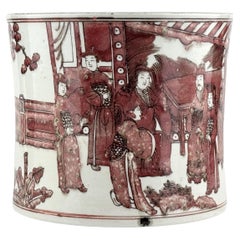
Copper Red Brushpot, Qing Dynasty, Kangxi Mark
Located in seoul, KR
This porcelain brush pot, crafted on a white body, is delicately decorated with copper red (hongcai 紅彩), depicting a figure in traditional attire amidst a landscape of pine trees, ro...
Category

Early 18th Century East Asian Qing Antique South Korea - Asian Art and Furniture

Materials

Copper

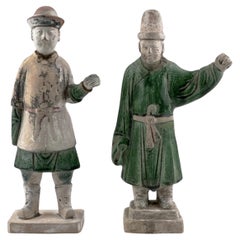
Two Figures of Attendants, Ming Period(1368-1644)
Located in seoul, KR
Statues of attendants crafted from terracotta, featuring glazes in green, Set on rectangular bases. Period: Ming Dynasty Medium: Glazed Pottery Type: Figure Condition : Excellent(It has soil on it, which is presumed to be evidence of excavation) Provenance : Acquired in late 1990s from Hongkong Reference : 1) Indianapolis Museum of Art - Dinastia ming, figure maschili, 1368-1644 (Type : Closely related) 2) V&A Museum - Accession number FE.295:1, 2-2005 (Type : Closely related) 3) Sotheby's 01 May 2007 - The Collection Of Paul Otto Taubert & Jewellery And Decorative Arts - Lot 233 (Price range : 5,000 - 7,000 AUD / Type : Closely related) 4) Asian Art Museum, San Francisco - Object number B60P1631 - Standing Man Tomb Figure * Ming Dynasty Glazed Pottery Figures Ming Dynasty glazed pottery figures are renowned for their bold color palette, intricate detailing, and lifelike forms, distinguishing them from earlier traditions. These figures, which depict officials, warriors, animals, and mythical creatures, are characterized by high-gloss lead-based glazes in green, amber, ochre, and sancai (three-color) combinations. The thickly applied glaze pools in recesses, creating depth and enhancing sculptural details. With dynamic postures, expressive facial features, and meticulously rendered drapery, these figures reflect the period’s advancement in ceramic craftsmanship, offering a greater sense of movement and realism compared to the rigid and stylized forms of earlier dynasties. A defining characteristic of Ming glazed pottery is its elaborate surface detailing, often achieved through raised relief elements and contrasting glazes. Equestrian figures, for example, feature carefully sculpted saddles, harnesses, and decorative embellishments, while human figures are adorned with intricate robes and headdresses. The large scale of these tomb figures, often more imposing than those from previous periods, underscores the increasing importance of funerary art during the Ming era. Unlike later Qing Dynasty figures...
Category

15th Century and Earlier Hong Kong Ming Antique South Korea - Asian Art and Furniture

Materials

Pottery

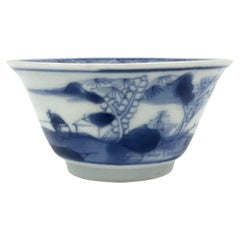
Riverscape Blue and White Teabowl, Circa 1725, Qing Dynasty, Yongzheng Reign.
Located in seoul, KR
The serene landscape and leisure activity of fishing are meticulously captured in cobalt blue on the porcelain's white surface, suggesting the value placed on harmony with the natura...
Category

1720s Vietnamese Qing Antique South Korea - Asian Art and Furniture

Materials

Ceramic

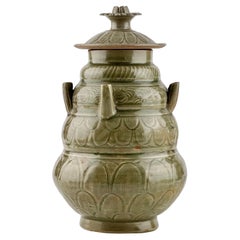
A Longquan Celadon Five-spouted Jar, Sui-Northern Song Dynasty
Located in seoul, KR
The jar features a round body with well-proportioned four distinct tiers and a short, stable foot. The surface is coated in a deep green Longquan celadon glaze, showcasing the sprout...
Category

15th Century and Earlier Hong Kong Antique South Korea - Asian Art and Furniture

Materials

Celadon

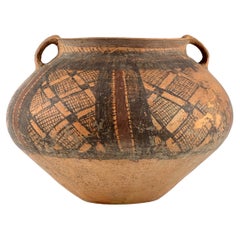
Neolithic Pottery Jar, Majiayao culture, 3rd-2nd Millenium BC
Located in seoul, KR
Fine-grained, buff-colored clay. Potted thin. Upper part of body painted with symbolic patterns in black and chocolate brown. Majiayao culture, Banshan type, 3rd millennium BC Peri...
Category

15th Century and Earlier Hong Kong Antique South Korea - Asian Art and Furniture

Materials

Earthenware, Pottery

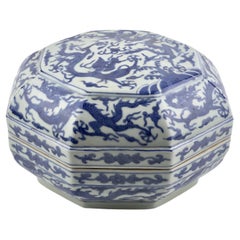
A Rare Blue And White Octagonal Box And Cover, Ming Dynasty Wanli Six-Character
Located in seoul, KR
Numerous similar octagonal blue and white boxes with Wanli, Jiajing marks are housed in prestigious museum collections. An example in the Tokyo National Museum is featured in Illustr...
Category

16th Century Hong Kong Ming Antique South Korea - Asian Art and Furniture

Materials

Ceramic

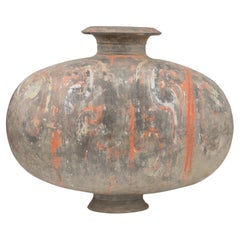
Large Cocoon-shaped jar with cloud-scroll design, Han Dynasty
Located in seoul, KR
This jar would have served as a mortuary object (mingqi), placed in a tomb as a substitute for the more valuable bronze and lacquer vessels used in daily life. Along with a variety o...
Category

15th Century and Earlier Hong Kong Han Antique South Korea - Asian Art and Furniture

Materials

Pottery

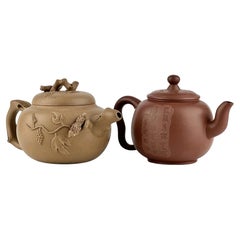
Two Yixing Teapots and Covers
Located in seoul, KR
Both Yixing Zisha teapots appear to be modern-Republic era pieces. Yixing Zisha teapots are made from rare Zisha (紫砂) clay, which is exclusively mi...
Category

20th Century East Asian South Korea - Asian Art and Furniture

Materials

Pottery

Two Annamese Miniature Kettle, 15th century, Le Dynasty
Located in seoul, KR
These 15th-century Le Dynasty ceramic vessels from northern Vietnam feature distinct designs. One is beige with faint blue floral patterns, a rounded body, and an elongated spout. Th...
Category

15th Century and Earlier Vietnamese Antique South Korea - Asian Art and Furniture

Materials

Ceramic

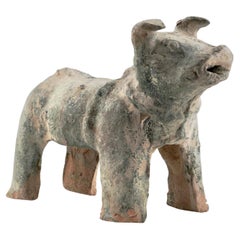
Green Glazed Red Pottery Figure of Dog
Located in seoul, KR
The dog faces forward, with clearly defined eyes that stand out. Its ears are slightly curled, giving the impression of a relaxed, natural stance. The collar around its neck, connect...
Category

15th Century and Earlier Hong Kong Han Antique South Korea - Asian Art and Furniture

Materials

Pottery

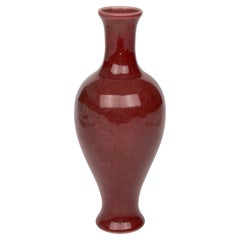
Copper Red Glazed Vase, Late Qing Period, Guangxu Era
Located in seoul, KR
Qing Dynasty, Guangxu mark and of the period. The vase features a classic shape with a long, smooth body and a narrow opening. It is coated with a glossy, crimson glaze, often referr...
Category

19th Century East Asian Qing Antique South Korea - Asian Art and Furniture

Materials

Porcelain, Ceramic

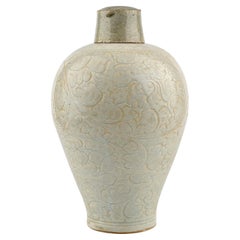
A Qingbai Carved Meiping Porcelain, Song Dynasty
Located in seoul, KR
The vase features broad shoulders and a tapering body. Its surface is finely carved with scrolling foliage and lotus motifs, accentuated by precise incised lines beneath a soft bluis...
Category

15th Century and Earlier East Asian Antique South Korea - Asian Art and Furniture

Materials

Ceramic, Porcelain

Small Celadon Chrysanthemum Dish, Five Dynasties/Song Dynasty
Located in seoul, KR
Potted with the fluted sides rising from a recessed base, carved to the interior with Chrysanthemum, covered overall with a grayish-green glaze, save for a ring to the underside left unglazed to reveal the gray stoneware...
Category

15th Century and Earlier Hong Kong Ming Antique South Korea - Asian Art and Furniture

Materials

Celadon

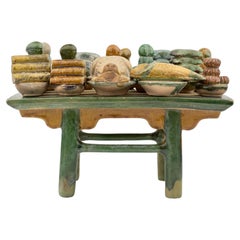
Green and Ochre Glazed Altar Table with Offerings, Ming Dynasty, 15~16th Century
Located in seoul, KR
The table bearing pig head, rice cakes, dishes of meat, fish and fruit. Known as Mingqi, these terracotta models were customarily included in Chinese burial practices, particularly among the affluent, to aid the deceased in their journey through the afterlife. This tradition extends back to the Neolithic Period. A unique terracotta funeral table...
Category

15th Century and Earlier Hong Kong Ming Antique South Korea - Asian Art and Furniture

Materials

Pottery

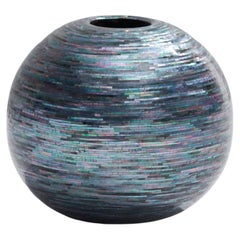
Blue Black Mother-of-Pearl Wooden Object Vase 02
By Jian Yoo, Arijian
Located in Namyangju-si, KR
Decorative handcrafted vase with mother-of-pearl inlay.
Category

2010s South Korean South Korea - Asian Art and Furniture

Materials

Wood

Rare annamese cream glazed ewer, Vietnam, 11-15th century
Located in seoul, KR
Famous annamese cream glazed ceramic ewer covered with a cream glaze. Traces of excavation are clearly visible in the glaze. Dates : Presumably Ly Dynasty (11-13th century) Region ...
Category

15th Century and Earlier Vietnamese Antique South Korea - Asian Art and Furniture

Materials

Ceramic, Stoneware

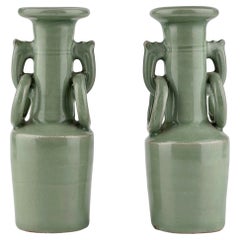
Pair of Celadon Vases with Double Handles, Song-Yuan
Located in seoul, KR
These tall-necked vases feature gently flared rims and double dragon-form handles on the shoulders, each suspending a large, free-moving ring. The surfaces are covered with a lustrou...
Category

15th Century and Earlier East Asian Antique South Korea - Asian Art and Furniture

Materials

Celadon

Japanese Arita Kraak type Dish, Mid-17th century, Edo Period
Located in seoul, KR
This piece was created in Japan presumably during the second half of the 17th century, with two archaic-style kanji characters, "酬酬" (shu shu), engraved on the bottom. A identical piece is housed in the National Museum of Warsaw. Period : Edo Period, Japan Date : 17th century Provenance : Acquired in late 1990s from Hongkong Reference : National Museum of Warsaw - Inventory Number SKAZsz 1230 MNW (Type : Highly related) * Japanese Edo Period Kraak The Japanese 17th...
Category

17th Century Japanese Antique South Korea - Asian Art and Furniture

Materials

Ceramic

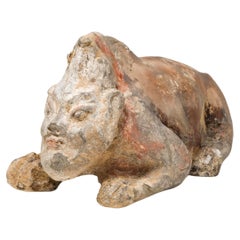
Guardian(Half human half beast) Pottery Figure, Northern Wei-Tang Dynasty
Located in seoul, KR
This guardian figure represents a fusion of human and beast, a common motif symbolizing protection in Chinese lore. Crafted from pottery, the figure is a testament to the era's sculp...
Category

15th Century and Earlier Hong Kong Han Antique South Korea - Asian Art and Furniture

Materials

Pottery

Large Rare Riverscapes Pattern Baluster Vase, Qing Dynasty, Kangxi, circa 1690
Located in seoul, KR
Large rare vase painted with petal-shaped panels of riverscapes pattern. Period : Qing Dynasty, Kangxi Period Production Date : 1690-1699 Made in : Jingdezhen Destination : Netherland Found/Acquired : Southeast Asia , South China Sea, Vung Tau...
Category

1690s Vietnamese Qing Antique South Korea - Asian Art and Furniture

Materials

Ceramic

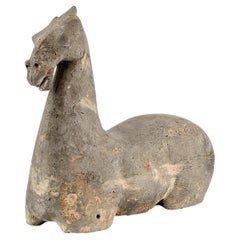
A Gray Pottery Figure of a Horse
Located in seoul, KR
This particular horse sculpture exemplifies the typical pose of Han-period equine figures—a neighing steed with its mouth wide open. Like many tomb sculptures of the era, it is crafted in unglazed, with its ears, tail, and legs separately fabricated in wood or clay and slotted into pre-prepared holes. However, several distinguishing features elevate this piece beyond standard Han horse...
Category

15th Century and Earlier Hong Kong Han Antique South Korea - Asian Art and Furniture

Materials

Earthenware, Pottery

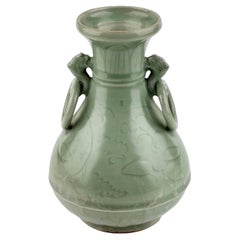
Carved Longquan Celadon Vase, Yuan-Ming Dynasty
Located in seoul, KR
A graceful baluster form with a flared mouth, a rounded body, and a slightly raised foot. The vase features two intricate handles in the shape of animal figures holding large looped ...
Category

15th Century and Earlier Hong Kong Ming Antique South Korea - Asian Art and Furniture

Materials

Celadon

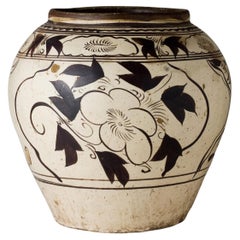
Large Cizhou Jar, Yuan Dynasty
Located in seoul, KR
This vase is sturdily potted with a robust ovoid body that rises from a short, spreading foot to a gently tapering neck, finishing with a lipped mouth rim. The exterior is decorated ...
Category

15th Century and Earlier Hong Kong Antique South Korea - Asian Art and Furniture

Materials

Pottery

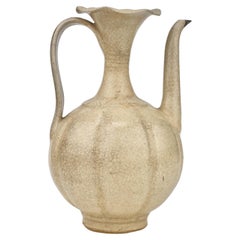
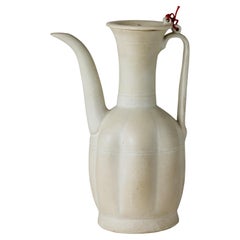
Rare Cream Glazed Ding yao Ewer and Cover, Song Dynasty (960~1279)
Located in seoul, KR
The body is characterized by distinctly carved octagonal or segmented ridges. The neck rises tall and straight, flaring outward at the rim, a proportion frequently seen in ewers from...
Category

15th Century and Earlier Hong Kong Chinese Export Antique South Korea - Asian Art and Furniture

Materials

Ceramic

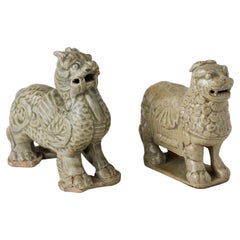
Rare Yue Celadon-Glazed Two Haitai Statues, Western Jin dynasty (265-420)
Located in seoul, KR
The statue seems to be a mythical beast standing in a poised and alert stance, with its mouth open as if roaring or breathing fire. Its body is covered in detailed carvings that resemble scales and feathers, indicative of the high level of craftsmanship during the Jin Dynasty. The creature’s presence is both regal and intimidating, suggesting it might have been believed to possess protective properties. Period : Western Jin Dynasty (266 - 316 AD) Type : Haitai Statue Medium : Yue celadon...
Category

15th Century and Earlier Hong Kong Chinese Export Antique South Korea - Asian Art and Furniture

Materials

Celadon

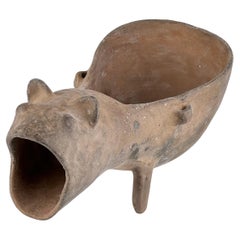
Earthenware Ewer, Yi
Located in seoul, KR
This terracotta vessel was fired to a warm yellow-brown that shows subtle oxidation marks across the surface. Entirely unglazed, it retains a matte, tactile finish with fine pores an...
Category

15th Century and Earlier East Asian Antique South Korea - Asian Art and Furniture

Materials

Earthenware, Pottery

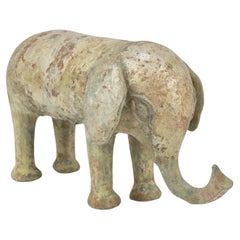
Green-Glazed Pottery Elephant, Han dynasty
Located in seoul, KR
This piece is an elephant statue made of green-glazed pottery. During the Han Dynasty, artworks depicting elephants were quite rare. However, such representations did occasionally appear. For example, the bronze vessel from the Han Dynasty housed in the Shanghai Museum is one of the notable examples of this type of craftsmanship. The existence of elephants in ancient China is attested both by archaeological evidence and by depictions in Chinese artwork. Long thought to belong to an extinct subspecies of the Asian elephant named Elephas maximus...
Category

15th Century and Earlier Hong Kong Han Antique South Korea - Asian Art and Furniture

Materials

Pottery

A Rare Large Wucai Dragons and Phoenix Jar, Ming dynasty Longqing Emperor
Located in seoul, KR
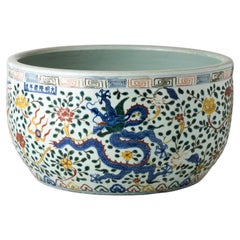
The blue dragon and the red dragon are depicted in dynamic postures, each extending its claws to grasp a ruyi pearl (如意珠). The phoenix is adorned with flowing feathers and delicate c...
Category

16th Century Hong Kong Ming Antique South Korea - Asian Art and Furniture

Materials

Ceramic

Rare Longquan Celadon Tripod Incense Burner, Song-Yuan Dynasty
Located in seoul, KR
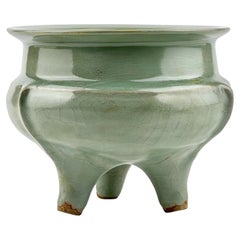
The vessel features a compressed body supported by three tapered feet and a flat, outwardly flaring rim. Three slender flanges originate from a subtle ridge on the shoulder and exten...
Category

15th Century and Earlier Hong Kong Antique South Korea - Asian Art and Furniture

Materials

Celadon

A Rare Yellow-glazled Marbled Pottery Horse
Located in seoul, KR
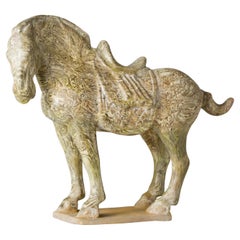
The pottery horse, characterized by its balanced body, arched neck, and lowered head, is hollow-molded with a carefully finished base, reflecting the East Asian funerary figures. It...
Category

15th Century and Earlier East Asian Antique South Korea - Asian Art and Furniture

Materials

Pottery

A Rare Dingyao Green-Glazed Dragon Dish, Liao-Song Dynasty
Located in seoul, KR
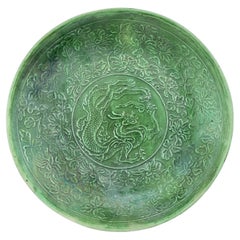
This dish is covered in a rich green glaze, with a central medallion depicting a sinuous dragon in high relief, surrounded by a continuous band of floral scrolls. The dragon’s scales...
Category

15th Century and Earlier Hong Kong Ming Antique South Korea - Asian Art and Furniture

Materials

Ceramic, Stoneware

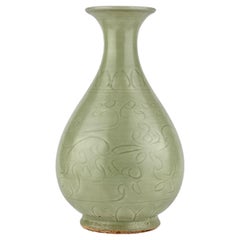
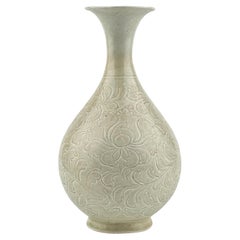
A Large Carved Longquan Celadon Yuhuchunping, Yuan-Ming Dynasty
Located in seoul, KR
* DDP Seoul, South Korea (Incoterms) – Seller is responsible for all duties, taxes, and customs clearance. The bulbous body is adorned with elegantly carved floral motifs, with inte...
Category

15th Century and Earlier East Asian Ming Antique South Korea - Asian Art and Furniture

Materials

Celadon

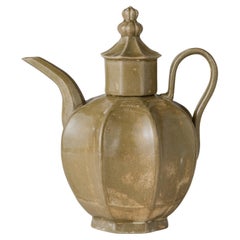
A Rare Olive Glazed Celadon Octagonal Ewer with Cover, Five Dynasties/Song
Located in seoul, KR
This olive-brown celadon ewer features an octagonal lobed body, a tall curved spout, loop handle, and a domed cover with a bud-shaped finial. The olive glaze is suffused with fine cr...
Category

15th Century and Earlier East Asian Antique South Korea - Asian Art and Furniture

Materials

Celadon

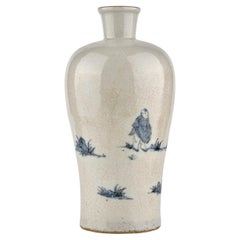
Blue and White Porcelain Vase with Figures, 19-20th Century
Located in seoul, KR
A porcelain meiping vase decorated in underglaze cobalt blue with scholar and attendant figures in a natural landscape. The finely crackled glaze and soft brushwork evoke a sense of ...
Category

19th Century East Asian Qing Antique South Korea - Asian Art and Furniture

Materials

Ceramic

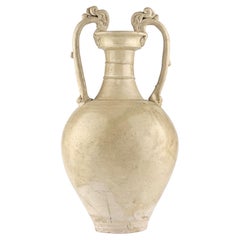
A Large and Rare Straw-Glazed Pottery Amphora, Tang Dynasty
Located in seoul, KR
The ovoid shape suggests the influence from “amphora” of Greece and Rome, while the dragon-shaped handles allude to Persian and Central Asian metalwork. The ubiquitous dragon is a Ea...
Category

15th Century and Earlier Hong Kong Tang Antique South Korea - Asian Art and Furniture

Materials

Pottery, Stoneware

Annamese blue and white bowl, circa 15th century.
Located in seoul, KR
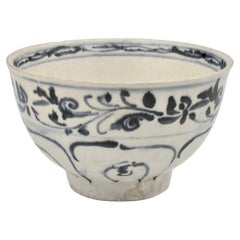
The bowl's design features fluid, dynamic brushstrokes typical of Annamese pottery, where cobalt blue underglaze was used to create intricate patterns before a clear glaze was applied. The artwork, with its foliage and floral motifs, suggests a connection to the natural world—a common theme in Vietnamese art. Such items were highly traded, and their recovery from shipwrecks helps us understand the extent of maritime commerce in Southeast Asia during the 15th and 16th centuries. This piece embodies the craftsmanship and aesthetic values of the period, providing insights into the cultural and economic contexts of its time. Dates : 15th century Le Dynasty Region : North Annam, Vietnam Type : Dish Found/Acquired : Southeast Asia , South China Sea, Hoi An Ship Diameter : 17cm Reference : Double checked with reference to the original catalogue Butterfield Treasures Hoi An Hoard Auction Catalogs / San Francisco Butterfields 2000 * Vietnamese trade ceramics Around the mid-14th century, Vietnam developed its ceramics production technology by producing blue and white porcelain, and began to export it overseas. During this period, China Ming Dynasty implemented a policy of lifting the ban from 1371 to 1657 and restricted foreign trade. This served as a good opportunity in the trade history of Vietnamese ceramics, and ceramic exports...
Category

15th Century and Earlier Vietnamese Antique South Korea - Asian Art and Furniture

Materials

Stoneware

Three Blue and White Teapots from Ca Mau Ship, C 1725, Qing Dynasty, Yongzheng E
Located in seoul, KR
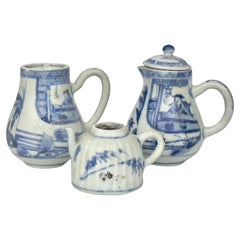
The pieces are adorned with intricate motifs and scenes that may represent traditional Chinese landscapes, daily life, or historical tales. Period : Qing Dynasty, Yongzheng Period P...
Category

1720s Vietnamese Qing Antique South Korea - Asian Art and Furniture

Materials

Ceramic, Porcelain

Famille Rose/Verte Crane and Flower Baluster Vase, Qing Dynasty
Located in seoul, KR
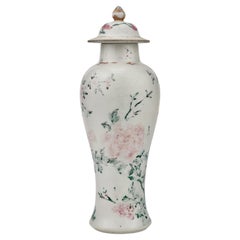
The vase's form is elegant, with a tapered body and domed lid with long line of body, crowned with a delicate finial, embodying the sophistication and high aesthetic standards of Qin...
Category

17th Century Vietnamese Qing Antique South Korea - Asian Art and Furniture

Materials

Ceramic

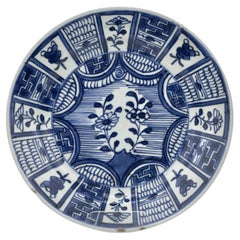
Chinese Swatow Blue and White Ceramic Dish, Late Ming Dynasty
Located in seoul, KR
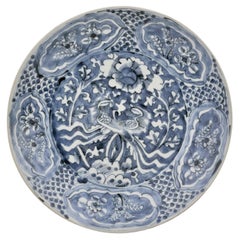
Famous late ming dynasty chinese blue and white porcelain plate, double phoenix, from the shipwrecked binh thuan Period: Ming Dyn...
Category

16th Century Vietnamese Ming Antique South Korea - Asian Art and Furniture

Materials

Ceramic

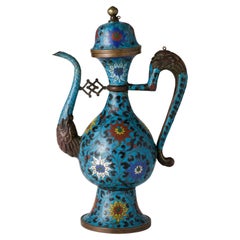
Cloisonné Enamel Ewer, Ming-Qing Period
Located in seoul, KR
This cloisonné ewer features a brass body covered with turquoise-toned enamel and densely arranged lotus and floral motifs. The spout and handle are shaped in the form of a phoenix o...
Category

15th Century and Earlier East Asian Antique South Korea - Asian Art and Furniture

Materials

Enamel

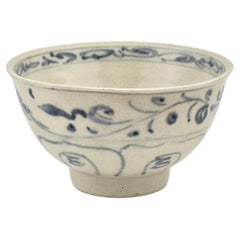
Vietnamese Blue And White Bowl Circa 15th Century
Located in seoul, KR
The artwork, with its foliage and floral motifs, suggests a connection to the natural world—a common theme in Vietnamese art. Such items were highly traded, and their recovery from shipwrecks helps us understand the extent of maritime commerce in Southeast Asia during the 15th and 16th centuries. This piece embodies the craftsmanship and aesthetic values of the period, providing insights into the cultural and economic contexts of its time. Dates : 15th century Le Dynasty Region : North Annam Type : Bowl Found/Acquired : Southeast Asia , South China Sea, Hoi An Ship Reference : Double checked with reference to the original catalogue Butterfield Treasures Hoi An Hoard Auction Catalogs / San Francisco Butterfields 2000 * Vietnamese trade ceramics Around the mid-14th century, Vietnam developed its ceramics production technology by producing blue and white porcelain, and began to export it overseas. During this period, China Ming Dynasty implemented a policy of lifting the ban from 1371 to 1657 and restricted foreign trade. This served as a good opportunity in the trade history of Vietnamese ceramics...
Category

15th Century and Earlier Chinese Ming Antique South Korea - Asian Art and Furniture

Materials

Ceramic, Stoneware

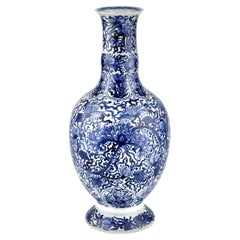
Blue and White Vase from Vung Tau Ship, Qing Dynasty Kangxi Era, Circa 1690
Located in seoul, KR
The entire surface of the vase is adorned with elaborate chrysanthemum motifs, elegantly connected by flowing, curved stems, while the background's leaf patterns enhance its sense of...
Category

17th Century Vietnamese Qing Antique South Korea - Asian Art and Furniture

Materials

Ceramic, Porcelain

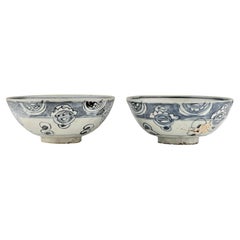
Pair of Bowls from Shipwreck, Late Ming Era(16-17th century)
Located in seoul, KR
These shallow bowls feature stylized floral and wave motifs rendered in fluid cobalt brushwork beneath a clear glaze. The slightly everted rims and neatly cut foot rings are characteristic of export wares produced in southern kilns during the Ming period. Marine encrustations and glaze degradation attest to prolonged submersion in a maritime context, offering valuable insight into historical trade routes and overseas demand for Chinese ceramics. Period: Late Ming Dynasty Type: Bowl Medium : Blue and White Condition : Good(Marine encrustation is attached on one bowl and it's crack) Provenance : Presumably from the shipwrecked Binh Thuan...
Category

17th Century East Asian Ming Antique South Korea - Asian Art and Furniture

Materials

Ceramic

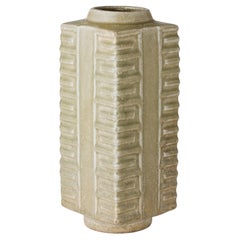
A Rare Yue Celadon Cong-Shaped Vase, Western Jin Dynasty(3-5th C)
Located in seoul, KR
This vase is an exceptionally rare piece and likely the only known example of a Cong-shaped vase from the Jin Dynasty. While some experts may attribute this work to the Song Dynasty or later periods based on its form, it is, in fact, a much earlier creation from the 3rd to 4th century CE during the Jin Dynasty. It was imported from Hong Kong in the late 1990s and was acquired by our gallery as part of a collection that included other Jin Dynasty Yue celadon pieces. The vase features a cylindrical form with a square (方形) design and geometric incised patterns. While these design elements became more refined and sophisticated during the Song Dynasty (960~1279), their origins trace back much earlier, as evidenced by Cong-shaped jade artifacts dating as far back as 2,500 B.C.E. Examples of these ancient jade Congs...
Category

15th Century and Earlier Hong Kong Antique South Korea - Asian Art and Furniture

Materials

Celadon

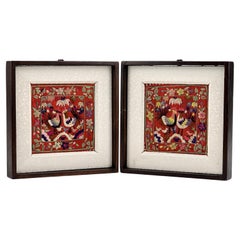
Pair of Korean Traditional Embroidered Pillowcase Frames
Located in seoul, KR
Pair of traditional embroidered frame, given by a bride to her husband as part of her dowry during marriage in Korea's modern era. The embroidered mandarin ducks symbolize marital ha...
Category

19th Century Korean Antique South Korea - Asian Art and Furniture

Materials

Fabric

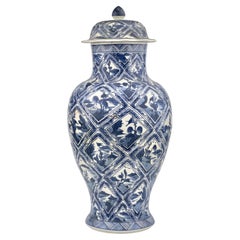
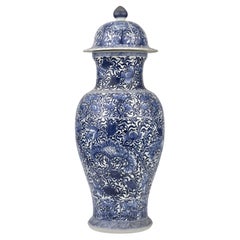
Large Rare Blue And White Baluster Vase, Qing Dynasty, Kangxi, Circa 1690
Located in seoul, KR
Large rare vase painted with petal-shaped panels of 'Flowers' pattern. Decorated in underglaze blue with flower blooms borne on leafy stems. Period : Qing Dynasty, Kangxi Period Production Date : 1690-1699 Made in : Jingdezhen Destination : Netherland Found/Acquired : Southeast Asia , South China Sea, Vung Tau ship Reference : Double checked with reference to the original catalogues 1) Christies Amsterdam 1992 - Vung Tau Cargo...
Category

1690s Vietnamese Qing Antique South Korea - Asian Art and Furniture

Materials

Ceramic, Porcelain

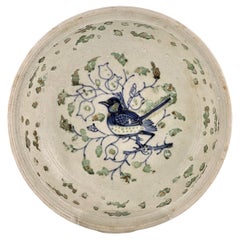
Rare Annamese Stoneware with underglaze Blue and Painted Green, 15-16th Century
Located in seoul, KR
A bird on a tree. Stoneware with underglaze blue and painted green. The leaves were creatively expressed with green-glaze. The use of green overpainting, a distinctive element in Annamese ceramics, parallels similar examples documented in The Age of Discovery: Asian Ceramics Found Along the Maritime Silk Road, particularly on pages 59, 64, and 66 of the Annamese ship catalog. Such pieces were widely traded along the Maritime Silk Road, showcasing the rich cultural exchange between Vietnam and other regions. Dates : 15th century Le Dynasty Region : North Annam, Vietnam Type : Dish Found/Acquired : Southeast Asia , South China Sea, Hoi An Ship Reference : Double checked with reference to the original catalogue 1) Butterfield Treasures Hoi An Hoard Auction Catalogs / San Francisco Butterfields 2000 2) Asian Ceramic Found along Maritime Silk Route / National Maritime Museum of Korea * Vietnamese trade ceramics Around the mid-14th century, Vietnam developed its ceramics production technology by producing blue and white porcelain, and began to export it overseas. During this period, China Ming Dynasty implemented a policy of lifting the ban from 1371 to 1657 and restricted foreign trade. This served as a good opportunity in the trade history of Vietnamese ceramics, and ceramic exports...
Category

15th Century and Earlier Vietnamese Ming Antique South Korea - Asian Art and Furniture

Materials

Stoneware

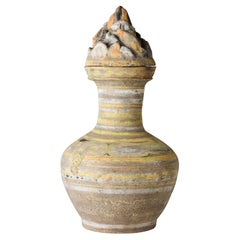
Large Earthenware Pottery Jar with Hill Cover
Located in seoul, KR
The vessel has a rounded body rising to a tall neck, surmounted by a rare cover modeled in the form of mountain peaks. The entire surface is painted with layers of yellow, white and ...
Category

15th Century and Earlier East Asian Han Antique South Korea - Asian Art and Furniture

Materials

Earthenware

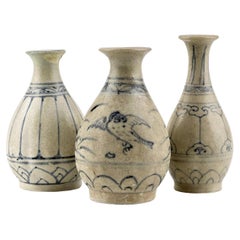
Three Annamese Small Yuhuchunping, 15th century, Le Dynasty
Located in seoul, KR
These 15th-century Annamese ceramics from Le dynasty, are notable for their rarity and refined design. The Yuhuchunping vases, with their elegant pear-shaped bodies and delicate blue-and-white motifs, showcase the sophisticated craftsmanship of the time. They offer a glimpse into the vibrant maritime trade networks of Southeast Asia during the 15th century, making them valuable artifacts in the study of East Asian ceramics...
Category

15th Century and Earlier Vietnamese Antique South Korea - Asian Art and Furniture

Materials

Ceramic

Very Rare Ewer of a Seated Monkey, C 1725, Qing Dynasty, Yongzheng Era
Located in seoul, KR
This figural monkey-form ewer is a rare and representative sculptural porcelain from the Ca Mau shipwreck and was selected for the cover of Dr. Zelnik’s catalogue. Produced at Jingde...
Category

1720s Vietnamese Qing Antique South Korea - Asian Art and Furniture

Materials

Ceramic

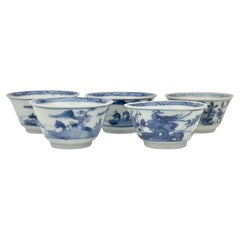
Chinoiserie Teabowl Set Circa 1725, Qing Dynasty, Yongzheng Reign
Located in seoul, KR
Each teabowl is delicately painted with blue pigments, showcasing scenes of mountains, trees, boats, figures, and animals. The graceful brushstrokes and gentle curves evoke tradition...
Category

1720s Vietnamese Chinoiserie Antique South Korea - Asian Art and Furniture

Materials

Ceramic, Porcelain

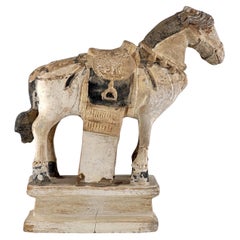
Ming Period Large Pottery Horse with Saddle (15-16th Century)
Located in seoul, KR
This Ming Dynasty painted pottery horse is depicted standing on a tiered rectangular pedestal. The horse has a well-proportioned body, with sturdy legs and a slightly arched neck. The eyes and muzzle are subtly outlined and incised. The mane is sculpted with deep, parallel grooves. The tail is long and slightly curved left, extending downward. The saddle is prominently featured at the center of the horse’s back, detailed with a raised, rounded seat and an attached stirrup hanging down one side. The saddlecloth is textured with a crosshatch pattern, bordered by a row of carved fringe-like elements. The horse's legs display subtle musculature, and the hooves are clearly defined, with black pigment accentuating their edges. The original painted pigments, including white, black, and ochre, are still visible, though faded in some areas. The black pigment highlights the mane, tail, and parts of the bridle, while the ochre tones accentuate the saddle and decorative elements. Period: Ming Dynasty Medium: Green, black, and ochre glazed Pottery Type: Figure Provenance : Acquired in late 1990s from Hongkong Reference : Asian Civilisations Museum - Accession No. C-1384 / 1994-00441 - Ming Dynasty Figure of Horse (Type : Closely Related) * Ming Dynasty Glazed Pottery Figures Ming Dynasty glazed pottery figures are renowned for their bold color palette, intricate detailing, and lifelike forms, distinguishing them from earlier traditions. These figures, which depict officials, warriors, animals, and mythical creatures, are characterized by high-gloss lead-based glazes in green, amber, ochre, and sancai (three-color) combinations. The thickly applied glaze pools in recesses, creating depth and enhancing sculptural details. With dynamic postures, expressive facial features, and meticulously rendered drapery, these figures reflect the period’s advancement in ceramic craftsmanship, offering a greater sense of movement and realism compared to the rigid and stylized forms of earlier dynasties. A defining characteristic of Ming glazed pottery is its elaborate surface detailing, often achieved through raised relief elements and contrasting glazes. Equestrian figures, for example, feature carefully sculpted saddles, harnesses, and decorative embellishments, while human figures are adorned with intricate robes and headdresses. The large scale of these tomb figures, often more imposing than those from previous periods, underscores the increasing importance of funerary art during the Ming era. Unlike later Qing Dynasty figures...
Category

15th Century and Earlier Hong Kong Ming Antique South Korea - Asian Art and Furniture

Materials

Pottery

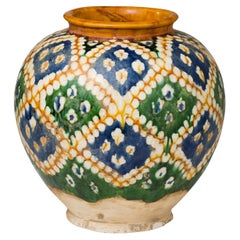
A Rare Sancai-Glazed Pottery Jar, Tang Dynasty
Located in seoul, KR
The jar is of globular shape and is decorated to the body with a geometric design band of lozenge-shaped motifs in blue, green, ochre and cream below a plain ochre everted mouth rim,...
Category

15th Century and Earlier Hong Kong Tang Antique South Korea - Asian Art and Furniture

Materials

Earthenware

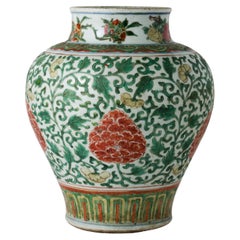
A Wucai Peony Vase Transitional Period, 17th century, Transitional Period
Located in seoul, KR
The jar features a balanced and robust form, typical of the Transitional period, which was a time of significant change and innovation in Chinese porcelain art. The decoration is exu...
Category

17th Century Hong Kong Qing Antique South Korea - Asian Art and Furniture

Materials

Ceramic

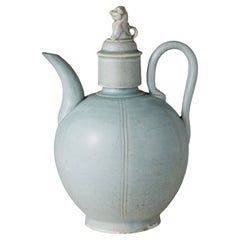
A Qingbai Ewer and Lion-Finial Cover, Song Dynasty
Located in seoul, KR
The ewer features a globular body with a straight spout and an arched handle, creating a sense of balanced stability. Four vertical incised lines run evenly along the body, relieving...
Category

15th Century and Earlier East Asian Antique South Korea - Asian Art and Furniture

Materials

Ceramic

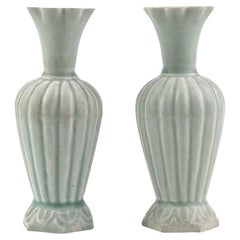
Pair of Qingbai Vases, Song-Yuan Dynasty
Located in seoul, KR
This pair of Qingbai vases features a soft bluish-green glaze with elegant, fluted bodies and wide, flared rims. The vases are hand-crafted, with subtle differences that highlight th...
Category

15th Century and Earlier Hong Kong Antique South Korea - Asian Art and Furniture

Materials

Porcelain

Qingbai Yuhuchunping Vase Porcelain, Song Dynasty
Located in seoul, KR
Covered with a fine bluish glaze, the body entirely decorated with an incised decoration of elegant leafy scrolls and blooming lotuses. "Yuhuchunping" translates to 'spring wine bott...
Category

15th Century and Earlier Hong Kong Antique South Korea - Asian Art and Furniture

Materials

Ceramic, Porcelain

Still Thinking About These?

All Recently Viewed