South Korea - Asian Art and Furniture

to
11,208
5,371
286
7
4
266
16
4
7
271
72
51
42
30
293
197
141
96
88
293
287
293
3
1
1
Item Ships From: South Korea
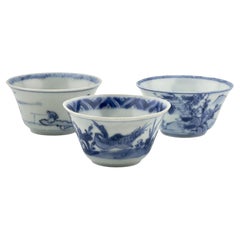
Three Chinoiserie Teabowl Set Circa 1725, Qing Dynasty, Yongzheng Reign
Located in seoul, KR
The left artwork is a classic blue-and-white porcelain teacup, adorned with a delicate landscape scene. The exterior of the cup features intricate details of trees, houses, mountains...
Category

1720s Vietnamese Qing Antique South Korea - Asian Art and Furniture

Materials

Ceramic

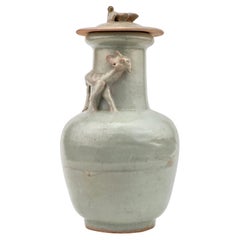
Longquan Celadon Dragon Jar and Cover, Song or Liao
Located in seoul, KR
The celadon jar presents a balanced form with a serene bluish-grey glaze. Its shoulders taper gently toward the base, creating a composed silhouette. A ...
Category

15th Century and Earlier East Asian Antique South Korea - Asian Art and Furniture

Materials

Celadon

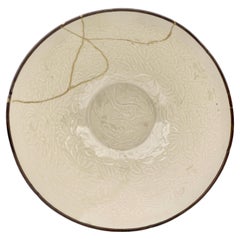
A Rare Moulded Dingyao Cranes And Fishes Bowl, Northern Song - Jin Dynasty
Located in seoul, KR
This bowl stands out for its detailed depiction of two fish amid soft spiral waves, bordered by two cranes within the bowl. The design's depth and clarity, from the lifelike portraya...
Category

15th Century and Earlier Hong Kong Antique South Korea - Asian Art and Furniture

Materials

Ceramic, Porcelain

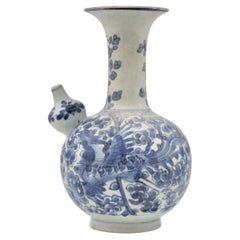
Kendi Blue And White, Qing Dynasty, Kangxi Period, C 1690
Located in seoul, KR
The Kendi is decorated with cobalt blue underglaze depicting flowers and a mythical bird, reflecting the artistic finesse and symbolic expressions of the era. These designs often carry symbolic meanings, with birds sometimes representing immortality or spiritual transcendence in Chinese mythology. The Kendi's form, with a bulbous body and spout for drinking, is a traditional vessel style in Asia, valued for both its functionality and aesthetic appeal. Period : Qing Dynasty, Kangxi Period Production Date : 1690-1699 Made in : Jingdezhen Destination : Netherland Found/Acquired : Southeast Asia , South China Sea, Vung Tau ship Reference : Double checked with reference to the original catalogues 1) Christies Amsterdam 1992 - Vung Tau Cargo / Christies 2) Qing Dynasty Export...
Category

1690s Vietnamese Qing Antique South Korea - Asian Art and Furniture

Materials

Ceramic

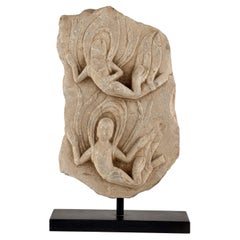
Heavenly Beings Carved Limestone Stele Fragment, Northern/Eastern Wei Dynasty
Located in seoul, KR
Flying two heavenly beings depicted in the stone. They are celestial beings called an Apsara. While having the same fragment and shape, another work our gallery uploaded exhibits sma...
Category

15th Century and Earlier East Asian Han Antique South Korea - Asian Art and Furniture

Materials

Limestone

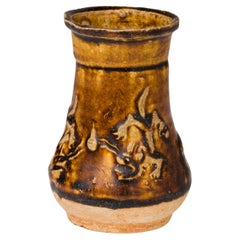
Brown Glazed Small Jar with Two Dragons and a Fish, Song-Yuan Dynasty
Located in seoul, KR
The glaze blends harmoniously with the color of the clay, giving a natural, earthy feel. This piece features intricate carvings of two dragon presumably pursuing a sacred jewel called "Yeouiju" and a fish. The glaze drips and irregular streaks of brown-glazed pottery from that period are distinctive aesthetic elements of Song-Yuan Dynasty brown glazed ceramics, with glaze colors ranging from deep chocolate to light amber or honey tones. Date : Song-Yuan Dynasty(960~1368) Type : Olive-Brown-glazed pottery Provenance : Acquired in late 1990s from Hongkong Reference : 1) Bonhams London 13 May 2024 - The John E. Bodie OBE (1930-2023) Collection of Chinese Art - Lot 12 (Price realised : 2,432 GBP / Type : Closely related) 2) Christies 25 Mar 2015 - The Collection of Robert Hatfield Ellsworth...
Category

15th Century and Earlier Hong Kong Tang Antique South Korea - Asian Art and Furniture

Materials

Pottery

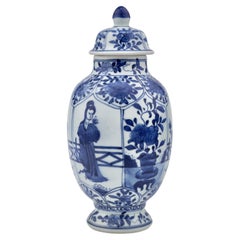
Blue And White Vase, Qing Dynasty, Kangxi Era, Circa 1690
Located in seoul, KR
Vung Tau Shipwreck Coralized Blue Underglazed Porcelain Lidded Vase. Almost perfectly Identical piece from Vietnamese Royal Family in United States provenance have been sold at other auction in California. This stunning porcelain lidded vase is elaborately decorated in a vivid blue underglaze with an ornate scene of concubines in a flower garden. The bottom of the vase bears a conch marking in underglazed blue, is a symbol of royalty, dignity and high rank, the 'Sacred Lungs of Buddha' and spiritual authority. Period : Qing Dynasty, Kangxi reign Production Date : 1690-1699 Made in : Jingdezhen Destination : Amsterdam Found/Acquired : Southeast Asia , South China Sea, Vung Tau Ship Reference : Double checked with reference to the original catalogues 1) Christies Amsterdam 1992 - Vung Tau Cargo...
Category

1690s Vietnamese Qing Antique South Korea - Asian Art and Furniture

Materials

Ceramic

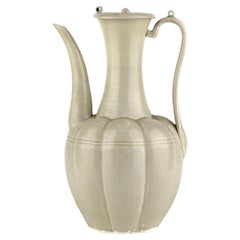
A Rare Cream-Glazed Ding yao Ewer and Cover, Five Dynasties/Song Dynasty
Located in seoul, KR
The vessel is of well-proportioned elegance, its ovoid body crisply divided into lobed segments that rise from a neatly cut, short ring foot to a tall, slender trumpet neck. A gracef...
Category

15th Century and Earlier East Asian Antique South Korea - Asian Art and Furniture

Materials

Ceramic

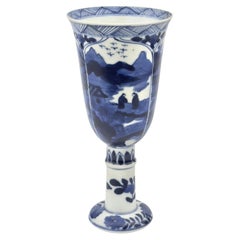
Blue and White Stemcup, Qing Dynasty, Kangxi Era, circa 1690
Located in seoul, KR
This porcelain stemcup has a domed foot, a high stem and an elongated deep bowl with a partially broken flared rim. River landscapes featuring trees, pavilions, bridges and figures, ...
Category

1690s Vietnamese Qing Antique South Korea - Asian Art and Furniture

Materials

Ceramic

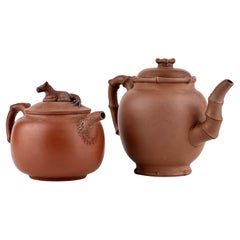
Two Yixing Zisha Teapots and Covers
Located in seoul, KR
Both Yixing Zisha teapots appear to be modern to republic-era pieces. Yixing Zisha teapots are made from rare Zisha (紫砂) clay, which is exclusively...
Category

20th Century East Asian South Korea - Asian Art and Furniture

Materials

Pottery

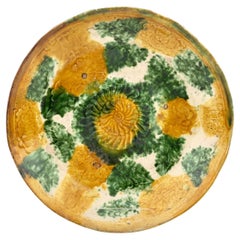
Sancai-glazed ‘floral’ dish, Liao dynasty(916~1125)
Located in seoul, KR
Well potted with shallow sides rising from a short foot, the interior molded with a single chrysanthemum surrounded by peony blossoms picked out in yellow and with green leaves again...
Category

15th Century and Earlier Hong Kong Tang Antique South Korea - Asian Art and Furniture

Materials

Pottery

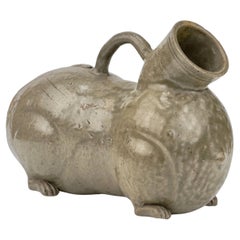
Rare Yue Celadon-Glazed Figural Vessel, Western Jin dynasty (265-420)
Located in seoul, KR
This vessel is well-modeled as a recumbent winged lion with detailed decorative elements. It features a grimacing face with large protruberant eyes under heavy brows and a gaping mou...
Category

15th Century and Earlier Hong Kong Han Antique South Korea - Asian Art and Furniture

Materials

Celadon

Blue and white jar with multi-treasure pattern, Mid-Late Qing Period
Located in seoul, KR
The jar features a straight mouth, rounded shoulders, a tucked-in belly, and outward-turned feet, with a high rounded lid topped with a bead. Its shape, resembling a general's helmet...
Category

19th Century Hong Kong Qing Antique South Korea - Asian Art and Furniture

Materials

Ceramic

Apsara Carved Limestone Stele with Extremely Rare Oolitic silica , Wei Dynasty
Located in seoul, KR
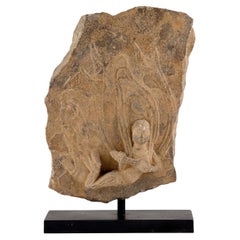
The small dots apparent on the surface of this stone stele are indicative of an oolitic silica structure or oolites formed in what is known as "Oolitic chert." The same phenomenon can also be observed in the Tang Dynasty Limestone Stele at the Asian Art Museum in San Francisco. This formation occurs gradually over the course of thousands to several hundred thousand years within the soil or sea. Similar structures are commonly found in ancient fossils or arrowheads. Ancient peoples chose certain types of stones for tool-making, preferring materials that were easier to work with and could be sharpened effectively. This predilection is believed to be the reason why oolitic silica structures are frequently found in ancient arrowheads. The development of these oolitic silica structures is a very slow process involving the accumulation of siliceous layers around particulates. This phenomenon, where silica reacts with water to form layers around a nucleus, occurs under specific chemical and physical conditions. Typically, it takes thousands to hundreds of thousands of years for silica to gradually accumulate in layers through contact with moisture, a process that requires a precise harmony of many variables, including chemical conditions, temperature, pressure, pH, and biological activity. It is known that no other stele with such a silica structure has been identified to date, serving not only as evidence of its authenticity but also significantly enhancing the rarity of this piece. This stele appears to be a stone sculpture of an apsara, a celestial nymph from Buddhist and Hindu traditions. Despite its fragmentary state, the sculpture conveys grace and movement. The apsara is captured in a dynamic pose, perhaps once part of a larger tableau, playing a flute-like instrument. The black stand was made in Hong Kong at the time of the acquisition. Date : Northern Wei/Eastern Wei Dynasty(386~550) Size : 22cm (Height) x 16cm(diameter) Condition : Good (oolites dots on surface) Provenance : Acquired in late 1990s from Hongkong Reference : 1) Sotheby's New York 20 March 2018 - Jingyatang Treasures Of Chinese Buddhist...
Category

15th Century and Earlier Hong Kong Han Antique South Korea - Asian Art and Furniture

Materials

Stone, Limestone

Wall Decor Handcrafted Painting on Wood Panel by Arijian Rose 03
Located in Namyangju-si, KR
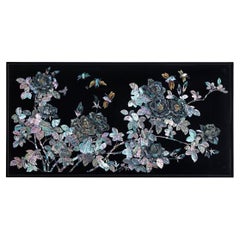
The rose, forever a symbol of romantic love is expressed multifariously by using mother of pearl, lacquer, gilt, and silver powder in this work. It delivers the delicate touches of a...
Category

2010s South Korean South Korea - Asian Art and Furniture

Materials

Wood

Annamese Stoneware Vase with Underglaze Blue, Hoi An Hoard, Late 15th Century
Located in seoul, KR
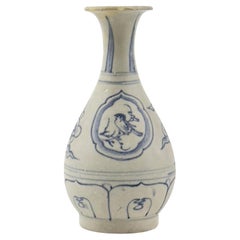
At the center of the vase, within a rounded frame, a bird is depicted perched on a small branch. The bird’s feathers and body are finely detailed, while the beak and eyes are rendere...
Category

15th Century and Earlier Vietnamese Antique South Korea - Asian Art and Furniture

Materials

Stoneware

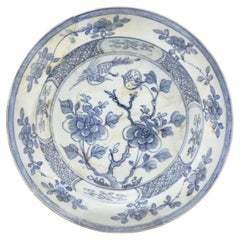
Artefacts of the Literati Pattern Plate c 1725, Qing Dynasty, Kangxi Era
Located in seoul, KR
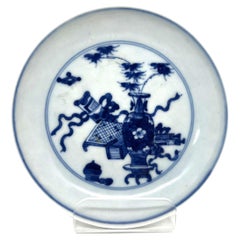
In the center, a vase adorned with a floral pattern suggests appreciation for nature. Notably, there is an object resembling a Go board, indicative of the intellectual pursuits favor...
Category

1720s Vietnamese Qing Antique South Korea - Asian Art and Furniture

Materials

Ceramic

Longquan Celadon Lotus Petal Jar And Cover, Sui-Northern Song Dynasty
Located in seoul, KR
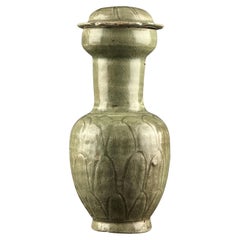
The jar is sturdily potted with an oval shaped body carved with overlapping lotus petals below the straight neck. All covered with a crackled glaze of olive-green color with the exce...
Category

15th Century and Earlier East Asian Antique South Korea - Asian Art and Furniture

Materials

Celadon

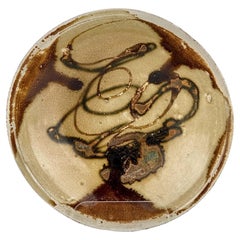
Large Changsha Bowl from Belitung Ship, Tang Dynasty
Located in seoul, KR
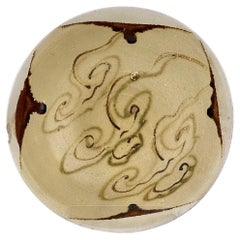
The edges have been dipped in four places with brown, probably iron-oxide. The well of the bowl is freely painted in deep green and coffee coloured brown. These are characteristic fe...
Category

15th Century and Earlier Indonesian Tang Antique South Korea - Asian Art and Furniture

Materials

Pottery

Five Tek Sing Cargo Aster Sprays Tea Bowls, Qing Dynasty
Located in seoul, KR
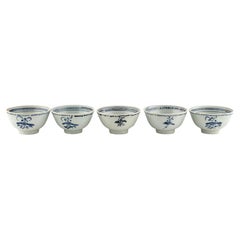
Five tea bowls, which have been salvaged from the Tek Sing, each decorated with aster sprays within a dot-dash line and featuring rims with a narrow band of dots between two parallel...
Category

1820s Indonesian Qing Antique South Korea - Asian Art and Furniture

Materials

Ceramic

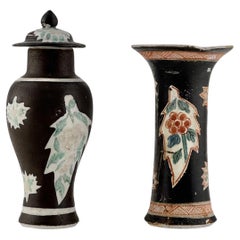
Rare Famille Noire Vases, Qing Dynasty, Yongzheng Era
Located in seoul, KR
Famille noire is a type of Qing Dynasty Chinese porcelain, distinguished by its black-glazed background with vivid natural motifs in green, yellow, and other bright colors. Developed...
Category

Early 18th Century Vietnamese Qing Antique South Korea - Asian Art and Furniture

Materials

Ceramic, Porcelain

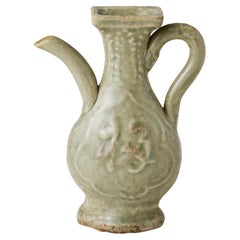
A Molded Longquan Celadon Fu Shou Ewer, Ming Dynasty
Located in seoul, KR
One side of the vase showcases a panel with the Shou character at its center, symbolizing longevity, while the opposite side displays the Fu character, signifying luck. The neck of the vase is adorned with leaves. There are similar types and decoration but varying in shape, resembling a pear, all from the same era and crafted in celadon, often referred to as 'fu shou' vases. Period: Yuan-Ming Dynasty (1271-1644) Region: Longquan, China Medium: Celadon Type: Ewer Provenance : Acquired in late 1990s from Hongkong Reference 1) British Museum - Museum number 1931,1118.5 (Type : Closely related) 2) Christies NEW YORK 24–25 MAR 2022 - Important Chinese Ceramics and Works of Art - Lot 1105 (Price realised : 9,450 USD / Type : Related) 3) Sotheby's New York 19 March 2024 - Chinese Art - Lot 172 (Price range : 15,000 USD - 20,000 USD / Type : Related) * Ming Dynasty Longquan Celadon Longquan celadon from the Ming Dynasty typically exhibits a more robust and heavier stoneware body compared to its Song Dynasty predecessors. The Ming era saw an evolution in celadon glaze, achieving a wider spectrum of green hues, from olive to bluish-greens. Ming celadons...
Category

15th Century and Earlier Hong Kong Ming Antique South Korea - Asian Art and Furniture

Materials

Celadon

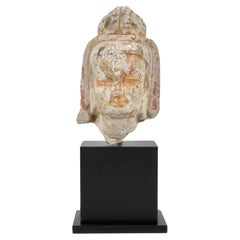
Stone Head of Bodhisattva, Northern Wei-Tang Dynasties
Located in seoul, KR
The face with downcast eyes and a smile, the hair swept up behind the pendulous ears into a high topknot. Faint traces of pigmentation hinting at the sculpture's original polychromy. The black stand was made in Hong Kong at the time of the acquisition. Date : Northern Wei-Tang Dynasty(5-8th century) Provenance : Acquired in late 1990s from Hongkong Reference : 1) Sotheby's London 13 May 2015 - The Soul Of Japanese Aesthetics – The Tsuneichi Inoue Collection - Lot 18 (Price realised : 17,500 GBP / Type : Closely related) 2) Sotheby's New York 26 September 2023 - CHINA / 5000 YEARS - Lot 1156 (Price realised : 8,890 USD / Type : Closely related) * Stone Head of Bodhisattva...
Category

15th Century and Earlier Hong Kong Tang Antique South Korea - Asian Art and Furniture

Materials

Limestone

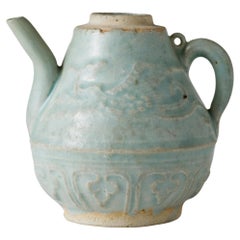
Qingbai ewer with slip decoration of two phoenix and lotus leaves, Yuan Dynasty
Located in seoul, KR
This small ewer is an exquisite example of Qingbai ware, known for its pale blue-tinged glaze. The vessel showcases the advanced ceramic techniques and artistic sophistication of the...
Category

15th Century and Earlier Hong Kong Antique South Korea - Asian Art and Furniture

Materials

Ceramic, Porcelain

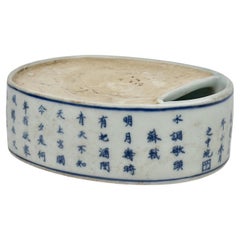
Blue And White Porcelain Calligraphy Brush Washer, Late Qing Period
Located in seoul, KR
In the late Qing Dynasty, it was popular to incorporate calligraphy and poetry into ceramics. The piece has a flat, oval shape and was likely used as an inkstone, one of the essentia...
Category

20th Century East Asian Qing South Korea - Asian Art and Furniture

Materials

Ceramic

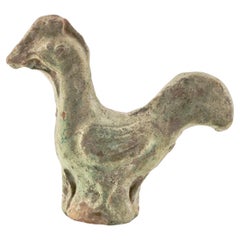
Green Glazed Pottery Figure of Rooster
Located in seoul, KR
The head is rounded, with minimal detailing of the beak, eyes, and comb. The neck is thick and solid, seamlessly transitioning into the body, which appears sturdy and compact, giving...
Category

15th Century and Earlier Hong Kong Han Antique South Korea - Asian Art and Furniture

Materials

Pottery

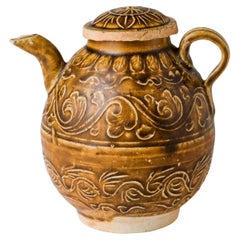
Olive-Brown-Glazed Molded Ewer And Cover, Song-Yuan Dynasty
Located in seoul, KR
The oviform body molded with floral and leaf pattern reminiscent of waves, all covered with an olive-brown glaze. The glaze drips and irregular streaks of brown-glazed pottery from that period are distinctive aesthetic elements of Song-Yuan Dynasty brown glazed ceramics, with glaze colors ranging from deep chocolate to light amber or honey tones. Date : Song-Yuan Dynasty(960~1368) Type : Olive-Brown-glazed pottery Provenance : Acquired in late 1990s from Hongkong Reference : 1) Bonhams London 13 May 2024 - The John E. Bodie OBE (1930-2023) Collection of Chinese Art - Lot 12 (Price realised : 2,432 GBP / Type : Related) 2) Christies Mar 2015 - The Collection of Robert Hatfield Ellsworth...
Category

15th Century and Earlier Hong Kong Antique South Korea - Asian Art and Furniture

Materials

Pottery

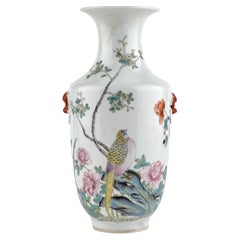
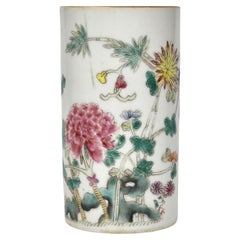
Famille rose porcelain vase, 19-20th century
Located in seoul, KR
This porcelain vase, likely from the late Qing dynasty or early Republic period (late 19th to early 20th century), is a fine example of Famille-Rose (fencai) decoration. The body is ...
Category

Late 19th Century Hong Kong Qing Antique South Korea - Asian Art and Furniture

Materials

Ceramic, Porcelain

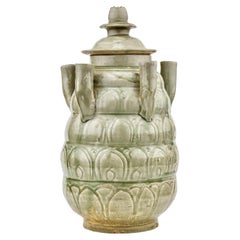
Longquan Celadon Five-Spouted Jar, Five Dynasties/Song Dynasty
Located in seoul, KR
Thickly potted with an ovoid body divided into five horizontal lobes tapering toward the top. It is finely carved with rows of upright lotus petals beneath a narrow band of horizonta...
Category

15th Century and Earlier East Asian Antique South Korea - Asian Art and Furniture

Materials

Celadon

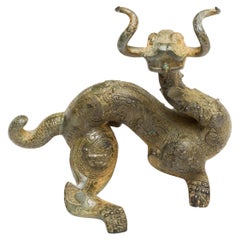
A Rare Gilt-Bronze Mythical Beast
Located in seoul, KR
Cast in bronze, this sculpture depicts a mythical beast with a sinuously curved body and an animated, rising posture. The overall form evokes a dragon or guardian creature, embodying...
Category

15th Century and Earlier Hong Kong Antique South Korea - Asian Art and Furniture

Materials

Bronze

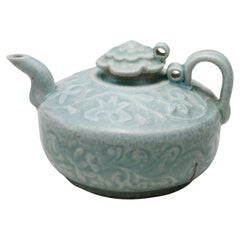
Rare Qingbai Carved Ewer, Song-Yuan Dynasty
Located in seoul, KR
This Qingbai ewer features a rounded body with smooth curves, a short spout, and a looped handle, presenting a harmonious and balanced form. The lid is adorned with a flower-shaped f...
Category

15th Century and Earlier Hong Kong Antique South Korea - Asian Art and Furniture

Materials

Ceramic

Chinoiserie Teabowl Set Circa 1725, Qing Dynasty, Yongzheng Reign
Located in seoul, KR
The interior of the cups is adorned with intricate designs inspired by nature, such as flowers, trees, and fish. They are skillfully arranged to create a focal point at the base of e...
Category

1720s Vietnamese Chinoiserie Antique South Korea - Asian Art and Furniture

Materials

Ceramic, Porcelain

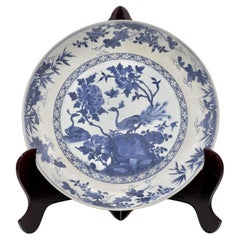
Peacock in Splendour Pattern Dish, c1725, Qing Dynasty, Yongzheng Era
Located in seoul, KR
A representative piece of Ca Mau ship. With a tall peacock standing on a rocky outcrop displaying his feathers to a peahen who crouches on the ground before him...
Category

1720s Vietnamese Chinoiserie Antique South Korea - Asian Art and Furniture

Materials

Ceramic

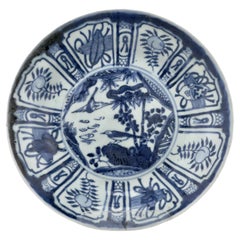
Blue And White Kraak Plate, Late Ming Dynasty
Located in seoul, KR
A Chinese blue and white Kraak plate, the central roundel depicting birds and floral design in a waterside, the rim with panels enclosing foliage and decorative objects. Period: Late Ming-Early Qing Dynasty (17th century) Type: Blue and White Porcelain Provenance : Acquired early 2000s from Southeast asia(Probably from Shipwreck) Reference : 1) Sotheby's London 12 November 2019 - STYLE: Private Collections - Lot 12 (Price range : 3,000GBP-5,000GBP / Type : Closely related) 2) Christies NEW YORK - 1–11 MAY 2018 - THE COLLECTION OF PEGGY AND DAVID ROCKEFELLER: ONLINE SALE - Lot 1405 (Price realised : 5,625 USD / Type : Highly related) * Kraak Kraak porcelain is a type of Chinese export porcelain that was produced during the late Ming Dynasty, especially during the reign of the Wanli Emperor (1573-1620). It is famous for its distinctive design and style. Kraak ware...
Category

17th Century Indonesian Ming Antique South Korea - Asian Art and Furniture

Materials

Ceramic, Porcelain

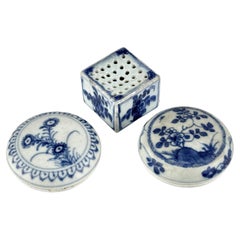
Two Cosmetic Box and a Square Box from Ca Mau Ship, Qing Dynasty, Yongzheng Era
Located in seoul, KR
1. Left Round Cosmetic Box : Circular form with flattened doomed cover, the covers with a medallion of simple stylised flowers surrounded by stylised lapp...
Category

Early 18th Century Vietnamese Qing Antique South Korea - Asian Art and Furniture

Materials

Ceramic

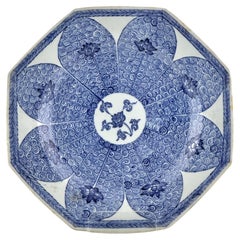
Lotus Pattern Dish From Ca Mau Ship Circa 1725, Qing Dynasty, Yongzheng Reign
Located in seoul, KR
This lotus dish from Ca Mau Ship was held in our gallery in three pieces(according to sizes). One was sold in 2024. With radiating lotus-petal 8 panels painted with single flowers a...
Category

Early 18th Century Vietnamese Qing Antique South Korea - Asian Art and Furniture

Materials

Ceramic

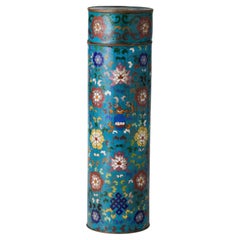
Cloisonné Enamel Vase, Ming-Qing Dynasty
Located in seoul, KR
This cylindrical cloisonné vessel is made with a brass body filled with turquoise-toned enamels that are fired to create a vivid, multi-colored surface. The exterior is densely decor...
Category

15th Century and Earlier East Asian Ming Antique South Korea - Asian Art and Furniture

Materials

Bronze, Enamel

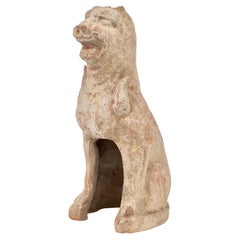
Guardian Haitai Lion Pottery Figure
Located in seoul, KR
This figure represent a guardian haitai. The style of the figurine, with its facial features and remnants of paint, suggests it could be a part of funerary art, which was common in Chinese culture during these periods. Date : Northern Wei...
Category

15th Century and Earlier Hong Kong Tang Antique South Korea - Asian Art and Furniture

Materials

Pottery, Stoneware

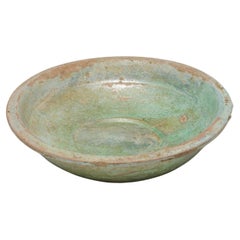
Green-Glazed Dish, Han Dynasty
Located in seoul, KR
This Han Dynasty green-glazed dish exhibits significant signs of wear, indicative of its age and the long passage of time it has witnessed. The glaze, once vibrant, now shows substan...
Category

15th Century and Earlier Hong Kong Han Antique South Korea - Asian Art and Furniture

Materials

Earthenware

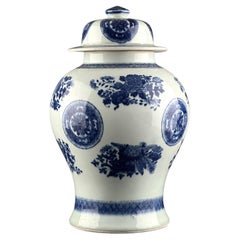
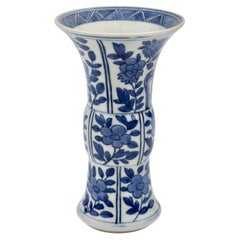
Ancient Gu Shape Blue And White Vase, Qing Dynasty, Kangxi Era, Circa 1690
Located in seoul, KR
An attractive GU vase hand painted in cobalt blue with typical kangxi flower panels painting separated by lined borders. Period : Qing Dynasty, Kangxi Period Production Date : 1690-1699 Made in : Jingdezhen Destination : Netherland Found/Acquired : Southeast Asia , South China Sea, Vung Tau ship Size : 14cm (Height) x 8.5cm (Diameter) Condition : Excellent Reference : Double checked with reference to the original catalogues 1) Christies Amsterdam 1992 - Vung Tau Cargo / Christies 2) Qing Dynasty Export Blue and White from Vung Tau Cargo(淸代外销靑花瓷) / Guangxi Fine Art Publishing House 3) Asian Ceramic Found along Maritime Silk Route / National Maritime Museum of Korea * Vung Tau Cargo Porcelain...
Category

1690s Vietnamese Qing Antique South Korea - Asian Art and Furniture

Materials

Ceramic

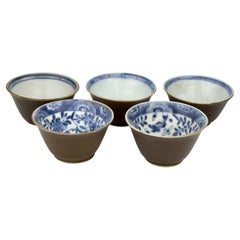
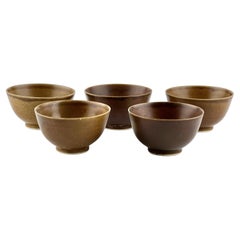
Brown Glazed Teabowls from Ca Mau Ship, Qing Dynasty, Yongzheng Era
Located in seoul, KR
These teabowls feature a simple yet elegant form, finished with a brown glaze that creates a smooth, subtle sheen. They have thin, evenly crafted walls and a small, stable footring t...
Category

18th Century Vietnamese Qing Antique South Korea - Asian Art and Furniture

Materials

Ceramic

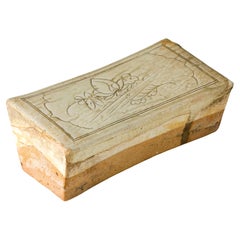
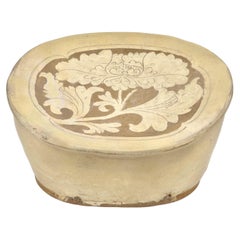
Cizhou Rectangular Pillow with Carved Decoration, Yuan Dynasty
Located in seoul, KR
Cizhou ware is known for its robust forms and freely applied decoration, often featuring a white slip under clear glaze. The pillow is rectangular, with a slightly curved top surface to accommodate the head of the sleeper. The decoration on this pillow features an incised design, delineated with fine lines to create a clear and simplistic representation. The motif includes floral elements, likely peony or chrysanthemum, and foliage, which were popular during the Song and Yuan periods. The carving is subtle yet skillful, showing the artistry and aesthetic preferences of the era. Period : Yuan Dynasty, 13th-14th Century Type : Pillow Medium : Cizhou Ware Provenance : Acquired in late 1990s from Hongkong Reference : 1) Datong Museum - Cizhou Pillow...
Category

15th Century and Earlier Hong Kong Antique South Korea - Asian Art and Furniture

Materials

Pottery, Stoneware

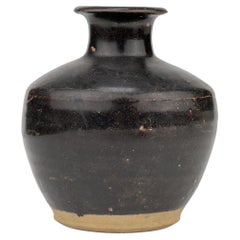
Black glazed bottle, Late Ming Era(16-17th century)
Located in seoul, KR
Black glazed bottle from the late Ming dynasty binh thuan cargo. An identical piece is included on page 146 of the Bin Thuan catalog titled 'The Age of Disco...
Category

16th Century Vietnamese Ming Antique South Korea - Asian Art and Furniture

Materials

Pottery

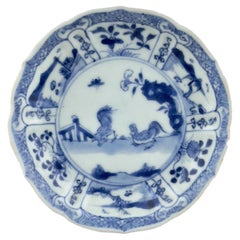
Chicken Pattern Blue and White Saucer c 1725, Qing Dynasty, Yongzheng Era
Located in seoul, KR
Two roosters are depicted with great precision and skill, surrounded by a landscape featuring rocks and a railing. The motif of roosters and natural elements is traditionally symboli...
Category

1720s Vietnamese Qing Antique South Korea - Asian Art and Furniture

Materials

Ceramic, Porcelain

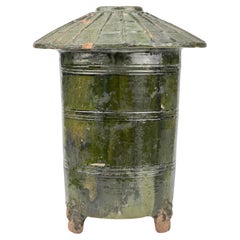
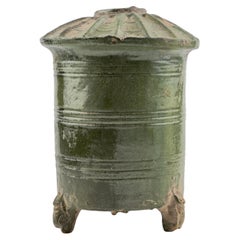
Funerary Model of a Granary, Han dynasty
Located in seoul, KR
Cylindrical vessel on three animal-shaped feet (dragon or snake), wall with profile grooves, roof. Ceramic with green transparent glaze. "Iridescence" is observed in surface. Period...
Category

15th Century and Earlier Hong Kong Han Antique South Korea - Asian Art and Furniture

Materials

Stoneware

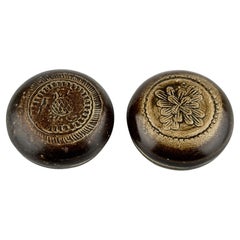
Brown-Glazed Moulded Box And Cover, Fujian Kiln, Yuan-Ming Dynasty
Located in seoul, KR
The circular domed cover moulded with a brown glaze that falls short of the straight foot. The pattern on the left features a central circular design with simple shapes and lines car...
Category

15th Century and Earlier Chinese Ming Antique South Korea - Asian Art and Furniture

Materials

Pottery

Two Glazed Court Attendants, Ming Period (1368-1644)
Located in seoul, KR
Two finely hollow-moulded terracotta statuettes from ancient China, dating to the Ming Dynasty. The figure is depicted standing, dressed in long, flowing robes, painted in vibrant blue or green and deep amber yellow. The hair is styled into an elaborate top-knot, painted in a muted brown. Areas left unpainted would have been 'cold-painted' after firing, contrasting with the vivid fired blue or green and amber pigments. The figure is shown with the left hand raised to the chest, as if holding something, possibly an offering or incense. Figurines like this were placed in tombs to guide the deceased on their journey to the afterlife. The Ming Dynasty was known for its exceptional artistic achievements, partly due to its economic prosperity. Since the Han Dynasty, it was customary to bury terracotta miniatures of everyday objects with the deceased. These items, known as mingqi, or "spirit utensils" and "vessels for ghosts," were believed to help and assist the deceased in the afterlife. Mingqi were crafted in the form of cooking utensils, miniature replicas of houses, temples, furniture, and other items. Anthropomorphic and zoomorphic terracotta figures were also popular, designed to assist, entertain, and recreate the living world for the deceased. Period: Ming Dynasty Medium: Green/blue-glazed Pottery Type: Figure Provenance : Acquired in late 1990s from Hongkong Reference : 1) Ancient & Oriental - Terracotta Tomb Attendants (Type : Highly related) 2) La Maison De La Petite Sara S.r.l. - Archaeology section - A Black glazed Terracotta Statuette, Servant with Trumpet, Ming Dynasty (Price realised : 700 GBP / Type : Highly related) * Ming Dynasty Glazed Pottery Figures Ming Dynasty glazed pottery figures are renowned for their bold color palette, intricate detailing, and lifelike forms, distinguishing them from earlier traditions. These figures, which depict officials, warriors, animals, and mythical creatures, are characterized by high-gloss lead-based glazes in green, amber, ochre, and sancai (three-color) combinations. The thickly applied glaze pools in recesses, creating depth and enhancing sculptural details. With dynamic postures, expressive facial features, and meticulously rendered drapery, these figures reflect the period’s advancement in ceramic craftsmanship, offering a greater sense of movement and realism compared to the rigid and stylized forms of earlier dynasties. A defining characteristic of Ming glazed pottery is its elaborate surface detailing, often achieved through raised relief elements and contrasting glazes. Equestrian figures, for example, feature carefully sculpted saddles, harnesses, and decorative embellishments, while human figures are adorned with intricate robes and headdresses. The large scale of these tomb figures, often more imposing than those from previous periods, underscores the increasing importance of funerary art during the Ming era. Unlike later Qing Dynasty figures...
Category

15th Century and Earlier Hong Kong Ming Antique South Korea - Asian Art and Furniture

Materials

Pottery

Famille Rose Hongxian Marked Sleeve Vase With Flowers, Republic Period
Located in seoul, KR
A stunning 20th-century Chinese Famille Rose vase, also known as a hatstand, from the Republic period, is adorned with a detailed Hongxian mark on the bottom. This vase features exqu...
Category

20th Century Hong Kong Qing South Korea - Asian Art and Furniture

Materials

Ceramic, Porcelain

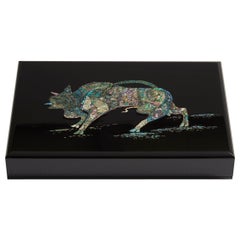
Contemporary Unique Black Document Box with Bull Design by Arijian
Located in Namyangju-si, KR
This artwork uses mother of pearl to re-interpret 'A Bull,' which is an iconic work by one of the most celebrated South Korean artists in modern and contemporary painting...
Category

2010s South Korean Modern South Korea - Asian Art and Furniture

Materials

Wood

Funerary Model of a Granary, Han dynasty
Located in seoul, KR
Cylindrical vessel on three animal-shaped feet (dragon or snake), wall with profile grooves, roof. pottery with green lead glaze. "Iridescence" is observed in surface. Period : Han...
Category

15th Century and Earlier Hong Kong Han Antique South Korea - Asian Art and Furniture

Materials

Pottery

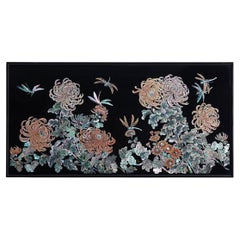
Handcrafted Painting on Wood Panel by Arijian Chrysanthemum 03
Located in Namyangju-si, KR
Wall Decor Handcrafted Mother of Pearl Chrysanthemum Painting on Wood Panel by Arijian.
Category

2010s South Korean South Korea - Asian Art and Furniture

Materials

Wood

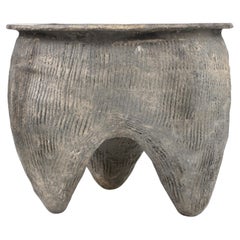
Tripod in the shape of a bronze vessel li, Zhou or Shang dynasty
Located in seoul, KR
The tri-lobed shape and combed ridges of this cooking pot increased heating efficiency by maximizing the vessel’s surface area. The shape of a bronze vessel li, with the body rising out of three hollow pointed legs to a wide moiuth with splayed-out rim. The exterior is covered with cord impressed pattern. The surface shows signs of oxidation from being buried in the soil for a long time. Period: Zhou or Shang dynasty circa 1000 B.C.E. Medium : Grey earthenware with impressed decoration Type : Tripod vessel Size : 29cm (Height) x 35cm(Diameter) Condition : Good Provenance : Acquired in late 1990s from Hongkong Reference : 1) V&A Museum - ACCESSION NUMBER C.87-1954 2) Smithsonian National Museum of Asian Art - ACCESSION NUMBER F1984.13 3) The University of Chicago - OBJECT NUMBER 1989.1 4) The MET - Accession Number: 1972.275.5 5) Kyoto National Museum - Three-footed Earthenware Vessel * Shang Dynasty Pottery (1600-1046 BCE) The Shang dynasty, known for its significant advancements in bronze casting, also produced notable pottery. Shang pottery is characterized by its practical use and simple designs, reflecting the utilitarian needs of the society. The pottery from this period includes both coarse wares used for everyday purposes and fine, high-quality ceramics used in ritualistic contexts. Common forms include jars, bowls, and cups, often with a dark, burnished surface. One distinctive feature of Shang pottery is the use of gray clay, and many pieces display clear signs of oxidation, giving them a unique, mottled appearance. The decorations were typically incised or stamped, featuring geometric patterns, zoomorphic designs, and motifs that are also seen in Shang bronze...
Category

15th Century and Earlier Hong Kong Antique South Korea - Asian Art and Furniture

Materials

Pottery

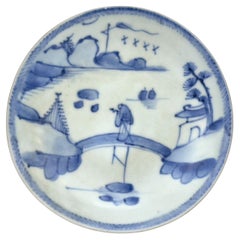
Passing Boat And Bridge Blue And White Saucer C 1725, Qing Dynasty, Yongzheng
Located in seoul, KR
With a medallion of two boats sailing together, passing an island on which a solitary figure stands by or on a bridge, the rim with a narrow heringbone pattern, the reverse glazed ca...
Category

Late 17th Century Vietnamese Qing Antique South Korea - Asian Art and Furniture

Materials

Ceramic, Porcelain

Cizhou carved bean-shaped pillow, Song-Jin Dynasty, 11th-12th century
Located in seoul, KR
Crafted from fine clay, the pillow's surface boasts a sophisticated carved design featuring a floral motif that is both symmetrical and organic. The interplay of the earthy tones and...
Category

15th Century and Earlier Hong Kong Chinoiserie Antique South Korea - Asian Art and Furniture

Materials

Stoneware

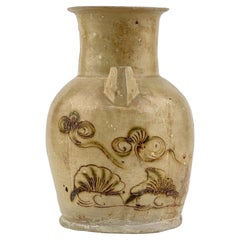
Changsha ewer, Tang Dynasty(618-907)
Located in seoul, KR
Changsha Ware has distinct and recognizable designs and motifs. Painted designs often depict flowers, vines, clouds and mountain landscapes. Some painting is simply splotches of colo...
Category

15th Century and Earlier Hong Kong Tang Antique South Korea - Asian Art and Furniture

Materials

Stoneware

Blue and White Bowl Circa 1725, Qing Dynasty, Yongzheng Era
Located in seoul, KR
Bowl decorated with beautiful floral and bird pattern. Cracks on surface due to underwater excavation condition. Relatively rare piece among Ca Mau ship pieces. Period : Qing Dynast...
Category

1720s Vietnamese Qing Antique South Korea - Asian Art and Furniture

Materials

Ceramic, Porcelain

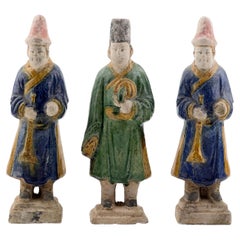
Three Glazed Figures of Musicians, Ming Period (1368-1644)
Located in seoul, KR
Statues of Chinese musicians crafted from terracotta, featuring glazes in green, blue with nice condition. Set on rectangular bases. Compared to other figures, musician figures are relatively rare, two figures with distinctive instrument from that era. Period: Ming Dynasty Medium: Green and Blue glazed Pottery Type: Figure Provenance : Acquired in early 2000s from Hongkong Reference : 1) V&A Museum - Accession number C.1501913 (Type : Closely related) * Ming Dynasty Glazed Pottery Figures Ming Dynasty glazed pottery figures are renowned for their bold color palette, intricate detailing, and lifelike forms, distinguishing them from earlier traditions. These figures, which depict officials, warriors, animals, and mythical creatures, are characterized by high-gloss lead-based glazes in green, amber, ochre, and sancai (three-color) combinations. The thickly applied glaze pools in recesses, creating depth and enhancing sculptural details. With dynamic postures, expressive facial features, and meticulously rendered drapery, these figures reflect the period’s advancement in ceramic craftsmanship, offering a greater sense of movement and realism compared to the rigid and stylized forms of earlier dynasties. A defining characteristic of Ming glazed pottery is its elaborate surface detailing, often achieved through raised relief elements and contrasting glazes. Equestrian figures, for example, feature carefully sculpted saddles, harnesses, and decorative embellishments, while human figures are adorned with intricate robes and headdresses. The large scale of these tomb figures, often more imposing than those from previous periods, underscores the increasing importance of funerary art during the Ming era. Unlike later Qing Dynasty figures...
Category

15th Century and Earlier Hong Kong Ming Antique South Korea - Asian Art and Furniture

Materials

Pottery

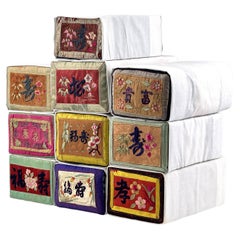
Ten Auspicious Korean Traditional Embroidered Pillows
Located in seoul, KR
Ten traditional embroidered pillows given by a bride to her husband as part of her dowry during marriage in Korea's modern era. These embroidered designs convey auspicious messages r...
Category

19th Century Korean Antique South Korea - Asian Art and Furniture

Materials

Fabric

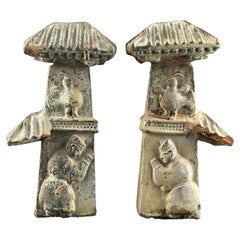
Gate Pillar, Han Dynasty(206BC-220AD)
Located in seoul, KR
The Han Dynasty gate pillar held by the Asian Art Museum in San Francisco and this gate pillar are the only known examples of their type worldwide, highlighting its extraordinary rar...
Category

15th Century and Earlier Hong Kong Han Antique South Korea - Asian Art and Furniture

Materials

Earthenware

Changsha Bowl from Belitung Ship, Tang Dynasty
Located in seoul, KR
The edges have been dipped in four places with brown, probably iron-oxide. The well of the bowl is freely painted in deep green and coffee coloured brown. These are characteristic fe...
Category

15th Century and Earlier Indonesian Tang Antique South Korea - Asian Art and Furniture

Materials

Pottery

Still Thinking About These?

All Recently Viewed