Sweden - Figurative Paintings

to
33
68
45
59
37
61
Overall Width
to
Overall Height
to
28
95
93
54
13
19
13
7
5
2
1
2
6
13
52
38
25
20
11
2
1
129
116
22
159
70
52
37
36
31
23
21
17
17
16
15
14
13
12
12
10
10
8
8
248
228
179
178
48
24
16
6
3
3
199
1
22,239
20,837
Item Ships From: Sweden
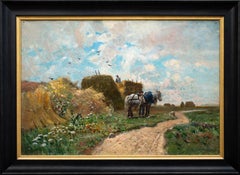
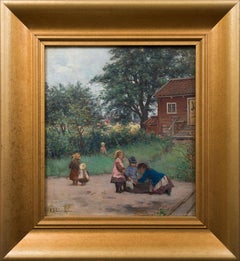
Harvest Time by Hjalmar Sandberg, Swedish Artist, Oil on Canvas, Signed, 1876
Located in Stockholm, SE
Hjalmar Sandberg (1847-1888) Sweden Harvest Time, 1876 oil on canvas canvas size 14.96 x 18.11 inches (38 x 46 cm) frame 18.70 x 25.59 inches (47.5 ...
Category

1870s Impressionist Sweden - Figurative Paintings

Materials

Canvas, Oil

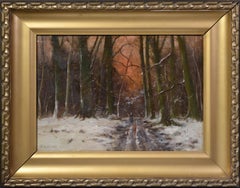
Antique American Impressionist Winter Landscape Oil Painting Signed Framed
By Walter Launt Palmer
Located in Stockholm, SE
This captivating winter landscape was painted in early 20th century, signed lower left "W.L. Palmer", attributed to American Impressionist Walter Launt Palmer (1854–1932). Trained in...
Category

Early 20th Century American Impressionist Sweden - Figurative Paintings

Materials

Alabaster

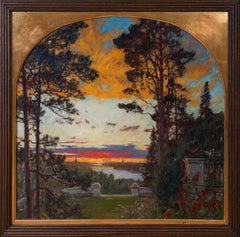
A view of Stockholm from an imaginary terrace, 1906
Located in Stockholm, SE
Gottfrid Kallstenius (Västervik 1861–1943 Storängen, Stockholm) A view of Stockholm from an imaginary terrace, 1906 Signed and dated “G. Kallstenius -06” Arched top Oil on canvas u...
Category

Early 1900s Romantic Sweden - Figurative Paintings

Materials

Canvas, Oil

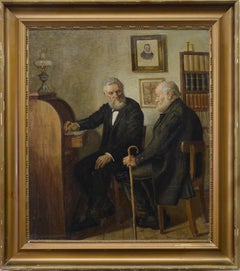
1916 Danish Interior Genre Painting Conversation w Reverend Scene Framed Oil
Located in Stockholm, SE
Painting is signed for acknowledged artist Niels Holbak 1884-1954, who educated at the Art Academy in Finland 1909-10 and was taught at the Art Academy in Copenhagen from 1912-1914 a...
Category

1910s Realist Sweden - Figurative Paintings

Materials

Canvas, Wood, Oil

Marilyn Warhol (El Jardin de Hollywood)
By Antonio de Felipe
Located in Malmo, SE
Acquired directly from the artist. Free shipment worldwide. Painted on the sides. No frame needed. The work of Antonio de Felipe is a constant source of fascination and surprises. ...
Category

Early 2000s Pop Art Sweden - Figurative Paintings

Materials

Acrylic

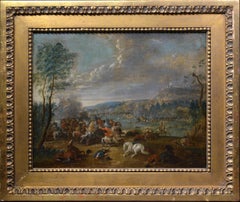
Early 18th Century Antique Flemish Oil Painting Cavalry Battle Scene Framed
By Pieter Van Bredael
Located in Stockholm, SE
This impressive Old Master oil painting, created in the early 18th century, is attributed to Jan Pieter van Bredael the Younger, a renowned Flemish artist who lived at the turn of th...
Category

Early 18th Century Flemish School Sweden - Figurative Paintings

Materials

Canvas, Wood, Oil

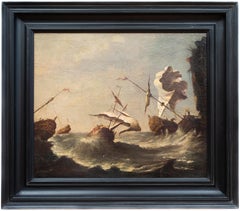
Shipping in Stormy Waters, Attributed to Italian Artist Francesco Guardi
By Francesco Guardi
Located in Stockholm, SE
The splendour of the tragic sea Francesco Guardi and maritime painting in Venetian art No Venetian painter was a stranger to the sea. After all, Venice was not only one of the most prominent ports of the Mediterranean, but indeed a city literally submerged in the ocean from time to time. Curiously however, the famous Venetian school of painting showed little interest in maritime motifs, favouring scenes from the iconic architecture of the city rather than seascapes. That is why this painting is a particularly interesting window into not only the painter Francesco Guardi himself – but to the significance of the element of water in art history, in absence as well as in the centre of attention. Whether it be calm, sunny days with stunning views of the palaces alongside the canals of Venice or – more rarely – stormy shipwrecking tragedies at sea, water as a unifying element is integral to the works of painter Francesco Guardi (1712–1793). During his lifetime, Venetian art saw many of its greatest triumphs with names like Tiepolo or Canaletto gaining international recognition and firmly establishing Venice as one of the most vibrant artistic communities of Europe. While the city itself already in the 18th century was something of an early tourist spot where aristocrats and high society visited on their grand tour or travels, the artists too contributed to the fame and their work spread the image of Venice as the city of romance and leisure to an international audience, many of whom could never visit in person. Still today, the iconic image of Venice with its whimsical array of palaces, churches and other historic buildings is much influenced by these artists, many of whom have stood the test of time like very well and remain some of the most beloved in all of art history. It was not primarily subtility, intellectual meanings or moral ideals that the Venetian art tried to capture; instead it was the sheer vibrancy of life and the fast-paced city with crumbling palaces and festive people that made this atmosphere so special. Of course, Venice could count painters in most genres among its residents, from portraiture to religious motifs, history painting and much else. Still, it is the Vedutas and views of the city that seems to have etched itself into our memory more than anything else, not least in the tradition of Canaletto who was perhaps the undisputed master of all Venetian painters. Born into his profession, Francesco lived and breathed painting all his life. His father, the painter Domenico Guardi (1678–1716) died when Francesco was just a small child, yet both he and his brothers Niccolò and Gian Antonio continued in their fathers’ footsteps. The Guardi family belonged to the nobility and originated from the mountainous area of Trentino, not far from the Alps. The brothers worked together on more challenging commissions and supported each other in the manner typical of family workshops or networks of artists. Their sister Maria Cecilia married no other than the artist Giovanni Battista Tiepolo himself, linking the family to the most renowned Venetian name of the time. During almost a decade, Guardi worked in the studio of Michele Giovanni Marieschi, sometimes simply known as Michiel, a painted similar in both style and motif. Canaletto is, however, the artist Guardi is most often compared to since they shared a mutual fascination for depicting the architecture and cityscape of Venice. During the course of his career, Guardi tried his hand in many different genres. He was as swift in painting landscapes, Vedutas of Venice, sacred motifs, interiors and architectural compositions as he was in a number of other motifs. His style is typical of the Venetian school but also distinct and personal once we look a little closer. There is an absolute certainty in the composition, the choice of which sometimes feels like that of a carefully calculated photograph – yet it is also very painterly, in the best sense of the word: fluid, bold, sensitive and full of character. The brushwork is rapid, intense, seemingly careless and extraordinarily minute at the same time; fresh and planned in a very enjoyable mixture. His interiors often capture the breath-taking spacious glamour of the palaces and all their exquisite decor. He usually constructed the motif through remarkably simple, almost spontaneous yet intuitively precise strokes and shapes. The result was a festive, high-spirited atmospheric quality, far away from the sterile and exact likeness that other painters fell victim to when trying to copy Canaletto. The painting here has nothing of the city of Venice in it. On the contrary, we seem to be transported far away into the solitary ocean, with no architecture, nothing to hold on to – only the roaring sea and the dangerous cliffs upon which the ships are just moments away from being crushed upon. It is a maritime composition evoking both Flemish and Italian precursors, in the proud tradition of maritime painting that for centuries formed a crucial part of our visual culture. This genre of painting is today curiously overlooked, compared to how esteemed and meaningful it was when our relationship to the sea was far more natural than it is today. When both people and goods travelled by water, and many nations and cities – Venice among them – depended entirely on sea fare, the existential connection to the ocean was much more natural and integrated into the imagination. The schools and traditions of maritime art are as manifold as there are countries connected to the sea, and all reflect the need to process the dangers and wonders of the ocean. It could symbolize opportunity, the exciting prospects of a new countries and adventures, prospering trade, beautiful scenery as well as war and tragedy, loss of life, danger and doom. To say that water is ambivalent in nature is an understatement, and these many layers were something that artists explored in the most wondrous ways. Perhaps it takes a bit more time for the modern eye to identify the different nuances and qualities of historic maritime paintings, they may on first impression seem hard to differentiate from each other. But when allowing these motifs to unfold and tell stories of the sea in both fiction and reality – or somewhere in between – we are awarded with an understanding of how the oceans truly built our world. In Guardi’s interpretation, we see an almost theatrically arranged shipwrecking scene. No less than five ships are depicted right in the moment of utter disaster. Caught in a violent storm, the waves have driven them to a shore of sharp cliffs and if not swallowed by the waves, crushing against the cliffs seems to be the only outcome. The large wooden ships are impressively decorated with elaborate sculpture, and in fact relics already during Guardi’s lifetime. They are in fact typical of Dutch and Flemish 17th century ships, giving us a clue to where he got the inspiration from. Guardi must have seen examples of Flemish maritime art, that made him curious about these particular motifs. One is reminded of Flemish painters like Willem van de Velde and Ludolf Backhuysen, and this very painting has indeed been mistakenly attributed to Matthieu van Plattenberg...
Category

18th Century Old Masters Sweden - Figurative Paintings

Materials

Canvas, Oil

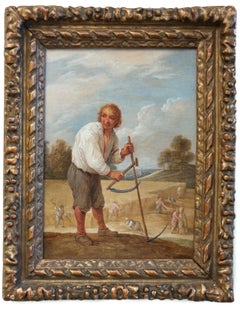
Peasants in a Cornfield (Boer in het veld) by David Teniers the Younger
By David Teniers the Younger
Located in Stockholm, SE
Remembering the magic of everyday life moments in the art of David Teniers: The art of David Teniers the Younger (1610–1690) coincided with the heyday of the Flemish Baroque and cap...
Category

Late 17th Century Old Masters Sweden - Figurative Paintings

Materials

Canvas, Oil

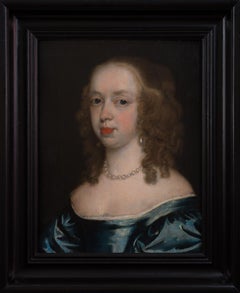
Portrait of a lady in blue dress ”Countess of Peterborough”
Located in Stockholm, SE
This exquisite portrait, with its new attribution to Theodore Russel, is believed to depict Lady Penelope O'Brien, daughter of Barnabas O'Brien, the sixth Earl of Thomond, and wife of the Earl of Peterborough, whom she married in 1644. The painting thus belongs to a historically significant period, capturing the refined elegance of the time. The portrait has a prestigious provenance from Elleholms Hofgård, a historic estate in Mörrums socken, Blekinge, Sweden. Elleholms Hofgård, whose two-story, timber-framed main building was constructed in 1730 and expanded in 1804, has changed ownership several times since the 17th century. The ancestors of the present owners acquired the estate in 1915, and from the 20th century until 2023, this painting was prominently displayed in the estate’s main building, making it an integral part of the estate’s history. Theodore Russel, an English portrait artist born in 1614, studied under the renowned Sir Anthony van Dyck, whose influence can be seen in Russel’s meticulous style. Russel often painted on cabinet-sized panels, such as this one, which measures approximately 39 x 31 cm. This preference for panels is a notable characteristic that sets him apart from contemporary artists like Sir Peter Lely, who exclusively used canvas. The size of the panel is a key reason for the reattribution to Russel from Peter lely, as Lely never used panels for his works. This distinctive format, along with Russel’s characteristic style, strongly supports the new attribution. Russel, the son of Nicasius Rousseel, a goldsmith and jeweler to James I and Charles I, refined his skills under the mentorship of his uncle, the famous portrait painter Cornelis Janssen. He also worked as an assistant and copyist for van Dyck, further honing his artistic style. This captivating portrait exemplifies Russel’s craftsmanship, reflecting the elegance of the period’s fashion and the artist's refined techniques. oil on wood panel with indistinct inscription Countess of Peter[...] upper left. with inscription on the reverse: ”Countess of Peterborough. P. Lely 1670. S Beatty Picture Restorer [...] Warwick”. unframed 39 x 31 cm = 15.35 x 12.2 inches framed 52 x 41.5 cm = 20.47 x 16.34 inches Condition: The portrait has just been restored by a professional art conservator in Stockholm and is now in a very good condition. The colors are vivid, and the skin tones appear more natural than before. It is a very fine painting. The frame is newly made and included. Provenance: Elleholms Hofgård, Mörrums socken, Blekinge, Sweden **; Stockholms Auktionsverk, Fine Art & Antiques Autumn...
Category

17th Century Old Masters Sweden - Figurative Paintings

Materials

Oil, Wood Panel

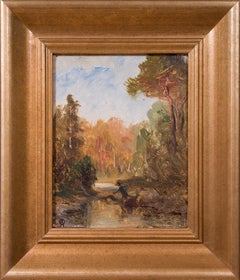
Impressionist Oil on Paper: Man Crossing a Stream, Late 19th Century
Located in Stockholm, SE
oil on paper mounted on cardboard unframed 18.5 × 14.5 cm (7.3 × 5.7 in) framed 29.5 × 25.5 cm (11.6 × 10 in) signed with monogram “OA” Provenance: From the artist’s estate; by desc...
Category

Late 19th Century Impressionist Sweden - Figurative Paintings

Materials

Oil, Board, Laid Paper

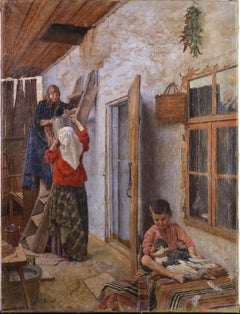
Lovely Farm House Scene by Russian Master Bershadsky Genre Oil Painting
Located in Stockholm, SE
Signed lower left and dated: 15/IX, 1895, Y. Bershadsky - Yuliy (Ioil-Ruvin) Rafailovich Bershadsky (1869 - 1956), Russian - USSR painter and teacher, professor, honored artist of th...
Category

1890s Realist Sweden - Figurative Paintings

Materials

Canvas, Wood, Oil

Julius Kronberg’s Angelica – A Romantic Heroine of Renaissance Legend
Located in Stockholm, SE
Literary Origins of Angelica The subject of this painting is Angelica, a princess from the epic chivalric romances of the Italian Renaissance. She first appears in Matteo Maria Boiardo’s Orlando Innamorato (1483) and reappears famously in Ludovico Ariosto’s Orlando Furioso (1532). In these poems – part of the Matter of France cycle of Charlemagne and his paladins – Angelica’s extraordinary beauty ensnares many knights, including Orlando (Roland) and his cousin Rinaldo, sparking rivalries and adventures. Ariosto’s narrative particularly highlights Angelica’s tumultuous journey: at one point she is stripped and chained to a rock as a sacrifice to a sea monster (a scene mirroring the myth of Andromeda) before being dramatically rescued by the valiant knight Ruggiero on his winged horse. Ultimately, however, Angelica chooses her own destiny. She falls in love with a humble Saracen soldier, Medoro, whom she nurses back to health, and she returns with him to her far-off Asian kingdom – an affair that drives the heartbroken Orlando to madness. This independent resolution (marrying outside the circle of Christian knights) made Angelica an emblem of feminine agency and romantic idealism in Renaissance literature. Her story remained popular in art and literature through the centuries, symbolizing the allure and elusiveness of love. Kronberg’s Portrayal and Composition In Julius Kronberg...
Category

Late 19th Century Realist Sweden - Figurative Paintings

Materials

Oil, Wood Panel

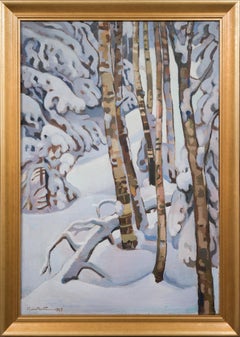
Birch Trees and Snow-Laden Spruces, 1927
Located in Stockholm, SE
We are pleased to offer an exquisite painting by Finnish artist Reino Partanen (1889–1972), titled Birch Trees and Snow-Laden Spruces. Created in 1927, this impressive work measures ...
Category

1920s Post-Impressionist Sweden - Figurative Paintings

Materials

Canvas, Oil

Abraham and the Sacrifice of His Son Isaac by Adriaen Van Stalbemt, C. 1605-1610
Located in Stockholm, SE
Artist: Adriaen van Stalbemt (Stalbempt) 1580-1662 Title: Abraham and the Sacrifice of His Son Isaac “Das Opfer des Abraham” According to the Old...
Category

Early 1600s Old Masters Sweden - Figurative Paintings

Materials

Copper

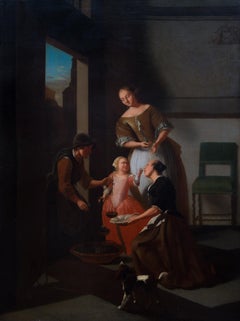
The Grape Seller - Workshop of Jacob Ochtervelt
Located in Stockholm, SE
Jacob Ochtervelt (Workshop) The Grape Seller oil on canvas unframed: 80.7 x 61 cm.; 31 ¾ x 24 in. framed: 109.5 x 89 cm.; 43 1/8 x 35 in. Essay: This captivating piece, originating from the studio of the revered Dutch artist Jacob Ochtervelt, mirrors the composition of a signed and dated 1669 canvas by Ochtervelt that is presently housed in the Hermitage museum. Its subject, "The Grape Seller" immerses us in a typical 17th-century interior, replete with characters from various strata of society. At the center, a fruit vendor is depicted bending over to weigh grapes for the buyer. A child hands some of the grapes to her mother to taste, their attentive maid standing by. The backdrop showcases typical Ochtervelt details: a hint of the city visible through the doorway, light filtering in through an overhead window, and a playful dog at their side. The exquisite quality of the piece is evident in the minutiae, such as the intricate detailing of the mother's earring, which in reality spans only a few millimeters yet boasts impressive attention to detail. Initially, Sotheby's considered this work to be an autograph piece by Ochtervelt. But due to some uncertainty, it was auctioned as Workshop of Jacob Ochtervelt. On the other hand, the esteemed Cabinet Turquin in Paris leans toward attributing the piece directly to Jacob Ochtervelt himself. The painting is framed in an authentic period frame, which has been delicately restored by Stockholm's Förgyllning och Bildhuggeri. The frame retains its age-old patina and, while in used condition, has minor imperfections adding to its charm. Another interesting thing worth to mention is the painting's provenance. It was once owned by the 1st Viscount Rothermere (1868-1940), the founder of the Daily Mail and Daily Mirror...
Category

17th Century Old Masters Sweden - Figurative Paintings

Materials

Canvas, Oil

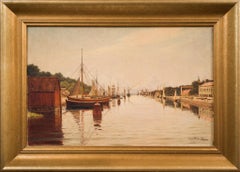
Halmstad Harbour Seen From the North, 1889
Located in Stockholm, SE
The painting "Halmstad Harbour Seen From the North" by Oscar Ohlson is a captivating snapshot of daily life and historical architecture, frozen in time from the year 1889. With a meticulous eye for detail, Ohlson has rendered approximately 25 boats in the harbor, each brimming with the quiet bustle of daily chores. The painting invites viewers to step into a moment where people converse, work, and seek respite from the sun under shared umbrellas, while wisps of smoke subtly rise from several boats, suggesting the presence of life and activity beyond the canvas. In this vibrant scene, a man carries a sack, perhaps fresh merchandise from one of the docked vessels, while others engage in conversation, highlighting the social tapestry of the harbor. Ohlson's masterful use of light reflects on the water, creating a shimmering path that leads the eye to the majestic Halmstad Castle, which adorns the right side of the painting. This historic building, beautifully situated by the Nissan river and not far from the sea, is a testament to Halmstad's past as a Danish territory. Constructed in the early 17th century during the reign of King Christian IV, the castle stands as a reminder of the town's rich history and cultural heritage. The first building to the right, once part of this historic tableau, has been removed to accommodate modern necessities, replaced by a road that now runs through its former site. This juxtaposition of past and present is a poignant commentary on the evolution of cities and the sacrifices made in the name of progress. Halmstad itself, a town that straddles the Nissan river, retains much of its early 20th-century character in its city core. Low brick and half-timbered houses, some dating back to the 17th century, dot the landscape. The town center on the west side of Nissan is bordered by remnants of early 17th-century fortifications, including the 1600s castle, Norre Port from 1601, and King Charles XI's path along the old fortress wall. At the heart of the town is Stora Torg with Carl Milles' Europa and the Bull fountain from 1926, and the town hall built in 1938. The city layout, influenced by Renaissance planning, converges at Stora Torg, which is also home to the town's sole medieval building, the brick hall church of St. Nikolai from the 14th century. Oscar Ohlson (1847-1912), a native of Linneryd, Småland, was a multifaceted individual. Beginning his career with a legal degree from Uppsala University in 1870, Ohlson's passion for the arts led him to pursue music studies before dedicating himself to art under the guidance of Alfred Wahlberg...
Category

1880s Realist Sweden - Figurative Paintings

Materials

Canvas, Oil

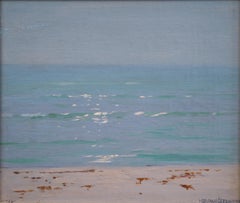
Ocean View from the West Coast by Swedish Artist Herman Österlund, 1916
Located in Stockholm, SE
Herman Österlund (1873-1964) Sweden Ocean View from the West Coast, 1916 oil on canvas signed and dated Herman Österlund 1916 canvas dimensions 14.37 x 16.73 inches (36.5 x 42.5 cm...
Category

1910s Naturalistic Sweden - Figurative Paintings

Materials

Canvas, Oil

Warrior Figures Conversating in Capriccio Landscape 17-18 Century Oil Painting
Located in Stockholm, SE
In the foreground, we see two conquistadors and three natives accompanying them landing on the shore, presumably on a reconnaissance mission in an unfamiliar bay. Perhaps they are in...
Category

1690s Baroque Sweden - Figurative Paintings

Materials

Canvas, Wood, Oil

A Young Woman With Her Animals, Original Oil Painting From 1862
Located in Stockholm, SE
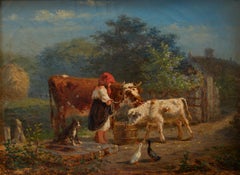
This painting by Gustaf Brandelius, a 19th-century Swedish artist, evokes the pastoral tranquility and rural life of the era. Brandelius was not only a painter but also served in the...
Category

19th Century Sweden - Figurative Paintings

Materials

Canvas, Oil

Post-Impressionistic Painting From Saint Cloud, Paris, 1912 by Dick Beer
Located in Stockholm, SE
Dick Beer (b. London 1893 - d. Stockholm 1938) Saint Cloud, 1912 oil on board board dimensions 40.5 x 32.5 cm frame 51.5 x 43.5 cm signed Dick Beer painted 1912 Exhibited: The Swedish-French Art Gallery, Memorial Exhibition, Catalog nr 5, 1942 Provenance: A private collection, Sweden Dick Beer (1893-1938) Dick Beer was born in London in 1893. His father, John Beer (1853-1906), was a Swedish painter from Stockholm who had a career mainly as a watercolour painter with motifs of horses from racetracks and fox hunts from the countryside. Barely fifteen years old, Dick Beer became an orphan and came to Sweden in 1907. Already in 1908-1909, he started at Althin's painting school in Stockholm. And later, at the Royal Academy of Arts from 1910-1912. His teachers were, among others, Gustaf Cederström, Oscar Björk and Alfred Bergström...
Category

1910s Post-Impressionist Sweden - Figurative Paintings

Materials

Oil, Board

Landscape from the North of Sweden by Swedish Artist Otto Lindberg, 1926
Located in Stockholm, SE
Otto Lindberg was a Swedish artist born in Söderhamn in 1880. Lindberg was known for his landscapes and marine paintings. He studied at the Royal Academy of Fine Arts in Stockholm an...
Category

1920s Post-Impressionist Sweden - Figurative Paintings

Materials

Canvas, Oil

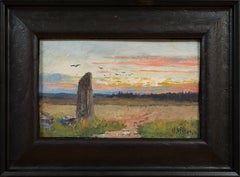
The Memorial Stone, Uppland (Swedish Bautasten i Uppland) 1901
By Olof Hermelin
Located in Stockholm, SE
This atmospheric study shows a solitary standing stone rising in the flat landscape of Uppland, silhouetted against a luminous sunset sky. Broad, animated brushstrokes capture the sh...
Category

Early 1900s Post-Impressionist Sweden - Figurative Paintings

Materials

Metal

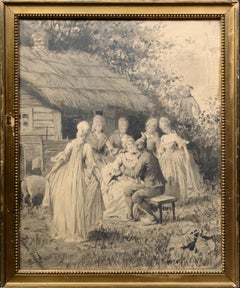
Rare Original Swedish Ink Wash Drawing by Torsslow 1890 Andersen Fairy Tale Art
Located in Stockholm, SE
This artwork depicts a tragicomic “kiss scene” from Hans Christian Andersen's legendary fairy tale "The Swineherd", created in 1890 by renowned Swedish artist Mats Einar Torsslow (18...
Category

Late 19th Century Realist Sweden - Figurative Paintings

Materials

Wood, Paper, Ink

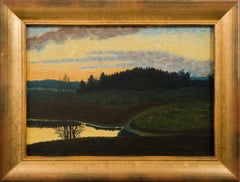
Evening Glow by Swedish Artist Gustav Andreas Gehlin
Located in Stockholm, SE
Evening Glow by Gustav Andreas Gehlin This exquisite oil painting, "Evening Glow," is a captivating work by the Swedish artist and photographer Gustav Andreas Gehlin. He studied un...
Category

Early 20th Century Sweden - Figurative Paintings

Materials

Canvas, Oil

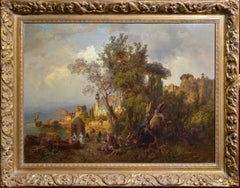
Evening on River German Master Caucasian Panoramic Landscape 19th century
Located in Stockholm, SE
Attributed Paul Von Franken (1818-1884), famous Gemany a genre and landscape painter, signed bottom right. Fertile scenery coastal town with castle, mosque, minaret, large travelers ...
Category

1850s Realist Sweden - Figurative Paintings

Materials

Canvas, Wood, Oil

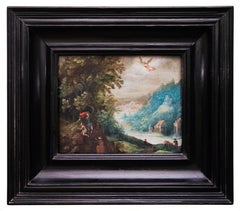
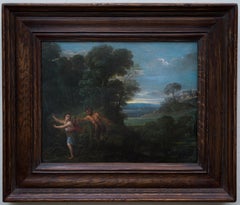
Landscape With Pan and Syrinx, Flemish School From the 1600s, Oil on Copper
Located in Stockholm, SE
Flemish School, 1600s Landscape With Pan and Syrinx painted around the 1600s oil on copper 19 x 23.5 cm frame 29 x 34 cm Hand-made oak frame by Swedish frame maker Christer Björkma...
Category

17th Century Old Masters Sweden - Figurative Paintings

Materials

Copper

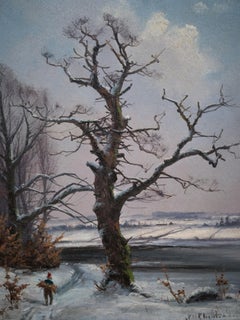
Winter Landscape With an Old Tree By Danish Artist Nils Hans Christiansen
By Nils Hans Christiansen
Located in Stockholm, SE
Nils Hans Christiansen (1850-1929) Denmark Winter Landscape With an Old Tree oil on canvas late 19th century signed canvas dimensions 15.94 x 12.79 inches (40.5 x 32.5 cm) frame 2...
Category

1890s Impressionist Sweden - Figurative Paintings

Materials

Canvas, Oil

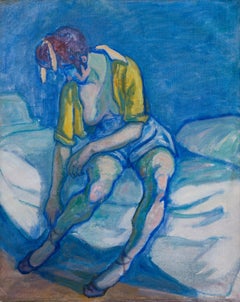
First Time on the Art Market - Dancer Tying Her Shoes, c. 1916
Located in Stockholm, SE
Dick Beer (b. London 1893 - d. Stockholm 1938) Dancer Tying Her Shoes, c. 1916 (Dansösen knyter sina skor, c.1916) oil on canvas unframed 102 x 80 cm Provenance: Within the fami...
Category

1910s Post-Impressionist Sweden - Figurative Paintings

Materials

Canvas, Oil

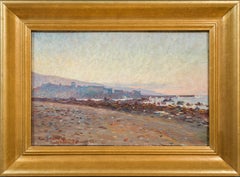
Early Painting from Puerto Orotava (Puerto de la Cruz), Tenerife, 1894
Located in Stockholm, SE
This small oil painting on board (21.5 x 33 cm) is a rare early work by Swedish landscape painter Carl Johansson (1863–1944). Painted during the artist’s 1894 travels to the Canary I...
Category

1890s Impressionist Sweden - Figurative Paintings

Materials

Oil, Board

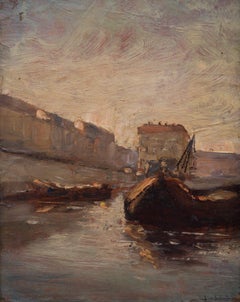
Canal Scene, Possibly Paris. Painted Early 1900s
Located in Stockholm, SE
For sale is a captivating painting by the Swedish artist, Rikard Lindström (1882-1943). Depicting a picturesque water canal, with charming houses lini...
Category

Early 1900s Post-Impressionist Sweden - Figurative Paintings

Materials

Oil, Laid Paper

Hilding Werner (1880-1944) - Moonlight Over Krokvattnet (near Glafsfjorden)
Located in Stockholm, SE
Hilding Werner (1880-1944) was a Swedish artist known for his portraits, romantic landscape paintings of Värmland, and caricature drawings. We are privi...
Category

Early 20th Century Romantic Sweden - Figurative Paintings

Materials

Canvas, Oil

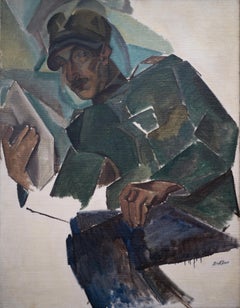
Cubist Portrait of Gabriele Varese (in Italian uniform), 1919
Located in Stockholm, SE
Dick Beer (b. London 1893 - d. Stockholm 1938) Portrait of Gabriele Varese (in Italian uniform), 1919 oil on canvas mounted on panel 116 x 90 cm stamp signature Exhibited: Solo exhibition, Stockholm, Nov-Dec 1917; The Royal Academy Stockholm 1973; Åmells Konsthandel – En internationell kubist, Stockholm & London 2008 Hälsinglands Museum 2011 Millesgården – Dick Beer – Impressionist & Kubist, 2012 Provenance: Within the family Beer until today Dick Beer was born in 1893 in London as Richard Beer, the youngest of five brothers. His father, John Beer (1853-1906), was a watercolourist who was born in Stockholm and had left Sweden at the age of 17. John Beer instructed his sons in drawing and painting, among other things. A number of sketchbooks bear testimony to the boys’ talent. Dick Beer’s parents died in 1906 and 1907. Barely 15 years old, Beer arrived in Sweden as an orphan. First he lived with relatives and finally he ended up at Reverend Laurell in Västergötland. Dick Beer began his artistic studies at the Althin School of Painting in Stockholm in 1908 and continued at the Royal Academy of Arts in the autumn of 1910, but in September 1912 he broke off his studies and travelled to Paris. He rented a studio and enrolled at the Colarossi and Grande Chaumière academies. In the summer of 1913, Dick Beer travelled to Pont-Aven in Bretagne in order to paint. In September the same year, he held his first solo exhibition in Stockholm which he gave the French title Exposition des tableaux de Bretagne et autour de Paris. The exhibition proved a success. Many of the paintings were executed in a light palette in a style inspired by the impressionists. In 1914, Dick Beer undertook an extensive study trip to Italy, Tunis, Morocco and Spain, which resulted in canvases overflowing with colours and light. When the French army mobilised, he volunteered and was enlisted in the French Foreign Legion. In 1915 Dick Beer sustained severe head injuries in a grenade attack, which resulted in deafness and a nervous condition that would plague him for the rest of his life. Two of his brothers died the following year, fighting for the English army. Dick Beer was hospitalised and convalesced at Château de Rochefort. Here he started painting again, in an impressionist style, a painting dominated by blue and green hues. In 1918, Dick Beer married Ruth Öhrling, a dentist, and their son John was born later in the year. During this time, Beer began experimenting with cubist painting and created several large compositions, including the painting “The Arab Café”. In the years that followed, Dick Beer was based in Paris, where he often moved house. He was instructed by André Lhote, who encouraged his students to work freely in the studio and provided them with individual critique. Beer often travelled to Bretagne or Provence. His artist friends came from all over Europe and included Amedeo Modigliani. Dick Beer exhibited fairly regularly in Paris between 1919 and 1934 and made a name for himself in French artist circles. In the summers, Ruth regularly rented a house in the countryside, often at Lake Mälaren. She kept a large house with many models and friends and there was a lot of painting and discussions. In 1933, the couple divorced but Ruth still loved Dick and continued to support him financially for the rest of his life. Dick Beer also exhibited in Sweden, albeit irregularly due to his failing health. In the 1920s and 1930s, Beer continued to pursue an expressionist painting with intense colours and unexpected perspectives, but eventually he veered towards more naturalistic forms, including a large number of nudes. He also painted several portraits of artists, politicians and writers. In 1938, Dick Beer sojourned in Arles. The budding photographer Christer Strömholm...
Category

1910s Cubist Sweden - Figurative Paintings

Materials

Canvas, Oil, Panel

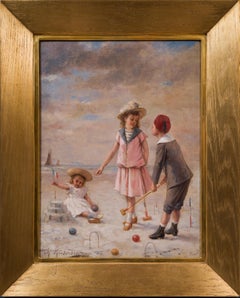
Enfants à la plage (“Children at the Beach”)
Located in Stockholm, SE
Albert Roosenboom was a Belgian genre painter celebrated for his elegant depictions of everyday life in the mid to late 19th century. A pupil of the renowned Constantin Meunier, Roos...
Category

1870s Romantic Sweden - Figurative Paintings

Materials

Oil, Wood Panel

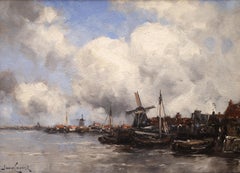
View of a Dutch Town by Jan van Couver (Hermanus Koekkoek Jr.) Impressionism
By Jan Van Couver
Located in Stockholm, SE
Hermanus Koekkoek the Younger was part of the famous Koekkoek artist family: grandson of Johannes Hermanus Koekkoek, nephew of the landscape painter, Barend Cornelis Koekkoek...
Category

Late 19th Century Impressionist Sweden - Figurative Paintings

Materials

Canvas, Oil

Post-Impressionist Painting By Dick Beer, Stormy Weather in St.Arnoult, 1917
Located in Stockholm, SE
Dick Beer (b. London 1893 - d. Stockholm 1938) Title: Stormy Weather in St.Arnoult Dick Beer was born in London in 1893. His father, John Beer (1853-1906), was a Swedish painter from Stockholm who had a career mainly as a watercolour painter with motifs of horses from racetracks and fox hunts from the countryside. Barely fifteen years old, Dick Beer became an orphan and came to Sweden in 1907. Already in 1908-1909, he started at Althin's painting school in Stockholm. And later, at the Royal Academy of Arts from 1910-1912. His teachers were, among others, Gustaf Cederström, Oscar Björk and Alfred...
Category

1910s Post-Impressionist Sweden - Figurative Paintings

Materials

Canvas, Oil

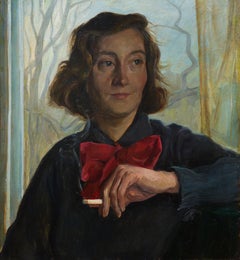
Portrait of A Woman with Red Bow, 1940
Located in Stockholm, SE
Eric Johansson's "Woman with Red Bow" (1940) We are delighted to present for sale the evocative portrait “Woman with Red Bow” by the distinguished artist Eric Johansson, painted in ...
Category

1940s Sweden - Figurative Paintings

Materials

Oil, Wood Panel

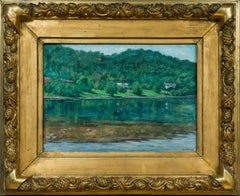
Tranquil Reflections – Swedish Summer Landscape by Olof Arborelius
Located in Stockholm, SE
Olof Arborelius (1842-1915) Sweden Landscape, likely from the Uddevalla area oil on canvas signed O.Arb.s  unframed: 25 x 35 cm (9 7/8 x 13 3/4 in) framed: 43.5 x 53 cm (17 1/8 x 2...
Category

Early 20th Century Post-Impressionist Sweden - Figurative Paintings

Materials

Canvas, Oil

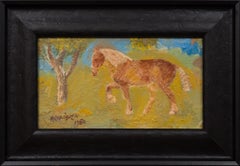
Charming Naivist Painting Depicting a Horse
Located in Stockholm, SE
This charming naivist painting by Swedish artist Olof (Olle) Casimir Ågren (1874–1962) depicts a horse standing gracefully beside a tree. Executed with bold, textured brushstrokes an...
Category

1950s Naturalistic Sweden - Figurative Paintings

Materials

Oil, Board

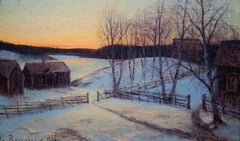
Sunset in the Village by Swedish Artist Edward Rosenberg, 1915, Oil on Canvas
Located in Stockholm, SE
Edward Rosenberg is best known for his landscape paintings with winter motifs around Lake Mälaren. He studied at the Art Academy in Stockholm 1879–1882. And he had his first success in 1882 when he received the Royal Medal...
Category

1910s Realist Sweden - Figurative Paintings

Materials

Canvas, Oil, Board

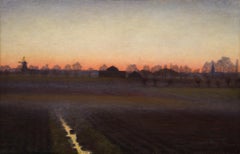
Twilight Landscape with Windmill and Church, 1891
Located in Stockholm, SE
"Twilight Landscape with Windmill and Church" is a captivating work by Swedish artist Albert Larsson, painted in 1891 when Larsson was 22 years old. The painting captures a landscape steeped in the quietude of dusk, with a sky ablaze in hues of red and orange, signalling the end of the day. The silhouettes of trees are rendered with astonishing detail against the twilight sky, showcasing Larsson's early mastery of light and shadow. Dominating the pastoral scene is a traditional windmill, its blades stilled against the sky, alongside the spire of a church that pierces the horizon. These structures, together with the meticulously painted trees, are testaments to the human presence within the natural world, suggesting a harmony between the two. A notable feature is the small water-filled furrow in the field, which catches the fading light of the sky, creating a pathway of reflection leading the eye through the composition. This detail highlights Larsson's skill in using light to draw attention to elements within his paintings. Albert Larsson, born on November 4, 1869, in Malmö and passing on August 31, 1952, in Lund, was an artist deeply influenced by his education in Copenhagen at the Art Academy and later at Peder Severin Krøyer...
Category

1890s Romantic Sweden - Figurative Paintings

Materials

Canvas, Oil

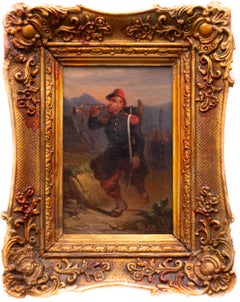
A Soldier Blowing the Trumpet by French Artist Charles Bouchez, Oil on Canvas
Located in Stockholm, SE
Charles Bouchez (1811-1882) French A Soldier Blowing the Trumpet oil on canvas signed and dated ch. Bouchez 1842 canvas dimensions 6.29 x 4.13 inches (16 x 10.5 cm) frame 10.23 x 7...
Category

1840s French School Sweden - Figurative Paintings

Materials

Canvas, Oil

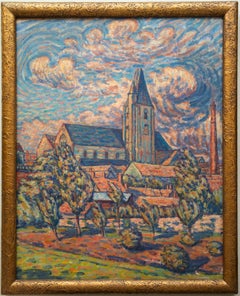
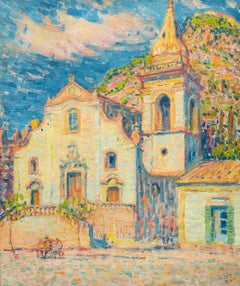
Post-Impressionist Painting The Church in Taormina, Sicily, 1914
Located in Stockholm, SE
Dick Beer (b. London 1893 - d. Stockholm 1938) The Church in Taormina, Sicily (Kyrkan i Taormina) oil on canvas canvas dimensions 54 x 47 cm signed and dated Dick Beer 1914 painted 1914 Exhibited: Varias Konstsalong, Stockholm, 1916; Millesgården – Dick Beer – Impressionist & Kubist, 2012 Provenance: Within the family Beer until today Dick Beer (1893-1938) Dick Beer was born in London in 1893. His father, John Beer (1853-1906), was a Swedish painter from Stockholm who had a career mainly as a watercolour painter with motifs of horses from racetracks and fox hunts from the countryside. Barely fifteen years old, Dick Beer became an orphan and came to Sweden in 1907. Already in 1908-1909, he started at Althin's painting school in Stockholm. And later, at the Royal Academy of Arts from 1910-1912. His teachers were, among others, Gustaf Cederström, Oscar Björk and Alfred Bergström...
Category

1910s Post-Impressionist Sweden - Figurative Paintings

Materials

Canvas, Oil

Vast Autumn Landscape With Blue Mountains by Swedish Artist Carl Johansson, 1913
Located in Stockholm, SE
Carl Johansson (1863-1944), also known as "Ultramarin Johansson," was a highly skilled Swedish landscape painter who is known for his ability to capture...
Category

1910s Post-Impressionist Sweden - Figurative Paintings

Materials

Canvas, Oil

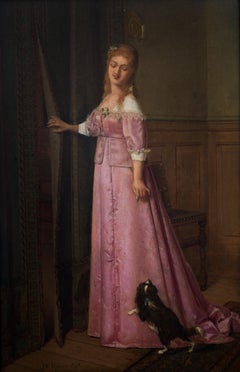
A Young Woman With Her Dog by Victor Ravet
Located in Stockholm, SE
In this exquisite painting by Victor Ravet, we are transported to an elegant interior setting reminiscent of the grandeur of high-class homes. The focal point is a woman adorned in a shimmering pink gown, radiating grace and sophistication. Bathed in gentle light, her dress catches the glimmer, accentuating her beauty. She holds a treat for a dog in her hand, enticing the furry companion who stands on its hind legs in eager anticipation. The canine's eyes fixated on the delicious morsel, capturing a moment of playful interaction between the woman and her loyal companion. The scene takes on a narrative quality as the young woman's other hand delicately lifts a curtain, hinting at another room beyond. This subtle gesture adds depth to the composition, suggesting a world of hidden secrets and intriguing possibilities within the opulent surroundings. Victor Ravet took inspiration from the Dutch Golden Age painters of the 17th century, such as Vermeer, Jacob Ochtervelt, and Gerrit Dou. This homage to their style and subject matter pays tribute to the timeless allure of domestic scenes, capturing a slice of life in a bygone era. With meticulous attention to detail, Ravet masterfully recreates the textures and fabrics, immersing the viewer in the sumptuousness of the period. The soft play...
Category

1870s Realist Sweden - Figurative Paintings

Materials

Oil, Panel

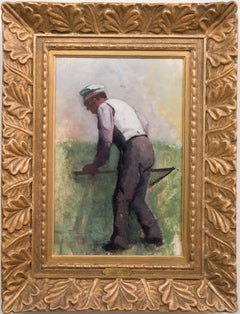
Harvest Scene With Farmer and Scythe, 1886
Located in Stockholm, SE
"Harvest Scene With Farmer and Scythe, 1886" is a captivating painting by the Swedish artist Alfred Thörne. Created during his travels through Germany, France, Italy, and Belgium bet...
Category

1880s Romantic Sweden - Figurative Paintings

Materials

Canvas, Oil

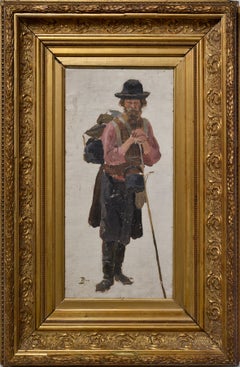
Rare 19th Century Russian Oil Portrait Bearded Man with Staff Signed Gilt Frame
Located in Stockholm, SE
RARE museum-quality example of a 19th‑century Russian plein‑air oil study on canvas, executed with swift, confident brushstrokes by the skilled hand of a masterful artist. The tall f...
Category

Late 19th Century Realist Sweden - Figurative Paintings

Materials

Canvas, Wood, Oil, Cardboard

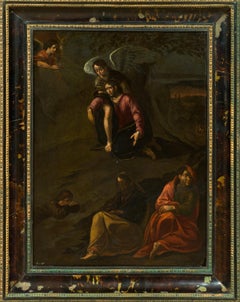
Christ Supported by an Angel in the Garden of Gethsemane, On Slate
Located in Stockholm, SE
This evocative Veronese School painting captures the moment in the Garden of Gethsemane when Christ, overwhelmed with sorrow, prays to God before his arrest and crucifixion. Supporte...
Category

Early 17th Century Old Masters Sweden - Figurative Paintings

Materials

Slate

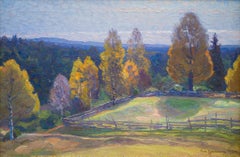
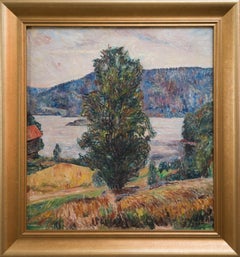
The Tree by the Lake, Värmland, By Racken Group Artist Ture Ander
Located in Stockholm, SE
This painting by Ture Ander, created in 1917, depicts a serene landscape from Värmland, Sweden. At the center of the composition is a large tree, likely a deciduous species, as suggested by the hints of autumn seen in both the tree and the meadow below it. The short brushstrokes used to depict the leaves and grass evoke a sense of movement and texture, typical of the early 20th-century artistic style. Another beautiful detail is the bluish-tinted forested mountains in the background, creating a sense of depth and tranquility. Ture Ander played a significant role in the Racken group (Rackstadkolonin), an important artistic collective in Sweden at the time. Ander was born on September 17 in Askers socken, Örebro. At the age of 13, he became an apprentice painter in Stockholm, attending evening classes at the Technical School (now known as Konstfack) while working during the day. He earned his journeyman’s certificate in 1902, and the following year, he graduated from the Technical School with the highest honors in painting. In 1905, he was accepted into the Konstnärsförbundets skola (School of the Artists' Association), where he studied alongside notable artists like Leander Engström, Isaac Grünewald, and Einar Nerman...
Category

1910s Post-Impressionist Sweden - Figurative Paintings

Materials

Canvas, Oil

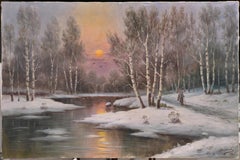
Pink Sunset in Winter Birch Forest Giant Landscape early 20 Сentury Oil Painting
Located in Stockholm, SE
An impressive painting in size and execution, a frosty winter day in a birch grove with a small pond. The orange-yellow sunset reflected on the surface of the pond creates the illusion of bizarre reflections. The frosty haze that has enveloped the forest intertwines with the approaching twilight, enhancing the sense of depth and atmosphere. On the right we see a traveler returning from the forest with an armful of brushwood on his back. In the distance a small flock of birds flies in, alarmed by something, bringing a sense of movement to this scene. The contrast of bright and cold shades creates an atmosphere of calm and silence...
Category

Early 20th Century Realist Sweden - Figurative Paintings

Materials

Canvas, Wood, Oil

Mountain View from Hålland, Åre by Swedish Artist Ante Karlsson-Stig, From 1932
Located in Stockholm, SE
The painting we are selling is a breathtaking mountain view from Hålland in Jämtland, Sweden, created by Ante Karlsson-Stig in 1932. Ante Karlsson-Stig (1885-1967) was a Swedish pain...
Category

1930s Naturalistic Sweden - Figurative Paintings

Materials

Canvas, Oil

Mother Washing with Children Nearby
Located in Stockholm, SE
This delightful painting by Carl Ewald Lönngren captures a serene moment of rural life in late 19th-century Sweden. The scene shows a mother kneeling by a wash basin, surrounded by h...
Category

Late 19th Century Realist Sweden - Figurative Paintings

Materials

Canvas, Oil, Board

After a successful hunt 1858 Kitchen Genre Scene Swedish Animalist J. Arsenius
Located in Stockholm, SE
Signed lower right: Johan Arsenius and dated 1858 or 1853, attributed Johan Georg Arsenius (1818 - 1903), was a Swedish military man, painter and draftsman. Up for sale is important ...
Category

1850s Realist Sweden - Figurative Paintings

Materials

Wood, Oil, Wood Panel

Scandinavian Lake View by Swedish Artist Per Julius (b.1951), Oil on Canvas
Located in Stockholm, SE
A beautiful original oil painting by Swedish artist Per Julius (b.1951). Julius is best known for his beautiful depictions of the Scandinavian nature and t...
Category

20th Century Naturalistic Sweden - Figurative Paintings

Materials

Canvas, Oil

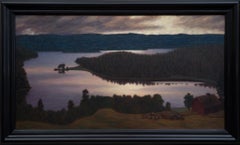
View of a hill slope across a stretch of water; A View from Keitele or Ruovesi
Located in Stockholm, SE
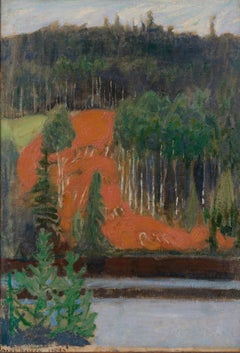
Akseli Gallen-Kallela (Björneborg 1865–1931 Stockholm) View of a hill slope across a stretch of water; A View from Keitele or Ruovesi Signed and dated “AXEL GALLEN 1904” Oil on can...
Category

Early 1900s Symbolist Sweden - Figurative Paintings

Materials

Canvas, Oil, Board

Children by the Ice Hole by Swedish Artist Bengt Nordenberg, c. 1846
Located in Stockholm, SE
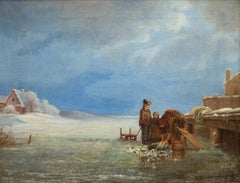
This evocative winter scene by Bengt Nordenberg captures a quiet moment of everyday life: two children stand on the frozen edge of a river or lake, watching as their mother washes cl...
Category

19th Century Sweden - Figurative Paintings

Materials

Canvas, Oil

Plow Field at Dawn in Mountain Landscape 18th Century Antique Large Oil Painting
Located in Stockholm, SE
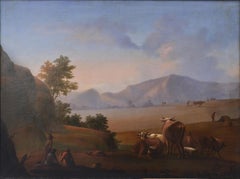
The painting captures a serene moment on the foothill plateau, just as the day is beginning to wake up. The mountains are still wrapped in a soft blanket of morning fog, giving the s...
Category

Late 18th Century Realist Sweden - Figurative Paintings

Materials

Canvas, Wood, Oil

Old Times House Interior Scene with Naughty Boy 19th century Genre Oil Painting
Located in Stockholm, SE
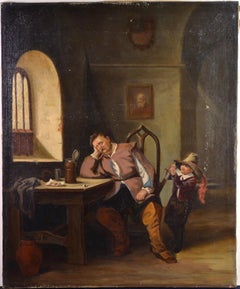
The painting captures a wonderfully amusing family moment set in the 16th century. In the center of the painting we see the father, exhausted by worries and dozing in his chair in fr...
Category

Late 19th Century Realist Sweden - Figurative Paintings

Materials

Canvas, Wood, Oil

Friends, Kittens and Puppies Painting by British Artist Agnes McIntyre Croxford
Located in Stockholm, SE
"Friends" by Agnes McIntyre Croxford is a testament to the artist's ability to capture the delicate balance of harmony and curiosity in the animal kingdom. This painting presents two...
Category

Early 20th Century Sweden - Figurative Paintings

Materials

Canvas, Oil

A Young Girl Reading a Book, Pointillist Artist
Located in Stockholm, SE
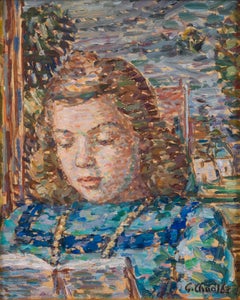
"A Young Girl Reading a Book" is a captivating portrait by Swedish artist Gustaf Arnolds. Arnolds was a prolific painter whose roots began in Vingåker and later in Ronneby from his teenage years. His educational journey in art took him through prestigious institutions such as Althins målarskola and the Tallbergska grafikskolan in Stockholm, followed by a significant period at the Konstakademien, Stockholm, between 1904 and 1909. His talent and dedication were recognized early on, earning him a scholarship to Paris, a city that would deeply influence his artistic direction. This particular work, likely painted shortly after his return to Sweden, reveals a profound influence from his time in Paris. It portrays a young girl absorbed in reading a book, a simple yet profound subject that Arnolds imbues with a sense of tranquility and introspection. The background hints at a serene landscape, dotted with quaint houses, a nod to the everyday beauty surrounding us. What sets this piece apart is Arnolds’ technique, reminiscent of pointillism but distinguished by longer, more expressive brush strokes that add a vibrant texture and depth to the canvas. This method showcases Arnolds' unique adaptation of the techniques he encountered during his Parisian studies, particularly during his interactions with Nils Dardel...
Category

1930s Pointillist Sweden - Figurative Paintings

Materials

Masonite, Oil

Before Storm Vivid Landscape by Swedish Master 19th century
By Wilhelm von Gegerfelt
Located in Stockholm, SE
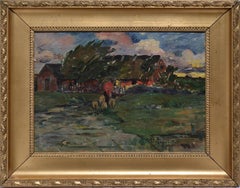
Attributed by Wilhelm von Gegerfelt (1844—1920). The disheveled crowns of the trees indicate to us the raging wind, and the evening sky in the background...
Category

Late 19th Century Impressionist Sweden - Figurative Paintings

Materials

Wood, Oil, Cardboard

Still Thinking About These?

All Recently Viewed