Switzerland - Prints and Multiples

to
173
729
124
166
63
91
Overall Width
to
Overall Height
to
471
203
179
105
32
31
24
15
9
4
1
118
81
55
43
42
1
4
972
195
3
1
30
37
81
178
339
158
51
17
1
915
205
45
534
354
326
186
181
132
119
102
59
33
33
25
23
23
22
21
20
19
18
18
652
243
68
45
42
52
38
51,011
36,891
Item Ships From: Switzerland
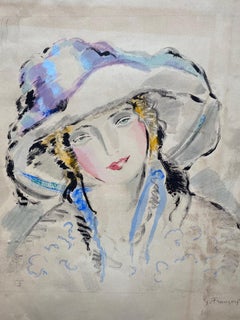
Portrait of woman by Gustave François - Engraving 44x54 cm
By Gustave Francois (Barraud)
Located in Geneva, CH
Work on paper without frame
Category

Mid-20th Century Academic Switzerland - Prints and Multiples

Materials

Engraving

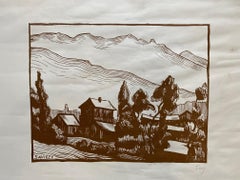
Savièze by Fred Fay - Engraving 33x42 cm
Located in Geneva, CH
Engraving on paper without frame.
Category

1950s Modern Switzerland - Prints and Multiples

Materials

Engraving

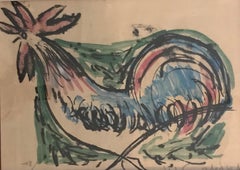
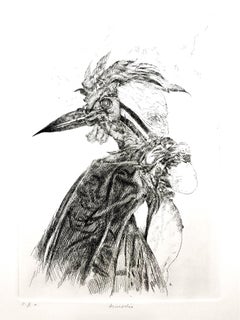
The hen by William GOLIASCH - Ink on paper 41x56 cm
By William Goliasch
Located in Geneva, CH
Numbered 18/20 Work on paper Red wooden frame with glass pane 44 x 59 x 1,5 cm
Category

Late 20th Century Modern Switzerland - Prints and Multiples

Materials

Ink

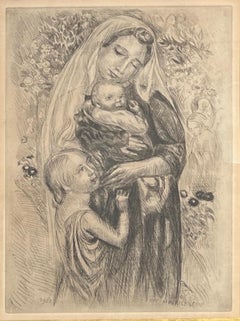
Madonna, children and cherub
By Maurice Denis
Located in Genève, GE
Work on paper Wooden frame with glass pane 57 x 46.5 x 2.5 cm
Category

1920s French School Switzerland - Prints and Multiples

Materials

Etching

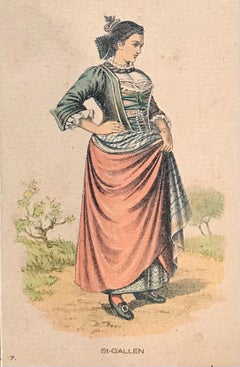
Young woman in period costume from St. Gallen, Switzerland - Engraving 9x14 cm
Located in Geneva, CH
Work on paper Dimensions of the "passe-partout" frame 19.9 x 14.8 cm
Category

19th Century Realist Switzerland - Prints and Multiples

Materials

Engraving

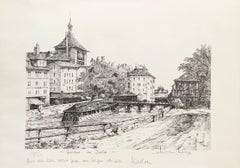
Geneva of yesteryear by Louis Rey - Ink 31x41 cm
By Louis Rey .
Located in Geneva, CH
Work on paper
Category

1970s Realist Switzerland - Prints and Multiples

Materials

Ink

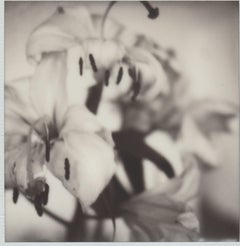
Lilies - 21st Century Photographic Floral Print from Black and White Polaroid
By Pia Clodi
Located in Zürich, CH
Lilies - 21st Century Photographic Floral Print, PolaroidOriginal, Shadow Gapped Frame - Photographic Print on Aluminium Dibond - Edition 10 + 1, with Certificate Lilies is a beauti...
Category

21st Century and Contemporary Contemporary Switzerland - Prints and Multiples

Materials

Carbon Pigment, Polaroid

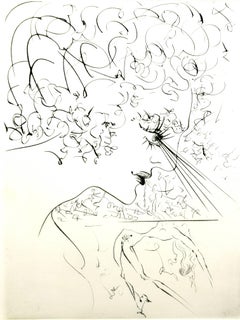
Salvador Dali - Magician - Original Etching
By Salvador Dalí­
Located in Collonge Bellerive, Geneve, CH
Salvador Dali - Magician - Original Etching Stamp Signed Dimensions: 38,5 x 28,5 cm 1969 References : Field 69-1 K / Michler & Lopsinger 305 Salvador Dali Salvador Dali was born as the son of a prestigious notary in the small town of Figueras in Northern Spain. His talent as an artist showed at an early age and Salvador Felipe Jacinto Dali received his first drawing lessons when he was ten years old. His art teachers were a then well known Spanish impressionist painter, Ramon Pichot and later an art professor at the Municipal Drawing School. In 1923 his father bought his son his first printing press. Dali began to study art at the Royal Academy of Art in Madrid. He was expelled twice and never took the final examinations. His opinion was that he was more qualified than those who should have examined him. In 1928 Dali went to Paris where he met the Spanish painters Pablo Picasso and Joan Miro. He established himself as the principal figure of a group of surrealist artists grouped around Andre Breton, who was something like the theoretical "schoolmaster" of surrealism. Years later Breton turned away from Dali accusing him of support of fascism, excessive self-presentation and financial greediness. By 1929 Dali had found his personal style that should make him famous the world of the unconscious that is recalled during our dreams. The surrealist theory is based on the theories of the psychologist Dr. Sigmund Freud. Recurring images of burning giraffes and melting watches became the artist's surrealist trademarks. His great craftsmanship allowed him to execute his paintings in a nearly photo-realistic style. No wonder that the artist was a great admirer of the Italian Renaissance painter Raphael. Salvador Dali and Gala. Meeting Gala was the most important event in the artist's life and decisive for his future career. She was a Russian immigrant and ten years older than Dali. When he met her, she was married to Paul Eluard. Gala decided to stay with Dali. She became his companion, his muse, his sexual partner, his model in numerous art works and his business manager. For him she was everything. Most of all Gala was a stabilizing factor in his life. And she managed his success in the 1930s with exhibitions in Europe and the United States. Gala was legally divorced from her husband in 1932. In 1934 Dali and Gala were married in a civil ceremony...
Category

1960s Surrealist Switzerland - Prints and Multiples

Materials

Etching

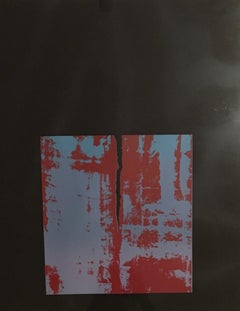
Abstract composition
Located in Genève, GE
Ed : 15/15 Work on paper Brown wooden frame with glass pane 72 x 57 x 2.5 cm
Category

1970s Switzerland - Prints and Multiples

Materials

Lithograph

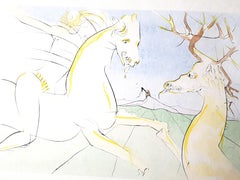
Salvador Dali - The Rider and the Deer - Handsigned Engraving
By Salvador Dalí­
Located in Collonge Bellerive, Geneve, CH
Salvador Dali - The Rider and the Deer - Handsigned Engraving 1974 Hand signed by Dali Edition: /250 The dimensions of the image are 22.8 x 15.7 inches on 3...
Category

1970s Surrealist Switzerland - Prints and Multiples

Materials

Drypoint, Aquatint

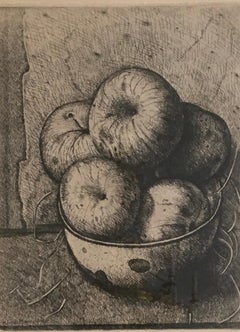
Apples
Located in Genève, GE
ED : 1/15 Etching on paper Beige wooden frame, mottled red with glass pane 55.5 x 47.5 x 2.5 cm
Category

Mid-20th Century Switzerland - Prints and Multiples

Materials

Etching

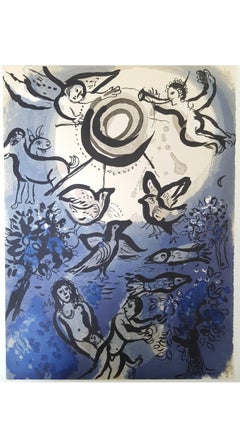
Marc Chagall - Creation - Adam and Eve - Original Lithograph from Bible
By Marc Chagall
Located in Collonge Bellerive, Geneve, CH
Marc Chagall, Original Lithograh depicting an instant of the Bible. Technique: Original lithograph in colours (Mourlot no. 234) On the reverse: another black and white original litho...
Category

1960s Modern Switzerland - Prints and Multiples

Materials

Lithograph

Salvador Dali - Venus in Furs - Original Stamp-Signed Etching
By Salvador Dalí­
Located in Collonge Bellerive, Geneve, CH
Salvador Dali - Original Etching Stamp signed by Dali Edition of 294 copies. Paper : Arches vellum. Dimensions : 16x12". Catalogue Raisonné : Field 68-6 (p. 40-41). Salvador Dal...
Category

1960s Surrealist Switzerland - Prints and Multiples

Materials

Etching

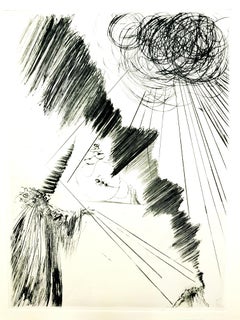
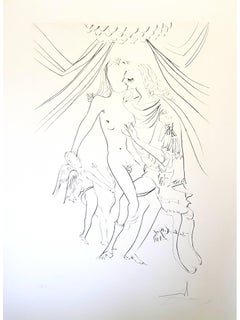
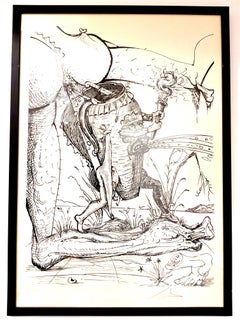
Salvador Dali - Old Faust - Original Etching
By Salvador Dalí­
Located in Collonge Bellerive, Geneve, CH
Salvador Dali - Old Faust - from "Faust" Original Etching Embossed signature From the edition of 731 Dimensions: 38,5 x 28,5 cm 1969 References : Field 69-1 / Michler & Lopsinger 305
Category

1960s Surrealist Switzerland - Prints and Multiples

Materials

Etching

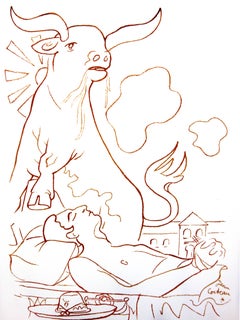
Jean Cocteau - Vision - Original Lithograph
By Jean Cocteau
Located in Collonge Bellerive, Geneve, CH
Original Lithograph by Jean Cocteau Title: Taureaux Signed in the plate Dimensions: 40 x 30 cm Edition: 200 Luxury print edition from the portfolio of Trinckvel 1965
Category

1960s Modern Switzerland - Prints and Multiples

Materials

Lithograph

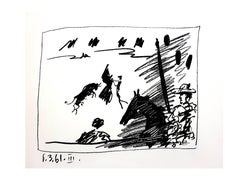
Pablo Picasso - Jeu de la Cape - Lithograph
By Pablo Picasso
Located in Collonge Bellerive, Geneve, CH
Lithograph by Picasso Atelier Mourlot. Paper: Vélin. Dimensions : 9 5/8 x 12 7/16 inches Reference: Bloch 1015 Picasso is not just a man and his work. Picasso is always a legend, ...
Category

1960s Modern Switzerland - Prints and Multiples

Materials

Lithograph

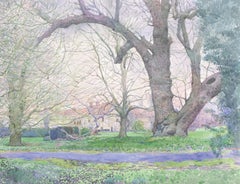
Notley Abbey in England Canvas Print by Simon Kozhin 70x90cm
By Simon Kozhin
Located in Zofingen, AG
PRODUCT DETAILS Notley Abbey in England canvas print by Simon Kozhin. Bring your artwork to life with the texture and depth of a stretched canvas print. The image gets printed onto ...
Category

2010s Impressionist Switzerland - Prints and Multiples

Materials

Canvas, Giclée

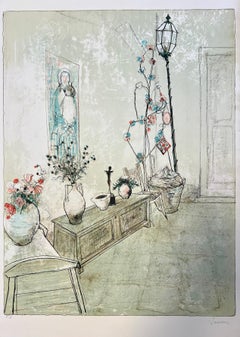
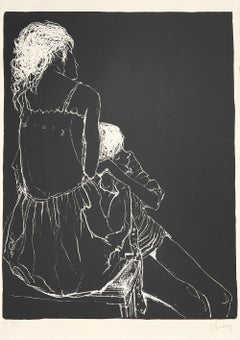
Le coin de l atelier, 1986, original lithograph by Jean Jansem, handsigned
By Jean Jansem
Located in Les Acacias GE, GE
Jean Jansem (1920-2013) Le coin de l'atelier, 1986 Lithographie sur papier Arches Signée en bas à droite et justifiée en bas à gauche 67 x 51 cm / 76 x 54 cm D'une édition à 30 exe...
Category

Late 20th Century Expressionist Switzerland - Prints and Multiples

Materials

Lithograph

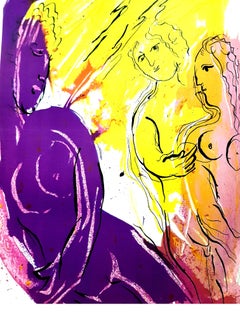
Marc Chagall - The Bible - Original Lithograph
By Marc Chagall
Located in Collonge Bellerive, Geneve, CH
Marc Chagall, Original Lithograph depicting an instant of the Bible. Technique: Original lithograph in colours Year: 1956 Sizes: 35,5 x 26 cm / 14" x 10.2" (sheet) Published by: Édit...
Category

1950s Modern Switzerland - Prints and Multiples

Materials

Lithograph

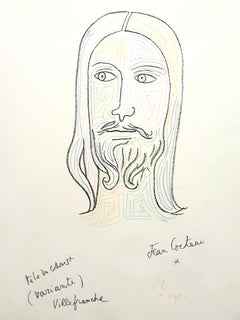
Jean Cocteau - Christ - Original Handsigned and Handcolored Lithograph
By Jean Cocteau
Located in Collonge Bellerive, Geneve, CH
Jean Cocteau - Christ - Original Handsigned and Handcolored Lithograph Signed in the plate Handsigned and dated in color pencil. Handcolored in pencil. Dimensions: 50.5 x 33 cm 1957 ...
Category

1950s Modern Switzerland - Prints and Multiples

Materials

Lithograph

Ivan Kupala. Fortunetelling for wreaths. Figurative Canvas Print by Simon Kozhin
By Simon Kozhin
Located in Zofingen, AG
PRODUCT DETAILS Ivan Kupala. Fortunetelling for wreaths, canvas print by Simon Kozhin. Bring your artwork to life with the texture and depth of a stretched canvas print. Your image ...
Category

2010s Impressionist Switzerland - Prints and Multiples

Materials

Canvas, Giclée

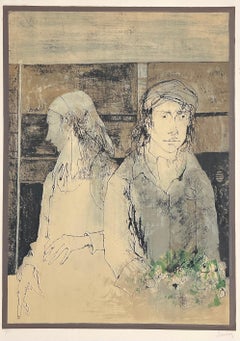
Le couple au bouquet vert, 1974, original lithograph by Jean Jansem, handsigned
By Jean Jansem
Located in Les Acacias GE, GE
Jean Jansem (1920-2013) Le couple au bouquet vert, 1974 Lithographie sur papier Arches Signée en bas à droite et justifiée en bas à gauche 69 x 51,5 cm ...
Category

Late 20th Century Expressionist Switzerland - Prints and Multiples

Materials

Lithograph

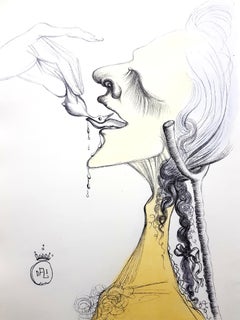
Salvador Dali - Bird on Tongue - Original Etching
By Salvador Dalí­
Located in Collonge Bellerive, Geneve, CH
Salvador Dali - Bird on Tongue - Original Etching Dimensions: 38 x 28 cm Edition: 390 1967 On Rives Vellum References : Field 67-4 (p. 32-33) / Michler & Lopsinger 174 to 187.
Category

1960s Surrealist Switzerland - Prints and Multiples

Materials

Etching

Jean Cocteau - Europe s Agriculture - Original Lithograph
By Jean Cocteau
Located in Collonge Bellerive, Geneve, CH
Original Lithograph by Jean Cocteau Title: Europe's Agriculture Signed in the stone/printed signature Dimensions: 33 x 46 cm Luxury impression from the portfolio published by Sciaky....
Category

1960s Cubist Switzerland - Prints and Multiples

Materials

Lithograph

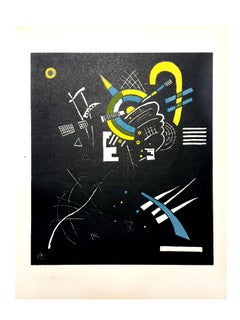
Wassily Kandinsky (after) - Small World - Lithograph
By Wassily Kandinsky
Located in Collonge Bellerive, Geneve, CH
Wassily Kandinsky (after) - Small World - Lithograph Conditions: excellent 32 x 24 cm 1952 From the art review XXe siècle, San Lazzaro Unsigned and unumber...
Category

1950s Abstract Geometric Switzerland - Prints and Multiples

Materials

Lithograph

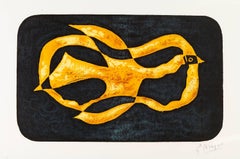
After Georges Braque - Antiborée - Lithograph
Located in Collonge Bellerive, Geneve, CH
Lithograph after Georges Braque. Signed in the plate Edition of 150 Dimensions: 76 x 117 cm Bibliography: « Les Métamorphoses de Braque» of Heger de Loewenfeld and Raphaël de Cuttoli , Editions FAC, Paris, 1989. In 1961 Georges Braque decided with his laidary friend Heger de Loewenfeld to pick up certain of his works to in order to create artworks, this beautiful litograph is one of them. Héméra in the Mythology: In Greek mythology Hemera was the personification of day and one of the Greek primordial deities. She is the goddess of the daytime and, according to Hesiod, the daughter of Erebus and Nyx (the goddess of night). Hemera is remarked upon in Cicero's De Natura Deorum, where it is logically determined that Dies (Hemera) must be a god, if Uranus is a god. The poet Bacchylides states that Nyx and Chronos are the parents, but Hyginus in his preface to the Fabulae mentions Chaos as the mother/father and Nyx as her sister. She was the female counterpart of her brother and consort, Aether (Light), but neither of them figured actively in myth or cult. Hyginus lists their children as Uranus, Gaia, and Thalassa (the primordial sea goddess), while Hesiod only lists Thalassa as their child. The father of Cubism Three Cubist that distinguishes art historian periods were initiated and developed by Georges Braque: The Cubist Cézanne (1907-1909), Executive (1909-1912) and synthetic (1912-1922). Post-Impressionist and fawn, Braque no longer adheres to the contingency of a decorative way or the other. Cézanne’s paintings exhibited at the Grand Palais during the retrospective of 1907 are a revelation: Cézanne sought and invented a pictorial language. In his footsteps, Braque went to the South with the reasons of the Master. He returned with Estaque landscapes and surprising Ciotat it keeps Cezanne geometric model and retains the “passages” continuity from one surface to another to create the sensation of “turning around” of the object represented. But he wants to go after the consequences of the vision of Cezanne. In his paintings Houses in L’Estaque (1908) it simplifies the volumes of houses, neglects detail by removing doors and windows: the plastic rhythm that builds the table. Large Nude , a masterpiece of the period, can be considered the first work of Cézanne cubism . Systematizing and deepening Braque discoveries open the door analytical cubism. In 1909, his painting became more cerebral than sensual. The pattern is recreated in the two-dimensionality of the canvas, leaving aside any illusionistic perspective. In Still Life with Violin, objects are analyzed facets according to their characteristic elements, each facet referring to a particular view of the object. There are so many facets of points selected view: Table reflects the knowledge of the object and the ubiquity of the eye. Moreover, Braque is looking for the essence of the objects in the world rather than their contingency, which explains the absence of light source and use of muted colors (gray, ocher), contingent aspects of the object . But formal logic has stepped facets, erased any anecdote to the object and ultimately led to his painting a hermetic more marked on the edge of abstraction (see the series of Castle Roche-Guyon ). Braque, anxious to keep the concrete and refusing at all costs that the logic of Cubism takes the paintings to abstract, reintroduced signs of reality in his paintings in 1912 marks the beginning of Synthetic Cubism. Historians speak of “signs of real” rather than reality because what interests Braque, this is not to put reality into a table, but to create a painting which, by its language, refers to the real. To do this, he invented two major techniques XX th century inclusions and contributions. The inclusions consist of painting objects that have no real depth, materials (wallpaper in Nature morte aux playing cards faux wood is a pictorial inclusion) or letters (calligraphic inclusion in Portuguese ), made first brush and a few months later stencil. Contributions are defined in contrast with the collage on canvas of foreign materials: glued or sand paper, sawdust, etc.. Regarding the collages, Braque used for the first time in September 1912 a piece of adhesive paper imitating faux wood Compote...
Category

1950s Cubist Switzerland - Prints and Multiples

Materials

Lithograph

Mère et enfant, 1986, original lithograph by Jean Jansem, handsigned
By Jean Jansem
Located in Les Acacias GE, GE
Jean Jansem (1920-2013) Mère et enfant, 1986, état noir Lithographie sur papier Arches Signée en bas à droite et justifiée en bas à gauche 67,5 x 51 cm / 76 x 54 cm Très rare exemplaire D'une édition à 30 exemplaires sur Arches de l'état noir. Bibliographie: Imprimeur: Mourlot, Paris Editeur: Galerie Matignon, Paris Bibliographie: Jansem Lithographe, 1984-1993, Flora Jansem, Paris, n. 50, reproduit p. 56, référencé p. 109. "Ma première lithographie date de 1954. Elle représente un enfant en haillons portant deux seaux d'eau, d'après un croquis rapporté de Cordoue lors de mon voyage en Espagne en 1952. Je l'exécutai sur pierre, au pinceau et à l'encre lithographique. Je fus déçu du résultat et n'en tirai qu'un essai et une épreuve. Quatre ans plus tard, je réalisai une dizaine de nouvelles lithographies, toujours sur pierre, la plupart en noir. Au lieu d'employer l'encre et le crayon...
Category

Late 20th Century Expressionist Switzerland - Prints and Multiples

Materials

Lithograph

Marc Chagall - The Ballet, Frontispiece
By Marc Chagall
Located in Collonge Bellerive, Geneve, CH
The Ballet, Frontispiece for the book “Daphnis and Chloe” Lithograph in colors, 1969. Unsigned and unnumbered, as issued from an edition of 10,000. Printed ...
Category

1960s Surrealist Switzerland - Prints and Multiples

Materials

Lithograph

André Derain - Ovid s Heroides - Original Etching
By André Derain
Located in Collonge Bellerive, Geneve, CH
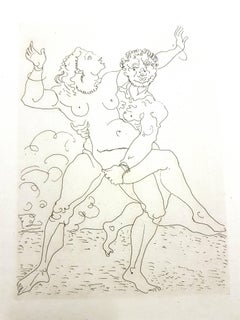
André Derain - Ovid's Heroides Original Etching Edition of 134 Dimensions: 32 x 25 cm Ovide [Marcel Prevost], Héroïdes, Paris, Société des Cent-une, 1938 Andre Derain was born in 1880 in Chatou, an artist colony outside Paris. In 1898, he enrolled in the Academie Carriere in Paris where he met Matisse. He attended art school and in 1900, set up a studio with Maurice deVlaminck. After his military service from 1900-1904, Derain exhibited his work at the Salon des Independants and then at the Salon d'Automne with Matisse, Vlaminck and others, thus creating the movement of Fauvism.He worked with Henri Matisse in 1905 at Collioure, and participated in the 1905 Salon d’Automne with Matisse, Vlaminck, and Braque, the exhibition in which this group was labeled as Fauves, or Wild Beasts. Along with Vlaminck, Derain was one of the first artists to collect the tribal art of Africa which was influential to many of the artists of the early 20th century. In 1906, Derain met Picasso and his dealer, who purchased Derain's entire studio, creating newfound financial success. During this time, he was hired for the illustrations for works by Guillaume Apollinaire and Andre Breton. After World War I, his friend's Cubism movement affected his art, along with influence from Classicism and African Art. Derain stayed in Paris during most of the Occupation, where he was esteemed by the Nazis because of his artistic integrity. Hitler's Foreign Minister commissioned him to paint a family portrait, but he politely refused. His popularity began to decline after the war because of disagreement over new artistic movements. He later lost most of his eyesight due to illness, which may have been the reason he was hit by a truck in 1954, dying from shock at the age of 74. Derain’s Fauve paintings are typically bright with intense color. Influenced by the work of Cézanne as well as the early Cubist paintings of Picasso and Braque’s, Derain’s style changed and by 1912, the paintings became more traditional and structured. For the remainder of his career, he continued to investigate different compositional methods including the perspective of Cézanne and the pointillism of Seurat. He also designed ballet sets and made a number of sculptures. At the turn of the century, Andre Derain exhibited at the radical Fauve Salon d’Automne (1905) and was one of the founding members of the Fauvist movement together with his life-long friends Matisse and Vlaminck. The works he produced in this period, often under the guidance of Matisse, have been counted among the masterpieces of Fauvism. From around 1918, Derain turned his back on the avant-garde and had begun to explore some of the more traditional genres of Western art, including landscapes. His main source of inspiration once the Fauves group had dispersed was found in the Louvre, where he admired the early Renaissance works in particular. Talking of his frequent visits there, he once said, ‘That seemed to me then, the true, pure absolute painting.’ His work evolved through many styles and, most significantly, turned back to the past, particularly after 1922 when Lenin had publicly pronounced his disdain for abstract art. Derain built up an immense and fascinating collection of paintings, sculpture and objets d’art throughout his life which aided his experimentation and was reflected in his work between 1930 and 1945. During these years, his painting technique displayed the most avenues of invention, using a repertoire of primitivist motifs. His eclectic collection was constantly changing. In 1930 he sold his African collection in exchange for bronzes of antiquity and the Renaissance which indicated a real change of interest in the objects, as did his later pursuit of Greek ceramic painting and his enthusiasm for grand cycles of literary and antique themes...
Category

1930s Modern Switzerland - Prints and Multiples

Materials

Etching

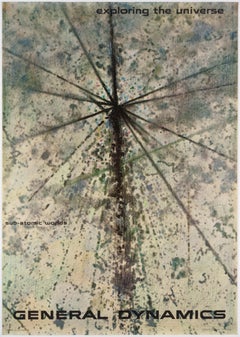
General Dynamics, Exploring the Universe, Sub-Atomic Worlds – Original Poster
By Erik Nitsche
Located in Zurich, CH
A poster belonging to Erik Nitsche's second series for General Dynamics, promoting its nuclear research. Founded 1952, General Dynamics hired Nitsche as Art Director – a Swiss (1908 – 1998) educated at the Collège Classique in his birth town Lausanne and at the Kunstgewerbeschule in Munich. 1934 he emigrated to the United States and became an incredibly versatile graphic designer whose work became exemplary modernist. General Dynamics for its part focused on – amongst others – aerodynamics, aerospace, electronics and nuclear power. So here the company had a problem: Only a few years after Hiroshima and Nagasaki it wasn’t exactly the simplest thing to explore nuclear energy and not to be suspected of developing weapons of mass destruction. The International Conference on the Peaceful Uses of Atomic Energy 1955 in Geneva was a great opportunity to be seen as a provider of peaceful technology. The guys in charge chose Erik Nitsche to communicate this message. He created four poster series. Atoms for Peace was the first consisting of eleven posters. The second was made for the Conference 1958; these posters are titled Exploring the Universe and represent different aspects of technological research. The third series promoted General Dynamics’ departments. The last series of six smaller posters...
Category

Mid-20th Century Modern Switzerland - Prints and Multiples

Materials

Paper

Salvador Dali - At The Beach - Lithograph
By Salvador Dalí­
Located in Collonge Bellerive, Geneve, CH
Salvador Dali - At The Beach - Original Handsigned Lithograph Dimensions: 51 x 71 cm 1970 Signed in pencil and numbered Edition : /CXX References : Field 70-8
Category

1970s Surrealist Switzerland - Prints and Multiples

Materials

Lithograph

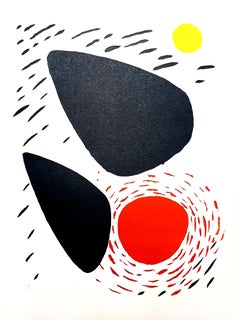
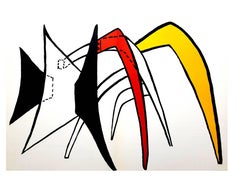
Alexander Calder - Rocks and Sun - Original Lithograph
By Alexander Calder
Located in Collonge Bellerive, Geneve, CH
Alexander Calder - Rocks and Sun - Original Lithograph From the literary review "XXe Siècle" 1952 Dimensions: 32 x 24 cm Publisher: G. di San Lazzaro. Unsigned and unnumbered as issued
Category

1950s Modern Switzerland - Prints and Multiples

Materials

Lithograph

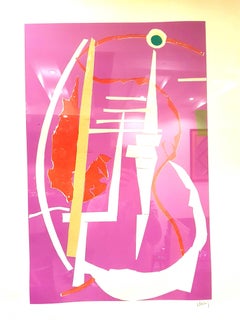
André Lanskoy - Abstract Pink Composition - Original Lithograph
By André Lanskoy
Located in Collonge Bellerive, Geneve, CH
André Lanskoy (1902-1976) Framed Original Lithograph Abstract Composition Dimensions: 94 x 64 cm André Lanskoy was one of the great paint...
Category

1960s Abstract Expressionist Switzerland - Prints and Multiples

Materials

Lithograph

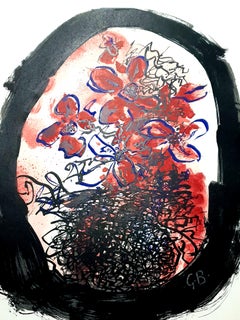
Georges Braque - Original Lithograph
By Georges Braque
Located in Collonge Bellerive, Geneve, CH
Georges Braque - Original Lithograph 1963 Dimensions: 32 x 24 cm Andre Sauret, Monte Carlo The father of Cubism Three Cubist that distinguishes art historian periods were initiated and developed by Georges Braque: The Cubist Cézanne (1907-1909), Executive (1909-1912) and synthetic (1912-1922). Post-Impressionist and fawn, Braque no longer adheres to the contingency of a decorative way or the other. Cézanne’s paintings exhibited at the Grand Palais during the retrospective of 1907 are a revelation: Cézanne sought and invented a pictorial language. In his footsteps, Braque went to the South with the reasons of the Master. He returned with Estaque landscapes and surprising Ciotat it keeps Cezanne geometric model and retains the “passages” continuity from one surface to another to create the sensation of “turning around” of the object represented. But he wants to go after the consequences of the vision of Cezanne. In his paintings Houses in L’Estaque (1908) it simplifies the volumes of houses, neglects detail by removing doors and windows: the plastic rhythm that builds the table. Large Nude , a masterpiece of the period, can be considered the first work of Cézanne cubism . Systematizing and deepening Braque discoveries open the door analytical cubism. In 1909, his painting became more cerebral than sensual. The pattern is recreated in the two-dimensionality of the canvas, leaving aside any illusionistic perspective. In Still Life with Violin, objects are analyzed facets according to their characteristic elements, each facet referring to a particular view of the object. There are so many facets of points selected view: Table reflects the knowledge of the object and the ubiquity of the eye. Moreover, Braque is looking for the essence of the objects in the world rather than their contingency, which explains the absence of light source and use of muted colors (gray, ocher), contingent aspects of the object . But formal logic has stepped facets, erased any anecdote to the object and ultimately led to his painting a hermetic more marked on the edge of abstraction (see the series of Castle Roche-Guyon ). Braque, anxious to keep the concrete and refusing at all costs that the logic of Cubism takes the paintings to abstract, reintroduced signs of reality in his paintings in 1912 marks the beginning of Synthetic Cubism. Historians speak of “signs of real” rather than reality because what interests Braque, this is not to put reality into a table, but to create a painting which, by its language, refers to the real. To do this, he invented two major techniques XX th century inclusions and contributions. The inclusions consist of painting objects that have no real depth, materials (wallpaper in Nature morte aux playing cards faux wood is a pictorial inclusion) or letters (calligraphic inclusion in Portuguese ), made first brush and a few months later stencil. Contributions are defined in contrast with the collage on canvas of foreign materials: glued or sand paper, sawdust, etc.. Regarding the collages, Braque used for the first time in September 1912 a piece of adhesive paper imitating faux wood Compote and Glass , then the packet envelope of tobacco Bock in 1912-1913, or an advertisement in Damier , 1913). Inputs and inclusions refer to an external object in the table, without “emulate” this object. Away from their appearances, objects are represented in closest essence of the objects in the real world sense. This is also the time of Synthetic Cubism that Braque invented paper sculpture. There are, unfortunately, and no one is living proof of a photograph makes it possible to realize: Paper and paperboard. Métamorphoses period(1961-1963). In 1961, Georges Braque worked on a Greek head for the Louvre, which obsesses him, and he wishes to free his mind. He tried several times to bring out the paint and the result was unsatisfactory. He thinks the ultimate metamorphosis its Greek head projected in three dimensions. He calls in his studio of Baron Heger Loewenfeld, master lapidary, and he communicates his enthusiasm during the “fateful encounter.” Nine months later, in honor of the eighty years of Georges Braque, Heger Loewenfeld offers the Master of the ring Circe: the famous Greek head finally exorcised, carved in an onyx. Braque Loewenfeld then asked to identify other issues that haunt him. From dated and signed by Georges Braque, Heger gouaches Loewenfeld shapes works in the fields of jewelery, lapidary art...
Category

1960s Modern Switzerland - Prints and Multiples

Materials

Lithograph

Georges Rohner - Original Handsigned Lithograph - Ecole de Paris
By Georges Rohner
Located in Collonge Bellerive, Geneve, CH
Georges Rohner Original Handsigned Lithograph Dimensions: 76 x 54 cm Edition: HC XXI/XXX HandSigned and Numbered Ecole de Paris au seuil de la mutation des Arts Sentiers Editions Georges Rohner was one of the great painters of the “Ecole de Paris” and of the second mid twenty century. Georges Rohner, French (1913 - 2000) Georges Rohner Georges Rohner was a French painter, born July 20, 1913 in Paris and died on 3 November 2000 in Lannion. Georges Rohner was born in 1913 in Paris. His uncle George Stugocki, art teacher, gives him an early taste for art and thus develops his passion. In 1929 he left school to run in the "galleries" of the School of Fine Arts in Paris where he will be received. A year later, it will be admitted as a student in the workshop Lucien Simon alongside Robert Humblot...
Category

1970s Modern Switzerland - Prints and Multiples

Materials

Lithograph

Armodio - Original Composition - Signed Etching
By Armodio
Located in Collonge Bellerive, Geneve, CH
ARMODIO (1938) Abstract Composition Original Etching Signed and justified c.p.a Dimensions: 49,5 x 34,5 cm. Armodio was born in Piacenza in 1938. His training depends not so much on the attendance of the "Gazzola" Art Institute in his city, but also on the encounter with the painter Luciano Spazzali, whose study is the ideal place for experimentation and contamination. Here he met the painter Gustavo Foppiani, first teacher and then a fellow traveler; the two work together and then join the painter Carlo Bertè who will divide the study until 1980. This formed a free grouping animated by curiosity towards the most varied manifestations of culture, intent on reading reality under the sign of irony and inclined towards playful transgression. The first Piacenza personal exhibition was in 1963 at the Genocchi Gallery in Piacenza and in 1964, thanks to Foppiani, the Obelisk of Rome...
Category

1960s Surrealist Switzerland - Prints and Multiples

Materials

Etching

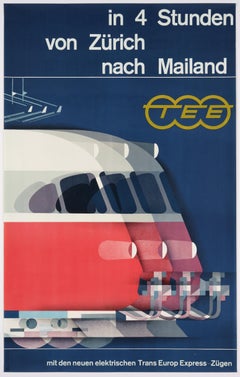
Trans Europ Express – Original Poster promoting the service from Zurich to Milan
By Kurt Wirth
Located in Zurich, CH
Original Swiss Vintage Travel Poster promoting the TEE service linking Zurich and Milano (operated 1961 to 1988) by Kurt Wirth, a notable Swiss graphic designer and co-founder of the Swiss Graphic Designers Association. A great modernist design evoking speed and reliability. The international first-class railway service of Trans Europ Express...
Category

Mid-20th Century Modern Switzerland - Prints and Multiples

Materials

Paper

Arlequin au miroir 1923 litho offset on paper after Pablo Picasso
By Pablo Picasso
Located in Les Acacias GE, GE
Pablo Picasso (D’après) Arlequin au Miroir, 1923 Knoedler, Paris, 1971, 26 octobre-30 novembre Par Henri Deschamps Imprimeur : Litho-offset on paper Edition: Mourlot, Paris 76 x ...
Category

20th Century Modern Switzerland - Prints and Multiples

Materials

Offset

Les Acadiens, 1993, original lithograph by Jean Jansem, handsigned and numbered
By Jean Jansem
Located in Les Acacias GE, GE
Jean Jansem (1920-2013) Les acadiens, 1993 Lithographie sur papier Arches, justifiée E/A 16/30 Signée en bas à droite 65,5 x 50 cm / 76 x 56 cm Bibliographie: CR Jansem, 2000, n°9...
Category

Late 20th Century Expressionist Switzerland - Prints and Multiples

Materials

Lithograph

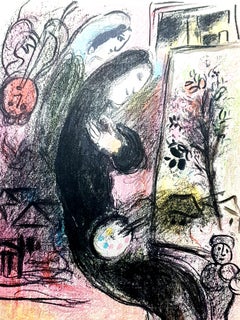
Marc Chagall - Inspiration - Original Lithograph from "Chagall Lithographe" v. 2
By Marc Chagall
Located in Collonge Bellerive, Geneve, CH
Marc Chagall Original Lithograph from Chagall Lithographe 1957-1962. VOLUME II. 1963 Dimensions: 32 x 24 cm From the unsigned edition of 10000 copies without margins Reference: Mourlot 398 Condition : Excellent Marc Chagall (born in 1887) Marc Chagall was born in Belarus in 1887 and developed an early interest in art. After studying painting, in 1907 he left Russia for Paris, where he lived in an artist colony on the city’s outskirts. Fusing his own personal, dreamlike imagery with hints of the fauvism and cubism popular in France at the time, Chagall created his most lasting work—including I and the Village (1911)—some of which would be featured in the Salon des Indépendants exhibitions. After returning to Vitebsk for a visit in 1914, the outbreak of WWI trapped Chagall in Russia. He returned to France in 1923 but was forced to flee the country and Nazi persecution during WWII. Finding asylum in the U.S., Chagall became involved in set and costume design before returning to France in 1948. In his later years, he experimented with new art forms and was commissioned to produce numerous large-scale works. Chagall died in St.-Paul-de-Vence in 1985. The Village Marc Chagall was born in a small Hassidic community on the outskirts of Vitebsk, Belarus, on July 7, 1887. His father was a fishmonger, and his mother ran a small sundries shop in the village. As a child, Chagall attended the Jewish elementary school, where he studied Hebrew and the Bible, before later attending the Russian public school. He began to learn the fundamentals of drawing during this time, but perhaps more importantly, he absorbed the world around him, storing away the imagery and themes that would feature largely in most of his later work. At age 19 Chagall enrolled at a private, all-Jewish art school and began his formal education in painting, studying briefly with portrait artist Yehuda Pen. However, he left the school after several months, moving to St. Petersburg in 1907 to study at the Imperial Society for the Protection of Fine Arts. The following year, he enrolled at the Svanseva School, studying with set designer Léon Bakst, whose work had been featured in Sergei Diaghilev's Ballets Russes. This early experience would prove important to Chagall’s later career as well. Despite this formal instruction, and the widespread popularity of realism in Russia at the time, Chagall was already establishing his own personal style, which featured a more dreamlike unreality and the people, places and imagery that were close to his heart. Some examples from this period are his Window Vitebsk (1908) and My Fianceé with Black Gloves (1909), which pictured Bella Rosenfeld, to whom he had recently become engaged. The Beehive Despite his romance with Bella, in 1911 an allowance from Russian parliament member and art patron Maxim Binaver enabled Chagall to move to Paris, France. After settling briefly in the Montparnasse neighborhood, Chagall moved further afield to an artist colony known as La Ruche (“The Beehive”), where he began to work side by side with abstract painters such as Amedeo Modigliani and Fernand Léger as well as the avant-garde poet Guillaume Apollinaire. At their urging, and under the influence of the wildly popular fauvism and cubism, Chagall lightened his palette and pushed his style ever further from reality. I and the Village (1911) and Homage to Apollinaire (1912) are among his early Parisian works, widely considered to be his most successful and representative period. Though his work stood stylistically apart from his cubist contemporaries, from 1912 to 1914 Chagall exhibited several paintings at the annual Salon des Indépendants exhibition, where works by the likes of Juan Gris, Marcel Duchamp and Robert Delaunay were causing a stir in the Paris art world. Chagall’s popularity began to spread beyond La Ruche, and in May 1914 he traveled to Berlin to help organize his first solo exhibition, at Der Sturm Gallery. Chagall remained in the city until the highly acclaimed show opened that June. He then returned to Vitebsk, unaware of the fateful events to come. War, Peace and Revolution In August 1914 the outbreak of World War I precluded Chagall’s plans to return to Paris. The conflict did little to stem the flow of his creative output, however, instead merely giving him direct access to the childhood scenes so essential to his work, as seen in paintings such as Jew in Green (1914) and Over Vitebsk (1914). His paintings from this period also occasionally featured images of the war’s impact on the region, as with Wounded Soldier (1914) and Marching (1915). But despite the hardships of life during wartime, this would also prove to be a joyful period for Chagall. In July 1915 he married Bella, and she gave birth to a daughter, Ida, the following year. Their appearance in works such as Birthday (1915), Bella and Ida by the Window (1917) and several of his “Lovers” paintings give a glimpse of the island of domestic bliss that was Chagall’s amidst the chaos. To avoid military service and stay with his new family, Chagall took a position as a clerk in the Ministry of War Economy in St. Petersburg. While there he began work on his autobiography and also immersed himself in the local art scene, befriending novelist Boris Pasternak, among others. He also exhibited his work in the city and soon gained considerable recognition. That notoriety would prove important in the aftermath of the 1917 Russian Revolution when he was appointed as the Commissar of Fine Arts in Vitebsk. In his new post, Chagall undertook various projects in the region, including the 1919 founding of the Academy of the Arts. Despite these endeavors, differences among his colleagues eventually disillusioned Chagall. In 1920 he relinquished his position and moved his family to Moscow, the post-revolution capital of Russia. In Moscow, Chagall was soon commissioned to create sets and costumes for various productions at the Moscow State Yiddish Theater...
Category

1960s Surrealist Switzerland - Prints and Multiples

Materials

Lithograph

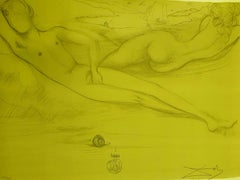
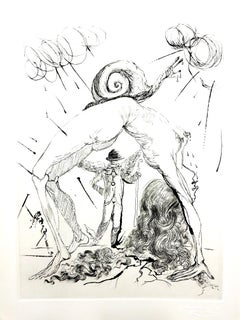
Salvador Dali - Nude with Snail
By Salvador Dalí­
Located in Collonge Bellerive, Geneve, CH
Salvador Dali - Nude with Snail - Original Etching Dimensions: 38 x 28 cm Edition: 235 1967 embossed signature On Arches Vellum References : Field 67-10 (p. 34-35)
Category

1960s Surrealist Switzerland - Prints and Multiples

Materials

Etching

Salvador Dali - Venus, Mars and Cupidon - Handsigned Etching
By Salvador Dalí­
Located in Collonge Bellerive, Geneve, CH
Salvador Dali - Venus, Mars and Cupidon - Handsigned Etching Title: Venus, Mars and Cupidon Dimensions: 76 X 56 cm From the Homage to Dürer Numbered: EA, Epreuve d'Artiste Rives ...
Category

1970s Surrealist Switzerland - Prints and Multiples

Materials

Etching

Alexander Calder - Original Lithograph - from "Derrière le miroir"
By Alexander Calder
Located in Collonge Bellerive, Geneve, CH
Alexander Calder - Original Lithograph - from "Derriere le Miroir"Behind the Mirror 1976 Framed Dimensions: 38 x 56 cm Source: Derrière le miroir (DLM), n°141, 1976 Alexander Cald...
Category

1970s Abstract Geometric Switzerland - Prints and Multiples

Materials

Lithograph

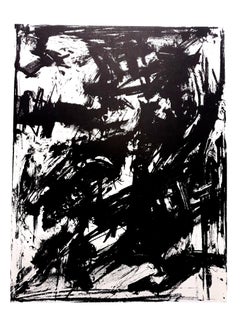
Emilio Vedova - Original Lithograph
By Emilio Vedova
Located in Collonge Bellerive, Geneve, CH
Emilio Vedova - Original Lithograph Abstraction 1961 From the art revue XXe Siecle Dimensions: 32 x 24 Edition: G. di San Lazzaro. Unsigned and unumbered as issued
Category

1960s Modern Switzerland - Prints and Multiples

Materials

Lithograph

Serge Gladky - Art Deco Colorful Composition - Original Pochoir
By Serge Gladky
Located in Collonge Bellerive, Geneve, CH
Serge Gladky - Art Deco Colorful Composition Original Pochoir Circa 1925 33 x 26 cm So what is a "pochoir?" In its most basic sense, it is a stencil. By the 1920’s and 1930’s, th...
Category

1920s Art Deco Switzerland - Prints and Multiples
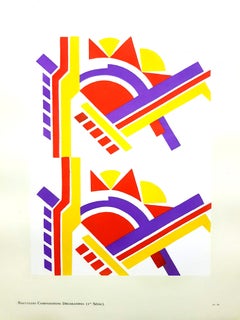
Jean Arp (after) - Composition - Pochoir
By Jean Arp
Located in Collonge Bellerive, Geneve, CH
Jean Arp (after) - Composition - Pochoir 1958 Dimensions: 32 x 24 cm From the art revue XXe siècle Unsigned and unumbered as issued
Category

1930s Surrealist Switzerland - Prints and Multiples

Materials

Stencil

André Lanskoy - Composition - Mourlot Lithographic Poster
By André Lanskoy
Located in Collonge Bellerive, Geneve, CH
André LANSKOY (1902-1976) Composition Lithographic poster Editor: Mourlot Dimensions: 58.5 x 47.5 cm André Lanskoy was one of the great painters o...
Category

1960s Abstract Expressionist Switzerland - Prints and Multiples

Materials

Lithograph

Salvador Dali - The Negresses - Original Stamp-Signed Etching
By Salvador Dalí­
Located in Collonge Bellerive, Geneve, CH
Salvador Dali - Original Etching Stamp signed by Dali Edition of 294 copies. Paper : Arches vellum. Dimensions : 16x12". Catalogue Raisonné : Field 68-6 (p. 40-41).
Category

1960s Surrealist Switzerland - Prints and Multiples

Materials

Etching

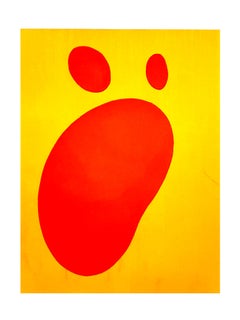
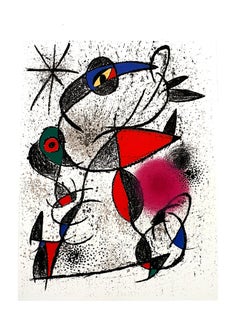
Joan Miro - Original Abstract Lithograph
By Joan Miró
Located in Collonge Bellerive, Geneve, CH
Joan Miro Miro Original Abstract Lithograph Artist: Joan Miro Medium: Original lithograph on Rives vellum Portfolio: Miro Lithographe IV Year: 1981 Editi...
Category

1970s Abstract Switzerland - Prints and Multiples

Materials

Lithograph

Salvador Dali - The Beach
By Salvador Dalí­
Located in Collonge Bellerive, Geneve, CH
Salvador Dali - The Beach At Sete - Original Etching Dimensions: 38 x 28 cm Edition: 235 Editor : Argillet 1967 embossed signature On Arches Vellum From the series : Poemes Secrets P...
Category

1960s Surrealist Switzerland - Prints and Multiples

Materials

Etching

Joan Miro - Original Abstract Lithograph
By Joan Miró
Located in Collonge Bellerive, Geneve, CH
Joan Miro Miro Original Abstract Lithograph Artist: Joan Miro Printer : Mourlot Portfolio: Souvenirs et portraits d'artistes Year: 1972 Edition: 800 Ref...
Category

1970s Abstract Switzerland - Prints and Multiples

Materials

Lithograph

SOHO I, Digital on Paper
Located in Yardley, PA
SOHO I is my special perception of metropole life like New York, where I lived during 4 years and was strongly influenced by its urbanity, colours, sounds and movements. The artwork ...
Category

2010s Pointillist Switzerland - Prints and Multiples

Materials

Digital

Salvador Dali - Reverie of Don Quichotte - Original Lithograph
By Salvador Dalí­
Located in Collonge Bellerive, Geneve, CH
Salvador Dali - Don Quixote Reading - Original Lithograph Joseph FORET, Paris, 1957 PRINTER : Atelier Mourlot. SIGNATURE : plate signed by Dali. LIMITED : 197 copies. SIZE : 41 x ...
Category

1950s Modern Switzerland - Prints and Multiples

Materials

Lithograph

Jean Gabriel Domergue - Women s Love - Original Etching
By Jean-Gabriel Domergue
Located in Collonge Bellerive, Geneve, CH
Original Etching by Jean-Gabriel Domergue Dimensions: 33 x 25 cm 1924 Edition of 100 This artwork is part of the famous portfolio The Afternoon of a Faun. Unsigned and unnumbered as ...
Category

1920s Impressionist Switzerland - Prints and Multiples

Materials

Lithograph

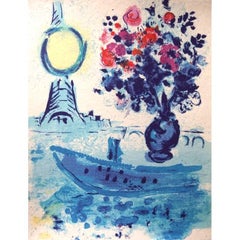
Marc Chagall - Bateau Mouche au bouquet - Original Lithograph
By Marc Chagall
Located in Collonge Bellerive, Geneve, CH
Marc Chagall Original Lithograph Title: Bateau Mouche au bouquet 1963 Dimensions: 39 x 30 cm Edition: 180 Unsigned as issued. From Regards sur Paris Published by André Sauret Condit...
Category

1960s Modern Switzerland - Prints and Multiples

Materials

Lithograph

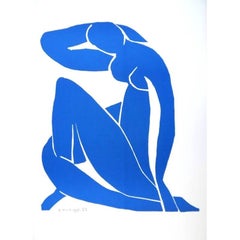
after Henri Matisse - Sleeping Blue Nude - Lithograph
By (after) Henri Matisse
Located in Collonge Bellerive, Geneve, CH
after Henri MATISSE Edition of 200 with the printed signature, as issued 76 x 56 cm With stamp of the Succession Matisse References : Artvalue - Succession Matisse
Category

1950s Modern Switzerland - Prints and Multiples

Materials

Lithograph

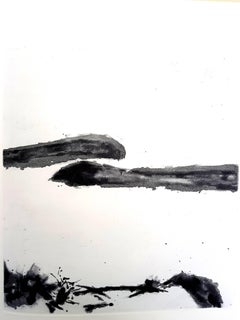
Zao Wou-ki - Moments - Original Aquatint with Hand-Signed Justification
By Zao Wou-Ki
Located in Collonge Bellerive, Geneve, CH
Zao Wou-ki - Moments - Original Aquatint Edition of 130 Dimensions: 34.2 x 30.5 cm Vellum paper BFK Rives 1996 Bibliography: Jørgen Ågerup, Zao Wou-Ki: The Graphic Work, A Catalogue ...
Category

1990s Abstract Expressionist Switzerland - Prints and Multiples

Materials

Aquatint

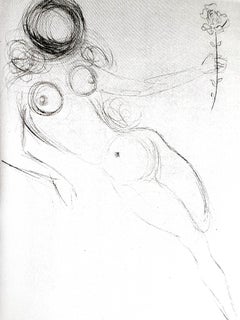
Salvador Dali - Nude with Flower - Original Etching on Silk
By Salvador Dalí­
Located in Collonge Bellerive, Geneve, CH
Salvador Dali - Nude with Flower - from "Les Amours de Cassandre" Original Etching From the suite on Silk made for editions 9 to 34 Dimensions: 38,5 ...
Category

1960s Surrealist Switzerland - Prints and Multiples

Materials

Etching

Salvador Dali - Les Songes Drolatiques - Handsigned Lithograph
By Salvador Dalí­
Located in Collonge Bellerive, Geneve, CH
Hand-Signed Lithograph by Salvador Dali This edition is on Japan Paper Title: Pantagruel's Dreams Signed in Pencil by Salvador Dali Dimensions: 76 x 56 cm Edition: EA 1973 References...
Category

1970s Surrealist Switzerland - Prints and Multiples

Materials

Etching

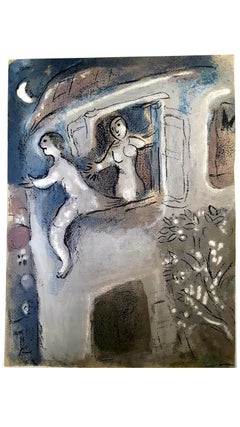
Marc Chagall - The Bible - David saved by Michal - from VERVE
By Marc Chagall
Located in Collonge Bellerive, Geneve, CH
Marc Chagall, Lithograph from Verve depicting an instant of the Bible. Technique: Lithograph in colours (Mourlot no. 234) On the reverse: another black and white original lithograph ...
Category

1960s Modern Switzerland - Prints and Multiples

Materials

Lithograph

Still Thinking About These?

All Recently Viewed