Switzerland - Figurative Prints
to
89
511
78
102
39
49
Overall Width
to
Overall Height
to
392
174
64
32
29
20
14
2
1
107
65
54
43
36
1
681
97
1
1
28
30
54
128
244
105
38
1
631
130
17
459
300
292
166
151
118
98
82
54
30
23
21
19
18
18
18
16
15
15
15
451
192
38
32
28
21
17
19,286
17,432
Item Ships From: Switzerland
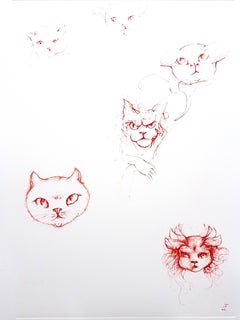
Leonor Fini - Red Cats - Original Etching
By Leonor Fini
Located in Collonge Bellerive, Geneve, CH
Leonor Fini - Cats - Original Engraving
Mme.Helvetius' Cats
Original etching created in 1985, Printed Signature (LF).
Conditions: excellent
Edition: 100
Support: Arches paper.
Dimensions: Paper dimensions: 44 x 28 cm
Editions: Moret, Paris.
Leonor Fini is considered one of the most important women artists of the mid-twentieth century, along with Leonora Carrington, Frida Kahlo, Meret Oppenheim, Remedios Varo, and Dorothea Tanning – most of whom Fini knew well. Her career, which spanned some six decades, included painting, graphic design, book illustration, product design (the renowned torso-shaped perfume bottle for Schiaparelli’s Shocking), and set and costume design for theatre, ballet, opera, and film. In this compellingly readable, exhaustively researched account, author Peter Webb brings Fini’s provocative art and unconventional personal life, as well as the vibrant avant-garde world in which she revolved, vividly in life.
Born in Buenos Aires in 1907 (August 30 – January 18, 1996, Paris) to Italian and Argentine parents, Leonor grew up in Trieste, Italy, raised by her strong-willed, independent mother, Malvina. She was a virtually self-taught artist, learing anatomy directly from studying cadavers in the local morgue and absorbing composition and technique from the Old Masters through books and visits to museums.
Fini’s fledging attempts at painting in Trieste let her to Milan, where she participated in her first group exhibition in 1929, and then to Paris in 1931.
Her vivacious personality and flamboyant attire instantly garnered her a spotlight in the Parisian art world and she soon developed close relationships with the leading surrealist writers and painters, including Paul Eluard, Salvador Dali, Man Ray, and Max Ernst, who became her lover for a time. The only surrealist she could not abide because of his misogyny was André Breton. Although she repeatedly exhibited with them, she never considered herself a surrealist. The American dealer Julien Levy,
very much impressed by Fini’s painting and smitten by her eccentric charms, invited her to New York in 1936, where she took part in a joint gallery exhibition with Max Ernst and met many American surrealists, including Joseph Cornell and Pavel Tchelitchew. Her work was included in MoMA’s pivotal Fantastic Art, Dada and Surrealism exhibition, along with De Chirico, Dali, Ernst, and Yves Tanguy.
In 1939 in Paris she curated an exhibition of surrealist furniture...
Category
1980s Modern Switzerland - Figurative Prints
Materials
Etching
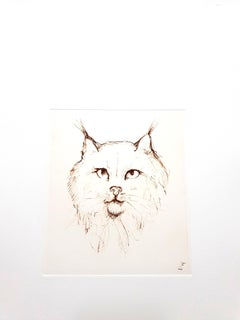
Leonor Fini - Cat - Original Etching
By Leonor Fini
Located in Collonge Bellerive, Geneve, CH
Leonor Fini - Cats - Original Engraving
Mme.Helvetius' Cats
Original etching created in 1985, Printed Signature (LF).
Conditions: excellent
Edition: 100
Support: Arches paper.
Dimensions: Paper dimensions: 44 x 28 cm
Editions: Moret, Paris.
Leonor Fini is considered one of the most important women artists of the mid-twentieth century, along with Leonora Carrington, Frida Kahlo, Meret Oppenheim, Remedios Varo, and Dorothea Tanning – most of whom Fini knew well. Her career, which spanned some six decades, included painting, graphic design, book illustration, product design (the renowned torso-shaped perfume bottle for Schiaparelli’s Shocking), and set and costume design for theatre, ballet, opera, and film. In this compellingly readable, exhaustively researched account, author Peter Webb brings Fini’s provocative art and unconventional personal life, as well as the vibrant avant-garde world in which she revolved, vividly in life.
Born in Buenos Aires in 1907 (August 30 – January 18, 1996, Paris) to Italian and Argentine parents, Leonor grew up in Trieste, Italy, raised by her strong-willed, independent mother, Malvina. She was a virtually self-taught artist, learing anatomy directly from studying cadavers in the local morgue and absorbing composition and technique from the Old Masters through books and visits to museums.
Fini’s fledging attempts at painting in Trieste let her to Milan, where she participated in her first group exhibition in 1929, and then to Paris in 1931.
Her vivacious personality and flamboyant attire instantly garnered her a spotlight in the Parisian art world and she soon developed close relationships with the leading surrealist writers and painters, including Paul Eluard, Salvador Dali, Man Ray, and Max Ernst, who became her lover for a time. The only surrealist she could not abide because of his misogyny was André Breton. Although she repeatedly exhibited with them, she never considered herself a surrealist. The American dealer Julien Levy,
very much impressed by Fini’s painting and smitten by her eccentric charms, invited her to New York in 1936, where she took part in a joint gallery exhibition with Max Ernst and met many American surrealists, including Joseph Cornell and Pavel Tchelitchew. Her work was included in MoMA’s pivotal Fantastic Art, Dada and Surrealism exhibition, along with De Chirico, Dali, Ernst, and Yves Tanguy.
In 1939 in Paris she curated an exhibition of surrealist furniture...
Category
1980s Modern Switzerland - Figurative Prints
Materials
Etching
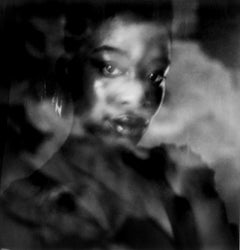
Shadowed Beauty - 21st Century Contemporary Photographic Print - B/W Polaroid
By Pia Clodi
Located in Zürich, CH
Shadowed Beauty - 21st Century Contemporary Photographic Print - Black & White Polaroid, Polaroid Original, Shadow Gapped Frame - Photographic Print on Aluminium Dibond - Edition of ...
Category
21st Century and Contemporary Contemporary Switzerland - Figurative Prints
Materials
Carbon Pigment, Polaroid

$1,826 Sale Price
20% Off
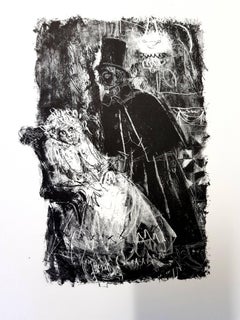
Antoni Clavé - Original Lithograph - For Pushkin
s Queen of Spades
By Antoni Clavé
Located in Collonge Bellerive, Geneve, CH
Antoni Clavé - Original Lithograph - For Alexander Pushkin's Queen of Spades
Dimensions: 325 x 247 mm.
1946
Original lithograph of Antoni Clavé
Edit...
Category
1940s Modern Switzerland - Figurative Prints
Materials
Lithograph
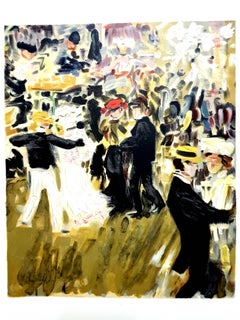
Moulin de la Galette - Lithograph
By Kees van Dongen
Located in Collonge Bellerive, Geneve, CH
Title: Moulin de la Galette
Signed in the plate
Edition of 250
Dimensions: 38 x 28 cm
References: Juffermans JB23
Information : Lithograph published in 1965 for the portfolio " ...
Category
1960s Switzerland - Figurative Prints
Materials
Lithograph
Missing Hand - Cyanotype Style Film Photographic Print Framed
By Pia Clodi
Located in Zürich, CH
Not one to shy away from human representation, Pia Clodi’s more portraiture-like works continually offer the sitter an air of anonymity, and as such the viewer has the opportunity to...
Category
21st Century and Contemporary Contemporary Switzerland - Figurative Prints
Materials
Photographic Film, Photographic Paper, Color, Carbon Pigment, Polaroid
$1,825 Sale Price
20% Off
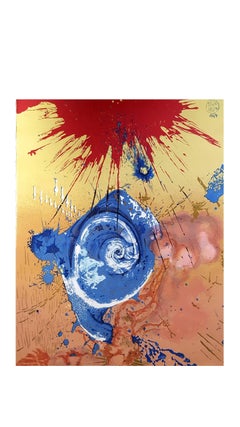
Salvador Dali - Dawn - Original Lithograph
By Salvador Dalí
Located in Collonge Bellerive, Geneve, CH
Salvador Dali - Dawn - Original Lithograph
Joseph FORET, Paris, 1957
PRINTER : Guillard
SIGNATURE : plate signed by Dali.
LIMITED : 233 copies.
SIZE : 41 x 33 cm
REFERENCES : Fiel...
Category
1950s Surrealist Switzerland - Figurative Prints
Materials
Lithograph
Jean Cocteau - Young Girl - Original Lithograph
By Jean Cocteau
Located in Collonge Bellerive, Geneve, CH
Jean Cocteau - Young Girl - Original Lithograph
Signed and dated in the plate
Stampsigned
Dimensions: 53 x 42 cm
1956
Provenance : Succession Dermit, Cocteau's heir
Category
1950s Modern Switzerland - Figurative Prints
Materials
Lithograph
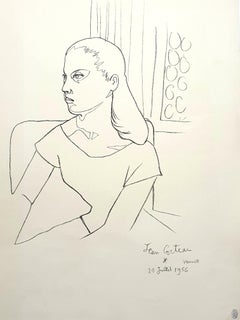
Salvador Dali - Kneeling Knight - Original Etching
By Salvador Dalí
Located in Collonge Bellerive, Geneve, CH
Salvador Dali - Kneeling Knight - Original Etching
Stamp Signed
Dimensions: 38,5 x 28,5 cm
1969
References : Field 69-1 / Michler & Lopsinger 305
Category
1960s Surrealist Switzerland - Figurative Prints
Materials
Etching
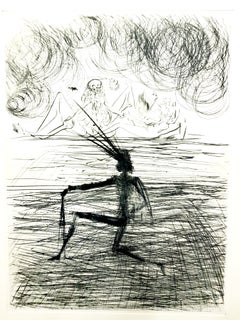
Salvador Dali - The Kidnapping - Original Etching on Silk
By Salvador Dalí
Located in Collonge Bellerive, Geneve, CH
Salvador Dali - The Kidnapping - from "Les Amours de Cassandre"
Original Etching
From the suite on Silk made for editions 9 to 34
Dimensions: 38,5 x 28,5 cm
...
Category
1960s Surrealist Switzerland - Figurative Prints
Materials
Etching
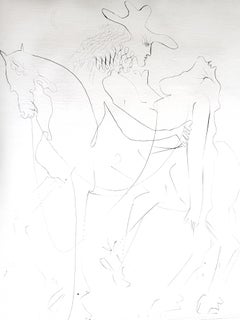
The Freud Cycle, (portfolio of 13)- Contemporary, 21st Century, Limited Edition
By Robert Longo
Located in Zug, CH
Robert Longo, The Freud Cycle, (portfolio of 13)
Contemporary, 21st Century, Pigment Print, Limited Edition
Pigment print (set of 9)
Edition of 30
Various dimensions
Signed and numbe...
Category
Early 2000s Contemporary Switzerland - Figurative Prints
Materials
Pigment
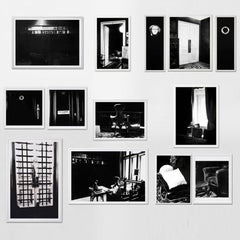
$93,748 Sale Price
20% Off
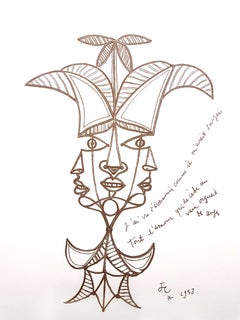
Jean Cocteau - Three Persons or One - Original Lithograph
By Jean Cocteau
Located in Collonge Bellerive, Geneve, CH
Original Lithograph by Jean Cocteau
Title: Three Persons or One
Signed in the plate
Dimensions: 32 x 25.5 cm
Edition: 200
1959
Publisher: Bibliophiles Du Palais
Unnumbered as issued
Category
1950s Modern Switzerland - Figurative Prints
Materials
Lithograph
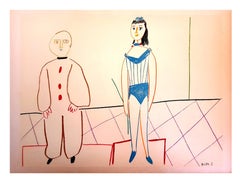
The Human Comedy - Lithograph from "Verve"
By (after) Pablo Picasso
Located in Collonge Bellerive, Geneve, CH
After Pablo Picasso - The Human Comedy - Lithograph from the journal "Verve"
Signed and dated in the plate
Dimensions: 32 x 24 cm
Printed by Mourlot, Paris.
Pablo Picasso
Picasso i...
Category
1950s Modern Switzerland - Figurative Prints
Materials
Lithograph
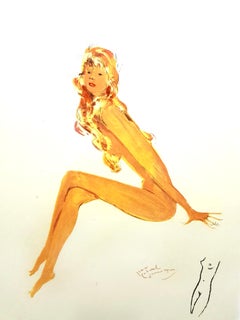
Domergue - Red Hair Elegance - Original Signed Lithograph
By Jean-Gabriel Domergue
Located in Collonge Bellerive, Geneve, CH
Original Lithograph by Jean-Gabriel Domergue
Title: Red Hair Elegance
Signed in the plate
Dimensions: 40 x 31 cm
1956
Edition of 197
This artwork is part of the famous portfolio "La ...
Category
1950s Impressionist Switzerland - Figurative Prints
Materials
Lithograph
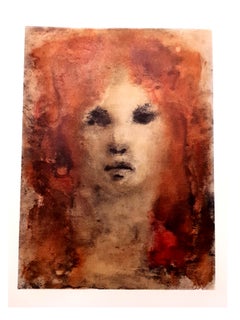
Leonor Fini - Red-Hair - Original Lithograph
By Leonor Fini
Located in Collonge Bellerive, Geneve, CH
Leonor Fini - Red-Hair - Original Lithograph
The Flowers of Evil
1964
Conditions: excellent
Edition: 500
Dimensions: 46 x 34 cm
Editions: Le Cercle du Livre Précieux, Paris
Unsigne...
Category
1960s Modern Switzerland - Figurative Prints
Materials
Lithograph
Salvador Dali - John Kennedy - Original Handsigned Etching
By Salvador Dalí
Located in Collonge Bellerive, Geneve, CH
Salvador Dali - John Kennedy - Original Handsigned Etching
Dimensions: 38 x 28 cm
1968
Signed in pencil
EA in Sanguine
Jean Schneider, Basel
References : ...
Category
1960s Surrealist Switzerland - Figurative Prints
Materials
Etching

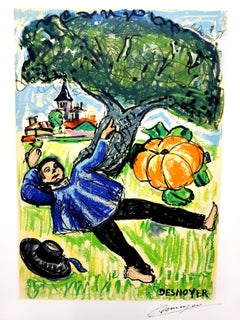
François Desnoyer - Free Child - Handsigned Original Lithograph
By François Desnoyer
Located in Collonge Bellerive, Geneve, CH
François Desnoyer - Free Child
Original Lithograph
Handsigned
Dimensions: 38 x 28 cm
François Desnoyer was a French visual artist who was born in ...
Category
1950s Post-Impressionist Switzerland - Figurative Prints
Materials
Lithograph
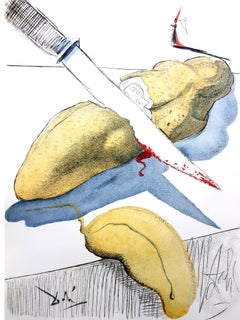
Salvador Dali - Cut Cucumber - Original Etching
By Salvador Dalí
Located in Collonge Bellerive, Geneve, CH
Salvador Dali - Cut Cucumber - Original Etching
Dimensions: 38 x 28 cm
Edition: 390
1967
On Rives Vellum
References : Field 67-4 (p. 32-33) / Michler & Lopsinger 174 to 187.
Category
1960s Surrealist Switzerland - Figurative Prints
Materials
Etching
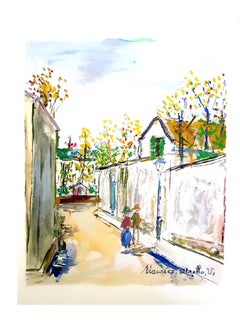
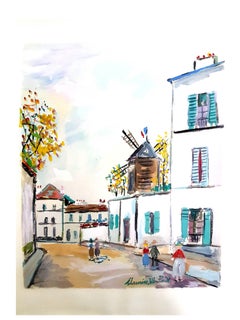
Inspired Village of Montmartre - Pochoir
By (after) Maurice Utrillo
Located in Collonge Bellerive, Geneve, CH
(after) Maurice Utrillo
Inspired Village of Montmartre
Pochoir with printed signature
Edition of 490
Dimensions: 39 x 30 cm
Information : This print was created for the portfolio "Le Village inspiré, Chronique de la bohème de Montmartre (1920-1950) " published by Vertex in 1950
Condition : Excellent
Maurice Utrillo (1883 - 1955)
The French painter Maurice Utrillo was born as the illegitimate son of the painter Suzanne Valladon in Paris on December 26, 1883. He was adopted by the Catalan art critic Miguel Utrillo...
Category
1950s Modern Switzerland - Figurative Prints
Materials
Stencil
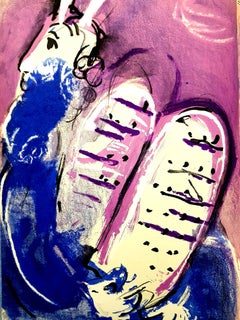
Marc Chagall - Moses with Tablets of Stone - Original Lithograph
By Marc Chagall
Located in Collonge Bellerive, Geneve, CH
Marc Chagall, Original Lithograph depicting an instant of the Bible.
Technique: Original lithograph in colours
Year: 1956
Sizes: 35,5 x 26 cm / 14" x 10.2" (sheet)
Published by: Éditions de la Revue Verve, Tériade, Paris
Printed by: Atelier Mourlot, Paris
Documentation / References: Mourlot, F., Chagall Lithograph [II] 1957-1962, A. Sauret, Monte Carlo 1963, nos. 234 and 257
Marc Chagall (born in 1887)
Marc Chagall was born in Belarus in 1887 and developed an early interest in art. After studying painting, in 1907 he left Russia for Paris, where he lived in an artist colony on the city’s outskirts. Fusing his own personal, dreamlike imagery with hints of the fauvism and cubism popular in France at the time, Chagall created his most lasting work—including I and the Village (1911)—some of which would be featured in the Salon des Indépendants exhibitions. After returning to Vitebsk for a visit in 1914, the outbreak of WWI trapped Chagall in Russia. He returned to France in 1923 but was forced to flee the country and Nazi persecution during WWII. Finding asylum in the U.S., Chagall became involved in set and costume design before returning to France in 1948. In his later years, he experimented with new art forms and was commissioned to produce numerous large-scale works. Chagall died in St.-Paul-de-Vence in 1985.
The Village
Marc Chagall was born in a small Hassidic community on the outskirts of Vitebsk, Belarus, on July 7, 1887. His father was a fishmonger, and his mother ran a small sundries shop in the village. As a child, Chagall attended the Jewish elementary school, where he studied Hebrew and the Bible, before later attending the Russian public school. He began to learn the fundamentals of drawing during this time, but perhaps more importantly, he absorbed the world around him, storing away the imagery and themes that would feature largely in most of his later work.
At age 19 Chagall enrolled at a private, all-Jewish art school and began his formal education in painting, studying briefly with portrait artist Yehuda Pen. However, he left the school after several months, moving to St. Petersburg in 1907 to study at the Imperial Society for the Protection of Fine Arts. The following year, he enrolled at the Svanseva School, studying with set designer Léon Bakst, whose work had been featured in Sergei Diaghilev's Ballets Russes. This early experience would prove important to Chagall’s later career as well.
Despite this formal instruction, and the widespread popularity of realism in Russia at the time, Chagall was already establishing his own personal style, which featured a more dreamlike unreality and the people, places and imagery that were close to his heart. Some examples from this period are his Window Vitebsk (1908) and My Fianceé with Black Gloves (1909), which pictured Bella Rosenfeld, to whom he had recently become engaged.
The Beehive
Despite his romance with Bella, in 1911 an allowance from Russian parliament member and art patron Maxim Binaver enabled Chagall to move to Paris, France. After settling briefly in the Montparnasse neighborhood, Chagall moved further afield to an artist colony known as La Ruche (“The Beehive”), where he began to work side by side with abstract painters such as Amedeo Modigliani and Fernand Léger as well as the avant-garde poet Guillaume Apollinaire. At their urging, and under the influence of the wildly popular fauvism and cubism, Chagall lightened his palette and pushed his style ever further from reality. I and the Village (1911) and Homage to Apollinaire (1912) are among his early Parisian works, widely considered to be his most successful and representative period.
Though his work stood stylistically apart from his cubist contemporaries, from 1912 to 1914 Chagall exhibited several paintings at the annual Salon des Indépendants exhibition, where works by the likes of Juan Gris, Marcel Duchamp and Robert Delaunay were causing a stir in the Paris art world. Chagall’s popularity began to spread beyond La Ruche, and in May 1914 he traveled to Berlin to help organize his first solo exhibition, at Der Sturm Gallery. Chagall remained in the city until the highly acclaimed show opened that June. He then returned to Vitebsk, unaware of the fateful events to come.
War, Peace and Revolution
In August 1914 the outbreak of World War I precluded Chagall’s plans to return to Paris. The conflict did little to stem the flow of his creative output, however, instead merely giving him direct access to the childhood scenes so essential to his work, as seen in paintings such as Jew in Green (1914) and Over Vitebsk (1914). His paintings from this period also occasionally featured images of the war’s impact on the region, as with Wounded Soldier (1914) and Marching (1915). But despite the hardships of life during wartime, this would also prove to be a joyful period for Chagall. In July 1915 he married Bella, and she gave birth to a daughter, Ida, the following year. Their appearance in works such as Birthday (1915), Bella and Ida by the Window (1917) and several of his “Lovers” paintings give a glimpse of the island of domestic bliss that was Chagall’s amidst the chaos.
To avoid military service and stay with his new family, Chagall took a position as a clerk in the Ministry of War Economy in St. Petersburg. While there he began work on his autobiography and also immersed himself in the local art scene, befriending novelist Boris Pasternak, among others. He also exhibited his work in the city and soon gained considerable recognition. That notoriety would prove important in the aftermath of the 1917 Russian Revolution when he was appointed as the Commissar of Fine Arts in Vitebsk. In his new post, Chagall undertook various projects in the region, including the 1919 founding of the Academy of the Arts. Despite these endeavors, differences among his colleagues eventually disillusioned Chagall. In 1920 he relinquished his position and moved his family to Moscow, the post-revolution capital of Russia.
In Moscow, Chagall was soon commissioned to create sets and costumes for various productions at the Moscow State Yiddish...
Category
1950s Modern Switzerland - Figurative Prints
Materials
Lithograph
Enki Bilal - Athena - Original Lithograph
By Enki Bilal
Located in Collonge Bellerive, Geneve, CH
Enki Bilal - Athena - Original Lithograph
Publisher: Amis du Livre
Edition: 240
2012
Dimensions: 42 x 30 cm.
Unsigned and unnumbered as issued
Category
2010s Contemporary Switzerland - Figurative Prints
Materials
Lithograph, Pigment
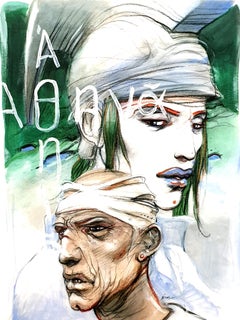
Dufza - Paris - Quai de la Tournelle - Original Handsigned Etching
Located in Collonge Bellerive, Geneve, CH
Dufza - Paris - Quai de la Tournelle - Original Handsigned Etching
Circa 1940
Handsigned in pencil
Dimensions: 20 x 25 cm
Unumbered as issued
Category
1940s Modern Switzerland - Figurative Prints
Materials
Etching
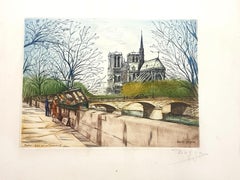
Even Saying Nothing Is a Lie, (from A Journey to Death) - Litograph, YBA, Emin
By Tracey Emin
Located in Zug, CH
Even Saying Nothing Is a Lie, (from A Journey To Death), 2021
Colour lithographs on Somerset Velvet Warm White 400gsm
Signed, numbered, and dated by the artist
In mint condition
With...
Category
2010s Young British Artists (YBA) Switzerland - Figurative Prints
Materials
Lithograph
$14,903 Sale Price
20% Off
after Jean Dubuffet - Personnage - Pochoir
By Jean Dubuffet
Located in Collonge Bellerive, Geneve, CH
after Jean Dubuffet
Personnage
Pochoir on paper
1956
Dimensions: 32 x 25 cm
Edition: G. di San Lazzaro.
From the art revue XXe siècle
Unsigned and unumbered as issued
Category
1950s Modern Switzerland - Figurative Prints
Materials
Stencil

Le Gôut du Bonheur: one plate
By (after) Pablo Picasso
Located in Collonge Bellerive, Geneve, CH
Artist: Pablo Picasso (after)
Medium: lithograph, Arches paper
Portfolio: Le Goût de Bonheur
Year: 1970
Edition: Total of 1998 copies (666 each in German, French and English), reprod...
Category
1960s Modern Switzerland - Figurative Prints
Materials
Lithograph
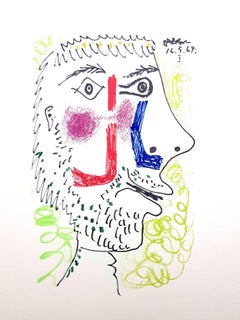
Eduardo Arroyo - Homage to Braque - Original Lithograph
By Eduardo Arroyo
Located in Collonge Bellerive, Geneve, CH
Eduardo Arroyo - Homage to Braque - Original Lithograph
1984
Conditions: excellent
Edition: 495
Dimensions: 37,3 x 58 cm
Editions: Trinckvel
Category
1980s Modern Switzerland - Figurative Prints
Materials
Lithograph
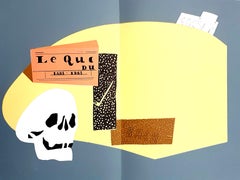
André Derain - Ovid
s Heroides - Original Etching
By André Derain
Located in Collonge Bellerive, Geneve, CH
André Derain - Ovid's Heroides
Original Etching
Edition of 134
Dimensions: 32 x 25 cm
Ovide [Marcel Prevost], Héroïdes, Paris, Société des Cent-une, 1938
Andre Derain was born in 1...
Category
1930s Modern Switzerland - Figurative Prints
Materials
Etching
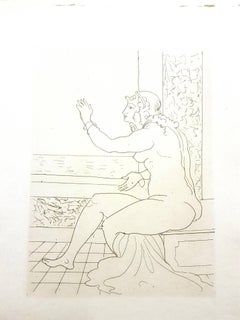
Pierre Bonnard - The Street - Original Etching
By Pierre Bonnard
Located in Collonge Bellerive, Geneve, CH
Pierre Bonnard - The Street - Original Lithograph
Dimensions : 13 x 10".
Paper : Rives vellum.
Edition : 225 copies.
1927
From Tableaux de Paris, Emile-Paul Freres, Paris
CHARLES...
Category
1920s Modern Switzerland - Figurative Prints
Materials
Etching
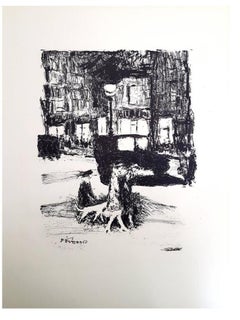
After Delaunay - Color Compositions - Pochoir
By (after) Sonia Delaunay
Located in Collonge Bellerive, Geneve, CH
After Sonia Delaunay - Color Compositions - Pochoir
Dimensions: 32 x 24 cm.
From DELAUNAY, Sonia (1885-1979). Compositions couleurs idées. Paris
Éditions d'Art Charles Moreau.
Sonia Delaunay was known for her vivid use of color and her bold, abstract patterns, breaking down traditional distinctions between the fine and applied arts as an artist, designer and printmaker.
Born Sarah Stern on November 14, 1885 in Gradizhsk, Ukraine, she was adopted in 1890 by her maternal uncle, Henri Terk, a lawyer in St. Petersburg, where she grew up, exposed to music and art, and learning several foreign languages. In 1903, she moved to Germany to study drawing with Ludwig Schmidt-Reutler (1863–1909) at the Karlsruhe academy of fine arts; Arnold Schoenberg (1874–1951), composer-to-be, was among her classmates there. In 1905, she traveled to Paris where she attended art classes at the Académie de la Palette, learned printmaking from Rudolf Grossman (1889–1941), and met Amédée Ozenfant (1886–1966), André Dunoyer de Segonzac (1884–1974), and Jean-Louis Boussingault (1883–1943). Sonia spent much of her time at exhibitions and galleries in Paris, which showed works by Paul Cézanne, Vincent Van Gogh, Pierre Bonnard, and Edouard Vuillard, as well as Les Fauves, Henri Matisse and André Derain. She did, however, maintain contact with Germany, exhibiting at the Galerie Der Sturm, Berlin, in 1913, 1920 and 1921.
During her first year in Paris, Sonia met the German collector and art-dealer, Wilhelm Uhde (1874–1947), whom she married on December 5, 1908, and whose Montparnasse gallery, the Galerie Notre-Dame des Champs, showed her first solo exhibition. Through Uhde, Sonia encountered many painters, including Pablo Picasso, Georges Braque, Maurice de Vlaminck, and Robert Delaunay (1885–1941). In 1910, Sonia divorced Uhde by mutual agreement, married Delaunay that same year, and gave birth to their son, Charles, in January 1911.
Together Sonia and Robert Delaunay pursued the study of color, influenced by theories of Michel-Eugène Chevreul (1786–1889). Sonia’s interest in simultaneous contrast, as evidenced in her early collages, book bindings, small painted boxes...
Category
1960s Abstract Geometric Switzerland - Figurative Prints
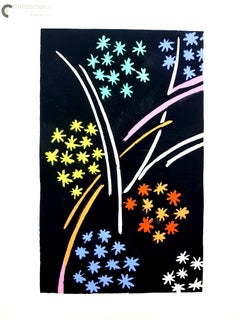
Jean Cocteau - The Boxer - Original Lithograph
By Jean Cocteau
Located in Collonge Bellerive, Geneve, CH
Original Lithograph by Jean Cocteau
Title: The Boxer
Signed in the plate
Dimensions: 32 x 25.5 cm
Edition: 200
1959
Publisher: Bibliophiles Du Palais
Unnumb...
Category
1950s Modern Switzerland - Figurative Prints
Materials
Lithograph
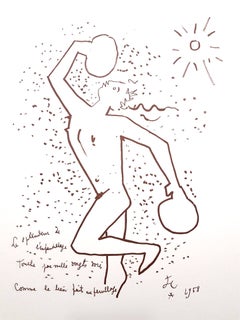
Salvador Dali - Don Quixote Reading in his Room - Original Lithograph
By Salvador Dalí
Located in Collonge Bellerive, Geneve, CH
Salvador Dali - Don Quixote Reading in his Room - Original Lithograph
Joseph FORET, Paris, 1957
PRINTER : Detruit.
SIGNATURE : plate signed by Dali.
LIMITED : 197 copies.
SIZE : 4...
Category
1950s Surrealist Switzerland - Figurative Prints
Materials
Lithograph
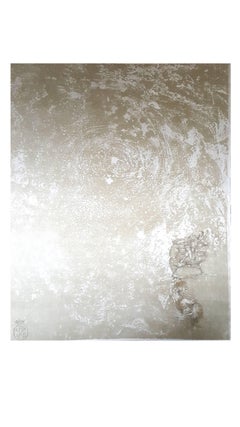
Jean Bazaine - Original Lithograph
By Jean Bazaine
Located in Collonge Bellerive, Geneve, CH
Jean Bazaine - Original Lithograph
1956
Dimensions: 38 x 28 cm
Revue DLM 10 ans d'éditions
Edition: Maeght
Category
1970s Abstract Geometric Switzerland - Figurative Prints
Materials
Lithograph
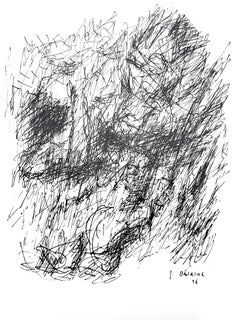
Max Ernst - Birds - Original Lithograph
By Max Ernst
Located in Collonge Bellerive, Geneve, CH
Max Ernst - Birds - Original Lithograph
Birds, 1964
Dimensions: 32 x 24 cm
From the art review XXe siècle
Unsigned and unumbered as issued
Category
1960s Surrealist Switzerland - Figurative Prints
Materials
Lithograph
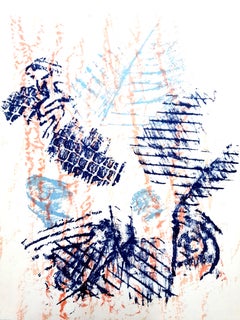
Leonor Fini - Prisonners - Original Lithograph
By Leonor Fini
Located in Collonge Bellerive, Geneve, CH
Leonor Fini - Prisonners - Original Lithograph
The Flowers of Evil
1964
Conditions: excellent
Edition: 500
Dimensions: 46 x 34 cm
Editions: Le Cercle du Livre Précieux, Paris
Unsig...
Category
1960s Modern Switzerland - Figurative Prints
Materials
Lithograph
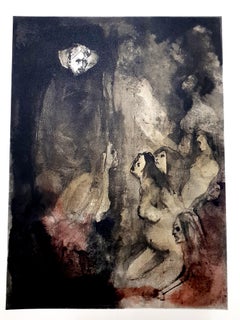
The Human Comedy - Lithograph
By (after) Pablo Picasso
Located in Collonge Bellerive, Geneve, CH
After Pablo Picasso
The Human Comedy - Lithograph after an original drawing, as published in the journal "Verve"
Printed signature and date Dimensio...
Category
1950s Modern Switzerland - Figurative Prints
Materials
Lithograph
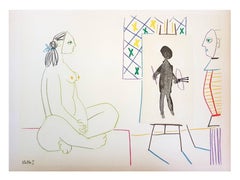
André Derain - Ovid
s Heroides - Original Etching
By André Derain
Located in Collonge Bellerive, Geneve, CH
André Derain - Ovid's Heroides
Original Etching
Edition of 134
Dimensions: 32 x 25 cm
Ovide [Marcel Prevost], Héroïdes, Paris, Société des Cent-une, 1938
Andre Derain was born in 1...
Category
1930s Modern Switzerland - Figurative Prints
Materials
Etching

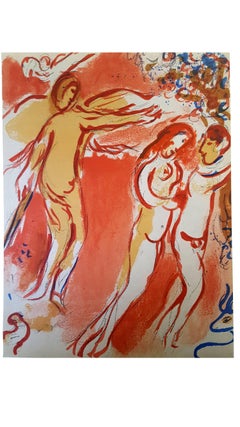
Marc Chagall - The Bible - Paradise - Original Lithograph
By Marc Chagall
Located in Collonge Bellerive, Geneve, CH
Marc Chagall, Original Lithograh depicting an instant of the Bible.
Technique: Original lithograph in colours (Mourlot no. 234)
On the reverse: another black and white original litho...
Category
1960s Modern Switzerland - Figurative Prints
Materials
Lithograph
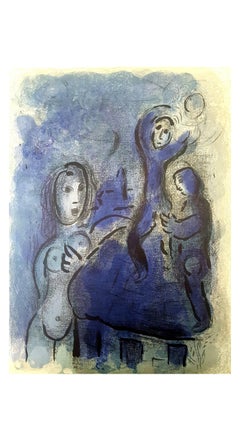
Marc Chagall - The Bible - Rahab and the Spies of Jericho - Original Lithograph
By Marc Chagall
Located in Collonge Bellerive, Geneve, CH
Marc Chagall, Original Lithograh depicting an instant of the Bible.
Technique: Original lithograph in colours (Mourlot no. 234)
On the reverse: another black and white original litho...
Category
1960s Modern Switzerland - Figurative Prints
Materials
Lithograph
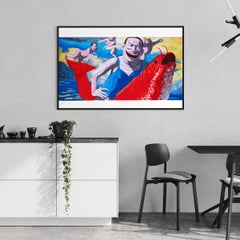
Floating Clouds - Contemporary, 21st Century, Lithograph, Limited Edition
By Yue Minjun
Located in Zug, CH
Yue Minjun, Floating Clouds
Contemporary, 21st Century, Lithograph, Limited Edition
Lithograph
Edition of 130
80 x 120 cm (31.4 x 47.2 in)
Stamped Signa...
Category
Early 2000s Contemporary Switzerland - Figurative Prints
Materials
Lithograph
$6,922 Sale Price
49% Off
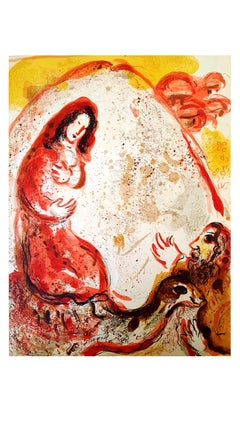
Marc Chagall - The Bible - Rachel - Original Lithograph
By Marc Chagall
Located in Collonge Bellerive, Geneve, CH
Marc Chagall, Original Lithograh depicting an instant of the Bible.
Technique: Original lithograph in colours (Mourlot no. 234)
On the reverse: another black and white original litho...
Category
1960s Modern Switzerland - Figurative Prints
Materials
Lithograph
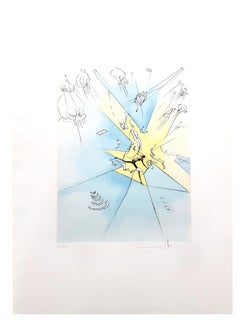
Salvador Dali - The Grand Inquisitor
By Salvador Dalí
Located in Collonge Bellerive, Geneve, CH
Salvador Dali - The Grand Inquisitor Expels the Savior
Handsigned in pencil and Numbered
Edition: F195/195
- Printer: Atelier Rigal.
- Paper: Ri...
Category
1970s Surrealist Switzerland - Figurative Prints
Materials
Etching
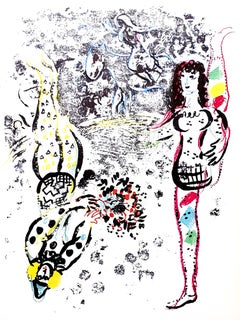
Le Jeu des Acrobates, original lithograph from "Chagall Lithographe II"
By Marc Chagall
Located in Collonge Bellerive, Geneve, CH
Marc Chagall
Original Lithograph
1963
Dimensions: 32 x 24 cm
As published in Chagall Lithographe 1957-1962. VOLUME II.
Unsigned, as issued, from the edition of several thousand
Condition : Excellent
Reference: Mourlot/Gauss 401
Marc Chagall (born in 1887)
Marc Chagall was born in Belarus in 1887 and developed an early interest in art. After studying painting, in 1907 he left Russia for Paris, where he lived in an artist colony on the city’s outskirts. Fusing his own personal, dreamlike imagery with hints of the fauvism and cubism popular in France at the time, Chagall created his most lasting work—including I and the Village (1911)—some of which would be featured in the Salon des Indépendants exhibitions. After returning to Vitebsk for a visit in 1914, the outbreak of WWI trapped Chagall in Russia. He returned to France in 1923 but was forced to flee the country and Nazi persecution during WWII. Finding asylum in the U.S., Chagall became involved in set and costume design before returning to France in 1948. In his later years, he experimented with new art forms and was commissioned to produce numerous large-scale works. Chagall died in St.-Paul-de-Vence in 1985.
The Village
Marc Chagall was born in a small Hassidic community on the outskirts of Vitebsk, Belarus, on July 7, 1887. His father was a fishmonger, and his mother ran a small sundries shop in the village. As a child, Chagall attended the Jewish elementary school, where he studied Hebrew and the Bible, before later attending the Russian public school. He began to learn the fundamentals of drawing during this time, but perhaps more importantly, he absorbed the world around him, storing away the imagery and themes that would feature largely in most of his later work.
At age 19 Chagall enrolled at a private, all-Jewish art school and began his formal education in painting, studying briefly with portrait artist Yehuda Pen. However, he left the school after several months, moving to St. Petersburg in 1907 to study at the Imperial Society for the Protection of Fine Arts. The following year, he enrolled at the Svanseva School, studying with set designer Léon Bakst, whose work had been featured in Sergei Diaghilev's Ballets Russes. This early experience would prove important to Chagall’s later career as well.
Despite this formal instruction, and the widespread popularity of realism in Russia at the time, Chagall was already establishing his own personal style, which featured a more dreamlike unreality and the people, places and imagery that were close to his heart. Some examples from this period are his Window Vitebsk (1908) and My Fianceé with Black Gloves (1909), which pictured Bella Rosenfeld, to whom he had recently become engaged.
The Beehive
Despite his romance with Bella, in 1911 an allowance from Russian parliament member and art patron Maxim Binaver enabled Chagall to move to Paris, France. After settling briefly in the Montparnasse neighborhood, Chagall moved further afield to an artist colony known as La Ruche (“The Beehive”), where he began to work side by side with abstract painters such as Amedeo Modigliani and Fernand Léger as well as the avant-garde poet Guillaume Apollinaire. At their urging, and under the influence of the wildly popular fauvism and cubism, Chagall lightened his palette and pushed his style ever further from reality. I and the Village (1911) and Homage to Apollinaire (1912) are among his early Parisian works, widely considered to be his most successful and representative period.
Though his work stood stylistically apart from his cubist contemporaries, from 1912 to 1914 Chagall exhibited several paintings at the annual Salon des Indépendants exhibition, where works by the likes of Juan Gris, Marcel Duchamp and Robert Delaunay were causing a stir in the Paris art world. Chagall’s popularity began to spread beyond La Ruche, and in May 1914 he traveled to Berlin to help organize his first solo exhibition, at Der Sturm Gallery. Chagall remained in the city until the highly acclaimed show opened that June. He then returned to Vitebsk, unaware of the fateful events to come.
War, Peace and Revolution
In August 1914 the outbreak of World War I precluded Chagall’s plans to return to Paris. The conflict did little to stem the flow of his creative output, however, instead merely giving him direct access to the childhood scenes so essential to his work, as seen in paintings such as Jew in Green (1914) and Over Vitebsk (1914). His paintings from this period also occasionally featured images of the war’s impact on the region, as with Wounded Soldier (1914) and Marching (1915). But despite the hardships of life during wartime, this would also prove to be a joyful period for Chagall. In July 1915 he married Bella, and she gave birth to a daughter, Ida, the following year. Their appearance in works such as Birthday (1915), Bella and Ida by the Window (1917) and several of his “Lovers” paintings give a glimpse of the island of domestic bliss that was Chagall’s amidst the chaos.
To avoid military service and stay with his new family, Chagall took a position as a clerk in the Ministry of War Economy in St. Petersburg. While there he began work on his autobiography and also immersed himself in the local art scene, befriending novelist Boris Pasternak, among others. He also exhibited his work in the city and soon gained considerable recognition. That notoriety would prove important in the aftermath of the 1917 Russian Revolution when he was appointed as the Commissar of Fine Arts in Vitebsk. In his new post, Chagall undertook various projects in the region, including the 1919 founding of the Academy of the Arts. Despite these endeavors, differences among his colleagues eventually disillusioned Chagall. In 1920 he relinquished his position and moved his family to Moscow, the post-revolution capital of Russia.
In Moscow, Chagall was soon commissioned to create sets and costumes for various productions at the Moscow State Yiddish Theater, where he would paint a series of murals titled Introduction to the Jewish Theater as well. In 1921, Chagall also found work as a teacher at a school for war orphans. By 1922, however, Chagall found that his art had fallen out of favor, and seeking new horizons he left Russia for good.
Flight
After a brief stay in Berlin, where he unsuccessfully sought to recover the work exhibited at Der Sturm before the war, Chagall moved his family to Paris in September 1923. Shortly after their arrival, he was commissioned by art dealer and publisher Ambroise Vollard to produce a series of etchings for a new edition of Nikolai Gogol's 1842 novel Dead Souls. Two years later Chagall began work on an illustrated edition of Jean de la Fontaine’s Fables, and in 1930 he created etchings for an illustrated edition of the Old Testament, for which he traveled to Palestine to conduct research.
Chagall’s work during this period brought him new success as an artist and enabled him to travel throughout Europe in the 1930s. He also published his autobiography, My Life (1931), and in 1933 received a retrospective at the Kunsthalle in Basel, Switzerland. But at the same time that Chagall’s popularity was spreading, so, too, was the threat of Fascism and Nazism. Singled out during the cultural "cleansing" undertaken by the Nazis in Germany, Chagall’s work was ordered removed from museums throughout the country. Several pieces were subsequently burned, and others were featured in a 1937 exhibition of “degenerate art” held in Munich. Chagall’s angst regarding these troubling events and the persecution of Jews in general can be seen in his 1938 painting White Crucifixion...
Category
1960s Surrealist Switzerland - Figurative Prints
Materials
Lithograph
Cubism - Pochoir
By (after) Pablo Picasso
Located in Collonge Bellerive, Geneve, CH
After Pablo Picasso - Cubism - Pochoir
Dimensions: 48.5 x 36 cm
1962
Edition of 260
Daniel Jacomet, LEDA, Editions d'Art
Pablo Picasso
Picasso is not just a man and his work. Picas...
Category
1960s Modern Switzerland - Figurative Prints
Materials
Lithograph
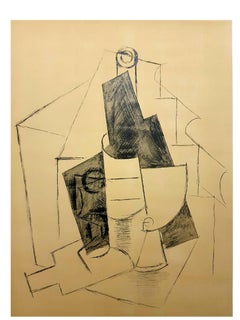
André Derain - Ovid
s Heroides - Original Etching
By André Derain
Located in Collonge Bellerive, Geneve, CH
André Derain - Ovid's Heroides
Original Etching
Edition of 134
Dimensions: 32 x 25 cm
Ovide [Marcel Prevost], Héroïdes, Paris, Société des Cent-une, 1938
Andre Derain was born in 1...
Category
1930s Modern Switzerland - Figurative Prints
Materials
Etching
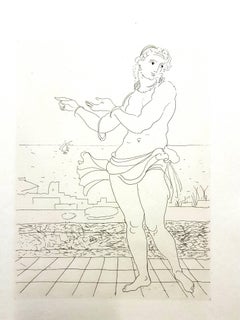
Salvador Dali - Brother Ogrin, The Hermit - Original Etching
By Salvador Dalí
Located in Collonge Bellerive, Geneve, CH
Salvador Dali - Brother Ogrin, The Hermit - Original Etching
Dimensions: 45 x 33 cm
Edition: 4/125
1970
Signed in pencil.
On Arches Vellum
References : Field 70-10 (p. 60-61)
Category
1970s Surrealist Switzerland - Figurative Prints
Materials
Etching
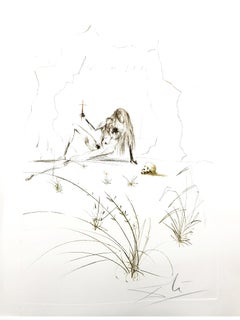
Salvador Dali - Nails on Nude
By Salvador Dalí
Located in Collonge Bellerive, Geneve, CH
Salvador Dali - Nails on Nude - Original Etching
Dimensions: 38 x 28 cm
Edition: 390
1967
On Rives Vellum
References : Field 67-4 (p. 32-33) / Michler & Lopsinger 174 to 187.
Category
1960s Surrealist Switzerland - Figurative Prints
Materials
Etching
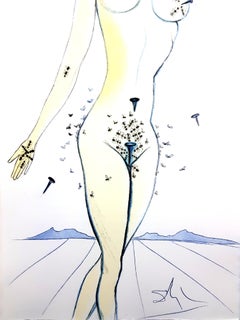
Jean Cocteau - Antigone - Original Lithograph
By Jean Cocteau
Located in Collonge Bellerive, Geneve, CH
Original Lithograph by Jean Cocteau
Title: Antigone
From "Théâtre" Portfolio, 1957
Edition: 207 / 8800
Dimensions: 22.5 x 15.5 cm
Jean Cocteau
Writer, artist and film director Jean Cocteau was one of the most influential creative figures in the Parisian avant-garde between the two World Wars.
“The poet never asks for admiration; he wants to be believed.”
—Jean Cocteau
Synopsis
Jean Cocteau was born on July 5, 1889, in Maisons-Laffitte, France. He spent most of his life in Paris, where he became part of the artistic avant-garde and was known for his variety of accomplishments. Over a 50-year career, he wrote poetry, novels and plays; created illustrations, paintings and other art objects; and directed influential films, including The Beauty and the Beast and Orpheus. He died on October 11, 1963.
Early Life and Literary Debut
Jean Cocteau was born on July 5, 1889, in Maisons-Laffitte, France, a village 12 miles outside Paris, to Georges and Eugénie (née) Lecomte Cocteau. He and his two older siblings were brought up in comfortable household in Paris, where they were introduced to the arts by their parents. Their father, a lawyer and amateur artist, committed suicide in 1898.
After his father's death, Cocteau was raised by his mother and his maternal grandfather. He attended school at the Lycée de Condorcet in Paris and he showed an early talent for writing. When he was just 18, his poetry was read aloud in performance arranged by the well-known actor Edouard de Max, and he became the toast of literary Paris. His first book of poems, La Lampe d'Aladin (Aladdin's Lamp), was published a year later, in 1909.
Cocteau and the Parisian Avant-Garde
In the 1910s, Cocteau formed friendships with many prominent members of the Parisian avant-garde, including writer Guillaume Apollinaire and artists Amedeo Modigliani and Pablo Picasso. He was so impressed by seeing the dancer Vaslav Nijinsky perform with the Ballets Russes that he met the company's founder, Sergei Diaghilev, and asked to work with him. Cocteau designed posters for the Ballets Russe, and in 1917 he was one of the collaborators on the ballet Parade: Cocteau wrote the story, Erik Satie composed the music, Léonide Massine choreographed the dance and Picasso designed the set and costumes.
Cocteau's activities of the 1920s were remarkably varied. He composed opera libretti for several composers. He published collections of poetry and illustrations as well as a novel inspired by his experiences during World War I. He staged a ballet called Le Boeuf Sur le Toit (The Ox on the Roof) and directed modern adaptations of several classic dramas. He promoted the work of young writer Raymond Radiguet...
Category
1950s Modern Switzerland - Figurative Prints
Materials
Lithograph

Dufza - Paris - Le Vert Galant - Original Handsigned Etching
Located in Collonge Bellerive, Geneve, CH
Dufza - Paris - Le Vert Galant - Original Handsigned Etching
Circa 1940
Handsigned in pencil
Dimensions: 20 x 25 cm
Category
1940s Modern Switzerland - Figurative Prints
Materials
Etching
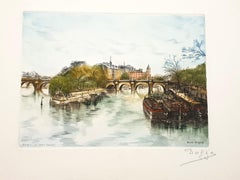
Jean Cocteau - Surrealist Smile - Original Lithograph
By Jean Cocteau
Located in Collonge Bellerive, Geneve, CH
Original Lithograph by Jean Cocteau
Title: Surrealist Smile
Signed in the plate
Dimensions: 32 x 25.5 cm
Edition: 200
1959
Publisher: Bibliophiles Du Palais
Unnumbered as issued
Category
1950s Modern Switzerland - Figurative Prints
Materials
Lithograph
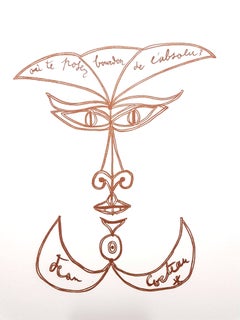
Wifredo Lam - Original Handsigned Lithograph -El ultimo viaje del buque fantasma
By Wifredo Lam
Located in Collonge Bellerive, Geneve, CH
Original lithograph, hand-signed and hand-numbered in pencil by the artist.
Edition: 56/99
Excellent Conditions
Dimensions: 76 x 56 cm
Reference : Catalogue raisonné Tonneau-Ryckely...
Category
1970s Post-Modern Switzerland - Figurative Prints
Materials
Lithograph
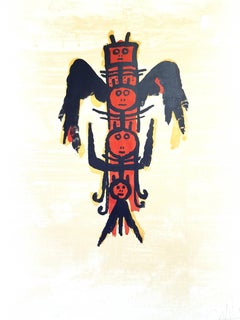
after Henri Laurens - Cubism - Pochoir
By Georges Braque
Located in Collonge Bellerive, Geneve, CH
after Henri Laurens - Cubism - Pochoir
Published in the deluxe art review, XXe Siecle
1956
Dimensions: 32 x 24 cm
Publisher: G. di San Lazzaro.
Unsigned and unumbered as issued
Category
1950s Modern Switzerland - Figurative Prints
Materials
Stencil
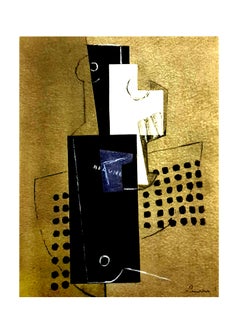
Femininity - Lithograph
By Jules Pascin
Located in Collonge Bellerive, Geneve, CH
(after) Jules Pascin
Title: Femininity
Signed in the plate
Dimensions: 38 x 28 cm
from the edition of 250 as issued in Warnod, Andre, "Les Peintres mes amis" (Paris: Les Heures Claires, 1965)
Jules Pascin, born Julius Mordechai Pincas, was a Bulgarian Jewish painter sometimes referred to as "the Prince of Montparnasse."
He was born on March 31, 1885 in Vidin, Bulgaria to a Spanish-Sephardic Jewish father and a Serbian-Italian mother, the eighth of eleven children. The Pincas family moved to Bucharest, Romania in 1892 and Pascin was raised there until he left for boarding school in Vienna in 1896.
While briefly working for his father’s grain merchant firm in Bucharest at fifteen, Pascin spent much of his time completing his earliest drawings in the local bordello, where he was residing under the Madame’s protection. In 1902, at the age of seventeen, Pascin moved to Vienna to study painting. The next year, he studied at the Heymann Art School in Munich. There, he supported himself by selling satirical drawings to Simplicissimus and other German magazines. Pascin would contribute drawings to a Munich daily through 1929.
Pascin’s contributions were widely recognized for their wit and insight, and upon his arrival in Paris in 1905 he was welcomed at the Gare Montparnasse by an international group of artists and writers who gathered at the Café du Dôme, which Pascin soon began to frequent regularly. The group included Grossman, Grosz, William Howard, Levy, and Emil Orlik. Pascin was also a close friend of Amadeo Modigliani.
Upon his arrival in Paris, Julius Mordechai Pincas changed his name to Jules Pascin and soon became the symbol of the Montparnasse artist community. Always in his bowler hat, he was a witty presence at Le Dôme café, Le Jockey club, and the others haunts of the area’s bohemian society, and was known for hosting legendary all-night parties. In his story, A Moveable Feast, Ernest Hemingway wrote a chapter titled With Pascin At the Dôme, recounting a night in 1923 when he had stopped off at Le Dôme and met Pascin escorted by two models. Hemingway's depiction of the events of that night is considered one of the defining images of Montparnasse at the time.
In 1907, Pascin had his first solo exhibition at Paul Cassirer Gallery in Berlin. Three years later, Cassirir commissioned Pascin to illustrate Heinrich Heine's Aus den Memoiren des Herrn von Schnabelewopski. In 1911, Pascin exhibited his work at Berlin Secession and a year later at the Sonderbund-Aussstellung in Cologne. The artist’s first exhibition in the United States was at the Armory Show in New York, where he exhibited twelve of his works.
Upon the outbreak of World War I, Pascin left Paris for London in order to avoid conscription in the Bulgarian Army. In October 1914, he immigrated to New York, where he stayed through 1920 and would later return again in 1927. Pascin was immediately welcomed into an artists circle based around the Penguin Club and became acquainted with John Quinn, an important art collector. A short time after his arrival in New York, Pascin was given a one-man show by the Berlin Photographic Company, a Madison Avenue gallery. While in New York, Pascin became associated with several progressive painters, including Walt Kuhn, Yasuo Kuniyoshi, and Max Weber. Many of these painters were influenced by Pascin’s unique style, in which he combined elements from Expressionism and Cubism with his own personal view of his environment.
Pascin used his time in the United States to travel extensively, especially in the southern states and the Caribbean islands, recording his travels in sketches that were widely acclaimed. Pascin married Hermine David in 1918. In 1920, Pascin was awarded American citizenship with support from Alfred Stieglitz and Maurice Sterne. He returned to Paris in October of that same year and met his future mistress, Lucy Krohg, the wife of the Norwegian painter Per Krohg...
Category
1960s Modern Switzerland - Figurative Prints
Materials
Lithograph
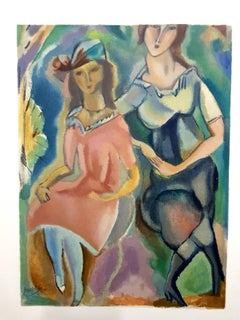
Pierre Bonnard - People - Original Etching
By Pierre Bonnard
Located in Collonge Bellerive, Geneve, CH
Pierre Bonnard - People - Original Etching
Circa 1940
Dimension : 30 x 23 cm
Signed in the plate with his initials.
Category
1940s Modern Switzerland - Figurative Prints
Materials
Etching
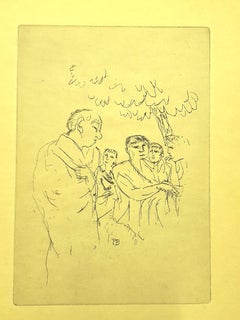
Salvador Dali - Albert Schweitzer - Original Handsigned Engraving
By Salvador Dalí
Located in Collonge Bellerive, Geneve, CH
Salvador Dali - Albert Schweitzer - Original Handsigned Engraving
Dimensions: 17.5 x 12.5 cm
1970
Signed in pencil
EA
Jean Schneider, Basel
Reference...
Category
1960s Surrealist Switzerland - Figurative Prints
Materials
Engraving
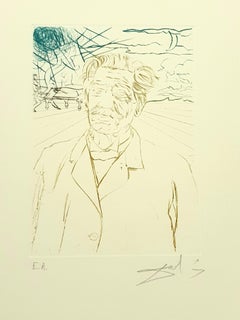
Leonor Fini - Fearless - Original Handsigned Lithograph
By Leonor Fini
Located in Collonge Bellerive, Geneve, CH
Leonor Fini - Fearless - Original Handsigned Lithograph
Les Elus de la Nuit
1986
Conditions: excellent
Handsigned and Numbered
Edition: 230
Dimensions: 38 x 28 cm
Editions: Trinckve...
Category
1980s Modern Switzerland - Figurative Prints
Materials
Lithograph
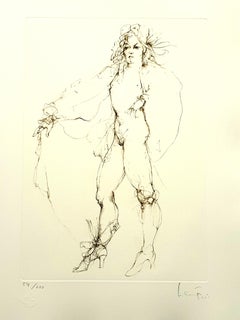
Leonor Fini - Dancing - Original Handsigned Lithograph
By Leonor Fini
Located in Collonge Bellerive, Geneve, CH
Leonor Fini - Dancing - Original Handsigned Lithograph
Les Elus de la Nuit
1986
Conditions: excellent
Handsigned and Numbered
Edition: 230
Dimensions: 38 x 28 cm
Editions: Trinckvel...
Category
1980s Modern Switzerland - Figurative Prints
Materials
Lithograph
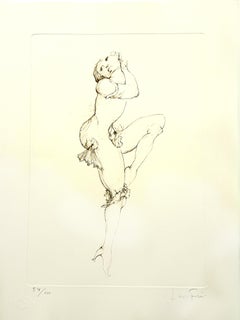
after Jean Dubuffet - Meadow - Lithograph
By Jean Dubuffet
Located in Collonge Bellerive, Geneve, CH
after Jean Dubuffet - Meadow - Lithograph
1960
Dimensions: 32 x 25 cm
Edition: G. di San Lazzaro.
From the art review XXème siècle
Unsigned and unumbered as issued
Category
1960s Modern Switzerland - Figurative Prints
Materials
Lithograph
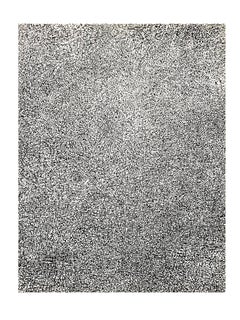
Alexander Calder - Original Lithograph - Behind the Mirror
By Alexander Calder
Located in Collonge Bellerive, Geneve, CH
Alexander Calder - Original Lithograph - Behind the Mirror
1 Original lithograph created in 1976
Dimensions: 38 x 28 cm
Source: Derrière le miroir (DLM), n°221, 1976
Alexander Cald...
Category
1970s Modern Switzerland - Figurative Prints
Materials
Lithograph
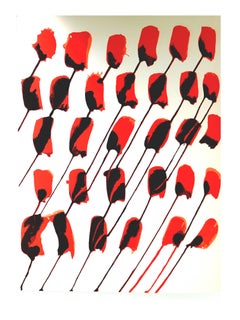
Max Ernst - The Soldier - Original Lithograph
By Max Ernst
Located in Collonge Bellerive, Geneve, CH
Max Ernst (1891-1976)
Georges Ribemont-Dessaignes, La Ballade du Soldat, Pierre Chave, Vence, 1972
Colour lithographs on Arches paper
1972
Edition : 199
Dimensions: 40 x 30 cm
Refe...
Category
1970s Modern Switzerland - Figurative Prints
Materials
Lithograph
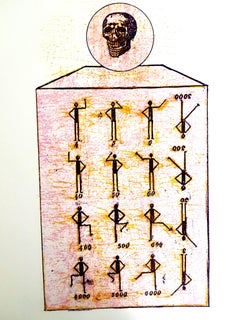
Maurice Utrillo (after) - Inspired Village of Montmartre - Pochoir
By Maurice Utrillo
Located in Collonge Bellerive, Geneve, CH
(after) Maurice Utrillo
Inspired Village of Montmartre
Pochoir with printed signature
Edition of 490
Dimensions: 39 x 30 cm
Information : This print was created for the portfolio "L...
Category
1950s Modern Switzerland - Figurative Prints
Materials
Stencil