Texas - Antiquities
to
4
907
416
79
1
62
9
8
5
1
1
1
1
1
33
26
22
16
11
75
50
44
12
10
79
79
79
1
1
Item Ships From: Texas
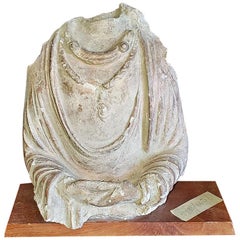
A Stucco Torso of the Buddha, Gandhara, 4th-5th Century
Located in Dallas, TX
PRESENTING a STUNNING piece of Indian Antiquity from circa the 4th-5th Century, namely, A Stucco Torso of the Buddha, Gandhara.
Ancient Gandhara is located in the rugged foothills of the Himalayas in what is today northwest Pakistan and eastern Afghanistan, was for centuries a thriving center of trade along the Silk Road linking China, South Asia, and the Mediterranean.
The piece was purchased by a Private Collector at Sotheby’s, or more probably, Christies of New York Auction pre-2000. The paper label on the wooden base is “7281/465” for Sale Number 7281, Lot No. 465.
Sotheby’s and Christies operate a twice yearly auction of Southeast Asian Art & Antiquities in New York in the months of March and September.
The Sale Number is more like a ‘Christies;’ Sale Number but we cannot locate any records for this sale online as it was pre-2004.
The sculpture is a Gandharan stucco headless bust...
Category
15th Century and Earlier Afghan Medieval Antique Texas - Antiquities
Materials
Stucco
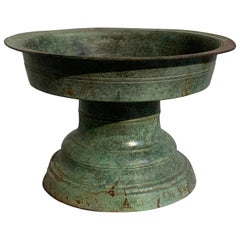
Central Javanese Bronze Footed Offering Vessel, 8th-10th Century
Located in Austin, TX
A gorgeously patinated bronze pedestal offering tray, talam, Central Javanese Period, Java, 8th-10th century.
The offering tray of beautiful form and proportions, with a splayed a...
Category
15th Century and Earlier Javanese Antique Texas - Antiquities
Materials
Bronze
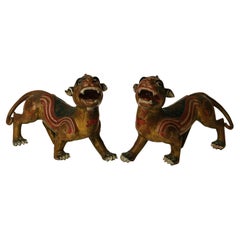
Pair Chinese Bronze Pi Xiu
Located in Houston, TX
Pair of late 19th century Chinese patinated bronze Pi Xiu. Traditionally, it is an auspicious Chinese mythical hybrid creature that possess mystical powers capa...
Category
19th Century Chinese Antique Texas - Antiquities
Materials
Bronze

$3,200 / set
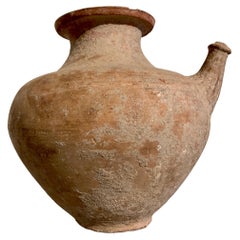
Large Pre-Khmer Pottery Pouring Vessel, Kendi, 6th - 8th Century, Cambodia
Located in Austin, TX
A large and attractive pre-Khmer red pottery kendi, pouring vessel, 6th - 8th century, Cambodia.
The large vessel crafted of a red pottery, with a wid...
Category
15th Century and Earlier Burmese Antique Texas - Antiquities
Materials
Pottery
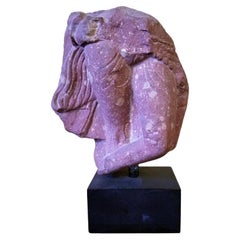
2nd Century Indian Red Sandstone Fragment of a Woman
Located in Dallas, TX
Presenting a stunning little piece of Southeast Asian Indian Antiquity, namely, a Double-sided 2nd Century Red Sandstone Fragment of a Woman.
From India, Uttar Pradesh, Mathura.
This piece has impeccable Provenance !
It was purchased by a Private Dallas Collector at Christie’s New York Auction on 31st March 2005. Sale Number 1492, Lot No. 43.
Christie’s operate a twice yearly auction of Southeast Asian Art & Antiquities in New York in the months of March and September.
The sculpture was described as “Property of a European Estate. A Double-sided Red Sandstone Fragment of a Woman. India, Uttar Pradesh, Mathura, Circa 2nd Century.”
“Both sides similarly depicting the lower body with a flared sash at left and remains of chained belt: marked with an accession number 1931 on reverse. 8 in (29.2 cm.) high”
Provenance: Collection of Prince and Princess Aschwin zur Lippe-Biesterfeld, acquired on 1958?.
It carried an Auction estimate of USD 3,000 to USD 5,000 and Sold for USD 2,880 (not including Buyers Premium).
Allowing for inflation alone this would be over $6,300 in today’s value.
It has substantially increased in value over the years as a RARE piece from a prestigious Collection and a RARE piece of antique Asian antiquity...
Category
15th Century and Earlier Indian Medieval Antique Texas - Antiquities
Materials
Sandstone
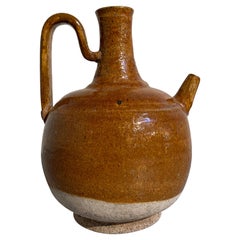
Chinese Liao Dynasty Amber Glazed Stoneware Strap Handle Ewer, 11th Century
Located in Austin, TX
A lovely Chinese amber glazed pottery pouring vessel, Liao Dynasty (907 to 1125 AD).
The vessel featuring a globular body with an elongated neck sligh...
Category
15th Century and Earlier Chinese Tang Antique Texas - Antiquities
Materials
Stoneware
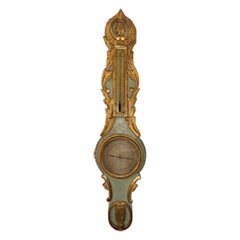
French Carved Gilt Barometer
Located in Dallas, TX
19th century French carved and parcel gilt barometer. Circa 1880. A favorite of top designers. 38H x 10W x 2D
Category
19th Century Antique Texas - Antiquities
Materials
Giltwood
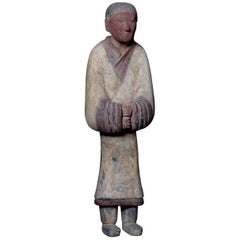
Elegant Han Dynasty Terracotta Warrior - China
206 BC - 220 AD
Located in San Pedro Garza Garcia, Nuevo Leon
Impressive terracotta warrior representing a banner bearer gripping a wooden staff with his hands (dematerialized through the ages); his gaze is ser...
Category
15th Century and Earlier Chinese Han Antique Texas - Antiquities
Materials
Terracotta
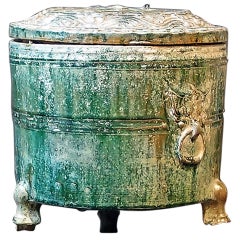
Chinese Han Dynasty Green Glazed Covered Storage Jar
Located in Austin, TX
A wonderful Han Dyansty (206 BC-200 AD) storage vessel. The circular body set upon three legs and fitted with a lid. The entirety covered in heavy leaded green glaze, imitating bronz...
Category
15th Century and Earlier Chinese Han Antique Texas - Antiquities
Materials
Pottery
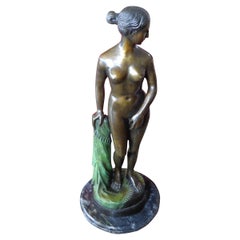
37" Bronze Sculpture by Emmanuel Villanis
By Emmanuel Villanis
Located in Pasadena, TX
Emmanuel Villanis comes from a family of Italian origin. From 1861, his parents returned to Italy to settle in Piedmont. He had fled Italy because the war of independence broke out, under the threat of Napoleon Bonaparte. In 1871, the artist enrolled at the Albertina Academy of Fine Arts in Turin; he follows the teaching of the sculptor Odoardo Tabacchi (1831-1905). As soon as he finished his studies, his master encouraged him to exhibit: his bust Alda, for example, was presented in Milan in 1881. In 1885, Villanis moved to Montmartre, a district of Paris that he never left. The artist's fame is built on his production of female figures. Aida, Judith, Delilah, Lucretia, Cinderella: her work brings together the great heroines of opera, literature, mythology and the Bible. Villanis also discusses certain types - the Bohemian, the Châtelaine, or the Parisienne - and several allegories, including Painting and Sculpture. Made mainly in bronze, sometimes chryselephantine, his sculptures subtly bear the mark of Art Nouveau, including the lettering of the title, which regularly adorns the base. His play on the patinas further adds to the finesse of the line, making Villanis one of the major sculptors of Art Nouveau. Regarding the casting of bronzes, he worked mainly with the Société des Bronzes de Paris and with Eugène...
Category
Late 19th Century European Art Nouveau Antique Texas - Antiquities
Materials
Bronze
$2,940 Sale Price
40% Off
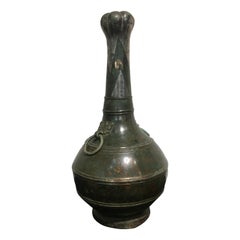
Chinese Han Dynasty Silver-Decorated Garlic Head Bronze Hu Vase, 3rd Century BC
Located in Austin, TX
A gorgeous and striking late Warring States (475 to 221 BC) or early Han Dynasty (221 to 206 BC) cast bronze and silver-decorated garlic head hu vessel.
Of elegant bottle form, w...
Category
15th Century and Earlier Chinese Han Antique Texas - Antiquities
Materials
Bronze
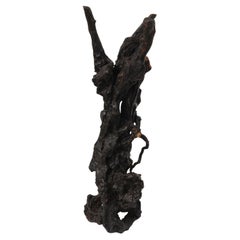
Brass Tree Stomp Base
Located in Pasadena, TX
Brass Tree Stomp Base
12”x32”
Category
20th Century Texas - Antiquities
Materials
Brass
$1,520 Sale Price
20% Off
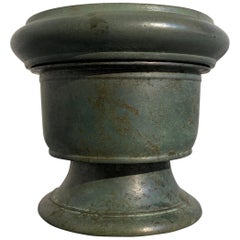
Central Javanese Bronze Footed and Lidded Offering Vessel, 8th-10th Century
Located in Austin, TX
A stunning and rare Javanese bronze footed offering vessel and cover, Central Javanese Period, 8th-10th century.
The ritual offering vessel of elega...
Category
15th Century and Earlier Javanese Antique Texas - Antiquities
Materials
Bronze
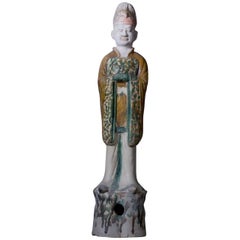
Tang Dynasty Court Official in Sancai Glazed Robes, China
618-907
- TL Tested
Located in San Pedro Garza Garcia, Nuevo Leon
A Tang dynasty sancai (three color) glazed pottery model of a Taoist official, TL tested by Ralf Kotalla - worldwide oldest private laboratory specialized for genuine thermoluminesce...
Category
15th Century and Earlier Chinese Tang Antique Texas - Antiquities
Materials
Terracotta
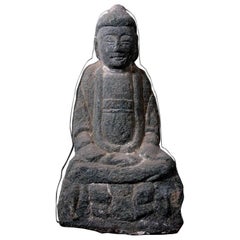
Shakyamuni, the Original Buddha Sculpted in Schist Stone, Originally from a Cave
Located in San Pedro Garza Garcia, Nuevo Leon
Shakyamuni, the original Buddha sculpted in schist stone. Originally from a cave.
Sui dynasty '589-618' AD
Gautama Buddha, also known as Siddhartha or simply the Buddha. He was an a...
Category
15th Century and Earlier Chinese Antique Texas - Antiquities
Materials
Schist
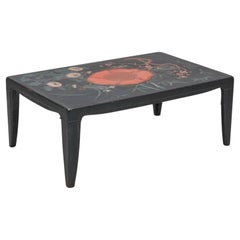
Modern Asian Inspired black
Polychrome lacquered low table
By Renzo Mongiardino
Located in Dallas, TX
Chinese Lacquer work with beautiful detailing.
Low cocktail table
Category
1940s Vintage Texas - Antiquities
Materials
Lacquer
Wood Carving Sculpture
Located in Dallas, TX
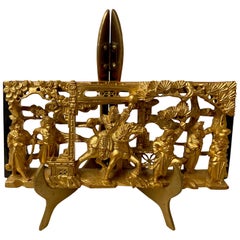
This wood carving sculpture origins from China, circa 1880.
Category
19th Century Chinese Antique Texas - Antiquities
Materials
Wood
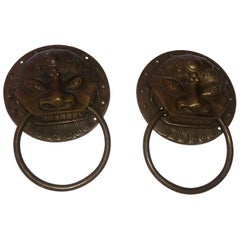
1910 Vintage Chinese Door Pulls
Located in Dallas, TX
Chinese bronze door pulls.
Category
1910s Chinese Vintage Texas - Antiquities
Materials
Bronze
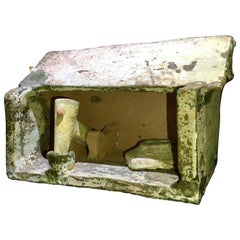
Eastern Han Dynasty Terracotta Model of a Paper Mill , China
206BC - 220AD
Located in San Pedro Garza Garcia, Nuevo Leon
Slab pottery constructed Model of a Paper Mill, in Green and Cream Color Glazed Terracotta having a peaked roof – open walled form with a mechanical pounder and a large round storage container. Light blue-green mottled glazed surface with some iridescence patina to the glaze. The Iridescence is a refraction of the layers on the glass that produces multicolor hues & metallic luster, and only develops after one thousand years of being buried in the ground. An unquestionable mark of antiquity, impossible to falsify.
Han Dynasty, dated 206 B.C-220 A.D.
Condition: Excellent, wear commensurate with age, an unusual example.
This fantastic piece is accompanied by a Certificate of Authenticity.
Sculptural effigies of domesticated animals were often interred in the tombs of nobility and elite members of the social hierarchy. Models like this one were made to represent everything from simple goat or pig pens to the most elaborate towers and palaces. Because very few ancient Chinese buildings have survived intact, these models, along with descriptions from ancient texts, give a good representation of what the buildings might have looked like.
Burial figurines of graceful dancers, mystical beasts, and everyday objects reveal both how people in early China approached death and how they lived. Since people viewed the afterlife as an extension of worldly life, these figurines, called mingqi, sometimes referred as “spirit utensils” or “vessels of ghosts” disclose details of routine existence and provide insights into belief systems over a thousand-year period. For the first time in Chinese history, we have images of rural and daily life during the Han in the form of contemporary records...
Category
15th Century and Earlier Chinese Han Antique Texas - Antiquities
Materials
Terracotta
Still Thinking About These?
All Recently ViewedMore Ways To Browse
Han Dynasty Dancer
Ichimatsu Ningyo Doll
Japanese Antique Wall Decor
Japanese Lacquer Comb
Japanese Spinning Wheel
Japanese Swords 16th Century
Japanese Swords Stands
Lavender Jade Figure
Lizard Carving
Luristan Bronze
Manila Manton Shawls
Monkey Gong
Obi Stand
Pegu Bronze
Persian Dagger
Qing Dynasty Tea Cups
Quran Stand
Relic Holder