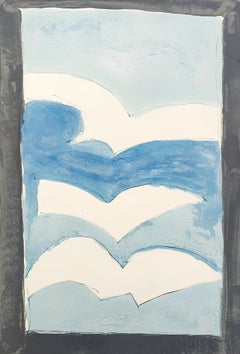
The Hamptons - Prints and Multiples

to
4,394
3,494
860
92
18
16
Overall Width
to
Overall Height
to
2,228
609
552
320
128
83
83
69
44
10
179
179
169
102
59
1
4
4,364
111
6
385
236
460
1,137
1,245
545
266
77
1
3,363
1,076
40
1,643
1,124
882
667
532
432
406
331
246
134
133
128
72
63
62
57
56
49
49
42
3,651
368
280
241
112
23
4
4,480
51,004
36,969
Item Ships From: The Hamptons
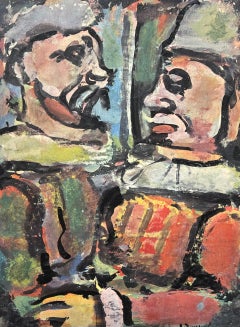
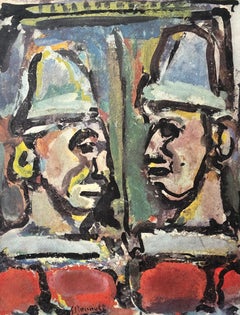
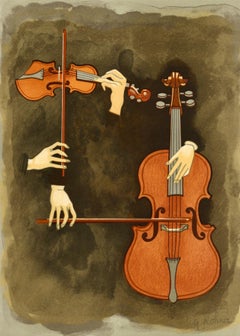
Georges Rouault, The Two Stubborn Ones, from Divertissement, 1943
By Georges Rouault
Located in Southampton, NY
This exquisite lithograph by Georges Rouault (1871–1958), titled Les Deux Tetus (The Two Stubborn Ones), from the album Georges Rouault, Divertissement, originates from the 1943 edit...
Category

1940s Modern The Hamptons - Prints and Multiples

Materials

Lithograph

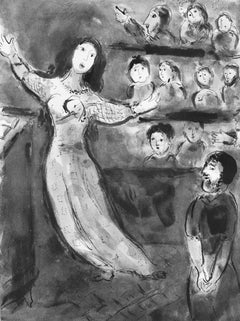
Marc Chagall, The Singer, from Tales of Boccaccio, 1950
By Marc Chagall
Located in Southampton, NY
This exquisite lithograph by Marc Chagall (1887–1985), titled La Chanteuse (The Singer), from Contes de Boccace, peintures du manuscrit des ducs de Bourgogne, Bibliotheque de l'Arsen...
Category

1950s Expressionist The Hamptons - Prints and Multiples

Materials

Lithograph

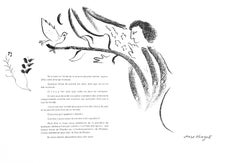
Marc Chagall, Homage to Georges Braque, from Derriere le Miroir, 1964
By Marc Chagall
Located in Southampton, NY
This exquisite lithograph by Marc Chagall (1887–1985), titled Hommage a Georges Braque (Homage to Georges Braque), originates from the 1964 folio Derriere le Miroir, Nos. 144–145–146, L’Hommage a Georges Braque (Tribute to Georges Braque). Published by Maeght Editeur, Paris, under the direction of Aime Maeght, and printed by Mourlot Freres, Paris, this luminous composition stands as Chagall’s poetic tribute to his friend and contemporary Georges Braque, “Neither the sun nor the brilliance of the moon can calm today this strange sadness. Something close has gone, though his life was distant. And there is nothing with which this life can be compared. And from this departure there arise feelings inexpressible, like his colors which spoke but not to everyone. I have seen his plastic world so far from the worries of the day and his personality beyond this world. That is what he called “reality.” How true he was, and how troubling that is! Perhaps if we enter into the grandeur of certain French paintings — La Poix d’Avignon, a still life by Chardin, or The Embarkation for Cythera by Watteau — then the dream of Braque will seem clearer to us. And our path will become clearer too.” In Hommage a Georges Braque, Chagall fuses symbolic imagery to evoke themes of flight, harmony, and spiritual transcendence, celebrating Braque’s lifelong devotion to art and transformation. The composition reflects Chagall’s unique synthesis of emotion and imagination, merging the visionary with the intimate. Executed on velin paper, this lithograph measures 15 x 22 inches (38.1 x 55.9 cm), with centerfold, as issued. Signed in the plate and unnumbered, as issued. The edition exemplifies Chagall’s lyrical command of color and form within the refined graphic artistry of Derriere le Miroir. Artwork Details: Artist: Marc Chagall (1887–1985) Title: Hommage a Georges Braque (Homage to Georges Braque), from Derriere le Miroir, Nos. 144–145–146, L’Hommage a Georges Braque (Tribute to Georges Braque), 1964 Medium: Lithograph on velin paper Dimensions: 15 x 22 inches (38.1 x 55.9 cm), with centerfold, as issued Inscription: Signed in the plate and unnumbered, as issued Date: 1964 Publisher: Maeght Editeur, Paris Printer: Mourlot Freres, Paris Condition: Well preserved, consistent with age and medium Provenance: From the 1964 folio Derriere le Miroir, Nos. 144–145–146, published by Maeght Editeur, Paris Notes: Excerpted from the folio (translated from French): Taken from this special issue of “Behind the Mirror,” CCCL examples on velin de Rives were numbered, constituting the original edition of L’Hommage a Georges Braque. These deluxe examples also included an etching based on Trois oiseaux sur fond violet. The lithographs for this issue were printed in the ateliers of Maeght Editeur, Levallois. The text was printed by Fequet et Baudier, typographers. Finished printing May 13, 1964. About the Publication: Derriere le Miroir (translated as "Behind the Mirror") was an iconic French art periodical published from 1946 to 1982 by Maeght Editeur, one of the most influential art publishers of the 20th century. Founded by Aime Maeght in Paris, the publication was conceived as a visual and literary collaboration between leading modern artists, poets, and critics. Each issue functioned as both an exhibition catalogue and a work of art in itself—featuring original lithographs printed directly from the artists' stones or plates, alongside essays, poems, and critical commentary. Over the course of 36 years, Derriere le Miroir produced more than 250 issues and showcased an extraordinary roster of artists including Henri Matisse, Marc Chagall, Joan Miro, Georges Braque, Alexander Calder, Fernand Leger, Pierre Bonnard, Alberto Giacometti, Eduardo Chillida, Ellsworth Kelly, Francis Bacon, Paul Rebeyrolle, Claude Garache, Antoni Tapies, Bram van Velde, Pierre Alechinsky, Pol Bury, Shusaku Arakawa, and Gerard Titus-Carmel. Printed in the ateliers of Mourlot, Arte, and Imprimerie Moderne du Lion, the periodical set new standards for quality in color lithography, combining fine art printing with elegant typography and poetic text. Beyond its visual brilliance, Derriere le Miroir also became a cultural chronicle of postwar European modernism. Each issue coincided with exhibitions held at Galerie Maeght, providing a collectible and widely accessible record of groundbreaking shows. Its integration of image, text, and philosophy created a dialogue between art and literature that elevated the modern art book to new aesthetic heights. Today, Derriere le Miroir remains one of the most sought-after and historically significant art publications, prized by collectors and scholars alike for its craftsmanship, influence, and its role in defining the visual language of 20th-century modernism. The Maeght Foundation in Saint-Paul-de-Vence continues to honor this legacy through exhibitions and archival preservation of the series, affirming Derriere le Miroir's enduring place in the history of modern art and fine art publishing. About the Artist: Marc Chagall (1887–1985) was a Belarus-born French painter, printmaker, and designer whose visionary use of color and poetic symbolism made him one of the most beloved and influential artists of the 20th century. Rooted in the rich imagery of his Jewish heritage and childhood in Vitebsk, Chagall’s dreamlike compositions fused memory, folklore, faith, and romance with the expressive innovations of modern art. His work evolved alongside and in dialogue with the great modern masters—Pablo Picasso, Henri Matisse, Alexander Calder, Salvador Dali, Joan Miro, Georges Braque, Wassily Kandinsky, Marcel Duchamp, and Man Ray—artists who, like Chagall, redefined artistic language for a new century. Spanning painting, printmaking, stained glass, ceramics, stage design, and illustration, Chagall’s career reflected both his deep spirituality and his boundless imagination. His works are held in major museum collections worldwide, including the Museum of Modern Art, the Guggenheim, the Tate, and the Centre Pompidou. The highest price ever paid for a Marc Chagall artwork is approximately $28.5 million USD, achieved in 2017 at Sotheby’s New York for Les Amoureux (1928). Marc Chagall Hommage a Georges Braque, Chagall Derriere le Miroir, Chagall Maeght Editeur Paris, Chagall Mourlot Freres, Chagall 1964...
Category

1960s Expressionist The Hamptons - Prints and Multiples

Materials

Lithograph

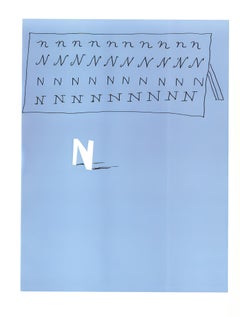
David Hockney, Letter N, from Hockney s Alphabet, 1991
By David Hockney
Located in Southampton, NY
This exquisite lithograph by David Hockney (born 1937), titled Letter N, from the folio Hockney's Alphabet, Drawings by David Hockney, originates from the 1991 edition published by A...
Category

1990s Contemporary The Hamptons - Prints and Multiples

Materials

Lithograph

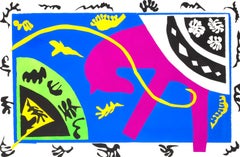
Henri Matisse, The Horse, the Rider, and the Clown, from Jazz, 1983 (after)
By Henri Matisse
Located in Southampton, NY
This exquisite heliogravure after Henri Matisse (1869–1954), titled Le cheval, l'écuyère et le clown (The Horse, the Rider, and the Clown), from Henri Matisse, Jazz, originates from ...
Category

1980s Fauvist The Hamptons - Prints and Multiples

Materials

Lithograph

Pablo Palazuelo, Untitled, from Derriere le Miroir, 1963
By Pablo Palazuelo
Located in Southampton, NY
This exquisite lithograph by Pablo Palazuelo (1915–2007), titled Sans titre (Untitled), originates from the 1963 folio Derriere le Miroir, No. 137, published by Maeght Editeur, Paris...
Category

1960s Abstract Geometric The Hamptons - Prints and Multiples

Materials

Lithograph

Pablo Palazuelo, Untitled, from Derriere le Miroir, 1963
By Pablo Palazuelo
Located in Southampton, NY
This exquisite lithograph by Pablo Palazuelo (1915–2007), titled Sans titre (Untitled), originates from the 1963 folio Derriere le Miroir, No. 137, published by Maeght Editeur, Paris...
Category

1960s Abstract Geometric The Hamptons - Prints and Multiples

Materials

Lithograph

Pablo Palazuelo, Untitled, from Derriere le Miroir, 1963
By Pablo Palazuelo
Located in Southampton, NY
This exquisite lithograph by Pablo Palazuelo (1915–2007), titled Sans titre (Untitled), originates from the 1963 folio Derriere le Miroir, No. 137, published by Maeght Editeur, Paris...
Category

1960s Abstract Geometric The Hamptons - Prints and Multiples

Materials

Lithograph

Pablo Palazuelo, Untitled, from Derriere le Miroir, 1963
By Pablo Palazuelo
Located in Southampton, NY
This exquisite lithograph by Pablo Palazuelo (1915–2007), titled Sans titre (Untitled), originates from the 1963 folio Derriere le Miroir, No. 137, published by Maeght Editeur, Paris...
Category

1960s Abstract Geometric The Hamptons - Prints and Multiples

Materials

Lithograph

Pablo Palazuelo, Untitled, from Derriere le Miroir, 1970
By Pablo Palazuelo
Located in Southampton, NY
This exquisite lithograph by Pablo Palazuelo (1915–2007), titled Sans titre (Untitled), originates from the 1970 folio Derriere le Miroir, No. 180, published by Maeght Editeur, Paris...
Category

1970s Abstract Geometric The Hamptons - Prints and Multiples

Materials

Lithograph

Pablo Palazuelo, Untitled, from Derriere le Miroir, 1970
By Pablo Palazuelo
Located in Southampton, NY
This exquisite lithograph by Pablo Palazuelo (1915–2007), titled Sans titre (Untitled), originates from the 1970 folio Derriere le Miroir, No. 180, published by Maeght Editeur, Paris...
Category

1970s Abstract Geometric The Hamptons - Prints and Multiples

Materials

Lithograph

Alexander Calder, The Triangles, from Derriere le Miroir, 1963
By Alexander Calder
Located in Southampton, NY
This exquisite lithograph by Alexander Calder (1898–1976), titled Les Triangles (The Triangles), originates from the historic 1963 folio Derriere le Miroir, No. 141. Published by Mae...
Category

1960s Surrealist The Hamptons - Prints and Multiples

Materials

Lithograph

Pablo Palazuelo, Untitled, from Derriere le Miroir, 1970
By Pablo Palazuelo
Located in Southampton, NY
This exquisite lithograph by Pablo Palazuelo (1915–2007), titled Sans titre (Untitled), originates from the 1970 folio Derriere le Miroir, No. 180, published by Maeght Editeur, Paris...
Category

1970s Abstract Geometric The Hamptons - Prints and Multiples

Materials

Lithograph

Pablo Palazuelo, Untitled, from Derriere le Miroir, 1970
By Pablo Palazuelo
Located in Southampton, NY
This exquisite lithograph by Pablo Palazuelo (1915–2007), titled Sans titre (Untitled), originates from the 1970 folio Derriere le Miroir, No. 180, published by Maeght Editeur, Paris...
Category

1970s Abstract Geometric The Hamptons - Prints and Multiples

Materials

Lithograph

Pablo Palazuelo, Untitled, from Derriere le Miroir, 1970
By Pablo Palazuelo
Located in Southampton, NY
This exquisite lithograph by Pablo Palazuelo (1915–2007), titled Sans titre (Untitled), originates from the 1970 folio Derriere le Miroir, No. 180, published by Maeght Editeur, Paris...
Category

1970s Abstract Geometric The Hamptons - Prints and Multiples

Materials

Lithograph

Henri Matisse, Miss A.Nelck, from Portraits by Henri Matisse, 1954 (after)
By Henri Matisse
Located in Southampton, NY
This exquisite heliogravure after Henri Matisse (1869–1954), titled Mademoiselle A.Nelck (Miss A.Nelck), from the album Portraits par Henri Matisse (Portraits by Henri Matisse), orig...
Category

1950s Fauvist The Hamptons - Prints and Multiples

Materials

Lithograph

Composition (Vallier 137), Résurrection de l oiseau, Georges Braque
By Georges Braque
Located in Southampton, NY
Lithograph on vélin vélin de Rives paper. Inscription: unsigned and unnumbered, as issued. Good condition. Notes: from the folio, Résurrection de l'oiseau, Georges Braque, 1958. Publ...
Category

1950s Modern The Hamptons - Prints and Multiples

Materials

Lithograph

Georges Rouault, The Two Elders, from Divertissement, 1943
By Georges Rouault
Located in Southampton, NY
This exquisite lithograph by Georges Rouault (1871–1958), titled Les Deux Anciens (The Two Elders), from the album Georges Rouault, Divertissement, originates from the 1943 edition p...
Category

1940s Modern The Hamptons - Prints and Multiples

Materials

Lithograph

Pietro Consagra, Untitled, from XXe Siecle, 1959
By Pietro Consagra
Located in Southampton, NY
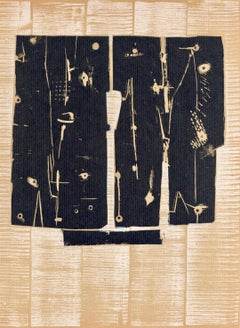
This exquisite woodcut by Pietro Consagra (1920–2005), titled Sans titre (Untitled), from the album XXe Siecle, Nouvelle serie, XXIe Annee, N°13, Noel 1959, originates from the 1959 ...
Category

1950s Modern The Hamptons - Prints and Multiples

Materials

Woodcut

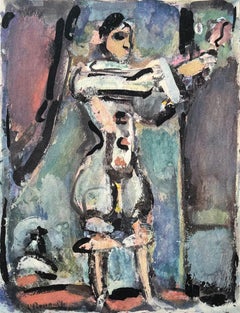
Georges Rouault, White Pierrot, from Divertissement, 1943
By Georges Rouault
Located in Southampton, NY
This exquisite lithograph by Georges Rouault (1871–1958), titled Pierrot Blanc (White Pierrot), from the album Georges Rouault, Divertissement, originates from the 1943 edition publi...
Category

1940s Modern The Hamptons - Prints and Multiples

Materials

Lithograph

Composition, Variations sur l imaginaire, Georges Rohner
By Georges Rohner
Located in Southampton, NY
Lithograph on vélin de Rives paper. Inscription: hand signed and unnumbered, as issued. Good condition. Notes: From the folio, Variations sur l'imaginaire, 1972. Published by Philipp...
Category

1970s Surrealist The Hamptons - Prints and Multiples

Materials

Lithograph

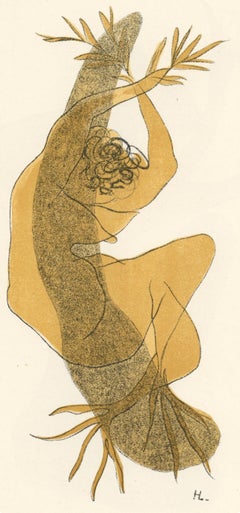
Henri Laurens, Daphne, from Verve, Revue Artistique, 1953
By Henri Laurens
Located in Southampton, NY
This exquisite lithograph by Henri Laurens (1885–1954), titled Daphne (Daphne), from Verve, Revue Artistique et Litteraire, Vol. VII, No. 27–28, originates from the 1953 issue publis...
Category

1950s Modern The Hamptons - Prints and Multiples

Materials

Lithograph

Composition, Poèmes insoumis, André Masson
By André Masson
Located in Southampton, NY
Lithograph on vélin de Rives paper. Inscription: unsigned and unnumbered, as issued. Good condition. Notes: From the folio, Poêmes insoumis, 1963. Published by Marc Barbezat, Paris; ...
Category

1960s Surrealist The Hamptons - Prints and Multiples

Materials

Lithograph

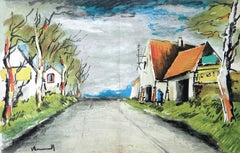
Maurice de Vlaminck, The Road, from Vlaminck, 1958
By Maurice de Vlaminck
Located in Southampton, NY
This exquisite lithograph by Maurice de Vlaminck (1876–1958), titled La route (The Road), from the album Vlaminck, originates from the 1958 edition published by Andre Sauret, Editeur...
Category

1950s Fauvist The Hamptons - Prints and Multiples

Materials

Lithograph

Raoul Dufy, Regattas, from Letter to My Painter Raoul Dufy, 1965 (after)
By Raoul Dufy
Located in Southampton, NY
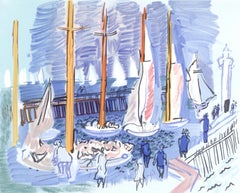
This exquisite lithograph after Raoul Dufy (1877–1953), titled Regates (Regattas), from the folio Lettre a mon peintre Raoul Dufy (Letter to My Painter Raoul Dufy), originates from t...
Category

1960s Fauvist The Hamptons - Prints and Multiples

Materials

Lithograph

Alexander Calder, Card Players I and II, from Derriere le Miroir, 1975
By Alexander Calder
Located in Southampton, NY
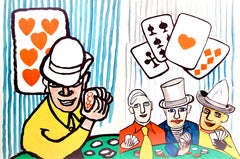
This exquisite lithograph by Alexander Calder (1898–1976), titled Joueurs de cartes I et II (Card Players I and II), originates from the historic 1975 folio Derriere le Miroir, No. 2...
Category

1970s Surrealist The Hamptons - Prints and Multiples

Materials

Lithograph

Maurice de Vlaminck, Near Beaumont on Sarthe, from Vlaminck, 1958 (after)
By Maurice de Vlaminck
Located in Southampton, NY
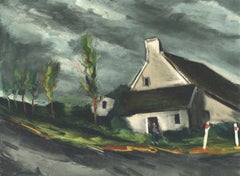
This exquisite lithograph after Maurice de Vlaminck (1876–1958), titled Près de Beaumont sur Sarthe (Near Beaumont on Sarthe), from the album Vlaminck, originates from the 1958 editi...
Category

1950s Fauvist The Hamptons - Prints and Multiples

Materials

Lithograph

Georges Rouault, Christ on the Cross, from The Painters My Friends, 1965 (after)
By Georges Rouault
Located in Southampton, NY
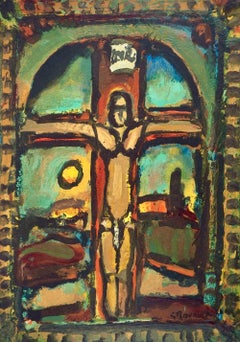
This exquisite woodcut after Georges Rouault (1871–1958), titled Le Christ en croix (Christ on the Cross), from the folio Les Peintres mes amis (The Painters My Friends), originates ...
Category

1960s Modern The Hamptons - Prints and Multiples

Materials

Lithograph

Alexander Calder, Untitled, from Derriere le miroir, 1966
By Alexander Calder
Located in Southampton, NY
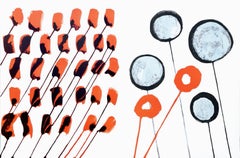
This exquisite lithograph by Alexander Calder (1898–1976), titled Sans titre (Untitled), from the folio Derriere le miroir, No. 156, originates from the 1966 edition published by Mae...
Category

1960s Modern The Hamptons - Prints and Multiples

Materials

Lithograph

Alberto Magnelli, Pasted Paper, from XXe Siecle, 1957
By Alberto Magnelli
Located in Southampton, NY
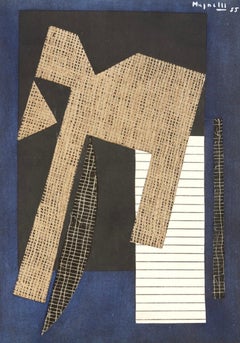
This exquisite lithograph by Alberto Magnelli (1888–1971), titled Papel colle (Pasted Paper), from the album XXe Siecle, Nouvelle serie, No. 9 (double), Juin 1957, originates from th...
Category

1950s Cubist The Hamptons - Prints and Multiples

Materials

Lithograph

Ellsworth Kelly, Black and White, from Derriere le Miroir, 1958
By Ellsworth Kelly
Located in Southampton, NY
This exquisite lithograph by Ellsworth Kelly (1923–2015), titled Noir et blanc (Black and White), originates from the historic 1958 folio Derriere le Miroir, No. 110. Published by Ma...
Category

1950s Hard-Edge The Hamptons - Prints and Multiples

Materials

Lithograph

Wassily Kandinsky, Lightness, from Derriere le miroir, 1965 (after)
By Wassily Kandinsky
Located in Southampton, NY
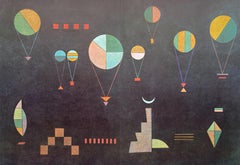
This exquisite lithograph after Wassily Kandinsky (1866–1944), titled Leichtes (Lightness), from the folio Derriere le miroir, No. 118, originates from the 1960 edition published by ...
Category

1960s Modern The Hamptons - Prints and Multiples

Materials

Lithograph

Andre Beaudin, Escaped Leaves, from Memories and Portraits of Artists, 1972
By Andre Beaudin
Located in Southampton, NY
This exquisite lithograph by Andre Beaudin (1895–1979), titled Feuilles evades (Escaped Leaves), originates from the 1972 edition published by Editions A. C. Mazo et Cie., Paris, in ...
Category

1970s Modern The Hamptons - Prints and Multiples

Materials

Lithograph

Pablo Picasso, Portrait of Jaime Sabartes, from The Cheeks on Fire, 1925 (after)
By Pablo Picasso
Located in Southampton, NY
This exquisite lithograph after Pablo Picasso (1881–1973), titled Portrait de Jaime Sabartes (Portrait of Jaime Sabartes), from the album Les joues en feu, poemes anciens et poemes i...
Category

1920s Modern The Hamptons - Prints and Multiples

Materials

Lithograph

Joan Miro, The Great Figure, from Derriere le miroir, 1965
By Joan Miró
Located in Southampton, NY
This exquisite lithograph by Joan Miro (1893–1983), titled Le Grand Personnage (The Great Figure), from the folio Derriere le miroir, No. 151–152, originates from the 1965 edition pu...
Category

1960s Surrealist The Hamptons - Prints and Multiples

Materials

Lithograph

Raoul Ubac, Summer Landscape, from Derriere le Miroir, 1960
By Raoul Ubac
Located in Southampton, NY
This exquisite lithograph by Raoul Ubac (1910–1985), titled Paysage d'Ete (Summer Landscape), originates from the 1960 folio Derriere le Miroir, No. 119, Poetes, peintres, sculpteurs...
Category

1960s Modern The Hamptons - Prints and Multiples

Materials

Lithograph

Keith Haring, Untitled, from Against All Odds, 1990
By Keith Haring
Located in Southampton, NY
This exquisite lithograph by Keith Haring (1958–1990), titled Untitled, from the album Against All Odds, 20 drawings - Oct. 3, 1989 (Against All Odds, 20 drawings - Oct. 3, 1989), or...
Category

1990s Pop Art The Hamptons - Prints and Multiples

Materials

Lithograph

Jean Cocteau, Untitled, from The White Book, 1930
By Jean Cocteau
Located in Southampton, NY
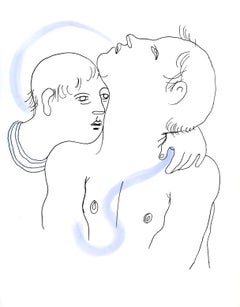
This exquisite lithograph and pochoir with hand coloring by Jean Cocteau (1889–1963), titled Sans titre (Untitled), from the album Le Livre blanc (The White Book), precede dun frontispice et accompagne de 17 dessins de Jean Cocteau (preceded by a frontispiece and accompanied by 17 drawings by Jean Cocteau), originates from the 1930 edition published by Editions du Signe, Paris, printed by Maitres-Imprimeurs, Ducros et Colas, Paris, and hand colored by M.B. Armington (a probable pseudonym of Jean Cocteau), May 10, 1930. The work reflects Cocteaus mastery of linear elegance and psychological nuance, distilling intimacy, vulnerability, and symbolic clarity into a composition that occupies a pivotal place in early twentieth-century modernism and queer cultural history. Executed as a lithograph and pochoir with hand coloring on velin d'Arches paper, this work measures 11.81 x 9.06 inches. Unsigned and unnumbered, as issued. The edition exemplifies the refined craftsmanship of Ducros and Colas, Maitres-Imprimeurs, and the exceptional hand-coloring attributed to Cocteau himself. ARTWORK DETAILS Artist: After Jean Cocteau (1889–1963) Title: Sans titre (Untitled), from the album Le Livre blanc (The White Book), precede dun frontispice et accompagne de 17 dessins de Jean Cocteau (preceded by a frontispiece and accompanied by 17 drawings by Jean Cocteau) Year: 1930 Medium: Lithograph and pochoir with hand coloring on velin d'Arches paper Size: 11.81 x 9.06 inches Inscription: Unsigned and unnumbered, as issued Publisher: Editions du Signe, Paris Printer: Maitres-Imprimeurs, Ducros et Colas, Paris Catalogue Raisonne References: Bezit, Emmanuel. Dictionnaire Critique et Documentaire des Peintres, Sculpteurs, Dessinateurs et Graveurs. Gründ, 1976, vol. 3, p. 744. Carteret, Leon. Le Tresor du Bibliophile: Livres Illustres Modernes, 1875–1945. Editions Carteret, 1958, vol. 5, p. 51. van der Veen, H. In Liefde Verzameld: Homoseksualiteit en de Nederlandse Literatuur. De Buitenkant, 1992, no. 136. Monod, Luc. Manuel de Lamateur de Livres Illustres Modernes: 1875–1975. Ides & Calendes, 1992, no. 2912. Condition: Well preserved, consistent with age and medium Provenance: From the album Le Livre blanc, published by Editions du Signe, Paris; printed by Ducros et Colas, Paris; hand colored by M.B. Armington (a probable pseudonym of Jean Cocteau), May 10, 1930 NOTES Excerpted from the album (translated from French), This album, whose plates have been entirely colored by hand by M.B. Armington, an artist-painter, was completed to print on May 10, 1930, by Ducros and Colas, Maitres-Imprimeurs in Paris. The draw has been limited to: XVIII examples on japon nacre, each containing one of the XVIII original drawings and a suite on Hollande, numbered from I to XVIII; VI examples, H.C., marked from A to F; XVIII examples on japon imperial, numbered from XIX to XXXVI; VI examples, H.C., marked from G to L; CCCLXXX examples on velin d'Arches, numbered from XXXVII to CDXVI; XXII examples, H.C., marked from A to V. ABOUT THE PUBLICATION Le Livre blanc (The White Book), published in 1930 by Editions du Signe with plates printed by Ducros et Colas and hand colored by the enigmatic M.B. Armington (likely Cocteau himself), occupies a singular and foundational place in the history of LGBTQ...
Category

1930s Modern The Hamptons - Prints and Multiples

Materials

Lithograph, Stencil

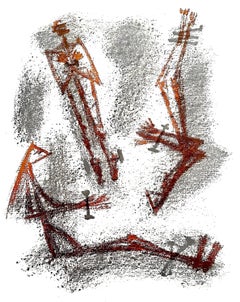
Pierre Alechinsky, Untitled, from XXe Siecle, 1960
By Pierre Alechinsky
Located in Southampton, NY
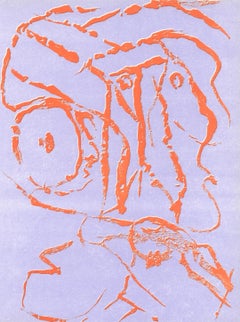
This exquisite lithograph by Pierre Alechinsky (born 1927), titled Sans titre (Untitled), from the album XXe Siecle, Nouvelle serie, XXIIe Annee, N°14, Juin 1960, originates from the...
Category

1960s Modern The Hamptons - Prints and Multiples

Materials

Lithograph

“Marcel Marceau Mime”
By Marcel Marceau
Located in Southampton, NY
Original artist signed colored lithograph by the well known French actor, artist and mime, Marcel Marceau. Circa 1975. Condition is very good Edition:, 112/275; signed in pencil lowe...
Category

1970s Post-Modern The Hamptons - Prints and Multiples

Materials

Archival Paper, Lithograph

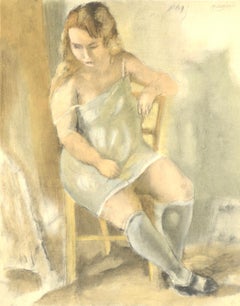
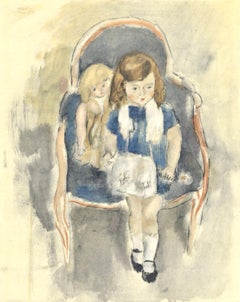
Jules Pascin, The Two Models, from Pascin, 1954 (after)
By Jules Pascin
Located in Southampton, NY
This exquisite lithograph after Jules Pascin (1885–1930), titled Les deux modeles (The Two Models), from the album Pascin, originates from the 1954 edition published by Editions du l...
Category

1950s Modern The Hamptons - Prints and Multiples

Materials

Lithograph

Jules Pascin, Marcelle in the Blue Blouse, from Pascin, 1954 (after)
By Jules Pascin
Located in Southampton, NY
This exquisite lithograph after Jules Pascin (1885–1930), titled Marcelle a la chemise bleue (Marcelle in the Blue Blouse), from the album Pascin, originates from the 1954 edition pu...
Category

1950s Modern The Hamptons - Prints and Multiples

Materials

Lithograph

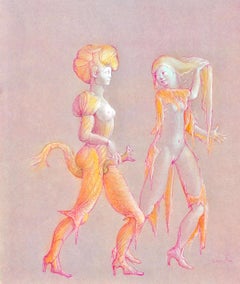
Leonor Fini, Untitled, from Fruits of Passion, 1980 (after)
By Leonor Fini
Located in Southampton, NY
This exquisite heliogravure, titled Sans titre (Untitled), after Leonor Fini, from the album Fruits de la passion, trente-deux variations sur un theme de Leonor Fini (Fruits of Passi...
Category

1980s Surrealist The Hamptons - Prints and Multiples

Materials

Lithograph

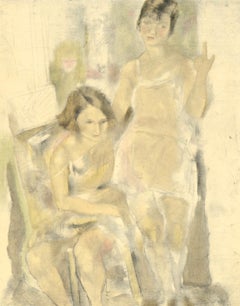
Jules Pascin, Ginette and Mireille, from Pascin, 1954 (after)
By Jules Pascin
Located in Southampton, NY
This exquisite lithograph after Jules Pascin (1885–1930), titled Ginette et Mireille (Ginette and Mireille), from the album Pascin, originates from the 1954 edition published by Edit...
Category

1950s Modern The Hamptons - Prints and Multiples

Materials

Lithograph

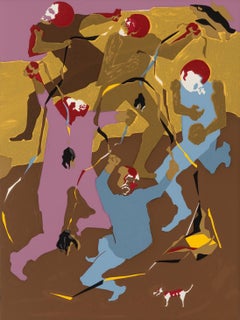
Jacob Lawrence, Playground, from Hiroshima, 1983
By Jacob Lawrence
Located in Southampton, NY
This exquisite silkscreen by Jacob Lawrence (1917–2000), titled Playground, from the album Hiroshima, originates from the 1983 edition published by The Limited Editions Club, New Yor...
Category

1980s Expressionist The Hamptons - Prints and Multiples

Materials

Screen

Joan Miro, Untitled, from The Sun Bird, The Moon Bird, Sparks, 1967 (after)
By Joan Miró
Located in Southampton, NY
This exquisite lithograph and pochoir after Joan Miro (1893–1983), titled Sans titre (Untitled), from the album Miro, L'Oiseau solaire, L'Oiseau lunaire, Etincelles (Miro, The Sun Bi...
Category

1960s Surrealist The Hamptons - Prints and Multiples

Materials

Lithograph

Joan Miro, The Tree-like Woman, from XXe siecle, 1961
By Joan Miró
Located in Southampton, NY
This exquisite lithograph by Joan Miro (1893–1983), titled La Femme Arborescente (The Tree-like Woman), from the album XXe Siecle, Nouvelle serie, XXIIe Annee, No. 16, originates fro...
Category

1960s Surrealist The Hamptons - Prints and Multiples

Materials

Lithograph

Composition, Variations sur l imaginaire, Stanislas Lepri
Located in Southampton, NY
Lithograph on vélin de Rives paper. Inscription: hand signed and unnumbered, as issued. Good condition. Notes: From the folio, Variations sur l'imaginaire, 1972. Published by Philipp...
Category

1970s Surrealist The Hamptons - Prints and Multiples

Materials

Lithograph

Joan Miro, Untitled, from Miro and Artigas Ceramics, 1974
By Joan Miró
Located in Southampton, NY
This exquisite lithograph by Joan Miro (1893–1983), titled Sans Titre (Untitled), originates from the 1974 album ceramiques de miro et artigas (Miro and Artigas Ceramics). Published by Maeght Editeur, Paris, and printed by Arte, Adrien Maeght, Paris, this work reflects Miros lyrical fusion of abstraction, gesture, and ceramic-inspired form. In Sans Titre (Untitled), Miro channels the vivid spontaneity and symbolic richness that define his mature graphic language. Executed as a lithograph on velin paper, this work measures 11.024 x 22.28 inches, with stitch perforations and centerfold as issued. Signed in the plate and unnumbered as issued. Printed by Arte, Adrien Maeght, Paris, one of the foremost ateliers of the 20th century. Artwork Details: Artist: Joan Miro (1893–1983) Title: Sans Titre (Untitled), from the album ceramiques de miro et artigas (Miro and Artigas Ceramics), 1974 Medium: Lithograph on velin paper Dimensions: 11.024 x 22.28 inches (28 x 56.57 cm), with stitch perforations and centerfold as issued Inscription: Signed in the plate and unnumbered as issued Date: 1974 Publisher: Maeght Editeur, Paris Printer: Arte, Adrien Maeght, Paris Catalogue raisonne reference: Mourlot, Fernand, and Joan Miro. Catalogue des Lithographies de Miro. Vol. V. Andre Sauret, 1984, illustrations 926–927. Cramer, Patrick. Joan Miro: The Illustrated Books: Catalogue Raisonne. Patrick Cramer, 1989, illustration 183. Condition: Well preserved, consistent with age and medium Provenance: From the 1974 album ceramiques de miro et artigas (Miro and Artigas Ceramics), published by Maeght Editeur, Paris; printed by Arte, Adrien Maeght, Paris Notes: Excerpted from the album (translated from French), The original lithographs were drawn in the ateliers Arte, Adrien Maeght, Paris. Completed printing on April 30, 1974. About the Publication: Ceramiques de miro et artigas (Miro and Artigas Ceramics) is a landmark 1974 album published by Maeght Editeur that documents and celebrates the long, fertile collaboration between Joan Miro and the master ceramicist Josep Llorens Artigas. The album serves as both an artistic tribute and an archival record of their shared exploration into the expressive possibilities of fire, clay, pigment, and surface. Maeght Editeur—renowned for its exceptional production standards and its close relationships with leading modern artists—commissioned original lithographs specifically for the album, each reflecting the tactile, gestural, and symbolic vocabulary that Miro developed through decades of experimentation in ceramics. Printed by Arte, Adrien Maeght in Paris, the production exemplifies the publisher’s commitment to uniting fine art printing with rigorous documentation. The album honors one of the most important artist–artisan partnerships of the 20th century, capturing the profound synergy between Miro’s visionary abstraction and Artigas’s mastery of traditional and experimental ceramic processes. As with all major Maeght publications, the album was conceived not merely as a catalogue but as a complete work of art, synthesizing text, image, and craftsmanship into an enduring contribution to the history of modernist printmaking and book arts. About the Artist: Joan Miro (1893–1983) was a Catalan painter, sculptor, printmaker, and ceramicist whose visionary imagination and lyrical abstraction made him one of the most influential and beloved artists of the 20th century. Born in Barcelona, Miro drew inspiration from Catalan folk art, Romanesque frescoes, and the luminous landscapes of Mont-roig del Camp, developing a deep connection to nature that infused his work with vitality and symbolism. After formal training at the Escola dArt in Barcelona, he absorbed the lessons of Post-Impressionism and Cubism before moving to Paris in the early 1920s, where he became a leading figure in the Surrealist movement. There, Miro forged a personal visual language of biomorphic shapes, floating symbols, and radiant color harmonies that reflected both spontaneity and spiritual depth. In creative dialogue with peers such as Alexander Calder, Alberto Giacometti, Salvador Dali, Wassily Kandinsky, Marcel Duchamp, and Man Ray, he helped revolutionize modern art by dissolving the boundaries between abstraction and dream imagery. Miros inventive approach extended far beyond painting, embracing sculpture, ceramics, and monumental public commissions that redefined how art could interact with space and emotion. His expressive freedom and gestural abstraction profoundly influenced later artists including Jackson Pollock, Mark Rothko, Alexander Calder, Jean Dubuffet, Antoni Tapies, and Joan Mitchell, inspiring generations who sought to merge instinct, color, and imagination. Today, Miros work remains a cornerstone of modernism, prized by collectors and celebrated in major museums worldwide. His highest auction record was achieved by Peinture (Etoile Bleue) (1927), which sold for 23561250 GBP (approximately 37 million USD) at Sothebys, London, on June 19, 2012. Joan Miro Sans Titre 1974, Miro ceramiques...
Category

1970s Surrealist The Hamptons - Prints and Multiples

Materials

Lithograph

Henri Matisse, The Portuguese Nun, 1972 (after)
By Henri Matisse
Located in Southampton, NY
This exquisite lithograph after Henri Matisse (1869–1954), titled La Religieuse Portugaise (The Portuguese Nun), originates from the 1972 edition published by Editions A. C. Mazo et Cie., Paris, in collaboration with Leon Amiel, editeurs, New York, and printed by Mourlot Freres, Paris, April 5, 1972. This serene and balanced composition captures Matisse’s mastery of line, harmony, and emotional resonance. La Religieuse Portugaise reflects the artist’s lifelong exploration of purity and rhythm through simplified form and luminous balance, revealing his belief that true beauty lies in the unity of contour, and spirit. The lithograph exemplifies Matisse’s ability to transform spiritual themes into modern expressions of grace and contemplation. Executed as a lithograph on velin d’Arches paper, this work measures 12.81 x 9.81 inches (32.54 x 24.92 cm). Unsigned and unnumbered as issued. The edition exemplifies the exceptional craftsmanship of the Mourlot Freres atelier, renowned for its collaboration with leading modern artists of the 20th century. Artwork Details: Artist: After Henri Matisse (1869–1954) Title: La Religieuse Portugaise (The Portuguese Nun), 1972 Medium: Lithograph on velin d’Arches paper Dimensions: 12.81 x 9.81 inches (32.54 x 24.92 cm) Inscription: Unsigned and unnumbered as issued Date: 1972 Publisher: Editions A. C. Mazo et Cie., Paris, in collaboration with Leon Amiel, editeurs, New York Printer: Mourlot Freres, Paris Condition: Well preserved, consistent with age and medium Provenance: From the edition published by Editions A. C. Mazo et Cie., Paris, in collaboration with Leon Amiel, editeurs, New York, 1972 Notes: Excerpted from the album (translated from French), This album is the album of friendship, and I want to thank all the artists who wanted to participate. Some lithographs presented here, and whose authors have left us for too long, were made at my request for an album "Adieu a la rue de Chabrol" that I intended to publish ten years ago. So it was at this time that I was able to get the lithos of Braque, Cocteau, Derain, Giacometti and Villon. Mrs. Duthuit-Matisse and her brothers authorized me to print the composition of Henri Matisse, an unused original lithograph of the album by Teriade "La Religieuse portugaise". I am happy to have brought together so many works by contemporary artists, it is a great honor for me and I am infinitely grateful to them. Finished printing in Paris on April 5, 1972, this album was printed on velin d’Arches, in DCCC numbered examples. In addition, a number of copies were printed for artists, friends and collaborators of this album. The original lithographs were printed by Mourlot, and the typography is from Fequet and Baudier. Alain A.C. Mazo, Paris, and Leon Amiel, New York, publishers. About the Publication: Souvenirs et Portraits d'Artistes (Memories and Portraits of Artists), published in 1972 by Editions A. C. Mazo et Cie., Paris, and Leon Amiel, New York, stands as one of the most distinguished collaborative albums of the postwar era. Bringing together original lithographs by some of the foremost artists of the 20th century, the portfolio celebrates artistic friendship, collaboration, and the enduring spirit of creative dialogue. La Religieuse Portugaise (The Portuguese Nun) after Henri Matisse exemplifies this spirit, blending spiritual serenity with the refined formal language that made Matisse one of the most influential artists in modern art. Printed at the renowned Atelier Mourlot, the work embodies the clarity, rhythm, and elegance that characterize Matisse’s timeless aesthetic. About the Artist: Henri Matisse (1869–1954) was a French painter, sculptor, draughtsman, and printmaker whose revolutionary vision redefined modern art through his daring use of color, line, and form. Celebrated as one of the greatest artists of the 20th century, Matisse led the Fauvist movement and devoted his life to the pursuit of balance, beauty, and emotional expression in visual art. His early works burst with vibrant hues and liberated brushwork, while his later “cut-out” compositions achieved a poetic simplicity that transformed the relationship between color and space. Deeply influenced by the work of Paul Cezanne, Vincent van Gogh, and Georges Seurat, as well as by the rhythmic patterns of Islamic art, Byzantine mosaics, and Japanese prints, Matisse forged a new visual language that celebrated joy, movement, and serenity. He was part of an extraordinary generation of artists who shaped the evolution of modernism, maintaining lifelong dialogue and friendly rivalry with contemporaries such as Pablo Picasso, Georges Braque, Marc Chagall, Andre Derain, Albert Marquet, and Raoul Dufy—peers who, like him, sought to expand the expressive potential of color and composition. Matisse’s influence extended across generations, inspiring modern and contemporary masters including Alexander Calder, Alberto Giacometti, Salvador Dali, Joan Miro, Wassily Kandinsky, Marcel Duchamp, and Man Ray, each of whom drew upon his fearless experimentation and refined visual harmony. His paintings, sculptures, and works on paper are held in the most prestigious museums in the world, including the Museum of Modern Art, the Centre Pompidou, the Tate, and the Hermitage Museum, where his art continues to symbolize the essence of creativity and human emotion. The highest price ever paid for a Henri Matisse artwork is approximately $80.8 million USD, achieved in 2018 at Christie's New York for Odalisque couchee aux magnolias (1923). Henri Matisse La Religieuse Portugaise, Matisse Mourlot...
Category

1970s Fauvist The Hamptons - Prints and Multiples

Materials

Lithograph

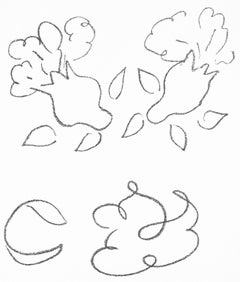
Henri Matisse, Series K, Var. 1, Drawings, Themes and Variations, 1943 (after)
By Henri Matisse
Located in Southampton, NY
This exquisite lithograph after Henri Matisse (1869–1954), titled Serie K, var. 1 (Series K, Variation 1), from the album Henri Matisse, Dessins, Themes et Variations (Drawings, Them...
Category

1940s Modern The Hamptons - Prints and Multiples

Materials

Lithograph

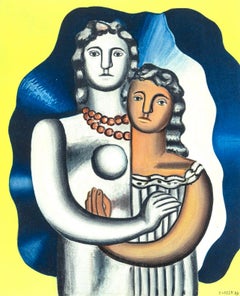
Fernand Leger, The Two Figures, from Derriere le miroir, 1955 (after)
By Fernand Léger
Located in Southampton, NY
This exquisite lithograph after Fernand Leger (1881–1955), titled Le deux figures (The Two Figures), from the folio Derriere le miroir, No. 79-81, originates from the 1955 edition published by Maeght Editeur, Paris, and printed by Mourlot Freres, Paris, 1955. This composition exemplifies Leger’s rhythmic balance of color, form, and movement, translating the mechanical vitality of modern life into a harmonious, humanized geometry. Executed as a lithograph on velin paper, this work measures 15 x 11 inches. Signed in the plate and unnumbered as issued. The edition exemplifies the superb craftsmanship of Mourlot Freres, Paris. Artwork Details: Artist: After Fernand Leger (1881–1955) Title: Le deux figures (The Two Figures), from the folio Derriere le miroir, No. 79-81 Medium: Lithograph on velin paper Dimensions: 15 x 11 inches (38.1 x 27.94 cm) Inscription: Signed in the plate and unnumbered as issued Date: 1955 Publisher: Maeght Editeur, Paris Printer: Mourlot Freres, Paris Condition: Well preserved, consistent with age and medium Provenance: From the folio Derriere le miroir, No. 79-81, published by Maeght Editeur, Paris; printed by Mourlot Freres, Paris, 1955 About the Publication: Derriere le miroir (Behind the Mirror) was one of the most important art publications of the 20th century, created and published by Maeght Editeur in Paris from 1946 to 1982. Founded by the visionary art dealer and publisher Aime Maeght, the series served as both an exhibition catalogue and a work of art in its own right, uniting original lithographs by leading modern and contemporary artists with critical essays, poetry, and design of the highest quality. Printed by master lithographers such as Mourlot Freres and Arte, Derriere le miroir became synonymous with the artistic vanguard of postwar Europe. Each issue was devoted to a single artist or theme and published to accompany exhibitions at the Galerie Maeght in Paris, featuring works by Pablo Picasso, Henri Matisse, Georges Braque, Joan Miro, Marc Chagall, Alexander Calder, Fernand Leger, and Alberto Giacometti, among others. The publication reflected Maeght's belief that art should be both accessible and elevated—an ideal realized through its luxurious production values, meticulous printing, and collaboration with the greatest creative minds of its time. About the Artist: Fernand Leger (1881–1955) was a visionary French painter, sculptor, designer, and filmmaker whose groundbreaking fusion of modern industry, vivid color, and geometric form transformed the course of 20th-century art. Born in Argentan, Normandy, Leger began as an architectural draftsman before studying at the Academie Julian and the Ecole des Beaux-Arts in Paris, where he absorbed the lessons of Paul Cezanne’s structural rigor and the revolutionary ideas of Cubism. Alongside Pablo Picasso and Georges Braque, he became one of the leading innovators of the avant-garde, yet his work stood apart through its embrace of mechanical rhythm, bold contrasts, and industrial modernity—earning him the title “the painter of the machine age.” His art celebrated the beauty of technology, urban life, and the human form rendered in dynamic, interlocking cylinders and planes, evoking the pulse of the modern world. Immersed in the vibrant Parisian art scene, Leger worked in dialogue with peers and contemporaries such as Alexander Calder, Alberto Giacometti, Salvador Dali, Joan Miro, Wassily Kandinsky, Marcel Duchamp, and Man Ray, all of whom shared his commitment to innovation and the reimagining of artistic expression. Beyond painting, Leger’s creative reach extended into film, design, and monumental public art—his 1924 collaboration on Ballet Mecanique with Dudley Murphy and Man Ray remains a landmark of avant-garde cinema. His later works evolved toward greater clarity and monumentality, celebrating the unity of form, color, and humanity through large-scale murals and mosaics that bridged fine art and architecture. Leger’s synthesis of Cubism, Futurism, and abstraction paved the way for movements such as Pop Art and influenced generations of artists including Roy Lichtenstein, Ellsworth Kelly, Robert Indiana, and Alexander Calder, who admired his fusion of structure, energy, and optimism. Today, his works are prized by major museums and collectors worldwide for their bold visual power and enduring modernity. His highest auction record was achieved by La femme en rouge et vert (1914), which sold for 39,241,000 USD at Sotheby’s, New York, on May 7, 2008. After Fernand Leger Le deux figures 1955, Leger Derriere le miroir No. 79-81, Leger Mourlot...
Category

1950s Cubist The Hamptons - Prints and Multiples

Materials

Lithograph

Jules Pascin, Jeanie Warnod, from Pascin, 1954 (after)
By Jules Pascin
Located in Southampton, NY
This exquisite lithograph after Jules Pascin (1885–1930), titled Jeanie Warnod, from the album Pascin, originates from the 1954 edition published by Editions du livre, Monte-Carlo, under the direction of Andre Sauret, Editeur, Monte-Carlo, and printed by Mourlot Freres, Paris, March 3, 1954. Jeanie Warnod captures Pascin’s delicate mastery of line and his profound sensitivity to the human form, embodying the poetic lyricism and emotional intimacy that define his work. Executed as a lithograph on grand velin Renage paper, this work measures 12.25 x 9.5 inches. Signed in the plate and unnumbered as issued. The edition exemplifies the refined craftsmanship of Mourlot Freres, Paris, and the exceptional production standards of Editions du livre, Monte-Carlo. Artwork Details: Artist: After Jules Pascin (1885–1930) Title: Jeanie Warnod, from the album Pascin Medium: Lithograph on grand velin Renage paper Dimensions: 12.25 x 9.5 inches (31.1 x 24.1 cm) Inscription: Signed in the plate and unnumbered as issued Date: 1954 Publisher: Editions du livre, Monte-Carlo, under the direction of Andre Sauret, Editeur, Monte-Carlo Printer: Mourlot Freres, Paris Condition: Well preserved, consistent with age and medium Provenance: From the album Pascin, published by Editions du livre, Monte-Carlo, 1954 Notes: Excerpted from the album (translated from French), This album, published under the direction of Andre Sauret, was completed on March 3, 1954. The color plates were executed in the workshops of Mourlot Freres, lithographes, in Paris. Typography of L'Imprimerie Union. The original etchings attached to the C head examples were printed on Roger Lacouriere's presses. The total edition was drawn in MM examples, decomposing as follows: C examples numbered from I to C with III original etchings, MCM examples from CI to MM. About the Publication: Pascin, published in Monte-Carlo in 1954 under the direction of Andre Sauret and printed by Mourlot Freres, Paris, stands as one of the most refined tributes to the artist’s oeuvre within the distinguished postwar series of French art albums. The album combines impeccable lithographic craftsmanship with scholarly presentation, highlighting the poetic subtlety and expressive line central to Pascin’s artistic legacy. Printed on grand velin Renage paper, the publication exemplifies the collaboration between Sauret and Mourlot that defined a generation of fine art editions, uniting artists, printers, and publishers dedicated to preserving the vitality of modern art in print. The album reflects the technical mastery of Mourlot’s atelier—celebrated for its work with Picasso, Matisse, Chagall, Braque, and Léger—while reinforcing Editions du livre’s commitment to producing luxurious, museum-quality publications that captured the spirit and emotion of twentieth-century masters. As a fine art album, Pascin occupies a central place among mid-century European art editions, representing both a celebration of the artist’s humanistic vision and a testament to the collaborative artistry that sustained modern printmaking. About the Artist: Jules Pascin (1885–1930) was a Bulgarian-born French painter and draftsman whose exquisite sensitivity, refined draftsmanship, and poetic vision made him one of the most evocative and influential figures of early modern art. Known as “the Prince of Montparnasse,” Pascin became a central figure of the Ecole de Paris and a defining presence in the bohemian world of early 20th-century Paris. Born Julius Mordecai Pincas in Vidin, Bulgaria, to a wealthy Sephardic Jewish family, he studied in Vienna and Munich before moving to Paris in 1905, where he quickly established himself among the leading modernists of his era, including Pablo Picasso, Amedeo Modigliani, Chaim Soutine, Georges Braque, and Marc Chagall. Deeply influenced by Edgar Degas, Henri de Toulouse-Lautrec, and Paul Cezanne, Pascin created paintings and drawings distinguished by their delicate lines, soft tonal harmonies, and psychological depth. His nudes, portraits, and scenes of Parisian cafe life radiate an atmosphere of quiet intimacy and emotional nuance, capturing the fragility and beauty of human existence. Unlike contemporaries such as Picasso, Joan Miro, Salvador Dali, Wassily Kandinsky, Marcel Duchamp, Alexander Calder, Alberto Giacometti, and Man Ray, who pushed toward abstraction and surrealism, Pascin remained devoted to figuration, exploring the subtleties of light, gesture, and emotion with unmatched tenderness. His works express sensuality without artifice, revealing the vulnerability and inner life of his subjects through line and color that seem to breathe with human feeling. His studio became a gathering place for artists and writers such as Ernest Hemingway, Henry Miller, and Anais Nin, who admired his introspection and his ability to translate psychological complexity into visual poetry. Though his life was marked by emotional turbulence and melancholy, his art radiated a timeless empathy that transcended style, influencing later artists including Balthus, Lucian Freud, Francis Bacon, Egon Schiele, and Eric Fischl, who drew inspiration from his fusion of sensuality, sensitivity, and psychological depth. Today, his works are held in major institutions including the Centre Pompidou, Musee d’Orsay, Tate Modern, and the Museum of Modern Art in New York, where they continue to resonate for their humanism and grace. Standing alongside Picasso, Calder, Giacometti, Dali, Miro, Kandinsky, Duchamp, and Man Ray, Jules Pascin helped define the emotional vocabulary of modern painting, and his legacy endures as one of the most intimate and humanist voices of his century. The highest auction record for Jules Pascin was achieved by Portrait de jeune fille en robe rouge sur fond bleu (1928), which sold for $2,950,500 USD at Sotheby’s, New York, on May 8, 2008, confirming his enduring reputation as one of the most refined, psychologically profound, and collectible artists of modern art history. Jules Pascin Jeanie Warnod Pascin Editions du livre Monte-Carlo 1954 lithograph...
Category

1950s Modern The Hamptons - Prints and Multiples

Materials

Lithograph

Georges Braque, The Wave, from Varengeville, 1968 (after)
By Georges Braque
Located in Southampton, NY
This exquisite lithograph after Georges Braque (1882–1963), titled La vague (The Wave), originates from the 1968 folio Varengeville, published by Maeght Editeur, Paris, and printed b...
Category

1960s Cubist The Hamptons - Prints and Multiples

Materials

Lithograph

Rene Magritte, Untitled, from Poems 1923-1958, 1959 (after)
By René Magritte
Located in Southampton, NY
This exquisite lithograph after Rene Magritte (1898–1967), titled Sans titre (Untitled), from the album Poems 1923-1958, Dix dessins de Rene Magritte (Ten Drawings by Rene Magritte),...
Category

1950s Surrealist The Hamptons - Prints and Multiples

Materials

Lithograph

Pierre-Auguste Renoir, The Washerwomen, 1951 (after)
By Pierre-Auguste Renoir
Located in Southampton, NY
This exquisite lithograph after Pierre-Auguste Renoir (1841–1919), titled Les Laveuses (The Washerwomen), from the album Les Lithographies de Renoir (The Lithographs of Renoir), orig...
Category

1950s Impressionist The Hamptons - Prints and Multiples

Materials

Lithograph

Jules Pascin, Two Nudes, from Pascin, 1954 (after)
By Jules Pascin
Located in Southampton, NY
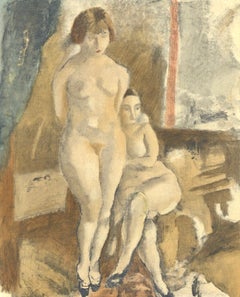
This exquisite lithograph after Jules Pascin (1885–1930), titled Deux nus (Two Nudes), from the album Pascin, originates from the 1954 edition published by Editions du livre, Monte-Carlo, under the direction of Andre Sauret, Editeur, Monte-Carlo, and printed by Mourlot Freres, Paris, March 3, 1954. Deux nus captures Pascin’s delicate mastery of line and his profound sensitivity to the human form, embodying the poetic lyricism and emotional intimacy that define his work. Executed as a lithograph on grand velin Renage paper, this work measures 12.25 x 9.5 inches. Signed in the plate and unnumbered as issued. The edition exemplifies the refined craftsmanship of Mourlot Freres, Paris, and the exceptional production standards of Editions du livre, Monte-Carlo. Artwork Details: Artist: After Jules Pascin (1885–1930) Title: Deux nus (Two Nudes), from the album Pascin Medium: Lithograph on grand velin Renage paper Dimensions: 12.25 x 9.5 inches (31.1 x 24.1 cm) Inscription: Signed in the plate and unnumbered as issued Date: 1954 Publisher: Editions du livre, Monte-Carlo, under the direction of Andre Sauret, Editeur, Monte-Carlo Printer: Mourlot Freres, Paris Condition: Well preserved, consistent with age and medium Provenance: From the album Pascin, published by Editions du livre, Monte-Carlo, 1954 Notes: Excerpted from the album (translated from French), This album, published under the direction of Andre Sauret, was completed on March 3, 1954. The color plates were executed in the workshops of Mourlot Freres, lithographes, in Paris. Typography of L'Imprimerie Union. The original etchings attached to the C head examples were printed on Roger Lacouriere's presses. The total edition was drawn in MM examples, decomposing as follows: C examples numbered from I to C with III original etchings, MCM examples from CI to MM. About the Publication: Pascin, published in Monte-Carlo in 1954 under the direction of Andre Sauret and printed by Mourlot Freres, Paris, stands as one of the most refined tributes to the artist’s oeuvre within the distinguished postwar series of French art albums. The album combines impeccable lithographic craftsmanship with scholarly presentation, highlighting the poetic subtlety and expressive line central to Pascin’s artistic legacy. Printed on grand velin Renage paper, the publication exemplifies the collaboration between Sauret and Mourlot that defined a generation of fine art editions, uniting artists, printers, and publishers dedicated to preserving the vitality of modern art in print. The album reflects the technical mastery of Mourlot’s atelier—celebrated for its work with Picasso, Matisse, Chagall, Braque, and Léger—while reinforcing Editions du livre’s commitment to producing luxurious, museum-quality publications that captured the spirit and emotion of twentieth-century masters. As a fine art album, Pascin occupies a central place among mid-century European art editions, representing both a celebration of the artist’s humanistic vision and a testament to the collaborative artistry that sustained modern printmaking. About the Artist: Jules Pascin (1885–1930) was a Bulgarian-born French painter and draftsman whose exquisite sensitivity, refined draftsmanship, and poetic vision made him one of the most evocative and influential figures of early modern art. Known as “the Prince of Montparnasse,” Pascin became a central figure of the Ecole de Paris and a defining presence in the bohemian world of early 20th-century Paris. Born Julius Mordecai Pincas in Vidin, Bulgaria, to a wealthy Sephardic Jewish family, he studied in Vienna and Munich before moving to Paris in 1905, where he quickly established himself among the leading modernists of his era, including Pablo Picasso, Amedeo Modigliani, Chaim Soutine, Georges Braque, and Marc Chagall. Deeply influenced by Edgar Degas, Henri de Toulouse-Lautrec, and Paul Cezanne, Pascin created paintings and drawings distinguished by their delicate lines, soft tonal harmonies, and psychological depth. His nudes, portraits, and scenes of Parisian cafe life radiate an atmosphere of quiet intimacy and emotional nuance, capturing the fragility and beauty of human existence. Unlike contemporaries such as Picasso, Joan Miro, Salvador Dali, Wassily Kandinsky, Marcel Duchamp, Alexander Calder, Alberto Giacometti, and Man Ray, who pushed toward abstraction and surrealism, Pascin remained devoted to figuration, exploring the subtleties of light, gesture, and emotion with unmatched tenderness. His works express sensuality without artifice, revealing the vulnerability and inner life of his subjects through line and color that seem to breathe with human feeling. His studio became a gathering place for artists and writers such as Ernest Hemingway, Henry Miller, and Anais Nin, who admired his introspection and his ability to translate psychological complexity into visual poetry. Though his life was marked by emotional turbulence and melancholy, his art radiated a timeless empathy that transcended style, influencing later artists including Balthus, Lucian Freud, Francis Bacon, Egon Schiele, and Eric Fischl, who drew inspiration from his fusion of sensuality, sensitivity, and psychological depth. Today, his works are held in major institutions including the Centre Pompidou, Musee d’Orsay, Tate Modern, and the Museum of Modern Art in New York, where they continue to resonate for their humanism and grace. Standing alongside Picasso, Calder, Giacometti, Dali, Miro, Kandinsky, Duchamp, and Man Ray, Jules Pascin helped define the emotional vocabulary of modern painting, and his legacy endures as one of the most intimate and humanist voices of his century. The highest auction record for Jules Pascin was achieved by Portrait de jeune fille en robe rouge sur fond bleu (1928), which sold for $2,950,500 USD at Sotheby’s, New York, on May 8, 2008, confirming his enduring reputation as one of the most refined, psychologically profound, and collectible artists of modern art history. Jules Pascin Deux nus Two Nudes Pascin Editions du livre Monte-Carlo 1954 lithograph...
Category

1950s Modern The Hamptons - Prints and Multiples

Materials

Lithograph

Jean Cocteau, Manuscript, from Memories and Portraits of Artists, 1972 (after)
By Jean Cocteau
Located in Southampton, NY
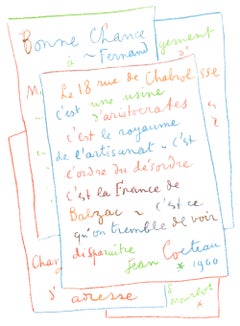
This exquisite lithograph after Jean Cocteau (1889–1963), titled Manuscrit (Manuscript), originates from the 1972 edition published by Editions A. C. Mazo et Cie., Paris, in collabor...
Category

1970s Modern The Hamptons - Prints and Multiples

Materials

Lithograph

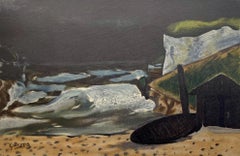
Georges Braque, Black Seascape, from Varengeville, 1968 (after)
By Georges Braque
Located in Southampton, NY
This exquisite lithograph after Georges Braque (1882–1963), titled Marine noire (Black Seascape), originates from the 1968 folio Varengeville, published by Maeght Editeur, Paris, and...
Category

1960s Cubist The Hamptons - Prints and Multiples

Materials

Lithograph

Georges Rouault, Out of the Depths, from Evening Star, 1947 (after)
By Georges Rouault
Located in Southampton, NY
This exquisite heliogravure after Georges Rouault (1871–1958), titled De Profundis (Out of the Depths), from the album Georges Rouault, Stella Vespertina (Evening Star), originates f...
Category

1940s Modern The Hamptons - Prints and Multiples

Materials

Lithograph

Still Thinking About These?

All Recently Viewed