The Hamptons - Prints and Multiples

to
4,388
3,487
858
92
18
16
Overall Width
to
Overall Height
to
2,224
607
551
320
128
83
83
69
44
10
179
179
169
101
58
1
4
4,355
111
6
385
236
460
1,133
1,243
542
266
77
1
3,356
1,074
40
1,643
1,125
882
667
532
432
406
331
246
135
133
128
72
63
62
57
56
49
49
42
3,643
368
280
241
112
23
4
4,471
51,127
36,859
Item Ships From: The Hamptons
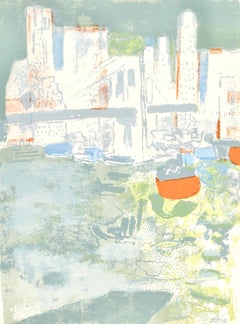
Paul Guiramand, The Port of New York, from Prints from the Mourlot Press, 1964
By Paul Guiramand
Located in Southampton, NY
This exquisite lithograph by Paul Guiramand (1926–2007), titled Le port de New York (The Port of New York), from the album Prints from the Mourlot Press, exhibition sponsored by the ...
Category

1960s Modern The Hamptons - Prints and Multiples

Materials

Lithograph

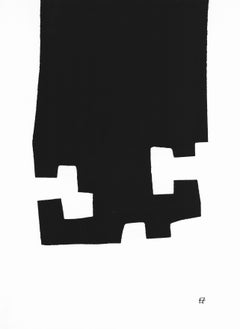
Eduardo Chillida, Untitled, from Derriere le Miroir, 1982
By Eduardo Chillida
Located in Southampton, NY
This exquisite lithograph by Eduardo Chillida (1924–2002), titled Sans titre (Untitled), originates from the historic 1982 folio Derriere le Miroir, No. 250, Hommage a Aime et Marguerite Maeght (Tribute to Aime and Marguerite Maeght). Published by Maeght Editeur, Paris, under the direction of Aime Maeght, and printed by Imprimerie Moderne du Lion, Paris, this composition embodies Chillida’s exploration of form, balance, and spatial tension. In Sans titre, the artist distills his sculptural sensibility into a two-dimensional plane, using the language of gesture and contrast to evoke mass, gravity, and void. The work exemplifies Chillida’s poetic approach to abstraction, where line and density coexist in perfect equilibrium. Executed on velin paper, this lithograph measures 15 x 11 inches (38.1 x 27.9 cm). As issued, it is signed in the plate and unnumbered, consistent with the authorized publication format. The edition captures Chillida’s mastery of minimal means to achieve monumental expression, extending the spatial dialogue that defines his sculpture into the medium of print. Artwork Details: Artist: Eduardo Chillida (1924–2002) Title: Sans titre (Untitled), from Derriere le Miroir, No. 250, Hommage a Aime et Marguerite Maeght (Tribute to Aime and Marguerite Maeght), 1982 Medium: Lithograph on velin paper Dimensions: 15 x 11 inches (38.1 x 27.9 cm) Inscription: Signed in the plate and unnumbered, as issued Date: 1982 Publisher: Maeght Editeur, Paris Printer: Imprimerie Moderne du Lion, Paris Condition: Well preserved, consistent with age and medium Provenance: From the 1982 folio Derriere le Miroir, No. 250, published by Maeght Editeur, Paris Notes: Excerpted from the folio (translated from French), This special issue of Derriere le Miroir was designed and defined by Aime Maeght in the fall of 1980. He envisioned its publication as a celebration with which artists and writers published since 1946 were to be associated. He also chose Francois Chapon, president of the Reverdy Committee, to write the presentation. This Derriere le Miroir number 250 took the form, after its disappearance on September 5, 1981, of a tribute to Aime Maeght and his wife Marguerite Maeght who died four years earlier. 24 artists agreed to create an original graphic work for this issue which includes the general table of all issues as well as excerpts from texts by 32 writers. Finished printing on June 2, 1982 on the presses of the l'Imprimerie moderne du Lion in Paris. CL examples were printed on velin d'Arches, numbered from I to CL, and some non-commercial examples constituting the original edition. About the Publication: Derriere le Miroir (translated as "Behind the Mirror") was an iconic French art periodical published from 1946 to 1982 by Maeght Editeur, one of the most influential art publishers of the 20th century. Founded by Aime Maeght in Paris, the publication was conceived as a visual and literary collaboration between leading modern artists, poets, and critics. Each issue functioned as both an exhibition catalogue and a work of art in itself—featuring original lithographs printed directly from the artists' stones or plates, alongside essays, poems, and critical commentary. Over the course of 36 years, Derriere le Miroir produced more than 250 issues and showcased an extraordinary roster of artists including Henri Matisse, Marc Chagall, Joan Miro, Georges Braque, Alexander Calder, Fernand Leger, Pierre Bonnard, Alberto Giacometti, Eduardo Chillida, Ellsworth Kelly, Francis Bacon, Paul Rebeyrolle, Claude Garache, Antoni Tapies, Bram van Velde, Pierre Alechinsky, Pol Bury, Shusaku Arakawa, and Gerard Titus-Carmel. Printed in the ateliers of Mourlot, Arte, and Imprimerie Moderne du Lion, the periodical set new standards for quality in color lithography, combining fine art printing with elegant typography and poetic text. Beyond its visual brilliance, Derriere le Miroir also became a cultural chronicle of postwar European modernism. Each issue coincided with exhibitions held at Galerie Maeght, providing a collectible and widely accessible record of groundbreaking shows. Its integration of image, text, and philosophy created a dialogue between art and literature that elevated the modern art book to new aesthetic heights. Today, Derriere le Miroir remains one of the most sought-after and historically significant art publications, prized by collectors and scholars alike for its craftsmanship, influence, and its role in defining the visual language of 20th-century modernism. The Maeght Foundation in Saint-Paul-de-Vence continues to honor this legacy through exhibitions and archival preservation of the series, affirming Derriere le Miroir's enduring place in the history of modern art and fine art publishing. About the Artist: Eduardo Chillida (1924–2002) was a Spanish Basque sculptor and printmaker internationally celebrated for his monumental abstract works that explore the interplay between form, space, and material. Renowned for his mastery of iron, steel, stone, and concrete, Chillida created sculptural compositions that evoke both architectural strength and poetic balance, reflecting his lifelong dialogue between the physical and the spiritual. Emerging in postwar Europe, his art stands alongside that of the great modern masters—Pablo Picasso, Henri Matisse, Alexander Calder, Marc Chagall, Salvador Dali, Joan Miro, Georges Braque, Wassily Kandinsky, Marcel Duchamp, and Man Ray—whose revolutionary approaches to form and perception shaped 20th-century art. Chillida’s work embodies a profound sense of harmony, rooted in the landscapes and philosophies of his native Basque Country, while maintaining a universal resonance. Exhibited internationally and collected by major institutions including MoMA, the Guggenheim, the Tate, and the Centre Pompidou, his sculptures and works on paper continue to command global acclaim. The highest price ever paid for an Eduardo Chillida artwork is approximately $4.1 million USD, achieved in 2022 at Christie’s Paris for Buscando la Luz IV (2001). Eduardo Chillida Sans titre, Eduardo Chillida lithograph, Chillida Derriere le Miroir, Chillida Maeght...
Category

1980s Modern The Hamptons - Prints and Multiples

Materials

Lithograph

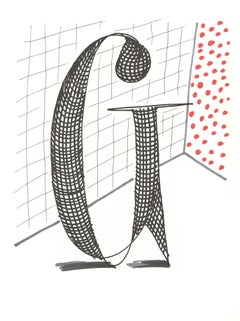
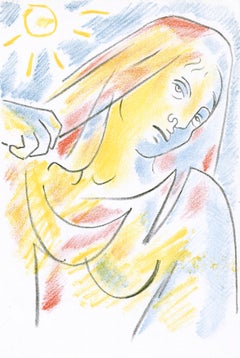
David Hockney, Letter G, from Hockney s Alphabet, 1991
By David Hockney
Located in Southampton, NY
This exquisite lithograph by David Hockney (born 1937), titled Letter G, from the folio Hockney's Alphabet, Drawings by David Hockney, originates from the 1991 edition published by A...
Category

1990s Contemporary The Hamptons - Prints and Multiples

Materials

Lithograph

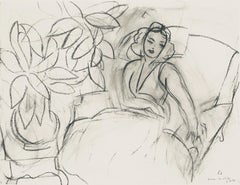
Henri Matisse, Series E, Var. 1, Drawings, Themes and Variations, 1943 (after)
By Henri Matisse
Located in Southampton, NY
This exquisite lithograph after Henri Matisse (1869–1954), titled Serie E, var. 1 (Series E, Variation 1), from the album Henri Matisse, Dessins, Themes et Variations (Drawings, Them...
Category

1940s Modern The Hamptons - Prints and Multiples

Materials

Lithograph

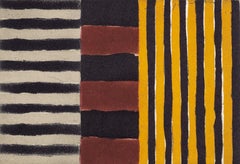
Composition, Heart of Darkness, Sean Scully
By Sean Scully
Located in Southampton, NY
Etching in colors on vélin de Lana Royal paper. Paper Size: 11.93 x 9.81 inches. Inscription: Unsigned and unnumbered, as issued. Notes: From the album, Heart of Darkness, 1992. Publ...
Category

1990s Contemporary The Hamptons - Prints and Multiples

Materials

Etching

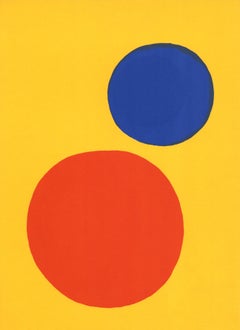
Alexander Calder, Red and Blue on Yellow, from Derriere le Miroir, 1973
By Alexander Calder
Located in Southampton, NY
This exquisite lithograph by Alexander Calder (1898–1976), titled Rouge et bleu sur jaune (Red and Blue on Yellow), originates from the historic 1973 folio Derriere le Miroir, No. 20...
Category

1970s Modern The Hamptons - Prints and Multiples

Materials

Lithograph

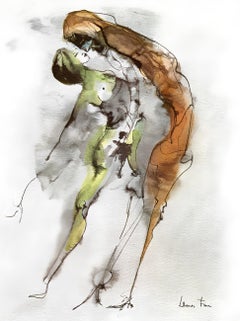
Leonor Fini, Untitled, from The Story of O, 1962
By Leonor Fini
Located in Southampton, NY
This exquisite lithograph, titled Sans titre, after Leonor Fini, from the folio L'Histoire d'O (The Story of O), 1962, was published and printed by La Compagnie des Vibliophiles, au ...
Category

1960s Modern The Hamptons - Prints and Multiples

Materials

Lithograph

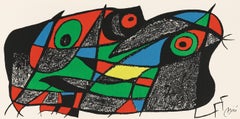
Miró, Joan Miró Fotoscop (Cramer 209; Mourlot 938) (after)
By Joan Miró
Located in Southampton, NY
Lithograph on Guarro vélin paper. Inscription: Unsigned and unnumbered, as issued. Good condition. Notes: Published by Galerie Börjeson, Malmö; printed by La Polígrafa, Barcelona, 19...
Category

1970s Surrealist The Hamptons - Prints and Multiples

Materials

Lithograph

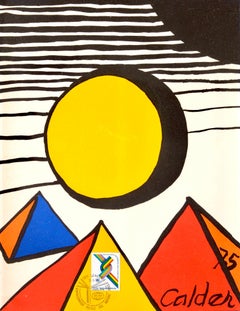
Composition, World Federation of United Nations Associations, Alexander Calder
By Alexander Calder
Located in Southampton, NY
Lithograph and original issue World Federation of United Nations Associations postage stamp on vélin paper. Inscription: Signed in the plate, as issued. Good condition. Notes: Publis...
Category

1970s Modern The Hamptons - Prints and Multiples

Materials

Lithograph

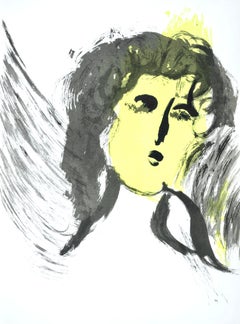
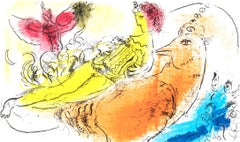
Marc Chagall, The Angel, from Drawings for the Bible, 1956
By Marc Chagall
Located in Southampton, NY
This exquisite lithograph by Marc Chagall (1887–1985), titled L'Ange (The Angel), from Marc Chagall, Dessins Pour La Bible (Drawings for the Bible), Verve: Revue Artistique et Litter...
Category

1950s Expressionist The Hamptons - Prints and Multiples

Materials

Lithograph

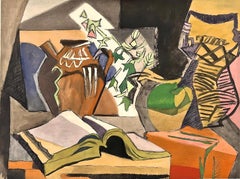
Composition, Éloge de André Lhote
By André Lhote
Located in Southampton, NY
Lithograph on vélin du Marais paper. Inscription: unsigned and unnumbered, as issued. Good condition with centerfold, as issued. Notes: From the volume, Éloge de André Lhote, 1960. P...
Category

1960s Modern The Hamptons - Prints and Multiples

Materials

Lithograph

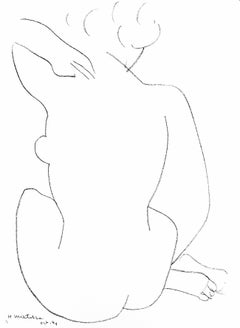
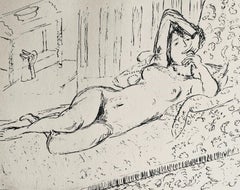
Henri Matisse, Nude Woman, from Derriere le Miroir, 1952 (after)
By Henri Matisse
Located in Southampton, NY
This exquisite lithograph after Henri Matisse (1869–1954), titled Femme nue (Nude Woman), originates from the 1952 folio Derriere le Miroir, No. 46–47, published by Maeght Editeur, P...
Category

1950s Modern The Hamptons - Prints and Multiples

Materials

Lithograph

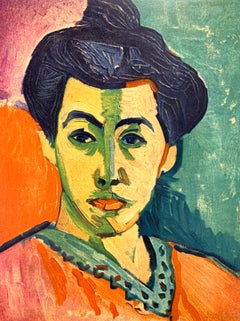
Henri Matisse, Mrs. Matisse, from Portraits by Henri Matisse, 1954 (after)
By Henri Matisse
Located in Southampton, NY
This exquisite lithograph after Henri Matisse (1869–1954), titled Madame Matisse (Mrs. Matisse), from the album Portraits par Henri Matisse (Portraits by Henri Matisse), originates f...
Category

1950s Fauvist The Hamptons - Prints and Multiples

Materials

Lithograph

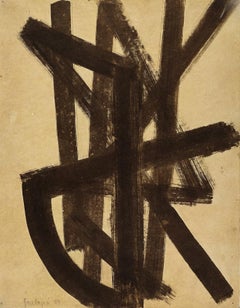
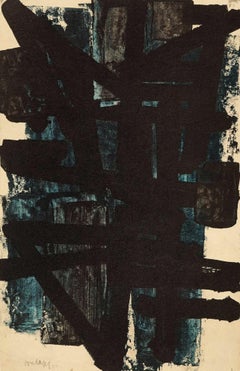
Pierre Soulages, Plate No. 4, from Painters of Today, 1962 (after)
By Pierre Soulages
Located in Southampton, NY
This exquisite heliogravure after Pierre Soulages (1919–2022), titled Planche No. 4 (Plate No. 4), from the folio Pierre Soulages, Peintres d'aujourd'hui (Pierre Soulages, Painters o...
Category

1960s Modern The Hamptons - Prints and Multiples

Materials

Lithograph

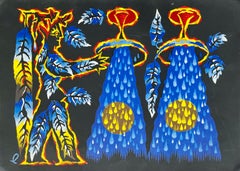
Jean Lurcat, The Aquarius, from The Signs of the Zodiac, 1959
By Jean Lurçat
Located in Southampton, NY
This exquisite lithograph and pochoir by Jean Lurcat (1892–1966), titled Le Verseau (The Aquarius), from the folio Les Signes du Zodiaque (The Signs of the Zodiac), originates from t...
Category

1950s Modern The Hamptons - Prints and Multiples

Materials

Lithograph

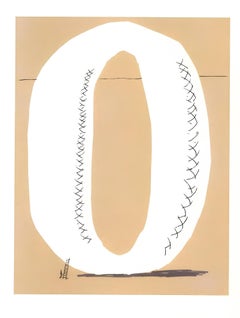
David Hockney, Letter O, from Hockney s Alphabet, 1991
By David Hockney
Located in Southampton, NY
This exquisite lithograph by David Hockney (born 1937), titled Letter O, from the folio Hockney's Alphabet, Drawings by David Hockney, originates from the 1991 edition published by A...
Category

1990s Contemporary The Hamptons - Prints and Multiples

Materials

Lithograph

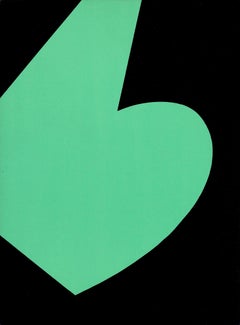
Ellsworth Kelly, Green and Black, from Derriere le Miroir, 1958
By Ellsworth Kelly
Located in Southampton, NY
This exquisite lithograph by Ellsworth Kelly (1923–2015), titled Vert et noir (Green and Black), originates from the historic 1958 folio Derriere le Miroir, No. 110. Published by Mae...
Category

1950s Hard-Edge The Hamptons - Prints and Multiples

Materials

Lithograph

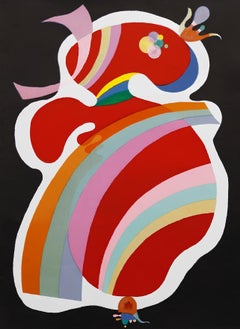
Wassily Kandinsky, Untitled, from Derriere le miroir, 1969 (after)
By Wassily Kandinsky
Located in Southampton, NY
This exquisite lithograph after Wassily Kandinsky (1866–1944), titled Formulaire rouge (Red Form), from the folio Derriere le miroir, No. 179, originates from the 1969 edition publis...
Category

1960s Modern The Hamptons - Prints and Multiples

Materials

Lithograph

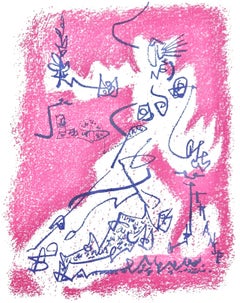
Andre Masson, The Departure, from Memories and Portraits of Artists, 1972
By André Masson
Located in Southampton, NY
This exquisite lithograph by Andre Masson (1896–1987), titled Le depart (The Departure), originates from the 1972 edition published by Editions A. C. Mazo et Cie., Paris, in collabor...
Category

1970s Surrealist The Hamptons - Prints and Multiples

Materials

Lithograph

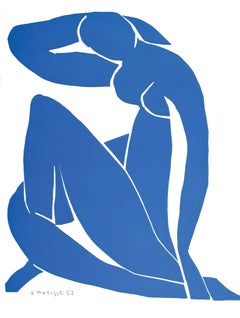
Henri Matisse, Blue Nude XII, from Verve, Revue Artistique, 1958 (after)
By Henri Matisse
Located in Southampton, NY
This exquisite lithograph after Henri Matisse (1869–1954), titled Nu Bleu XII (Blue Nude XII), from Verve, Revue Artistique et Litteraire, Vol. IX, No. 35–36, originates from the 195...
Category

1950s Modern The Hamptons - Prints and Multiples

Materials

Lithograph

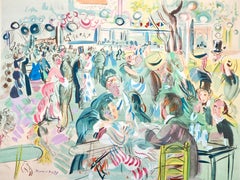
Raoul Dufy, The Ball, from Esprit de la fleur et du fruit, 1954 (after)
By Raoul Dufy
Located in Southampton, NY
This exquisite lithograph after Raoul Dufy (1877–1953), titled Le Bal (The Ball), from the folio Eaux-de-vie, Esprit de la fleur et du fruit (Spirits, Essence of the Flower and the F...
Category

1950s Modern The Hamptons - Prints and Multiples

Materials

Lithograph, Stencil

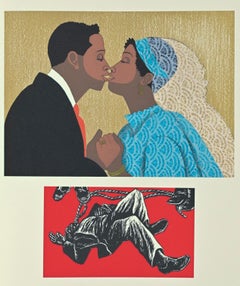
To Marry, For My People, Elizabeth Catlett
By Elizabeth Catlett
Located in Southampton, NY
Lithograph on vélin d’Arches 300gm paper. Paper Size: 21.8125 x 18.3125 inches. Inscription: Unsigned and unnumbered, as issued. Notes: From the album, For My People, 1992. Published...
Category

1990s Expressionist The Hamptons - Prints and Multiples

Materials

Lithograph

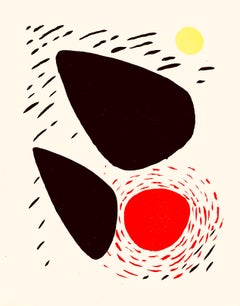
Alexander Calder, Untitled, from XXe Siecle, 1952
By Alexander Calder
Located in Southampton, NY
This exquisite lithograph by Alexander Calder (1898–1976), titled Sans titre (Untitled), from the album XXe Siecle, Nouvelle serie No. 3 (double), Juin 1952, originates from the 1952...
Category

1950s Surrealist The Hamptons - Prints and Multiples

Materials

Lithograph

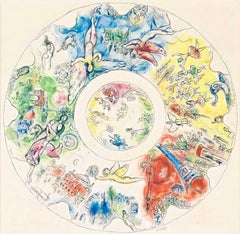
Marc Chagall, The Ceiling of the Paris Opera, 1965 (after)
By Marc Chagall
Located in Southampton, NY
This exquisite lithograph after Marc Chagall (1887–1985), titled Le Plafond de l’Opera de Paris (The Ceiling of the Paris Opera), from the album Le plafond de l’Opera de Paris par Ma...
Category

1960s Expressionist The Hamptons - Prints and Multiples

Materials

Lithograph

Henri Matisse, Mrs. L.D., from Portraits by Henri Matisse, 1954 (after)
By Henri Matisse
Located in Southampton, NY
This exquisite lithograph after Henri Matisse (1869–1954), titled Madame L.D. (Mrs. L.D.), from the album Portraits par Henri Matisse (Portraits by Hen...
Category

1950s Fauvist The Hamptons - Prints and Multiples

Materials

Lithograph

Composition (Cramer 36; Bloch 360; Horodisch A6), Non Vouloir, Pablo Picasso
By Pablo Picasso
Located in Southampton, NY
Zincograph on Vélin Bouffant paper. Unsigned and unnumbered, as issued. Good condition. Notes: From the volume, Non Vouloir, 1942. Published by Éditions Jeanne Bucher, Paris; printed...
Category

1940s Cubist The Hamptons - Prints and Multiples

Materials

Etching

Tamayo, Composition, Ediciones Polígrafa, Redfern Gallery (after)
By Rufino Tamayo
Located in Southampton, NY
Lithograph on vélin paper. Unsigned and unnumbered, as issued. Good condition. Notes: From the album, Ediciones Polígrafa, Redfern Gallery, 1979. Published by Redfern Gallery, London...
Category

1970s Modern The Hamptons - Prints and Multiples

Materials

Lithograph

Eduardo Chillida, Untitled, from Derriere le Miroir, 1961
By Eduardo Chillida
Located in Southampton, NY
This exquisite lithograph by Eduardo Chillida (1924–2002), titled Sans titre (Untitled), originates from the historic 1961 folio Derriere le Miroir, No. 124. Published by Maeght Edit...
Category

1960s Modern The Hamptons - Prints and Multiples

Materials

Lithograph

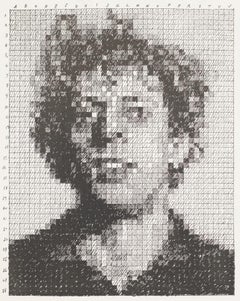
Phil, Rubber Stamp Portfolio, Chuck Close
By Chuck Close
Located in Southampton, NY
Printer’s ink from rubber stamp on vélin Strathmore 3-ply paper. Paper Size: 8 x 8 inches. Inscription: Unsigned, as issued. Notes: From the folio, Rubber Stamp Portfolio, 1977. Publ...
Category

1970s Minimalist The Hamptons - Prints and Multiples

Materials

Printer s Ink

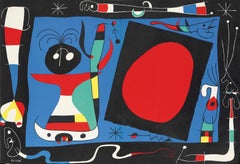
Joan Miro, Woman with a Mirror, from Derriere le miroir, 1956
By Joan Miró
Located in Southampton, NY
This exquisite lithograph by Joan Miro (1893–1983), titled La femme au miroir (Woman with a Mirror), from the folio Derriere le miroir, 10 Ans d'Edition 1946–1956, No. 92–93, origina...
Category

1950s Surrealist The Hamptons - Prints and Multiples

Materials

Lithograph

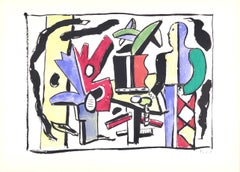
Fernand Leger, Untitled, from Twelve Contemporaries, 1959 (after)
By Fernand Léger
Located in Southampton, NY
This exquisite lithograph and pochoir after Fernand Leger (1881–1955), titled Sans titre (Untitled), from the album Douze Contemporains (Twelve Contemporaries), originates from the 1959 edition published by Editions d'art du lion, Paris, and Boston Book and Art Shop, Inc., Boston, rendered by Daniel Jacomet, Paris, and printed by Atelier Daniel Jacomet et Cie, Paris, December 1959. The work captures Leger's bold geometric visual language and his celebration of modernity, distilling mechanical rhythm and sculptural clarity into a composition emblematic of his innovative machine-age aesthetic. Executed as a lithograph and pochoir on velin paper, this work measures 13.25 x 18.25 inches (33.7 x 46.4 cm). Signed in the plate and unnumbered, as issued. The edition exemplifies the refined craftsmanship of Atelier Daniel Jacomet et Cie, Paris. Artwork Details: Artist: After Fernand Leger (1881–1955) Title: Sans titre (Untitled), from the album Douze Contemporains (Twelve Contemporaries) Medium: Lithograph and pochoir on velin paper Dimensions: 13.25 x 18.25 inches (33.7 x 46.4 cm) Inscription: Signed in the plate and unnumbered, as issued Date: 1959 Publisher: Editions d'art du lion, Paris, and Boston Book and Art Shop, Inc., Boston Printer: Atelier Daniel Jacomet et Cie, Paris Condition: Well preserved, consistent with age and medium Provenance: From the album Douze Contemporains (Twelve Contemporaries), published by Editions d'art du lion, Paris, and Boston Book and Art Shop, Inc., Boston; rendered by Daniel Jacomet, Paris; printed by Atelier Daniel Jacomet et Cie, Paris, December 1959 Notes: Excerpted from the folio (translated from French), This album finished printing in December 1959 drawn to CMLXX examples numbered from I to CMLXX and XXX non-commerce examples numbered from I to XXX, was directed by Daniel Jacomet. Typography of L'Imprimerie Union in Paris. About the Publication: Douze Contemporains (Twelve Contemporaries), published in 1959 by Editions d'art du lion in collaboration with Boston Book and Art Shop, Inc., is a landmark example of mid-century French printmaking, bringing together leading modern artists in a unified portfolio of lithographs and pochoirs. The album exemplifies Jacomet's meticulous approach to color separation and hand-stenciled execution, preserving the tonal richness and structural clarity of each composition. Issued in a substantial edition of numbered and non-commerce impressions, the publication reflects the vitality of postwar Parisian art and the technical excellence of Daniel Jacomet, whose workshop played a central role in the preservation and dissemination of twentieth-century modernist imagery. About the Artist: Fernand Leger (1881–1955) was a French painter, sculptor, and filmmaker whose pioneering fusion of modern life, mechanization, and visual abstraction made him one of the most influential artists of the 20th century. Emerging from the Cubist movement, Leger developed a highly personal style distinguished by bold contrasts, cylindrical forms, and rhythmic compositions that celebrated the beauty of industrial progress and the vitality of modern urban life. Deeply influenced by the innovations of Paul Cezanne and the structural experimentation of Pablo Picasso and Georges Braque, Leger transformed Cubism's fragmented perspective into a dynamic, machine-age aesthetic that bridged fine art, architecture, and design. His work often depicted workers, machinery, and everyday objects as monumental symbols of harmony between humanity and technology, reflecting both his optimism for modernity and his belief in the democratization of art. During his career, Leger was part of an extraordinary artistic circle that included Henri Matisse, Marc Chagall, Alexander Calder, Alberto Giacometti, Salvador Dali, Joan Miro, Wassily Kandinsky, Marcel Duchamp, and Man Ray—visionaries who shared his commitment to pushing the boundaries of artistic form and expression. A leading figure in the international avant-garde, Leger also explored large-scale murals, public art, and film, expanding the reach of modern art beyond the gallery. His works are represented in major museum collections worldwide, including the Museum of Modern Art, the Centre Pompidou, the Tate, and the Guggenheim, where they continue to inspire admiration for their bold geometry, humanist vision, and timeless modernity. The highest price ever paid for a Fernand Leger artwork is approximately 70 million USD, achieved in 2017 at Christies New York for Contraste de formes (1913). Fernand Leger print...
Category

1950s Modern The Hamptons - Prints and Multiples

Materials

Lithograph, Stencil

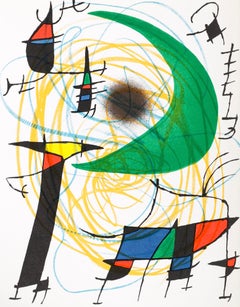
Joan Miro, Lithograph V, from Lithographs I, 1972
By Joan Miró
Located in Southampton, NY
This exquisite lithograph by Joan Miro (1893–1983), titled Lithograph V, from the album Joan Miro Lithographs, Volume I, originates from the 1972 edition published by Tudor Publishin...
Category

1970s Surrealist The Hamptons - Prints and Multiples

Materials

Lithograph

Pierre Soulages, Plate No. 6, from Painters of Today, 1962 (after)
By Pierre Soulages
Located in Southampton, NY
This exquisite heliogravure after Pierre Soulages (1919–2022), titled Planche No. 6 (Plate No. 6), from the folio Pierre Soulages, Peintres d'aujourd'hui (Pierre Soulages, Painters o...
Category

1960s Modern The Hamptons - Prints and Multiples

Materials

Lithograph

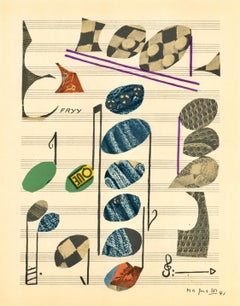
Alberto Magnelli, Music, from XXe Siecle, 1971
By Alberto Magnelli
Located in Southampton, NY
This exquisite lithograph by Alberto Magnelli (1888–1971), titled Musique (Music), from the album XXe Siecle, Nouvelle serie, XXXIIIe Annee, No. 37, Decembre 1971, originates from th...
Category

1970s Modern The Hamptons - Prints and Multiples

Materials

Lithograph

Jean Cocteau, Scene XXIII, The Sacred Monsters, from Theatre, 1957
By Jean Cocteau
Located in Southampton, NY
This exquisite lithograph by Jean Cocteau (1889–1963), titled Scene XXIII, Les Monstres Sacres (Scene XXIII, The Sacred Monsters), originates from the 1957 album Jean Cocteau de l'Ac...
Category

1950s Modern The Hamptons - Prints and Multiples

Materials

Lithograph

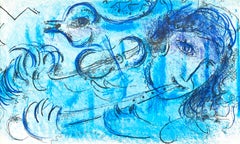
Marc Chagall, The Flute Player, from Chagall, 1957
By Marc Chagall
Located in Southampton, NY
This exquisite lithograph by Marc Chagall (1887–1985), titled Le Joueur de Flute (The Flute Player), from the album Chagall, originates from the 195...
Category

1950s Expressionist The Hamptons - Prints and Multiples

Materials

Lithograph

Jean Cocteau, Antigone VI, from Theatre, 1957
By Jean Cocteau
Located in Southampton, NY
This exquisite lithograph by Jean Cocteau (1889–1963), titled Antigone VI (Antigone VI), originates from the 1957 album Jean Cocteau de l'Academie francaise, Theatre, Edition ornee p...
Category

1950s Modern The Hamptons - Prints and Multiples

Materials

Lithograph

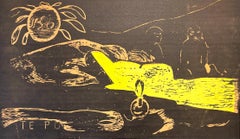
Gauguin, The Long Night (Te Po), Gauguin (after)
By Paul Gauguin
Located in Southampton, NY
Woodcut on vélin Utopian paper. Unsigned and unnumbered, as issued. Good Condition. Notes: From the folio, Gauguin, A portfolio of 12 color woodblocks, Paul Gauguin, French, 1848-1903 from the collection of the Museum Of Fine Arts, Boston, 1946. Rendered by Albert Carman (1899-1949); published the Museum Of Fine Arts, Boston and The Studio Publications, Inc., New York and London; printed by Holme Press Inc., New York, in an edition of MMMD. Excerpted from the folio, Paul Gauguin and Emil Bernard at Pont-Aven, Brittany, in 1888, each made a bas-relief, wooden panel to decorate a piece of furniture for a friend. In order to keep a record of their designs, a few inked impressions were made on paper. The illustration at left is a reproduction of a print which is possibly one of the above mentioned. It is further possible that this experiment later gave Gauguin the idea of making woodcuts. Just as his work in painting expressed a revolt against the overemphasis on factual representation of the nineteenth century in favor of decorative pattern and color, so also his woodcuts leaned strongly to the same side of the balance. Ten of the cuts reproduced (all excepting Soyez Amoureuses and Changement de Residence), which constitute the whole of his best known series, were made at Pont-Aven beginning in the fall of 1894, after Gauguin's return from his first trip to Tahiti and after he broke his ankle. They were at first roughly cut with a common carpenter's gouge, and the flat surfaces sandpapered and engraved with a sharp in-strument, perhaps an engraver's burin. A few trial proofs were printed in black ink only. Then the hollows were deepened with a woodcutter's gouge and highlights were added. An edition of thirty to fifty impressions of each subject, with the addition of color blocks (one, two or three), was made by Louis Roy...
Category

1940s Post-Impressionist The Hamptons - Prints and Multiples

Materials

Woodcut

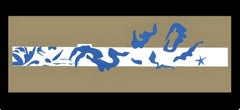
Henri Matisse, The Swimming Pool II, from Verve, Revue Artistique, 1958 (after)
By Henri Matisse
Located in Southampton, NY
This exquisite lithograph after Henri Matisse (1869–1954), titled La Piscine II (The Swimming Pool II), from Verve, Revue Artistique et Litteraire, Vol. IX, No. 35–36, originates from the 1958 issue published by Editions de la revue Verve, Paris, under the direction of Teriade, Editeur, Paris, and printed by Mourlot Freres, Paris, 1958. La Piscine II is one of the most expansive and lyrical compositions from Matisse’s late cut-out period, inspired by his deep fascination with the movement of water, light, and the human form. The work’s sweeping arrangement of floating blue shapes and rhythmic negative space evokes swimmers and sea life in motion, transforming a simple visual theme into a poetic meditation on fluidity, serenity, and the joy of life. Through its monumental simplicity and chromatic brilliance, La Piscine II exemplifies Matisse’s mastery of “painting with scissors” and his ability to translate motion into pure visual harmony. Executed as a lithograph on velin du Marais paper, this work measures 14 x 40.5 inches, with trifold as issued. Unsigned and unnumbered as issued. The edition exemplifies the superb craftsmanship of the Mourlot Freres atelier, faithfully capturing the luminosity, rhythm, and tactile beauty of Matisse’s original gouache cut-outs. Artwork Details: Artist: After Henri Matisse (1869–1954) Title: La Piscine II (The Swimming Pool II), from Verve, Revue Artistique et Litteraire, Vol. IX, No. 35–36, 1958 Medium: Lithograph on velin du Marais paper Dimensions: 14 x 40.5 inches, with trifold as issued Inscription: Unsigned and unnumbered as issued Date: 1958 Publisher: Editions de la revue Verve, Paris, under the direction of Teriade, Editeur, Paris Printer: Mourlot Freres, Paris Catalogue raisonne reference: Duthuit, Claude. Henri Matisse: Catalogue raisonne des ouvrages illustres. Editions Claude Duthuit, Paris, 1988, illustration 139 Condition: Well preserved, consistent with age and medium Provenance: From Verve, Revue Artistique et Litteraire, Vol. IX, No. 35–36, published by Editions de la revue Verve, Paris, 1958 Notes: Excerpted from the publication, Verve, Revue Artistique et Litteraire, Vol. IX, No. 35–36, published under the direction of Teriade, Editeur, Paris, and printed by Mourlot Freres, Paris, 1958. This double issue of Verve was entirely devoted to the final works of Henri Matisse, composed of his celebrated gouache cut-outs, which the artist called “painting with scissors.” Completed shortly before his death, this issue represents the culmination of Matisse’s lifelong exploration of color, rhythm, and spiritual joy through the simplest means of expression. About the Publication: Verve, Revue Artistique et Litteraire was one of the most influential art periodicals of the 20th century, founded in Paris in 1937 by the visionary Greek-born publisher Teriade (Stratis Eleftheriades). Conceived as a synthesis of art and literature, Verve brought together the greatest modern artists and writers of its time—Henri Matisse, Pablo Picasso, Marc Chagall, Georges Braque, Joan Miro, Fernand Leger, and others—alongside poets and philosophers such as Paul Eluard, Albert Camus, and Jean-Paul Sartre. Each issue was a work of art in itself, luxuriously printed by master lithographers such as Mourlot Freres and produced in collaboration with leading typographers and designers. Verve became a platform for avant-garde creativity, publishing original lithographs and essays that reflected the evolving spirit of modernism. Matisse collaborated closely with Teriade from the magazine’s inception, producing some of its most iconic issues, including those devoted to his paper cut-outs. The final Verve issue of 1958, which featured La Tristesse du Roi, the Nu Bleu series, Poisson Chinois, and Vigne, stands as a testament to Matisse’s enduring genius and to the publication’s legacy as the definitive meeting of art, poetry, and printing craftsmanship in 20th-century France. About the Artist: Henri Matisse (1869–1954) was a French painter, sculptor, draughtsman, and printmaker whose revolutionary vision redefined modern art through his daring use of color, line, and form. Celebrated as one of the greatest artists of the 20th century, Matisse led the Fauvist movement and devoted his life to the pursuit of balance, beauty, and emotional expression in visual art. His early works burst with vibrant hues and liberated brushwork, while his later “cut-out” compositions achieved a poetic simplicity that transformed the relationship between color and space. Deeply influenced by the work of Paul Cezanne, Vincent van Gogh, and Georges Seurat, as well as by the rhythmic patterns of Islamic art, Byzantine mosaics, and Japanese prints, Matisse forged a new visual language that celebrated joy, movement, and serenity. He was part of an extraordinary generation of artists who shaped the evolution of modernism, maintaining lifelong dialogue and friendly rivalry with contemporaries such as Pablo Picasso, Georges Braque, Marc Chagall, Andre Derain, Albert Marquet, and Raoul Dufy—peers who, like him, sought to expand the expressive potential of color and composition. Matisse’s influence extended across generations, inspiring modern and contemporary masters including Alexander Calder, Alberto Giacometti, Salvador Dali, Joan Miro, Wassily Kandinsky, Marcel Duchamp, and Man Ray, each of whom drew upon his fearless experimentation and refined visual harmony. His paintings, sculptures, and works on paper are held in the most prestigious museums in the world, including the Museum of Modern Art, the Centre Pompidou, the Tate, and the Hermitage Museum, where his art continues to symbolize the essence of creativity and human emotion. The highest price ever paid for a Henri Matisse artwork is approximately $80.8 million USD, achieved in 2018 at Christie’s New York for Odalisque couchee aux magnolias (1923). Henri Matisse La Piscine...
Category

1950s Modern The Hamptons - Prints and Multiples

Materials

Lithograph

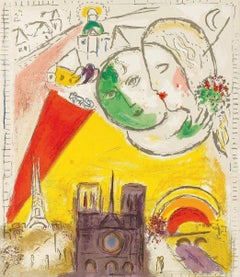
Marc Chagall, The Sunday, from Derriere le miroir, 1954
By Marc Chagall
Located in Southampton, NY
This exquisite lithograph by Marc Chagall (1887–1985), titled Le Dimanche (The Sunday), from the folio Derriere le miroir, No. 67–68, originates from the 1954 edition published by Ma...
Category

1950s Expressionist The Hamptons - Prints and Multiples

Materials

Lithograph

Jean Cocteau, Scene XXXIX, Pocket Theater, from Theatre, 1957
By Jean Cocteau
Located in Southampton, NY
This exquisite lithograph by Jean Cocteau (1889–1963), titled Scene XXXIX, Theatre de Poche (Scene XXXIX, Pocket Theater), originates from the 1957 album Jean Cocteau de l'Academie f...
Category

1950s Modern The Hamptons - Prints and Multiples

Materials

Lithograph

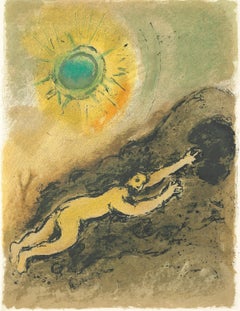
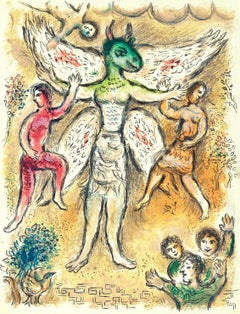
Marc Chagall, Sisyphus, from Homer, The Odyssey, 1989 (after)
By Marc Chagall
Located in Southampton, NY
This exquisite lithograph after Marc Chagall (1887–1985), titled Sisyphos (Sisyphus), from Homer, Die Odyssee (The Odyssey), originates from the 1989 German-language folio published ...
Category

1980s Expressionist The Hamptons - Prints and Multiples

Materials

Lithograph

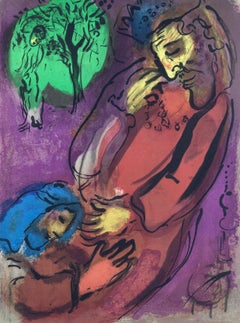
Marc Chagall, David and Absalom, from Drawings for the Bible, 1956
By Marc Chagall
Located in Southampton, NY
This exquisite lithograph by Marc Chagall (1887–1985), titled David et Absalon (David and Absalom), from Marc Chagall, Dessins Pour La Bible (Drawings for the Bible), Verve: Revue Ar...
Category

1950s Expressionist The Hamptons - Prints and Multiples

Materials

Lithograph

Jean Cocteau, Scene XII, The Infernal Machine, from Theatre, 1957
By Jean Cocteau
Located in Southampton, NY
This exquisite lithograph by Jean Cocteau (1889–1963), titled Scene XII, La Machine Infernale (Scene XII, The Infernal Machine), originates from the 1957 album Jean Cocteau de l'Acad...
Category

1950s Modern The Hamptons - Prints and Multiples

Materials

Lithograph

Marc Chagall, Flower Quay, from Derriere le miroir, 1954
By Marc Chagall
Located in Southampton, NY
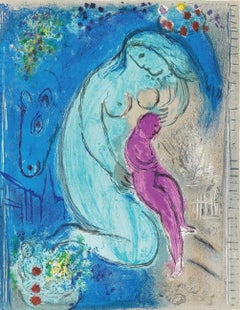
This exquisite lithograph by Marc Chagall (1887–1985), titled Quai de fleurs (Flower Quay), from the folio Derriere le miroir, No. 67–68, originates from the 1954 edition published b...
Category

1950s Expressionist The Hamptons - Prints and Multiples

Materials

Lithograph

Giacometti, Composition, Derrière le miroir (after)
By Alberto Giacometti
Located in Southampton, NY
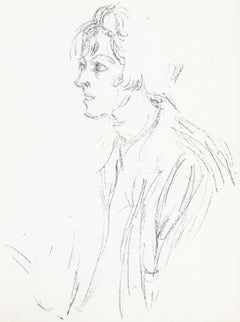
Lithograph on vélin paper. Inscription: Unsigned and unnumbered, as issued. Good condition. Notes: From Derrière le miroir, N° 148, 1964. Published by Aimé Maeght, Éditeur, Paris; pr...
Category

1960s Modern The Hamptons - Prints and Multiples

Materials

Lithograph

Wassily Kandinsky, Accent in Pink, from Derriere le miroir, 1960 (after)
By Wassily Kandinsky
Located in Southampton, NY
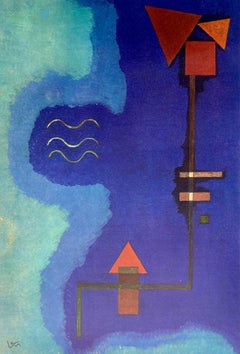
This exquisite lithograph after Wassily Kandinsky (1866–1944), titled Akzent im Rosa (Accent in Pink), from the folio Derriere le miroir, No. 118, originates from the 1960 edition pu...
Category

1960s Modern The Hamptons - Prints and Multiples

Materials

Lithograph

Calder, Spring Carnival, The Collector s Guild Ltd. (after)
By Alexander Calder
Located in Southampton, NY
Lithograph on vélin paper. Inscription: Signed in the plate and unnumbered, as issued. Good condition. Notes: Published by The Collector's Guild Ltd., New York in association with Th...
Category

1960s Modern The Hamptons - Prints and Multiples

Materials

Lithograph

Roger de La Fresnaye, The Entrance to the Village, 1968 (after)
By Roger de la Fresnaye
Located in Southampton, NY
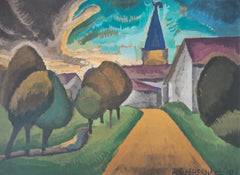
This exquisite lithograph after Roger de La Fresnaye (1885–1925), titled L'entree du village (The Entrance to the Village), from the album Roger de la Fresnaye, III, Collection Pierr...
Category

1960s Cubist The Hamptons - Prints and Multiples

Materials

Lithograph

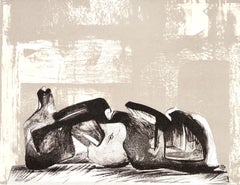
Henry Moore, Reclining Figure Interior Setting I, from XXe siecle, 1977
By Henry Moore
Located in Southampton, NY
This exquisite lithograph by Henry Moore (1898–1986), titled Reclining Figure Interior Setting I, from the album XXe siecle, Nouvelle serie, XXXIXe Annee, No. 49, Decembre 1977, originates from the 1977 edition published by Societe Internationale d'Art XXe siecle, Paris, and printed by Curwen Prints Ltd, London, 1977. Reclining Figure Interior Setting I reflects Moore’s masterful synthesis of form and space, capturing his lifelong exploration of the reclining human figure as a symbol of harmony between nature, body, and landscape. Executed as a lithograph on velin paper, this work measures 9.75 x 12.5 inches (24.77 x 31.75 cm). Unsigned and unnumbered, as issued. The edition exemplifies the superb craftsmanship of Curwen Prints Ltd, London. Artwork Details: Artist: Henry Moore (1898–1986) Title: Reclining Figure Interior Setting I, from the album XXe siecle, Nouvelle serie, XXXIXe Annee, No. 49, Decembre 1977 Medium: Lithograph on velin paper Dimensions: 9.75 x 12.5 inches (24.77 x 31.75 cm) Inscription: Unsigned and unnumbered, as issued Date: 1977 Publisher: Societe Internationale d'Art XXe siecle, Paris Printer: Curwen Prints Ltd, London Catalogue raisonne reference: Moore, Henry, et al. Henry Moore, Catalogue of Graphic Work. Gerald Cramer, 1986, illustration 458 Condition: Well preserved, consistent with age and medium Provenance: From the album XXe siecle, Nouvelle serie, XXXIXe Annee, No. 49, Decembre 1977, published by Societe Internationale d'Art XXe siecle, Paris About the Publication: Gualtieri di San Lazzaro's XXe Siecle (Twentieth Century) was one of the most influential art journals of the modern era, founded in Paris in 1938 as a platform for the greatest painters, sculptors, and writers of the 20th century. San Lazzaro, a visionary editor, critic, and champion of modernism, believed that art and literature should coexist as expressions of a shared human imagination. Under his direction, XXe Siecle became a cultural bridge between Europe and the wider world, publishing special issues devoted to leading figures such as Picasso, Matisse, Chagall, Braque, Calder, Miro, Kandinsky, and Leger. Each edition combined essays by renowned critics and poets with original lithographs printed by the foremost ateliers of Paris and London, including Mourlot, Arte, and Curwen, creating a uniquely rich dialogue between text and image. Through XXe Siecle, San Lazzaro preserved the creative spirit of the avant-garde during and after World War II, championing freedom of expression and the evolution of abstraction, Surrealism, and modern thought. Over nearly four decades, the journal shaped international taste and defined the intellectual landscape of postwar art publishing. Today, XXe Siecle remains celebrated for its extraordinary synthesis of art, literature, and design, an enduring testament to Gualtieri di San Lazzaro's belief that the visual arts are the soul of the modern age. About the Artist: Henry Moore (1898–1986) was a British sculptor, draftsman, and modernist pioneer whose monumental bronzes and organic abstractions revolutionized 20th-century sculpture and made him one of the most influential artists of his time. Renowned for his reclining figures, mother-and-child compositions, and pierced biomorphic forms inspired by nature, Moore transformed traditional carving into a universal language of rhythm, balance, and humanity. Born in Castleford, Yorkshire, he studied at the Leeds School of Art and the Royal College of Art in London, absorbing the influences of classical sculpture, African and Pre-Columbian art, and the radical innovations of the European avant-garde. Inspired by Pablo Picasso’s Cubist fragmentation of form, Joan Miro’s lyrical biomorphism, Wassily Kandinsky’s spiritual abstraction, and Constantin Brancusi’s purity of shape, Moore developed a style rooted in the harmony between mass and void, structure and space. During the interwar years, he became part of an international circle that included Alexander Calder, Alberto Giacometti, Salvador Dali, Marcel Duchamp, and Man Ray—artists who, like Moore, expanded art’s boundaries through abstraction, surrealism, and conceptual experimentation. Like Calder, Moore explored balance and movement; like Giacometti, he sought the spiritual essence of humanity; and like Dali and Duchamp, he challenged perception and redefined modern form. His sculptures, carved in stone or cast in bronze, evoke both ancient and modern sensibilities—forms that appear to breathe with natural vitality while engaging directly with their surrounding landscapes. Moore’s “Shelter Drawings” (1940–41), created during the London Blitz, revealed his deep empathy for the human condition, marking a pivotal moment in his exploration of resilience and vulnerability. By the mid-20th century, Moore’s monumental bronzes had become landmarks around the world, from the Lincoln Center in New York to the UNESCO headquarters in Paris, embodying timeless symbols of endurance, renewal, and unity. His synthesis of organic abstraction and humanism influenced generations of sculptors including Barbara Hepworth, Isamu Noguchi, Eduardo Paolozzi, Antony Gormley, Anish Kapoor, and Rachel Whiteread. Like Kandinsky and Miro, he believed abstraction could transcend culture and time, while like Duchamp and Man Ray, he embraced experimentation as a pathway to new truths. Moore’s works, housed in major collections including the Museum of Modern Art in New York, the Tate in London, the Guggenheim Museum, and the Art Institute of Chicago, continue to define the landscape of modern sculpture for their elegance, power, and emotional depth. Standing alongside Pablo Picasso, Alexander Calder, Alberto Giacometti, Salvador Dali, Joan Miro, Wassily Kandinsky, Marcel Duchamp, and Man Ray, Henry Moore remains a cornerstone of modern art—a sculptor whose vision united nature, form, and spirit into a universal language of beauty and meaning. His highest auction record was achieved by Reclining Figure: Festival (1951), which sold for $33.1 million USD at Christie’s, London, on June 30, 2016, reaffirming Henry Moore’s enduring legacy as one of the most visionary, influential, and collectible sculptors in the history of modern art. Henry Moore Reclining Figure...
Category

1970s Modern The Hamptons - Prints and Multiples

Materials

Lithograph

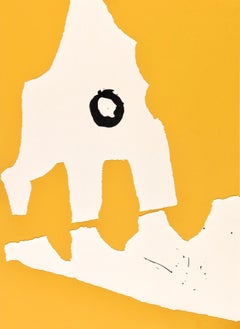
Robert Motherwell, Untitled, from Ten Works by Ten Painters, 1964
By Robert Motherwell
Located in Southampton, NY
This exquisite silkscreen by Robert Motherwell (1915–1991), titled Untitled, originates from the landmark 1964 folio X + X (Ten Works by Ten Painters). Published by the Wadsworth Ath...
Category

1960s Abstract Expressionist The Hamptons - Prints and Multiples

Materials

Screen

Marc Chagall, The Accordionist, from Chagall, 1957
By Marc Chagall
Located in Southampton, NY
This exquisite lithograph by Marc Chagall (1887–1985), titled L’Accordeoniste (The Accordionist), from the album Chagall, originates from the 1957 edition published by Maeght Editeur...
Category

1950s Expressionist The Hamptons - Prints and Multiples

Materials

Lithograph

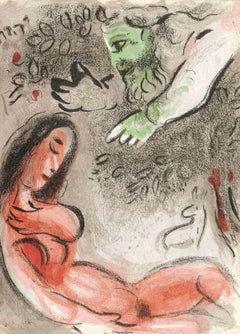
Marc Chagall, Eve Cursed by God, from Drawings for the Bible, 1956
By Marc Chagall
Located in Southampton, NY
This exquisite lithograph by Marc Chagall (1887–1985), titled Eve maudite par Dieu (Eve Cursed by God), from Marc Chagall, Dessins Pour La Bible (Drawings for the Bible), Verve: Revue Artistique et Litteraire, Vol. VIII, No. 33–34, originates from the September 1956 issue published by Editions de la revue Verve, Paris, under the direction of Teriade, Editeur, Paris, and printed by Mourlot Freres, Paris, 1956. This emotionally charged composition depicts the moment of divine judgment following the fall of man, capturing both the sorrow and the spiritual gravity of Eve’s curse. Through his luminous lines and expressive symbolism, Chagall transforms this ancient scene into a universal meditation on loss, forgiveness, and the eternal bond between humanity and the divine. The work exemplifies Chagall’s mastery of merging sacred narrative and human emotion, rendered with poetic tenderness and transcendent light. The piece forms part of Chagall’s celebrated series of lithographs and drawings created for Dessins Pour La Bible, a monumental project uniting art, scripture, and mysticism in one of the artist’s most important achievements. Executed as a lithograph on velin du Marais paper, this work measures 14 x 10.5 inches (35.56 x 26.67 cm). Unsigned and unnumbered as issued. The edition exemplifies the superb craftsmanship of the Mourlot Freres atelier, renowned for its collaborations with the greatest modern masters of the 20th century. Artwork Details: Artist: Marc Chagall (1887–1985) Title: Eve maudite par Dieu (Eve Cursed by God), from Marc Chagall, Dessins Pour La Bible (Drawings for the Bible), Verve: Revue Artistique et Litteraire, Vol. VIII, No. 33–34, September 1956 Medium: Lithograph on velin du Marais paper Dimensions: 14 x 10.5 inches (35.56 x 26.67 cm) Inscription: Unsigned and unnumbered as issued Date: 1956 Publisher: Editions de la revue Verve, Paris, under the direction of Teriade, Editeur, Paris Printer: Mourlot Freres, Paris Catalogue raisonne references: Cain, Julien, and Fernand Mourlot. Chagall Lithographe. Andre Sauret, Editeur, 1960, illustrations 117–46. Cramer, Patrick, and Meret Meyer. Marc Chagall: Catalogue Raisonne Des Livres Illustrés. P. Cramer ed., 1995, illustration 25. Condition: Well preserved, consistent with age and medium Provenance: From Marc Chagall, Dessins Pour La Bible (Drawings for the Bible), Verve: Revue Artistique et Litteraire, Vol. VIII, No. 33–34, published by Editions de la revue Verve, Paris, 1956 Notes: Excerpted from the album (translated from French), This double issue of Verve is dedicated to the full reproduction in heliogravure of the one hundred-five plates etched by Marc Chagall, between 1930 and 1955, for the illustration of the Bible. The artist composed especially for the present work, sixteen lithographs in color and twelve in black, as well as the cover and the title page. This volume was completed and printed on September 10, 1956, by the Master Printers Draeger Freres for heliogravure, and by Mourlot Freres for lithography. About the Publication: Marc Chagall, Dessins Pour La Bible (Drawings for the Bible), published as Verve Vol. VIII, No. 33–34 in September 1956, represents one of the crowning achievements of Chagall’s lifelong dialogue with the sacred. Conceived and directed by the visionary publisher Teriade and printed by the master lithographers Mourlot Freres, the issue features thirty-four color lithographs and numerous black-and-white drawings inspired by biblical figures and stories. Chagall’s works for this edition unite text and image in a luminous meditation on divine creation, moral struggle, and spiritual renewal, imbued with his signature dreamlike symbolism and radiant color. Produced in postwar Paris, this landmark publication reaffirmed the enduring union of art and faith, establishing Dessins Pour La Bible as one of the most important illustrated works of the 20th century. About the Artist: Marc Chagall (1887–1985) was a Belarus-born French painter, printmaker, and designer whose visionary imagination, radiant color, and deeply poetic symbolism made him one of the most beloved and influential artists of the 20th century. Rooted in the imagery of his Jewish heritage and the memories of his childhood in Vitebsk, Chagall’s art wove together themes of faith, love, folklore, and fantasy with a dreamlike modern sensibility. His unique style—merging elements of Cubism, Fauvism, Expressionism, and Surrealism—defied categorization, transforming ordinary scenes into lyrical meditations on memory and emotion. Influenced by Russian icon painting, medieval religious art, and the modern innovations of artists such as Pablo Picasso, Henri Matisse, and Georges Braque, Chagall developed a profoundly personal visual language filled with floating figures, vibrant animals, musicians, and lovers that symbolized the transcendent power of imagination and love. During his early years in Paris, he became an integral part of the Ecole de Paris circle, forming friendships with Amedeo Modigliani, Fernand Leger, and Sonia Delaunay, and his creative spirit resonated with that of his peers and successors—Alexander Calder, Alberto Giacometti, Salvador Dali, Joan Miro, Wassily Kandinsky, Marcel Duchamp, and Man Ray—artists who, like Chagall, sought to push the boundaries of perception, emotion, and form. Over a prolific career that spanned painting, printmaking, stained glass, ceramics, and stage design, Chagall brought an unparalleled poetic sensibility to modern art, infusing even the most abstract subjects with human warmth and spiritual depth. His works are held in the most prestigious museums around the world, including the Museum of Modern Art, the Centre Pompidou, the Tate, and the Guggenheim, where they continue to inspire generations of artists and collectors. The highest price ever paid for a Marc Chagall artwork is approximately $28.5 million USD, achieved in 2017 at Sotheby’s New York for Les Amoureux (1928). Marc Chagall Eve...
Category

1950s Expressionist The Hamptons - Prints and Multiples

Materials

Lithograph

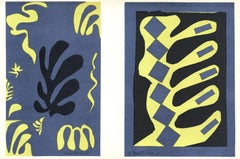
Henri Matisse, Decoupages, from XXe Siecle 1954 (after)
By Henri Matisse
Located in Southampton, NY
This exquisite lithograph after Henri Matisse (1869–1954), titled Decoupages (Cutouts), from the album XXe Siecle, Nouvelle serie N°4 (double) Janvie...
Category

1950s Fauvist The Hamptons - Prints and Multiples

Materials

Lithograph

Henri Matisse, Plume, from Drawings by Henri Matisse, 1925 (after)
By Henri Matisse
Located in Southampton, NY
This exquisite lithograph after Henri Matisse (1869–1954), titled Plume (Feather), from the album Dessins de Henri-Matisse (Drawings by Henri Matisse), originates from the 1925 editi...
Category

1920s Modern The Hamptons - Prints and Multiples

Materials

Lithograph

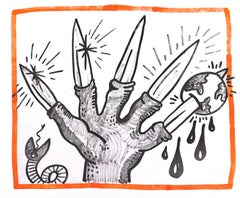
Keith Haring, Untitled, from Against All Odds, 1990
By Keith Haring
Located in Southampton, NY
This exquisite lithograph by Keith Haring (1958–1990), titled Untitled, from the album Against All Odds, 20 drawings - Oct. 3, 1989 (Against All Odds, 20 drawings - Oct. 3, 1989), or...
Category

1990s Pop Art The Hamptons - Prints and Multiples

Materials

Lithograph

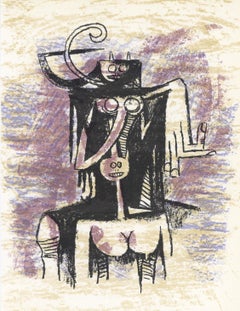
Wifredo Lam, Figure, from XXe siecle, 1974
By Wifredo Lam
Located in Southampton, NY
This exquisite lithograph by Wifredo Lam (1902–1982), titled Personnage (Figure), from the album XXe siecle, Nouvelle serie, XXXVIe Annee, No. 42, originat...
Category

1970s Modern The Hamptons - Prints and Multiples

Materials

Lithograph

Marc Chagall, The Bed of Odysseus, from Homer, The Odyssey, 1989 (after)
By Marc Chagall
Located in Southampton, NY
This exquisite lithograph after Marc Chagall (1887–1985), titled Das Bett des Odysseus (The Bed of Odysseus), from Homer, Die Odyssee (The Odyssey), originates from the 1989 German-l...
Category

1980s Expressionist The Hamptons - Prints and Multiples

Materials

Lithograph

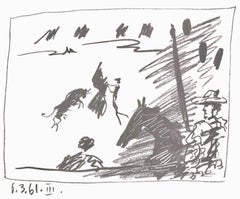
Pablo Picasso, The Cape Game, from To the Bulls with Picasso, 1961
By Pablo Picasso
Located in Southampton, NY
This exquisite lithograph by Pablo Picasso (1881–1973), titled Jeu de la cape (The Cape Game), from the album A Los Toros Avec Picasso (To the Bulls with Picasso), originates from th...
Category

1960s Modern The Hamptons - Prints and Multiples

Materials

Lithograph

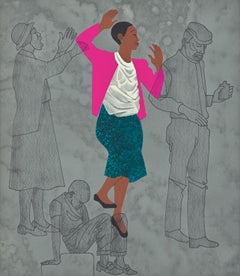
Walking Blindly, For My People, Elizabeth Catlett
By Elizabeth Catlett
Located in Southampton, NY
Lithograph on vélin d’Arches 300gm paper. Paper Size: 21.8125 x 18.3125 inches. Inscription: Unsigned and unnumbered, as issued. Notes: From the album, For My People, 1992. Published...
Category

1990s Expressionist The Hamptons - Prints and Multiples

Materials

Lithograph

Still Thinking About These?

All Recently Viewed