Tri-State Area - Photography

to
493
4,125
4,476
2,878
3,333
4,960
Overall Width
to
Overall Height
to
2
21
7,280
12,740
1
5
36
124
165
1,085
1,863
1,462
1,117
1,046
1
10,220
2,999
371
221
182
52
38
29
7
6
5
3
2
1
9,524
7,162
2,995
8,694
4,218
3,302
3,044
2,543
2,284
1,986
1,689
1,426
1,337
1,132
1,126
970
862
801
801
785
769
761
643
6,518
6,165
5,393
3,761
2,856
3,090
954
600
495
359
1,767
5,079
20,377
54,628
28,417
Item Ships From: Tri-State Area
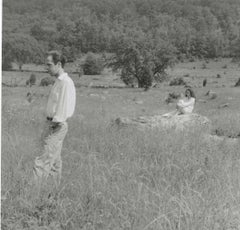
"Earle and Carolyn Brown at the Stevenson s in Brewster" Cy Twombly
By Cy Twombly
Located in New York, NY
Cy Twombly Earle and Carolyn Brown at the Stevenson's in Brewster, 1955 Identified and inscribed on the reverse by the sitter Carolyn Brown Photograph on paper 8 x 8 inches Provenance Gift of the artist Estate of Carolyn Brown, New York 2025. Cy Twombly gained fame for his art that combined cultural, historical, and poetic elements—particularly those from classical antiquity—with abstract shapes and his distinctive script. Born Edwin Parker Twombly, Jr. on April 25, 1928, in Lexington, Virginia, he began his artistic journey under the guidance of Pierre Daura and Marion Junkin at Washington and Lee University. This initial training was complemented by his formative experiences at the Arts Students League of New York and Black Mountain College, where he established enduring friendships with influential figures like Robert Rauschenberg, John Cage, and Merce Cunningham. A pivotal moment for Twombly was his 1952 trip to Italy and North Africa with Rauschenberg, funded by a grant from the Virginia Museum of Fine Arts. This journey allowed Twombly to engage deeply with the rich cultural history that would inform his future artistic endeavors, leading to the creation of significant early pieces. Twombly made his way back to Italy in 1957 and 1958, during which he presented his first solo exhibition in Italy at Galleria La Tartaruga, owned by Plinio De Martiis. In 1959, he married Luisa Tatiana...
Category

1950s Modern Tri-State Area - Photography

Materials

Photographic Paper

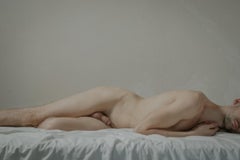
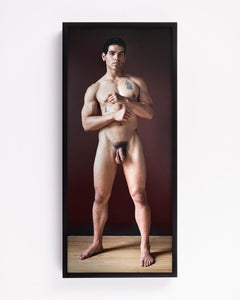
21 February, I
By Laura Stevens
Located in New York, NY
Archival pigment print Signed and numbered on label, verso 12 x 18 inches (Edition of 10) 24 x 35.5 inches (Edition of 8) From the series, "Him" This artwork is offered by ClampAr...
Category

2010s Contemporary Tri-State Area - Photography

Materials

Archival Pigment

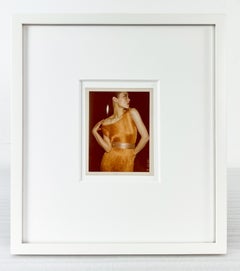
Tina Chow
By Antonio Lopez
Located in New York, NY
Listing includes framing with UV plexi, free shipping to the continental US and a 14-day return policy. One 4.5 x 3.25 inch unique vintage Kodak print of Tina Chow (1975). Prints ar...
Category

1970s Tri-State Area - Photography

Materials

Photographic Film, Polaroid

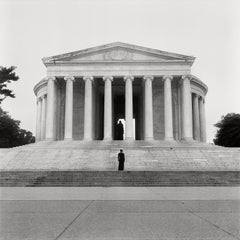
"Jefferson Memorial" by Carrie Mae Weems Black and White, Photograph, Figure)
By Carrie Mae Weems
Located in New York, NY
This archival pigment print on Canson paper comes directly from the publisher, Lincoln Center Editions. It is signed and numbered en verso by the artist. It is in excellent condition and has never been framed. Note: The image of the framed print is for reference purposes only. Carrie Mae Weems (b. 1953) is an American artist whose extensive body of work investigates cultural identity, sexism, class, political systems, and the consequences of power. Weems is widely recognized for her revolutionary approach to the expression of narratives about women, people of color and working-class communities, “conjuring lush art...
Category

2010s Contemporary Tri-State Area - Photography

Materials

Archival Pigment

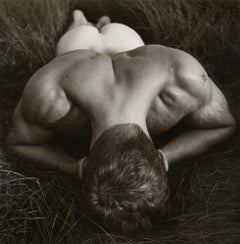
steve - ritual
By Frank Yamrus
Located in New York, NY
Gelatin silver print Signed, dated, and numbered, verso 10 x 8 inches, sheet 7 x 7 inches, image (Edition of 10) 14 x 11 inches, sheet 10 x 10 inches, image (Edition of 10) 20 x 1...
Category

1990s Contemporary Tri-State Area - Photography

Materials

Silver Gelatin

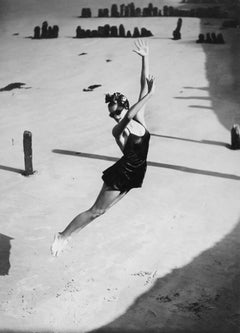
Norman Parkinson For ballerinas on the beach and in the swim, 1939
By Norman Parkinson
Located in New York, NY
Fashion model Pamela Minchin photographed on the Isle of Wight wearing Fortnum and Mason’s dark burgundy Lastex satin swimsuit with ballet skirt, Harper’s Bazaar, July 1939. 'For ba...
Category

1930s Modern Tri-State Area - Photography

Materials

Silver Gelatin

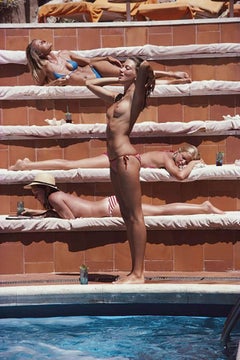
Sunbathing in Capri, Catherine Wilke, Aarons
By Slim Aarons
Located in New York, NY
Sunbathing in Capri, Catherine Wilke 1980 Chromogenic Lambda print Estate stamped and hand numbered edition of 150 with certificate of authenticity from the estate. Catherine Wilke...
Category

1980s Modern Tri-State Area - Photography

Materials

Lambda

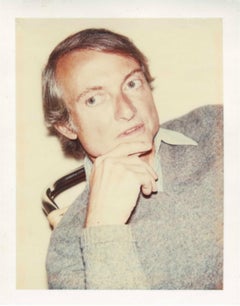
Unique portrait of Roy Lichtenstein, Authenticated by the Andy Warhol Foundation
By Andy Warhol
Located in New York, NY
Andy Warhol Portrait of Roy Lichtenstein, 1975 Polaroid dye-diffusion print Authenticated by the Andy Warhol Foundation for the Visual Arts, bears the Foundation stamp verso Frame included: Framed in white wood frame with UV plexiglass; with die-cut window in the back to show official Warhol Foundation authentication stamp and text Measurements: 9 9/16 x 8 9/16 x 9/16 inches (frame) 3 1/2 x 2 3/4 inches (window) 4.16 x 3.15 inches (Artwork) Authenticated and stamped by the Estate of Andy Warhol/Warhol Foundation for the Visual Arts An impressive piece of Pop Art history! A must-have for fans and collectors of both Andy Warhol and Roy Lichtenstein: This is a unique, authenticated color Polaroid taken by one Pop Art legend, Andy Warhol, of his most formidable contemporary and, in many respects, rival, Roy Lichtenstein. One of only a few portraits Andy Warhol took of Roy Lichtenstein, during one tense photo shoot. Both iconic artists, colleagues and, perhaps lesser known to the public, rivals, would be represented at the time by the renowned Leo Castelli Gallery. The truth is - they were really more rivals than friends. (the rivalry intensified when Warhol, who was working with Walt Disney, discovered that Lichtenstein painted Mickey Mouse before he did!!) Leo Castelli was committed to Roy Lichtenstein, and, it's easy to forget today, wasn't that interested in Warhol as he considered Lichtenstein the greater talent and he could relate better with Roy on a personal level. However, Ivan Karp, who worked at Castelli, was very interested in Warhol, as were some powerful European dealers, as well as many wealthy and influential American and European collectors. That was the start of Warhol's bypassing the traditional gallery model - so that dealers like Castelli could re-discover him after everybody else had. Warhol is known to have taken hundreds of self-portrait polaroid photographs - shoe boxes full - and he took many dozens of images of celebrities like Blondie and Farrah Fawcett. But only a small number of photographic portraits of fellow Pop Art legend Roy Lichtenstein -- each unique,- are known to have appeared on the market over the past half a century - all from the same photo session. This is one of them. There is another Polaroid - from this same (and only) sitting, in the permanent collection of the Getty Museum in California. There really weren't any other collaborations between these two titans, making the resulting portrait from this photo session extraordinary. It is fascinating to study Roy Lichtenstein's face and demeanor in this photograph, in the context of the great sense of competition, but perhaps even greater, albeit uneasy respect, these two larger than life Pop art titans had for each other: Like Leo Castelli, Roy Lichtenstein was Jewish of European descent; whereas Warhol was Catholic and quintessentially American, though also of European (Polish) descent. They were never going to be good friends, but this portrait, perhaps even arranged by Leo Castelli, represents an uneasy acknowledgement there would be room at the top for both of them. Floated, framed with die cut back revealing authentication details, and ready to hang. Measurements: 9 9/16 x 8 9/16 x 9/16 inches (frame) 3 1/2 x 2 3/4 inches (window) 4.16 x 3.15 inches (sheet) Authenticated by the Estate of Andy Warhol/The Andy Warhol Foundation for the Visual Arts. Estate Stamped: Stamped with the Andy Warhol Estate, Warhol Foundation for the Visual Arts stamp, numbered "B 512536P", with the Estate of Andy Warhol stamp and inscribed UP on the reverse. Bears the Warhol Foundation unique inventory number. Roy Lichtenstein Biography Roy Lichtenstein was one of the most influential and innovative artists of the second half of the twentieth century. He is preeminently identified with Pop Art, a movement he helped originate, and his first fully achieved paintings were based on imagery from comic strips and advertisements and rendered in a style mimicking the crude printing processes of newspaper reproduction. These paintings reinvigorated the American art scene and altered the history of modern art. Lichtenstein’s success was matched by his focus and energy, and after his initial triumph in the early 1960s, he went on to create an oeuvre of more than 5,000 paintings, prints, drawings, sculptures, murals and other objects celebrated for their wit and invention. Roy Fox Lichtenstein was born on October 27, 1923, in New York City, the first of two children born to Milton and Beatrice Werner Lichtenstein. Milton Lichtenstein (1893–1946) was a successful real estate broker, and Beatrice Lichtenstein (1896–1991), a homemaker, had trained as a pianist, and she exposed Roy and his sister Rénee to museums, concerts and other aspects of New York culture. Roy showed artistic and musical ability early on: he drew, painted and sculpted as a teenager, and spent many hours in the American Museum of Natural History and the Museum of Modern Art. He played piano and clarinet, and developed an enduring love of jazz, frequenting the nightspots in Midtown to hear it. Lichtenstein attended the Franklin School for Boys, a private junior high and high school, and was graduated in 1940. That summer he studied painting and drawing from the model at the Art Students League of New York with Reginald Marsh. In September he entered Ohio State University (OSU) in Columbus in the College of Education. His early artistic idols were Rembrandt, Daumier and Picasso, and he often said that Guernica (1937; Museo Reina Sofía, Madrid), then on long-term loan to the Museum of Modern Art, was his favorite painting. Even as an undergraduate, Lichtenstein objected to the notion that one set of lines (one person’s drawings) “was considered brilliant, and somebody’s else’s, that may have looked better to you, was considered nothing by almost everyone.”i Lichtenstein’s questioning of accepted canons of taste was encouraged by Hoyt L. Sherman, a teacher whom he maintained was the person who showed him how to see and whose perception-based approach to art shaped his own. In February 1943, Lichtenstein was drafted, and he was sent to Europe in 1945. As part of the infantry, he saw action in France, Belgium and Germany. He made sketches throughout his time in Europe and, after peace was declared there, he intended to study at the Sorbonne. Lichtenstein arrived in Paris in October 1945 and enrolled in classes in French language and civilization, but soon learned that his father was gravely ill. He returned to New York in January 1946, a few weeks before Milton Lichtenstein died. In the spring of that year, Lichtenstein went back to OSU to complete his BFA and in the fall he was invited to join the faculty as an instructor. In June 1949, he married Isabel Wilson Sarisky (1921–80), who worked in a cooperative art gallery in Cleveland where Lichtenstein had exhibited his work. While he was teaching, Lichtenstein worked on his master’s degree, which he received in 1949. During his second stint at OSU, Lichtenstein became closer to Sherman, and began teaching his method on how to organize and unify a composition. Lichtenstein remained appreciative of Sherman’s impact on him. He gave his first son the middle name of “Hoyt,” and in 1994 he donated funds to endow the Hoyt L. Sherman Studio Art Center at OSU. In the late 1940s and early 1950s, Lichtenstein began working in series and his iconography was drawn from printed images. His first sustained theme, intimate paintings and prints in the vein of Paul Klee that poked lyrical fun at medieval knights, castles and maidens, may well have been inspired by a book about the Bayeux Tapestry. Lichtenstein then took an ironic look at nineteenth-century American genre paintings he saw in history books, creating Cubist interpretations of cowboys and Indians spiked with a faux-primitive whimsy. As with his most celebrated Pop paintings of the 1960s, Lichtenstein gravitated toward what he would characterize as the “dumbest” or “worst” visual item he could find and then went on to alter or improve it. In the 1960s, commercial art was considered beneath contempt by the art world; in the early 1950s, with the rise of Abstract Expressionism, nineteenth-century American narrative and genre paintings were at the nadir of their reputation among critics and collectors. Paraphrasing, particularly the paraphrasing of despised images, became a paramount feature of Lichtenstein’s art. Well before finding his signature mode of expression in 1961, Lichtenstein called attention to the artifice of conventions and taste that permeated art and society. What others dismissed as trivial fascinated him as classic and idealized—in his words, “a purely American mythological subject matter.”ii Lichtenstein’s teaching contract at OSU was not renewed for the 1951–52 academic year, and in the autumn of 1951 he and Isabel moved to Cleveland. Isabel Lichtenstein became an interior decorator specializing in modern design, with a clientele drawn from wealthy Cleveland families. Whereas her career blossomed, Lichtenstein did not continue to teach at the university level. He had a series of part-time jobs, including industrial draftsman, furniture designer, window dresser and rendering mechanical dials for an electrical instrument company. In response to these experiences, he introduced quirkily rendered motors, valves and other mechanical elements into his paintings and prints. In 1954, the Lichtensteins’ first son, David, was born; two years later, their second child, Mitchell, followed. Despite the relative lack of interest in his work in Cleveland, Lichtenstein did place his work with New York dealers, which always mattered immensely to him. He had his first solo show at the Carlebach Gallery in New York in 1951, followed by representation with the John Heller Gallery from 1952 to 1957. To reclaim his academic career and get closer to New York, Lichtenstein accepted a position as an assistant professor at the State University of New York at Oswego, in the northern reaches of the state. He was hired to teach industrial design, beginning in September 1957. Oswego turned out to be more geographically and aesthetically isolated than Cleveland ever was, but the move was propitious, for both his art and his career. Lichtenstein broke away from representation to a fully abstract style, applying broad swaths of pigment to the canvas by dragging the paint across its surface with a rag wrapped around his arm. At the same time, Lichtenstein was embedding comic-book characters figures such as Mickey Mouse and Donald Duck in brushy, expressionistic backgrounds. None of the proto-cartoon paintings from this period survive, but several pencil and pastel studies from that time, which he kept, document his intentions. Finally, when he was in Oswego, Lichtenstein met Reginald Neal, the new head of the art department at Douglass College, the women’s college of Rutgers University, in New Brunswick, New Jersey. The school was strengthening and expanding its studio art program, and when Neal needed to add a faculty member to his department, Lichtenstein was invited to apply for the job. Lichtenstein was offered the position of assistant professor, and he began teaching at Douglass in September 1960. At Douglass, Lichtenstein was thrown into a maelstrom of artistic ferment. With New York museums and galleries an hour away, and colleagues Geoffrey Hendricks and Robert Watts at Douglass and Allan Kaprow and George Segal at Rutgers, the environment could not help but galvanize him. In June 1961, Lichtenstein returned to the idea he had fooled around with in Oswego, which was to combine cartoon characters from comic books with abstract backgrounds. But, as Lichtenstein said, “[I]t occurred to me to do it by mimicking the cartoon style without the paint texture, calligraphic line, modulation—all the things involved in expressionism.”iii Most famously, Lichtenstein appropriated the Benday dots, the minute mechanical patterning used in commercial engraving, to convey texture and gradations of color—a stylistic language synonymous with his subject matter. The dots became a trademark device forever identified with Lichtenstein and Pop Art. Lichtenstein may not have calibrated the depth of his breakthrough immediately but he did realize that the flat affect and deadpan presentation of the comic-strip panel blown up and reorganized in the Sherman-inflected way “was just so much more compelling”iv than the gestural abstraction he had been practicing. Among the first extant paintings in this new mode—based on comic strips and illustrations from advertisements—were Popeye and Look Mickey, which were swiftly followed by The Engagement Ring, Girl with Ball and Step-on Can with Leg. Kaprow recognized the energy and radicalism of these canvases and arranged for Lichtenstein to show them to Ivan Karp, director of the Leo Castelli Gallery. Castelli was New York’s leading dealer in contemporary art, and he had staged landmark exhibitions of Jasper Johns and Robert Rauschenberg in 1958 and Frank Stella in 1960. Karp was immediately attracted to Lichtenstein’s paintings, but Castelli was slower to make a decision, partly on account of the paintings’ plebeian roots in commercial art, but also because, unknown to Lichtenstein, two other artists had recently come to his attention—Andy Warhol and James Rosenquist—and Castelli was only ready for one of them. After some deliberation, Castelli chose to represent Lichtenstein, and the first exhibition of the comic-book paintings was held at the gallery from February 10 to March 3, 1962. The show sold out and made Lichtenstein notorious. By the time of Lichtenstein’s second solo exhibition at Castelli in September 1963, his work had been showcased in museums and galleries around the country. He was usually grouped with Johns, Rauschenberg, Warhol, Rosenquist, Segal, Jim Dine, Claes Oldenburg, Robert Indiana and Tom Wesselmann. Taken together, their work was viewed as a slap in the face to Abstract Expressionism and, indeed, the Pop artists shifted attention away from many members of the New York School. With the advent of critical and commercial success, Lichtenstein made significant changes in his life and continued to investigate new possibilities in his art. After separating from his wife, he moved from New Jersey to Manhattan in 1963; in 1964, he resigned from his teaching position at Douglass to concentrate exclusively on his work. The artist also ventured beyond comic book subjects, essaying paintings based on oils by Cézanne, Mondrian and Picasso, as well as still lifes and landscapes. Lichtenstein became a prolific printmaker and expanded into sculpture, which he had not attempted since the mid-1950s, and in both two- and three-dimensional pieces, he employed a host of industrial or “non-art” materials, and designed mass-produced editioned objects that were less expensive than traditional paintings and sculpture. Participating in one such project—the American Supermarket show in 1964 at the Paul Bianchini Gallery, for which he designed a shopping bag—Lichtenstein met Dorothy Herzka (b. 1939), a gallery employee, whom he married in 1968. The late 1960s also saw Lichtenstein’s first museum surveys: in 1967 the Pasadena Art Museum initiated a traveling retrospective, in 1968 the Stedelijk Musem in Amsterdam presented his first European retrospective, and in 1969 he had his first New York retrospective, at the Solomon R. Guggenheim Museum. Wanting to grow, Lichtenstein turned away from the comic book subjects that had brought him prominence. In the late 1960s his work became less narrative and more abstract, as he continued to meditate on the nature of the art enterprise itself. He began to explore and deconstruct the notion of brushstrokes—the building blocks of Western painting. Brushstrokes are conventionally conceived as vehicles of expression, but Lichtenstein made them into a subject. Modern artists have typically maintained that the subject of a painting is painting itself. Lichtenstein took this idea one imaginative step further: a compositional element could serve as the subject matter of a work and make that bromide ring true. The search for new forms and sources was even more emphatic after 1970, when Roy and Dorothy Lichtenstein bought property in Southampton, New York, and made it their primary residence. During the fertile decade of the 1970s, Lichtenstein probed an aspect of perception that had steadily preoccupied him: how easily the unreal is validated as the real because viewers have accepted so many visual conceptions that they don’t analyze what they see. In the Mirror series, he dealt with light and shadow upon glass, and in the Entablature series, he considered the same phenomena by abstracting such Beaux-Art architectural elements as cornices, dentils, capitals and columns. Similarly, Lichtenstein created pioneering painted bronze sculpture that subverted the medium’s conventional three-dimensionality and permanence. The bronze forms were as flat and thin as possible, more related to line than volume, and they portrayed the most fugitive sensations—curls of steam, rays of light and reflections on glass. The steam, the reflections and the shadow were signs for themselves that would immediately be recognized as such by any viewer. Another entire panoply of works produced during the 1970s were complex encounters with Cubism, Futurism, Purism, Surrealism and Expressionism. Lichtenstein expanded his palette beyond red, blue, yellow, black, white and green, and invented and combined forms. He was not merely isolating found images, but juxtaposing, overlapping, fragmenting and recomposing them. In the words of art historian Jack Cowart, Lichtenstein’s virtuosic compositions were “a rich dialogue of forms—all intuitively modified and released from their nominal sources.”v In the early 1980s, which coincided with re-establishing a studio in New York City, Lichtenstein was also at the apex of a busy mural career. In the 1960s and 1970s, he had completed four murals; between 1983 and 1990, he created five. He also completed major commissions for public sculptures in Miami Beach, Columbus, Minneapolis, Paris, Barcelona and Singapore. Lichtenstein created three major series in the 1990s, each emblematic of his ongoing interest in solving pictorial problems. The Interiors, mural-sized canvases inspired by a miniscule advertisement in an Italian telephone...
Category

1970s Pop Art Tri-State Area - Photography

Materials

Polaroid

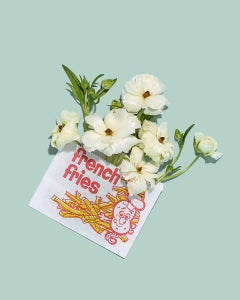
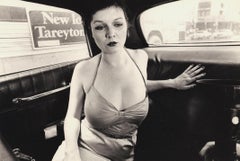
French Fry Ranunculus
By Natasha Martin
Located in New York, NY
THIS PIECE IS AVAILABLE FRAMED. Please reach out to the gallery for more information. ABOUT THIS ARTIST: Natasha Martin is an LA-based photographer who loves color and infusing dre...
Category

2010s Tri-State Area - Photography

Materials

Photographic Paper

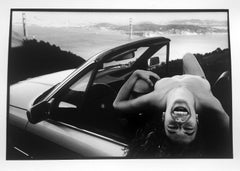
Slim Aarons Sports Car Couple (Slim Aarons Estate Edition)
By Slim Aarons
Located in Los Angeles, CA
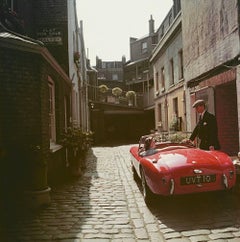
1955: John Bryant with his AC sports car in Kinnerton Place, London SW1, Printed Later. His passenger is Margaret McAulay. 40 x 40 inches $3950 30 x 30 inches $3350 20 x 20 inches $3000 Complimentary dealer shipping to your framer, worldwide. Undercurrent Projects is pleased to offer this vibrant photograph, printed by the Slim Aarons estate. It is part of the estate's only official limited run, of 150. Estate stamp embossed on recto, hand numbered in ink on recto, with certificate of authenticity from the estate (not a secondary gallery licensing from the estate). Increasingly heralded for his influence, Slim Aarons (1916-2006) made a career out of photographing "attractive people doing attractive things in attractive places." Aarons is known for his iconic images of Hollywood glamour and luxurious people, places and lifestyles. Undercurrent Projects offers premium quality photographic prints from the Slim Aarons Archive, owned and housed by Getty Images. All photographs are printed and authorized by the Getty Images Gallery, London. Photographs are printed utilizing the original transparency held at the archive source. Aarons began his career as a combat photographer in World War II. Though he earned a Purple Heart for his service, he declared that combat had taught him that the only beach worth landing on was decorated with beautiful people enjoying themselves in the sun. Slim Aarons is noted for his documentation of the Beautiful People over 50 years, encompassing high society, celebrity, aristocracy, and the jet set. He was born and raised in New York City and New Jersey and later New Hampshire. He took up photography as a teenager. At the age of eighteen, he enlisted in the U. S. Army and was later appointed official photographer at the United States Military Academy at West Point. During World War II he served as an army combat photographer for Yank magazine in Europe, North Africa, and the Middle East. After the war he became a freelance photojournalist, first based in Hollywood, then Rome, then New York. His photographs appeared in many magazines, including Life, Holiday, Town & Country, Look, Venture, and Travel & Leisure. His first book A Wonderful Time (1974) is considered a classic. * We are pleased to offer the entire archive of the Slim Aarons Estate, offering the official Slim Aarons Estate Edition (only offered in this edition of 150). Please contact us for additional photographs from Slim Aarons * Slide show includes a close-up of the Slim Aarons estate's stamp. The Slim Aarons Estate has released the limited Estate edition as a Lambda print, which is a modern c-type prints. They have chosen Lambda prints for their sharpness, clarity, colour saturation and quality, compared to archival inkjet prints. Lambda printing gives true continuous tone. Internal: Slim Aarons Vintage Sport, Vintage Car photography, Sports Car Photography
Category

1950s Realist Tri-State Area - Photography

Materials

Lambda

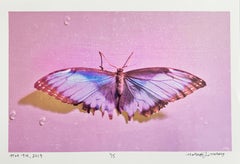
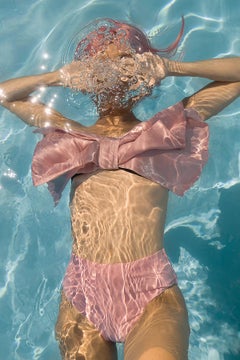
Pink Butterfly, Bright Still Life Photography, Beauty in Nature, Hottie
By Roberta Fineberg
Located in New york, NY
From the transformative to the ephemeral, the birth and death of a butterfly is reimagined in a photo series by Roberta Fineberg inspired by a poem by the 13th Century Persian poet R...
Category

2010s Contemporary Tri-State Area - Photography

Materials

Archival Ink, Archival Paper, Digital, Archival Pigment, Digital Pigment

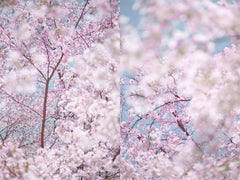
Sakura and Sky, Kyoto, Japan (Diptych)
By David Burdeny
Located in New York City, NY
66 x 88 inches – edition of 10 (diptych) 66 x 44 inches each Archival Pigment Print - MOUNTED AND FRAMED - Signed by the artist. Ask us for custom framing options. Available in o...
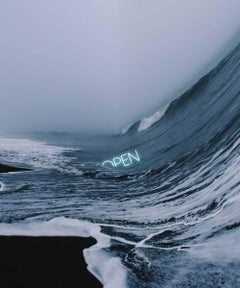
Category

2010s Contemporary Tri-State Area - Photography

Materials

Archival Pigment

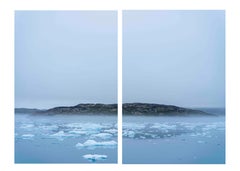
Greenland, Climate Change, Mist and Ice, Oversized Landscape Photograph
By Jean-Michel Voge
Located in New york, NY
Mist and Ice, Greenland, 2019 by Jean-Michel (JM) Voge captures the beauty of an eco-friendly natural world, an image split in two (diptych), drawing our attention to climate change ...
Category

2010s Contemporary Tri-State Area - Photography

Materials

Photographic Film, Archival Ink, Archival Paper, Rag Paper, Digital, Arc...

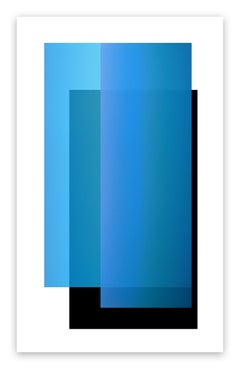
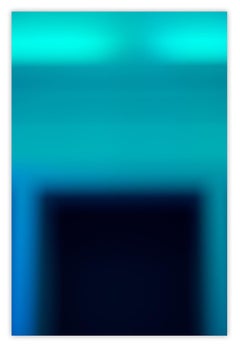
Cosmosis Collages 4A57F Comp no 85 Blue black (Abstract Photography)
By Anne Senstad
Located in London, GB
Cosmosis Collages 4A57F Comp no 85 Blue black (Abstract Photography) Photographic C Prints, printed on Canson Platinè fiber Rag 310g - Unframed "Edition of 6 + 2Ap Turnaround ti...
Category

2010s Abstract Tri-State Area - Photography

Materials

Paper, C Print

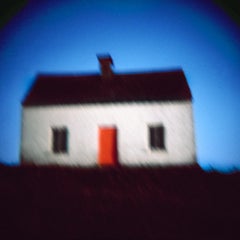
House, West Cork, Ireland, 1996
By John Dolan
Located in Hudson, NY
Each year, Robin Rice celebrates a Salon style exhibition to showcase her gallery artists and invite new ones. With Robin’s extensive experience as a gallery curator, all Robin Rice Gallery endeavors are superbly managed. Whether working with corporate clients, interior designers or established collectors, the Robin Rice Gallery guides patrons throughout the selection process, inspiring them to build a stylish collection or striking décor. The Robin Rice Gallery offers a bevy of styles that Robin has procured with her own signature school of artists. C Print, Blue, House, Red Door, Vignette, Blur, House, West Cork...
Category

1990s Modern Tri-State Area - Photography

Materials

C Print

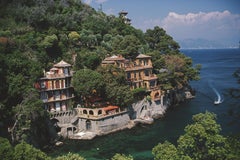
Portofino
By Slim Aarons
Located in Los Angeles, CA
1985, The most exclusive fishing village in Italy, Portofino, on Italy's Ligurian coast. 40 x 60 inches $3950 30 x 40 inches $3350 20 x 30 inches $3000 Complimentary dealer shipp...
Category

1980s Realist Tri-State Area - Photography

Materials

Lambda

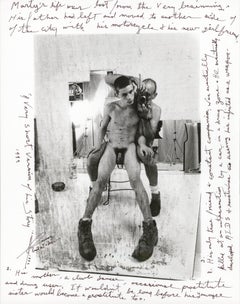
A Very Short Version of his Story, Black and White Nude Photography, Badertscher
Located in New York, NY
A Very Short Version of his Story, Black and White Nude Photography, Badertscher 1999 Signed, titled, dated twice, and inscribed in black ink, recto; Also signed, dated, and inscrib...
Category

1990s Contemporary Tri-State Area - Photography

Materials

Silver Gelatin

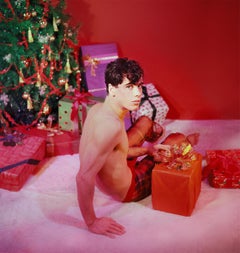
Christmas Tree
By James Bidgood
Located in New York, NY
Christmas Tree c. 1966/2022 Signed, dated, and numbered, verso Digital C-print 31 x 31 inches, image (Edition of 15) $4,500 22 x 22 inches, image (E...
Category

1960s Contemporary Tri-State Area - Photography

Materials

C Print

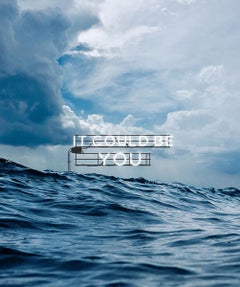
It Could Be You
By Tom Fabia
Located in New York, NY
ABOUT THIS ARTIST: Tom Fabia is a french artist living in the south of France. His parents are both artists and he chose to follow their lead. Tom's focus as a photographer is mainly...
Category

2010s Tri-State Area - Photography

Materials

Photographic Paper

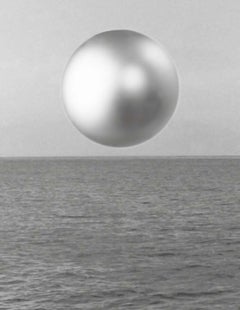
Oceansphere
By Isabella Ginanneschi
Located in Hudson, NY
All the photographs in a limited edition. If the exhibition piece is sold or the customer orders a different print size, the photograph is produced upon purchase. Please allow two we...
Category

21st Century and Contemporary Contemporary Tri-State Area - Photography

Materials

Archival Pigment

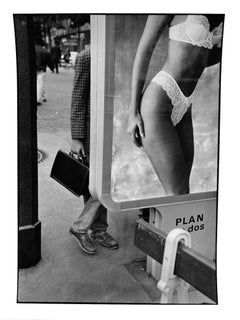
Paris, France, Vintage Gelatin Silver Photograph 1990s French Street Scene
By Leonard Freed
Located in New york, NY
Paris, France, 1991 by Leonard Freed is a 14" x 11" vintage print, stamped on verso (back of photo) with Freed's copyright stamp, hand printed by the photographer, and signed on back of photo by artist. A comedic French street scene of a business man with briefcase...
Category

1990s Contemporary Tri-State Area - Photography

Materials

Photographic Film, Photographic Paper, Silver Gelatin

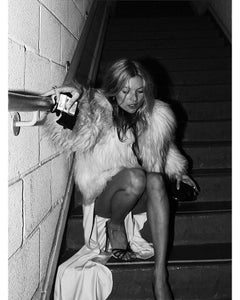
Kate Moss at the Donmar Warehouse in Covent Garden, London
Located in New York, NY
Additional sizes available upon request. As one of Britain’s longest standing press photographers, Greg Brennan has captured some of the biggest news moments of the last 25 years a...
Category

Early 2000s Tri-State Area - Photography

Materials

Silver Gelatin

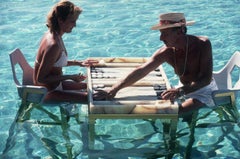
Keep Your Cool (Backgammon in Acapulco) (Slim Aarons Estate Edition)
By Slim Aarons
Located in Los Angeles, CA
Carmen Alvarez enjoying a game of backgammon with Frank 'Brandy' Brandstetter in a swimming pool at Acapulco, 1978. Slim Aarons Keep Your Cool (Backgammon in Acapulco) Chromogenic Lambda print Printed Later Slim Aarons Estate Edition Complimentary dealer shipping to your framer, worldwide. Stamped and hand numbered by the Slim Aarons Estate. Certificate of Authenticity included. Collector will get the next number in the edition 72 x 48 inches $4900 60 x 40 inches $3950 40 x 30 inches $3350 30 x 20 inches $3000 Complimentary dealer shipping to your framer, worldwide. Over the course of a career lasting half a century, Slim Aarons (1916-2006) portrayed high society, aristocracy, authors, artists, business icons, the celebrated and their milieu. In doing so, he captured a golden age of wealth, privilege, beauty and leisure that occurred alongside—but quite separate from—the cultural and political backdrop of the second half of the Twentieth Century. Photograph is unframed Slide show includes a close-up of the Slim Aarons estate's stamp. Collector will get the next number in the edition * We are pleased to offer the entire archive of the Slim Aarons Estate, offering the official Slim Aarons Estate Edition (only offered in this edition of 150). * Undercurrent Projects, New York, is proud to represent Aarons' full collection of negatives and transparencies. Housed at Getty Images Hulton Archive in London, The Slim Aarons Estate has released the limited Estate edition as a Lambda print, which is a modern c-type prints. They have chosen Lambda prints for their sharpness, clarity, colour saturation and quality, compared to archival inkjet prints. Lambda printing gives true continuous tone. Internal: Slim Aarons Poolside Glamour Photography, Vintage Backgammon, Vintage Sport, Acapulco, Vintage Pools, Vintage Games...
Category

1970s Realist Tri-State Area - Photography

Materials

Lambda

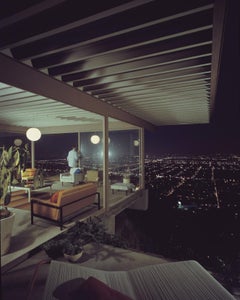
Case Study House 22, Playboy, 1960
By Julius Shulman
Located in New York, NY
Julius Shulman Case Study House #22. Playboy 1960 C print Paper size: 20.5″ x 41.5″ (52.07 cm. x 104.14 cm.) Print size: 19″ x 40″ (48.26 cm. x 101.6 cm.) Shulman's studio stamp and...
Category

1960s Modern Tri-State Area - Photography

Materials

C Print

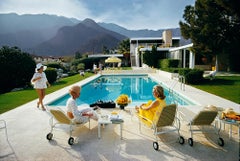
Slim Aarons Catch Up By the Pool Kaufmann Desert House
By Slim Aarons
Located in New York, NY
A desert house in Palm Springs designed by Richard Neutra for Edgar Kaufman. Lita Baron approaches Nelda Linsk, right, wife of art dealer Joseph Linsk who is talking to a friend, Hel...
Category

1970s Modern Tri-State Area - Photography

Materials

Lambda

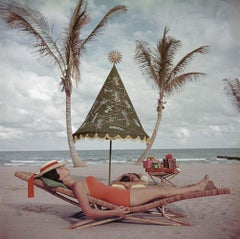
Slim Aarons Palm Beach Idyll
By Slim Aarons
Located in New York, NY
Palm Beach Idyll, 1955 C-print 30 x 30 inches A couple sunbathe by the sea at Palm Beach Florida 1955 USA Slim Aarons (1916-2006) worked mainly for society publications photograp...
Category

1950s Modern Tri-State Area - Photography

Materials

C Print

Nube de Color 03
By Ezequiel Montero Swinnen
Located in New York, NY
ABOUT THIS ARTIST: Ezequiel Montero Swinnen is a visual artist from La Pampa, Argentina. His work is based across photography, video and installation. His favorite subjects are time,...
Category

2010s Tri-State Area - Photography

Materials

Photographic Paper

Explosion II
By Andreas Mierswa and Markus Kluska
Located in New York, NY
ABOUT THIS ARTIST: Studio Mierswa-Kluska looks back on almost 20 years of creative collaboration between two photographers, Andreas Mierswa, Markus Kluska, and their team. From the v...
Category

2010s Tri-State Area - Photography

Materials

Photographic Paper

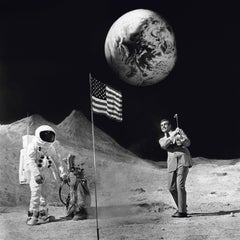
Terry O Neill Sean Connery on the Moon
By Terry O Neill
Located in New York, NY
Sean Connery on the Moon, 1971 Silver Gelatin Print Estate signature stamped and numbered edition of 50 with certificate of authenticity Re-c...
Category

1970s Modern Tri-State Area - Photography

Materials

Silver Gelatin

Movement Study #3
By Albert Hong
Located in New York, NY
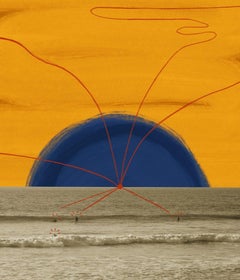
ABOUT THIS PIECE: My first job out of school was on a trading floor playing a never ending game of probabilities. Days and nights filled with nodes, signals, decision trees, path-dependent outcomes and calculated probabilities in every flavor I could never have imagined. I spent eight years of my life in a two-block radius around 52nd and Park working on the kind of hopeless problems nobody in history had ever successfully solved; instead of helping me understand the world better like I thought I would in my naivete, my time there instead taught me the romance of the idea that some things are more beautiful if left never understood. That there was a peace in understanding there would be no answer. This series of surfer “movement studies” is a playful reminiscence of this part of my past, an ode to a formative period of my life overlaid on my San Diegan coastal upbringing. There are few things I have experienced in my life that are as pure and total in its disconnection with the world as sitting on a bar of foam on the great rippled plane of our oceans. It is my career’s antithesis. This humorous, almost interactive scribbling of pseudo-mathematical lines and nodes laying out all the nameless surfer’s possibilities represents this tension that continues to define me. ABOUT THIS ARTIST: Albert Hong...
Category

2010s Tri-State Area - Photography

Materials

Photographic Paper

Tim
By Mark Beard
Located in New York, NY
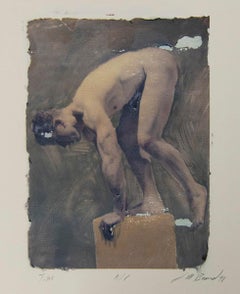
Tim 1998 Signed, dated, and inscribed “AP” in pencil, recto Polaroid transfer on Rives BFK paper 22 x 15 inches, sheet 9 x 6.75 inches, image This work is offered by ClampArt in ...
Category

1990s Contemporary Tri-State Area - Photography

Materials

Polaroid

Leland III
By Jan Rattia
Located in New York, NY
Chromogenic print Signed, titled, dated, and numbered, verso 22.5 x 30 inches (Edition of 5 + 2 APs) 45 x 60 inches (Edition of 3 + 2 APs) This artwork is offered by ClampArt, loc...
Category

2010s Contemporary Tri-State Area - Photography

Materials

C Print

Untitled (Renaissance #1005)
By Bill Armstrong
Located in New York, NY
Type-C print Signed, titled, dated, and numbered, verso 36 x 30 inches (Edition of 5) 48 x 40 inches (Edition of 5) This artwork is offered by ClampArt, located in New York City. ...
Category

Early 2000s Contemporary Tri-State Area - Photography

Materials

C Print

Untitled, 8AJ_2946 large (Abstract photography)
Located in London, GB
Untitled, 8AJ_2946 large (Abstract photography) Archival pigment print, blind embossed stamp, and signed by the artist. Limited edition of 7. Unframed. Shipments are in a hard tube, protected with acid-free tissue. Jurek Wajdowicz...
Category

2010s Tri-State Area - Photography

Materials

Archival Pigment

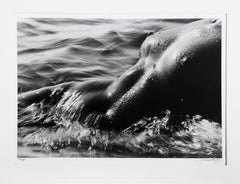
Nu de la Mer (No. 2), Silver Gelatin Photograph by Lucien Clergue
By Lucien Clergue
Located in Long Island City, NY
Artist: Lucien Clergue, French (1934 - 2014) Title: Nu de la Mer (No. 2) Year: circa 1980 Medium: Gelatin Silver Print Photograph, signed and numbered in marker Edition: 47/50 Image ...
Category

1970s Naturalistic Tri-State Area - Photography

Materials

Silver Gelatin

Patti Astor The Foreigner 1977 film still (Amos Poe The Foreigner)
By Fernando Natalici
Located in NEW YORK, NY
Fernando Natalici Patti Astor The Foreigner New York 1977: Actress and legendary downtown NY scenester Patti Astor, photographed during the filming of "The Foreigner" by celebrated N...
Category

1970s Pop Art Tri-State Area - Photography

Materials

Silver Gelatin

Aqva Big Bubble
By Carla Sutera Sardo
Located in New York, NY
ABOUT THIS ARTIST: Carla Sutera Sardo was born in Agrigento in 1983. She studied law and graduated in 2011. During her university career, she became interested in photography, thus s...
Category

2010s Tri-State Area - Photography

Materials

Photographic Paper

Intro
By Tom Fabia
Located in New York, NY
THIS PIECE IS AVAILABLE FRAMED. Please reach out to the gallery for additional information. ABOUT THIS ARTIST: Tom Fabia is a french artist living in the south of France. His pare...
Category

2010s Tri-State Area - Photography

Materials

Photographic Paper

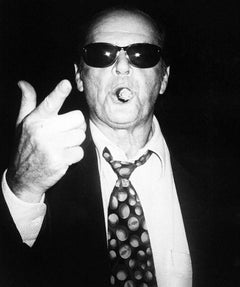
Jack Nicholson outside Stringfellows, London, 2001
Located in New York, NY
Greg Brennan Jack Nicholson, outside Stringfellows, London 2001 Edition of 25 Hand-signed by Greg Brennan Archival Pigment Print Unframed and shipped flat As one of Britain's longes...
Category

Early 2000s Contemporary Tri-State Area - Photography

Materials

Silver Gelatin

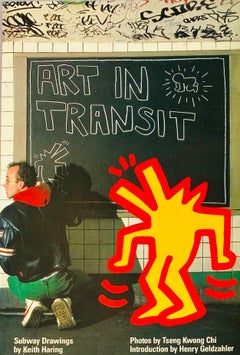
Keith Haring Art in Transit 1984 (Keith Haring Tseng Kwong Chi book)
By (after) Keith Haring
Located in NEW YORK, NY
Keith Haring 1984: Keith Haring, Art in Transit: Subway Drawings with Photos by Tseng Kwong Chi: This highly collectible & well preserved 1984 Keith Haring monograph examines them m...
Category

1980s Pop Art Tri-State Area - Photography

Materials

Paper

Female Nude, Contemporary Black and White Portrait Photography, Kate #15
By Leonard Freed
Located in New york, NY
Kate #15, 2002 by American photographer Leonard Freed is in the photographer's series "Kate." This is an 11" x 14" gelatin silver photograph signed verso (back of photo) by the Freed...
Category

Early 2000s Contemporary Tri-State Area - Photography

Materials

Silver Gelatin, Photographic Film, Photographic Paper

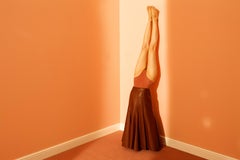
Upside Down
By Ulas Merve
Located in New York, NY
ABOUT THIS ARTIST: Merve Türkan and Ulaş Kesebir, are a self taught photography duo based in London. They have been working professionally since 2014 and in the end of the 2020 they ...
Category

2010s Tri-State Area - Photography

Materials

Photographic Paper

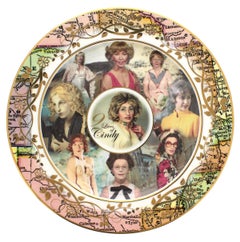
The Nine Lives of Cindy, porcelain plate official COA in box Lt Edition of 100
By Cindy Sherman
Located in New York, NY
Cindy Sherman The Nine Lives of Cindy, 2019 Printed Bone Porcelain 12 1/2 in diameter Limited Edition of 100 Plate signed verso and also accompanied by plate signed documentation card/official Certificate of Authenticity In original box Produced exclusively for the National Portrait Gallery in the United Kingdom on the occasion of the 2019 Cindy Sherman exhibition which also traveled to the Vancouver Art Gallery. Acquired directly from the National Portrait Gallery before it sold out. Cindy Sherman Biography: Born in 1954 in Glen Ridge, New Jersey, Cindy Sherman lives and works in New York NY. Her ground-breaking photographs have interrogated themes around representation and identity in contemporary media for over four decades. Coming to prominence in the late 1970s with the Pictures Generation group alongside artists such as Sherrie Levine, Richard Prince and Louise Lawler, Sherman studied art at Buffalo State College in 1972 where she turned her attention to photography. In 1977, shortly after moving to New York, Sherman began her critically acclaimed Untitled Film Stills. A suite of 69 black and white portraits, Untitled Film Stills sees Sherman impersonate a myriad of stereotypical female characters and caricatures inspired by Hollywood pictures, film noir, and B movies. Using a range of costumes, props and backdrops to manipulate her own appearance and to create photographs resembling promotional film images, the series explores the tension between artifice and identity in consumer culture which has preoccupied the artist’s practice ever since. Sherman continued to channel and reconstruct familiar personas known to the collective psyche, often in unsettling ways. In 1981, the artist created her Centerfolds, a series of photographic double spreads inspired by men’s erotic magazines...
Category

2010s Contemporary Tri-State Area - Photography

Materials

Ceramic, Porcelain, Paper, Mixed Media, Screen

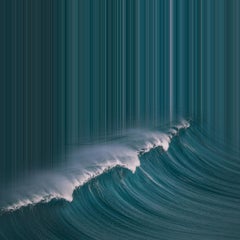
Making Waves
By Niall Staines
Located in New York, NY
ABOUT THIS ARTIST: Niall Staines is a digital artist based in Ireland. His work is graphic, vibrant and visually arresting. Nature is a consistent theme in his work, often turning se...
Category

2010s Tri-State Area - Photography

Materials

Photographic Paper

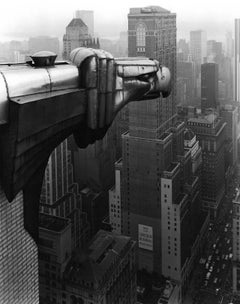
From the Chrysler Building, NY
By George Tice
Located in Westwood, NJ
George Tice was born in 1938 in Newark, NJ, the state in which his ancestors had lived for generations earlier. He joined a camera club when he was fourteen, and is largely a self ta...
Category

20th Century Contemporary Tri-State Area - Photography

Materials

Platinum

Clyde
By Daniel Handal
Located in New York, NY
Archival pigment print, painted frame (Edition of 4 + 1 AP) Signed and numbered, verso This photograph is offered by ClampArt, located in New York City. Price includes mounting and ...
Category

2010s Contemporary Tri-State Area - Photography

Materials

Archival Pigment

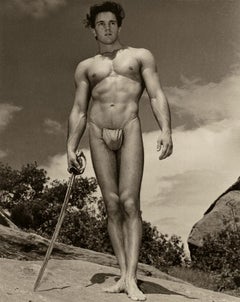
Jim (Demetrios) Dardanis
Located in New York, NY
Vintage silver print Western Photography Guild studio stamp in purple ink, verso Numbered "14-5" in purple ink, verso Also titled and inscribed in...
Category

1950s Other Art Style Tri-State Area - Photography

Materials

Black and White

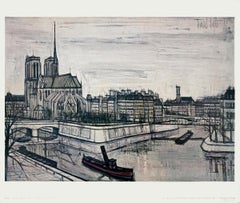
Paris, La Cite
By Bernard Buffet
Located in Brooklyn, NY
This reproduction was produced by Paris La Cite and printed in France by Imprimerie & Éditions Braune. It was published by Galerie Maurice Garnier, Paris, in 1961. As a historical do...
Category

Mid-20th Century Modern Tri-State Area - Photography

Materials

Offset

Paris, La Cite
$48 Sale Price
20% Off
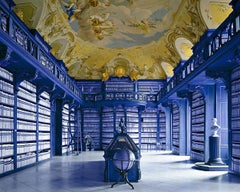
Biblioteca di Seitenstetten, Austria
By Massimo Listri
Located in New York City, NY
48 x 60 inches - edition of 5 Chromogenic Print – Unframed Signed by the artist - Certificate of Authenticity Free Shipping – Ask us foar custom framing options. As a world-renowned...
Category

2010s Contemporary Tri-State Area - Photography

Materials

Archival Paper, C Print

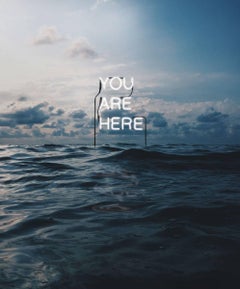
You Are Here
By Tom Fabia
Located in New York, NY
THIS PIECE IS AVAILABLE FRAMED. Please reach out to the gallery for more information. ABOUT THIS ARTIST: Tom Fabia is a french artist living in the south of France. His parents are...
Category

2010s Tri-State Area - Photography

Materials

Photographic Paper

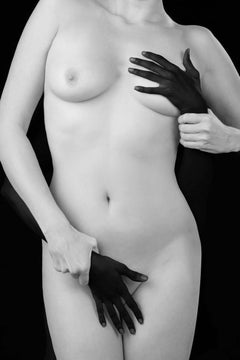
Black and white 02
By Leo Reinfeld
Located in New York, NY
Since 1995 I have used a great deal of my time to study the lines and curves of the female body. Long before that I already had the idea that the female body contains every line, ev...
Category

21st Century and Contemporary Contemporary Tri-State Area - Photography

Materials

C Print

Black and white 02
$3,200 Sale Price
20% Off
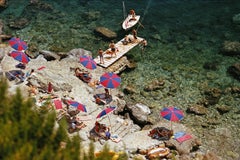
Slim Aarons, Il Pellicano Beach Midcentury Modern Photography
By Slim Aarons
Located in New York, NY
A jetty juts out from the rocky shoreline at the Hotel Il Pellicano in Porto Ercole, Tuscany, August 1973. Slim Aarons Il Pellicano Beach 1973 C print (Printed later) Estate signatu...
Category

1970s Modern Tri-State Area - Photography

Materials

C Print

Beau Simmons - Valley Of Dust, Photography 2022, Printed After
Located in Stamford, CT
Series: The Western Collection Archival Pigment Print Unframed Sizes: 40" x 32" - $6,250.00 60" x 48" - $9,500.00 75" x 60" - $12,250.00 Framed Sizes: 47" x 39" - $7,750.00 67" x 5...
Category

2010s Contemporary Tri-State Area - Photography

Materials

Archival Pigment

Dive Tulum, Mexico
By Lloyd Ziff
Located in Hudson, NY
Listing is for UNFRAMED print. Inquire within for framing. Edition 1 of 10. If the exhibition piece is sold or the customer orders a different print size, the photograph is p...
Category

1990s Contemporary Tri-State Area - Photography

Materials

Giclée

Randall
By Jen Davis
Located in New York, NY
Archival pigment print Signed and numbered, verso 30 x 24 inches (Edition of 6) 40 x 30 inches (Edition of 6) This photograph is offered by ClampArt, located in New York City. Plea...
Category

Early 2000s Contemporary Tri-State Area - Photography

Materials

Archival Pigment

Nude Female, Black and White Photograph of Sculptural Woman, Kate #4
By Leonard Freed
Located in New york, NY
Kate #4, 2002 by American photographer Leonard Freed is a 8" x 10" signed black and white photograph, stamped vintage on verso (back of print). Model Kate remains forever complicit i...
Category

Early 2000s Contemporary Tri-State Area - Photography

Materials

Silver Gelatin, Photographic Film, Photographic Paper

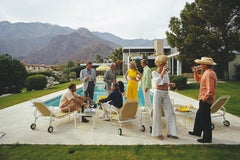
Slim Aarons Desert House Party (Poolside Series, Slim Aarons Estate Edition)
By Slim Aarons
Located in Los Angeles, CA
Discover this stunning photograph from Slim Aarons sought-after Palm Springs 'Poolside' series. 'Desert House Party' encapsulates the essence of vintage 1970s glamour, captured with vibrant color palette of bold yellow, crisp white, and vibrant turquoise, synonymous with the classic Palm Beach aesthetic. This coveted photograph, taken in 1970, presents an intimate glimpse into a poolside party at a desert house, a Palm Springs masterpiece by famed architect Richard Neutra for Edgar J. Kaufmann. This is not just a photograph, but an entry into the world of luxury, architecture, and the golden era of Palm Springs. Highlighted in the image are industrial designer Raymond Loewy, known for his unparalleled design philosophy, central and standing, and Nelda Linsk, elegantly dressed in a radiant yellow, an iconic cultural patron and the wife of prominent art dealer Joseph Linsk. Also captured in the frame is Helen Dzo Dzo, the former fashion model, gracefully adorned in white lace, adding a touch of timeless elegance to the vibrant gathering. The photograph artistically integrates the natural beauty of the Palm Springs landscape...
Category

1970s Realist Tri-State Area - Photography

Materials

Lambda

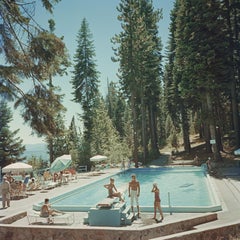
Slim Aarons, Blonde Beauties (Slim Aarons Estate Edition)
By Slim Aarons
Located in New York, NY
Slim Aarons Blonde Beauties, 1966 (printed later) Archival pigment print Estate stamped and numbered edition of 150 with Certificate of authenticity Bathers by a pool at the Tahoe...
Category

1950s Modern Tri-State Area - Photography

Materials

Archival Pigment

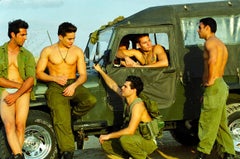
Untitled (Soldiers No. 2)
By Kobi Israel
Located in New York, NY
Chromogenic print Signed and numbered, verso (Edition of 10) This photograph is offered by ClampArt, located in New York City. About the artist: Born in 1970 in a suburb of Tel-Aviv...
Category

Early 2000s Contemporary Tri-State Area - Photography

Materials

C Print

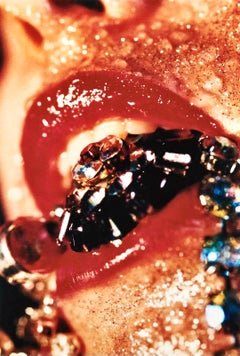
Prism, Marilyn Minter
By Marilyn Minter
Located in Fairfield, CT
Artist: Marilyn Minter (1948-) Title: ​Prism Year: 2009 Medium: ​C-Print Edition: 9/27, 18 proofs Size: 20 x 15.88 inches Condition: Excellent Inscription: Signed, titled, dated, and...
Category

Early 2000s Pop Art Tri-State Area - Photography

Materials

C Print

Still Thinking About These?

All Recently Viewed