Recognized Dealers Art

to
1,239
10,217
7,319
4,836
3,826
8,045
Overall Width
to
Overall Height
to
298
1,232
14,659
18,677
303
412
900
1,006
786
1,012
1,372
1,403
1,691
1,510
156
12,379
3,591
2,804
812
504
457
262
258
192
176
175
165
125
58
14,807
14,234
3,119
15,598
8,038
6,209
4,065
3,988
3,374
3,280
2,583
2,367
2,339
2,011
1,766
1,643
1,552
1,468
1,398
1,281
1,250
996
965
8,803
6,934
6,195
5,660
4,373
855
413
407
376
216
8,125
2,732
25,995
6,906
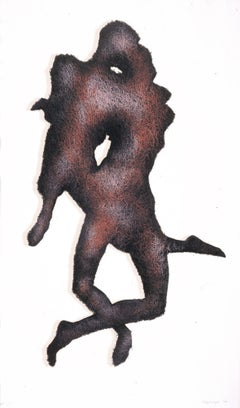
Untitled_Body on the Field #5 - Contemporary, Green, 21st Century
By Zsolt Berszán
Located in Baden-Baden, DE
Untitled_Body on the Field #5, 2022 coloured pencils on paper 39 3/8 H x 27 9/16 W inches 100 H x 70 W cm Signed on reverse Zsolt Berszán embodies in his works the dissolution of th...
Category

2010s Neo-Expressionist Figurative Drawings and Watercolors

Materials

Paper, Color Pencil

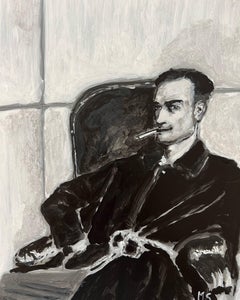
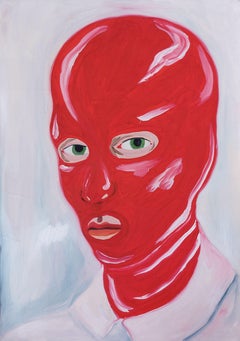
Balthus, Portrait Painting
By Manuel Santelices
Located in Miami Beach, FL
Movies, TV and magazines are constant source of inspiration. Fame, as fleckring and shallow it can be sometimes, is very intriguing to him. The worlds of fashion, society and pop cu...
Category

21st Century and Contemporary Contemporary Figurative Paintings

Materials

Board, Acrylic, Linen

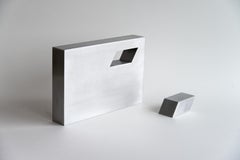
Silver Shadow - small, smooth surfaced, brushed aluminum, abstract sculpture
By Lori Cozen-Geller
Located in Bloomfield, ON
The clean bold lines of this sculpture by California artist Lori Cozen-Geller is accentuated by the artist’s choice of brushed aluminum. A trapezoid shaped cut out sits outside the r...
Category

2010s Contemporary Abstract Sculptures

Materials

Metal, Stainless Steel

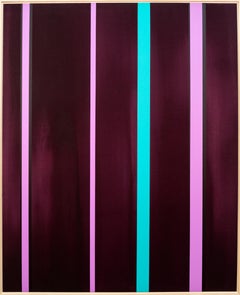
Intervals - contemporary abstract, acrylic on canvas
By Milly Ristvedt
Located in Bloomfield, ON
In this bold new abstract painting by Milly Ristvedt vertical lines of colour in various widths pop against a soft, fluid burgundy canvas. As always, the colour palette—bright pink, ...
Category

2010s Abstract Abstract Paintings

Materials

Canvas, Acrylic

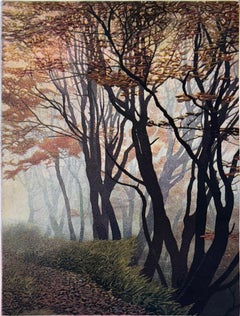
October Colors, by Stephen McMillan
By Stephen McMillan
Located in Palm Springs, CA
Medium: Aquatint Dimensions: 12 x 9 inches (image) Signature: Signed Date finished: 2018 Edition: of 100 Fall colors on Chuckanut Drive, south of Bellingham, WA Born in Berkeley, ...
Category

2010s Contemporary Landscape Prints

Materials

Etching, Aquatint

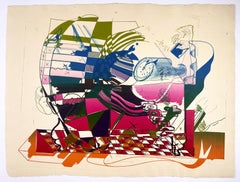
Double Somersault by Dieter Roth (pair of prints) colorful abstract geometric
By Dieter Roth
Located in New York, NY
A frenzy of lines and color, this pair of Dieter Roth lithographs could have been produced in 2022. The contemporary popularity of semi-abstract imagery featuring color gradients, za...
Category

1970s Abstract Abstract Prints

Materials

Lithograph

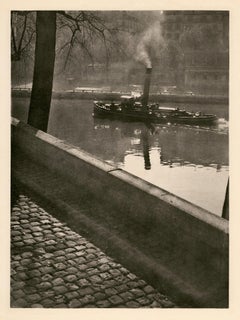
Tugboat, River Seine, Paris — Mid-Century Photogravure
Located in Myrtle Beach, SC
Rémy Duval, 'Tugboat, River Seine, Paris', photogravure, 1946. A fine, richly-inked impression in warm black ink, on cream wove B.F.K. Rives paper; the shee...
Category

1940s Modern Figurative Photography

Materials

Photogravure

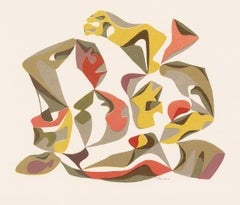
Salient in February — Mid 20th-Century Surrealism
By Edward August Landon
Located in Myrtle Beach, SC
Edward Landon 'Salient in February', color serigraph, 1945, edition 40, Ryan 166. Signed in pencil. Titled, dated, and annotated 'ED. 40' in pencil. A fine impression, with fresh col...
Category

Mid-20th Century Surrealist Abstract Prints

Materials

Screen

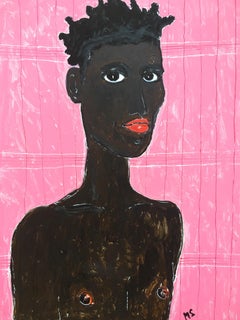
Pink Africa, Painting
By Manuel Santelices
Located in Miami Beach, FL
Movies, TV and magazines are constant source of inspiration. Fame, as fleckring and shallow it can be sometimes, is very intriguing to him. The worlds of fashion, society and pop cu...
Category

21st Century and Contemporary Contemporary Portrait Paintings

Materials

Acrylic, Wood Panel

Retiro De Escritores. From the Iberia series
Located in Miami Beach, FL
The artist inspiration is deeply rooted in the notion of discovery through visual reflections and a strong passion for symmetry and linear structure. Her architectural works of Refle...
Category

2010s Contemporary Color Photography

Materials

Archival Pigment

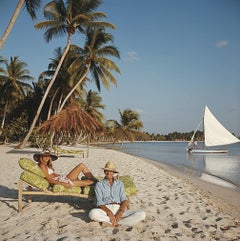
Minnie and Dru Montagu - Couple Poses for Photograph on Sandy Beach under Palms
By Slim Aarons
Located in Brighton, GB
Minnie and Dru Montagu - Couple Poses for Photograph on Sandy Beach under Palms by Slim Aarons 16" x 16" print on 16" x 20" paper. Limited Edition Estate Stamped Print. Edition of 1...
Category

20th Century American Modern Portrait Photography

Materials

Photographic Paper, Color, C Print, Digital

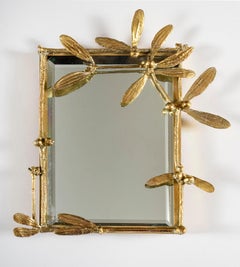
"Gui" Mirror, Claude Lalanne, Les Lalanne, Design, Gilded, Mirror
By Claude Lalanne
Located in Geneva, CH
CLAUDE LALANNE "Gui" Mirror, circa 1980-1985 Edition Artcurial I Ed. 58/450 pcs Gilt bronze, bevelled glass 22 x 17 cm I 8 5/8 x 6 3/4 in Signed, stamped and numbered on the back : c...
Category

20th Century Post-War Figurative Sculptures

Materials

Bronze

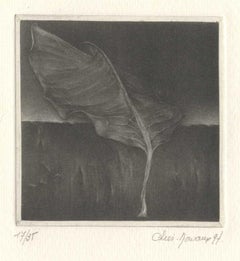
Leaf
By Christine Ravaux
Located in New Orleans, LA
This image is #17 of an edition of 35 Born in Charleroi, Belgium, Ravaux is an artist who mirrors her surroundings in the mezzotints she creates. She has portrayed the black hills t...
Category

1990s Contemporary Landscape Prints

Materials

Mezzotint

Leaf
Leaf
$90 Sale Price
25% Off
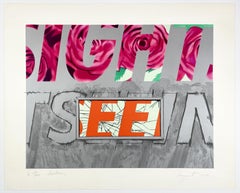
Sightseeing James Rosenquist text Pop Art with Roses silver and bright orange
By James Rosenquist
Located in New York, NY
Sightseeing is one of a group of ten prints which the artist made at Petersburg Press in 1972, each based on one of his paintings. Rosenquist’s Sightseeing 1962 oil painting on canva...
Category

1970s Pop Art Abstract Prints

Materials

Lithograph, Screen

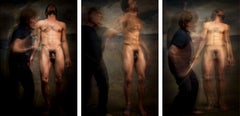
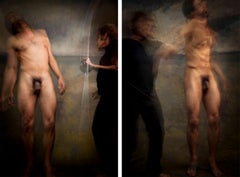
Untitled X, XI and IX, From the Half Angels Half Demons series. Male Nude photo
By Mauricio Velez
Located in Miami Beach, FL
The angel is a being that religion has bequeathed us as a sign of purity, innocence, and goodness, from the same source, we have been sold to the devil as the form that represents ev...
Category

2010s Contemporary Color Photography

Materials

Color, Archival Pigment

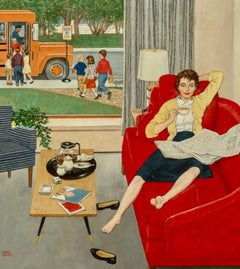
Morning Coffee Break, Saturday Evening Post Cover, 1959
By Amos Sewell
Located in Fort Washington, PA
Medium: Oil on Board Signature: Signed Lower Left Sight Size 27.00" x 23.75;" Framed 34.50" x 37.50" Original cover illustration for The Saturday Evening Post, September 12, 1959. ...
Category

1950s Interior Paintings

Materials

Oil, Board

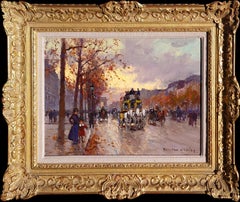
L avenue Des Champs-élysees au Crepuscule
By Édouard Leon Cortès
Located in Belgravia, London, London
Oil on canvas Canvas size: 13 x 18 inches Framed size: 20 x 25.25 inches Signed lower right
Category

20th Century Impressionist Landscape Paintings

Materials

Canvas, Oil

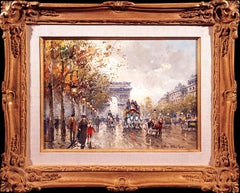
Champs-Elysees
By Antoine Blanchard
Located in Belgravia, London, London
Oil on canvas Canvas size: 13 x 18 inches Framed size: 20.5 x 25.5 inches Signed lower right
Category

20th Century Impressionist Figurative Paintings

Materials

Canvas, Oil

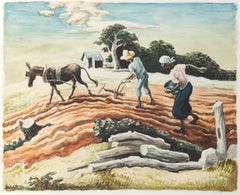
Planting (Spring Plowing) - Watercolor Landscape Painting with Figures, c. 1939
By Thomas Hart Benton
Located in Palm Desert, CA
"Planting (Spring Plowing)", a vibrant watercolor and graphite on paper by Thomas Hart Benton, circa 1939-40, embodies the artist's signature Regionalist style. The work depicts a ru...
Category

Mid-20th Century American Impressionist Figurative Drawings and Watercolors

Materials

Paper, Watercolor, Graphite

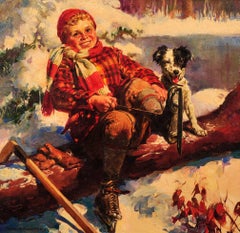
Snow Day Skating
By Harold Anderson
Located in Fort Washington, PA
Date: 1938 Medium: Oil on Canvas Dimensions: 22.00" x 24.00" Signature: Signed Lower Left Calendar painting, image of young ice skater with his dog. Exhibited: The Triumph o...
Category

1930s Figurative Paintings

Materials

Canvas, Oil

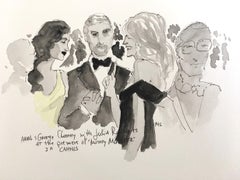
Amal, George Clooney and Julia Roberts, Watercolor Painting
By Manuel Santelices
Located in Miami Beach, FL
Movies, TV and magazines are constant source of inspiration. Fame, as fleckring and shallow it can be sometimes, is very intriguing to him. The worlds of fashion, society and pop cu...
Category

21st Century and Contemporary Contemporary Figurative Drawings and Water...

Materials

Paper, Watercolor

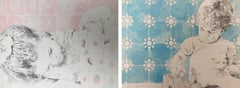
Posdata Admiración and Apreciación, Diptych. From the Posdata series
Located in Miami Beach, FL
The artist is inspired by the relationships between the past and the present, creating works that function as archaeological finds. His pieces, which include floors and toys, reconst...
Category

2010s Contemporary Figurative Drawings and Watercolors

Materials

Paper, Pencil

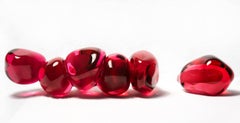
Persephone s Six Seeds - bright, red, pomegranate, glass, still life sculpture
By Catherine Vamvakas Lay
Located in Bloomfield, ON
Clustered and sensuous oblong forms in translucent red glass have a smooth polished surface like the fruit that surrounds pomegranate seeds. A single seed sits next to the cluster. T...
Category

2010s Contemporary Still-life Sculptures

Materials

Blown Glass

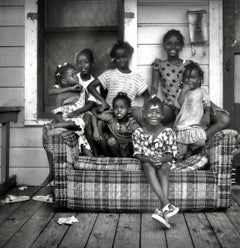
Seven Sisters - Family, girls, children, Houston, Texas, black photographer
By Earlie Hudnall Jr.
Located in Denton, TX
Seven Sisters by Earlie Hudnall, Jr., is a black and white gelatin silver print of 7 young girls posing together on a couch in front of a house. Gelatin Silver Print Paper size: 20 x 16 in. Image size: 18 x 15 in. Signed, titled and dated in pencil on print verso Growing up in Hattiesburg, Mississippi, Earlie Hudnall, Jr. learned the importance of community and culture and photography. His father was an amateur photographer, and his grandmother kept the family albums filled with valuable snapshots. After returning from his tour-of-duty in Vietnam, Earlie Hudnall moved to Houston to study at Texas Southern University. There, he continued his interest in photography. While studying art, he met one of his most significant mentors, John Biggers, the painter and muralist that depicted African American life in the South. He had impressed Earlie to make art that was drawn from his own experiences. His images capture communities much like the one in his home- town of Hattiesburg. Earlie’s strongest work was made in Houston. Earlie Hudnall’s images have been widely published. And his photographs are included in many major museum collections in the United States and Europe, including the Amon Carter Museum of American Art in Fort Worth, The Museum of Fine Arts, Houston, The Art Institute Chicago and the National Gallery in Washington, DC. Artists have been influenced by Hudnall’s work, including James Laxton, the Cinematographer of the 2017 Academy Award winner for Best Picture, Moonlight. Also, Tyler Mitchell...
Category

1990s Contemporary Black and White Photography

Materials

Silver Gelatin

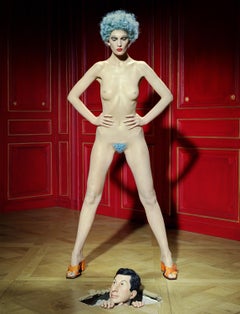
Untitled (after Cattelan) #1 – Miles Aldridge, Woman, Fashion, Erotic, Nude, Art
By Miles Aldridge
Located in Zurich, CH
Miles ALDRIDGE (*1964, Great Britain) Untitled (after Cattelan) #1, 2016 Chromogenic print Image 152.5 x 116.5 cm (60 x 45 3/4 in.) Sheet 164.4 x 128.4 cm (64 3/4 x 50 1/2 in.) Editi...
Category

2010s Contemporary Figurative Photography

Materials

C Print

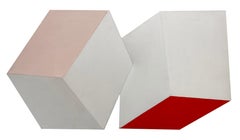
Optical wall sculptures
By Charles Hinman
Located in New York, NY
Our shaped canvas which also is a sculptural form in essence for a wall, is a geometric and forward play of optical illusion. Hinman is an important pioneer of exploration in the co...
Category

1970s Hard-Edge Abstract Paintings

Materials

Canvas, Acrylic

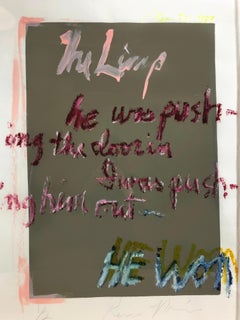
The Limp by Rene Ricard abstract poetry painting
By Rene Ricard
Located in New York, NY
The Limp conjures the image of Rene consumed with energy and righteousness, then resignation: "He was pushing the door in, I was pushing him out / He won". The words are scrawled in ...
Category

1980s Abstract Abstract Paintings

Materials

Oil, Acrylic, Screen

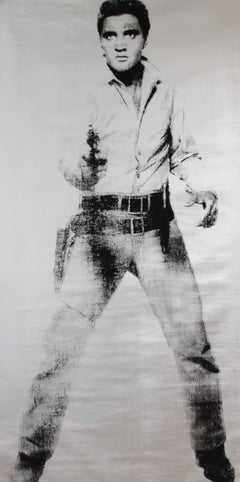
"Elvis", Denied Andy Warhol Silver Black Pop Art Painting by Charles Lutz
By Charles Lutz
Located in Brooklyn, NY
Elvis, Metallic Silver and Black Full Length Silkscreen Painting by Charles Lutz Silkscreen and silver enamel painted on vintage 1960's era linen with Artist's Denied stamp of the Andy Warhol Art Authentication Board. 82" x 40" inches 2010 Lutz's 2007 ''Warhol Denied'' series gained international attention by calling into question the importance of originality or lack thereof in the work of Andy Warhol. The authentication/denial process of the [[Andy Warhol Art Authentication Board]] was used to create value by submitting recreations of Warhol works for judgment with the full intention for the works to be formally marked "DENIED". The final product of the conceptual project being "officially denied" "Warhol" paintings authored by Lutz. Based on the full-length Elvis Presley paintings by Pop Artist Andy Warhol in 1964, this is likely one of his most iconic images, next to Campbell's Soup Cans and portraits of Jackie Kennedy, Marilyn Monroe, Liz Taylor, and Marlon Brando. This is the rarest of the Elvis works from the series, as Lutz sourced a vintage roll of 1960's primed artist linen which was used for this one Elvis. The silkscreen, like Warhol's embraced imperfections, like the slight double image printing of the Elvis image. Lutz received his BFA in Painting and Art History from Pratt Institute and studied Human Dissection and Anatomy at Columbia University, New York. Lutz's work deals with perceptions and value structures, specifically the idea of the transference of values. Lutz's most recently presented an installation of new sculptures dealing with consumerism at Frank Lloyd Wright's Fallingwater House in 2022. Lutz's 2007 Warhol Denied series received international attention calling into question the importance of originality in a work of art. The valuation process (authentication or denial) of the Andy Warhol Art Authentication Board was used by the artist to create value by submitting recreations of Warhol works for judgment, with the full intention for the works to be formally marked "DENIED" of their authenticity. The final product of this conceptual project is "Officially DENIED" "Warhol" paintings authored by Lutz. Later in 2013, Lutz went on to do one of his largest public installations to date. At the 100th Anniversary of Marcel Duchamp's groundbreaking and controversial Armory Show, Lutz was asked by the curator of Armory Focus: USA and former Director of The Andy Warhol Museum, Eric Shiner to create a site-specific installation representing the US. The installation "Babel" (based on Pieter Bruegel's famous painting) consisted of 1500 cardboard replicas of Warhol's Brillo Box (Stockholm Type) stacked 20 ft tall. All 1500 boxes were then given to the public freely, debasing the Brillo Box as an art commodity by removing its value, in addition to debasing its willing consumers. Elvis was "the greatest cultural force in the Twentieth Century. He introduced the beat to everything, and he changed everything - music, language, clothes, it's a whole new social revolution." Leonard Bernstein in: Exh. Cat., Boston, The Institute of Contemporary Art and traveling, Elvis + Marilyn 2 x Immortal, 1994-97, p. 9. Andy Warhol "quite simply changed how we all see the world around us." Kynaston McShine in: Exh. Cat., New York, Museum of Modern Art (and traveling), Andy Warhol: Retrospective, 1996, p. 13. In the summer of 1963 Elvis Presley was just twenty-eight years old but already a legend of his time. During the preceding seven years - since Heartbreak Hotel became the biggest-selling record of 1956 - he had recorded seventeen number-one singles and seven number-one albums; starred in eleven films, countless national TV appearances, tours, and live performances; earned tens of millions of dollars; and was instantly recognized across the globe. The undisputed King of Rock and Roll, Elvis was the biggest star alive: a cultural phenomenon of mythic proportions apparently no longer confined to the man alone. As the eminent composer Leonard Bernstein put it, Elvis was "the greatest cultural force in the Twentieth Century. He introduced the beat to everything, and he changed everything - music, language, clothes, it's a whole new social revolution." (Exh. Cat., Boston, The Institute of Contemporary Art (and traveling), Elvis + Marilyn 2 x Immortal, 1994, p. 9). In the summer of 1963 Andy Warhol was thirty-four years old and transforming the parameters of visual culture in America. The focus of his signature silkscreen was leveled at subjects he brilliantly perceived as the most important concerns of day to day contemporary life. By appropriating the visual vernacular of consumer culture and multiplying readymade images gleaned from newspapers, magazines and advertising, he turned a mirror onto the contradictions behind quotidian existence. Above all else he was obsessed with themes of celebrity and death, executing intensely multifaceted and complex works in series that continue to resound with universal relevance. His unprecedented practice re-presented how society viewed itself, simultaneously reinforcing and radically undermining the collective psychology of popular culture. He epitomized the tide of change that swept through the 1960s and, as Kynaston McShine has concisely stated, "He quite simply changed how we all see the world around us." (Exh. Cat., New York, Museum of Modern Art (and traveling), Andy Warhol: Retrospective, 1996, p. 13). Thus in the summer of 1963 there could not have been a more perfect alignment of artist and subject than Warhol and Elvis. Perhaps the most famous depiction of the biggest superstar by the original superstar artist, Double Elvis is a historic paradigm of Pop Art from a breath-taking moment in Art History. With devastating immediacy and efficiency, Warhol's canvas seduces our view with a stunning aesthetic and confronts our experience with a sophisticated array of thematic content. Not only is there all of Elvis, man and legend, but we are also presented with the specter of death, staring at us down the barrel of a gun; and the lone cowboy, confronting the great frontier and the American dream. The spray painted silver screen denotes the glamour and glory of cinema, the artificiality of fantasy, and the idea of a mirror that reveals our own reality back to us. At the same time, Warhol's replication of Elvis' image as a double stands as metaphor for the means and effects of mass-media and its inherent potential to manipulate and condition. These thematic strata function in simultaneous concert to deliver a work of phenomenal conceptual brilliance. The portrait of a man, the portrait of a country, and the portrait of a time, Double Elvis is an indisputable icon for our age. The source image was a publicity still for the movie Flaming Star, starring Presley as the character Pacer Burton and directed by Don Siegel in 1960. The film was originally intended as a vehicle for Marlon Brando and produced by David Weisbart, who had made James Dean's Rebel Without a Cause in 1955. It was the first of two Twentieth Century Fox productions Presley was contracted to by his manager Colonel Tom Parker, determined to make the singer a movie star. For the compulsive movie-fan Warhol, the sheer power of Elvis wielding a revolver as the reluctant gunslinger presented the zenith of subject matter: ultimate celebrity invested with the ultimate power to issue death. Warhol's Elvis is physically larger than life and wears the expression that catapulted him into a million hearts: inexplicably and all at once fearful and resolute; vulnerable and predatory; innocent and explicit. It is the look of David Halberstam's observation that "Elvis Presley was an American original, the rebel as mother's boy, alternately sweet and sullen, ready on demand to be either respectable or rebellious." (Exh. Cat., Boston, Op. Cit.). Indeed, amidst Warhol's art there is only one other subject whose character so ethereally defies categorization and who so acutely conflated total fame with the inevitability of mortality. In Warhol's work, only Elvis and Marilyn harness a pictorial magnetism of mythic proportions. With Marilyn Monroe, whom Warhol depicted immediately after her premature death in August 1962, he discovered a memento mori to unite the obsessions driving his career: glamour, beauty, fame, and death. As a star of the silver screen and the definitive international sex symbol, Marilyn epitomized the unattainable essence of superstardom that Warhol craved. Just as there was no question in 1963, there remains still none today that the male equivalent to Marilyn is Elvis. However, despite his famous 1968 adage, "If you want to know all about Andy Warhol, just look at the surface of my paintings" Warhol's fascination held purpose far beyond mere idolization. As Rainer Crone explained in 1970, Warhol was interested in movie stars above all else because they were "people who could justifiably be seen as the nearest thing to representatives of mass culture." (Rainer Crone, Andy Warhol, New York, 1970, p. 22). Warhol was singularly drawn to the idols of Elvis and Marilyn, as he was to Marlon Brando and Liz Taylor, because he implicitly understood the concurrence between the projection of their image and the projection of their brand. Some years after the present work he wrote, "In the early days of film, fans used to idolize a whole star - they would take one star and love everything about that star...So you should always have a product that's not just 'you.' An actress should count up her plays and movies and a model should count up her photographs and a writer should count up his words and an artist should count up his pictures so you always know exactly what you're worth, and you don't get stuck thinking your product is you and your fame, and your aura." (Andy Warhol, The Philosophy of Andy Warhol (From A to B and Back Again), San Diego, New York and London, 1977, p. 86). The film stars of the late 1950s and early 1960s that most obsessed Warhol embodied tectonic shifts in wider cultural and societal values. In 1971 John Coplans argued that Warhol was transfixed by the subject of Elvis, and to a lesser degree by Marlon Brando and James Dean, because they were "authentically creative, and not merely products of Hollywood's fantasy or commercialism. All three had originative lives, and therefore are strong personalities; all three raised - at one level or another - important questions as to the quality of life in America and the nature of its freedoms. Implicit in their attitude is a condemnation of society and its ways; they project an image of the necessity for the individual to search for his own future, not passively, but aggressively, with commitment and passion." (John Coplans, "Andy Warhol and Elvis Presley," Studio International, vol. 181, no. 930, February 1971, pp. 51-52). However, while Warhol unquestionably adored these idols as transformative heralds, the suggestion that his paintings of Elvis are uncritical of a generated public image issued for mass consumption fails to appreciate the acuity of his specific re-presentation of the King. As with Marilyn, Liz and Marlon, Warhol instinctively understood the Elvis brand as an industrialized construct, designed for mass consumption like a Coca-Cola bottle or Campbell's Soup Can, and radically revealed it as a precisely composed non-reality. Of course Elvis offered Warhol the biggest brand of all, and he accentuates this by choosing a manifestly contrived version of Elvis-the-film-star, rather than the raw genius of Elvis as performing Rock n' Roll pioneer. A few months prior to the present work he had silkscreened Elvis' brooding visage in a small cycle of works based on a simple headshot, including Red Elvis, but the absence of context in these works minimizes the critical potency that is so present in Double Elvis. With Double Elvis we are confronted by a figure so familiar to us, yet playing a role relating to violence and death that is entirely at odds with the associations entrenched with the singer's renowned love songs. Although we may think this version of Elvis makes sense, it is the overwhelming power of the totemic cipher of the Elvis legend that means we might not even question why he is pointing a gun rather than a guitar. Thus Warhol interrogates the limits of the popular visual vernacular, posing vital questions of collective perception and cognition in contemporary society. The notion that this self-determinedly iconic painting shows an artificial paradigm is compounded by Warhol's enlistment of a reflective metallic surface, a treatment he reserved for his most important portraits of Elvis, Marilyn, Marlon and Liz. Here the synthetic chemical silver paint becomes allegory for the manufacture of the Elvis product, and directly anticipates the artist's 1968 statement: "Everything is sort of artificial. I don't know where the artificial stops and the real starts. The artificial fascinates me, the bright and shiny..." (Artist quoted in Exh. Cat., Stockholm, Moderna Museet and traveling, Andy Warhol, 1968, n.p.). At the same time, the shiny silver paint of Double Elvis unquestionably denotes the glamour of the silver screen and the attractive fantasies of cinema. At exactly this time in the summer of 1963 Warhol bought his first movie camera and produced his first films such as Sleep, Kiss and Tarzan and Jane Regained. Although the absence of plot or narrative convention in these movies was a purposely anti-Hollywood gesture, the unattainability of classic movie stardom still held profound allure and resonance for Warhol. He remained a celebrity and film fanatic, and it was exactly this addiction that so qualifies his sensational critique of the industry machinations behind the stars he adored. Double Elvis was executed less than eighteen months after he had created 32 Campbell's Soup Cans for his immortal show at the Ferus Gallery, Los Angeles in July and August 1962, and which is famously housed in the Museum of Modern Art, New York. In the intervening period he had produced the series Dollar Bills, Coca-Cola Bottles, Suicides, Disasters, and Silver Electric Chairs, all in addition to the portrait cycles of Marilyn and Liz. This explosive outpouring of astonishing artistic invention stands as definitive testament to Warhol's aptitude to seize the most potent images of his time. He recognized that not only the product itself, but also the means of consumption - in this case society's abandoned deification of Elvis - was symptomatic of a new mode of existence. As Heiner Bastian has precisely summated: "the aura of utterly affirmative idolization already stands as a stereotype of a 'consumer-goods style' expression of an American way of life and of the mass-media culture of a nation." (Exh. Cat., Berlin, Neue Nationalgalerie (and traveling), Andy Warhol: Retrospective, 2001, p. 28). For Warhol, the act of image replication and multiplication anaesthetized the effect of the subject, and while he had undermined the potency of wealth in 200 One Dollar Bills, and cheated the terror of death by electric chair in Silver Disaster # 6, the proliferation of Elvis here emasculates a prefabricated version of character authenticity. Here the cinematic quality of variety within unity is apparent in the degrees to which Presley's arm and gun become less visible to the left of the canvas. The sense of movement is further enhanced by a sense of receding depth as the viewer is presented with the ghost like repetition of the figure in the left of the canvas, a 'jump effect' in the screening process that would be replicated in the multiple Elvis paintings. The seriality of the image heightens the sense of a moving image, displayed for us like the unwinding of a reel of film. Elvis was central to Warhol's legendary solo exhibition organized by Irving Blum at the Ferus Gallery in the Fall of 1963 - the show having been conceived around the Elvis paintings since at least May of that year. A well-known installation photograph shows the present work prominently presented among the constant reel of canvases, designed to fill the space as a filmic diorama. While the Elvis canvases...
Category

21st Century and Contemporary Pop Art Figurative Paintings

Materials

Enamel

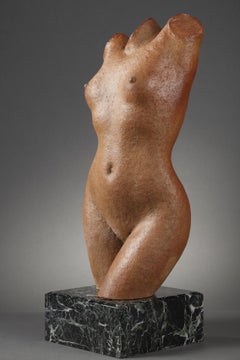
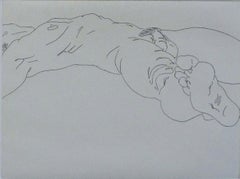
Torso of a Woman
Located in PARIS, FR
Torso of a Woman by Marcel GIMOND (1894-1961) A very nuanced brown chamotte sandstone sculpture raised on a green marble base signed on the arm with the monogram " MG " executed at ...
Category

1920s French School Nude Sculptures

Materials

Sandstone

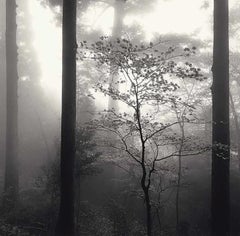
Autumn Leaves, Unpenji, Shikoku
By Michael Kenna
Located in Santa Monica, CA
Gelatin Silver print mounted to archival board. Signed, Dated, and numbered in pencil on mount recto. Signed, titled, and dated in pencil on mount verso. Edition of 45.
Category

Early 2000s Black and White Photography

Materials

Silver Gelatin

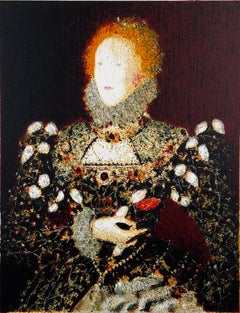
Formas, oil on paper. Abstract painting
By Alejandra Quintanilla
Located in Miami Beach, FL
This series is born from a search to leave aside the narrative figurative and reduce the image to shape and colour. Starts with both images found as well as her own images, previous ...
Category

2010s Abstract Paintings

Materials

Oil, Archival Paper

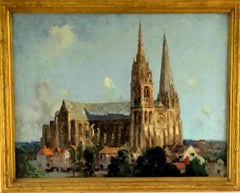
Hudson River Landscape by American Artist Johann Hermann Carmiencke (1810-1867)
By Johann Hermann Carmiencke
Located in New York, NY
Painted by Hudson River School artist Johann Hermann Carmiencke, "Hudson River Landscape" is oil on canvas and measures 12 x 18 inches. The painting is signed and dated 1865 at the l...
Category

19th Century Hudson River School Landscape Paintings

Materials

Canvas, Oil

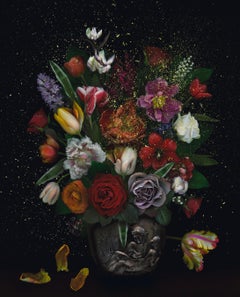
Still life with the Warren Cup 2. Digital Collage Color Photograph
Located in Miami Beach, FL
As an artist, He is fascinated by the opulence and richness of still life of the golden age of Dutch painting in the 17th c. These works, of course, symbolize mortality and the tempo...
Category

21st Century and Contemporary Modern Color Photography

Materials

Color, Pigment, Archival Pigment

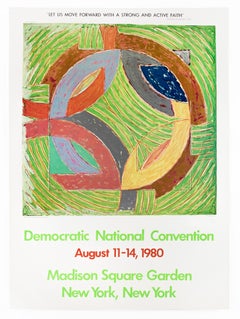
Vintage Frank Stella poster Democratic Convention 1980 colorful Pop political
By Frank Stella
Located in New York, NY
Colorful vintage poster for the 1980 Democratic National Convention, held in Madison Square Garden in New York.Concentric lines of orange and bright green interweave with strokes of pink, yellow, red, turquoise, silver, and gold. Printed with metallic ink that catches light differently from each angle, complementing the poster’s lime green and red text. The top of the poster reads “Let us move forward with a strong and active faith.” It was at this 1980 convention that Jimmy Carter was nominated for reelection. This large poster was printed by Petersburg Press in 1980, and features Frank Stella’s Polar...
Category

1980s Pop Art Abstract Prints

Materials

Lithograph

Untitled VII and XI, Diptych, From the Half Angels Half Demons series. Male Nude
By Mauricio Velez
Located in Miami Beach, FL
The angel is a being that religion has bequeathed us as a sign of purity, innocence, and goodness, from the same source, we have been sold to the devil as the form that represents ev...
Category

2010s Contemporary Color Photography

Materials

Color, Archival Pigment

SLM I, single line etching of male nude by Fernando Reyes
By Fernando Reyes
Located in Palm Springs, CA
Male nude etching, from a series of 6 male and 6 female images. In January 2018, the Mexican Museum in San Francisco mounted an exhibition An Artist’s Evolution, a retrospective which has elevated Fernando’s exposure in the SF Bay Area...
Category

21st Century and Contemporary Contemporary Nude Prints

Materials

Etching

Video et taceo (I see and keep silent), by Stephen Lawlor
Located in Palm Springs, CA
Medium: Aquatint, Drypoint, Etching Year: 2017 Image Size: 11.4 x 8.6 inches Edition Size: 40 Video et taceo is a Latin phrase that was a political motto for Elizabeth I. It may re...
Category

2010s Impressionist Portrait Prints

Materials

Aquatint, Etching

Chartres Cathedral
By William Lee Hankey
Located in Storrs, CT
William Lee-Hankey, R.E., R.W.S., R.O.I. 1869-1952. Chartres Cathedral. Oil on canvas. 27 x 25. Signed, lower left. Price on the strecther, verso: $1000000. Provenance: Woodrugg Brot...
Category

1910s Modern Landscape Paintings

Materials

Crayon, Watercolor, Oil

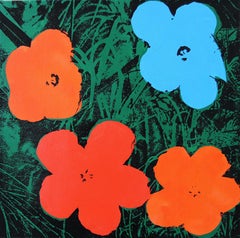
Denied Andy Warhol Flowers (RED ORANGE BLUE) Painting by Charles Lutz
By Charles Lutz
Located in Brooklyn, NY
Denied Warhol Flowers, (RED ORANGE BLUE) Silkscreen on canvas Painting by Charles Lutz Silkscreen and acrylic on linen with Denied stamp of the Andy Warhol Art Authentication Board. ...
Category

21st Century and Contemporary Contemporary Paintings

Materials

Acrylic, Canvas

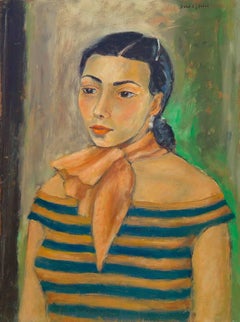
Portrait of Harriet Toby, Ballet Russe de Monte Carlo
By Donald S. Vogel
Located in Dallas, TX
Donald Vogel’s paintings reflect his interest in seeking beauty in life and in sharing pleasure with his viewers. Vogel entreats us to "rejoice and celebrate each new day, knowing it...
Category

1940s American Modern Figurative Paintings

Materials

Oil, Panel

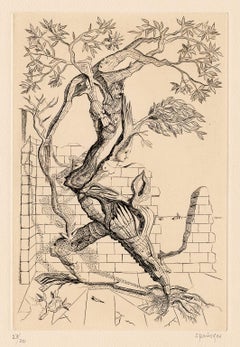
Arbre-Homme (Tree-Man) —Mid-Century European Surrealism
By Ferdinand Springer
Located in Myrtle Beach, SC
Ferdinand Springer, 'Arbre-Homme', engraving, 1945, edition 23. Signed and numbered '23/20' in pencil. A fine, richly-inked impression, on heavy, b...
Category

1940s Surrealist Figurative Prints

Materials

Engraving

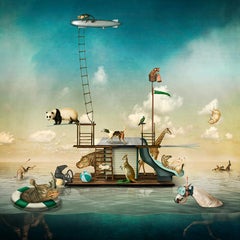
Spring break.
By Maggie Taylor
Located in Carmel-by-the-Sea, CA
In 1981 Maggie Taylor (b. 1961) began to photograph while she was a student at Yale University majoring in philosophy. She primarily took photographs of suburban landscapes and stran...
Category

21st Century and Contemporary Surrealist Color Photography

Materials

Digital Pigment

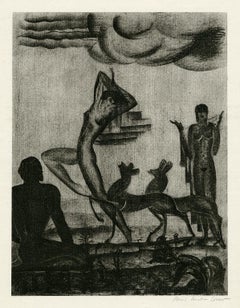
Untitled (Nude Dancer) — 1920s Modernism
By Boris Lovet-Lorski
Located in Myrtle Beach, SC
Boris Lovet-Lorski, 'Untitled (Nude Dancer)', lithograph, edition 250, 1929. Signed and numbered 12 in pencil. Number 12 of Volume 2, a series of 10 lithogr...
Category

1920s Art Deco Nude Prints

Materials

Lithograph

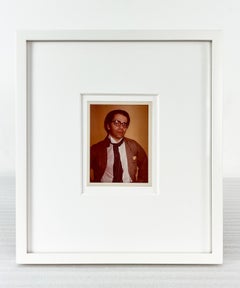
Karl Lagerfeld
By Antonio Lopez
Located in New York, NY
Framing Included in Listing Price, Free Shipping for the US, 14-Day Return Policy. One 4.5 x 3.25 inch unique vintage Kodak print of Karl Lagerfeld by Antonio Lopez. Prints are on ...
Category

1970s Portrait Photography

Materials

Photographic Paper

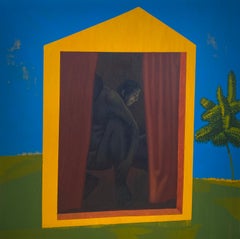
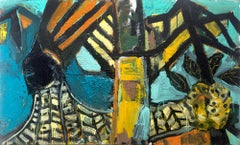
Pandemic - 21st Century, Blue, Yellow, Green, Man, Loneliness, Couple
By Alexandru Rădvan
Located in Baden-Baden, DE
Pandemic, 2020 acrylic on canvas 27 9/16 H x 27 9/16 W in. 70 H x 70 W cm The new series of paintings signed by Alexandru Rădvan was born during the total isolation of 2020. It is t...
Category

2010s Contemporary Figurative Paintings

Materials

Canvas, Acrylic

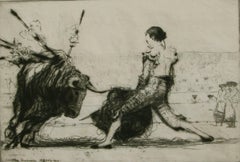
A Fierce Bull
By James McBey
Located in Storrs, CT
A Fierce Bull. 1911. Drypoint. Hardie 108. 5 3/8 x 8 (sheet 8 5/16 x 11 7/8). Edition 8. An exceptional impression with rich drypoint burr printed on antique laid paper. A proof of t...
Category

1910s Modern Animal Prints

Materials

Drypoint, Etching

A Fierce Bull
A Fierce Bull
$1,500 Sale Price
40% Off
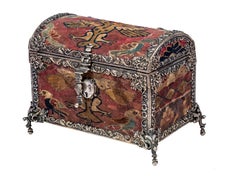
Silver and Transitional Andean Textile Casket
By Spanish Colonial (Peruvian)
Located in New York, NY
Silver was the material of choice for both ecclesiastical and domestic vessels in the New World, not only for its status as a precious metal, but also because of its abundance and du...
Category

Early 18th Century Sculptures

Materials

Silver

ORÍ GUERREIRO TAMOYO, Painting. From the Series Figures
Located in Miami Beach, FL
For Jose Ignacio Suarez an abyss of time and space distances him from those who were the first inhabitants of the Brazilian coasts and of this vast American continent. His initial la...
Category

2010s Abstract Abstract Paintings

Materials

Canvas, Acrylic

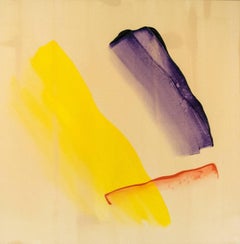
The Colour of Light - large, yellow, purple, gestural abstract acrylic on canvas
By Milly Ristvedt
Located in Bloomfield, ON
Milly Ristvedt approaches colour in her work with sincere consideration and expertise, her palettes contain a subtle complexity that is striking. The background of this painting is b...
Category

1980s Contemporary Abstract Paintings

Materials

Canvas, Acrylic

"Lovers" by Richard Artschwager (Abstract, Pair, Figures, mixed media)
By Richard Artschwager
Located in New York, NY
Screen print on Ries Textured Rag paper, Signed and numbered, Edition of 108 Working across all media, Richard Artschwager (1923-2013) has long specialized in the relationship betwe...
Category

Early 2000s Conceptual Prints and Multiples

Materials

Screen

Desire for what might have been, Figurative Painting
Located in Miami Beach, FL
Ramonn Vieitez is a self-taught Brazilian artist who primarily utilizes painting as a field of creative possibility exploring themes such as identity, memory, and nature, compulsivel...
Category

2010s Contemporary Figurative Paintings

Materials

Oil, Paper

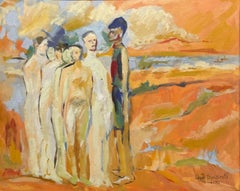
Orange-Toned Painting of Standing Figures by Artist Louis Dimitroff, dated 1970
Located in Chicago, IL
An orange-toned painting of standing figures by artist Louis Dimitroff, dated 1970. Artwork size: 24" x 30". Framed size: 25" x 31". Louis Dimitroff was a Gary, Indiana artist f...
Category

1970s Modern Figurative Paintings

Materials

Oil, Board

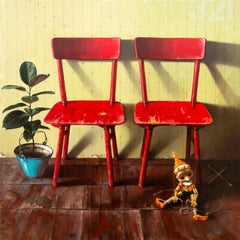
Two Red Chairs and Pinocchio - realist, interior, Ukrainian, Israeli, oil/canvas
By Dmitry Yuzefovich
Located in Bloomfield, ON
Artist Dmitry Yuzefovich remembers—details, colours, textures and images from his life in the Ukraine. Using a trompe l’oeil technique to great effect, he renders nostalgic and realistic paintings that recall a rich and somewhat mysterious past. In this piece, two bright red wooden chairs lean against soft green striped wallpaper and a plant sits in a sky-blue pot...
Category

2010s Contemporary Still-life Paintings

Materials

Canvas, Oil

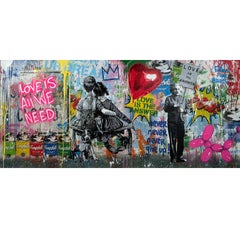
"Pop Wall" stencil and mixed media on street sign and canvas by Mr. Brainwash
By Mr. Brainwash
Located in Boca Raton, FL
"Pop Wall" stencil and mixed media on street sign and canvas artwork by Mr. Brainwash. Numbered No A42246447A, signed "Mr. Brainwash" and dated 2023. Includes fingerprint. Text on fr...
Category

2010s Street Art Mixed Media

Materials

Canvas, Mixed Media, Stencil

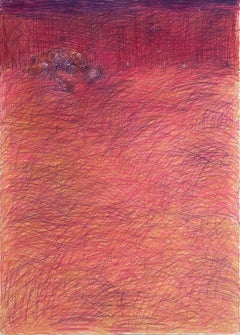
Untitled_Body Remains on the Field - Red, Contemporary, 21st Century, Landscape
By Zsolt Berszán
Located in Baden-Baden, DE
Untitled_Body Remains on the Field, 2022 coloured pencils on paper 39 3/8 H x 27 9/16 W inches 100 H x 70 W cm Signed on reverse Zsolt Berszán embodies in his works the dissolution...
Category

2010s Neo-Expressionist Figurative Drawings and Watercolors

Materials

Paper, Color Pencil

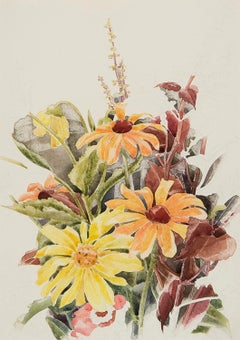
Garden Flowers
By Charles Demuth
Located in New York, NY
Charles Demuth was one of the most complex, talented, and deeply sensitive artists of the American modern period. Whether he was painting floral still lifes, industrial landscapes, or Turkish bathhouses, art was, for Demuth, fraught with personal meaning. A fixture of the vanguard art scene in New York, Demuth navigated the currents of Modernism, producing some of the most exquisite watercolors and original oil paintings in twentieth-century American art. Demuth was born in Lancaster, Pennsylvania, the only child of a well-to-do family. He had an awkward and introverted childhood shaped by a childhood illness, Perthes, a disease of the hip that not only left him permanently lame, but, as part of the “cure,” bedridden for two years in the care of his mother. This long period of incapacitation had a deep impact on Demuth, who came to see himself as an invalid, an outsider who was different from everyone else. It was perhaps during this period of indoor confinement that his keen interest in art developed. Several relatives on his father’s side had been amateur artists, and, following his convalescence, his mother encouraged his artistic pursuits by sending him to a local painter for instruction. The majority of his early pictures are of flowers, a subject for which Demuth maintained a lifelong passion. Following high school, Demuth enrolled at the Drexel Institute of Art in Philadelphia, a school renowned for its commercial arts program. He advanced through the program rapidly, and, in 1905, at the encouragement of his instructors, he began taking courses at the Pennsylvania Academy of the Fine Arts. The two leading teachers then at the Academy were William Merritt Chase and Thomas Anshutz. Anshutz, himself a former student of Thomas Eakins, was well liked by his students, and is best known as the teacher of Robert Henri, John Sloan, and several of the other artists of the Ashcan School. Demuth, too, adopted a similar idiom, working in a controlled, realistic manner while at the Academy, where he remained until 1910. In 1907, Demuth made his first trip to Europe, staying in Paris. He spent time on the periphery of the art scene composed of the numerous American artists there, including John Marin and Edward Steichen. He returned to Philadelphia five months later, and immediately resumed courses at the Academy. Despite his introduction to advanced modern styles in Europe, Demuth’s work of this period retains the academic style he practiced before the trip. It wasn’t until he had summered at New Hope, Pennsylvania, in 1908 and 1911, that his style began to evolve. New Hope was a prominent American Impressionist art colony whose members were largely affiliated with the Pennsylvania Academy. Demuth dropped the conservative tone of his style and adopted a freer and more colorful palette. Although he remained based in Philadelphia, Demuth frequently went to New York during this period. Many of the same American artists of the Parisian art scene Demuth had encountered on his earlier European trip now formed the nucleus of New York’s avant-garde, which centered around Alfred Stieglitz’s 291 gallery. It wasn’t long before Demuth began to apply modernist-inspired strategies to his work. He was particularly influenced by the watercolor work of John Marin, also a former student of Anshutz, whose bold use of color in the medium Demuth freely adapted into looser washes of color. In 1912, Demuth again left for Paris, this time studying in the Académie Moderne, Académie Colorossi, and Académie Julian. In Paris Demuth met the American modernist Marsden Hartley. Hartley, a principal figure in the expatriate art circle, acted as a mentor to Demuth, and introduced him to the wide array of modern styles currently practiced in Europe. Hartley also introduced Demuth to many of the members of the Parisian avant-garde, including Gertrude Stein. Demuth was an aspiring writer, and he spent many hours in conversation with Stein. He wrote extensively during this period, and published two works shortly after his return to America. He also developed an interest in illustrating scenes from literary texts. From 1914 to 1919, Demuth produced a series of watercolors of scenes from books such as Emile Zola’s Nana and Henry James’s The Turn of the Screw. Upon his return to America, Demuth settled in New York. In 1914, Demuth had his first one-man show at Charles Daniel’s gallery, which promoted emerging modern American artists, including Man Ray, Rockwell Kent, Yasuo Kuniyoshi, Stuart Davis, and Max Weber. Demuth drew closer to the artistic vanguard in New York, becoming friends with many in the Stieglitz and Daniel circles, including Georgia O’Keeffe, Marcel Duchamp, Carl Van Vechten, and Edward Fiske. New York’s cosmopolitan atmosphere and active nightlife appealed greatly to Demuth. In a sketchy style well suited to watercolor, he painted many vaudeville and circus themes, as well as nightclub, café, and bathhouse scenes. Often with Duchamp, Demuth took part in an urban subculture replete with nightclubs, bars, drugs, and sexual permissiveness, which, for a homosexual artist like himself, allowed room for previously unattainable personal expression. Demuth’s pictures of sailors, bathhouses, and circus performers embody a sensual and sexual undercurrent, expressing the artist’s sense of comfort and belonging in the bohemian subculture of New York. Simultaneously, Demuth deepened his interest in floral pictures, painting these almost exclusively in watercolor. His style evolved from the broad color washes of his earlier pictures to more spare, flattened, and sinuous compositions, inspired by the drawings of Aubrey Beardsley and other artists of the Aesthetic Movement. Demuth’s flower watercolors are moody and atmospheric, sensuous and elegant, introspective and yet full of expressive power. Moreover they are beautiful, and are unequivocally among the finest still lifes in American art. Despite numerous subsequent artistic undertakings that led him in a variety of directions, Demuth never stopped painting flower pictures, ultimately adding fruits and other still-life objects to his repertoire. In 1916, Demuth began to develop a style later known as Precisionism, a form of landscape painting infused with Cubism, in which space is divided into precisely drawn geometric regions of color. Demuth first began to paint the landscape in an appropriated Cubist mode while on a trip with Hartley to Bermuda. In these early landscapes, in which the curvilinear forms of trees intersect the geometrically articulated architectural forms, Demuth explored ideas that shaped the future development of modernism in America. The full realization of Demuth’s explorations came after his return to America in 1917, when he turned his attention to industrial subjects. These works derive from a “machine aesthetic,” espoused by New York artists such as Francis Picabia, Joseph Stella, Albert Gleizes, and Duchamp, by which artists viewed machines as embodying mystical, almost religious significance as symbols of the modern world. Rather than painting the skyscrapers and bridges of New York as did most of his like-minded contemporaries, Demuth returned to his home town of Lancaster, where he painted factories and warehouses in a Precisionist idiom. The titles for these pictures are often contain literary references, which serve as clues for the viewer to aid in the decoding of the artist’s meaning. In 1923, Demuth planned a series of abstract “poster portraits” of his friends and contemporaries in the New York art and literary scene. In these “portraits,” Demuth combined text and symbolic elements to evoke the essential nature of his sitters’ distinguishing characteristics. In this fashion, he painted portraits of such artists as Georgia O’Keeffe, John Marin, and Arthur Dove. His most famous poster portrait, I Saw the Figure 5 in Gold...
Category

20th Century American Modern Still-life Drawings and Watercolors

Materials

Paper, Watercolor

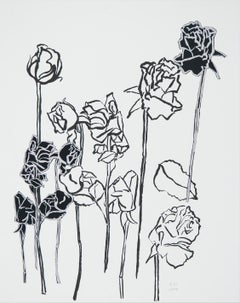
Flowers for Mary #2
By Gail Norfleet
Located in Dallas, TX
Gail Norfleet earned her BFA at The University of Texas at Austin, and her MFA at Southern Methodist University. She has had solo exhibitions at The McKinney Avenue Contemporary and ...
Category

2010s Contemporary Still-life Drawings and Watercolors

Materials

India Ink, Acrylic, Illustration Board

Cortina. From the Viva series. Male Limited Edition Color Photograph
By Ricky Cohete
Located in Miami Beach, FL
Exploring color in the darkness, inspired by the Italian and Dutch renaissance. He brings hints of the fauna of his native South American vibrant and passionate colors. Bringing them...
Category

21st Century and Contemporary Modern Color Photography

Materials

Color, Pigment, Archival Pigment

Granite Spiderworts, Prickly Pear Cactus
By Jim Stoker
Located in Dallas, TX
Texas artist Jim Stoker began developing his confetti-splatter technique of painting in 2000 to depict his interpretations of the unique flora along the Guadalupe River, as well as t...
Category

2010s Contemporary Landscape Paintings

Materials

Linen, Oil

Chroma sky (Blue key) 12 - Contemporary, Landscape, Light Blue, Pastel, Clouds
By Cătălin Petrișor
Located in Baden-Baden, DE
Chroma sky (Blue key) 12, 2007 Acrylic and oil on canvas (Signed on reverse) 23.62 H x 31.49 W in 60 H x 80 W cm The artist wrote about how he conceives this work: "The transform...
Category

Early 2000s Minimalist Landscape Paintings

Materials

Canvas, Oil, Acrylic

Still Thinking About These?

All Recently Viewed