Recognized Dealers Abstract Prints

to
146
483
342
488
230
211
Overall Width
to
Overall Height
to
808
415
126
57
43
24
15
6
2
1
1
1
66
61
58
52
51
1
3
1,032
720
2
10
18
36
51
147
305
173
92
900
649
189
12
10
5
5
4
4
4
4
3
3
3
3
3
3
3
3
2
2
2
2
481
467
331
226
176
175
149
1,241
502
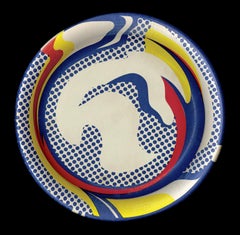
Lichtenstein Paper Plate — Pop Art Icon
By Roy Lichtenstein
Located in Myrtle Beach, SC
Roy Lichtenstein, 'Paper Plate', serigraph, 1969, edition unknown, Corlett III.45. Printed in dark blue ink verso, 'Roy Lichtenstein © On 1st Inc. 1969'. A fine impression, on white paperboard pressure formed into a 3-dimensional plate; age toning verso, otherwise in very good condition. Published by Bert Stern, New York. Image size 10 1/4 inch diameter, 1-inch depth. Archivally sleeved, unmounted, unframed. Carefully protected for shipping. Literature: John Russell. 'Art: Time for Old-Master Prints', New York Times (July 27, 1979), p. C16. Jan Howard. 'Reflections on 'The Prints of Roy Lichtenstein', Print Collector's Newsletter 26 (July–August 1995), p. 82. Mark M. Johnson. 'The Great American Pop Art Store: Multiples of the '60s', Art & Activities 123 (June–Summer 1998), ill. p. 37 (color). Mary Lee Corlett. 'The Prints of Roy Lichtenstein: A Catalogue Raisonné', New York, 2002, p. 286, no. III.45. Susan Dackerman, ed., 'Corita Kent and the Language of Pop', exhibition catalog, Harvard Art...
Category

1960s Pop Art Abstract Prints

Materials

Screen

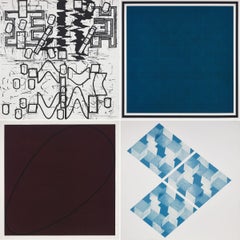
4 x 4 x 4 portfolio by Sol Lewitt, Robert Mangold, Mel Bochner, and Barry Le Va
By Sol LeWitt
Located in New York, NY
Set of four screenprints by Mel Bochner, Barry LeVa, Sol LeWitt, and Robert Mangold. Sol Lewitt's tight crosshatching over teal, Mel Bochner's tessellated blue houses, Barry Le Va's...
Category

1990s Minimalist Abstract Prints

Materials

Screen

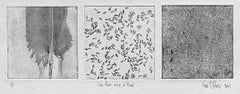
Six From Nine on Two (#1)
By Eric Theise
Located in Palm Springs, CA
Monoprint, with a companion piece (Six From Nine From Two #2). Theise is an artist, teacher and experimental film maker from San Francisco. These two prints are from a series the a...
Category

Early 2000s Abstract Abstract Prints

Materials

Etching

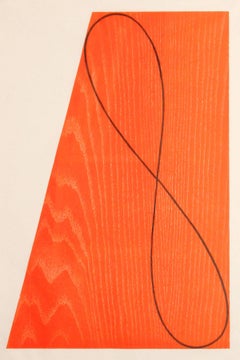
Untitled
By Robert Mangold
Located in New York, NY
Associated with the Minimalist art movement of the 1960s, Mangold developed a reductive vocabulary based on geometric forms, monochromatic color, and an emphasis on the flatness of t...
Category

1990s Abstract Abstract Prints

Materials

Woodcut

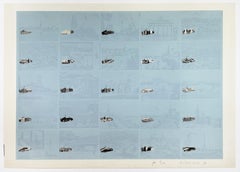
Düsseldorf (German Cities) by Dieter Roth monuments vintage postcard light blue
By Dieter Roth
Located in New York, NY
Düsseldorf (German Cities), 1970 24 x 33.8 in. / 61 x 86 cm Screen print in one color on offset lithograph, black on white card. “for Paul” written in pencil lower middle. Signed and...
Category

1960s Abstract Abstract Prints

Materials

Lithograph, Screen

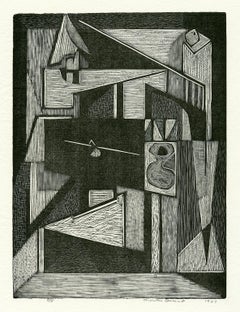
Still Life — Mid-century Modern
By Charles Quest
Located in Myrtle Beach, SC
Charles Quest, 'Still Life', 1947, wood engraving, edition 8. Signed, dated, and numbered '3/8' in pencil. Titled and annotated 'wood engraving' in the bottom left margin. A fine impression, on off-white wove paper, with full margins (1 to 2 inches), in excellent condition. Scarce. Matted to museum standards, unframed. ABOUT THE ARTIST Charles Quest, painter, printmaker, and fine art instructor, worked in various mediums, including mosaic, stained glass, mural painting, and sculpture. Quest grew up in St. Louis, his talent evident as a teenager when he began copying the works of masters such as Michelangelo on his bedroom walls. He studied at the Washington University School of Fine Arts, where he later taught from 1944 to 1971. He traveled to Europe after his graduation in 1929 and studied at La Grande Chaumière and Academie Colarossi, Paris, continuing to draw inspiration from the works of the Old Masters. After returning to St. Louis, Quest received several commissions to paint murals in public buildings, schools, and churches, including one from Joseph Cardinal Ritter, to paint a replica of Velasquez's Crucifixion over the main altar of the Old Cathedral in St. Louis. Quest soon became interested in the woodcut medium, which he learned through his study of J. J. Lankes' A Woodcut Manual (1932) and Paul Landacre's articles in American Artist magazine ‘since no artists in St. Louis were working in wood’ at that time. Quest also revealed that for him, wood cutting and engraving were ‘more enjoyable than any other means of expression.’ In the late 1940s, his graphic works began attracting critical attention—several of his woodcuts won prizes and were acquired by major American and European museums. His wood engraving entitled ‘Lovers’ was included in the American Federation of Art's traveling print exhibition in 1947. Two years later, Quest's two prize-winning prints, ‘Still Life with Grindstone’ and ‘Break Forth into Singing’, were exhibited in major American museums in a traveling show organized by the Philadelphia Print Club. His work was included in the Chicago Art Institute's exhibition, ‘Woodcut Through Six Centuries’, and the print ‘Still Life with Vise’ was purchased by the Museum of Modern Art in New York. In 1951 he was invited by artist-Curator Jacob Kainen to exhibit thirty wood engravings and color woodcuts in a one-person show at the Smithsonian's National Museum (now known as the American History Museum). Kainen's press release praised the ‘technical refinement’ of Quest's work: ‘He obtains a great variety of textural effects through the use of the graver, and these dense or transparent grays are set off against whites or blacks to achieve sparkling results. His work has the handsome qualities characteristic of the craftsman and designer.’ At the time of the Smithsonian exhibition, Quest's work was represented by three New York galleries in addition to one in his home town. He had won 38 prizes, and his prints were in the collections of the Library of Congress, the Chicago Art Institute, the Metropolitan Museum, and the Philadelphia Museum of Art. In cooperation with the Art in Embassies program, his color woodcuts were displayed at the American Embassy in Paris in 1951. Recognition at home came in 1955 with his first solo exhibition in St. Louis. Press coverage of the show heralded the ‘growth of graphic arts toward rivaling painting and sculpture as a major independent medium’. An exhibition of his prints at the Bethesda Art Gallery in 1983 attracted Curator Emeritus Joseph A. Haller, S.J., who began purchasing his work for Georgetown University's collection. In 1990 Georgetown University Library's Special Collections Division was the recipient of a large body of Quest's work, including prints, drawings, paintings, sculpture, stained glass, and his archive of correspondence and professional memorabilia. These extensive holdings, including some 260 of his fine prints, provide a rich opportunity for further study and appreciation of this versatile and not-to-be-forgotten mid-Western American artist...
Category

1940s American Modern Abstract Prints

Materials

Woodcut

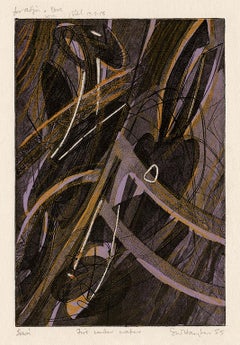
Feu sous L eau (Fire Under Water) —Mid-century Modernism, Atelier 17
By Stanley William Hayter
Located in Myrtle Beach, SC
Stanley William Hayter, 'Feu sous L'eau (Fire Under Water)', color engraving, soft-ground etching and scorper with yellow silkscreen, 1955, edition 50 plus 10 artist proofs, Black & Moorhead 221. Signed, titled 'Fire Under Water', dated and annotated 'Essai' in pencil. Dedicated in the artist’s hand 'for Adja & Dove WH Bill 17–5–55' in the top margin. A superb, richly inked impression with fresh colors, on heavy, cream wove paper; wide margins (2 1/2 to 3 7/8 inches), in excellent condition. One of 10 artist’s proofs. Image size 10 3/16 x 7 inches; sheet size 18 1/8 x 12 1/4 inches. Matted to museum standards, unframed. ABOUT THIS WORK In 1950 Hayter returned to Paris and reopened Atelier 17. Works such as 'Fire Under Water' reveal newfound influences, such as that of the Ardèche area of southern France, where he acquired a house in 1951 and frequently visited. Hayter took great interest in the flowing Escoutay River, an experience that parallels the artist and co-director of Atelier 17 Krishna Reddy’s interest in depicting water. While some forms in this print evoke the natural world, the palette of contrasting tones of purple, yellow, black, and white reflects Hayter’s belief in using color intuitively to express emotions and evoke feelings. The sharp white relief lines from the paper and the textural effects realized through soft-ground etching operate in tandem with the sweeping curves and bold colors to give the composition a sense of vitality and dynamism. —edited from the Metropolitan Museum of Art Published by 'La Jeune Gravure Contemporaine', Paris. Impressions of this work are in the following collections: British Museum, Metropolitan Museum of Art, National Gallery of Art. ABOUT THE ARTIST Stanley William Hayter (1901-1988) was a British painter and printmaker associated in the 1930s with Surrealism and from 1940 onward with Abstract Expressionism. Regarded as one of the most significant printmakers of the 20th century, Hayter founded the legendary Atelier 17 studio in Paris, now known as Atelier Contrepoint. Among the artists he is credited with influencing are Pablo Picasso, Alberto Giacometti, Joan Miró, Alexander Calder, and Marc Chagall. The hallmark of the workshop was its egalitarian structure, breaking sharply with the traditional French engraving studios by insisting on a cooperative approach to labor and technical discoveries. In 1929 Hayter was introduced to Surrealism by Yves Tanguy and André Masson, who, with other Surrealists, worked with Hayter at Atelier 17. The often violent imagery of Hayter’s Surrealist period was stimulated in part by his passionate response to the Spanish Civil War and the rise of Fascism. He organized portfolios of graphic works to raise funds for the Spanish cause, including Solidarité (Paris, 1938), a portfolio of seven prints, one of them by Picasso. Hayter frequently exhibited with the Surrealists during the 1930s but left the movement when Paul Eluard was expelled. Eluard’s poem Facile Proie (1939) was written in response to a set of Hayter’s engravings. Other writers with whom Hayter collaborated included Samuel Beckett and Georges Hugnet. Hayter joined the exile of the Parisian avant-garde in 1939, moving with his second wife, the American sculptor Helen Phillips...
Category

1950s Abstract Expressionist Abstract Prints

Materials

Engraving, Etching

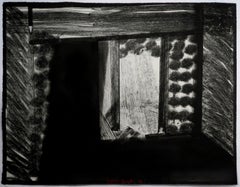
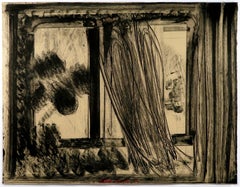
All Alone in the Museum of Modern Art Howard Hodgkin abstract black painting
By Howard Hodgkin
Located in New York, NY
Large scale black and white abstract interior scene with dots, lines, brushstrokes, paint daubs, fingerprints, squares and rectangles, and hand painting in grey. Hang in contemporary, modern and minimalist spaces. While British pop artists such as David Hockney and Patrick Caulfield numbered amongst Howard Hodgkin's circle of friends, Hodgkin's work is painterly, emotional, expressionist, and abstract. Paper: 29.5 x 38.75 in. / 74.7 x 98.2 cm. Soft-ground etching with hand coloring in black gouache on grey BFK Rives mould made paper. Signed by the artist, dated 79, and numbered 59/100 lower center in red crayon. Printed from the same plate as 'Thinking Aloud in the Museum of Modern Art', this print was previously titled "Not Quite Alone in the Museum of Modern Art," suggesting an erotic dalliance in the museum. This print depicts an abstracted scene, perhaps a window and a door, in Hodgkin's signature painterly style. The expressive mark-making in this print is an example of the artist’s movement in the late 70s towards pronounced gestures. Beside bold black strokes, his fingerprints form areas of texture. Always seeking greater richness in his prints, Hodgkin layered ink and hand coloring in this print, rendering each print in the edition unique. Howard Hodgkin was introduced to the etching technique used in 'All Alone in the Museum of Modern Art' at Petersburg Press, where this print was produced and where he would become a long-time collaborator. This technique allowed him to work fluidly and spontaneously, creating the moody interior scenes that mark Hodgkin’s work from the late 70s and early 80s. Part of a series of four prints reflecting on a visit to the Museum...
Category

Late 20th Century Abstract Abstract Prints

Materials

Etching

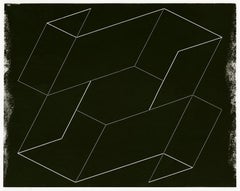
Interlinear K50 — Mid-Century Geometric Abstraction
By Josef Albers
Located in Myrtle Beach, SC
Josef Albers, 'Interlinear K50', zinc plate lithograph offset to stone printing, 1962, edition 20, Danilowitz 151. Signed, titled, dated, and numbered '14/20' in pencil. A superb, ri...
Category

1960s Abstract Geometric Abstract Prints

Materials

Lithograph

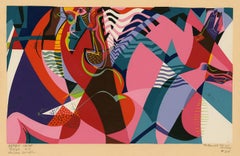
Sister Kate — Mid-century, Jazz-inspired Modernism
By James Houston McConnell
Located in Myrtle Beach, SC
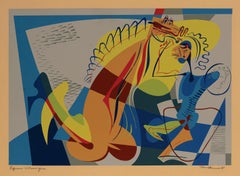
James Houston McConnell, 'Sister Kate', color serigraph, 1947, edition 24. Signed, dated, titled, and numbered '24' in pencil. Annotated '10.00 - 19 colors - 24 copies - #24' in pencil. A fine impression, with vibrant, fresh colors, on heavy tan wove paper, with full margins (11/16 to 1 1/2 inches). Tack holes in the four margin corners, well away from the image, otherwise in excellent condition. Matted to museum standards, unframed. Scarce. Another of McConnell's mid-century modernist, jazz-inspired serigraphs, 'Combo', is featured in the British Museum's 2008 publication (and traveling exhibition) 'The American Scene: Prints from Hopper to Pollock'. ABOUT THE IMAGE "I Wish I Could Shimmy Like My Sister Kate", often simply "Sister Kate", is an up-tempo jazz dance song, written by Armand J. Piron and published in 1922. The lyrics of the song are narrated in the first person by Kate's sister, who sings about Kate's impressive dancing skill and her wish to be able to emulate it. She laments that she's not quite "up to date", but believes that dancing like "Sister Kate" will rectify this, and she will be able to impress "all the boys in the neighborhood" like her sister. Over the years this song has been performed and recorded by many artists, including Frances Faye and Rusty Warren, a 1959 version by Shel Silverstein...
Category

1940s American Modern Abstract Prints

Materials

Screen

Astral Comic — Modernist Abstraction
By Edward August Landon
Located in Myrtle Beach, SC
Edward Landon 'Astral Comic', color serigraph, 1978, edition 25, Ryan 12. Signed, titled, and annotated 'Edition 25' in pencil. A superb, painterly impression, with fresh colors, on ...
Category

1970s Abstract Abstract Prints

Materials

Screen

Howard Hodgkin Late Afternoon in the Museum of Modern Art abstract black white
By Howard Hodgkin
Located in New York, NY
Abstract black, white and tan print of interior scene with dots, lines, shadow and painted brushstroke texture. Ideal for display in minimalist, modern and contemporary spaces. While British pop artists such as David Hockney and Patrick Caulfield numbered amongst Howard Hodgkin's circle of friends, Hodgkin's work is painterly, expressionist, and abstract. Late Afternoon in the Museum of Modern Art by Howard Hodgkin. Soft-ground etching on buff BFK Rives mould-made paper. Edition 100: this impression 36/100. Signed by the artist, numbered 36/100, and dated 79 lower center in red crayon. Printed from the same plate as Early Evening in the Museum of Modern Art. Published by Petersburg Press. This print depicts an abstracted scene, perhaps a sculpture in front of a window in the Museum of Modern Art, Oxford, in Hodgkin's signature painterly style. The expressive mark-making in this print is an example of the artist’s movement in the late 70s towards pronounced gestures. Hodgkin used his hand as a mark-making tool, combining these textures with loose and urgent brushwork. Howard Hodgkin was introduced to the etching technique used in Late Afternoon in the Museum of Modern Art at Petersburg Press, where this print was produced and where he would become a long-time collaborator. This technique allowed him to work fluidly and spontaneously, creating the moody interior scenes that mark Hodgkin’s work from the late 70s and early 80s. Part of a series of four prints reflecting on a visit to the Museum...
Category

Late 20th Century Abstract Interior Prints

Materials

Etching

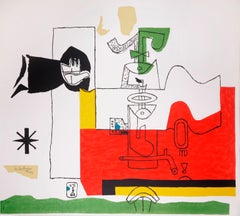
Totem by Le Corbusier
By Le Corbusier
Located in New York, NY
“I prefer drawing to talking. Drawing is faster, and leaves less room for lies.” This colorful modern lithograph was printed at the Atelier Mourlot in Paris in 1963 and is from the printer's edition. It is signed and dated in the plate in the bottom left quadrant. Le Corbusier...
Category

Late 20th Century Modern Abstract Prints

Materials

Lithograph

Double Personage
By Wifredo Lam
Located in Fairlawn, OH
Double Personage Color lithograph, 1975 (?) Unsigned (as issued) Edition: Large Edition Limited, (estimated to be approximately 2000) Published in: XXe Siecle, No. 52, Juin 1979 Published: G. di San Lazzaro Printer: Mourlot Imprimeur, Paris, France Reference: Lam-Tonneau-Ryckelynck L7513 Condition: Excellent, fresh colors Traces of glue residue along margin edge where it was bound in the book Image/sheet size: 12 1/4 x 9 1/4 inches Wilfredo Lam (1902-1982) Biography Wifredo Lam was born in Sagua la Grande, Cuba, on December 8, 1902. He was the eighth child born to Lam-Yam―born in Canton around 1820, an immigrant to the Americas in 1860―and to Ana Serafina Catilla―born in 1862 in Cuba of mixed African and Spanish ancestry. The luxuriant nature of Sagua la Grande had a strong impact on Lam from early childhood. One night in 1907, he was startled by the strange shadows cast on the wall of his bedroom of a bat in flight. He often recounted the incident as his first magnificent awakening to another dimension to existence. In 1916, Lam and part of his family settled in Havana. He was enrolled in the Escuela Profesional de Pintura y Escultura, Academia de San Alejandro, where he remained a student until 1923. This period, with exhibitions at the Salón de Bellas artes, was determinant in his choice to become a painter. In 1923, the municipality of Sagua la Grande awarded him a grant to study in Europe and by the autumn of that year, at the age of twenty-one, he left the country for Spain. His time in Spain―initially intended as a short stay on his way to Paris―lasted 14 years. In Madrid, he was exposed to the ideas and movements of modern art. He spent long hours at the Archeological Museum and the Prado. He studied the great masters of Spanish painting, Velázquez and Goya, but felt particularly drawn to the works of Bosch and Bruegel the Elder. In 1931, his first wife, Eva (Sébastiana Piriz) and their son Wilfredo Victor died of tuberculosis. The terrible suffering he endured led to numerous paintings of mother and child. Lam found solace in the company of his Spanish friends and made contact with several political organizations. In 1936, with the help of his friend Faustino Cordón, he joined the Republican forces in their fight against Franco. He designed anti-Fascist posters and took part in the struggle by working in a munitions factory. The violence of the struggle inspired his painting La Guerra Civil. In 1938, Lam left Spain for Paris. Shortly before leaving, he met Helena Holzer, who would become his wife in 1944. His meeting Picasso in his studio on the Rue des Grands Augustins proved decisive. Picasso introduced his new “cousin” to his painter, poet and art critic friends, Braque, Matisse, Miró, Léger, Eluard, Leiris, Tzara, Kahnweiler, Zervos. Lam also met Pierre Loeb, the owner of the Galerie Pierre in Paris, which hosted Lam’s first solo exhibition in 1939. Shortly before the Germans arrived, Lam left Paris for Bordeaux and then Marseille, where many of his friends, for the most part surrealists, had gathered around André Breton in the Villa Air Bel: Pierre Mabille, René Char, Max Ernst, Victor Brauner, Oscar Domínguez, André Masson, Benjamin Péret. In the Villa Air Bel, a meeting place for creativity and experimentation, Lam worked and produced, most notably, a series of ink drawings that set the tone for what would become his signature style of hybrid figures, a vocabulary he would develop more fully during his years in Cuba from 1941 to 1947. In January and February 1941, Lam illustrated Breton’s poem Fata Morgana which was censored by the Vichy government. On March 25, Lam and Helena Holzer embarked on the “Capitaine Paul Lemerle” headed for Martinique, in the company of some 300 other artists and intellectuals―André Breton and Claude Lévi-Strauss among them. Upon arrival, the passengers were interred at Trois Îles. It was during this forced passage in Martinique and before leaving for Cuba that Lam and Aimé Césaire met for the first time to become life-long friends. Newly settled in his native land after almost twenty years, Lam delved deeper into his artistic investigations, finding nourishment for his ideas in the surroundings of his childhood and youth. His sister Eloisa, whom he was closest to, explained to him in much detail the workings of Afro-Cuban rituals and he began attending ritual ceremonies with some of his friends. This contact with Afro-Cuban culture brought new impetus to his art. He painted over one hundred canvases, most notably La Jungla, making the year 1942 his most productive of this period. Over the next few years, a number of exhibitions followed in the United States, at the Institute of Modern Art of Boston, at the MoMA of New York, at the Galerie Pierre Matisse, where La Jungla was presented and created a scandal. In 1946, Lam and Helena travel to Haiti and attend voodoo ceremonies in the company of Pierre Mabille and André Breton. Talking about his experience in Haiti, Lam said, “It is often assumed that my work took its final form in Haiti, but my stay there, like the trips I made to Venezuela, Colombia or to the Brazilian Mato Grosso only broadened its scope. I could have been a good painter from the School of Paris, but I felt like a snail out of its shell. What really broadened my painting is the presence of African poetry.” Picasso_Lam_Vallauris_1954_vignette Wifredo Lam et Pablo Picasso, Vallauris, 1954 Lam then went on to New York where he renewed contact with Marcel Duchamp and made new acquaintances: Jeanne Reynal, James Johnson Sweeney, Arshile Gorky, John Cage, Roger Wilcox, Mercedes Matter, Ian Hugo, Jesse Fernández, John Cage, Sonia Sekula and Yves Tanguy. By the end of the 1940s, Lam divided his time between Europe, Havana and New York, where they stayed with Pierre and Teeny Matisse...
Category

1970s Surrealist Abstract Prints

Materials

Lithograph

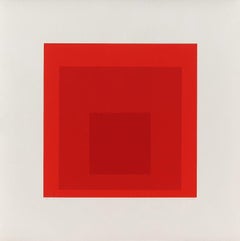
"EK IK" from the series Homage to the Square
By Josef Albers
Located in Zug, CH
JOSEF ALBERS (1888-1976) "EK Ii" from the series Homage to the Square 1970 Screenprint on Hahnemühle Buttenboard 55 x 55 cm 21.65 x 21.65 inches Number 31 of 125 Edition Keller, Star...
Category

Late 20th Century Modern Abstract Prints

Materials

Board

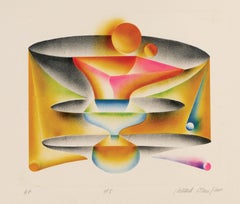
#5 — Modernist Abstraction — African American Artist
Located in Myrtle Beach, SC
Hilliard Dean, '#5', color lithograph, 1970, edition not stated but small. Signed, titled, and annotated 'AP' in pencil. Dated 'June 11, 70' in pencil in...
Category

1970s Contemporary Abstract Prints

Materials

Lithograph

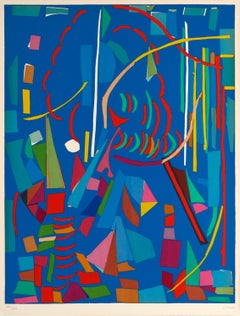
Blue Composition by Andre Lanskoy
By André Lanskoy
Located in New York, NY
This lithograph was printed in 1965 at the Atelier Mourlot in Paris. It is signed, and numbered from an edition of 150. A major theme running through Lanskoy's work is the interactio...
Category

1960s Abstract Expressionist Abstract Prints

Materials

Lithograph

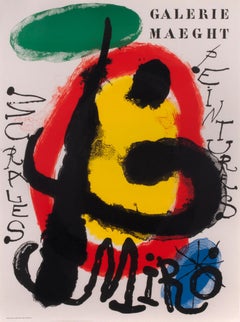
Galerie Maeght Murales et Peintures
By Joan Miró
Located in Fairlawn, OH
Galerie Maeght Murales et Peintures Color lithograph poster, 1961 Unsigned as issued Large edition Published by Maeght Editeur Imprimeur Reference #13 from J. Corredor-Matheos, "Miro's Posters', 1980 Condition: Framed Colors fresh Image/sheet size: 25 x 19 inches Frame size: 34 x 27...
Category

1960s Abstract Abstract Prints

Materials

Lithograph

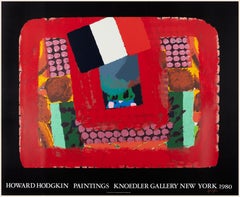
In a French Restaurant (Knoedler Gallery) SIGNED poster colorful expressionist
By (After) Howard Hodgkin
Located in New York, NY
A large scale abstract interior scene with bold black, white, red, pink, green, white and orange patterns and brushstrokes, based on an abstract oil painting. Pink and purple dots, y...
Category

1980s Abstract Abstract Prints

Materials

Screen

#9 — Modernist Abstraction — African American Artist
Located in Myrtle Beach, SC
Hilliard Dean, '#9', color lithograph, 1970, edition 7. Signed, titled, and annotated 'Ed 7' in pencil. A fine impression, with fresh colors, on Arches, ...
Category

1970s Contemporary Abstract Prints

Materials

Lithograph

Plate 209 from Imaginary Beings - Marine Giclée Print on Archival Paper
By Johanna Goodman
Located in Brighton, GB
Giclée print on Archival Matte Paper with Archival Pigment Ink. In 2017 she was awarded the New York State Council for the Arts/New York Foundation for the Arts Fellowship grant for...
Category

2010s Contemporary Abstract Prints

Materials

Archival Ink, Archival Paper, Giclée

Large Bus by Allen Jones classic British 1960s pop art in bright primary colors
By Allen Jones
Located in New York, NY
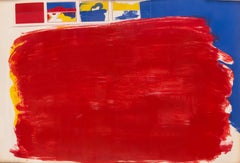
This large Allen Jones lithograph is printed exuberantly in primary colors. A swath of bright red brushstrokes represents the side of a bus. In the upper left, small windows reveal the passengers: a woman’s face is cut off above her vampy red lips, and a blue-haired man’s face is hidden. Royal blue fills the upper right corner of the composition, giving the impression of looking up at a passing bus against the cloudless sky. One can imagine Jones was thinking of the iconic red double decker bus the AEC Routemaster, first introduced in London in 1954. In the 1960s buses were a living symbol of familiar and new technology coexisting: as David Bucken put it, “In and around London a midpoint change on a journey might involve alighting from an RT bus, of which production had started just prior to World War II, and getting on one of the sexy new Routemasters.” In the artist’s words: “The whole problem as a figurative artist was that it was going against the main march of modernism, which was towards abstraction. But here was a way of making the subject you were painting the same as the object you were painting on. By making the canvas a rhomboid, and putting little wheels on it, you have a schematic version of a vehicle, in this case a London bus.” Jones plays with the space between abstraction and figuration: windowed passengers, elaborated with just a few lines and placed adjacent to a weighty red ground of brushstrokes, easily convey the form of a bus, yet the print also conveys Jones’ visceral, painterly delight in color play. Four color lithograph on wove paper Paper 28.5 x 42.5 / 72.4 X 108 cm Wood frame 31 x 46 x 2 in. / 78.75 x 117 x 5 cm with 1 in. moulding Signed by the artist lower right in pencil, labeled Trial Proof lower left in pencil. Edition 20. Printed at Tamarind Los Angeles with Clifford Smith...
Category

1960s Pop Art Abstract Prints

Materials

Lithograph

Miracle
By Marino Marini
Located in Santa Monica, CA
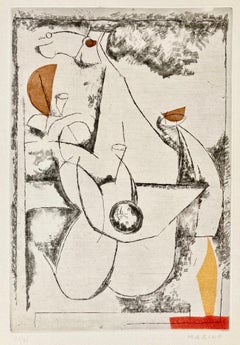
MARINO MARINI (1901-1980) MIRACLE - Etching, Signed and numbered 70 / 75 in pencil. Image 15 ½ x 10 ½ inches,. Full sheet 22 3/8 x 15 inches with deckle edges. Plate IV of the serie...
Category

1970s Abstract Impressionist Abstract Prints

Materials

Etching

Derriere Le Miroir-No. 190-Page 14-15
By Alexander Calder
Located in Fairlawn, OH
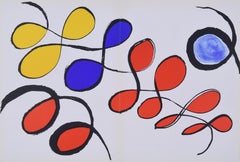
Derriere Le Miroir-No. 190-Page 14-15 Color lithograph, 1971 Unsigned (as issued) From: Derriere Le Miroir, No. 190, 1971 Publisher: Aime Maeght, Paris Printer: L’Imprimerie Arts, Pa...
Category

1970s Abstract Abstract Prints

Materials

Lithograph

Blue Eyes — Erotic Surrealism
By Hans Bellmer
Located in Myrtle Beach, SC
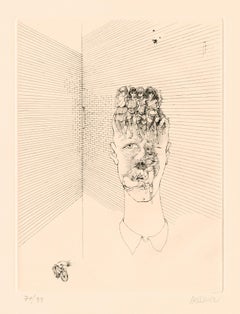
Hans Bellmer, 'Blue Eyes', engraving and drypoint, edition 99, 1971. Flahutez 89. Signed and numbered '74/99' in pencil. A fine impression, on Arches cream wove paper; the full sheet...
Category

1960s Surrealist Abstract Prints

Materials

Engraving, Drypoint

Almost There
By Al Held
Located in New York, NY
Created by Al Held in 1988, Almost There is an aquatint with hard-ground etching on Somerset paper. Hand-signed, dated, and numbered from the edition of 60 in pencil on the verso, th...
Category

20th Century Abstract Geometric Abstract Prints

Materials

Etching, Aquatint

Tightrope: abstract modern minimalist color field drawing with rainbow colors
By Gene Davis
Located in New York, NY
Rainbow shades shine in delicate clusters of vertical lines, in this abstract, geometric lithograph. Vibrant yellow, green, magenta pink, blue and brown take on the organic quality o...
Category

1970s Abstract Abstract Prints

Materials

Lithograph

Red to Green Portal
By Richard Anuszkiewicz
Located in Fairlawn, OH
Red to Green Portal Aquatint, 1979 Signed and dated in pencil lower right (see photo) Edition: 95 (84/95), see photo Provenance: U.S. Representative James A. Leach, retired Condition...
Category

1970s Op Art Abstract Prints

Materials

Aquatint

Exhortation (Priest) — Mid-Century Modernism
By Edward August Landon
Located in Myrtle Beach, SC
Edward Landon 'Exhortation (Priest)', color serigraph, 1957, edition 28, Ryan 72. Signed, titled, and numbered '21/28' in pencil. A superb, richly-inked impression, with strong color...
Category

Mid-20th Century American Modern Abstract Prints

Materials

Screen

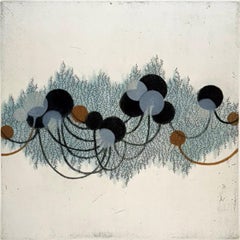
fractal-ssi-7a, by Seiko Tachibana
By Seiko Tachibana
Located in Palm Springs, CA
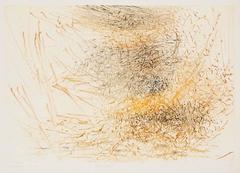
Carborundum and intaglio. Signed and numbered from the edition of 25. Tachibana’s prints take their inspiration from nature, a meditation on the forms and shapes of water, ferns an...
Category

2010s Contemporary Abstract Prints

Materials

Intaglio

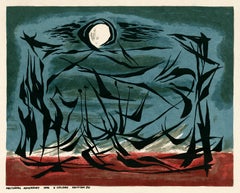
Nocturnal Adversary — Mid-Century Surrealist Abstraction
By Edward August Landon
Located in Myrtle Beach, SC
Edward Landon 'Nocturnal Adversary', color serigraph, 1946, edition 50, Ryan 137. Signed in pencil in the image, lower right. Titled, dated, and annotated '6 COLORS EDITION 50' in th...
Category

1940s Surrealist Abstract Prints

Materials

Screen

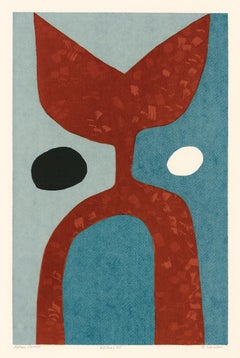
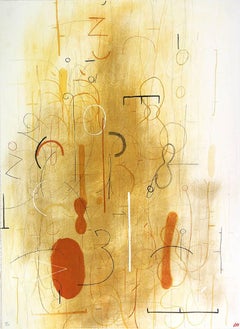
All
By Emmi Whitehorse
Located in Lyons, CO
Color lithograph, Edition 25. Emmi Whitehorse is a painter and printmaker. Using a private language of symbols and memories, Whitehorse makes 'personal diaries' of her life as an ...
Category

21st Century and Contemporary Contemporary More Prints

Materials

Lithograph

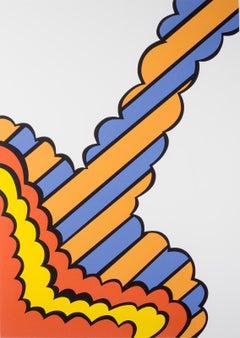
North End ( Reference to Chicago s gay sports bar in Boystown near Wrigley)
By Nicholas Krushenick
Located in New Orleans, LA
Nicholas Krushenick 's "North End" is a color silkscreen pencil signed, dated, and editioned; proof from the published edition of 200, . Nicholas Krushenick (American, 1929 – 1999) ...
Category

1970s Pop Art Abstract Prints

Materials

Silk, Screen

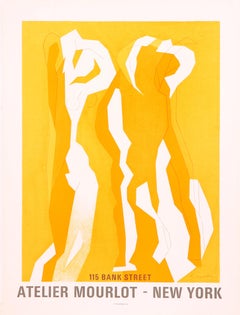
115 Bank Street New York Atelier Mourlot by Andre Beaudin, 1967
By Andre Beaudin
Located in New York, NY
This bright yellow modern lithographic poster was printed at the Atelier Mourlot in New York City in 1967. Certificate of Provenance: Each individual work of art carefully curated...
Category

1970s Modern Abstract Prints

Materials

Lithograph

Eve #26
By Kate Shepherd
Located in Houston, TX
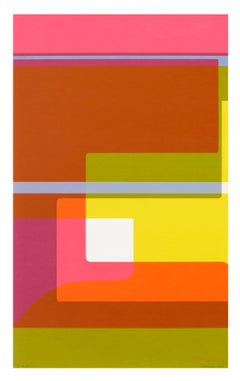
Kate Shepherd Eve #26, 2022 Unique screenprint on Coventry Rag paper 38 3/4 x 23 5/8 in (98.4 x 60 cm)
Category

21st Century and Contemporary Abstract Abstract Prints

Materials

Screen

UNTITLED
By Louise Nevelson
Located in Portland, ME
Nevelson, Louise. UNTITLED. Baro 36. Tamarind Number 801. Lithograph, 1963. Edition of 20, plus 2 Printer's Proofs, 1 Trial Proof, and 3 Artist's Proofs. Inscribed "Tamarind Impressi...
Category

1960s Abstract Abstract Prints

Materials

Lithograph

European Landscape —Mid-century American Surrealism
By Lawrence Kupferman
Located in Myrtle Beach, SC
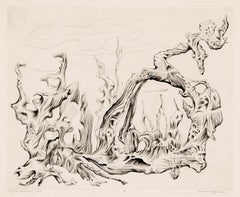
Lawrence Kupferman, 'European Landscape', drypoint, edition 50, 1942. Signed, dated, titled, and numbered '7/50' in pencil. A superb, finely nuanced impression, on cream wove paper; the full sheet with margins (1 to 1 3/4 inches); in excellent condition. Image size 10 7/8 x 13 3/8 inches; sheet size 13 1/8 x 16 1/2 inches. Archivally matted to museum standards, unframed. An impression of this work is included in the permanent collection of the Syracuse University Art Museum. ABOUT THE ARTIST Lawrence Kupferman (1909 - 1982) was born in the Dorchester neighborhood of Boston and grew up in a working-class family. He attended the Boston Latin School and participated in the high school art program at the Museum of Fine Arts, Boston. In the late 1920s, he studied drawing under Philip Leslie Hale at the Museum School—an experience he called 'stultifying and repressive'. In 1932 he transferred to the Massachusetts College of Art, where he first met his wife, the artist Ruth Cobb. He returned briefly to the Museum School in 1946 to study with the influential expressionist German-American painter Karl Zerbe. Kupferman held various jobs while pursuing his artistic career, including two years as a security guard at the Museum of Fine Arts, Boston. During the 1930s he worked as a drypoint etcher for the Federal Art Project, creating architectural drawings in a formally realistic style—these works are held in the collections of the Fogg Museum and the Smithsonian American Art Museum. In the 1940s he began incorporating more expressionistic forms into his paintings as he became progressively more concerned with abstraction. In 1946 he began spending summers in Provincetown, Massachusetts, where he met and was influenced by Mark Rothko, Hans Hofmann, Jackson Pollock, and other abstract painters. At about the same time he began exhibiting his work at the Boris Mirski Gallery in Boston. In 1948, Kupferman was at the center of a controversy involving hundreds of Boston-area artists. In February of that year, the Boston Institute of Modern Art issued a manifesto titled 'Modern Art and the American Public' decrying 'the excesses of modern art,' and announced that it was changing its name to the Institute of Contemporary Art (ICA). The poorly conceived statement, intended to distinguish Boston's art scene from that of New York, was widely perceived as an attack on modernism. In protest, Boston artists such as Karl Zerbe, Jack Levine, and David Aronson formed the 'Modern Artists Group' and organized a mass meeting. On March 21, 300 artists, students, and other supporters met at the Old South Meeting House and demanded that the ICA retract its statement. Kupferman chaired the meeting and read this statement to the press: “The recent manifesto of the Institute is a fatuous declaration which misinforms and misleads the public concerning the integrity and intention of the modern artist. By arrogating to itself the privilege of telling the artists what art should be, the Institute runs counter to the original purposes of this organization whose function was to encourage and to assimilate contemporary innovation.” The other speakers were Karl Knaths...
Category

1940s Surrealist Abstract Prints

Materials

Drypoint

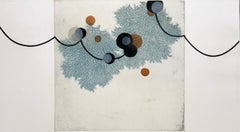
fractal-ssi-2a
By Seiko Tachibana
Located in Palm Springs, CA
Carborundum and intaglio. Signed and numbered from the edition of 25. Tachibana’s prints take their inspiration from nature, a meditation on the forms and shapes of water, ferns an...
Category

2010s Contemporary Abstract Prints

Materials

Intaglio

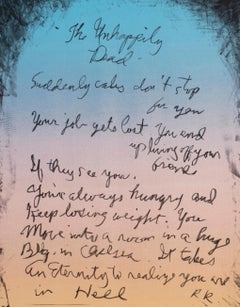
The Unhappily Dead: Rene Ricard poetry of 1980s Chelsea New York life rainbow
By Rene Ricard
Located in New York, NY
Touched by the influence of Andy Warhol, champion of a young Jean-Michel Basquiat, Rene Ricard served as enfant terrible of the 1980s New York art scene. In this rainbow print, Ricar...
Category

1980s Contemporary Abstract Prints

Materials

Lithograph

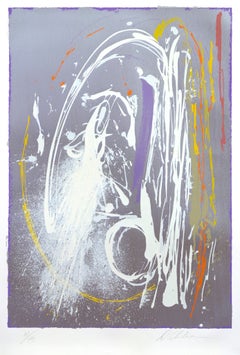
"Untitled" by Dan Christensen (Silver, Abstract, Metallic, Expressionist, Print)
By Dan Christensen
Located in New York, NY
This large, abstract image celebrates the 13th Annual Community Holiday Festival, 1983 at Lincoln Center. It is signed and numbered by the artist from the edition of 144 (plus 18 APs) and was printed at Fine Creations, NY. This print comes directly from the publisher, Lincoln Center Editions...
Category

1980s Abstract Abstract Prints

Materials

Screen

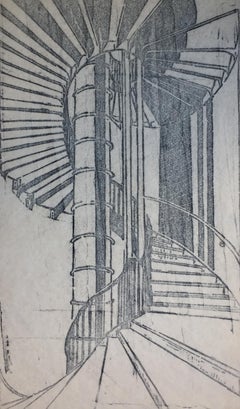
TUBE STAIRCASE - Unique Trial Proof
By Cyril Power
Located in Santa Monica, CA
CYRIL POWER (1874 - 1951) THE TUBE STAIRCASE, 1929 (Coypel CEP 11) Linocut, a likely unique proof impression of the key block in reverse, suggesting a counterproof. Unsigned. 17 ½” x 10”, sheet 20 x 14 ¾”. On a sheet of brown wove paper similar to newsprint. A few repaired tears in the margins. Provenance: Redfern Gallery, 2014 with label and inventory no. Redfern Gallery has represented the Grosvenor School...
Category

1920s Modern Abstract Prints

Materials

Linocut

Pointed Shapes and Black Half Moon
By Werner Drewes
Located in Myrtle Beach, SC
Werner Drewes, 'Pointed Shapes and Black Half Moon', etching, 1935, edition 20, Rose l.198. Signed, dated, and numbered 'I-XX' in pencil. A fine, rich impression, in warm black ink...
Category

1930s Bauhaus Abstract Prints

Materials

Etching

Plate VI, Le Cocu Magnifique
By Pablo Picasso
Located in Fairlawn, OH
Plate VI, Le Cocu Magnifique etching & aquatint, 1968 Unsigned as usual From the unsigned edition of 200 impressions printed on Rives BFK paper There is also a signed edition of 30 i...
Category

1960s Surrealist Figurative Prints

Materials

Etching, Aquatint

Downtown, The El
By John Marin
Located in New York, NY
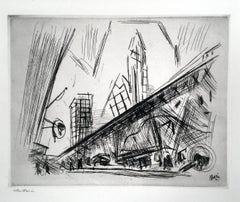
John Marin (1870-1953), Downtown, The El, etching, 1921, signed in pencil lower left (also signed and dated in the plate). Reference: Zigrosser 134, only state. Published initially by Alfred Stieglitz and then included as part of the Folio of American Etchings by the magazine The New Republic in 1924, in an edition of unknown size but probably above 500. In very good condition, the full sheet, on Van Gelder wove paper, 6 3/4 x 8 3/4, the sheet 11 x 13 3/4 inches. Provenance: Hirschl and Adler Galleries, Inc., New York, New York. A fine bright impression. Initially the New Republic Set, sometimes known as Six American Etchings, contained Marin’s Brooklyn Bridge No. 6 (Swaying) (Zigrosser 112). But after a small number of sets were completed, Downtown the El was substituted for Zigrosser 112 (and so the number of Downtown The Els in the set would have been a bit fewer than the others in the set). Zigrosser, who apparently had not seen a complete set at the time he created the catalogue raisonne, conjectured that the substitution might have been because the original plate was damaged. But since the printer, Peter Platt, was the most renowned artist’s printer of his time, and worked alone, it is unlikely that he would have damaged the plate; a more likely possibility is that he switched to a print that was more comparable in size to the others in the set (The Brooklyn Bridge print...
Category

1920s Futurist Abstract Prints

Materials

Etching

Berggruen abstract lithographic poster by Wassily Kandinsky, 1972
By Wassily Kandinsky
Located in New York, NY
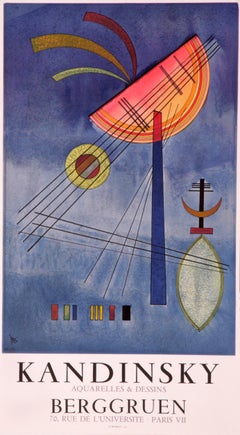
This colorful modern lithographic poster by Wassily Kandinsky was printed in 1972 at the Atelier Mourlot in Paris to promote an exhibition of his watercolors and drawings at the Gale...
Category

1970s Modern Abstract Prints

Materials

Lithograph

Set of three woodcuts by Victor Mira colorful abstract forms
Located in New York, NY
These lively, colorful works are full of movement and Mira's characteristic mysterious, mythical figures and shapes. Victor Mira Set of three woodcuts on buff, textured paper, 1983...
Category

1980s Abstract Abstract Prints

Materials

Woodcut

UNTITLED
By Ynez Johnston
Located in Portland, ME
Johnston, Ynez. UNTITLED. Etching, not dated (but likely 1950s). Edition of 20, signed in pencil and numbered 4/20. 6 7/8 x 9 inches (plate), 8 x 10 5/8 inches (sheet). In excellent ...
Category

1950s Abstract Prints

Materials

Etching

Vintage James Rosenquist poster MOCA Chicago 1972 neon yellow pink chrome
By James Rosenquist
Located in New York, NY
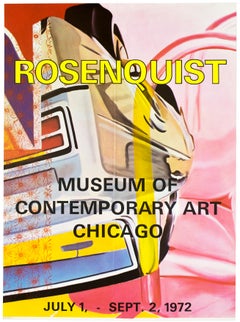
An inverted car, gleaming in chrome, speeds through sumptuous layers of pink, translucent yellow, and a veil of lacy, flower-like shapes. Across the top, the artist’s name is splashe...
Category

1970s Pop Art Abstract Prints

Materials

Offset

Untitled Double Page Illustration for DLM
By Alexander Calder
Located in Fairlawn, OH
Untitled Double Page Illustration for DLM Color lithograph, 1968 Unsigned as issued in DLM Published in Derriere le Miroir (Behind the Mirror), calle...
Category

1960s American Modern Abstract Prints

Materials

Lithograph

Equus Uirumpu — Mid-century American Modernism
By James Houston McConnell
Located in Myrtle Beach, SC
James Houston McConnell, 'Equus Uirumpu' (The Man's Horse), color serigraph, c. 1945, edition not stated but small. Signed and titled in pencil. Initialed in the image, lower right. ...
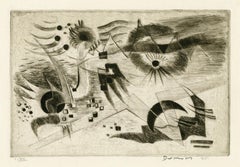
Category

1940s American Modern Abstract Prints

Materials

Screen

Mercury
By Sam Francis
Located in London, GB
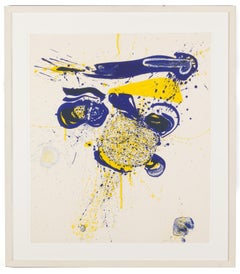
Sam Francis Mercury 1963 Lithograph on BFK Rives paper, Edition of 20 60 .3 x 47.6 cms (23 3/4 x 18 3/4 ins) SF16664 Literature: The Prints of Sam Francis: A Catalogue Raisonne 196...
Category

1960s Abstract Abstract Prints

Materials

Lithograph

Untitled
By Henri Goetz
Located in Fairlawn, OH
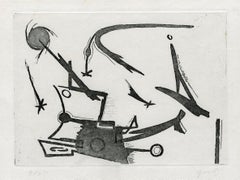
Untitled Signed in pencil lower right (see photo) Edition: 25 (9/25) (see photo) Engraving, drypoint & carborundum Printed by the artist Condition: Excellent, slight residue on rever...
Category

1960s Abstract Expressionist Abstract Prints

Materials

Drypoint, Etching

Frumente
By Bernard Childs
Located in Dallas, TX
edition 19/200 signed "Childs '55 (c)" at lower left paper size is 17 3/4 x 22 1/4 inches mat size is 20 x 24
Category

Mid-20th Century Abstract Abstract Prints

Materials

Etching

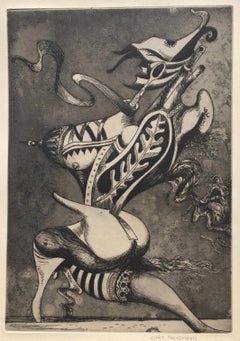
LA SORCIERE - (The Witch)
By Kurt Seligmann
Located in Santa Monica, CA
KURT SELIGMANN (1900–1962 American, born in Switzerland,) LA SORCIERE - (The Witch) 1934 Etching and aquatint, unsigned ? possibly a proof aside from The ...
Category

1930s Surrealist Figurative Prints

Materials

Etching, Aquatint

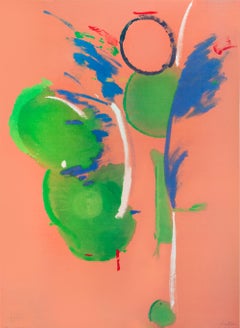
Mary, Mary
By Helen Frankenthaler
Located in London, GB
Screenprint and offset lithograph in colours, 1987, on wove paper, signed in pencil by the artist, one of 10 printer's proofs, aside from standard edition of 72, published by Lincoln...
Category

Late 20th Century Abstract Abstract Prints

Materials

Offset, Screen

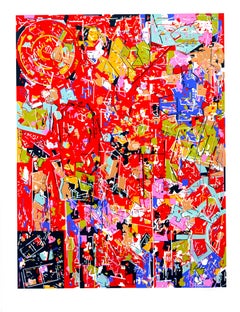
"Untitled" by Kes Zapkus (Expressionist, Red, Abstract, Architecture, Print)
By Kes Zapkus
Located in New York, NY
b. 1938, Lithuania Kes Zapkus has always been intrigued with analyzing and tracing thought processes. By juxtaposing images of architectural building plans conceived of by several u...
Category

1970s Abstract Expressionist Abstract Prints

Materials

Screen

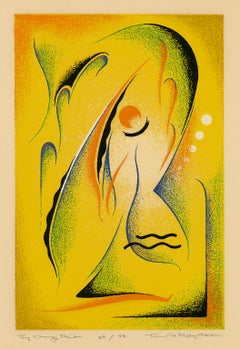
The Orange Point — Mid-Century Modernism
By Thomas A. Robertson
Located in Myrtle Beach, SC
'The Orange Point', color serigraph, edition 54, c. 1940. Signed, titled, and annotated 'Ed/54' in pencil. A fine impression, with fresh colors, on buff wove paper; the full sheet wi...
Category

1940s American Modern Abstract Prints

Materials

Screen

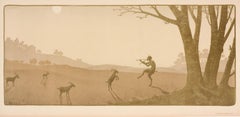
Vision Antique
By Paul Berthon
Located in Fairlawn, OH
Vision Antique Color lithograph, 1899 Signed in the stone upper left (see photo) Titled in the stone lower right (see photo) Edition: unsigned edition about 200 (per Arwas) Published...
Category

1890s Art Nouveau Abstract Prints

Materials

Lithograph

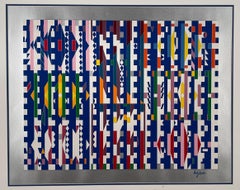
UNTITLED
By Yaacov Agam
Located in Portland, ME
Agam, Yaacov, (Jacob Gipstein) (Israeli, b. 1928). UNTITLED. Screenprint in colors, not dated. Edition of 180, signed in blue pencil, and numbered 80/180. 26 3/8 x 33 1/4 inches, 669...
Category

Mid-20th Century Abstract Prints

Materials

Screen

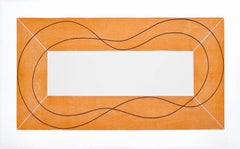
Extended Frame with Separation
By Robert Mangold
Located in New York, NY
Associated with the Minimalist art movement of the 1960s, Mangold developed a reductive vocabulary based on geometric forms, monochromatic color, and an emphasis on the flatness of t...
Category

21st Century and Contemporary Minimalist Abstract Prints

Materials

Woodcut

Still Thinking About These?

All Recently Viewed