Recognized Dealers Asian Art and Furniture

to
49
872
575
1,398
159
15
69
24
12
7
6
5
3
3
3
2
1
1
1
1
1
251
563
584
174
298
112
24
72
6
23
29
2
22
7
11
5
1
564
416
362
315
221
1,270
1,039
663
365
89
1,572
1,478
1,484
63
22
12
9
9
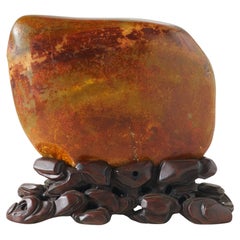
Hetian Jade Boulder on Carved Wooden Stand
Located in San Francisco, CA
Hetian Jade Boulder on Carved Wooden Stand Chinese Hetian jade gamble stone mounted on a wooden base. The stone displays natural tones of brown, yellow, and green, typical of Hetian...
Category

20th Century Chinese Sculptures and Carvings

Materials

Jade

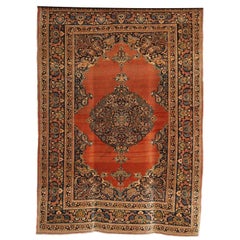
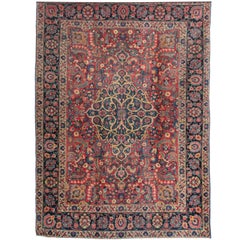
Antique 1890s Persian Haji Jalili Tabriz Rug, Medallion Design, Wool, 4 x 6
Located in New York, NY
This 1890 Haji Jalili Persian Tabriz rug consists of a cotton warp, handspun wool weft and hand-knotted handspun wool pile. The bright copper hues, soft blues, indigos, cream and bei...
Category

Antique 19th Century Persian Tabriz Persian Rugs

Materials

Wool

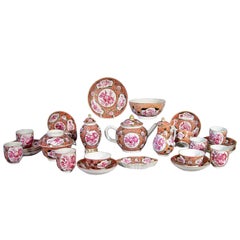
18th Century, Chinese Export Coral and Puce Porcelain Tea Service
Located in Downingtown, PA
Chinese export porcelain service spectacularly decorated with a smart coral scale ground with panels of puce flowers. The service com...
Category

Antique Mid-18th Century Chinese Chinese Export Tea Sets

Materials

Porcelain

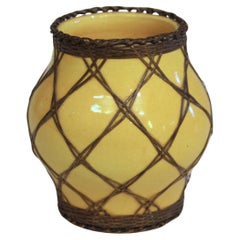
Awaji Pottery Japanese Scholar s Desk Yellow Brush Pot/Pencil Cup Bronze Weave
By Awaji Pottery
Located in Wilton, CT
Awaji Pottery brush pot vase in sunny yellow glaze with bronze weaving. From Tamura Kyuhei's Sumoto kiln. 3 3/4" high, 3 1/2" diameter. Impressed export and kiln marks. Some staining...
Category

Early 20th Century Japanese Arts and Crafts Ceramics

Materials

Pottery

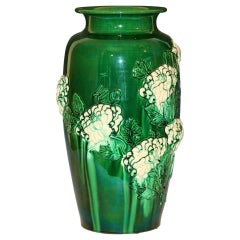
Large Japanese Awaji Pottery Chrysanthemum Vase
By Awaji Pottery
Located in Wilton, CT
Large Awaji pottery vase with sprigged chrysanthemums and green and white glazes, circa 1930. Measures: 18 1/4" high, 9 1/2" diameter. Excellent condition.
Category

Vintage 1930s Japanese Arts and Crafts Ceramics

Materials

Pottery

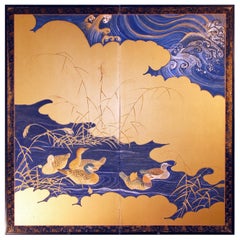
Paravento Giapponese a due pannelli
By Japanese Studio
Located in Brescia, IT
Sempre alla ricerca di cose particolari abbiamo acquistato questo paravento giapponese da una collezionista di Osaka. Un esempio di arte del novec...
Category

20th Century Japanese Showa Paintings and Screens

Materials

Gold

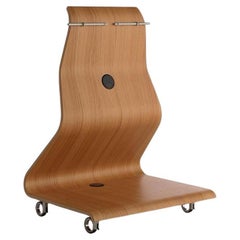
In Stock Cobra TV Stand Oak W/Multi by Casamania
Located in Beverly Hills, CA
The Cobra TV Stand by Casamania is a stunning blend of modern design and functionality. Crafted from high-quality oak wood, this piece features a sleek, minimalist silhouette that co...
Category

21st Century and Contemporary Furniture

Materials

Oak

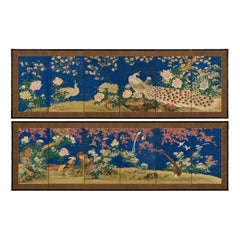
Mid 19th Century Japanese Screen Pair. Flowers Birds of the Four Seasons.
Located in Kyoto, JP
Shioka Sorin (1781-1850) Flowers & Birds of the Four Seasons Pair of six-panel Japanese Screens. Ink, gofun and pigments on silk. Dimensions (each screen): H. 91.5cm x W. 285cm (3...
Category

Antique Mid-19th Century Japanese Edo Paintings and Screens

Materials

Silk

Antique 1910s Persian Kermanshah Songhor Rug, 4 x 6
Located in New York, NY
This Persian Kermanshah carpet from the village of Songhor circa 1910 consists of a hand-knotted handspun wool pile and natural vegetable dyes. The medallion design features exceptio...
Category

Early 20th Century Persian Persian Rugs

Materials

Wool

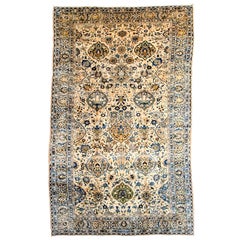
Antique 1910s Persian Lavar Rug, Wool, Hand-knotted, 6 x 12
Located in New York, NY
This Persian Lavar carpet created circa 1910 consists of a pure wool hand-knotted pile with cotton warp and threads and natural vegetable dyes. The work of master weaver Sakhaie, as ...
Category

Early 20th Century Persian Persian Rugs

Materials

Wool

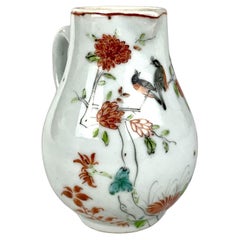
Antique Chinese Export Porcelain Pitcher Hand Painted Circa 1770
Located in Katonah, NY
This charming Chinese export porcelain pitcher was hand painted circa 1770. It captures a bit of elegance and whimsy in 18th-century Chinese export design. Known as a "sparrow beak" ...
Category

Antique Late 18th Century Qing Ceramics

Materials

Porcelain

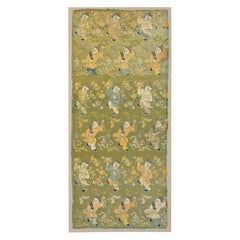
Antique Soft Teal Chinese Qing Dynasty Silk Brocade with Auspicious Symbols
Located in Milan, IT
Woven in the age of the third Qing Emperor Yongzheng (1722-35), this delicately coloured precious silk brocade is embellished by three parallel and offset rows of children holding a cornucopia of auspicious symbols. In the first horizontal row, the child is holding in one hand a closed lotus flower, symbol of honesty, goodness, beauty and purity, and in the other a stick which a pair of coins, an element belonging to the group of Eight Precious Things. The following row depicts the child holding on one hand the Paintings, one of the four symbols of literature and science, and a peach blossom on the other, a flower associated with Spring and rejuvenation. In between this main pattern we see an alternation of the bat motif (symbol of good luck), the plum blossom (symbolising the faithful, the resolute and the holy) and the butterfly (symbol of love, freedom, romance and beauty). The subtle polychromy of soft tones of green and peach is punctuated with touches of royal Chinese blue...
Category

Antique Early 18th Century Chinese Qing Textiles

Materials

Silk

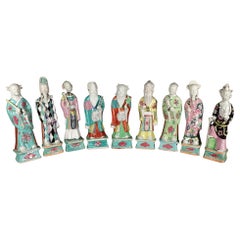
Chinese Export Porcelain Taoist Immortal Figures, Eight Immortals and the Leader
Located in Downingtown, PA
Large English Pearlware Oval Dish with Blue and White Chinoiserie and Shell Edge This striking large oval dish, dating from circa 1790, is an excellent example of late 18th-century ...
Category

Antique Late 18th Century Chinese Chinese Export Ceramics

Materials

Porcelain

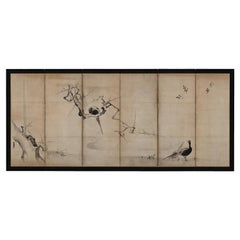
17th Century Japanese Screen. Ink Plum Tree Birds by Kano Naonobu.
Located in Kyoto, JP
Kano Naonobu (1607-1650) Plum Tree and Birds Six-fold Japanese Screen. Ink and slight color on paper. In this evocative ink work spread over a six-panel folding screen, we see the consummation of the elegance and refinement of the Edo Kano school. This 17th century screen is a rare surviving example of a large-scale bird and flower painting by Kano Naonobu, the younger brother of Kano Tanyu...
Category

Antique 17th Century Japanese Edo Paintings and Screens

Materials

Wood, Paper

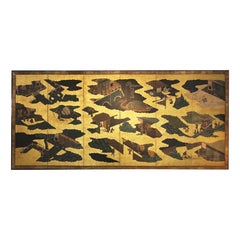
Six-panel gold leaf screen
By Japanese Studio
Located in Brescia, IT
Large Japanese six-panel screen, ink, color, gold, and gold leaf on paper, depicting three scenes from Genji monogatari (The Tale of Genji), the vignettes punctuated by raised golden...
Category

Antique Early 19th Century Japanese Edo Paintings and Screens

Materials

Gold Leaf

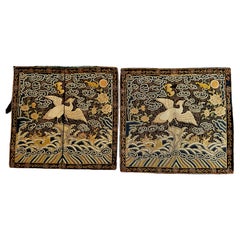
Pair of Qing Dynasty Civil Rank Badges with Egrets
Located in Atlanta, GA
Lovely pair of 19th century civil rank badges (buzi) decorated with an egret, denoting a civil servant of the Sixth Rank. The badges are worked in Peking knot and couched gold thread...
Category

Antique Early 19th Century Chinese Textiles

Materials

Silk

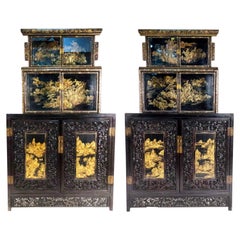
Pair of 20th Century Chinese Black and Gold Lacquered Three-Tiered Cabinets
Located in Queens, NY
Pair of Chinese black lacquered three-tiered glass and wooden cabinets decorated with landscape scenes and carved borders with brass hardware and detailed interior ( Early 20th Centu...
Category

Early 20th Century Chinese Chinese Export Cabinets

Materials

Glass, Wood

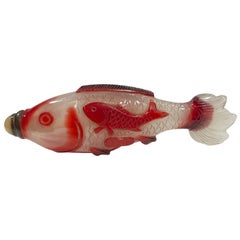
Chinese Red overlay glass snuff bottle depicting a fish, China, 19th century
Located in PARIS, FR
Red overlay glass snuff bottle depicting a fish, 19th century A rare translucent glass snuffbox with small bubbles in the shape of a fish, ruby red overlay decor with a fish among th...
Category

Antique Late 19th Century Chinese Scholar s Objects

Materials

Cut Glass

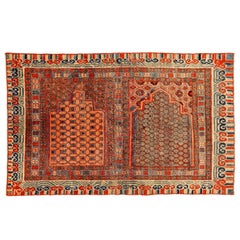
Rare and Early Khotan Rug with Two Niches
Located in Milan, IT
I don’t know of any other East Turkestan rug with only two niches, displayed here in a sort of yin yang. The outstanding palette, consisting of three shades of red, blue and green, i...
Category

Antique Early 19th Century East Turkestani Khotan Chinese and East Asian...

Materials

Wool

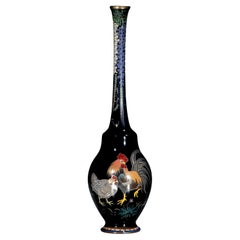
A Japanese cloisonné vase of a rooster and a hen
Located in Milano, IT
A Japanese cloisonné vase with a rooster and a hen set against a dark blue ground, decorated with polychrome enamels within a flowering meadow. The neck is adorned with a wisteria m...
Category

Antique Late 19th Century Japanese Metalwork

Materials

Enamel

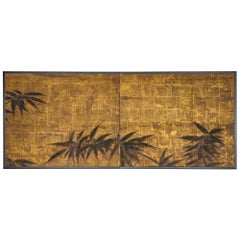
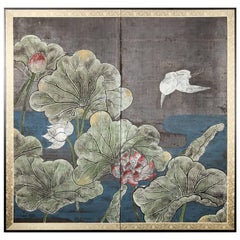
Japanese Two Panel Screen: Bamboo on gold
Located in Hudson, NY
Fragment from an earlier screen from the Muromachi period ( 1336-1573). Appears to have been mounted in the early 20th century into a small furosaki byobu (tea ceremony screen) Miner...
Category

Antique 16th Century Japanese Paintings and Screens
Materials

Gold Leaf

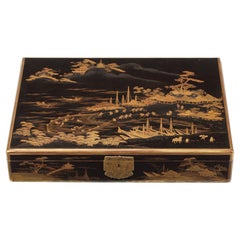
A superb Japanese export lacquer writing box
Located in Amsterdam, NL
Kyoto, circa 1680 The writing box has bevelled edges and a kabusebuta (overhanging lid), and is completely covered in black lacquer in maki-e and decorated in gold, silver and red h...
Category

Antique 17th Century Japanese Lacquer

Materials

Lacquer

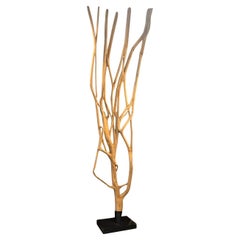
Andrianna Shamaris Impressive Monumental Ficus Wood Tree Sculpture
By Andrianna Shamaris
Located in New York, NY
Impressive sculpture from a single piece of ficus wood set on a modern black steel base. Fabulous in a residence, lobby or hotel project. This can also be removed from the base and h...
Category

2010s Indonesian Organic Modern Figurative Sculptures

Materials

Steel

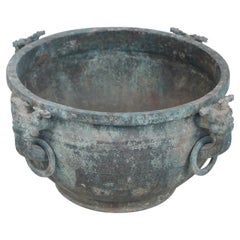
Chinese Han Dynasty Style Patinated Bronze Pot
Located in Queens, NY
Antique Chinese Han Dynasty-style copy of a patinated bronze pot carved with geometric patterns wrapping its form and adorned with decorative door knocker ornamentation. Condition: ...
Category

20th Century Chinese Chinese Export Antiquities

Materials

Bronze

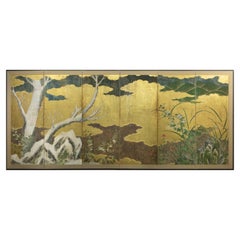
Japanese Six-Panel Screen Winter Into Spring
Located in Hudson, NY
With snow-covered willow tree, garden stone and winter berries. Right panels have spring flowers and a view of hills in the distance (likely the Higashiyama Hills painted in Kyoto by...
Category

Antique 18th Century Japanese Edo Paintings and Screens

Materials

Gold Leaf

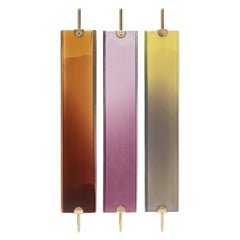
Unique Reverso Room Divider by Draga Aurel
By Draga Aurel
Located in Geneve, CH
Unique Reverso room divider by Draga & Aurel Price for each piece. Please contact us Unique piece Dimensions: W 29 H 271 Materials: Resin, po...
Category

2010s Italian Modern Screens and Room Dividers

Materials

Brass

Japanese Two Panel Screen, Lotus and Heron
Located in Hudson, NY
Japanese two panel screen, lotus and heron Colored mineral pigments on silver leaf on handmade mulberry paper.
Category

Antique Late 19th Century Japanese Paintings and Screens

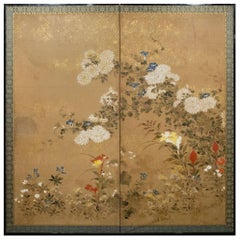
Japanese Two-Panel Screen, Flower Garden
Located in Hudson, NY
Rimpa School painting featuring cascading chrysanthemums as well as cockscombs, summer wild flowers, and a climbing morning glory vine. Beautifully executed, fine painting in mineral...
Category

Antique Mid-18th Century Japanese Edo Paintings and Screens

Materials

Gold Leaf

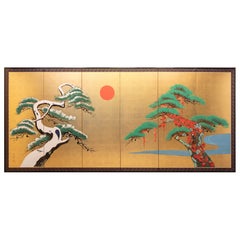
A six-panel folding screen with pine trees beneath the red sun
Located in Milano, IT
A six-panel folding screen with a gold-leaf ground, depicting two pine trees with a red sun at the center. On the left, a snow-covered pine is shown with a sinuous, knotted trunk and...
Category

Antique Late 19th Century Japanese Paintings and Screens

Materials

Gold Leaf

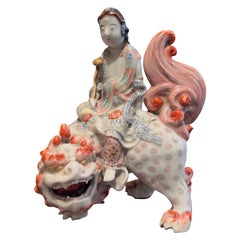
Japan, A rare Japanese Kutani figure of Kannon on a Foo Lion, Meiji Period, 19th
Located in PARIS, FR
Rare Japanese Kutani Figure: Unveiling Tranquility and Spiritual Power from Meiji Period Japan Unveil a rare gem from Japan's historical Meiji ...
Category

Antique Late 19th Century Japanese Meiji Sculptures and Carvings

Materials

Porcelain

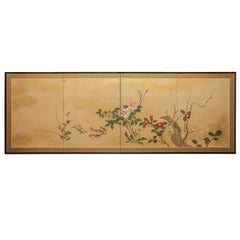
Japanese Four Panel Screen: Early Spring Into Summer
Located in Hudson, NY
Japanese Four Panel Screen: Early Spring Into Summer, Meiji period (1868 -1912) painting of plum in bloom with red camellias on the right and peony and thistle on the left. A clutc...
Category

Antique Early 1900s Japanese Meiji Paintings and Screens

Materials

Gold Leaf

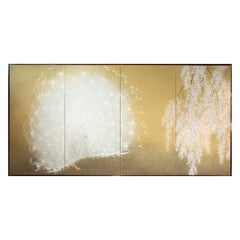
A four-panel folding screen depicting a white peacock, signed Yukihiko Kurihara
Located in Milano, IT
An unusual four-panel folding screen depicting a majestic white peacock and a flowering cherry tree, painted on paper with gold powder ground. The scene shows the peacock, rendered w...
Category

Mid-20th Century Japanese Paintings and Screens

Materials

Gold Leaf

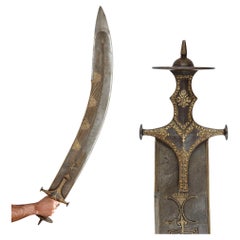
Large Indian Gold Damascened Steel Tegha Sword
Located in London, GB
Large Indian gold damascened steel tegha sword. Indian, c. 1850 Length 112cm, width 16cm, depth 10cm This remarkable sword is a tegha, a large Indian sword...
Category

Antique Mid-19th Century Indian Arms, Armor and Weapons

Materials

Gold, Steel

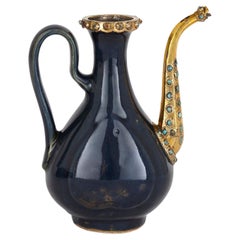
Very Rare Ming Dynasty Porcelain Ewer with Ottoman Gem-Set Tombak Mounts
Located in London, GB
Very rare Ming dynasty porcelain ewer with ottoman gem-set tombak mounts Chinese and Turkish, 16th/17th century Measures: Tombak: height 20cm,...
Category

Antique 16th Century Chinese Ming Bottles

Materials

Multi-gemstone, Brass

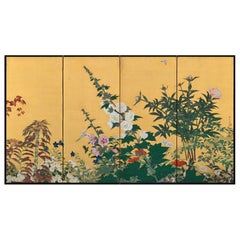
Early 20th Century Japanese Screen. Flowers of the Four Seasons.
Located in Kyoto, JP
Anonymous Flowers of the Four Seasons A four-panel Japanese screen. Ink, gofun and pigments on gold leaf. This Japanese screen is a rich visual celebration of the flowers of the fo...
Category

Early 20th Century Japanese Taisho Paintings and Screens

Materials

Gold Leaf

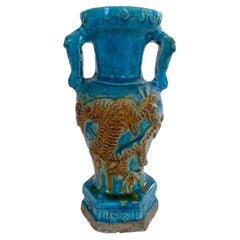
Ming Dynasty Vase with Vibrant Turquoise Glaze
Located in Atlanta, GA
Ming Dynasty (16th century) pottery vase with vivid turquoise glaze, decorated with dragons. The vase is partially moulded, with circular bosses around the mouth rim and a hexagonal ...
Category

Antique 16th Century Chinese Ceramics

Materials

Pottery

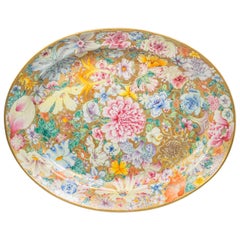
Chinese Export Platter, circa 1820
Located in New York, NY
Chinese Export platter, circa 1820. Mille fleur pattern.
Category

Antique Early 19th Century Chinese Platters and Serveware

Materials

Porcelain

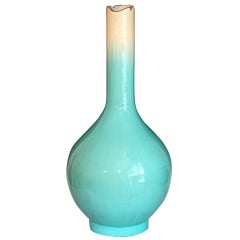
Large Kyoto-Awaji Bottle Vase in Sky Blue Crackle Glaze
By Awaji Pottery
Located in Wilton, CT
Large antique Kyoto-Awaji point bottle vase in sky blue crackle glaze with color draining away from the pale mouth rim. 33" high, 16" diameter. The rim, at some point damaged, has be...
Category

Early 20th Century Japanese Ceramics

Materials

Pottery

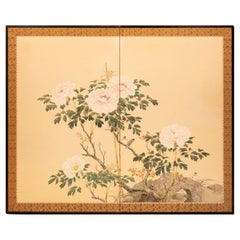
A two-panel folding screen with a naturalistic scene
Located in Milano, IT
A Japanese two-panel folding screen with floral decoration depicting blooming peonies, sparrows and rocks against a light ground. The panels are framed by two splendid silk brocade b...
Category

Early 20th Century Japanese Paintings and Screens

Materials

Paper

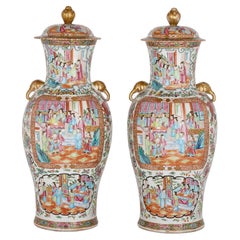
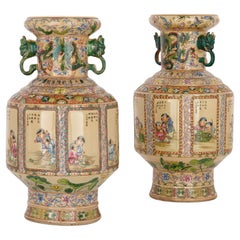
Pair of Large Canton Style Famille Rose Porcelain Vases and Covers
Located in London, GB
Pair of large Canton style famille rose porcelain vases. Chinese, Late 19th century. Measures: Height 64cm, diameter 25cm. Crafted in Qing dynasty China in the late nineteenth century for the export market, these fine porcelain vases...
Category

Antique Late 19th Century Chinese Qing Vases

Materials

Porcelain

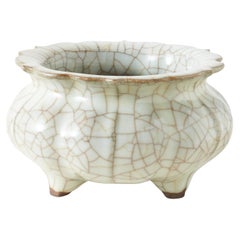
Ge-Type Tripod Censer with Ice Crackle Glaze
Located in San Francisco, CA
Ge-Type Tripod Censer with Ice Crackle Glaze, Song Style Ceramic tripod censer with a pale celadon glaze and a fine network of crackles, known as an ice crackle glaze. The piece rests on three short legs and features a gently scalloped rim. Made in the style of Guan ware...
Category

20th Century Chinese Ceramics

Materials

Ceramic

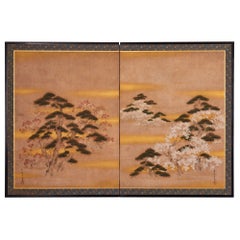
Japanese Two-Panel Screen, Pine, Cherry, and Maple
Located in Hudson, NY
Cherry blossoms and maples among ragged pines. Mineral pigments on mulberry paper with gold mist clouds. Completely remounted utilizing an antique silk brocade...
Category

Antique Mid-19th Century Japanese Paintings and Screens

Materials

Gold, Bronze

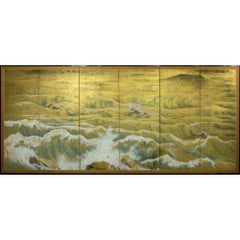
Japanese Six Panel Screen: Rocks and Waves in a Coastal Landscape
Located in Hudson, NY
Rocks and waves in a coastal landscape. Taisho (1912-1926) period painting. Mineral pigments on silk. Artist’s signature and seal reads: Tomokazu. Six panels measure 67 1/2 inches h...
Category

20th Century Japanese Paintings and Screens

Materials

Brocade, Silk

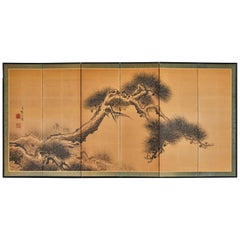
Japanese Six Panel Screen: Ink Painting of a Weathered Pine Tree
Located in Hudson, NY
Meiji period (1868 - 1912) sumi-e (or ink painting) on paper of a venerable pine tree with limbs stretching out over a bluff. Beautiful signature and seal read: Biei. Ink on paper ...
Category

Antique 19th Century Japanese Paintings and Screens

Materials

Brocade, Silk, Paper

Set of two 19th Century Chinese porcelain vases
Located in London, GB
Set of two 19th Century Chinese porcelain vases Chinese, 19th Century Height 57cm, diameter 32cm The vases feature bodies of cylindrical form with retracted bases and stepped retrac...
Category

Antique Late 19th Century Chinese Qing Vases

Materials

Porcelain

Japanese Folding Screen Gold Leaf
By Japanese Studio
Located in Brescia, IT
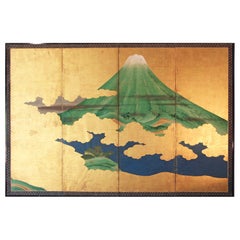
Byobu painted with mineral pigments on gold leaf, the quality of the painting is still excellent, with no color loss or restorations. A classic four-panel screen depicting Mount Fuji...
Category

Antique Early 19th Century Japanese Edo Paintings and Screens

Materials

Gold Leaf

17th Century Japanese Export Lacquer Cabinet with Depiction the Dutch Tradepost
Located in Amsterdam, NL
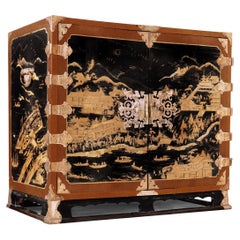
A highly important Japanese export lacquer cabinet with depiction of the Dutch East India Company tradepost Deshima and the annual Dutch delegation on its way to the Shogun in Edo Edo period, circa 1660-1680 H. 88 x W. 100.5 x D. 54 cm This cabinet includes a later European japanned stand, but also a modern powder-coated steel frame. The latter can be designed and added to your specific needs. The sides and front of the rectangular two-door cabinet are embellished in gold and silver hiramaki-e and takamaki-e on a black roiro lacquer ground with a continuous design. The two doors depict a long procession of numerous figures travelling on foot and horseback along buildings and a pagoda into a mountainous landscape. This is the annual court journey, Hofreis, of the Dutch from Nagasaki to the Shogun’s court in Edo. Three horseback riders are dressed as Dutch merchants and a fourth figure, probably het Opperhoofd, is seen inside a palanquin, norimon. Just about to cross the bridge, two men are carrying a cabinet like the present one. Many Japanese figures on either side of the procession are engaged in various activities; some play musical instruments on board of small boats, others are fishing; figures inside buildings are depicted playing go, and farmers are tending to their rice paddocks. The upper part of the right door shows a large mansion, probably the local daimyo’s castle, with men kneeling before a man in the central courtyard. The court journey fits in with the foreign policy of the shogunate which accorded a role to the VOC alongside China, Korea, and the Ryukyu Islands who also had to pay tribute. However, the VOC employees were traders, having low status in Japan’s social hierarchy, and they were received with less deference than were the state embassies from Korea and the Ryukyu Islands. Nevertheless, the contacts with the Dutch were a welcome source of information to the Shogun about Europe and European science and technology. The left side of the cabinet depicts, in mirror image, a rare view of the artificial fan-shaped Deshima Island, the trading post for the Dutch in Japan. The island, where the Dutch flag flies, is surrounded by small Japanese boats and an anchored three-masted fluyt (cargo ship), flying Dutch flags, with on the stern the VOC monogram. On the bottom right a busy street of Nagasaki is shown, bordered by shops and leading up to the stone bridge. On the island the trees are beautifully painted, two cows can be seen, and the flagpole, all in very fine detail. Dutchmen and enslaved Malay are visible outside the buildings and two Japanese figures, probably guards, sit in a small hut in the centre. A maximum of fifteen to twenty Dutchmen lived on the island at any time and soldiers or women were not allowed. Restrictions on Deshima were tight, and the merchants were only allowed to leave the island by special permission. The Opperhoofd had to be replaced every year, and each new Opperhoofd had to make a court journey to pay tribute, present gifts, and to obtain permission to Margaret Barclay eep on trading. In the distance, many birds fly above the hills and a four-story pagoda can be seen. The right side of the cabinet is painted with other horse riders and their retinue journeying through mountains. The pair of doors to the front open to reveal ten rectangular drawers. The drawers are decorated with scenes of birds in flight and landscapes with trees and plants. The reverse of the left door with two thatched buildings, one with a ladder, underneath a camelia tree with large blooms; the right door with a three-story pagoda nestled among trees and both doors with a flying phoenix, ho-oo bird. The cabinet, with elaborately engraved gilt copper mounts, hinges, lock plates and brass handles, is raised on an 18th-century English japanned wood stand. A pair of large cabinets...
Category

Antique 17th Century Japanese Edo Lacquer

Materials

Copper, Gold

A pair of six-panel folding screens depicting two pine trees (matsu)
Located in Milano, IT
A pair of six-panel folding screens from the Kano school, painted in ink and pigments on paper. The naturalistic composition is dominated by two lush green pine trees extending from ...
Category

Antique 19th Century Japanese Paintings and Screens

Materials

Paper

Byobu - Japanese Folding Screen
By Japanese Studio
Located in Brescia, IT
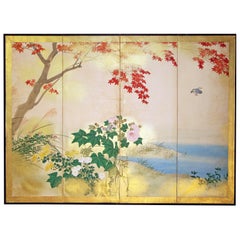
Nice four-panel Japanese screen painted on vegetal paper, depicting a landscape with a red maple, flowers and birds. The size is very refined and easy to place in a design project.
Category

Mid-20th Century Japanese Showa Paintings and Screens

Materials

Paper

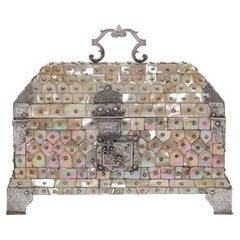
16th-Century Indo-Portuguese Colonial Mother-of-pearl Gujarat Casket
Located in Amsterdam, NL
An exceptional Indo-Portuguese colonial mother-of-pearl veneered casket with silver mounts India, Gujarat, 2nd half of the 16th century, the silver mounts Goa or probably Lisbon Measures: H. 16 x W. 24.6 x D. 16.1 cm An exceptional Gujarati casket with a rectangular box and truncated pyramidal lid (with slopes on each side and a flat top) made from exotic wood, probably teak (Tectona grandis), covered with a mother-of-pearl mosaic. The tesserae, cut from the shell of the green turban sea snail (Turbo marmoratus, a marine gastropod) in the shape of fish scales, are pinned to the wooden structure with silver ball-headed nails. The casket is set on bracket feet on the corners. The masterfully engraved decoration of the silver mounts follows the most refined and erudite Mannerist repertoire of rinceaux and ferroneries dating from the mid-16th century. The high quality and refinement of the silver mounts and, likewise, the silver nails that replaced the original brass pins used to hold the mother-of-pearl tesserae in place indicate the work of a silversmith probably working in Lisbon in the second half of the 16th century. The Indian origin of this production, namely from Cambay (Khambhat) and Surat in the present state of Gujarat in north India, is, as for the last three decades, consensual and fully demonstrated, not only by documentary and literary evidence - such as descriptions, travelogues and contemporary archival documentation - but also by the survival in situ of 16th-century wooden structures covered in mother-of-pearl tesserae. A fine example is a canopy decorating the tomb (dargah) of the Sufi saint, Sheik Salim Chisti (1478-1572) in Fatehpur Sikri in Agra district in the state of Uttar Pradesh, north India. This is an artistic production, geometric in character and Islamic in nature, where usually the mother-of-pearl tesserae form complex designs of fish scales or, similar to the dishes also made using the same technique, with the thin brass sheets and pins, stylized lotus flowers. The truncated pyramidal shape corresponds, like their contemporary tortoiseshell counterparts also made in Gujarat, to a piece of furniture used in the Indian subcontinent within the Islamic world prior to the arrival of the first Portuguese. This shape, in fact, is very old and peculiar to East-Asian caskets, chests or boxes used to contain and protect Buddhist texts, the sutras. A similar chest is the famous and large reliquary chest from Lisbon cathedral that once contained the relics of the city's patron saint, Saint Vincent. Both match in shape, having the same kind of socle or pedestal and bracket feet, and in their engraved silver mountings, featuring the same type of refined, erudite decoration. Their differences lie in the silver borders that frame the entire length of the edges of the chest (both the box and the lid), pinned with silver nails, and on the lock plate, shaped like a coat of arms in the Lisbon example. Given the exceptional dimensions of the reliquary casket...
Category

Antique 16th Century Indian Jewelry Boxes

Materials

Silver

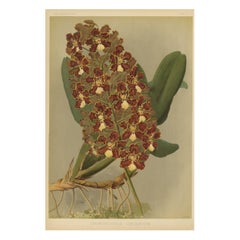
Red and Gold Orchid Print – Odontoglossum Coronarium, Reichenbachia c.1888
Located in Langweer, NL
Antique Botanical Print – Orchid Odontoglossum coronarium, c.1888 An extraordinary antique botanical print of Odontoglossum Coronarium, a visually commanding orchid species, from th...
Category

Antique 1880s German Prints

Materials

Paper

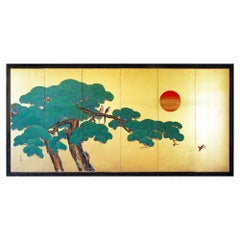
Byobu - Japanese Screen Gold Leaf Kano School Pine Sun
By Japanese Studio
Located in Brescia, IT
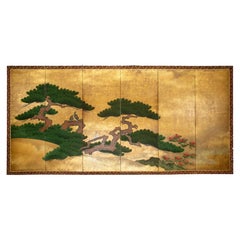
Japanese Screen of Kano school six panels hand painted with mineral pigments on gold leaf. A very clean work with large pines and a red sun. It is in good condition, with original l...
Category

Antique Late 19th Century Meiji Paintings and Screens

Materials

Gold Leaf

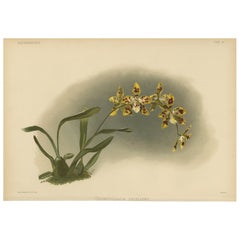
Yellow Spotted Orchid Print – Odontoglossum Excellens, Reichenbachia c.1888
Located in Langweer, NL
Antique Botanical Print – Yellow Spotted Orchid Odontoglossum Excellens Description: A refined and beautifully composed botanical lithograph of Odontoglossum Excellens, a captivatin...
Category

Antique 1880s German Prints

Materials

Paper

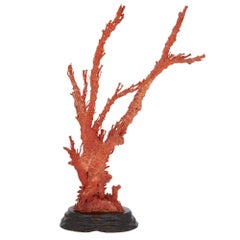
Qing Dynasty Antique Chinese Red Coral Specimen
Located in London, GB
This red coral specimen, with flowing lines and organic form, is a beautiful example of how the work of nature can be, and has been, celebrated as a...
Category

Early 20th Century Chinese Sculptures and Carvings

Materials

Coral

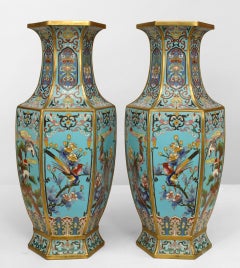
Pair of French Victorian Chinoiserie Blue Enamel and Cloisonne Vases
Located in Queens, NY
Pair of French Victorian blue enamel and cloisonné hexagonal shaped Chinoiserie decorated vases. (PRICED AS Pair)
Category

Antique 19th Century French Victorian Vases

Materials

Enamel, Metal

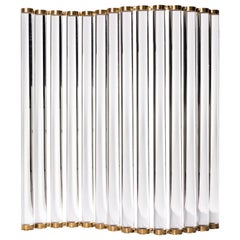
Unique Vertigo Room Divider Module by Draga Aurel
By Draga Aurel
Located in Geneve, CH
Unique Vertigo Room Divider by Draga & Aurel The published price corresponds to ONE (01) bar. Please contact us for full module quotations. Unique piece. Dimensions: W 30 D 10 H 200,...
Category

2010s Italian Modern Screens and Room Dividers

Materials

Brass

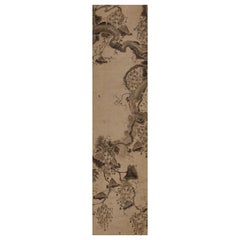
17th Century Korean Grapevine and Squirrel Scroll Painting, Mid Joseon Period
Located in Kyoto, JP
Anonymous. Korean, 17th century. Joseon period. Hanging scroll. Ink on paper. Seal: Shinso Dimensions: Scroll: H. 200 cm x W. 31 cm (79” x 12”) Image: H. 122 cm x W. 29.5 cm (48” x 11.5”) The grapevine came to China and then Korea from western Asia via the silk road trade routes. By the mid-Joseon period, it was one of the most popular subjects for Korean literati painters. Grapevines were painted as a singular subject or, less commonly, in combination with squirrels, which are associated with children due to their playful nature. Together, grapevines and squirrels embody wishes for abundant offspring and wealth. For the Korean literati artist the twisting vines, curling tendrils and round, plump grapes provided ample opportunity for expressive "brush play”. In this painting the artist has abstracted the scene and is seemingly unconcerned with discontinuities and proportion. Vines spring up from nowhere, grapes hang in random clusters and the squirrel’s head appears as if twisted backwards. For the vines and leaves we can feel a sense of speed in the brushstrokes, imparting a dynamic feel which is at once intense and animated. This contrasts dramatically with the countless tiny strokes of ink which realistically capture the texture of the squirrel’s fur...
Category

Antique 17th Century Korean Other Paintings and Screens

Materials

Paper

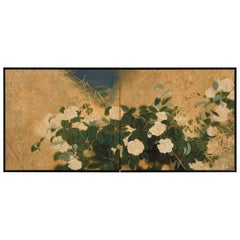
Circa 1925. Taisho era Japanese Nihonga Screen. Camellia Bamboo.
Located in Kyoto, JP
Anonymous Camellia & Bamboo Taisho era Two-panel Japanese Screen. Mineral pigment, gofun and ink on silk. A small Japanese Nihonga screen capturing...
Category

Early 20th Century Japanese Taisho Paintings and Screens

Materials

Silk

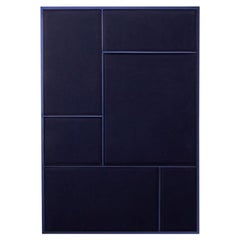
Nouveau Large Pin Board in Navy Blue Navy Blue Frame by All The Way To Paris
By All The Way To Paris, Please Wait to be Seated
Located in Brooklyn, NY
Nouveau large pin board in navy blue & navy blue frame by All The Way To Paris The foam and textiles have been specially engineered to provide soundproofing. Including 2 hanging brackets. Hang them, turn them and make them your own. The pin boards...
Category

21st Century and Contemporary Danish Modern More Asian Art, Objects and ...

Materials

Steel

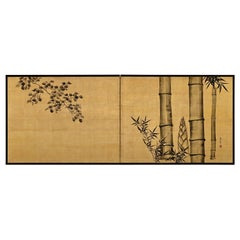
19th Century Japanese Screen for Tea-Ceremony, Ink Bamboo and Plum on Gold Leaf
Located in Kyoto, JP
Three Friends of Winter Nakajima Raisho (1796-1871) Late Edo period, circa 1850 Ink and gold leaf on paper. This is a double-sided Japanese Furosaki or tea-ceremony screen from the mid 19th century; bamboo and plum on the front, young pines the back. It by Nakajima Raisho, a master painter of the Maruyama school in the late Edo and early Meiji periods. In this work Raisho combines exquisite ink brushwork with large open spaces of brilliant gold-leaf to inspire the viewers imagination. Rather than naturalism, he is searching for the phycological impression of the motifs, resulting in abstraction and stylization. His simplification of the motifs the result of looking to capture the inner nature of the objects. This art motif is known as Sho Chiku Bai, or the Three Friends of Winter. Evergreen pine connotes steadfastness, bamboo suggests both strength and flexibility, while plum blossoms unfurling on snow-laden branches imply hardiness. Combined, this trio is emblematic of Japanese new year. Chinese literati were the first to group the three plants together due to their noble characteristics. Like these resilient plants flowering so beautifully in winter, it was expected of the scholar-gentleman to cultivate a strong character with which he would be able to show the same degree of perseverance and steadfastness even during times of adverse conditions. The screen would have been placed near the hearth of a room used for the Japanese tea ceremony, shielding the fire from draughts and also forming a stimulating and decorative backdrop behind the tea utensils. It would have been used in the Hatsugama, or first tea-ceremony of the new year. Nakajima Raisho (1796-1871) originally studied under Watanabe Nangaku before entering the school of Maruyama Ozui. He was the highest ranking Maruyama school painter at the end of the Edo period and was known as one of the ‘Four Heian Families’ along with Kishi...
Category

Antique Mid-19th Century Japanese Edo Paintings and Screens

Materials

Gold Leaf

Still Thinking About These?

All Recently Viewed