Recognized Dealers Asian Art and Furniture

to
49
872
575
1,398
159
15
69
24
12
7
6
5
3
3
3
2
1
1
1
1
1
251
563
584
174
298
112
24
72
6
23
29
2
22
7
11
5
1
564
416
362
315
221
1,270
1,039
663
365
89
1,572
1,478
1,484
63
22
12
9
9
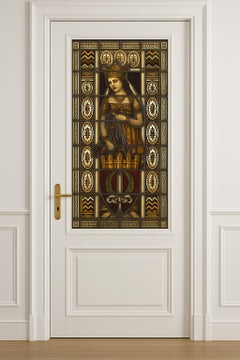
Rare Decorative Leaded-Glass Window Picturing The Queen of the East, ca. 1899
Located in Langweer, NL
Original Antique Leaded-glass window depicting "Batavia, Queen of the East' & the Coat of Arms of Batavia, in wooden door, execution Atelier van Gebrand Glas 't Prinsenhof - Jan Scho...
Category

Antique 1890s Dutch Art Nouveau Antiquities

Materials

Lead

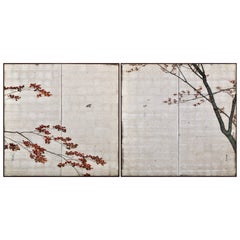
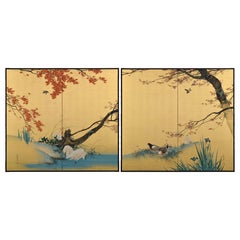
1895 Meiji Japanese Screen Pair. Cherry Blossoms Autumn Maples on Silver Leaf
Located in Kyoto, JP
Cherry Blossoms and Autumn Maples Isobe Hyakurin (1836–1906) Dated Meiji 28, April: 1895 Pair of two-panel Japanese screens; ink and pigments on silver leaf This refined pair of scr...
Category

Antique Late 19th Century Japanese Meiji Paintings and Screens

Materials

Silver Leaf

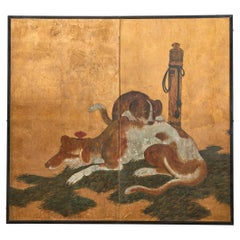
Japanese Two Panel Screen: European Hounds
Located in Hudson, NY
18th century painting of European hound and her pup. Mineral pigments on gold leaf with black lacquer trim.
Category

Antique Mid-18th Century Japanese Paintings and Screens

Materials

Gold Leaf

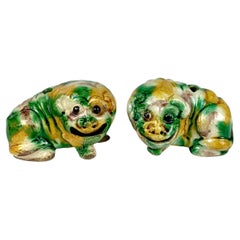
Pair Antique Chinese Stoneware Shar Pei Puppy Figures with Sancai Glaze Ca. 1860
Located in Katonah, NY
This pair of small Chinese stoneware puppy figures, made circa 1860, combines the natural warmth and charm of the Shar Pei with the soft, flowing beauty of sa...
Category

Antique Mid-19th Century Chinese Qing Animal Sculptures

Materials

Stoneware

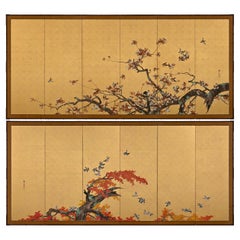
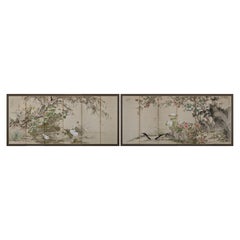
Meiji era Japanese Screen Pair, Two-panel. Spring Autumn Birds Flowers.
Located in Kyoto, JP
Spring and Autumn Birds & Flowers Hasegawa Gyokujun (1863-1921) Meiji period, circa 1900. Ink, color and gofun on silk. Dimensions of each screen: H. 172 cm x W. 188 cm (68’’ x 7...
Category

Early 20th Century Japanese Meiji Paintings and Screens

Materials

Gold Leaf

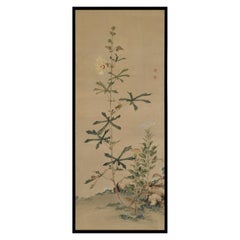
Mid 19th Century Framed Japanese Painting. Grasshopper Hibiscus.
Located in Kyoto, JP
Obata Tosho (1812-1886) Grasshopper & Hibiscus. Late Edo period, mid 19th Century Framed Japanese Painting. Ink and color on paper. Individually framed 19th century bird and flow...
Category

Antique Mid-19th Century Japanese Edo Paintings and Screens

Materials

Paper

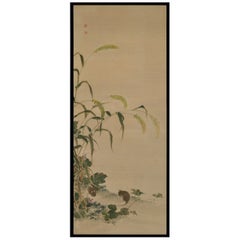
Mid 19th Century Framed Japanese Painting. Mice Millet
Located in Kyoto, JP
Obata Tosho (1812-1886) Mice & Millet Late Edo period, mid 19th Century Framed Japanese Painting. Ink and color on paper. Individually framed 19th century bird and flower paintin...
Category

Antique Mid-19th Century Japanese Edo Paintings and Screens

Materials

Paper

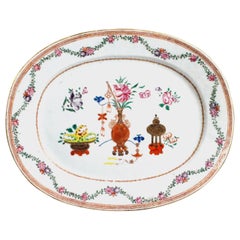
Chinese Export Famille Rose Precious Objects Porcelain Dish
Located in Downingtown, PA
Chinese Export Famille Rose 'Precious Objects' Porcelain Dish, Qianlong Period, Circa 1765-1775 This superb oval dish is a quintessential example of Chinese Export porcelain create...
Category

Antique Mid-18th Century Chinese Chinese Export Platters and Serveware

Materials

Porcelain

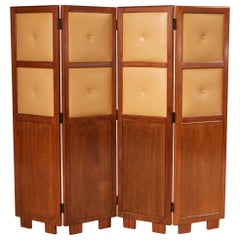
Brazilian Hardwood, Leather and Mirrored Panel Folding Screen, Brazil, c 1960s
Located in Los Angeles, CA
A beautiful four-paneled Brazilian Hardwood folding screen with leather panels on one side and mirrored paneling on the reverse. Produced in Brazil in circa 1960s, this folding scree...
Category

20th Century Brazilian Mid-Century Modern Paintings and Screens

Materials

Wood, Leather, Mirror

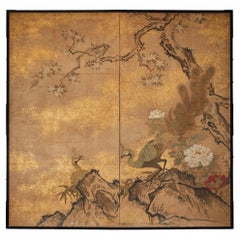
Japanese Two Panel Screen: Amorous Pea-fowl in Craggy Garden Landscape
Located in Hudson, NY
Ink and minimal pigments on mulberry paper with black lacquer trim.
Category

Antique Mid-19th Century Japanese Paintings and Screens

Materials

Lacquer, Paper

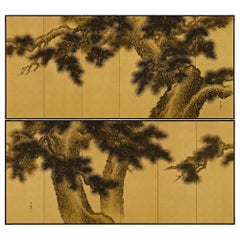
Early 20th Century Japanese Screen Pair - Ink Pine Trees on Gold
Located in Kyoto, JP
Imao Keisho (1902-1993) Pine Trees Early 20th Century, Circa 1930 Pair of six-panel Japanese screens. Ink on silk and gold leaf. Dimensions: Each screen H. 67.5” x 148” (172 cm x 376 cm) A pair of monumental six-panel Japanese pine screens by the renowned Nihonga artist Imao Keisho. Here Keisho entirely removed the background and brought the pine trees to the surface of the painting. This simplification of the elements makes the scene exceptionally direct and compelling and injects a very modern...
Category

Early 20th Century Japanese Showa Paintings and Screens

Materials

Gold Leaf

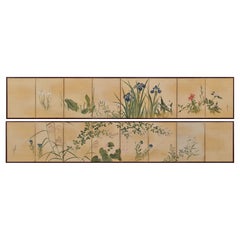
1838 Japanese Screen Pair. Flowers Grasses of the Four Seasons.
Located in Kyoto, JP
Maruyama Oshin (1790-1838) Flowers and grasses of the four seasons: dated 1838 Pair of eight-panel Japanese screens; ink, color and gold leaf on silk Dimensions: each (2) H. 38.5 cm...
Category

Antique 1830s Japanese Edo Paintings and Screens

Materials

Silk

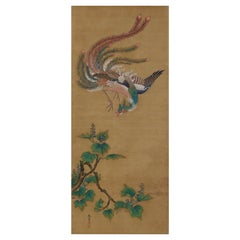
19th Century Japanese Silk Painting by Kano Chikanobu, Phoenix Paulownia
Located in Kyoto, JP
Birds & Flowers of the seasons Pheasants & Plum in Snow Unframed painting. Ink, pigment and gofun on silk Kano Chikanobu 1819-1888 Signature...
Category

Antique Mid-19th Century Asian Edo Paintings and Screens

Materials

Silk

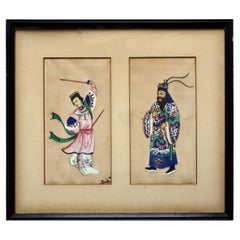
19th C Royal Couple; Pair Chinese Pith Paintings Qing Dynasty. China, Circa 1855
Located in Incline Village, NV
Lovely and authentic all original mid 19th century pair of small Chinese Pith Paintings; under glass and double matted in a single plain narrow black straight reeded trimmed wooden f...
Category

Antique 1850s Chinese Qing Paintings and Screens

Materials

Paper

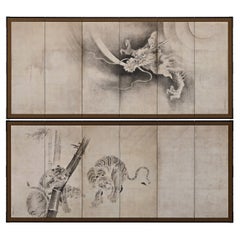
17th Century Japanese Screen Pair. Tiger Dragon by Kaiho Yusetsu
Located in Kyoto, JP
Kaiho Yusetsu (1598-1677) Tiger and Dragon Early Edo Period, Circa 1650 A Pair of Six-fold Japanese Screens. Ink and slight color on paper. Dimensions: Each screen: H. 171 cm x W. 380 cm (67.5’’ x 149.5’’) In this pair of early Edo period Japanese screens a group of tigers prowl in a bamboo grove whipped with fierce wind, while a dragon claws through clouds and mist. The dragon embodies elemental qualities - looming out of the mist, the coils of its body disappearing in the clouds. The dragon is calling for rain, symbolizing spring which is considered the fountain of life. On the other side, the tigers calls for the wind, symbolizing autumn which is considered the end of life. Tigers were familiar motifs within Japanese art from ancient times though the animals were imaginary to the people in the 17th century. While dragons and tigers are usually associated as sacred and ferocious, in this painting, both animals have rather amusing expressions. The tigers appear to glare at the dragon with cat-like eyes, and the look on the swirling dragon’s face appears almost affectionate - lending a playful flair to an otherwise magnificent theme. The tiger and dragon are cosmological symbols of the balancing forces in the world. Screens such as this were originally meant to express the fluctuating nature of the world. For Japanese in the early Edo period, they likely suggested the powers of the cosmos. In Japan the tiger and dragon motif was originally absorbed into the circles of Zen monasteries before spreading into the secular world. The theme especially appealed to the military classes with the Kano school, the official painters to the Shogun and the samurai, being the leading contributors. The painter of this pair of screens, Kaiho Yusetsu (1598-1677), was closely patronized by the third Shogun Tokugawa Iemitsu. In his later years he worked with Kano school artists...
Category

Antique Mid-17th Century Japanese Edo Paintings and Screens

Materials

Silk, Wood, Paper

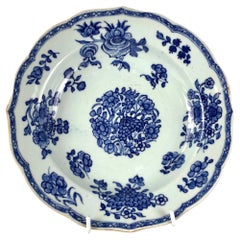
Antique Blue and White Chinese Export Porcelain Dish Hand Painted Circa 1760
Located in Katonah, NY
This Chinese Export porcelain dish was hand-painted in deep cobalt blue with beautiful floral decoration featuring peonies, a traditional symbol of prosperity and beauty. Made circa ...
Category

Antique Mid-18th Century Chinese Qing Ceramics

Materials

Porcelain

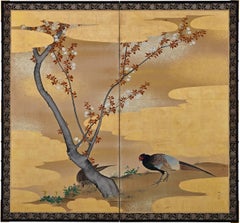
Early 19th Century Japanese Screen. Cherry Blossom Pheasants by Mori Tetsuzan
Located in Kyoto, JP
Mori Tetsuzan (1775-1841) Pheasants and Cherry Blossoms Two-fold Japanese screen. Ink, color, gofun, gold and silver on paper. A two-fold Japanese bir...
Category

Antique Early 19th Century Japanese Edo Paintings and Screens

Materials

Gold Leaf

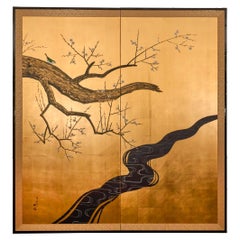
Japanese Two Panel Screen: "Autumn Day in the year 1931 (Xinwei)"
Located in Hudson, NY
Titled by the artist. This screen depicts a plum tree on rivers edge with a solitary nightingale. Mineral pigments on gold with silk brocade boarder and black lacquer trim with bron...
Category

Vintage 1930s Japanese Paintings and Screens

Materials

Brocade, Lacquer

Circa 1920 Japanese Screen. Cat Mouse Harvest Scene on Gold Silk.
Located in Kyoto, JP
The narrative playfulness of the scene depicted on this Japanese screen sets alight what is at its core a celebration of a bountiful harvest. The screen offers a visual representatio...
Category

Early 20th Century Japanese Taisho Paintings and Screens

Materials

Gold

Japanese Two Panel Screen: Gilded Pine
Located in Hudson, NY
Luxurious golden pine with gold raised relief on gold silk with silk brocade border and black lacquer trim with bronze mounts. Signature and seal read: Takuyo. Back Label Reads: ...
Category

Mid-20th Century Japanese Paintings and Screens

Materials

Brocade, Silk, Lacquer

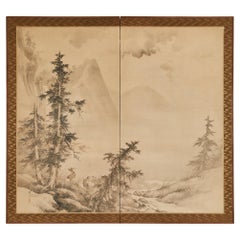
Japanese Two Panel Screen: Moonlit Forest Landscape with Deer
Located in Hudson, NY
Sumi Ink on Mulberry paper with silk brocade border and lacquer trim. Signature reads: Sobun. Seal reads: Morikawa Notes about the Artist: Morikawa Sobun (1847-1902) was born into ...
Category

Antique Late 19th Century Japanese Paintings and Screens

Materials

Brocade, Silk, Lacquer, Paper

Meiji Era, Circa 1900 Japanese Screen Pair, Flowers Birds of Spring Autumn
Located in Kyoto, JP
Flowers & Birds of Spring and Autumn Unknown artist. Japan. Meiji period, circa 1900. A pair of six-fold screens. Ink, color, gofun and gold leaf on paper. Signed: Gaga S...
Category

Antique 1890s Japanese Meiji Paintings and Screens

Materials

Gold Leaf

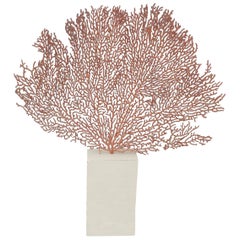
Andrianna Shamaris Coral Fan
By Andrianna Shamaris
Located in New York, NY
Beautiful coral fan set on a minimalist white stand. We have a collection. Great as a party gift or table setting. All one of a kind. Andrianna Shamaris....
Category

2010s Organic Modern Natural Specimens

Materials

Coral

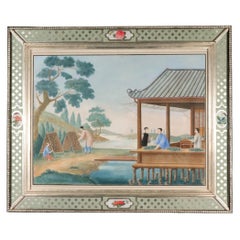
China Trade Painting on Paper depicting the Feeding of Silkworms
Located in Downingtown, PA
China Trade Painting on Paper depicting Feeding of Silkworms, Circa 1780-1800 This painting is a superb example of the artwork created by Chinese artists for the Western market, off...
Category

Antique Late 18th Century Chinese Chinese Export Paintings and Screens

Materials

Paper

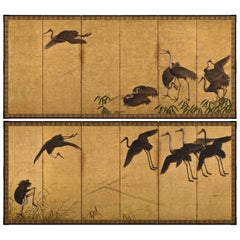
17th Century Japanese Screen Pair. Flock of Cranes. Ink and color on gold leaf.
Located in Kyoto, JP
A pair of six-fold Japanese screens from the 17th century depicting a flock of cranes arriving at their wintering grounds. The expansive scene is heavily atmospheric. The cranes are...
Category

Antique 17th Century Japanese Edo Paintings and Screens

Materials

Gold Leaf

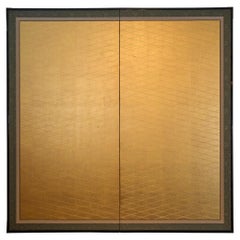
Japanese Two Panel Screen: Gold Lattice
Located in Hudson, NY
Embossed gold paper in a lattice design with silk brocade border and black lacquer trim with bronze hardware.
Category

Early 20th Century Japanese Paintings and Screens

Materials

Gold, Bronze

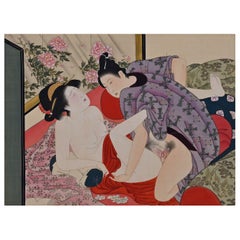
19th Century Japanese Shunga Hand-Scroll, Katsukawa School
Located in Kyoto, JP
Shunga Unknown artist Meiji era, circa 1880 Hand-scroll mounted with 12 paintings Ink, pigment and gofun on silk Dimensions: Each image measures H. 23.2 cm x W. 34.4 cm (9.15” x 13.5”) The hand-scroll measures H. 28 cm x W. 540 cm (11” x 212”) A set of 12 late 19th century Japanese Shunga paintings mounted as a hand-scroll. Two of the leaves bear the signature and seal ‘Setsuzan’, although we are unable to confirm the identity of the artist using this art name. 6 of the 12 images are taken almost directly from Katsukawa Shuncho’s late 18th century woodblock series, ‘Erotic Pictures...
Category

Antique Late 19th Century Japanese Meiji Paintings and Screens

Materials

Silk

19th Century Japanese Screen Pair - Birds Flowers of the Four Seasons
Located in Kyoto, JP
Birds & Flowers of the Four Seasons Yamamoto Baiitsu (1783-1856) Late Edo period, Dated 1850 A magnificent pair of six-panel Japanese folding screens by Yamamoto Baitsu, representin...
Category

Antique Mid-19th Century Japanese Edo Paintings and Screens

Materials

Wood, Paper

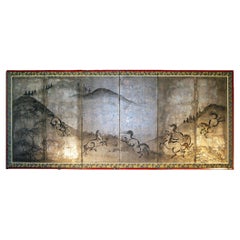
Chinese Horses - Japanese Folding Screen Silver Leaf
By Japanese Studio
Located in Brescia, IT
A six-panel screen, painted in ink on oxidized silver leaf, depicting galloping horses in the style of the finest Chinese paintings. The horse is a universal symbol of freedom. Hors...
Category

Early 20th Century Japanese Taisho Paintings and Screens

Materials

Silver Leaf

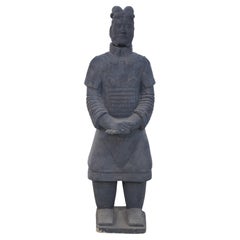
Chinese Qin Dynasty Style Life-Size Terracotta Soldier Statue
Located in Queens, NY
"Chinese Qin Dynasty-style (20th Century) life-size terracotta soldier statue standing with hands clasped on a rectangular base. (Head is removable)...
Category

20th Century Chinese Chinese Export Antiquities

Materials

Terracotta

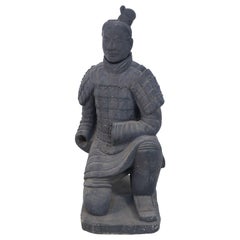
Chinese Qin Dynasty Style Life-Size Kneeling Terracotta Soldier Statue
Located in Queens, NY
Chinese Qin Dynasty-style (20th Century) life-size terracotta soldier statue kneeling on a rectangular base. (Head is removable)(Companion piece: NW...
Category

20th Century Chinese Chinese Export Antiquities

Materials

Terracotta

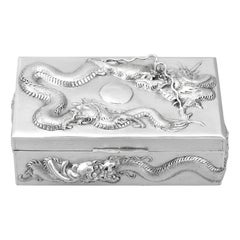
1920s Chinese Export Silver Box
Located in Jesmond, Newcastle Upon Tyne
An exceptional, fine and impressive antique Chinese Export silver box; an addition to our collection of boxes and cases. This exceptional an...
Category

Antique 1890s Chinese Chinese Export Antiquities

Materials

Silver

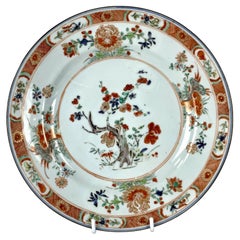
Antique Chinese Export Porcelain Dish 18th Century Qianlong Era Circa 1760
Located in Katonah, NY
This antique Chinese export porcelain dish was hand-painted in the mid-18th century in the Qianlong Era. It features a blossoming plum tree adorned with orange, blue, and gold flower...
Category

Antique Mid-18th Century Chinese Qing Ceramics

Materials

Porcelain

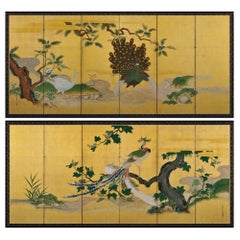
Japanese Screen Pair, circa 1730, Peacocks and Phoenix, Kano School
Located in Kyoto, JP
Phoenix and Peacocks. A pair of six-panel Japanese folding screens by Tsunetake Yotei (n.d.) First half of the 18th century. The signature reads 67 year old Tsunetake. The seals read: -Tsunetake no in, -Yotei, -Seishin Dimensions: Each screen – H. 69” x W. 149” (176 cm x 378 cm) A pair of Kano Grand Picture (Waga) screens depicting phoenix and peacocks rich with symbolic meaning. Dating to the first half of the 18th century, from the Kobikicho Kano school in Edo, this pair of folding...
Category

Antique Early 18th Century Asian Edo Paintings and Screens

Materials

Gold Leaf

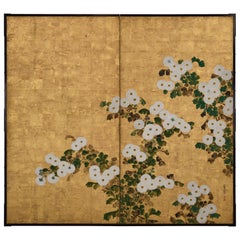
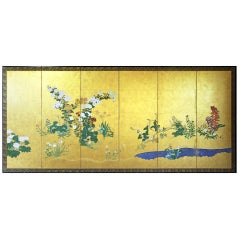
18th Century Japanese Rinpa Screen. White Chrysanthemums. School of Korin.
Located in Kyoto, JP
School of Ogata Korin White Chrysanthemums 18th Century, Edo period. A two-panel Japanese screen. Ink, color, gofun and gold leaf on paper. Dimensions: H. 171 cm x W. 188 cm (67.5” x 74”) On this two-panel Japanese screen we see blooming chrysanthemums, a flower which embodies the essence of autumn in Japan. Here the traditional floral theme has been simplified and stylized. The bright colors and asymmetrical composition against the delicate gold leaf create a luxurious and ornate work of art. Its background, a strikingly patinated grid of gold leaf, denies any sense of place or time and imbues everything with an ethereal glow. The leaves and stems of the plants are nothing more than pools of mottled color and ink without any outline whatsoever. These are typical Rinpa adaptations of traditional ink painting methods; tarashikomi, or diluted washes of color blended while very wet, and mokkotsu, or “bonelessness,” which creates forms without exterior outlines. The relief work of the rounded flower petals has been obtained by the moriage process (a mixture based on ground shells modeled on the surface of the paper). On the lower right of the screen, the siganture “Hokyo Korin Jakumyo” and the “Hoshuku” seal can be read. Korin is Ogata Korin, famed for the Irises (Nezu Museum) and Red and White Plum Blossom (MOA Museum of Art) folding screens, both National Treasures. Korin worked in both Kyoto and Edo in the mid-Edo period. Korin was using the art name “Jakumyo” just after he received the Hokyo level, which was in 1701. This particular screen was published in May of 1961 in the Japanese Sansai Fine Art Magazine*. An in depth article accompanies the photograph of the screen and and a photograph of the signature and seal. This article devotes much of its body to discussing the moriage technique, how it enlivens the chrysanthemum flowers and Korin’s specific skill in using the technique. The article goes on to discuss the most famous works of Korin, utilizing this technique, which were known at the time. Specifically a two-panel screen held in the Honolulu Museum which was discovered in the store-house of Takahashi Soan. A two-panel screen pair which the Nakano family own. A two-panel screen pair with chrysanthemums in moriage in fan designs owned by the Nomura family. Also a small folding screen featuring chrysanthemums held in the Yamato Bunkakan. The article goes on to say that this particular two-fold screen came from the Nijo family. Korin is known to have had a strong connection with the aristocratic Nijo family. The article explains that Korin received a lot of favors from the Nijo family and that this screen would have been gifted to them. Since that time the Honolulu screen has been amended to ‘attributed to Ogata Korin’ and I do not know further details of the other 3 screens. Other Chrysanthemum screens...
Category

Antique 18th Century Japanese Edo Paintings and Screens

Materials

Gold Leaf

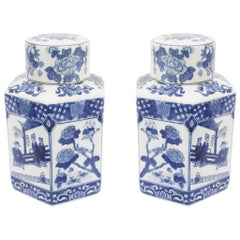
Pair of Chinese Blue/White Porcelain Ginger Jars
Located in Queens, NY
PAIR of Asian Chinese (20th Century) blue and white porcelain temple / ginger jars with round lids, and hexagonal bases, featuring figures and a floral pattern (PRICED AS PAIR)
Category

20th Century Chinese Chinese Export Antiquities

Materials

Porcelain

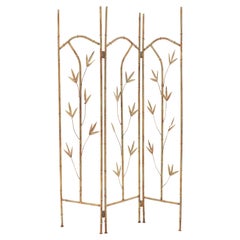
Mid-Century Faux Bamboo Metal Painted 3-Fold Screen
Located in Queens, NY
Mid-century faux bamboo metal screen with three panels have a leaf design with a faux painted patina.  
Category

20th Century American Mid-Century Modern Paintings and Screens

Materials

Metal

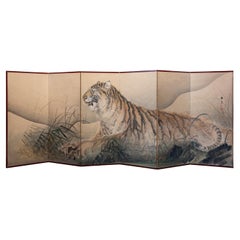
A six-panel screen depicting a majestic tiger
Located in Milano, IT
A Japanese six-panel screen painted on paper with gold powder, depicting a majestic tiger reclining in tall grass, emerging powerfully from the lightly suggested landscape in the bac...
Category

Antique Late 19th Century Japanese Paintings and Screens

Materials

Paper

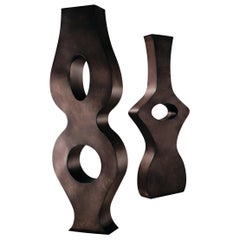
DeCastelli DC099 Tristan Isotte Sculpture in Stainless Steel by Stefano Dussin
By DeCastelli
Located in Brooklyn, NY
Metal is unabashedly confirmed in these large, sinuous sculptures. Complementary forms are emphasized by unique hues and the precious gold leaf appli...
Category

21st Century and Contemporary Italian Modern Sculptures and Carvings

Materials

Stainless Steel

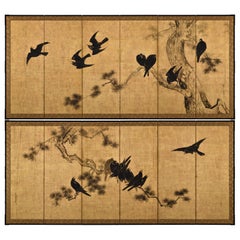
Mid 18th Century Japanese Screen Pair. Crows Pines by Unkoku Toshuku.
Located in Kyoto, JP
Unkoku Toshuku (1722-1779) Crows and Pines A pair of six-panel Japanese Screens. Ink and gold leaf on paper. Dimensions: Each Screen: H. 170.5 cm x W. 375 cm Haha-cho or mynah birds, whose forms resemble crows in artwork, were commonly depicted in Japanese art. These types of paintings were originally modeled on paintings attributed to the 13th century Chinese painter Muqi (Mokkei), whose art was enormously influential in Japan. Crows only became a theme among Japanese artists from the later 1500s onward. They likely were inspired by these imported Chinese paintings of myna birds, which are not native to Japan, substituting the native species of crow instead.  The best known early examples of the depiction of Japanese crows are two Momoyama screen...
Category

Antique Mid-18th Century Japanese Edo Paintings and Screens

Materials

Gold Leaf

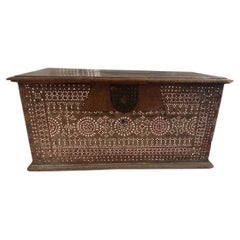
Antique Storing Chest
Located in New York, NY
Beautiful antique shell inlaid chest originally used for storing blankets. Original hard ware and remnants of paint on this one of a kind chest perfect for storing or for a small cof...
Category

Vintage 1950s Indonesian Minimalist Commodes and Chests of Drawers

Materials

Wood, Reclaimed Wood

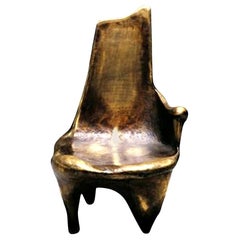
In Stock in Los Angeles, Sawaya Moroni Crypto Chair, Sido François Thévenin
Located in Beverly Hills, CA
Scroll down and click "view all from Seller" to see more than 500 other unique products. In Stock in Los Angeles This chair is part of a group of altogether four different “Crypto” ...
Category

20th Century Italian Organic Modern Chairs

Materials

Bronze

Japanese Two Panel Screen: Emu in Flowering Cactus
Located in Hudson, NY
Very unusual subject matter of emu in an arid landscape beautifully painted in mineral pigments on silk in a dark brown lacquer trim with bronze mounts. Signature and seal read: Bun...
Category

Early 20th Century Japanese Paintings and Screens

Materials

Bronze

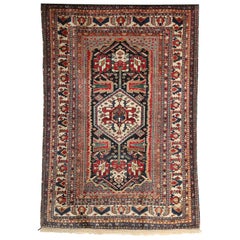
Antique 1880s Persian Qashqai Kashkouli Rug, Wool, 4 x 6
Located in New York, NY
This 1880-1890 Persian Kashkouli Qashqai rug consists of a handspun wool warp and weft and hand-knotted handspun wool pile. Its rich blues, reds, greens, and golds were all created u...
Category

Early 20th Century Persian Persian Rugs

Materials

Wool

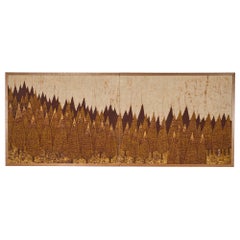
Japanese Two Panel Screen: Pine Grove
Located in Hudson, NY
A nice example of a textile screen in the design of pine trees in mass. Japanese Dyed fabric technique with natural wood trim. Signature reads: Nagemitsu
Category

20th Century Japanese Paintings and Screens

Materials

Fabric, Wood

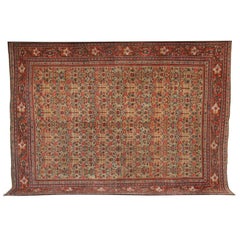
Antique 1870s Persian Sultanabad Rug, Wool, 8 x 10
Located in New York, NY
This Persian Sultanabad carpet circa 1870 consists of handspun wool and vegetable dyes. The pile is hand-knotted, and the carpet is in excellent antique condition. Its rich gold, blu...
Category

Antique 19th Century Persian Sultanabad Persian Rugs

Materials

Wool

Early 20th Century Japanese Nihonga Screen. Bamboo Forest.
Located in Kyoto, JP
Anonymous Bamboo Forest Early Taisho era. Circa 1910-1915. Six-panel Japanese Screen. Mineral pigment, gofun and ink on silk. A six-panel Japanese folding screen, painted on silk in...
Category

Early 20th Century Japanese Taisho Paintings and Screens

Materials

Silk

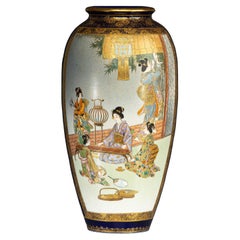
A Satsuma vase depicting daily life scene signed Kinkozan
Located in Milano, IT
Kyoto Satsuma vase with polychrome decoration on a cobalt blue background, embellished with gold floral motifs. A reserve shows scenes of daily life with Geisha in brightly colored k...
Category

Antique Late 19th Century Japanese Ceramics

Materials

Ceramic

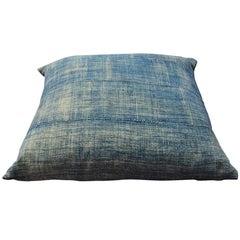
Antique African Pillow
Located in New York, NY
Beautiful 19th century indigo textiles from Africa, made into fabulous pillows. Antique textile on both sides with concealed zipper and inserts included. Large collection available. ...
Category

2010s Organic Modern Pillows and Throws

Materials

Metal

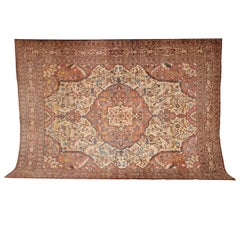
Antique 1910s Persian Yazd Rug, Wool, Hand-knotted, 10 x 17
Located in New York, NY
This Persian Yazd carpet circa 1910 consists of a hand-knotted handspun wool pile and natural vegetable dyes. The size is 10' x 16'9" and it is in excellen...
Category

Early 20th Century Persian Persian Rugs

Materials

Wool

Antique 1880s Persian Fereghan Rug, 8 x 11
Located in New York, NY
This Persian Fereghan carpet circa 1880 in handspun wool and vegetable dyes was completed using a hand-knotted pile with cotton warp and thread. Its deep navy and red medallion desig...
Category

20th Century Persian Sarouk Farahan Persian Rugs

Materials

Wool

Antique Wool Persian Kermanshah Rug, Circa 1880, Hand-knotted, 8 x 11
Located in New York, NY
This Persian Kermanshah carpet circa 1880 consists of handspun wool and vegetable dyes. The size is 8'4" x 10'10", and it is in excellent antique condition. Orley Shabahang takes pri...
Category

20th Century Persian Kirman Persian Rugs

Materials

Wool

Antique 1880s Persian Sultanabad Rug, 11 x 14
Located in New York, NY
This Persian Sultanabad carpet circa 1880 consists of handspun wool and natural vegetal dyes. Created in the Sultanabad workshop of the Swiss artist Zigler, it is an extremely fine p...
Category

Antique 19th Century Persian Sultanabad Persian Rugs

Materials

Wool

Edo Landscape Japanese Folding Screen
By Japanese Studio
Located in Brescia, IT
Refined work by a painter from the first half of the 19th century, from the landscape of the "Rinpa" school by a painter from the end of the 18th century, the Rinpa school. Six panels painted in ink on gold leaf and "gofun" on vegetable paper. The flowers are made with the "gofun" technique, natural or pigmented white oyster powder. Rinpa is one of the major historical schools of Japanese painting. The style was consolidated by the brothers Ogata Korin (1658–1716) and Ogata Kenzan (1663–1743). This folding screen has a very clean design that leaves plenty of room for the beautiful golden landscape. It comes flat and you can easily hang it with our hooks. Lucio Morini...
Category

Antique 18th Century Japanese Edo Paintings and Screens

Materials

Gold Leaf

Antique 1880s Wool Persian Sultanabad Rug, Red and Cream, 9 x 12
Located in New York, NY
This Persian Sultanabad carpet consists of handspun wool and organic vegetable dyes, circa 1880. The size is 8'10" x 11'9", and it is in great antique condition. Orley Shabahang take...
Category

20th Century Persian Sultanabad Persian Rugs

Materials

Wool

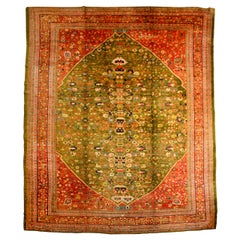
Antique 1880s Persian Sultanabad Rug, Tree of Life, Wool, 14 x 17
Located in New York, NY
This Persian Sultanabad carpet circa 1880 was created using handspun wool and organic vegetable dyes. It is an exceptional Sultanabad by uniqueness of coloration and design, created ...
Category

Antique 19th Century Persian Sultanabad Persian Rugs

Materials

Wool

Antique Persian Haji Jalili Tabriz Rug, Circa 1880s, Wool, 9’ x 12’
Located in New York, NY
This Persian Haji Jalili Tabriz carpet circa 1880 consists of a cotton warp and thread, hand-knotted wool pile and natural vegetable dyes. It is an exceptional piece from the workshi...
Category

Antique 19th Century Persian Tabriz Persian Rugs

Materials

Wool

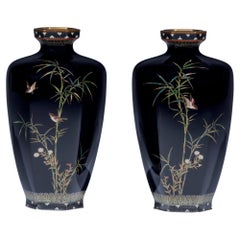
Pair of cloisonné vases attributed to Hayashi Kodenji
Located in Milano, IT
Pair of vases decorated with polychrome cloisonné enamels on a midnight blue ground, worked in silver and gold thread attributed to Hayashi Kodenji. The hexagonal body depicts sparro...
Category

Early 20th Century Japanese Metalwork

Materials

Enamel

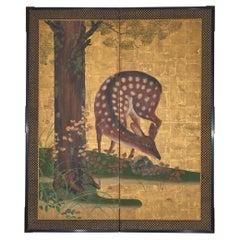
Japanese Two Panel Screen: Woodland Deer
Located in Hudson, NY
Foraging deer under hinoki tree in an autumn setting. Mineral pigments on heavy gold leaf with good veining on paper. Silk brocade border with a black lacquer trim and elaborate bron...
Category

Antique Early 19th Century Japanese Paintings and Screens

Materials

Bronze

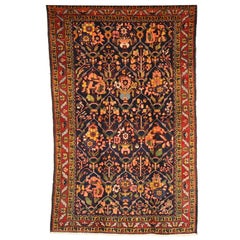
Antique 1910s Persian Chahal Shotor Bakhtiari Rug, Wool, 4 x 7
Located in New York, NY
This 1910 Bakhtiari rug from the village of Chahal Shotor consists of a cotton warp and handspun wool weft and hand-knotted pile. Its beautiful bright colors are derived from organic...
Category

Early 20th Century Persian Persian Rugs

Materials

Wool

Still Thinking About These?

All Recently Viewed