Decorative Art on Sale

to
3,450
854
4,191
232
30
Height
to
Width
to
347
132
47
45
44
26
18
17
17
15
10
10
9
5
4
3
2
2
657
2,232
1,302
262
350
357
316
50
24
66
42
40
83
83
91
62
29
3,171
588
424
253
199
970
410
223
210
206
4,453
4,363
4,412
58
58
40
21
21
Sale Items
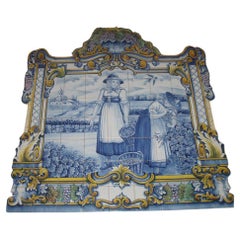
Portuguese Azulejos Tile Mural "Harvest" Hand Painted Signed by Artist
Located in Baldock, GB
Beautiful tile mural with the "HARVEST" motif finely painted. Tile mural size: 53.1"H X 53.1"W (135cm X 135cm) Tile size: 5.9"H X 5.9"W (15cm X 15cm) Origin: Portugal Production m...
Category

21st Century and Contemporary Portuguese Modern Contemporary Art

Materials

Ceramic, Paint, Clay

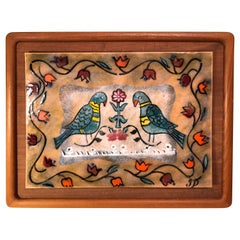
Mid-Century Modern Enamel Artwork by Judith Daner
Located in Redding, CT
Mid-Century Modern Enamel Artwork by Judith Danner. Amazing piece of work by a very talented artist. Signed JD (Judith Daner). Copper enamel plaque mount...
Category

Vintage 1960s Mid-Century Modern Decorative Art

Materials

Copper, Enamel

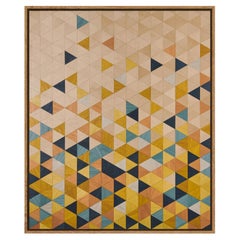
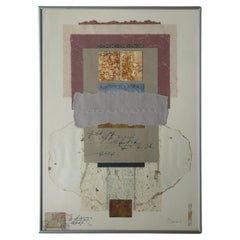
"DECONSTRUCTED" Marquetry Artwork by Emma Wood of the w o o d p o p Studio
By Emma Wood
Located in Nr Abergavenny, Monmouthshire
This recent artwork from the w o o d p o p studio is an example of the type of modern marquetry that w o o d p o p is becoming synonymous with. Since its inception 10 years ago - the studio has specialised in marquetry and inlay work; meticulous art-forms where pieces of wood veneer are inlaid to create decorative designs or pictures. Emma Wood, who founded the studio 10...
Category

2010s Welsh Contemporary Art

Materials

Wood

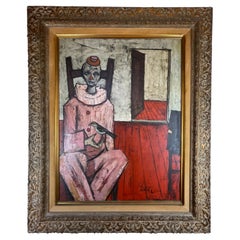
Charles Levier Painting "Clown Avec Un Oiseau"
By Charles Levier
Located in Miami, FL
A Captivating Vision: "Clown Avec Un Oiseau" by Charles Levier. This striking oil on canvas painting, titled "Clown Avec Un Oiseau" (Clown with a Bird) in French, is a captivating...
Category

Mid-20th Century American Mid-Century Modern Paintings

Materials

Paint, Wood

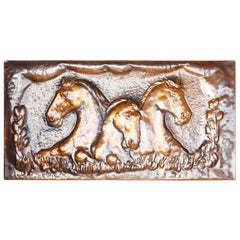
Large Equestrian Embossed Copper Plaque
Located in Forest Row, East Sussex
A large equestrian embossed copper plaque. Rectangular plaque with the heads of three rearing horses, surrounded by meadow detail. Dimensions: H 55cm...
Category

21st Century and Contemporary English Contemporary Art

Materials

Copper

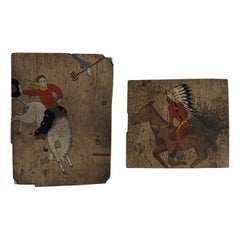
Rare Mid Century Hand-Painted Linoleum Floor Tiles Cowboy Indian
Located in Brooklyn, NY
A pair of hand-painted linoleum floor tiles with 1950's cowboy and Indian motifs. Measures: Cowboy is 12.5" W x 16.5" H Indian 12.75" W x 11" H.
Category

Mid-20th Century North American Mid-Century Modern Decorative Art

Materials

Other

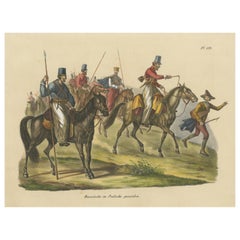
Antique Hand Colored Print of Russian and Polish Horses
Located in Langweer, NL
Antique print titled 'Russische en Poolsche paarden'. Old hand colored print of Russian and polish horses. This print originates from 'Volledige natuurlij...
Category

Antique Mid-19th Century Prints

Materials

Paper

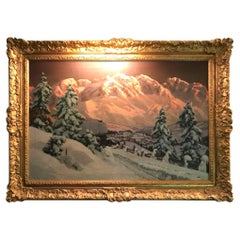
Winter Landscape Snow Scene Country Road Painting Oil on Canvas Framed Argnegger
By Alois Arnegger
Located in West Hollywood, CA
Winter Landscape Snow Scene Country Road Painting Oil on Canvas Framed Argnegger . Late 19th-early 20th century winter landscape / snow scene, by...
Category

Early 20th Century Austrian Decorative Art

Materials

Canvas, Giltwood, Wood, Paint

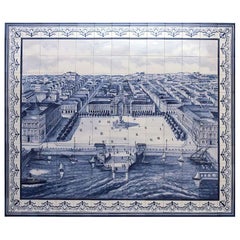
Portuguese Tile Mural "Lisbon Portugal" Hand Painted Signed by Artist
Located in Baldock, GB
Beautiful tile mural with the "PRAÇA DO COMÉRCIO LISBON PORTUGAL" motif finely painted. Quantity: 143 tiles Tile mural size: 76.7"W X 64.9"H (195cm X 165cm) Tile size: 5.9"W X 5.9...
Category

21st Century and Contemporary Portuguese Modern Contemporary Art

Materials

Ceramic, Clay, Paint

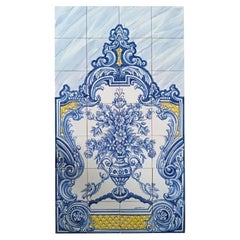
Azulejos Portuguese Tile Mural "Blue Flower Vase" Hand Painted Signed
Located in Baldock, GB
Beautiful tile mural with the "BLUE FLOWER VASE" motif finely painted. Quantity: 28 tiles Tile mural size: 41.3"H X 23.6"W (105cm X 60cm) Tile size: 5.9"H X 5.9"W (15cm X 15cm) Ori...
Category

21st Century and Contemporary Portuguese Modern Contemporary Art

Materials

Ceramic, Paint

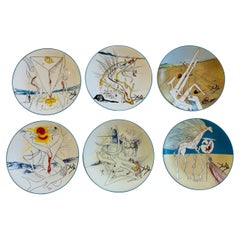
Salvador Dali Porcelain Plates “Le Conquete du Cosmos” by Limoges Set of 6
By Limoges, Salvador Dalí­
Located in San Diego, CA
Vintage and unique porcelain pieces by Limoges France. This unique and rare collection by Limoges brings the work of Salvador Dali with 6 different works on each of the plates. This collection dates to the early 80s. Each piece is numbered (great numbers for each edition along with a title for each piece and signature by Limoges. 1. Philosophe ecrase par le Cosmos no. 308 2. Les Montres Gelatines de l’expace temps no. 308 3. Dali Martien Muni d’un double microscope Holo-electrique no. 308 4. Girafe Saturnienn no. 375 5. L’unicorne laser desintegre les cornes de rhinoceros cosmique...
Category

Vintage 1980s French Art Nouveau Decorative Art

Materials

Porcelain

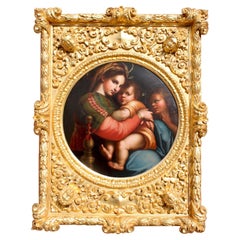
After Raffaello Sanzio 1483-1520 Raphael La Madonna della Seggiola Oil on Canvas
By (after) Raphael (Raffaello Sanzio da Urbino)
Located in Los Angeles, CA
A Fine Italian 19th Century Oil Painting on Canvas "La Madonna della Seggiola" after Raphael (Raffaello Sanzio da Urbino 1483-1520). The circular painted canvas depicting a seated Madonna holding an infant Jesus Christ next to a child Saint John the Baptist, all within a massive carved gilt wood and gesso frame, which is identical to the frame on Raphael's original artwork. This painting is a 19th Century copy of Raphael's Madonna della Seggiola painted in 1514 and currently exhibited and part of the permanent collection at the Palazzo Pitti, Galleria Palatina, Florence, Italy. The bodies of the Virgin, Christ, and the boy Baptist fill the whole picture. The tender, natural looking embrace of the Mother and Child, and the harmonious grouping of the figures in the round, have made this one of Raphael's most popular Madonnas. The isolated chair leg is reminiscent of papal furniture, which has led to the assumption that Leo X himself commissioned the painting. A retailer's label reads " Fred K/ Keer's Sons - Framers and Fine Art Dealers - 917 Broad St. Newark, N.J." - Another label from the gilder reads "Carlo Bartolini - Doratore e Verniciatori - Via Maggio 1924 - Firenze". Circa: 1890-1900. Subject: Religious painting Canvas diameter: 28 inches (71.1 cm) Frame height: 54 inches (137.2 cm) Frame width: 42 1/2 inches (108 cm) Frame depth: 5 1/2 inches (14 cm) Raffaello Sanzio da Urbino (Italian, March 28 or April 6, 1483 - April 6, 1520), known as Raphael, was an Italian painter and architect of the High Renaissance. His work is admired for its clarity of form, ease of composition, and visual achievement of the Neoplatonic ideal of human grandeur. Together with Michelangelo and Leonardo da Vinci, he forms the traditional trinity of great masters of that period. Raphael was enormously productive, running an unusually large workshop and, despite his death at 37, leaving a large body of work. Many of his works are found in the Vatican Palace, where the frescoed Raphael Rooms were the central, and the largest, work of his career. The best known work is The School of Athens in the Vatican Stanza della Segnatura. After his early years in Rome much of his work was executed by his workshop from his drawings, with considerable loss of quality. He was extremely influential in his lifetime, though outside Rome his work was mostly known from his collaborative printmaking. After his death, the influence of his great rival Michelangelo was more widespread until the 18th and 19th centuries, when Raphael's more serene and harmonious qualities were again regarded as the highest models. His career falls naturally into three phases and three styles, first described by Giorgio Vasari: his early years in Umbria, then a period of about four years (1504–1508) absorbing the artistic traditions of Florence, followed by his last hectic and triumphant twelve years in Rome, working for two Popes and their close associates. Raphael was born in the small but artistically significant central Italian city of Urbino in the Marche region, where his father Giovanni Santi was court painter to the Duke. The reputation of the court had been established by Federico III da Montefeltro, a highly successful condottiere who had been created Duke of Urbino by the Pope - Urbino formed part of the Papal States - and who died the year before Raphael was born. The emphasis of Federico's court was rather more literary than artistic, but Giovanni Santi was a poet of sorts as well as a painter, and had written a rhymed chronicle of the life of Federico, and both wrote the texts and produced the decor for masque-like court entertainments. His poem to Federico shows him as keen to show awareness of the most advanced North Italian painters, and Early Netherlandish artists as well. In the very small court of Urbino he was probably more integrated into the central circle of the ruling family than most court painters. Federico was succeeded by his son Guidobaldo da Montefeltro, who married Elisabetta Gonzaga, daughter of the ruler of Mantua, the most brilliant of the smaller Italian courts for both music and the visual arts. Under them, the court continued as a centre for literary culture. Growing up in the circle of this small court gave Raphael the excellent manners and social skills stressed by Vasari. Court life in Urbino at just after this period was to become set as the model of the virtues of the Italian humanist court through Baldassare Castiglione's depiction of it in his classic work The Book of the Courtier, published in 1528. Castiglione moved to Urbino in 1504, when Raphael was no longer based there but frequently visited, and they became good friends. He became close to other regular visitors to the court: Pietro Bibbiena and Pietro Bembo, both later cardinals, were already becoming well known as writers, and would be in Rome during Raphael's period there. Raphael mixed easily in the highest circles throughout his life, one of the factors that tended to give a misleading impression of effortlessness to his career. He did not receive a full humanistic education however; it is unclear how easily he read Latin. Early Life and Works His mother Màgia died in 1491 when Raphael was eight, followed on August 1, 1494 by his father, who had already remarried. Raphael was thus orphaned at eleven; his formal guardian became his only paternal uncle Bartolomeo, a priest, who subsequently engaged in litigation with his stepmother. He probably continued to live with his stepmother when not staying as an apprentice with a master. He had already shown talent, according to Vasari, who says that Raphael had been "a great help to his father". A self-portrait drawing from his teenage years shows his precocity. His father's workshop continued and, probably together with his stepmother, Raphael evidently played a part in managing it from a very early age. In Urbino, he came into contact with the works of Paolo Uccello, previously the court painter (d. 1475), and Luca Signorelli, who until 1498 was based in nearby Città di Castello. According to Vasari, his father placed him in the workshop of the Umbrian master Pietro Perugino as an apprentice "despite the tears of his mother". The evidence of an apprenticeship comes only from Vasari and another source, and has been disputed—eight was very early for an apprenticeship to begin. An alternative theory is that he received at least some training from Timoteo Viti, who acted as court painter in Urbino from 1495.Most modern historians agree that Raphael at least worked as an assistant to Perugino from around 1500; the influence of Perugino on Raphael's early work is very clear: "probably no other pupil of genius has ever absorbed so much of his master's teaching as Raphael did", according to Wölfflin. Vasari wrote that it was impossible to distinguish between their hands at this period, but many modern art historians claim to do better and detect his hand in specific areas of works by Perugino or his workshop. Apart from stylistic closeness, their techniques are very similar as well, for example having paint applied thickly, using an oil varnish medium, in shadows and darker garments, but very thinly on flesh areas. An excess of resin in the varnish often causes cracking of areas of paint in the works of both masters. The Perugino workshop was active in both Perugia and Florence, perhaps maintaining two permanent branches. Raphael is described as a "master", that is to say fully trained, in December 1500. His first documented work was the Baronci altarpiece for the church of Saint Nicholas of Tolentino in Città di Castello, a town halfway between Perugia and Urbino. Evangelista da Pian di Meleto, who had worked for his father, was also named in the commission. It was commissioned in 1500 and finished in 1501; now only some cut sections and a preparatory drawing remain. In the following years he painted works for other churches there, including the Mond Crucifixion (about 1503) and the Brera Wedding of the Virgin (1504), and for Perugia, such as the Oddi Altarpiece. He very probably also visited Florence in this period. These are large works, some in fresco, where Raphael confidently marshals his compositions in the somewhat static style of Perugino. He also painted many small and exquisite cabinet paintings in these years, probably mostly for the connoisseurs in the Urbino court, like the Three Graces and St. Michael, and he began to paint Madonnas and portraits. In 1502 he went to Siena at the invitation of another pupil of Perugino, Pinturicchio, "being a friend of Raphael and knowing him to be a draughtsman of the highest quality" to help with the cartoons, and very likely the designs, for a fresco series in the Piccolomini Library in Siena Cathedral. He was evidently already much in demand even at this early stage in his career. Influence of Florence Raphael led a "nomadic" life, working in various centres in Northern Italy, but spent a good deal of time in Florence, perhaps from about 1504. Although there is traditional reference to a "Florentine period...
Category

Antique Early 1900s Italian Baroque Paintings

Materials

Canvas, Giltwood

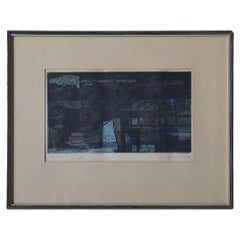
Bertil Lundberg, Komposition, Etching, 1962, Framed
Located in Warszawa, Mazowieckie
Bertil Lundberg, Komposition, 1962 Etching Number 28/100 The work is signed by the artist, dated and individually numbered (pencil) Work dimensions 38/48 The work is framed Claus Be...
Category

Vintage 1960s Swedish Scandinavian Modern Decorative Art

Materials

Paper

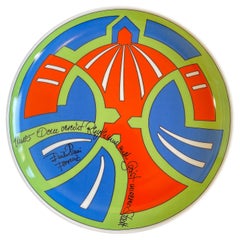
Artist Plate No. 11 by Emilio Pucci for Rosenthal, Mid-Century, 1980s Germany
By Rosenthal, Emilio Pucci
Located in Andernach, DE
Art print wall plate by Emilio Pucci for Rosenthal was inspired by the cathedral of Florence, Italy: ''Unser Dom vereint Rhythmus und Geist unserer Stadt'' ('''Our cathedral combines...
Category

Mid-20th Century German Mid-Century Modern Decorative Art

Materials

Porcelain

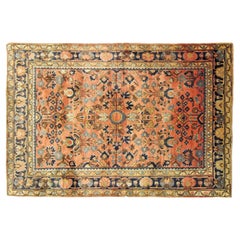
Antique Persian Sarouk Oriental Rug, in Small size, with Intricate Floral Design
Located in New York, NY
Antique Persian Sarouk Oriental Rug, circa 1910, Small size An antique Persian Sarouk oriental rug, size 4'8" x 3'5", circa 1910. This lovely hand-knotted wool rug features an intri...
Category

Vintage 1910s Persian Persian Rugs

Materials

Wool

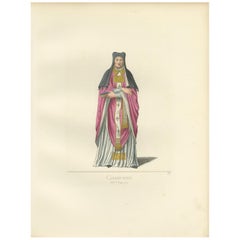
Antique Print of a Canon Nun by Bonnard, 1860
Located in Langweer, NL
Antique print titled ‘Chanoine, XIVe Siecle.’ Original antique print of a Canon Nun. This print originates from 'Costumes historiques de femmes du XIII, XIV et XV siècle' by C. Bonna...
Category

Antique Mid-19th Century Prints

Materials

Paper

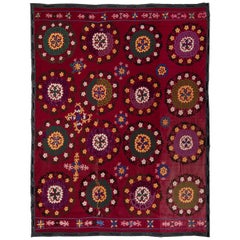
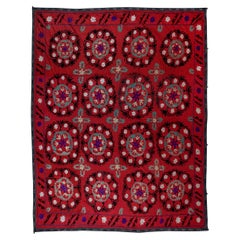
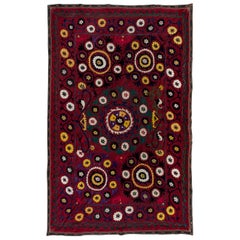
6.8x7.8 Ft Vintage Bed Cover, Embroidered Tablecloth, Cotton Silk Wall Hanging
Located in Spring Valley, NY
In the most technical sense of the word, "Suzani," in Central Asia and Iran, means needle and is used to describe this type of needlework, but to most people, such as decorators or c...
Category

Late 20th Century Uzbek Suzani Textiles

Materials

Cotton, Silk

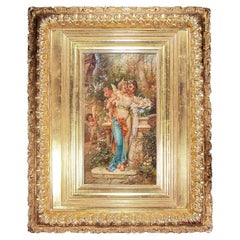
Hans Zatzka, Austrian Oil on Canvas Titled "Spring Love" Maiden with Cherubs"
By Hans Zatzka
Located in Los Angeles, CA
Hans Zatzka (Austrian, 1859-1945) a superb quality oil on canvas titled "Spring Love" depicting a standing young maiden holding a wicker basket filled with fresh flower as she is bei...
Category

Antique 1880s Austrian Belle Époque Paintings

Materials

Wood, Giltwood

Large Framed Stunning Antique Chinese Embroidered Robe Qing Dynasty
Located in Atlanta, GA
A woman's coat made of black stain silk with wide sleeves from China late Qing Dynasty (late 19th to early 20th century), mounted with the sleeves folded and presented on a coral red...
Category

Antique 19th Century Chinese Qing Textiles

Materials

Silk, Giltwood

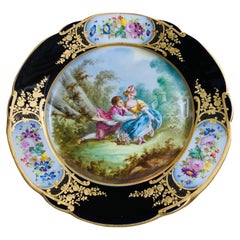
Chateau de Tuileries Sevres Style Hand Painted Cabinet Plate
By Chateau des Tuileries
Located in Guaynabo, PR
This is a Chateau de Tuileries Sevres Style hand painted cabinet porcelain plate. It depicts a pastoral scene of a courting couple in the center with a gilt cobalt blue circular rim....
Category

Antique 19th Century French Rococo Decorative Art

Materials

Porcelain

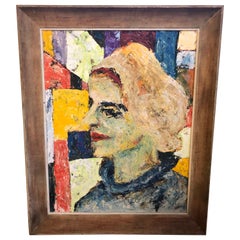
Mid century Impasto Portrait of a Woman
Located in Redding, CT
Mid Century Modern Impasto Portrait of a Woman. Heavy impasto painting on board. She reminds us of Jackie O with a headband but with white hair...
Category

Vintage 1970s Mid-Century Modern Paintings

Materials

Wood, Paint, Masonite

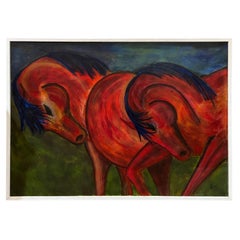
Enormous Framed Contemporary Oil on Canvas of Horses
Located in Redding, CT
Enormous contemporary oil on canvas of horses. This item has recently been reframed ,see all photos. Can be hung horizontally or vertically ...
Category

2010s Paintings

Materials

Canvas, Paint, Wood

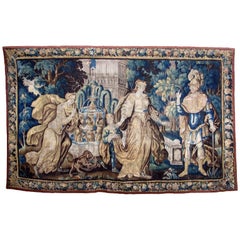
Large Flemish 17th-18th Century Baroque Figural Tapestry "A Royal Courtship"
Located in Los Angeles, CA
A fine and large flemish 17th-18th century Baroque figural tapestry "A Royal Courtship" depicting an allegorical courting scene of a young princess meeting her prince at the watchful eye of a mesmerized queen standing behind her. A young girl supports the princess' dress train...
Category

Antique Early 1700s Belgian Baroque Tapestries

Materials

Wool

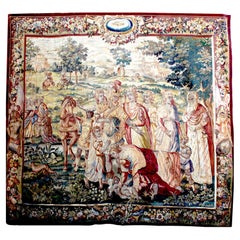
Flemish 17th-18th Century Baroque Historical Tapestry Fragment "A Royal Family"
Located in Los Angeles, CA
A fine and large Flemish 17th-18th century Baroque figural historical tapestry fragment. The large tapestry depicting an allegorical Royal family scene of a warrior meeting his new b...
Category

Antique 18th Century Belgian Baroque Decorative Art

Materials

Wool, Silk

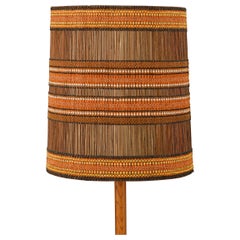
Large Maria Kipp Lampshade with Black, Sienna, and Burnt Orange Stripes, 1960s
By Maria Kipp
Located in Los Angeles, CA
A larger variation of lampshades designed by German-born, California-based textile artist Maria Kipp, celebrated for her masterful use of handwoven fibers in postwar interiors. This ...
Category

Vintage 1960s American Mid-Century Modern More Lighting

Materials

Raffia

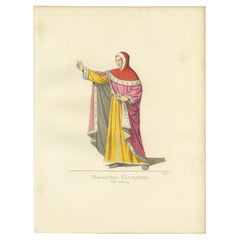
Antique Print of a Florentine Magistrate, 15th Century, by Bonnard, 1860
Located in Langweer, NL
Antique print titled ‘Magistrat Florentin, XVe Siecle.’ Original antique print of a Florentine Magistrate from the 15th century. This print originates from 'Costumes historiques de f...
Category

Antique Mid-19th Century Prints

Materials

Paper

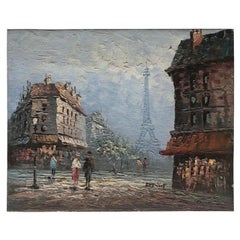
Oil Painting Eiffel Tower Paris attrib. to Caroline Burnett, Parisian Cityscape
By Caroline Burnett
Located in Miami, FL
Oil Painting Eiffel Tower Paris attrib. to Caroline Burnett, Parisian Cityscape A beautiful view of a cityscape street scene in Paris, Franc...
Category

20th Century French Modern Paintings

Materials

Paint

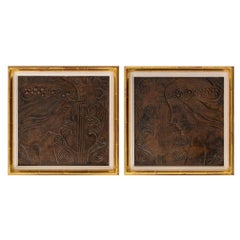
Secessionist Pair of Reliefs "Sappho" Georg Klimt ca. 1900 Patinated Copper
By Georg Klimt
Located in Klosterneuburg, AT
Pair of Reliefs, "Allegory of Sappho", Georg Klimt (1867 - 1931), patinated copper, ca. 1900, Jugendstil, Vienna, Secessionist Art, Art Nouveau Georg Klimt's excellent craftsmanshi...
Category

Antique Early 1900s Austrian Vienna Secession Decorative Art

Materials

Copper

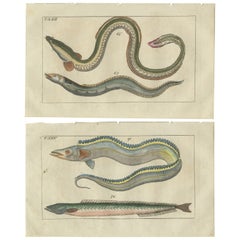
Set of 2 Antique Fish Prints - Conger Eel - Pacific Cutlassfish - Sand Eel, 1832
Located in Langweer, NL
Set of two original antique fish prints. Conger eel, Conger conger 65 and European eel, Anguilla anguilla 66. Pacific cutlassfish, Trichiurus lepturus 71, and sand eel, Ammodytes tob...
Category

Antique Mid-19th Century German Prints

Materials

Paper

Vintage Silk Hand Embroidery Bedspread, Uzbek Suzani Fabric Throw
Located in Spring Valley, NY
Suzani, a Central Asian term for a specific type of needlework, is also the broader name for the hugely popular decorative pieces of textile that feature this needlework in vivid col...
Category

Late 20th Century Uzbek Suzani Textiles

Materials

Silk, Cotton

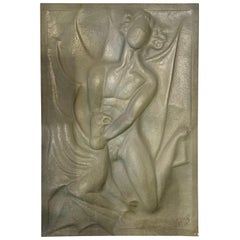
Art Deco Embossed Pewter Panel Sculpture, 1920s
Located in Florence, IT
Art Deco metal embossed pewter panel sculpture representing a naked boy with eagle, signed by Foma.
Category

Early 20th Century Italian Art Deco Decorative Art

Materials

Pewter

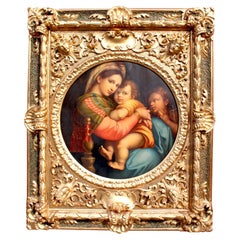
After Raffaello Sanzio 1483-1520 Raphael La Madonna della Seggiola Oil on Canvas
By (after) Raphael (Raffaello Sanzio da Urbino)
Located in Los Angeles, CA
A Fine Italian 19th Century Oil Painting on Canvas "La Madonna della Seggiola" after Raphael (Raffaello Sanzio da Urbino 1483-1520). The circular painted canvas depicting a seated Madonna holding an infant Jesus Christ next to a child Saint John the Baptist, all within a massive carved two-tone gilt wood, gilt-patinated and gesso frame, which is identical to the frame on Raphael's original artwork. This painting is a 19th Century copy of Raphael's Madonna della Seggiola painted in 1514 and currently exhibited and part of the permanent collection at the Palazzo Pitti, Galleria Palatina, Florence, Italy. The bodies of the Virgin, Christ, and the boy Baptist fill the whole picture. The tender, natural looking embrace of the Mother and Child, and the harmonious grouping of the figures in the round, have made this one of Raphael's most popular Madonnas. The isolated chair leg is reminiscent of papal furniture, which has led to the assumption that Leo X himself commissioned the painting. Circa: 1890-1900. Subject: Religious painting Painting diameter: 28 inches (71.1 cm) Frame height: 55 1/8 inches (140 cm) Frame width: 46 inches (116.8 cm) Frame depth: 5 1/8 inches (13 cm) Raffaello Sanzio da Urbino (Italian, March 28 or April 6, 1483 - April 6, 1520), known as Raphael, was an Italian painter and architect of the High Renaissance. His work is admired for its clarity of form, ease of composition, and visual achievement of the Neoplatonic ideal of human grandeur. Together with Michelangelo and Leonardo da Vinci, he forms the traditional trinity of great masters of that period. Raphael was enormously productive, running an unusually large workshop and, despite his death at 37, leaving a large body of work. Many of his works are found in the Vatican Palace, where the frescoed Raphael Rooms were the central, and the largest, work of his career. The best known work is The School of Athens in the Vatican Stanza della Segnatura. After his early years in Rome much of his work was executed by his workshop from his drawings, with considerable loss of quality. He was extremely influential in his lifetime, though outside Rome his work was mostly known from his collaborative printmaking. After his death, the influence of his great rival Michelangelo was more widespread until the 18th and 19th centuries, when Raphael's more serene and harmonious qualities were again regarded as the highest models. His career falls naturally into three phases and three styles, first described by Giorgio Vasari: his early years in Umbria, then a period of about four years (1504–1508) absorbing the artistic traditions of Florence, followed by his last hectic and triumphant twelve years in Rome, working for two Popes and their close associates. Raphael was born in the small but artistically significant central Italian city of Urbino in the Marche region, where his father Giovanni Santi was court painter to the Duke. The reputation of the court had been established by Federico III da Montefeltro, a highly successful condottiere who had been created Duke of Urbino by the Pope - Urbino formed part of the Papal States - and who died the year before Raphael was born. The emphasis of Federico's court was rather more literary than artistic, but Giovanni Santi was a poet of sorts as well as a painter, and had written a rhymed chronicle of the life of Federico, and both wrote the texts and produced the decor for masque-like court entertainments. His poem to Federico shows him as keen to show awareness of the most advanced North Italian painters, and Early Netherlandish artists as well. In the very small court of Urbino he was probably more integrated into the central circle of the ruling family than most court painters. Federico was succeeded by his son Guidobaldo da Montefeltro, who married Elisabetta Gonzaga, daughter of the ruler of Mantua, the most brilliant of the smaller Italian courts for both music and the visual arts. Under them, the court continued as a centre for literary culture. Growing up in the circle of this small court gave Raphael the excellent manners and social skills stressed by Vasari. Court life in Urbino at just after this period was to become set as the model of the virtues of the Italian humanist court through Baldassare Castiglione's depiction of it in his classic work The Book of the Courtier, published in 1528. Castiglione moved to Urbino in 1504, when Raphael was no longer based there but frequently visited, and they became good friends. He became close to other regular visitors to the court: Pietro Bibbiena and Pietro Bembo, both later cardinals, were already becoming well known as writers, and would be in Rome during Raphael's period there. Raphael mixed easily in the highest circles throughout his life, one of the factors that tended to give a misleading impression of effortlessness to his career. He did not receive a full humanistic education however; it is unclear how easily he read Latin. Early Life and Works His mother Màgia died in 1491 when Raphael was eight, followed on August 1, 1494 by his father, who had already remarried. Raphael was thus orphaned at eleven; his formal guardian became his only paternal uncle Bartolomeo, a priest, who subsequently engaged in litigation with his stepmother. He probably continued to live with his stepmother when not staying as an apprentice with a master. He had already shown talent, according to Vasari, who says that Raphael had been "a great help to his father". A self-portrait drawing from his teenage years shows his precocity. His father's workshop continued and, probably together with his stepmother, Raphael evidently played a part in managing it from a very early age. In Urbino, he came into contact with the works of Paolo Uccello, previously the court painter (d. 1475), and Luca Signorelli, who until 1498 was based in nearby Città di Castello. According to Vasari, his father placed him in the workshop of the Umbrian master Pietro Perugino as an apprentice "despite the tears of his mother". The evidence of an apprenticeship comes only from Vasari and another source, and has been disputed—eight was very early for an apprenticeship to begin. An alternative theory is that he received at least some training from Timoteo Viti, who acted as court painter in Urbino from 1495.Most modern historians agree that Raphael at least worked as an assistant to Perugino from around 1500; the influence of Perugino on Raphael's early work is very clear: "probably no other pupil of genius has ever absorbed so much of his master's teaching as Raphael did", according to Wölfflin. Vasari wrote that it was impossible to distinguish between their hands at this period, but many modern art historians claim to do better and detect his hand in specific areas of works by Perugino or his workshop. Apart from stylistic closeness, their techniques are very similar as well, for example having paint applied thickly, using an oil varnish medium, in shadows and darker garments, but very thinly on flesh areas. An excess of resin in the varnish often causes cracking of areas of paint in the works of both masters. The Perugino workshop was active in both Perugia and Florence, perhaps maintaining two permanent branches. Raphael is described as a "master", that is to say fully trained, in December 1500. His first documented work was the Baronci altarpiece for the church of Saint Nicholas of Tolentino in Città di Castello, a town halfway between Perugia and Urbino. Evangelista da Pian di Meleto, who had worked for his father, was also named in the commission. It was commissioned in 1500 and finished in 1501; now only some cut sections and a preparatory drawing remain. In the following years he painted works for other churches there, including the Mond Crucifixion (about 1503) and the Brera Wedding of the Virgin (1504), and for Perugia, such as the Oddi Altarpiece. He very probably also visited Florence in this period. These are large works, some in fresco, where Raphael confidently marshals his compositions in the somewhat static style of Perugino. He also painted many small and exquisite cabinet paintings in these years, probably mostly for the connoisseurs in the Urbino court, like the Three Graces and St. Michael, and he began to paint Madonnas and portraits. In 1502 he went to Siena at the invitation of another pupil of Perugino, Pinturicchio, "being a friend of Raphael and knowing him to be a draughtsman of the highest quality" to help with the cartoons, and very likely the designs, for a fresco series in the Piccolomini Library in Siena Cathedral. He was evidently already much in demand even at this early stage in his career. Influence of Florence Raphael led a "nomadic" life, working in various centres in Northern Italy, but spent a good deal of time in Florence, perhaps from about 1504. Although there is traditional reference to a "Florentine period...
Category

Antique Early 1900s Italian Baroque Paintings

Materials

Canvas, Giltwood

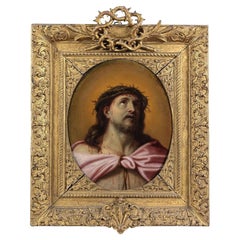
Italian 17th Century Oil on Canvas Head of Christ Crowned with Thorns, Mignard
By (circle of) Pierre Mignard
Located in Los Angeles, CA
A very fine Italian 17th century oval oil on canvas "Head of Christ Crowned with Thorns" Circle of Pierre Mignard (French, 1612-1695) within...
Category

Antique 17th Century French Baroque Paintings

Materials

Canvas, Giltwood

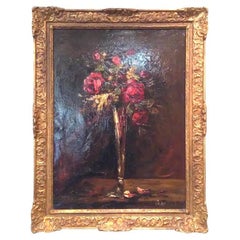
French Still Life Floral Painting by Charles Franzini d Issoncourt
Located in Miami, FL
Magnificent French Floral Oil Painting from Paris Universal Exposition in 1900. This captivating 19th-century still life oil painting by the award-winning French artist Charles Henr...
Category

Antique Early 1900s French Baroque Paintings

Materials

Canvas, Paint, Giltwood

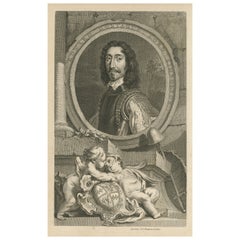
Antique Portrait of Edward Montagu, 2nd Earl of Manchester
By Jacobus Houbraken
Located in Langweer, NL
Antique portrait titled 'Edward Montague Lord Kimbolton'. Edward Montagu, 2nd Earl of Manchester, KG, KB, FRS (1602 – 5 May 1671) was an important commander of Parliamentary forces in the First English Civil War, and for a time Oliver Cromwell's superior. This print originates from Thomas Birch...
Category

Antique Mid-18th Century Prints

Materials

Paper

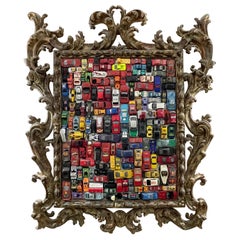
Decorative Wall Large Picture Frame Baroque Cars Modeling 1960s Pop Art
Located in Palermo, Sicily
Large Baroque frame with a collection of Italian cars from the 1960s/70s inside, a particular and very unique work inspired by Pop Art.
Category

Vintage 1970s Italian Mid-Century Modern Decorative Art

Materials

Metal

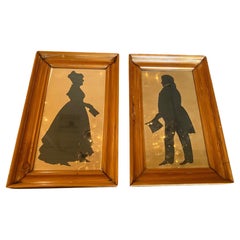
Wall Decoration Art Pair Silhouettes Black Framed Antique Los Angeles Gallery
Located in West Hollywood, CA
Wall Decoration Art Pair Silhouettes Black Framed Antique Los Angeles Gallery . Pair of silhouettes portrays the 19th century Lady and Gentleman With his Hat. This pair has been well taken care of and has minor wear consistent with the age. Wall art Silhouette of a Lady and a Gentleman framed in possible hand carved pine wood or fruitwood Frame. Charming elegant profile depicts high status man at ease with himself ensured his place in hierarchy looking sharp and same goes for the Lady holding what appears to be a document. The subjects are dapperly dressed with his top hat in his hand, trimmed haircut, leather boots and the lady with a nice Hairdo and an elaborate dress. An original continental French or British silhouette in a period fruitwood light color frames and are beveled. Antique dealer Los Angeles West Hollywood La Cienega Melrose Ave. The watercolor and paper cut silhouettes...
Category

Antique 19th Century European Decorative Art

Materials

Metal

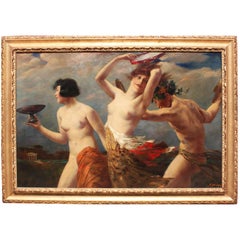
19th Century Oil on Canvas Bacchante Group Attributed to Leopold Schmutzler
Located in Los Angeles, CA
A large 19th century oil on canvas Bacchante group depicting two allegorical young semi-nude maidens dancing with pan, attributed to Leopold Schmutzler...
Category

Early 20th Century German Greco Roman Paintings

Materials

Canvas, Giltwood

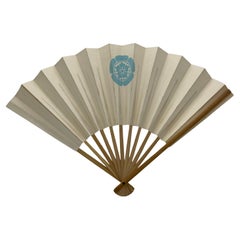
Japanese Paper Fan with Bamboo and Family Crest Odamokko 1990s
Located in Paris, FR
This is a paper fan with bamboo which was made in Japan around 1990s. In the middle, there is a logo (Family crest) which is called Kamon in Japanese. This kamon is called Odamokko. The Odamokko is a traditional Japanese family crest...
Category

1990s Japanese Showa Decorative Art

Materials

Bamboo, Paper

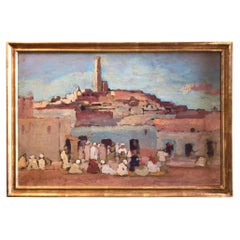
Orientalist Painting Wall Art Arab Market Scene Dutch G. Huijsser Antique Frame
Located in West Hollywood, CA
Orientalist Painting Wall Art Arab Market Scene Dutch G. Huijsser Antique Frame. Very nice oil on cardboard by Gerard Huijsser, Dutch painter, depicting a gathering of people in a or...
Category

Early 20th Century Dutch Paintings

Materials

Wood, Giltwood

Classic Suzani Silk Hand Embroidery, New Wall Hanging, Bed or Table Cover
Located in Spring Valley, NY
Suzani, a Central Asian term for a specific type of needlework, is also the broader name for the hugely popular decorative pieces of textile that feature this needlework in vivid col...
Category

21st Century and Contemporary Uzbek Suzani Textiles

Materials

Cotton, Silk

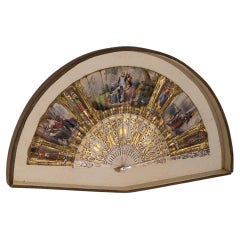
Silk fan in shrine from the late 1800s
Located in Milano, IT
The Italian silk fan in a vitrine from the late 1800s is a true masterpiece of craftsmanship and elegance. Housed in a beautiful alloy case, this antique fan...
Category

Antique 1890s Italian Neoclassical Decorative Art

Materials

Silk, Wood

5x7.3 Ft Hand Embroidery Silk Bedspread. Vintage Wall Hanging. Suzani Tablecloth
Located in Spring Valley, NY
Suzani, a Central Asian term for a specific type of needlework, is also the broader name for the hugely popular decorative pieces of textile that feature this needlework in vivid col...
Category

Late 20th Century Uzbek Suzani Textiles

Materials

Cotton, Silk

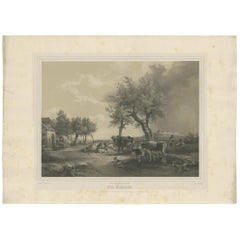
Antique Print of a Pasture with Cattle by Neumann c.1860
Located in Langweer, NL
Antique print titled 'Eine Viehweide'. Large, original antique print on chine collé of a pasture with cattle. Lithographed after a painting by Gauermann. Published by Neumann, circa ...
Category

Antique Mid-19th Century Prints

Materials

Paper

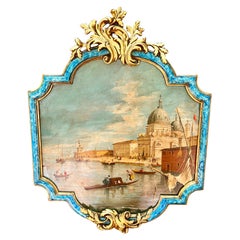
Venetian Canal Scene Set in Marbleized and Giltwood Frame
Located in Nashville, TN
Oil on board Venetian Canal Scene looking towards the mouth of The Grand Canal with Della Salute to one side . Typical in the Grand Tour style of 18th ,19th and 20th centuries ..
Category

Mid-20th Century Italian Baroque Decorative Art

Materials

Wood

Antique Print of the Porcelain Tower of Nanjing, circa 1840
Located in Langweer, NL
Antique print titled 'Der Porzellanthurm bey Nanking'. Small print of the Porcelain Tower of Nanjing, China. Source unknown, to be determined.
Category

Antique Early 19th Century Prints

Materials

Paper

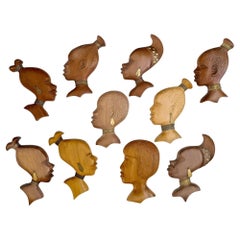
African Carved Wooden Women Heads in the Tribal Style.
Located in Bochum, NRW
Set of 10 African women's heads carved in wood in a tribal style. Great decorative effect in any decor. Some of them with metal ornaments in their hair or around their necks. Earring...
Category

Mid-20th Century African Tribal Decorative Art

Materials

Metal

Komposition, Color Lithograph on Fabriano Paper, Framed
Located in Warszawa, Mazowieckie
Author unknown, Composition Color lithograph on Fabriano paper Number 9/49 The work is signed by the artist and has an individual number Work dimensions...
Category

Vintage 1960s Unknown Mid-Century Modern Decorative Art

Materials

Paper

Eduardo Chillida, Original Vintage Lithograph on cardboard, Framed
By Eduardo Chillida
Located in Warszawa, Mazowieckie
Eduardo Chillida Lithograph on cardboard Number T 169/1000 The work is signed by the artist and individually numbered (pencil) Work dimensions 47/34 The work is framed Eduardo Chillida(1924 - 2002). He was a Spanish artist. He began his career in 1943, studying architecture at the University of Madrid, but in 1947 he took up drawing and sculpture. In 1948 he moved to Paris, then the world capital of art. Although he dropped out of college, his work betrays his architectural training, revealing an underlying sense of structural organization as well as material discipline, planning spatial relationships, and scaling elements. For years, the artist used materials that were the basis for his research on conceptual and metaphysical issues. Chillida's early efforts in stone and plaster oscillated between humans and the natural world. His return to the Spanish Basque country in 1951 initiated a change of vision, focusing more on the metamorphosis of space and the definition of spatial volume through form. Chillida soon abandoned the plaster he had used in his Paris works in favor of iron, then wood and steel. These materials represent Basque traditions in industry, architecture and agriculture, and recall the landscape and black light of the region. Chillida began using alabaster for its illuminated but veiled appearance, he used it in the sculpture How Deep is the Air (1996). Despite his use of a variety of media, Chillida's intentions for simplicity and balance never allowed the material to take on a form alien to its nature. He was consistently guided by the quality of space, density and rhythm. Major retrospectives of Chillida's graphic and sculptural works have been exhibited by the Museum of Fine Arts, Houston (1966), the Carnegie Institute, Pittsburgh (1979), the National Gallery of Art, Washington, D.C. (1979), the Guggenheim Museum (1980), the Palacio de Miramar, San Sebastián (1992), and Museo nacional centro de arte Reina Sofía, Madrid (1999). Chillida's monumental sculptures designed for urban and more remote spaces are permanently installed internationally and constitute a central aspect of his artistic production. Chillida has received numerous awards, including the Grand International Sculpture Prize at the Venice Biennale (1958), the Kandinsky Prize (1960), the Carnegie Prize for Sculpture (1964), the Andrew Mellon...
Category

1990s Spanish Mid-Century Modern Decorative Art

Materials

Paper

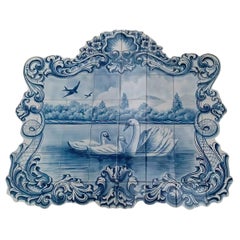
Portuguese Tile Mural "Swans" Hand Painted Signed by Artist
Located in Baldock, GB
Beautiful tile mural with the "SWANS" motif finely painted. Tile mural size: 41.3"H X 47.2"W (105cm X 120cm) Tile size: 5.9"H X 5.9"W (15cm X 15cm) Origin: Portugal Production met...
Category

21st Century and Contemporary Portuguese Modern Contemporary Art

Materials

Ceramic, Paint

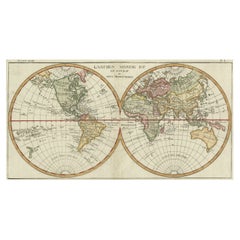
Very Decorative Original Antique Map of the World, Published in France in c.1780
By Rigobert Bonne
Located in Langweer, NL
Antique map titled 'L'Ancien Monde Et Le Nouveau en Deux Hemispheres' - Double hemisphere map of the World, showing the contemporary geographical...
Category

Antique 18th Century French Maps

Materials

Paper

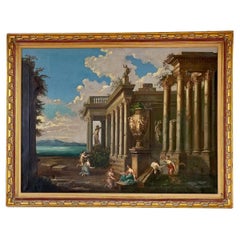
Architectural Capriccio of Roman Ancient Ruins with Figures
Located in Vero Beach, FL
Architectural Capriccio of Roman Ancient Ruins with Figures. Italian, 18th century large painting in oil on canvas is from the school of Giovan...
Category

Antique 18th Century Italian Other Paintings

Materials

Canvas

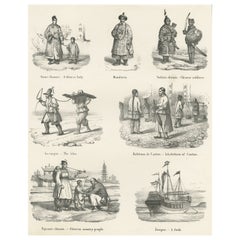
Antique Print with Views of China Incl Punishment, a Junk and a Mandarin, C.1860
Located in Langweer, NL
Antique print titled 'Dame Chinoise - Mandarin - Soldats Chinois - La Cangue (..)'. Print with various view of Chinese people and scenes including a Chi...
Category

Antique 19th Century Prints

Materials

Paper

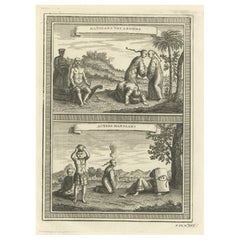
Antique Print of Chinese Vagabonds, 1748
Located in Langweer, NL
Antique print titled 'Mandians Vacabonds - Autres Mandians'. Two views of so-called 'Mandians,' either residents of the region in Anhui province, or some type of nomadic people. They...
Category

Antique 18th Century Prints

Materials

Paper

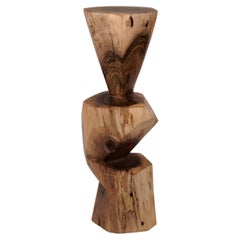
Solid Wood, Abstract Decoration, Contemporary Design, Handmade, By Logniture
By Logniture
Located in Stara Gradiška, HR
Unique chainsaw carved wooden functional sculpture usable as a multifunctional piece such as a side table. Carved from a single piece of wood and protected with the highest quality o...
Category

21st Century and Contemporary Croatian Organic Modern Decorative Art

Materials

Wood, Walnut

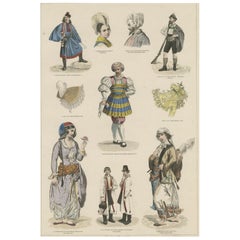
Antique Costume Print of Costumes of Switzerland, Tyrol, Asia and Others, C.1875
Located in Langweer, NL
Antique costume print including many different costumes including costumes of Switzerland, Tyrol, Asia and others. This print originates from 'Blätter fürcostumekunde. Historical and...
Category

Antique 19th Century Prints

Materials

Paper

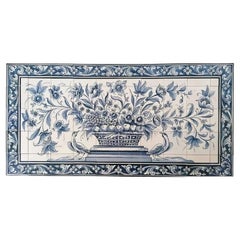
Portuguese Tiles Azulejos - Hand Painted Tile Mural "Fruit Flower Basket"
Located in Baldock, GB
Beautiful tile mural with the "FRUIT AND FLOWER BASKET" motif finely painted. Quantity: 50 tiles Tile mural size: 29.5"H X 59"W (75cm X 150cm) Tile size: 5.9"H X 5.9"W (15cm X 15cm)...
Category

21st Century and Contemporary Portuguese Modern Contemporary Art

Materials

Ceramic, Paint

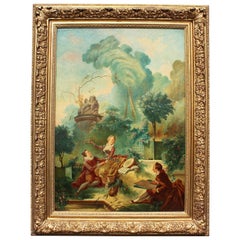
After Fragonard French 19th Century Oil on Canvas Progress of Love-Lover Crowned
By (After) Jean-Honoré Fragonard
Located in Los Angeles, CA
A large French 19th century oil on canvas (laid down on a masonite) "Les progrès de l'amour dans le cœur d'une jeune fille" The Progress of Love: The Lover Crowned, after Jean-Honoré...
Category

Antique 19th Century French Rococo Paintings

Materials

Masonite, Gesso, Canvas, Giltwood

Mid-20th Century Tribal Beaded Cache-Sex Modesty Apron, Cameroon
Located in Point Richmond, CA
Mid-20th century tribal beaded cache-sex modesty apron (Pikuran), Mandara Mountains, Cameroon These colorful cache-sex were worn for celebrations, rituals...
Category

Early 20th Century Cameroonian Tribal Tribal Art

Materials

Shell, Beads

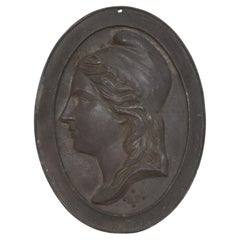
French Antique Cast Metal Plaque Depicting Marianne, Circa 1850-1900
Located in Buisson, FR
Beautiful cast metal ( most likely a pewter alloy) plaque depicting Marianne. Marianne has been the national personification of the French Republic since the French Revolution, as a ...
Category

Antique 19th Century French Decorative Art

Materials

Metal