Art

to
48,428
181,595
159,593
52,634
149,243
77,587
49,421
41,520
36,190
29,691
26,070
25,846
23,231
20,220
15,268
14,540
13,589
12,931
11,019
10,300
10,117
8,326
183,690
96,775
77,842
77,629
70,544
101,114
228,987
155,612
Art For Sale
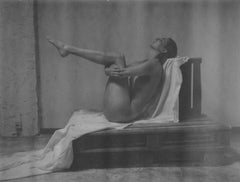
Pause -Contemporary, Polaroid, Black and White, Women, 21st Century, Nude
Located in Morongo Valley, CA
Pause - 2020 40x50cm, Edition of 7 plus 2 Artist Proofs. Archival C-Print based on the original Polaroid. Signed on the back and with certificate. Artist inventory PL2020-949. N...
Category

2010s Contemporary Art

Materials

Archival Paper, Photographic Paper, C Print, Color, Polaroid

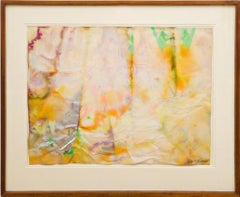
Ab Ex painting, Ex-Museum of Modern Art (MoMA) Collection, Cold War, Signed 1968
Located in New York, NY
Sam Gilliam Untitled Abstract Expressionist mixed media painting on paper, Ex-Museum of Modern Art Collection, 1968 Watercolor and Aluminum Paint on Fiberglass Paper. (Framed with Mu...
Category

1960s Abstract Expressionist Art

Materials

Fiberglass, Paint, Watercolor

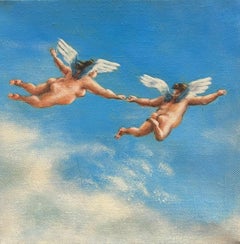
French Surrealist Oil Winged Cherubs Flying through Clouds
Located in Cirencester, Gloucestershire
Winged Cherubs French School, contemporary oil on canvas, unframed canvas: 8 x 8 inches provenance: private collection, Paris condition: very good and sound condition
Category

Late 20th Century Modern Art

Materials

Oil

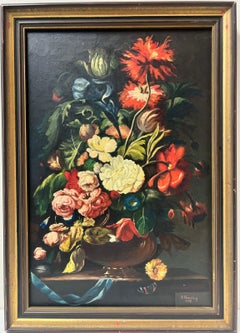
Classical Still Life Ornate Flowers in Vase in the Traditional Old Master style
Located in Cirencester, Gloucestershire
Ornate Classical Flowers oil painting on canvas, framed signed and dated 1947 framed: 17.5 x 12.5 inches canvas: 16 x 10.5 inches provenance: private collection condition: very good ...
Category

Mid-20th Century Old Masters Art

Materials

Canvas, Oil

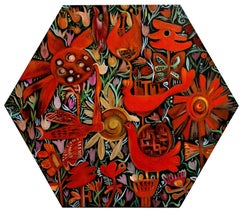
Summer 2025" is an animalistic landscape by Lilia Volskaya.
Located in Zofingen, AG
"Summer 2025" is an animalistic landscape by Lilia Volskaya. Let's start with the shape of the canvas, which is a hexagon, which is unusual, isn't it? The canvas is painted black. Th...
Category

2010s Abstract Impressionist Art

Materials

Canvas, Lacquer, Oil

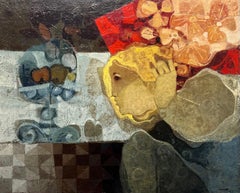
Woman surrealism oil on canvas painting
Located in Sitges, Barcelona
Canvas size 81x100 cm. Frame size 94x113 cm. Alvar Suñol Alvar Suñol Munoz-Ramos, commonly known as Alvar, was born in 1935 in Montgat, Spain, a Catalan fishing village on the Medit...
Category

Early 2000s Expressionist Art

Materials

Canvas, Oil

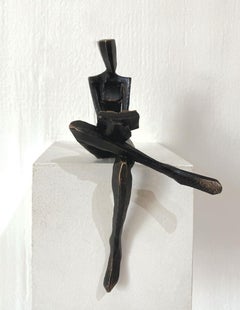
Janne by Nando Kallweit. Elegant figurative sculpture.
Located in Coltishall, GB
Janne is an elegant figurative bronze sculpture by Nando Kallweit. Modelled on modern youthful postures but with a nod to the importance of heritage through the stylised Egyptian-in...
Category

21st Century and Contemporary Other Art Style Art

Materials

Bronze

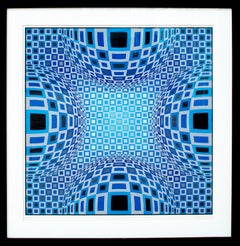
Victor Vasarely 1980s Optical Illusion Serigraph
Located in New York, NY
Victor Vasarely (Hungarian/French, 1906-1997) Enigma, Four Blue Spheres Serigraph Sight: 25 3/4 x 25 3/4 in. Framed: 34 1/3 x 33 1/2 x 1 in. Numbered lower left: 74/125 Signed lower ...
Category

1980s Op Art Art

Materials

Screen

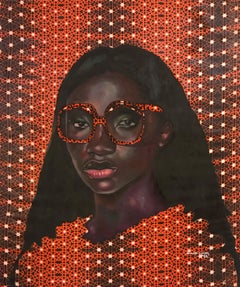
Beauty is What I Posessed
Located in Ibadan, Oyo
My beauty is one of a kind, my color is one of a kind, and I cherished my My skin which brings out the strength in me Painting Ships in a well-protected tube from Nigeria This work ...
Category

21st Century and Contemporary Contemporary Art

Materials

Oil, Fabric

Marc Chagall Bouquet of Flowers Above Paris 1969- Vintage Offset
Located in Brooklyn, NY
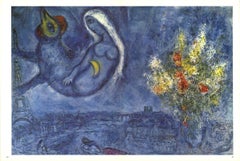
This double-page offset lithograph, printed on pages 20 and 21 of Derrière le Miroir (DLM) No. 182, features a fold line down the center, as originally issued. The artwork depicts a ...
Category

1960s Art

Materials

Offset

Bernard Myers (1925-2007) - 20th Century Oil, Nude VI
Located in Corsham, GB
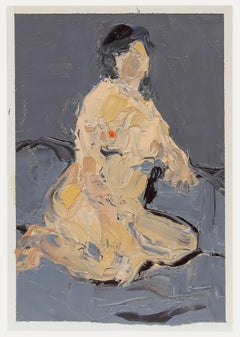
A sensitive life study in oil by the artist Bernard Myers (1925-2007), with areas of thick impasto. Signed verso. On paper.
Category

20th Century Art

Materials

Oil

Forces of Nature 21 - Textural Abstract Thick Paint Layered Artwork on Canvas
Located in Los Angeles, CA
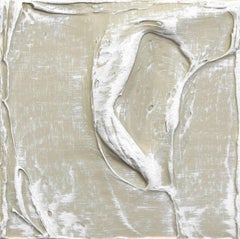
Len Klikunas paints minimalist artworks to modify experienced reality through visual perception. The Blocks series is a mix of art and architecture, hovering between painting and scu...
Category

21st Century and Contemporary Abstract Art

Materials

Gesso, Canvas, Mixed Media

Shoe
Located in Bournemouth, Dorset
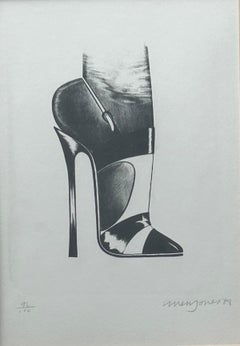
Allen Jones (b.1937) Shoe 1968 Etching 96/100 21.6 x 16.0 cm Frame: 50.5 x 40.5 cm Signed Allen Jones studied at Hornsey College of Art from 1955 to 1959 and the Royal College of Ar...
Category

1960s Art

Materials

Lithograph

Shoe
Shoe
$578 Sale Price
20% Off
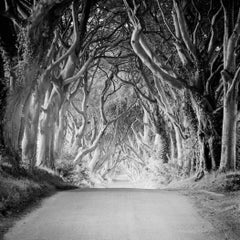
Dark Hedges - Ireland - Tree Avenue - Monochrome - Limited Edition Photography
Located in Vienna, Vienna
Gerald Berghammer - Black and white mystic landscape photography. Road through a tunnel of twisted, gnarled trees on both sides with branches overhead. Archival pigment ink print, e...
Category

2010s Contemporary Art

Materials

Digital Pigment

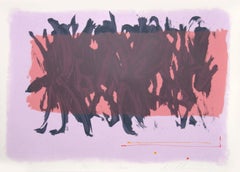
Shanidar, Abstract Expressionist Screenprint by Dan Christensen
Located in Long Island City, NY
Dan Christensen, American (1942 - 2007) - Shanidar, Year: circa 1980, Medium: Screenprint, Signed and numbered in Pencil, Edition: 175, Size: 29.5 x 43 in. (74.93 x 109.22 cm)
Category

1980s Abstract Expressionist Art

Materials

Screen

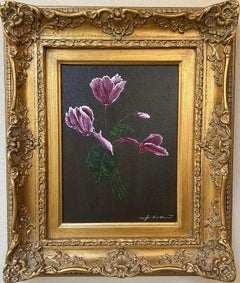
Floral Still Life
Located in Storrs, CT
Oil painting measures 12 x 9; frame dimensions measure 19 3/8 x 16 3/8 x 3. Housed in an elegant gold-tone frame with decorative edges. Illegible signature, lower right. Support patc...
Category

20th Century Realist Art

Materials

Oil

Floral Still Life
Floral Still Life
$750 Sale Price
40% Off
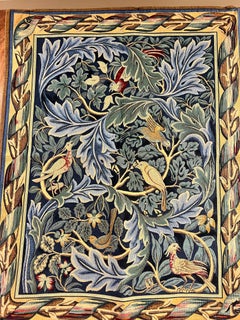
Les Oiseaux (The Birds)
Located in Atlanta, GA
This tapestry is based on a design by William Morris (1834-1896). He was instrumental in the revival of the decorative arts at the end of the 19th century. This tapestry is French ...
Category

Late 20th Century Naturalistic Art

Materials

Tapestry

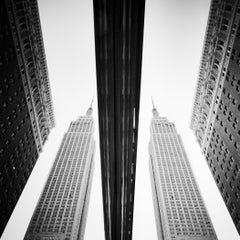
Empire State Building, New York City - cityscape photography - limited edition
Located in Vienna, Vienna
Gerald Berghammer - Black and white photography. Empire State Building and surrounding skyscrapers, taken from below with a reflection on a glass surface. Archival pigment ink print...
Category

2010s Contemporary Art

Materials

Digital Pigment

Room 217 - Collector Portfolio # 4 out 7 - 12 Fine Art Prints Nude photography
Located in Brussels, BE
His series "Room" or "My carnival" evokes the fantasy of the mistress, fetishist eroticism, 5 to 7, free fantasy. Eric produces erotic art without ever biting into porn-chic always b...
Category

2010s Contemporary Art

Materials

Rag Paper, Archival Pigment

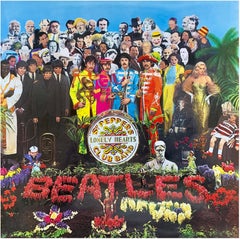
Sgt. Pepper s Lonely Hearts Club Band
Located in Norwich, GB
Hand printed silkscreen print, numbered and signed by Sir Peter Blake. The original photograph for the cover was taken at Michale Cooper's Flood Street Studio in Chelsea on March 30th 1967. The copyright of the photo remains with Apple, the Beatles management company. In 2007, after 40 years of trying, Peter Blake managed to get the Beatles to agree to publish a limited edition of 500 silkscreen prints on 410gsm Somerset cotton linter archive fine art paper medium, with the sheet size being 27 inches high by 26.25 inches wide. The image size being 19.5 inches square. Archival pigment inks were used with specialist glazing and an additional spot varnishing. 29 screens were hand applied to print the edition, being 27 colours plus 2 glazes. Every print bears the Apple logo embossed in the bottom centre. Published by Pete Smith of Pierre Optique, who negotiated the rights, Peter Blake was paid £10 for each signature and allowed to keep the 50 Artists Proofs. No 499 and No 500/500 were purchased by the Saint Giles Street Gallery and No 499 was embellished on the mount with original ticket stubs, bubblegum cards, official SPLHCB stamps issued by the Royal Mail along with other sundry paper ephemera and sent to Dublin to the Leinster Gallery to form part of their Unseen Beatles Show of Frank Herrmann...
Category

20th Century Pop Art Art

Materials

Screen

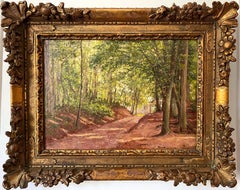
American Impressionist: Springtime, a sunny path in France 19thC oil painting
Located in Norwich, GB
This beautiful and light filled painting testifies of a new dawn: in the 1880s the landscape and animalier artist William Baird turns to Impressionism. Our Sunny Path, with looser brushwork and lighter colours, convey the fleeting nature of the present. Our lovely oil on canvas may well be homage to Claude Monet - according to Baird's inscription on the stretcher, it was painted in Mantes, which is only about 6 miles from Vétheuil, where Monet was living and working in the 1880s! William Baptiste Baird was born in Chicago, Illinois, in 1847, but as an adult moved to Paris to perfect his painting technique. In Paris, Baird studied under Adolphe Yvon...
Category

1880s American Impressionist Art

Materials

Canvas, Oil

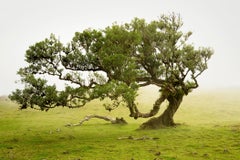
Laurel Forest, old bent Tree, color photography, landscape, limited edition
Located in Vienna, Vienna
Laurel Forest Study 1, Portugal - no. 21247 - Color fine art landscape photography. Archival pigment ink print as part of a limited edition of 8. All Gerald Berghammer prints are ma...
Category

2010s Contemporary Art

Materials

Digital Pigment

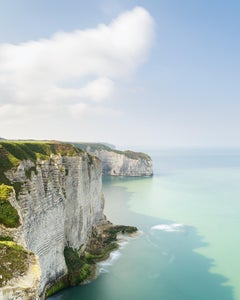
White Cliffs of Etretat, Alabaster Coast - seascape - limited color photography
Located in Vienna, Vienna
Gerald Berghammer - Color Photography. Cliffs along a coastline with green vegetation, white rock formations, and a calm sea under a partly cloudy sky. Archival pigment ink print as ...
Category

2010s Contemporary Art

Materials

Digital Pigment

The Archangel Raphael Leaving Tobias Family - Etching by Rembrandt - 1641
Located in Roma, IT
The Archangel Raphael Leaving Tobias' Family is an etching by Rembrandt executed in 1641. This etching is a proof of the 3rd state (of 4) before of the diagonals on the ground at the...
Category

1640s Old Masters Art

Materials

Etching

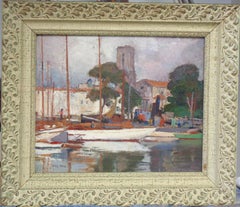
Jules Pages 1867 - 1946 American Impressionist, California, France Marine Scene
Located in Chesterfield, NJ
Jules Pages, American Impressionist Marine, La Rochelle, France oil/canvas signed LL 13 x 16 unframed, 18 x 21 framed. An oil painting on canvas by Jules Pages showing a French scen...
Category

21st Century and Contemporary Realist Art

Materials

Oil

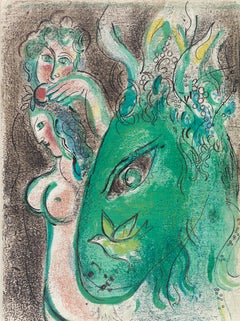
Marc Chagall, Paradise II, from Drawings for the Bible, 1956
Located in Southampton, NY
This exquisite lithograph by Marc Chagall (1887–1985), titled Paradis II (Paradise II), from Marc Chagall, Dessins Pour La Bible (Drawings for the Bible), Verve: Revue Artistique et Litteraire, Vol. VIII, No. 33–34, originates from the September 1956 issue published by Editions de la revue Verve, Paris, under the direction of Teriade, Editeur, Paris, and printed by Mourlot Freres, Paris, 1956. This luminous composition portrays the splendor of Paradise, filled with light, harmony, and divine presence. Through his poetic use of line and ethereal symbolism, Chagall evokes the spiritual unity between humanity and the divine, capturing the purity and joy of creation. Paradis II reflects the artist’s enduring belief in love and beauty as transcendent forces, transforming a biblical vision into a universal celebration of faith and imagination. The work forms part of Chagall’s celebrated series of lithographs and drawings created for Dessins Pour La Bible, a monumental project uniting art, scripture, and mysticism in one of the artist’s most important achievements. Executed as a lithograph on velin du Marais paper, this work measures 14 x 10.5 inches (35.56 x 26.67 cm). Unsigned and unnumbered as issued. The edition exemplifies the superb craftsmanship of the Mourlot Freres atelier, renowned for its collaborations with the greatest modern masters of the 20th century. Artwork Details: Artist: Marc Chagall (1887–1985) Title: Paradis II (Paradise II), from Marc Chagall, Dessins Pour La Bible (Drawings for the Bible), Verve: Revue Artistique et Litteraire, Vol. VIII, No. 33–34, September 1956 Medium: Lithograph on velin du Marais paper Dimensions: 14 x 10.5 inches (35.56 x 26.67 cm) Inscription: Unsigned and unnumbered as issued Date: 1956 Publisher: Editions de la revue Verve, Paris, under the direction of Teriade, Editeur, Paris Printer: Mourlot Freres, Paris Catalogue raisonne references: Cain, Julien, and Fernand Mourlot. Chagall Lithographe. Andre Sauret, Editeur, 1960, illustrations 117–46. Cramer, Patrick, and Meret Meyer. Marc Chagall: Catalogue Raisonne Des Livres Illustrés. P. Cramer ed., 1995, illustration 25. Condition: Well preserved, consistent with age and medium Provenance: From Marc Chagall, Dessins Pour La Bible (Drawings for the Bible), Verve: Revue Artistique et Litteraire, Vol. VIII, No. 33–34, published by Editions de la revue Verve, Paris, 1956 Notes: Excerpted from the album (translated from French), This double issue of Verve is dedicated to the full reproduction in heliogravure of the one hundred-five plates etched by Marc Chagall, between 1930 and 1955, for the illustration of the Bible. The artist composed especially for the present work, sixteen lithographs in color and twelve in black, as well as the cover and the title page. This volume was completed and printed on September 10, 1956, by the Master Printers Draeger Freres for heliogravure, and by Mourlot Freres for lithography. About the Publication: Marc Chagall, Dessins Pour La Bible (Drawings for the Bible), published as Verve Vol. VIII, No. 33–34 in September 1956, represents one of the crowning achievements of Chagall’s lifelong dialogue with the sacred. Conceived and directed by the visionary publisher Teriade and printed by the master lithographers Mourlot Freres, the issue features thirty-four color lithographs and numerous black-and-white drawings inspired by biblical figures and stories. Chagall’s works for this edition unite text and image in a luminous meditation on divine creation, moral struggle, and spiritual renewal, imbued with his signature dreamlike symbolism and radiant color. Produced in postwar Paris, this landmark publication reaffirmed the enduring union of art and faith, establishing Dessins Pour La Bible as one of the most important illustrated works of the 20th century. About the Artist: Marc Chagall (1887–1985) was a Belarus-born French painter, printmaker, and designer whose visionary imagination, radiant color, and deeply poetic symbolism made him one of the most beloved and influential artists of the 20th century. Rooted in the imagery of his Jewish heritage and the memories of his childhood in Vitebsk, Chagall’s art wove together themes of faith, love, folklore, and fantasy with a dreamlike modern sensibility. His unique style—merging elements of Cubism, Fauvism, Expressionism, and Surrealism—defied categorization, transforming ordinary scenes into lyrical meditations on memory and emotion. Influenced by Russian icon painting, medieval religious art, and the modern innovations of artists such as Pablo Picasso, Henri Matisse, and Georges Braque, Chagall developed a profoundly personal visual language filled with floating figures, vibrant animals, musicians, and lovers that symbolized the transcendent power of imagination and love. During his early years in Paris, he became an integral part of the Ecole de Paris circle, forming friendships with Amedeo Modigliani, Fernand Leger, and Sonia Delaunay, and his creative spirit resonated with that of his peers and successors—Alexander Calder, Alberto Giacometti, Salvador Dali, Joan Miro, Wassily Kandinsky, Marcel Duchamp, and Man Ray—artists who, like Chagall, sought to push the boundaries of perception, emotion, and form. Over a prolific career that spanned painting, printmaking, stained glass, ceramics, and stage design, Chagall brought an unparalleled poetic sensibility to modern art, infusing even the most abstract subjects with human warmth and spiritual depth. His works are held in the most prestigious museums around the world, including the Museum of Modern Art, the Centre Pompidou, the Tate, and the Guggenheim, where they continue to inspire generations of artists and collectors. The highest price ever paid for a Marc Chagall artwork is approximately $28.5 million USD, achieved in 2017 at Sotheby’s New York for Les Amoureux (1928). Marc Chagall Paradis...
Category

1950s Expressionist Art

Materials

Lithograph

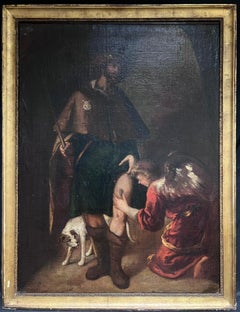
Huge 17th Century Spanish Old Master Oil Painting Wounded Pilgrim with Angel
Located in Cirencester, Gloucestershire
The Pilgrim and Angel Spanish School, 17th Century oil on canvas, gilt framed framed: 48 x 37 inches canvas: 43 x 32 inches provenance: private collection, Barcelona, Spain condition...
Category

17th Century Baroque Art

Materials

Oil, Canvas

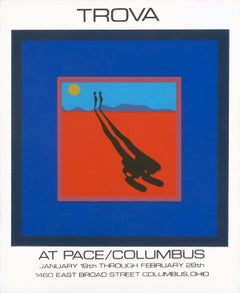
Ernst Trova, Falling Man, 1972, Screenprint
Located in Brooklyn, NY
Paper Size: 31.25 x 25.75 inches ( 79.375 x 65.405 cm ) Image Size: 24.5 x 24.5 inches ( 62.23 x 62.23 cm ) Framed: No Condition: A: Mint Additional Details: This poster by Ernest T...
Category

1970s Pop Art Art

Materials

Screen

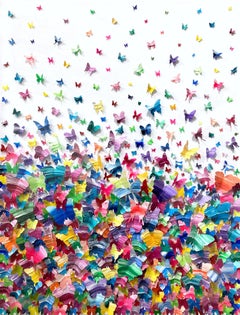
"Fly Away With Me" Multicolor Paper Butterflies Painting on Canvas w Shadow Box
Located in New York, NY
This piece is executed with hand cut butterflies, and comes displayed in an acrylic shadow box. These works conjure sensations of nostalgia, created from paper, cutting out colorful ...
Category

2010s Pop Art Art

Materials

Canvas, Paper, Acrylic

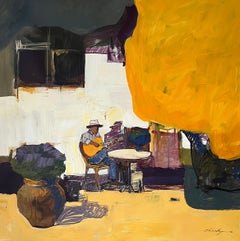
Autumn Melody
Located in Zofingen, AG
This painting captures a warm and peaceful autumn day. A man sits alone with his guitar, playing music under the golden canopy of a tree. The bright yellow leaves, soft shadows, and ...
Category

2010s Contemporary Art

Materials

Canvas, Acrylic

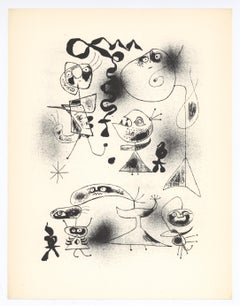
Surrealist composition
Located in Henderson, NV
Medium: collotype (after the Miro lithograph). Printed in 1947 in an edition of 1500 by Meriden Gravure and published by Curt Valentin for "The Prints of Joan Miro" portfolio. Size: ...
Category

1940s Surrealist Art

Materials

Photogravure

Hoarfrosted Trees, minimalist photograph, winter landscape
Located in Vienna, Vienna
Black and white fine art winter landscape photography print. Archival pigment ink print, edition of 7. Signed, titled, dated and numbered by artist. Certificate of authenticity inclu...
Category

2010s Contemporary Art

Materials

Digital Pigment

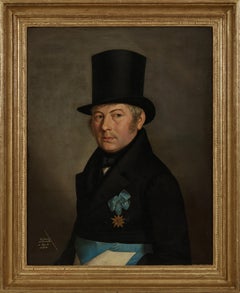
19th Century German School, Gentleman with Top Hat, 1839
Located in Beachwood, OH
19th Century German School Br: Venus aus Chemnitz 50 Jahre alt 58 24/5 39, 1839 Oil on canvas Signed lower left 25.5 x 20 inches 30.5 x 24.75 inches, framed The gentleman is Johann ...
Category

1830s Art

Materials

Oil

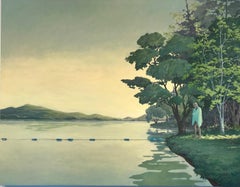
Glass, Lake Landscape, Figure Standing by Water, Mountains, Sage Green, Yellow
Located in Kent, CT
A tall, fair-haired figure wrapped in a light blue towel stands on the bank of inviting, calm water. Dark green trees in a forest, and mountains in the dist...
Category

2010s Contemporary Art

Materials

Linen, Oil

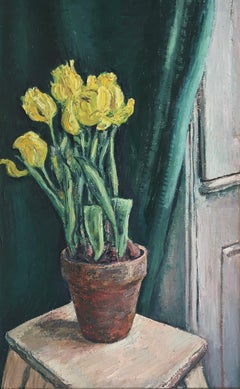
Flowers in terracotta pot - Still life Oil on canvas
Located in Geneva, CH
Unsigned Work on canvas Gilded wooden frame 70,5 x 48 x 4,5 cm
Category

Mid-20th Century Art Deco Art

Materials

Oil

ZT 230604 - contemporary modern white abstract geometric painting relief
Located in Doetinchem, NL
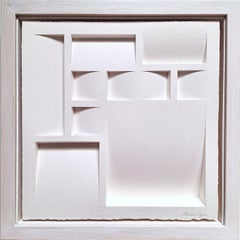
ZT 230604 is a unique one-of-a-kind medium size contemporary modern painting relief by Dutch artist Herman Coppus. This bas-relief relief consists of a meticulously hand cut, folded ...
Category

2010s Contemporary Art

Materials

Cardboard

"Yellow Reversed" original lithograph
Located in Henderson, NV
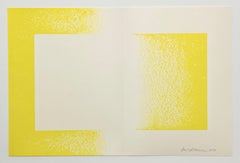
Medium: original lithograph. Printed in 1970 and published by Art In America. Size: 11 1/4 x 16 3/4 inches (283 x 427 mm). This lithograph was published as a folded sheet with a cent...
Category

1970s Art

Materials

Lithograph

Sunlit Bench Overlooking the Azure Mediterranean French Watercolour Painting
Located in Cirencester, Gloucestershire
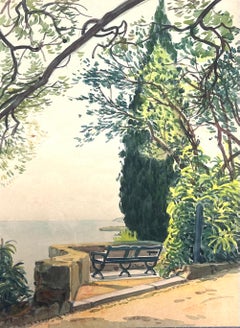
Bench Overlooking the Azure Mediterranean Tony Minartz (French, 1873 - 1994) watercolour on artist paper painting : 17 x 13 inches Provenance: private collection in the South of F...
Category

Mid-20th Century Post-Impressionist Art

Materials

Watercolor

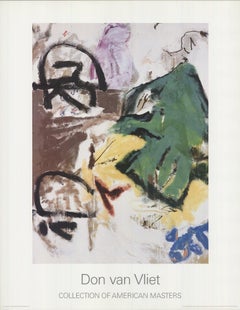
Parapliers the Willow Dipped
Located in Brooklyn, NY
Parapliers the Willow Dipped by Van Vliet, better known as Captain Beefheart from The Mothers of Invention, is part of the Collection of American Masters at the Nordfallen Museum in ...
Category

Late 20th Century Contemporary Art

Materials

Offset

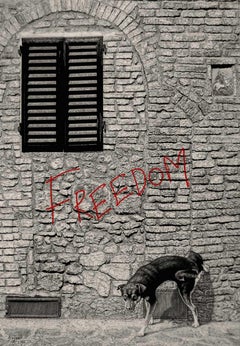
Freedom , By Bojan Grof, Graphite, Charcoal and Oil Pencil Drawing on Paper
Located in Oklahoma City, OK
This 27" x 19" monochromatic graphite and charcoal drawing by Serbian artist, Bojan, is rendered in a hyper-realistic manner. A dog is the main subject in the lower right corner ...
Category

21st Century and Contemporary Realist Art

Materials

Paper, Charcoal, Oil Pastel, Graphite

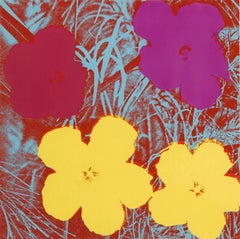
Flowers #71
Located in New York, NY
From the iconic Flowers portfolio of ten individual floral prints created by Andy Warhol in 1970, Flowers #71 is an original color screenprint, hand-signed in ballpoint pen, and numb...
Category

20th Century Pop Art Art

Materials

Screen

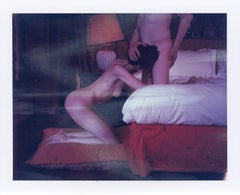
The Receiving End - 21st Century, Polaroid, Nude Photography
Located in Morongo Valley, CA
The Receiving End - 2018 48x60cm, Edition 7, plus 2 Artist Proofs. Archival C-Print based on the original Polaroid. Signature label with certificate. Artist inventory PL2018-480...
Category

2010s Contemporary Art

Materials

Archival Paper, Photographic Paper, C Print, Color, Polaroid

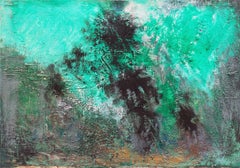
Abstract, Turquoise and Gray , Paris, Picasso, Andre L Hote, Guernica, Benezit
Located in Santa Cruz, CA
'Abstract, Turquoise and Gray' by Dora Maar. Paris, Picasso, Andre L'Hote, Guernica, Benezit ----- Signed verso with artist monogram 'DM' for Dora Maar (Argentine-French, 1907-1997)...
Category

1930s Abstract Art

Materials

Canvas, Oil

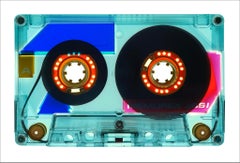
Tape Collection 90 Minutes Vintage Blue - Contemporary Pop Art Color Photography
Located in Cambridge, GB
90 Minutes Vintage Blue, pop art from the Heidler & Heeps Tape Collection The Heidler & Heeps collaborations are creative representations of Natasha Heidler and Richard Heeps’, pers...
Category

2010s Pop Art Art

Materials

Photographic Paper, C Print, Color, Silver Gelatin

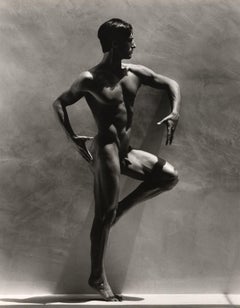
Tony Ward Figure series #1, 21st Century, Contemporary, Celebrity, Photography
Located in München, BY
Edition 10 Also available in 40 x 50 cm / 16 x 20 inch, Edition 25 Black and white portrait of nude model Tony Ward. From personality portraits and advert...
Category

1980s Contemporary Art

Materials

Archival Pigment

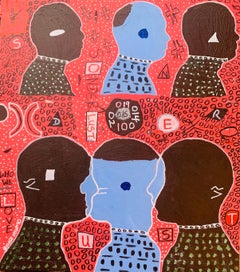
Sonderlust -21st Century, Contemporary, Abstract, Pop Culture, Anxiety, People
Located in Ibadan, Oyo
All of us can change the past. We cannot take back what has happened, who we love, what we have done. Just like we cannot change our current situation. I think life is a funny thing,...
Category

21st Century and Contemporary Abstract Expressionist Art

Materials

Canvas, Ink, Acrylic

Tableau, Japanese, limited edition lithograph, black, white, red, signed, number
Located in Santa Fe, NM
Tableau, Japanese, limited edition lithograph, black, white, red, signed, number Shinoda's works have been collected by public galleries and museums, including the Museum of Modern Art, Solomon R. Guggenheim Museum, Brooklyn Museum and Metropolitan Museum (all in New York City), the National Museum of Modern Art in Tokyo, the British Museum in London, the Art Institute of Chicago, Arthur M. Sackler Gallery of the Smithsonian in Washington, D.C., the Singapore Art Museum, the National Museum of Singapore, the Kröller-Müller Museum in Otterlo, Netherlands, the Albright–Knox Art Gallery in Buffalo, New York, the Cincinnati Art Museum, and the Yale University Art Gallery in New Haven, Connecticut. New York Times Obituary, March 3, 2021 by Margalit Fox, Alex Traub contributed reporting. Toko Shinoda, one of the foremost Japanese artists of the 20th century, whose work married the ancient serenity of calligraphy with the modernist urgency of Abstract Expressionism, died on Monday at a hospital in Tokyo. She was 107. Her death was announced by her gallerist in the United States. A painter and printmaker, Ms. Shinoda attained international renown at midcentury and remained sought after by major museums and galleries worldwide for more than five decades. Her work has been exhibited at, among other places, the Metropolitan Museum of Art and the Museum of Modern Art in New York; the Art Institute of Chicago; the British Museum; and the National Museum of Modern Art in Tokyo. Private collectors include the Japanese imperial family. Writing about a 1998 exhibition of Ms. Shinoda’s work at a London gallery, the British newspaper The Independent called it “elegant, minimal and very, very composed,” adding, “Her roots as a calligrapher are clear, as are her connections with American art of the 1950s, but she is quite obviously a major artist in her own right.” As a painter, Ms. Shinoda worked primarily in sumi ink, a solid form of ink, made from soot pressed into sticks, that has been used in Asia for centuries. Rubbed on a wet stone to release their pigment, the sticks yield a subtle ink that, because it is quickly imbibed by paper, is strikingly ephemeral. The sumi artist must make each brush stroke with all due deliberation, as the nature of the medium precludes the possibility of reworking even a single line. “The color of the ink which is produced by this method is a very delicate one,” Ms. Shinoda told The Business Times of Singapore in 2014. “It is thus necessary to finish one’s work very quickly. So the composition must be determined in my mind before I pick up the brush. Then, as they say, the painting just falls off the brush.” Ms. Shinoda painted almost entirely in gradations of black, with occasional sepias and filmy blues. The ink sticks she used had been made for the great sumi artists of the past, some as long as 500 years ago. Her line — fluid, elegant, impeccably placed — owed much to calligraphy. She had been rigorously trained in that discipline from the time she was a child, but she had begun to push against its confines when she was still very young. Deeply influenced by American Abstract Expressionists like Jackson Pollock, Mark Rothko and Robert Motherwell, whose work she encountered when she lived in New York in the late 1950s, Ms. Shinoda shunned representation. “If I have a definite idea, why paint it?,” she asked in an interview with United Press International in 1980. “It’s already understood and accepted. A stand of bamboo is more beautiful than a painting could be. Mount Fuji is more striking than any possible imitation.” Spare and quietly powerful, making abundant use of white space, Ms. Shinoda’s paintings are done on traditional Chinese and Japanese papers, or on backgrounds of gold, silver or platinum leaf. Often asymmetrical, they can overlay a stark geometric shape with the barest calligraphic strokes. The combined effect appears to catch and hold something evanescent — “as elusive as the memory of a pleasant scent or the movement of wind,” as she said in a 1996 interview. Ms. Shinoda’s work also included lithographs; three-dimensional pieces of wood and other materials; and murals in public spaces, including a series made for the Zojoji Temple in Tokyo. The fifth of seven children of a prosperous family, Ms. Shinoda was born on March 28, 1913, in Dalian, in Manchuria, where her father, Raijiro, managed a tobacco plant. Her mother, Joko, was a homemaker. The family returned to Japan when she was a baby, settling in Gifu, midway between Kyoto and Tokyo. One of her father’s uncles, a sculptor and calligrapher, had been an official seal carver to the Meiji emperor. He conveyed his love of art and poetry to Toko’s father, who in turn passed it to Toko. “My upbringing was a very traditional one, with relatives living with my parents,” she said in the U.P.I. interview. “In a scholarly atmosphere, I grew up knowing I wanted to make these things, to be an artist.” She began studying calligraphy at 6, learning, hour by hour, impeccable mastery over line. But by the time she was a teenager, she had begun to seek an artistic outlet that she felt calligraphy, with its centuries-old conventions, could not afford. “I got tired of it and decided to try my own style,” Ms. Shinoda told Time magazine in 1983. “My father always scolded me for being naughty and departing from the traditional way, but I had to do it.” Moving to Tokyo as a young adult, Ms. Shinoda became celebrated throughout Japan as one of the country’s finest living calligraphers, at the time a signal honor for a woman. She had her first solo show in 1940, at a Tokyo gallery. During World War II, when she forsook the city for the countryside near Mount Fuji, she earned her living as a calligrapher, but by the mid-1940s she had started experimenting with abstraction. In 1954 she began to achieve renown outside Japan with her inclusion in an exhibition of Japanese calligraphy at MoMA. In 1956, she traveled to New York. At the time, unmarried Japanese women could obtain only three-month visas for travel abroad, but through zealous renewals, Ms. Shinoda managed to remain for two years. She met many of the titans of Abstract Expressionism there, and she became captivated by their work. “When I was in New York in the ’50s, I was often included in activities with those artists, people like Mark Rothko, Jackson Pollock, Motherwell and so forth,” she said in a 1998 interview with The Business Times. “They were very generous people, and I was often invited to visit their studios, where we would share ideas and opinions on our work. It was a great experience being together with people who shared common feelings.” During this period, Ms. Shinoda’s work was sold in the United States by Betty Parsons, the New York dealer who represented Pollock, Rothko and many of their contemporaries. Returning to Japan, Ms. Shinoda began to fuse calligraphy and the Expressionist aesthetic in earnest. The result was, in the words of The Plain Dealer of Cleveland in 1997, “an art of elegant simplicity and high drama.” Among Ms. Shinoda’s many honors, she was depicted, in 2016, on a Japanese postage stamp. She is the only Japanese artist to be so honored during her lifetime. No immediate family members survive. When she was quite young and determined to pursue a life making art, Ms. Shinoda made the decision to forgo the path that seemed foreordained for women of her generation. “I never married and have no children,” she told The Japan Times in 2017. “And I suppose that it sounds strange to think that my paintings are in place of them — of course they are not the same thing at all. But I do say, when paintings that I have made years ago are brought back into my consciousness, it seems like an old friend, or even a part of me, has come back to see me.” Works of a Woman's Hand Toko Shinoda bases new abstractions on ancient calligraphy Down a winding side street in the Aoyama district, western Tokyo. into a chunky white apartment building, then up in an elevator small enough to make a handful of Western passengers friends or enemies for life. At the end of a hall on the fourth floor, to the right, stands a plain brown door. To be admitted is to go through the looking glass. Sayonara today. Hello (Konichiwa) yesterday and tomorrow. Toko Shinoda, 70, lives and works here. She can be, when she chooses, on e of Japans foremost calligraphers, master of an intricate manner of writing that traces its lines back some 3,000 years to ancient China. She is also an avant-garde artist of international renown, whose abstract paintings and lithographs rest in museums around the world. These diverse talents do not seem to belong in the same epoch. Yet they have somehow converged in this diminutive woman who appears in her tiny foyer, offering slippers and ritual bows of greeting. She looks like someone too proper to chip a teacup, never mind revolutionize an old and hallowed art form She wears a blue and white kimono of her own design. Its patterns, she explains, are from Edo, meaning the period of the Tokugawa shoguns, before her city was renamed Tokyo in 1868. Her black hair is pulled back from her face, which is virtually free of lines and wrinkles. except for the gold-rimmed spectacles perched low on her nose (this visionary is apparently nearsighted). Shinoda could have stepped directly from a 19th century Meji print. Her surroundings convey a similar sense of old aesthetics, a retreat in the midst of a modern, frenetic city. The noise of the heavy traffic on a nearby elevated highway sounds at this height like distant surf. delicate bamboo shades filter the daylight. The color arrangement is restful: low ceilings of exposed wood, off-white walls, pastel rugs of blue, green and gray. It all feels so quintessentially Japanese that Shinoda’s opening remarks come as a surprise. She points out (through a translator) that she was not born in Japan at all but in Darien, Manchuria. Her father had been posted there to manage a tobacco company under the aegis of the occupying Japanese forces, which seized the region from Russia in 1905. She says,”People born in foreign places are very free in their thinking, not restricted” But since her family went back to Japan in 1915, when she was two, she could hardly remember much about a liberated childhood? She answers,”I think that if my mother had remained in Japan, she would have been an ordinary Japanese housewife. Going to Manchuria, she was able to assert her own personality, and that left its mark on me.” Evidently so. She wears her obi low on the hips, masculine style. The Porcelain aloofness she displays in photographs shatters in person. Her speech is forceful, her expression animated and her laugh both throaty and infectious. The hand she brings to her mouth to cover her amusement (a traditional female gesture of modesty) does not stand a chance. Her father also made a strong impression on the fifth of his seven children:”He came from a very old family, and he was quite strict in some ways and quite liberal in others.” He owned one of the first three bicycles ever imported to Japan and tinkered with it constantly He also decided that his little daughter would undergo rigorous training in a procrustean antiquity. “I was forced to study from age six on to learn calligraphy,” Shinoda says, The young girl dutifully memorized and copied the accepted models. In one sense, her father had pushed her in a promising direction, one of the few professional fields in Japan open to females. Included among the ancient terms that had evolved around calligraphy was onnade, or woman's writing. Heresy lay ahead. By the time she was 15, she had already been through nine years of intensive discipline, “I got tired of it and decided to try my own style. My father always scolded me for being naughty and departing from the traditional way, but I had to do it.” She produces a brush and a piece of paper to demonstrate the nature of her rebellion. “This is kawa, the accepted calligraphic character for river,” she says, deftly sketching three short vertical strokes. “But I wanted to use more than three lines to show the force of the river.” Her brush flows across the white page, leaving a recognizable river behind, also flowing.” The simple kawa in the traditional language was not enough for me. I wanted to find a new symbol to express the word river.” Her conviction grew that ink could convey the ineffable, the feeling, "as she says, of wind blowing softly.” Another demonstration. She goes to the sliding wooden door of an anteroom and disappears in back of it; the only trace of her is a triangular swatch of the right sleeve of her kimono, which she has arranged for that purpose. A realization dawns. The task of this artist is to paint that three sided pattern so that the invisible woman attached to it will be manifest to all viewers. Gen, painted especially for TIME, shows Shinoda’s theory in practice. She calls the work “my conception of Japan in visual terms.” A dark swath at the left, punctuated by red, stands for history. In the center sits a Chinese character gen, which means in the present or actuality. A blank pattern at the right suggests an unknown future. Once out of school, Shinoda struck off on a path significantly at odds with her culture. She recognized marriage for what it could mean to her career (“a restriction”) and decided against it. There was a living to be earned by doing traditional calligraphy:she used her free time to paint her variations. In 1940 a Tokyo gallery exhibited her work. (Fourteen years would pass before she got a second show.)War came, and bad times for nearly everyone, including the aspiring artist , who retreated to a rural area near Mount Fuji and traded her kimonos for eggs. In 1954 Shinoda’s work was included in a group exhibit at New York City’s Museum of Modern Art. Two years later, she overcame bureaucratic obstacles to visit the U.S.. Unmarried Japanese women are allowed visas for only three months, patiently applying for two-month extensions, one at a time, Shinoda managed to travel the country for two years. She pulls out a scrapbook from this period. Leafing through it, she suddenly raises a hand and touches her cheek:”How young I looked!” An inspection is called for. The woman in the grainy, yellowing newspaper photograph could easily be the on e sitting in this room. Told this, she nods and smiles. No translation necessary. Her sojourn in the U.S. proved to be crucial in the recognition and development of Shinoda’s art. Celebrities such as actor Charles Laughton and John Lewis of the Modern Jazz Quartet bought her paintings and spread the good word. She also saw the works of the abstract expressionists, then the rage of the New York City art world, and realized that these Western artists, coming out of an utterly different tradition, were struggling toward the same goal that had obsessed her. Once she was back home, her work slowly made her famous. Although Shinoda has used many materials (fabric, stainless steel, ceramics, cement), brush and ink remain her principal means of expression. She had said, “As long as I am devoted to the creation of new forms, I can draw even with muddy water.” Fortunately, she does not have to. She points with evident pride to her ink stone, a velvety black slab of rock, with an indented basin, that is roughly a foot across and two feet long. It is more than 300 years old. Every working morning, Shinoda pours about a third of a pint of water into it, then selects an ink stick from her extensive collection, some dating back to China’s Ming dynasty. Pressing stick against stone, she begins rubbing. Slowly, the dried ink dissolves in the water and becomes ready for the brush. So two batches of sumi (India ink) are exactly alike; something old, something new. She uses color sparingly. Her clear preference is black and all its gradations. “In some paintings, sumi expresses blue better than blue.” It is time to go downstairs to the living quarters. A niece, divorced and her daughter,10,stay here with Shinoda; the artist who felt forced to renounce family and domesticity at the outset of her career seems welcome to it now. Sake is offered, poured into small cedar boxes and happily accepted. Hold carefully. Drink from a corner. Ambrosial. And just right for the surroundings and the hostess. A conservative renegade; a liberal traditionalist; a woman steeped in the male-dominated conventions that she consistently opposed. Her trail blazing accomplishments are analogous to Picasso’s. When she says goodbye, she bows. --by Paul Gray...
Category

1990s Contemporary Art

Materials

Lithograph

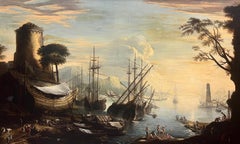
Huge 18th Century Italian Oil Painting Shipping in Merchant Port Many Figures
Located in Cirencester, Gloucestershire
The Merchants Port Italian School, 18th century oil painting on canvas, framed framed: 37 x 58 inches canvas: 32 x 52 inches provenance: private collection, UK condition: very good a...
Category

18th Century Old Masters Art

Materials

Oil, Canvas

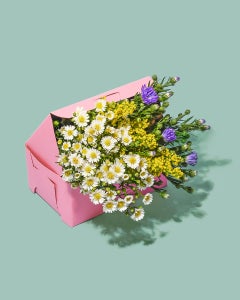
Cakebox Wildflowers
Located in New York, NY
ABOUT THIS ARTIST: Natasha Martin is an LA-based photographer who loves color and infusing dreamy-nostalgia into her work. She has created work for Prada, Miu Miu, and 24 Sèvres, and...
Category

2010s Art

Materials

Photographic Paper

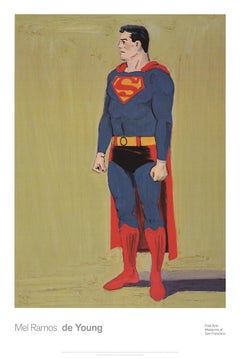
Superman
Located in Brooklyn, NY
This reproduction of “Superman” by Mel Ramos, part of the De Young Museum’s permanent collection, showcases the artist’s signature Pop Art style, blending comic book aesthetics with ...
Category

Late 20th Century Pop Art Art

Materials

Offset

Superman
$60 Sale Price
20% Off
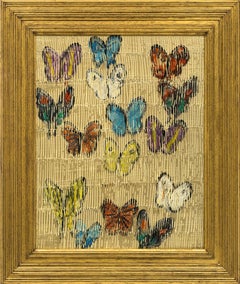
Morning Flight
Located in PARIS, FR
Original and unique artwork by Hunt Slonem. Oil on wood white, yellow, purple, blue, green, red, orange butterflies on a scored gold background, framed. 2025 Painting is framed, as ...
Category

2010s Post-Modern Art

Materials

Wood, Oil

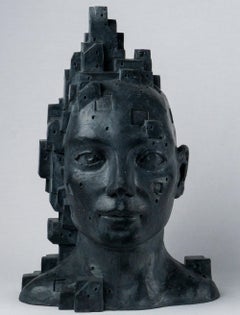
Hybrid Architectural Figurative Bust in Black Cement. Anthropotectura “LarA 011”
Located in FISTERRA, ES
“LarA 011” is a unique architectural sculpture from the Antropotectura series by Spanish artist José Perozo. Cast in black pigmented cement, this head-and-shoulders bust presents a fusion of the human figure with modular architectural volumes. The vertical extension of block-like forms emerges from the cranial area, transforming the head into a structural topography. This hybrid configuration invites reflection on the human body as both inhabited and inhabiting — a site of memory, construction, and symbolic permanence. The formal arrangement of the sculpture is symmetrical but discontinuous, with geometric protrusions interrupting the organic contours of the face. These elements suggest urban formations, perhaps ruins or unfinished constructions, anchored to the surface of the skin. This layered structure evokes the aesthetic of posthuman figuration and resonates with speculative architectural languages often seen in anime environments — particularly those of Studio Ghibli or early cybernetic landscapes. The matte black surface finish accentuates the raw tactility of the material. Subtle tonal variations, occasional air pockets, and manual traces from the casting process are preserved, underscoring the artist’s interest in the sculptural language of construction materials. These choices align with the conceptual underpinning of Antropotectura, a term coined by Perozo to describe his ongoing investigation into the convergence of embodiment and architecture. About the Artist: José Perozo (Vigo, 1978) is a Spanish sculptor with a background in Scenic Construction and Fine Arts. His practice explores how built structures can be inscribed onto the human form, merging classical figuration with a contemporary sculptural grammar. The LarA series has been exhibited in institutional and independent contexts and is currently represented by Casa das Peritas. About Casa das Peritas: This work is presented by Casa das Peritas, an independent art space located in Galicia’s Atlantic coast, working with international collectors, designers, and institutions. Known for its curated selection of contemporary figurative and conceptual works, the gallery combines rural precision with global outreach. All works include certificates of authenticity and are shipped with personalized follow-up and care. Visitors are encouraged to follow our storefront to explore new additions and artist collaborations. Technical Details: Title: LarA 011 Series: Antropotectura Artist: José Perozo Medium: Black pigmented cement with fine aggregates and acrylic fibers Finish: Hand-tinted and sealed with matte protective varnish Dimensions: 21 x 29 x 17 cm Weight: 6 kg Year: 2024 Packaging: Custom-made box (27 x 35 x 23 cm) for secure international delivery Authenticity: Signed by the artist with certificate included Installation and Context: The sculpture may be installed as a freestanding work in display niches, shelving, or plinths. Its formal and material language lends itself to architectural, conceptual, and collectible sculpture contexts, making it suitable for residential interiors, institutional settings, or design-driven environments. Keywords (SEO): architectural sculpture, figurative bust, posthuman art, concrete head...
Category

2010s Contemporary Art

Materials

Concrete

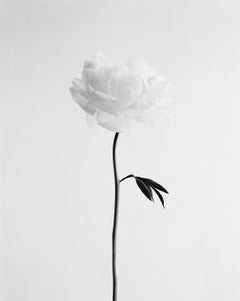
Peony No.13 - black and white fine art botanical photography, edition 20
Located in London, GB
Peony No.13 Printed on museum-grade Hahnemühle Photo Rag Baryta paper, each print is hand-signed by the artist on both the front and back, numbered as part of a limited edition of 2...
Category

21st Century and Contemporary Contemporary Art

Materials

Giclée

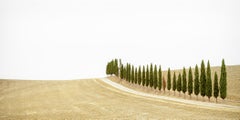
Row of Cypress Trees, Tuscany, color photography, limited edition, landscape
Located in Vienna, Vienna
Gerald Berghammer - Color landscape photography. A rural landscape with a curved dirt road and a line of tall cypress trees on a hill against a pale sky. Archival pigment ink print ...
Category

2010s Contemporary Art

Materials

Digital Pigment

Werner Bronkhorst - Get Served
Located in London, GB
Werner Bronkhorst Get Served, 2015 Giclée print on Hahnemühle Photorag paper with ready-to-hang heavyweight solid oak frame. From the artist's acclaimed Wimbledon series. Accompanied...
Category

2010s Abstract Art

Materials

Giclée

The Good Life 1978 Signed Limited Edition Art Lithograph
Located in Rochester Hills, MI
Artist Mati (Abdul) Klarwein Title: The Good Life Year: 1978 Print - Lithograph Paper Size 23" x 23½" inches Edition: signed in pencil and marked 3/300 Hand embellished by the artis...
Category

1970s Surrealist Art

Materials

Lithograph

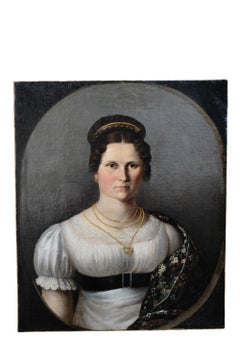
Austrian school. Portrait of a Lady with Floral Shawl. Ca. 1825
Located in Firenze, IT
Austrian or Central European School. Portrait of a Lady in White Dress with Floral Shawl and Long Chain with Pendant, ca. 1825-1835 Oil on canvas, relined Size: 76 × 62 cm Half-le...
Category

Early 19th Century Old Masters Art

Materials

Canvas, Oil

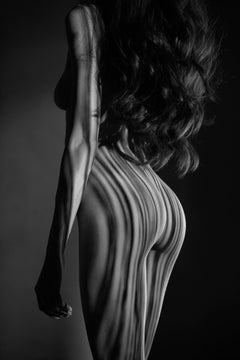
"Lira" Nude Photography 24" x 16" in Ed. of 28 by Yevgeniy Repiashenko
Located in Culver City, CA
"Lira" Nude Photography 36" x 24" in Ed. of 25 by Yevgeniy Repiashenko Ready to hang. Edition of 28. Mounting the photo under of glossy acrylic glass creates rich colors and strong ...
Category

21st Century and Contemporary Contemporary Art

Materials

Pigment, Plexiglass, Archival Pigment

The Mount Willow
Located in Middletown, NY
Watercolor and gouache on heavy gauge watercolor paper, 9 1/2 x 15 1/8 inches (242 x 385 mm), the full sheet. Titled in pencil on the verso. Scattered edge wear, and small losses at ...
Category

Mid-19th Century English School Art

Materials

Watercolor

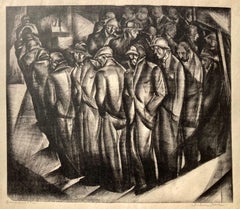
BREAD LINE - Large Strong 30 s Modernist Labor Print
By Iver Rose
Located in Santa Monica, CA
IVER ROSE (1899-1972) BREAD LINE ca. 1935 Lithograph, signed, titled and no. 22/85 in pencil. Image 15” x 17 3/8. Large margins, sheet 18 x 22”. Generally good condition. Some slig...
Category

1930s American Modern Art

Materials

Lithograph

Shop Art on 1stDibs: Photography, Drawings, Prints, Sculptures and Paintings for Sale

Whether growing your current fine art collection or taking the first steps on that journey, you will find an extensive range of original photography, drawings, prints, sculptures, paintings and more on 1stDibs.

Visual art is among the oldest forms of expression, and it has been evolving for centuries. Beautiful objects can provide a window to the past or insight into our current time. Art collecting enhances daily life through the presence of meaningful work. It displays an appreciation for culture, whether a print by Elizabeth Catlett channeling social change or a narrative quilt by Faith Ringgold.

Contemporary art has lured more initiates to collecting than almost any other category, with notable artists including Yayoi Kusama, Marc Chagall, Kehinde Wiley and Jean-Michel Basquiat. Navigating the waiting lists for the next Marlene Dumas, Jeff Koons or Jasper Johns has become competitive.

When you’re living with art, particularly as people more often work from home and enjoy their spaces, it’s important to choose art that resonates with you. While the richness of art with its many movements, styles and histories can be overwhelming, the key is to identify what is appealing and inspiring. Artwork can play with the surrounding color of a room, creating a layered approach. The dynamic shapes and sizes of sculptures can set different moods, such as a bronze by Miguel Guía on a mantel or an Alexander Calder mobile suspended over a table. A wall of art can evoke emotions in an interior while showing off your tastes and interests. A salon-style wall mixing eclectic pieces like landscape paintings with charcoal drawings is a unique way to transform a space and show off a collection.

For art meditating on the subconscious, investigate Surrealists like Joan Miró and Salvador Dalí. Explore Pop art and its leading artists such as Andy Warhol, Rosalyn Drexler and Keith Haring for bright and bold colors. Not only did these artists question art itself, but also how we perceive society. Similarly, 20th-century photography and abstract painting reconsidered the intent of art.

Abstract Expressionists like Helen Frankenthaler and Lee Krasner and Color Field artists including Sam Gilliam broke from conventional ideas of painting, while Op artists such as Yaacov Agam embraced visual trickery and kinetic movement. Novel visuals are also integral to contemporary work influenced by street art, such as sculptures and prints by KAWS.

Realist portraiture is a global tradition reflecting on what makes us human. This is reflected in the work of Slim Aarons, an American photographer whose images are at once candid and polished and appeared in Holiday magazine and elsewhere. Innovative artists Mickalene Thomas and Kerry James Marshall are now offering new perspectives on the form.

Collecting art is a rewarding, lifelong pursuit that can help connect you with the creative ways historic, modern and contemporary artists have engaged with the world. For more tips on piecing together an art collection, see our guide to buying and displaying art.

Find photography, drawings, paintings, prints and other art for sale on 1stDibs.

Still Thinking About These?

All Recently Viewed