Art by Medium: Masonite

to
232
217
257
232
143
169
Overall Width
to
Overall Height
to
12
799
207
3
3
8
33
62
116
131
87
71
35
202
169
168
98
42
22
18
17
13
4
2
2
526
399
83
326
176
142
118
113
112
89
49
41
38
36
34
33
25
24
23
19
18
17
15
1,370
184,717
97,279
78,599
77,671
43
38
25
19
16
552
48
893
114
Medium: Masonite
Kimono with Rope Texture - Collagraph Master Plate
Located in Soquel, CA
Kimono with Rope Texture - Collagraph Master Plate Master plate for collagraph printmaking featuring a kimono with rope texture in warm neutral peach tones, by California artist Pat...
Category

1980s Minimalist Art by Medium: Masonite

Materials

Gesso, Ink, Masonite

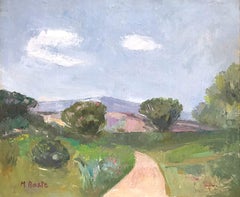
"Countryside Landscape Hills Scene with Path" Expressionistic Style Oil Painting
Located in New York, NY
A strong modernist oil painting depicted in the Mid Century by Russian painter Michael Baxte. Mostly known for his abstracted figures on canvas or street scenes, this piece is a wonderful representation of his landscapes with expressive use of color, shape, and form. Later in his career, Baxte explores Expressionism, infusing both European and North American stylistic trends. Art measures 15 x 18 inches Michael Posner Baxte was born in 1890 in the small town of Staroselje Belarus, Russia. For the first half of the 19th century, it was a center of the Chabad movement of Hasidic Jews, but this group was gone by the middle of the 19th century. By the time the Baxte family immigrated to the United States at the beginning of the 20th century, the Jewish population numbered only on the hundreds. The native language of the Baxte family was Yiddish. It is likely that the death of Michael Baxte’s father triggered the family’s immigration. Three older brothers arrived in New York between 1903 and 1905. Michael and his mother, Rebecca, arrived in 1907. By 1910 Michael, his mother, and brother, Joseph, were living in New Orleans and may have spent some time on a Louisiana plantation. Around 1912, Michael Baxte returned to Europe to study the violin. In 1914 he, his mother, and Joseph moved to New York City. Meanwhile, in Algeria, a talented young woman painter, Violette Mege, was making history. For the first time, a woman won the prestigious Beaux Art competition in Algeria. At first, the awards committee denied her the prize but, with French government intervention, Mege eventually prevailed. She won again 3 years later and, in 1916, used the scholarship to visit the United States of America. When Violette came to New York, she met Baxte, who was, by then, an accomplished violinist, teacher, and composer. Baxte’s compositions were performed at the Tokyo Imperial Theater, and in 1922 he was listed in the American Jewish Yearbook as one of the prominent members of the American Jewish community. As a music teacher, he encouraged individual expression. Baxte stated, “No pupil should ever be forced into the imitation of the teacher. Art is a personal experience, and the teacher’s truest aim must be to awaken this light of personality through the patient's light of science.” By 1920 Michael Baxte and Violette Mege were living together in Manhattan. Although they claimed to be living as husband and wife, it seems that their marriage did not become official until 1928. On their “unofficial” honeymoon around 1917, in Algiers, Baxte confided to her his ambition to paint. There and later in New Mexico where the wonderful steeped sunlight approximates the coloring of Algiers, she taught him his heart’s desire. He never had any other teacher. She never had any other pupil. For ten years she devoted all her time, energy, and ambition to teaching, encouraging, inspiring him. Then in 1928, their mutual strivings were rewarded, as his works were being chosen as one of the two winners in the Dudensing National Competition for American Painters. Out of 150 artists from across the country participated in the Dudensing, and Michael Posner Baxte and, Robert Fawcett...
Category

Mid-20th Century Expressionist Art by Medium: Masonite

Materials

Oil, Masonite

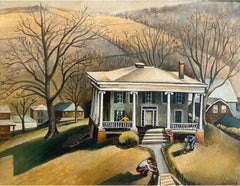
Untitled
Located in Los Angeles, CA
Untitled, c. 1940s, oil on Masonite, signed lower right, 19 ¾ x 25 ¾ inches Ava Vorhaus Gabriel was a New York-based painter, lithographer, and designer. Born in Larchmont, Gabriel ...
Category

1940s American Modern Art by Medium: Masonite

Materials

Masonite, Oil

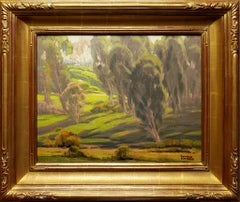
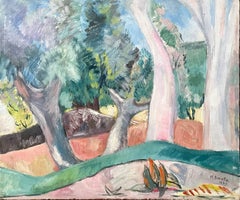
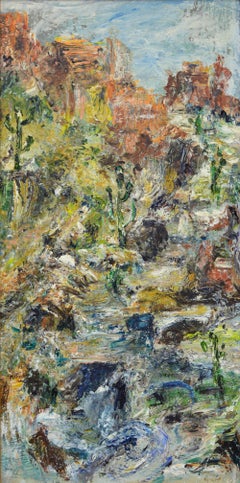
Arroyo Grove, c. 1940s
Located in Pasadena, CA
Consigned to American Legacy Fine Arts by H&N Fine Art as part of the Katherine A. Norris Legacy Collection, Newport Beach, California; Bonham’s California, April 11, 2005, lot 205, sold for $7,000; Estate of Sam Harris Signed "Sam Hyde Harris...
Category

1940s Abstract Expressionist Art by Medium: Masonite

Materials

Oil, Panel, Masonite

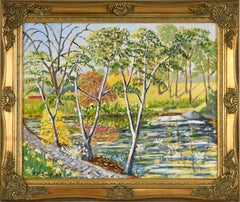
"Wally s Pond" Rural Landscape in Oil on Masonite
Located in Soquel, CA
"Wally's Pond" Rural Landscape in Oil on Masonite Idyllic rural landscape by Richard M. Bacon (American, 20th Century). A small pond is reflecting the nearby surroundings - birch tr...
Category

Early 2000s American Modern Art by Medium: Masonite

Materials

Masonite, Oil

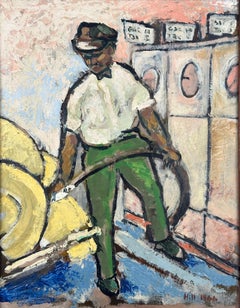
Gas Station Attendant (African American artist)
By Earl Hill
Located in Wilton Manors, FL
Earl Hill (1927-1985). Gas Station Attendant, 1966. Oil on masonite panel, 10.5 x 13.5 inches, 15 x 18 inches framed. Signed and dated lower right. Inscribed...
Category

Mid-20th Century Abstract Art by Medium: Masonite

Materials

Masonite, Oil

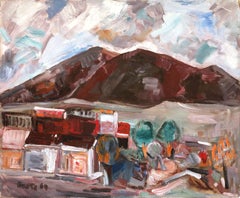
"Landscape of a Village Near Mountains" Expressionistic Oil Painting on Masonite
Located in New York, NY
A strong modernist oil painting depicted in 1969 by Russian painter Michael Baxte. Mostly known for his abstracted figures on canvas or street scenes, this piece is a wonderful representation of his bold still life paintings, with expressive use of color, shape, and form. Later in his career, Baxte explores Expressionism, infusing both European and North American stylistic trends. This piece is from later in his career, but we can feel this underlying style throughout. Art measures 18 x 21.75 inches Michael Posner Baxte was born in 1890 in the small town of Staroselje Belarus, Russia. For the first half of the 19th century it was a center of the Chabad movement of Hasidic Jews, but this group was gone by the middle of the 19th century. By the time the Baxte family immigrated to the United States at the beginning of the 20th century, the Jewish population numbered only on the hundreds. The native language of the Baxte family was Yiddish. It is likely that the death of Michael Baxte’s father triggered the family’s immigration. Three older brothers arrived in New York between 1903 and 1905. Michael and his mother, Rebecca, arrived in 1907. By 1910 Michael, his mother, and brother, Joseph, were living in New Orleans and may have spent some time on a Louisiana plantation. Around 1912, Michael Baxte returned to Europe to study the violin. In 1914 he, his mother, and Joseph moved to New York City. Meanwhile, in Algeria, a talented young woman painter, Violette Mege, was making history. Since for the first time, a woman won the prestigious Beaux Art competition in Algeria. At first, the awards committee denied her the prize but, with French government intervention, Mege eventually prevailed. She won again 3 years later and, in 1916, used the scholarship to visit the United States of America. When Violette came to New York, she met Baxte, who was, by then, an accomplished violinist, teacher, and composer. Baxte’s compositions were performed at the Tokyo Imperial Theater, and in 1922 he was listed in the American Jewish Yearbook as one of the prominent members of the American Jewish community. As a music teacher he encouraged individual expression. Baxte stated, “No pupil should ever be forced into imitation of the teacher. Art is a personal experience, and the teacher’s truest aim must be to awaken this light of personality through the patient light of science.” By 1920 Michael Baxte and Violette Mege were living together in Manhattan. Although they claimed to be living as husband and wife, it seems that their marriage did not become official until 1928. On their “unofficial” honeymoon around 1917, in Algiers, Baxte confided to her his ambition to paint. There and later in New Mexico where the wonderful steeped sunlight approximates the coloring of Algiers, she taught him his heart’s desire. He never had any other teacher. She never had any other pupil. For ten years she devoted all her time, energy, and ambition to teaching, encouraging, inspiring him. Then in 1928, their mutual strivings were rewarded, as his works were being chosen as one of the two winners in the Dudensing National Competition for American Painters. Out of 150 artists from across the country participated in the Dudensing, and Michael Posner Baxte and, Robert Fawcett, were the winners. In his 1924 naturalization application, he indicated that he was sometimes known as “Michael Posner Baxte.” One of the witnesses to his application was Bernard Karfiol, a Jewish American artist. That’s when Michael may...
Category

1960s Expressionist Art by Medium: Masonite

Materials

Oil, Masonite

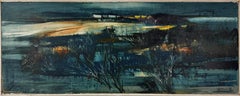
Hurricane in the Afternoon original Oil
Located in Soquel, CA
Hurricane in the Afternoon original Oil Modernist look at a Hurricane coming by Pennsylvania artist John R. Fell (American/English, 1917-2009) Image 18"H x 48"W Frame 19"H x 49"L x ...
Category

1960s American Modern Art by Medium: Masonite

Materials

Masonite, Oil

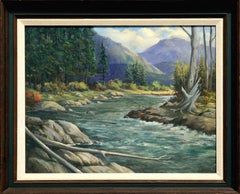
Mid Century Idaho Pack River Landscape
By Laura Lindberg
Located in Soquel, CA
Beautiful American realist view of Pack River in Sandpoint, Idaho by Laura Lindberg (American, 1904-1976). Signed lower right corner "64 L Lindberg". 26 Pack River Laura Lindberg and...
Category

1960s American Modern Art by Medium: Masonite

Materials

Masonite, Oil

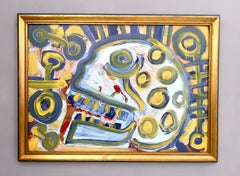
"Teschio" by Enzio Wenk, 2019 - Acrylic on Masonite, Expressionism, Skull
Located in Bresso, IT
Translated title: "Skull". Acrylic on masonite. It features a wooden frame, which is painted and decorated with gold leaves.
Category

2010s Abstract Expressionist Art by Medium: Masonite

Materials

Masonite, Acrylic

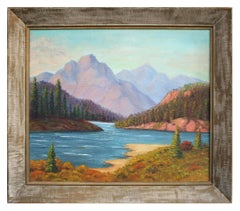
Mid Century Landscape California Mountain Lakeside
Located in Soquel, CA
Idyllic landscape of a scenic lake view with an evergreen forest and picturesque purple mountains in the background by an unknown artist. Unsigned. Displayed in a period rustic wood ...
Category

1950s American Impressionist Art by Medium: Masonite

Materials

Masonite, Oil

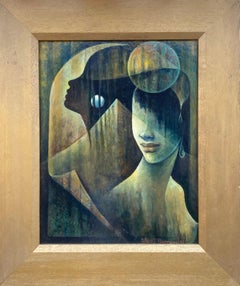
Mystical Portrait, Universal Woman Haitian School of Beauty Caribean painting
Located in Norwich, GB
A captivating oil painting by the Haitian master, Albert Desmangles. This piece is a wonderful example of his work within the highly sought-after School of Beauty art movement, which...
Category

1980s Cubist Art by Medium: Masonite

Materials

Masonite, Oil, Acrylic

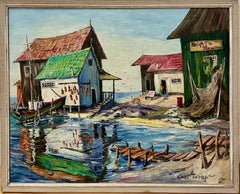
Sunshine on the Waterfront
Located in San Francisco, CA
We’ve all seen the practical, plain and dreary structures of a fishing village somewhere at water’s edge. And we recognize the mindset: in lean circumstances something is good enough...
Category

Mid-20th Century American Impressionist Art by Medium: Masonite

Materials

Masonite, Oil

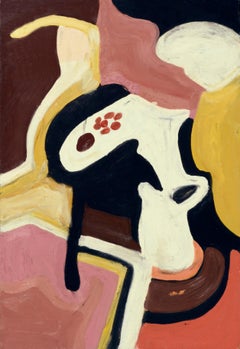
Pink Yellow Figurative Abstract
Located in Soquel, CA
Bold abstract painting with pink, yellow, black, brown and white forms by Les (Leslie Luverne) Anderson (American, 1928-2009). From the es...
Category

1970s Post-War Art by Medium: Masonite

Materials

Masonite, Oil

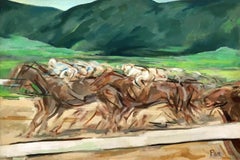
A Dynamic Mid-Century Modern Horse Race Painting by Chicago Artist, Rudolph Pen
Located in Chicago, IL
A Large, Dynamic Mid-Century Modern Painting of a Horse Race by noted Chicago Artist, Rudolph Pen. Artwork size: 24" x 36"; Framed size: 25" x 37". Signed "Pen" lower right and ti...
Category

Mid-20th Century American Modern Art by Medium: Masonite

Materials

Masonite, Oil

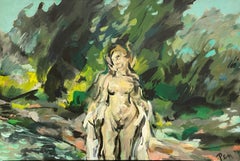
A Captivating Mid-Century Modern Landscape Painting with Standing Female Nude
Located in Chicago, IL
A Captivating, Expressive Mid-Century Modern Landscape Painting with Standing Female Nude by Noted Chicago Artist, Rudolph T. Pen. This vibrant, colorful oil painting, depicting an a...
Category

Mid-20th Century Art by Medium: Masonite

Materials

Masonite, Oil

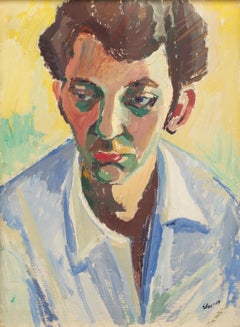
Portrait of a Man by Swedish Artist Martin Eder, 1954, Gouache on Masonite
Located in Stockholm, SE
Martin Eder was a Swedish drawing teacher, artist and ceramicist. Martin was born on the island of Gotland and spent a lot of time there, he also lived in Sala. Martin was a curious ...
Category

1950s Expressionist Art by Medium: Masonite

Materials

Masonite, Gouache

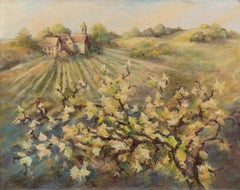
Vineyard Estate Winery Landscape with Grape Vines in Oil on Canvas-Wrapped Board
By Jeane Kluga
Located in Soquel, CA
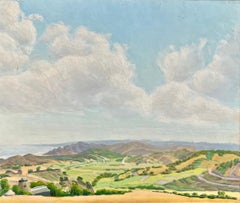
Vineyard Estate Winery Landscape with Grape Vines in Oil on Canvas-Wrapped Board Beautiful landscape of a vineyard estate in California wine country with grape vines in the foregrou...
Category

1980s American Modern Art by Medium: Masonite

Materials

Masonite, Cotton Canvas, Oil

Untitled Series (six paintings)
Located in Wilton Manors, FL
A series of six abstract painting by American artist, Edward Pechmann Renouf (1906-1999). Oil on six individual masonite panels, each panel meas...
Category

1970s Abstract Expressionist Art by Medium: Masonite

Materials

Masonite, Oil

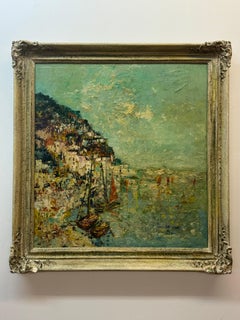
Mid-Century Italian Abstract, “Lake Garda”
Located in San Francisco, CA
Mid-century Italian abstract titled “Lake Garda” Signed indecipherably lower right Oil on masonite 26 x 27.25 framed 21.5 x 22.5 unframed
Category

Mid-20th Century Abstract Art by Medium: Masonite

Materials

Masonite, Oil

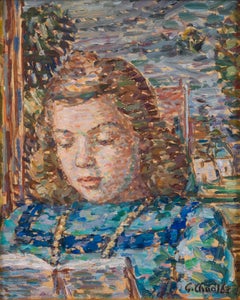
A Young Girl Reading a Book, Pointillist Artist
Located in Stockholm, SE
"A Young Girl Reading a Book" is a captivating portrait by Swedish artist Gustaf Arnolds. Arnolds was a prolific painter whose roots began in Vingåker and later in Ronneby from his teenage years. His educational journey in art took him through prestigious institutions such as Althins målarskola and the Tallbergska grafikskolan in Stockholm, followed by a significant period at the Konstakademien, Stockholm, between 1904 and 1909. His talent and dedication were recognized early on, earning him a scholarship to Paris, a city that would deeply influence his artistic direction. This particular work, likely painted shortly after his return to Sweden, reveals a profound influence from his time in Paris. It portrays a young girl absorbed in reading a book, a simple yet profound subject that Arnolds imbues with a sense of tranquility and introspection. The background hints at a serene landscape, dotted with quaint houses, a nod to the everyday beauty surrounding us. What sets this piece apart is Arnolds’ technique, reminiscent of pointillism but distinguished by longer, more expressive brush strokes that add a vibrant texture and depth to the canvas. This method showcases Arnolds' unique adaptation of the techniques he encountered during his Parisian studies, particularly during his interactions with Nils Dardel...
Category

1930s Pointillist Art by Medium: Masonite

Materials

Masonite, Oil

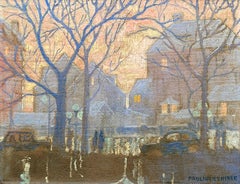
“Sunset Topeka, Kansas”
Located in Southampton, NY
Very well executed oil on masonite painting of a sunset in Topeka, Kansas by the American artist, Pauline Haynes Shirer. Signed lower right. Circa 1950. Condition is excellent. Recently professionally cleaned. Newly framed in a custom gallery frame. Overall framed measurements are 17.5 by 20.5 inches. Provenance: A Long Island, New York collector. Pauline Haynes Shirer (1894 - 1975), American Born in Topeka in 1894, Pauline is said to have been at least partially raised by her aunt, Hannah Haynes Headlee (Pauline’s mother died when she was 8 years old). By 16, she was living as a ward in the Topeka home of Elizabeth Cunningham, a dressmaker. After graduating from Topeka High School, she attended the New York School of Fine and Applied Art (later Parsons School of Design), completing a two-year course in one year (1913-1914). At the same time, she took weekend classes at the Art Students League. Returning to Topeka, she studied and taught at Washburn College (now University) from 1914 to 1915 and instructed summer sessions at Kansas State Teachers College, Pittsburgh, during the same period. Afterward, she returned to the New York School of Fine and Applied Art, where she taught and took classes (1915-1918). She spent the summer of 1916 as an instructor at the Skidmore School of Art, Saratoga Springs, New York. In 1917, Pauline married Hampton F. Shirer, an architect from MIT, who was also an artist and came from a prominent Topeka family. The couple later settled in Wellesley, Massachusetts in 1921, living in a house which they built and decorated themselves. During the next 16 years, they raised two children and Pauline also found time to illustrate promotional brochures and primary school texts. During the early years of her career, Pauline focused on the applied arts – such as watercolor designs for curtains, silk fabrics, wallpaper as well as poster designs, theater backdrops and book covers. Later she would transition into creating her own representational works of art. Shirer returned to Topeka in 1937. During her career as a painter in oils and watercolors, she sketched in Europe four times and did paintings of New England subjects. However, most of her paintings were of the West. She executed Kansas views first, and they continued to hold her interest throughout her life. Typical were her studies of rustic buildings on the plains, glimpses of the prairie country, and the historic buildings of Topeka. She also painted New Mexico landscapes and Colorado mountain scenes. Among her exhibitions, mostly solo but occasionally with her husband, were those held at the Harlow and Harland’s Gallery, Boston (1922); The Scattery, Wellesley, MA (1925); Vose Galleries, Boston (1931); Topeka Art Guild (1952); Copley Society...
Category

1950s Post-Impressionist Art by Medium: Masonite

Materials

Masonite, Oil

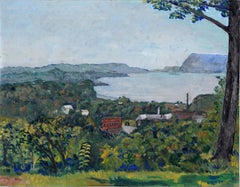
Overlooking the Bay - Coastal Maine Landscape in Oil on Masonite by Lydia 1957
Located in Soquel, CA
Overlooking the Bay - Coastal Landscape in Oil on Masonite Serene coastal landscape by unknown artist "Lydia" (American, 20th century). The viewer stands at a vantage point above a small coastal town in possibly Maine. The town is nestled in lush landscape, full of vibrant foliage. Beyond the town, there is a bay with prominent cliffs surrounding it. Signed and dated "Lydia 57" in the lower right corner. Board size: 15.5"H x 19.5"W We are researching Lydia Cooley Freeman (American, 1906-1998) as a possible artist for this painting. Born in Tacoma, Washington on January 13, 1906, Lydia Cooley, by the 1930s, had settled in New York City where she studied at the Art Students League under John Sloan. Her portraits of women, children and the working class are of the Ash Can school...
Category

1950s American Impressionist Art by Medium: Masonite

Materials

Masonite, Oil

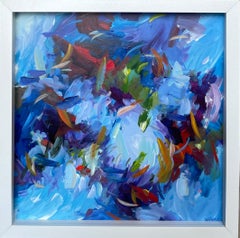
Framed abstract painting of figures dancing in a landscape, w/ blues: "Kimono"
Located in Bryn Mawr, PA
This is a framed abstract acrylic painting on masonite board evoking a dancing figure in a landscape, perhaps wearing a Japanese kimono. It is framed in a narrow, contemporary white ...
Category

2010s Abstract Art by Medium: Masonite

Materials

Masonite, Acrylic

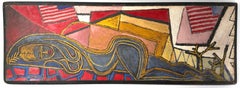
Reclining Nude
Located in Wilton Manors, FL
Edwin Kosarek (b.1929). Reclining Nude, 1952. Oil on wood panel, 17 x 48 inches. Signed and dated on verso. Edwin Kosarek Born: 1929 Studied: The Cit...
Category

Mid-20th Century Abstract Art by Medium: Masonite

Materials

Masonite, Oil

Reclining Nude
Reclining Nude
$800 Sale Price
46% Off
Barbados View from Cherry Tree Hill
Located in Fredericksburg, VA
Marjorie Portnow's "Barbados View from Cherry Tree Hill" is a vibrant and captivating aerial impressionist landscape that captures the breathtaking beauty of the island from a unique...
Category

Mid-20th Century American Impressionist Art by Medium: Masonite

Materials

Masonite, Oil

[Bruce Sargeant (1898-1938)] Black Leather Jacket and Black Leather Boots
Located in New York, NY
Price includes $400 cost of framing. Oil on canvas mounted to Masonite Signed in red, u.r. This work is offered by ClampArt in New York City.
Category

21st Century and Contemporary Contemporary Art by Medium: Masonite

Materials

Masonite, Oil

Venice, Santa Maria della Salute from the Cannaregio Canal , Large Venetian Oil
Located in Santa Cruz, CA
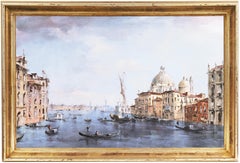
'Venice, Santa Maria della Salute from the Cannaregio Canal' by Peter Götz Pallmann. Large Venetian Oil ----- Signed lower right, 'P. G. Pallmann'...
Category

1950s Art by Medium: Masonite

Materials

Oil, Masonite

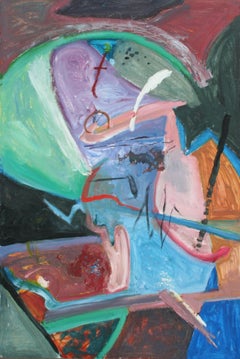
David Hammons, Brown Blue Abstract
Located in San Francisco, CA
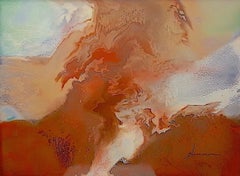
This signed painting by acclaimed African-American artist David Hammons displays an early experimental use of painted material during the artist’s formative years at Otis Art Institu...
Category

1960s Abstract Art by Medium: Masonite

Materials

Enamel

Trompe l Oeil Still Life and Landscape in Acrylic on Masonite
Located in Soquel, CA
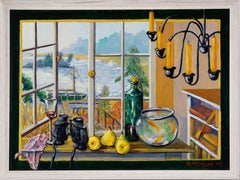
Trompe l'Oeil Still Life and Landscape in Acrylic on Masonite Still life in the trompe l'oeil style by Richard M. Bacon (American, 20th Century). A still life with a bottle, fishbow...
Category

Early 2000s American Modern Art by Medium: Masonite

Materials

Masonite, Acrylic

Austrian Folk Saying Grace Before Dinner
Located in San Francisco, CA
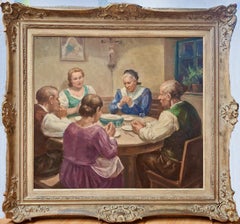
This work by Austrian artist Ivo Saliger (1894-1987) is an expression of devotion, of a tradition central to Austrian life a century ago. Then, Austria had a strong Catholic heritage, supported by more than six centuries of Hapsburg rule. The subjects of this reverential painting appear to be members of a family wearing traditional Austrian "tracht" or dress. Hands clasped in prayer, they are about to dine together, with the elder parents joined by their grown children and perhaps a spouse. Resolving any doubt in the viewer’s mind about the activity, a crucifix hangs above the gathering in the dining area’s corner adjacent to a painting of the Virgin Mary...
Category

Early 20th Century Impressionist Art by Medium: Masonite

Materials

Masonite, Oil

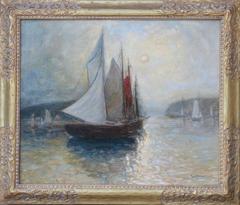
Sailing Boats in Harbor (Possibly Mohnegan Island, Maine)
Located in Rancho Santa Fe, CA
Mounted in a period, hand carved, gold leaf frame. Signed lower right "Paul King"
Category

Early 20th Century American Impressionist Art by Medium: Masonite

Materials

Masonite, Oil

[Bruce Sargeant (1898-1938)] Frieze with One Runner Flanked by Two Bicyclists
Located in New York, NY
[Bruce Sargeant (1898-1938)] Frieze with One Runner Flanked by Two Bicyclists n.d. Signed in red, u.r. Oil on canvas mounted to Masonite 35.5 x 69 inches (90.2 x 175.3 cm) $8,250...
Category

2010s Contemporary Art by Medium: Masonite

Materials

Canvas, Masonite, Oil

"An Archbishop of the Cloudworks" Abstract
Located in Soquel, CA
Colorful abstract oil painting on canvas by Les (Leslie Luverne) Anderson (American, 1928-2009). From the estate of Les Anderson in Monterey, California. Unframed. Titled "An Archbis...
Category

1970s Abstract Expressionist Art by Medium: Masonite

Materials

Oil, Masonite

Modern Mixed Media Textured Kimono in Neutral Blush, Collagraph Master Plate #2
Located in Soquel, CA
Modern Mixed Media Textured Kimono in Neutral Blush, Collagraph Master Plate #2 This one-of-a-kind, highly textured, modern mixed media piece of a kimono in blush, warm neutrals is ...
Category

1980s Contemporary Art by Medium: Masonite

Materials

Gesso, Cotton, Masonite, Ink, Acrylic

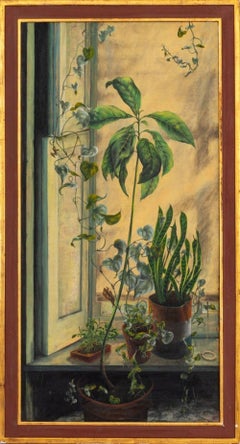
Windowsill Garden
Located in Astoria, NY
Charles Blum (New York, 1925-1998), Windowsill Garden, Oil on Masonite Panel, 1966, signed and dated lower right, wood frame. Image: 48" H x 23.75" W; frame: 53" H x 29" W. Provenanc...
Category

1960s American Modern Art by Medium: Masonite

Materials

Masonite, Oil

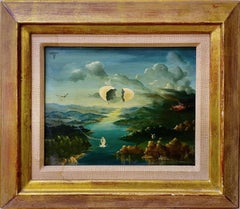
Surreal Dreamscape of a Broken Eggshell Floating on High, in Cerulean and Cream
Located in San Francisco, CA
There are days when you just want to curl up and tune out. While acknowledging that something might be amiss, might be broken, or even that one is close to drowning, the heavenly sce...
Category

1960s Surrealist Art by Medium: Masonite

Materials

Masonite, Oil

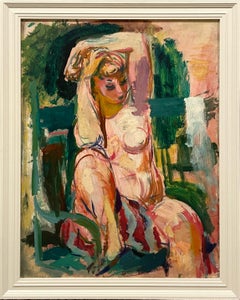
A Captivating 1940s Modern Painting of a Seated Female Nude by Francis Chapin
Located in Chicago, IL
A captivating, 1940s Modern painting of a seated nude on a garden bench by famed Chicago artist, Francis Chapin (Am. 1899-1965). A sensitive, skilled portrait of a young female mode...
Category

1940s American Modern Art by Medium: Masonite

Materials

Masonite, Oil

[Bruce Sargeant (1898-1938)] Three Athletes Running for the Ball
Located in New York, NY
[Bruce Sargeant (1898-1938)] Three Athletes Running for the Ball n.d. Signed in red, u.r. Oil on canvas mounted to Masonite 35.625 x 65 inches This work is offered by ClampArt in ...
Category

2010s Contemporary Art by Medium: Masonite

Materials

Canvas, Masonite, Oil

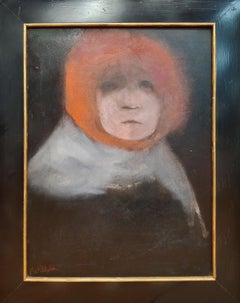
The Lonely Girl
Located in San Francisco, CA
No background setting is needed in this painting by Fichtl to reference solitude's impact on the young woman. Loneliness is etched into her features. The choice of a dark coat—is it ...
Category

1960s Impressionist Art by Medium: Masonite

Materials

Masonite, Oil

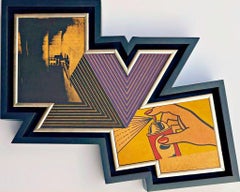
Richard Pettibone The Appropriation Warhol, Stella, Lichtenstein, Unique Signed
Located in New York, NY
Richard Pettibone The Appropriation Print Andy Warhol, Frank Stella, Roy Lichtenstein, 1970 Silkscreen in colors on masonite board (unique variant on sculpted board) Hand-signed by artist, Signed and dated on the front (see close up image) Bespoke frame Included This example of Pettibone's iconic Appropriation Print is silkscreened on masonite board rather than paper, giving it a different background hue, and enabling it work to be framed so uniquely. The Appropriation print is one of the most coveted prints Pettibone ever created ; the regular edition is on a full sheet with white background; the present example was silkscreened on board, allowing it to be framed in 3-D. While we do not know how many examples of this graphic work Pettibone created, so far the present work is the only one example we have ever seen on the public market since 1970. (Other editions of The Appropriation Print have been printed on vellum, wove paper and pink and yellow paper.) This 1970 homage to Andy Warhol, Frank Stella and Roy Lichtenstein exemplifies the type of artistic appropriation he was engaging in early on during the height of the Pop Art movement - long before more contemporary artists like Deborah Kass, Louise Lawler, etc. followed suit. This silkscreen was in its original 1970 vintage period frame; a bespoke custom hand cut black wood outer frame was subsequently created especially to house the work, giving it a distinctive sculptural aesthetic. Measurements: Framed 14.5 inches vertical by 18 inches horizontal by 2 inches Work 13 inches vertical by 16.5 inches horizontal Richard Pettibone biography: Richard Pettibone (American, b.1938) is one of the pioneering artists to use appropriation techniques. Pettibone was born in Los Angeles, and first worked with shadow boxes and assemblages, illustrating his interest in craft, construction, and working in miniature scales. In 1964, he created the first of his appropriated pieces, two tiny painted “replicas” of the iconic Campbell’s soup cans by Andy Warhol (American, 1928–1987). By 1965, he had created several “replicas” of paintings by American artists, such as Warhol, Roy Lichtenstein (1923–1997), Ed Ruscha (b.1937), and others, among them some of the biggest names in Pop Art. Pettibone chose to recreate the work of leading avant-garde artists whose careers were often centered on themes of replication themselves, further lending irony to his work. Pettibone also created both miniature and life-sized sculptural works, including an exact copy of Bicycle Wheel by Marcel Duchamp (French, 1887–1968), and in the 1980s, an entire series of sculptures of varying sizes replicating the most famous works of Constantin Brancusi (Romanian, 1876–1957). In more recent years, Pettibone has created paintings based on the covers of poetry books by Ezra Pound, as well as sculptures drawn from the grid compositions of Piet Mondrian (Dutch, 1872–1944). Pettibone straddles the lines of appropriation, Pop, and Conceptual Art, and has received critical attention for decades for the important questions his work raises about authorship, craftsmanship, and the original in art. His work has been exhibited at the Institute for Contemporary Art in Philadelphia, the Museum of Modern Art in New York, the Museum of Contemporary Art in Miami, and the Laguna Art Museum in Laguna Beach, CA. Pettibone is currently based in New York. "I wished I had stuck with the idea of just painting the same painting like the soup can and never painting another painting. When someone wanted one, you would just do another one. Does anybody do that now?" Andy Warhol, 1981 Since the mid-1960s, Richard Pettibone has been making hand-painted, small-scale copies of works by other artists — a practice due to which he is best known as a precursor of appropriation art — and for a decade now, he has been revisiting subjects from across his career. In his latest exhibitions at Castelli Gallery, Pettibone has been showing more of the “same” paintings that had already been part of his 2005–6 museum retrospective,1 and also including “new” subject matter drawn from his usual roster of European modernists and American postwar artists. Art critic Kim Levin laid out some phases of the intricate spectrum from copies to repetitions in her review of the Warhol-de Chirico showdown, a joint exhibition at the heyday of appropriation art in the mid-1980s when Warhol’s appropriations of de Chirico’s work effectively revaluated “the grand old auto-appropriator”. Upon having counted well over a dozen Disquieting Muses by de Chirico, Levin speculated: “Maybe he kept doing them because no one got the point. Maybe he needed the money. Maybe he meant it when he said his technique had improved, and traditional skills were what mattered.” On the other side, Warhol, in her eyes, was the “latter-day exemplar of museless creativity”. To Pettibone, traditional skills certainly still matter, as he practices his contemporary version of museless creativity. He paints the same painting again and again, no matter whether anybody shows an interest in it or not. His work, of course, takes place well outside the historical framework of what Levin aptly referred to as the “modern/postmodern wrestling match”, but neither was this exactly his match to begin with. Pettibone is one of appropriation art’s trailblazers, but his diverse selection of sources removes from his work the critique of the modernist myth of originality most commonly associated with appropriation art in a narrow sense, as we see, for example, in Sherrie Levine’s practice of re-photographing the work of Walker Evans and Edward Weston. In particular, during his photorealist phase of the 1970s, Pettibone’s sources ranged widely across several art-historical periods. His appropriations of the 1980s and 1990s spanned from Picasso etchings and Brancusi sculptures to Shaker furniture and even included Ezra Pound’s poetry. Pettibone has professed outright admiration for his source artists, whose work he shrinks and tweaks to comic effect but, nevertheless, always treats with reverence and care. His response to these artists is primarily on an aesthetic level, owing much to the fact that his process relies on photographs. By the same token, the aesthetic that attracts him is a graphic one that lends itself to reproduction. Painstakingly copying other artists’ work by hand has been a way of making it his own, yet each source is acknowledged in his titles and, occasionally, in captions on white margins that he leaves around the image as an indication that the actual source is a photographic image. The enjoyment he receives in copying is part of the motivation behind doing it, as is the pleasure he receives from actually being with the finished painting — a considerable private dimension of his work. His copies are “handmade readymades” that he meticulously paints in great quantities in his studio upstate in New York; the commitment to manual labor and the time spent at material production has become an increasingly important dimension of his recent work. Pettibone operates at some remove from the contemporary art scene, not only by staying put geographically, but also by refusing to recoup the simulated lack of originality through the creation of a public persona. In so doing, Pettibone takes a real risk. He places himself in opposition to conceptualism, and he is apprehensive of an understanding of art as the mere illustration of an idea. His reading of Marcel Duchamp’s works as beautiful is revealing about Pettibone’s priorities in this respect. When Pettibone, for aesthetic pleasure, paints Duchamp’s Poster for the Third French Chess...
Category

1970s Pop Art Art by Medium: Masonite

Materials

Masonite, Pencil, Screen

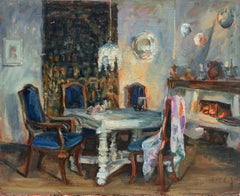
Dining Room Interior Scene in Oil on Masonite
Located in Soquel, CA
Dining Room Interior Scene in Oil on Masonite Inviting and warm interior dining room scene by S. Spencer (American, 20th Century). Lovingly painted scene of a dining table with orna...
Category

1980s American Realist Art by Medium: Masonite

Materials

Masonite, Oil

[Bruce Sargeant (1898-1938)] Three Bathers by the Water
Located in New York, NY
[Bruce Sargeant (1898-1938)] Three Bathers by the Water Signed in red, recto Oil on canvas 96.25 x 67 inches (244.5 x 170.2 cm) $15,000 + $900 framing This work is offered by Cla...
Category

Early 2000s Contemporary Art by Medium: Masonite

Materials

Canvas, Masonite, Oil

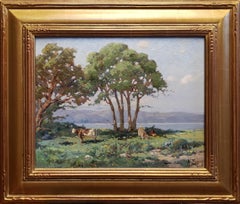
Cows in Summer Landscape (California Coastal Ranch, Carmel Valley), c. 1914
Located in Pasadena, CA
Consigned to the gallery; By descent to the Katherine A. Norris Legacy Collection, Huntington Beach, California; Acquired by Katherine A. Norris, Newport Beach, California; From John...
Category

Early 20th Century Impressionist Art by Medium: Masonite

Materials

Canvas, Masonite, Oil, Panel

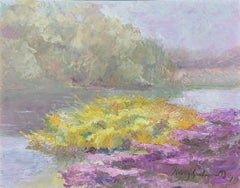
"Serene River Landscape" Small Impressionist Oil Painting Pink Yellow Green Gray
Located in Austin, TX
Oil on Masonite size: 11 x 14 in. Frame Size: 14.5 x 17.5 in. Signed, bottom right. An origional oil on Masonite landscape painting that pictures a a tranquil scene with a muted and...
Category

1990s American Impressionist Art by Medium: Masonite

Materials

Masonite, Oil

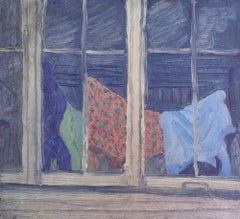
Charming 1930s Painting- Laundry Hanging in a Lake House Window by Harold Haydon
Located in Chicago, IL
A charming & diminutive 1930s painting of laundry hanging in a lake house window by notable artist Harold Haydon. Artwork size: 8" x 8 1/4". Framed size: 11 3/4" x 12". Harold E...
Category

1930s American Modern Art by Medium: Masonite

Materials

Masonite, Oil

Untitled
By Richard Pousette-Dart
Located in Miami, FL
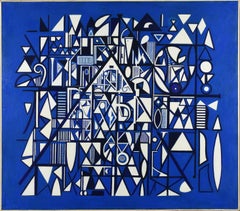
Acrylic on masonite. This is a pivotal work in deep and radiant cobalt blue from 1950. It dipicts calligraphic and hieroglyph structures over a grid and pyramidal base by the first generation abstract expressionist. Provenance: Skinner: November 13, 1992 [Lot 00219}, The entry in the Skinner catalog indicates that the painting came directly from the artist to the family of the consignor to Skinner. Kaminsky Auctions. There is an unbroken paper trail that traces the ownership of the painting from the current owner, through two auction houses to the artist. Perfect unbroken provenance. Pousette-Dart was among the most inventive of the Abstract Expressionist generation, His uncanny talent was to expand the nature of abstraction and still make each mark each element very much his own; a reflection of what he called   "the concealed power of the spirit," he said, “not of the brute physical form."   His was not aiming for a singular, realized aesthetic formula but to expand the possibilities of painting; the transcendental in painting. Typical of such invention and exploration is this  painting  Untitled 1950 when the artist was only 34 years old and represented by one of the champions of the new American painting, Betty Parsons.  
A banner year for Pousette-Dart, the Museum of Modern Art acquired their first painting by the Minnesota born artist.  He worked on easel size works such as this painting an oil on masonite. At the same time Pousette-Dart was also working on larger scale works such as Path of the Hero, running over ten feet in length now in the collection of the Metropolitan Museum of Art.  Both contain fields of color articulated by a highly sophisticated white hieroglyphic vocabulary. Rather than demonstrate an expressionist sensibility, Pousette-Dart harnesses his more cerebral ideas transforming thick areas of paint into a more refined composition of geometric forms akin to the pattern and forms of say a stained glass window. In a way he is looking back at Fugue, 1940 a black and white composition which makes use of a similar format of painting albeit smaller. Color and form are minimal, but what Pousette-Dart has maximized is the rhythmic and syncopated character of painting casting his ideas into purely symbolic terms that one might link to the pictograms of Adolph Gottlieb. Nonetheless, nature is always at the core of Pousette-Dart’s thinking and dreaming. Here he has transformed the local Ramapo Mountains—where he will eventually move with his family to live and work— into a complex series of articulated fragments linked by style, scale and color.  The painting’s imagery built on two large triangles and reduced to just two colors, cobalt blue and white all outlined in black.  Pousette-Dart symbols stacked in horizontal and vertical rows:  blue is ground, white is language, symbolic of light, consciousness and awareness . The painting maintains a mystical character images compounded that formulate a secret code and linked to the series of white paintings Pousette-Dart authored in the first half of the 1950s. Get up close to the picture and you discover images within images a kind of picture puzzle...
Category

1950s Abstract Expressionist Art by Medium: Masonite

Materials

Masonite, Acrylic

Mid 20th Century California Plein Air American River Landscape Walter F Mire
Located in Soquel, CA
Wonderful mid 20th century impressionist landscape of California's American River by Walter F. Mire (American, 1916 - ?), circa 1945. Signed o...
Category

1930s Impressionist Art by Medium: Masonite

Materials

Masonite, Oil

"Mexican Villagers Scene with Man on a Horse" Expressionistic Style Oil Painting
Located in New York, NY
A strong modernist oil painting depicted in the Mid Century by Russian painter Michael Baxte. Mostly known for his abstracted figures on canvas or street scenes, this piece is a wonderful representation of his portraits in village landscapes with expressive use of color, shape, and form. Later in his career, Baxte explores Expressionism, infusing both European and North American stylistic trends. Art measures 25.5 x 21.25 inches Michael Posner Baxte was born in 1890 in the small town of Staroselje Belarus, Russia. For the first half of the 19th century, it was a center of the Chabad movement of Hasidic Jews, but this group was gone by the middle of the 19th century. By the time the Baxte family immigrated to the United States at the beginning of the 20th century, the Jewish population numbered only on the hundreds. The native language of the Baxte family was Yiddish. It is likely that the death of Michael Baxte’s father triggered the family’s immigration. Three older brothers arrived in New York between 1903 and 1905. Michael and his mother, Rebecca, arrived in 1907. By 1910 Michael, his mother, and brother, Joseph, were living in New Orleans and may have spent some time on a Louisiana plantation. Around 1912, Michael Baxte returned to Europe to study the violin. In 1914 he, his mother, and Joseph moved to New York City. Meanwhile, in Algeria, a talented young woman painter, Violette Mege, was making history. For the first time, a woman won the prestigious Beaux Art competition in Algeria. At first, the awards committee denied her the prize but, with French government intervention, Mege eventually prevailed. She won again 3 years later and, in 1916, used the scholarship to visit the United States of America. When Violette came to New York, she met Baxte, who was, by then, an accomplished violinist, teacher, and composer. Baxte’s compositions were performed at the Tokyo Imperial Theater, and in 1922 he was listed in the American Jewish Yearbook as one of the prominent members of the American Jewish community. As a music teacher, he encouraged individual expression. Baxte stated, “No pupil should ever be forced into the imitation of the teacher. Art is a personal experience, and the teacher’s truest aim must be to awaken this light of personality through the patient's light of science.” By 1920 Michael Baxte and Violette Mege were living together in Manhattan. Although they claimed to be living as husband and wife, it seems that their marriage did not become official until 1928. On their “unofficial” honeymoon around 1917, in Algiers, Baxte confided to her his ambition to paint. There and later in New Mexico where the wonderful steeped sunlight approximates the coloring of Algiers, she taught him his heart’s desire. He never had any other teacher. She never had any other pupil. For ten years she devoted all her time, energy, and ambition to teaching, encouraging, inspiring him. Then in 1928, their mutual strivings were rewarded, as his works were being chosen as one of the two winners in the Dudensing National Competition for American Painters. Out of 150 artists from across the country participated in the Dudensing, and Michael Posner Baxte and, Robert Fawcett...
Category

Mid-20th Century Expressionist Art by Medium: Masonite

Materials

Oil, Masonite

Sunset Through the Trees - Landscape in Oil on Canvas
Located in Soquel, CA
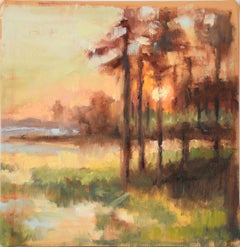
Sunset Through the Trees - Landscape in Oil on Canvas Lively landscape with a bright sunset by an unknown artist (20th Century). The viewer stands at the edge of a marsh or lake, wi...
Category

21st Century and Contemporary Impressionist Art by Medium: Masonite

Materials

Canvas, Masonite, Oil

Art Deco Still Life -- Spring Tulips in Vase
Located in Soquel, CA
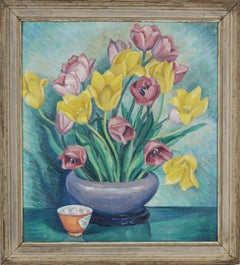
Wonderful art deco style still life of yellow and lavender tulips in vase with sugar bowl by Hamlin (American, 20th Century), circa 1935. Signed lower right "Hamlin" Condition: Good;...
Category

1930s Art Deco Art by Medium: Masonite

Materials

Masonite, Oil

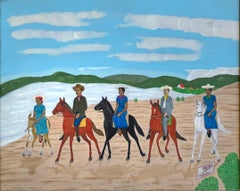
Pilgrims going out for the feast of St. Anne on Horseback
Located in Miami, FL
After Hector Hyppolite, Philomé Obin may be Haiti's most significant painter. Les pèlerins sortant à la fête de Ste. Anne As with most Haitian painters, this work has a thin applicat...
Category

1950s Outsider Art Art by Medium: Masonite

Materials

Masonite, Oil

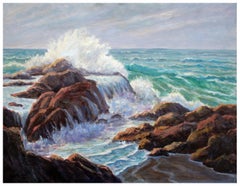
Crashing Waves - Mid Century California Seascape
Located in Soquel, CA
Gorgeous mid-century seascape of turquoise and lavender waves crashing on coastal rocks by California artist Lee Ervast (American, 1916 - 1975), c.1950s. Si...
Category

1960s American Impressionist Art by Medium: Masonite

Materials

Masonite, Oil

"Mexican Countryside Landscape Scene with Trees on Hills" Expressionistic Style
Located in New York, NY
A strong modernist oil painting depicted in 1963 by Russian painter Michael Baxte. Mostly known for his abstracted figures on canvas or street scenes, this piece is a wonderful repre...
Category

1960s Expressionist Art by Medium: Masonite

Materials

Oil, Masonite

Shimmering Pond in the Woods - Surrealist Abstract 1960s
By Rose Herzog
Located in Soquel, CA
Shimmering Pond in the Woods - Surrealist Abstract 1960s Highly textured abstract composition by Rose Herzog (American, mid-20th Century). A multicolored pond is shown in the middle...
Category

1960s American Modern Art by Medium: Masonite

Materials

Cotton, Masonite, Mixed Media, Oil, Tissue Paper
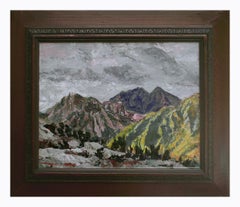
Stormy Skies Over Yosemite, Mid Century Mountain Landscape
Located in Soquel, CA
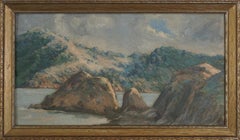
Classic and moody mid century landscape of rugged Yosemite mountains and stormy skies, by an unknown artist (American, 20th Century). Unsigned. Presented in...
Category

1960s American Impressionist Art by Medium: Masonite

Materials

Masonite, Oil

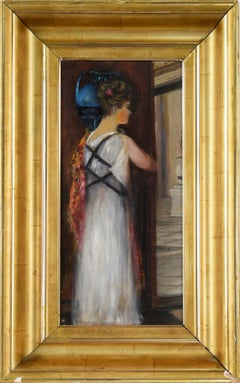
Athenian Woman Carrying a Water Jar In a White Dress
Located in Soquel, CA
Athenian Woman Carrying a Water Jar In a White Dress Beautiful painting by a Central California artist circa 1890s (American 19th c). Oil painting of a Athenian woman holding a blue water vase on her shoulder with a red and orange shawl draped over her white dress. Painted on late 19th century Academy...
Category

1890s Impressionist Art by Medium: Masonite

Materials

Masonite, Oil

Rocky Outcropping and Bathers at the Swimming Hole - Landscape
By Tyler Micoleau
Located in Soquel, CA
Highly textured landscape, with thick impasto illustrating a glorious scene of figures swimming in calm waters near large rocks and swaying trees, by Tyler Micoleau (American, 1911-2001). Signed and dated "Tyler Micoleau 1968" in the lower left corner. Presented in a gold colored wood frame. Image size: 12"H x 16"W Tyler Micoleau (American, 1911-2001) was born in Rhode Island but spent most of his life in Nevada County, California. He was a graduate of the Rhode Island School of Design and an instructor at Brown University. Micoleau moved to Nevada City...
Category

1960s American Impressionist Art by Medium: Masonite

Materials

Masonite, Oil

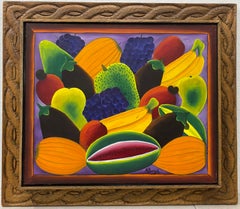
Alberoi Bazile "Fruit" Still Life Painting in Hand Carved Frame C.1970
Located in San Francisco, CA
Haitian Artist Alberoi Bazile "Fruit" Still Life Painting in Hand Carved Frame C.1970 Original painting on masonite Masonite dimensions 24" wide x 20" high Hand carved frame dimen...
Category

Mid-20th Century Art by Medium: Masonite

Materials

Masonite, Acrylic

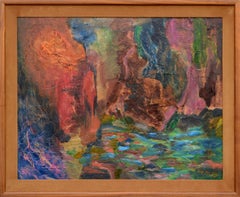
Sedona Red Bluffs and Seguaro Cactus Abstract
Located in Soquel, CA
Stunning and bright mid-century abstracted Sedona desert landscape of red bluffs and Seguaro cactus by unknown artist, 1957. Signed lower left illegibly and dated "June 1957" on vers...
Category

1950s Abstract Art by Medium: Masonite

Materials

Masonite, Oil

Masonite art for sale on 1stDibs.

Find a wide variety of authentic Masonite art available on 1stDibs. While artists have worked in this medium across a range of time periods, art made with this material during the 21st Century is especially popular. If you’re looking to add art created with this material to introduce a provocative pop of color and texture to an otherwise neutral space in your home, the works available on 1stDibs include elements of blue, pink, green, purple and other colors. There are many well-known artists whose body of work includes ceramic sculptures. Popular artists on 1stDibs associated with pieces like this include Enzio Wenk, Mark Beard, Michael Baxte, and Helen Enoch Gleiforst. Frequently made by artists working in the Abstract, Impressionist, all of these pieces for sale are unique and many will draw the attention of guests in your home. Not every interior allows for large Masonite art, so small editions measuring 0.01 inches across are also available

Recently Viewed

View All