18th Century Paintings

to
319
217
163
193
206
264
Overall Width
to
Overall Height
to
2,102
6,428
42,958
122,290
747
719
1,305
1,682
1,665
2,326
3,098
3,588
3,400
3,380
381
14
4
1
567
439
5
796
451
274
263
175
129
106
77
77
69
67
34
33
33
32
26
19
17
16
15
999
901
448
445
85
41
5
4
4
3
853
74
909
113
Period: 18th Century
18th century portrait of a Spaniel dog with fruit in a wooded landscape.
By Tobias Stranover
Located in Woodbury, CT
Outstanding early 18th-century portrait of a seated Spaniel dog in a landscape with an array of fruits. Attributed to the work of Tobias Stranover. ...
Category

Old Masters 18th Century Paintings

Materials

Oil

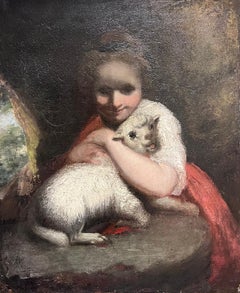
Fine 18th Century British Old Master Oil The Young Shepherdess with Lamb
Located in Cirencester, Gloucestershire
The Young Shepherd English School, 18th century circle of Sir Joshua Reynolds oil on canvas, unframed Canvas: 30 x 25 inches Provenance: Private collection Condition: very good condi...
Category

Old Masters 18th Century Paintings

Materials

Oil

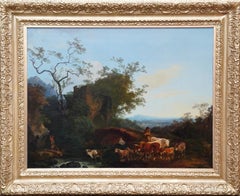
Pastoral Landscape - British 18th century Old Master art oil painting
Located in Hagley, England
This superb Old Master 18th century figurative landscape oil painting is by noted French born artist Philip James Loutherbourg. who settled in England in 1771. The painting has good ...
Category

Old Masters 18th Century Paintings

Materials

Oil

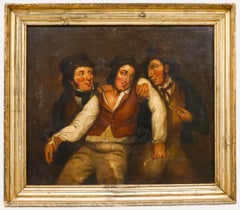
Flemish School 18th Century Oil - Three Merry Gentlemen
Located in Corsham, GB
A lively eighteenth-century genre scene, in which two men support their companion, who stumbles back against them in intoxicated revelry. Presented in a vintage gilt-effect frame. Un...
Category

18th Century Paintings

Materials

Oil

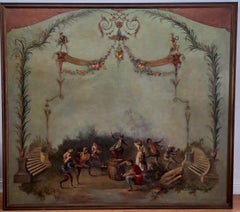
Monumental Singerie 18th Century Whimsical Painting
Located in San Francisco, CA
Monumental Singerie (monkeys imitating human behavior) 18th century whimsical painting in the style of Christopher Huet In good antique condition w...
Category

18th Century Paintings

Materials

Canvas, Oil

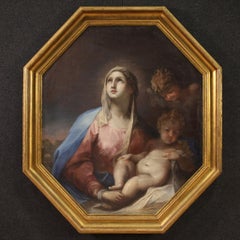
18th Century Oil on Canvas Italian Religious Painting Madonna with Child, 1750
Located in Vicoforte, IT
A refined 18th-century Italian painting. This artwork oil on canvas depicts a splendid Madonna and Child with a cherub, crafted with exquisite skill. The composition dates stylistica...
Category

18th Century Paintings

Materials

Canvas, Oil

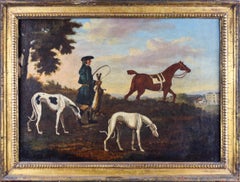
Hare coursing outside a country house with hounds Oil British 18th Century
Located in London, GB
Thomas Burford (British, c. 1710-1779) Hare coursing outside a country house Oil on canvas Property of a gentleman From the collection of Peter Roe Dimensions: (Frame) 12.5 in. (H)...
Category

English School 18th Century Paintings

Materials

Oil

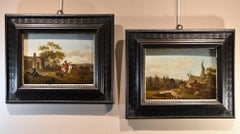
Pair Landscape Horses Duplessis Paint Oil on table 18th Century Old master
Located in Riva del Garda, IT
Claude Michel Hamon Duplessis (active in Versailles from 1791 to 1799) Signed one lower right, the other lower left “M. h. Duplessis” Pair of paintings ...
Category

Old Masters 18th Century Paintings

Materials

Oil

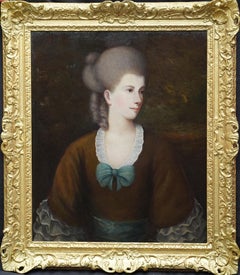
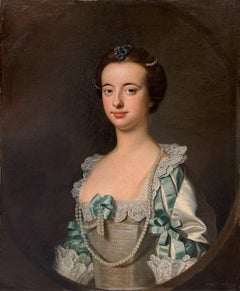
Portrait of a Lady with a Blue Bow - British 18thC art Old Master oil painting
Located in Hagley, England
This superb British 18th century Old Master portrait oil painting is attributed to Matthew William Peters. Painted circa 1780 it is a fine half length portrait of a woman gazing to her left. She has a lovely blue bow and sash on her dress. The sympathetic detail in her face is sublime. A really wonderful 18th century Old Master portrait. Matthew William Peters was known for his late 18th century portraits which had both the influence of Sir Joshua Reynolds and Thomas Gainsborough. Provenance. Lincolnshire estate. Condition. Oil on canvas 30 inches by 25 inches unframed and in good condition. Has has restoration. Frame. Housed in an ornate gilt carved swept period frame, 40 inches by 35 inches framed and in good condition. Matthew William Peters (1742-1814) was an English portrait and genre painter who later became an Anglican clergyman and chaplain to George IV. He became known as "William" when he started signing his works as "W. Peters". Peters was born in Freshwater, Isle of Wight, the son of Matthew Peters (born at Belfast, 1711), a civil engineer and member of the Royal Dublin Society; by Elizabeth, the eldest daughter of George Younge of Dublin. The family moved from England to Dublin when Peters was young. Peters received his artistic training from Robert West in Dublin; in 1756 and 1758 he received prizes from the first School of Design in Dublin. In 1759, he was sent by the Dublin Society to London to become a student of Thomas Hudson and won a premium from the Society of Arts. The group also paid for him to travel to Italy to study art from 1761 to 1765. On 23 September 1762 he was elected to the Accademia del Disegno in Florence. Peters returned to England in 1765 and exhibited works at the Society of Artists from 1766 to 1769. Beginning in 1769, Peters exhibited works at the Royal Academy. In 1771 he was elected an associate and in 1777 an academician. He returned to Italy in 1771 and stayed until 1775. He also probably traveled to Paris in 1783–84, where he met Léopold Boilly, Antoine Vestier, and was influenced by the work of Jean-Baptiste Greuze. On 27 February 1769, Peters became a freemason, and he was made the grand portrait painter of the Freemasons and the first provincial grand master of Lincolnshire in 1792. In 1785, he exhibited portraits of the Duke of Manchester and Lord Petre as Grand Master at the Royal Academy exhibition. According to Robin Simon's article in the Oxford Dictionary of National Biography, no British contemporary had such an Italian manner of painting as Peters, reflecting the old masters he copied. Many of Peters' works were erotic and although these works did not damage his career, according to Simon, Peters later regretted these when he became an ordained clergyman in 1781. He served as the Royal Academy's chaplain from 1784 to 1788, at which time he resigned to become chaplain to the Prince of Wales. In 1784, Peters was awarded the living of Scalford, Leicestershire by Charles Manners, 4th Duke of Rutland. In 1788, the Dowager Duchess gave him the living at Knipton, at which time he also obtained that at Woolsthorpe. These livings were near to Belvoir Castle...
Category

Old Masters 18th Century Paintings

Materials

Oil

Italian 18th Century Oval Religious Oil on Canvas Painting with Saint Dominic
Located in Firenze, IT
This beautiful Italian 18th Century old masters oil painting on oval canvas with giltwood frame is attributed to Solimena and features a religious scene. In this splendid oval-shaped painting are depicted Saint Dominic...
Category

Old Masters 18th Century Paintings

Materials

Canvas, Oil

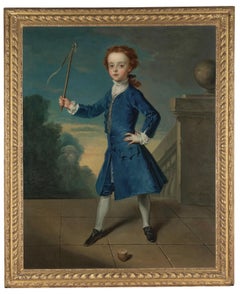
18th century portrait painting of a boy with a spinning top on a garden terrace
Located in Bath, Somerset
Portrait of a young boy, full-length in a blue velvet coat and breeches, standing on a stone terrace in a garden landscape, playing with a spinning top. Signed and dated ' Phil. Merc...
Category

Old Masters 18th Century Paintings

Materials

Canvas, Oil

A PAIR of Landscapes.
By Abraham Pether
Located in Stoke, Hampshire
Abraham Pether (1756-1812) 'Landscape near Chichester' and 'Drovers in a landscape' A pair, Oil on canvas One signed and inscribed 'Chichester' Canvas size - 16 x 20 5/8 in Framed si...
Category

18th Century Paintings

Materials

Oil

A PAIR of Landscapes.
$10,269 Sale Price
42% Off
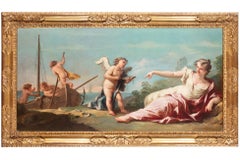
18th Century by Gaspare Diziani Venus With Cupid Oil on Canvas
Located in Milano, Lombardia
Gaspare Diziani (Belluno, Italy, 1689 - Venice, Italy, 1767) Title: Venus with Cupid Medium: Oil on canvas Dimensions: without frame 50 x 98 cm - with frame 64 x 112 cm Not signed Gilded, carved and sculpted wooden cassetta frame...
Category

Old Masters 18th Century Paintings

Materials

Canvas, Cotton Canvas, Oil

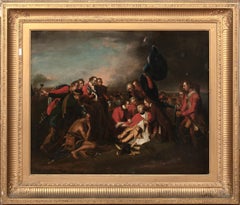
The Death Of General Wolfe, The Battle of Quebec 1759 18th Century BENJAMIN WEST
Located in Blackwater, GB
The Death Of General Wolfe,The Battle of Quebec 1759, 18th Century after of BENJAMIN WEST (1738-1820) Large 18th Century scene of the Death Of General Wolfe, oil on panel. Excellen...
Category

18th Century Paintings

Materials

Oil, Wood Panel

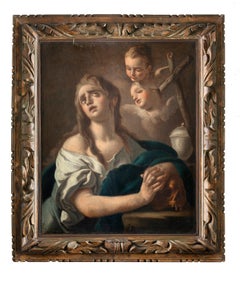
18th Century by Pietro Bardellino Mary Magdalene Painting Oil on Canvas
Located in Milano, Lombardia
Pietro Bardellino (Naples, Italy, 1731 – 1806) Title: Mary Magdalene Medium: Oil on canvas Dimensions: without frame 75 x 60 cm – with frame 97 x 82 cm Antique shaped and carved wood...
Category

Old Masters 18th Century Paintings

Materials

Canvas, Oil

Venetian Capriccio Landscape Painting, Oil on Canvas, Circa 1777
By Gaetano Vetturali (Lucca, 1701-1783)
Located in Stockholm, SE
A Venetian capriccio view with classical architectural ruins and in the background the church of San Giorgio Maggiore and the Church of Santa Maria della Salute next to the Grand Can...
Category

Old Masters 18th Century Paintings

Materials

Canvas, Oil

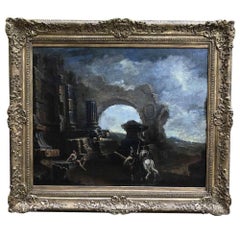
Large Landscape with Ruins Capriccio of Italian School Early 18th Century
Located in Milano, IT
Baroque capriccio with architectural ruins and figures, an early 18th century Italian painting showing an imaginary landscape with Roman ruins and figures, an early Italian oil-on-ca...
Category

Baroque 18th Century Paintings

Materials

Canvas, Wood, Oil

Wooden Landscape with Shepherds, Fountain and Flock - by Jan Frans van Bloemen
Located in Roma, IT
Bibliography: A.Busiri Vici, Jan Frans Van Bloemen Orizzonte e l’origine del paesaggio romano settecentesco, Ugo Bozzi Editore, Roma 1974, n.41 This artwork is shipped from Italy. U...
Category

Old Masters 18th Century Paintings

Materials

Canvas, Oil

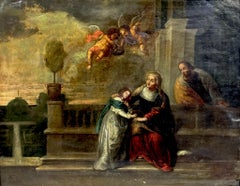
San Joaquín, Santa Ana y la Virgen niña - óleo sobre cobre.
Located in Sant Celoni, ES
Escuela española; siglo XVIII. San Joaquín, Santa Ana y la Virgen Niña. Óleo sobre cobre anónimo y buena calidad pictórica. Medidas de la obra: 69 x 87 cm. Medidas del marco: 92 ...
Category

Old Masters 18th Century Paintings

Materials

Oil

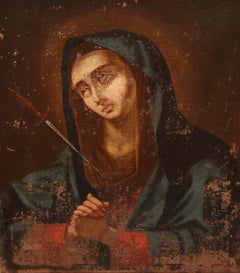
Escuela española (XVIII) - Óleo sobre tela - Virgen Dolorosa
Located in Sant Celoni, ES
La obra no va firmada, es de augtor anónimo Se presenta sin enmarcar la pintura El estado de conservación de la pintura dse puede ver, presenta faltas y precisará restauración Med...
Category

Old Masters 18th Century Paintings

Materials

Oil

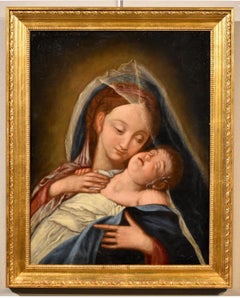
Madonna Maria Sassoferrato Paint Oil on canvas Old master 18th Century Italian
Located in Riva del Garda, IT
Madonna with Sleeping Child Follower of Giovan Battista Salvi known as 'il Sassoferrato' (1609 - 1685) Roman painter 18th century Oil on canvas Measurements: canvas 64 x 50 cm, in frame 76 x 62 cm. This delicate depiction of the Madonna in adoration of the Child exhibits all the human dimension and sweetness of the maternal atmosphere: Mary clasps the sleeping child to her in a tender embrace, which touches her cheek, enveloped and protected by the mantle and even a flap of the mother's veil. The pictorial style and composition recall the ambit of Giovan Battista Salvi, the Sassoferrato, who distinguished himself expressly for this subject, with the Virgin immortalised in a humble and strongly earthly pose, depicted with simple white, red and blue colours and delicate plays of nuances on the faces and hands. This iconographic prototype was so successful that it became the painting for countless works destined for devotion during the 17th and 18th centuries, particularly appreciated for private commissions due to its marked gentleness and formal perfection, particularly of the faces. Born in Marchigiano, Salvi developed his activity in Rome, following the dictates of the classicist sacred painting of the Bolognese school of Reni, Carracci and Domenichino, but succeeding in having an autonomous and therefore clearly distinguishable style.  In very good overall condition, there are some small scattered restorations and some unravelling of the painted surface. Framed in a beautiful gilded frame. ADDITIONAL INFORMATION: The work is sold with a certificate of authenticity and descriptive iconographic card. We take care of and organise the transport of the purchased works, both for Italy and abroad, through professional and insured carriers. It is also possible to see the painting in the gallery in Riva del Garda...
Category

Old Masters 18th Century Paintings

Materials

Oil

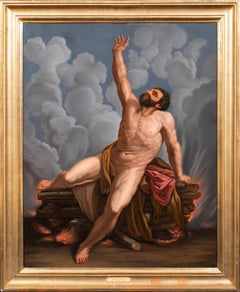
Hercules At The Funeral Pyre at Mount Oeta, 18th Century
By Guido Reni
Located in Blackwater, GB
Hercules At The Funeral Pyre at Mount Oeta, 18th Century follower of GUIDO RENI (BOLOGNA 1575-1642) 18th Century Italian Old Master depiction of Hercules at his funeral pyre, Moun...
Category

18th Century Paintings

Materials

Canvas, Oil

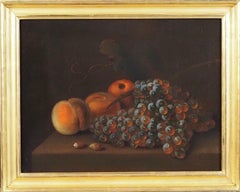
Still life of fruit and nuts
Located in Stoke, Hampshire
James Shaw (fl.1769-1784) Still life of fruit and nuts Oil on canvas Canvas Size - 13 1/2 x 17 3/4 in Framed Size - 16 1/4 x 20 1/2 in Born in Sedgley in Staffordshire, it is unclea...
Category

Old Masters 18th Century Paintings

Materials

Oil

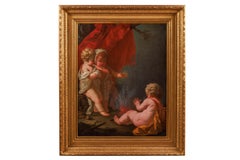
Circle of Jean Honore Fragonard (1732–1806) A Painting of Three Putti and Fire
Located in Queens, NY
Circle of Jean Honore Fragonard (French 1732–1806) An Exceptional Painting of Three Putti and Fire, circa 1795. Masterfully painted in the late ...
Category

Rococo 18th Century Paintings

Materials

Cotton Canvas, Oil

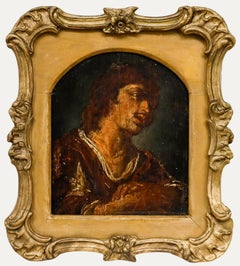
18th Century Oil - The Wistful Man
Located in Corsham, GB
This striking 19th century portrait depicts a contemplative figure rendered in warm, earthy tones against a dark background, capturing a moment of quiet introspection with masterful ...
Category

18th Century Paintings

Materials

Oil

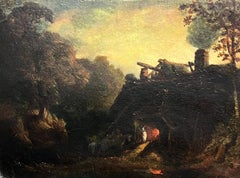
Late 18th Century British Oil Painting Figures by Blacksmiths Forge Landscape
Located in Cirencester, Gloucestershire
The Blacksmiths Forge British artist, late 18th century Circle of Julius Caesar Ibbetson (1759-1817) oil on board, unframed board: 11 x 14.5 inches provenance: private collection, En...
Category

English School 18th Century Paintings

Materials

Oil

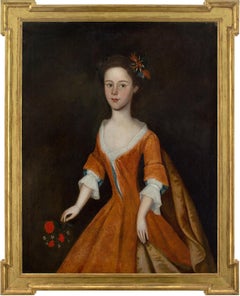
Mid-18th-Century English Oil Painting, Portrait Of A Girl With A Posy
Located in Cheltenham, GB
This exceedingly charming mid-18th-century English oil painting depicts a girl wearing a red gown with a train over a white petticoat. She’s holding a posy or nosegay. Evidently once commissioned for an English country house, the identity of this young lady remains a mystery. Her gown appears to be inspired by the popular ‘robe à la française...
Category

English School 18th Century Paintings

Materials

Canvas, Oil

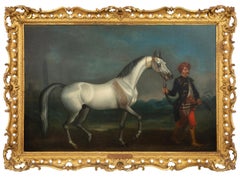
The Bloody Shouldered Arabian Horse Oil on canvas 18th Century
By John Wootton
Located in London, GB
John Wootton (1686 - 1764) The Bloody-Shouldered Arabian Oil on canvas Inscribed below, 'Bred by Lord Oxford in 1755 & Sire of many famous Racers, including the Duke of Bolton's 'Swe...
Category

English School 18th Century Paintings

Materials

Oil

Portrait of Lady Mansfield of Ringwood
Located in London, GB
Portrait of Lady Mansfield of Ringwood Oil on Canvas, unsigned Image size: 25 x 30 inches (63 x 76 cm) Original carved & gilded frame Provenance Descended through the Family Estate Born in Poland in 1760 to the 2nd Earl of Mansfield and his wife, Elizabeth Mary Murray would later come under the care of her uncle, William Murray (1st Earl of Mansfield) at Kenwood House in Hampstead. David Murray (2nd Earl of Mansfield) was set to inherit the title and full wealth of his uncle, including Kenwood House. Lady Mansfield’s second cousin would soon join her at Kenwood, where they would be raised together and featured in multiple portraits of the time. Her younger sister, Henrietta, is seen in a separate portrait done by Thomas Hudson as well. At the age of 25 she married George Finch-Hatton, an English aristocrat and politician who sat in the House of Commons from 1772-1784. Gazing out at the viewer, Lady Mansfield wears a decorated dress, with an abundance of pearls and lace, and a transparent gold lined veil surrounding her right shoulder. The excess of luxurious fabric matches another Hudson portrait of another Lady Mansfield, with the lace detailing and complementary bodice. The depiction of this Lady Mansfield epitomizes the style of portraiture in the 18th century, such as the styles Hudson’s pupils Joshua Reynolds, Joseph Wright, and Peter Toms. From Hudson’s travels to the Low Countries and Italy, he no doubt brought back artistic inspiration from the international pieces he encountered. Thomas Hudson Hudson was a celebrated 18th century portrait painter. Born in Devon in 1701 he studied under the artist Jonathan Richardson and married his daughter, against Richardson’s wishes. He had many artistic friends including William Hogarth and Francis Hayman and travelled with them in Europe in 1748. He also visited Italy with the sculptor Louis-François Roubiliac in 1752. Hudson’s style of portraiture proved so successful that for a decade from 1745 to 1755 he was London’s most popular portrait painter and made a fortune painting the cream of London society and members of the Royal Family. He was also a talented teacher, perhaps too good, as subsequently a number of his former assistants overtook him in popularity including the artist Joshua Reynolds. Hudson retired in the late 1750’s and died in Twickenham in 1779. His most notable works include portraits of King George II and George Friedrich Handel and his “Portrait of a Nobleman in Van Dyck dress.” Many of Hudson’s works may be seen in art galleries. These include the National Portrait Gallery, the National Maritime Museum, the Tate Gallery, the Foundling Museum and the Bristol City Museum and Art Gallery. His works are also in Museums across the world...
Category

English School 18th Century Paintings

Materials

Canvas, Oil

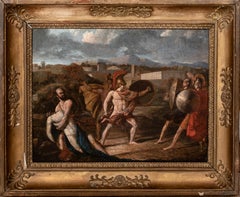
The Death Of Patroclus, 18th Century School of Jacques-Louis David (1748-1825)
By Jacques-Louis David
Located in Blackwater, GB
The Death Of Patroclus, 18th Century School of Jacques-Louis David (1748-1825) 18th Century French Neo-Classical scene of the Death Of Patroclus, oil on panel. Excellent quality an...
Category

18th Century Paintings

Materials

Oil, Wood Panel

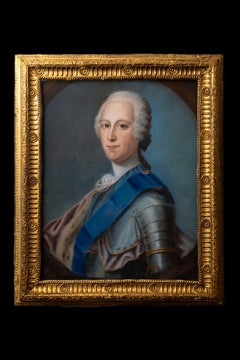
Portrait of Prince Charles Edward Stuart, ‘Bonnie Prince Charlie’
Located in Oxford, GB
After Maurice-Quentin de la Tour (1704-1788), Portrait of Prince Charles Edward Stuart (1720-1788), Bonnie Prince Charlie (later Jacobite 'King C...
Category

18th Century Paintings

Materials

Pastel

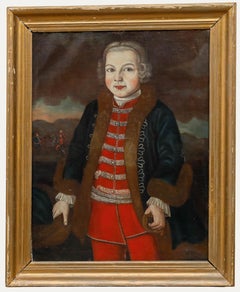
R. Waring - German School 1737 Oil, The First Sword
Located in Corsham, GB
A fine portrait study dated 1737 portraying a young boy from a noble family bearing his first sword. Dressed in fine military-style clothing, he clutches a small sword in one hand an...
Category

18th Century Paintings

Materials

Oil

Portrait of Ralph William Grey
Located in London, GB
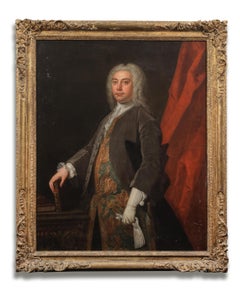
Provenance By descent through the sitter's family to The Collection of R. W. Vivian-Neal of Poundisford Park, Somerset, from whom acquired by With Lane Fine Art, UK, where purchased by the present owners in 1996 Literature 'Poundisford Park, Somerset' in Country Life, 22 December 1934, ill. A.W. and C.M. Vivian-Neal, Poundisford Park, Somerset: A catalogue of pictures and furniture, Taunton 1939, cat. nos. 11 and 13 This is a three-quarter-length portrait of Ralph William Grey in a mole-coloured velvet coat and a long waistcoat of green satin, heavily embroidered in gold. Under his left right hand is a black chapeau bras. He has white doe-skin gauntlet gloves. Son of William and Ann Grey of Backworth: born 19 December 1707. He married Mary the daughter of William Rawstorne of Newall in 1741 and died 5 November 1786. He was educated at Eaton and Trinity College, Oxford. Within a year of his birth Mrs Grey died and, according to the Country Life article 'From that time forward all Mr Grey's faculties were concentrated on the well-being of his son. The possession of an heir gave zest to his efforts to build up the family fortune: he was successful in most of his ventures. Years later his interest in life was centred in the home of his daughter-in-law and grandchildren'. Grey's right hand is depicted in the present portrait resting on Locke's Essays and the Country Life article also records that there are constant references to John Locke...
Category

English School 18th Century Paintings

Materials

Oil

1780 Antique 18c. original oil painting on canvas Portrait of a Nobleman Signed
Located in Palm Coast, FL
This original oil on canvas is a refined and characterful 18th-century British portrait, signed and dated in the lower left: "Js. Jones P.X. 1780." The work depicts a gentleman of st...
Category

Impressionist 18th Century Paintings

Materials

Oil

Rebecca at the Well
Located in Fredericksburg, VA
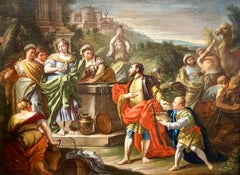
Nicola Maria Rossi masterfully captures the biblical tale of Rebecca and Eliezer at the Well, a story from the Book of Genesis. In this scene, Abraham’s servant, Eliezer, arrives at ...
Category

Old Masters 18th Century Paintings

Materials

Canvas, Oil

Marco Ricci follower (Venetian painter) - 18th century landscape painting
Located in Varmo, IT
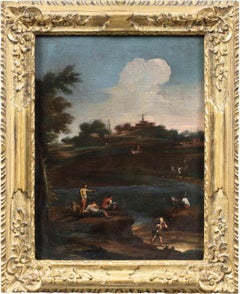
Venetian painter (18th century) - River landscape with figures. 34 x 26 cm unframed, 43 x 35 cm with frame. Ancient oil painting on canvas, in a car...
Category

Rococo 18th Century Paintings

Materials

Canvas, Oil

Portrait 18e Siècle Pierre Mignard (1612/1695) Entourage.
Located in GOUVIEUX, FR
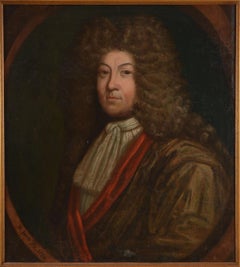
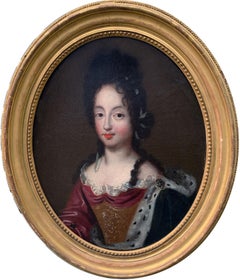
Huile sur toile dim avec cadre 44/52 cm Dim sans cadre 33.5/41 cm Ecole française Entourage Pierre Mignard Pierre Mignard  né le 17 novembre 1612 à Troyes et mort le 30 mai 1695 à Pa...
Category

French School 18th Century Paintings

Materials

Canvas, Paint, Oil

France early 18th Century, Portrait of a cleric, oil on canvas
Located in Paris, FR
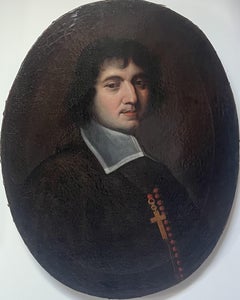
French school early 18th Century Portrait of a cleric, oil on canvas 68 x 54 cm, oval Not signed which is normal for this type of artwork I recently had this painting cleaned and r...
Category

Old Masters 18th Century Paintings

Materials

Oil

Pair of Italian 18th Century Tempera on Canvas Classical Paintings "Capriccio"
By Pietro Paltronieri
Located in Rome, IT
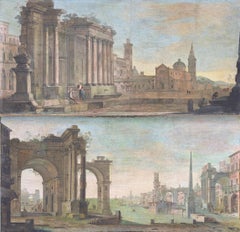
A fine pair of huge Italian 18' century Capriccio with Classical ruins, tempera oil on canvas . Atr.Pietro Paltronieri, il Mirandolese (Mirandola 1673-1741 Bologna). Measurements ...
Category

Old Masters 18th Century Paintings

Materials

Tempera

Fete Champetre - Garden Party - French 18thC figurative landscape oil painting
Located in Hagley, England
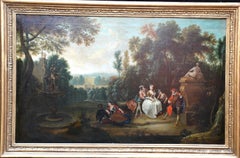
This charming 18th century French Old Master oil painting is attributed to circle of Joseph Frans Nollekens. Painted circa 1740 it is described as a fete champetre - a form of entertainment in the 18th century, taking the form of a garden party. They were often elegant affairs and became very popular in 18th French paintings. Antoine Watteau invented the genre, from around 1710 and they were also included as a category in the French Academy. In this painting, several well dressed figures are sat in the foreground by a fountain and statue, being entertained by a musician. Beyond, a wide avenue of trees leads towards a very grand country house with countryside beyond. There is superb detail in the figures and their colourful clothing. The brushwork in the trees and sky is also superb. This is a charming example of an 18th century fete champetre and of a French Old Master oil painting. Provenance. Gloucester estate. Condition. Oil on canvas. Image size 49 inches by 30 inches and in good condition. Frame. Housed in a fine gilt frame, 56 inches by 37 inches and in good condition. Josef Frans Nollekens or Joseph Frans Nollekens (1702–1748)[2] was a Flemish painter who was principally active in England where he is often referred to as "Old Nollekens" to distinguish him from his famous son, the sculptor Joseph Nollekens. He painted conversation pieces, galant companies and fêtes champêtres in the style of Watteau, genre scenes as well as portraits. He was also active as a picture restorer. A fête champêtre was a form of entertainment in the 18th century, taking the form of a garden party. This form of entertainment was particularly practised by the French court, where in the Gardens of Versailles and elsewhere areas of the park were landscaped with follies, pavilions, and temples to accommodate such festivities. The term is a French expression, very literally translating as "party in the fields", meaning a "pastoral festival" or "country feast" and in theory was a simple form of entertainment, perhaps little more than a picnic or informal open air dancing. In practice, especially in the 18th century, the simplicity of the event was often contrived. A fête champêtre was often a very elegant form of entertainment involving on occasions whole orchestras hidden in trees, with guests sometimes in fancy dress. Such events became a popular subject in French 18th-century painting, representing a glamourized aristocratic form of pastoral, with "scenes of well dressed dalliance in a park setting". Antoine Watteau invented the genre, from around 1710, and is its best exponent, imitated by others such as Nicolas Lancret and Jean-Baptiste Pater...
Category

Old Masters 18th Century Paintings

Materials

Oil

Cockfighting Champion Portrait of "Intrepid", 18th Century
Located in Blackwater, GB
Cockfighting Champion Portrait of "Intrepid", 18th Century attributed to John Nost SARTORIUS (1759-1830) Fine large 18th Century English study of a prize Cockerel in a farmyard, o...
Category

18th Century Paintings

Materials

Canvas, Oil

View Venice Grand Canal See Landscape 18th Century Paint Oil on canvas Venice
Located in Riva del Garda, IT
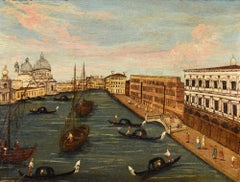
Vedutist painter of the 18th century View of Venice with the Grand Canal, the Punta della Dogana with the Basilica of Santa Maria della Salute on the left, the Palazzo Della Zecca wi...
Category

Old Masters 18th Century Paintings

Materials

Oil

Pair of Roman Landscapes - by J.F. Van Bloemen - 18th Century
Located in Roma, IT
Beautiful couple of Roman Landscape by J. F. Van Bloemen, in very good conditions and with later wooden frames. Bibliography and Exhibitions: Old Master Exhibition, H.Terry-Engell, ...
Category

18th Century Paintings

Materials

Oil, Canvas

"Steinigung von Santa Stefano"
Located in Edinburgh, GB
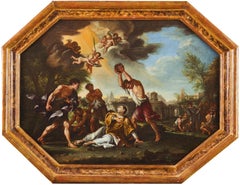
Filippo Lauri (Rome, 1623 - 1694) "The Stoning of Saint Stephen" Oil on Canvas Framed: 55 x 72 cm Flat: 61 x 65 cm No signatured This powerful Baroque painting by Filippo Lauri, a r...
Category

Realist 18th Century Paintings

Materials

Canvas, Oil

Two royal portraits (the Duc d Angoulême and the Duc de Berry) by H.P. Danloux
Located in PARIS, FR
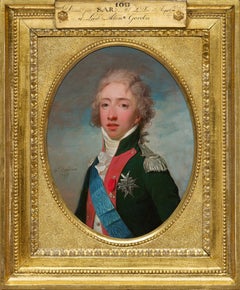
These two royal portraits are a major historical testimony to the stay of the Comte d'Artois (the future Charles X) and his family in Edinburgh in 1796-1797. Given by the sitters to Lord Adam Gordon, the Governor of Edinburgh, and kept by family descent to this day, these two portraits provide us with a vivid and spontaneous image of the Duc d’Angoulême and his brother the Duc de Berry. Danloux, who had emigrated to London a few years before, demonstrate his full assimilation of the art of British portrait painters in the brilliant execution of these portraits. 1. Henri-Pierre Danloux, a portraitist in the revolutionary turmoil Born in Paris in 1753, Henri-Pierre Danloux was first a pupil of the painter Nicolas-Bernard Lépicié (1735 - 1784) and then, in 1773, of Joseph-Marie Vien (1716 - 1809), whom he followed to Rome when, at the end of 1775, Vien became Director of the Académie de France. In Rome he became friends with the painter Jacques-Louis David (1748 - 1825). Returning to France around 1782, he settled in Lyon for a few years before returning to Paris in 1785. One of his first portraits was commissioned by the Baroness d'Etigny, the widow of the former Intendant of the Provinces of Gascony, Bearn and Navarre Antoine Mégret d'Etigny (1719 – 1767). He then became close to his two sons, Mégret de Sérilly and Mégret d'Etigny, who in turn became his patrons. In 1787, this close relationship with the d'Etigny family was further strengthened by his marriage to Antoinette de Saint-Redan, a relative of Madame d'Etigny. After his marriage, he left for Rome and did not return to France until 1789. It was during the winter of 1790-1791 that he painted one of his masterpieces, the portrait of Baron de Besenval. Set in a twilight atmosphere, this portrait of an aristocrat who knows that his death is imminent symbolizes the disappearance of an erudite and refined society which would be swept away by the French Revolution. The Jacobin excesses led Danloux to emigrate to England in 1792; many members of his family-in-law who remained in France were guillotined on 10 May 1794. Danloux enjoyed great success as a portrait painter in England before returning to France in 1801. During his stay in England, Danloux was deeply under the influence of English portraitists: his colors became warmer (as shown by the portrait of the Duc d'Angoulême that we are presenting), and his execution broader. 2. Description of the two portraits and biographical details of the sitters The Duc d'Angoulême (1775-1844) was the eldest son of the Comte d'Artois, the younger brother of King Louis XVI (the future King Charles X), and his wife Marie-Thérèse of Savoie. He is shown here, in the freshness of his youth, wearing the uniform of colonel-general of the "Angoulême-Dragons" regiment. He is wearing the blue cordon of the Order of the Holy Spirit, which was awarded to him in 1787, and two decorations: the Cross of Saint-Louis and the Maltese Cross, as he was also Grand Prior of the Order of Malta. Born on 16 August 1775 in Versailles, Louis-Antoine d'Artois followed his parents into emigration on 16 July 1789. In 1792, he joined the émigrés’ army led by the Prince de Condé. After his stay in Edinburgh (which will be further discussed), he went to the court of the future King Louis XVIII, who was in exile at the time, and in 1799 married his first cousin Marie-Thérèse Charlotte of France, the daughter of Louis XVI and the sole survivor of the royal family. The couple had no descendants. He became Dauphin of France in 1824, upon the accession to the throne of his father but played only a minor political role, preferring his military position as Grand Admiral. Enlisted in Spain on the side of Ferdinand VII, he returned home crowned with glory after his victory at Trocadero in 1823. He reigned for a very short time at the abdication of Charles X in 1830, before relinquishing his rights in favor of his nephew Henri d'Artois, the Duc de Bordeaux. He then followed his father into exile and died on 3 June 1844 in Gorizia (now in Italy). His younger brother, the Duc de Berry, is shown in the uniform of the noble cavalry of the émigrés’ Army. He is wearing the blue cordon of the Order of the Holy Spirit, awarded to him in May 1789, and the Cross of Saint-Louis (partly hidden by his blue cordon). Born on 24 January 1778 in Versailles, Charles-Ferdinand d'Artois also followed his parents into emigration and joined the émigrés’ army in 1792. After his stay in Edinburgh, he remained in Great Britain, where he had an affair with Amy Brown...
Category

Old Masters 18th Century Paintings

Materials

Canvas, Oil, Wood Panel

Portrait of a Young Boy - British art 1780 Old Master male portrait oil painting
By Joseph Wright of Derby
Located in Hagley, England
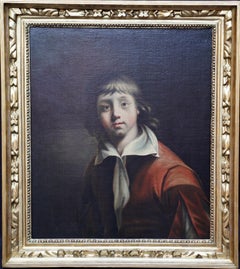
This lovely Old Master portrait oil painting is attributed to the circle of Joseph Wright of Derby. Painted circa 1780 the painting is of a boy in a tunic and wide collar. A really c...
Category

Old Masters 18th Century Paintings

Materials

Oil

Naturalistic Italian painter - 17/18th century landscape painting - Cows, goats
Located in Varmo, IT
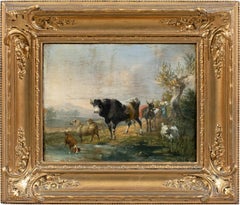
Italian painter (late 18th-early 19th century) - Landscape with cows, goats, and a dog by the stream. 21.5 x 26.5 cm unframed, 35.5 x 41.5 cm with frame. Antique oil painting on ca...
Category

Naturalistic 18th Century Paintings

Materials

Oil, Canvas

Portrait of Rachel Missing, Edinburgh - British Old Master art oil painting
Located in Hagley, England
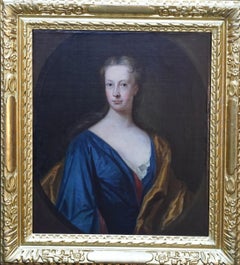
This lovely Old Master portrait oil painting is attributed to the circle of Michael Dahl. Painted circa 1710 the sitter is Rachel Missing, wife of Roger Hogg of Newliston, near Edinb...
Category

Baroque 18th Century Paintings

Materials

Oil

Early 18thC Italian School Still Life With Flowers Peacock, Oil Painting
By Giuseppe Pesci
Located in Cheltenham, GB
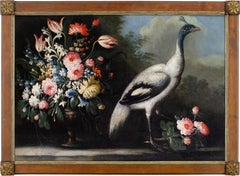
US buyers pay no import tariffs on this item. This early 18th-century oil painting, attributed to Italian artist Giuseppe Pesci (d. 1722), depicts a peacock alongside radiant blooms...
Category

Italian School 18th Century Paintings

Materials

Canvas, Oil

Pair of Royal Portraits of the Duke and Duchess of Burgundy
By Pierre Gobert
Located in New Orleans, LA
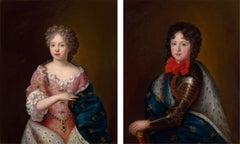
Follower of Pierre Gobert 18th century French The Duke and Duchess of Burgundy Oil on canvas Refinement and intricacy characterize these royal portra...
Category

18th Century Paintings

Materials

Canvas, Oil

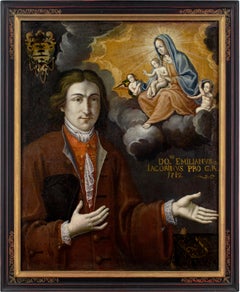
Early-18th Century French School, Ex-Voto Portrait With Emilian Jacobin
Located in Cheltenham, GB
This splendid early 18th-century French oil painting represents an ‘ex-voto’ with Emilian Jacobin and a depiction of the Virgin Mary with Christ and angels. Ex votos are votive offe...
Category

French School 18th Century Paintings

Materials

Canvas, Oil

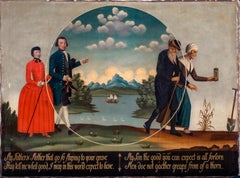
An Allegory Of Marriage, 18th Century
Located in Blackwater, GB
An Allegory Of Marriage, 18th Century English School Large 18th Century English School allegory of marriage, oil on canvas. Rare allegory of life scene with two married couples on...
Category

18th Century Paintings

Materials

Canvas, Oil

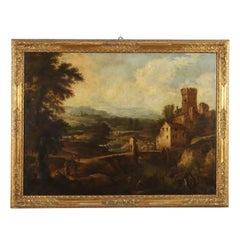
Painted Landscape with Creek Mill and Figures 18th century
Located in Milan, IT
Oil on Canvas. Venetian school of the 18th century. Large landscape of pre-Alpine hills, traversed by a stream that reaches the mill in the right foreground, while numerous figures o...
Category

Other Art Style 18th Century Paintings

Materials

Oil

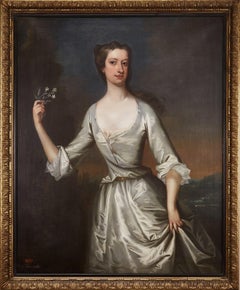
English 18th century portrait of Henrietta Pelham-Holles, Duchess of Newcastle.
Located in Bath, Somerset
Portrait of Henrietta Pelham-Holles (née Godolphin) (1701-1776), Duchess of Newcastle, standing in a wooded landscape with a river beyond, three-quarter length wearing an ivory silk ...
Category

Old Masters 18th Century Paintings

Materials

Canvas, Oil

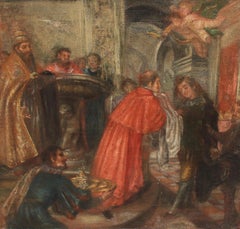
Escuela española (XVIII) El bautismo de San Jeronimo según Juan de Valdes Leal
Located in Sant Celoni, ES
La obra no va firmada Se presenta sin enmarcar la pintura El estado de la obra se puede ver, es aceptable ya que en su momento se acondicionó debidamente Medidas de la obra: 38 x ...
Category

Old Masters 18th Century Paintings

Materials

Oil

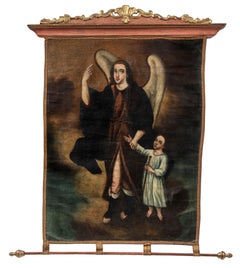
A Guardian Angel Leading a Child
Located in New York, NY
Provenance: Private Collection, Argentina; there acquired by Mr. and Mrs. Ernest T. Harper, New York, by 1960; by descent to: Mr. and Mrs. Alan Harper, New York, until 2024. This s...
Category

Old Masters 18th Century Paintings

Materials

Canvas, Oil

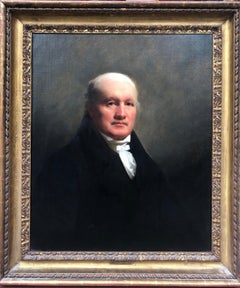
Striking 18th Century Portrait of the 12th Earl of Caithness
Located in London, GB
Sir Henry Raeburn (1756-1823) James Sinclair, 12th Earl of Caithness (1766-1823) Oil on Canvas 30 X 25 inches Unframed 37 X 32 inches framed Sir Henry Raeburn FRSE RA RSA (4 March 1756 – 8 July 1823) was a Scottish portrait painter and Scotland's first significant portrait painter since the Union to remain based in Scotland. He served as Portrait Painter to King George IV in Scotland. Raeburn was born the son of a manufacturer in Stockbridge, on the Water of Leith: a former village now within the city of Edinburgh. He had an older brother, born in 1744, called William Raeburn. His ancestors were believed to have been soldiers, and may have taken the name "Raeburn" from a hill farm in Annandale, held by Sir Walter Scott's family. Orphaned, he was supported by William and placed in Heriot's Hospital, where he received an education. At the age of fifteen he was apprenticed to the goldsmith James Gilliland of Edinburgh, and various pieces of jewellery, mourning rings and the like, adorned with minute drawings on ivory by his hand, still exist. Soon he took to the production of carefully finished portrait miniatures; meeting with success and patronage, he extended his practice to oil painting, at which he was self-taught. Gilliland watched the progress of his pupil with interest, and introduced him to David Martin, who had been the favourite assistant of Allan Ramsay the Latter, and was now the leading portrait painter in Edinburgh. Raeburn was especially aided by the loan of portraits to copy. Soon he had gained sufficient skill to make him decide to devote himself exclusively to painting. George Chalmers (1776; Dunfermline Town Hall) is his earliest known portrait. In his early twenties, Raeburn was asked to paint the portrait of a young lady he had noticed when he was sketching from nature in the fields. Ann was the daughter of Peter Edgar of Bridgelands, and widow of Count James Leslie of Deanhaugh. Fascinated by the handsome and intellectual young artist, she became his wife within a month, bringing him an ample fortune. The acquisition of wealth did not affect his enthusiasm or his industry, but spurred him on to acquire a thorough knowledge of his craft. It was usual for artists to visit Italy, and Raeburn set off with his wife. In London he was kindly received by Sir Joshua Reynolds, the president of the Royal Academy, who advised him on what to study in Rome, especially recommending the works of Michelangelo, and gave Raeburn letters of introduction for Italy. In Rome he met his fellow Scot Gavin Hamilton, Pompeo Girolamo Batoni and Byers, an antique dealer whose advice proved particularly useful, especially the recommendation that "he should never copy an object from memory, but, from the principal figure to the minutest accessory, have it placed before him." After two years of study in Italy he returned to Edinburgh in 1787, and began a successful career as a portrait painter. In that year he executed a seated portrait of the second Lord President Dundas. Examples of his earlier portraiture include a bust of Mrs Johnstone of Baldovie and a three-quarter-length of Dr James Hutton: works which, if somewhat timid and tentative in handling and not as confident as his later work, nevertheless have delicacy and character. The portraits of John Clerk, Lord Eldin, and of Principal Hill of St Andrews belong to a later period. Raeburn was fortunate in the time in which he practised portraiture. Sir Walter Scott, Hugh Blair, Henry Mackenzie, Lord Woodhouselee, William Robertson, John Home, Robert Fergusson, and Dugald Stewart were resident in Edinburgh, and were all painted by Raeburn. Mature works include his own portrait and that of the Rev. Sir Henry Moncrieff Wellwood, a bust of Dr Wardrop of Torbane Hill, two full-lengths of Adam Rolland of Gask, the remarkable paintings of Lord Newton and Dr Alexander Adam in the National Gallery of Scotland, and that of William Macdonald of St Martin's. Apart from himself, Raeburn painted only two artists, one of whom was Sir Francis Leggatt Chantrey, the most important and famous British sculptor of the first half of the 19th century. It has recently been revealed that Raeburn and Chantrey were close friends and that Raeburn took exceptional care over the execution of his portrait of the sculptor, one of the painter's mature bust-length masterpieces. It was commonly believed that Raeburn was less successful in painting female portraits, but the exquisite full-length of his wife, the smaller likeness of Mrs R. Scott Moncrieff in the National Gallery of Scotland, and that of Mrs Robert Bell, and others, argue against this. Raeburn spent his life in Edinburgh, rarely visiting London, and then only for brief periods, thus preserving his individuality. Although he, personally, may have lost advantages resulting from closer association with the leaders of English art, and from contact with a wider public, Scottish art gained much from his disinclination to leave his native land. He became the acknowledged chief of the school which was growing up in Scotland during the early 19th century, and his example and influence at a critical period were of major importance. So varied were his other interests that sitters used to say of him, "You would never take him for a painter till he seizes the brush and palette." In 1812 he was elected president of the Society of Artists in Edinburgh; and in 1814 associate, and in the following year full member, of the Royal Scottish Academy. On 29 August 1822 he was knighted by George IV and appointed His Majesty's limner for Scotland at the Earl of Hopetoun house. He died in Edinburgh. Raeburn had all the essential qualities of a popular and successful portrait painter. He was able to produce a telling and forcible likeness; his work is distinguished by powerful characterisation, stark realism, dramatic and unusual lighting effects, and swift and broad handling of the most resolute sort. David Wilkie recorded that, while travelling in Spain and studying the works of Diego Velázquez, the brushwork reminded him constantly of the "square touch" of Raeburn. Scottish physician and writer John Brown wrote that Raeburn "never fails in giving a likeness at once vivid, unmistakable and pleasing. He paints the truth, and he paints it with love". Raeburn has been described as a "famously intuitive"portrait painter. He was unusual amongst many of his contemporaries, such as Reynolds, in the extent of his philosophy of painting directly from life; he made no preliminary sketches. This attitude partly explains the often coarse modelling and clashing colour combinations he employed, in contrast to the more refined style of Thomas Gainsborough and Reynolds. However these qualities and those mentioned above anticipate many of the later developments in painting of the 19th century from romanticism to Impressionism. Sir Henry Raeburn died in St Bernard's House (17 St Bernards Crescent), Stockbridge, Edinburgh. He is buried in St. Cuthbert's churchyard against the east wall (the monument erected by Raeburn in advance) but also has a secondary memorial in the Church of St John the Evangelist, Edinburgh. James Sinclair, 12th Earl of Caithness was born at Barrogill Castle (Castle of Mey) on 31 May 1766. He was the son of Sir John Sinclair of Mey, Baronet who he succeeded in the baronetcy in 1774. He succeeded as 12th earl of Caithness in 1789. He was lord-lieutenant of the county of Caithness and lieutenant-colonel of the Ross-shire militia. He married at Thurso Castle on 2 January 1784 Jane, second daughter of Alexander Campbell...
Category

18th Century Paintings

Materials

Oil

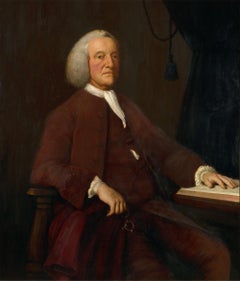
Portrait of Benjamin Franklin attributed to Mason Chamberlin
By Mason Chamberlin
Located in New Orleans, LA
Attributed to Mason Chamberlin 1729-1787 British Portrait of Benjamin Franklin No visible signature Oil on canvas This exceptional portrait of Benjamin Franklin represents one of ...
Category

Academic 18th Century Paintings

Materials

Canvas, Oil

18th Century Oil on Canvas Italian Antique Landscape with Ruins Painting, 1790
Located in Vicoforte, IT
A great painting from the second half of the 18th century. Oil on canvas artwork depicting a splendid Italian landscape in Arcadian style, a pastoral scene set in the Roman countrysi...
Category

18th Century Paintings

Materials

Canvas, Oil

"Fantasy Landscape"
By Bartolomeo Pedon
Located in Edinburgh, GB
Bartolomeo Pedon (1665-1732) – Fantasy Landscape Medium: Oil on canvas Dimensions: 84 x 121 cm (unframed), 98 x 132 cm (framed) Provenance: Private collection This captivating oil ...
Category

Realist 18th Century Paintings

Materials

Canvas, Oil

Read More