18th Century Art
to
652
3,367
1,086
383
249
303
Overall Width
to
Overall Height
to
7,588
21,252
159,984
232,637
1,975
2,253
4,938
6,451
5,878
13,380
19,902
25,849
18,458
13,796
5,389
2,290
1,168
42
15
8
2
1
2,728
2,170
370
3,161
1,571
1,078
898
847
703
611
437
416
380
319
266
257
186
169
157
145
129
124
120
3,183
1,234
903
772
465
160
127
88
81
72
1,239
3,069
3,406
830
Period: 18th Century
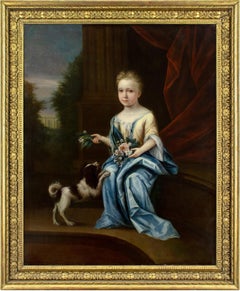
18thC English School Portrait Of A Young Lady Seated With Spaniel, Oil Painting
By John Verelst
Located in Cheltenham, GB
US buyers pay no import tariffs on this item.
This large early 18th-century full-length portrait depicts a seated young lady before a classical column and distant country house. It ...
Category
Rococo 18th Century Art
Materials
Canvas, Oil
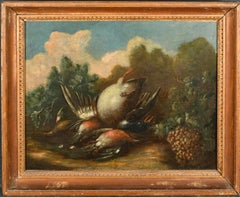
Fine 18th Century Old Master Oil Painting Dead Game in Landscape
Located in Cirencester, Gloucestershire
Still Life with Dead Birds
18th Century Italian School
oil painting on canvas, framed
framed: 17 x 21 inches
canvas: 14 x 18 inches
provenance: private collec...
Category
Old Masters 18th Century Art
Materials
Oil

$2,028 Sale Price
20% Off
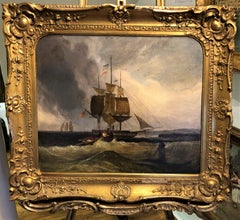
FINE ORIGINAL ANTIQUE 18th CENTURY BRITISH OLD MASTER OIL PAINTING MAN O WAR
Located in Ferndown, GB
FINE ORIGINAL ANTIQUE 18th CENTURY BRITISH OLD MASTER OIL PAINTING MAN O WAR IN HARBOUR
Description
Good Condition canvas but very old with some browning in places (see picture).
C...
Category
Realist 18th Century Art
Materials
Oil
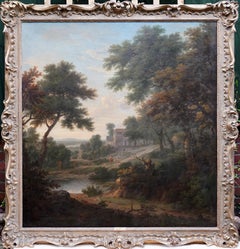
Manor House with Cottages - British 18thC Old Master art oil painting VG prov.
Located in Hagley, England
This stunning British Old Master landscape oil painting, with excellent provenance, is by George Lambert. Lambert was a pioneer of British landscape in art for its own sake. Painted in 1744, the painting is entitled View of a Manor House and Cottages in Elizabeth Einberg's 63rd volume of the Walpole Society 2001 and is described as follows: In the foreground a road emerges from a wood to cross a ford and then leads up the hill to the right, towards a manor house seemingly built into the remains of a medieval or Tudor edifice. The main track, crowded with sheep and rustic figures, passes the massive square gateposts lower down the hill on the left. Further to the left is a thatched cottage with smoke coming out the chimney. In the distance is a wide coastal view. The main buildings, which are in the dead centre of the composition, represent almost certainly an as yet unidentified English view.
The colouring and detail in the trees and foliage are superb. This is an excellent Old Master oil painting by one of the all time great British landscape artists with extensive provenance.
Signed and dated 1744 lower left on rock in black.
Provenance. Elizabeth Einberg, “Catalogue Raisonnè of the works of George Lambert” The Annual Volume of the Walpole Society, 2001 Vol. 63, page 149 no P1744, fig.71.
Antonacci Efrati Antichità Rome Gallery.
Burden sale, Parke Bernet, New York, 20-21, April 1938 (376 repr.)
Robert E. Peters, Sotheby Parke Bernet, New York, March 1975 (41 repr.)
Lit. Schnackenburg 1995, pp 83-84, cat. no.14 fig 13.
Condition. Oil on canvas, 54 inches by 52 inches and in good condition.
Frame. Housed in an ornate gilt frame, 64 inches by 62 inches and in good condition.
George Lambert (1700-1765) was an English landscape artist and theatre scene painter. With Richard Wilson he is recognised as a pioneer of British landscape in art, for its own sake. Lambert was born in Kent and studied art under Warner Hassells and John Wootton, soon attracting attention by the quality of his landscape painting. He painted many large and fine landscapes in the style of Gaspar Poussin and Salvator Rosa. Many of his landscapes were finely engraved by François Vivares, James Mason (1710–1785), and others, including a set of views of Plymouth and Mount Edgcumbe (painted conjointly with Samuel Scott), a view of Saltwood Castle in Kent, another of Dover, and a landscape presented to the Foundling Hospital in London. Lambert also obtained a great reputation as a scene-painter, working at first for the Lincoln's Inn Fields Theatre, in London, under John Rich. When Rich moved to Covent Garden Theatre, Lambert secured the assistance of Amigoni, and together they produced scenery of far higher quality than any previously executed. Lambert was a man of jovial temperament and shrewd wit, and frequently spent his evenings at work in his painting-loft at Covent Garden Theatre, to which men of note in the fashionable or theatrical world resorted to share his supper of a beef-steak, freshly cooked on the spot. Out of these meetings arose the well-known "Beefsteak Club" which long maintained a high social reputation. Most of Lambert's scene-paintings unfortunately perished when Covent Garden Theatre was destroyed by fire in 1808. Lambert was a friend of William Hogarth and a member of the jovial society that met at 'Old Slaughter's' Tavern in St Martin's Lane. In 1755 he was one of the committee of artists who proposed a royal academy of arts in London. He was a member of the Society of Artists of Great Britain, exhibited with them in 1761 and the three following years, and during the same period contributed to the Academy exhibitions. In 1765 he and other members seceded and formed the Incorporated Society of Artists of Great Britain, of which he was elected the first president. In conjunction with Samuel Scott, Lambert painted a series of Indian views for the old East India House in Leadenhall Street. He also etched two prints after Salvator Rosa. Lambert was associated in 1735 with George Vertue, Hogarth, and John Pine (engraver, 1660–1756) in obtaining a bill from parliament securing artists a copyright on their works. Lambert's portraits were painted by Thomas Hudson, John Vanderbank (engraved in mezzotint by John Faber the younger in 1727, and in line by H. Robinson and others), and Hogarth. Lambert's most famous painting is "A view of Box Hill, Surrey" (1733) which depicts a well-known beauty spot south of London. Hogarth considered Lambert a rival to the famous French landscape painter Claude Lorrain (1600–1682) with respect to his use of soft light to unify the scene in this painting. Though he never visited Italy he was inspired by the classical tradition of landscape painting. Lambert died on 30 November 1765 at his home on the Piazza in Covent Garden. His pupils included John Inigo Richards...
Category
Old Masters 18th Century Art
Materials
Oil
$153,487 Sale Price
20% Off
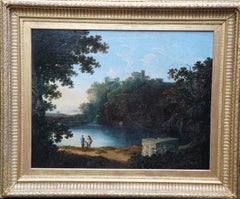
Capriccio Tivoli Landscape - British 18th century Old Master art oil painting
Located in Hagley, England
This lovely British 18th century Old Master landscape oil painting is attributed to circle of Richard Wilson. Painted circa 1770 it is a Capriccio Tivoli landscape with figures by a ...
Category
Old Masters 18th Century Art
Materials
Oil
$13,156 Sale Price
20% Off
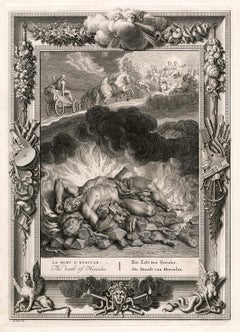
The Death of Hercules
from
The Temple of the Muses
— 18th Century Engraving
Located in Myrtle Beach, SC
Bernard Picart, 'The Death of Hercules' from 'The Temple of the Muses', engraving, 1730. Signed in the plate, lower left. Titled in French, English, German, and Dutch. A superb, rich...
Category
Baroque 18th Century Art
Materials
Engraving
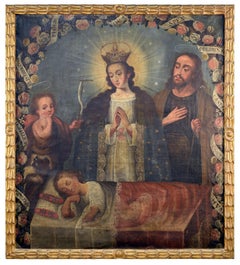
Latin American Colonial Cuzco School Holy Family with Sleeping Child
Located in New York, NY
Beautiful 18th Century oil on canvas Holy Family with Sleeping Child, Cuzco School. Good condition overall. Unsigned.
Category
18th Century Art
Materials
Canvas, Oil
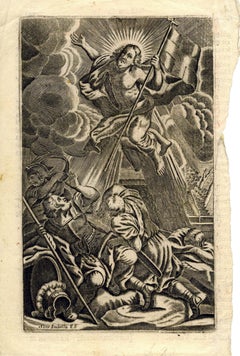
The Resurrection
Located in Middletown, NY
A rare and beautiful 18th century bible illustration by a female artist.
Engraving on cream laid paper with a "V" shaped watermark, 8 x 4 5/8 inch...
Category
Italian School 18th Century Art
Materials
Laid Paper, Engraving
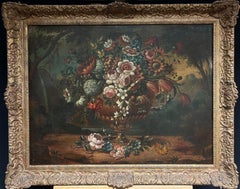
18th-Century Baroque Oil Still Life Flowers Floral Arrangement in an Ornate Urn
Located in Cirencester, Gloucestershire
Elaborate Floral Arrangement
French artist, 18th Century
oil on canvas, framed
Framed: 27 x 34 inches
Canvas: 22 x 29 inches
Provenance: private collection, England
Condition: very...
Category
Baroque 18th Century Art
Materials
Oil, Canvas
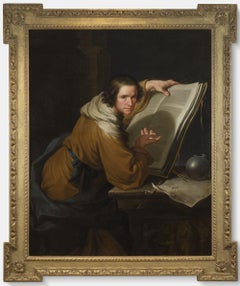
Sir Charles Frederick
Located in London, GB
Oil on canvas
50 x 40 inches; 127 x 101.6 cm
Framed dimensions: 151.5 x 127 cm
Inscribed on plinth: ‘VOTIS X ET XX’
Not signed
Painted c.1748
Collections:
Christie’s London, 23rd December 1954, lot.272;
J. Singer;
Somerville
Simpson Ltd, London, by 1985;
The Matthiesen Gallery, London;
Richard Feigen, New York;
Matthew Rutenberg, New York to 2019;
Lowell Libson and Jonny Yarker Ltd.
Literature:
Stella Rudolph, La Pittura del’ 700 a Roma, Milan, 1983, reproduced pl.133;
Jacob Simon, Handel, a celebration of his life and times 1685-1759, exh. cat. London, (National Portrait Gallery), 1985, no.196;
Catherine Whistler, Baroque
Later Paintings in the Ashmolean Museum, London, 2016, pp.102-105, reproduced p.104
Exhibited:
London, National Portrait Gallery, Handel, a celebration of his life and times 1685-1759, 1985-86, no.196, reproduced p.198
This powerful portrait of the antiquarian and courtier Sir Charles Frederick was completed in 1748 by the Roman painter Andrea Casali. Frederick, as comptroller of the royal laboratory, one of the ‘great officers’ of the Board of Ordinance at Woolwich, had just been responsible for the famed pyrotechnic display celebrating the Peace of Aix-la-Chapelle: the so-called ‘Royal Fireworks’ for which George Frederick Handel composed music. Casali’s portrait pays tribute to Frederick’s role as comptroller of the royal laboratory, showing him with a firing diagram and mortar, it also points to Frederick’s interests as an antiquarian with the inclusion of antique relief. Casali had first met Frederick in Rome in 1738, where he had painted his portrait, Frederick subsequently encouraged Casali to travel to London. This probably accounts for the unusual format; rather than a modern man of science, Casali casts Frederick as an alchemist bent on some mystic discovery, as such, it is one of the most unusual portraits of the period.
Andrea Casali was a pupil of Sebastiano Conca and then of Francesco Trevisani, who recommended him to the Spanish court in 1736. He enjoyed some success in Rome as a painter of frescoes and altarpieces, notably a large cycle of Scenes from the Life of St Dominic at the cloister of S. Sisto Vecchio, for which he was made a Knight of the Golden Spur in 1729. Casali began painting Grand Tourist portraits in Rome around 1738. His first portrait of Sir Charles Frederick is dated that year Ashmolean Museum, Oxford), it casts Frederick as a focused scholar, showing him seated at an elaborately carved console table, hard at work. In common with other Grand Tour portraiture of the period, Casali includes a famous Roman landmark in the background, in this case the façade of the Pantheon. Horace Walpole noted that it was thanks to the encouragement of ‘Mr Frederick and his Friends at Rome’ that Casali travelled to London in 1741.
Charles Frederick was a fascinating Augustan polymath. Born at Fort St George, Madras, where his father, Sir Thomas Frederick, was governor, he successively matriculated at New College, Oxford (1725), was called to the Middle Temple (1728), became a Fellow of the Royal Society (1731) and Director of the Society of Antiquaries (1735). His interests were wide ranging. Frederick was an amateur architect, he designed the monument to Lucy, Lady Lyttleton, in Hagley Church and the monument to Thomas Miller, bishop of Waterford, in Highclere church, Hampshire. He was a numismatist and collector of antiquities, as well as an amateur scientist. It was in the last capacity that he was appointed comptroller of the royal laboratory at Woolwich and clerk of the deliveries in 1746, this was the most junior of the ‘great officers’ who made up the membership of the royal Board of Ordnance. This appointment came through the good offices of the master-general of the Ordnance, a fellow antiquarian, John, 2nd Duke of Montagu. As comptroller, Frederick was responsible for the fireworks celebration of the treaty of Aix-la-Chapelle, for which Handel composed his celebrated music. As Horace Walpole wrote to his cousin, Henry Seymour Conway:
‘Charles Frederick has turned all his virtu into fireworks, and, by his influence with the Ordnance has prepared such a spectacle for the proclamation of Peace as is to surpass all its predecessors of bouncing memory. It is to open with a concert of fifteen hundred hands, and conclude with so many thousand crackers all set to music, that all the men killed in the war are to be wakened with a crash, as if it was the day of judgement, and fall a-dancing, like the troops in the Rehearsal. I wish you could see him making squibs of his papillotes, and bronzed over with a patina of gunpowder, and talking himself still hoarser on the superiority that his fireworks will have over the Roman naumachia.’
Performed in Green Park, the fireworks were mounted on a temporary structure designed by the architect Giovanni Niccolò Servandoni decorated by Adrea Soldi and Casali.
Casali’s second portrait of Frederick was completed following the success of the firework display. In this remarkable image, we discover Frederick at work, dressed in almost monastic garb, pouring over an impossibly large tome propped on an antique altar. The altar is identifiable as a Roman relief depicting Victory writing on a shield, the original is at Villa Medici in Rome, but was engraved by Pietro Santi Bartoli...
Category
Old Masters 18th Century Art
Materials
Canvas, Oil
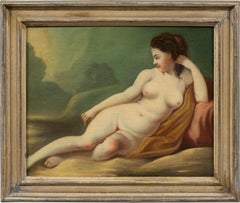
Rococò Italian painter - 18th/19th century figure painting - Nude female
Located in Varmo, IT
Italian painter (18th-19th century) - Female nude.
44 x 54 cm unframed, 54 x 64 cm with frame.
Ancient oil painting on canvas mounted on a panel, in a carved and gilded wooden fram...
Category
Rococo 18th Century Art
Materials
Canvas, Oil
$1,783 Sale Price
40% Off
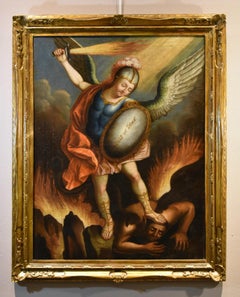
Saint Michael Archangel López 18th Century Paint Oil on canvas Spanish school
Located in Riva del Garda, IT
18th-century Spanish Colonial School
Attributed to Juan Pedro López (Caracas, Venezuela, 1724 - 1787)
Saint Michael the Archangel
Oil on canvas
91 x...
Category
Old Masters 18th Century Art
Materials
Oil
$8,283 Sale Price
20% Off
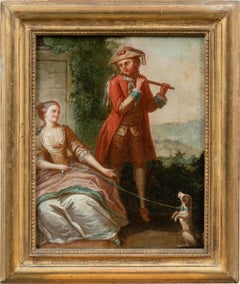
Rococò French painter - 18th century figure painting - Flute player dog
Located in Varmo, IT
French painter (18th century) - Flute player and dog.
43.5 x 35 cm without frame, 54 x 45 cm with frame.
Antique oil painting on canvas, in a carved and gilded wooden frame (not si...
Category
Rococo 18th Century Art
Materials
Canvas, Oil
$1,783 Sale Price
40% Off
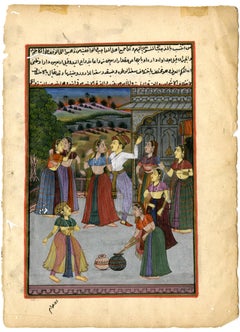
Mughal School, 18th century – Emperor Jahangir dancing with his harem attendees
Located in Middletown, NY
A joyful scene of lighthearted merriment in the palace of Jangahir Mahal Agra
Circa 1750. Gouache and ink with gold heightening on light weight cream laid paper, 8 1/4 x 6 inches (2...
Category
Rajput 18th Century Art
Materials
Gold
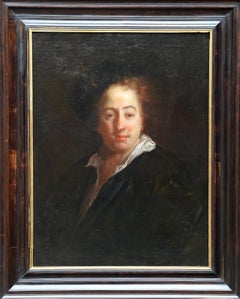
Self Portrait of Artist - French 18th century art Old Master oil painting
Located in Hagley, England
This simply superb French Old Master self portrait oil painting is attributed to portrait artist Alexis Grimou. Painted circa 1720 it is a bust length standing portrait of the artist...
Category
Old Masters 18th Century Art
Materials
Oil
$13,156 Sale Price
20% Off
18th century antique portrait Edmund Hoyle Circle of James Latham, Edmund Hoyle
Located in York, GB
18th century Bust portrait of a gentleman in a blue coat with gold buttons (Said to be Edmund Hoyle, inventor of Whist) oil on canvas
circle of James Latham. Housed in a gilt frame the size overall is 71 x 84 cm (28 x 33 inches approx) whilst the painting is
56 x 69 cm ( 22 x 27 inches approx) unsigned
The overall condition is very good having had some restoration. The painting has been relined, cleaned and re varnished.
There has been some strengthening/overpainting. There is a Rectangular patch repair along lower edge, centre, reverse approximately 5 x 7cm with associated retouching to front,all essentially done sympathetically.
some fine stable craquelure throughout. Some minor self coloured losses to frame. None of the above detracting from
a very attractive portrait.
Edmond Hoyle
Edmond Hoyle
English card game authority, "the Father of whist"
Born 1672 England Died 29 August 1769 (aged 96–97)
London, England
Edmond Hoyle (1672 – 29 August 1769)[1] was a writer best known for his works on the rules and play of card games. The phrase "according to Hoyle" came into the language as a reflection of his generally perceived authority on the subject
James Latham
James Latham was born in Thurles, County Tipperary, Ireland and possibly related to the family of Lathams of Meldrum and Ballysheehan. After some practice of his art, Latham studied for an academic year in Antwerp (1724–25) where he became a Master of the Guild of St Luke. He returned to Dublin by 1725, and may have visited England in the 1740s, as the influence of Joseph Highmore, as well as Charles Jervas and William Hogarth, is evident in his work of this period. Anthony Pasquin memorably dubbed Latham "Ireland's Van Dyck". Latham died in Dublin on 26 January 1747.
Several of James Latham's portraits are in the National Gallery of Ireland collection in Dublin; one is of the famous MP Charles Tottenham (1694–1758) of New Ross, Co. Wexford, "Tottenham in his Boots" (Cat. No.411) and a second is a portrait of Bishop...
Category
Old Masters 18th Century Art
Materials
Oil
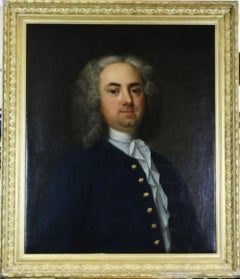
$3,837 Sale Price
20% Off
La Dune Christian Wilhelm Ernst Dietrich (cercle) 1712 - 1774
Located in GOUVIEUX, FR
Tableau ancien – Paysage nocturne animé
Attribué au cercle de Christian Wilhelm Ernst Dietrich (1712–1774)
Huile sur toile – Dimensions : 63 x 48 cm
Cadre en bois doré d’époque, rich...
Category
Old Masters 18th Century Art
Materials
Oil
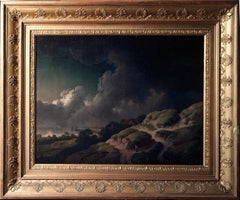
Tree with moth, caterpillar..., Plate 39, Metamorphosis Insectorum Surinamensium
Located in Middletown, NY
Metamorphosis Insectorum Surinamensium, Plate No. 39; Unidentified tree with moth, caterpillar and pupa.
The Netherlands: 1705....
Category
Naturalistic 18th Century Art
Materials
Watercolor, Engraving
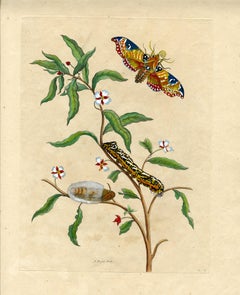
Old Master Style Inn Interior with three men drinking around a table
Located in Woodbury, CT
This 18th-century painting, attributed to Christian Wilhelm Ernst Dietrich (1712–1774), depicts a rustic inn interior, a subject frequently explored by Dutch and German genre painter...
Category
Old Masters 18th Century Art
Materials
Wood, Oil
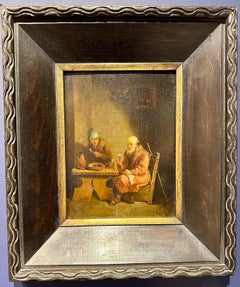
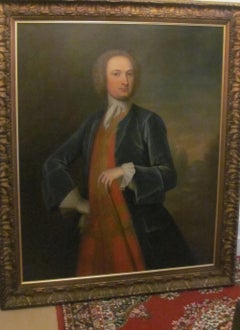
large 18th century portrait gentleman oil on canvas
Located in York, GB
A fine, imposing 18th century portrait of an unknown aristocrat,housed in a gilt frame
The artist is also unidentified but certainly a talented hand, in the circle of one of the fine old masters of the period. Unsigned
The size overall is 148 x 121 cm whilst the painting is 128 x 101 cm
In overall good condition the frame at the bottom has bowed slightly
The painting has been checked whilst being cleaned and has not been affected in any way .
SHIPPING
Free delivery to mainland uk ,worldwide shipping available please email for quote
Delivery usually within 14 working days, insured
please provide telephone/email details for courier.
All taxes/customs etc to be paid for by purchaser.
RETURNS (The Consumer Contracts Regulations) Whilst we are sure that you will be extremely happy with your purchase,
if for any reason you are not, then you are entitled to return the item to us for a refund.
For all purchases made
you are entitled to return the item(s) for a period of up to 14 days
following receipt by you or a representative indicated by you.
Please contact us to confirm that you are returning the item(s)
and the reason for doing so.
Upon receipt of the item(s) we will refund the purchase price via your original payment method...
Category
Old Masters 18th Century Art
Materials
Oil
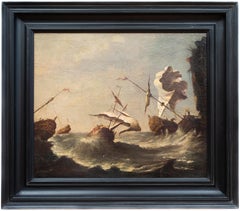
$7,537 Sale Price
44% Off
Shipping in Stormy Waters, Attributed to Italian Artist Francesco Guardi
By Francesco Guardi
Located in Stockholm, SE
The splendour of the tragic sea
Francesco Guardi and maritime painting in Venetian art
No Venetian painter was a stranger to the sea. After all, Venice was not only one of the most prominent ports of the Mediterranean, but indeed a city literally submerged in the ocean from time to time. Curiously however, the famous Venetian school of painting showed little interest in maritime motifs, favouring scenes from the iconic architecture of the city rather than seascapes. That is why this painting is a particularly interesting window into not only the painter Francesco Guardi himself – but to the significance of the element of water in art history, in absence as well as in the centre of attention.
Whether it be calm, sunny days with stunning views of the palaces alongside the canals of Venice or – more rarely – stormy shipwrecking tragedies at sea, water as a unifying element is integral to the works of painter Francesco Guardi (1712–1793). During his lifetime, Venetian art saw many of its greatest triumphs with names like Tiepolo or Canaletto gaining international recognition and firmly establishing Venice as one of the most vibrant artistic communities of Europe. While the city itself already in the 18th century was something of an early tourist spot where aristocrats and high society visited on their grand tour or travels, the artists too contributed to the fame and their work spread the image of Venice as the city of romance and leisure to an international audience, many of whom could never visit in person.
Still today, the iconic image of Venice with its whimsical array of palaces, churches and other historic buildings is much influenced by these artists, many of whom have stood the test of time like very well and remain some of the most beloved in all of art history. It was not primarily subtility, intellectual meanings or moral ideals that the Venetian art tried to capture; instead it was the sheer vibrancy of life and the fast-paced city with crumbling palaces and festive people that made this atmosphere so special. Of course, Venice could count painters in most genres among its residents, from portraiture to religious motifs, history painting and much else. Still, it is the Vedutas and views of the city that seems to have etched itself into our memory more than anything else, not least in the tradition of Canaletto who was perhaps the undisputed master of all Venetian painters.
Born into his profession, Francesco lived and breathed painting all his life. His father, the painter Domenico Guardi (1678–1716) died when Francesco was just a small child, yet both he and his brothers Niccolò and Gian Antonio continued in their fathers’ footsteps. The Guardi family belonged to the nobility and originated from the mountainous area of Trentino, not far from the Alps. The brothers worked together on more challenging commissions and supported each other in the manner typical of family workshops or networks of artists. Their sister Maria Cecilia married no other than the artist Giovanni Battista Tiepolo himself, linking the family to the most renowned Venetian name of the time. During almost a decade, Guardi worked in the studio of Michele Giovanni Marieschi, sometimes simply known as Michiel, a painted similar in both style and motif. Canaletto is, however, the artist Guardi is most often compared to since they shared a mutual fascination for depicting the architecture and cityscape of Venice.
During the course of his career, Guardi tried his hand in many different genres. He was as swift in painting landscapes, Vedutas of Venice, sacred motifs, interiors and architectural compositions as he was in a number of other motifs. His style is typical of the Venetian school but also distinct and personal once we look a little closer. There is an absolute certainty in the composition, the choice of which sometimes feels like that of a carefully calculated photograph – yet it is also very painterly, in the best sense of the word: fluid, bold, sensitive and full of character. The brushwork is rapid, intense, seemingly careless and extraordinarily minute at the same time; fresh and planned in a very enjoyable mixture. His interiors often capture the breath-taking spacious glamour of the palaces and all their exquisite decor. He usually constructed the motif through remarkably simple, almost spontaneous yet intuitively precise strokes and shapes. The result was a festive, high-spirited atmospheric quality, far away from the sterile and exact likeness that other painters fell victim to when trying to copy Canaletto.
The painting here has nothing of the city of Venice in it. On the contrary, we seem to be transported far away into the solitary ocean, with no architecture, nothing to hold on to – only the roaring sea and the dangerous cliffs upon which the ships are just moments away from being crushed upon. It is a maritime composition evoking both Flemish and Italian precursors, in the proud tradition of maritime painting that for centuries formed a crucial part of our visual culture.
This genre of painting is today curiously overlooked, compared to how esteemed and meaningful it was when our relationship to the sea was far more natural than it is today. When both people and goods travelled by water, and many nations and cities – Venice among them – depended entirely on sea fare, the existential connection to the ocean was much more natural and integrated into the imagination. The schools and traditions of maritime art are as manifold as there are countries connected to the sea, and all reflect the need to process the dangers and wonders of the ocean.
It could symbolize opportunity, the exciting prospects of a new countries and adventures, prospering trade, beautiful scenery as well as war and tragedy, loss of life, danger and doom. To say that water is ambivalent in nature is an understatement, and these many layers were something that artists explored in the most wondrous ways. Perhaps it takes a bit more time for the modern eye to identify the different nuances and qualities of historic maritime paintings, they may on first impression seem hard to differentiate from each other. But when allowing these motifs to unfold and tell stories of the sea in both fiction and reality – or somewhere in between – we are awarded with an understanding of how the oceans truly built our world.
In Guardi’s interpretation, we see an almost theatrically arranged shipwrecking scene. No less than five ships are depicted right in the moment of utter disaster. Caught in a violent storm, the waves have driven them to a shore of sharp cliffs and if not swallowed by the waves, crushing against the cliffs seems to be the only outcome. The large wooden ships are impressively decorated with elaborate sculpture, and in fact relics already during Guardi’s lifetime. They are in fact typical of Dutch and Flemish 17th century ships, giving us a clue to where he got the inspiration from. Guardi must have seen examples of Flemish maritime art, that made him curious about these particular motifs. One is reminded of Flemish painters like Willem van de Velde and Ludolf Backhuysen, and this very painting has indeed been mistakenly attributed to Matthieu van Plattenberg...
Category
Old Masters 18th Century Art
Materials
Canvas, Oil
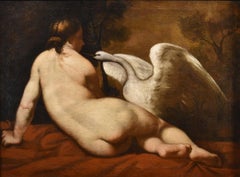
Leda Swan Mythological Paint oil on canvas French Painter 18th Century
Located in Riva del Garda, IT
French painter of the late 18th-early 19th century
Leda and the Swan (Literary source: Metamorphoses by Ovid, Book VI)
Oil on canvas 95 x 126 cm Framed 109 x 142 cm
This c...
Category
Old Masters 18th Century Art
Materials
Oil
$11,621 Sale Price
20% Off
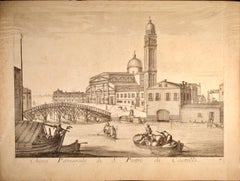
Venice: 18th Century View of the Basilica of S. Pietro di Castello by Lovisa
Located in Alamo, CA
This is an 18th century etching of the Patriarchal Church or Basilica of S. Pietro di Castello in Venice entitled "Chiesa Patriarcale di S. Pietro di Castello" by Domenico Lovisa, fi...
Category
18th Century Art
Materials
Etching
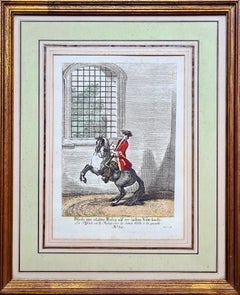
Hand Coloured 18th Century Copper engraving from "Small Riding School" No 32
Located in Cotignac, FR
Mid 18th century hand coloured copper plate engraving of an equestrian subject by Johann Elias Ridinger. Initial signed 'in the plate' bottom right. Presented in a fine gilt wood fra...
Category
Rococo 18th Century Art
Materials
Ink, Watercolor
Antique Italian painter - 18th century figure painting
Located in Varmo, IT
Italian painter (18th century) - Chrono.
90.5 x 106 cm.
Antique oil painting on canvas, without frame (not signed).
Condition report: Lined canvas. Good state of conservation of t...
Category
Old Masters 18th Century Art
Materials
Canvas, Oil
$4,754 Sale Price
20% Off
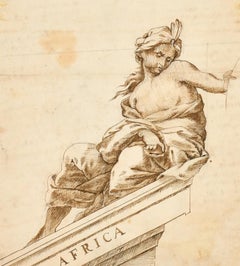
Fine 1700
s Italian Old Master Ink
Wash Drawing Roman Allegorical Africa
Located in Cirencester, Gloucestershire
'Africa'
Italian School, 18th century
ink and wash drawing on paper, framed within a light oak wood frame (behind glass)
image size: 10.5 x 7 inches
overall framed: 17 x 13 inches
co...
Category
Old Masters 18th Century Art
Materials
Ink, Watercolor, Archival Paper
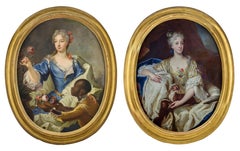
A very Important pair of Rococo 18th Century French portraits
Located in New York, NY
Very good condition with original canvas, stretcher and frame.
Category
Rococo 18th Century Art
Materials
Canvas, Oil
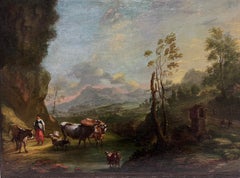
Fine 18th Century Italian Old Master Oil Painting Berghers with Animals Sunset
Located in Cirencester, Gloucestershire
The Close of Day
Italian School, early 18th century
oil on canvas, unframed
canvas: 17 x 22.5 inches
provenance: private collection, France
condition: very good and sound condition
Category
Old Masters 18th Century Art
Materials
Oil, Canvas
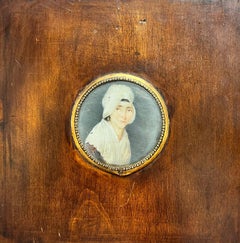
Antique French Miniature Portrait of Lady Biographical details with painting
Located in Cirencester, Gloucestershire
Miniature Portrait
French School, late 18th/ early 19th century
framed: 5.5 x 5.5 inches
board: 2 x 2 inches
provenance: private collection, France
condition: very good and sound c...
Category
Old Masters 18th Century Art
Materials
Watercolor
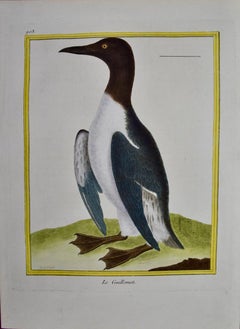
Black Guillemot: An 18th Century Hand-colored Bird Engraving by Martinet
Located in Alamo, CA
This is a hand-colored engraving of a black guillemot bird entitled "Le Guillemot" by Francois Nicolas Martinet, plate 903 from 'Histoire Naturelle des Oiseaux' in association with G...
Category
Naturalistic 18th Century Art
Materials
Engraving
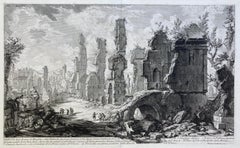
VEDUTA DEGLI AVANZI De’MAUSOLEI E DELLE FABBRICHE…...
Located in Santa Monica, CA
GIOVANNI BATTISTA PIRANESI (Italian 1720-1778)
VEDUTA DEGLI AVANZI De’MAUSOLEI E DELLE FABBRICHE…c 1756 (Hind 83; Focillon 20.A.293; Giesecke 116; Wilton-E...
Category
Old Masters 18th Century Art
Materials
Etching
$2,000 Sale Price
20% Off
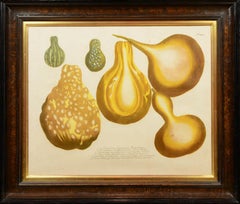
Set of Four Gourds
Located in London, London
Set of 4 double-page mezzotint engravings, printed in colour and finished by hand.
[Published: H. Lentz and H.G. Neubauer, Regensburg, 1737].
An attractive collection of fine plates...
Category
Naturalistic 18th Century Art
Materials
Handmade Paper, Engraving, Mezzotint
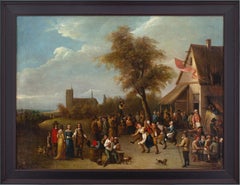
18th-Century Oil Painting, Country Celebration (After David Teniers The Younger)
By David Teniers the Younger
Located in Cheltenham, GB
This charming mid-18th-century oil painting depicts a veritable array of revellers holding a feast by a tavern. It’s after a work by Flemish artist, David Teniers the Younger (1610-1...
Category
18th Century Art
Materials
Canvas, Oil
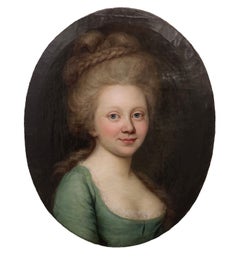
Portrait signed Darbes, 1781. Russo-Baltic period, Riga address on the reverse
Located in Firenze, IT
Portrait signed Darbes, 1781. Russo-Baltic period, Riga address on the reverse
Oil on canvas, oval format, 61 × 46.5 cm
Signed on the left and dated 1781, this portrait is by Joseph...
Category
Rococo 18th Century Art
Materials
Canvas, Oil
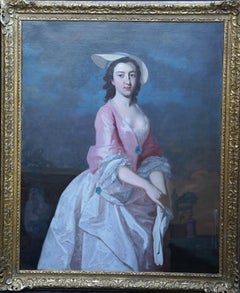
Portrait of a Lady with White Gloves - British 18thC art Old Master oil painting
Located in Hagley, England
This charming British 18th century Old Master portrait oil painting is attributed to noted portrait artist Thomas Hudson. Hudson was most prolific between 1740 and 1760 and, from 174...
Category
Old Masters 18th Century Art
Materials
Oil
$37,275 Sale Price
20% Off
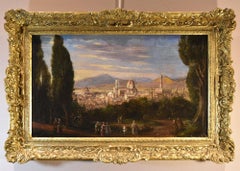
Landscape View Florence 18/19th Century Paint Tuscany school Oil on canvas Italy
Located in Riva del Garda, IT
18th-19th century landscape painter
Panoramic view of Florence
Oil on canvas 32 x 51 cm In gilded frame 42 x 63 cm
Hampel: Paintings 19th/20th Jahrhundert, 21.02.2024, lot 99...
Category
Romantic 18th Century Art
Materials
Oil
$6,057 Sale Price
20% Off
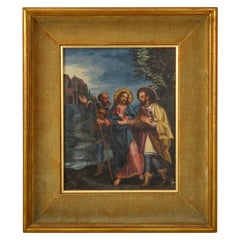
18th Century Italian Old Master Tempera on Panel Painting "Jesus Road to Emmaus"
Located in Portland, OR
An important 18th century Italian Old Master tempera on copper panel Baroque painting, "The Road to Emmaus", circa 1700.
The painting represents the early resurrection biblical story...
Category
Baroque 18th Century Art
Materials
Copper
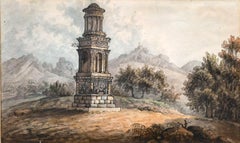
18th CENTURY FRENCH GRAND TOUR WATERCOLOUR - ROMAN MONUMENT ST. REMY PROVENCE
Located in Cirencester, Gloucestershire
Artist/ School: French School, 18th century
Title: The Roman Ruins at St. Remy de Provence, France. Inscribed verso to the frame: ‘Ruins at Roman Monument...
Category
Old Masters 18th Century Art
Materials
Watercolor
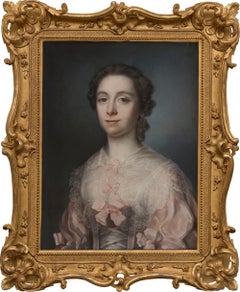
A Pair of Portraits
Located in London, GB
Pastel on paper stretched on canvas
Each 23 ¼ x 19 ¾ inches; 59 x 50 cm
Framed dimensions, each: 83 x 67.5 cm
Both signed ‘F. Cotes Px 1751’
Collections:
Captain Penton;
Christie’...
Category
Old Masters 18th Century Art
Materials
Canvas, Paper, Pastel
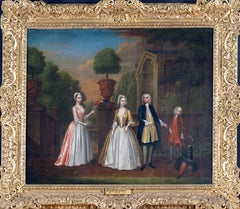
A group portrait of the Southwell family with a Negro Page and Macaw
Located in Taunton, GB
A group portrait of the Southwell family on the terrace with a negro page and Macaw.
Oil on canvas
Signed and dated 1731
Canvas size 25 x 30 ¼ inches 63.5 x 77 cms
Frame exterior 32 x 37 ¼ inches 81 x 94.5 cms
This evocative family portrait offers a glimpse into the life of 18th Century English nobility.
The Southwells are a noble family whose roots go back to the early 17th Century. In 1776 Edward Southwell III was granted the Barony of de Clifford (a title in abeyance at the time), and the line extends to today, with the 28th Baron de Clifford sitting in the House of Lords.
Charles Phillips (1708-1747) was a leading portraitist of his time, having painted many noble and royal portraits. Two of his paintings are part of the Royal Collection Trust.
In this portrait, signed and dated 1731, we see Edward Southwell Sr (1671-1730) and his family on the grounds of their Estate, Kings Weston House near Bristol. On the far left is Mrs. Helena Le Grand (Edward’s sister). Next to her is Mrs. Southwell (Edward’s second wife, the first having died in 1709). On the right is Edward Southwell Jr (1705-1755), Edward’s son by his first marriage and next to him a “Negro Page” (in the euphemistic words of an old label on the painting; more on him below.)
Phillips has arranged the figures in an arc, anchoring the composition. The arc stretches from Mrs. Le Grand’s red dress on the left, through the colourful parrot, onward to the heads of Mr. and Mrs. Southwell, down again to the younger Southwell and finishing on the right with the enslaved boy.
As Edward Sr. died in 1730, this must be a posthumous portrait, making it especially poignant. (Presumably Phillips used another portrait to capture his likeness.)
One can imagine the late Edward’s family looking affectionately at the portrait, remembering the time spent with him on the grounds of Kings Weston House. Southwell stands between wife and son, eyes directed toward one, hand pointed toward the other, symbolically balancing the needs of both.
Devoted husband and father? Perhaps. Slave-owner as well. English noble families of the 18th Century often had financial and practical connections with the slave trade. The Southwells themselves were granted a tract of land by the Crown in 1766, which Edward Southwell III (1738-1777) – the son of the younger Southwell in the portrait – developed with partners into a plantation worked by slave labour.
This portrait shows us that slave ownership was not always a matter for distant colonies. This young boy, likely deprived of his freedom from birth (born to enslaved parents), was made to serve the Southwell family in their home. We see him here sitting half cross-legged, wearing a house servant’s uniform and a faint smile. He gaze is turned upward; at first we think is looking at his Master, then we realise he must be in fact enjoying the sight of the parrot eating from the hand of his Master’s sister. Phillips has placed him on the ground, beneath the rest of the family in pose as in station.
Yet here he is in this portrait just the same, as if he were a member of the family. Was the family fond of him? Was he a playmate of the younger Southwell? Or was he simply there in the Garden that day to serve them their refreshments? The answers to these questions must remain unanswered, known only to the sitters frozen in time by Phillips’ paintbrush. Three centuries later we are fortunate to have this portrait as a snapshot of 18th Century England, both its nobility and its baseness.
Charles Philips, the son of a portraitist, likely acquired his artistic skills from his father. He specialised primarily in painting small portraits and conversation pieces. George Vertue observed that in painting small figure portraits and conversation scenes, Philips gained significant recognition and patronage among fashionable circles, including members of the Royal Family. In 1732, he produced conversation works for the Duchess of Portland and the Duke of Somerset. During the 1730s, his conversation pieces became increasingly complex, featuring more numerous subjects engaged in a greater variety of activities.
Following the precedent set by contemporaries such as Philippe Mercier and William Hogarth, both prominent painters of small-scale conversation pieces, Philips transitioned into the more lucrative field of portrait painting later in the decade. His career peaked in 1737 when he painted full-length portraits of the Prince and Princess of Wales. The Prince of Wales was renowned for his patronage of the arts, particularly towards immigrant artists including Jacopo Amigoni and Philippe Mercier, who were principal influences on Philips.
Two of Philips' paintings in the Royal Collection depict fashionable London clubs not recorded elsewhere. The first, from 1732, shows Frederick...
Category
18th Century Art
Materials
Oil
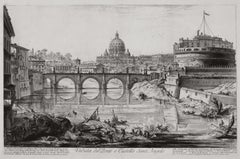
The Ponte and Castel S. Angelo (Veduta del Ponte e Castello Sant
Angelo)
Located in Fairlawn, OH
The Ponte and Castel S. Angelo
Veduta del Ponte e Castello Sant' Angelo
Etching, 1754
Signed in the plate lower right above the caption
From: Vedute di Roma
A proper Roman printing w...
Category
Old Masters 18th Century Art
Materials
Etching
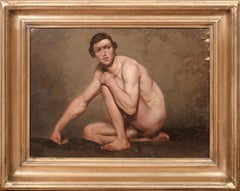
Portrait Of A Nude Male, 18th Century School of Jacques-Louis David (1748-1825)
Located in Blackwater, GB
Portrait Of A Nude Male, 18th Century
School of Jacques-Louis David (1748-1825)
18th Century French School portrait of a nude male, oil on paper laid to board. Excellent quality an...
Category
18th Century Art
Materials
Paper, Oil
$2,569 Sale Price
25% Off
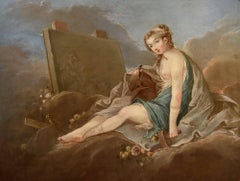
Allegory Sculpture Trémolières Paint 18th Century Oil on canvas Old master
Located in Riva del Garda, IT
Pierre Charles Trémolières (Cholet, 1703 - Paris, 1739)
Allegory of Sculpture
Oil on canvas 112 x 86 cm In original lacquered frame 122 x 95 cm
Work accompanied by expertise ...
Category
Old Masters 18th Century Art
Materials
Oil
$10,508 Sale Price
20% Off
Large 1730
s French Aristocratic Portrait of Noble Lady Beautiful Silk Clothing
Located in Cirencester, Gloucestershire
Portrait of a Noble Lady
French, circa 1730-1750 period
Circle of Philippe Mercier (French, 1689-1760) unsigned
oil on canvas, framed
framed: 38 x 30 inches
canvas: 36 x 28 inches
P...
Category
Rococo 18th Century Art
Materials
Oil
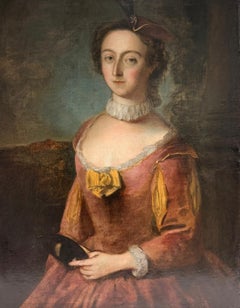
Portrait of an Old Bearded Man With a Black Cap
Located in Stockholm, SE
We are pleased to offer a captivating portrait, most likely painted in the late 18th century, attributed to an artist within the circle of Christian Wilhelm Ernst Dietrich. This oil ...
Category
Old Masters 18th Century Art
Materials
Oil, Wood Panel
Ancient Persian Miniature: Men with Scimitar - Probably 18/19th Century
Located in Roma, IT
Image dimensions: 15 X 10 cm.
This Persian Miniature scene of men with scimitar is a unique precious original painting on the front with handwriting...
Category
18th Century Art
Materials
Ink, Tempera

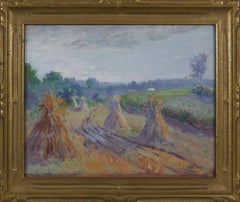
Soft Shadows, Late 19th/Early 20th Century Landscape w/ Hay, Harvest Season
Located in Beachwood, OH
William H. Kinnicutt (American, 1865-1934)
Soft Shadows
Oil on canvas
Signed lower right
16 x 20 inches
20.5 x 24.5 inches, framed
See condition in photos
William H. Kinnicutt was a...
Category
American Impressionist 18th Century Art
Materials
Oil
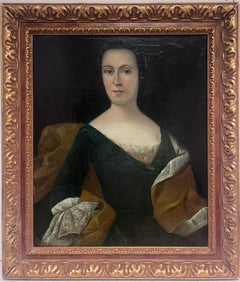
Large 18th Century European Oil Painting Portrait of Noble Lady Lace Collars
Located in Cirencester, Gloucestershire
Portrait of a Noble Lady
European School, 18th century
oil on canvas, framed
framed: 37.5 inches
canvas: 30 x 24.5 inches
provenance: private collection, France
condition: very good ...
Category
Old Masters 18th Century Art
Materials
Oil, Canvas
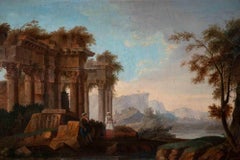
Ancient Ruins - Oil Painting by Vinzenz Fischer - Late 18th Century
Located in Roma, IT
Ancient monuments is an original painting realized by Vinzenz Fischer (1729-1810) in the late 18th century.
Mixed colored oil painting on canvas.
This beautiful artwork represents ...
Category
18th Century Art
Materials
Oil
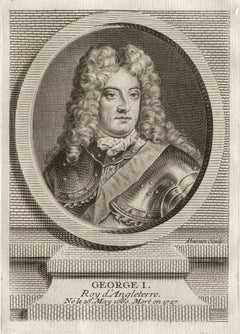
George I, King of England, royalty portrait engraving, circa 1780
Located in Melbourne, Victoria
'George I'
Copper-line engraving by Pierre Francois Basan (1723-1797) after Founan.
Basan (1723-1797) was a French engraver and publisher.
George I (1660-1727) was King of Great Britain and Ireland from 1 August 1714 until his death, and ruler of Hanover in the Holy Roman Empire...
Category
Renaissance 18th Century Art
Materials
Engraving
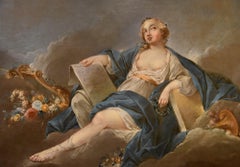
Allegory Poetry Trémolières Paint 18th Century OIl on canvas Old master France
Located in Riva del Garda, IT
Pierre Charles Trémolières (Cholet, 1703 - Paris, 1739)
Allegory of Poetry (the Muse Calliope)
Oil on canvas (86 x 112 cm - In original lacquered frames 122 x 95 cm.)
Work ac...
Category
Old Masters 18th Century Art
Materials
Oil
$10,508 Sale Price
20% Off
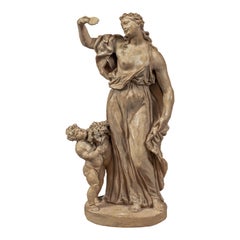
Rococò Italian artist - 18th century terracotta figure sculpture - Allegory
Located in Varmo, IT
Terracotta sculpture - Allegory of Vanity. Italy, 18th century.
17 x 12 x 42 cm high.
Made entirely of terracotta. It depicts a bare-breasted girl holding a mirror and a cherub wit...
Category
Rococo 18th Century Art
Materials
Terracotta
Antique oil paining, A laughing man with an upturned glass, Dutch golden age
Located in DEVENTER, NL
Anonymous, 18th century
Inspired by a painting by Petrus Staverenus (1610/1612 – 1654-07-28/1664-07-28) from a series of Five Senses
'Taste: A laughing man...
Category
Old Masters 18th Century Art
Materials
Canvas, Oil
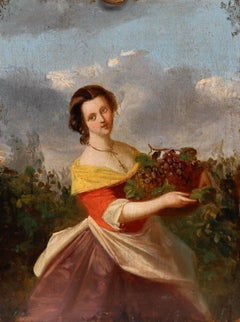
18th Century Oil - Grape Gatherer
Located in Corsham, GB
A charming oil study depicting a woman gathering grape vines in a field. Part of a pair of oils depicting women harvesting. Unsigned. On panel.
Category
18th Century Art
Materials
Oil
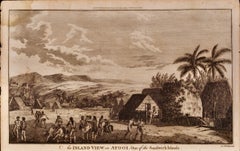
A View of Kauai, Hawaii as Seen by Captain Cook: An Original 18th C. Engraving
By John Webber
Located in Alamo, CA
"An Inland View in Atooi, One of the Sandwich Islands (Kauai, Hawaii)" is an original 18th century engraving from a drawing by John Webber (1751-1793), who was the artist who accompa...
Category
18th Century Art
Materials
Engraving
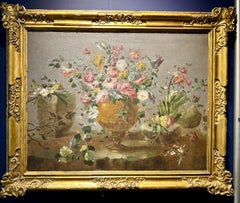
18th century Venetian Still life of flowers, classical vase on a marble ledge
Located in Woodbury, CT
The Pseudo-Guardi was an unidentified Venetian painter from the 18th or early 19th century who closely imitated the style of Francesco Guardi (1712–1793), one of the great Venetian v...
Category
18th Century Art
Materials
Canvas, Oil
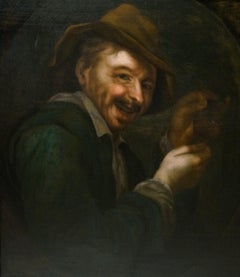
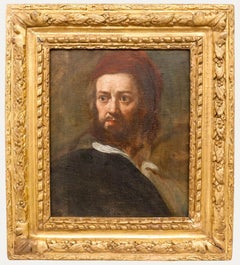
18th Century Oil - Bust of A Man in Red Cap
Located in Corsham, GB
A striking portrait featuring a figure in 17th-century dress. He sports a red cap and dark clothing against a shadowy background, masterfully capturing the subject's intense gaze and...
Category
18th Century Art
Materials
Oil
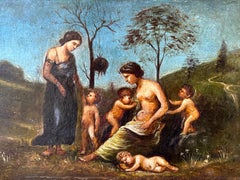
Very Fine 18th Century Italian Oil Painting Nude Figures in Classical Landscape
Located in Cirencester, Gloucestershire
Classical Figures in Ancient Landscape
Italian School, 18th century
oil on panel,
painting: 9 x 12 inches
provenance: private collection, Paris
condition: very good and sound condition
Category
Baroque 18th Century Art
Materials
Oil
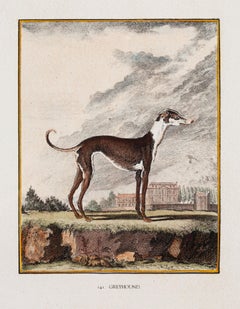
Greyhound
Located in Columbia, MO
Greyhound
1773-1802
Engraving
14 x 10 inches
Framed: 24 x 21 inches
Category
Naturalistic 18th Century Art
Materials
Engraving
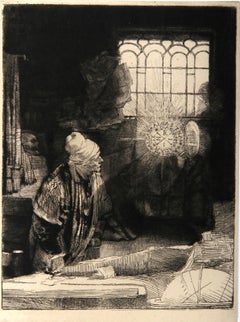
Faust (B270), Heliogravure on Laid Paper by Rembrandt van Rijn
Located in Long Island City, NY
Rembrandt van Rijn, After by Amand Durand, Dutch (1606 - 1669) - Faust (B270), Year: 1878 (of original 1652), Medium: Heliogravure on Laid Paper, Size: 8.5 x 6.5 in. (21.59 x 16.5...
Category
18th Century Art
Materials
Etching