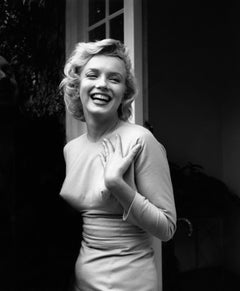
1950s Art
to
2,562
6,302
2,826
2,148
1,313
759
Overall Width
to
Overall Height
to
7,589
21,255
159,982
232,629
1,975
2,253
4,938
6,451
5,878
13,380
19,902
25,849
18,458
13,795
5,389
5,105
898
607
602
525
445
183
126
93
74
63
9
6
7,216
4,081
1,845
6,841
3,615
2,526
1,941
1,749
1,240
1,000
958
724
715
704
650
536
498
489
468
458
450
434
395
3,725
3,098
2,157
1,744
1,236
2,377
357
189
188
186
2,094
4,222
7,731
5,192
Period: 1950s
Figure
Located in OPOLE, PL
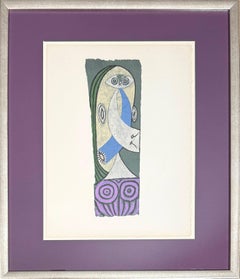
Pablo Picasso (1881-1973) - Figure
Lithograph from 1957.
The edition no. 211/275.
With Arches watermark.
Dimensions of work: 44.5 x 33.5 cm.
Publisher: Fernand Mourlot Éditeur, ...
Category
Modern 1950s Art
Materials
Lithograph

$1,426 Sale Price
20% Off
1950
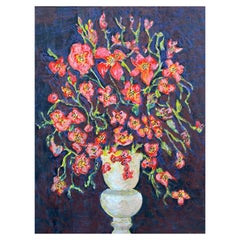
s French Modernist/ Cubist Signed Painting, Beautiful Flowers in Vase
Located in Cirencester, Gloucestershire
French landscape
by Bernard Labbe (French mid 20th century)
original watercolour/ gouache painting on artist paper, mounted on board
size: 19 x 15 inches
condition: very good and rea...
Category
1950s Art
Materials
Acrylic
$324 Sale Price
40% Off
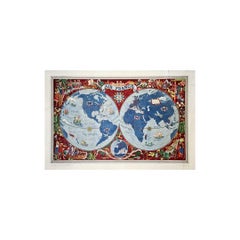
1953 Lucien Boucher Original poster for Air France - Planisphere - Aviation
Located in PARIS, FR
Lucien Boucher 🇫🇷 (1889 - 1971) was a French painter, engraver, poster artist and draftsman.
He studied ceramics at the Sèvres school before being sent to the front in 1914.
Taken ...
Category
1950s Art
Materials
Linen, Paper, Lithograph
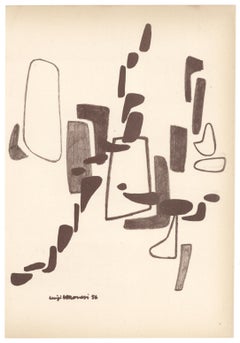
original lithograph
Located in Henderson, NV
Medium: original lithograph. Printed in 1956 for the second volume (1956-57) of the very rare Documenti d'Arte d'Oggi, published in Milan by Groupe Espace. Size: 12 1/2 x 8 1/2 inche...
Category
1950s Art
Materials
Lithograph
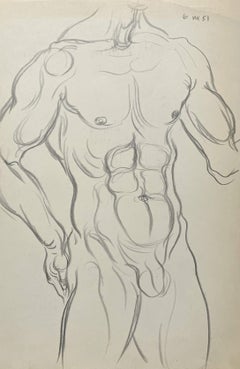
Vintage Male Erotica 1951 Figure Study Drawing by Chicago Artist Harold Haydon
Located in Chicago, IL
A Very Finely Drawn Mid-Century Modern Figure Study of a Standing Young Male Nude Model by Notable Chicago Modern Artist, Harold Haydon (Am. 1909-1994). A well executed studio figu...
Category
American Modern 1950s Art
Materials
Graphite, Paper
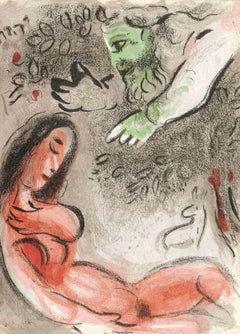
Marc Chagall, Eve Cursed by God, from Drawings for the Bible, 1956
By Marc Chagall
Located in Southampton, NY
This exquisite lithograph by Marc Chagall (1887–1985), titled Eve maudite par Dieu (Eve Cursed by God), from Marc Chagall, Dessins Pour La Bible (Drawings for the Bible), Verve: Revue Artistique et Litteraire, Vol. VIII, No. 33–34, originates from the September 1956 issue published by Editions de la revue Verve, Paris, under the direction of Teriade, Editeur, Paris, and printed by Mourlot Freres, Paris, 1956. This emotionally charged composition depicts the moment of divine judgment following the fall of man, capturing both the sorrow and the spiritual gravity of Eve’s curse. Through his luminous lines and expressive symbolism, Chagall transforms this ancient scene into a universal meditation on loss, forgiveness, and the eternal bond between humanity and the divine. The work exemplifies Chagall’s mastery of merging sacred narrative and human emotion, rendered with poetic tenderness and transcendent light. The piece forms part of Chagall’s celebrated series of lithographs and drawings created for Dessins Pour La Bible, a monumental project uniting art, scripture, and mysticism in one of the artist’s most important achievements.
Executed as a lithograph on velin du Marais paper, this work measures 14 x 10.5 inches (35.56 x 26.67 cm). Unsigned and unnumbered as issued. The edition exemplifies the superb craftsmanship of the Mourlot Freres atelier, renowned for its collaborations with the greatest modern masters of the 20th century.
Artwork Details:
Artist: Marc Chagall (1887–1985)
Title: Eve maudite par Dieu (Eve Cursed by God), from Marc Chagall, Dessins Pour La Bible (Drawings for the Bible), Verve: Revue Artistique et Litteraire, Vol. VIII, No. 33–34, September 1956
Medium: Lithograph on velin du Marais paper
Dimensions: 14 x 10.5 inches (35.56 x 26.67 cm)
Inscription: Unsigned and unnumbered as issued
Date: 1956
Publisher: Editions de la revue Verve, Paris, under the direction of Teriade, Editeur, Paris
Printer: Mourlot Freres, Paris
Catalogue raisonne references: Cain, Julien, and Fernand Mourlot. Chagall Lithographe. Andre Sauret, Editeur, 1960, illustrations 117–46. Cramer, Patrick, and Meret Meyer. Marc Chagall: Catalogue Raisonne Des Livres Illustrés. P. Cramer ed., 1995, illustration 25.
Condition: Well preserved, consistent with age and medium
Provenance: From Marc Chagall, Dessins Pour La Bible (Drawings for the Bible), Verve: Revue Artistique et Litteraire, Vol. VIII, No. 33–34, published by Editions de la revue Verve, Paris, 1956
Notes:
Excerpted from the album (translated from French), This double issue of Verve is dedicated to the full reproduction in heliogravure of the one hundred-five plates etched by Marc Chagall, between 1930 and 1955, for the illustration of the Bible. The artist composed especially for the present work, sixteen lithographs in color and twelve in black, as well as the cover and the title page. This volume was completed and printed on September 10, 1956, by the Master Printers Draeger Freres for heliogravure, and by Mourlot Freres for lithography.
About the Publication:
Marc Chagall, Dessins Pour La Bible (Drawings for the Bible), published as Verve Vol. VIII, No. 33–34 in September 1956, represents one of the crowning achievements of Chagall’s lifelong dialogue with the sacred. Conceived and directed by the visionary publisher Teriade and printed by the master lithographers Mourlot Freres, the issue features thirty-four color lithographs and numerous black-and-white drawings inspired by biblical figures and stories. Chagall’s works for this edition unite text and image in a luminous meditation on divine creation, moral struggle, and spiritual renewal, imbued with his signature dreamlike symbolism and radiant color. Produced in postwar Paris, this landmark publication reaffirmed the enduring union of art and faith, establishing Dessins Pour La Bible as one of the most important illustrated works of the 20th century.
About the Artist:
Marc Chagall (1887–1985) was a Belarus-born French painter, printmaker, and designer whose visionary imagination, radiant color, and deeply poetic symbolism made him one of the most beloved and influential artists of the 20th century. Rooted in the imagery of his Jewish heritage and the memories of his childhood in Vitebsk, Chagall’s art wove together themes of faith, love, folklore, and fantasy with a dreamlike modern sensibility. His unique style—merging elements of Cubism, Fauvism, Expressionism, and Surrealism—defied categorization, transforming ordinary scenes into lyrical meditations on memory and emotion. Influenced by Russian icon painting, medieval religious art, and the modern innovations of artists such as Pablo Picasso, Henri Matisse, and Georges Braque, Chagall developed a profoundly personal visual language filled with floating figures, vibrant animals, musicians, and lovers that symbolized the transcendent power of imagination and love. During his early years in Paris, he became an integral part of the Ecole de Paris circle, forming friendships with Amedeo Modigliani, Fernand Leger, and Sonia Delaunay, and his creative spirit resonated with that of his peers and successors—Alexander Calder, Alberto Giacometti, Salvador Dali, Joan Miro, Wassily Kandinsky, Marcel Duchamp, and Man Ray—artists who, like Chagall, sought to push the boundaries of perception, emotion, and form. Over a prolific career that spanned painting, printmaking, stained glass, ceramics, and stage design, Chagall brought an unparalleled poetic sensibility to modern art, infusing even the most abstract subjects with human warmth and spiritual depth. His works are held in the most prestigious museums around the world, including the Museum of Modern Art, the Centre Pompidou, the Tate, and the Guggenheim, where they continue to inspire generations of artists and collectors. The highest price ever paid for a Marc Chagall artwork is approximately $28.5 million USD, achieved in 2017 at Sotheby’s New York for Les Amoureux (1928).
Marc Chagall Eve...
Category
Expressionist 1950s Art
Materials
Lithograph
$956 Sale Price
20% Off
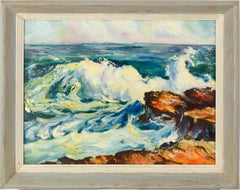
Northern California Coastal Santa Cruz County Ocean Waves 1950 Plein Air
Located in Soquel, CA
Northern California Coastal Santa Cruz County Ocean Waves 1950 Plein Air
Santa Cruz Sandstone Cliffs and crashing waves near Natural Bridges circa 1950 by an unknown California artis...
Category
American Impressionist 1950s Art
Materials
Masonite, Oil
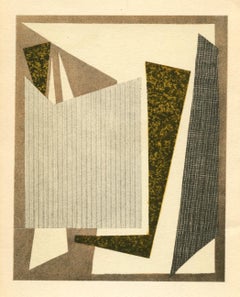
"Collage au papier ondule blanc" pochoir
Located in Henderson, NV
Medium: pochoir (after the watercolor and collage). Printed in 1957 at the atelier of Daniel Jacomet and published in Paris by the Galerie Berggruen for a rare catalogue. Image size:...
Category
1950s Art
Materials
Lithograph, Stencil
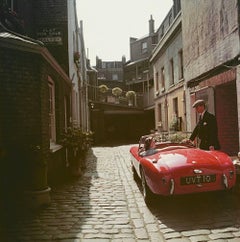
Slim Aarons
Sports Car Couple
(Slim Aarons Estate Edition)
By Slim Aarons
Located in Los Angeles, CA
1955: John Bryant with his AC sports car in Kinnerton Place, London SW1, Printed Later. His passenger is Margaret McAulay.
40 x 40 inches
$3950
30 x 30 inches
$3350
20 x 20 inches
$3000
Complimentary dealer shipping to your framer, worldwide.
Undercurrent Projects is pleased to offer this vibrant photograph, printed by the Slim Aarons estate. It is part of the estate's only official limited run, of 150. Estate stamp embossed on recto, hand numbered in ink on recto, with certificate of authenticity from the estate (not a secondary gallery licensing from the estate).
Increasingly heralded for his influence, Slim Aarons (1916-2006) made a career out of photographing "attractive people doing attractive things in attractive places." Aarons is known for his iconic images of Hollywood glamour and luxurious people, places and lifestyles.
Undercurrent Projects offers premium quality photographic prints from the Slim Aarons Archive, owned and housed by Getty Images. All photographs are printed and authorized by the Getty Images Gallery, London. Photographs are printed utilizing the original transparency held at the archive source.
Aarons began his career as a combat photographer in World War II. Though he earned a Purple Heart for his service, he declared that combat had taught him that the only beach worth landing on was decorated with beautiful people enjoying themselves in the sun.
Slim Aarons is noted for his documentation of the Beautiful People over 50 years, encompassing high society, celebrity, aristocracy, and the jet set. He was born and raised in New York City and New Jersey and later New Hampshire. He took up photography as a teenager. At the age of eighteen, he enlisted in the U. S. Army and was later appointed official photographer at the United States Military Academy at West Point. During World War II he served as an army combat photographer for Yank magazine in Europe, North Africa, and the Middle East. After the war he became a freelance photojournalist, first based in Hollywood, then Rome, then New York. His photographs appeared in many magazines, including Life, Holiday, Town & Country, Look, Venture, and Travel & Leisure. His first book A Wonderful Time (1974) is considered a classic.
* We are pleased to offer the entire archive of the Slim Aarons Estate, offering the official Slim Aarons Estate Edition (only offered in this edition of 150). Please contact us for additional photographs from Slim Aarons *
Slide show includes a close-up of the Slim Aarons estate's stamp.
The Slim Aarons Estate has released the limited Estate edition as a Lambda print, which is a modern c-type prints. They have chosen Lambda prints for their sharpness, clarity, colour saturation and quality, compared to archival inkjet prints. Lambda printing gives true continuous tone.
Internal: Slim Aarons Vintage Sport, Vintage Car photography, Sports Car Photography
Category
Realist 1950s Art
Materials
Lambda
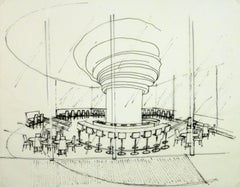
Architectural Drawing of Bar
Located in Houston, TX
Mid-century French pen and ink drawing on transfer paper of a round bar and lounge, circa 1950.
Original artwork on paper displayed on a white mat with a gold border. Archival plas...
Category
1950s Art
Materials
Pen
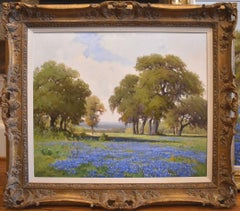
"Lazy Days Blues" TEXAS BLUEBONNETS, NICE LARGER SIZE LANDSCAPE CIRCA 1950
Located in San Antonio, TX
Porfirio Salinas
(1910-1973)
San Antonio Artist
Image Size: 25 x 30
Frame Size: 34 x 39
Medium: Oil on Canvas
Circa 1950
"Lazy Day Blues" Texas Bluebonnet
Biography
Porfirio Salinas (1910-1973)
Porfirio Salinas was a self-taught artist who painted landscapes of Central Texas with an emphasis on the vast bluebonnet fields that grow there in the springtime. Born in 1910 in Bastrop, Texas, he attended public schools in San Antonio. He also observed works in progress by the director of the San Antonio Art School, Jose Arpa, as well as landscape painter, Robert Wood. Wood is said to have paid Salinas five dollars a picture to paint bluebonnets because "he hated to paint bluebonnets". Salinas served in the military from 1943 to 1945. Although he was assigned to Fort Sam Houston, he was allowed to live at home. At the fort, Colonel Telesphor Gottchalk assigned him to paint murals for the officer's lounge and various other projects, and Salinas continued to be able to paint during his entire conscripted period. Even before he achieved notoriety among galleries, dealers, and museums, Salinas was widely followed and appreciated by many Texans, including former President Lyndon B. Johnson, who may be considered responsible for launching Salinas popularity beyond the boundaries of Texas. In 1973, Texas capital, Austin, honored Salinas for having "done much to bring the culture of Mexico and Texas closer together with his paintings". Salinas died in April 1973 in San Antonio, Texas.
From
the years of the Great Depression through President Lyndon Johnson's
Great Society of the 1960s, Texan Porfirio Salinas (1910-1973) remained
one of the Lone Star State's most popular artists. Today, his works
remain popular with Texas collectors and those who love landscapes of
the beautiful "Hill Country" that lies in the center of the
state. One of the first Mexican American painters to become
widely recognized for his art, Salinas was a favorite of President
Lyndon Johnson and his wife, Lady Bird Johnson, as well as of Sam
Rayburn, the longest-serving Speaker of the House of Representatives,
and Texas Governor John Connelly. In fact, President Johnson was so
enamored with his Salinas paintings that the artist will forever be
associated with America's first Texas-born President. Works by Porfirio
Salinas is in a number of museum collections, grace the halls of the
Texas State Capitol and the Governor's Mansion in Austin, and are
included in virtually every major private collection of Early Texas Art.
Porfirio
Salinas was born on November 6, 1910, near the small town of Bastrop,
Texas, about thirty miles from Austin. His father, Porfirio G. Salinas
(1881-1967), and his mother, Clara G. Chavez, struggled to make a
hardscrabble living as tenant farmers, but eventually were forced to
give up farming. The family moved to San Antonio, where Salinas' father
was able to get a job working as a laborer for the railroad, but the
scenic area around Bastrop, with its pine trees and the wide expanse of
the Rio Grande River, would forever remain a touchstone for the artist.
For the rest of his life, Salinas and his brothers went back frequently
to visit their grandmother in her little farmhouse. When in Bastrop,
Porfirio painted on the banks of the Rio Grande or in the groves of
pine trees. The Salinas family was close-knit, and Porfirio was the
middle child of five children, so he had an older brother and sister as
well as a younger brother and sister. His mother was a native of
Mexico, so throughout his childhood the family made the long drive to
Mexico to visit Clara Salinas' family.
As a child growing up in
the bi-lingual section of San Antonio, Salinas drew and painted
incessantly and by the time he was ten, he was already producing work
that was mature enough to sell to his schoolteachers. Many years later
in an article in the New York Times he was described as a "boy whose
textbooks were seldom opened and whose sketchbook was never closed."
Instead of studying, the young artist spent his spare time watching
artists paint in and around San Antonio. As an aspiring painter,
Salinas was fortunate to grow up in the historic city, which had the
most active art scene in Texas. It was his exposure to older,
professional painters that encouraged the precocious young painter to
leave school early in order to help his family and pursue a career as a
professional artist, despite his father's inability to see art as a
career with any future for his son.
When Salinas was about
fifteen he came to know the artist Robert W. Wood (1889-1979). He met
Wood while he was employed in an art supply store and he soon began to
work as an assistant to the English-born painter, who had moved from
Portland to San Antonio in 1924. Although the diminutive Englishman was
already an established professional artist, he did not have a great
deal of formal art training and so he was then studying with the
academically trained Spanish painter Jose Arpa (1858-1952) in order to
augment his knowledge and give his work a more polished look. Salinas
was an eager young man, and while working in Wood's downtown San
Antonio studio he learned to stretch canvases, frame paintings and to
sketch in larger compositions from small plein-air studies for the
English artist. He began to accompany Wood and Arpa to the hills
outside San Antonio, where they painted small Plein-air studies of
fields of blue lupin - the state flower, the famous "Bluebonnets" of
Texas - in the springtime and scenes of the gnarled Red Oaks as they
changed color in the fall. He was soon assisting Wood in the tedious
work of painting the tiny blue flowers that collectors wanted to see in
the landscapes they purchased of central Texas. According to a
1972 newspaper story, "Legend has it that one day in the 1920s artist
Robert Wood decided he could not bear to paint another bluebonnet in
one of his landscapes. He hired young Porfirio Salinas to paint
them in for him at five dollars a painting." Whether this story is
accurate or apocryphal isn't clear, but the ambitious and independent
young Salinas wasn't destined to be anyone's assistant for very long.
The
formative event of Porfirio Salinas' teenage years was the Texas
Wildflower Competitive Exhibitions, a Roaring-Twenties dream of the
eccentric oilman Edgar B. Davis (1873-1951). These competitive shows of
paintings of wildflowers and Texas life were mounted in San Antonio
from 1927 to 1929. Held at the newly opened Witte Museum each spring,
the exhibition featured large cash prizes donated by the philanthropic
Davis, which were an inducement for artists to travel from all over the
United States to paint in the Hill Country of Texas. The "Davis
Competitions," as they were known, helped to cement San Antonio's
reputation as an art center, a legacy that remains with the "River
City" today. The shows generated a great deal of excitement in the
area, helping to make celebrities of the some of the artists who had
already settled there and encouraging others to make San Antonio their
home. Over the three years that the wildflower competitions were held,
more than 300 paintings were exhibited, and many thousands of viewers
saw the paintings at the Witte Museum and on tours throughout the state
and in New York. Each year Davis would generously purchase the winning
paintings and then donate them to the San Antonio Art League. Young
Porfirio Salinas would have been able to not only watch his two mentors
- Robert W. Wood and Jose Arpa - paint the works that they entered in
the Davis Competitions, he would have been able to see Arpa take
several of the major prizes, receiving the judge's accolades for
"Verbena," "Cactus Flower" and "Picking Cotton," works that are still
on view at the San Antonio Art League Museum today. Unfortunately,
Davis eventually put his donations to work in other charitable
endeavors, bringing to an end the wildflower events, but only after
they inspired Salinas and other young painters and had helped to make
wildflower paintings the most sought-after subject for traditionalist
Texas collectors.
In 1930, when he was only twenty, Salinas
hung out a shingle and began to paint professionally, augmenting the
sales of his easel paintings with what little business he could garner
by painting signs for local concerns. It was a struggle for the young
artist to make a living, as the effects of the Great Depression were
settling in. His early works are very similar to those of Robert
Wood's, both in subject matter and treatment. Salinas did small
paintings of Bluebonnets for the tourists who visited San Antonio to
see the famous Alamo as well as paintings of the Texas missions...
Category
Impressionist 1950s Art
Materials
Oil
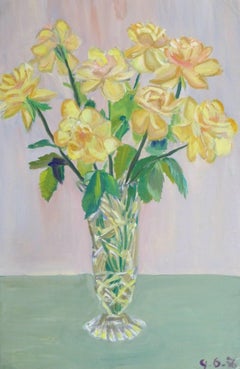
French Painting - Bouquet of Roses, 1956
Located in Houston, TX
French painting depicting a softly-colored bouquet of yellow roses by artist Louisette Poirier, 1956. Dated lower right.
Original artwork on paper displayed on a white mat with a go...
Category
1950s Art
Materials
Acrylic
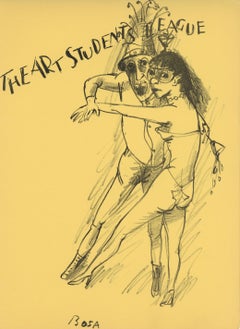
original lithograph
By Louis Bosa
Located in Henderson, NV
Medium: original lithograph. This lithograph is from the rare 1951 "Improvisations" portfolio, published by the Artists Equity Association of New York on the occasion of the 1951 Spr...
Category
1950s Art
Materials
Lithograph
Large Signed Cubist Abstract Framed Colorful Abstract Expressionist Oil Painting
Located in Buffalo, NY
Antique American modernist abstract oil painting. Oil on canvas. Framed. Signed.
Category
Modern 1950s Art
Materials
Canvas, Oil

$796 Sale Price
20% Off
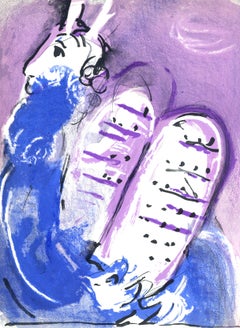
Marc Chagall, Moses II, from Drawings for the Bible, 1956
By Marc Chagall
Located in Southampton, NY
This exquisite lithograph by Marc Chagall (1887–1985), titled Moise II (Moses II), from Marc Chagall, Dessins Pour La Bible (Drawings for the Bible), Verve: Revue Artistique et Litte...
Category
Expressionist 1950s Art
Materials
Lithograph
$956 Sale Price
20% Off
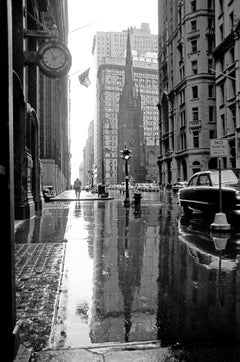
On Broadway, New York, 1955 Framed Edition Contemporary Black
White Photograph
Located in Brussels, BE
Artwork #1 / 5 sold in perfect condition printed on baryta heavyweight paper & framed (black metal border)
From the collection called "Art 2014", format 30x42 cm. SERIES OF 5 PRINTS + 2 AP
Artwork printed later on fine art papers later (2014) from black & white negatives processed in 1962
During the 15 year period in which Fabrizio La Torre...
Category
Photorealist 1950s Art
Materials
Archival Pigment
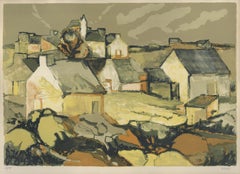
Houses and Church on the French Countryside (quaint village scene)
Located in New Orleans, LA
A rare color lithograph by late French artist, Éliane Thiollier. Edition of 275, certificate of authentication is provided. Minor acid staining from the old mat.
Éliane Thiollier s...
Category
Contemporary 1950s Art
Materials
Lithograph
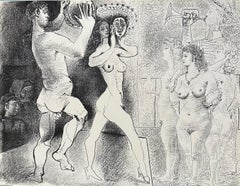
Pablo Picasso, The Rehearsal, original lithograph, hand signed
Located in Chatsworth, CA
Pablo Picasso
The Rehearsal, (La Répétition)
Original Lithograph, (litho crayon composition on transfer paper, transferred to stone)
Hand signed in ink in lower left corner
Numbered ...
Category
Modern 1950s Art
Materials
Lithograph
lithograph
Located in Henderson, NV
Medium: lithograph (after the painting). Printed in 1959 for the art revue Derriere le Miroir (issue number 115) and published in Paris by Maeght. Sheet size: 15 x 10 3/4 inches (378...
Category
1950s Art
Materials
Lithograph

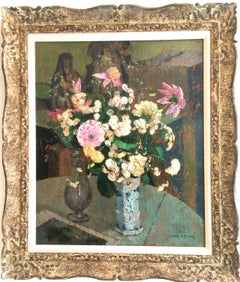
French Still Life With Flowers Bouquet
By Edith Faucon
Located in Lake Worth Beach, FL
French Still Life With Flowers Bouquet
Oil on masonite, signed, original vintage frame.
Edith Faucon was born on May 24 in 1919 in Carentan France. She owes her artistic training f...
Category
Post-Impressionist 1950s Art
Materials
Masonite, Oil
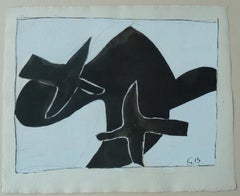
Black Birds - Lithograph - 1956
Located in Paris, IDF
(after) Georges Braque, (1882 - 1963)
Les Oiseaux Noirs (Black Birds), 1956
Lithograph
Printed in Jacomet workshop
On vellum 40 x 48 cm (c. 16 x 19 inc...
Category
Cubist 1950s Art
Materials
Lithograph
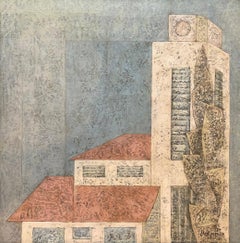
Untitled (Highrise)
Located in Los Angeles, CA
Untitled (Highrise), 1954, oil on canvas, signed and dated lower right, 20 x 20 inches, presented in its original frame
Karl Benjamin was a California-based artist who is best known...
Category
Hard-Edge 1950s Art
Materials
Canvas, Oil
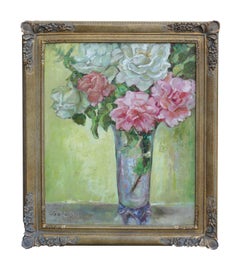
Mid Century Pink
White Roses in Crystal Vase Still-Life
Located in Soquel, CA
Delicate mid century still-life of white and pink roses in crystal vase with a soft, lime green background by listed California artist Helen Mae Enoch Gleiforst (American, 1903-1997)...
Category
American Impressionist 1950s Art
Materials
Canvas, Oil
$1,560 Sale Price
20% Off
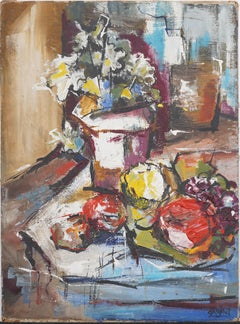
Antique American Modernist Abstract Expressionist Still Life Signed Oil Painting
Located in Buffalo, NY
Antique American modernist still life oil painting. Oil on canvas. Signed. Measuring: 16 by 22 inches overall. In excellent original condition. Excellent condition, ready to hang a...
Category
Modern 1950s Art
Materials
Canvas, Oil
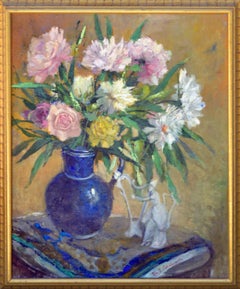
Mid Century Roses with Blue Vase Still Life
By Virgi Cokelberghs
Located in Soquel, CA
Wonderful still life of roses by Virginie (Virgi) Cokelberghs (Belgian, 1893-1967). Presented in a giltwood frame. Signed "Virgi Cokelberghs" lower right. Image size, 23.5"H x 19.25"W.
Studied with Constant Montald...
Category
Impressionist 1950s Art
Materials
Canvas, Oil
$1,516 Sale Price
20% Off
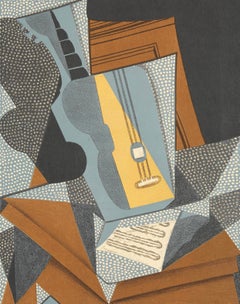
Juan Gris, Guitar, from Au Soleil du Plafond, 1955 (after)
By Juan Gris
Located in Southampton, NY
This exquisite lithograph after Juan Gris (1887–1927), titled Guitare (Guitar), from the folio Au Soleil du Plafond (In the Sunlight of the Ceiling), originates from the 1955 edition...
Category
Cubist 1950s Art
Materials
Lithograph
$1,996 Sale Price
20% Off
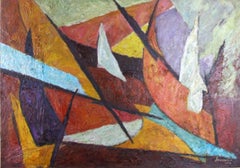
abstract 3, 1954 - Oil on canvas, 92x65 cm.
By François Jousselin
Located in Nice, FR
Abstract oil painting on canvas by the french painter François Jousselin. Not framed. Signed and dated 1954
François Jousselin, né à Laval le 27 octobre 1926 ...
Category
Abstract 1950s Art
Materials
Oil
Charles Levier [Solitude de Pierrot] signed large oil on canvas circa 1950
Located in Miami, FL
CHARLES LEVIER – [SOLITUDE DE PIERROT
⚜ Oil on Canvas ⚜ Hand Signed Lower Right ⚜ Original Period Frame
A THEATRICAL PORTRAIT OF MELANCHOLY
“Solitude de Pierrot” captures Charles Levier’s fascination with the archetypal Pierrot from commedia dell’arte. With angular black outlines and muted pastel tones, Levier reduces the figure to its essential gestures, creating a poignant symbol of isolation and quiet reflection. The vertical format emphasizes Pierrot’s elongated stance, while his downcast eyes and red-tipped nose heighten the painting’s emotive impact. This work was acquired directly from the artist by noted Beverly Hills designer Dean Richard Kukuk and retains its original Martin Lowitz Gallery label, underscoring both provenance and historical context.
WHY COLLECT THIS WORK?
✓ An early and expressive Charles Levier oil from circa 1950
✓ Features the Pierrot subject, connecting to the theatrical tradition of commedia dell’arte
✓ Strong provenance: Martin Lowitz Gallery, Los Angeles, and the collection of Dean Richard Kukuk, Beverly Hills
✓ Retains its original period frame in excellent condition with gallery label affixed verso
ARTWORK DETAILS:
▸ Title: [Solitude de Pierrot]
▸ Artist: Levier, Charles
▸ Medium: Oil on Canvas
▸ Creation Date: circa 1950
▸ Country of Creation: US
▸ Signed: Hand Signed Lower Right
▸ Current Condition: Excellent commensurate with age. Original period frame in great condition consistent with age.
▸ Documentation: Martin Lowitz Gallery label affixed to verso
▸ Provenance: Martin Lowitz Gallery, Los Angeles; Dean Richard Kukuk, Los Angeles
▸ Dimensions:
— ◼︎ Canvas Size: 44.25 inches x 15 inches
— ◻︎ Frame Size: 59 inches x 30 inches x 2.625 inches
INCLUDED DOCUMENTATION
✓ Certificate of Authenticity
✓ Artist Biography Document
THE ARTIST:
Charles Levier (1920–2003) was a French-American painter known for expressive oils, gouaches, and watercolors that bridge Modernism and postwar design sensibilities. His subjects include harbor towns, still lifes, café society, and commedia dell’arte figures such as Pierrot and Harlequin. Levier’s linear bite and stylized elongations have invited comparison to Bernard Buffet, while collectors of Modigliani, Rouault, and mid-century École de Paris painting...
Category
Modern 1950s Art
Materials
Canvas, Oil
![Charles Levier [Solitude de Pierrot] signed large oil on canvas circa 1950](https://a.1stdibscdn.com/charles-levier-paintings-charles-levier-solitude-de-pierrot-signed-large-oil-on-canvas-circa-1950-for-sale/a_28432/a_168632221756610115286/Levier_Charles_Untitled_SolitudedePierrot_circa1950_101318_FT_1_Hero_Ratio_1_967_SM_Complete_master.jpg?width=240 "Charles Levier - Charles Levier [Solitude de Pierrot] signed large oil on canvas circa 1950")
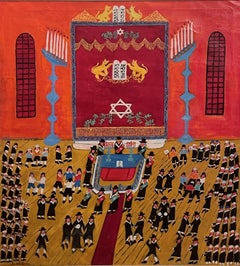
"Simchat Torah in the Synagogue, " Leo Schutzman, Jewish Folk Art
By Leo Schutzman
Located in New York, NY
Leo Schutzman (1878 - 1962)
Simchat Torah in the Synagogue, circa 1958
Oil on canvas
40 x 36 inches
Signed lower left
Provenance:
The Contemporaries Gal...
Category
Folk Art 1950s Art
Materials
Canvas, Oil
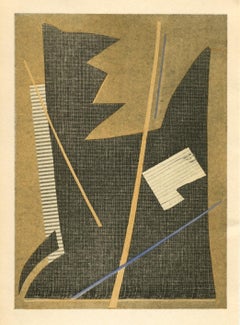
"Collage aux lignes jaunes" pochoir
Located in Henderson, NV
Medium: pochoir (after the watercolor and collage). Printed in 1957 at the atelier of Daniel Jacomet and published in Paris by the Galerie Berggruen for a rare catalogue. Image size:...
Category
1950s Art
Materials
Lithograph, Stencil
Femme Bleue
Located in OPOLE, PL
This work will be exhibited at Art on Paper NYC, September 4–7, 2025.
–
Henri Matisse (1869-1954) - Femme Bleue
Lithograph from 1958.
Dimensions of work: 35.5 x 26.4 cm
Publishe...
Category
Surrealist 1950s Art
Materials
Lithograph
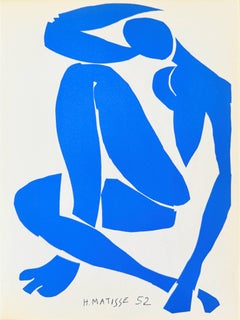
Jean Cocteau, Scene XXXIII, The Eagle with Two Heads, from Theatre, 1957
By Jean Cocteau
Located in Southampton, NY
This exquisite lithograph by Jean Cocteau (1889–1963), titled Scene XXXIII, L'Aigle a Deux Tetes (Scene XXXIII, The Eagle with Two Heads), originates from the 1957 album Jean Cocteau...
Category
Modern 1950s Art
Materials
Lithograph
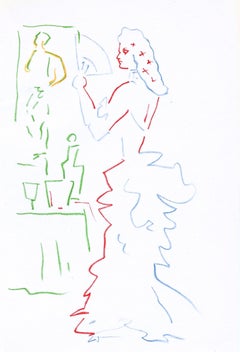
Henri Matisse, Nude Woman, from Derriere le Miroir, 1952 (after)
Located in Southampton, NY
This exquisite lithograph after Henri Matisse (1869–1954), titled Femme nue (Nude Woman), originates from the 1952 folio Derriere le Miroir, No. 46–47, published by Maeght Editeur, P...
Category
Modern 1950s Art
Materials
Lithograph
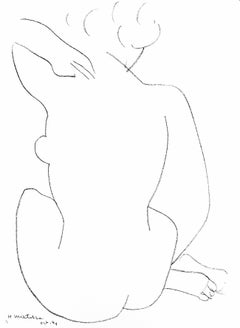
$716 Sale Price
20% Off
Composition in Black and Blue - Lithograph and stencil, 1956
Located in Paris, IDF
Pierre SOULAGES
Composition in Black and Blue, 1956
Lithograph and stencil (Jacomet workshop)
Unsigned
On wove paper 31 x 24 cm (c. 12.2 x 9.4 inches)
Edited by San Lazaro in 1956
...
Category
Abstract 1950s Art
Materials
Lithograph, Stencil
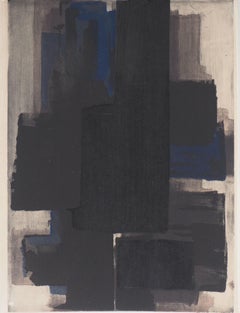
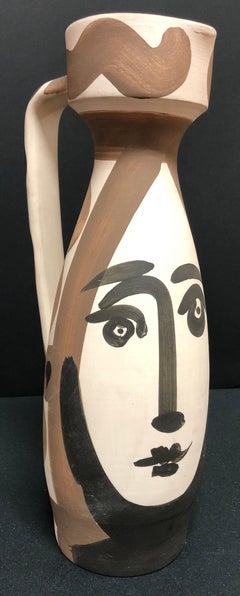
Pablo Picasso, "Face Turned Pitcher, " ceramic
Located in Chatsworth, CA
This piece is an A.R. turned pitcher created by Pablo Picasso in 1955. It is made with white earthenware clay, decoration in engobes in red and black with glaze inside. It bears the ...
Category
Surrealist 1950s Art
Materials
Clay
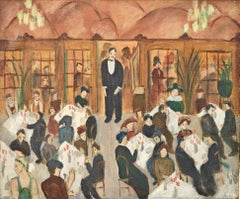
"Restaurant" Adelaide Lawson Gaylor, American Modernist Interior Party Scene
Located in New York, NY
Adelaide Lawson Gaylor
Restaurant
Signed lower right
Oil on canvas
24 1/4 x 30 inches
Modernist artist Adelaide Jaffrey Lawson Gaylor was born in New York City and studied at the A...
Category
Modern 1950s Art
Materials
Canvas, Oil
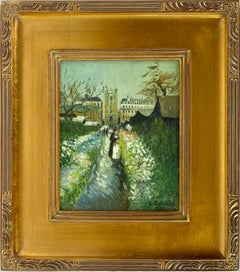
Le jardin de Daubigny Style of Vincent Van Gogh Daubigny
s Garden by S. Goosson
Located in Soquel, CA
Le jardin de Daubigny Style of Vincent Van Gogh by Stephen Goosson
The painting depicts the enclosed garden of Charles-François Daubigny, a French landscape painter whom Van Gogh ad...
Category
Impressionist 1950s Art
Materials
Canvas, Oil, Illustration Board
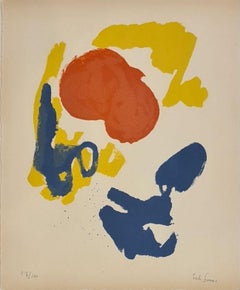
No title
Located in Paris, FR
Lithograph, 1953
Handsigned by the artist in pencil and numbered 27/100
Printer : Jean Pons (Paris)
LCD5358
Category
Abstract 1950s Art
Materials
Lithograph
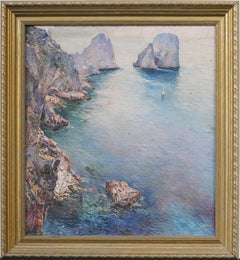
Antique Italian Impressionist Capri Seascape Signed Giltwood Framed Oil Painting
Located in Buffalo, NY
Antique Italian seascape oil painting. Oil on board. Framed. Signed. Handsomely framed in wide giltwood molding. Excellent condition, ready to hang and enjoy.
Category
Impressionist 1950s Art
Materials
Canvas, Oil
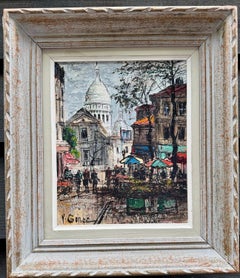
Mid-Century Impressionist French view of Montmartre, Paris, France
Located in Woodbury, CT
Y. Gonez (French, mid-20th century)
Market Scene, Montmartre with Sacré-Cœur, ca. 1950s
Oil on canvas, in a Montparnasse-style frame
In this lively street scene, Y. Gonez captures t...
Category
Impressionist 1950s Art
Materials
Canvas, Oil
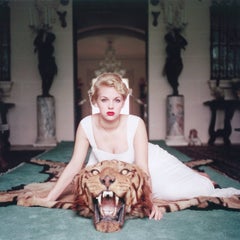
Slim Aarons
Beauty and the Beast
By Slim Aarons
Located in New York, NY
Lady Daphne Cameron (Mrs George Cameron) on a tiger skin rug in the trophy room at socialite Laddie Sanford's home in Palm Beach, Florida.
Estate stamped and hand numbered edition o...
Category
Realist 1950s Art
Materials
Lambda
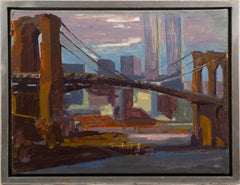
Antique American Modernist New York City Brooklyn Bridge Scene Framed Painting
Located in Buffalo, NY
Antique American modernist cityscape oil painting. Oil on canvas. Framed. Image size, 24L x 18H.
Category
Modern 1950s Art
Materials
Canvas, Oil
$1,160 Sale Price
20% Off
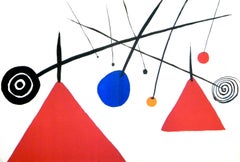
Alexander Calder, Two Pyramids and Spirals, from Derriere le miroir, 1954
Located in Southampton, NY
This exquisite lithograph by Alexander Calder (1898–1976), titled Deux pyramides et spirales (Two Pyramids and Spirals), from the folio Derriere le miroir, No. 69–70, originates from...
Category
Modern 1950s Art
Materials
Lithograph
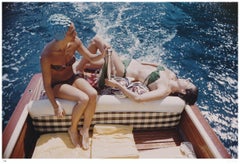
Vuccino And Rava 1958 - Slim Aarons Estate Edition
By Slim Aarons
Located in London, GB
Vuccino And Rava 1958 - Slim Aarons Estate Edition
Carla Vuccino, wearing a swimming cap, and a sunbathing Marina Rava, both wearing bikinis as they sit on the rear of a boat, on th...
Category
Modern 1950s Art
Materials
Archival Pigment
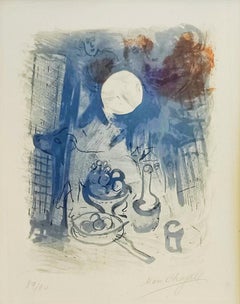
Marc Chagall -- Nature morte bleue
By Marc Chagall
Located in BRUCE, ACT
Marc Chagall
Nature morte bleue, 1957
Lithograph in colors on wove paper
Hand signed lower right
Numbered 89/90 lower left
Sight size: 31 x 31 cm
Frame size: 85.5 x 75 x 4 cm
Referen...
Category
1950s Art
Materials
Lithograph
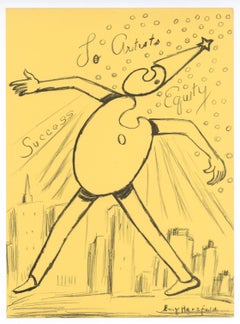
original lithograph
Located in Henderson, NV
Medium: original lithograph. This lithograph is from the rare 1950 "Improvisations" portfolio, published by the Artists Equity Association of New York on the occasion of the 1950 Spr...
Category
1950s Art
Materials
Lithograph
Milton H. Greene - Marilyn Monroe, NY (Dog), 1955, Printed After
Located in Stamford, CT
Available Sizes:
24" x 24" $6,000.00 Edition of 15
30" x 30" $7,000.00 Edition of 20
45" x 45" $11,000.00 Edition of 7
Printing is done on Exhibition Photo Baryta 310gsm paper.
...
Category
1950s Art
Materials
Archival Pigment

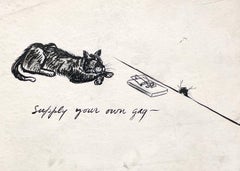
A Delightful, 1950s Mid-Century Modern Ink Drawing Cartoon, Cat and Mouse Trap
Located in Chicago, IL
A Delightful, 1950s Mid-Century Modern Ink Drawing Cartoon Illustration of a Cat Resting by a Mouse Trap by Notable Chicago Artist, Harold Haydon (Am. 1909-1994).
Artwork size: 8 ...
Category
American Modern 1950s Art
Materials
Paper, Ink
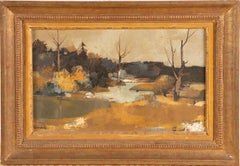
Antique French Modernist Paris School Fall Forest Signed Original Oil Painting
Located in Buffalo, NY
Antique French modern painting of a fall forest. Oil on board, circa 1950. Signed. Image size, 15.5L x 9.75H. Housed in a period giltwood f...
Category
Modern 1950s Art
Materials
Canvas, Oil
$1,036 Sale Price
20% Off
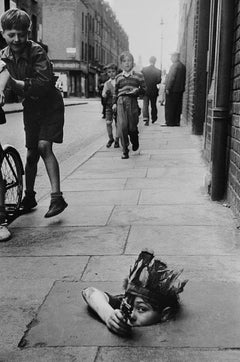
"Street Games" by Thurston Hopkins
Located in London, GB
"Street Games" by Thurston Hopkins
A young child wearing an Indian headdress hides in a coal hole as he takes aim under the watchful eye of a friend....
Category
Modern 1950s Art
Materials
Black and White
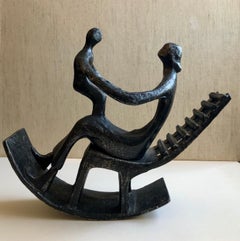
In the style of Henry Moore, Mother and Child in Rocking Chair
Located in Surfside, FL
This is a cast metal sculpture of a woman and child, mother and baby in a rocking chair. It has a patina on a white metal. Not sure if it is steel or aluminum. It is and older vintage piece and has wear to patina where it sits and rocks on table. It is not signed or numbered and there is no foundry mark. Hence it is being sold as being after or in the manner of Henry Moore.
Henry Spencer Moore (1898 – 1986)
Moore was born in Castleford, the son of a coal miner. He became well-known through his carved marble and larger-scale abstract cast bronze sculptures, and was instrumental in introducing a particular form of modernism to the United Kingdom later endowing the Henry Moore Foundation, which continues to support education and promotion of the arts.
After the Great War, Moore received an ex-serviceman's grant to continue his education and in 1919 he became a student at the Leeds School of Art (now Leeds College of Art), which set up a sculpture studio especially for him. At the college, he met Barbara Hepworth, a fellow student who would also become a well-known British sculptor, and began a friendship and gentle professional rivalry that lasted for many years. In Leeds, Moore also had access to the modernist works in the collection of Sir Michael Sadler, the University Vice-Chancellor, which had a pronounced effect on his development. In 1921, Moore won a scholarship to study at the Royal College of Art in London, along with Hepworth and other Yorkshire contemporaries. While in London, Moore extended his knowledge of primitive art and sculpture, studying the ethnographic collections at the Victoria and Albert Museum and the British Museum.
Moore's familiarity with primitivism and the influence of sculptors such as Constantin Brâncuși, Jacob Epstein, Henri Gaudier-Brzeska and Frank Dobson led him to the method of direct carving, in which imperfections in the material and marks left by tools became part of the finished sculpture. After Moore married, the couple moved to a studio in Hampstead at 11a Parkhill Road NW3, joining a small colony of avant-garde artists who were taking root there. Shortly afterward, Hepworth and her second husband Ben Nicholson moved into a studio around the corner from Moore, while Naum Gabo, Roland Penrose, Cecil Stephenson and the art critic Herbert Read also lived in the area (Read referred to the area as "a nest of gentle artists"). This led to a rapid cross-fertilization of ideas that Read would publicise, helping to raise Moore's public profile. The area was also a stopping-off point for many refugee artists, architects and designers from continental Europe en route to America—some of whom would later commission works from Moore.
In 1932, after six year's teaching at the Royal College, Moore took up a post as the Head of the Department of Sculpture at the Chelsea School of Art. Artistically, Moore, Hepworth and other members of The Seven and Five Society would develop steadily more abstract work, partly influenced by their frequent trips to Paris and their contact with leading progressive artists, notably Pablo Picasso, Georges Braque, Jean Arp and Alberto Giacometti. Moore flirted with Surrealism, joining Paul Nash's modern art movement "Unit One", in 1933. In 1934, Moore visited Spain; he visited the cave of Altamira (which he described as the "Royal Academy of Cave Painting"), Madrid, Toledo and Pamplona. Moore made his first visit to America when a retrospective exhibition of his work opened at the Museum of Modern Art in New York City.[28]
Before the war, Moore had been approached by educator Henry Morris, who was trying to reform education with his concept of the Village College. Morris had engaged Walter Gropius as the architect for his second village college at Impington near Cambridge, and he wanted Moore to design a major public sculpture for the site.
In the 1950s, Moore began to receive increasingly significant commissions. He exhibited Reclining Figure: Festival at the Festival of Britain in 1951, and in 1958 produced a large marble reclining figure for the UNESCO building in Paris. With many more public works of art, the scale of Moore's sculptures grew significantly and he started to employ an increasing number of assistants to work with him at Much Hadham, including Anthony Caro and Richard Wentworth.
Moore produced at least three significant examples of architectural sculpture during his career. In 1928, despite his own self-described "extreme reservations", he accepted his first public commission for West Wind for the London Underground Building at 55 Broadway in London, joining the company of Jacob Epstein and Eric Gill. At an introductory speech in New York City for an exhibition of one of the finest modernist sculptors, Alberto Giacometti, Sartre spoke of "The beginning and the end of history...
Category
Modern 1950s Art
Materials
Metal
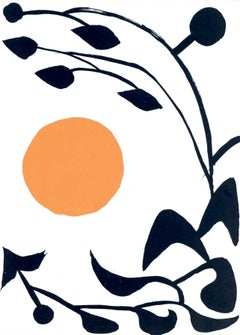
Alexander Calder, Orange Sun, from Derriere le miroir, 1954
Located in Southampton, NY
This exquisite lithograph by Alexander Calder (1898–1976), titled Soleil orange (Orange Sun), from the folio Derriere le miroir, No. 69–70, originates from the 1954 edition published by Maeght Editeur, Paris, and printed by Mourlot Freres, Paris, 1954. This work captures Calder’s mastery of motion, balance, and vibrant color through the spontaneous energy of his abstract forms, embodying the rhythmic harmony and visual poetry that defined his art.
Executed as a lithograph on velin paper, this work measures 15 x 11 inches. Unsigned and unnumbered as issued. The edition exemplifies the superb craftsmanship of Mourlot Freres, Paris.
Artwork Details:
Artist: Alexander Calder (1898–1976)
Title: Soleil orange (Orange Sun), from the folio Derriere le miroir, No. 69–70
Medium: Lithograph on velin paper
Dimensions: 15 x 11 inches (38.1 x 27.9 cm)
Inscription: Unsigned and unnumbered as issued
Date: 1954
Publisher: Maeght Editeur, Paris
Printer: Mourlot Freres, Paris
Condition: Well preserved, consistent with age and medium
Provenance: From the folio Derriere le miroir, No. 69–70, published by Maeght Editeur, Paris; printed by Mourlot Freres, Paris, 1954
About the Publication:
Derriere le miroir (Behind the Mirror) was one of the most important art publications of the 20th century, created and published by Maeght Editeur in Paris from 1946 to 1982. Founded by the visionary art dealer and publisher Aime Maeght, the series served as both an exhibition catalogue and a work of art in its own right, uniting original lithographs by leading modern and contemporary artists with critical essays, poetry, and design of the highest quality. Printed by master lithographers such as Mourlot Freres and Arte, Derriere le miroir became synonymous with the artistic vanguard of postwar Europe. Each issue was devoted to a single artist or theme and published to accompany exhibitions at the Galerie Maeght in Paris, featuring works by Pablo Picasso, Henri Matisse, Georges Braque, Joan Miro, Marc Chagall, Alexander Calder, Fernand Leger, and Alberto Giacometti, among others. The publication reflected Maeght’s belief that art should be both accessible and elevated—an ideal realized through its luxurious production values, meticulous printing, and collaboration with the greatest creative minds of its time.
About the Artist:
Alexander Calder (1898–1976) was an American sculptor, painter, and printmaker whose pioneering innovations in kinetic art revolutionized 20th-century sculpture and transformed modern visual language. Born in Lawnton, Pennsylvania, into a family of artists, Calder initially trained as a mechanical engineer at the Stevens Institute of Technology before turning to art at the Art Students League in New York—a combination of technical precision and creative imagination that defined his career. Moving to Paris in 1926, he immersed himself in the avant-garde and formed friendships with Pablo Picasso, Alberto Giacometti, Joan Miro, Wassily Kandinsky, Salvador Dali, Marcel Duchamp, and Man Ray, whose ideas profoundly shaped his artistic philosophy. From Picasso, he absorbed structural invention; from Miro, lyrical abstraction; from Kandinsky, spiritual geometry; and from Duchamp and Man Ray, the courage to merge intellect and play. In Paris, Calder created his famous Cirque Calder, a miniature mechanical circus that introduced motion and performance as central components of sculpture, and by the early 1930s, he invented the mobile—a term coined by Duchamp—to describe his delicately balanced, moving sculptures that responded to air currents. Later, Jean Arp would name his stationary counterparts stabiles. These two inventions—sculptures that could either float and spin gracefully or stand monumentally still—transformed art into a dynamic dialogue between movement, balance, and space. Calder’s signature forms, painted in vivid reds, blacks, blues, and yellows, embodied both joy and precision, creating an art that was at once abstract, organic, and deeply human. Like Kandinsky and Miro, he viewed art as a form of rhythm and emotion; like Duchamp, he embraced innovation and humor; and like Giacometti and Dali, he was fascinated by perception, structure, and the unseen forces of motion. His monumental public sculptures—such as La Grande Vitesse (1969) in Grand Rapids and Flamingo (1973) in Chicago—redefined public art as a symbol of civic optimism and modern progress. A key bridge between European modernism and American abstraction, Calder’s influence extended to artists including Jean Tinguely, George Rickey, Donald Judd, Ellsworth Kelly, Richard Serra, and Olafur Eliasson, whose works in kinetic and spatial art continue to echo his vision. His gouaches, prints, and jewelry carried the same balance and movement as his sculptures, revealing a unified language of rhythm across media. Represented in every major modern museum—including MoMA, the Guggenheim, the Tate, and the Centre Pompidou—Calder remains celebrated for merging engineering, color, and poetry into an art of pure equilibrium. Standing alongside Pablo Picasso, Alexander Calder, Alberto Giacometti, Salvador Dali, Joan Miro, Wassily Kandinsky, Marcel Duchamp, and Man Ray, he remains one of the cornerstones of modern art—a visionary whose works breathe with motion, grace, and joy. His highest auction record was achieved by Poisson Volant (Flying Fish) (1957), which sold for $25.9 million at Christie’s, New York, on May 15, 2014, reaffirming Alexander Calder’s enduring legacy as one of the most inventive, dynamic, and collectible artists in the history of modern art.
Alexander Calder Soleil...
Category
Modern 1950s Art
Materials
Lithograph
$796 Sale Price
20% Off
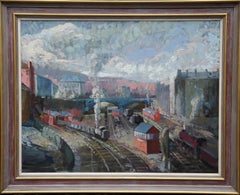
Industrial Railway Landscape - Scottish 50s art Post Impressionist oil painting
Located in Hagley, England
This vibrant colourful Scottish Post Impressionist oil painting is by noted Slade School artist and former Director of the Glasgow School of Art Sir Harry Jefferson Barnes. Painted i...
Category
Post-Impressionist 1950s Art
Materials
Oil
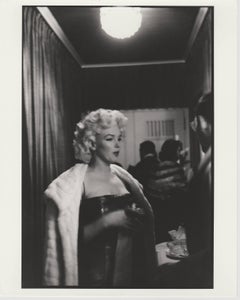
Marilyn Monroe, unique print of 1988 from original negative
Located in Cologne, DE
Ed Feingersh photographed Marilyn Monroe for Redbook magazine in March 1955 for a story which would follow Monroe through her daily routine, the photography to be candid and shot wit...
Category
Modern 1950s Art
Materials
Silver Gelatin
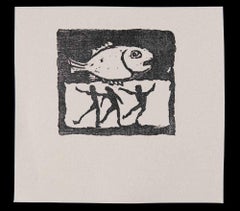
The Big Fish- Linocut by Mino Maccari - 1951
By Mino Maccari
Located in Roma, IT
The Big Fish is a Linocut Print realized by Mino Maccari in 1951.
Very Good condition.
No Signature.
Mino Maccari (1898-1989) was an Italian writer, painte...
Category
Modern 1950s Art
Materials
Linocut
$213 Sale Price
25% Off
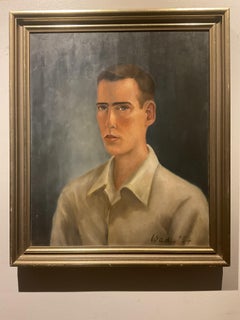
Vintage Army Military Oil Painting Portrait done in Germany, 1954 Cold War Era
Located in Baltimore, MD
This is an interesting portrait of a military person related to the Prinz Heinrich Kaserne complex in Germany after World War II. Apparently there were internal conflicts happening a...
Category
American Realist 1950s Art
Materials
Oil
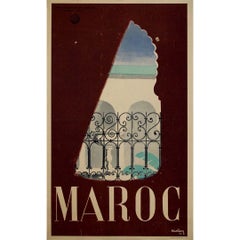
Original circa 1950 travel poster by Miollan - Maroc - Morocco
Located in PARIS, FR
This original circa 1950 travel poster by Miollan, commissioned by the Office Marocain du Tourisme, offers a poetic and refined vision of Morocco in the mid-20th century. The composi...
Category
1950s Art
Materials
Paper, Lithograph
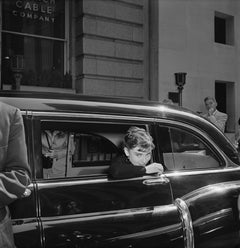
Sabrina (1953) - Silver Gelatin Fibre Print
Located in London, GB
Sabrina (1953) - Silver Gelatin Fibre Print
(Photo by Hulton Archive/Getty Images)
October 1953: Belgian-born actor Audrey Hepburn (1929-1993) leans out of a car window on the set ...
Category
Modern 1950s Art
Materials
Black and White, Silver Gelatin
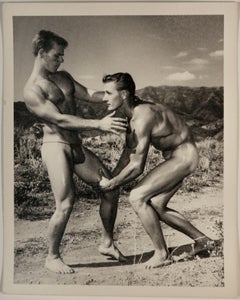
Bruce Bellas Vintage 1950 Photo Set Male Physique Robert Kendall
Jerry Debry
Located in Glenford, NY
Bruce of LA - Set of 2 Authentic Vintage 1950s Silver Gelatin Male Physique Photographs by famed 20th Century photographer Bruce Bellas also known as Bruce of Los Angeles of models R...
Category
Post-War 1950s Art
Materials
Silver Gelatin
Happy Marilyn (1956) - Silver Gelatin Fibre Print
Located in London, GB
Happy Marilyn (1956) - Silver Gelatin Fibre Print
(Photo by Evening Standard/Getty Images)
American film star Marilyn Monroe (1926 - 1962) outside her home at Englefield Green.
A...
Category
Modern 1950s Art
Materials
Black and White, Silver Gelatin