20th Century Landscape Prints
to
4,201
4,791
1,825
1,976
859
329
Overall Width
to
Overall Height
to
3,480
1,159
670
536
502
424
359
341
115
56
23
15
8
5
169
156
146
106
101
1,012
2,176
9,827
4,027
117
113
718
525
430
1,012
1,434
1,633
1,399
703
655
5,233
4,391
145
3,987
2,422
1,763
1,036
1,014
1,011
797
764
755
753
642
518
474
420
345
332
331
316
302
296
5,129
2,078
933
787
615
864
2,353
7,368
2,161
Period: 20th Century
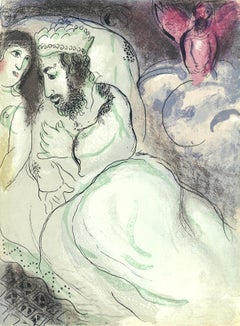
Marc Chagall, Sarah and Abimelech, from Drawings for the Bible, 1956
By Marc Chagall
Located in Southampton, NY
This exquisite lithograph by Marc Chagall (1887–1985), titled Sara et Abimelech (Sarah and Abimelech), from Marc Chagall, Dessins Pour La Bible (Drawings for the Bible), Verve: Revue...
Category
Expressionist 20th Century Landscape Prints
Materials
Lithograph

$956 Sale Price
20% Off
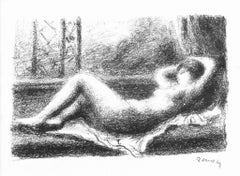
Pierre-Auguste Renoir, Odalisque, 1951 (after)
Located in Southampton, NY
This exquisite lithograph after Pierre-Auguste Renoir (1841–1919), titled Odalisque, from the album Les Lithographies de Renoir (The Lithographs of Renoir), originates from the 1951 ...
Category
Impressionist 20th Century Landscape Prints
Materials
Lithograph
$716 Sale Price
20% Off
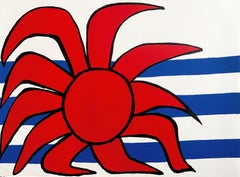
Calder, Soleil sur la Vagues (Red Sun Above the Waves), Alexander Calder
Located in Fairfield, CT
Artist: Alexander Calder (1898-1976)
Title: Soleil sur la Vagues (Red Sun Above the Waves)
Year: 1976
Medium: Lithograph on Arches paper
Size: 22.75 x 30.75 inches
Condition: Good
No...
Category
Modern 20th Century Landscape Prints
Materials
Lithograph
$1,560 Sale Price
20% Off
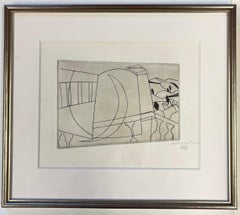
SAN GIMINIANO
Located in Portland, ME
Nicholson, Ben. San Gimignano. Lafranca 38. Etching, 1966. Edition of 50, signed in pencil and dated "66," and numbered "1/50." With the chop of the printer Lafranca embiossed lowe...
Category
20th Century Landscape Prints
Materials
Etching
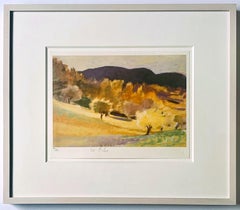
Wolf Kahn - Hillside in Early Summer, print for the UN, Pencil Signed/N, Framed
By Wolf Kahn
Located in New York, NY
Wolf Kahn - Hillside in Early Summer, print for the United Nations (WFUNA)
Limited edition print commissioned by the World Federation of United Nations Associations (WFUNA)
Archival ...
Category
Contemporary 20th Century Landscape Prints
Materials
Archival Pigment
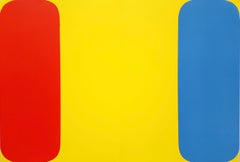
Ellsworth Kelly, Red, Yellow, Blue, from Derriere le Miroir, 1964
Located in Southampton, NY
This exquisite lithograph by Ellsworth Kelly (1923–2015), titled Rouge, jaune, bleu (Red, Yellow, Blue), originates from the historic 1964 folio Derriere le Miroir, No. 149. Publishe...
Category
Hard-Edge 20th Century Landscape Prints
Materials
Lithograph
$1,356 Sale Price
20% Off
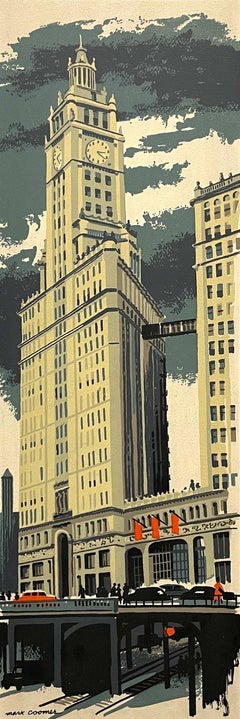
A Fabulous 1950s Serigraph of Chicago
s Wrigley Building by Mark Coomer
Located in Chicago, IL
You really need to bring home this wonderful serigraph for your collection! A fabulous Mid-Century, ca. 1959 serigraph of Chicago's Wrigley Building in its original (and kitchy!) fr...
Category
American Modern 20th Century Landscape Prints
Materials
Paper, Screen
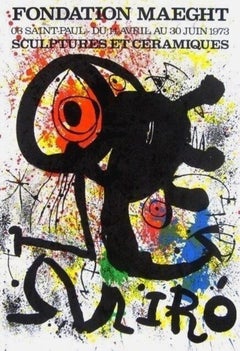
Miro, Sculptures et Ceramics, 1973 Fondation Maeght
By Joan Miró
Located in Fairfield, CT
Artist: After Joan Miro (1893-1983)
Title: Sculptures et Ceramics
Year: 1973
Medium: Lithograph exhibition poster on wove paper
Size: 32.5 x 22 inches
Condition: Excellent
Notes: Pub...
Category
Surrealist 20th Century Landscape Prints
Materials
Lithograph
$636 Sale Price
20% Off
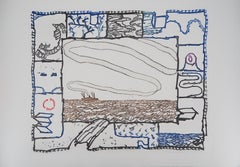
Travel : Boat on the Sea - Original etching with aquatint
Located in Paris, IDF
Pierre Alechinsky
Travel : Boat on the Sea, 1998
Original etching with aquatint
Unsigned
On BFK Rives vellum 63 x 92 cm (c. 25 x 37 in)
Authenticated with the blind stamp of chalcog...
Category
Surrealist 20th Century Landscape Prints
Materials
Etching, Aquatint
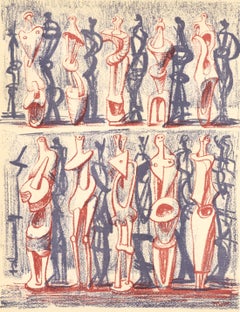
Henry Moore, Red and Blue Standing Figures, from XXe Siecle, 1951
By Henry Moore
Located in Southampton, NY
This exquisite lithograph by Henry Moore (1898–1986), titled Red and Blue Standing Figures, from the album XXe Siecle, Nouvelle serie, No. 1, 1951, originates from the 1951 edition p...
Category
Modern 20th Century Landscape Prints
Materials
Lithograph
$956 Sale Price
20% Off
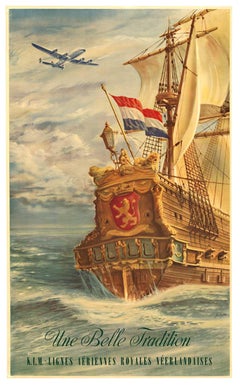
Original K.L.M. - Lignes Aeriennes Royales Netherlands vintage travel poster
Located in Spokane, WA
Rare original vintage poster for KLM Royal Dutch Airlines. This version has the Constellation flying in the sky behind an old sailing schooner. Great ...
Category
American Modern 20th Century Landscape Prints
Materials
Lithograph
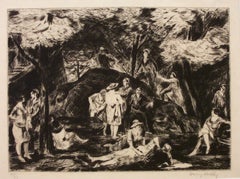
Harry Wickey, Snug Harbor (Riverside Drive, NYC)
By Harry Wickey
Located in New York, NY
The sailors are still in uniform in this post-World War I print of young people meeting at a semi-secluded park setting, Snug Harbor, along Riverside Drive...
Category
Ashcan School 20th Century Landscape Prints
Materials
Drypoint
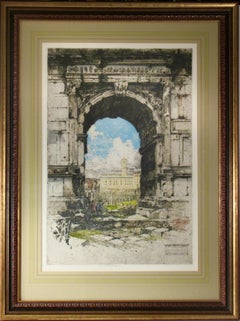
"Arch of Titus" Large colors etching.
Located in San Francisco, CA
This artwork titled "Arch of Titus" created 1923 is a color etching by Austrian artist Luigi Kasimir 1881-1962. It is hand signed in pencil at the lower center by the artist's estat...
Category
Realist 20th Century Landscape Prints
Materials
Etching
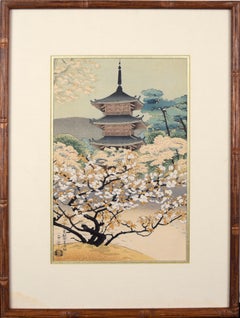
The Pagoda of Ninnaji Temple in Kyoto with Cherry Blossoms - Woodblock Print
Located in Soquel, CA
The Pagoda of Ninnaji Temple in Kyoto with Cherry Blossoms - Woodblock Print
Beautifully executed Showa-era print by Japanese artist Benji Asada (b. 1899 d. 1984.) This print shows ...
Category
Showa 20th Century Landscape Prints
Materials
Paper, Ink, Woodcut
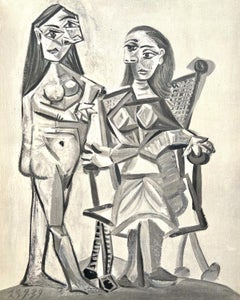
Picasso, Composition (Cramer 88), Dans l
Atelier de Picasso (after)
Located in Southampton, NY
Lithograph on vélin d'Arches à la forme savoir paper. Unsigned and unnumbered, as issued. Good condition. Notes: From the volume, Dans l'Atelier de Picasso, 1957. Published by Fernan...
Category
Modern 20th Century Landscape Prints
Materials
Lithograph
$10,396 Sale Price
20% Off
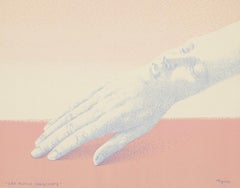
Rene Magritte, The Indiscreet Jewels, from XXe Siecle, 1963
Located in Southampton, NY
This exquisite lithograph by Rene Magritte (1898–1967), titled Les Bijoux indiscrets (The Indiscreet Jewels), from the album XXe Siecle, Nouvelle serie, XXVe Annee N°22, Noel 1963, o...
Category
Surrealist 20th Century Landscape Prints
Materials
Lithograph
$1,996 Sale Price
20% Off
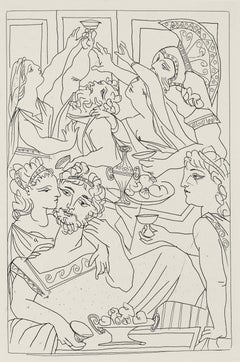
Le Banquet (Bloch 267-272; Cramer 24), Lysistrata, Pablo Picasso
Located in Southampton, NY
Etching on vélin de Rives BFK paper. Paper Size: 11.5 x 9 inches. Inscription: Unsigned and unnumbered, as issued. Notes: From the album, Lysistrata, 1934. Published by The Limited E...
Category
Cubist 20th Century Landscape Prints
Materials
Etching
$11,596 Sale Price
20% Off
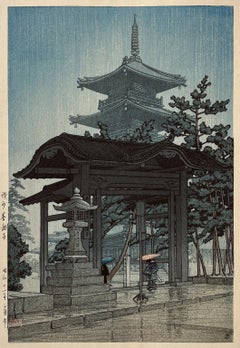
Zentsuji Temple in the Rain — from the series Collected Views of Japan II
By Kawase Hasui
Located in Myrtle Beach, SC
Kawase Hasui, 'Zentsuji Temple in the Rain' from the seres 'Collected Views of Japan II', color woodblock print, 1937. Signed Hasui in black ink, with the artist’s red seal Kawase, ...
Category
Showa 20th Century Landscape Prints
Materials
Woodcut
Elwood W. Bartlett, Wisconsin Farm, about 1945, mid-century wood engraving
Located in New York, NY
Elwood Warren Bartlett is a Wisconsin native who also worked in Indiana.
Largely self taught as a printmaker, Bartlett worked in a style that once identified as his, immediately t...
Category
American Modern 20th Century Landscape Prints
Materials
Woodcut

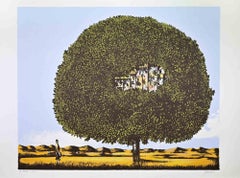
The Tree- Screen Print by Franco Fortunato - 1990s
Located in Roma, IT
Screen print realized by Franco Fortunato.
Hand signed.
Artist proof.
Very good condition.
Category
Contemporary 20th Century Landscape Prints
Materials
Screen
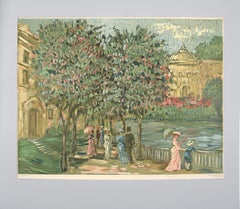
Impressionistic Victorian Garden Scene - Bay Area Lithograph
Located in Soquel, CA
Impressionistic Victorian Garden Scene - Bay Area Lithograph
Highly detailed lithograph showing a Victorian garden scene by Eva Sikorski (German, American b. 1917 d. 1990.) A path r...
Category
American Impressionist 20th Century Landscape Prints
Materials
Paper, Lithograph
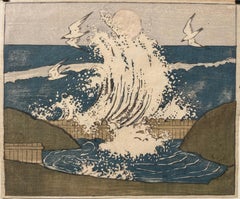
THE WAVE - MOONRISE
Located in Santa Monica, CA
B. J. O. NORDFELDT (1878 - 1955)
THE WAVE, MOONRISE, 1906 (Donovan 19)
Woodcut printed in colors. Signed and dated faintly in sky upper left. Image 9 ¼ x 11 1/8”, sheet 9 5/8 x 11 ...
Category
Modern 20th Century Landscape Prints
Materials
Woodcut
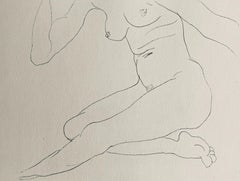
Henri Matisse, Crayon, from Drawings by Henri Matisse, 1925 (after)
Located in Southampton, NY
This exquisite lithograph after Henri Matisse (1869–1954), titled Crayon (Crayon), from the album Dessins de Henri-Matisse (Drawings by Henri Matisse), originates from the 1925 edition published by Editions des Quatre Chemins, Paris, rendered by Daniel Jacomet, Paris, and printed by Atelier Daniel Jacomet et Cie, Paris, December 15, 1925. The work exemplifies Matisses mastery of pure line and the expressive economy of form that defined his graphic art of the 1920s, transforming simplicity into lyrical harmony.
Executed as a lithograph on velin Lafuma Navarre paper, this work measures 8 x 10 inches (20.32 x 25.4 cm). Unsigned and unnumbered, as issued. The edition exemplifies the refined craftsmanship of the Daniel Jacomet et Cie workshops, Paris.
Artwork Details:
Artist: After Henri Matisse (1869–1954)
Title: Crayon (Crayon), from the album Dessins de Henri-Matisse (Drawings by Henri Matisse)
Medium: Lithograph on velin Lafuma Navarre paper
Dimensions: 8 x 10 inches (20.32 x 25.4 cm)
Inscription: Unsigned and unnumbered, as issued
Date: 1925
Publisher: Editions des Quatre Chemins, Paris
Printer: Atelier Daniel Jacomet et Cie, Paris
Catalogue Raisonne Reference: Duthuit, Claude. Henri Matisse: Catalogue raisonne des ouvrages illustres. Editions Claude Duthuit, Paris, 1988, illustration 3.
Condition: Well preserved, consistent with age and medium
Provenance: From the album Dessins de Henri-Matisse (Drawings by Henri Matisse), published by Editions des Quatre Chemins, Paris; rendered by Daniel Jacomet, Paris; printed by Atelier Daniel Jacomet et Cie, Paris, December 15, 1925
Notes:
Excerpted from the album (translated from French), This album was printed in C examples on velin d'Arches with an original example by Henri-Matisse, numbered from I to C, and M examples on velin Lafuma. Printing was completed on December Fifteenth, One Thousand, Nine Hundred and Twenty-Five by F. Dutal et Cie, in Paris; the boards having been executed by the Daniel Jacomet et Cie workshops in Paris.
About the Publication:
Dessins de Henri-Matisse (Drawings by Henri Matisse), published by Editions des Quatre Chemins, Paris, in 1925, is a landmark early graphic portfolio that captures the artist’s mastery of contour and proportion through a series of delicately rendered lithographs. Realized under the direction of the Daniel Jacomet et Cie workshops—renowned for their exceptional skill in fine art printmaking—the album showcases Matisse’s fascination with the purity of line and the human form. Issued in a limited printing of examples on both velin d’Arches and velin Lafuma papers, it reflects the refined aesthetics and technical excellence that characterized the interwar Parisian print ateliers. The publication represents a pivotal stage in Matisse’s evolution as a draughtsman, bridging the intimate immediacy of his drawings with the permanence of fine print.
About the Artist:
Henri Matisse (1869–1954) was a French painter, sculptor, draughtsman, and printmaker whose revolutionary vision redefined modern art through his daring use of color, line, and form. Celebrated as one of the greatest artists of the 20th century, Matisse led the Fauvist movement and devoted his life to the pursuit of balance, beauty, and emotional expression in visual art. His early works burst with vibrant hues and liberated brushwork, while his later “cut-out” compositions achieved a poetic simplicity that transformed the relationship between color and space. Deeply influenced by the work of Paul Cezanne, Vincent van Gogh, and Georges Seurat, as well as by the rhythmic patterns of Islamic art, Byzantine mosaics, and Japanese prints, Matisse forged a new visual language that celebrated joy, movement, and serenity. He was part of an extraordinary generation of artists who shaped the evolution of modernism, maintaining lifelong dialogue and friendly rivalry with contemporaries such as Pablo Picasso, Georges Braque, Marc Chagall, Andre Derain, Albert Marquet, and Raoul Dufy—peers who, like him, sought to expand the expressive potential of color and composition. Matisses influence extended across generations, inspiring modern and contemporary masters including Alexander Calder, Alberto Giacometti, Salvador Dali, Joan Miro, Wassily Kandinsky, Marcel Duchamp, and Man Ray, each of whom drew upon his fearless experimentation and refined visual harmony. His paintings, sculptures, and works on paper are held in the most prestigious museums in the world, including the Museum of Modern Art, the Centre Pompidou, the Tate, and the Hermitage Museum, where his art continues to symbolize the essence of creativity and human emotion. The highest price ever paid for a Henri Matisse artwork is approximately 80.8 million USD, achieved in 2018 at Christies New York for Odalisque couchee aux magnolias (1923).
Henri Matisse Crayon...
Category
Modern 20th Century Landscape Prints
Materials
Lithograph
$956 Sale Price
20% Off
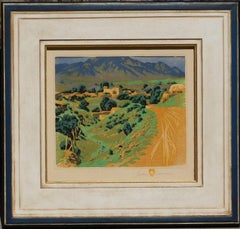
Gustave Baumann Color Woodblock - Rancho de Taos
Located in Phoenix, AZ
“Rancho de Taos” by well-known woodblock artist Gustave Baumann (1881-1971).
The medium is color woodblock. It's a beautiful print in excellent condition.
Baumann's personal Hand and...
Category
20th Century Landscape Prints
Materials
Woodcut
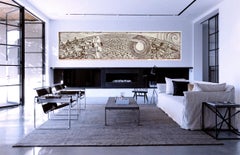
Vintage MOMA Francesco Clemente Museum of Modern Art 1986 dream myth poster
Located in New York, NY
This three-part work spanning 10 feet was printed from the plates of Francesco Clemente’s mythological landscape Untitled A on the occasion of the 1986 MoMA, New York show of Clement...
Category
Surrealist 20th Century Landscape Prints
Materials
Lithograph, Offset
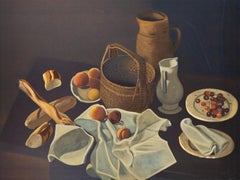
Andre Derain, Still Life, 1970 (after)
By André Derain
Located in Southampton, NY
This exquisite lithograph after Andre Derain (1880–1954), titled Nature Morte (Still Life), from the folio Andre Derain entre 1935 et 1949, V (Andre Derain between 1935 and 1949, V),...
Category
Fauvist 20th Century Landscape Prints
Materials
Lithograph
$716 Sale Price
20% Off
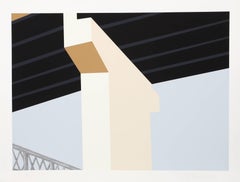
Bridge, Geometric Pop Art Screenprint by Allan D
Arcangelo
Located in Long Island City, NY
Artist: Allan D'Arcangelo, American (1930 - 1998)
Title: Bridge
Year: 1979
Medium: Serigraph, signed and numbered in pencil
Edition: 120
Image Size: 29 x 40 inches
Size: 35 x 46 in. ...
Category
Conceptual 20th Century Landscape Prints
Materials
Screen
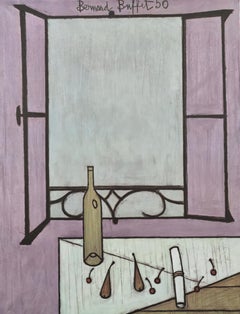
Bernard Buffet, The Open Window, from Painters of Today, 1966 (after)
Located in Southampton, NY
This exquisite heliogravure after Bernard Buffet (1928–1999), titled La Fenetre ouverte (The Open Window), from the folio Bernard Buffet, Peintres d'aujourd'hui (Bernard Buffet, Pain...
Category
Modern 20th Century Landscape Prints
Materials
Lithograph
$716 Sale Price
20% Off
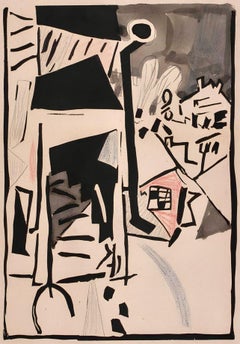
Pougny, Composition, Pougny, dix linogravures originales, 1914-1920 (after)
By Jean Pougny
Located in Southampton, NY
Linocut on vélin vergé ancien paper. Unsigned and unnumbered, as issued. Good condition. Notes: From the folio, Pougny, dix linogravures originales, 1964. Published by Au Vent d'Arle...
Category
Cubist 20th Century Landscape Prints
Materials
Linocut
$4,076 Sale Price
20% Off
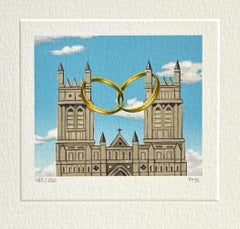
WEDDING Signed Lithograph, Mini Landscape, Cathedral, Gold Rings, Surrealism
Located in Union City, NJ
WEDDING is a hand drawn, limited edition lithograph by the American surrealist artist Fanny Brennan, created using traditional hand lithography techniques printed on archival Arches ...
Category
Surrealist 20th Century Landscape Prints
Materials
Lithograph
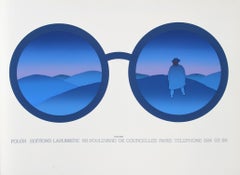
Editions Lahumiere (Eyeglasses), Surrealist Screenprint by Jean-Michel Folon
Located in Long Island City, NY
Artist: Jean Michel Folon, Belgian (1934 - 2005)
Title: Editions Lahumiere
Year: Circa 1980
Medium: Screenprint on Arches Paper
Paper Size: 29.5 in. x 39.5 in. (74.93 cm x 100.33 cm)
Category
Surrealist 20th Century Landscape Prints
Materials
Screen
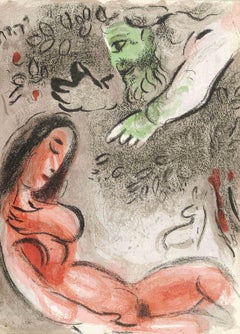
Marc Chagall, Eve Cursed by God, from Drawings for the Bible, 1956
By Marc Chagall
Located in Southampton, NY
This exquisite lithograph by Marc Chagall (1887–1985), titled Eve maudite par Dieu (Eve Cursed by God), from Marc Chagall, Dessins Pour La Bible (Drawings for the Bible), Verve: Revu...
Category
Expressionist 20th Century Landscape Prints
Materials
Lithograph
$956 Sale Price
20% Off
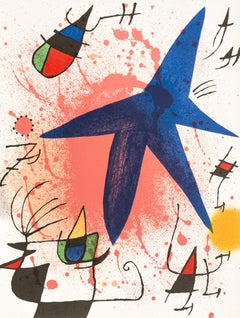
Joan Miro, Lithograph I, from Lithographs I, 1972
By Joan Miró
Located in Southampton, NY
This exquisite lithograph by Joan Miro (1893–1983), titled Lithograph I, from the album Joan Miro Lithographs, Volume I, originates from the 1972 edition published by Tudor Publishin...
Category
Surrealist 20th Century Landscape Prints
Materials
Lithograph
$716 Sale Price
20% Off
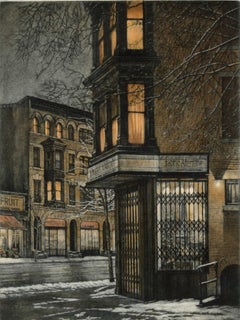
Late Night (Where Berkeley Place meets Seventh Avenue in Brooklyn
s Park Slope)
Located in New Orleans, LA
In "Late Night", Frederick Mershimer created a winter scene where Berkeley Place meets Seventh Avenue in Brooklyn's Park Slope. This image, the seventh in t...
Category
Contemporary 20th Century Landscape Prints
Materials
Mezzotint, Aquatint
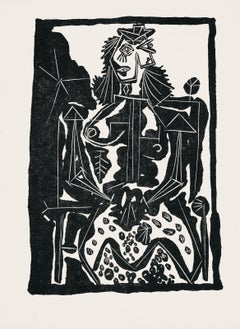
Composition (Cramer 36; Bloch 360; Horodisch A6), Non Vouloir, Pablo Picasso
Located in Southampton, NY
Zincograph on Vélin Bouffant paper. Unsigned and unnumbered, as issued. Good condition. Notes: From the volume, Non Vouloir, 1942. Published by Éditions Jeanne Bucher, Paris; printed...
Category
Cubist 20th Century Landscape Prints
Materials
Etching
$1,596 Sale Price
20% Off
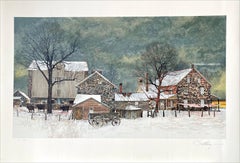
HEARTLAND Hand Drawn Lithograph, Winter Landscape Stone Farmhouse Bucks County
Located in Union City, NJ
HEARTLAND is an original hand drawn, limited edition lithograph by Peter Sculthorpe (b.1948 Ontario, Canada) printed using hand lithography techniques on archival Arches paper, 100% ...
Category
Realist 20th Century Landscape Prints
Materials
Lithograph
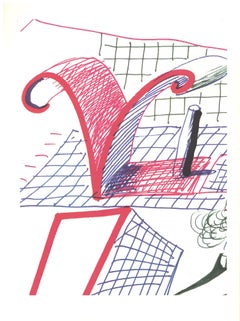
David Hockney, Letter V, from Hockney
s Alphabet, 1991
Located in Southampton, NY
This exquisite lithograph by David Hockney (born 1937), titled Letter V, from the folio Hockney's Alphabet, Drawings by David Hockney, originates from the 1991 edition published by A...
Category
Contemporary 20th Century Landscape Prints
Materials
Lithograph
$1,196 Sale Price
20% Off
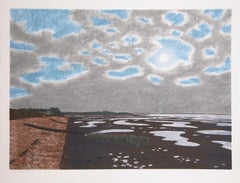
Low Tide 18, Impressionist Hand-Colored Lithograph by Bill Sullivan
Located in Long Island City, NY
Bill Sullivan, American (1942 - ) - Low Tide 18, Year: circa 1985, Medium: Hand Colored Lithograph, signed in pencil, Edition: 25, Size: 35 x 50 in. (88.9 x 127 cm), Descriptio...
Category
Impressionist 20th Century Landscape Prints
Materials
Lithograph
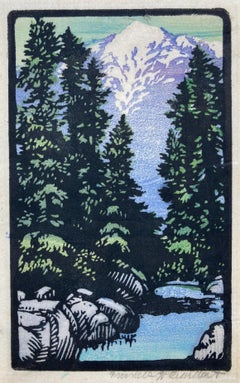
SAN JACINTO
Located in Santa Monica, CA
FRANCES H. GEARHART (1869-1958)
(Mt.) SAN JACINTO c. 1926
Color block print. Signed in pencil. Unknown edition but uncommon. Image 6 5/8 x 4 1/8 inches. On Gearhart's typical fibrous japan paper. Sheet 10 ½ x 5 7/8 inches. Generally fresh with her usual pinholes along right margin for printing, slight bit of discoloration in the margins
Provenance: Whitmore - Print Corner, Hingham MA. Their Gearhart inventory no. They were Gearhart's principal East coast dealer in the 30's. Obtained from the Whitmore Collection’s grandson in 1995. Old Print Shop...
Category
American Impressionist 20th Century Landscape Prints
Materials
Woodcut
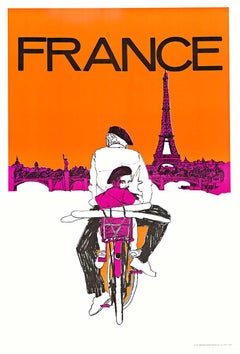
$3,700 Sale Price
22% Off
France via Bicycle and French Bread serigraph
Located in Spokane, WA
Original France travel by bicycle (and French bread) vintage serigraph poster, excellent condition, ready to frame. These images are of the exact rare poster you will receive. Ar...
Category
Post-Modern 20th Century Landscape Prints
Materials
Screen
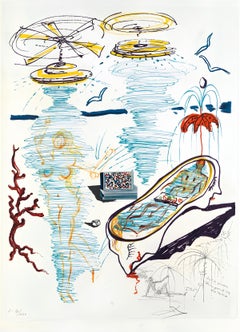
$398 Sale Price
20% Off
Baignoire à tornade liquide (Michler/Löpsinger 822-831; Field 75-13)
Located in Fairfield, CT
Artist: Salvador Dali (1904-1989)
Title: Baignoire à tornade liquide (Michler/Löpsinger 822-831; Field 75-13), Imaginations et Objets du Futur (Liquid tornado bathtub, Imaginations a...
Category
Surrealist 20th Century Landscape Prints
Materials
Mixed Media, Lithograph, Drypoint, Screen
$6,000 Sale Price
20% Off
Galactic Man, Peter Max
By Peter Max
Located in Fairfield, CT
Artist: Peter Max (1937)
Title: Galactic Man
Year: 1982
Medium: Unique, mixed media with lithography and hand coloring on Arches paper
Size: 6.75 x 6.25 inches
Condition: Excellent
I...
Category
Pop Art 20th Century Landscape Prints
Materials
Mixed Media, Lithograph

$780 Sale Price
33% Off
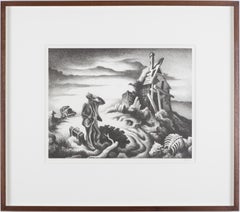
Prodigal Son
Located in London, GB
A man raises his hand to his chin, his neck tilted and face turned to look at a dilapidated farmhouse, barely held together by planks of wood and exposed to the elements. Behind him ...
Category
American Modern 20th Century Landscape Prints
Materials
Lithograph
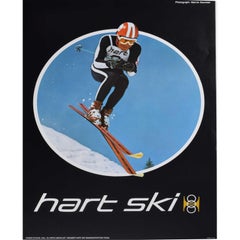
Hart Ski Colorado Vintage Poster (c.1970), Roger Staub USA
Located in London, GB
To see our other original vintage posters, scroll down to "More from this Seller" and below it click on "See all from this Seller."
Hart Ski Vintage Poster...
Category
Modern 20th Century Landscape Prints
Materials
Lithograph
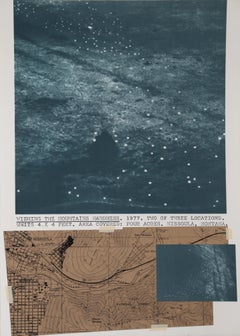
"Wishing the Mountains Madness", 1978, Lithograph by Dennis Oppenheim
Located in Long Island City, NY
Artist: Dennis Oppenheim, American (1938 - 2011)
Title: Wishing the Mountains Madness
Year: 1978
Medium: Lithograph on Johannot Paper, unsigned
Edition: 150
Size: 41.25 in. x 29.75 i...
Category
Conceptual 20th Century Landscape Prints
Materials
Lithograph
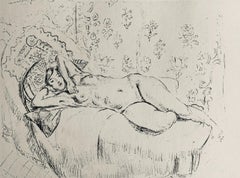
Henri Matisse, Plume, from Drawings by Henri Matisse, 1925 (after)
Located in Southampton, NY
This exquisite lithograph after Henri Matisse (1869–1954), titled Plume (Feather), from the album Dessins de Henri-Matisse (Drawings by Henri Matisse), originates from the 1925 editi...
Category
Modern 20th Century Landscape Prints
Materials
Lithograph
$956 Sale Price
20% Off
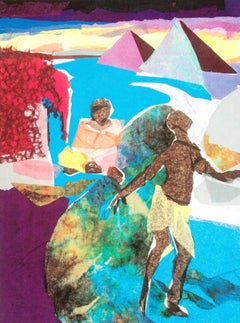
The Negro Speaks of Rivers, Sunrise Is Coming After While
Located in Southampton, NY
Silkscreen on vélin d’Arches paper. Paper Size: 14 x 11 inches. Inscription: Unsigned and unnumbered, as issued. Notes: From the folio, Bookmarks in the Pages of Life, 1998. Published by The Limited Editions Club, New York; printed by Drexel Press, Inc. Long Island City, 1998. Excerpted from the folio, CCC examples, designed, hand-set in Monotype Perpetua, printed, and hand-bound by Michael and Winifred Bixler, Skaneateles, New York. Paper made in France at Arches. Silkscreens printed by the Drexel Press, Inc. Long Island City, New York.
PHOEBE BEASLEY...
Category
Expressionist 20th Century Landscape Prints
Materials
Screen
$4,796 Sale Price
20% Off
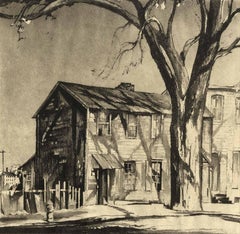
Dark House
By Earl Horter
Located in New Orleans, LA
Dark House is a soft-ground etching with aquatint signed in pencil by the artist. This image is in the collection of the Detroit Institute of the Arts
Printmaker Earl Horter, born in 1881 in Germantown, Pennsylvania, was known for his realistic etchings and aquatints of urban scenes, though he was also an illustrator and painter. As a teenager, he engraved stock certificates. He was essentially self-taught, though he did take an etching class when he moved to New York City in 1903 to work for an advertising agency. Horter had a one-man show in 1916 in New York City at the Frederick Keppel and Company gallery. He was given the exhibition by Carl Zigrosser, later the first Curator of Prints and Drawings at the Museum of Modern Art. Horter was back in Philadelphia in 1917, where he would remain until his death in 1940. He worked there as art director for the N. W. Ayer advertising firm from 1917-1923.
Horter was a member of the Society of Illustrators. He exhibited at the Pan American Exposition in 1915 in San Francisco, California; the Art Institute of Chicago, Illinois; and the Philadelphia Print Club's National Exhibition of Prints; as well as Corcoran Gallery biennials from 1935 to 1939, in Washington, D.C. Horter is listed in "Mantle Fielding's Dictionary of American Artists"; "Who Was Who in American Art"; and Mallett's "Index of Artists".
Though not a man of extraordinary means, Horter was a lover of modernist art, which he gradually purchased, creating an important collection, well ahead of its time in America, of Cubist and Precisionist works, as well as African sculpture and Native American artifacts. Artists Horter collected include Europeans Picasso, Braque, Duchamp and Brancusi, and Americans Charles Sheeler and Arthur B. Carles. He was a friend of Carles, as well as other artists and collectors such as Leopold Stokowski, conductor of the Philadelphia Orchestra; Franklin Watkins; S. S. White; and Carroll Tyson...
Category
American Modern 20th Century Landscape Prints
Materials
Etching
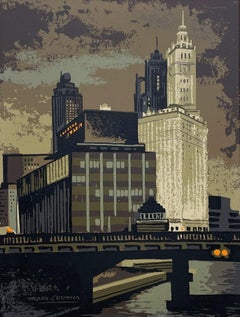
Fantastic Mid-Century Mark Coomer Serigraph of Chicago River
Wrigley Building
Located in Chicago, IL
You need this fantastic Mid-Century serigraph of Chicago's iconic Wrigley Building & Tribune Tower by artist Mark Coomer, in its original off-white panel f...
Category
American Modern 20th Century Landscape Prints
Materials
Masonite, Screen
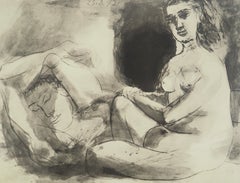
Pablo Picasso, Reclining Man and Seated Woman, The Double Flute, 1967 (after)
Located in Southampton, NY
This exquisite lithograph and pochoir after Pablo Picasso (1881–1973), titled Homme couche et femme assise (Reclining Man and Seated Woman), from the folio Picasso, La flute double, ...
Category
Cubist 20th Century Landscape Prints
Materials
Lithograph, Stencil
$2,636 Sale Price
20% Off
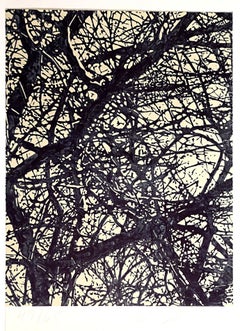
Bob Stanley - Tree Branches, Etching on wove paper with deckled edges, Signed/N
By Bob Stanley
Located in New York, NY
Bob Stanley
Branches, 1976
Etching on wove paper with full margins and deckled edges
31 1/2 × 22 1/2 inches
Pencil signed, dated and numbered from the limited edition of 65, with Chi...
Category
Pop Art 20th Century Landscape Prints
Materials
Etching
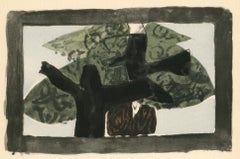
Georges Braque, The Tree, from Le Solitaire, XXe siecle, 1959 (after)
Located in Southampton, NY
This exquisite lithograph and pochoir after Georges Braque (1882–1963), titled L’arbre (The Tree), from the album Georges Braque, Le Solitaire (The Solitary), originates from the 195...
Category
Cubist 20th Century Landscape Prints
Materials
Lithograph
$716 Sale Price
20% Off
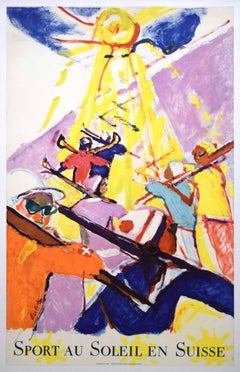
Original Poster Sport au Soleil en Suisse - Hans Falk Switzerland Alps Skiing
By Hans Falk
Located in London, GB
Hans Falk (1918-2002)
Sport au Soleil en Suisse
Original Vintage Poster - lithograph (1957)
40x25"
Signed in the plate, and showing a procession of brightly-coloured skiers heading ...
Category
Modern 20th Century Landscape Prints
Materials
Lithograph
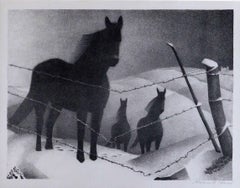
Grant Wood Original Pencil Signed Lithograph, 1940 - February
By Grant Wood
Located in Phoenix, AZ
Original pencil signed Grant Wood lithograph, "February," created 1940.
A fine impression and one of the most important of the 19 lithographs created by the painter of "American Goth...
Category
20th Century Landscape Prints
Materials
Paper, Lithograph
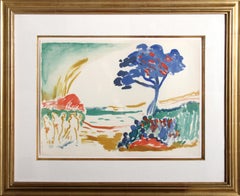
Paysage de l
Arbre Bleu, Impressionist Lithograph w/ Pochoir after Andre Derain
By André Derain
Located in Long Island City, NY
Andre Derain, After, French (1880 - 1954) - Paysage de l'Arbre Bleu from Douze Contemporains, Year: 1959, Medium: Lithograph with Pochoir on Wove paper, signed in the plate, Editio...
Category
Impressionist 20th Century Landscape Prints
Materials
Lithograph, Stencil
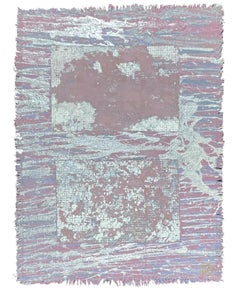
Untitled, EZ
Located in Fairfield, CT
Artist: EZ
Title: Untitled
Year: circa 1995
Medium: Acrylic on linen
Size: 13 x 17.5 inches
Condition: Excellent
Inscription: Signed in gold ink
Notes: Original painting.
EZ paintin...
Category
Contemporary 20th Century Landscape Prints
Materials
Linen, Acrylic
$636 Sale Price
20% Off
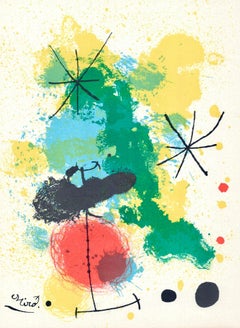
Joan Miro, Untitled, from Prints from the Mourlot Press, 1964
By Joan Miró
Located in Southampton, NY
This exquisite lithograph by Joan Miro (1893–1983), titled Sans titre (Untitled), from the album Prints from the Mourlot Press, exhibition sponsored by the French Embassy, circulated...
Category
Surrealist 20th Century Landscape Prints
Materials
Lithograph
$716 Sale Price
20% Off
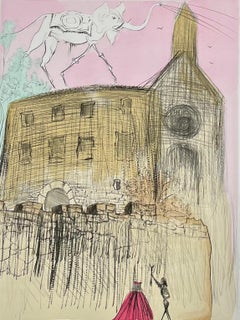
Salvador Dalí, "Le Chateau de Gala", original etching, hand colored, signed
Located in Chatsworth, CA
Salvador Dalí
Le Chateau de Gala (Gala's Castle) from After 50 Years of Surrealism
Original etching, hand colored
1974
Image size: 15 3/...
Category
Modern 20th Century Landscape Prints
Materials
Etching
$4,400 Sale Price
44% Off
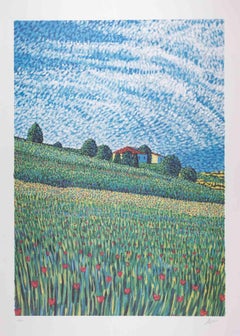
Countryside - Lithograph by Lucio Rofrano - 1990s
Located in Roma, IT
Lithograph realized by Lucio Rofrano in 1990s.
Edition of 150, numbered and hand signed.
Excellent condition.
Category
Contemporary 20th Century Landscape Prints
Materials
Lithograph
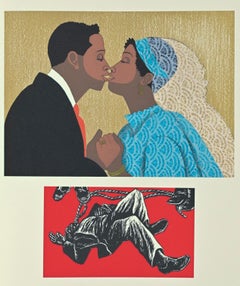
To Marry, For My People, Elizabeth Catlett
Located in Southampton, NY
Lithograph on vélin d’Arches 300gm paper. Paper Size: 21.8125 x 18.3125 inches. Inscription: Unsigned and unnumbered, as issued. Notes: From the album, For My People, 1992. Published...
Category
Expressionist 20th Century Landscape Prints
Materials
Lithograph
$10,396 Sale Price
20% Off