1960s More Prints
to
181
252
217
189
58
24
Overall Width
to
Overall Height
to
224
191
114
42
22
13
2
2
2
99
74
32
28
26
239
497
4,399
3,006
26
56
80
125
235
352
740
1,017
577
385
177
603
125
10
26
19
14
12
12
8
7
6
6
6
5
4
3
2
2
2
2
2
1
1
464
143
45
42
37
66
264
427
269
Period: 1960s
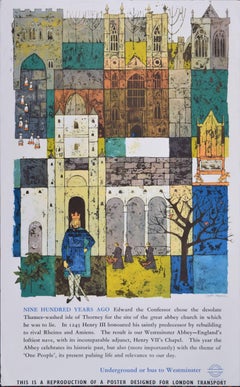
London Transport Original Poster Westminster Abbey, UK. Gaynor Chapman, 1966
Located in London, GB
To see our other original vintage travel posters including more pre-war London Transport posters, scroll down to "More from this Seller" and below it ...
Category
Realist 1960s More Prints
Materials
Lithograph
Adam and Eve are Banished from Paradise
By Marc Chagall
Located in Washington, DC
Artist: Marc Chagall
Title: Adam and Eve are Banished from Paradise
Portfolio: Drawings for the Bible
Medium: Lithograph
Year: 1960
Edition: Unnumbered
Sheet Size: 14 3/8" x 10 1/4"
...
Category
1960s More Prints
Materials
Lithograph
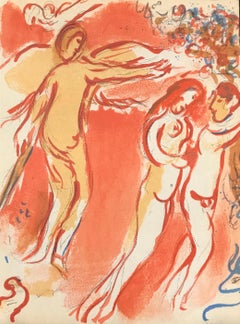
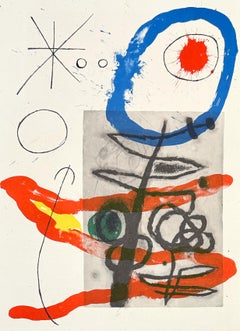
Plate 16, from 1965 Peintures sur Cartons
By Joan Miró
Located in Washington, DC
Artist: Joan Miro
Title: Plate 16
Portfolio: Peintures sur Cartons
Date: 1965
Edition: Unnumbered
Frame Size: 21 1/4" x 17 1/4"
Sheet Size: 15" x 11"
Image Size: 15" x 11"
Signature:...
Category
Abstract 1960s More Prints
Materials
Lithograph
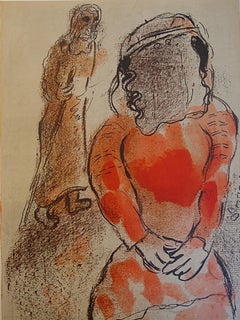
Tamar, Daughter-in-Law of Judah
By Marc Chagall
Located in Washington, DC
Artist: Marc Chagall
Title: Tamar, Daughter-in-Law of Judah
Portfolio: Drawings for the Bible
Medium: Lithograph
Date: 1960
Edition: Unnumbered
Sheet Size: 14 3/8" x 10 1/4"
Image Si...
Category
1960s More Prints
Materials
Lithograph
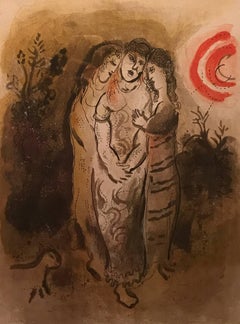
Naomi and Her Daughters-in-Law, from Drawings for the Bible
By Marc Chagall
Located in Washington, DC
Artist: Marc Chagall
Title: Naomi and Her Daughters-in-Law
Portfolio: Drawings for the Bible
Medium: Lithograph
Date: 1960
Edition: Unnumbered
...
Category
1960s More Prints
Materials
Lithograph
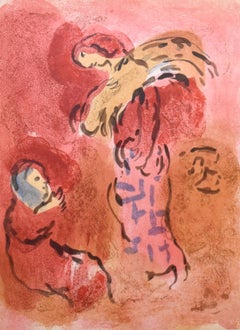
Ruth Gleaning
By Marc Chagall
Located in Washington, DC
Artist: Marc Chagall
Title: Ruth Gleaning
Portfolio: Drawings for the Bible
Medium: Lithograph
Year: 1960
Edition: Unnumbered
Sheet Size: 14 3/8" x 10 1/...
Category
1960s More Prints
Materials
Lithograph
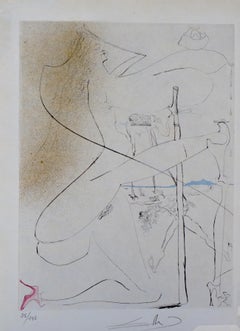
La Venus aux Fourrures Woman With Crutch
Located in Hollywood, FL
ARTIST: Salvador Dali
TITLE: La Venus Aux Fourrures Woman with Crutch
MEDIUM: Etching
SIGNED: Hand Signed
PUBLISHER: Editions Argillet, Paris
EDITION NUMBER: 25/145
MEASUREMENTS: 11" x 15"
YEAR: 1968
FRAMED: No
CONDITION: Excellent
AUTHENTICITY: This piece has been certified by The Salvador Dali Archives.
The Salvador Dali Archives, located in New York, is a private repository of information about Salvador Dali, established with the approval of the artist by Albert Field over 50 years ago.
The Archives, under the direction of Albert Field's successor, Frank Hunter, is able to provide an Authentication Service to owners of Dali prints and other Dali works.
The Salvador Dali Archives is used by major Auction Houses, Art Dealers and Collectors to Authenticate works by Salvador Dali.
REFERENCE: The Official Catalog of The Works of Salvador Dali by Albert Field page 40...
Category
Surrealist 1960s More Prints
Materials
Etching
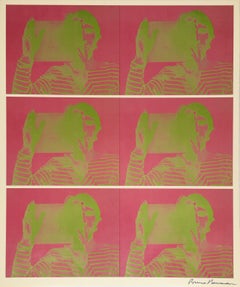
Bruce Nauman: Holograms, Videotapes, and Other Works"), Leo Castelli
By Bruce Nauman
Located in New York, NY
Bruce Nauman
Untitled (2-color lithograph, published in conjunction with the exhibition "Bruce Nauman: Holograms, Videotapes, and Other Works"), Leo Castelli, 1969
Lithograph
24 x 20...
Category
Pop Art 1960s More Prints
Materials
Lithograph
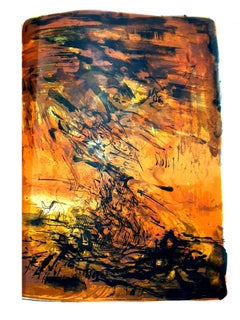
Zao Wou-ki - Original Lithograph - Abstract Composition
By Zao Wou-Ki
Located in Collonge Bellerive, Geneve, CH
Zao Wou-ki - Original Lithograph
1962
From La tentation de l’Occident
Dimensions: 39 x 28.5 cm
Publisher: Les Bibliophiles Comtois
Edition of 170
Reference: Jørgen Ågerup 137 - 146...
Category
Abstract Expressionist 1960s More Prints
Materials
Lithograph
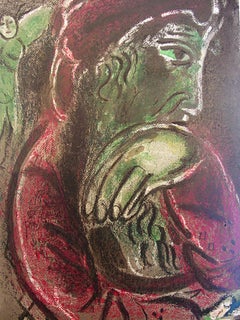
Job in Despair
By Marc Chagall
Located in Washington, DC
Artist: Marc Chagall
Title: Job in Despair
Portfolio: Drawings for the Bible
Medium: Lithograph
Date: 1960
Edition: Unnumbered
Sheet Size: 14 3/8" x 10 1/4"
Image Size: 14 3/8" x 10 ...
Category
1960s More Prints
Materials
Lithograph
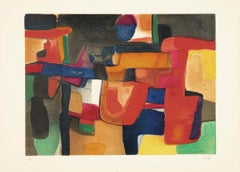
"Amanda"by Maurice Estève, Abstract Art, Warm, Colorful, Biomorphic Forms, Paris
Located in Köln, DE
"Amanda" is a typical motif by French artist Maurice Estève. The lithograph in colours was published in an edition of 100. 54,3 x 74,5 cm. Signed and numbered.
Category
1960s More Prints
Materials
Lithograph
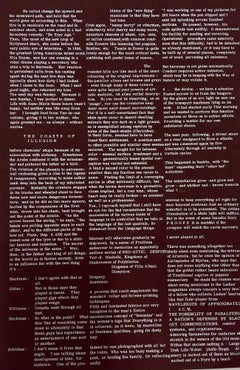
Coasts Of Illusion - Moonstrips Empire News By Eduardo Paolozzi
Located in Dubai, Dubai
Untitled from Moonstrips Empire News
By Eduardo Paolozzi
Eduardo Paolozzi (1924-2005) was a pioneering Scottish artist and sculptor associated with the Pop Art movement. Renowned f...
Category
Contemporary 1960s More Prints
Materials
Screen, Paper
Passion - Lithograph - 1964
Located in Roma, IT
Passion is Color lithograph on heavy rag paper realized in 1964. It is part of Biblia Sacra vulgatæ edition is published by Rizzoli-Mediolani between 1967 and 1969.
Signed and dated...
Category
Surrealist 1960s More Prints
Materials
Lithograph
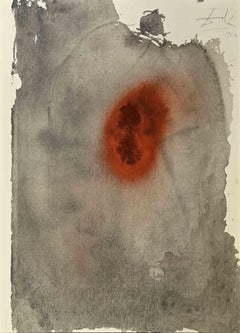
Then stood up Elias the prophet as fire, and his word burnt - Lithograph - 1964
Located in Roma, IT
Then stood up Elias the prophet as fire, and his word burnt like a torch is a Color lithograph on heavy rag paper realized in 1964. It is part of Biblia Sacra vulgatæ edition is publ...
Category
Surrealist 1960s More Prints
Materials
Lithograph
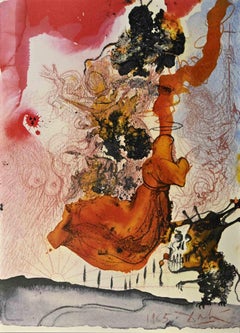
Et dixit Philistaeus ad David - Lithograph - 1964
Located in Roma, IT
Et dixit Philistaeus ad David is Color lithograph on heavy rag paper realized in 1964. It is part of Biblia Sacra vulgatæ edition is published by Rizzoli-Mediolani between 1967 and 1...
Category
Surrealist 1960s More Prints
Materials
Lithograph
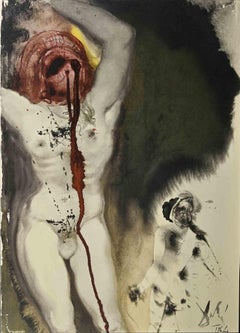
Leviathan - Lithograph - 1964
Located in Roma, IT
Leviathan is a Color lithograph on heavy rag paper realized in 1964 by Salvador Dalì, It is part of Biblia Sacra vulgatæ edition is published by Rizzoli-Mediolani between 1967 and 19...
Category
Surrealist 1960s More Prints
Materials
Lithograph
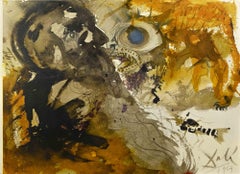
Tobias Listens to Raphael - Lithograph - 1964
Located in Roma, IT
Holy Bible - Tobias Listens to Raphael is Color lithograph on heavy rag paper realized in 1964. It is part of Biblia Sacra vulgatæ edition is published by Rizzoli-Mediolani between 1...
Category
Surrealist 1960s More Prints
Materials
Lithograph
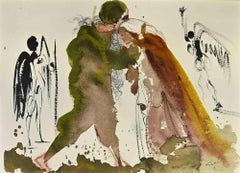
Judith Beheads Holfernes - Lithograph - 1964
Located in Roma, IT
Holy Bible - Judith Beheads Holfernes is Color lithograph on heavy rag paper realized in 1964. It is part of Biblia Sacra vulgatæ edition is published...
Category
Surrealist 1960s More Prints
Materials
Lithograph
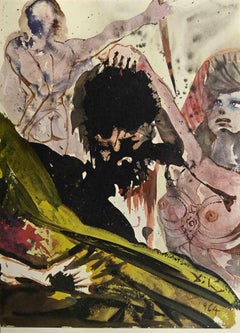
Dixit Raphael ad Tobiam - Lithograph - 1964
Located in Roma, IT
Holy Bible - is Color lithograph on heavy rag paper realized in 1964. It is part of Biblia Sacra vulgatæ edition is published by Rizzoli-Mediolani between 1967 and 1969.
Signed and ...
Category
Surrealist 1960s More Prints
Materials
Lithograph
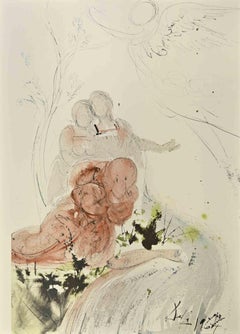
Lot
s Wide Turned into a Statue of Salt - Lithograph - 1964
Located in Roma, IT
Holy Bible - Lot's Wide turned into a Statue of Salt is Color lithograph on heavy rag paper realized in 1964. It is part of Biblia Sacra vulgatæ edition is published by Rizzoli-Medi...
Category
Surrealist 1960s More Prints
Materials
Lithograph
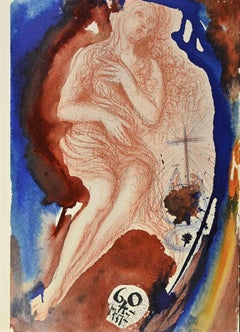
The Transfiguration - Lithograph - 1964
Located in Roma, IT
Holy Bible - The Transfiguration is Color lithograph on heavy rag paper realized in 1964. It is part of Biblia Sacra vulgatæ edition is published by Rizzoli-Mediolani between 1967 a...
Category
Surrealist 1960s More Prints
Materials
Lithograph
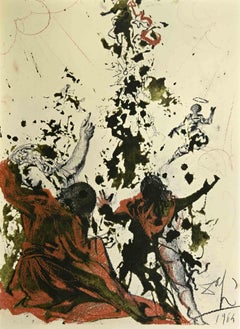
Zao Wou-ki - Original Lithograph - Abstract Composition
By Zao Wou-Ki
Located in Collonge Bellerive, Geneve, CH
Zao Wou-ki - Original Lithograph
1962
From La tentation de l’Occident
Dimensions: 39 x 28.5 cm
Publisher: Les Bibliophiles Comtois
Edition of 170
Reference: Jørgen Ågerup 137 - 146...
Category
Abstract Expressionist 1960s More Prints
Materials
Lithograph

Exhibition Poster Galerie Gerald Cramer - Lithograph by Joan Mirò - 1969
By Joan Miró
Located in Roma, IT
Exhibition Poster Galerie Gerald Cramer is a contemporary artwork realized by Joan Mirò.
Mixed colored lithograph.
The poster was realized in occasion of the exhibition of the arti...
Category
Surrealist 1960s More Prints
Materials
Lithograph
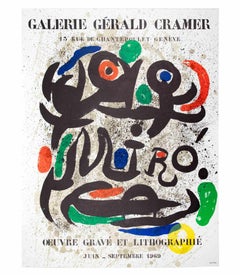
Exhibition Poster Galerie Gerald Cramer - Lithograph by Joan Mirò - 1969
By Joan Miró
Located in Roma, IT
Exhibition Poster Galerie Gerald Cramer is a contemporary artwork realized by Joan Mirò.
Mixed colored lithograph.
The poster was realized in occasion of the exhibition of the arti...
Category
Surrealist 1960s More Prints
Materials
Lithograph
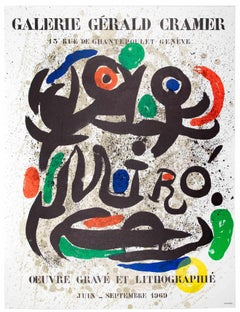
Joan Miro - I Work Like a Gardener - Original Handsigned Lithograph
By Joan Miró
Located in Collonge Bellerive, Geneve, CH
Joan Miro - I Work Like a Gardener - Original Handsigned Lithograph
Year: 1964
Handsigned and numbered in pencil
Edition: 2 / 30
Printer : Mourlot, Paris
Dimensions: 22.5 x 23 cm
Ref...
Category
Abstract 1960s More Prints
Materials
Lithograph
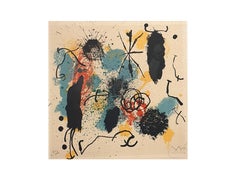
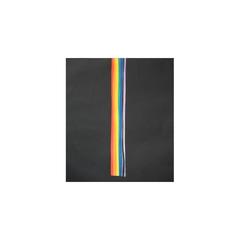
Rainbow
Located in London, GB
49.5 x 41.9 cms (19 1/2 x 16 1/2 ins)
Category
Abstract Geometric 1960s More Prints
Materials
Color, Etching
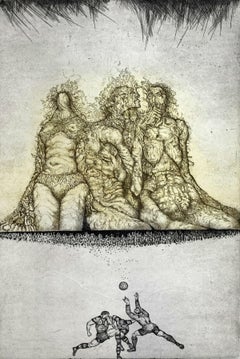
Permeation I - XX Century, Figurative etching print, Surrealism
By Leszek Rózga
Located in Warsaw, PL
LESZEK RÓZGA (1924-2015)
He studied painting at Maria Skarbek-Kruszewska private atelier in 1945-46. In 1948, he began studies at the art school in Łódź (later: Academy of Fine Arts)...
Category
Contemporary 1960s More Prints
Materials
Paper, Etching

$760 Sale Price
20% Off
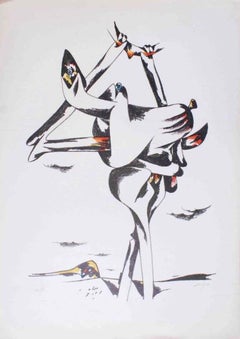
Abstract - Lithograph by Ossip Zadkine - 1960s
Located in Roma, IT
Hand signed.
Edition of 150 (140/150).
Very good condition.
Category
Cubist 1960s More Prints
Materials
Lithograph
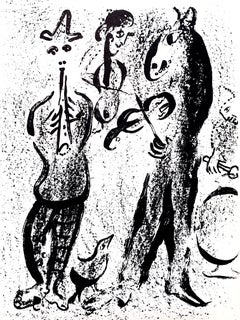
Marc Chagall - Original Lithograph
By Marc Chagall
Located in Collonge Bellerive, Geneve, CH
Marc Chagall
Original Lithograph
1963
Dimensions: 32 x 24 cm
Reference: Chagall Lithographe 1957-1962. VOLUME II.
Unsigned edition of over 5,000
Condition : Excellent
Marc Chagall (born in 1887)
Marc Chagall was born in Belarus in 1887 and developed an early interest in art. After studying painting, in 1907 he left Russia for Paris, where he lived in an artist colony on the city’s outskirts. Fusing his own personal, dreamlike imagery with hints of the fauvism and cubism popular in France at the time, Chagall created his most lasting work—including I and the Village (1911)—some of which would be featured in the Salon des Indépendants exhibitions. After returning to Vitebsk for a visit in 1914, the outbreak of WWI trapped Chagall in Russia. He returned to France in 1923 but was forced to flee the country and Nazi persecution during WWII. Finding asylum in the U.S., Chagall became involved in set and costume design before returning to France in 1948. In his later years, he experimented with new art forms and was commissioned to produce numerous large-scale works. Chagall died in St.-Paul-de-Vence in 1985.
The Village
Marc Chagall was born in a small Hassidic community on the outskirts of Vitebsk, Belarus, on July 7, 1887. His father was a fishmonger, and his mother ran a small sundries shop in the village. As a child, Chagall attended the Jewish elementary school, where he studied Hebrew and the Bible, before later attending the Russian public school. He began to learn the fundamentals of drawing during this time, but perhaps more importantly, he absorbed the world around him, storing away the imagery and themes that would feature largely in most of his later work.
At age 19 Chagall enrolled at a private, all-Jewish art school and began his formal education in painting, studying briefly with portrait artist Yehuda Pen. However, he left the school after several months, moving to St. Petersburg in 1907 to study at the Imperial Society for the Protection of Fine Arts. The following year, he enrolled at the Svanseva School, studying with set designer Léon Bakst, whose work had been featured in Sergei Diaghilev's Ballets Russes. This early experience would prove important to Chagall’s later career as well.
Despite this formal instruction, and the widespread popularity of realism in Russia at the time, Chagall was already establishing his own personal style, which featured a more dreamlike unreality and the people, places and imagery that were close to his heart. Some examples from this period are his Window Vitebsk (1908) and My Fianceé with Black Gloves (1909), which pictured Bella Rosenfeld, to whom he had recently become engaged.
The Beehive
Despite his romance with Bella, in 1911 an allowance from Russian parliament member and art patron Maxim Binaver enabled Chagall to move to Paris, France. After settling briefly in the Montparnasse neighborhood, Chagall moved further afield to an artist colony known as La Ruche (“The Beehive”), where he began to work side by side with abstract painters such as Amedeo Modigliani and Fernand Léger as well as the avant-garde poet Guillaume Apollinaire. At their urging, and under the influence of the wildly popular fauvism and cubism, Chagall lightened his palette and pushed his style ever further from reality. I and the Village (1911) and Homage to Apollinaire (1912) are among his early Parisian works, widely considered to be his most successful and representative period.
Though his work stood stylistically apart from his cubist contemporaries, from 1912 to 1914 Chagall exhibited several paintings at the annual Salon des Indépendants exhibition, where works by the likes of Juan Gris, Marcel Duchamp and Robert Delaunay were causing a stir in the Paris art world. Chagall’s popularity began to spread beyond La Ruche, and in May 1914 he traveled to Berlin to help organize his first solo exhibition, at Der Sturm Gallery. Chagall remained in the city until the highly acclaimed show opened that June. He then returned to Vitebsk, unaware of the fateful events to come.
War, Peace and Revolution
In August 1914 the outbreak of World War I precluded Chagall’s plans to return to Paris. The conflict did little to stem the flow of his creative output, however, instead merely giving him direct access to the childhood scenes so essential to his work, as seen in paintings such as Jew in Green (1914) and Over Vitebsk (1914). His paintings from this period also occasionally featured images of the war’s impact on the region, as with Wounded Soldier (1914) and Marching (1915). But despite the hardships of life during wartime, this would also prove to be a joyful period for Chagall. In July 1915 he married Bella, and she gave birth to a daughter, Ida, the following year. Their appearance in works such as Birthday (1915), Bella and Ida by the Window (1917) and several of his “Lovers” paintings give a glimpse of the island of domestic bliss that was Chagall’s amidst the chaos.
To avoid military service and stay with his new family, Chagall took a position as a clerk in the Ministry of War Economy in St. Petersburg. While there he began work on his autobiography and also immersed himself in the local art scene, befriending novelist Boris Pasternak, among others. He also exhibited his work in the city and soon gained considerable recognition. That notoriety would prove important in the aftermath of the 1917 Russian Revolution when he was appointed as the Commissar of Fine Arts in Vitebsk. In his new post, Chagall undertook various projects in the region, including the 1919 founding of the Academy of the Arts. Despite these endeavors, differences among his colleagues eventually disillusioned Chagall. In 1920 he relinquished his position and moved his family to Moscow, the post-revolution capital of Russia.
In Moscow, Chagall was soon commissioned to create sets and costumes for various productions at the Moscow State Yiddish...
Category
Surrealist 1960s More Prints
Materials
Lithograph
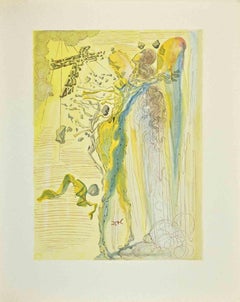
The Shine of Bodies - Woodcut print - 1963
Located in Roma, IT
The Shine of Bodies - Paradise is a woodcut print realized in 1963 for a series illustrating the Medieval poem of the "Divine Comedy" by Dante Alighieri.
Good conditions.
Limited ...
Category
Surrealist 1960s More Prints
Materials
Woodcut
$231 Sale Price
35% Off
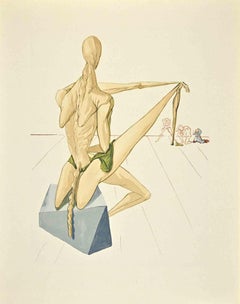
Minos - Woodcut print - 1964
Located in Roma, IT
Minos - Hell plate 5 is a woodcut print realized in 1963 for a series illustrating the Medieval poem of the "Divine Comedy" by Dante Alighieri.
Good conditions.
Limited edition o...
Category
Surrealist 1960s More Prints
Materials
Woodcut
$231 Sale Price
35% Off
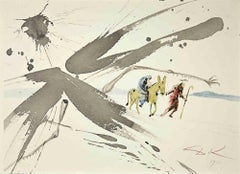
Ex Aegypto Vocavi Filium Meum - Lithograph - 1964
Located in Roma, IT
Ex Aegypto Vocavi Filium Meum is a Color lithograph on heavy rag paper realized in 1964. It is part of Biblia Sacra vulgatæ edition is published by Rizzoli-Mediolani between 1967 and...
Category
Surrealist 1960s More Prints
Materials
Lithograph
$416 Sale Price
35% Off
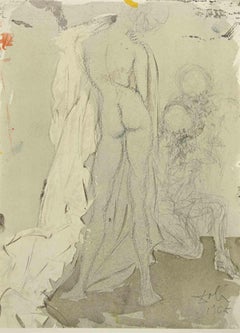
Susannae Pulchritudo - Lithograph - 1964
Located in Roma, IT
Susannae Pulchritudo is a Color lithograph on heavy rag paper realized in 1964. It is part of Biblia Sacra vulgatæ edition is published by Rizzoli-Mediolani between 1967 and 1969.
...
Category
Surrealist 1960s More Prints
Materials
Lithograph
$370 Sale Price
35% Off
Angelus Excussit Flammag Ignis - Lithograph - 1964
Located in Roma, IT
Angelus Excussit Flammag Ignis is a Color lithograph on heavy rag paper realized in 1964. It is part of Biblia Sacra vulgatæ edition is published by Rizzoli-Mediolani between 1967 an...
Category
Surrealist 1960s More Prints
Materials
Lithograph
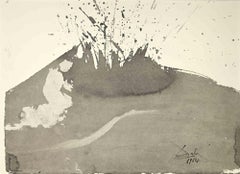
$370 Sale Price
35% Off
The Great Day of the Lord - Lithograph - 1964
Located in Roma, IT
The Great Day of the Lord is a Color lithograph on heavy rag paper realized in 1964. It is part of Biblia Sacra vulgatæ edition is published by Rizzoli-Mediolani between 1967 and 196...
Category
Surrealist 1960s More Prints
Materials
Lithograph
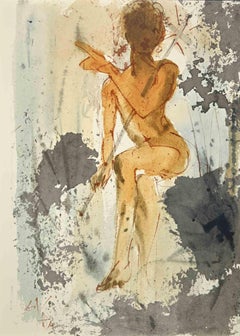
$416 Sale Price
35% Off
Oblatio Munda - Lithograph - 1964
Located in Roma, IT
Oblatio Munda is a Color lithograph on heavy rag paper realized in 1964. It is part of Biblia Sacra vulgatæ edition is published by Rizzoli-Mediolani between 1967 and 1969.
Signed a...
Category
Surrealist 1960s More Prints
Materials
Lithograph
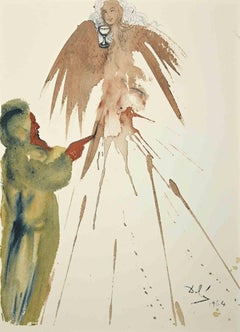
$378 Sale Price
35% Off
Aquae Diluvii Super Terram - Lithograph - 1964
Located in Roma, IT
Aquae Diluvii Super Terram is a Color lithograph on heavy rag paper realized in 1964. It is part of Biblia Sacra vulgatæ edition is published by Rizzoli-Mediolani between 1967 and 19...
Category
Surrealist 1960s More Prints
Materials
Lithograph
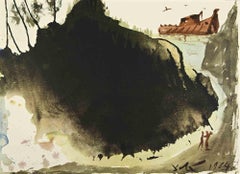
$308 Sale Price
35% Off
Le Jeu des Acrobates, original lithograph from "Chagall Lithographe II"
By Marc Chagall
Located in Collonge Bellerive, Geneve, CH
Marc Chagall
Original Lithograph
1963
Dimensions: 32 x 24 cm
As published in Chagall Lithographe 1957-1962. VOLUME II.
Unsigned, as issued, from the edition of several thousand
Condition : Excellent
Reference: Mourlot/Gauss 401
Marc Chagall (born in 1887)
Marc Chagall was born in Belarus in 1887 and developed an early interest in art. After studying painting, in 1907 he left Russia for Paris, where he lived in an artist colony on the city’s outskirts. Fusing his own personal, dreamlike imagery with hints of the fauvism and cubism popular in France at the time, Chagall created his most lasting work—including I and the Village (1911)—some of which would be featured in the Salon des Indépendants exhibitions. After returning to Vitebsk for a visit in 1914, the outbreak of WWI trapped Chagall in Russia. He returned to France in 1923 but was forced to flee the country and Nazi persecution during WWII. Finding asylum in the U.S., Chagall became involved in set and costume design before returning to France in 1948. In his later years, he experimented with new art forms and was commissioned to produce numerous large-scale works. Chagall died in St.-Paul-de-Vence in 1985.
The Village
Marc Chagall was born in a small Hassidic community on the outskirts of Vitebsk, Belarus, on July 7, 1887. His father was a fishmonger, and his mother ran a small sundries shop in the village. As a child, Chagall attended the Jewish elementary school, where he studied Hebrew and the Bible, before later attending the Russian public school. He began to learn the fundamentals of drawing during this time, but perhaps more importantly, he absorbed the world around him, storing away the imagery and themes that would feature largely in most of his later work.
At age 19 Chagall enrolled at a private, all-Jewish art school and began his formal education in painting, studying briefly with portrait artist Yehuda Pen. However, he left the school after several months, moving to St. Petersburg in 1907 to study at the Imperial Society for the Protection of Fine Arts. The following year, he enrolled at the Svanseva School, studying with set designer Léon Bakst, whose work had been featured in Sergei Diaghilev's Ballets Russes. This early experience would prove important to Chagall’s later career as well.
Despite this formal instruction, and the widespread popularity of realism in Russia at the time, Chagall was already establishing his own personal style, which featured a more dreamlike unreality and the people, places and imagery that were close to his heart. Some examples from this period are his Window Vitebsk (1908) and My Fianceé with Black Gloves (1909), which pictured Bella Rosenfeld, to whom he had recently become engaged.
The Beehive
Despite his romance with Bella, in 1911 an allowance from Russian parliament member and art patron Maxim Binaver enabled Chagall to move to Paris, France. After settling briefly in the Montparnasse neighborhood, Chagall moved further afield to an artist colony known as La Ruche (“The Beehive”), where he began to work side by side with abstract painters such as Amedeo Modigliani and Fernand Léger as well as the avant-garde poet Guillaume Apollinaire. At their urging, and under the influence of the wildly popular fauvism and cubism, Chagall lightened his palette and pushed his style ever further from reality. I and the Village (1911) and Homage to Apollinaire (1912) are among his early Parisian works, widely considered to be his most successful and representative period.
Though his work stood stylistically apart from his cubist contemporaries, from 1912 to 1914 Chagall exhibited several paintings at the annual Salon des Indépendants exhibition, where works by the likes of Juan Gris, Marcel Duchamp and Robert Delaunay were causing a stir in the Paris art world. Chagall’s popularity began to spread beyond La Ruche, and in May 1914 he traveled to Berlin to help organize his first solo exhibition, at Der Sturm Gallery. Chagall remained in the city until the highly acclaimed show opened that June. He then returned to Vitebsk, unaware of the fateful events to come.
War, Peace and Revolution
In August 1914 the outbreak of World War I precluded Chagall’s plans to return to Paris. The conflict did little to stem the flow of his creative output, however, instead merely giving him direct access to the childhood scenes so essential to his work, as seen in paintings such as Jew in Green (1914) and Over Vitebsk (1914). His paintings from this period also occasionally featured images of the war’s impact on the region, as with Wounded Soldier (1914) and Marching (1915). But despite the hardships of life during wartime, this would also prove to be a joyful period for Chagall. In July 1915 he married Bella, and she gave birth to a daughter, Ida, the following year. Their appearance in works such as Birthday (1915), Bella and Ida by the Window (1917) and several of his “Lovers” paintings give a glimpse of the island of domestic bliss that was Chagall’s amidst the chaos.
To avoid military service and stay with his new family, Chagall took a position as a clerk in the Ministry of War Economy in St. Petersburg. While there he began work on his autobiography and also immersed himself in the local art scene, befriending novelist Boris Pasternak, among others. He also exhibited his work in the city and soon gained considerable recognition. That notoriety would prove important in the aftermath of the 1917 Russian Revolution when he was appointed as the Commissar of Fine Arts in Vitebsk. In his new post, Chagall undertook various projects in the region, including the 1919 founding of the Academy of the Arts. Despite these endeavors, differences among his colleagues eventually disillusioned Chagall. In 1920 he relinquished his position and moved his family to Moscow, the post-revolution capital of Russia.
In Moscow, Chagall was soon commissioned to create sets and costumes for various productions at the Moscow State Yiddish Theater, where he would paint a series of murals titled Introduction to the Jewish Theater as well. In 1921, Chagall also found work as a teacher at a school for war orphans. By 1922, however, Chagall found that his art had fallen out of favor, and seeking new horizons he left Russia for good.
Flight
After a brief stay in Berlin, where he unsuccessfully sought to recover the work exhibited at Der Sturm before the war, Chagall moved his family to Paris in September 1923. Shortly after their arrival, he was commissioned by art dealer and publisher Ambroise Vollard to produce a series of etchings for a new edition of Nikolai Gogol's 1842 novel Dead Souls. Two years later Chagall began work on an illustrated edition of Jean de la Fontaine’s Fables, and in 1930 he created etchings for an illustrated edition of the Old Testament, for which he traveled to Palestine to conduct research.
Chagall’s work during this period brought him new success as an artist and enabled him to travel throughout Europe in the 1930s. He also published his autobiography, My Life (1931), and in 1933 received a retrospective at the Kunsthalle in Basel, Switzerland. But at the same time that Chagall’s popularity was spreading, so, too, was the threat of Fascism and Nazism. Singled out during the cultural "cleansing" undertaken by the Nazis in Germany, Chagall’s work was ordered removed from museums throughout the country. Several pieces were subsequently burned, and others were featured in a 1937 exhibition of “degenerate art” held in Munich. Chagall’s angst regarding these troubling events and the persecution of Jews in general can be seen in his 1938 painting White Crucifixion...
Category
Surrealist 1960s More Prints
Materials
Lithograph
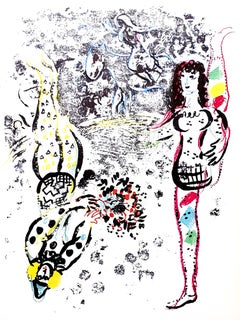
Bullfighter - Woodcut Print by Mino Maccari - 1965
By Mino Maccari
Located in Roma, IT
Bullfighter is a woodcut print on cream-colored paper realized by Mino Maccari in the 1965.
Hand-signed on the lower in pencil
Good conditions with minor folding along the margins....
Category
Modern 1960s More Prints
Materials
Woodcut
$332 Sale Price
20% Off
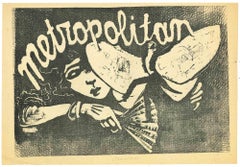
Richard Florsheim - Paris Seine - Original Lithograph
Located in Collonge Bellerive, Geneve, CH
Richard Florsheim - Paris Seine - Original Lithograph
1964
Dimensions: 30 x 20 cm
Edition of 200 (one of the 200 on Vélin de Rives)
Mourlot Press, 1964
B...
Category
Modern 1960s More Prints
Materials
Lithograph
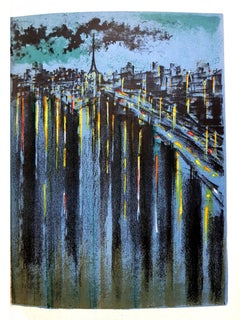
Edgar Dorsey Taylor Original Woodcut Baja - "Ocean Waves. Bahia de Rosaldita"
Located in Phoenix, AZ
Original Woodcut print from the Baja California Series by the artist Edgar Dorsey Taylor.
Title is seen at lower center: “Ocean Waves. Bahia de Rosaldita.” Pencil signed lower right....
Category
1960s More Prints
Materials
Paper
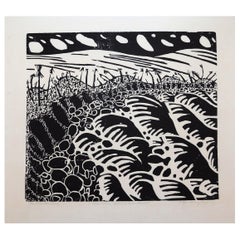
Organisée Par le International Art Program, Event Poster
Located in Chesterfield, MI
Organisée Par le International Art Program, National Collection of Fine Arts, Smithsonian Institution: “Woman with Fan” 1914 Bronze Relief, Visionaire International, Musée Rodin, Paris, 11 Mars-14 Avril, 1969 by ALEXANDER ARCHIPENKO (American-Ukranian, 1887-1964). Event Poster...
Category
1960s More Prints
Materials
Lithograph

$240 Sale Price
20% Off
Marc Chagall - The Ballet, Frontispiece
By Marc Chagall
Located in Collonge Bellerive, Geneve, CH
The Ballet, Frontispiece for the book “Daphnis and Chloe” Lithograph in colors, 1969. Unsigned and unnumbered, as issued from an edition of 10,000.
Printed ...
Category
Surrealist 1960s More Prints
Materials
Lithograph

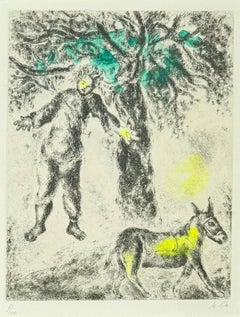
End of Absalom
By Marc Chagall
Located in OPOLE, PL
Marc Chagall (1887-1985) - End of Absalom
Etching and watercolour from 1958.
The edition of 100 on Arches paper.
Dimensions of work: 52 x 37.5 cm.
Hand signed.
Publisher: Tériad...
Category
Modern 1960s More Prints
Materials
Etching, Aquatint
$5,230 Sale Price
20% Off
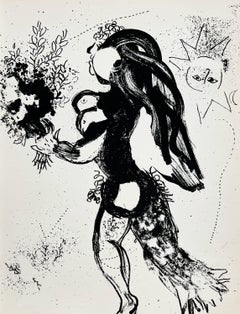
The Offering
By Marc Chagall
Located in OPOLE, PL
Marc Chagall (1887-1985) - The Offering
Original Lithograph from 1960.
Dimensions of work: 32 x 24 cm.
Publisher: Maeght Éditeur, Paris.
The work is in Excellent condition.
Category
Modern 1960s More Prints
Materials
Lithograph
$465 Sale Price
20% Off
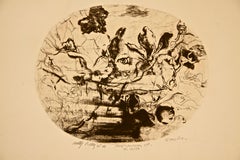
The Pitfall - Original Etching by Walter PIacesi - 1965
Located in Roma, IT
Hand Signed. Edition of 50 pieces. Original title: "L'insidia".
Very good conditions.
Category
1960s More Prints
Materials
Drypoint, Etching
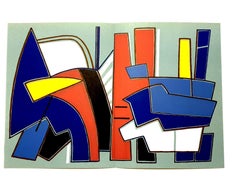
Alberto Magnelli - Composition - Original Lithograph
Located in Collonge Bellerive, Geneve, CH
Alberto Magnelli
Original Lithograph
Executed in 1967 for XXe Siecle (issue No. 29 "Vers un nouvel humanism")
published in Paris by San Lazzaro
There is a fold in the center, as issu...
Category
Abstract Geometric 1960s More Prints
Materials
Lithograph
Postcard of Greetings by Marino Marini - 1963
Located in Roma, IT
(P.A.S.d.l.) Autograph Postcard Signed by Marino Marini to Nesto Jacometti. Locarno, 27th December 1963. In 24°, cm 10.7 x 15, in Italian
Amusing postcard of greetings to his Graphi...
Category
Contemporary 1960s More Prints
Materials
Etching
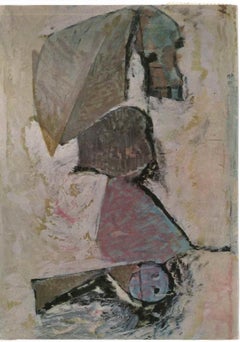
Rhythm 15 - Original Screen Print by Mario Padovan - 1969
Located in Roma, IT
Rhythm 15 is an original colored serigraph realized by Mario Padovan in 1969.
Hand-signed in pencil on the lower right. Numbered in pencil on the lower left. Edition 26/50. Original...
Category
Op Art 1960s More Prints
Materials
Lithograph
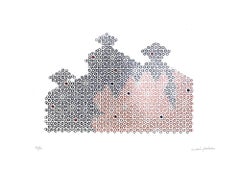
Der Transport - Original Etching and Drypoint by A. Hrdlicka - 1968
By Alfred Hrdlicka
Located in Roma, IT
Etching and drypont. Hand Signed and dated. Edition of 30 prints.
Very good conditions.
This artwork is shipped from Italy. Under existing legislation, any artwork in Italy created...
Category
1960s More Prints
Materials
Etching

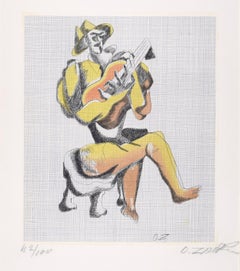
Le Guitariste - Original Etching by Ossip Zadkine - 1966
Located in Roma, IT
Rare and beautiful etching on lithographic base by Ossip Zadkine, realized in 1966.
Hand signed. One of 100 numbered copies on a global edition of 135 which includes also 10 artist'...
Category
Cubist 1960s More Prints
Materials
Etching
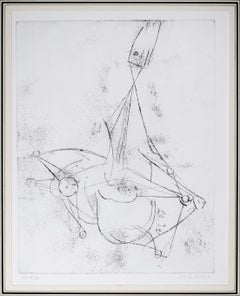
Miracolo (Miracle) - Original Etching - 1969
Located in Roma, IT
Image dimensions: 40.5x31.5 cm.
Edition of 20 prints numbered in roman numbers.
Hand numbered and signed by the artist.
Excellent conditions.
Category
1960s More Prints
Materials
Etching
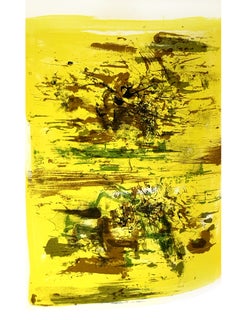
Zao Wou-ki - Original Lithograph - Abstract Composition
By Zao Wou-Ki
Located in Collonge Bellerive, Geneve, CH
Zao Wou-ki - Original Lithograph
1962
From La tentation de l’Occident
Dimensions: 39 x 28.5 cm
Publisher: Les Bibliophiles Comtois
Edition of 170
Reference: Jørgen Ågerup 137 - 146...
Category
Abstract Expressionist 1960s More Prints
Materials
Lithograph
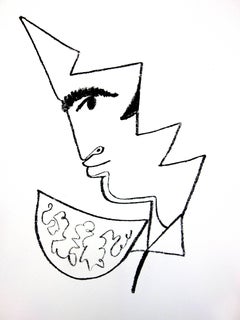
Jean Cocteau - Portrait - Original Lithograph
By Jean Cocteau
Located in Collonge Bellerive, Geneve, CH
Original Lithograph by Jean Cocteau
Title: Taureaux
Signed in the plate
Dimensions: 40 x 30 cm
Edition: 200
Luxury print edition from the portfolio of Trinckvel
1965
Jean Cocteau
W...
Category
Modern 1960s More Prints
Materials
Lithograph
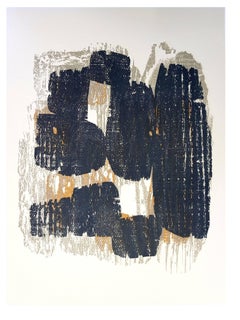
Raoul Ubac - Rythm - Original Woodcut
By Raoul Ubac
Located in Collonge Bellerive, Geneve, CH
Raoul Ubac - Rythm - Original Woodcut
Title: Rythm
Dimensions: 32 x 24 cm
Revue Art de France
The painter-sculptor Raoul Ubac was born in 1910 in Malmédy (Ardennes, Belgium). He wen...
Category
Abstract Expressionist 1960s More Prints
Materials
Woodcut
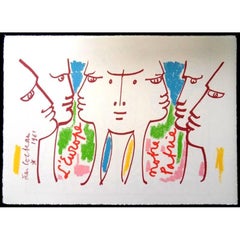
Jean Cocteau - Europe Our Homeland - Original Lithograph
By Jean Cocteau
Located in Collonge Bellerive, Geneve, CH
Original Lithograph by Jean Cocteau
Title: Europe Our Homeland
Signed in the plate
Dimensions: 33 x 46 cm
Edition: 200
Luxury print edition from the portfolio of Sciaky
1961
Jean Co...
Category
Post-Modern 1960s More Prints
Materials
Lithograph
Derriere le Miroir: Stabiles
Located in New York, NY
Portfolio with complete text is one of 150 deluxe numbered copies. It consists of 7 boldly colored lithographs and color lithograph cover. The sheets are loose as issued. Signed in p...
Category
Modern 1960s More Prints
Materials
Color, Lithograph

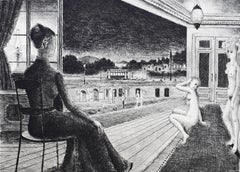
In Front of my Town - Belgian Surrealism Cityscape
By Paul Delvaux
Located in London, GB
This original lithograph is hand signed by the artist in pencil "P. Delvaux" at the lower right margin.
It is also hand numbered in pencil from the edition of 75, at the lower left m...
Category
Surrealist 1960s More Prints
Materials
Lithograph
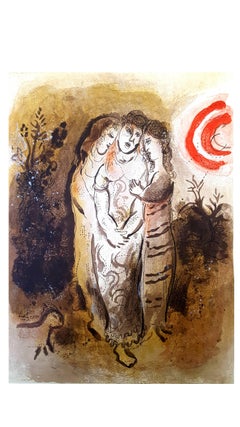
Marc Chagall - The Bible - Naomi and her daughters-in-law - Original Lithograph
By Marc Chagall
Located in Collonge Bellerive, Geneve, CH
Marc Chagall, Original Lithograh depicting an instant of the Bible.
Technique: Original lithograph in colours (Mourlot no. 234)
On the reverse: another black and white original litho...
Category
Modern 1960s More Prints
Materials
Lithograph
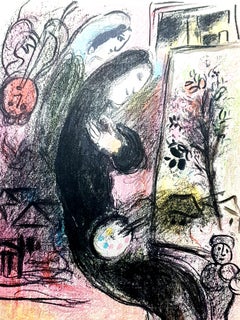
Marc Chagall - Inspiration - Original Lithograph from "Chagall Lithographe" v. 2
By Marc Chagall
Located in Collonge Bellerive, Geneve, CH
Marc Chagall
Original Lithograph from Chagall Lithographe 1957-1962. VOLUME II.
1963
Dimensions: 32 x 24 cm
From the unsigned edition of 10000 copies without margins
Reference: Mourlot 398
Condition : Excellent
Marc Chagall (born in 1887)
Marc Chagall was born in Belarus in 1887 and developed an early interest in art. After studying painting, in 1907 he left Russia for Paris, where he lived in an artist colony on the city’s outskirts. Fusing his own personal, dreamlike imagery with hints of the fauvism and cubism popular in France at the time, Chagall created his most lasting work—including I and the Village (1911)—some of which would be featured in the Salon des Indépendants exhibitions. After returning to Vitebsk for a visit in 1914, the outbreak of WWI trapped Chagall in Russia. He returned to France in 1923 but was forced to flee the country and Nazi persecution during WWII. Finding asylum in the U.S., Chagall became involved in set and costume design before returning to France in 1948. In his later years, he experimented with new art forms and was commissioned to produce numerous large-scale works. Chagall died in St.-Paul-de-Vence in 1985.
The Village
Marc Chagall was born in a small Hassidic community on the outskirts of Vitebsk, Belarus, on July 7, 1887. His father was a fishmonger, and his mother ran a small sundries shop in the village. As a child, Chagall attended the Jewish elementary school, where he studied Hebrew and the Bible, before later attending the Russian public school. He began to learn the fundamentals of drawing during this time, but perhaps more importantly, he absorbed the world around him, storing away the imagery and themes that would feature largely in most of his later work.
At age 19 Chagall enrolled at a private, all-Jewish art school and began his formal education in painting, studying briefly with portrait artist Yehuda Pen. However, he left the school after several months, moving to St. Petersburg in 1907 to study at the Imperial Society for the Protection of Fine Arts. The following year, he enrolled at the Svanseva School, studying with set designer Léon Bakst, whose work had been featured in Sergei Diaghilev's Ballets Russes. This early experience would prove important to Chagall’s later career as well.
Despite this formal instruction, and the widespread popularity of realism in Russia at the time, Chagall was already establishing his own personal style, which featured a more dreamlike unreality and the people, places and imagery that were close to his heart. Some examples from this period are his Window Vitebsk (1908) and My Fianceé with Black Gloves (1909), which pictured Bella Rosenfeld, to whom he had recently become engaged.
The Beehive
Despite his romance with Bella, in 1911 an allowance from Russian parliament member and art patron Maxim Binaver enabled Chagall to move to Paris, France. After settling briefly in the Montparnasse neighborhood, Chagall moved further afield to an artist colony known as La Ruche (“The Beehive”), where he began to work side by side with abstract painters such as Amedeo Modigliani and Fernand Léger as well as the avant-garde poet Guillaume Apollinaire. At their urging, and under the influence of the wildly popular fauvism and cubism, Chagall lightened his palette and pushed his style ever further from reality. I and the Village (1911) and Homage to Apollinaire (1912) are among his early Parisian works, widely considered to be his most successful and representative period.
Though his work stood stylistically apart from his cubist contemporaries, from 1912 to 1914 Chagall exhibited several paintings at the annual Salon des Indépendants exhibition, where works by the likes of Juan Gris, Marcel Duchamp and Robert Delaunay were causing a stir in the Paris art world. Chagall’s popularity began to spread beyond La Ruche, and in May 1914 he traveled to Berlin to help organize his first solo exhibition, at Der Sturm Gallery. Chagall remained in the city until the highly acclaimed show opened that June. He then returned to Vitebsk, unaware of the fateful events to come.
War, Peace and Revolution
In August 1914 the outbreak of World War I precluded Chagall’s plans to return to Paris. The conflict did little to stem the flow of his creative output, however, instead merely giving him direct access to the childhood scenes so essential to his work, as seen in paintings such as Jew in Green (1914) and Over Vitebsk (1914). His paintings from this period also occasionally featured images of the war’s impact on the region, as with Wounded Soldier (1914) and Marching (1915). But despite the hardships of life during wartime, this would also prove to be a joyful period for Chagall. In July 1915 he married Bella, and she gave birth to a daughter, Ida, the following year. Their appearance in works such as Birthday (1915), Bella and Ida by the Window (1917) and several of his “Lovers” paintings give a glimpse of the island of domestic bliss that was Chagall’s amidst the chaos.
To avoid military service and stay with his new family, Chagall took a position as a clerk in the Ministry of War Economy in St. Petersburg. While there he began work on his autobiography and also immersed himself in the local art scene, befriending novelist Boris Pasternak, among others. He also exhibited his work in the city and soon gained considerable recognition. That notoriety would prove important in the aftermath of the 1917 Russian Revolution when he was appointed as the Commissar of Fine Arts in Vitebsk. In his new post, Chagall undertook various projects in the region, including the 1919 founding of the Academy of the Arts. Despite these endeavors, differences among his colleagues eventually disillusioned Chagall. In 1920 he relinquished his position and moved his family to Moscow, the post-revolution capital of Russia.
In Moscow, Chagall was soon commissioned to create sets and costumes for various productions at the Moscow State Yiddish Theater...
Category
Surrealist 1960s More Prints
Materials
Lithograph
Recently Viewed
View AllMore Ways To Browse
Gustav Klutsis
Ihap Hulusi
Ivan Navarro
James B Painter
James Bond Movie Posters
Jan V Roy Posters
John Lennon On Sale
Lait Pur Sterilize
Lake District Vintage Travel Poster
Land Rover Poster
Le Frou Frou Vintage Poster
Leon De Pas
Leon Wuidar
Lillian Snelling
Man Ray Electro Magie
Maurin Quina Print
Michael Schwab Posters
Miroslav Sutej