Mid-19th Century Prints and Multiples

to
500
3,355
740
80
34
9
Overall Width
to
Overall Height
to
3,066
60
44
21
6
4
2
1
131
105
105
104
87
4,819
10,524
57,542
24,989
714
975
2,277
2,320
2,438
4,964
7,752
13,522
8,016
4,236
3,983
2,161
2,034
22
2,778
1,303
1,047
985
711
686
388
382
280
255
208
203
188
171
159
155
127
126
120
115
3,052
759
504
237
182
157
3,103
2,232
604
Period: Mid-19th Century
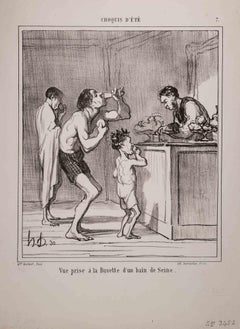
Vue Prise à la Buvette d un Bain de Seine - Lithograph by Honoré Daumier - 1858
Located in Roma, IT
Plate n. 7 from the suites of caricatures on political themes topic “Croquis d’Été ”.  Realized by  Honoré Daumier  (France, 1808-1879), printed by Destouches, and published by the ...
Category

Modern Mid-19th Century Prints and Multiples

Materials

Lithograph

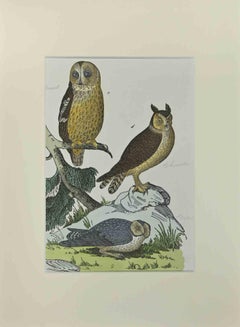
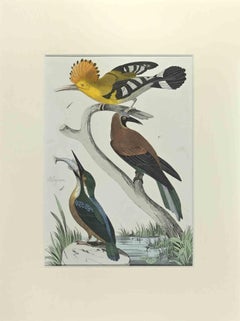
Owls - Etching by Johann Friedrich Naumann - 1840
Located in Roma, IT
Owls is an Etching hand colored realized by Gotthilf Heinrich von Schubert - Johann Friedrich Naumann, Illustration from Natural history of birds in pictures, published by Stuttgart ...
Category

Modern Mid-19th Century Prints and Multiples

Materials

Etching

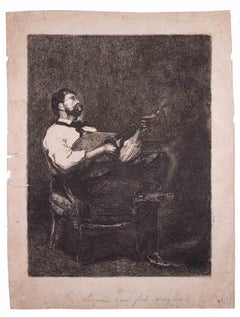
Guitar Player - Original Etching by F. Bonvin - 1861
Located in Roma, IT
Guitar Player is an original print, realized in 1861 by the French artist François Bonvin. Black and white etching on paper. The artwork is attached o...
Category

Modern Mid-19th Century Prints and Multiples

Materials

Etching

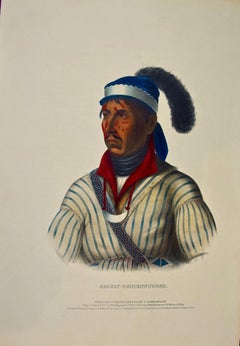
Apauly-Tustennuggee: 19th C. Hand-colored McKenney Hall Folio-sized Lithograph
Located in Alamo, CA
This is an original 19th century hand-colored folio size McKenney and Hall engraving of a Native American entitled "Apauly-Tustennuggee, A Creek Chief" after a painting by Charles Bird King from McKenney and Hall's "History of the Indian Tribes of North America", published in Philadelphia by Daniel Rice and James G. Clark in 1843. McKenney described him as “a chief and a warrior...a firm, brave man - and of good sense.” This original McKenney and Hall large hand-colored folio-size engraving measures 20" high and 14" wide. The print is in excellent condition. Col. Thomas J. McKenney was Superintendant of The Bureau of Indian Affairs from 1816 until 1830. He was one of a very few government officials to defend American Indian interests and attempt to preserve their culture. He travelled to Indian lands meeting the Native American leaders. He brought with him an accomplished artist, James Otto Lewis...
Category

Naturalistic Mid-19th Century Prints and Multiples

Materials

Engraving

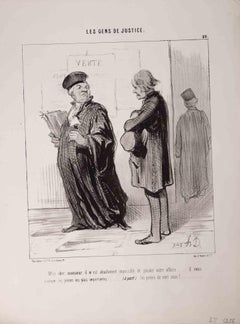
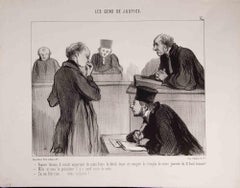
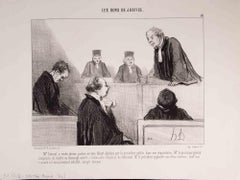
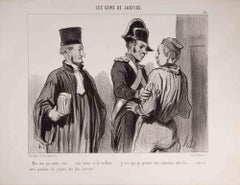
Les Gens de Justice - Lithograph by Honoré Daumier - 1845
Located in Roma, IT
Lithograph realized by Daumier in 1845, belonging to the Series "Les Gens de Justice" Table no. 20 of the Series. Monogrammed in the plate. Very good condition. Ref. Delteil 1356
Category

Modern Mid-19th Century Prints and Multiples

Materials

Lithograph

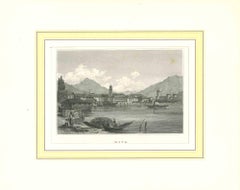
Ancient View of Riva - Original Lithograph - Early 19th Century
Located in Roma, IT
Riva is an original modern artwork realized in Italy in the first half of the 19th Century. Original Lithograph on Ivory Paper. Inscripted in capital letters on the lower margin: ...
Category

Modern Mid-19th Century Prints and Multiples

Materials

Lithograph

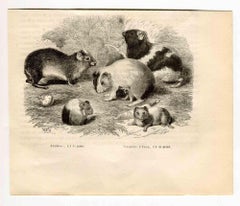
Brazilian Guinea Pig - Lithograph by Paul Gervais - 1854
Located in Roma, IT
Brazilian Guinea Pig is an original lithograph on ivory-colored paper, realized by Paul Gervais (1816-1879). The artwork is from The Series of "Les Trois Rè...
Category

Modern Mid-19th Century Prints and Multiples

Materials

Lithograph, Paper

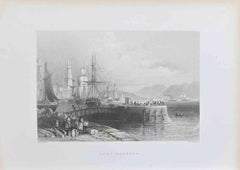
Port Glasgow - Etching by W. H.Bartlett - 1845
Located in Roma, IT
Port Glasgow is an etching realized in 1845 by W. H. Bartlett. Signed on the plate. Titled on the lower center, from the series of "Ports of Great Britain". Good conditions with...
Category

Modern Mid-19th Century Prints and Multiples

Materials

Etching

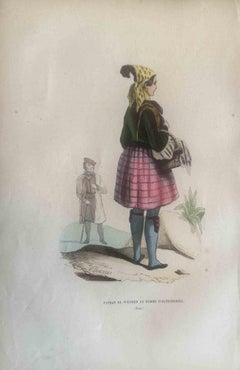
Uses and Customs - Altenbourg - Lithograph - 1862
Located in Roma, IT
Uses and Customs - Altenbourg is a lithograph on paper realized in 1862. The artwork belongs to the Suite Uses and customs of all the peoples of the universe: " History of the gover...
Category

Modern Mid-19th Century Prints and Multiples

Materials

Lithograph

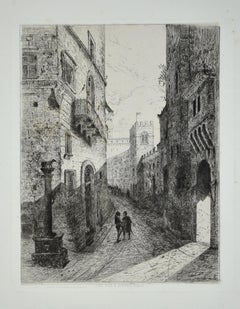
Une Rue à Sienne - Etching by L.-A. Leconte de Roujou - 1863
Located in Roma, IT
Une Rue à Sienne is an original artwork realized by Louis-Auguste Leconte de Roujou in 1863. Original etching. The sheet is glued on cardboard. Titled on the lower margin. The name...
Category

Mid-19th Century Prints and Multiples

Materials

Etching

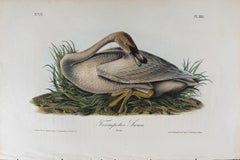
Trumpeter Swan: An Original 1st Edition Hand Colored Audubon Bird Lithograph
Located in Alamo, CA
This is an original rare and extremely collectible first edition John James Audubon hand-colored royal octavo lithograph entitled "Trumpeter Swan, Young", No. 77, Plate 383, from Aud...
Category

Naturalistic Mid-19th Century Prints and Multiples

Materials

Lithograph

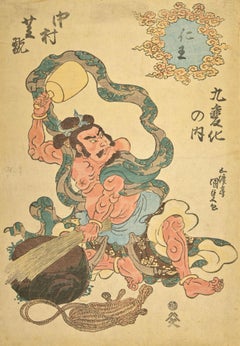
The Actor Nakamura Shikan - Woodcut by Utagawa Kunisada - Mid 19th century
Located in Roma, IT
The actor Nakamura Shikan, color woodcut, probably from the series "9 Dances", Mid-19th Century, realized by Utagawa Kunisada (1786-1865). Dimensions. 38x26.5cm, unframed, mounted...
Category

Modern Mid-19th Century Prints and Multiples

Materials

Woodcut

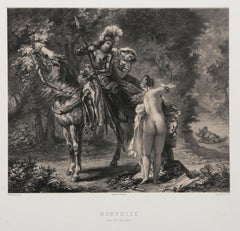
Marphise (Tire de l Arioste), Old Masters Lithograph after Eugene Delacroix
Located in Long Island City, NY
Eugene Delacroix, After by Eugene LeRoux, French (1798 - 1863) - Marphise (Tire de l'Arioste), Year: circa 1850, Medium: Lithograph, Image Size: 10.5 x 13 inches, Size: 19.25 x 2...
Category

Old Masters Mid-19th Century Prints and Multiples

Materials

Lithograph

Cockatiel - Etching by Johann Friedrich Naumann - 1840
Located in Roma, IT
Cockateil is an Etching hand colored realized by Gotthilf Heinrich von Schubert - Johann Friedrich Naumann, Illustration from Natural history of birds in pictures, published by Stutt...
Category

Modern Mid-19th Century Prints and Multiples

Materials

Etching

Les Gens de Justice - Lithograph by Honoré Daumier - 1845
Located in Roma, IT
Lithograph realized by Daumier in 1845, belonging to the Series "Les Gens de Justice" Table no. 17 of the Series. Hand monogrammed in the plate. Very good condition. Ref. Delteil...
Category

Modern Mid-19th Century Prints and Multiples

Materials

Lithograph

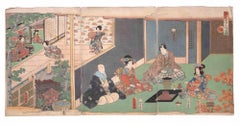
Genji in the Twelve Months - Woodcut by Utagawa Toyokuni III - 1858
Located in Roma, IT
Genji in the Twelve Months / The Tenth Month (Moto) is a tryptich woodcut print realized by Utagawa Toyokuni III in 1858. Very good condition except for some minor signs of wear.
Category

Modern Mid-19th Century Prints and Multiples

Materials

Woodcut

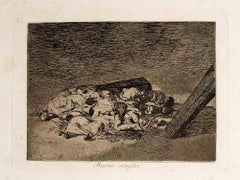
Muertos recogidos - Etching by Francisco Goya - 1863
Located in Roma, IT
Muertos recogidos is an original modern artwork realized by Francisco Goya in 1810. Third edition Black and white etching. Dimensions: Image 18 x 24 cm Sheet 33 x 24 cm. Good condition except for some foxings The artwork is the plate n.73 and belongs to the famous series Los Desastres de la...
Category

Modern Mid-19th Century Prints and Multiples

Materials

Etching

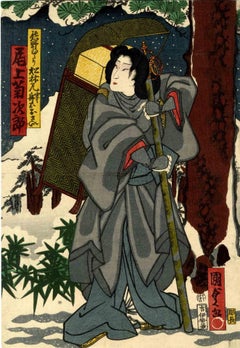
Kabuki - Scene in the Snow - Woodcut by Utagawa Kunisada - 1864
Located in Roma, IT
Kabuki - Scene in the snow is an original artwork realized in 1864 by Utagawa Kunisada II (1823 – 20 July 1880). Oban from a triptych. Scene in a snowy ...
Category

Modern Mid-19th Century Prints and Multiples

Materials

Woodcut

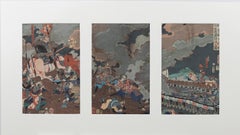
Tsukioka Yoshitoshi (1839-1892) -1866 Japanese Woodblock, Battle Of Kawanakajima
Located in Corsham, GB
An extraordinary ukiyo-e triptych by one of the greatest ukiyo-e artists of the 19thC, Tsukioka Yoshitoshi (1839-1892). The triptych shows a dramatic scene from the epic, bloody four...
Category

Mid-19th Century Prints and Multiples

Materials

Woodcut

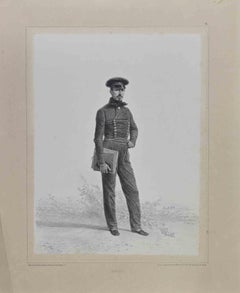
Portrait - Lithograph by Auguste Raffet - 1843
Located in Roma, IT
Portrait is a Lithograph realized by Auguste Raffet (1804-1860). Good condition on a yellowed paper. Hand signed and dated by the artist on the lower right corner. Denis Auguste M...
Category

Modern Mid-19th Century Prints and Multiples

Materials

Lithograph

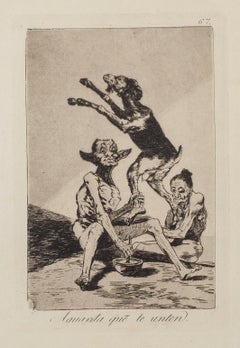
Aguarda que te Unten - Etching and Aquatint by Francisco Goya - 1868
Located in Roma, IT
Aguarda que te unten is an original artwork realized by the artist Francisco Goya and published for the first time in 1799. Original etching on woven paper. The etching belongs to ...
Category

Old Masters Mid-19th Century Prints and Multiples

Materials

Etching, Aquatint

Les Gens de Justice - Lithograph by Honoré Daumier - 1845
Located in Roma, IT
Lithograph realized by Daumier in 1845, belonging to the Series "Les Gens de Justice" Table no. 16 of the Series. Monogrammed in the plate. Very good condition. Ref. Delteil 1352
Category

Modern Mid-19th Century Prints and Multiples

Materials

Lithograph

Ancient African Customs - Lithograph by Auguste Wahlen - 1844
Located in Roma, IT
Ancient African Customs is a lithograph realized by Auguste Wahlen in 1844. Hand colored. Good condition. At the center of the artwork is the original title "Africa" and subtitle ...
Category

Modern Mid-19th Century Prints and Multiples

Materials

Lithograph

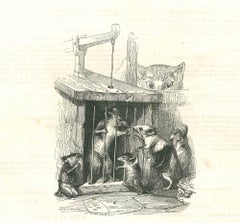
Visit to a Prisoner - Original Lithograph by J.J Grandville - 1852
Located in Roma, IT
Visit to a Prisoner is an original lithograph by J.J. Grandville from "Scènes de la vie privée et publique des animaux, 1852. Published by Manesq & Harvard, Paris. Good Conditions....
Category

Modern Mid-19th Century Prints and Multiples

Materials

Paper, Lithograph

Kabuki Scene - Woodblock Print by Utagawa Kunisada - Mid-19th Century
Located in Roma, IT
Kabuki Scene is an original Woodcut print realized in mid 19th century after Utagawa Kuniyoshi (1797-1861). Good condition and Beautiful colored woodblock print. This wonderful mo...
Category

Modern Mid-19th Century Prints and Multiples

Materials

Woodcut

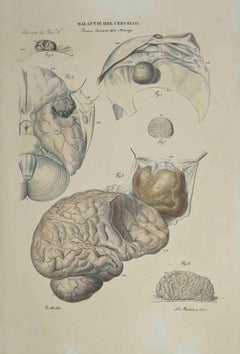
Brain Diseases - Lithograph By Ottavio Muzzi - 1843
Located in Roma, IT
Brain Diseases is a lithograph hand colored by Ottavio Muzzi for the edition of Antoine Chazal,Human Anatomy, Printers Batelli and Ridolfi, realized in 1843. Signed on plate on the l...
Category

Modern Mid-19th Century Prints and Multiples

Materials

Lithograph

Les Gens de Justice - Lithograph by Honoré Daumier - 1845
Located in Roma, IT
Lithograph realized by Daumier in 1845, belonging to the Series "Les Gens de Justice" Table no. 13 of the Series. Hand monogrammed in the plate. Very good condition. Ref. Delteil...
Category

Modern Mid-19th Century Prints and Multiples

Materials

Lithograph

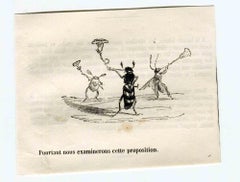
The Propositions - Original Lithograph by J.J Grandville - 1852
Located in Roma, IT
The Propositions is an original lithographs by J.J. Grandville from "Scènes de la vie privée et publique des animaux, 1852. Published by Manesq & Harva...
Category

Modern Mid-19th Century Prints and Multiples

Materials

Paper, Lithograph

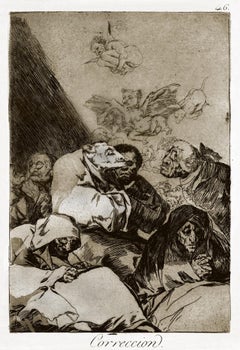
Correccion - Etching and Aquatint by Francisco Goya - 1868
Located in Roma, IT
Correccion is an original artwork realized by Francisco Goya and published for the first time in 1799. Etching on wove paper. This artwork belongs to the Third Edition published in...
Category

Old Masters Mid-19th Century Prints and Multiples

Materials

Etching, Aquatint

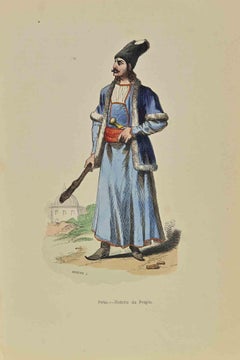
Persian, Man of the People - Lithograph by Auguste Wahlen - 1844
Located in Roma, IT
Persian, Man of the People is a lithograph made by Auguste Wahlen in 1844. Hand colored. Good condition. At the center of the artwork is the original title "Perse. Homme du Peuple...
Category

Modern Mid-19th Century Prints and Multiples

Materials

Lithograph

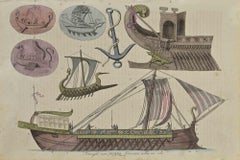
Ancient Ships - Lithograph - 1862
Located in Roma, IT
Ancient Ships is a lithograph on paper realized in 1862. The artwork belongs to the Suite Uses and customs of all the peoples of the universe: " History of the government, of the la...
Category

Modern Mid-19th Century Prints and Multiples

Materials

Lithograph

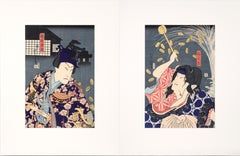
The Samurai Genta Kajiwara - Japanese Woodblock Diptych in Ink on Paper
Located in Soquel, CA
The Samurai Genta Kajiwara - Japanese Woodblock Diptych in Ink on Paper Boldly colored woodblock by Utagawa Yoshitora (Japanese, active c.1840-1880)...
Category

Edo Mid-19th Century Prints and Multiples

Materials

Paper, Ink, Woodcut

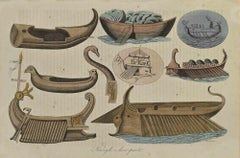
Ancient Ships - Lithograph - 1862
Located in Roma, IT
Ancient Ships is a lithograph on paper realized in 1862. The artwork belongs to the Suite Uses and customs of all the peoples of the universe: " History of the government, of the la...
Category

Modern Mid-19th Century Prints and Multiples

Materials

Lithograph

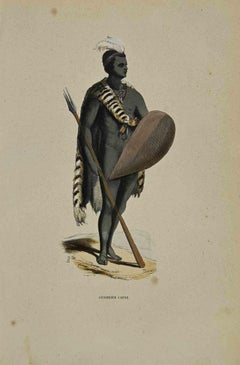
Guerrier Cafre - Lithograph by Auguste Wahlen - 1844
Located in Roma, IT
Guerrier Cafre is a hand colored lithograph realized by Auguste Wahlen in 1844. Good conditions. The artwork belongs to the Suite Moeurs, usages et costumes de tous les peuples du ...
Category

Modern Mid-19th Century Prints and Multiples

Materials

Lithograph

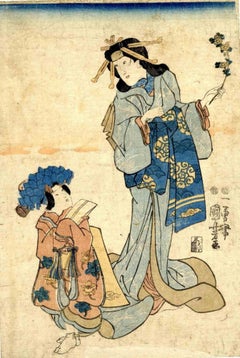
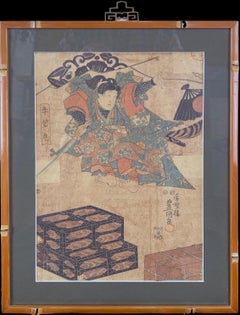
Actor in Onnagata Role - Woodcut Print by Utagawa Kuniyoshi - 1850s
Located in Roma, IT
Actor in onnagata role accompanied by a kamuro is an original artwork realized in the 1850s by Utagawa Kuniyoshi (January 1, 1798– April 14, 1861). Woodcut Print. Sign.: Ichiyusai ...
Category

Modern Mid-19th Century Prints and Multiples

Materials

Woodcut

Woodpeckers, Ceylonese Pygmy: A 19th C. Gould Hand-colored Lithograph
Located in Alamo, CA
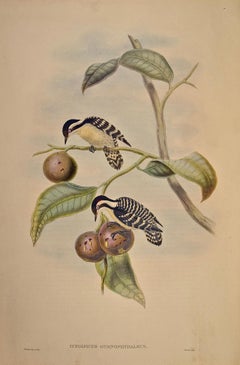
This is a hand-colored folio sized lithograph entitled "Iyngipicus Gymnophthalamus" (Ceylonese Pygmy Woodpecker) by John Gould from his monograph "The Birds of Asia", published in London in 1850-1883. The print, which was drawn by Gould and W. Hart and lithographed by Hullmandel and Walton, depicts two striped brown and ivory-colored woodpeckers with white and black on their heads. One is perched on a tree limb with pea green-colored leaves and the other on a round rose, brown-colored fruit. Both are pecking at fruit. This beautiful Gould hand-colored woodpecker lithograph measures 21" x 14.13". There is minimal faint focal discoloration in the lower margin. It is otherwise in excellent condition. The original text page is included with a round blindstamp in the right lower corner. There are several other unframed Gould woodpecker and other bird lithographs available via our 1stdibs storefront. Two or more of these would make an attractive display grouping. A discount is available for purchase of a set depending on the number. These additional Gould hummingbirds...
Category

Naturalistic Mid-19th Century Prints and Multiples

Materials

Lithograph

13 Vendémiaire, St Roch 1795 - Lithograph by Auguste Raffet - 1830s
Located in Roma, IT
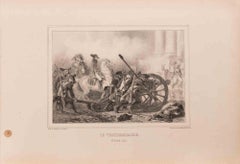
Lithograph on wove paper, realized between 1830s and 1840s. Signed in the plate. Mild foxing and age-toning, especially around sheet edges; image area clean and well-inked, with go...
Category

Modern Mid-19th Century Prints and Multiples

Materials

Lithograph

Temple of Neptune Pesto - Lithograph - 1862
Located in Roma, IT
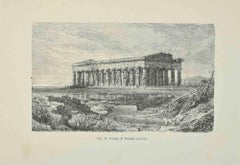
Uses and Customs - Temple of Neptune Pesto is a lithograph on paper realized in 1862. The artwork belongs to the Suite Uses and customs of all the peoples of the universe: " History...
Category

Modern Mid-19th Century Prints and Multiples

Materials

Lithograph

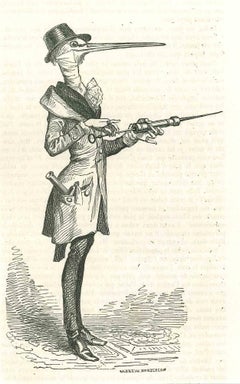
The Doctor Bird Ready For Injection - Lithograph by J.J Grandville - 1852
Located in Roma, IT
The Doctor Bird Ready For Injection is an original lithograph on ivory-colored paper realized by J.J. Grandville from Scènes de la vie privée et publique des animaux, 1852. Published...
Category

Modern Mid-19th Century Prints and Multiples

Materials

Paper, Lithograph

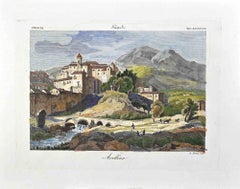
View of Avellino - Etching by Tommaso Piroli - Mid-19th century
Located in Roma, IT
View of Avellino is a print realized by Tommaso Piroli in the mid-19th century. Etching Hand-watercolored on paper. Signed and titled on the plate. Good conditions with foxing
Category

Contemporary Mid-19th Century Prints and Multiples

Materials

Etching

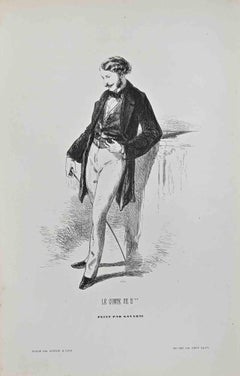
Le Comte De N - Lithograph By Paul Gavarni - mid 19th century
Located in Roma, IT
Le Comte De N is a lithograph on ivory-colored paper, realized by the French draftsman Paul Gavarni (alias Guillaume Sulpice Chevalier Gavarni, 1804-1866) in the mid-19th Century. S...
Category

Modern Mid-19th Century Prints and Multiples

Materials

Lithograph

Kabukie - Woodcut by Utagawa Kunisada - 1840
Located in Roma, IT
Kabukie is an original artwork realized in 1840 by Utagawa Kunisada (1786-1865). From the series "Mitate Yakusha gojusan tsui no uchi" (juxtaposition of actors and the 53 Tokaido s...
Category

Modern Mid-19th Century Prints and Multiples

Materials

Woodcut

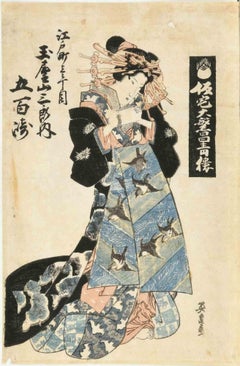
Courtesan - Woodcut by Keisai Eisen - 1830
Located in Roma, IT
Courtesan is an original modern artwork realized by Keisai Eisen in the first half of the 19th Century. Signed and inscribed on plate. Total dimension...
Category

Modern Mid-19th Century Prints and Multiples

Materials

Paper, Woodcut

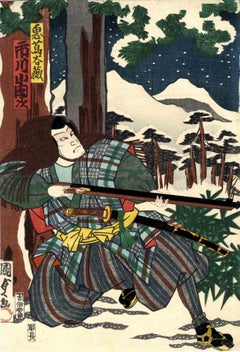
Kabuki - Woodcut by Utagawa Kunisada II - 1840
Located in Roma, IT
Kabuki is an original artwork realized in 1864 by Utagawa Kunisada II (1823 1880). Scene at night in a snowy forest, the actor Ichikawa Kodanji in the ro...
Category

Modern Mid-19th Century Prints and Multiples

Materials

Woodcut

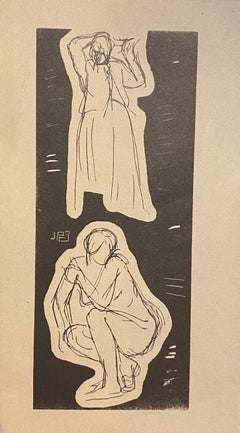
Figures of Women - Original Lithograph on Paper - 1840s
Located in Roma, IT
Figures of Women is an original lithograph on ivory-colorated paper by an unknown artist in 1840s. In very good condition. Not signed. Monogrammed J.P.
Category

Modern Mid-19th Century Prints and Multiples

Materials

Lithograph

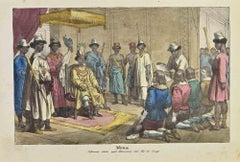
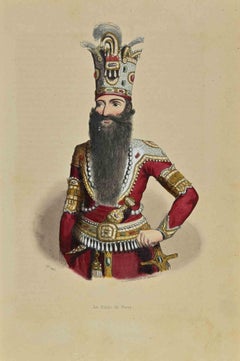
The Schah of Persia - Lithograph by Auguste Wahlen - 1844
Located in Roma, IT
Persian Dervish is a lithograph made by Auguste Wahlen in 1844. Hand colored. Good condition. At the center of the artwork is the original title "Derviche persan". The work is pa...
Category

Modern Mid-19th Century Prints and Multiples

Materials

Lithograph

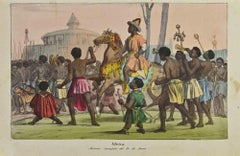
Ancient African Customs - Lithograph by Auguste Wahlen - 1844
Located in Roma, IT
Africa is a lithograph realized by Auguste Wahlen in 1844. Hand colored. Good condition. At the center of the artwork is the original title "Africa" and subtitle "Marcia trionfale...
Category

Modern Mid-19th Century Prints and Multiples

Materials

Lithograph

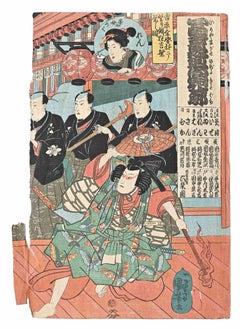
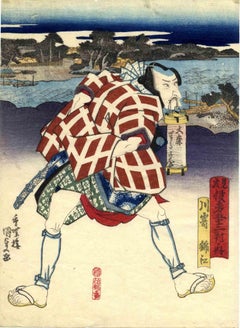
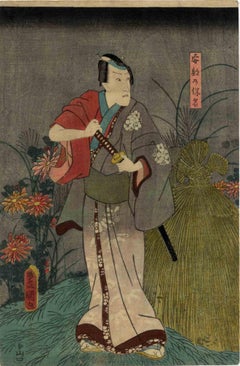
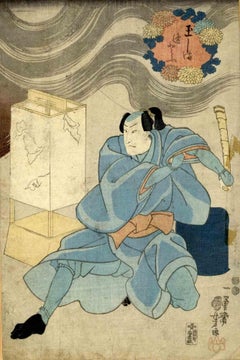
Kabukie - Woodcut by Utagawa Kunisada - 1850s
Located in Roma, IT
Kabukie is an original artwork realized in the 1850s by Utagawa Kunisada (1786-1865). Oban from a triptych. An actor in the role of Otokodate Abe no Homei stands ready at night in...
Category

Modern Mid-19th Century Prints and Multiples

Materials

Woodcut

Kumasaka Chōhan to Ushiwakamaru - One of a Diptych Original Woodcut Print
Located in Soquel, CA
Kumasaka Chōhan to Ushiwakamaru is a Japanese Ukiyo-e print created between 1848 and 1854 by artist Utagawa Kunisada (Japanese, 1786-1864). The print is a Diptych, and is part of the...
Category

Realist Mid-19th Century Prints and Multiples

Materials

Printer s Ink, Rice Paper, Woodcut

Yakushae Aizurie - Woodcut Print by Utagawa Kuniyoshi - 1840s
Located in Roma, IT
Yakushae Aizurie is an original artwork realized in 1840-1843 by Utagawa Kuniyoshi (January 1, 1798– April 14, 1861). Woodcut Print. Actor in the r...
Category

Modern Mid-19th Century Prints and Multiples

Materials

Woodcut

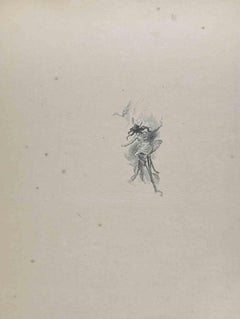
Fairy - Lithograph by Hégésippe Moreau - 1838
Located in Roma, IT
Fairy is a lithograph on paper realized by Hégésippe Moreau in 1838. The artwork is in good conditions. Hégésippe Moreau (1810-1838) was a French ly...
Category

Modern Mid-19th Century Prints and Multiples

Materials

Lithograph

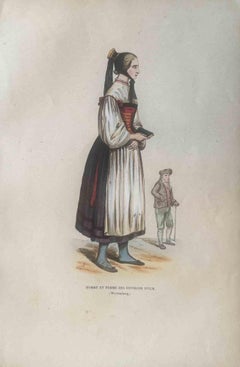
Uses and Customs - Wurtemberg - Lithograph - 1862
Located in Roma, IT
Uses and Customs - Wurtemberg is a lithograph on paper realized in 1862. The artwork belongs to the Suite Uses and customs of all the peoples of the universe: " History of the gover...
Category

Modern Mid-19th Century Prints and Multiples

Materials

Lithograph

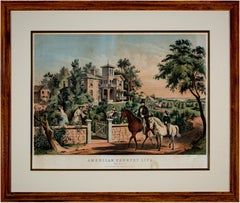
19th century color lithograph landscape figures horseback house scene trees sky
Located in Milwaukee, WI
The present print is one of several examples produced for Nathaniel Currier by his longtime collaborator Frances F. "Fanny" Palmer. Harry T. Peters wrote of her: "There is no more interesting and appealing character among the group of artists who worked for Currier & Ives than Fanny Palmer. In an age when women, well-bred women in particular, did not generally work for a living Fanny Palmer for years did exacting, full-time work in order to support a large and dependent family ... Her work ... had great charm, homeliness, and a conscientious attention to detail." One of a series of four prints showing American country life in different seasons, the image presents the viewer with a picturesque view of a successful American farm. In the foreground, a gentleman rides a horse with a young boy before a respectable Italianate country house. Two women and a young girl pick flowers in the garden and several farm workers attend to their duties. Beyond are other homes and a city on the coast. 16.63 x 23.75 inches, artwork 28.13 x 33.38 inches, frame Entitled bottom center "American Country Life - May Morning" Signed in the stone, lower left "F.F. Palmer, Del." Signed in the stone, lower right "Lith. by N. Currier" Copyrighted lower center "Entered according to Act of Congress in the year 1855 by N. Currier in the Clerk's office of the Southern District of N.Y." Inscribed bottom center "New York, Published by N. Currier 152 Nassau Street" Framed to conservation standards using silk-lined 100 percent rag matting and Museum Glass with a gold gilded liner, all housed in a stained wood moulding. Nathaniel Currier was a tall introspective man with a melancholy nature. He could captivate people with his piercing stare or charm them with his sparkling blue eyes. Nathaniel was born in Roxbury, Massachusetts on March 27th, 1813, the second of four children. His parents, Nathaniel and Hannah Currier, were distant cousins who lived a humble yet spartan life. When Nathaniel was eight years old, tragedy struck. Nathaniel’s father unexpectedly passed away leaving Nathaniel and his eleven-year-old brother Lorenzo to provide for the family. In addition to their mother, Nathaniel and Lorenzo had to care for six-year-old sister Elizabeth and two-year-old brother Charles. Nathaniel worked a series of odd jobs to support the family, and at fifteen, he started what would become a life-long career when he apprenticed in the Boston lithography shop of William and John Pendleton. A Bavarian gentleman named Alois Senefelder invented lithography just 30 years prior to young Nat Currier’s apprenticeship. While under the employ of the brothers Pendleton, Nat was taught the art of lithography by the firm’s chief printer, a French national named Dubois, who brought the lithography trade to America. Lithography involves grinding a piece of limestone flat and smooth then drawing in mirror image on the stone with a special grease pencil. After the image is completed, the stone is etched with a solution of aqua fortis leaving the greased areas in slight relief. Water is then used to wet the stone and greased-ink is rolled onto the raised areas. Since grease and water do not mix, the greased-ink is repelled by the moisture on the stone and clings to the original grease pencil lines. The stone is then placed in a press and used as a printing block to impart black on white images to paper. In 1833, now twenty-years old and an accomplished lithographer, Nat Currier left Boston and moved to Philadelphia to do contract work for M.E.D. Brown, a noted engraver and printer. With the promise of good money, Currier hired on to help Brown prepare lithographic stones of scientific images for the American Journal of Sciences and Arts. When Nat completed the contract work in 1834, he traveled to New York City to work once again for his mentor John Pendleton, who was now operating his own shop located at 137 Broadway. Soon after the reunion, Pendleton expressed an interest in returning to Boston and offered to sell his print shop to Currier. Young Nat did not have the financial resources to buy the shop, but being the resourceful type he found another local printer by the name of Stodart. Together they bought Pendleton’s business. The firm ‘Currier & Stodart’ specialized in "job" printing. They produced many different types of printed items, most notably music manuscripts for local publishers. By 1835, Stodart was frustrated that the business was not making enough money and he ended the partnership, taking his investment with him. With little more than some lithographic stones, and a talent for his trade, twenty-two year old Nat Currier set up shop in a temporary office at 1 Wall Street in New York City. He named his new enterprise ‘N. Currier, Lithographer’ Nathaniel continued as a job printer and duplicated everything from music sheets to architectural plans. He experimented with portraits, disaster scenes and memorial prints, and any thing that he could sell to the public from tables in front of his shop. During 1835 he produced a disaster print Ruins of the Planter's Hotel, New Orleans, which fell at two O’clock on the Morning of the 15th of May 1835, burying 50 persons, 40 of whom Escaped with their Lives. The public had a thirst for newsworthy events, and newspapers of the day did not include pictures. By producing this print, Nat gave the public a new way to “see” the news. The print sold reasonably well, an important fact that was not lost on Currier. Nat met and married Eliza Farnsworth in 1840. He also produced a print that same year titled Awful Conflagration of the Steamboat Lexington in Long Island Sound on Monday Evening, January 18, 1840, by which melancholy occurrence over One Hundred Persons Perished. This print sold out very quickly, and Currier was approached by an enterprising publication who contracted him to print a single sheet addition of their paper, the New York Sun. This single page paper is presumed to be the first illustrated newspaper ever published. The success of the Lexington print launched his career nationally and put him in a position to finally lift his family up. In 1841, Nat and Eliza had their first child, a son they named Edward West Currier. That same year Nat hired his twenty-one year old brother Charles and taught him the lithography trade, he also hired his artistically inclined brother Lorenzo to travel out west and make sketches of the new frontier as material for future prints. Charles worked for the firm on and off over the years, and invented a new type of lithographic crayon which he patented and named the Crayola. Lorenzo continued selling sketches to Nat for the next few years. In 1843, Nat and Eliza had a daughter, Eliza West Currier, but tragedy struck in early 1847 when their young daughter died from a prolonged illness. Nat and Eliza were grief stricken, and Eliza, driven by despair, gave up on life and passed away just four months after her daughter’s death. The subject of Nat Currier’s artwork changed following the death of his wife and daughter, and he produced many memorial prints and sentimental prints during the late 1840s. The memorial prints generally depicted grief stricken families posed by gravestones (the stones were left blank so the purchasers could fill in the names of the dearly departed). The sentimental prints usually depicted idealized portraits of women and children, titled with popular Christian names of the day. Late in 1847, Nat Currier married Lura Ormsbee, a friend of the family. Lura was a self-sufficient woman, and she immediately set out to help Nat raise six-year-old Edward and get their house in order. In 1849, Lura delivered a son, Walter Black Currier, but fate dealt them a blow when young Walter died one year later. While Nat and Lura were grieving the loss of their new son, word came from San Francisco that Nat’s brother Lorenzo had also passed away from a brief illness. Nat sank deeper into his natural quiet melancholy. Friends stopped by to console the couple, and Lura began to set an extra place at their table for these unexpected guests. She continued this tradition throughout their lives. In 1852, Charles introduced a friend, James Merritt Ives, to Nat and suggested he hire him as a bookkeeper. Jim Ives was a native New Yorker born in 1824 and raised on the grounds of Bellevue Hospital where his father was employed as superintendent. Jim was a self-trained artist and professional bookkeeper. He was also a plump and jovial man, presenting the exact opposite image of his new boss. Jim Ives met Charles Currier through Caroline Clark, the object of Jim’s affection. Caroline’s sister Elizabeth was married to Charles, and Caroline was a close friend of the Currier family. Jim eventually proposed marriage to Caroline and solicited an introduction to Nat Currier, through Charles, in hopes of securing a more stable income to support his future wife. Ives quickly set out to improve and modernize his new employer’s bookkeeping methods. He reorganized the firm’s sizable inventory, and used his artistic skills to streamline the firm’s production methods. By 1857, Nathaniel had become so dependent on Jims’ skills and initiative that he offered him a full partnership in the firm and appointed him general manager. The two men chose the name ‘Currier & Ives’ for the new partnership, and became close friends. Currier & Ives produced their prints in a building at 33 Spruce Street where they occupied the third, fourth and fifth floors. The third floor was devoted to the hand operated printing presses that were built by Nat's cousin, Cyrus Currier, at his shop Cyrus Currier & Sons in Newark, NJ. The fourth floor found the artists, lithographers and the stone grinders at work. The fifth floor housed the coloring department, and was one of the earliest production lines in the country. The colorists were generally immigrant girls, mostly German, who came to America with some formal artistic training. Each colorist was responsible for adding a single color to a print. As a colorist finished applying their color, the print was passed down the line to the next colorist to add their color. The colorists worked from a master print displayed above their table, which showed where the proper colors were to be placed. At the end of the table was a touch up artist who checked the prints for quality, touching-in areas that may have been missed as it passed down the line. During the Civil War, demand for prints became so great that coloring stencils were developed to speed up production. Although most Currier & Ives prints were colored in house, some were sent out to contract artists. The rate Currier & Ives paid these artists for coloring work was one dollar per one hundred small folios (a penny a print) and one dollar per one dozen large folios. Currier & Ives also offered uncolored prints to dealers, with instructions (included on the price list) on how to 'prepare the prints for coloring.' In addition, schools could order uncolored prints from the firm’s catalogue to use in their painting classes. Nathaniel Currier and James Merritt Ives attracted a wide circle of friends during their years in business. Some of their more famous acquaintances included Horace Greeley, Phineas T. Barnum, and the outspoken abolitionists Rev. Henry Ward, and John Greenleaf Whittier (the latter being a cousin of Mr. Currier). Nat Currier and Jim Ives described their business as "Publishers of Cheap and Popular Pictures" and produced many categories of prints. These included Disaster Scenes, Sentimental Images, Sports, Humor, Hunting Scenes, Politics, Religion, City and Rural Scenes, Trains, Ships, Fire Fighters, Famous Race Horses, Historical Portraits, and just about any other topic that satisfied the general public's taste. In all, the firm produced in excess of 7500 different titles, totaling over one million prints produced from 1835 to 1907. Nat Currier retired in 1880, and signed over his share of the firm to his son Edward. Nat died eight years later at his summer home 'Lion’s Gate' in Amesbury, Massachusetts. Jim Ives remained active in the firm until his death in 1895, when his share of the firm passed to his eldest son, Chauncey. In 1902, faced will failing health from the ravages of Tuberculosis, Edward Currier sold his share of the firm to Chauncey Ives...
Category

Romantic Mid-19th Century Prints and Multiples

Materials

Watercolor, Lithograph

Portrait of a Samurai - Woodcut by Utagawa Kunisada - 1860s
Located in Roma, IT
Oriental Warrior is an original print realized in the first half of the XIX century by Utagawa Kunisada. Beautiful colored woodblock print. This wonderful woodcut by Utagawa Kunisa...
Category

Modern Mid-19th Century Prints and Multiples

Materials

Woodcut

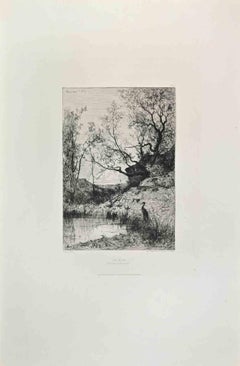
Une Mare (Environs de Roussillon) - Etching by Appian - 1864 ca.
Located in Roma, IT
Etching on laid paper. Signed and dated in plate upper left: Appian 1867. Published by Cadart & Luquet, Éditeurs, 79 Rue Richelieu, Paris With the blindstamp of the Société des Aquaf...
Category

Modern Mid-19th Century Prints and Multiples

Materials

Etching

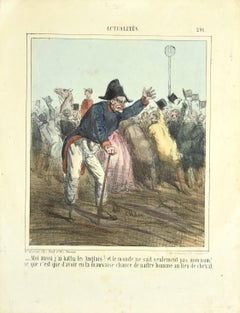
Actualités - Original Lithograph by Cham - 1840
Located in Roma, IT
Actualités is an amusing satirical illustration by the French illustrator and caricaturist, Cham (alias Count Amédée de Noé, 1818-1879) realized in 1840. Beautiful Hand-colored lith...
Category

Mid-19th Century Prints and Multiples

Materials

Lithograph

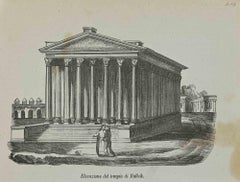
Elevation of the Temple of Balbek - Lithograph - 1862
Located in Roma, IT
Elevation of the Temple of Balbek is a  lithograph realized in 1864. Good conditions. The artwork belongs to the Suite Uses and customs of all the peoples of the universe, or Histo...
Category

Modern Mid-19th Century Prints and Multiples

Materials

Lithograph

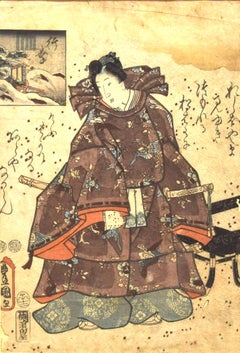
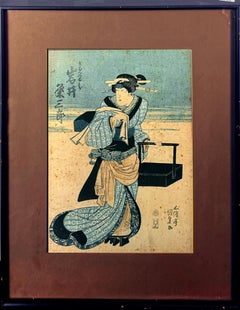
Ichimura Uzaemon XIII - actor as Okaji of Gion, 1862 "The Six Poetry Immortals"
Located in Soquel, CA
Ichimura Uzaemon XIII - actor as Okaji of Gion, 1862 "The Six Poetry Immortals" A Japanese Ukiyo-e woodcut print created circa 1862 by artist Utagawa Kunisada (Japanese, 1786-1864). ...
Category

Realist Mid-19th Century Prints and Multiples

Materials

Printer s Ink, Rice Paper, Woodcut

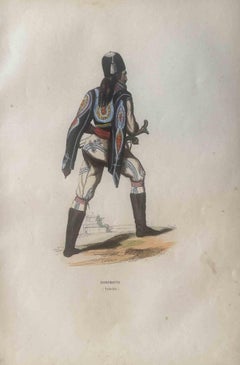
Uses and Customs - Valachie - Lithograph - 1862
Located in Roma, IT
Uses and Customs - Valachie is a lithograph on paper realized in 1862. The artwork belongs to the Suite Uses and customs of all the peoples of the universe: " History of the governm...
Category

Modern Mid-19th Century Prints and Multiples

Materials

Lithograph

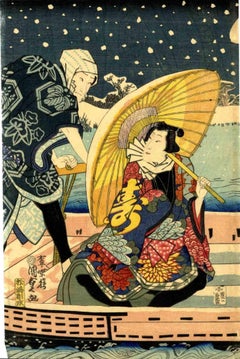
Kabuki - Woodcut by Utagawa Kunisada II - 1862
Located in Roma, IT
Kabuki is an original artwork realized in 1862 by Utagawa Kunisada II (1823-1880). Boatman with elegant passenger in snowy landscape. Sign: Kochoro Kuni...
Category

Modern Mid-19th Century Prints and Multiples

Materials

Woodcut

Still Thinking About These?

All Recently Viewed