Expressionist Prints and Multiples

EXPRESSIONIST STYLE

While “expressionist” is used to describe any art that avoids naturalism and instead employs a bold use of flattened forms and intense brushwork, Expressionist art formally describes early-20th-century work from Europe that drew on Symbolism and confronted issues such as urbanization and capitalism. Expressionist artists experimented in paintings and prints with skewed perspectives, abstraction and unconventional, bright colors to portray how isolating and anxious the world felt rather than how it appeared. 

Between 1905 and 1920, Austrian and German artists, in particular, were inspired by Postimpressionists such as Paul Gauguin and Vincent van Gogh in their efforts to strive for a new authenticity in their work. In its geometric patterns and decorative details, Expressionist art was also marked by eclectic sources like German and Russian folk art as well as tribal art from Africa and Oceania, which the movement’s practitioners witnessed at museums and world’s fairs.

Groups of artists came together to share and promote the themes now associated with Expressionism, such as Die Brücke (The Bridge) in Dresden, which included Erich Heckel, Ernst Ludwig Kirchner and Karl Schmidt-Rottluff and investigated alienation and the dissolution of society in vivid color. In Munich, Der Blaue Reiter (The Blue Rider), a group led by Wassily Kandinsky and Franz Marc, instilled Expressionism with a search for spiritual truths. In his iconic painting The Scream, prolific Norwegian painter Edvard Munch conveyed emotional turmoil through his depiction of environmental elements, such as the threatening sky.

Expressionism shifted around the outbreak of World War I, with artists using more elements of the grotesque in reaction to the escalation of unrest and violence. Printmaking was especially popular, as it allowed artists to widely disseminate works that grappled with social and political issues amid this time of upheaval. Although the art movement ended with the rise of Nazi Germany, where Expressionist creators were labeled “degenerate,” the radical ideas of these artists would influence Neo-Expressionism that emerged in the late 1970s with painters like Jean-Michel Basquiat and Francesco Clemente.

​​Find a collection of authentic Expressionist paintings, sculptures, prints and more art on 1stDibs.

to
450
739
331
242
91
41
Overall Width
to
Overall Height
to
21,094
18,493
10,670
6,310
5,217
2,716
1,559
1,387
893
877
434
346
199
149
53
46
44
40
1
31
1,291
128
93
121
205
48
13
112
191
127
154
38
1
981
444
17
858
493
393
344
297
277
186
153
109
51
46
38
34
32
30
29
27
24
23
23
827
228
162
109
73
151
244
1,140
245
Style: Expressionist
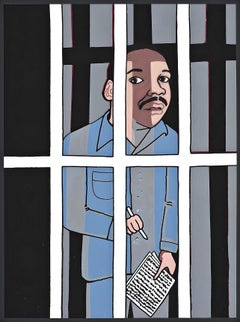
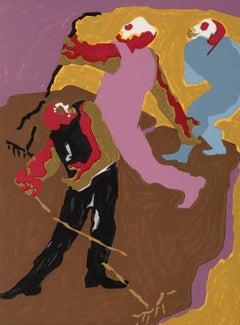
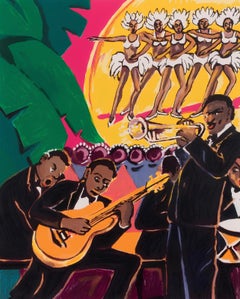
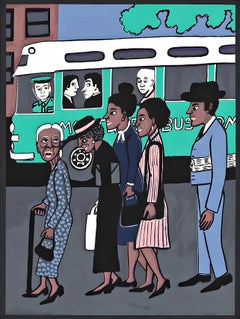
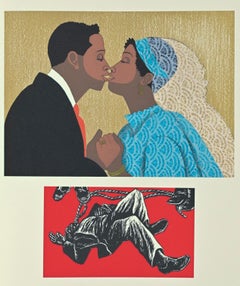
Faith Ringgold, Slavery, from Letter from Birmingham City Jail, 2007
Located in Southampton, NY
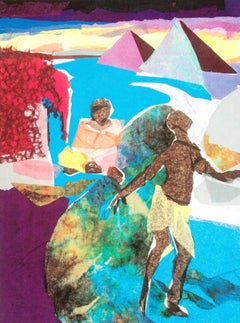
This exquisite silkscreen by Faith Ringgold (1930–2024), titled Slavery, from the folio Letter from Birmingham City Jail, originates from the 2007 edition published by The Limited Ed...
Category

Early 2000s Expressionist Prints and Multiples

Materials

Screen

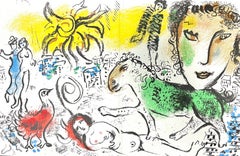
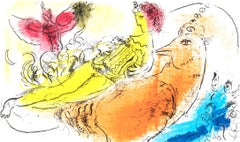
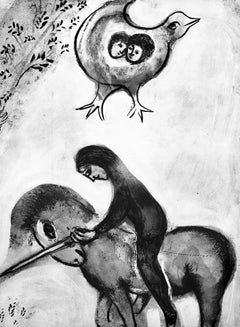
Marc Chagall, Sun Over the City, from XXe siecle, 1973
Located in Southampton, NY
This exquisite lithograph by Marc Chagall (1887–1985), titled Soleil sur la ville (Sun Over the City), from the album Chagall Monumental Works, Special Issue of the XXe Siecle Review...
Category

1970s Expressionist Prints and Multiples

Materials

Lithograph

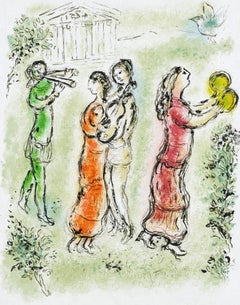
Marc Chagall, Ares and Aphrodite, from Homer, The Odyssey, 1989 (after)
Located in Southampton, NY
This exquisite lithograph after Marc Chagall (1887–1985), titled Ares und Aphrodite (Ares and Aphrodite), from Homer, Die Odyssee (The Odyssey), originates from the 1989 German-langu...
Category

1980s Expressionist Prints and Multiples

Materials

Lithograph

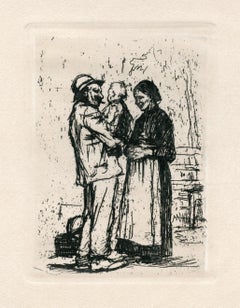
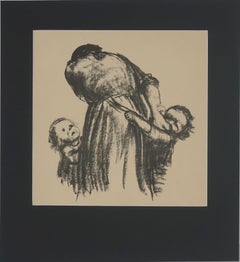
"Begrüssung" original etching
Located in Henderson, NV
Medium: original etching. Catalogue reference: Klipstein 10. A very rich impression on cream wove paper of this Kollwitz etching, with plate tone. Plate size: 118 x 88mm (4 5/8 x 3 1...
Category

1890s Expressionist Prints and Multiples

Materials

Etching

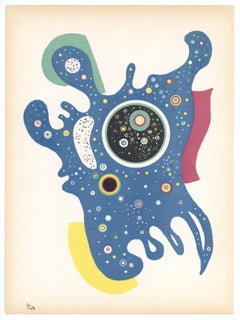
"Stars" original lithograph
Located in Henderson, NV
Medium: original lithograph. Printed in 1938 and published in Paris by Teriade for the art revue Verve (volume 1, number 2). Kandinsky was invited to contribute an original compositi...
Category

1930s Expressionist Prints and Multiples

Materials

Lithograph

Original Midget Dream #1 psychedelic 1967 vintage poster - popart
Located in Spokane, WA
Original Peter Max’s “Midget Dream #1” vintage psychedelic poster. In very fine condition, never displayed, and ready to frame. Grade...
Category

1960s Expressionist Prints and Multiples

Materials

Offset

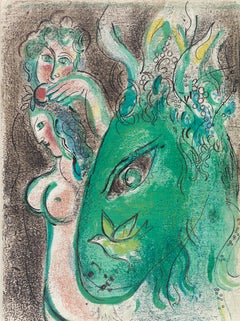
Marc Chagall, Paradise I, from Drawings for the Bible, 1956
Located in Southampton, NY
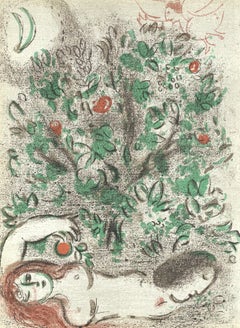
This exquisite lithograph by Marc Chagall (1887–1985), titled Paradis I (Paradise I), from Marc Chagall, Dessins Pour La Bible (Drawings for the Bible), Verve: Revue Artistique et Litteraire, Vol. VIII, No. 33–34, originates from the September 1956 issue published by Editions de la revue Verve, Paris, under the direction of Teriade, Editeur, Paris, and printed by Mourlot Freres, Paris, 1956. This radiant and dreamlike composition envisions the Garden of Eden as a symbol of divine harmony and innocence, where life, color, and spirit coexist in perfect unity. Through lyrical forms and glowing tonal contrasts, Chagall expresses a vision of creation that transcends narrative, merging spiritual wonder with emotional warmth. Paradis I embodies the artist’s enduring fascination with the sacred origins of life and the poetic balance between the earthly and the eternal. The piece forms part of Chagall’s celebrated series of lithographs and drawings created for Dessins Pour La Bible, a monumental project uniting art, scripture, and mysticism in one of the artist’s most important achievements. Executed as a lithograph on velin du Marais paper, this work measures 14 x 10.5 inches (35.56 x 26.67 cm). Unsigned and unnumbered as issued. The edition exemplifies the superb craftsmanship of the Mourlot Freres atelier, renowned for its collaborations with the greatest modern masters of the 20th century. Artwork Details: Artist: Marc Chagall (1887–1985) Title: Paradis I (Paradise I), from Marc Chagall, Dessins Pour La Bible (Drawings for the Bible), Verve: Revue Artistique et Litteraire, Vol. VIII, No. 33–34, September 1956 Medium: Lithograph on velin du Marais paper Dimensions: 14 x 10.5 inches (35.56 x 26.67 cm) Inscription: Unsigned and unnumbered as issued Date: 1956 Publisher: Editions de la revue Verve, Paris, under the direction of Teriade, Editeur, Paris Printer: Mourlot Freres, Paris Catalogue raisonne references: Cain, Julien, and Fernand Mourlot. Chagall Lithographe. Andre Sauret, Editeur, 1960, illustrations 117–46. Cramer, Patrick, and Meret Meyer. Marc Chagall: Catalogue Raisonne Des Livres Illustrés. P. Cramer ed., 1995, illustration 25. Condition: Well preserved, consistent with age and medium Provenance: From Marc Chagall, Dessins Pour La Bible (Drawings for the Bible), Verve: Revue Artistique et Litteraire, Vol. VIII, No. 33–34, published by Editions de la revue Verve, Paris, 1956 Notes: Excerpted from the album (translated from French), This double issue of Verve is dedicated to the full reproduction in heliogravure of the one hundred-five plates etched by Marc Chagall, between 1930 and 1955, for the illustration of the Bible. The artist composed especially for the present work, sixteen lithographs in color and twelve in black, as well as the cover and the title page. This volume was completed and printed on September 10, 1956, by the Master Printers Draeger Freres for heliogravure, and by Mourlot Freres for lithography. About the Publication: Marc Chagall, Dessins Pour La Bible (Drawings for the Bible), published as Verve Vol. VIII, No. 33–34 in September 1956, represents one of the crowning achievements of Chagall’s lifelong dialogue with the sacred. Conceived and directed by the visionary publisher Teriade and printed by the master lithographers Mourlot Freres, the issue features thirty-four color lithographs and numerous black-and-white drawings inspired by biblical figures and stories. Chagall’s works for this edition unite text and image in a luminous meditation on divine creation, moral struggle, and spiritual renewal, imbued with his signature dreamlike symbolism and radiant color. Produced in postwar Paris, this landmark publication reaffirmed the enduring union of art and faith, establishing Dessins Pour La Bible as one of the most important illustrated works of the 20th century. About the Artist: Marc Chagall (1887–1985) was a Belarus-born French painter, printmaker, and designer whose visionary imagination, radiant color, and deeply poetic symbolism made him one of the most beloved and influential artists of the 20th century. Rooted in the imagery of his Jewish heritage and the memories of his childhood in Vitebsk, Chagall’s art wove together themes of faith, love, folklore, and fantasy with a dreamlike modern sensibility. His unique style—merging elements of Cubism, Fauvism, Expressionism, and Surrealism—defied categorization, transforming ordinary scenes into lyrical meditations on memory and emotion. Influenced by Russian icon painting, medieval religious art, and the modern innovations of artists such as Pablo Picasso, Henri Matisse, and Georges Braque, Chagall developed a profoundly personal visual language filled with floating figures, vibrant animals, musicians, and lovers that symbolized the transcendent power of imagination and love. During his early years in Paris, he became an integral part of the Ecole de Paris circle, forming friendships with Amedeo Modigliani, Fernand Leger, and Sonia Delaunay, and his creative spirit resonated with that of his peers and successors—Alexander Calder, Alberto Giacometti, Salvador Dali, Joan Miro, Wassily Kandinsky, Marcel Duchamp, and Man Ray—artists who, like Chagall, sought to push the boundaries of perception, emotion, and form. Over a prolific career that spanned painting, printmaking, stained glass, ceramics, and stage design, Chagall brought an unparalleled poetic sensibility to modern art, infusing even the most abstract subjects with human warmth and spiritual depth. His works are held in the most prestigious museums around the world, including the Museum of Modern Art, the Centre Pompidou, the Tate, and the Guggenheim, where they continue to inspire generations of artists and collectors. The highest price ever paid for a Marc Chagall artwork is approximately $28.5 million USD, achieved in 2017 at Sotheby’s New York for Les Amoureux (1928). Marc Chagall Paradis...
Category

1950s Expressionist Prints and Multiples

Materials

Lithograph

Marc Chagall, Blue Horse with Couple, from Derriere le Miroir, 1982
Located in Southampton, NY
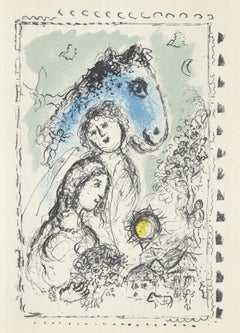
This exquisite lithograph by Marc Chagall (1887–1985), titled Cheval bleu au couple (Blue Horse with Couple), originates from the historic 1982 folio Derriere le Miroir, No. 250, Hommage a Aime et Marguerite Maeght (Tribute to Aime and Marguerite Maeght). Published by Maeght Editeur, Paris, under the direction of Aime Maeght, and printed by Imprimerie Moderne du Lion, Paris, this vibrant composition reflects Chagall’s lyrical fusion of color, dream, and devotion. In Cheval bleu au couple, ethereal figures and a radiant blue horse float within a luminous space of poetic imagination, evoking love, memory, and transcendence. The image captures the artist’s timeless ability to unite fantasy and emotion within the expressive language of modernism. Executed on velin paper, this lithograph measures 15 x 11 inches (38.1 x 27.9 cm). As issued, it is unsigned and unnumbered, consistent with the authorized publication format. The edition exemplifies Chagall’s mastery of color lithography and his lifelong exploration of faith, folklore, and the human spirit. Artwork Details: Artist: Marc Chagall (1887–1985) Title: Cheval bleu au couple (Blue Horse with Couple), from Derriere le Miroir, No. 250, Hommage a Aime et Marguerite Maeght (Tribute to Aime and Marguerite Maeght), 1982 Medium: Lithograph on velin paper Dimensions: 15 x 11 inches (38.1 x 27.9 cm) Inscription: Unsigned and unnumbered, as issued Date: 1982 Publisher: Maeght Editeur, Paris Printer: Imprimerie Moderne du Lion, Paris Catalogue raisonne references: Chagall, Marc, et al. Chagall Lithographe VI, 1980–1985. Andre Sauret, Editeur, 1986, illustration 993. Cramer, Patrick, and Meret Meyer. Marc Chagall: Catalogue Raisonne Des Livres Illustres. P. Cramer ed., 1995, illustration 113. Condition: Well preserved, consistent with age and medium Provenance: From the 1982 folio Derriere le Miroir, No. 250, published by Maeght Editeur, Paris Notes: Excerpted from the folio (translated from French), This special issue of Derriere le Miroir was designed and defined by Aime Maeght in the fall of 1980. He envisioned its publication as a celebration with which artists and writers published since 1946 were to be associated. He also chose Francois Chapon, president of the Reverdy Committee, to write the presentation. This Derriere le Miroir number 250 took the form, after its disappearance on September 5, 1981, of a tribute to Aime Maeght and his wife Marguerite Maeght who died four years earlier. 24 artists agreed to create an original graphic work for this issue which includes the general table of all issues as well as excerpts from texts by 32 writers. Finished printing on June 2, 1982 on the presses of the l'Imprimerie moderne du Lion in Paris. CL examples were printed on velin d'Arches, numbered from I to CL, and some non-commercial examples constituting the original edition. About the Publication: Derriere le Miroir (translated as "Behind the Mirror") was an iconic French art periodical published from 1946 to 1982 by Maeght Editeur, one of the most influential art publishers of the 20th century. Founded by Aime Maeght in Paris, the publication was conceived as a visual and literary collaboration between leading modern artists, poets, and critics. Each issue functioned as both an exhibition catalogue and a work of art in itself—featuring original lithographs printed directly from the artists' stones or plates, alongside essays, poems, and critical commentary. Over the course of 36 years, Derriere le Miroir produced more than 250 issues and showcased an extraordinary roster of artists including Henri Matisse, Marc Chagall, Joan Miro, Georges Braque, Alexander Calder, Fernand Leger, Pierre Bonnard, Alberto Giacometti, Eduardo Chillida, Ellsworth Kelly, Francis Bacon, Paul Rebeyrolle, Claude Garache, Antoni Tapies, Bram van Velde, Pierre Alechinsky, Pol Bury, Shusaku Arakawa, and Gerard Titus-Carmel. Printed in the ateliers of Mourlot, Arte, and Imprimerie Moderne du Lion, the periodical set new standards for quality in color lithography, combining fine art printing with elegant typography and poetic text. Beyond its visual brilliance, Derriere le Miroir also became a cultural chronicle of postwar European modernism. Each issue coincided with exhibitions held at Galerie Maeght, providing a collectible and widely accessible record of groundbreaking shows. Its integration of image, text, and philosophy created a dialogue between art and literature that elevated the modern art book to new aesthetic heights. Today, Derriere le Miroir remains one of the most sought-after and historically significant art publications, prized by collectors and scholars alike for its craftsmanship, influence, and its role in defining the visual language of 20th-century modernism. The Maeght Foundation in Saint-Paul-de-Vence continues to honor this legacy through exhibitions and archival preservation of the series, affirming Derriere le Miroir's enduring place in the history of modern art and fine art publishing. About the Artist: Marc Chagall (1887–1985) was a Belarus-born French painter, printmaker, and designer whose visionary use of color and poetic symbolism made him one of the most beloved and influential artists of the 20th century. Rooted in the rich imagery of his Jewish heritage and childhood in Vitebsk, Chagall’s dreamlike compositions fused memory, folklore, faith, and romance with the expressive innovations of modern art. His work evolved alongside and in dialogue with the great modern masters—Pablo Picasso, Henri Matisse, Alexander Calder, Salvador Dali, Joan Miro, Georges Braque, Wassily Kandinsky, Marcel Duchamp, and Man Ray—artists who, like Chagall, redefined artistic language for a new century. Spanning painting, printmaking, stained glass, ceramics, stage design, and illustration, Chagall’s career reflected both his deep spirituality and his boundless imagination. His works are held in major museum collections worldwide, including the Museum of Modern Art, the Guggenheim, the Tate, and the Centre Pompidou. The highest price ever paid for a Marc Chagall artwork is approximately $28.5 million USD, achieved in 2017 at Sotheby’s New York for Les Amoureux (1928). Marc Chagall Cheval bleu au couple, Marc Chagall lithograph, Chagall Derriere le Miroir, Chagall Maeght...
Category

1980s Expressionist Prints and Multiples

Materials

Lithograph

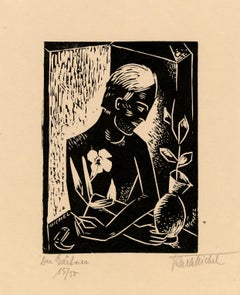
Der Gartner (The Gardener) — German Expressionism
Located in Myrtle Beach, SC
Karl Michel, 'Der Gartner' (The Gardener), woodcut, c. 1925. Signed, titled, and numbered '15/50' in pencil. Signed in the block, lower left and right. A fine, richly-inked impression on buff wove paper, with full margins (1 1/2 to 2 3/4 inches), in excellent condition. Matted to museum standards, unframed. Scarce. Image size 5 1/4 x 3 7/8 inches (133 x 98 mm); sheet size 10 x 7 3/4 inches (254 x 198 mm). ABOUT THE ARTIST Karl Michel (1889-1984) was a noted graphic designer and expressionist printmaker during Germany's pre-Nazi Weimar Republic (1919 - 1933). In 1920, his work was featured in the influential German graphic design magazine Das Plakat...
Category

1920s Expressionist Prints and Multiples

Materials

Woodcut

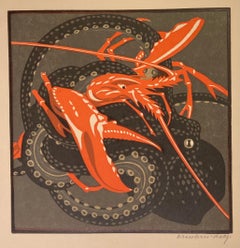
LOBSTER and OCTOPUS (KAMPF - BATTLE)
Located in Santa Monica, CA
NORBERTINE VON BRESSLERN-ROTH (1891 1978) KAMPF (BATTLE - LOBSTER and OCTOPUS) c. 1928 Color linoleum cut Signed in pencil. Image 8 5/8 x 8 11/16” In excellent condition and full ...
Category

1920s Expressionist Prints and Multiples

Materials

Linocut

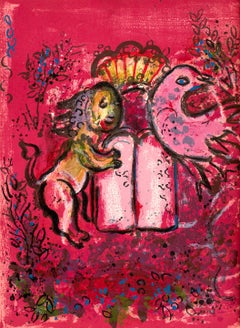
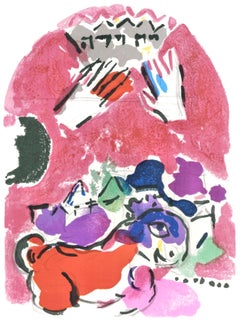
Marc Chagall, Tribe of Reuben, from The Jerusalem Windows, 1962 (after)
Located in Southampton, NY
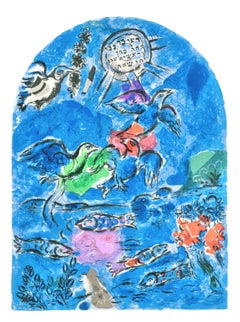
This exquisite lithograph after Marc Chagall (1887–1985), titled Tribe of Reuben, from the album Marc Chagall, The Jerusalem Windows, originates from the 1962 edition published by An...
Category

1960s Expressionist Prints and Multiples

Materials

Lithograph

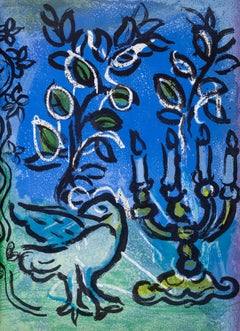
Marc Chagall, The Candelabrum, from The Jerusalem Windows, 1962
Located in Southampton, NY
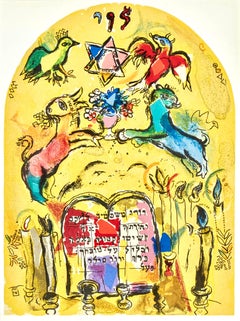
This exquisite lithograph by Marc Chagall (1887–1985), titled Le Chandelier (The Candelabrum), from the album Marc Chagall, The Jerusalem Windows, originates from the 1962 edition pu...
Category

1960s Expressionist Prints and Multiples

Materials

Lithograph

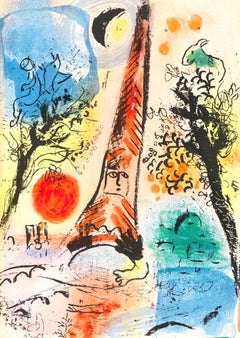
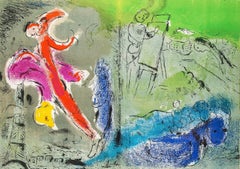
Marc Chagall, Vision of Paris, from The Lithographs of Chagall, 1960
Located in Southampton, NY
This exquisite lithograph by Marc Chagall (1887–1985), titled Vision de Paris (Vision of Paris), from the album The Lithographs of Chagall, Volume I, originates from the 1960 edition...
Category

1960s Expressionist Prints and Multiples

Materials

Lithograph

Marc Chagall, Paradise II, from Drawings for the Bible, 1956
Located in Southampton, NY
This exquisite lithograph by Marc Chagall (1887–1985), titled Paradis II (Paradise II), from Marc Chagall, Dessins Pour La Bible (Drawings for the Bible), Verve: Revue Artistique et Litteraire, Vol. VIII, No. 33–34, originates from the September 1956 issue published by Editions de la revue Verve, Paris, under the direction of Teriade, Editeur, Paris, and printed by Mourlot Freres, Paris, 1956. This luminous composition portrays the splendor of Paradise, filled with light, harmony, and divine presence. Through his poetic use of line and ethereal symbolism, Chagall evokes the spiritual unity between humanity and the divine, capturing the purity and joy of creation. Paradis II reflects the artist’s enduring belief in love and beauty as transcendent forces, transforming a biblical vision into a universal celebration of faith and imagination. The work forms part of Chagall’s celebrated series of lithographs and drawings created for Dessins Pour La Bible, a monumental project uniting art, scripture, and mysticism in one of the artist’s most important achievements. Executed as a lithograph on velin du Marais paper, this work measures 14 x 10.5 inches (35.56 x 26.67 cm). Unsigned and unnumbered as issued. The edition exemplifies the superb craftsmanship of the Mourlot Freres atelier, renowned for its collaborations with the greatest modern masters of the 20th century. Artwork Details: Artist: Marc Chagall (1887–1985) Title: Paradis II (Paradise II), from Marc Chagall, Dessins Pour La Bible (Drawings for the Bible), Verve: Revue Artistique et Litteraire, Vol. VIII, No. 33–34, September 1956 Medium: Lithograph on velin du Marais paper Dimensions: 14 x 10.5 inches (35.56 x 26.67 cm) Inscription: Unsigned and unnumbered as issued Date: 1956 Publisher: Editions de la revue Verve, Paris, under the direction of Teriade, Editeur, Paris Printer: Mourlot Freres, Paris Catalogue raisonne references: Cain, Julien, and Fernand Mourlot. Chagall Lithographe. Andre Sauret, Editeur, 1960, illustrations 117–46. Cramer, Patrick, and Meret Meyer. Marc Chagall: Catalogue Raisonne Des Livres Illustrés. P. Cramer ed., 1995, illustration 25. Condition: Well preserved, consistent with age and medium Provenance: From Marc Chagall, Dessins Pour La Bible (Drawings for the Bible), Verve: Revue Artistique et Litteraire, Vol. VIII, No. 33–34, published by Editions de la revue Verve, Paris, 1956 Notes: Excerpted from the album (translated from French), This double issue of Verve is dedicated to the full reproduction in heliogravure of the one hundred-five plates etched by Marc Chagall, between 1930 and 1955, for the illustration of the Bible. The artist composed especially for the present work, sixteen lithographs in color and twelve in black, as well as the cover and the title page. This volume was completed and printed on September 10, 1956, by the Master Printers Draeger Freres for heliogravure, and by Mourlot Freres for lithography. About the Publication: Marc Chagall, Dessins Pour La Bible (Drawings for the Bible), published as Verve Vol. VIII, No. 33–34 in September 1956, represents one of the crowning achievements of Chagall’s lifelong dialogue with the sacred. Conceived and directed by the visionary publisher Teriade and printed by the master lithographers Mourlot Freres, the issue features thirty-four color lithographs and numerous black-and-white drawings inspired by biblical figures and stories. Chagall’s works for this edition unite text and image in a luminous meditation on divine creation, moral struggle, and spiritual renewal, imbued with his signature dreamlike symbolism and radiant color. Produced in postwar Paris, this landmark publication reaffirmed the enduring union of art and faith, establishing Dessins Pour La Bible as one of the most important illustrated works of the 20th century. About the Artist: Marc Chagall (1887–1985) was a Belarus-born French painter, printmaker, and designer whose visionary imagination, radiant color, and deeply poetic symbolism made him one of the most beloved and influential artists of the 20th century. Rooted in the imagery of his Jewish heritage and the memories of his childhood in Vitebsk, Chagall’s art wove together themes of faith, love, folklore, and fantasy with a dreamlike modern sensibility. His unique style—merging elements of Cubism, Fauvism, Expressionism, and Surrealism—defied categorization, transforming ordinary scenes into lyrical meditations on memory and emotion. Influenced by Russian icon painting, medieval religious art, and the modern innovations of artists such as Pablo Picasso, Henri Matisse, and Georges Braque, Chagall developed a profoundly personal visual language filled with floating figures, vibrant animals, musicians, and lovers that symbolized the transcendent power of imagination and love. During his early years in Paris, he became an integral part of the Ecole de Paris circle, forming friendships with Amedeo Modigliani, Fernand Leger, and Sonia Delaunay, and his creative spirit resonated with that of his peers and successors—Alexander Calder, Alberto Giacometti, Salvador Dali, Joan Miro, Wassily Kandinsky, Marcel Duchamp, and Man Ray—artists who, like Chagall, sought to push the boundaries of perception, emotion, and form. Over a prolific career that spanned painting, printmaking, stained glass, ceramics, and stage design, Chagall brought an unparalleled poetic sensibility to modern art, infusing even the most abstract subjects with human warmth and spiritual depth. His works are held in the most prestigious museums around the world, including the Museum of Modern Art, the Centre Pompidou, the Tate, and the Guggenheim, where they continue to inspire generations of artists and collectors. The highest price ever paid for a Marc Chagall artwork is approximately $28.5 million USD, achieved in 2017 at Sotheby’s New York for Les Amoureux (1928). Marc Chagall Paradis...
Category

1950s Expressionist Prints and Multiples

Materials

Lithograph

Marc Chagall, Place de la Concorde, from Verve, Revue Artistique, 1953
Located in Southampton, NY
This exquisite lithograph by Marc Chagall (1887–1985), titled Place de la Concorde (Place de la Concorde), from Verve, Revue Artistique et Litteraire, Vol. VII, No. 27–28, originates...
Category

1950s Expressionist Prints and Multiples

Materials

Lithograph

"Bread" lithograph by Käthe Kollwitz
Located in Soquel, CA
Bold lithograph titled "Bread" by Kathe Kollwitz (German, 1867-1945). This piece is one of the Lithographic reproductions of the original lithographs, plate 2 from a series of 10, pr...
Category

1940s Expressionist Prints and Multiples

Materials

Paper, Ink, Lithograph

Marc Chagall, Bercy Quay, from Derriere le miroir, 1954
Located in Southampton, NY
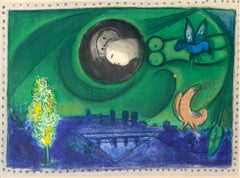
This exquisite lithograph by Marc Chagall (1887–1985), titled Quai de Bercy (Bercy Quay), from the folio Derriere le miroir, No. 67–68, originates from the 1954 edition published by Maeght Editeur, Paris, and printed by Mourlot Freres, Paris, 1954. Quai de Bercy captures Chagall’s poetic vision of Paris as a dreamlike landscape where memory, color, and emotion converge. The work’s lyrical composition and radiant palette embody Chagall’s deep affection for the city that shaped his artistic identity, blending reality and reverie in perfect harmony. Executed as a lithograph on velin paper, this work measures 15 x 22 inches, with centerfold as issued. Unsigned and unnumbered as issued. The edition exemplifies the superb craftsmanship of Mourlot Freres, Paris. Artwork Details: Artist: Marc Chagall (1887–1985) Title: Quai de Bercy (Bercy Quay), from the folio Derriere le miroir, No. 67–68 Medium: Lithograph on velin paper Dimensions: 15 x 22 inches (38.1 x 55.88 cm), with centerfold as issued Inscription: Unsigned and unnumbered as issued Date: 1954 Publisher: Maeght Editeur, Paris Printer: Mourlot Freres, Paris Catalogue raisonne reference: Cramer, Patrick, and Meret Meyer. Marc Chagall: Catalogue Raisonne des Livres Illustres. Patrick Cramer Editeur, 1995, illustration 24; Mourlot, Fernand, and Marc Chagall. Chagall Lithographe I: 1922–1957. Andre Sauret, 1960, illustration 93. Condition: Well preserved, consistent with age and medium Provenance: From the folio Derriere le miroir, No. 67–68, published by Maeght Editeur, Paris; printed by Mourlot Freres, Paris, 1954 Notes: On the occasion of the ‘Paris’ exhibition, Marc Chagall created for this triple issue of Derriere Le Miroir XII pages of Lithography. About the Publication: Derriere le miroir (Behind the Mirror) was one of the most important art publications of the 20th century, created and published by Maeght Editeur in Paris from 1946 to 1982. Founded by the visionary art dealer and publisher Aime Maeght, the series served as both an exhibition catalogue and a work of art in its own right, uniting original lithographs by leading modern and contemporary artists with critical essays, poetry, and design of the highest quality. Printed by master lithographers such as Mourlot Freres and Arte, Derriere le miroir became synonymous with the artistic vanguard of postwar Europe. Each issue was devoted to a single artist or theme and published to accompany exhibitions at the Galerie Maeght in Paris, featuring works by Pablo Picasso, Henri Matisse, Georges Braque, Joan Miro, Marc Chagall, Alexander Calder, Fernand Leger, and Alberto Giacometti, among others. The publication reflected Maeght’s belief that art should be both accessible and elevated—an ideal realized through its luxurious production values, meticulous printing, and collaboration with the greatest creative minds of its time. About the Artist: Marc Chagall (1887–1985) was a Belarus-born French painter, printmaker, and designer whose visionary imagination, radiant color, and deeply poetic symbolism made him one of the most beloved and influential artists of the 20th century. Rooted in the imagery of his Jewish heritage and the memories of his childhood in Vitebsk, Chagall’s art wove together themes of faith, love, folklore, and fantasy with a dreamlike modern sensibility. His unique style—merging elements of Cubism, Fauvism, Expressionism, and Surrealism—defied categorization, transforming ordinary scenes into lyrical meditations on memory and emotion. Influenced by Russian icon painting, medieval religious art, and the modern innovations of artists such as Pablo Picasso, Henri Matisse, and Georges Braque, Chagall developed a profoundly personal visual language filled with floating figures, vibrant animals, musicians, and lovers that symbolized the transcendent power of imagination and love. During his early years in Paris, he became an integral part of the Ecole de Paris circle, forming friendships with Amedeo Modigliani, Fernand Leger, and Sonia Delaunay, and his creative spirit resonated with that of his peers and successors—Alexander Calder, Alberto Giacometti, Salvador Dali, Joan Miro, Wassily Kandinsky, Marcel Duchamp, and Man Ray—artists who, like Chagall, sought to push the boundaries of perception, emotion, and form. Over a prolific career that spanned painting, printmaking, stained glass, ceramics, and stage design, Chagall brought an unparalleled poetic sensibility to modern art, infusing even the most abstract subjects with human warmth and spiritual depth. His works are held in the most prestigious museums around the world, including the Museum of Modern Art, the Centre Pompidou, the Tate, and the Guggenheim, where they continue to inspire generations of artists and collectors. The highest price ever paid for a Marc Chagall artwork is approximately 28.5 million USD, achieved in 2017 at Sotheby’s New York for Les Amoureux (1928). Marc Chagall Quai de Bercy 1954, Chagall Derriere le miroir No. 67–68, Chagall Mourlot lithograph, Chagall Maeght...
Category

1950s Expressionist Prints and Multiples

Materials

Lithograph

Marc Chagall, Vision of Paris, from Verve, Revue Artistique, 1953
Located in Southampton, NY
This exquisite lithograph by Marc Chagall (1887–1985), titled Vision de Paris (Vision of Paris), from Verve, Revue Artistique et Litteraire, Vol. VII, No. 27–28, originates from the ...
Category

1950s Expressionist Prints and Multiples

Materials

Lithograph

Mehr Sonne fur 1924 (More Sun for 1924)— German Expressionism
Located in Myrtle Beach, SC
Karl Michel, 'Mehr Sonne fur 1924. Viel Gluck Wunscht Karl Michel U. Frau', woodcut, 1924, edition 20. Signed, dated, and numbered 'op. 162' and '15/20' in pencil. Signed in the image, lower left. A fine, richly-inked impression on buff wove paper, with full margins (1 1/2 to 2 3/4 inches), in very good condition. Printed by the artist. Scarce. Matted to museum standards, unframed. New Year's Greeting – English translation: "More Sun for 1924. Good Luck Wishes from Karl Michel and his Wife." Image size 4 5/8 x 4 3/4 inches (118 x 121 mm); sheet size 7 3/4 x 10 inches (198 x 254 mm). ABOUT THE ARTIST Karl Michel (1889-1984) was a noted graphic designer and expressionist printmaker during Germany's pre-Nazi Weimar Republic (1919-1933). Michel’s work was the subject of a feature article in the influential German graphic design magazine Das Plakat...
Category

1920s Expressionist Prints and Multiples

Materials

Woodcut

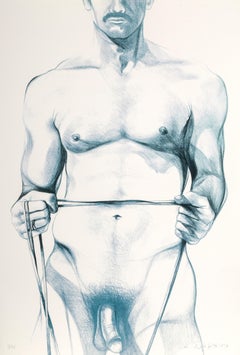
Male Nude, Photorealist Lithograph by Lowell Nesbitt
Located in Long Island City, NY
Artist: Lowell Blair Nesbitt, American (1933 - 1993) Titles: Male Nude 2 Year: 1979 Medium: Lithograph, signed and numbered in pencil Edition: 175 Paper Size: 44 x 30 in. (111.76 ...
Category

1970s Expressionist Prints and Multiples

Materials

Lithograph

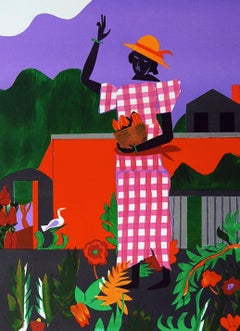
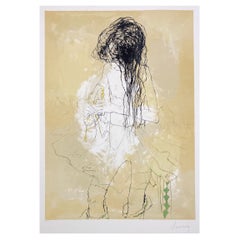
Girl in the Garden (Gelburd/Rosenberg 62), Romare Bearden
Located in Fairfield, CT
Artist: Romare Bearden (1911-1988) Title: Girl in the Garden (Gelburd/Rosenberg 62) Year: 1979 Medium: Lithograph on vélin d’Arches paper Edition: 33/150, plus proofs Size: 28.75 x 2...
Category

1970s Expressionist Prints and Multiples

Materials

Lithograph

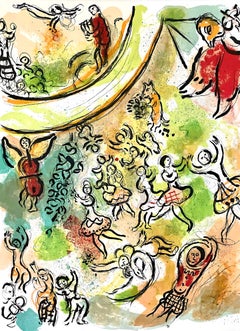
Sans titre (Cramer 61; Mourlot 434), Le plafond de l Opéra
Located in Southampton, NY
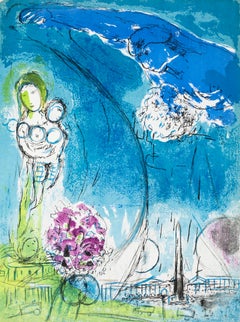
Lithograph on vélin paper. Paper Size: 13 x 9.5 inches. Inscription: Unsigned and unnumbered, as issued. Catalogue raisonné references: Cain, Julien, and Fernand Mourlot. Chagall Lit...
Category

1960s Expressionist Prints and Multiples

Materials

Lithograph

Marc Chagall, The Tribe of Levi, from XXe siecle, 1983 (after)
Located in Southampton, NY
This exquisite lithograph after Marc Chagall (1887–1985), titled La Tribu de Levi (The Tribe of Levi), from the special issue of the XXe Siecle Review, Chagall in Jerusalem, originat...
Category

1980s Expressionist Prints and Multiples

Materials

Lithograph

Marc Chagall, Nocturne in Vence, from The Lithographs of Chagall, 1963
Located in Southampton, NY
This exquisite lithograph by Marc Chagall (1887–1985), titled Nocturne a Vence (Nocturne in Vence), from the album The Lithographs of Chagall, Volume II, originates from the 1963 edi...
Category

1960s Expressionist Prints and Multiples

Materials

Lithograph

Marc Chagall, Tribe of Judah, from The Jerusalem Windows, 1962 (after)
Located in Southampton, NY
This exquisite lithograph after Marc Chagall (1887–1985), titled Tribe of Judah, from the album Marc Chagall, The Jerusalem Windows, originates from the 1962 edition published by And...
Category

1960s Expressionist Prints and Multiples

Materials

Lithograph

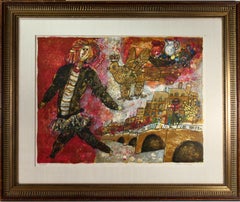
Le Pieton de Paris
Located in San Francisco, CA
Artist: Teo Tobiasse (French/Israeli, 1927-2012) Title: "Le Pieton de Paris" Year: c.1975 Medium: Color lithograph Edition: Numbered 42/175 in pencil Paper: Japan paper Image ...
Category

Mid-20th Century Expressionist Prints and Multiples

Materials

Lithograph

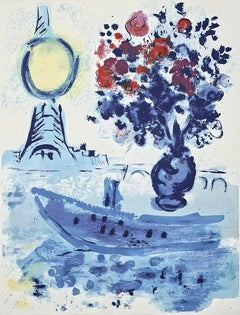
Bateau-Mouche au Bouquet (Mourlot 352; Cramer 53), Marc Chagall
Located in Southampton, NY
Lithograph on Arches paper. Edition: 180, plus proofs. Inscription: unsigned and unnumbered, as issued. Good Condition; never framed or matted. Notes: Extracted from the folio, Regar...
Category

1960s Expressionist Prints and Multiples

Materials

Lithograph

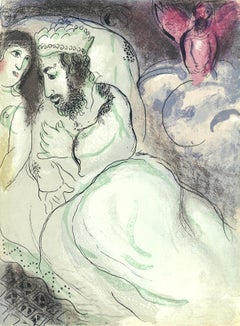
Marc Chagall, Sarah and Abimelech, from Drawings for the Bible, 1956
Located in Southampton, NY
This exquisite lithograph by Marc Chagall (1887–1985), titled Sara et Abimelech (Sarah and Abimelech), from Marc Chagall, Dessins Pour La Bible (Drawings for the Bible), Verve: Revue...
Category

1950s Expressionist Prints and Multiples

Materials

Lithograph

Marc Chagall, The Accordionist, from Chagall, 1957
Located in Southampton, NY
This exquisite lithograph by Marc Chagall (1887–1985), titled L’Accordeoniste (The Accordionist), from the album Chagall, originates from the 1957 edition published by Maeght Editeur...
Category

1950s Expressionist Prints and Multiples

Materials

Lithograph

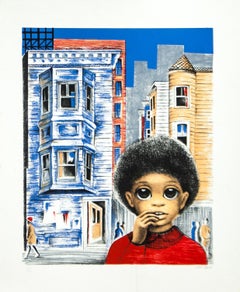
Boy in Red Shirt original lithograph by Margaret Keane c 1980
Located in Paonia, CO
Boy in Red Shirt is an original lithograph by Margaret Keane c. 1980. A young boy in a red shirt is seen in front of a three story building in a city on a blue sky day. An ori...
Category

1980s Expressionist Prints and Multiples

Materials

Lithograph

Mujere
Located in San Francisco, CA
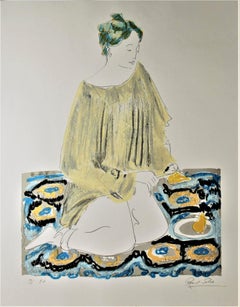
This artwork "Mujere" c.1960 is an original color silkscreen by noted Argentinian artist Raul Soldi, 1905-1994. It is hand signed and numbered 12/15 P.A in pencil by the artist. The image size is 22.75 x 17 inches, sheet size is 26.65 x 21.5 inches. It is in very good condition, colors are fresh and bright. About the artist: Raúl Soldi was born in Buenos Aire in 1905. He was an argentine plastic artist of recognized international experience. In 1920 he began drawing and painting. He makes reproductions of Quinquela Martín...
Category

Mid-20th Century Expressionist Prints and Multiples

Materials

Screen

Marc Chagall, Spring, from Verve, Revue Artistique, 1938
Located in Southampton, NY
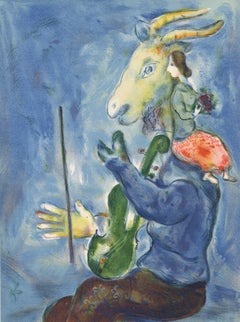
This exquisite lithograph by Marc Chagall (1887–1985), titled Printemps (Spring), from Verve, Revue Artistique et Litteraire, Vol. I, No. 3, originat...
Category

1930s Expressionist Prints and Multiples

Materials

Lithograph

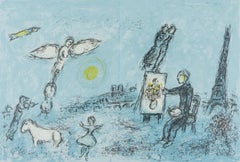
Marc Chagall, The Artist and the City, from Derriere le miroir, 1981
Located in Southampton, NY
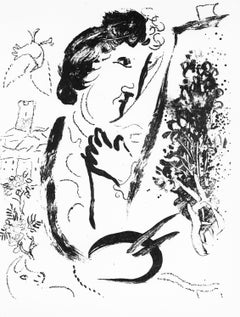
This exquisite lithograph by Marc Chagall (1887–1985), titled L’Artiste et la Ville (The Artist and the City), from the folio Derriere le miroir, No. 246, originates from the 1981 ed...
Category

1970s Expressionist Prints and Multiples

Materials

Lithograph

"Raskolnikow" original linocut
Located in Henderson, NV
Medium: original linoleum cut. Printed in 1920 for Das Kunstblatt, and published in Berlin by Verlag Gustav Kiepenheuer. Image size: 6 1/4 x 4 1/4 inches (160 x 105mm). Sheet size: 1...
Category

1920s Expressionist Prints and Multiples

Materials

Linocut

Marc Chagall, The Bay of Angels, from The Lithographs of Chagall, 1960
Located in Southampton, NY
This exquisite lithograph by Marc Chagall (1887–1985), titled La Baie des Anges (The Bay of Angels), from the album The Lithographs of Chagall, Volume I, originates from the 1960 edi...
Category

1960s Expressionist Prints and Multiples

Materials

Lithograph

Marc Chagall, The Sunday, from Derriere le miroir, 1954
Located in Southampton, NY
This exquisite lithograph by Marc Chagall (1887–1985), titled Le Dimanche (The Sunday), from the folio Derriere le miroir, No. 67–68, originates from the 1954 edition published by Ma...
Category

1950s Expressionist Prints and Multiples

Materials

Lithograph

Marc Chagall, The Horsewoman with the Red Horse, from XXe Siecle, 1957
Located in Southampton, NY
This exquisite lithograph and pochoir by Marc Chagall (1887–1985), titled L'ecuyere au cheval rouge (The Horsewoman with the Red Horse), from the album XXe Siecle, Nouvelle serie No....
Category

1950s Expressionist Prints and Multiples

Materials

Lithograph

Chama Canyon hand pulled serigraph by William Hook
Located in Paonia, CO
Chama Canyon is a limited edition hand-pulled serigraph no. 225 /260 in excellent condition. It is signed in pencil and published by Aspen Mountain Graphics. sheet size 14 x 18 image 12 x 16 For American artist William Hook ( b. 1948- ) art was a central focus in his family home and he began his career in art at an early age.. He studied at several prestigious art schools in the US and abroad. His work has been featured in magazines such as Southwest Art, Art of the West, U. S. Art, American Artist and Focus Santa Fe. The book… Leading the West… by Donald Hagerty features William Hook as one of the most notable influences on the western art scene. Publishers Harper-Collins and North Light have included his work in numerous books written about the contemporary art process in Europe and America. Hook’s paintings can be found in the permanent collections of the Denver Art Museum, the Tucson Art Museum, the University of New Mexico, the FORBES Museum, NYC, and the Genesee Museum, NY as well as in many corporate and private collections. His work has also been featured in prints for the New Mexico Symphony, Music from Angel Fire...
Category

20th Century Expressionist Prints and Multiples

Materials

Screen

"Bildnis" original lithograph
Located in Henderson, NV
Medium: original lithograph. Printed in 1920 on smooth wove paper for the Deutsche Graphiker der Gegenwart portfolio, and published in Leipzig by Klinkhardt & Biermann in an edition ...
Category

1920s Expressionist Prints and Multiples

Materials

Lithograph

La balance romaine, 1986, original lithograph by Jean Jansem, handsigned
Located in Les Acacias GE, GE
Jean Jansem (1920-2013) La balance romaine, 1986 Lithographie sur papier Japon Signée en bas à droite et justifiée Hors Commerce 50 x 65 cm / 54 x 76 cm Très rare exemplaire D'un...
Category

Late 20th Century Expressionist Prints and Multiples

Materials

Lithograph

Versailles (France) original lithograph vintage SNCF travel poster
Located in Spokane, WA
Original Versailles, France vintage lithograph French travel poster. Printed by the French National Railroad, SNCF in the 1938's. Printer: Goossens. A poster fit for a king since he once resided here at Versailles. Transform your living space with the elegance and grandeur of the Versailles Original Poster. This exquisite piece captures the breathtaking beauty of the iconic Palace of Versailles, showcasing its majestic fountains and lush gardens. The vibrant colors and intricate details bring to life the opulence and historical significance of one of the world's most renowned landmarks. The grand fountains had a chariot and horses...
Category

1930s Expressionist Prints and Multiples

Materials

Lithograph

Marc Chagall, The Bride, from Derriere le miroir, 1951 (after)
Located in Southampton, NY
This exquisite lithograph after Marc Chagall (1887–1985), titled La Mariee (The Bride), from the folio Derriere le miroir, Sur Quatre Murs, No. 36-37-38, originates from the 1951 edition published by Maeght Editeur, Paris, and printed by Mourlot Freres, Paris, 1951. The composition captures Chagall’s poetic vision of love and mysticism, blending dreamlike imagery and radiant color into a lyrical meditation on devotion and imagination. Executed as a lithograph on velin paper, this work measures 15 x 11 inches. Unsigned and unnumbered as issued. The edition exemplifies the superb craftsmanship of Mourlot Freres, Paris. Artwork Details: Artist: Marc Chagall (1887–1985) Title: La Mariee (The Bride), from the folio Derriere le miroir, Sur Quatre Murs, No. 36-37-38 Medium: Lithograph on velin paper Dimensions: 15 x 11 inches (38.1 x 27.9 cm) Inscription: Unsigned and unnumbered as issued Date: 1951 Publisher: Maeght Editeur, Paris Printer: Mourlot Freres, Paris Condition: Well preserved, consistent with age and medium Provenance: From the folio Derriere le miroir, Sur Quatre Murs, No. 36-37-38, published by Maeght Editeur, Paris; printed by Mourlot Freres, Paris, 1951 About the Publication: Derriere le miroir (Behind the Mirror) was one of the most important art publications of the 20th century, created and published by Maeght Editeur in Paris from 1946 to 1982. Founded by the visionary art dealer and publisher Aime Maeght, the series served as both an exhibition catalogue and a work of art in its own right, uniting original lithographs by leading modern and contemporary artists with critical essays, poetry, and design of the highest quality. Printed by master lithographers such as Mourlot Freres and Arte, Derriere le miroir became synonymous with the artistic vanguard of postwar Europe. Each issue was devoted to a single artist or theme and published to accompany exhibitions at the Galerie Maeght in Paris, featuring works by Pablo Picasso, Henri Matisse, Georges Braque, Joan Miro, Marc Chagall, Alexander Calder, Fernand Leger, and Alberto Giacometti, among others. The publication reflected Maeght's belief that art should be both accessible and elevated—an ideal realized through its luxurious production values, meticulous printing, and collaboration with the greatest creative minds of its time. About the Artist: Marc Chagall (1887–1985) was a Belarus-born French painter, printmaker, and designer whose visionary imagination, radiant color, and deeply poetic symbolism made him one of the most beloved and influential artists of the 20th century. Rooted in the imagery of his Jewish heritage and the memories of his childhood in Vitebsk, Chagall's art wove together themes of faith, love, folklore, and fantasy with a dreamlike modern sensibility. His unique style—merging elements of Cubism, Fauvism, Expressionism, and Surrealism—defied categorization, transforming ordinary scenes into lyrical meditations on memory and emotion. Influenced by Russian icon painting, medieval religious art, and the modern innovations of artists such as Pablo Picasso, Henri Matisse, and Georges Braque, Chagall developed a profoundly personal visual language filled with floating figures, vibrant animals, musicians, and lovers that symbolized the transcendent power of imagination and love. During his early years in Paris, he became an integral part of the Ecole de Paris circle, forming friendships with Amedeo Modigliani, Fernand Leger, and Sonia Delaunay, and his creative spirit resonated with that of his peers and successors—Alexander Calder, Alberto Giacometti, Salvador Dali, Joan Miro, Wassily Kandinsky, Marcel Duchamp, and Man Ray—artists who, like Chagall, sought to push the boundaries of perception, emotion, and form. Over a prolific career that spanned painting, printmaking, stained glass, ceramics, and stage design, Chagall brought an unparalleled poetic sensibility to modern art, infusing even the most abstract subjects with human warmth and spiritual depth. His works are held in the most prestigious museums around the world, including the Museum of Modern Art, the Centre Pompidou, the Tate, and the Guggenheim, where they continue to inspire generations of artists and collectors. The highest price ever paid for a Marc Chagall artwork is approximately $28.5 million USD, achieved in 2017 at Sotheby's New York for Les Amoureux (1928). Marc Chagall La...
Category

1950s Expressionist Prints and Multiples

Materials

Lithograph

Marc Chagall, David and Absalom, from Drawings for the Bible, 1956
Located in Southampton, NY
This exquisite lithograph by Marc Chagall (1887–1985), titled David et Absalon (David and Absalom), from Marc Chagall, Dessins Pour La Bible (Drawings for the Bible), Verve: Revue Ar...
Category

1950s Expressionist Prints and Multiples

Materials

Lithograph

FAMILY Signed Lithograph Abstract Portrait, People, Latin American Woman Artist
Located in Union City, NJ
Raquel Forner (1902-1988) Argentine woman painter and printmaker born in Buenos Aires in 1902 and died in the same city in 1988, regarded as one of the best Argentine female painters...
Category

1980s Expressionist Prints and Multiples

Materials

Lithograph

Marc Chagall, Sisyphus, from Homer, The Odyssey, 1989 (after)
Located in Southampton, NY
This exquisite lithograph after Marc Chagall (1887–1985), titled Sisyphos (Sisyphus), from Homer, Die Odyssee (The Odyssey), originates from the 1989 German-language folio published ...
Category

1980s Expressionist Prints and Multiples

Materials

Lithograph

Poster for the 17th Exhibition of the Vienna Secession by Max Kurzweil
Located in Palm Beach, FL
Note: Due to the size, weight, and value of this piece, we require shipping through 1stDibs, for its cost effectiveness, full insurance coverage, and reliable handling. While standar...
Category

Early 1900s Expressionist Prints and Multiples

Materials

Lithograph

Marc Chagall, The Flute Player, from Chagall, 1957
Located in Southampton, NY
This exquisite lithograph by Marc Chagall (1887–1985), titled Le Joueur de Flute (The Flute Player), from the album Chagall, originates from the 195...
Category

1950s Expressionist Prints and Multiples

Materials

Lithograph

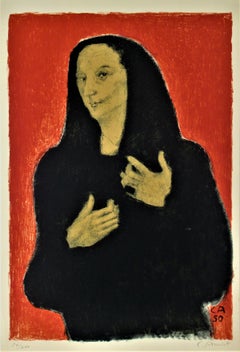
Portrat der Bildhauerin Germaine Richier
Located in San Francisco, CA
This artwork titled "Portrat Der Bildhauerin Germaine Richier" 1950 is an original colors lithograph by Swiss artist Cuno Amiet, 1868-1961. It is hand signe...
Category

Mid-20th Century Expressionist Prints and Multiples

Materials

Lithograph

Chief American Horse - Oglalla Sioux, Lithograph by Leonard Baskin
Located in Long Island City, NY
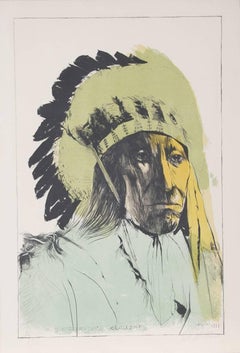
Artist: Leonard Baskin Title: Chief American Horse - Oglalla Sioux Year: 1973 Medium: Lithograph, Signed and Numbered in pencil Edition: 100 Size: 41 x 30 inches
Category

1970s Expressionist Prints and Multiples

Materials

Lithograph

The Family, Alice Neel
Located in Fairfield, CT
Artist: Alice Neel (1900-1984) Title: The Family Year: 1982 Medium: Lithograph on Arches paper Edition: 57/175, plus proofs Size: 31.25 x 27 inches Condition: Excellent Inscription: ...
Category

1980s Expressionist Prints and Multiples

Materials

Lithograph

Marc Chagall, Eve Cursed by God, from Drawings for the Bible, 1956
Located in Southampton, NY
This exquisite lithograph by Marc Chagall (1887–1985), titled Eve maudite par Dieu (Eve Cursed by God), from Marc Chagall, Dessins Pour La Bible (Drawings for the Bible), Verve: Revue Artistique et Litteraire, Vol. VIII, No. 33–34, originates from the September 1956 issue published by Editions de la revue Verve, Paris, under the direction of Teriade, Editeur, Paris, and printed by Mourlot Freres, Paris, 1956. This emotionally charged composition depicts the moment of divine judgment following the fall of man, capturing both the sorrow and the spiritual gravity of Eve’s curse. Through his luminous lines and expressive symbolism, Chagall transforms this ancient scene into a universal meditation on loss, forgiveness, and the eternal bond between humanity and the divine. The work exemplifies Chagall’s mastery of merging sacred narrative and human emotion, rendered with poetic tenderness and transcendent light. The piece forms part of Chagall’s celebrated series of lithographs and drawings created for Dessins Pour La Bible, a monumental project uniting art, scripture, and mysticism in one of the artist’s most important achievements. Executed as a lithograph on velin du Marais paper, this work measures 14 x 10.5 inches (35.56 x 26.67 cm). Unsigned and unnumbered as issued. The edition exemplifies the superb craftsmanship of the Mourlot Freres atelier, renowned for its collaborations with the greatest modern masters of the 20th century. Artwork Details: Artist: Marc Chagall (1887–1985) Title: Eve maudite par Dieu (Eve Cursed by God), from Marc Chagall, Dessins Pour La Bible (Drawings for the Bible), Verve: Revue Artistique et Litteraire, Vol. VIII, No. 33–34, September 1956 Medium: Lithograph on velin du Marais paper Dimensions: 14 x 10.5 inches (35.56 x 26.67 cm) Inscription: Unsigned and unnumbered as issued Date: 1956 Publisher: Editions de la revue Verve, Paris, under the direction of Teriade, Editeur, Paris Printer: Mourlot Freres, Paris Catalogue raisonne references: Cain, Julien, and Fernand Mourlot. Chagall Lithographe. Andre Sauret, Editeur, 1960, illustrations 117–46. Cramer, Patrick, and Meret Meyer. Marc Chagall: Catalogue Raisonne Des Livres Illustrés. P. Cramer ed., 1995, illustration 25. Condition: Well preserved, consistent with age and medium Provenance: From Marc Chagall, Dessins Pour La Bible (Drawings for the Bible), Verve: Revue Artistique et Litteraire, Vol. VIII, No. 33–34, published by Editions de la revue Verve, Paris, 1956 Notes: Excerpted from the album (translated from French), This double issue of Verve is dedicated to the full reproduction in heliogravure of the one hundred-five plates etched by Marc Chagall, between 1930 and 1955, for the illustration of the Bible. The artist composed especially for the present work, sixteen lithographs in color and twelve in black, as well as the cover and the title page. This volume was completed and printed on September 10, 1956, by the Master Printers Draeger Freres for heliogravure, and by Mourlot Freres for lithography. About the Publication: Marc Chagall, Dessins Pour La Bible (Drawings for the Bible), published as Verve Vol. VIII, No. 33–34 in September 1956, represents one of the crowning achievements of Chagall’s lifelong dialogue with the sacred. Conceived and directed by the visionary publisher Teriade and printed by the master lithographers Mourlot Freres, the issue features thirty-four color lithographs and numerous black-and-white drawings inspired by biblical figures and stories. Chagall’s works for this edition unite text and image in a luminous meditation on divine creation, moral struggle, and spiritual renewal, imbued with his signature dreamlike symbolism and radiant color. Produced in postwar Paris, this landmark publication reaffirmed the enduring union of art and faith, establishing Dessins Pour La Bible as one of the most important illustrated works of the 20th century. About the Artist: Marc Chagall (1887–1985) was a Belarus-born French painter, printmaker, and designer whose visionary imagination, radiant color, and deeply poetic symbolism made him one of the most beloved and influential artists of the 20th century. Rooted in the imagery of his Jewish heritage and the memories of his childhood in Vitebsk, Chagall’s art wove together themes of faith, love, folklore, and fantasy with a dreamlike modern sensibility. His unique style—merging elements of Cubism, Fauvism, Expressionism, and Surrealism—defied categorization, transforming ordinary scenes into lyrical meditations on memory and emotion. Influenced by Russian icon painting, medieval religious art, and the modern innovations of artists such as Pablo Picasso, Henri Matisse, and Georges Braque, Chagall developed a profoundly personal visual language filled with floating figures, vibrant animals, musicians, and lovers that symbolized the transcendent power of imagination and love. During his early years in Paris, he became an integral part of the Ecole de Paris circle, forming friendships with Amedeo Modigliani, Fernand Leger, and Sonia Delaunay, and his creative spirit resonated with that of his peers and successors—Alexander Calder, Alberto Giacometti, Salvador Dali, Joan Miro, Wassily Kandinsky, Marcel Duchamp, and Man Ray—artists who, like Chagall, sought to push the boundaries of perception, emotion, and form. Over a prolific career that spanned painting, printmaking, stained glass, ceramics, and stage design, Chagall brought an unparalleled poetic sensibility to modern art, infusing even the most abstract subjects with human warmth and spiritual depth. His works are held in the most prestigious museums around the world, including the Museum of Modern Art, the Centre Pompidou, the Tate, and the Guggenheim, where they continue to inspire generations of artists and collectors. The highest price ever paid for a Marc Chagall artwork is approximately $28.5 million USD, achieved in 2017 at Sotheby’s New York for Les Amoureux (1928). Marc Chagall Eve...
Category

1950s Expressionist Prints and Multiples

Materials

Lithograph

Marc Chagall, Flower Quay, from Derriere le miroir, 1954
Located in Southampton, NY
This exquisite lithograph by Marc Chagall (1887–1985), titled Quai de fleurs (Flower Quay), from the folio Derriere le miroir, No. 67–68, originates from the 1954 edition published b...
Category

1950s Expressionist Prints and Multiples

Materials

Lithograph

"Brotherhood" lithograph by Käthe Kollwitz
Located in Soquel, CA
Bold print of "Brotherhood" by Kathe Kollwitz (German, 1867-1945). This piece is one of the Lithographic reproductions of the original lithographs, plate 3 from a series of 10, print...
Category

1940s Expressionist Prints and Multiples

Materials

Paper, Ink, Lithograph

Max Eisler Eine Nachlese folio "Girlfriends II" collotype print
Located in Palm Beach, FL
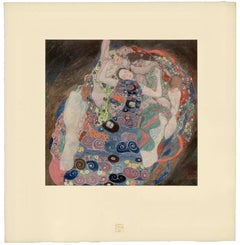
After Gustav Klimt, Max Eisler #1, Die Freundinnen II; multi-color collotype after 1916/17 painting in oil on canvas which was destroyed by fire in May 1945 at Immendorf Castle Lower Austria. Eisler’s choice to begin his 1931 portfolio of works by Klimt with Girlfriends II was both bold and prescient. Just 14 years later, the painting was tragically destroyed in a fire. With such a loss, this rare and exquisite image is all the more valuable by virtue of having been made in color. In works from his late period, Klimt continued his fascination with exploring female dynamics and their various forms of love. Girlfriends II is a fine example of how space, color and ornament play a noticeable role in the evolution of his symbolic language. Wide swaths of space in the background as well as the two female forms create the structure. Klimt’s strong brushstrokes show a painterly quality and a new move toward abstraction which feels very far away from his earlier work. Nor should Klimt’s economy of line be overlooked. His draughtsmanship is what infuses the female bodies with movement, emotion and a profundity of life. Both women confront the viewer’s gaze unselfconsciously, as if they are modern-day Viennese women stepping out of a Klimtesque ukiyo-e print. Characteristic of this late period, Klimt uses ornament...
Category

1930s Expressionist Prints and Multiples

Materials

Paper

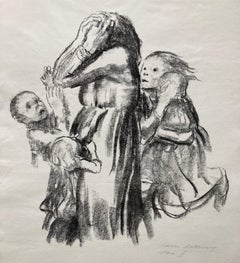
"Death Takes The Children" lithograph by Käthe Kollwitz
Located in Soquel, CA
Bold print of "Death Takes the Children" by Kathe Kollwitz (German, 1867-1945). This piece is one of the Lithographic reproductions of the original lithographs, plate 9 from a series...
Category

1940s Expressionist Prints and Multiples

Materials

Paper, Ink, Lithograph

Head of A Man, Expressionist Lithograph by Alberto Giacometti
Located in Long Island City, NY
Alberto Giacometti, Swiss (1901 - 1966) - Head of A Man from Derriere Le Miroir no. 127, Year: 1961, Medium: Lithograph, Edition: ~2500, Size: 15 x 11 in. (38.1 x 27.94 cm), Publ...
Category

1960s Expressionist Prints and Multiples

Materials

Lithograph

"Untitled": Lithograph from One Cent Life
Located in Austin, TX
Artist: Pierre Alechinsky Title: "Untitled": Lithograph from One Cent Life Year: 1964 Medium: 2 page lithograph, as printed from One Cent Life As printed with Walasse Ting poem, fro...
Category

1960s Expressionist Prints and Multiples

Materials

Lithograph

H.O. Miethke Das Werk folio "Judith I" collotype print
Located in Palm Beach, FL
Judith I, no. 9 from the second installment of Das Werk Gustav Klimts Much like his treatment of the Classical personage, Danae, from Greek mythology, Klimt’s depiction of Judith takes an Old Testament character, a heroine who avenges the death of her husband by killing an Assyrian king, and firmly positions her in his present-day Vienna. His multicolored collotype rips the canvas from its gilded frame which directly references the subject with its title: “Judith und Holofernes”. Now in print form, Judith, holding the severed head of a male in murky shadow, is the ultimate Viennese femme fatale. Her likeness is unmistakably similar to a former lover of Klimt’s and famous Viennese soprano, Anna von Mildenburg. Though his allusion to ancient Assyria is apt, Klimt literally lifted the gold patterned background’s design motif from a relief detail from Sennacherib’s Palace displayed in a London museum. His context then is contemporary. In a sensual and sexually powerful tour de force, Klimt’s Judith...
Category

Early 1900s Expressionist Prints and Multiples

Materials

Paper, Ink

Max Eisler Eine Nachlese folio “Hygieia” collotype print
Located in Palm Beach, FL
After Gustav Klimt, Max Eisler #10, Ausschnitt aus dem Bilde “Medizin”; multi-color collotype detail from Medicine, one of the faculty paintings for the Uni...
Category

1930s Expressionist Prints and Multiples

Materials

Paper

Max Eisler Eine Nachlese folio “Portrait of Baroness Bachofen-Echt” collotype
Located in Palm Beach, FL
After Gustav Klimt, Max Eisler #22, Bildnis Baronin Bachofen-Echt; multi-color collotype after 1914-1916 painting in oil on canvas. GUSTAV KLIMT EINE NACHLESE (GUSTAV KLIMT AN AFTERMATH), a portfolio of 30 collotypes prints, 15 are multi-color and 15 are monochrome, on chine colle paper laid down on heavy cream-wove paper with deckled edges; Max Eisler, Editor-Publisher; Osterreichischer Staatsdruckerei (Austrian State Printing Office), Printer; in a limited edition of 500 numbered examples of which: 200 were printed in German, 150 were printed in French and 150 were printed in English; Vienna, 1931. 2018 marks the 100th anniversary of Gustav Klimt’s death. It is a fitting time to reflect upon the enduring legacy and deep impact of his art. Recognizing this need for posterity with uncanny foresight, the publication of Gustav Klimt: An Aftermath (Eine Nachlese) provides a rare collection of work after Klimt which has proven to be an indispensable tool for Klimt scholarship as well as a source for pure visual delight. Approximately 25 percent of the original works featured in the Aftermath portfolio have since been lost. Of those 30, six were destroyed by fire on 8 May 1945. On that fateful final day of WWII, the retreating Feldherrnhalle, a tank division of the German Army, set fire to the Schloss Immendorf which was a 16th century castle in Lower Austria used between 1942-1945 to store objects of art. All three of Klimt’s Faculty Paintings: Philosophy, Medicine and Jurisprudence (1900-1907), originally created for the University of Vienna, were on premises at that time. Also among the inventory of Klimt paintings in storage there was art which had been confiscated by the Nazis. One of the most significant confiscated collections was the Lederer collection which featured many works by Gustav Klimt such as Girlfriends II and Garden Path with Chickens...
Category

1930s Expressionist Prints and Multiples

Materials

Archival Paper

Expressionist prints and multiples for sale on 1stDibs.

Find a wide variety of authentic Expressionist prints and multiples available for sale on 1stDibs. Works in this style were very popular during the 21st Century and Contemporary, but contemporary artists have continued to produce works inspired by this movement. If you’re looking to add prints and multiples created in this style to introduce contrast in an otherwise neutral space in your home, the works available on 1stDibs include elements of orange, blue, purple, green and other colors. Many Pop art paintings were created by popular artists on 1stDibs, including Marc Chagall, Corneille, Anna Ticho, and Sandro Chia. Frequently made by artists working with Lithograph, and Paper and other materials, all of these pieces for sale are unique and have attracted attention over the years. Not every interior allows for large Expressionist prints and multiples, so small editions measuring 3 inches across are also available. Prices for prints and multiples made by famous or emerging artists can differ depending on medium, time period and other attributes. On 1stDibs, the price for these items starts at $50 and tops out at $975,000, while the average work sells for $1,005.

Recently Viewed

View All