Expressionist Prints and Multiples

EXPRESSIONIST STYLE

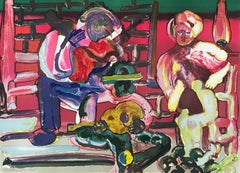
While “expressionist” is used to describe any art that avoids naturalism and instead employs a bold use of flattened forms and intense brushwork, Expressionist art formally describes early-20th-century work from Europe that drew on Symbolism and confronted issues such as urbanization and capitalism. Expressionist artists experimented in paintings and prints with skewed perspectives, abstraction and unconventional, bright colors to portray how isolating and anxious the world felt rather than how it appeared. 

Between 1905 and 1920, Austrian and German artists, in particular, were inspired by Postimpressionists such as Paul Gauguin and Vincent van Gogh in their efforts to strive for a new authenticity in their work. In its geometric patterns and decorative details, Expressionist art was also marked by eclectic sources like German and Russian folk art as well as tribal art from Africa and Oceania, which the movement’s practitioners witnessed at museums and world’s fairs.

Groups of artists came together to share and promote the themes now associated with Expressionism, such as Die Brücke (The Bridge) in Dresden, which included Erich Heckel, Ernst Ludwig Kirchner and Karl Schmidt-Rottluff and investigated alienation and the dissolution of society in vivid color. In Munich, Der Blaue Reiter (The Blue Rider), a group led by Wassily Kandinsky and Franz Marc, instilled Expressionism with a search for spiritual truths. In his iconic painting The Scream, prolific Norwegian painter Edvard Munch conveyed emotional turmoil through his depiction of environmental elements, such as the threatening sky.

Expressionism shifted around the outbreak of World War I, with artists using more elements of the grotesque in reaction to the escalation of unrest and violence. Printmaking was especially popular, as it allowed artists to widely disseminate works that grappled with social and political issues amid this time of upheaval. Although the art movement ended with the rise of Nazi Germany, where Expressionist creators were labeled “degenerate,” the radical ideas of these artists would influence Neo-Expressionism that emerged in the late 1970s with painters like Jean-Michel Basquiat and Francesco Clemente.

​​Find a collection of authentic Expressionist paintings, sculptures, prints and more art on 1stDibs.

to
418
744
328
234
90
41
Overall Width
to
Overall Height
to
21,199
19,062
10,732
6,358
5,256
2,722
1,571
1,156
945
916
435
354
193
177
52
46
44
37
1
31
1,291
121
93
116
230
47
12
111
178
126
154
36
1
970
448
17
862
497
397
363
304
262
193
156
113
51
45
37
33
32
31
29
29
28
26
21
806
223
185
108
73
148
240
1,141
241
Style: Expressionist
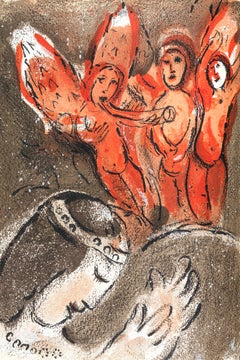
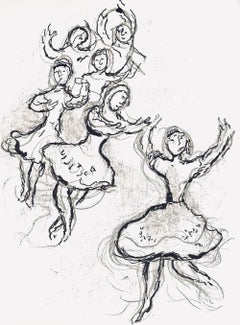
Marc Chagall, Sarah and the Angels, from Drawings for the Bible, 1956
Located in Southampton, NY
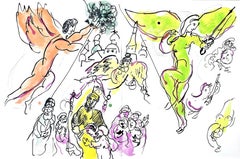
This exquisite lithograph by Marc Chagall (1887–1985), titled Sara et les Anges (Sarah and the Angels), from Marc Chagall, Dessins Pour La Bible (Drawings for the Bible), Verve: Revu...
Category

1950s Expressionist Prints and Multiples

Materials

Lithograph

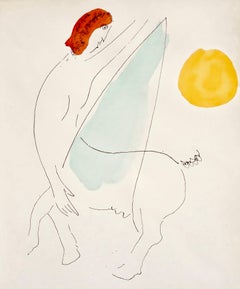
Chagall, Composition, Le Dur Désir de Durer (after)
Located in Southampton, NY
Lithograph on vélin bouffant d'Alfa paper. Inscription: unsigned and unnumbered, as issued. Good condition. Notes: From the volume, Le Dur Désir de Durer, illustré par Marc Chagall, ...
Category

1950s Expressionist Prints and Multiples

Materials

Lithograph

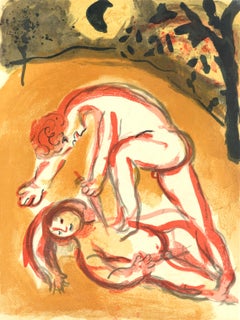
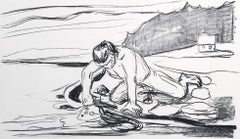
Marc Chagall, Cain and Abel, from Drawings for the Bible, 1956
Located in Southampton, NY
This exquisite lithograph by Marc Chagall (1887–1985), titled Cain et Abel (Cain and Abel), from Marc Chagall, Dessins Pour La Bible (Drawings for the Bible), Verve: Revue Artistique...
Category

1950s Expressionist Prints and Multiples

Materials

Lithograph

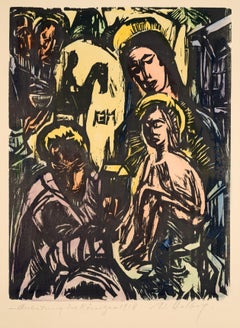
Adoration of the Magi / - The Rider of the Sun -
Located in Berlin, DE
Walter Helbig (1878 Falkenstein - 1968 Ascona), Adoration of the Magi, 1918. Hand-colored linocut, 30 cm x 22.5 cm (depiction), 50 cm x 35 cm (sheet size), signed “W.[alter] Helbig” in pencil lower right, inscribed “Adoration of the Magi” lower left and dated “1918”. Below this a handwritten dedication “with heartfelt Christmas greetings”. - Paper somewhat darkened and with slight creases, thumbtack holes in the corners - The Rider of the Sun - The 'apocalypse' of World War I brought about a return to sacred art. Walter Helbig belonged to the circle of the 'Brücke' and the 'Blauer Reiter'. With his reinterpretation of religious themes in an expressionist formal language, Helbig shaped an avant-garde neo-sacred art. This is symbolically expressed in the silhouette of the rider against the sun-like yellow background. It refers to the awakening initiated by the Blue Riding, which is now linked back to the sacred. The rider and horse "look" at Mary and the Christ Child, who occupy the entire field. Opposite them are the three kings, the eldest of whom kneels before Christ and offers him a gold-filled casket. The expressionist lines give rise to a tower that rises into the "sun", so that the gift has become a Gothic church, expressing the hope that the fallen world will be resurrected in the name of Christ. This dimension of meaning is emphasized by the magical effect of the color scheme. About the artist In 1895, Walter Helbig began studying at the Dresden Academy of Art, where he became friends with the future Brücke artist Otto Müller, with whom he lived in Dresden from 1903 to 1905. While studying in Italy from 1897 to 1899, he met Arnold Böcklin and Adolf von Hildebrand. After completing his studies, he first worked for Otto Gussmann, painting churches. From 1905 to 1909 he worked as a freelance painter in Hamburg. In 1909, through the mediation of Otto Müller, Helbig made the acquaintance of artists from the 'Brücke'. In 1910 he exhibited at the founding exhibition of the Berlin 'Neue Sezession'. In the same year, he moved to Switzerland, where, together with Hans Arp and Oscar Lüthy, he founded the 'Moderne Bund' in Weggis, to which Cuno Amiet and Giovanni Giacometti also belonged. At the second exhibition of the 'Moderne Bund' in Zurich in 1911, Henri Matisse and Robert Delaunay were represented alongside artists from the 'Blauer Reiter'. In 1913, Helbig traveled to Paris with Arp and Lüthy. After the dissolution of the 'Moderne Bund', Helbig was represented at the first Dada exhibition in Zurich in 1914. In 1919, he joined the Berlin 'Novembergruppe'. After the devastation of World War I, Helbig turned increasingly to religious themes in his work. In 1924, like many other artists of his time, he moved to Ascona for financial reasons, where he became a naturalized citizen in 1938. There he founded the artists' association "The Great Bear", to which Marianne von Werefkin...
Category

1910s Expressionist Prints and Multiples

Materials

Paper

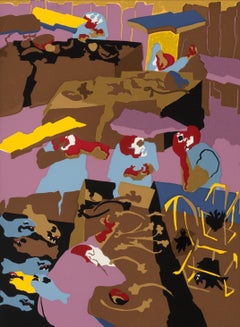
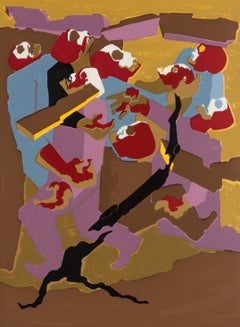
Jacob Lawrence, Market, from Hiroshima, 1983
Located in Southampton, NY
This exquisite silkscreen by Jacob Lawrence (1917–2000), titled Market, from the album Hiroshima, originates from the 1983 edition published by The Limited Editions Club, New York, a...
Category

1980s Expressionist Prints and Multiples

Materials

Screen

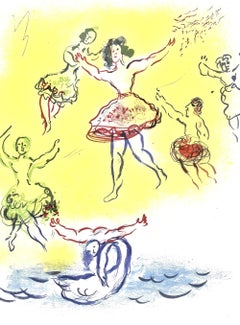
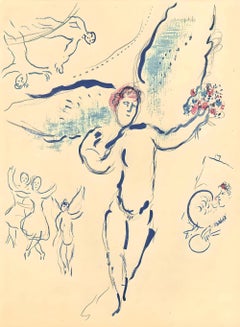
Marc Chagall, Swan Lake, from The Ceiling of the Paris Opera, 1965 (after)
Located in Southampton, NY
This exquisite lithograph after Marc Chagall (1887–1985), titled Le Lac des Cygnes (Swan Lake), from the album Le plafond de l’Opera de Paris par Marc Chagall (The Ceiling of the Par...
Category

1960s Expressionist Prints and Multiples

Materials

Lithograph

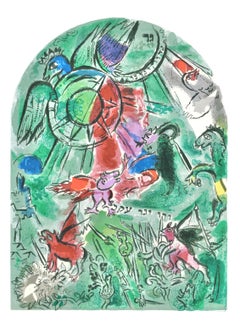
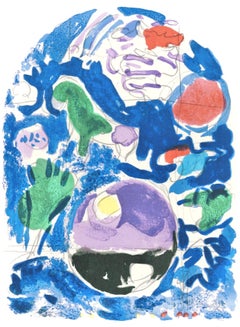
Marc Chagall, Tribe of Gad, from The Jerusalem Windows, 1962 (after)
Located in Southampton, NY
This exquisite lithograph after Marc Chagall (1887–1985), titled Tribe of Gad, from the album Marc Chagall, The Jerusalem Windows, originates from the 1962 edition published by Andre Sauret, Editeur, Paris, and printed by Mourlot Freres, Paris, June 7, 1962. This magnificent composition reflects Chagall’s profound engagement with the spiritual and symbolic language of the Hebrew Bible, celebrating the Tribe of Gad as an embodiment of courage, strength, and divine protection. Tribe of Gad radiates with Chagall’s signature dreamlike palette—deep blues, glowing yellows, and translucent reds—creating an atmosphere of sacred harmony and lyrical movement. The work exemplifies the artist’s ability to merge ancient narratives with modern visual poetry, transforming his spiritual reflections into radiant visions of light and color that transcend time and tradition. Executed as a lithograph on velin paper, this work measures 15 x 11 inches (38.1 x 27.94 cm). Unsigned and unnumbered as issued. The edition exemplifies the exceptional craftsmanship of the Mourlot Freres atelier, renowned for its collaboration with the most important modern artists of the 20th century. Artwork Details: Artist: After Marc Chagall (1887–1985) Title: Tribe of Gad, from Marc Chagall, The Jerusalem Windows Medium: Lithograph on velin paper Dimensions: 15 x 11 inches (38.1 x 27.94 cm) Inscription: Unsigned and unnumbered as issued Date: 1962 Publisher: Andre Sauret, Editeur, Paris Printer: Mourlot Freres, Paris Condition: Well preserved, consistent with age and medium Provenance: From the album Marc Chagall, The Jerusalem Windows, published by Andre Sauret, Editeur, Paris, June 7, 1962 Notes: Excerpted from the album, This album, which was compiled by Andre Sauret, was completed on June 7, 1962. The texts by Jean Leymarie were composed by hand in "Romain du roi" and were printed by The Imprimerie Nationale de France. The thirty-six preparatory color designs, some of which are in twenty colors, were transferred to the stones by Charles Sorlier under the direction of Marc Chagall. These designs and the two original lithographs by Marc Chagall were printed by Mourlot Freres. The other reproductions and the binding are by Draeger Freres. About the Publication: Marc Chagall, The Jerusalem Windows (Les Vitraux de Jerusalem), published in 1962 by Andre Sauret, Editeur, Paris, stands as one of the artist’s most celebrated illustrated albums and a cornerstone of modern printmaking. The publication documents Chagall’s monumental stained-glass windows created for the synagogue of the Hadassah-Hebrew University Medical Center in Jerusalem—an artistic and spiritual masterpiece dedicated to the twelve tribes of Israel. Conceived in collaboration with master printer Charles Sorlier and the renowned Mourlot Freres atelier, the album compiles the artist’s original color studies through vibrant lithography, achieving a remarkable luminosity that mirrors the glowing transparency of stained glass. The accompanying text by art historian Jean Leymarie offers profound insights into Chagall’s vision, faith, and symbolism. Completed on June 7, 1962, this edition embodies the union of fine art, craftsmanship, and devotion, capturing the transcendent beauty of Chagall’s windows and their universal message of peace and faith. About the Artist: Marc Chagall (1887–1985) was a Belarus-born French painter, printmaker, and designer whose visionary imagination, radiant color, and deeply poetic symbolism made him one of the most beloved and influential artists of the 20th century. Rooted in the imagery of his Jewish heritage and the memories of his childhood in Vitebsk, Chagall’s art wove together themes of faith, love, folklore, and fantasy with a dreamlike modern sensibility. His unique style—merging elements of Cubism, Fauvism, Expressionism, and Surrealism—defied categorization, transforming ordinary scenes into lyrical meditations on memory and emotion. Influenced by Russian icon painting, medieval religious art, and the modern innovations of artists such as Pablo Picasso, Henri Matisse, and Georges Braque, Chagall developed a profoundly personal visual language filled with floating figures, vibrant animals, musicians, and lovers that symbolized the transcendent power of imagination and love. During his early years in Paris, he became an integral part of the Ecole de Paris circle, forming friendships with Amedeo Modigliani, Fernand Leger, and Sonia Delaunay, and his creative spirit resonated with that of his peers and successors—Alexander Calder, Alberto Giacometti, Salvador Dali, Joan Miro, Wassily Kandinsky, Marcel Duchamp, and Man Ray—artists who, like Chagall, sought to push the boundaries of perception, emotion, and form. Over a prolific career that spanned painting, printmaking, stained glass, ceramics, and stage design, Chagall brought an unparalleled poetic sensibility to modern art, infusing even the most abstract subjects with human warmth and spiritual depth. His works are held in the most prestigious museums around the world, including the Museum of Modern Art, the Centre Pompidou, the Tate, and the Guggenheim, where they continue to inspire generations of artists and collectors. The highest price ever paid for a Marc Chagall artwork is approximately $28.5 million USD, achieved in 2017 at Sotheby’s New York for Les Amoureux (1928). Marc Chagall Tribe of Gad, Chagall Jerusalem Windows...
Category

1960s Expressionist Prints and Multiples

Materials

Lithograph

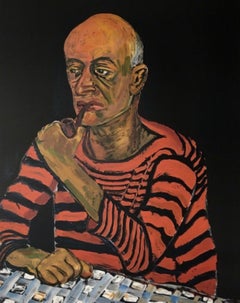
Man with Pipe (John Rothschild), Alice Neel
Located in Fairfield, CT
Artist: Alice Neel (1900-1984) Title: Man with Pipe (John Rothschild) Year: 1979 Medium: Lithograph on Arches paper Edition: XXXVIII/L; 150 Arabic Numerals, 50 Roman Numerals, plus p...
Category

1970s Expressionist Prints and Multiples

Materials

Lithograph

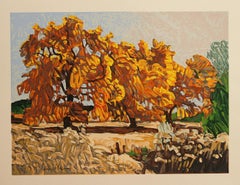
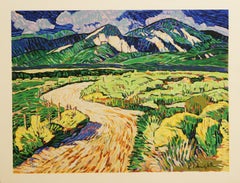
Cottonwoods hand-pulled serigraph by Robert Daughters
Located in Paonia, CO
Cottonwoods is a hand-pulled, limited edition serigraph, no. 32 / 165 and is signed in pencil by the artist. Published by Aspen Mountain Graphic it is ...
Category

20th Century Expressionist Prints and Multiples

Materials

Screen

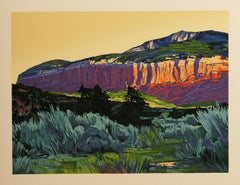
Chama Canyon hand pulled serigraph by William Hook
Located in Paonia, CO
Chama Canyon is a limited edition hand-pulled serigraph no. 225 /260 in excellent condition. It is signed in pencil and published by Aspen Mountain Graphics. sheet size 14 x 18 image 12 x 16 For American artist William Hook ( b. 1948- ) art was a central focus in his family home and he began his career in art at an early age.. He studied at several prestigious art schools in the US and abroad. His work has been featured in magazines such as Southwest Art, Art of the West, U. S. Art, American Artist and Focus Santa Fe. The book… Leading the West… by Donald Hagerty features William Hook as one of the most notable influences on the western art scene. Publishers Harper-Collins and North Light have included his work in numerous books written about the contemporary art process in Europe and America. Hook’s paintings can be found in the permanent collections of the Denver Art Museum, the Tucson Art Museum, the University of New Mexico, the FORBES Museum, NYC, and the Genesee Museum, NY as well as in many corporate and private collections. His work has also been featured in prints for the New Mexico Symphony, Music from Angel Fire...
Category

20th Century Expressionist Prints and Multiples

Materials

Screen

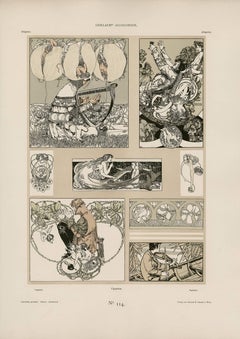
Gerlach s Allegorien Plate #114: "Vignettes" Lithograph by Carl Otto Czeschka
Located in Palm Beach, FL
after Carl Otto Czeschka, (1878-1960), Austrian A leading member of the Vienna Secession and later the Wiener Werkstätte (Viennese Workshop), Carl Otto Czeschka was a vital figu...
Category

1890s Expressionist Prints and Multiples

Materials

Lithograph

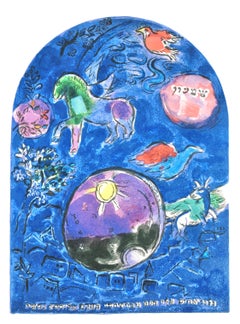
Marc Chagall, Tribe of Simeon, from The Jerusalem Windows, 1962 (after)
Located in Southampton, NY
This exquisite lithograph after Marc Chagall (1887–1985), titled Tribe of Simeon, from the album Marc Chagall, The Jerusalem Windows, originates from the 1962 edition published by An...
Category

1960s Expressionist Prints and Multiples

Materials

Lithograph

Marc Chagall, Swan Lake, from The Ceiling of the Paris Opera, 1965 (after)
Located in Southampton, NY
This exquisite lithograph after Marc Chagall (1887–1985), titled Le Lac des Cygnes (Swan Lake), from the album Le plafond de l’Opera de Paris par Marc Chagall (The Ceiling of the Par...
Category

1960s Expressionist Prints and Multiples

Materials

Lithograph

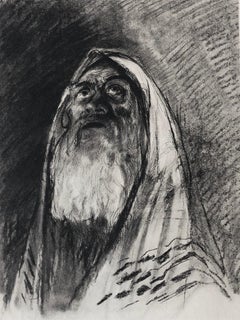
Judaica Jewish Shtetl Etching Hasidic Rabbi, Meditation Vintage Chassidic Print
Located in Surfside, FL
"Le ciel est ouvert" Older Chassidic rabbi learning with open book, Judaica, Jewish scenes from a ghetto. Saul Yaffie, a.k.a. Paul Jeffay, (1898–1957) was a Scottish Jewish artist...
Category

20th Century Expressionist Prints and Multiples

Materials

Etching

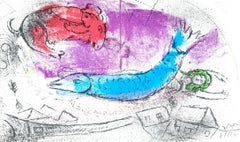
Marc Chagall, The Blue Fish, from Chagall, 1957
Located in Southampton, NY
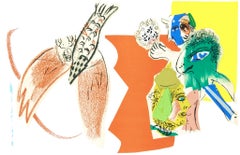
This exquisite lithograph by Marc Chagall (1887–1985), titled Le Poisson Bleu (The Blue Fish), from the album Chagall, originates from the 1957 edition published by Maeght Editeur, Paris, and printed by Mourlot Freres, Paris, 1957. This enchanting composition exemplifies Chagall’s poetic imagination and his symbolic use of color to express emotion, spirituality, and dreamlike wonder. In Le Poisson Bleu, a radiant blue fish glides across a fantastical landscape, surrounded by floating figures and luminous forms that evoke the harmony between nature and the divine. The deep blue tones suggest both serenity and transcendence, capturing the mystical lyricism that defines Chagall’s vision. The work transforms the natural motif into a metaphor for freedom, renewal, and the boundless vitality of life. Executed as a lithograph on velin paper, this work measures 9.06 x 15.75 inches (23.01 x 40 cm), with centerfold as issued. Unsigned and unnumbered as issued. The edition exemplifies the superior craftsmanship of the Mourlot Freres atelier, celebrated for its collaborations with the foremost modern artists of the 20th century. Artwork Details: Artist: Marc Chagall (1887–1985) Title: Le Poisson Bleu (The Blue Fish), from Chagall, 1957 Medium: Lithograph on velin paper Dimensions: 9.06 x 15.75 inches (23.01 x 40 cm), with centerfold as issued Inscription: Unsigned and unnumbered as issued Date: 1957 Publisher: Maeght Editeur, Paris Printer: Mourlot Freres, Paris Catalogue raisonne references: Chagall, Marc, and Julien Cain. Chagall Lithographe. Andre Sauret, Editeur, 1960, illustration 198. Cramer, Patrick, and Meret Meyer. Marc Chagall: Catalogue Raisonne Des Livres Illustres. P. Cramer ed., 1995, illustration 34. Condition: Well preserved, consistent with age and medium Provenance: From the album Chagall, published by Maeght Editeur, Paris, 1957 Notes: Excerpted from the album (translated from French), This album was printed by Drager Freres in Montrouge on behalf of Maeght Editeur, 13, Rue de Teheran, Paris VIII. The original color lithographs were drawn by Mourlot Freres. The photographs of the works printed are of Y. Hervochon, M. Routhier, Draeger. Copyright 1957. About the Publication: The 1957 album Chagall, published by Maeght Editeur, Paris, and printed by Mourlot Freres, stands among the most celebrated achievements of mid-century art publishing. Each lithograph within the volume reflects Marc Chagall’s synthesis of visual poetry and spiritual resonance, revealing the painter’s unique ability to weave emotion and imagination into color. Through the technical excellence of the Mourlot atelier, Chagall’s luminous palette and ethereal forms were translated into lithography with remarkable fidelity. Conceived under the direction of Aime Maeght, the album highlights the enduring dialogue between artist, printer, and publisher—a creative partnership that elevated the printed image to a work of fine art and helped define the legacy of modernist bookmaking. About the Artist: Marc Chagall (1887–1985) was a Belarus-born French painter, printmaker, and designer whose visionary imagination, radiant color, and deeply poetic symbolism made him one of the most beloved and influential artists of the 20th century. Rooted in the imagery of his Jewish heritage and the memories of his childhood in Vitebsk, Chagall’s art wove together themes of faith, love, folklore, and fantasy with a dreamlike modern sensibility. His unique style—merging elements of Cubism, Fauvism, Expressionism, and Surrealism—defied categorization, transforming ordinary scenes into lyrical meditations on memory and emotion. Influenced by Russian icon painting, medieval religious art, and the modern innovations of artists such as Pablo Picasso, Henri Matisse, and Georges Braque, Chagall developed a profoundly personal visual language filled with floating figures, vibrant animals, musicians, and lovers that symbolized the transcendent power of imagination and love. During his early years in Paris, he became an integral part of the Ecole de Paris circle, forming friendships with Amedeo Modigliani, Fernand Leger, and Sonia Delaunay, and his creative spirit resonated with that of his peers and successors—Alexander Calder, Alberto Giacometti, Salvador Dali, Joan Miro, Wassily Kandinsky, Marcel Duchamp, and Man Ray—artists who, like Chagall, sought to push the boundaries of perception, emotion, and form. Over a prolific career that spanned painting, printmaking, stained glass, ceramics, and stage design, Chagall brought an unparalleled poetic sensibility to modern art, infusing even the most abstract subjects with human warmth and spiritual depth. His works are held in the most prestigious museums around the world, including the Museum of Modern Art, the Centre Pompidou, the Tate, and the Guggenheim, where they continue to inspire generations of artists and collectors. The highest price ever paid for a Marc Chagall artwork is approximately $28.5 million USD, achieved in 2017 at Sotheby’s New York for Les Amoureux (1928). Marc Chagall Le...
Category

1950s Expressionist Prints and Multiples

Materials

Lithograph

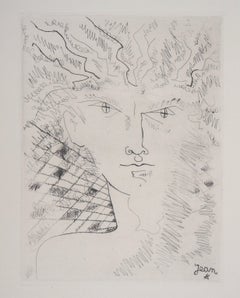
Surrealist Portrait - Original Etching (Plate signature), 1946
Located in Paris, IDF
Jean Cocteau Surrealist Portrait, 1946 Original etching Printed signature in the plate On BFK Rives vellum, 32,5 x 25 cm (c. 12,7 x 9,8 inch) Edition limited to 300 copies (unnumber...
Category

1940s Expressionist Prints and Multiples

Materials

Etching

Marc Chagall, Tribe of Simeon, from The Jerusalem Windows, 1962 (after)
Located in Southampton, NY
This exquisite lithograph after Marc Chagall (1887–1985), titled Tribe of Simeon, from the album Marc Chagall, The Jerusalem Windows, originates from the 1962 edition published by An...
Category

1960s Expressionist Prints and Multiples

Materials

Lithograph

Omegas Død (Omega s Death) /// Edvard Munch Alpha and Omega Expressionist Litho
Located in Saint Augustine, FL
Artist: Edvard Munch (Norwegian, 1863-1944) Title: "Omegas Død (Omega's Death)" Portfolio: Alfa og Omega (Alpha and Omega) *Signed by Munch in pencil lower right Year: 1908-1909 Medi...
Category

Early 1900s Expressionist Prints and Multiples

Materials

Lithograph

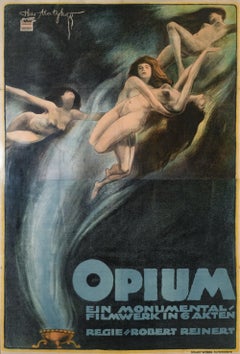
"Opium" Lithograph Poster by Theo Matejko
By Theo Matejko
Located in Palm Beach, FL
Frame is handmade by artist Gail Potocki. WEAG-Matejko, Printer, Vienna "In 1919, artist Theo Matejko created this lithograph for Robert Reinert's silent film Opium (starring Conra...
Category

1910s Expressionist Prints and Multiples

Materials

Lithograph

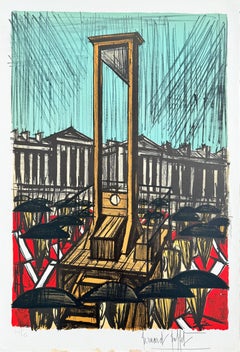
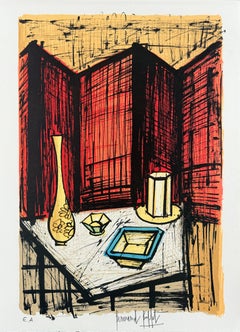
La Guillotine
Located in OPOLE, PL
Bernard Buffet (1928-1999) - La Guillotine Lithograph from 1977. The edition of 103/150. On Arches paper with watermark. Dimensions of work: 76 x 56 cm. Hand signed. The work is...
Category

1970s Expressionist Prints and Multiples

Materials

Lithograph

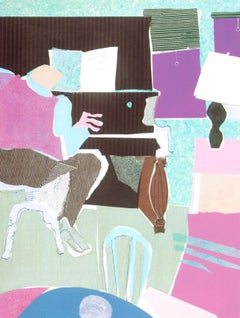
Louisiana Serenade (Gelburd/Rosenberg 70-77), Jazz Series, Romare Bearden
Located in Fairfield, CT
Artist: Romare Bearden (1911-1988) Title: Louisiana Serenade (Gelburd/Rosenberg 70-77) Year: 1979 Medium: Lithograph on vélin d’Arches paper Edition: 39/175, plus proofs Size: Paper ...
Category

1970s Expressionist Prints and Multiples

Materials

Lithograph

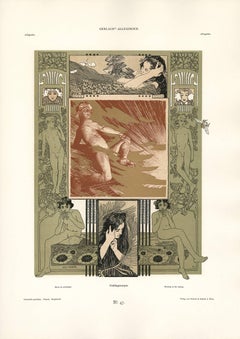
Gerlach s Allegorien Plate #47: "Morning in the Spring" Lithograph
Located in Palm Beach, FL
Koloman Moser (1868 –1918), AUSTRIAN Instead of applying his flair and art education solely to painting, Koloman Moser embodied the idea of Gesamt Kunstwerk (all-embracing art work) by designing architecture, furniture, jewelry, graphics, and tapestries meant to coordinate every detail of an environment. His work transcended the imitative decorative arts of earlier eras and helped to define Modernism for generations to come. Moser achieved a remarkable balance between intellectual structure (often geometric) and hedonistic luxury. Collaborating with Gustav Klimt and Josef Hoffmann, the artist was an editor and active contributor to Ver Sacrum, (Sacred Spring), the journal of the Viennese Secession that was so prized for its aesthetics and high quality production that it was considered a work of art. The magazine featured drawings and designs in the Jugendstil style (Youth) along with literary contributions from distinguished writers from across Europe. It quickly disseminated both the spirit and the style of the Secession. In 1903 Moser and Hoffmann founded and led the Wiener Werkstatte (Viennese Workshop) a collective of artisans that produced elegant decorative arts items, not as industrial prototypes but for the purpose of sale to the public. The plan, as idealistic then as now, was to elevate the lives of consumers by means of beautiful and useful interior surroundings. Moser’s influence has endured throughout the century. His design sensibility is evident from the mid-century modern furniture of the 1950s and ‘60s to the psychedelic rock posters...
Category

1890s Expressionist Prints and Multiples

Materials

Paper

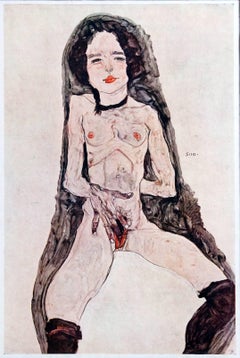
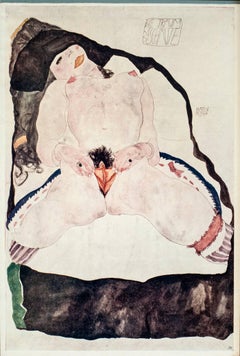
Masturbating Woman Surrounded by Black
Located in Palm Beach, FL
Published anonymously c. 1920, Vienna, in an edition of 100, after the original gouache, watercolor and pencil on paper, signed and dated in the plate by the artist in middle right: ...
Category

1920s Expressionist Prints and Multiples

Materials

Paper

Marc Chagall, Dream at the Circus, from XXe Siecle, 1966
Located in Southampton, NY
This exquisite lithograph by Marc Chagall (1887–1985), titled Reve au cirque (Dream at the Circus), from the album XXe Siecle, Nouvelle serie, XXVIIIe Annee N°26, Mai 1966, originate...
Category

1960s Expressionist Prints and Multiples

Materials

Lithograph

Apeles Fenosa Spanish Sculptor Mourlot Lithograph Abstract Expressionist Figures
Located in Surfside, FL
This is from a hand signed, limited edition (edition of 125) folio or full page lithographs some having a poem verso. The individual sheets are not signed or numbered. This listing ...
Category

1970s Expressionist Prints and Multiples

Materials

Lithograph

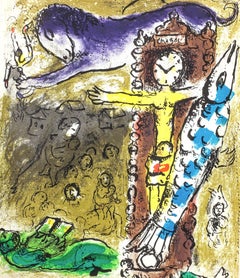
Marc Chagall, The Christ at the Clock, from Chagall, 1957
Located in Southampton, NY
This exquisite lithograph by Marc Chagall (1887–1985), titled Le Christ a l’Horloge (The Christ at the Clock), from the album Chagall, originates from the 1957 edition published by M...
Category

1950s Expressionist Prints and Multiples

Materials

Lithograph

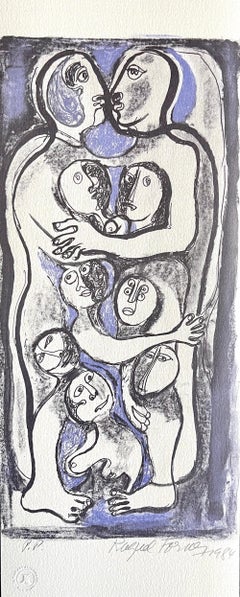
FAMILY Signed Lithograph Abstract Portrait, People, Latin American Woman Artist
Located in Union City, NJ
Raquel Forner (1902-1988) Argentine woman painter and printmaker born in Buenos Aires in 1902 and died in the same city in 1988, regarded as one of the best Argentine female painters...
Category

1980s Expressionist Prints and Multiples

Materials

Lithograph

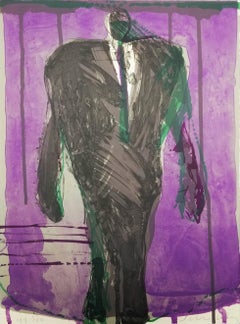
ASU Portrait II /// Fritz Scholder Native American Indian Expressionist Surreal
Located in Saint Augustine, FL
Artist: Fritz Scholder (Native American, 1937-2005) Title: "ASU Portrait II" Portfolio: Arizona State University Centennial Portfolio *Signed by Scholder in pencil lower right Year: 1984 Medium: Original Lithograph on Arches Cover buff paper Limited edition: 49/100 Printer: Joseph M. Segura of the Print Research Facility, School of Art, Arizona State University, Tempe, AZ Publisher: the Print Research Facility, School of Art, Arizona State University, Tempe, AZ Reference: "Collaborative Works: Recent Work and Catalogue Raisonné of the Visual Arts Research Institute" - ASU/VARI No. 121, page 98 Sheet size: 20.25" x 15" Condition: Never framed, has been professionally stored away within its original portfolio case for decades. In mint condition Not a single example of this work has ever appeared at auction in over 40 years. Extremely rare Notes: Provenance: one owner ever - private collection - Scottsville, AZ; acquired directly from the publisher the Print Research Facility, School of Art, Arizona State University, Tempe, AZ upon its release in 1984. Numbered by Scholder in pencil lower left. Comes from the 1984 "Arizona State University Centennial Portfolio" of eighteen prints in various mediums by Daniel R Britton, R. E. (Ron) Gasowski, Arthur W. Hahn, James Hajicek, Jules Heller...
Category

1980s Expressionist Prints and Multiples

Materials

Lithograph

Karl Schmidt-Rottluff Haus mit Pappeln 1913 Woodcut German Expressionism
Located in Eltville am Rhein, DE
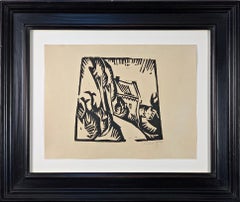
Karl Schmidt-Rottluff 1884 Rottluff - 1976 Berlin Haus mit Pappeln, 1913 Woodcut on firm brownish paper Signed in pencil lower right Image: 23.5 x 24.7 cm Frame: 51 x 61 cm Publishe...
Category

1910s Expressionist Prints and Multiples

Materials

Woodcut

Marc Chagall, Mozart and Mussorgsky, 1963 (after)
Located in Southampton, NY
This exquisite lithograph after Marc Chagall (1887–1985), titled Mozart et Moussorgsky (Mozart and Mussorgsky), from the album Le plafond de l’Opera de Paris par Marc Chagall (The Ce...
Category

1960s Expressionist Prints and Multiples

Materials

Lithograph

Marc Chagall, Job in Prayer, from Drawings for the Bible, 1956
Located in Southampton, NY
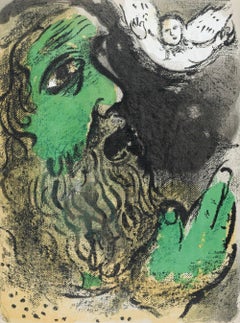
This exquisite lithograph by Marc Chagall (1887–1985), titled Job en priere (Job in Prayer), from Marc Chagall, Dessins Pour La Bible (Drawings for the Bible), Verve: Revue Artistique et Litteraire, Vol. VIII, No. 33–34, originates from the September 1956 issue published by Editions de la revue Verve, Paris, under the direction of Teriade, Editeur, Paris, and printed by Mourlot Freres, Paris, 1956. This deeply spiritual composition portrays the biblical figure of Job in an act of humble prayer and endurance amidst suffering. Chagall captures the essence of faith and perseverance through lyrical lines and a luminous atmosphere, transforming human despair into a vision of redemption and divine grace. The figure of Job, rendered with quiet dignity, embodies Chagall’s enduring fascination with the resilience of the human spirit in dialogue with the divine. The piece forms part of Chagall’s celebrated series of lithographs and drawings created for Dessins Pour La Bible, a monumental project uniting art, scripture, and mysticism in one of the artist’s most important achievements. Executed as a lithograph on velin du Marais paper, this work measures 14 x 10.5 inches (35.56 x 26.67 cm). Unsigned and unnumbered as issued. The edition exemplifies the superb craftsmanship of the Mourlot Freres atelier, renowned for its collaborations with the greatest modern masters of the 20th century. Artwork Details: Artist: Marc Chagall (1887–1985) Title: Job en priere (Job in Prayer), from Marc Chagall, Dessins Pour La Bible (Drawings for the Bible), Verve: Revue Artistique et Litteraire, Vol. VIII, No. 33–34, September 1956 Medium: Lithograph on velin du Marais paper Dimensions: 14 x 10.5 inches (35.56 x 26.67 cm) Inscription: Unsigned and unnumbered as issued Date: 1956 Publisher: Editions de la revue Verve, Paris, under the direction of Teriade, Editeur, Paris Printer: Mourlot Freres, Paris Catalogue raisonne references: Cain, Julien, and Fernand Mourlot. Chagall Lithographe. Andre Sauret, Editeur, 1960, illustrations 117–46. Cramer, Patrick, and Meret Meyer. Marc Chagall: Catalogue Raisonne Des Livres Illustrés. P. Cramer ed., 1995, illustration 25. Condition: Well preserved, consistent with age and medium Provenance: From Marc Chagall, Dessins Pour La Bible (Drawings for the Bible), Verve: Revue Artistique et Litteraire, Vol. VIII, No. 33–34, published by Editions de la revue Verve, Paris, 1956 Notes: Excerpted from the album (translated from French), This double issue of Verve is dedicated to the full reproduction in heliogravure of the one hundred-five plates etched by Marc Chagall, between 1930 and 1955, for the illustration of the Bible. The artist composed especially for the present work, sixteen lithographs in color and twelve in black, as well as the cover and the title page. This volume was completed and printed on September 10, 1956, by the Master Printers Draeger Freres for heliogravure, and by Mourlot Freres for lithography. About the Publication: Marc Chagall, Dessins Pour La Bible (Drawings for the Bible), published as Verve Vol. VIII, No. 33–34 in September 1956, represents one of the crowning achievements of Chagall’s lifelong dialogue with the sacred. Conceived and directed by the visionary publisher Teriade and printed by the master lithographers Mourlot Freres, the issue features thirty-four color lithographs and numerous black-and-white drawings inspired by biblical figures and stories. Chagall’s works for this edition unite text and image in a luminous meditation on divine creation, moral struggle, and spiritual renewal, imbued with his signature dreamlike symbolism and radiant color. Produced in postwar Paris, this landmark publication reaffirmed the enduring union of art and faith, establishing Dessins Pour La Bible as one of the most important illustrated works of the 20th century. About the Artist: Marc Chagall (1887–1985) was a Belarus-born French painter, printmaker, and designer whose visionary imagination, radiant color, and deeply poetic symbolism made him one of the most beloved and influential artists of the 20th century. Rooted in the imagery of his Jewish heritage and the memories of his childhood in Vitebsk, Chagall’s art wove together themes of faith, love, folklore, and fantasy with a dreamlike modern sensibility. His unique style—merging elements of Cubism, Fauvism, Expressionism, and Surrealism—defied categorization, transforming ordinary scenes into lyrical meditations on memory and emotion. Influenced by Russian icon painting, medieval religious art, and the modern innovations of artists such as Pablo Picasso, Henri Matisse, and Georges Braque, Chagall developed a profoundly personal visual language filled with floating figures, vibrant animals, musicians, and lovers that symbolized the transcendent power of imagination and love. During his early years in Paris, he became an integral part of the Ecole de Paris circle, forming friendships with Amedeo Modigliani, Fernand Leger, and Sonia Delaunay, and his creative spirit resonated with that of his peers and successors—Alexander Calder, Alberto Giacometti, Salvador Dali, Joan Miro, Wassily Kandinsky, Marcel Duchamp, and Man Ray—artists who, like Chagall, sought to push the boundaries of perception, emotion, and form. Over a prolific career that spanned painting, printmaking, stained glass, ceramics, and stage design, Chagall brought an unparalleled poetic sensibility to modern art, infusing even the most abstract subjects with human warmth and spiritual depth. His works are held in the most prestigious museums around the world, including the Museum of Modern Art, the Centre Pompidou, the Tate, and the Guggenheim, where they continue to inspire generations of artists and collectors. The highest price ever paid for a Marc Chagall artwork is approximately $28.5 million USD, achieved in 2017 at Sotheby’s New York for Les Amoureux (1928). Marc Chagall Job...
Category

1950s Expressionist Prints and Multiples

Materials

Lithograph

Portrait of Lady in Red and Black by Gustav Klimt, Das Werk collotype, 1908-1912
Located in Chicago, IL
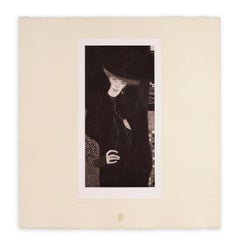
Original collotype created from Gustav Klimt’s Portrait of Lady in Red and Black. Published and edited by Verlag H.O. Miethke and printed by k.k. Hof- und Staatsdruckerei, Vienna, in an edition of 300. Collotype on chine colle paper laid down on heavy deckled-edge cream-wove paper. Between 1908 and 1914, H.O. Miethke published Das Werk Gustav Klimts...
Category

Early 1900s Expressionist Prints and Multiples

Materials

Paper

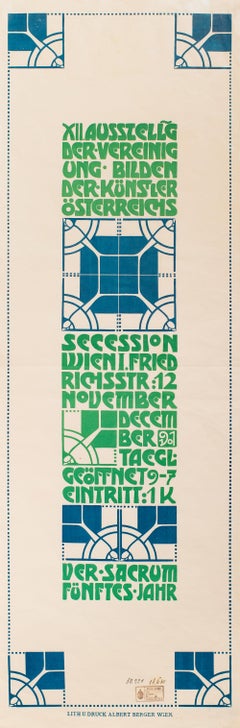
Poster for the 12th Exhibition of the Vienna Secession by Alfred Roller
Located in Palm Beach, FL
Note: Due to the size, weight, and value of this piece, we require shipping through 1stDibs, for its cost effectiveness, full insurance coverage, and reliable handling. While standar...
Category

Early 1900s Expressionist Prints and Multiples

Materials

Lithograph

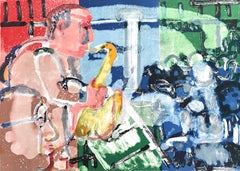
Bopping at the Birdland (Gelburd/Rosenberg 70-77), Jazz Series, Romare Bearden
Located in Fairfield, CT
Artist: Romare Bearden (1911-1988) Title: Bopping at the Birdland (Gelburd/Rosenberg 70-77) Year: 1979 Medium: Lithograph on vélin d’Arches paper Edition: 110/175, plus proofs Size: ...
Category

1970s Expressionist Prints and Multiples

Materials

Lithograph

The Weary Blues, Sunrise Is Coming After While
Located in Southampton, NY
Silkscreen on vélin d’Arches paper. Paper Size: 14 x 11 inches. Inscription: Unsigned and unnumbered, as issued. Notes: From the folio, Bookmarks in the Pages of Life, 1998. Published by The Limited Editions Club, New York; printed by Drexel Press, Inc. Long Island City, 1998. Excerpted from the folio, CCC examples, designed, hand-set in Monotype Perpetua, printed, and hand-bound by Michael and Winifred Bixler, Skaneateles, New York. Paper made in France at Arches. Silkscreens printed by the Drexel Press, Inc. Long Island City, New York. PHOEBE BEASLEY...
Category

1990s Expressionist Prints and Multiples

Materials

Screen

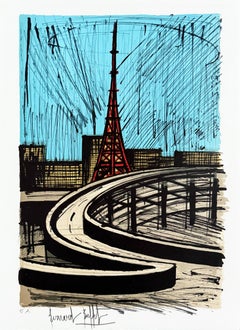
The Eiffel Tower and the highway, Tokyo
Located in OPOLE, PL
Bernard Buffet (1928-1999) - The Eiffel Tower and the highway, Tokyo Lithograph from 1981. Artsit's edition. On Arches paper. Dimensions of work: 53.5 x 39 cm. Hand signed. The...
Category

1980s Expressionist Prints and Multiples

Materials

Lithograph

Sangre de Christos hand-pulled serigraph by Robert Daughters
Located in Paonia, CO
Sangre de Christos is a hand-pulled, limited edition serigraph, no. 39 / 260 and is signed in pencil by the artist. Published by Aspen Mountain Graphic...
Category

20th Century Expressionist Prints and Multiples

Materials

Screen

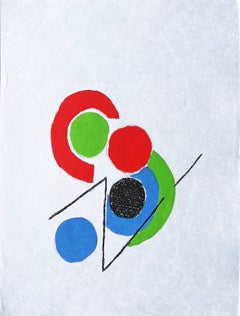
Juste Présent
Located in OPOLE, PL
Sonia Delaunay (1885-1979) - Juste Présent Lithograph from 1961. Dimensions of work: 38 x 28 cm Publisher: Lacourière et Frélaut, Paris. The work is in Excellent condition. Fast...
Category

1960s Expressionist Prints and Multiples

Materials

Lithograph

Juste Présent
Juste Présent
$1,150 Sale Price
20% Off
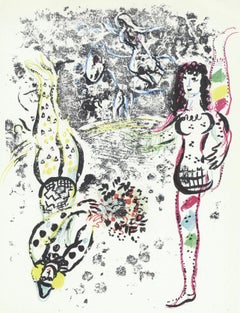
Marc Chagall, The Game of Acrobats, from The Lithographs of Chagall, 1963
Located in Southampton, NY
This exquisite lithograph by Marc Chagall (1887–1985), titled Le Jeu des Acrobates (The Game of Acrobats), from the album The Lithographs of Chagall, Volume II, originates from the 1...
Category

1960s Expressionist Prints and Multiples

Materials

Lithograph

Jacob Lawrence, Street Scene, from Hiroshima, 1983
Located in Southampton, NY
This exquisite silkscreen by Jacob Lawrence (1917–2000), titled Street Scene, from the album Hiroshima, originates from the 1983 edition published by The Limited Editions Club, New Y...
Category

1980s Expressionist Prints and Multiples

Materials

Screen

DIE TRAUME BESCHAUTE (OBSERVED IN A DREAM)
Located in Palm Beach, FL
Published anonymously c. 1920, Vienna, in an edition of 100, after the original watercolor and pencil on paper, titled in the plate at the top: “DIE TRAUM/BESCHAUTE” and signed and d...
Category

1920s Expressionist Prints and Multiples

Materials

Paper

La cérémonie du thé
Located in OPOLE, PL
Bernard Buffet (1928-1999) - La cérémonie du thé Lithograph from 1981. Artsit's edition. On Arches paper. Dimensions of work: 53.5 x 39 cm. Hand signed. The work is in Excellen...
Category

1980s Expressionist Prints and Multiples

Materials

Lithograph

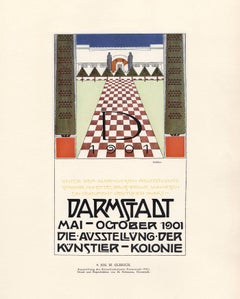
Ottokar Mascha Folio, plate 9: "Darmstadt Poster"by Joseph Maria Olbricht
By Joseph Maria Olbrich
Located in Palm Beach, FL
After JOSEPH MARIA OLBRICHT (1867-1908) DARMSTADT POSTER, 1901, (In Mascha, no. 9) One of the founding members of the Vienna Secession and a highly esteemed architect, Olbricht was c...
Category

1910s Expressionist Prints and Multiples

Materials

Lithograph

Dream Variations, Sunrise Is Coming After While
Located in Southampton, NY
Silkscreen on vélin d’Arches paper. Paper Size: 14 x 11 inches. Inscription: Unsigned and unnumbered, as issued. Notes: From the folio, Bookmarks in the Pages of Life, 1998. Published by The Limited Editions Club, New York; printed by Drexel Press, Inc. Long Island City, 1998. Excerpted from the folio, CCC examples, designed, hand-set in Monotype Perpetua, printed, and hand-bound by Michael and Winifred Bixler, Skaneateles, New York. Paper made in France at Arches. Silkscreens printed by the Drexel Press, Inc. Long Island City, New York. PHOEBE BEASLEY...
Category

1990s Expressionist Prints and Multiples

Materials

Screen

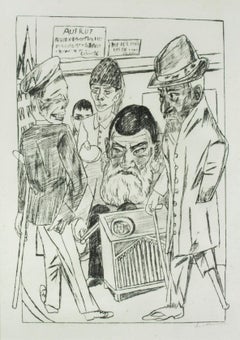
Die Bettler (The Beggars)
Located in Fairlawn, OH
Die Bettler (The Beggars) Lithograph, 1922 Signed in pencil lower right (see photo) From: Berliner Reise Series, Plate 7 Printed on wove paper Edition: 100...
Category

1920s Expressionist Prints and Multiples

Materials

Lithograph

Gustav Klimt "Woman in Boa" collotype from Funfundzwanzig Handzeichnungen
Located in Palm Beach, FL
Title page numbered: 263/450. Includes handmade, gold-leaf frame.
Category

1910s Expressionist Prints and Multiples

Materials

Paper

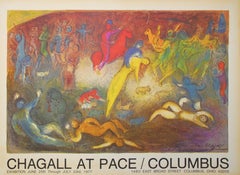
Chagall At Pace/Columbus - Marc Chagall - Lithography
Located in Winterswijk, NL
"Chagall At Pace/Columbus" by Marc Chagall Exhibition poster Color offset lithography Signed in the print Publisher: Pace Gallery, Columbus
Category

1970s Expressionist Prints and Multiples

Materials

Color, Lithograph

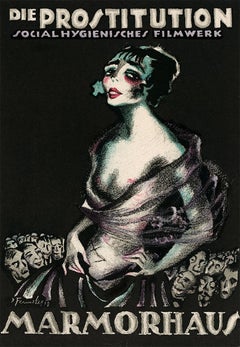
Die Prostitution by Josef Fenneker, Weimar silent film poster, Anita Berber 1919
Located in Chicago, IL
Original lithograph of Josef Fenneker’s German Expressionist poster design for the 1919 silent film Die Prostitution starring Anita Berber ...
Category

1910s Expressionist Prints and Multiples

Materials

Lithograph

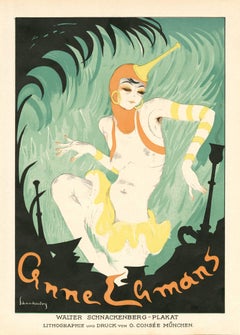
Kostume, Plakate, und Dekorationen, "Anne Lemans"
Located in Palm Beach, FL
Walter Schnackenberg’s style changed several times during his long and successful career. Having studied in Munich, the artist traveled often to Paris where he fell under the spell of the Henri de Toulouse-Lautrec’s colorful and sensuous posters depicting theatrical and decadent subjects. Schnackenberg became a regular contributor of similar compositions to the German magazines Jugend and Simplicissimus before devoting himself to the design of stage scenery and costumes. In the artist’s theatrical work, his mastery of form, ornamentation, and Orientalism became increasingly evident. He excelled at combining fluid Art Nouveau outlines, with spiky Expressionist passages, and the postures and patterns of the mysterious East. In his later years, Schnackenberg explored the unconscious, using surreal subject matter and paler colors that plainly portrayed dreams and visions, some imbued with political connotations. His drawings, illustrations, folio prints, and posters are highly sought today for their exceedingly imaginative qualities, enchanting subject matter, and arresting use of color. SCHNACKENBERG: KOSTUME, PLAKATE UND DEKORATIONEN, a cardboard bound art book consisting of 43 prints of work by Walter Schnackenberg, 30 of which are color lithographs that are signed and some are titled and dated in the plate, as well as black and white prints and photographs with accompanying text by Oskar Bie; lithographs printed at Kunstanstalt Oskar Consee in Munich, other images printed by Gesellschaft Pick & Co. in Munich, the text and cover with color images by Schnackenberg front and verso printed by R. Oldenbourg in Munich; published by Musarion Verlag, Munich, 1920. The majority of Walter Schnackenberg’s artistic output was destroyed by bomb attacks in Munich in 1944. The highly publicized 2013 auction in New York of the recovered pre-war poster collection once belonging to German poster aficionado, Hans Sachs has reintroduced the world to Walter Schnackenberg’s graphic genius and priceless ephemeral art from a lost era. Besides the museum world, designer Karl Lagerfeld is one of the most prodigious collectors of Schnackenberg. Flipping through the pages of Kostume, Plakate und Dekorationen, it becomes quite clear that Schnackenberg’s collection is ground zero at the crossroads of early modern fashion where the cult of celebrity meets up with dance, music, theater and cabaret, film and the graphic medium. Berlin and Munich under Germany’s Weimar Republic in the first quarter of the 20th century produced just the atmosphere to feed this burgeoning industry. Rising inflation sparked a recklessness to live large for the moment and heightened a desire for escapism. An influx of Indian and East Asian dancers and musicians added to the artsy bohemian cultural mix. A new decadence and tolerance resulted. Film boldly featured provocative subject matter. Cabarets became popular venues giving rise to the demi-monde in which people from all social stations mixed more freely in a thriving underground economy and culture where there was a blurring of boundaries and of social codes. Noted art historian and cultural doyen, Oskar Bie astutely observes in his introduction to Schnackenberg’s publication that what unites the images is fantasy and advertisement. Schnackenberg uses the eye as an instrument to brilliantly construct and convey this double message. His personages never directly confront the viewer. Their eyes gaze off in the distance like those of the screenplayer and film star Hedamaria Scholz in Schnackenberg’s “Die Rodelhexe” movie poster. Their eyes follow the path of a dance composition or become a transfixed and ogling male gaze such as the iconic 1911 Odeon Casino...
Category

1910s Expressionist Prints and Multiples

Materials

Lithograph

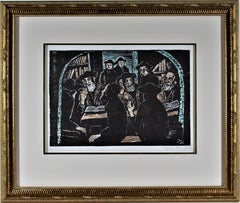
Rabbis Studying the Thorah
Located in San Francisco, CA
Artist: Jakob Steinhardt (German/Israeli, 1887-1968) Title: Rabbis Studying the Thorah Year: Circa 1960 Medium: Color woodcut Paper: Wove Image size...
Category

Mid-20th Century Expressionist Prints and Multiples

Materials

Woodcut

Juste Présent
Located in OPOLE, PL
Sonia Delaunay (1885-1979) - Juste Présent Lithograph from 1961. Dimensions of work: 38 x 28 cm Publisher: Lacourière et Frélaut, Paris. The work is in Excellent condition. Fast...
Category

1960s Expressionist Prints and Multiples

Materials

Lithograph

Juste Présent
Juste Présent
$1,150 Sale Price
20% Off
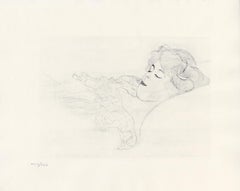
"Sleeping Woman" by Gustav Klimt - Original Print from Courtesans Folio
Located in Palm Beach, FL
Plate #1 from Gustav Klimt's 1907 "Dialogues of the Courtesans" portfolio, consisting of 15 collotypes on cream japon paper. The drawings in this folio are said to be studies for Kli...
Category

Early 1900s Expressionist Prints and Multiples

Materials

Paper

Marc Chagall, The Firebird, from The Ceiling of the Paris Opera, 1965 (after)
Located in Southampton, NY
This exquisite lithograph after Marc Chagall (1887–1985), titled L’Oiseau de feu (The Firebird), from the album Le plafond de l’Opera de Paris par Marc Chagall (The Ceiling of the Pa...
Category

1960s Expressionist Prints and Multiples

Materials

Lithograph

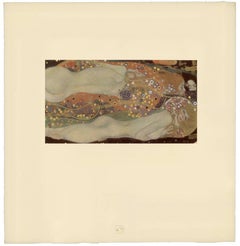
H.O. Miethke Das Werk folio "Water Snakes II" collotype print
Located in Palm Beach, FL
Water Snakes II, no. 9 from the fourth installment of Das Werk Gustav Klimts The last painting Klimt exhibited with the Secession before resigning, Water ...
Category

Early 1900s Expressionist Prints and Multiples

Materials

Paper

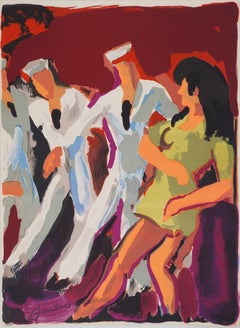
Dancing Sailors - Original Lithograph, SIGNED
Located in Paris, IDF
Pierre AMBROGIANI (1907-1985) Dancing Sailors, 1974 Original Lithograph (Gourdon Workshop) Signed with the artist's stamp On vellum Arches 38 x 28 cm (c. 14.9 x 11 in) Excellent co...
Category

Mid-20th Century Expressionist Prints and Multiples

Materials

Lithograph

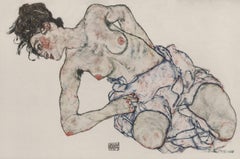
E. Strache, Handzeichnungen folio, "Kneeling Female, Semi-Nude" Collotype plate
Located in Palm Beach, FL
after Egon Schiele (1890 – 1918), AUSTRIA “ART CANNOT BE MODERN, ART IS PRIMORDIALLY ETERNAL.” -SCHIELE Defiantly iconoclastic in life and art, Egon Schiele is esteemed for his mas...
Category

1920s Expressionist Prints and Multiples

Materials

Paper

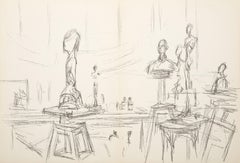
Artist Studio, Expressionist Lithograph by Alberto Giacometti
Located in Long Island City, NY
Alberto Giacometti, Swiss (1901 - 1966) - Artist Studio from Derriere Le Miroir no. 127, Year: 1961, Medium: Lithograph, Edition: ~2500, Size: 15 x 11 in. (38.1 x 27.94 cm), Publ...
Category

1960s Expressionist Prints and Multiples

Materials

Lithograph

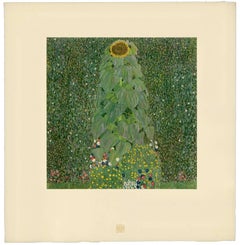
H.O. Miethke Das Werk folio "Sunflower" collotype print
Located in Palm Beach, FL
Sunflower, no. 10 from the third installment of Das Werk Gustav Klimts Created during his residency in Litzlberg on Attersee, where Klimt and the Floge family summered from 1900-1907, Klimt explores nature’s transcendental qualities. His single sunflower is human-like, it’s golden halo is like a ring of sun-kissed hair surrounding a bald pate. It’s known that at the same time Klimt was creating this image, he was also at work on a photo essay about the Floge sisters’ clothing from their fashion salon. Their fashion house was best known for its “reform dresses” which featured loose-fitting long robes which billowed at the arms and torso. Viewed with this in mind, it is not a hard leap to imagine the lone sunflower as a self-portrait from reverse. Klimt’s balding head crowned in a golden corona forms the apex of a pyramidal flowing gown of foliage and flowers. By orienting the anthropomorphic flower at the garden’s central foreground and adorning it with repetitive motifs of round flowers of varying sizes, Klimt’s sunflower...
Category

Early 1900s Expressionist Prints and Multiples

Materials

Paper

"Le Bal Masque" Giuseppe Verdi Opera (Variant)
Located in San Francisco, CA
This artwork titled "Le Bal Masque" Giuseppe Verdi Opera, (Variant) 1967 is an original color lithograph on Japan paper by renown Austrian expressionist art...
Category

Mid-20th Century Expressionist Prints and Multiples

Materials

Lithograph

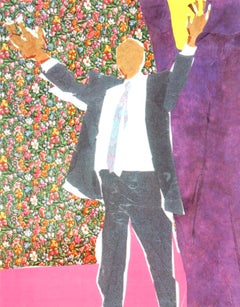
Composition, Everything That Rises Must Converge
Located in Southampton, NY
Etching on vélin de Rives BFK paper. Paper Size: 22 x 17 inches. Inscription: Unsigned and unnumbered, as issued. Notes: From the folio, Everything That Rises Must Converge, 2005. Published by The Limited Editions Club, New York; printed by Wingate Studio, Hinsdale, under the direction of Peter Pettengill, Hinsdale, 2005. Excerpted from the folio, This edition of CCC examples of Everything That Rises Must Converge was printed on BFK Rives. Dan Carr and Julia Ferrari designed the typography, cast the Kis-Janson type in metal, set the type by hand and printed the text at Golgonooza Letter Foundry & Press, Ashuelot, New Hampshire. The six color etchings were printed by hand on BFK Rives by Peter Pettengill at Wingate Studio in Hinsdale, New Hampshire. BENNY ANDREWS (1930-2006) was an African-American artist, activist and educator. He is known for his expressive, figurative paintings that often incorporated collaged fabric and other material. Andrews helped found the Black Emergency Cultural Coalition, which agitated for greater representation of African-American artists and curators in New York’s major art museums in the late 1960s and 70s. He also led the group in founding an arts education program in prisons and detention centers. Andrews taught art at Queens College for three decades, and from 1982 to 1984, served as the Director of the Visual Arts Program for the National Endowment for the Arts. He received many awards, including the John Hay Whitney...
Category

Early 2000s Expressionist Prints and Multiples

Materials

Etching

Expressionist prints and multiples for sale on 1stDibs.

Find a wide variety of authentic Expressionist prints and multiples available for sale on 1stDibs. Works in this style were very popular during the 21st Century and Contemporary, but contemporary artists have continued to produce works inspired by this movement. If you’re looking to add prints and multiples created in this style to introduce contrast in an otherwise neutral space in your home, the works available on 1stDibs include elements of orange, blue, purple, green and other colors. Many Pop art paintings were created by popular artists on 1stDibs, including Marc Chagall, Corneille, Anna Ticho, and Sandro Chia. Frequently made by artists working with Lithograph, and Paper and other materials, all of these pieces for sale are unique and have attracted attention over the years. Not every interior allows for large Expressionist prints and multiples, so small editions measuring 3 inches across are also available. Prices for prints and multiples made by famous or emerging artists can differ depending on medium, time period and other attributes. On 1stDibs, the price for these items starts at $50 and tops out at $975,000, while the average work sells for $1,005.