Expressionist Prints and Multiples

EXPRESSIONIST STYLE

While “expressionist” is used to describe any art that avoids naturalism and instead employs a bold use of flattened forms and intense brushwork, Expressionist art formally describes early-20th-century work from Europe that drew on Symbolism and confronted issues such as urbanization and capitalism. Expressionist artists experimented in paintings and prints with skewed perspectives, abstraction and unconventional, bright colors to portray how isolating and anxious the world felt rather than how it appeared. 

Between 1905 and 1920, Austrian and German artists, in particular, were inspired by Postimpressionists such as Paul Gauguin and Vincent van Gogh in their efforts to strive for a new authenticity in their work. In its geometric patterns and decorative details, Expressionist art was also marked by eclectic sources like German and Russian folk art as well as tribal art from Africa and Oceania, which the movement’s practitioners witnessed at museums and world’s fairs.

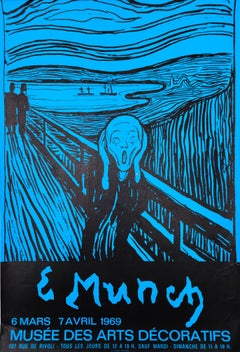
Groups of artists came together to share and promote the themes now associated with Expressionism, such as Die Brücke (The Bridge) in Dresden, which included Erich Heckel, Ernst Ludwig Kirchner and Karl Schmidt-Rottluff and investigated alienation and the dissolution of society in vivid color. In Munich, Der Blaue Reiter (The Blue Rider), a group led by Wassily Kandinsky and Franz Marc, instilled Expressionism with a search for spiritual truths. In his iconic painting The Scream, prolific Norwegian painter Edvard Munch conveyed emotional turmoil through his depiction of environmental elements, such as the threatening sky.

Expressionism shifted around the outbreak of World War I, with artists using more elements of the grotesque in reaction to the escalation of unrest and violence. Printmaking was especially popular, as it allowed artists to widely disseminate works that grappled with social and political issues amid this time of upheaval. Although the art movement ended with the rise of Nazi Germany, where Expressionist creators were labeled “degenerate,” the radical ideas of these artists would influence Neo-Expressionism that emerged in the late 1970s with painters like Jean-Michel Basquiat and Francesco Clemente.

​​Find a collection of authentic Expressionist paintings, sculptures, prints and more art on 1stDibs.

to
418
744
328
234
90
41
Overall Width
to
Overall Height
to
21,199
19,062
10,732
6,358
5,256
2,722
1,571
1,156
945
916
435
354
193
177
52
46
44
37
1
31
1,291
121
93
116
230
47
12
111
178
126
154
36
1
970
448
17
862
497
397
363
304
262
193
156
113
51
45
37
33
32
31
29
29
28
26
21
806
223
185
108
73
148
240
1,141
241
Style: Expressionist
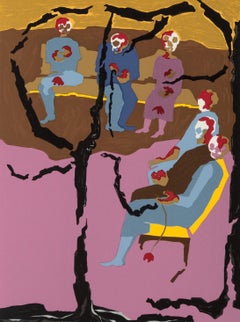
Jacob Lawrence, People in Park, from Hiroshima, 1983
Located in Southampton, NY
This exquisite silkscreen by Jacob Lawrence (1917–2000), titled People in Park, from the album Hiroshima, originates from the 1983 edition published by The Limited Editions Club, New...
Category

1980s Expressionist Prints and Multiples

Materials

Screen

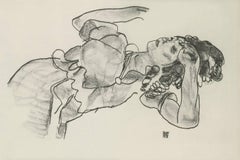
E. Strache, Handzeichnungen folio, "Reclining Girl, Half-Figure" Collotype plate
Located in Palm Beach, FL
after Egon Schiele (1890 – 1918), AUSTRIA “ART CANNOT BE MODERN, ART IS PRIMORDIALLY ETERNAL.” -SCHIELE Defiantly iconoclastic in life and art, Egon Schiele is esteemed for his mas...
Category

1920s Expressionist Prints and Multiples

Materials

Paper

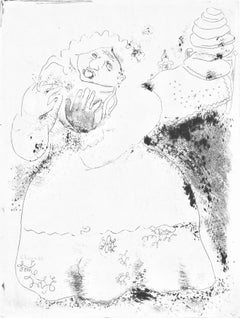
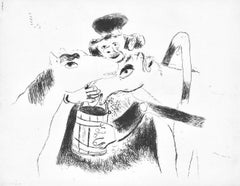
Marc Chagall, Madame Korobotchka, from Nicolas Gogol, Dead Souls, 1923-1927
Located in Southampton, NY
This exquisite etching by Marc Chagall (1887–1985), titled Madame Korobotchka (Madame Korobotchka), originates from the celebrated folio Nicolas Gogol, Les Ames mortes, Eaux-fortes o...
Category

1920s Expressionist Prints and Multiples

Materials

Etching

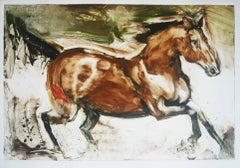
Arabian, horse monotype, earth tones, energetic brushwork
Located in Brooklyn, NY
Oil based ink and oil paint monotype on fine printmaking paper. Moving horse in expressionist active strokes. Bold, direct motion.
Category

2010s Expressionist Prints and Multiples

Materials

Monotype, Archival Paper

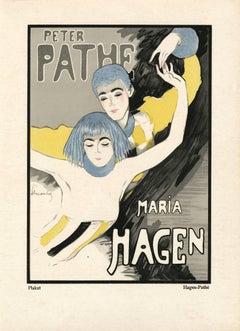
Kostume, Plakate, und Dekorationen, "Hagen-Pathe"
Located in Palm Beach, FL
Walter Schnackenberg’s style changed several times during his long and successful career. Having studied in Munich, the artist traveled often to Paris where he fell under the spell o...
Category

1910s Expressionist Prints and Multiples

Materials

Lithograph

Estate No. 054047
Located in New Orleans, LA
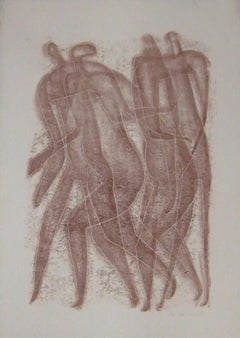
Otto Neumann (1895-1975) was a German Expressionist painter and printmaker. His monotypes evolved from sharp, angular, black and whites to late abstract prints in a variety of colors. Neumann lived through revolutionary changes in the art world of prewar and postwar Germany. He was a prolific artist in Germany during a time of the country’s unprecedented academic and intellectual growth. His early work shows the influence of both French masters like Cezanne and the contemporary style that was then being developed by German Expressionists like Kirchner. A master printmaker, Neumann was also inspired by the works of Albrecht Durer, whose allegorical subject-matter and unmatched drawing technique Neumann would emulate throughout his career. A lifetime preoccupation with the human figure informs his work, with frieze-like human figures recalling ancient Greek art...
Category

1960s Expressionist Prints and Multiples

Materials

Monotype

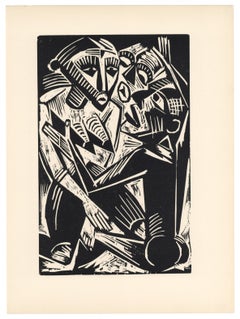
"Woman Desired by Man" original woodcut
Located in Henderson, NV
Medium: original woodcut. Printed in 1920 for the Deutsche Graphiker der Gegenwart portfolio, and published in Leipzig by Klinkhardt & Biermann in an edition of 500. Catalogue refere...
Category

1920s Expressionist Prints and Multiples

Materials

Woodcut

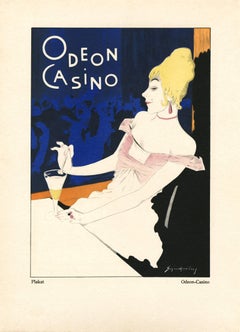
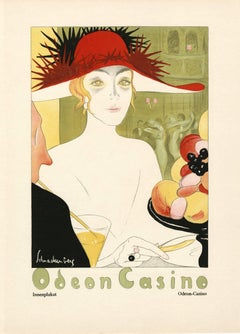
Kostume, Plakate, und Dekorationen, "Odeon-Casino"
Located in Palm Beach, FL
Walter Schnackenberg’s style changed several times during his long and successful career. Having studied in Munich, the artist traveled often to Paris where he fell under the spell of the Henri de Toulouse-Lautrec’s colorful and sensuous posters depicting theatrical and decadent subjects. Schnackenberg became a regular contributor of similar compositions to the German magazines Jugend and Simplicissimus before devoting himself to the design of stage scenery and costumes. In the artist’s theatrical work, his mastery of form, ornamentation, and Orientalism became increasingly evident. He excelled at combining fluid Art Nouveau outlines, with spiky Expressionist passages, and the postures and patterns of the mysterious East. In his later years, Schnackenberg explored the unconscious, using surreal subject matter and paler colors that plainly portrayed dreams and visions, some imbued with political connotations. His drawings, illustrations, folio prints, and posters are highly sought today for their exceedingly imaginative qualities, enchanting subject matter, and arresting use of color. SCHNACKENBERG: KOSTUME, PLAKATE UND DEKORATIONEN, a cardboard bound art book consisting of 43 prints of work by Walter Schnackenberg, 30 of which are color lithographs that are signed and some are titled and dated in the plate, as well as black and white prints and photographs with accompanying text by Oskar Bie; lithographs printed at Kunstanstalt Oskar Consee in Munich, other images printed by Gesellschaft Pick & Co. in Munich, the text and cover with color images by Schnackenberg front and verso printed by R. Oldenbourg in Munich; published by Musarion Verlag, Munich, 1920. The majority of Walter Schnackenberg’s artistic output was destroyed by bomb attacks in Munich in 1944. The highly publicized 2013 auction in New York of the recovered pre-war poster collection once belonging to German poster aficionado, Hans Sachs has reintroduced the world to Walter Schnackenberg’s graphic genius and priceless ephemeral art from a lost era. Besides the museum world, designer Karl Lagerfeld is one of the most prodigious collectors of Schnackenberg. Flipping through the pages of Kostume, Plakate und Dekorationen, it becomes quite clear that Schnackenberg’s collection is ground zero at the crossroads of early modern fashion where the cult of celebrity meets up with dance, music, theater and cabaret, film and the graphic medium. Berlin and Munich under Germany’s Weimar Republic in the first quarter of the 20th century produced just the atmosphere to feed this burgeoning industry. Rising inflation sparked a recklessness to live large for the moment and heightened a desire for escapism. An influx of Indian and East Asian dancers and musicians added to the artsy bohemian cultural mix. A new decadence and tolerance resulted. Film boldly featured provocative subject matter. Cabarets became popular venues giving rise to the demi-monde in which people from all social stations mixed more freely in a thriving underground economy and culture where there was a blurring of boundaries and of social codes. Noted art historian and cultural doyen, Oskar Bie astutely observes in his introduction to Schnackenberg’s publication that what unites the images is fantasy and advertisement. Schnackenberg uses the eye as an instrument to brilliantly construct and convey this double message. His personages never directly confront the viewer. Their eyes gaze off in the distance like those of the screenplayer and film star Hedamaria Scholz in Schnackenberg’s “Die Rodelhexe” movie poster. Their eyes follow the path of a dance composition or become a transfixed and ogling male gaze such as the iconic 1911 Odeon Casino...
Category

1910s Expressionist Prints and Multiples

Materials

Lithograph

Kostume, Plakate, und Dekorationen, "Odeon-Casino"
Located in Palm Beach, FL
Walter Schnackenberg’s style changed several times during his long and successful career. Having studied in Munich, the artist traveled often to Paris where he fell under the spell of the Henri de Toulouse-Lautrec’s colorful and sensuous posters depicting theatrical and decadent subjects. Schnackenberg became a regular contributor of similar compositions to the German magazines Jugend and Simplicissimus before devoting himself to the design of stage scenery and costumes. In the artist’s theatrical work, his mastery of form, ornamentation, and Orientalism became increasingly evident. He excelled at combining fluid Art Nouveau outlines, with spiky Expressionist passages, and the postures and patterns of the mysterious East. In his later years, Schnackenberg explored the unconscious, using surreal subject matter and paler colors that plainly portrayed dreams and visions, some imbued with political connotations. His drawings, illustrations, folio prints, and posters are highly sought today for their exceedingly imaginative qualities, enchanting subject matter, and arresting use of color. SCHNACKENBERG: KOSTUME, PLAKATE UND DEKORATIONEN, a cardboard bound art book consisting of 43 prints of work by Walter Schnackenberg, 30 of which are color lithographs that are signed and some are titled and dated in the plate, as well as black and white prints and photographs with accompanying text by Oskar Bie; lithographs printed at Kunstanstalt Oskar Consee in Munich, other images printed by Gesellschaft Pick & Co. in Munich, the text and cover with color images by Schnackenberg front and verso printed by R. Oldenbourg in Munich; published by Musarion Verlag, Munich, 1920. The majority of Walter Schnackenberg’s artistic output was destroyed by bomb attacks in Munich in 1944. The highly publicized 2013 auction in New York of the recovered pre-war poster collection once belonging to German poster aficionado, Hans Sachs has reintroduced the world to Walter Schnackenberg’s graphic genius and priceless ephemeral art from a lost era. Besides the museum world, designer Karl Lagerfeld is one of the most prodigious collectors of Schnackenberg. Flipping through the pages of Kostume, Plakate und Dekorationen, it becomes quite clear that Schnackenberg’s collection is ground zero at the crossroads of early modern fashion where the cult of celebrity meets up with dance, music, theater and cabaret, film and the graphic medium. Berlin and Munich under Germany’s Weimar Republic in the first quarter of the 20th century produced just the atmosphere to feed this burgeoning industry. Rising inflation sparked a recklessness to live large for the moment and heightened a desire for escapism. An influx of Indian and East Asian dancers and musicians added to the artsy bohemian cultural mix. A new decadence and tolerance resulted. Film boldly featured provocative subject matter. Cabarets became popular venues giving rise to the demi-monde in which people from all social stations mixed more freely in a thriving underground economy and culture where there was a blurring of boundaries and of social codes. Noted art historian and cultural doyen, Oskar Bie astutely observes in his introduction to Schnackenberg’s publication that what unites the images is fantasy and advertisement. Schnackenberg uses the eye as an instrument to brilliantly construct and convey this double message. His personages never directly confront the viewer. Their eyes gaze off in the distance like those of the screenplayer and film star Hedamaria Scholz in Schnackenberg’s “Die Rodelhexe” movie poster. Their eyes follow the path of a dance composition or become a transfixed and ogling male gaze such as the iconic 1911 Odeon Casino...
Category

1910s Expressionist Prints and Multiples

Materials

Lithograph

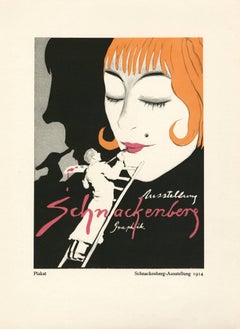
Kostume, Plakate, und Dekorationen, "Schnackenberg-Ausstellung 1914""
Located in Palm Beach, FL
Walter Schnackenberg’s style changed several times during his long and successful career. Having studied in Munich, the artist traveled often to Paris where he fell under the spell o...
Category

1910s Expressionist Prints and Multiples

Materials

Lithograph

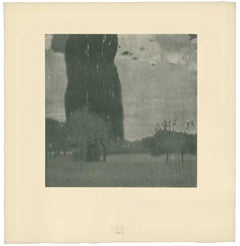
H.O. Miethke Das Werk folio "The Great Poplar I" collotype print
Located in Palm Beach, FL
DAS WERK GUSTAV KLIMTS, a portfolio of 50 prints, ten of which are multicolor collotypes on chine colle paper laid down on hand-made heavy cream wove paper with deckled edges; under ...
Category

Early 1900s Expressionist Prints and Multiples

Materials

Paper

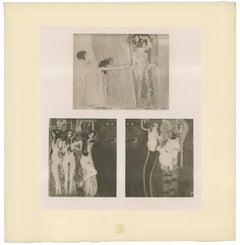
H.O. Miethke Das Werk folio "Beethovan Frieze 1 2" set of collotype prints
Located in Palm Beach, FL
DAS WERK GUSTAV KLIMTS, a portfolio of 50 prints, ten of which are multicolor collotypes on chine colle paper laid down on hand-made heavy cream wove paper with deckled edges; under ...
Category

Early 1900s Expressionist Prints and Multiples

Materials

Paper

O Tannenbaum original color silkscreen signed on verso, Christmas tree, winter
Located in Milwaukee, WI
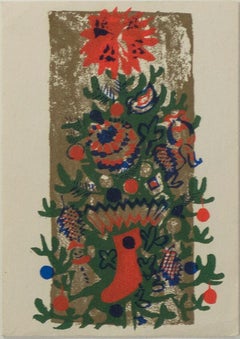
'O'Tannenbaum' (Artist's #30129) is an original color silkscreen print by Ruth Grotenrath, signed by the artist on verso. Influenced by the works of Expressionists like Henri Matisse and the woodblock prints of early modern Japanese artists like Katsushika Hokusai, Ruth Grotenrath's 'O'Tannenbaum' combines the expressive use of color of the former with the precision of the latter to create a Christmas card that is as vibrant as it is subtle. Depicting a pine tree decked with ornaments and stockings, Grotenrath has rendered the tree-topping star as a ball of flames to analogize the warmth and spirit of the holiday season. Original color silkscreen 6.625 x 4 inches, silkscreen 14.375 x 11.375 inches, frame Signed in screen on verso inside-letter Framed to conservation standards using archival materials including 100 percent rag matting and mounting materials, Museum Glass to inhibit UV damage and reduce glare, and housed in a gold finish wood frame. "The paintings of Ruth...
Category

1940s Expressionist Prints and Multiples

Materials

Screen

Kostume, Plakate, und Dekorationen, "Cabaret Bonbonniere"
Located in Palm Beach, FL
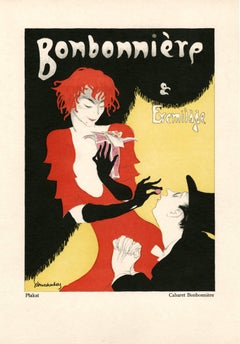
Walter Schnackenberg’s style changed several times during his long and successful career. Having studied in Munich, the artist traveled often to Paris where he fell under the spell o...
Category

1910s Expressionist Prints and Multiples

Materials

Lithograph

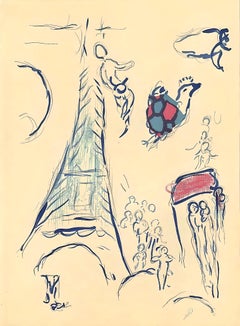
Marc Chagall, The Angel, from The Lithographs of Chagall, 1960
Located in Southampton, NY
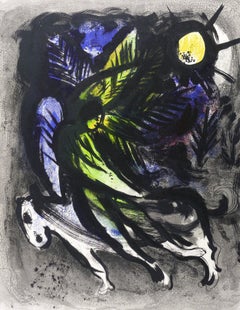
This exquisite lithograph by Marc Chagall (1887–1985), titled L’Ange (The Angel), from the album The Lithographs of Chagall, Volume I, originates from the 1960 edition published by A...
Category

1960s Expressionist Prints and Multiples

Materials

Lithograph

Kostume, Plakate, und Dekorationen, "Läderlappen"
Located in Palm Beach, FL
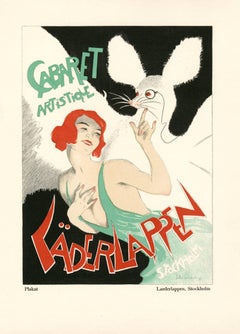
Walter Schnackenberg’s style changed several times during his long and successful career. Having studied in Munich, the artist traveled often to Paris where he fell under the spell of the Henri de Toulouse-Lautrec’s colorful and sensuous posters depicting theatrical and decadent subjects. Schnackenberg became a regular contributor of similar compositions to the German magazines Jugend and Simplicissimus before devoting himself to the design of stage scenery and costumes. In the artist’s theatrical work, his mastery of form, ornamentation, and Orientalism became increasingly evident. He excelled at combining fluid Art Nouveau outlines, with spiky Expressionist passages, and the postures and patterns of the mysterious East. In his later years, Schnackenberg explored the unconscious, using surreal subject matter and paler colors that plainly portrayed dreams and visions, some imbued with political connotations. His drawings, illustrations, folio prints, and posters are highly sought today for their exceedingly imaginative qualities, enchanting subject matter, and arresting use of color. SCHNACKENBERG: KOSTUME, PLAKATE UND DEKORATIONEN, a cardboard bound art book consisting of 43 prints of work by Walter Schnackenberg, 30 of which are color lithographs that are signed and some are titled and dated in the plate, as well as black and white prints and photographs with accompanying text by Oskar Bie; lithographs printed at Kunstanstalt Oskar Consee in Munich, other images printed by Gesellschaft Pick & Co. in Munich, the text and cover with color images by Schnackenberg front and verso printed by R. Oldenbourg in Munich; published by Musarion Verlag, Munich, 1920. The majority of Walter Schnackenberg’s artistic output was destroyed by bomb attacks in Munich in 1944. The highly publicized 2013 auction in New York of the recovered pre-war poster collection once belonging to German poster aficionado, Hans Sachs has reintroduced the world to Walter Schnackenberg’s graphic genius and priceless ephemeral art from a lost era. Besides the museum world, designer Karl Lagerfeld is one of the most prodigious collectors of Schnackenberg. Flipping through the pages of Kostume, Plakate und Dekorationen, it becomes quite clear that Schnackenberg’s collection is ground zero at the crossroads of early modern fashion where the cult of celebrity meets up with dance, music, theater and cabaret, film and the graphic medium. Berlin and Munich under Germany’s Weimar Republic in the first quarter of the 20th century produced just the atmosphere to feed this burgeoning industry. Rising inflation sparked a recklessness to live large for the moment and heightened a desire for escapism. An influx of Indian and East Asian dancers and musicians added to the artsy bohemian cultural mix. A new decadence and tolerance resulted. Film boldly featured provocative subject matter. Cabarets became popular venues giving rise to the demi-monde in which people from all social stations mixed more freely in a thriving underground economy and culture where there was a blurring of boundaries and of social codes. Noted art historian and cultural doyen, Oskar Bie astutely observes in his introduction to Schnackenberg’s publication that what unites the images is fantasy and advertisement. Schnackenberg uses the eye as an instrument to brilliantly construct and convey this double message. His personages never directly confront the viewer. Their eyes gaze off in the distance like those of the screenplayer and film star Hedamaria Scholz in Schnackenberg’s “Die Rodelhexe” movie poster. Their eyes follow the path of a dance composition or become a transfixed and ogling male gaze such as the iconic 1911 Odeon Casino poster...
Category

1910s Expressionist Prints and Multiples

Materials

Lithograph

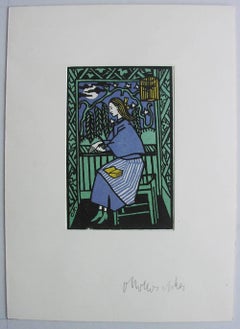
Mädchen am Fenster. 1906-08.
Located in New York, NY
Mädchen am Fenster. 1906-08. Color lithograph printed on smooth card stock. Full margins. , signed by the artist in pencil, on the recto. Published by the Wiener Werkstätte, Vienna, with the printed postcard text on verso. Among Kokoschka's earliest prints were a series of 14 postcards, the current work and the following lot that he produced for the Wiener Werkstätte. Wingler/Welz 4. Oskar Kokoschka was an Austrian artist, poet and playwright best known for his intense expressionistic portraits...
Category

Early 1900s Expressionist Prints and Multiples

Materials

Lithograph

Ghosts of Philadelphia 2
Located in Brooklyn, NY
Monotype Dramatic imagery from Tom Bennett’s series of black and white monotypes, blending surrealistic mindscapes with stark realism About Tom Bennett: With quick brushstrokes, Tom...
Category

2010s Expressionist Prints and Multiples

Materials

Monotype, Archival Ink

The Hills
Located in Toronto, ON
30" x 40" Unframed Limited Edition Giclee on Canvas with Hand Embellishment of 125 Hand Signed by Todd White Todd white captures restaurant, night and Hollywood scenes with contras...
Category

2010s Expressionist Prints and Multiples

Materials

Giclée

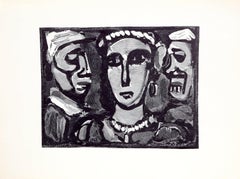
Les Visages, Lithograph by Georges Rouault (After)
Located in Long Island City, NY
Les Visages Georges Rouault (After), French (1871–1958) Date of original: 1932 Lithograph, signed in the plate Image Size: 6 x 8 inches Size: 9 x 12 in. (22.86 x 30.48 cm)
Category

1930s Expressionist Prints and Multiples

Materials

Lithograph

Marc Chagall, The Coachman Feeds the Horses, from Dead Souls, 1923-1927
Located in Southampton, NY
This exquisite etching by Marc Chagall (1887–1985), titled Le cocher donne a manger aux chevaux (The Coachman Feeds the Horses), originates from the celebrated folio Nicolas Gogol, L...
Category

1920s Expressionist Prints and Multiples

Materials

Etching

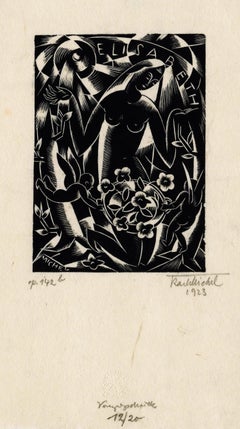
Elisabeth — German Expressionism
Located in Myrtle Beach, SC
Karl Michel, 'Elisabeth', woodcut, edition 20, 1923. Signed, dated, and numbered 'op.142b' and '12/20' in pencil. Signed in the block, lower left. Annotated 'Vorgesdruck' [artist’s proof] in pencil. A fine impression, on heavy fibrous Japan paper, with full margins (1 3/16 to 3 1/2 inches), in good condition. Printed by the artist, With the artist’s blindstamp in the bottom center margin. Scarce. Matted to museum standards, unframed. Image size 4 15/16 x 6 inches (131 x 152 mm); sheet size 10 x 6 inches (254 x 152 mm). ABOUT THE ARTIST Karl Michel (1889-1984) was a noted graphic designer and expressionist printmaker during Germany's pre-Nazi Weimar Republic (1919-1933). Michel’s work was the subject of a feature article in the influential German graphic design magazine Das Plakat (The Poster) in 1920. An anti-war advocate, Michel created a suite of 12 wood engravings depicting his impressions of the humanitarian toll of WWII entitled ‘Humanitas’ (Humanity). The German publishing house Greifenverlag published the series in a reduced folio of unsigned prints. Michel’s graphic work is held in the permanent collections of the Auckland War Memorial Museum (New Zealand), Frederikshavn Kunstmuseum & Exlibrissamling (Denmark), Museum of Applied Arts (Budapest), The Robert Gore Rifkind Center for German Expressionist Studies at the Los Angeles County Museum of Art, and the German Expressionism...
Category

1920s Expressionist Prints and Multiples

Materials

Woodcut

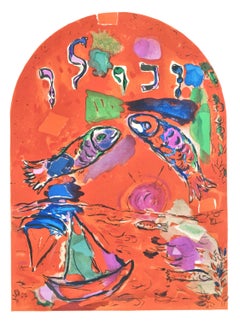
Marc Chagall, Tribe of Zebulun, from The Jerusalem Windows, 1962 (after)
Located in Southampton, NY
This exquisite lithograph after Marc Chagall (1887–1985), titled Tribe of Zebulun, from the album Marc Chagall, The Jerusalem Windows, originates from the 1962 edition published by A...
Category

1960s Expressionist Prints and Multiples

Materials

Lithograph

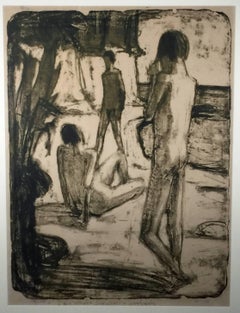
BADENDE MANNER: (THREE MALE BATHERS AT THE SHORE)
Located in Portland, ME
Kaus, Max. BADENDE MANNER: (THREE MALE BATHERS AT THE SHORE). Lithograph, c. 1924. Signed, lower left, in pencil, and numbered 6-10, further inscribed, lo...
Category

1920s Expressionist Prints and Multiples

Materials

Lithograph

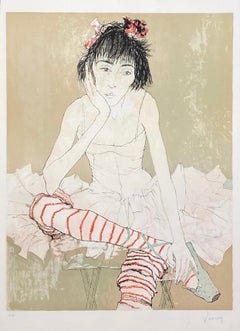
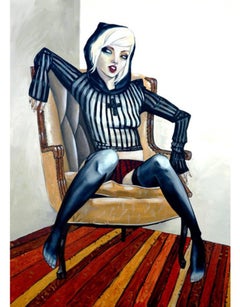
Sophie aux bas rouges, 1993, original lithograph by Jean Jansem
Located in Les Acacias GE, GE
Jean Jansem (1920-2013) Sophie aux bas rouges, 1993 Lithographie sur papier Arches, justifiée E/A Signée en bas à droite 66 x 50 cm / 76 x 56 cm Bibliographie: CR Jansem, 2000, n°...
Category

Late 20th Century Expressionist Prints and Multiples

Materials

Lithograph

Jean Dubuffet Artist Proof Signed Lithograph "Sophisticated Lady"
Located in Detroit, MI
SALE ONE WEEK ONLY "Sophisticated Lady", a lithograph, is an exemplary work indicative of DuBuffet's early work and style. It is a playful and iron...
Category

1940s Expressionist Prints and Multiples

Materials

Lithograph

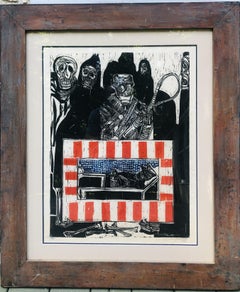
Brutalist Graveside Scene Patriotic Dead Soldier, Gas Mask Skeletons
By Nicholas Sperakis
Located in Exton, PA
Brutalist colored woodcut circa 1976 by Nicholas Sperakis. The image depicts skeletal figures around the grave of a soldier. Note the American flag features which drape the entombed ...
Category

1970s Expressionist Prints and Multiples

Materials

Woodcut

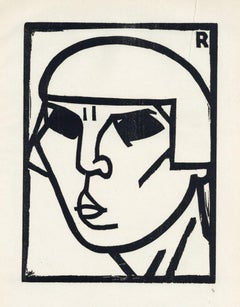
"Kopf" original woodcut
Located in Henderson, NV
Medium: original woodcut. This bold and striking Expressionist woodcut was printed in 1920 for Genius. Image size: 9 1/2 x 7 inches (240 x 180 mm). This original Rouveyre print is fr...
Category

1920s Expressionist Prints and Multiples

Materials

Woodcut

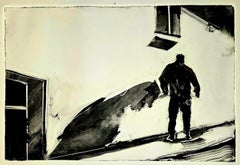
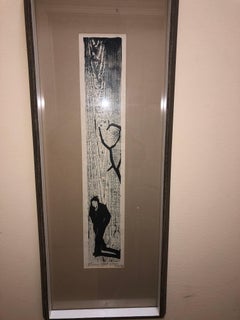
Jacob Pins "Lonely Walker" 1960 Woodcut
Located in San Francisco, CA
Jacob Pins: 1917-2005. Was a German born Israeli woodcut artist and art collector. He has had auction results over $3000 for a print. This powerful scarce example...
Category

1960s Expressionist Prints and Multiples

Materials

Woodcut

Sans titre
Located in OPOLE, PL
Hans Bellmer (1902-1975) - Sans titre Drypoint etching from 1975. Edition of 49/99 on Lana paper. Dimensions of work: 50.5 x 32 cm. Hand signed. Publisher: Éditions Borderie, Pa...
Category

1970s Expressionist Prints and Multiples

Materials

Etching

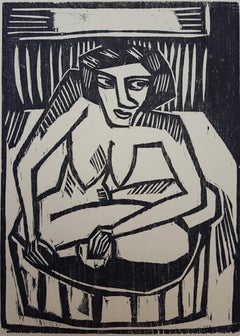
Frau in der Wanne (Woman in Tub) /// German Expressionism Schmidt-Rottluff Nude
Located in Saint Augustine, FL
Artist: Karl Schmidt-Rottluff (German, 1884-1976) Title: "Frau in der Wanne (Woman in Tub)" Series: Die Aktion *Unsigned edition Year: 1915 Medium: Original Woodcut Engraving on crea...
Category

1910s Expressionist Prints and Multiples

Materials

Engraving, Woodcut

Musée des Arts Décoratifs (The Scream) Poster /// Expressionist Edvard Munch Art
Located in Saint Augustine, FL
Artist: (after) Edvard Munch (Norwegian, 1863-1944) Title: "Musée des Arts Décoratifs (The Scream)" Year: 1969 Medium: Original Lithograph, Exhibition Poster on light wove paper Limi...
Category

1960s Expressionist Prints and Multiples

Materials

Lithograph

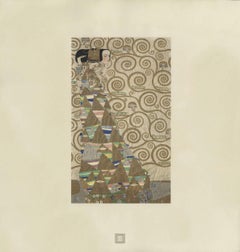
Max Eisler Eine Nachlese folio “Expectation” collotype print
Located in Palm Beach, FL
After Gustav Klimt, Max Eisler #12, Aus dem Stoclet-Fries: Erwartung; multi-color collotype after the cartoon for the 1910-1911 mosaic frieze on the west wa...
Category

1930s Expressionist Prints and Multiples

Materials

Paper

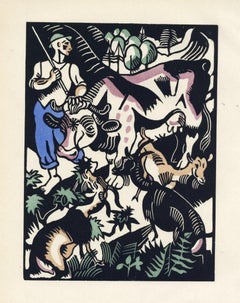
"Der Hirte" original woodcut
Located in Henderson, NV
Medium: original color woodcut. Catalogue reference JH 771. Published in 1919 for Genius. Image size: 9 1/2 x 7 inches (240 x 178mm), on wove paper with full margins. This print is f...
Category

1920s Expressionist Prints and Multiples

Materials

Woodcut

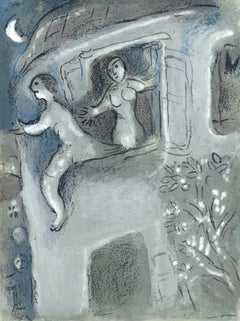
Marc Chagall, David Saved by Michal, from Drawings for the Bible, 1956
Located in Southampton, NY
This exquisite lithograph by Marc Chagall (1887–1985), titled David sauve par Michal (David Saved by Michal), from Marc Chagall, Dessins Pour La Bible (Drawings for the Bible), Verve...
Category

1950s Expressionist Prints and Multiples

Materials

Lithograph

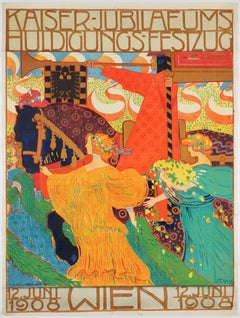
Original Vintage Secession Poster celebrating the emperor s jubilee
Located in Zurich, CH
Original Vintage Poster by the Austrian artist Ferdinand Ludwig Graf, a member of the Hagenbund. This Viennese artist association moved as soon a...
Category

Early 1900s Expressionist Prints and Multiples

Materials

Paper

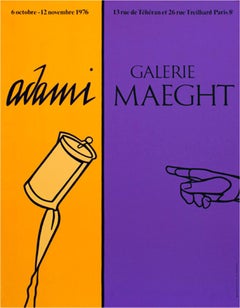
"Galerie Maeght, " an Original Color Lithograph Poster by Valerio Adami
Located in Milwaukee, WI
"Galerie Maeght" is an Original Lithograph Poster bu Valerio Adami. This poster was created to advertise Adami's show at the Galerie Maeght in 1976. The print is orange on the left s...
Category

1970s Expressionist Prints and Multiples

Materials

Lithograph

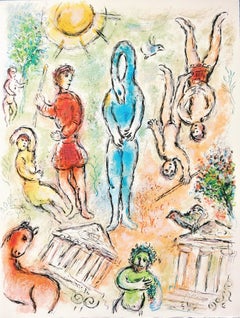
Marc Chagall, In the Underworld, from Homer, The Odyssey, 1989 (after)
Located in Southampton, NY
This exquisite lithograph after Marc Chagall (1887–1985), titled In der Holle (In the Underworld), from Homer, Die Odyssee (The Odyssey), originates from the 1989 German-language fol...
Category

1980s Expressionist Prints and Multiples

Materials

Lithograph

Marc Chagall, The Angel of Mozart, The Ceiling of the Paris Opera, 1965 (after)
Located in Southampton, NY
This exquisite lithograph after Marc Chagall (1887–1985), titled L’ange de Mozart (The Angel of Mozart), from the album Le plafond de l’Opera de Paris par Marc Chagall (The Ceiling o...
Category

1960s Expressionist Prints and Multiples

Materials

Lithograph

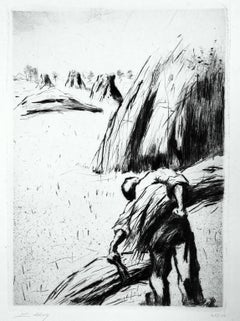
Beim Kornpuppenbinden (Corn Husking)
Located in New York, NY
Lesser Ury (German, 1861–1931), Beim Kornpuppenbinden, drypoint, 1923, signed in pencil lower right and numbered 45/100, from the edition of 100. Reference: Rosenbach 17, only state...
Category

1920s Expressionist Prints and Multiples

Materials

Drypoint

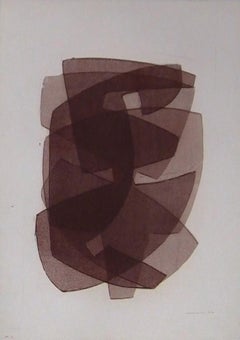
Estate No. 082031
Located in New Orleans, LA
Otto Neumann (1895-1975) was a German Expressionist painter and printmaker. His monotypes evolved from sharp, angular, black and whites to late abstract prints in a variety of colors. Neumann lived through revolutionary changes in the art world of prewar and postwar Germany. He was a prolific artist in Germany during a time of the country’s unprecedented academic and intellectual growth. His early work shows the influence of both French masters like Cezanne and the contemporary style that was then being developed by German Expressionists like Kirchner. A master printmaker, Neumann was also inspired by the works of Albrecht Durer, whose allegorical subject-matter and unmatched drawing technique Neumann would emulate throughout his career. A lifetime preoccupation with the human figure informs his work, with frieze-like human figures recalling ancient Greek art...
Category

1960s Expressionist Prints and Multiples

Materials

Monotype

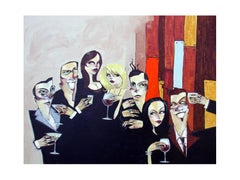
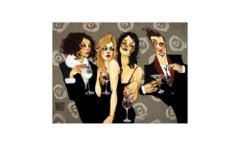
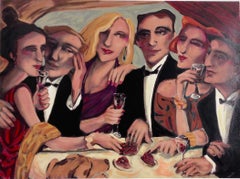
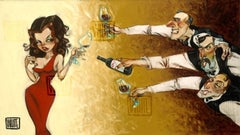
Intoxication At The Flower Lounge
Located in Toronto, ON
23" x 32" Unframed Limited Edition Giclee on Canvas with Hand Embellishment of 195 Hand Signed by Todd White Todd white captures restaurant, night and Hollywood scenes with contrasting colors serving the viewer’s eyes as those in his stolen scenes serve or are served-wine, coffee, cigarettes, cigars, and martinis. He creates timeless scenes of diverse attraction, of known intimacy. Within the exaggerated features and textured skin of his characters lies truth, yours and theirs. Distinctive bodies and details to lips, eyes, hair, skin, hands and what is held in each, separate and blend his characters’ lives. The smoke that rises from their lips, the drinks that linger at their fingertips, the clothing that adorns their bodies and the crowd created among lovers, friends, patrons and co-workers all speak a certain poetry. Each character depicts the subtleties of what one shows and what one hides. An asymmetrical face tells of an asymmetrical life, of how life wears and how we wear life — what we choose to carry in our hands and on our faces — how we wear ourselves, what smoke and color we stand in. Todd’s paintings are captivating, demanding a second look, often invoking humor or thoughts of familiar feelings — I’ve been there, I know them. Above all, the work is infectious and has caught the attention of the public (galleries cannot keep enough of Todd’s work in stock) as well as celebrities (Vin Diesel, Hugh Hefner, Macaulay Culkin, Eric McCormack, Ryan Stiles and Joe Rogan are collectors of Todd’s oil paintings). But who is the artist behind the art and where did his unique style come from? Todd began in at Warner Bros. Studios while working on the popular series, tiny toons. Through character clean-up and development, Todd began to forge his own artistic style. Shortly thereafter, Todd became part of the lead animation team for the internationally renowned cartoon, sponge bob square pants. Over the next three years, Todd sharpened his eye in storyboarding, illustration and character design. Throughout this period, Todd privately experimented with style and concept, eventually arriving at a process which guides him through every piece. The impact is apparent in his paintings; Todd’s rat-pack-meets-Picasso style results, in part, from his desire to reveal his characters’ innermost thoughts and emotions on their faces. Todd likens his portraits to his favorite episode of the Twilight Zone in which people wore masks that later became their faces and revealed who they truly were. Fast forward ten years later, and until Todd can conceptually see the story in his head, he refuses to paint a single signature knuckle curled around one of his famous martinis. "I actually name my pieces first and then i visualise each face and its personality. Then I develop each person’s story." The stark, unblemished delivery of his subjects is very much intended: whatever isn’t necessary to the story isn’t on my canvas. "I don’t waste a lot of time with backgrounds because they don’t interest me. They aren’t necessary. Instead i focus on what is essential. For example, the hands." Hands are a focal point for Todd, reflecting the subject’s state of mind as much as any body language or facial expression. Everyone’s hands are full of personality he surmises. Take Al Pacino; without his hands, he’s not nearly as interesting to watch. In addition to more obvious influences, such as Austrian expressionist Egon...
Category

2010s Expressionist Prints and Multiples

Materials

Canvas, Giclée

Hard Candy
Located in Toronto, ON
40" x 30" Unframed Limited Edition Giclee with Hand Embellishment of 100 Hand Signed by Todd White Todd white captures restaurant, night and Hollywood scenes with contrasting color...
Category

2010s Expressionist Prints and Multiples

Materials

Giclée

"Life Is Just A Shell Game" contemporary expressionist Serigraph
Located in Laguna Beach, CA
"Life Is Just A Shell Game" is from Sandra Jones Campbell's series inspired by her unique social observations. It features her unique blend of modernism and expressionistic style, al...
Category

2010s Expressionist Prints and Multiples

Materials

Screen

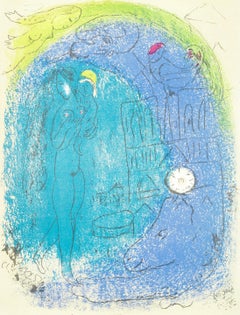
Marc Chagall, Mother and Child before Notre-Dame, Verve, Revue Artistique, 1953
Located in Southampton, NY
This exquisite lithograph by Marc Chagall (1887–1985), titled Mere et enfant devant a Notre-Dame (Mother and Child before Notre-Dame), from Verve, Revue Artistique et Litteraire, Vol...
Category

1950s Expressionist Prints and Multiples

Materials

Lithograph

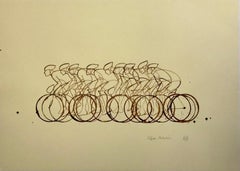
Coffee Peloton (cp07_Nov23)
Located in Deddington, GB
Original Artwork by Eliza Southwood made from specially treated coffee and then submitted to a further setting treatment. Additional  information: Eliza Southwood Coffee on paper So...
Category

2010s Expressionist Prints and Multiples

Materials

Paper, Coffee

"La soupe" original etching
Located in Henderson, NV
Medium: original etching. This original Max Liebermann etching was published in Paris in 1901 by Gazette des Beaux-Arts (reference number Sanchez Seydoux 1901-13). A good impre...
Category

Early 1900s Expressionist Prints and Multiples

Materials

Etching

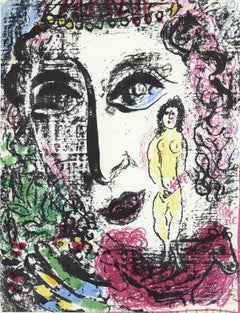
Marc Chagall, The Vision at the Circus, from The Lithographs of Chagall, 1963
Located in Southampton, NY
This exquisite lithograph by Marc Chagall (1887–1985), titled L'apparition au cirque (The Vision at the Circus), from the album The Lithographs of Chagall, Volume II, originates from...
Category

1960s Expressionist Prints and Multiples

Materials

Lithograph

Estate No. 091013
Located in New Orleans, LA
Otto Neumann (1895-1975) was a German Expressionist painter and printmaker. His monotypes evolved from sharp, angular, black and whites to late abstract p...
Category

1960s Expressionist Prints and Multiples

Materials

Monotype

"Brücke" original lithograph
Located in Henderson, NV
Medium: original lithograph. Printed on laid paper by Anstalt Eigner in 1925 for the Ganymed portfolio "Das funfte Jahrbuch der Marees Gesellschaft" and published in Munich by Marees...
Category

1920s Expressionist Prints and Multiples

Materials

Lithograph

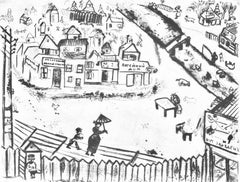
Marc Chagall, The Small Town, from Nicolas Gogol, Dead Souls, 1923-1927
Located in Southampton, NY
This exquisite etching by Marc Chagall (1887–1985), titled La petite ville (The Small Town), originates from the celebrated folio Nicolas Gogol, Les Ames mortes, Eaux-fortes original...
Category

1920s Expressionist Prints and Multiples

Materials

Etching

Every Kiss She Wasted Bad
Located in Toronto, ON
30" x 18" Unframed Limited Edition Giclee of 45 Hand Signed by Todd White Todd white captures restaurant, night and Hollywood scenes with contrasting colors serving the viewer’s ey...
Category

2010s Expressionist Prints and Multiples

Materials

Giclée

Spirit of the Chase
Located in Toronto, ON
18" x 32" Unframed Limited Edition Giclee with Hand Embellishment of 135 Hand Signed by Todd White Todd white captures restaurant, night and Hollywood scenes with contrasting colors...
Category

2010s Expressionist Prints and Multiples

Materials

Giclée

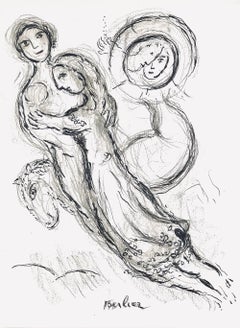
Marc Chagall, Romeo and Juliet, The Ceiling of the Paris Opera, 1965 (after)
Located in Southampton, NY
This exquisite lithograph after Marc Chagall (1887–1985), titled Romeo et Juliette (Romeo and Juliet), from the album Le plafond de l’Opera de Paris par Marc Chagall (The Ceiling of the Paris Opera by Marc Chagall), originates from the 1965 edition published by Andre Sauret, Editeur, Monte Carlo, rendered by Charles Sorlier, Paris, and printed by Mourlot Freres, Paris, October 6, 1965. This romantic and luminous composition pays homage to Charles Gounod’s opera Romeo et Juliette, one of the works celebrated in Chagall’s magnificent ceiling design for the Palais Garnier. Romeo et Juliette radiates with the tenderness, tragedy, and transcendent beauty of Shakespeare’s tale, reimagined through Chagall’s poetic symbolism and vivid color. Floating lovers, celestial forms, and musical motifs intertwine in a lyrical vision of eternal love and harmony, reflecting the artist’s lifelong fascination with the union of art, music, and emotion. The composition captures the very spirit of Gounod’s music—lyrical, passionate, and filled with grace. Executed as a lithograph on velin paper, this work measures 13 x 9.5 inches (33.02 x 24.13 cm). Unsigned and unnumbered as issued. The edition exemplifies the technical mastery of the Mourlot Freres atelier and the enduring collaboration between Marc Chagall and Charles Sorlier. Artwork Details: Artist: After Marc Chagall (1887–1985) Title: Romeo et Juliette (Romeo and Juliet), from Le plafond de l’Opera de Paris par Marc Chagall (The Ceiling of the Paris Opera by Marc Chagall) Medium: Lithograph on velin paper Dimensions: 13 x 9.5 inches (33.02 x 24.13 cm) Inscription: Unsigned and unnumbered as issued Date: 1965 Publisher: Andre Sauret, Editeur, Monte Carlo Rendered by: Charles Sorlier, Paris Printer: Mourlot Freres, Paris Catalogue raisonne references: Cain, Julien, and Fernand Mourlot. Chagall Lithographe III, 1962–1968. Andre Sauret, Editeur, 1969, illustration 434. Cramer, Patrick, and Meret Meyer. Marc Chagall: Catalogue Raisonne Des Livres Illustres. P. Cramer ed., 1995, illustration 61. Condition: Well preserved, consistent with age and medium Provenance: From the album Le plafond de l’Opera de Paris par Marc Chagall (The Ceiling of the Paris Opera by Marc Chagall), published by Andre Sauret, Editeur, Monte Carlo, October 6, 1965, in an edition of V̅ Notes: Excerpted from the album, This work could not have been made without the valuable collaboration of Madame Marc Chagall to whom we extend our warmest thanks. This work, made by Andre Sauret, was completed to print on October 6, 1965 on the presses of l’imprimerie du Lion in Paris. Jacques Lassaigne’s texts were composed by hand in Romain du Roi in the workshops of l’imprimerie nationale. The VI color lithographies and all the black and white drawings were set on stone by Charles Sorlier, based on Marc Chagall’s original models. The original lithography and color lithographs were drawn on the presses of Mourlot Freres. The binding is by Maurice Busenhart in Lausanne. About the Publication: Le plafond de l’Opera de Paris par Marc Chagall (The Ceiling of the Paris Opera by Marc Chagall), published in October 1965 by Andre Sauret, Editeur, Monte Carlo, commemorates one of the most ambitious and celebrated artistic commissions of the 20th century. Created under the direction of Charles Sorlier, the album documents Chagall’s magnificent ceiling design for the Palais Garnier in Paris, unveiled in 1964. The publication includes color lithographs based on the artist’s preparatory studies and painted maquettes, executed with exceptional fidelity by Mourlot Freres. Chagall’s ceiling—divided into segments representing musical masters such as Mozart, Wagner, Berlioz, Ravel, and Debussy—blends myth, music, and emotion into a vibrant celestial composition. The album captures this visionary synthesis through luminous lithography, allowing viewers to experience the grandeur and intimacy of the artist’s monumental work. Produced with the collaboration of Madame Marc Chagall, Charles Sorlier, and Fernand Mourlot, and printed with the precision and artistry for which Andre Sauret’s editions were renowned, this publication stands as both a tribute to Chagall’s genius and a celebration of French art’s enduring dialogue between tradition, innovation, and the divine. About the Artist: Marc Chagall (1887–1985) was a Belarus-born French painter, printmaker, and designer whose visionary imagination, radiant color, and deeply poetic symbolism made him one of the most beloved and influential artists of the 20th century. Rooted in the imagery of his Jewish heritage and the memories of his childhood in Vitebsk, Chagall’s art wove together themes of faith, love, folklore, and fantasy with a dreamlike modern sensibility. His unique style—merging elements of Cubism, Fauvism, Expressionism, and Surrealism—defied categorization, transforming ordinary scenes into lyrical meditations on memory and emotion. Influenced by Russian icon painting, medieval religious art, and the modern innovations of artists such as Pablo Picasso, Henri Matisse, and Georges Braque, Chagall developed a profoundly personal visual language filled with floating figures, vibrant animals, musicians, and lovers that symbolized the transcendent power of imagination and love. During his early years in Paris, he became an integral part of the Ecole de Paris circle, forming friendships with Amedeo Modigliani, Fernand Leger, and Sonia Delaunay, and his creative spirit resonated with that of his peers and successors—Alexander Calder, Alberto Giacometti, Salvador Dali, Joan Miro, Wassily Kandinsky, Marcel Duchamp, and Man Ray—artists who, like Chagall, sought to push the boundaries of perception, emotion, and form. Over a prolific career that spanned painting, printmaking, stained glass, ceramics, and stage design, Chagall brought an unparalleled poetic sensibility to modern art, infusing even the most abstract subjects with human warmth and spiritual depth. His works are held in the most prestigious museums around the world, including the Museum of Modern Art, the Centre Pompidou, the Tate, and the Guggenheim, where they continue to inspire generations of artists and collectors. The highest price ever paid for a Marc Chagall artwork is approximately $28.5 million USD, achieved in 2017 at Sotheby’s New York for Les Amoureux (1928). Marc Chagall Romeo...
Category

1960s Expressionist Prints and Multiples

Materials

Lithograph

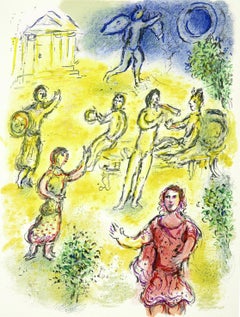
Marc Chagall, Banquet at Menelaus’s Palace, Homer, The Odyssey, 1989 (after)
Located in Southampton, NY
This exquisite lithograph after Marc Chagall (1887–1985), titled Festessen bei Menelaus (Banquet at Menelaus’s Palace), from Homer, Die Odyssee (The Odyssey), originates from the 198...
Category

1980s Expressionist Prints and Multiples

Materials

Lithograph

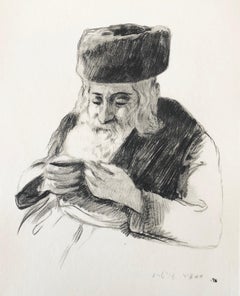
Judaica Jewish Rabbi Etching Hasidic Rebbe Admur Shlita Vintage Chassidic Print
Located in Surfside, FL
"Sabbat." Sabbath. the piece is marked in the plate Admur Shlita (this might be the Munkatcher Rebbe or the Belzer Rebbe from before the war) Chassidic Rebbe, with open book. Judai...
Category

20th Century Expressionist Prints and Multiples

Materials

Etching

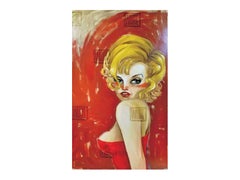
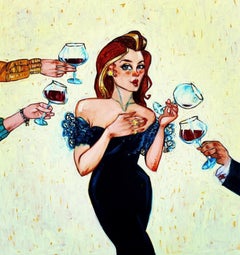
These Cost?
Located in Toronto, ON
26" x 24" Unframed Limited Edition Giclée with Hand Embellishment of 135 Hand Signed by Todd White “These Cost is a satirical piece on the fact that a beautiful woman has never paid...
Category

2010s Expressionist Prints and Multiples

Materials

Giclée

It’s Alright if You Love Me
Located in Toronto, ON
40" x 16" Unframed Limited Edition Giclee on Canvas of 5 Hand Singed by Todd White Todd white captures restaurant, night and Hollywood scenes with contrasting colors serving the vie...
Category

2010s Expressionist Prints and Multiples

Materials

Giclée

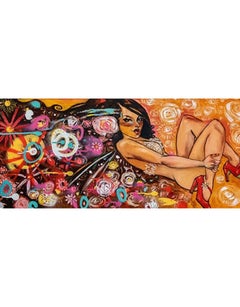
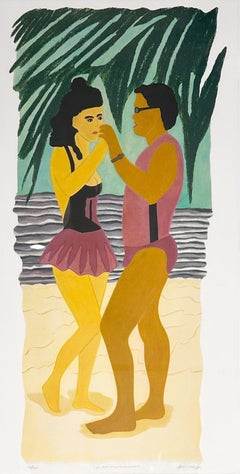
Rumba en Cartagena. Limited edition Serigraphy
Located in Miami Beach, FL
The artist confessed that, regarding her working methodology, she performs exhaustive research before starting a series. This process includes developing the theme and selecting colo...
Category

1990s Expressionist Prints and Multiples

Materials

Screen

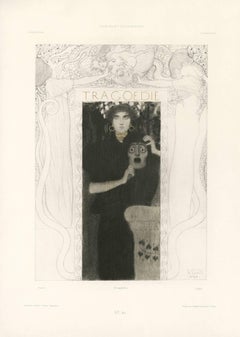
Gerlach s Allegorien, plate #66: "Tragedy" Lithograph, Gustav Klimt.
Located in Palm Beach, FL
Gustav Klimt created this image for inclusion in Gerlach & Schenk’s Allegorien the year before he formed the Vienna Secession. While this design is similar to his other inclusions, L...
Category

1890s Expressionist Prints and Multiples

Materials

Lithograph

Expressionist prints and multiples for sale on 1stDibs.

Find a wide variety of authentic Expressionist prints and multiples available for sale on 1stDibs. Works in this style were very popular during the 21st Century and Contemporary, but contemporary artists have continued to produce works inspired by this movement. If you’re looking to add prints and multiples created in this style to introduce contrast in an otherwise neutral space in your home, the works available on 1stDibs include elements of orange, blue, purple, green and other colors. Many Pop art paintings were created by popular artists on 1stDibs, including Marc Chagall, Corneille, Anna Ticho, and Sandro Chia. Frequently made by artists working with Lithograph, and Paper and other materials, all of these pieces for sale are unique and have attracted attention over the years. Not every interior allows for large Expressionist prints and multiples, so small editions measuring 3 inches across are also available. Prices for prints and multiples made by famous or emerging artists can differ depending on medium, time period and other attributes. On 1stDibs, the price for these items starts at $50 and tops out at $975,000, while the average work sells for $1,005.