19th Century Figurative Sculptures
to
48
216
112
148
69
45
Overall Width
to
Overall Height
to
193
590
2,186
7,359
77
41
113
120
59
117
127
173
230
268
67
7
4
2
2
1
462
328
325
285
264
159
116
67
56
44
34
20
20
17
14
13
12
12
11
11
410
400
131
117
40
30
14
12
7
6
354
235
Period: 19th Century
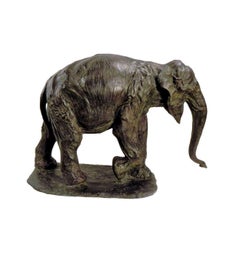
Bronze Walking Elephant By Rembrandt Bugatti (1884 - 1916)
Located in Gent, VOV
Elephant walking
Bronze statue of a "large Indian elephant walking" after Rembrandt Bugatti (Italian, 1884-1916). This bronze was cast using the...
Category
Realist 19th Century Figurative Sculptures
Materials
Bronze
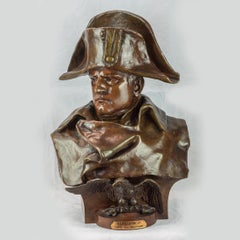
Bust of Napoleon Bonaparte
Located in New York, NY
RENZO COLOMBO
Italian, (1856-1885)
Bust of Napoleon Bonaparte
Patinated bronze; Signed R. Colombo 1885 on Right Side
22 x 15 inches
Notes:
The...
Category
19th Century Figurative Sculptures
Materials
Bronze
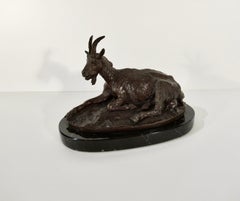
Chevre Allongee (Reclining Goat)
Located in San Francisco, CA
This artwork "Chevre Allongee (Reclining Goat)" c. 1860, is bronze sculpture after renown French artist Antoine Louis Barye, 1796-1875. Signature is impressed in the bronze. The subject size is 4.25 x 7 x 3.35 inches, including marble base is 5.25 x 4 x 7.75 inches. It is in excellent condition.
About the artist:
Antoine-Louis Barye lived his entire life in Paris and may never have left France. He was born in 1795 (a date revised in the 1990s from 1796 as a result of Martin Sonnabend's recalculation of the Revolutionary calendar). He is reported to have had minimal formal schooling even in reading, and to have acquired his extensive liberal-arts education on his own. His initial professional training was in metalwork: first with his father, a goldsmith from Lyons, then with a metal engraver in military equipment, and finally with Martin-Guillaume Biennais (active 1800-1832), then master goldsmith to Napoleon. After serving in the army from 1812 to 1814, Barye trained in the fine arts with sculptor François-Joseph Bosio (1768-1845) and painter Baron Gros (1771-1835). He then studied at the Ecole des Beaux-Arts from 1818 to 1823. His miniature medallion, Milo of Crotona Devoured by a Lion, won an honorable mention in metal engraving in 1819, but he failed to win the Prix de Rome. He worked as a craftsman for the goldsmith Jacques-Henri Fauconnier (1779-1839) from 1823 to 1831 and made his Salon debut in 1827 with a selection of busts.
Barye made his critical and public mark as a sculptor four years later, in the Salon of 1831, with groups representing predatory violence in the wild. His first government commission came soon after, precisely for such a subject. The Minister of the Interior purchased Barye's monumental plaster Lion (since called Lion Crushing a Serpent), shown in 1833, and had it cast in bronze by Honoré Gonon and shown in 1836, before placing it in the public Tuileries Gardens (now Musée du Louvre, Paris). In 1834 Barye was chosen for a project that was never executed, the colossal eagle as the crowning element of the triumphal arch at the Etoile. Around 1836 the government commissioned him to execute the emblematic animal decoration on the July Column at the place de la Bastille, inaugurated in 1840. He produced a monumental effigy of Saint Clotilde for the Church of the Madeleine, Paris, in the early 1840s. In 1846 the government commissioned a pendant Seated Lion for the Tuileries Lion Crushing a Serpent (1847, bronze, Portal, Pavillon de Flore, Palais du Louvre, Paris). During these same years the royal family began buying and commissioning small-scale works from Barye for their private collections. Around 1834, the duc d'Orléans commissioned a highly publicized surtout de table representing hunts of different regions and historical periods, possibly one of several tabletop projects that he ordered from Barye. The duc's sister Marie d'Orléans allegedly commissioned a lost-wax bronze of Barye's Charles VI Surprised in the Forest of Le Mans (location unknown; later serial variants), a model first shown in the Salon of 1833; his brother, the duc de Montpensier, apparently commissioned a pair of figurative...
Category
Realist 19th Century Figurative Sculptures
Materials
Bronze
A Monumental Patinated Bronze Bust of George Washington, after William Rush (181
Located in Queens, NY
A Monumental Patinated Bronze Bust of George Washington, after William Rush (1817)
This commanding bronze bust of George Washington is modeled after the celebrated 1817 portrait by ...
Category
19th Century Figurative Sculptures
Materials
Bronze

Cheval Libre (Free Horse)
Located in San Francisco, CA
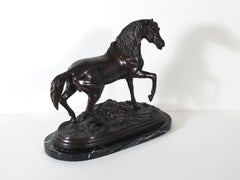
Artist: After Pierre Jules Mene (French, 1810-1879)
Title: Cheval Libre (Free Horse)
Year: 1868
Medium: Cast bronze sculpture with dark brown patina
Edition: Unknown
Size: Inclu...
Category
Realist 19th Century Figurative Sculptures
Materials
Bronze
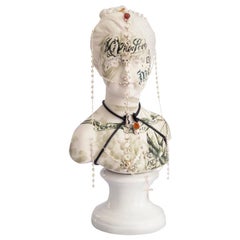
Untitled #10 Female antique Bust painted and adorned. Infortunios De La Virtud
By Armando de la Garza
Located in Miami Beach, FL
Untitled #10 (female bust), 2016
from Los Infortunios De La Virtud series
Antique porcelain bust with the intervention of oil, gold, silver, lea...
Category
Romantic 19th Century Figurative Sculptures
Materials
Stone, Gold
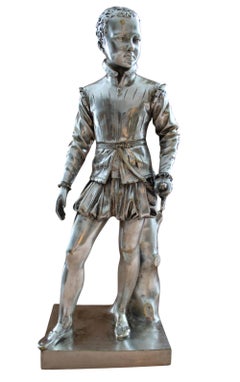
Henry IV child, King of France, after the original from Francois Joseph Bosio
Located in Riga, LV
Henry IV child, King of France, after the original from Francois Joseph Bosio (1768-1845).
Bronze, silver plated.
Category
Realist 19th Century Figurative Sculptures
Materials
Bronze
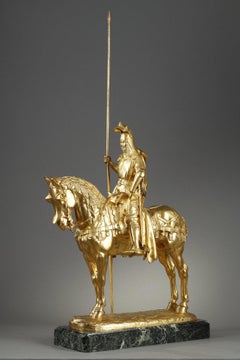
Equestrian Louis of Orleans
Located in PARIS, FR
Equestrian Louis of Orleans
by Emmanuel FREMIET (1824-1910)
A very fine bronze equestrian group with a gilded patina
Signed " E. Fremiet " on the base
Cast by " F. Barbedienne Fond...
Category
French School 19th Century Figurative Sculptures
Materials
Bronze
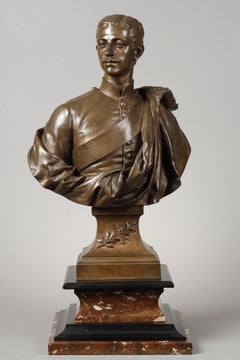
Portrait of Prince Impérial
Located in PARIS, FR
Portrait of Prince Impérial
Louis-Napoléon Bonaparte (1856-1879), son of Emperor Napoleon III
by Prosper D'EPINAY (1836-1914)
A bronze bust with a light brown patina
signed to the s...
Category
French School 19th Century Figurative Sculptures
Materials
Bronze
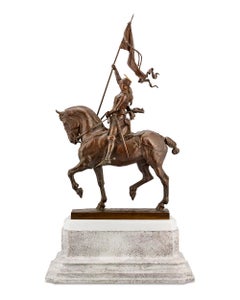
Jeanne d
Arc by Emmanuel Frémiet
Located in New Orleans, LA
Emmanuel Frémiet
1824–1910 French
Jeanne d’Arc
Signed “E FREMIET”
This commanding bronze of Jeanne d’Arc by Emmanuel Frémiet captures one of the most enduring symbols of French n...
Category
Academic 19th Century Figurative Sculptures
Materials
Bronze
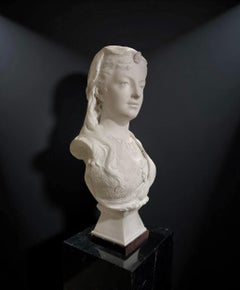
Large Orientalist Bust in Marble of Armida French School 19th century Signed
Located in Pistoia, IT
Zacharie Rimbez (active between 19th and 20th centuries). White marble Orientalist bust depicting Armida, second half of the 19th century.
Armida is a Muslim sorceress, a charact...
Category
French School 19th Century Figurative Sculptures
Materials
Marble
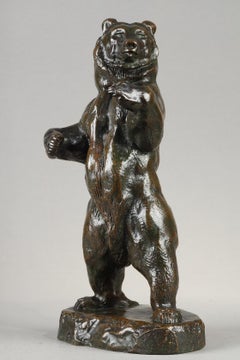
Bear standing
Located in PARIS, FR
Bear standing
by Antoine-Louis Barye (1796-1875)
Rare bronze sculpture with a nuanced dark brown patina
Probably cast by Brame (old edition)
France
circa 1880-1890
height 24 cm
A ...
Category
French School 19th Century Figurative Sculptures
Materials
Bronze
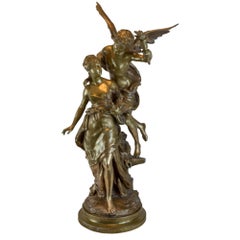
Mathurin Moreau Patinated Bronze of a Génie and Science .
Located in New York, NY
Bronze figural grouping of a Génie and Science, a woman guided by an angel with outstretched wings by Mathurin Moreau, a celebrated and decorated French sculptor whose talents most f...
Category
19th Century Figurative Sculptures
Materials
Bronze
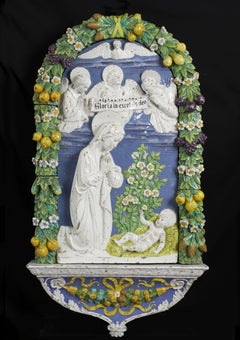
19th Century Madonna Adoring the Infant Jesus Italian School Ceramic White Blue
Located in Sanremo, IT
Cantagalli-manufactured ceramics measuring 125 x 67 cm depicting a sweet Madonna adoring the Child Jesus and the Holy Spirit.
At the beginning of the 19th century, Ulisse Cantagalli...
Category
Italian School 19th Century Figurative Sculptures
Materials
Ceramic
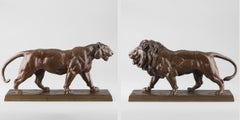
Tiger and Lion walking
Located in PARIS, FR
Rare pair of "Tiger and Lion walking"
by Antoine-Louis BARYE (1796-1875)
A very fine pair of bronze sculptures with a nuanced brown patina
each signed "Barye" on the base
cast by "F...
Category
French School 19th Century Figurative Sculptures
Materials
Bronze
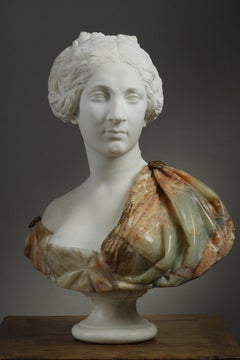
Portrait of a Lady
Located in PARIS, FR
Portrait of a Lady
by Charles CORDIER (1827-1905)
A rare bust in white Carrara marble
and onyx for the drape
Signed on the backside " C. Cordier "
Presented on a rounded white marbl...
Category
French School 19th Century Figurative Sculptures
Materials
Marble
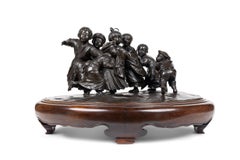
A Large and Exceptional Japanese Meiji Period Tokyo School Bronze Sculpture
Located in Queens, NY
Presenting an extraordinary Large and Exceptional Japanese Meiji Period Tokyo School Bronze Sculpture depicting a delightful ensemble of six energe...
Category
19th Century Figurative Sculptures
Materials
Bronze
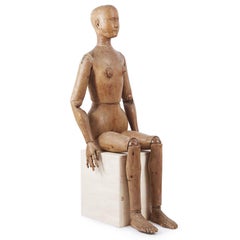
Female Life-size Mannequin Italian Articulated Sculpture In Beech Mid 1800s
Located in Milano, IT
Female Painter's Manikin Mid-1800s jointed and articulated, life-size Italian sculpture, 167 cm tall 66 Inches, made of beech wood with traces of lacquer preparation. This extraordi...
Category
Italian School 19th Century Figurative Sculptures
Materials
Wood
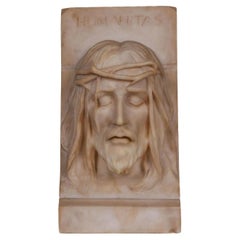
Rare and Important Italian Alabaster Bust Sculpture of Jesus Christ, C. 1860
Located in Queens, NY
A rare and important Italian alabaster bust sculpture of Jesus Christ, C. 1860
A modeled bust of Holy Christ wearing a crown of thorns, exceptional...
Category
Baroque 19th Century Figurative Sculptures
Materials
Alabaster
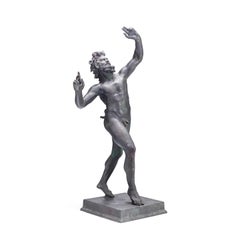
Late 19th century Grand Tour bronze of the Dancing Faun
Located in Bath, Somerset
A 19th century 'Grand Tour' bronze figure of the Dancing Faun, standing on a bronze square plinth. The faun balances on his toes and pivots, his horned head raised, his hair wreathe...
Category
19th Century Figurative Sculptures
Materials
Bronze
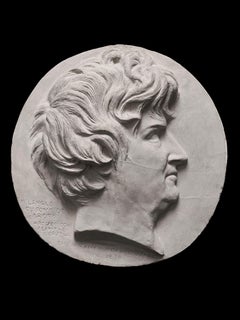
Eustace-Hyacinthe Langlois, called Langlois de L
Arche
Located in London, GB
Plaster
480 mm; 19 inches diameter
Inscribed: ‘H. Langlois du Pont de l’Arche Archeologue Peintre Graveur
par son ami P. J. David (D Angers) 1838’
Collections:
Sotheby’s, 22nd May...
Category
Old Masters 19th Century Figurative Sculptures
Materials
Plaster
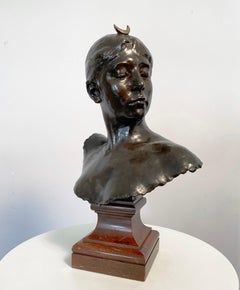
Bust of Diana
Located in New York, NY
Among Falguière’s greatest works, his figure of the huntress Diana emerged as a masterpiece, the bust of which stands out as one of the most successful and recognizable idealized hea...
Category
Academic 19th Century Figurative Sculptures
Materials
Bronze
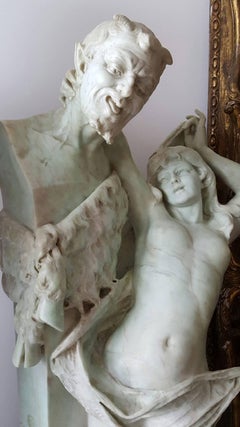
Erotic Sexual Mythological Marble Figural, Nude woman, Bacchante and Satyr Herm
Located in Miami, FL
Bacchic revelry. A sexy and nude curvaceous young Nymph/Bacchante makes amorous advances to a Herm - whose facial expression reflects her erotic touch. The Herm is stylized where his...
Category
Old Masters 19th Century Figurative Sculptures
Materials
Marble

$21,750 Sale Price
25% Off
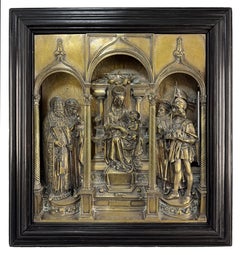
Bronze San Domenico di Camerino Altarpiece
By Carlo Crivelli
Located in New York, NY
Representation of the San Domenico di Camerino Altarpiece, painted by Carlo Crivelli in 1482, and made by Antonio Pandiani in the 19th century.
Category
Renaissance 19th Century Figurative Sculptures
Materials
Bronze
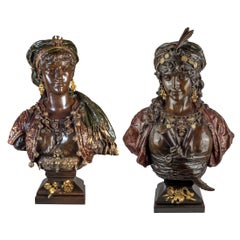
Adrien-Etienne Gaudez Orientalist Polychrome-Patinated Bronze Princess Busts
Located in New York, NY
Artist: Adrien-Etienne Gaudez (1845-1902)
Origin: French
Date: 19th century
Dimension: 32 in(H) x 21 in(W); 29 1/2 in(H) x 22 in(W)
Adrien-Etienne Gaudez entered the Ecole des Beaux...
Category
19th Century Figurative Sculptures
Materials
Bronze
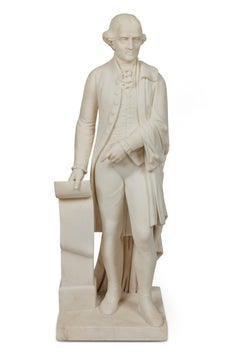
A Rare and Important American Marble Sculpture of Thomas Jefferson, Circa 1870
Located in Queens, NY
A Rare and Important American White Marble Sculpture of Thomas Jefferson Holding The Declaration of Independence. Circa 1870, in the Manner of Horatio Stone (1808 –1875).
Inscribed on scroll: 'The Declaration of Independence, It becomes necessary for one people to dissolve the political bands which have connected them with another. etc. etc. T. Jefferson.
The present work is unsigned but is reminiscent of Horatio Stone's life-size marble figure of John Hancock...
Category
19th Century Figurative Sculptures
Materials
Marble
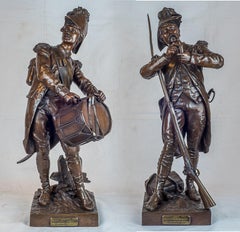
Avant Le Combat, Apres Le Combat
Located in New York, NY
ÉTIENNE-HENRI DUMAIGE
French, (1830-1888)
Avant Le Combat, Apres Le Combat
Pair of patinated bronze; signed 'H. Dumaige' and titled ‘AVANT LE COMBAT, APRÈS LE COMBAT, GRENADIER D...
Category
19th Century Figurative Sculptures
Materials
Bronze
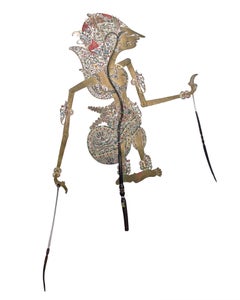
"Indonesian Shadow Puppet Wayang Purwa, " Leather created in Indonesian
Located in Milwaukee, WI
This flat shadow puppet was created by an unknown Indonesian artist using water buffalo hide. This shadow puppet, 18 1/2" high with movable arms, was use...
Category
Folk Art 19th Century Figurative Sculptures
Materials
Animal Skin, Leather
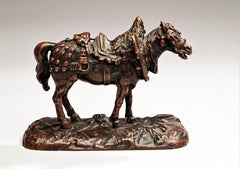
Antique Exceptional Bronze Draft Horse by Pierre Jules Mêne (French, 1810-1879)
Located in SANTA FE, NM
Antique Horse Bronze
Exceptional Bronze of a Draft Horse
Pierre Jules Mêne (French, 1810-1879)
Circa 1860s
4 3/4 (W) x 3.25 (H)
As Mêne personally ov...
Category
Romantic 19th Century Figurative Sculptures
Materials
Bronze
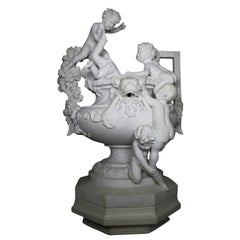
A French 19th Century Carved Marble Whimsical Figural Urn Fountain with Children
Located in LA, CA
A very fine large, rare and charming, French, 19th century. Belle Époque carved white marble whimsical figural urn fountain depicting children climbing on an urn with flowers and gar...
Category
Academic 19th Century Figurative Sculptures
Materials
Marble
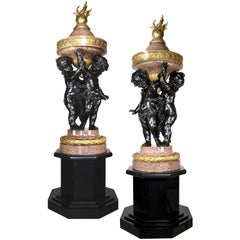
Monumental Pair French 19th Century Putto Flambeaux Urns Torchere Urn Sculptures
Located in LA, CA
A Monumental Museum Quality Pair of French 19th Century Figural Gilt and Patinated Bronze Rosso Granite Marble Flambeaux Urns, each depicting a pair of standing allegorical and whims...
Category
Romantic 19th Century Figurative Sculptures
Materials
Marble, Granite, Bronze, Brass
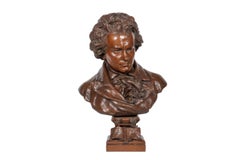
A Monumental, Richly Patinated Bronze Bust of Beethoven by G. Leroux
By Gaston Leroux
Located in Queens, NY
A Monumental, Richly Patinated Bronze Bust of Beethoven by Gaston Veuvenot Leroux (1854-1942) Eugène Blot, Fondeur
This magnificent sculpture powerfully captures the iconic composer...
Category
19th Century Figurative Sculptures
Materials
Bronze
$16,250 Sale Price
35% Off
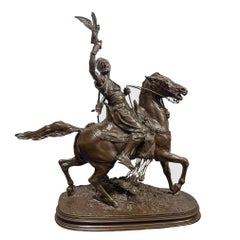
Dynamic Bronze Statue of a Falconer by Pierre-Jules Mene (French, 1810-1879)
Located in New York, NY
Dynamic statue of an Arab Falconer riding a horse in motion. A falcon lands on the falconer's arm as his horse trots along a mud road leaving hove prints behind.
Artist: Pierre-Jul...
Category
19th Century Figurative Sculptures
Materials
Bronze
Antique, Marble Sculpture of Juno
Located in Los Angeles, CA
Stunningly hand carved, large, circa 1825, solid Carrara marble statue of the crowned, Roman goddess, Juno- known in ancient times as the ruler of marriage, home, and family, a champ...
Category
19th Century Figurative Sculptures
Materials
Marble
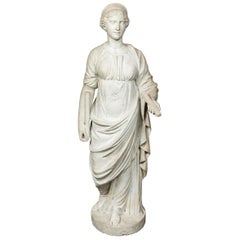
Florentine singer / - The Renaissance of the Renaissance -
By Paul Dubois
Located in Berlin, DE
Paul Dubois (1829 Nogent-sur-Seine - 1905 Paris), Florentine singer, 1865. Light brown patinated bronze with cast round plinth mounted on a square marble base (3.5 cm high). Total height 53 cm. Bronze dimensions: 49.5 cm (height) x 20 cm (length) x 10 cm (width), weight 5.6 kg. Inscribed on the plinth "P.[aul] DUBOIS", dated "1865", with the foundry's mark "F. BARBEDIENNE FONDEUR" and the signet "REDUCTION MECANIQUE A. COLLAS".
- Patina very occasionally darkened, lute with loss of one tuning peg, otherwise in excellent condition.
- The renaissance of the Renaissance -
The bronze is a precisely executed and masterfully cast contemporary reduction of Paul Dubois 155 cm tall masterpiece "Florentine Singer", which is exhibited in the Musée d'Orsay and for which the artist was awarded the Medal of Honor at the Paris Salon in 1865. The work acted as a beacon, and was followed by a plethora of depictions of juveniles.
Inspired by Donatello and Luca della Robbia, but also by painters such as Piero della Francesca, Benozzo Gozzoli, and Pinturicchio, the "Florentine Singer" is not an epigonal work that pays homage to a vanished era, but a successful attempt to draw vitality from the art of the past and thus give it new life.
The effect of vitality is the core of Italian Renaissance art theory. In order to fulfill itself as art, art had to appear like nature. This naturalism also characterizes the "Florentine Singer". The young man appears to have been taken from life, which is reinforced by the momentary nature of his action. He has just struck a now fading chord. In addition, the natural appearance is enhanced by the detailed shaping of the figurative details, such as the laces with the slightly curved leather of the shoes, the belt buckle, or the ornamentation on the body of the lute. Even the fingernails are clearly defined. Unlike the Renaissance, however, the effect of liveliness here is not based on the "discovery" of nature and the human body, but primarily on the rediscovery of the art of the Quattrocento. The liveliness of the artwork is therefore at the same time a revitalization of this art, so that we can speak of a Renaissance of the Renaissance, just as the Pre-Raphaelites in England at the same time transferred the Quattrocento to contemporary art.
Dubois takes on the most difficult of all subjects, the depiction of singing through silent sculpture. He was preceded in this by Luca della Robbia and Donatello with their pulpits of singers created in the 1430s in the Museo dell'Opera del Duomo in Florence. Compared to these works, the physiognomy of Dubois singer is far less animated, yet he also depicts singing in a convincing manner. He uses the whole body. He takes the ancient contrapposto, which was essential to Renaissance sculpture, and transforms the standing leg-playing posture into a late medieval S-swing, giving the body an elegant beauty and at the same time setting it in melodic motion. In the equally elegant finger position, the music is expressed in a much more literal way with the beating of the lute. Finally, the musicality of the sculpture culminates in the face with the mouth open to sing.
Through the act of singing, which is a great challenge to the artistic will to depict perfect beauty, the gracefulness of the classical face is not diminished, but enhanced. Starting from the face with the singing mouth and the gaze absorbed by the sounds, the inner vitality spreads, giving the bronze sculpture an intense aura, enhanced by the music. Dubois transfers the beauty of the Renaissance to the musical, sublimating the visible sculpture to the invisible of music.
He took up the challenge of transcending the Renaissance with the Renaissance, thus responding to the Querelle des Anciens et des Modernes, which arose at the end of the 17th century around the French Academy and remained virulent into the 19th century, in which antiquity was regarded either as an unattainable ideal or as a standard to be surpassed. With his work, Dubois proved that the Renaissance, which had championed the art of the ancients, could lead to a new renaissance of art.
About the artist
Paul Dubois' great-uncle was the famous French Baroque sculptor Jean-Baptiste Pigalle, in whose footsteps the talented great-nephew followed. When he debuted at the Paris Salon in 1858, he signed his work "Dubois-Pigalle". At his father's request, however, he first studied law before devoting himself to sculpture under the tutelage of François Christophe Armand Toussaint in 1856 and entering the École des Beaux-Arts in 1858. From 1859 to 1863, he lived in Rome and traveled to Naples and Florence. Inspired by Florentine art of the quattrocento, Dubois initiated a school-forming neo-Florentine style that combined the elegantly simple forms of youthful grace with a precise wealth of detail.Two purchases by the French state (“envois de Rome”) were made during his stay in Rome, which brought him recognition in Paris. After his return there, he quickly became an internationally sought-after artist.
Dubois was also active as a creator of monuments. His most famous work is the equestrian statue of Joan of Arc (1896) on the forecourt of Reims Cathedral. He was also a sought-after portraitist who produced around 50 busts and - Dubois was also a passionate painter - around 100 portraits in oil.
From 1873 to 1878 he was curator of the Museum du Luxembourg, in 1876 he became a member of the Institut de France and from 1878 to 1905 he was director of the École des Beaux-Arts.
In 1865, Dubois was awarded the Paris Salon Medal of Honor for his “Florentine Singer”. In 1867 he became Chevalier, in 1874 Officier, in 1886 Commandeur of the Légion d'honneur, which awarded Dubois the Grande Croix in 1896.
Selected Bibliography
Stole, Elmar: Paul Dubois. In: Saur. Allgemeines Künstlerlexikon, vol. 30, Munich - Leipzig 2001, pp. 677-678.
GERMAN VERSION
Paul Dubois (1829 Nogent-sur-Seine - 1905 Paris), Florentinischer Sänger, 1865. Hellbraun patinierte Bronze mit gegossener runder Plinthe auf quadratischem Marmorsockel montiert (3,5 cm Höhe). Gesamthöhe 53 cm. Maße der Bronze: 49,5 cm (Höhe) x 20 cm (Länge) x 10 cm (Breite), Gewicht 5,6 kg. Auf der Plinthe mit „P.[aul] DUBOIS“ bezeichnet, auf „1865“ datiert, mit dem Gießereistempel „F. BARBEDIENNE FONDEUR“ und dem Signet „REDUCTION MECANIQUE A. COLLAS“ versehen.
- Patina sehr vereinzelt nachgedunkelt, Laute mit Verlust eines Stimmwirbels, ansonsten ausgezeichnet erhalten.
- Die Renaissance...
Category
Realist 19th Century Figurative Sculptures
Materials
Bronze
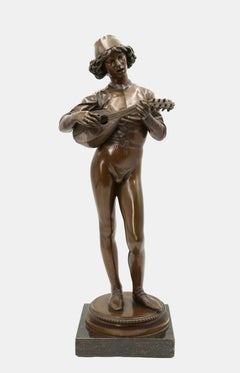
Antique French Polish Gilt Bronze Statue Sculpture Figure Sword Bladesmith 1890
Located in Portland, OR
A fine antique French gilt bronze sculpture of a swordsmith, by the French- Polish artist & sculptor Henryk II Kossowski (1855-1921), the bronze dating to 1890.
The bronze depicts a ...
Category
French School 19th Century Figurative Sculptures
Materials
Alabaster, Bronze
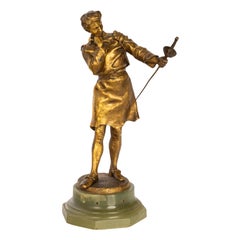
Portrait of Giuseppe Garibaldi - Original Marble Sculpture - Late 19th Century
Located in Roma, IT
This Portrait go Giuseppe Garibaldi is an original decorative marble sculpture realized in Italy by Italian manufacture during the end of the XIX century.
The alabaster marble sta...
Category
Modern 19th Century Figurative Sculptures
Materials
Marble
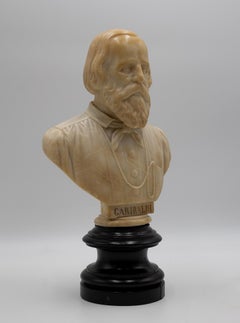
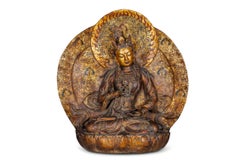
A Monumental Gilt-Lacquered Bronze Ornamental Sculpture of Vajravidarana
Located in Queens, NY
A Monumental Gilt-Lacquered Bronze Ornamental Buddha Sculpture of Vajravidarana:
A Masterpiece of Sino-Tibetan Craftsmanship, Late 19th Century, Qing Dynasty
This monumental gilt-lacquered bronze ornamental sculpture of Vajravidarana is an extraordinary and commanding piece of art, showcasing the pinnacle of Sino-Tibetan craftsmanship from the late 19th century. The figure of Vajravidarana, a powerful purification deity in Tibetan Buddhism, is meticulously sculpted to embody both spiritual authority and artistic excellence.
Vajravidarana is primarily known for his role in removing spiritual impurities and negativities. Unlike other deities associated with wisdom or compassion, Vajravidarana’s function is centered on purification and healing. He is typically depicted holding a vajra and a bell, symbolizing the cutting away of delusions and the resonance of divine truth. In this striking sculpture, Vajravidarana is shown holding a vishva vajra (the double vajra), a unique and powerful variation of the traditional iconography, which signifies ultimate protection and the dispelling of negative karma.
Vajravidarana: The Supreme Purifier and Protector
Vajravidarana is revered in Tibetan Buddhism as the deity of spiritual purification, called upon to cleanse practitioners of defilements and negative influences. His vajra represents the indestructibility of truth, while his bell signifies the wisdom that resonates through purification rituals. In this sculpture, the presence of the vishva vajra, or double vajra, enhances his association with supreme protection, ensuring the destruction of all spiritual obstacles and afflictions.
The figure’s powerful yet composed expression conveys a sense of unwavering resolve and divine authority. His posture, along with the carefully sculpted details of his robes and ornaments, highlights his function as a guardian against impurity. The inclusion of the vishva vajra rather than the usual single vajra reinforces his role as a supreme protector, capable of dispelling all forms of negativity and restoring balance.
Symbolism of the Mantras and Aureole:
Unlike deities that embody wisdom through duality, Vajravidarana’s iconography is centered on purification and exorcism. The aureole surrounding him is inscribed with sacred purification mantras rather than depictions of a consort. These mantras emphasize his function as a remover of obstacles and impurities, reinforcing his role in Buddhist healing rituals.
The presence of the sacred inscriptions elevates the sculpture’s spiritual significance, making it a focal point for meditation and ritual purification. Practitioners often visualize Vajravidarana radiating purifying light, dissolving afflictions and negative karma. This theme is mirrored in the sculptural repetition of the purification symbols on the aureole, reinforcing the deity’s role as a divine cleanser.
Gilt-Lacquered Bronze: The Artistry of Sino-Tibetan Metalwork:
The craftsmanship of this monumental figure reflects the expertise of late 19th-century Sino-Tibetan metalwork, where traditional Tibetan themes were infused with Chinese artistic sensibilities. Cast in bronze and finished with a rich gilt lacquer, the statue has an otherworldly glow, giving it an ethereal, almost divine presence. The gilding process—applied with exceptional skill—gives the sculpture a striking luminosity that enhances the fine details of the facial features, flowing robes, jewelry, and other elements of the deity’s attire.
The technique employed to create this figure speaks to the high level of craftsmanship that flourished during the late Qing Dynasty and early modern Tibetan art. The ornate details of the robes and the fine texture of the sculpture highlight the exceptional skill of the artisans who brought this work to life. The use of gold and lacquer not only reflects the preciousness of the sculpture but also its spiritual significance as an object meant to inspire reverence and meditation.
An Ornamental Sculpture of Monumental Scale:
Unlike smaller devotional objects, this sculpture is designed as an ornamental masterpiece, intended to make a grand visual and spiritual statement. Its monumental size allows it to dominate any space, offering a commanding presence that is both physically and symbolically impressive. In Buddhist practice, large sculptures of this nature are often placed in temples or meditation halls, where their imposing size and serene presence would encourage contemplation and devotion.
The grand scale of the statue further amplifies the spiritual power it is meant to convey. As a representation of Vajravidarana, it is not only a physical object of beauty but also a conduit for meditation, purification, and enlightenment. The scale of the sculpture also emphasizes the divine stature of the deity, highlighting his importance in the Buddhist tradition as the ultimate force for spiritual cleansing and protection.
Provenance:
Acquired in China in circa 1900
1905 Private Buddhist Temple, Northeast, USA
Private Sale
Solomon Treasure...
Category
19th Century Figurative Sculptures
Materials
Bronze
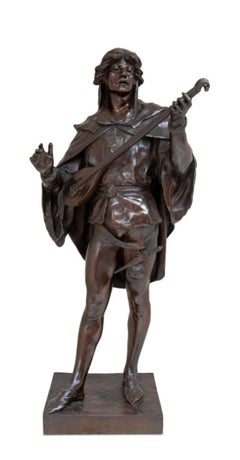
Emile Picault "Joueur de Luth" Patinated Bronze
Located in Astoria, NY
Emile-Louis Picault (French,1833-1915) "Joueur de Luth" [Lute Player] Patinated Bronze Figural Sculpture, late 19th century, the standing figure in Renaissance style costume playing ...
Category
Other Art Style 19th Century Figurative Sculptures
Materials
Bronze
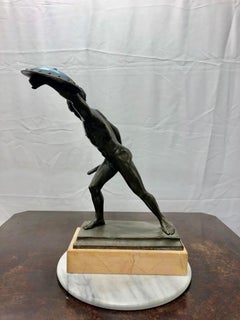
Jean Debut Gladiator Bronze
Located in San Francisco, CA
Jean Didier Debut: 1824-1893. Well listed 19th century French sculptor. He has had auction results over $17,000. We believe this fabulous bronze gladiator to be very rare as we could...
Category
Art Deco 19th Century Figurative Sculptures
Materials
Bronze
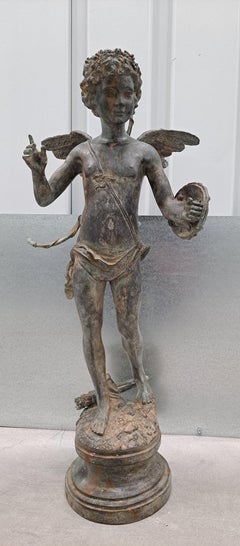
19th century Bronze Sculpture of Cupid After Pierre Chenet
Located in San Francisco, CA
19th century Bronze Sculpture of Cupid After Pierre Chenet
Base diameter 6"
9"W x 23"H
Category
19th Century Figurative Sculptures
Materials
Bronze
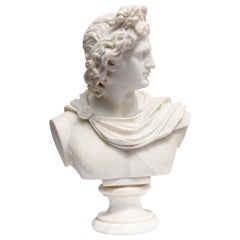
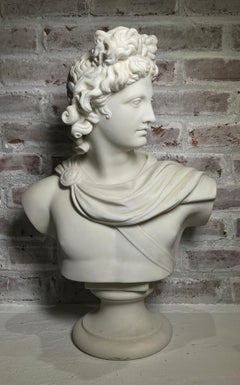
Large Antique Marble Bust of Apollo of Belvedere 19th Century
Located in Rochester, NY
Antique bust of Apollo of Belvedere. Finely carved carrara marble. Mid 19th century. Italian. Please, contact us for shipping options.
Presented by Joseph Dasta Antiques
# nude male greek roman mercury statue...
Category
19th Century Figurative Sculptures
Materials
Stone, Marble
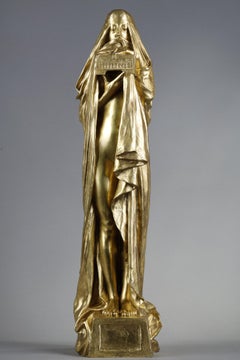
The Secret
Located in PARIS, FR
The Secret
by Pierre-Félix FIX-MASSEAU (1869-1937)
Sculpture in bronze with a gilded patina
Signed on the side " Fix-Masseau "
Cast by " Siot-Paris " (with the foundry mark)
France...
Category
Art Nouveau 19th Century Figurative Sculptures
Materials
Bronze
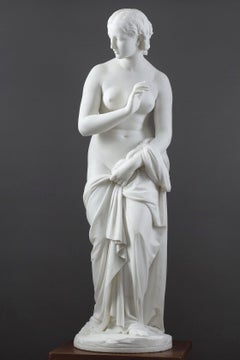
Musidora
Located in PARIS, FR
"Musidora"
by Odoardo FANTACCHIOTTI (1809-1877)
Sculpture made in white Carrara marble
signed on the side on the base " O. Fantacchiotti "
Italy
around 1862
height 110 cm
diameter ...
Category
Italian School 19th Century Figurative Sculptures
Materials
Marble
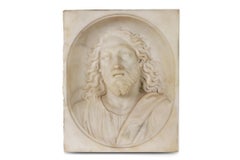
Rare and Important Italian White Marble Bust Sculpture of Jesus Christ, C. 1850
Located in Queens, NY
Rare and Important Italian White Marble Bust Sculpture of Jesus Christ, C. 1850
A truly exceptionally carved marble relief of Holy Jesus Christ. Ver...
Category
Renaissance 19th Century Figurative Sculptures
Materials
Marble
French Patinated Bronze Sculpture of a Girl with Doll by Auguste Moreau
Located in New York, NY
LOUIS AUGUSTE MOREAU (French, 1834-1917)
Signed ‘auguste moreau’
19th Century
24 1/2 in. x 11 in. x 11 in.
Category
19th Century Figurative Sculptures
Materials
Bronze
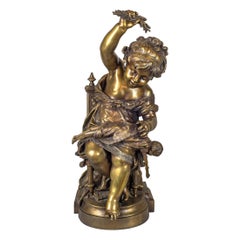
Fabulous Italian Neoclassical Marble Sculpture of Hermes
Located in Rome, IT
19th century French finely chiseled bronze figure of Hermes .
Signed Pigalle G . Cuspinera
Hermes , the messenger of the gods, is sitting on a rock, ready to leap up. He is att...
Category
Academic 19th Century Figurative Sculptures
Materials
Bronze
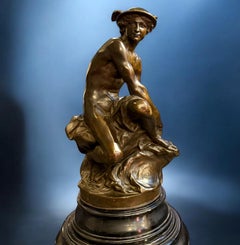
The Victorious David / - The melancholy of the radiant hero -
Located in Berlin, DE
Henri Honoré Plé (1853 Paris - 1922 Paris), The Victorious David, around 1890. Red-brown and brown patinated bronze with terrain plinth mounted on a round base. 62 cm (total height) ...
Category
Realist 19th Century Figurative Sculptures
Materials
Bronze
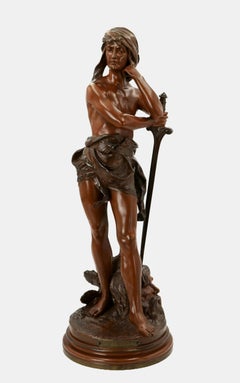
Crouching Venus Grand Tour Bronze Patinated Sculpture F. Barbedienne Fondeur
Located in Rochester, NY
Grand tour bronze sculpture of the "Crouching Venus" after the antique. Fine patina. 19th century. Ferdinand Barbedienne (French, 1821-1902).
not signed . rare. museum...
Category
19th Century Figurative Sculptures
Materials
Bronze
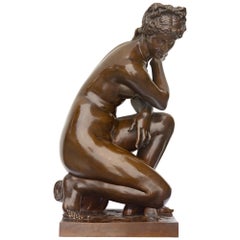
Large 19th Century Antique Marble Bust of Apollo of Belvedere
Located in New York, NY
Pietro Bazzanti (1842-1881) specialized in allegorical and genre subjects as well as copies of Antique and Renaissance sculpture. Regarded as one of the most talented sculptors of h...
Category
Academic 19th Century Figurative Sculptures
Materials
Marble
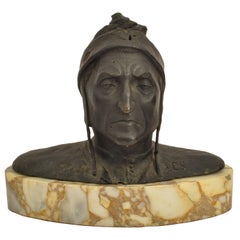
Antique Italian Grand Tour Bronze Marble Bust Sculpture Dante Alighieri 1880
Located in Portland, OR
A good antique Italian Grand Tour Bronze and marble bust of Dante Alighieri, circa 1880.
The bronze is most likely Florentine and mod...
Category
Italian School 19th Century Figurative Sculptures
Materials
Marble, Bronze
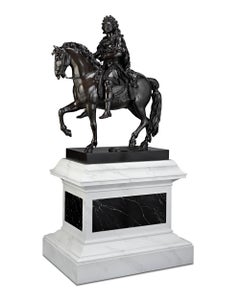
Girardon’s Equestrian Portrait of Louis XIV
Located in New Orleans, LA
King Louis XIV, one of France's greatest monarchs, sits confidently astride a prancing steed in this bronze equestrian statue. The extraordinary work is a reduction of the portrait of the Sun King by François Girardon, one of the most noted and influential sculptors of the period. Looking back to the great masterpieces of antiquity, Girardon took his inspiration from the seminal ancient Roman marble of Marcus Aurelius, now in the Musei Capitoline (Rome). Louis XIV is thus portrayed here as a conquering Roman hero, his costume adorned with many neoclassical motifs, hand outstretched in a gesture of command. The result is an imposing royal portrait of power and absolute authority that pays homage to one of the most important sovereigns in French history.
It was in 1685, at the very height of his rule, when Louis XIV commissioned the monumental bronze of himself from the great Girardon. As sculptor to the king, Girardon was a key figure in the decoration of the gardens at the Château de Versailles, and he was later commissioned to complete several important royal...
Category
Other Art Style 19th Century Figurative Sculptures
Materials
Bronze
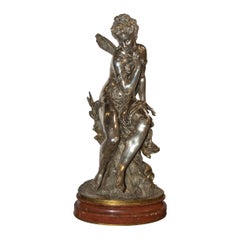
Silvered Bronze Figure of Psyche
Located in New York, NY
MATHURIN MOREAU
French, (1822-1914)
Silvered Bronze Figure of Psyche
Silvered bronze; Signed ‘Moreau Mathurin’
30 3/8 x 15 x 13 inches
Category
19th Century Figurative Sculptures
Materials
Bronze
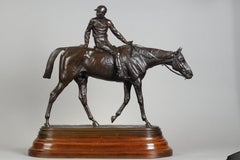
Jockey Winner
Located in PARIS, FR
Jockey Winner
by Isidore BONHEUR (1827-1901)
A rare and magnificent bronze group with a dark brown patina
Signed on the base "I. Bonheur"
A period cast by "Peyrol" (with the foundry stamp)
Standing on a molded wooden base
France
circa 1880
height of the bronze : 53,5 cm
total height with the base : 62 cm
total length : 68 cm
depth : 24 cm
Biography:
Isidore Jules Bonheur (1827-1901) was a French painter and sculptor. Isidore first received an artistic apprenticeship from his father Raymond and his older sister Rosa, then, in 1827, he entered the School of Fine Arts in Paris. After practicing...
Category
French School 19th Century Figurative Sculptures
Materials
Bronze
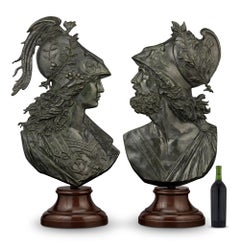
Bronze Reliefs of Minerva and Mars by Émile Pinedo
By Émile Pinedo
Located in New Orleans, LA
Émile Pinedo
1840-1916 French
Bronze Reliefs of Minerva and Mars
Bronze
These exceptional bronze reliefs depicting the Roman deities Minerva and Mars represent the pinnacle of 19...
Category
19th Century Figurative Sculptures
Materials
Bronze
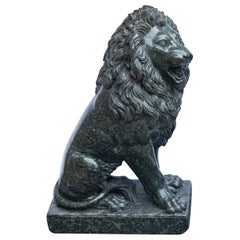
Large Italian Grand Tour Granite "Medici" Lion 19th Century
Located in Rochester, NY
19th century grand tour carving of the "Medici" lion. Carved green porphyry granite. This is an unusually large size. Pieces carved porphyry granite are uncommon. It's hardness makes...
Category
19th Century Figurative Sculptures
Materials
Stone, Granite
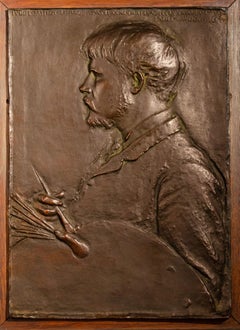
"Jules Bastien LePage" Augustus Saint-Gaudens, Bas Relief of French Painter
Located in New York, NY
Augustus Saint-Gaudens
Jules Bastien LePage
Bronze
14 1/4 x 10 1/8 inches
Augustus Saint-Gaudens was born in 1848 in Dublin, Ireland. His father, Bern...
Category
Realist 19th Century Figurative Sculptures
Materials
Bronze
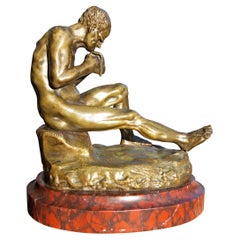
19th Century Bronze Sculpture "The Letter"
Located in Rochester, NY
Antique bronze sculpture of male nude reading a letter or proclamation. Marble base, 19th century. Unsigned.
Category
19th Century Figurative Sculptures
Materials
Marble, Bronze
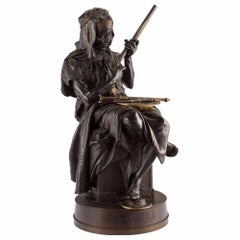
Emile-Edmond Peynot "Albaya
El Tunsi" The Tunisian Merchant Bronze, 1883
Located in Queens, NY
Émile-Edmond Peynot, (French, 1850 -1932)
An exceptional, exquisite and rare orientalist bronze sculpture titled Albaya' El Tunsi / The Tunisian Merchant / The Arab rifleman.
Dep...
Category
19th Century Figurative Sculptures
Materials
Bronze
$37,500 Sale Price
25% Off
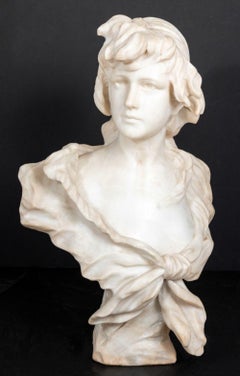
Female Figure Bust
Located in Astoria, NY
Italian School Female Figure Carved Alabaster Bust, late 19th century, the portrait with tied back hair and flowing dress tied at her breast, on a rockwork plinth, unsigned. 26" H x ...
Category
Italian School 19th Century Figurative Sculptures
Materials
Alabaster
$2,350 Sale Price
27% Off