Found Objects Sculptures

to
37
235
87
81
42
141
Overall Width
to
Overall Height
to
38
548
1
1
3
2
4
6
15
359
56
20
13
12
10
3
1
65
38
27
21
19
19
17
16
16
16
15
13
12
12
12
11
9
9
8
8
1,105
11,219
5,823
3,518
3,258
47
31
24
22
13
495
63
Medium: Found Objects
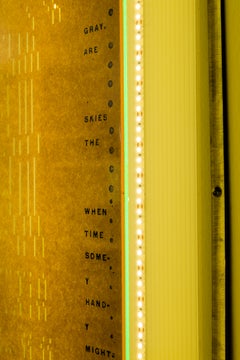
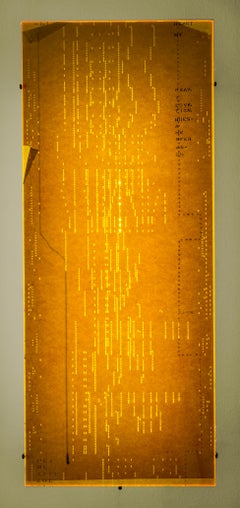
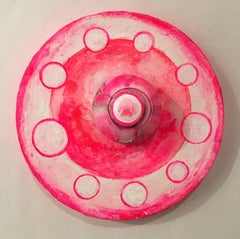
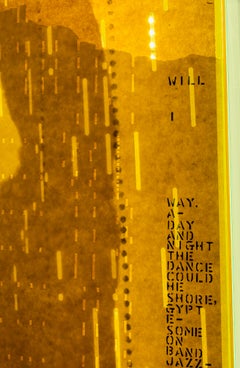
Jo Yarrington, Mute-Ability_Composition 5, 2019_acrylic, steel, player piano rol
Located in Darien, CT
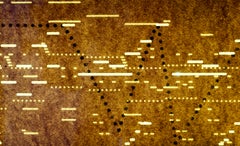
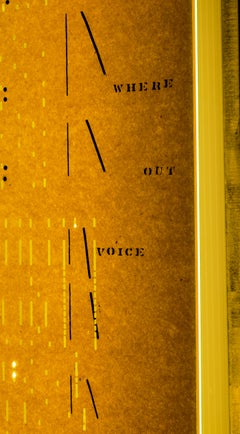
Jo Yarrington’s photographs, prints, works on paper, glass sculptures and architecturally-based installations have been shown in exhibitions at the Aldrich Contemporary Art Museum, Yale University, Cornell University, the Museum of Glass, the DeCordova Museum and Sculpture Park, Artists Space, St. John the Divine Cathedral, Grounds for Sculpture, the Museum of American Glass and ODETTA, among others. International exhibitions have included Guangzhou Academy of Fine Arts Museum, Glasgow School of Art, Glasgow Cathedral, Glasgow University, Galeria Sala Uno and Centro de las Artes de Guanajuato. She represented the United States at the Sharjah Biennial, United Arab Emirates and participated in the Berlin Biennial. in 2010 she received the Bronze Prize, the Museum of Contemporary Art, Skopje, Macedonia. Yarrington is a recipient of artist grants and Fellowships from the Pollock Krasner Foundation, the New York Foundation for the Arts, the Pennsylvania Council on the Arts and the Connecticut Commission on Culture and Tourism. She has received Residency Fellowships from the MacDowell Colony, the Museum of Glass, the Museum of American Glass, the Bridge Virtual Residency/ SciArt Center, the Lucile Walton Fellow/Mountain Lake Biological Station, the Virginia Center for Creative Arts, the Anderson Center and the Ucross Foundation, among others. International grants and fellowships have included the Banff Center for Arts and Creativity/Canada, SIMS Residency/ Iceland, Cill Rialaig Artists Residency/Ireland, the Burren College of Art Residency/Ireland and the American Scandinavian Foundation. She is a Professor of Visual and Performing Arts at Fairfield University and lives and works in New York City. STATEMENT In site-specific exhibitions, public art commissions, collaborative and individual projects Jo Yarrington has used varied combinations of glass, waxed surfaces, found artifacts and experimental analog photography to investigate the way we perceive – searching for, experimenting with and developing throughout a sensory-based vernacular. Her mostly translucent materials function as physical framework and symbolic membrane. Light, both natural and ambient, provides a kinetic or time-based element to her work. Scale and the integration of architecture are also pivotal components. In the 6-part installation for the two-person exhibition Illuminated, Yarrington continues her interest in the connections between vision, sound and language. In Mute-ability: Compositions 1 – 6, her title for this light-based comprehensive work, she combines the words mute and malleability. The work focuses on found piano rolls, a music storage medium, originally conceived as coded notations or ‘note control data’ for music produced in pneumatic player pianos...
Category

2010s Conceptual Found Objects Sculptures

Materials

Steel

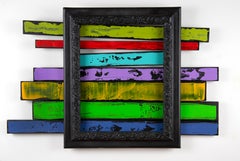
"The Bigger Picture", abstract sculpture, found frame, wood, paint, geometry
Located in Toronto, Ontario
"The Bigger Picture" is an abstract artwork by Stan Olthuis composed of acrylic paint on pine wood and reclaimed picture frame. The Bigger Picture measures...
Category

21st Century and Contemporary Abstract Geometric Found Objects Sculptures

Materials

Acrylic, Wood, Found Objects

Jesse Hickman, Note Three Twenty Seven Sixteen F, 2016, Enamel, Wood, Glue
Located in Darien, CT
Over the past few years, Jesse Hickman has been making minimal abstract paintings on wood with few constraints. He calls this series Notes, thinking of these pieces as drawn sketches...
Category

21st Century and Contemporary Minimalist Found Objects Sculptures

Materials

Enamel

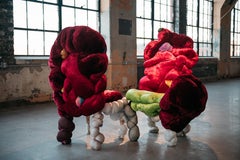
Lovesuite
Located in Boston, MA
Artist Commentary: An interactive hybrid of social experiment and sculptural object, envelopes the sitter into it’s cushiony softness, referencing a Victorian courting chair...
Category

21st Century and Contemporary Abstract Found Objects Sculptures

Materials

Found Objects, Other Medium

"Brick" Portrait of Man Made Out Layered Paper, Sewn Canvas, and Stone
Located in Philadelphia, PA
"Brick" is a unique piece by Eustace Mamba measures approx. 4.5"h" x 2.5"w x 5"d. Mamba creates an abstract portrait from found material, sewn canvas, acrylic, and oil paint. This sc...
Category

21st Century and Contemporary Contemporary Found Objects Sculptures

Materials

Textile, Paint, Mixed Media, Found Objects, Canvas, Thread, Brick, Acrylic
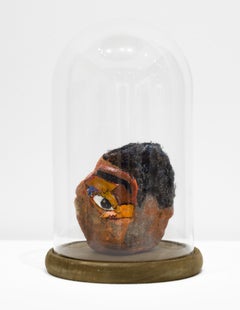
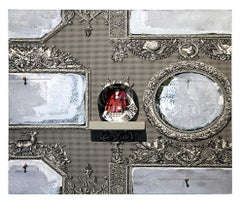
"Fox Hunt", wallpaper, acrylic paint, optical lens, screws, mounted on board
Located in Toronto, Ontario
“Fox Hunt“ is a wall relief panel by artist Heather Nicol, and measures 16x19x4“. Part of a body of work known as Brief Lives, this particular piece is comprised of wallpaper, wood, acrylic paint, screws and an optical lens...
Category

21st Century and Contemporary Assemblage Found Objects Sculptures

Materials

Glass, Wood, Found Objects, Board, Acrylic
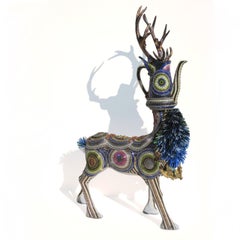
"Louis", Contemporary, Mixed Media, Beaded, Sculpture, Found Objects, Glass
By Jan Huling
Located in St. Louis, MO
Jan Huling was born in Chicago and raised in St. Louis. After attending the Kansas City Art Institute she started her career in greeting card design at Hallmark. She now works in New...
Category

2010s Contemporary Found Objects Sculptures

Materials

Glass, Plastic, Found Objects, Mixed Media, Other Medium
Conny Goelz Schmitt "Overhang" 2024, wall object of vintage book parts
Located in New York, NY
Overhang, 2024 wall object of vintage book parts 24 x 19 x 8 in. (schm078) "I create geometric collages, assemblages and sculptures with vintage book parts. My work is a never-endin...
Category

2010s Contemporary Found Objects Sculptures

Materials

Found Objects

Richard Klein, Expo 67, 2017, Found and altered objects assemblage
Located in Darien, CT
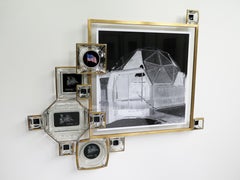
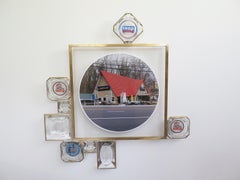
In the mid 1990s Richard Klein started working with found glass objects, including bottles, drinking glasses, ashtrays, and eyeglasses. Initially, Klein rejected any object with commercial or advertising content, but in 2015 he became fascinated with the promotional content that was screen printed on ashtrays from the 1950s, 1960s and early 1970s. This period was before smoking was looked at as being primarily a negative habit, and iconic American businesses, including Howard Johnson’s, International House of Pancakes (iHop) and Holiday Inn, all produced promotional ashtrays printed with their graphic identity. By the time Klein became interested in these objects, the businesses had either ceased to exist, or had changed their logos, and many of their signature buildings, which where examples of classic, “Pop” roadside architecture, has been torn down or repurposed. The artist wanted to connect the glass objects with the business’s sites that were still recognizable and spoke of their history, so he began researching where original buildings still stood. Klein then embarked on a series of road trips to photograph these sites with the intention of combining the photographs with the promotional glass objects. This led him to as far south as Maryland and as far north as upstate New York from his home in Connecticut. In the case of Holiday Inn, it wasn’t their buildings, but their iconic illuminated sign that appeared on ashtrays, so he sought out a standing example of the sign he could photograph. As it turned out all had been removed years before from the hotels' properties and the only working example was indoors at the Henry Ford Museum in Dearborn, Michigan. He did, however, find out that there was one still standing, surprisingly, in Beruit, Lebanon. He found an image of it on the web and used it to make Holiday Inn (Beruit). In 1973 Holiday Inn changed their tagline from “The Nations Innkeeper” to “The World’s Innkeeper” as they expanded overseas, including the Mideast. For the hotel chain it was bad timing: the disastrous Lebanese civil war began in 1975. In the war, the different Lebanese militias involved in the conflict, including the Nasserites, Christian Phalangists, and the Lebanese National Movement engaged in what came to be called “The Battle of the Hotels” where they each occupied a major high-rise hotel in central Beruit. The Phalangists commanded the Holiday Inn, which they used to fire with both light arms and heavier weapons at the militias in neighboring hotels. Klein used the photo of the heavily damaged Holiday Inn sign as I thought it spoke in a curious, offhanded way about American cultural imperialism in juxtaposition with an ashtray that proclaimed Holiday Inn to be “The World’s Innkeeper.” In the work Holiday Inn (Nocturne) the artist utilized a found, 35mm slide of a Holiday Inn sign at night at an unknown location as the basis of the photograph in the work. Richard Klein is a Connecticut-based artist, independent curator and writer. As an artist, he has exhibited widely, including the Neuberger Museum of Art at SUNY Purchase; Caren Golden Fine Art, New York; the John Michael Kohler Arts Center, Sheboygan, WI; Hales Gallery, London; Gavlak Gallery, Palm Beach, FL; deCordova Sculpture Park and Museum, Lincoln, MA; James Barron Art, Kent, CT; The Portland Institute of Contemporary Art (PICA), Portland, OR; Schoolhouse Gallery, Provincetown, MA; Stephan Stoyanov Gallery, NY; Katonah Museum of Art, Katonah, NY; Brattleboro Museum and Art Center, Brattleboro, VT; Ortega y Gasset Projects, Brooklyn, NY; Exhibit by Alberson Tulsa, OK; Incident Report/Flow Chart Foundation, Hudson, NY; ICEHOUSE Project Space, Sharon, CT; Kenise Barnes Fine Art in Kent, CT and with ODETTA Gallery at the Equity Gallery in New York City.. Reviews of his work have appeared in Two Coats of Paint, Whitehot Magazine, The New York Times, Sculpture Magazine, Art in America, and The New Yorker. In the summer of 2024 he will be the first Artist-In-Residence at Peck Ledge Light...
Category

2010s Assemblage Found Objects Sculptures

Materials

Metal

Margaret Roleke, Holy Torture, 2016, children s toys, spray enamel, wood
Located in Darien, CT
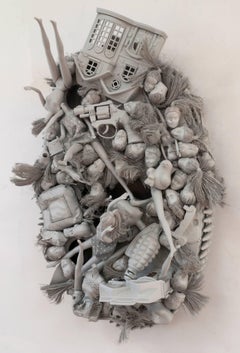
In the body of work for “Child’s Play” Roleke has created diminutive worlds in which toys tell the story of consumption, consumerism, war, and the misuse of power and religion. The m...
Category

21st Century and Contemporary Pop Art Found Objects Sculptures

Materials

Enamel

Truffles - 21st Century, Contemporary Sculpture, Figurative, Recycling
Located in Barcelona, Catalonia
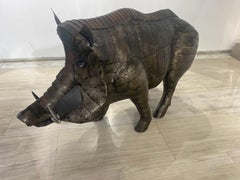
This striking sculpture captures the essence of a wild boar, rendered with remarkable realism and creativity. Constructed from intricately welded metal pieces, the artwork exudes a s...
Category

21st Century and Contemporary Contemporary Found Objects Sculptures

Materials

Found Objects

"Pompeii, " Mixed Media Sculpture
Located in Chicago, IL
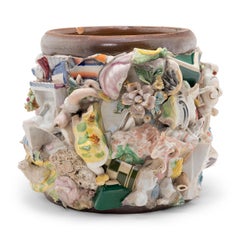
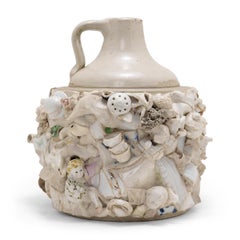
Based in Chicago, IL, contemporary artist Michael Thompson creates unique kites, collages and mixed media works assembled from material fragments of past and present collected in his travels. In his ongoing series of memory jugs, Thompson adorns stoneware vessels with a kaleidoscope of ceramic shards, found objects, and pocket-sized trinkets he collected over the course of his life. Also known as forget-me-not jugs or spirit jars, memory jugs are African American folk art objects that honor a loved one who has recently passed. Small tokens and mementos of the deceased are gathered and affixed to the exterior of a jug or vase, an abundance of memories that celebrates a life lived to the fullest. Michael Thompson applies this tradition to his own practice, creating tactile assemblages of this and that. Formed in the manner of collage, each jug honors the lost memories of generations past and his own memories of personally discovering each item. With varied sources for materials including Kyoto, Turkey, and Mexico, a great number of the found shards are 18th and 19th century ceramics...
Category

21st Century and Contemporary Abstract Found Objects Sculptures

Materials

Stone

Richard Klein, iHop II, 2018, Found and altered objects assemblage
Located in Darien, CT
In the mid 1990s Richard Klein started working with found glass objects, including bottles, drinking glasses, ashtrays, and eyeglasses. Initially, Klein rejected any object with commercial or advertising content, but in 2015 he became fascinated with the promotional content that was screen printed on ashtrays from the 1950s, 1960s and early 1970s. This period was before smoking was looked at as being primarily a negative habit, and iconic American businesses, including Howard Johnson’s, International House of Pancakes (iHop) and Holiday Inn, all produced promotional ashtrays printed with their graphic identity. By the time Klein became interested in these objects, the businesses had either ceased to exist, or had changed their logos, and many of their signature buildings, which where examples of classic, “Pop” roadside architecture, has been torn down or repurposed. The artist wanted to connect the glass objects with the business’s sites that were still recognizable and spoke of their history, so he began researching where original buildings still stood. Klein then embarked on a series of road trips to photograph these sites with the intention of combining the photographs with the promotional glass objects. This led him to as far south as Maryland and as far north as upstate New York from his home in Connecticut. In the case of Holiday Inn, it wasn’t their buildings, but their iconic illuminated sign that appeared on ashtrays, so he sought out a standing example of the sign he could photograph. As it turned out all had been removed years before from the hotels' properties and the only working example was indoors at the Henry Ford Museum in Dearborn, Michigan. He did, however, find out that there was one still standing, surprisingly, in Beruit, Lebanon. He found an image of it on the web and used it to make Holiday Inn (Beruit). In 1973 Holiday Inn changed their tagline from “The Nations Innkeeper” to “The World’s Innkeeper” as they expanded overseas, including the Mideast. For the hotel chain it was bad timing: the disastrous Lebanese civil war began in 1975. In the war, the different Lebanese militias involved in the conflict, including the Nasserites, Christian Phalangists, and the Lebanese National Movement engaged in what came to be called “The Battle of the Hotels” where they each occupied a major high-rise hotel in central Beruit. The Phalangists commanded the Holiday Inn, which they used to fire with both light arms and heavier weapons at the militias in neighboring hotels. Klein used the photo of the heavily damaged Holiday Inn sign as I thought it spoke in a curious, offhanded way about American cultural imperialism in juxtaposition with an ashtray that proclaimed Holiday Inn to be “The World’s Innkeeper.” In the work Holiday Inn (Nocturne) the artist utilized a found, 35mm slide of a Holiday Inn sign at night at an unknown location as the basis of the photograph in the work. Richard Klein is a Connecticut-based artist, independent curator and writer. As an artist, he has exhibited widely, including the Neuberger Museum of Art at SUNY Purchase; Caren Golden Fine Art, New York; the John Michael Kohler Arts Center, Sheboygan, WI; Hales Gallery, London; Gavlak Gallery, Palm Beach, FL; deCordova Sculpture Park and Museum, Lincoln, MA; James Barron Art, Kent, CT; The Portland Institute of Contemporary Art (PICA), Portland, OR; Schoolhouse Gallery, Provincetown, MA; Stephan Stoyanov Gallery, NY; Katonah Museum of Art, Katonah, NY; Brattleboro Museum and Art Center, Brattleboro, VT; Ortega y Gasset Projects, Brooklyn, NY; Exhibit by Alberson Tulsa, OK; Incident Report/Flow Chart Foundation, Hudson, NY; ICEHOUSE Project Space, Sharon, CT; Kenise Barnes Fine Art in Kent, CT and with ODETTA Gallery at the Equity Gallery in New York City.. Reviews of his work have appeared in Two Coats of Paint, Whitehot Magazine, The New York Times, Sculpture Magazine, Art in America, and The New Yorker. In the summer of 2024 he will be the first Artist-In-Residence at Peck Ledge Light...
Category

2010s Assemblage Found Objects Sculptures

Materials

Metal

"China Cabinet, " Mixed Media Sculpture
Located in Chicago, IL
Based in Chicago, IL, contemporary artist Michael Thompson creates unique kites, collages and mixed media works assembled from material fragments of past and present collected in his...
Category

21st Century and Contemporary Abstract Found Objects Sculptures

Materials

Stone

Richard Klein, American Glassware, 2010-2024, Found and altered objects
Located in Darien, CT
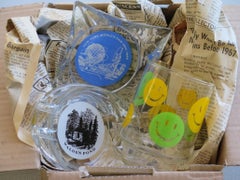
In the mid 1990s Richard Klein started working with found glass objects, including bottles, drinking glasses, ashtrays, and eyeglasses. Initially, Klein rejected any object with commercial or advertising content, but in 2015 he became fascinated with the promotional content that was screen printed on ashtrays from the 1950s, 1960s and early 1970s. This period was before smoking was looked at as being primarily a negative habit, and iconic American businesses, including Howard Johnson’s, International House of Pancakes (iHop) and Holiday Inn, all produced promotional ashtrays printed with their graphic identity. By the time Klein became interested in these objects, the businesses had either ceased to exist, or had changed their logos, and many of their signature buildings, which where examples of classic, “Pop” roadside architecture, has been torn down or repurposed. The artist wanted to connect the glass objects with the business’s sites that were still recognizable and spoke of their history, so he began researching where original buildings still stood. Klein then embarked on a series of road trips to photograph these sites with the intention of combining the photographs with the promotional glass objects. This led him to as far south as Maryland and as far north as upstate New York from his home in Connecticut. American Glassware (2010-present) which is presented in a small, wall-mounted vitrine. American Glassware is composed of three glass objects: a “souvenir” Walden Pond ashtray made by me as a multiple; a real souvenir ashtray from the 1964-65 New York World’s Fair; and an authentic “Happy Face” drinking glass from the same era. They are all nestled in crumpled, vintage newspaper from 1967, and are presented together in a dilapidated cardboard box, as if they have been found in someone’s attic or basement. Once again, in a similar manner to the Glass House Ashtray, versions of his Walden Pond ashtray (Walden Pond Souvenir) have been injected into the collectable stream of tag sales and flea markets, creating a souvenir that never existed. The ashtray is screenprinted with an image of Thoreau’s cabin on Walden Pond as pictured on the title page of his book Walden, or Life in the Woods (1854). (The original illustration was created by Thoreau’s sister, Sophia.) Walden Pond Souvenir was originally produced for the 2010 exhibition Renovating Walden at the Tufts University Art Gallery in Medford, MA. Richard Klein is a Connecticut-based artist, independent curator and writer. As an artist, he has exhibited widely, including the Neuberger Museum of Art at SUNY Purchase; Caren Golden Fine Art, New York; the John Michael Kohler Arts Center, Sheboygan, WI; Hales Gallery, London; Gavlak Gallery, Palm Beach, FL; deCordova Sculpture Park and Museum, Lincoln, MA; James Barron Art, Kent, CT; The Portland Institute of Contemporary Art (PICA), Portland, OR; Schoolhouse Gallery, Provincetown, MA; Stephan Stoyanov Gallery, NY; Katonah Museum of Art, Katonah, NY; Brattleboro Museum and Art Center, Brattleboro, VT; Ortega y Gasset Projects, Brooklyn, NY; Exhibit by Alberson Tulsa, OK; Incident Report/Flow Chart Foundation, Hudson, NY; ICEHOUSE Project Space, Sharon, CT; Kenise Barnes Fine Art in Kent, CT and with ODETTA Gallery at the Equity Gallery in New York City.. Reviews of his work have appeared in Two Coats of Paint, Whitehot Magazine, The New York Times, Sculpture Magazine, Art in America, and The New Yorker. In the summer of 2024 he will be the first Artist-In-Residence at Peck Ledge Light...
Category

2010s Assemblage Found Objects Sculptures

Materials

Metal

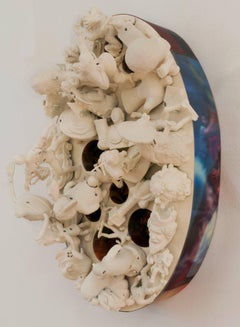
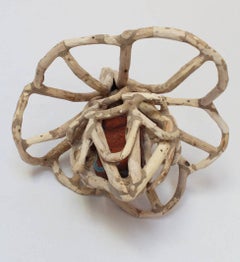
Constellation II
Located in New York, NY
Porcelain sculpture with embedded china shards
Category

2010s Contemporary Found Objects Sculptures

Materials

Porcelain, Found Objects

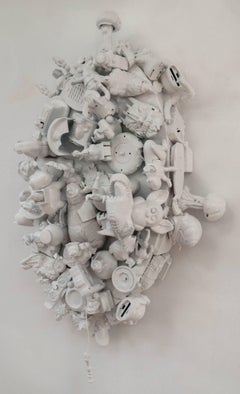
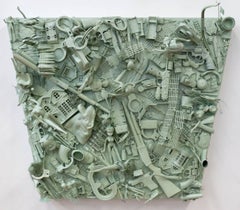
Margaret Roleke, Barbie Lives In A Police State, 2015, children s toys, wood
Located in Darien, CT
Roleke creates politically aware work. Her wall reliefs are composed of multitudes of plastic toys, oddly sexualized Disney characters and Happy Meal trinkets. Through investigation ...
Category

21st Century and Contemporary Pop Art Found Objects Sculptures

Materials

Found Objects, Spray Paint, Wood Panel
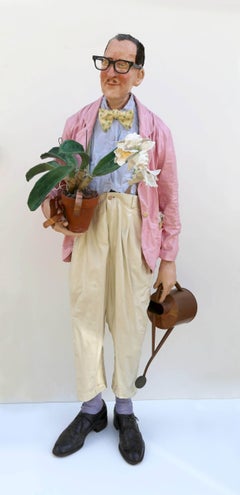
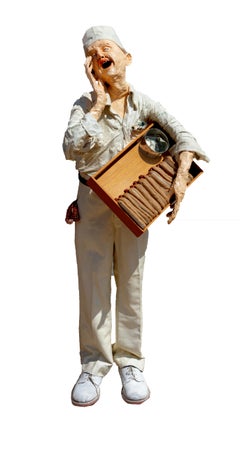
The Florist, Free Standing Indoor Sculpture
Located in Long Island City, NY
Artist: Kay Ritter Title: Florist Medium: Papier-mache with metal watering can, glasses, papier-mache flowers Year: 1995 Size: 57 x 24 x 14 in. (...
Category

1980s Contemporary Found Objects Sculptures

Materials

Metal

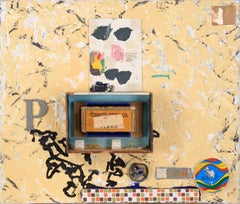
Assemblage with Cigar Box and the Letter P
Located in Soquel, CA
Abstract expressionist oil painting with assembled objects by Bay Area artist Michael Pauker (American, b. 1957). Against a yellow and black background, the artist has attached several objects, including plastic letters, cigar boxes, and glass slides. Unsigned, but was acquired with a collection of his work. Unframed. Image size: 20"H x 24"W Bay Area artist and art educator Michael Pauker was born in New York in 1957 and knew he wanted to be an artist from the age of 15. He earned a Bachelor’s in Fine Arts at SUNY Purchase in his native state of New York. In 1989 he went on to earn an M.F.A at Mills College in Oakland and was awarded the City of Oakland Artist Fellowship in Painting. He has been a Bay Area resident since 1988. His work has been exhibited widely across the U.S., as well as in Japan and Costa Rica, and is included in the collection of the Fine Arts Museums of San Francisco. Exhibitions include: 2007 Contemporary Art Museum, San Jose, Costa Rica 2007 “The Ebay Art Project,” Works/San Jose, San Jose, CA 2003 “Found Imagery: The Art of Collage,” Fresno Art Museum,Fresno, CA 2003 “Cut, Copy, Paste,” De Saisset Museum, Santa Clara, CA 2003 “20th Annual Exhibition,” Berkeley Art Center, Berkeley, CA 2002 “40 by 40...
Category

21st Century and Contemporary Abstract Expressionist Found Objects Sculptures

Materials

Canvas, Glass, Plastic, Paper, Oil, Found Objects
Margaret Roleke, Religious Toys, 2016, children s toys, spray enamel, wood
Located in Darien, CT
In the body of work for “Child’s Play” Roleke has created diminutive worlds in which toys tell the story of consumption, consumerism, war, and the misuse of power and religion. The m...
Category

21st Century and Contemporary Pop Art Found Objects Sculptures

Materials

Enamel

Margaret Roleke, War and Religion, 2016, children s toys, enamel, wood, LEDs
Located in Darien, CT
In the body of work for “Child’s Play” Roleke has created diminutive worlds in which toys tell the story of consumption, consumerism, war, and the misuse of power and religion. The m...
Category

21st Century and Contemporary Pop Art Found Objects Sculptures

Materials

Enamel

Margaret Roleke, Toyland, 2016, children s toys, spray enamel, wood
Located in Darien, CT
In the body of work for “Child’s Play” Roleke has created diminutive worlds in which toys tell the story of consumption, consumerism, war, and the misuse of power and religion. The m...
Category

21st Century and Contemporary Pop Art Found Objects Sculptures

Materials

Enamel

Margaret Roleke, Holy Wars, 2015, children s toys, spray enamel, wood panel
Located in Darien, CT
Roleke creates politically aware work. Her wall reliefs are composed of multitudes of plastic toys, oddly sexualized Disney characters and Happy Meal trinkets. Through investigation ...
Category

21st Century and Contemporary Post-Modern Found Objects Sculptures

Materials

Plastic, Found Objects, Spray Paint, Wood Panel
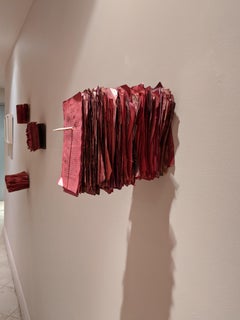
Patricia Miranda, Florilegium Series, 2016, cochineal dyes, antique books, pearl
Located in Darien, CT
Patricia Miranda's work includes interdisciplinary installation, textile, paper and books. The textiles incorporated in these new pieces are vintage linens from her Italian and Irish grandmothers and sourced from friends and strangers around the country. Each donation is documented and integrated into the work. Textile as a form that wraps the body from cradle to grave. The role of lacemaking in the lives of women both economically and historically is packed with metaphorical potential. The relationship of craft and women’s work (re)appropriated by artists today to environmental and social issues is integral to the artist's research. Her work is process oriented; materials are submerged in natural dyes from oak gall wasp nests, cochineal insects, turmeric, indigo, and clay. She forages for raw materials, cook dyes, grind pigments, ecofeminist actions that consider environmental impacts of objects. The process is left visible as dyestuff is unfiltered in the vat and finished work. Sewn into larger works, Miranda incorporates hair, pearls, bone beads, Milagros, cast plaster. The distinct genetics and environmental and cultural history of each material asserts its voice as collaborator rather than medium. The lace inserts a visceral femininity into the pristine gallery, and exerts a ghostly trace of the history of domestic labor. The combination of earth and lace references human and environmental devastation and the conflation of nature and women’s bodies as justifications for exploitation. Mournful and solastalgic, they are lamentations to the violence against women and the earth. Patricia Miranda is an interdisciplinary artist, curator, educator, and founder of The Crit Lab, graduate-level critique seminars and Residency for artists, and MAPSpace project space. She has been Visiting Artist at Vermont Studio Center, the Heckscher Museum, and University of Utah; and been awarded residencies at I-Park, Weir Farm, Vermont Studio Center, and Julio Valdez Printmaking Studio. She received an Anonymous Was a Woman Covid19 Artist Relief Grant, an artist grant from ArtsWestchester/New York State Council on the Arts, and was part of a year-long NEA grant working with homeless youth. Miranda currently teaches graduate curatorial studies at Western Colorado University, and develops programs for K-12, museums, and institutions such as Franklin Furnace. Her work has been exhibited at ODETTA, NYC; ABC No Rio, NYC; Alexey von...
Category

2010s Feminist Found Objects Sculptures

Materials

Fabric, Thread, Plaster, Dye, Found Objects
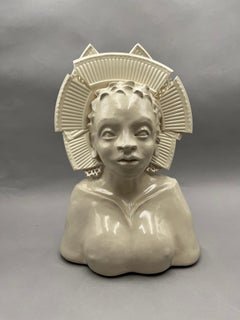
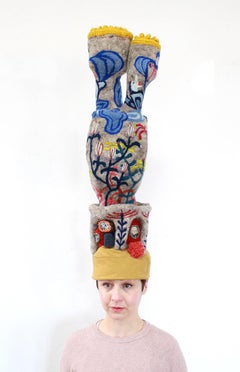
Eden
Located in Santa Monica, CA
Headdresses; embroideries, felted and crocheted yarn, stones, linen, and old photography.
Category

2010s Contemporary Found Objects Sculptures

Materials

Felt, Linen, Found Objects, Mixed Media
Eden
Eden
$3,840 Sale Price
20% Off
"SOMEWHERE ELSE #2", Watercolor on Sal Leaf Plate, Black Frame, Green, Red, Tan
Located in Toronto, Ontario
Eva Ennist, a mixed media and fiber artist, travels extensively through the Far East, gathering materials and techniques for her practice. The artwork "SOMETHING ELSE #2" uses materi...
Category

21st Century and Contemporary Naturalistic Found Objects Sculptures

Materials

Watercolor, Organic Material, Wood, Found Objects, Mixed Media
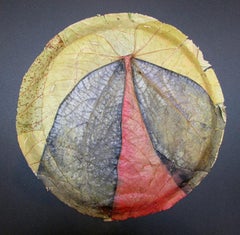
Liz Sweibel, Untitled (Scrapings #10), 2016, Wood, Paint, Found Objects
Located in Darien, CT
The freestanding sculptures in this portfolio are made from the “sticks”: a pile of found wood that Sweibel has been pulling from to make new works since about 2002. The pile consisted of more than a dozen four- to seven-foot lengths of hardwood, each an uneven inch in depth and width. The sticks were warped, with worn yellow paint on one side and raw wood on the other three. Over the years she has painted the raw sides of the sticks, cut the wood into shorter lengths, and sliced paint off – and kept the residue from these actions. Sweibel has also made sculptures ranging from full-length sticks to tiny stick splinters. She built these sculptures using sliced-off paint. Timeworn materials and objects have an intelligence that the artist looks for and listens to. Shaping and reshaping material to find new form and elicit new insights in the material itself is the territory she is mining. The limitations of the process are its strengths. Her work is concerned with fragility, precariousness, adaptability, and strength. It is a visual response to powerful yet unseen forces - like wind and thoughts - that threaten, propel, ruin, and protect. Liz Sweibel is a multidisciplinary artist working in drawing, sculpture, installation, and digital photography and video. Her spare, personal language of abstraction transforms ordinary materials into statements about connectedness and responsibility: every action has an impact, the effects persist in space and over time, and we are accountable. By drawing attention to simple, ordinary “stuff of life” and referencing both shared and personal history, Sweibel’s work explores and reflects back fundamental experiences in response to our world and relationships. Her intention is to reinvigorate viewers’ awareness of the everyday – in its raw beauty and precariousness – in hopes that they might bring heightened senses of sight and care to their daily lives. Sweibel has participated in solo, two-person, and group exhibits in New York, Massachusetts, Maine, Connecticut, Michigan, and Tennessee since 1998. In 2016, Sweibel’s work was in the group shows Lightly Structured at Sculpture Space NYC, Precarious Constructs at the Venus Knitting Art...
Category

2010s Abstract Expressionist Found Objects Sculptures

Materials

Wood, Paint, Found Objects

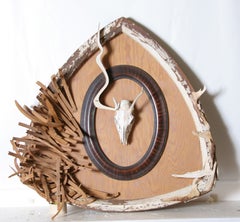
Oh, Georgia (Homage to O Keeffe)
By Carolee Thea
Located in Long Island City, NY
Artist: Carolee Thea Title: Oh, Georgia (Homage to O'Keeffe) Year: 1986 Medium: Unique Wall Sculpture: Oak, Varnished Plywood and Bone Construction, signed and dated verso Size: ...
Category

1980s Surrealist Found Objects Sculptures

Materials

Oak, Plywood, Found Objects

Liz Sweibel, Untitled (Splinter 8 ), 2014, Wood, Paint, Found Objects
Located in Darien, CT
Liz Sweibel primarily makes sculpture, installations, and drawings. She uses a spare, personal language of abstraction to explore liminal spaces and unseen forces: wind, history, va...
Category

2010s Minimalist Found Objects Sculptures

Materials

Wood, Paint, Found Objects

"Cordial", wallpaper, spray paint, aunt s pearls, crystal, red resin, on board
Located in Toronto, Ontario
“Cordial“ is a wall relief panel by artist Heather Nicol, and measures 16x19x4“. Part of a body of work known as Brief Lives, this particular piece is comprised of wallpaper, spray paint, wood, the artist's aunt's pearls, crystal and red resin (solid), mounted on board. It fixes to the wall with a custom-fit wooden cleat. Reflecting on domestic materials and their relationships to display and social identity, Cordial celebrates and questions feminist reclamation, nostalgic tenderness and the histories embedded in the objects, while carrying on their aesthetic traditions through transformation into works of art. Heather Nicol is a multidisciplinary artist whose practice includes immersive sound installation, small-scale discrete object making, and independent curating. Her large site-specific interventions explore the architectural, sonic, historic and operational conditions across a wide range of locations. These include concourse atriums, rail terminus, lobbies, a theatre, a public school building, a theme...
Category

21st Century and Contemporary Assemblage Found Objects Sculptures

Materials

Glass, Wood, Found Objects, Board, Resin, Spray Paint
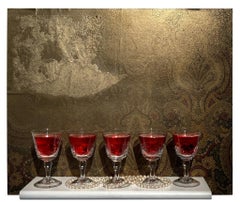
Jo Yarrington, Mute-Ability_Composition 1, 2019_acrylic, steel, player piano rol
Located in Darien, CT
Jo Yarrington’s photographs, prints, works on paper, glass sculptures and architecturally-based installations have been shown in exhibitions at the Aldrich Contemporary Art Museum, Yale University, Cornell University, the Museum of Glass, the DeCordova Museum and Sculpture Park, Artists Space, St. John the Divine Cathedral, Grounds for Sculpture, the Museum of American Glass and ODETTA, among others. International exhibitions have included Guangzhou Academy of Fine Arts Museum, Glasgow School of Art, Glasgow Cathedral, Glasgow University, Galeria Sala Uno and Centro de las Artes de Guanajuato. She represented the United States at the Sharjah Biennial, United Arab Emirates and participated in the Berlin Biennial. in 2010 she received the Bronze Prize, the Museum of Contemporary Art, Skopje, Macedonia. Yarrington is a recipient of artist grants and Fellowships from the Pollock Krasner Foundation, the New York Foundation for the Arts, the Pennsylvania Council on the Arts and the Connecticut Commission on Culture and Tourism. She has received Residency Fellowships from the MacDowell Colony, the Museum of Glass, the Museum of American Glass, the Bridge Virtual Residency/ SciArt Center, the Lucile Walton Fellow/Mountain Lake Biological Station, the Virginia Center for Creative Arts, the Anderson Center and the Ucross Foundation, among others. International grants and fellowships have included the Banff Center for Arts and Creativity/Canada, SIMS Residency/ Iceland, Cill Rialaig Artists Residency/Ireland, the Burren College of Art Residency/Ireland and the American Scandinavian Foundation. She is a Professor of Visual and Performing Arts at Fairfield University and lives and works in New York City. STATEMENT In site-specific exhibitions, public art commissions, collaborative and individual projects Jo Yarrington has used varied combinations of glass, waxed surfaces, found artifacts and experimental analog photography to investigate the way we perceive – searching for, experimenting with and developing throughout a sensory-based vernacular. Her mostly translucent materials function as physical framework and symbolic membrane. Light, both natural and ambient, provides a kinetic or time-based element to her work. Scale and the integration of architecture are also pivotal components. In the 6-part installation for the two-person exhibition Illuminated, Yarrington continues her interest in the connections between vision, sound and language. In Mute-ability: Compositions 1 – 6, her title for this light-based comprehensive work, she combines the words mute and malleability. The work focuses on found piano rolls, a music storage medium, originally conceived as coded notations or ‘note control data’ for music produced in pneumatic player pianos...
Category

2010s Conceptual Found Objects Sculptures

Materials

Steel

Jo Yarrington, Mute-Ability_Composition 3, 2019_acrylic, steel, player piano rol
Located in Darien, CT
Jo Yarrington’s photographs, prints, works on paper, glass sculptures and architecturally-based installations have been shown in exhibitions at the Aldrich Contemporary Art Museum, Y...
Category

2010s Conceptual Found Objects Sculptures

Materials

Steel

Patricia Miranda, Lamentations for Ermenegilda; 2020, lace, cochineal dye, thread
Located in Darien, CT
Patricia Miranda's work includes interdisciplinary installation, textile, paper and books. The textiles incorporated in these new pieces are vintage linens from her Italian and Irish grandmothers and sourced from friends and strangers around the country. Each donation is documented and integrated into the work. Textile as a form that wraps the body from cradle to grave. The role of lacemaking in the lives of women both economically and historically is packed with metaphorical potential. The relationship of craft and women’s work (re)appropriated by artists today to environmental and social issues is integral to the artist's research. Her work is process oriented; materials are submerged in natural dyes from oak gall wasp nests, cochineal insects, turmeric, indigo, and clay. She forages for raw materials, cook dyes, grind pigments, ecofeminist actions that consider environmental impacts of objects. The process is left visible as dyestuff is unfiltered in the vat and finished work. Sewn into larger works, Miranda incorporates hair, pearls, bone beads, Milagros, cast plaster. The distinct genetics and environmental and cultural history of each material asserts its voice as collaborator rather than medium. The lace inserts a visceral femininity into the pristine gallery, and exerts a ghostly trace of the history of domestic labor. The combination of earth and lace references human and environmental devastation and the conflation of nature and women’s bodies as justifications for exploitation. Mournful and solastalgic, they are lamentations to the violence against women and the earth. Patricia Miranda is an interdisciplinary artist, curator, educator, and founder of The Crit Lab, graduate-level critique seminars and Residency for artists, and MAPSpace project space. She has been Visiting Artist at Vermont Studio Center, the Heckscher Museum, and University of Utah; and been awarded residencies at I-Park, Weir Farm, Vermont Studio Center, and Julio Valdez Printmaking Studio. She received an Anonymous Was a Woman Covid19 Artist Relief Grant, an artist grant from ArtsWestchester/New York State Council on the Arts, and was part of a year-long NEA grant working with homeless youth. Miranda currently teaches graduate curatorial studies at Western Colorado University, and develops programs for K-12, museums, and institutions such as Franklin Furnace. Her work has been exhibited at ODETTA, NYC; ABC No Rio, NYC; Alexey von...
Category

2010s Feminist Found Objects Sculptures

Materials

Ceramic, Fabric, Thread, Dye, Found Objects
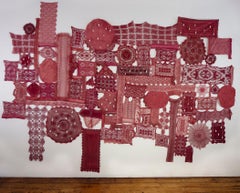
Jo Yarrington, Mute-Ability_Composition 2, 2019_acrylic, steel, player piano rol
Located in Darien, CT
Jo Yarrington’s photographs, prints, works on paper, glass sculptures and architecturally-based installations have been shown in exhibitions at the Aldrich Contemporary Art Museum, Yale University, Cornell University, the Museum of Glass, the DeCordova Museum and Sculpture Park, Artists Space, St. John the Divine Cathedral, Grounds for Sculpture, the Museum of American Glass and ODETTA, among others. International exhibitions have included Guangzhou Academy of Fine Arts Museum, Glasgow School of Art, Glasgow Cathedral, Glasgow University, Galeria Sala Uno and Centro de las Artes de Guanajuato. She represented the United States at the Sharjah Biennial, United Arab Emirates and participated in the Berlin Biennial. in 2010 she received the Bronze Prize, the Museum of Contemporary Art, Skopje, Macedonia. Yarrington is a recipient of artist grants and Fellowships from the Pollock Krasner Foundation, the New York Foundation for the Arts, the Pennsylvania Council on the Arts and the Connecticut Commission on Culture and Tourism. She has received Residency Fellowships from the MacDowell Colony, the Museum of Glass, the Museum of American Glass, the Bridge Virtual Residency/ SciArt Center, the Lucile Walton Fellow/Mountain Lake Biological Station, the Virginia Center for Creative Arts, the Anderson Center and the Ucross Foundation, among others. International grants and fellowships have included the Banff Center for Arts and Creativity/Canada, SIMS Residency/ Iceland, Cill Rialaig Artists Residency/Ireland, the Burren College of Art Residency/Ireland and the American Scandinavian Foundation. She is a Professor of Visual and Performing Arts at Fairfield University and lives and works in New York City. STATEMENT In site-specific exhibitions, public art commissions, collaborative and individual projects Jo Yarrington has used varied combinations of glass, waxed surfaces, found artifacts and experimental analog photography to investigate the way we perceive – searching for, experimenting with and developing throughout a sensory-based vernacular. Her mostly translucent materials function as physical framework and symbolic membrane. Light, both natural and ambient, provides a kinetic or time-based element to her work. Scale and the integration of architecture are also pivotal components. In the 6-part installation for the two-person exhibition Illuminated, Yarrington continues her interest in the connections between vision, sound and language. In Mute-ability: Compositions 1 – 6, her title for this light-based comprehensive work, she combines the words mute and malleability. The work focuses on found piano rolls, a music storage medium, originally conceived as coded notations or ‘note control data’ for music produced in pneumatic player pianos...
Category

2010s Conceptual Found Objects Sculptures

Materials

Steel

Jo Yarrington, Ghost Girls, Camel Hair Brush Display, 2018, Found Objects, Metal
Located in Darien, CT
Radioluminescence is the phenomenon by which light is produced in a material by bombardment with ionizing radiation and can be used as a low-level light source for night illumination of instruments or signage or other applications where light must be produced for long periods without external energy sources. Radioluminescent paint used to be used for clock hands and instrument dials...
Category

2010s Conceptual Found Objects Sculptures

Materials

Metal

Hot Dog Man, Found Objects and Paper Mache by Kay Ritter
Located in Long Island City, NY
Artist: Kay Ritter Title: Hot Dog Man Medium: Papier-mache Figure Sculpture with Mixed Media Found Objects, signed Year: 1981 Size: 48 x 16 x 15 in. (121.92 x ...
Category

1980s Contemporary Found Objects Sculptures

Materials

Found Objects, Papier Mâché

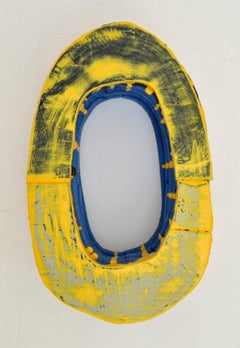
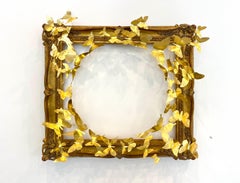
Cycloid
Located in New Orleans, LA
Paul Villinski's "Cycloid" incorporates his signature butterfly motif with a found antique frame. This unique piece dazzles with its shimmering gold leaf finish, with the bespoke but...
Category

21st Century and Contemporary Contemporary Found Objects Sculptures

Materials

Metal, Wire, Gold Leaf

"SOMEWHERE ELSE #3", Watercolor on Sal Leaf Plate, Black Frame, White, Tan, Gold
Located in Toronto, Ontario
Eva Ennist, a mixed media and fiber artist, travels extensively through the Far East, gathering materials and techniques for her practice. The artwork "SOMETHING ELSE #3" uses materi...
Category

21st Century and Contemporary Naturalistic Found Objects Sculptures

Materials

Watercolor, Organic Material, Wood, Found Objects, Mixed Media
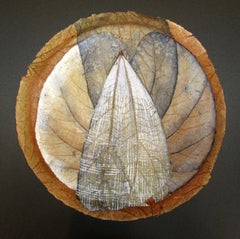
Cabinet of Wonders, Persistence and the Fugitive
Located in Darien, CT
This flat file installation is a kind of Wunderkammer – a Cabinet of Wonder or Curiosity containing a small idiosyncratic collection of select wonders and oddities of the natural wor...
Category

2010s Conceptual Found Objects Sculptures

Materials

Wood, Video, Found Objects

Teddy
Located in New Orleans, LA
TONY DAGRADI is an internationally recognized jazz performer, artist, composer, author, and educator. For over three decades he has made his home in New Orleans, performing on tenor ...
Category

21st Century and Contemporary Contemporary Found Objects Sculptures

Materials

Wood, Paper, Varnish, Found Objects

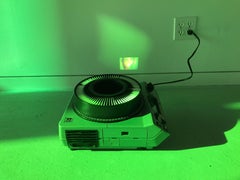
Jo Yarrington, Ghost girls_Slide Carousel, 2018, Photographic Film, Found Object
Located in Darien, CT
Radioluminescence is the phenomenon by which light is produced in a material by bombardment with ionizing radiation and can be used as a low-level light source for night illumination of instruments or signage or other applications where light must be produced for long periods without external energy sources. Radioluminescent paint used to be used for clock hands and instrument dials...
Category

2010s Conceptual Found Objects Sculptures

Materials

Photographic Film, Found Objects

Jo Yarrington, Ghost Girls, 2018, Organic Material, Photographic Film, Plastic
Located in Darien, CT
Radioluminescence is the phenomenon by which light is produced in a material by bombardment with ionizing radiation and can be used as a low-level light source for night illumination of instruments or signage or other applications where light must be produced for long periods without external energy sources. Radioluminescent paint used to be used for clock hands and instrument dials...
Category

2010s Conceptual Found Objects Sculptures

Materials

Pins, Organic Material, Plastic, Photographic Film, Acrylic Polymer, Fou...
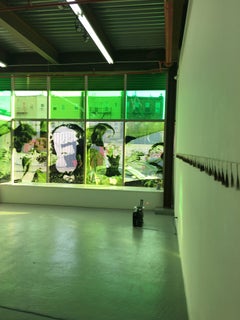
Kathleen Vance, Traveling Landscape, Luce, 2017, Resin, Found Objects, Lights
Located in Darien, CT
Kathleen Vance explores environmental issues such as water conservation and protection through positive stewardship of the land. She looks to convey an appreciation of nature and tra...
Category

2010s Post-Modern Found Objects Sculptures

Materials

Resin, Found Objects, Lights

Patricia Miranda, Florilegium Series, 2016, cochineal dyes, antique books, pearl
Located in Darien, CT
Patricia Miranda's work includes interdisciplinary installation, textile, paper and books. The textiles incorporated in these new pieces are vintage linens from her Italian and Irish grandmothers and sourced from friends and strangers around the country. Each donation is documented and integrated into the work. Textile as a form that wraps the body from cradle to grave. The role of lacemaking in the lives of women both economically and historically is packed with metaphorical potential. The relationship of craft and women’s work (re)appropriated by artists today to environmental and social issues is integral to the artist's research. Her work is process oriented; materials are submerged in natural dyes from oak gall wasp nests, cochineal insects, turmeric, indigo, and clay. She forages for raw materials, cook dyes, grind pigments, ecofeminist actions that consider environmental impacts of objects. The process is left visible as dyestuff is unfiltered in the vat and finished work. Sewn into larger works, Miranda incorporates hair, pearls, bone beads, Milagros, cast plaster. The distinct genetics and environmental and cultural history of each material asserts its voice as collaborator rather than medium. The lace inserts a visceral femininity into the pristine gallery, and exerts a ghostly trace of the history of domestic labor. The combination of earth and lace references human and environmental devastation and the conflation of nature and women’s bodies as justifications for exploitation. Mournful and solastalgic, they are lamentations to the violence against women and the earth. Patricia Miranda is an interdisciplinary artist, curator, educator, and founder of The Crit Lab, graduate-level critique seminars and Residency for artists, and MAPSpace project space. She has been Visiting Artist at Vermont Studio Center, the Heckscher Museum, and University of Utah; and been awarded residencies at I-Park, Weir Farm, Vermont Studio Center, and Julio Valdez Printmaking Studio. She received an Anonymous Was a Woman Covid19 Artist Relief Grant, an artist grant from ArtsWestchester/New York State Council on the Arts, and was part of a year-long NEA grant working with homeless youth. Miranda currently teaches graduate curatorial studies at Western Colorado University, and develops programs for K-12, museums, and institutions such as Franklin Furnace. Her work has been exhibited at ODETTA, NYC; ABC No Rio, NYC; Alexey von...
Category

2010s Feminist Found Objects Sculptures

Materials

Fabric, Thread, Plaster, Dye, Found Objects
Loren Eiferman, Nature Will Heal, 108 Pieces of Wood, 2016, Wood, Found Objects
Located in Darien, CT
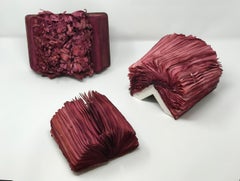
Over many decades Loren Eiferman has created and mastered a unique technique of working with wood—her primary material. First, she begins with a drawing of an idea. Then she takes a daily walk in the woods surrounding her studio and collects tree limbs and long sticks that have fallen to the ground. She never chops down a living tree or uses green wood. Eiferman allows the wood time to cure in the studio to make sure it won’t check or crack. Next, she debarks the branch and looks for shapes found within each piece of wood. Using a Japanese hand saw, she cuts and connect these small shapes together using dowels and wood glue. Then, all the open joints get filled with a home made putty, which is then sanded so she can see the newly formed shapes. This process is until the new sculpture appears like the original line drawing but in space. She wants the work to appear as if it grew in nature, when in fact each sculpture is composed of over 100 small pieces of wood that are seamlessly jointed together. Her work can be called the ultimate recycling: taking the detritus of nature and giving it a new life. We have all at one point or another picked up a stick from the ground—touched the wood, peeled the bark off with our fingernails. Her work taps into that same primal desire of touching nature and being close to it. Trees connect us back to nature, back to this Earth. Her work has a meditative quality to it—a quiet, calming energy. Her influences are many; from looking at nature and plant life on this Earth to researching the heavenly bodies in the images beamed back from the Hubble Telescope. From studying ancient Buddhist mandalas and designs to delving deeper into quantum physics. And from researching mysterious manuscripts to studying the patterns inside our brains. For Invocation, we are exhibiting her newest body of work, inspired by the illustrations found in the Voynich Manuscript. This 250-page book, is believed to have been written in the early 15th century, of a mysterious origin and purpose. Written in an unknown language and currently housed at Yale University’s Beinecke Rare Book Library, the manuscript has eluded all attempts in the intervening centuries to decode or decipher its purpose and meaning. This enigmatic book is divided into 6 different sections (herbal, astronomical, biological, cosmological, pharmaceutical and recipes). Having discovered the images contained in this codex over the Internet, Eiferman felt an immediate, profound and inexplicable connection to this manuscript and its creator. The artist is currently transposing the “herbal” section of manuscript into sculptures. This section has drawings in it of plants and flowers that do not really exist in nature—past or present. These aren’t just pretty images of flowers—they also contain the wacky root systems and seemingly out of proportion leaves, stamens and pistils. Loren Eiferman was born in Brooklyn, NY. She received her BFA from SUNY Purchase. Her work has been exhibited extensively throughout the Tri-State region including gallery and museum exhibitions in the Hudson Valley and Connecticut. Her work is included in numerous corporate and private art collections. In 2014 she was awarded a NYC MTA Arts & Design art commission to produce steel railings...
Category

2010s Abstract Found Objects Sculptures

Materials

Wood, Found Objects

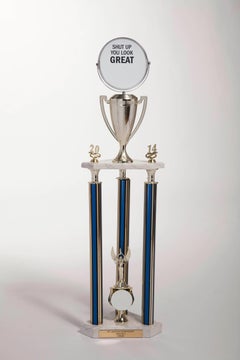
Lisa Levy, Shut Up You Look Great, 2014, Mirror, Plastic, Marble, Found Objects
Located in Darien, CT
Dr. Lisa's Ego Championship Trophies Lisa Levy is a painter, conceptual artist, comedian and (self-proclaimed) psychotherapist. Lisa's visual career started when she was 3 1/2 ...
Category

21st Century and Contemporary Assemblage Found Objects Sculptures

Materials

Marble

Patricia Miranda, Lamentations for Rebecca; 2020, lace, cochineal dye, thread
Located in Darien, CT
Patricia Miranda's work includes interdisciplinary installation, textile, paper and books. The textiles incorporated in these new pieces are vintage linens from her Italian and Irish grandmothers and sourced from friends and strangers around the country. Each donation is documented and integrated into the work. Textile as a form that wraps the body from cradle to grave. The role of lacemaking in the lives of women both economically and historically is packed with metaphorical potential. The relationship of craft and women’s work (re)appropriated by artists today to environmental and social issues is integral to the artist's research. Her work is process oriented; materials are submerged in natural dyes from oak gall wasp nests, cochineal insects, turmeric, indigo, and clay. She forages for raw materials, cook dyes, grind pigments, ecofeminist actions that consider environmental impacts of objects. The process is left visible as dyestuff is unfiltered in the vat and finished work. Sewn into larger works, Miranda incorporates hair, pearls, bone beads, Milagros, cast plaster. The distinct genetics and environmental and cultural history of each material asserts its voice as collaborator rather than medium. The lace inserts a visceral femininity into the pristine gallery, and exerts a ghostly trace of the history of domestic labor. The combination of earth and lace references human and environmental devastation and the conflation of nature and women’s bodies as justifications for exploitation. Mournful and solastalgic, they are lamentations to the violence against women and the earth. Patricia Miranda is an interdisciplinary artist, curator, educator, and founder of The Crit Lab, graduate-level critique seminars and Residency for artists, and MAPSpace project space. She has been Visiting Artist at Vermont Studio Center, the Heckscher Museum, and University of Utah; and been awarded residencies at I-Park, Weir Farm, Vermont Studio Center, and Julio Valdez Printmaking Studio. She received an Anonymous Was a Woman Covid19 Artist Relief Grant, an artist grant from ArtsWestchester/New York State Council on the Arts, and was part of a year-long NEA grant working with homeless youth. Miranda currently teaches graduate curatorial studies at Western Colorado University, and develops programs for K-12, museums, and institutions such as Franklin Furnace. Her work has been exhibited at ODETTA, NYC; ABC No Rio, NYC; Alexey von...
Category

2010s Feminist Found Objects Sculptures

Materials

Ceramic, Fabric, Thread, Dye, Found Objects
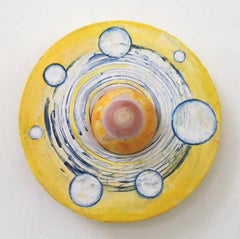
Andra Samelson, Microcosm 2, 2016, Canvas, Wood, Found Objects, Acrylic Paint
Located in Darien, CT
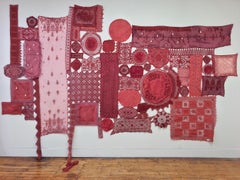
Andra Samelson’s work explores the relationship of microcosm and macrocosm, the celestial and terrestrial. Her imagery is often associated with molecular and galactic systems. Combin...
Category

2010s Abstract Geometric Found Objects Sculptures

Materials

Canvas, Wood, Found Objects, Acrylic

Andra Samelson, Microcosm 3, 2016, Canvas, Found Objects, Acrylic Paint
Located in Darien, CT
Andra Samelson’s work explores the relationship of microcosm and macrocosm, the celestial and terrestrial. Her imagery is often associated with molecular and galactic systems. Combin...
Category

2010s Abstract Geometric Found Objects Sculptures

Materials

Canvas, Found Objects, Acrylic

Liz Sweibel, Untitled (Scrapings #1), 2016, Wood, Paint, Found Objects
Located in Darien, CT
The freestanding sculptures in this portfolio are made from the “sticks”: a pile of found wood that Sweibel has been pulling from to make new works since about 2002. The pile consisted of more than a dozen four- to seven-foot lengths of hardwood, each an uneven inch in depth and width. The sticks were warped, with worn yellow paint on one side and raw wood on the other three. Over the years she has painted the raw sides of the sticks, cut the wood into shorter lengths, and sliced paint off – and kept the residue from these actions. Sweibel has also made sculptures ranging from full-length sticks to tiny stick splinters. She built these sculptures using sliced-off paint. Timeworn materials and objects have an intelligence that the artist looks for and listens to. Shaping and reshaping material to find new form and elicit new insights in the material itself is the territory she is mining. The limitations of the process are its strengths. Her work is concerned with fragility, precariousness, adaptability, and strength. It is a visual response to powerful yet unseen forces - like wind and thoughts - that threaten, propel, ruin, and protect. Liz Sweibel is a multidisciplinary artist working in drawing, sculpture, installation, and digital photography and video. Her spare, personal language of abstraction transforms ordinary materials into statements about connectedness and responsibility: every action has an impact, the effects persist in space and over time, and we are accountable. By drawing attention to simple, ordinary “stuff of life” and referencing both shared and personal history, Sweibel’s work explores and reflects back fundamental experiences in response to our world and relationships. Her intention is to reinvigorate viewers’ awareness of the everyday – in its raw beauty and precariousness – in hopes that they might bring heightened senses of sight and care to their daily lives. Sweibel has participated in solo, two-person, and group exhibits in New York, Massachusetts, Maine, Connecticut, Michigan, and Tennessee since 1998. In 2016, Sweibel’s work was in the group shows Lightly Structured at Sculpture Space NYC, Precarious Constructs at the Venus Knitting Art...
Category

2010s Abstract Expressionist Found Objects Sculptures

Materials

Wood, Paint, Found Objects

Liz Sweibel, Untitled (Scrapings #3), 2016, Wood, Paint, Found Objects
Located in Darien, CT
The freestanding sculptures in this portfolio are made from the “sticks”: a pile of found wood that Sweibel has been pulling from to make new works since about 2002. The pile consist...
Category

2010s Abstract Found Objects Sculptures

Materials

Wood, Paint, Found Objects

Joseph Fucigna, Burning Bush, 2001, Plastic, Found Objects
Located in Darien, CT
Joseph Fucigna is a multi-media artist whose work is rooted in process, play and the innate qualities of the materials used. Through experimentation, play and innovation he creates sculptures, paintings and drawings that are known for their power to transform materials, inventiveness and odd but suggestive subject matter. The ultimate goal is to create an artwork that is a perfect balance between suggestive content, and the formal qualities of the material that allow both to be active participants. Joseph Fucigna received his Masters of Fine Arts degree from the School of Visual Arts in New York City. He also attended the Triangle Workshop in Pine Plains, NY and worked with the renowned sculptor Sir Anthony Caro and critic Clement Greenberg. Fucigna is a full-time Professor of Art at Norwalk Community College and is the Chair of the Studio Arts Program. Fucigna has also taught in the Art Department at the State University of New York, Stony Brook. Presently, he resides and works in Weston, CT. Fucigna has exhibited nationally including shows at the Fitchburg Art Museum in Massachusetts, Real Art Ways in Connecticut, the United Nations, Grounds for Sculpture in New Jersey, the Lyman Allyn Art Museum in Connecticut, the New York State Museum in Albany, NY and the Burchfield Art Center in Buffalo NY. He has had one-person exhibitions at the Fred Giampietro Gallery, Sculpture Barn, Norwalk Community College Art Gallery, Artist Space New Haven and the Bannister...
Category

Early 2000s Arte Povera Found Objects Sculptures

Materials

Plastic, Found Objects

Jo Yarrington, Mute-Ability_Composition 6, 2019_acrylic, steel, player piano rol
Located in Darien, CT
Jo Yarrington’s photographs, prints, works on paper, glass sculptures and architecturally-based installations have been shown in exhibitions at the Aldrich Contemporary Art Museum, Yale University, Cornell University, the Museum of Glass, the DeCordova Museum and Sculpture Park, Artists Space, St. John the Divine Cathedral, Grounds for Sculpture, the Museum of American Glass and ODETTA, among others. International exhibitions have included Guangzhou Academy of Fine Arts Museum, Glasgow School of Art, Glasgow Cathedral, Glasgow University, Galeria Sala Uno and Centro de las Artes de Guanajuato. She represented the United States at the Sharjah Biennial, United Arab Emirates and participated in the Berlin Biennial. in 2010 she received the Bronze Prize, the Museum of Contemporary Art, Skopje, Macedonia. Yarrington is a recipient of artist grants and Fellowships from the Pollock Krasner Foundation, the New York Foundation for the Arts, the Pennsylvania Council on the Arts and the Connecticut Commission on Culture and Tourism. She has received Residency Fellowships from the MacDowell Colony, the Museum of Glass, the Museum of American Glass, the Bridge Virtual Residency/ SciArt Center, the Lucile Walton Fellow/Mountain Lake Biological Station, the Virginia Center for Creative Arts, the Anderson Center and the Ucross Foundation, among others. International grants and fellowships have included the Banff Center for Arts and Creativity/Canada, SIMS Residency/ Iceland, Cill Rialaig Artists Residency/Ireland, the Burren College of Art Residency/Ireland and the American Scandinavian Foundation. She is a Professor of Visual and Performing Arts at Fairfield University and lives and works in New York City. STATEMENT In site-specific exhibitions, public art commissions, collaborative and individual projects Jo Yarrington has used varied combinations of glass, waxed surfaces, found artifacts and experimental analog photography to investigate the way we perceive – searching for, experimenting with and developing throughout a sensory-based vernacular. Her mostly translucent materials function as physical framework and symbolic membrane. Light, both natural and ambient, provides a kinetic or time-based element to her work. Scale and the integration of architecture are also pivotal components. In the 6-part installation for the two-person exhibition Illuminated, Yarrington continues her interest in the connections between vision, sound and language. In Mute-ability: Compositions 1 – 6, her title for this light-based comprehensive work, she combines the words mute and malleability. The work focuses on found piano rolls, a music storage medium, originally conceived as coded notations or ‘note control data’ for music produced in pneumatic player pianos...
Category

2010s Conceptual Found Objects Sculptures

Materials

Steel

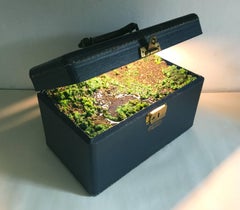
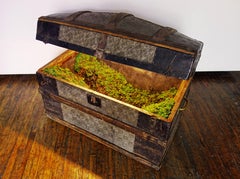
Traveling Landscape (Roundtop Steamer)
Located in New York, NY
This sculptural installation incorporates running water and and interior light which activates the scene of a streambed along a grassy knoll. Kathleen Vance is an environmental artist who creates projects that connect people to local aspects of nature that are overlooked or under appreciated. With the series “Traveling Landscapes” Vance creates miniature landscapes with running streams and rivers inside vintage suitcases and trunks...
Category

2010s Conceptual Found Objects Sculptures

Materials

Mixed Media, Resin, Found Objects

Jo Yarrington, Ghost Girls_Brushes, 2017, Organic Material, Found Objects, Pins
Located in Darien, CT
Radioluminescence is the phenomenon by which light is produced in a material by bombardment with ionizing radiation and can be used as a low-level light source for night illumination of instruments or signage or other applications where light must be produced for long periods without external energy sources. Radioluminescent paint used to be used for clock hands and instrument dials...
Category

2010s Conceptual Found Objects Sculptures

Materials

Organic Material, Found Objects, Pins
Jo Yarrington, Orchestrations, 2016, Found Objects, Plexiglass
Located in Darien, CT
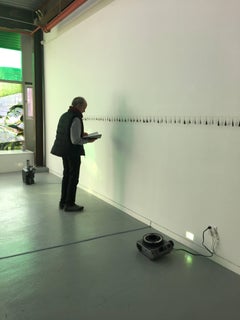
The installation, Orchestrations, explores the vernacular in vintage piano roles. The physical perforations in the piano roll paper, coded notations for sound, act as a vehicle for l...
Category

2010s Post-Minimalist Found Objects Sculptures

Materials

Plexiglass, Found Objects

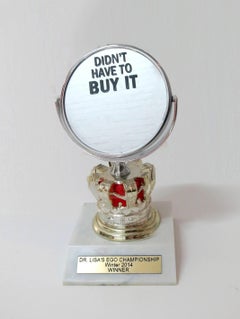
Lisa Levy, Didn t Have to Buy It, Mirror, Plastic, Marble, Found Objects
Located in Darien, CT
Dr. Lisa's Ego Championship Trophies Lisa Levy is a painter, conceptual artist, comedian and (self-proclaimed) psychotherapist. Lisa's visual career started when she was 3 1/2 ...
Category

21st Century and Contemporary Assemblage Found Objects Sculptures

Materials

Marble

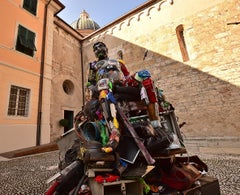
Monument to mankind
Located in Atlanta, GA
Dario Tironi is the artist that evades the classic canons of Frilli Gallery's sculptures. But we could not remain indifferent to his fantastic, incredi...
Category

21st Century and Contemporary Modern Found Objects Sculptures

Materials

Found Objects

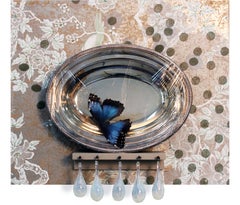
"Parlour", wallpaper, glass, silver platter, butterfly, nails, mounted on board
Located in Toronto, Ontario
“Parlour“ is a wall relief panel by artist Heather Nicol, and measures 17x19x4“. Part of a body of work known as Brief Lives, this particular piece is comprised of wallpaper, fabric, wood, nails, glass, silver platter, plastic wrap, butterfly specimen, mounted on board. It fixes to the wall with a custom-fit wooden cleat. Reflecting on domestic materials and their relationships to display and social identity, Parlour celebrates and questions feminist reclamation, nostalgic tenderness and the histories embedded in the objects, while carrying on their aesthetic traditions through transformation into works of art. Heather Nicol is a multidisciplinary artist whose practice includes immersive sound installation, small-scale discrete object making, and independent curating. Her large site-specific interventions explore the architectural, sonic, historic and operational conditions across a wide range of locations. These include concourse atriums, rail terminus, lobbies, a theatre, a public school building, a theme...
Category

21st Century and Contemporary Assemblage Found Objects Sculptures

Materials

Silver

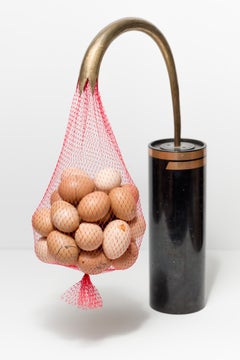
"Expecting to Fly", Found Object assemblage, reconstructed egg
Located in Philadelphia, PA
This piece titled "Expecting to Fly" is an original piece by Kate VanVliet and is made from 30 repaired chicken eggs, brass, rubber, steel, plastic, and mica. This piece measures app...
Category

21st Century and Contemporary Contemporary Found Objects Sculptures

Materials

Brass, Steel

Found Objects sculptures for sale on 1stDibs.

Find a wide variety of authentic Found Objects sculptures available on 1stDibs. While artists have worked in this medium across a range of time periods, art made with this material during the 21st Century is especially popular. If you’re looking to add sculptures created with this material to introduce a provocative pop of color and texture to an otherwise neutral space in your home, the works available on 1stDibs include elements of orange, blue, pink, purple and other colors. There are many well-known artists whose body of work includes ceramic sculptures. Popular artists on 1stDibs associated with pieces like this include Katie VanVliet, Kat Flyn, Kelly Kozma, and Ulla-Stina Wikander. Frequently made by artists working in the Contemporary, Abstract, all of these pieces for sale are unique and many will draw the attention of guests in your home. Not every interior allows for large Found Objects sculptures, so small editions measuring 0.12 inches across are also available

Read More

At Hosfelt Gallery, Bertoia Masterworks Complement Dynamic Contemporary Art

For nearly three decades, San Francisco–based Todd Hosfelt has curated against the grain — with a show on the legendary modernist Harry Bertoia the latest case in point.

This Weathered-Steel Sculpture Distills a Form of Protest into a Minimalist Monument

Part of Alejandro Vega Beuvrin’s “Barricada” series, the work is a subversive tribute to the street smarts of citizen activists.

How the Chunky, Funky Ceramics of 5 Mid-Century American Artists Balanced Out Slick Modernism

Get to know the innovators behind the pottery countercultural revolution.

Art Brings the Drama in These Intriguing 1stDibs 50 Spaces

The world’s top designers explain how they display art to elicit the natural (and supernatural) energy of home interiors.

Chryssa’s 1962 Neon Sculpture Was Way ahead of the Art-World Curve

By working with lettering, neon and Pop imagery, Chryssa pioneered several postmodern themes at a time when most male artists detested commercial mediums.

How to Spot a Fake KAWS Figure

KAWS art toys have developed an avid audience in recent decades, and as in any robust collectible market, counterfeiters have followed the mania. Of course, you don’t have to worry about that on 1stDibs, where all our sellers are highly vetted.

A Giant Wedding Cake Has Us Looking at Portuguese Tiles in a New Light

At Waddesdon Manor, artist Joana Vasconcelos has installed a three-tiered patisserie inspired by the narrative tile work of her homeland. We take a look at the cake sculpture and how Portuguese tiles have been used in architecture from the 17th century to today.

These Soft Sculptures Are Childhood Imaginary Friends Come to Life

Miami artist and designer Gabriela Noelle’s fantastical creations appeal to the Peter Pan in all of us.