18th Century and Earlier Sculptures

to
22
105
43
38
18
21
Overall Width
to
Overall Height
to
665
3,943
17,369
83
45
126
140
68
173
272
384
560
530
79
11
5
2
147
91
87
84
56
48
38
32
29
24
17
10
10
9
8
7
6
6
6
6
81
75
49
40
39
11
2
2
1
1
147
75
Period: 18th Century and Earlier
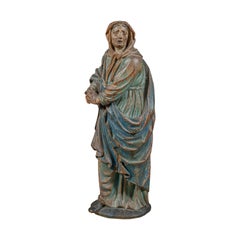
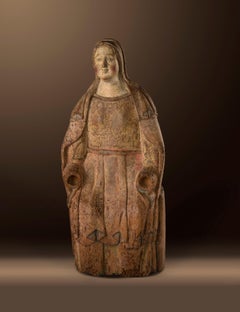
Baroque Italian master - 17/18th century figure sculpture - The Virgin
Located in Varmo, IT
Carved and painted wooden sculpture - Madonna in Prayer - Italy, 17th-18th century. 25 x 20 x 65 cm. Made entirely of carved, lacquered, and painted wood. Some signs of wear and pa...
Category

Baroque 18th Century and Earlier Sculptures

Materials

Wood, Paint

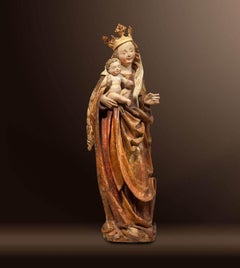
Virgin and Child
Located in Wien, Wien
OUTSTANDING MADONNA Bavaria Around 1515/20 Lime wood carved Original, polychrome version Height 60 cm This masterfully carved, full-round Madonna was created around 1515-20 in...
Category

Medieval 18th Century and Earlier Sculptures

Materials

Wood

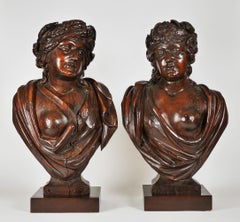
18th Century Italian Carved Neoclassical Semi Nude Female Busts
Located in Beachwood, OH
18th Century Italian Carved Neoclassical Semi Nude Female Busts Wood affixed to wood plinths "Leone Della Torra / Italy Country of Origin" labels on b...
Category

Italian School 18th Century and Earlier Sculptures

Materials

Wood

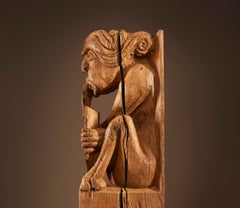
Apotropäische Teufelsfigur
Located in Wien, Wien
APOTROPAIC DEVIL FIGURE Romansh South Tyrol or Grisons Around 1120/50 Carved pine wood Original version Height 151 cm This singular figure is a demonic, devil-like figure carved fro...
Category

18th Century and Earlier Sculptures

Materials

Wood

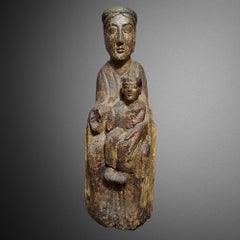
Vierge romane en majesté. Bourgogne 12ème siecle.
Located in PARIS, FR
Grande vierge en majesté de l'époque romane en bois polychrome. Cette Vierge à l'enfant inédite s'inscrit dans le corpus des Vierges romanes de Bourgogne. Marie est assise sur un trô...
Category

Medieval 18th Century and Earlier Sculptures

Materials

Wood

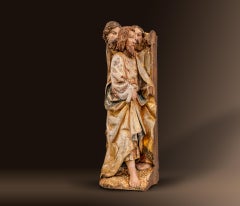
Apostel group
Located in Wien, Wien
APOSTLE GROUP ORIGINAL VERSION Flemish/Brabant Around 1500 Oak wood carved Height 37.5 cm, width 12 cm, Depth 12.5 cm
Category

18th Century and Earlier Sculptures

Materials

Wood

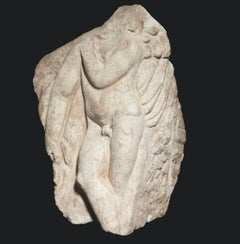
Ancient Roman Marble Altar Fragment with Cupid, Roman Empire, 2nd/3rd Century AD
Located in Milan, IT
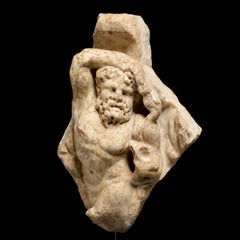
Roman marble altar fragment with cupid Provenance: Nicolas Koutoulakis (1910-1996), Paris and Geneva
Category

18th Century and Earlier Sculptures

Materials

Marble

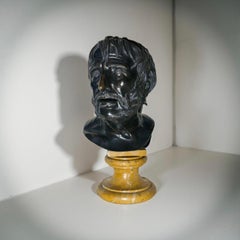
Bronze bust of Seneca or Pseudo-Seneca Italy Naples late 18th-early 19th cent
Located in Pistoia, IT
Bronze bust with brown patina depicting the pseudo-Seneca, Italy, early 19th century. The Pseudo-Seneca is a Roman bronze bust from the late 1st century B.C.. discovered in 1754 in ...
Category

Italian School 18th Century and Earlier Sculptures

Materials

Marble, Bronze

Sancai-Glazed Horse with Cut Fur Blanket
Located in Palm Desert, CA
A Chinese, Tang Dynasty, Sancai-glazed, three colors of brown, green and creamy, sculpture of a horse with a cut fur blanket. This Chinese, Tang Dynasty (618-907 AD), glazed earthenw...
Category

18th Century and Earlier Sculptures

Materials

Earthenware, Glaze

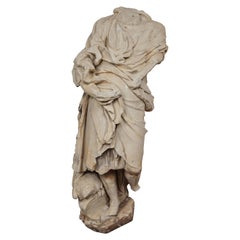
Renaissance Era Marble Figure Fragment
Located in Los Angeles, CA
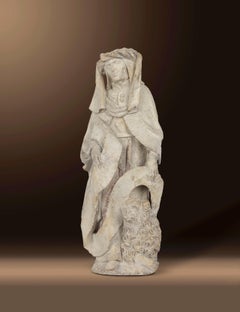
An extraordinary 17th century, hand-carved, solid Carrara marble, life sized figure fragment on raised base of the same. The subject is swaddled in a luxurious, gathered robe and tun...
Category

Baroque 18th Century and Earlier Sculptures

Materials

Marble

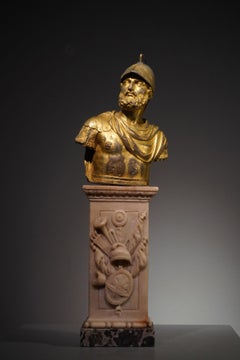
ANTIQUE FRENCH GILT BRONZE FIGURE OF MARS
Located in Milan, IT
BRONZE FIGURE OF MARS, 18th Century gilt bronze on marble base 35.6 x 8.9 x 7.6 cm 14 x 3 1/2 x 3 in
Category

18th Century and Earlier Sculptures

Materials

Marble, Bronze

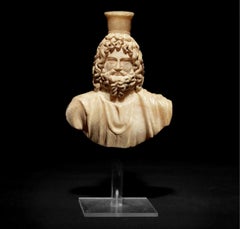
ANCIENT ROMAN ALABASTER BUST OF THE GOD SERAPIS, ROME CIRCA 1ST-2ND CENTURY A.D.
Located in Milan, IT
Wearing a chiton with a himation draped at the left shoulder, and a modius on the crown of his head, the god's characteristic luxuriant wavy hair falling in ri...
Category

18th Century and Earlier Sculptures

Materials

Alabaster

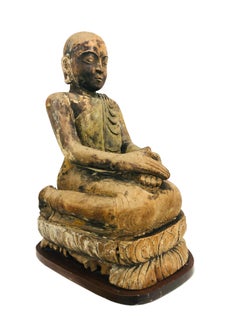
Buddhist Monk Antique Asian Wood Sculpture
Located in Lake Worth Beach, FL
Buddhist Monk Antique Asian Wood Carving 18Th Century or earlier possibly Japanese wood sculpture of a Buddhist Monk resting on lotus blossom on...
Category

Edo 18th Century and Earlier Sculptures

Materials

Wood, Paint

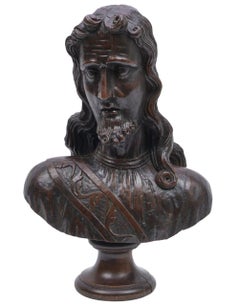
A Monumental 16th Century Renaissance Carved Oak Bust of Jesus Christ
Located in Queens, NY
Magnificent and Monumental 16th Century Renaissance Carved Oak Bust of Christ, Flemish Netherlandish, C. 1550 A powerful and deeply expressive Renaissance carved oak bust of Jesus C...
Category

18th Century and Earlier Sculptures

Materials

Oak

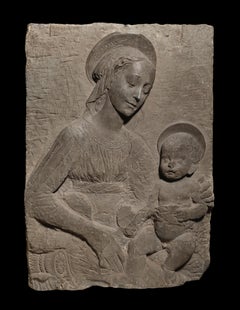
Late 15th Century By Florentine School Madonna with Child Bas-relief
Located in Milano, Lombardia
Late 15th Century Florentine School Madonna with Child Bas-relief Pietra serena (a blue-gray sandstone) 85.5 x 60.5 cm Provenance: - via Stefano Bardini purchased in 1896 by Prince ...
Category

Old Masters 18th Century and Earlier Sculptures

Materials

Sandstone

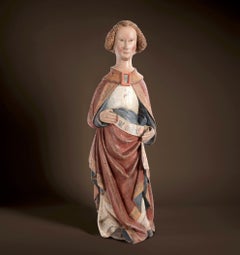
Angel of the Annunciation
Located in Wien, Wien
Angel of the Annunciation Prague workshop from the circle of Master Theoderich (mentioned from 1359 to 1368) Around 1380/90 Carved & polychrome painted limewood Height 88 cm An ang...
Category

Gothic 18th Century and Earlier Sculptures

Materials

Wood

Baroque Roman sculptor - 17th century bronze sculpture - Mars Warrior
Located in Varmo, IT
Gilded bronze sculpture - Mars, god of War. Rome, 17th century. 9 x 9 x h 31 cm. Entirely in cast, chiseled and gilded bronze, resting on an ebonized wooden pedestal decorated with...
Category

Baroque 18th Century and Earlier Sculptures

Materials

Bronze

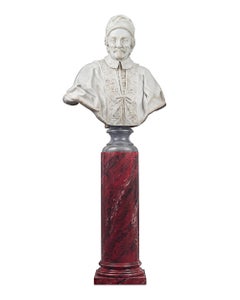
Bust of Pope Innocent XI Odescalchi by Domenico Guidi
Located in New Orleans, LA
This monumental bust is a museum-quality example of Roman Baroque sculpture. Crafted by the legendary Domenico Guidi and carved from Carrara marble, the impressive portrait captures the visage of Pope Innocent XI, Benedetto Odescalchi (1611-1689). It presents a larger-than-life example of Guidi’s remarkable skill as a sculptor, which ultimately made his workshop one of the most important in Rome during his age. Today, his works are rarely found on the market, particularly his extraordinary works in marble. Pope Innocent XI was born Benedetto Odescalchi into an Italian noble family of prominent bankers. Spending his early years in banking, he eventually turned to the law, earning his doctorate in 1639. His background would serve him well in his service to the papacy, and he became known as a frugal and devout member of the Church. In 1676, he was unanimously elected Pop after the death of Clement X. During his nearly 13-year reign, he instilled his own personal ideals of austerity and frugality onto the Church, with a deep commitment to reform and piety. He is captured here by Guidi in his traditional Pope’s mozzetta and camauro cap. A wide stole is draped over his shoulders, ornamented by acanthus leaves and the coat of arms of the Odescalchi family. It displays Guidi’s mastery over the chiaroscuro effect, particularly in the high level of contrast in his cheeks and his eyes, which Guidi achieved through various methods of high polish. A very similar portrait sculpture of Pope Innocent XI by Guidi can be found in the collection of the Royal Castle in Warsaw. The Warsaw bust belongs to a series of portraits of popes which the Odescalchi family commissioned from Domenico Guidi in the 1690s. Compared to that example, the present bust is far more dramatic, with deeper cut lines and a more precise expression. It is likely that the present piece was seen by the Odescalchi family, who ordered a similar one to be made. The piece was almost certainly intended to be displayed in a niche, given its dramatic cutting and its roughly carved back. Others of Guidi’s busts can be found in important collections throughout Italy, England and the United States, though many of these are lesser bronze repetitions. A bronze bust of the Pope Alexander VIII by Guidi is currently in the collection of the Victoria & Albert Museum (London), while a terracotta version of the same is in the Los Angeles County Museum. A bronze of Pope Alexander VIII can be found in the Princely Collection of Lichtenstein, and his impressive marble papal bust of Clement IX graces the pope’s tomb in Santa Maria Maggiore. The present bust of Pope...
Category

Baroque 18th Century and Earlier Sculptures

Materials

Marble

Wooden Sculptures Roman Soldiers Rome 18th Century Italy Art Gold
Located in Riva del Garda, IT
Wooden sculptures depicting a pair of full-length Roman soldiers Rome, 18th century Carved and gilded wood (walnut?) Dimensions: Maximum height (at lance) 62 cm./ Maximum width: 28 ...
Category

Old Masters 18th Century and Earlier Sculptures

Materials

Gold

ANCIENT ROMAN MARBLE RELIEF FRAGMENT
Located in Milan, IT
ANCIENT ROMAN MARBLE RELIEF FRAGMENT Rome, 1st Century b.C. marble 23 x 15 x 5 cm without base 9 x 6 x 2 in
Category

18th Century and Earlier Sculptures

Materials

Marble

A late 17th Italian carved limewood figure of Mermaid, circle of Filippo Parodi
Located in PARIS, FR
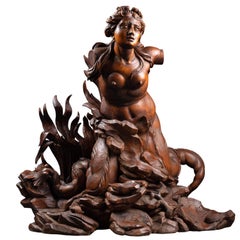
A late 17th c. Italian carved figure of Mermaid, Circle of Filippo Parodi (Genoa, 1630 – July 22, 1702) Dimensions: h. 29.13 in, w. 30.31 in, p. 18.9 in (at the base) Magnificent Italian Baroque sculpture depicting a mermaid seated on the rock. All the virtuosity of the sculptor unfolds in this carved group. The fantastic creature is featured seated, the upper part of the body darting forward, the head looking upwards. Sophisticated hairstyle with rows of pearls intertwined in her hair, her loose locks fly in the wind and bring movement to the whole sculpture. The wide-open eyes with hollowed-out pupils make it possible to follow the mermaid's gaze, towards the sky. The half-open mouth further magnifies this bewitching and seductive attitude. Its long double tail ending in fins wraps on either side of a rocky mound strewn with objects evoking the underwater world: seashells and shells, branches of coral. The ornamental richness combined with the great care taken in its execution make it a work in which the splendor of Italian Baroque art unfolds in such characteristic scenic movement. The composition betrays a strong influence from Filippo Parodi, the leader of Genoese Baroque sculpture, and points to an artist from his circle. Our sculpture was probably part of a decorative monumental palace. The iconographic theme evoking the marine world finds its application in the numerous fountains and artificial grottos, designed in Italian palaces at the turn of the 17th and 18th centuries. Giacomo Filippo Parodi (Genoa 1630 – July 22, 1702) was an Italian Baroque sculptor of the Genoese school, who introduced Bernini's aesthetic to Genoa. In his youth fathers a first apprenticeship with a carpenter, he went to Rome where he became a pupil of Bernini. He had the opportunity to admire in person the works and style of the French sculptor Pierre Puget...
Category

Baroque 18th Century and Earlier Sculptures

Materials

Wood

Decoration - Carved wooden tribal mask
Located in PARIS, FR
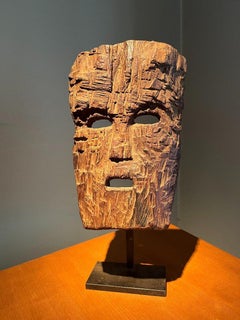
Carved wooden tribal mask 7 x 20 x 10 cm height with base: 38 cm
Category

18th Century and Earlier Sculptures

Materials

Wood

First Journey
Located in New York, NY
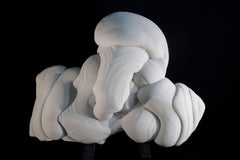
Provenance: Sables de Fontainbleau, Seine-et-Marne, France “Gogottes” are natural creations formed out of sands deposited in Northern France during the Oligocene Period, approximately 30 million years ago. Much later, in a process that has only recently become understood, groundwater rich in silica flowed through the sands...
Category

Naturalistic 18th Century and Earlier Sculptures

Materials

Sandstone

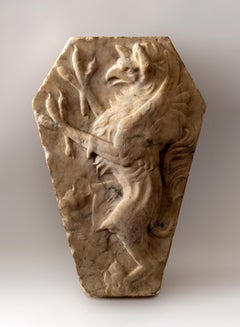
ITALIAN RENAISSANCE MARBLE RELIEF WITH GRIFFIN
Located in Milan, IT
ITALIAN RENAISSANCE MARBLE RELIEF WITH GRIFFIN Central Italy, 16th Century marble 42 x 28.5 x 5.5 cm 16 1/2 x 11 1/4 x 2 1/4 in
Category

18th Century and Earlier Sculptures

Materials

Marble

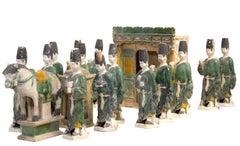
Procession, China, Ming Dynasty
Located in Palm Desert, CA
A set of figurative sculptures, ceramic in greens and browns by an unknown Chinese artist. The piece is from the Ming Dynasty and is unsigned.
Category

Ming 18th Century and Earlier Sculptures

Materials

Ceramic

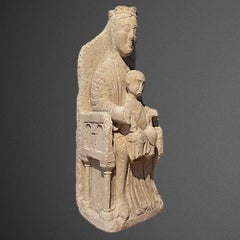
Vierge en majesté assise romane. Sedes Sapientiae.
Located in PARIS, FR
Rare Vierge romane en majesté en pierre calcaire sculptée en très haut-relief. La Vierge tient l’Enfant entre ses deux genoux dans une parfaite frontalité, une caractéristique des pr...
Category

Medieval 18th Century and Earlier Sculptures

Materials

Limestone

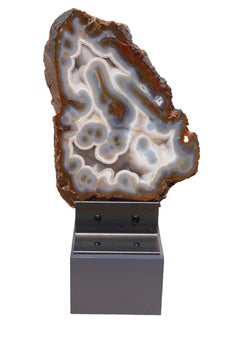
Large Geode with stand
Located in Long Island City, NY
This large geode is an intriguing sculpture with immense depth and contrasting textures. Size: 31 x 25 x 5 inches Size with base: 41 x 25 x 5 inches
Category

Naturalistic 18th Century and Earlier Sculptures

Materials

Precious Stone

Hl. Hieronymus
Located in Wien, Wien
St. Jerome 347 Stridon, Croatia - 420 Bethlehem Around 1500/20 Limestone Remains of the original polychromy Height 45 cm The man with the holy name! 347 Stridon, Croation – 420 Be...
Category

18th Century and Earlier Sculptures

Materials

Limestone

Coppia di Cigni Luigi XVI Fregi in Legno Dorato Italia XVIII secolo
Located in Pistoia, IT
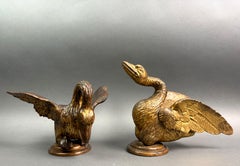
Coppia di Fregi a forma di cigno in legno scolpito e dorato a mecca. Italia, seconda metà del XVIII secolo. Nel XVIII secolo, il motivo del cigno nel XVII e XVIII secolo era stretta...
Category

Italian School 18th Century and Earlier Sculptures

Materials

Wood

Catalan School of the 13th century. Wooden Bishop
Located in PARIS, FR
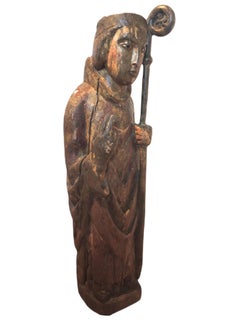
Catalan School of the 13th century. Bishop statue in polychrome wood. Large polychrome wooden statue representing a holy bishop carrying a crosier and ma...
Category

Medieval 18th Century and Earlier Sculptures

Materials

Wood

Roman 18th century terracotta model for the sculpture of San Camillo de Lellis
Located in London, GB
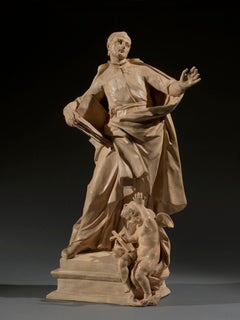
This remarkably fluid terracotta bozetto was made in preparation for Pietro Pacilli’s most important public commission, a large-scale marble statue of San Camillo de Lellis for the nave of St Peter’s Basilica in Rome. Expressively modelled, this terracotta sculpture is a rare and significant work made by a major Roman sculptor at a transformative moment of European sculpture. Pacilli began his working life on the great Baroque decorative projects initiated in the seventeenth century, but he found success as a restorer of ancient sculpture working to finish antiquities for a tourist market, becoming an important figure in the emergence of an archaeologically minded Neoclassicism. Pacilli trained Vincenzo Pacetti and provided important decorative work for the Museo Pio-Clementino, at the same time he is recorded restoring some of the most celebrated antiquities excavated and exported during the period. Pacilli was born into a family of Roman craftsmen, his father Carlo was a wood carver, and Pacilli is recorded working with him on the Corsini Chapel in San Giovanni Laternao as early as 1735. In 1738 his terracotta model of Joseph and Potiphar’s Wife won the first prize in the second class of the sculpture concorso at the Accademia di San Luca, this is particularly notable as Bartolomeo Cavaceppi came third. He worked as a carver and stuccoist completing works for the churches of San Marco and SS. Trinita dei Domeniciani Spagnoli. Pacilli operated as a sculptor and restorer of antiquities from his studio at the top of the Spanish Steps, close to Santa Trinita dei Monti, where he is listed as a potential vendor to the Museo Pio-Clementino in 1770. In 1763 Pacilli completed a silver figure of San Venanzio for the treasury of San Venanzio. He is recorded as Pacetti’s first master and it was evidently through Pacilli that he began to acquire his facility as a restorer of ancient sculpture. Pacilli, at his studio ‘poco prima dell’Arco della Regina alla Trinita dei Monti,’ exercised, what the nineteenth-century scholar, Adolf Michaelis called ‘rejuvenating arts’ on several important pieces of classical sculpture, including in 1760 the group of a Satyr with a Flute for the natural brother of George III, General Wallmoden, Hanovarian minister at Vienna. In 1765, Dallaway and Michaelis record that Pacilli was responsible for the restorations, including the addition of a new head, to the Barberini Venus which he had acquired from Gavin Hamilton. The Venus was then sold to Thomas Jenkins, who in turn passed it on to William Weddell at Newby Hall. In 1767 Pacilli exported a series of ancient busts ‘al naturale’ including portraits of Antinous, Julius Ceaser and Marus Aurelius, also a statue of a Muse and a Venus. As early as 1756 Pacilli seems to have been operating as an antiquarian, helping to disperse the collection of the Villa Borrioni. Pacilli supplied sculpture to notable British collectors, including Charles Townley, who on his first trip to Italy purchased the Palazzo Giustiniani statue of Hecate from Pacilli. Pacilli was involved with the Museo Pio Clementino from its conception, supplying busts of Julius Ceaser and a Roman Woman as well as completing stucco putti surmounting the arms of Pope Bendedict XIV to signal the entrance to the new Museo Critiano. In 1750 Il Diario Ordinario del Chracas announced that Pacilli had begun work on a sculpture of San Camillo de Lellis for St Peter’s. Camillo de Lellis founded his congregation, the Camillians, with their distinctive red felt crosses stitched on black habits in 1591. Having served as a soldier in the Venetian army, Camillo de Lellis became a novitiate of the Capuchin friars, he moved to Rome and established a religious community for the purpose of caring for the sick. In 1586 Pope Sixtus V formerly recognised the Camillians and assigned them to the Church of Santa Maria Maddalena in Rome. Camillo de Lellis died in 1614 and was entombed at Santa Maria Maddalena, he was canonised by Benedict XIV on June 26, 1746. It was an occasion that prompted the Camillians to make a number of significant artistic commissions, including two canvases by Pierre Subleyras showing episodes from San Camillo’s life which they presented to Benedict XIV. In 1750 Pacilli was commissioned to fill one of the large niches on the north wall of the nave with a sculpture of San Camillo. The present terracotta bozetto presumably had two important functions, to enable Pacilli to work out his ideas for the finished sculpture and at the same time to show his design to the various commissioning bodies. In this case it would have been Cardinal Alessandro Albani and Monsignor Giovan Francesco Olivieri, the ‘economo’ or treasurer of the fabric of St Peter’s. Previously unrecorded, this terracotta relates to a smaller, less finished model which has recently been identified as being Pacilli’s first idea for his statue of San Camillo. Preserved in Palazzo Venezia, in Rome, the terracotta shows San Camillo with his left hand clutching his vestments to his breast; the pose and action more deliberate and contained than the finished sculpture. In producing the present terracotta Pacilli has expanded and energised the figure. San Camillo is shown with his left hand extended, his head turned to the right, apparently in an attempt to look east down the nave of St Peter’s. The model shows Pacilli experimenting with San Camillo’s costume; prominently on his breast is the red cross of his order, whilst a sense of animation is injected into the figure through the billowing cloak which is pulled across the saint’s projecting right leg. The power of the restrained, axial contrapposto of bent right leg and outstretched left arm, is diminished in the final sculpture where a baroque fussiness is introduced to the drapery. What Pacilli’s terracotta demonstrates, is that he conceived the figure of San Camillo very much in line with the immediate tradition of depicting single figures in St Peter’s; the rhetorical gesture of dynamic saint, arm outstretched, book in hand, head pointed upwards was perhaps borrowed from Camillo Rusconi’s 1733 sculpture of St. Ignatius...
Category

Baroque 18th Century and Earlier Sculptures

Materials

Terracotta

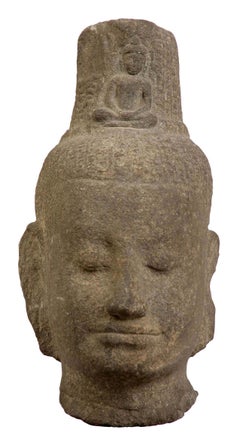
Head of Avalokiteshvara, KHMER, Cambodia, Bayon Style
Located in Palm Desert, CA
A gray sandstone head of Avalokiteshvara, Khmer, Cambodia, Bayon Style from the 13th century. The artwork is unsigned. Provenance: Charles Craig, Privat...
Category

18th Century and Earlier Sculptures

Materials

Stone

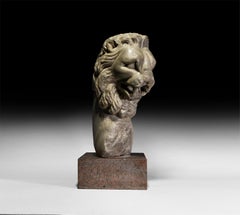
ANCIENT MONUMENTAL MARBLE LION FOUNTAIN HEAD ROMAN EMPIRE 1ST/2ND CENTURY AD
Located in Milan, IT
Large roman carved marble fountain head representing a lion Rome, I-II Century AC Bonham's London, 22 September 1998, lot 485; formerly in the pr...
Category

18th Century and Earlier Sculptures

Materials

Marble

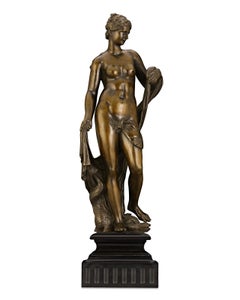
Bronze of Amphitrite after Michel Anguier
Located in New Orleans, LA
After Michel Anguier French 1612-1686 Amphitrite Bronze This remarkable bronze masterpiece was cast after a High Baroque masterwork by French sculptor Michel Anguier. After traini...
Category

Baroque 18th Century and Earlier Sculptures

Materials

Bronze

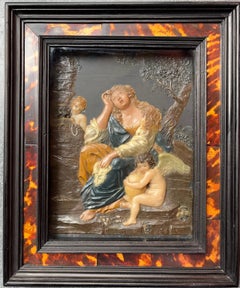
Baroque wax religious figurative bas-relief from the 18th century
Located in Florence, IT
Polychrome wax relief on chalkboard, 20 x 15 cm; with ebony and tortoiseshell frame, 28 x 23 cm The scene depicts Mary Magdalene in the center, seated on a rock with a handkerchief i...
Category

Baroque 18th Century and Earlier Sculptures

Materials

Slate

Sedes Sapientiae
Located in Wien, Wien
Sedes Sapientiae Pustertal um 1220/30 Weichholz/Lindenholz(?)geschnitzt Reste von originaler Polychromie Höhe 57 cm
Category

18th Century and Earlier Sculptures

Materials

Wood

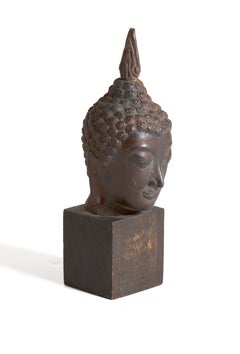
Burma, Thai Bronze Head of Buddha (original)
Located in Milwaukee, WI
Thai Bronze Head of Buddha (Original) 17th c.
Category

18th Century and Earlier Sculptures

Materials

Bronze

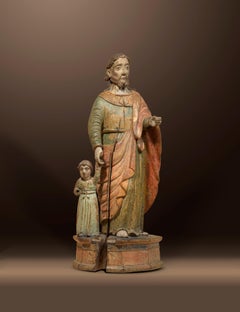
JOSEPH WITH THE CHILD
Located in Wien, Wien
Upper Italy 2nd half 12th century Maple Original version Height 67 cm
Category

18th Century and Earlier Sculptures

Materials

Wood

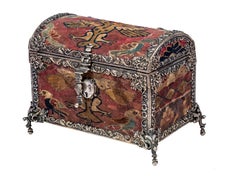
Silver and Transitional Andean Textile Casket
Located in New York, NY
Silver was the material of choice for both ecclesiastical and domestic vessels in the New World, not only for its status as a precious metal, but also because of its abundance and du...
Category

18th Century and Earlier Sculptures

Materials

Silver

Scultura Barocca di Angelo in Terracotta Policroma Italia XVIII secolo
Located in Pistoia, IT
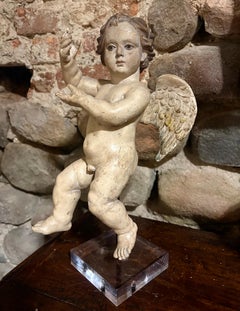
Scultura in terracotta policroma raffigurante un angelo alato, Italia, XVIII secolo. L'angelo è plasmato con grande maestria, dalle forme rotonde tipiche del Barocco italiano. Gli ...
Category

Baroque 18th Century and Earlier Sculptures

Materials

Terracotta

Pair Sculptures Winged Angels Wood Tuscany 17/18th Century Old master Gold Art
Located in Riva del Garda, IT
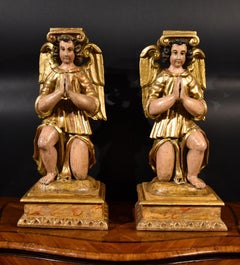
Pair of sculptures depicting two winged angels in carved wood Tuscany, late 17th century Carved, gilded and polychrome wood Dimensions: Height 64 cm - ...
Category

Old Masters 18th Century and Earlier Sculptures

Materials

Wood

St. Joseph with Child Terracotta Bolognese School 18th Century Gabriello Pio
Located in Milano, IT
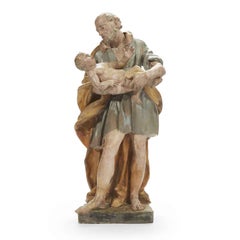
St. Joseph with Child in Terracotta beautiful example of Bolognese plastic from the 1700s, circle of Angelo Gabriello Piò (Bologna 1690 - 1770). Modeled as a full-length figure, th...
Category

Baroque 18th Century and Earlier Sculptures

Materials

Terracotta

Large romanesque sculpture depicting Saint Lucy. Northern Spain.
Located in PARIS, FR
Large romanesque statue of Saint Lucy of Syracuse is dated from the 12th century. The saint is represented veiled and diademed, she wears a long dress, with an important tie. Stone s...
Category

Medieval 18th Century and Earlier Sculptures

Materials

Sandstone

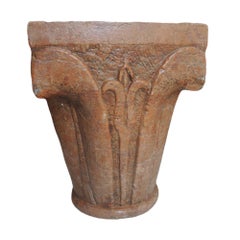
Large Romanesque Cistercian marble capital. Northern Italy.
Located in PARIS, FR
Large romanesque capital with water leaf in red Verona marble. This type of capital is typical of 12th century Cistercian abbeys and represents a tr...
Category

Medieval 18th Century and Earlier Sculptures

Materials

Marble

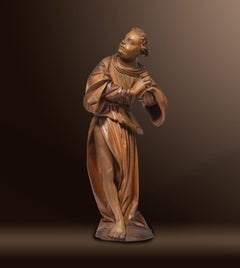
Master Angel
Located in Wien, Wien
MASTER ANGEL Museum sculpture of the master of Mauer Austrian Danube Region Around 1500/20 Lime wood, carved full round Height 55 cm Provenance: Hofstätter Collection, Vienna The masterful sculpture was made in the workshop of the master of the altar of Mauer around 1500 in Lower Austria. It can be located in the context of the Danube school of the first third of the 16th century, was carved from limewood and is 55 cm tall. Since there are no attributes or context, it is an unknown figure of a carved altar. The master of the altar of Mauer is an anonymous Gothic carver who was active between 1500 and 1525 and received this so-called emergency name through the altar for the parish and pilgrimage church of Mauer near Melk. This winged altar was probably commissioned by Göttweig Abbey in the 1470s and is made of lime wood. It shows an expression in the transition from late Gothic to early Renaissance and is considered the most important carved altar in Lower Austria, created between 1510-15. The figure presented here is very related in its design to the figures of the altar of Mauer. In lively-moving form, the male figure turns his upper body to the right, with his head pointing upward, probably toward the sky. The right leg in lunge emerges from under the frock...
Category

18th Century and Earlier Sculptures

Materials

Wood

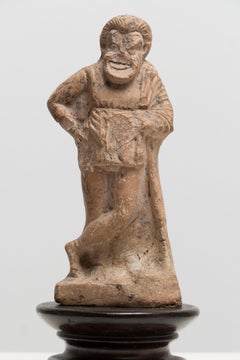
Ancient Greek Terracotta Comic Actor Figurine
Located in Milan, IT
TERRACOTTA FIGURINE OF A COMIC ACTOR , Greece, c. 350 B.C. Labeled to the reverse, 'LAWRENCE COLL./LOT 426. SOTHEBY./APR. 1892. P. 816.'; Terracotta height 15.2 cm height 6 in Prove...
Category

18th Century and Earlier Sculptures

Materials

Terracotta, ABS

Gandharan Frieze with Scenes from the Life of Buddha
Located in Palm Desert, CA
A schist stone carving from 2nd/3rd Century Gandhara depicting scenes from the life of Buddha. Provenance: Spink and Sons LTD, 1985.
Category

Other Art Style 18th Century and Earlier Sculptures

Materials

Stone

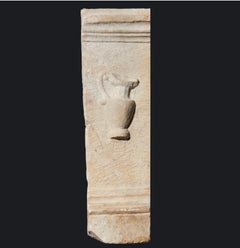
ANCIENT ROMAN MARBLE ALTAR FRAGMENT, 1ST/2ND CENTURY A.D.
Located in Milan, IT
Roman Marble Altar fragment from the 1st/2nd Century A.D. with the typical element of Roman rituals. Provenance: Nicolas Koutoulakis (1910-1996), Paris...
Category

18th Century and Earlier Sculptures

Materials

Marble

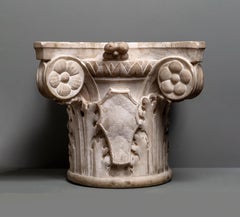
LARGE ITALIAN RENAISSANCE MARBLE CAPITAL, 15th/16th Century
Located in Milan, IT
LARGE ITALIAN RENAISSANCE MARBLE CAPITAL Florence, 15th/16th Century marble 38 x 47 x 47 cm 15 x 18 1/2 x 18 1/2 in
Category

18th Century and Earlier Sculptures

Materials

Marble

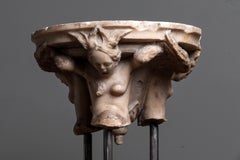
ITALIAN RENAISSANCE CAPITAL WITH MYTHOLOGICAL FIGURES, 15th Century
Located in Milan, IT
ITALIAN RENAISSANCE CAPITAL WITH MYTHOLOGICAL FIGURES, 15th Century marble H 18 x Diam 33.5 cm H 7 x Diam 13 1/4 in
Category

18th Century and Earlier Sculptures

Materials

Marble

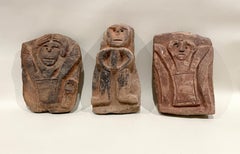
A Grouping of Three Period Ancestor Posts, Possibly Aztec
Located in Chicago, IL
A Grouping of Three Period Figural Ancestor Posts; Mexican Tribal Figures, Possibly Pre-Columbian Aztec. Each are Terra cotta or sandstone with obsidian glass inlay to the eyes; Da...
Category

Tribal 18th Century and Earlier Sculptures

Materials

Sandstone

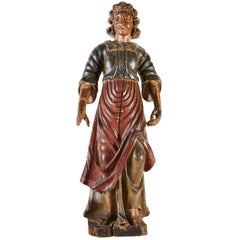
Large, 18th Century, Painted Santos Figure
Located in Los Angeles, CA
Hand-carved and painted, polychrome, Roman Santos figure in mid-stride. The figure wears stylized, flowing robes and stands atop a period base.
Category

18th Century and Earlier Sculptures

Materials

Wood, Paint

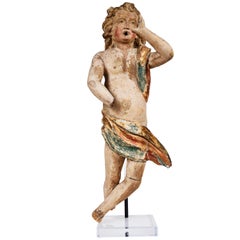
18th Century, Heralding Angel Sculpture
Located in Los Angeles, CA
An iconic, hand carved, gessoed, painted, and parcel-gilt, Italian polychrome sculpture of tousle curled angel in windswept drapery. Beautiful expression and patina. Now mounted on a...
Category

18th Century and Earlier Sculptures

Materials

Wood, Paint

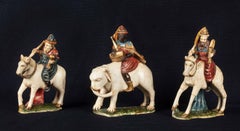
The Three Magi
Located in New York, NY
Provenance: Private Collection, Spain. Known as Peruvian alabaster for its translucency and workability, Piedra de Huamanga is a highly prized material from the province of Ayacucho in Peru. In the 17th and 18th centuries, local craftsman in the town of Huamanga began to specialize in the production of small-scale, polychrome religious sculptures made from this distinctive stone. Huamanga sculptures are among the most accomplished examples of carving from the Spanish Americas, where polychrome wood sculpture was a far more common sculptural medium. These works, which were created as independent sculptures or as sculptural groups—such as our three Magi—were intended for ecclesiastical as well as domestics settings. Our three figures likely formed part of a larger Nativity group—a New World variant of the tradition of the Neapolitan Crèche...
Category

18th Century and Earlier Sculptures

Materials

Alabaster

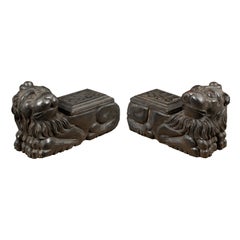
Antique Italian sculptor - Pair of 18th century wooden sculptures - Lions
Located in Varmo, IT
Pair of carved wood sculptures - Archaic lions. Italy, 18th century. 30 x 12 x 17 cm high each. Made entirely of finely carved wood. - This item is sold with a certificate of aut...
Category

Renaissance 18th Century and Earlier Sculptures

Materials

Wood

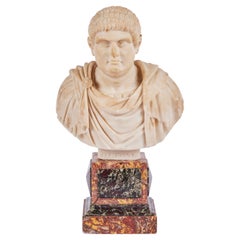
Marble Bust of Roman Leader
Located in Los Angeles, CA
An 18th c. hand-carved, solid Carrara marble bust, likely of a holy Roman Emperor on a specimen marble base of the period. Inscribed "OTTONI".
Category

18th Century and Earlier Sculptures

Materials

Marble

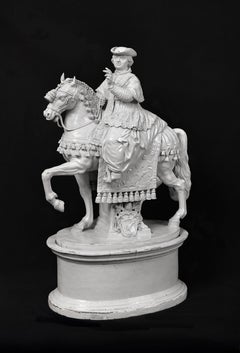
Pio VI blessing on horseback during the Cavalcata for the Possession
Located in Roma, RM
Volpato or Cialli manufacture, molded by Lorenzo Weber, Pio VI blessing on horseback during the Cavalcata for the Possession English white terracotta of 45 x 29 x 17 cm, datable to...
Category

Italian School 18th Century and Earlier Sculptures

Materials

Terracotta

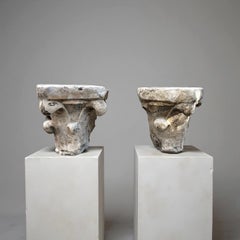
Coppia di Capitelli Medievali in Marmo di Zandobbio XII secolo
Located in Pistoia, IT
Coppia di capitelli medievali decorati a motivi fogliacei, Lombardia, XII secolo. La forma slanciata da cui si dipartono le foglie lanceolate, sormontata da una spessa mensola, è ti...
Category

Medieval 18th Century and Earlier Sculptures

Materials

Stone

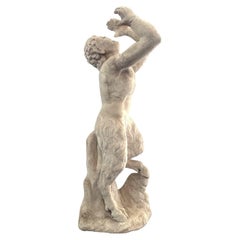
Carrara Marble Fountain of Pan
Located in Los Angeles, CA
A Roman, Carrara marble sculpture of the mythological Greek god Pan as a fountain. Italy.
Category

18th Century and Earlier Sculptures

Materials

Marble

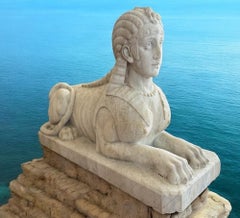
Exceptional Italian Neoclassical Sphinx Carrara Marble Statue
Located in Rome, IT
Outstanding Italian Neoclassical Sphinx Carrara Marble sculpture designed as entrance guardian, this mythical lady sphinx statuary display the head and chest of a neoclassical woma...
Category

Academic 18th Century and Earlier Sculptures

Materials

Marble

Read More

At Hosfelt Gallery, Bertoia Masterworks Complement Dynamic Contemporary Art

For nearly three decades, San Francisco–based Todd Hosfelt has curated against the grain — with a show on the legendary modernist Harry Bertoia the latest case in point.

This Weathered-Steel Sculpture Distills a Form of Protest into a Minimalist Monument

Part of Alejandro Vega Beuvrin’s “Barricada” series, the work is a subversive tribute to the street smarts of citizen activists.

How the Chunky, Funky Ceramics of 5 Mid-Century American Artists Balanced Out Slick Modernism

Get to know the innovators behind the pottery countercultural revolution.

Art Brings the Drama in These Intriguing 1stDibs 50 Spaces

The world’s top designers explain how they display art to elicit the natural (and supernatural) energy of home interiors.

Chryssa’s 1962 Neon Sculpture Was Way ahead of the Art-World Curve

By working with lettering, neon and Pop imagery, Chryssa pioneered several postmodern themes at a time when most male artists detested commercial mediums.

How to Spot a Fake KAWS Figure

KAWS art toys have developed an avid audience in recent decades, and as in any robust collectible market, counterfeiters have followed the mania. Of course, you don’t have to worry about that on 1stDibs, where all our sellers are highly vetted.

A Giant Wedding Cake Has Us Looking at Portuguese Tiles in a New Light

At Waddesdon Manor, artist Joana Vasconcelos has installed a three-tiered patisserie inspired by the narrative tile work of her homeland. We take a look at the cake sculpture and how Portuguese tiles have been used in architecture from the 17th century to today.

These Soft Sculptures Are Childhood Imaginary Friends Come to Life

Miami artist and designer Gabriela Noelle’s fantastical creations appeal to the Peter Pan in all of us.

Still Thinking About These?

All Recently Viewed