18th Century and Earlier Sculptures

to
22
105
43
38
18
21
Overall Width
to
Overall Height
to
664
3,947
17,377
83
45
126
140
69
174
272
384
560
530
79
11
5
2
147
91
87
84
56
48
38
32
29
24
17
10
10
9
8
7
6
6
6
6
81
75
49
40
39
11
2
2
1
1
147
75
Period: 18th Century and Earlier
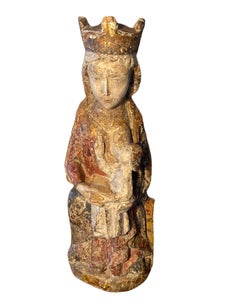
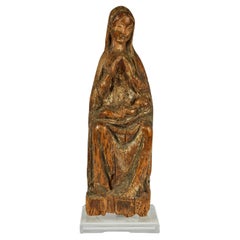
Vierge en majesté. Catalogne française - Maria Lactans
Located in PARIS, FR
Rare Vierge à l'Enfant en bois polychrome de tradition romane, région du Fenouillèdes, représentant une Virgo Lactans. Avant cette découverte, seules 3 vierges allaitantes médiévales...
Category

Gothic 18th Century and Earlier Sculptures

Materials

Wood

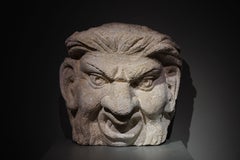
GROTESQUE MASK
Located in Milan, IT
GROTESQUE MASK Italy, 15h Century stone 30 x 31 x 20 cm 11 3/4 x 12 1/4 x 7 3/4 in
Category

18th Century and Earlier Sculptures

Materials

Stone

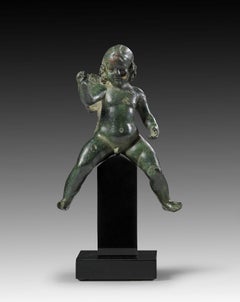
ANCIENT ROMAN BRONZE FIGURE OF WINGED EROS RIDING A DOLPHIN, 2ND CENTURY AD
Located in Milan, IT
Bronze figure of a young Eros, caught in the pose of riding a dolphin. Attractive green patina, some fingers and right foot are broken. Separately worked left wing is missing. Right ...
Category

18th Century and Earlier Sculptures

Materials

Bronze

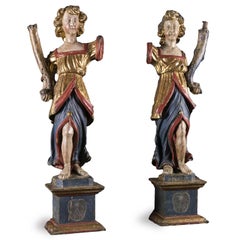
Pair of Italian Baroque Angels 17th Century Sculptured Lacquered and Gilded Figures
Located in Milano, IT
Pair of Angels, Tuscan Sculptures with Cornucopias from the 1600s hand-carved from stone pine wood, lacquered and gilded from Central Italy, from a private villa in Siena; they are...
Category

Baroque 18th Century and Earlier Sculptures

Materials

Wood

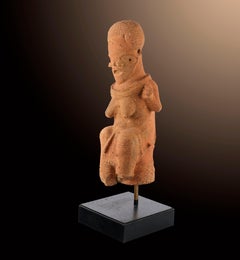
Nok Culture
Located in Wien, Wien
Nok culture Sitting 500 B.C. - 200 A.D. Terracotta Height 60 cm TL expert opinion of the University of Vienna Prof. Dr. Rudolf Erlach Provenance: Private collection Nice
Category

18th Century and Earlier Sculptures

Materials

Terracotta

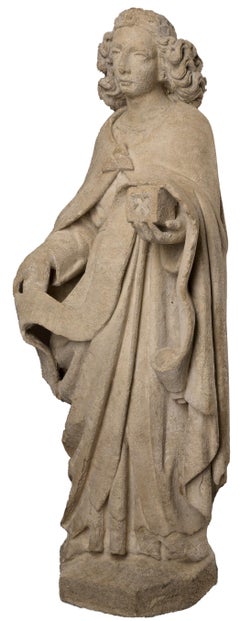
Standing Engel
Located in Wien, Wien
Standing angel with banner Flemish Around 1450/60 Sandstone 60 x 21 x 15 cm This museum figurine shows a standing angel with a banner in his right hand and a small box in his left. The youthful, ageless figure wears a coat held together with a triangular, floral brooch in front of the chest over a long robe. The angel’s gaze is directed forward, his head tilted slightly to the left. The elongated face is sculpted: the large almond-shaped eyes with accentuated upper and lower eyelids are alertly open and sharp eyebrows lead directly into the root of the nose. The straight nose above the pronounced mouth completes the idealized oval face of the angel and his calm, internalized facial expression. What is particularly remarkable, however, is the magnificent curls, which are only partially tamed by a simple headband. As if puffed up by the wind, the hair, which is sometimes streaked in parallel, sometimes wildly twisted and richly curled, stands out dynamically from the ears. The tilted head with these sideways protruding waves of hair thus conveys an immediate impression of movement. The physicality of the sculpture is expressed particularly through this organic, lifelike movement of the loosened hair. The lively overall impression of the figure is further enhanced by the multiple rolled banners that the angel presents to the viewer. The outstretched palm of the right hand appears both intimate and confidential as well as mystically revealing. This banderole winds in gentle curves in front of the figure’s body, throws a fold over the second attribute in the angel’s left hand and falls downwards in a loose manner. The volute-shaped rolled up end of the banner clearly shows the fine texture of the banner and at the same time draws the viewer’s attention to the small cube-shaped box that the angel is holding in its slender, long-limbed fingers. The cube is decorated with a Gothic quatrefoil motif, which is often seen in the architectural tracery of windows, but was also often used to decorate caskets and other small treasures. The sweeping gestures in the presentation of the attributes suggest three-dimensionality, in contrast to the tubular folds at the base of the neck and the intricate draperies in flat and multiple overlapping garment sections. The soft curves of the folds give the impression that the clothing is made of a heavy fabric that falls diagonally down the front and is laid in several bowl folds under the right hand. Overall, the sculptural work testifies to the highest artistic skill, which emphasizes the virtuosity of sculpture in its precious and representative overall impression. The memorable characteristics recognizable here can be seen in comparable pictorial works from Utrecht around the middle of the 15th century, when sculptural art – especially stone sculpture – was characterized by a remarkably high quality. Particularly noteworthy is the accentuated Utrecht head type with an elongated oval face, almond-shaped eyes with heavy lids and dense, vividly protruding tufts of hair framing the head. For example, the figure is comparable to a capital of an angel on the east side of the rood screen of the Joriskerk in Amersfoort (province of Utrecht) from the second quarter of the 15th century. Not only the physiognomy and hair, which in the comparative example stand somewhat more horizontally to one side, but also the garment puff above the girdle are similar. Even more related motifs, such as the cleverly placed bowl folds, can be found on the limestone figure...
Category

18th Century and Earlier Sculptures

Materials

Sandstone

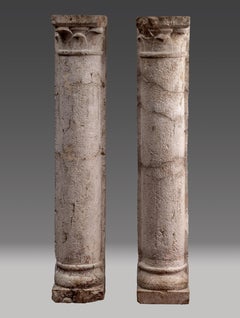
PAIR OF ROMANESQUE MARBLE COLUMNS, Italy, 13th/14th Century
Located in Milan, IT
PAIR OF ROMANESQUE MARBLE COLUMNS Italy, 13th/14th Century marble 86 x 16 x 13 cm 33 3/4 x 6 1/4 x 5 in
Category

18th Century and Earlier Sculptures

Materials

Marble

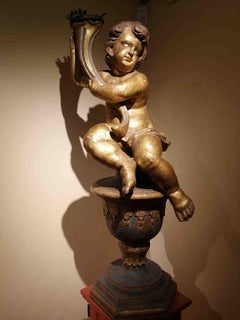
Putto in legno dorato reggi candela barocco italiano
Located in Florence, IT
One flame candle holder putto made of gilded wood. Those kind of objects were present in churches or noble villas, specially during the Baroque times. The base is not coeval.
Category

Baroque 18th Century and Earlier Sculptures

Materials

Gold

ANTIQUE ITALIAN ARCHITECTURAL ELEMENTS WITH CHIMERAS
Located in Milan, IT
ARCHITECTURAL RELIEFS WITH CHIMERAS Central Italy, 16th Century green marble 26 x 25 cm 10 1/4 x 9 3/4 in
Category

18th Century and Earlier Sculptures

Materials

Marble

Early Renaissance Wood Sculpture
Located in Los Angeles, CA
An evocative, 14th century, carved wood statue of a seated Mary with the Christ child in her lap. The piece with a beautiful patina featuring polychrome paint traces. Now mounted on ...
Category

Renaissance 18th Century and Earlier Sculptures

Materials

Wood, Paint

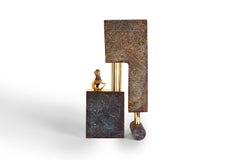
Amlash Parallel World - Sculpture, Bronze
Located in London, GB
Pantea Mahrou 1990 - Current Amlash Parallel World, 2025 Bronze 30 x 15 x 8 cm 11 3/4 x 5 7/8 x 3 1/8 in
Category

Contemporary 18th Century and Earlier Sculptures

Materials

Bronze

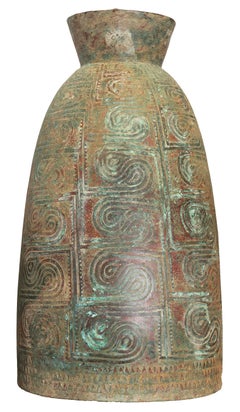
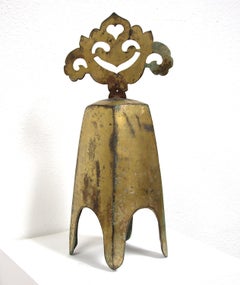
Thai Bell
Located in Palm Desert, CA
A bronze Thai Bell from the Dongson Culture (1000 BC-200 AD). The work is unsigned.
Category

Tribal 18th Century and Earlier Sculptures

Materials

Bronze

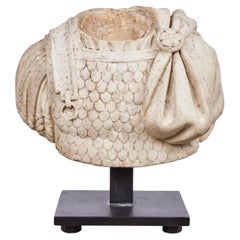
17th Century Upper Torso Fragment
Located in Los Angeles, CA
Glorious, c. 1650, hand-carved, solid Carrara marble upper torso fragment of a Roman soldier. The piece featuring fish-scale armor atop a tunic. The rig...
Category

18th Century and Earlier Sculptures

Materials

Marble, Iron

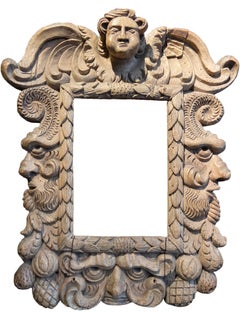
Hand Carved Wooden Frame, 16th Century European School
Located in London, GB
Hand Carved Fruit Wood Length: 16 inches (40.5 inches) A striking, richly hand carved frame in high relief. It shows a rich decor of natural organic forms alongside a collection of ...
Category

18th Century and Earlier Sculptures

Materials

Wood

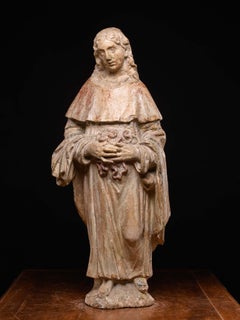
17th C Stone statue of Saint Erasmus or Saint Elmo
Located in brussel, BE
Saint Erasmus or Saint Elmo (Antioch, ca. 240 – Formia, 303) was an Italian bishop and patron saint of the sailors. His attribute was the capstan, a winch on which the anchor chains were rolled up. He died as a martyr for his faith, and his bones were transferred to Gaeta in the 9th century, where they are kept in the cathedral to this day. The electric phenomenon of Saint Elmus fire is named after Saint Erasmus and the 16th C humanist Desiderius Erasmus. Little is known with certainty about Saint Erasmus' life. However, many legends may have been passed on orally until - no older writings are known with certainty. His birthplace was in present-day Syria. However, the persecution of Christians under Emperor Diocletian forced him to flee to Mount Lebanon...
Category

Baroque 18th Century and Earlier Sculptures

Materials

Stone

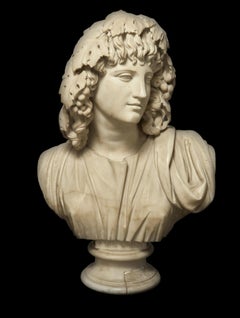
ANTIQUE ITALIAN MARBLE BUST OF MELPOMENE, MUSE OF TRAGEDY
Located in Milan, IT
ITALIAN MARBLE BUST OF MELPOMEN, MUSE OF TRAGEDY Late 18th Century inscribed to base Melpomen marble height 66 cm height 26 in
Category

18th Century and Earlier Sculptures

Materials

Marble

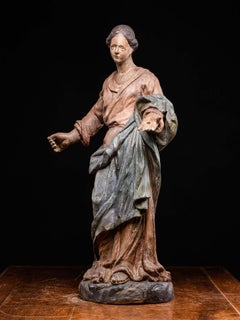
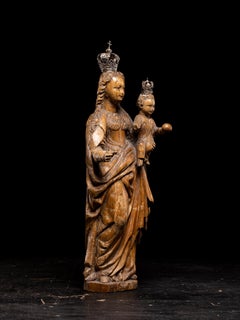
17th C Polychromed fruitwood carved statue depicting Madonna, France.
Located in brussel, BE
An exceptionally beautiful antique French wood carving, made in the 17th century. It depicts Madonna standing with open offering arms .The...
Category

Baroque 18th Century and Earlier Sculptures

Materials

Wood

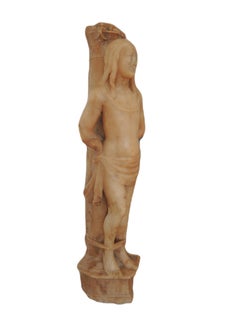
Saint Sebastian Lombard school. Italian Renaissance Carved alabaster.
Located in PARIS, FR
Large Saint Sebastian finely carved in alabaster. The saint is attached to a column surmounted by a capital, beautiful soft features and superb hair wi...
Category

Renaissance 18th Century and Earlier Sculptures

Materials

Stone, Alabaster

16th Century Venetian bronze sculpture of a Young Man in Armour
Located in Milan, IT
16th Century Venetian bronze sculpture of a Young Man in Armour attributed to the Florentine artist Andrea di Alessandri, called Il Bresciano (Fl...
Category

18th Century and Earlier Sculptures

Materials

Bronze

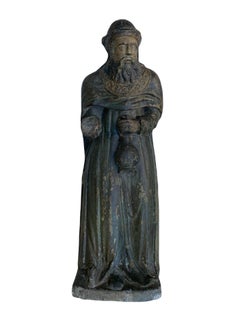
Pilgrim polychrome stone figure
Located in PARIS, FR
Pilgrim or saint Jacques figure in sculpted and polychromed limestone. He holds a calabash in his left hand. He probably held the pilgrim's staff in his missing right hand. Very beau...
Category

Gothic 18th Century and Earlier Sculptures

Materials

Limestone

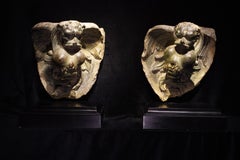
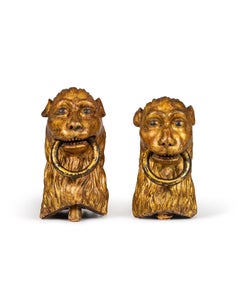
SET OF TWO ITALIAN CARVED AND GILT WOODEN HEADS OF LIONS
Located in Milan, IT
Set of two carved and gilt wooden heads of lions, italy, venice, 1760 circa This pair of playful and charming lion heads are a marvelous example of Venetian sculptural and decorative...
Category

18th Century and Earlier Sculptures

Materials

Wood

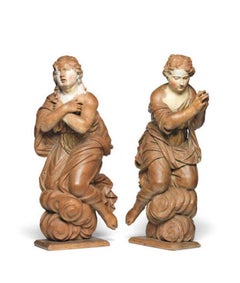
A pair of late 17th century Northern European carved oak angels
Located in Bath, Somerset
A pair of carved oak angels, circa 1700, with a lovely warm patina and faint traces of polychrome to the face and gilding to the body. The angels are both kn...
Category

Baroque 18th Century and Earlier Sculptures

Materials

Oak

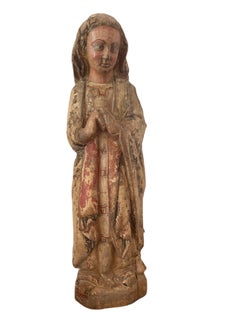
Polychrome Virgin of the Annunciation - Catalonia
Located in PARIS, FR
Large catalan Virgin of the Annunciation in polychrome wood. Our Virgin is represented in the phase of the Conturbatio, Mary expresses her amazement a...
Category

Gothic 18th Century and Earlier Sculptures

Materials

Wood

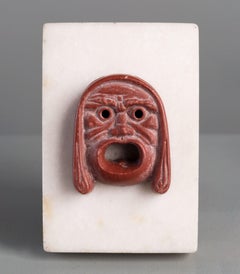
ANCIENT ROMAN RED JASPER APPLIQUE OF TRAGIC ACTOR
Located in Milan, IT
ROMAN RED JASPER APPLIQUE OF TRAGIC ACTOR Rome, 1st Century A.D. 5.5 x 4.2 cm the mask 2 1/4 x 1 3/4 in Provenance Penicuik House, Midlothian, acquired by either Sir John Clerk, 2nd...
Category

18th Century and Earlier Sculptures

Materials

Marble

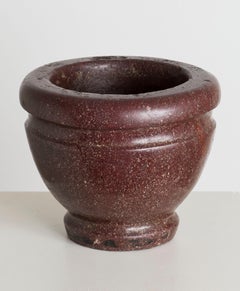
ANTIQUE ITALIAN PORPHYRY MORTAR
Located in Milan, IT
ANTIQUE ITALIAN PORPRHYRY MORTAR Rome, 16th/17th Century Porphyry 19 x 23 x 23 cm 7 1/2 x 9 1/4 x 9 1/4 in Provenance: Sotheby Parke Bernet Florence, 21 October 1976, page 36, lot 5...
Category

18th Century and Earlier Sculptures

Materials

Marble

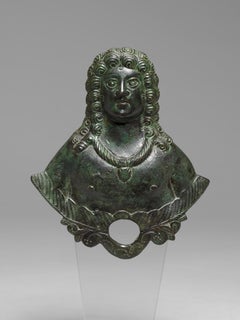
Gallo-Roman Bronze Applique Bust Figure of a Man, 3rd/4th Century A.D.
Located in Milan, IT
PROVENANCE Herbert A. Cahn (1915-2002), Kunst der Antike, Basel, 1988 Private Collection, Paris
Category

18th Century and Earlier Sculptures

Materials

Bronze

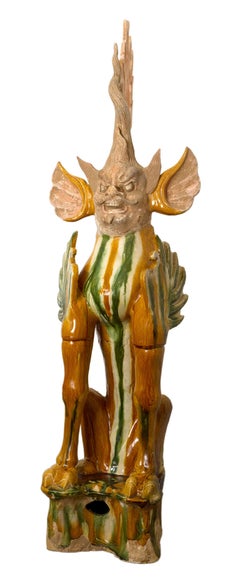
Sancai-Glazed Earth Spirit
Located in Palm Desert, CA
A Chinese, Sancai glazed pottery earth spirit. Tang Dynasty.
Category

Other Art Style 18th Century and Earlier Sculptures

Materials

Clay

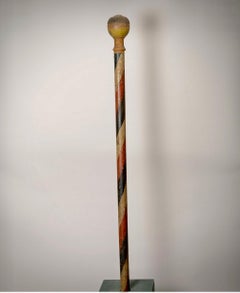
A Fine and Rare Early Barbers Pole, Early 18th Century, English School
Located in London, GB
A fine and rare early barbers pole in original polychrome paint finish. Turned in one piece. A decorative and original piece of folk art. The white was for bandages, red for blood an...
Category

English School 18th Century and Earlier Sculptures

Materials

Wood

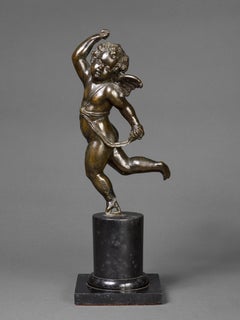
Italian Bronze Figure of a Winged Cherub (Putto)
Located in Milan, IT
Fine bronze figure of a winged cherub, also known as putto.
Category

18th Century and Earlier Sculptures

Materials

Bronze

Important Sculpture
Located in ROUEN, FR
"Important Sculpture IMPORTANT SCULPTURE representing Saint Floran de Lorch in polychrome wood in its beautiful old polychromy. He is represented ...
Category

18th Century and Earlier Sculptures

Materials

Wood

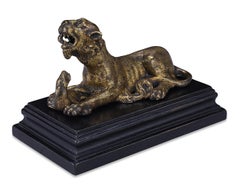
Panther and Hare Bronze Sculpture
Located in New Orleans, LA
This 17th-century bronze sculpture, likely hailing from southern Germany, depicts a scene of life-and-death struggle in nature — a hapless hare caught in the claws of a mighty panthe...
Category

18th Century and Earlier Sculptures

Materials

Bronze

16th C Mechelen Doll with letter M carved in the back.Some leftovers of polychro
Located in brussel, BE
Mechelen dolls are rare wooden devotional figurines (mainly walnut was used), which were made by some members of the Guild of Saint Luke. The figures, all individual saints, were made from reference models using highly regulated carving and polychrome techniques. They had to meet several requirements. The shape of the rug had to meet certain criteria and the letter M (from Mechelen) had to be visible in the shape. These devotional or saint figurines...
Category

18th Century and Earlier Sculptures

Materials

Wood, Driftwood

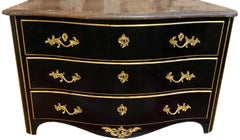
Oak and Marble 18th Century French Commode Jean Pierre Latz
Located in London, GB
Oak then lacquered with marble top Carved/Stamped with the name "Latz" in the wood under the marble Height: 55 inches (86.25 cm) Width: 55 inches (140 cm) Provenance Château de Mareil Le Guyon This commode is available to view at our gallery on Cecil Court. Jean-Pierre Latz Jean-Pierre Latz was one of the handful of truly outstanding cabinetmakers working in Paris in the mid 18th-century. Like several of his peers in the French capital, he was of German origin. His furniture is in a fully developed rococo style, employing boldly sculptural gilt-bronze mounts complementing marquetry motifs of flowers and leafy sprays, in figured tropical veneers like tulipwood, amarante, purpleheart and rosewood, often featuring the distinctive end-grain cuts. He also produced lacquered pieces, most famously the slant-front desk in the collection of Stavros Niarchos...
Category

French School 18th Century and Earlier Sculptures

Materials

Marble

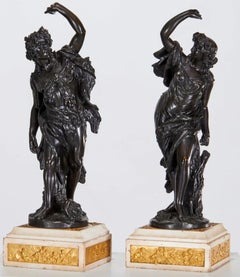
Pair Late 18th C. French Neoclassical Bronze Figural Statues
Located in New York, NY
Exquisite Pair of Neoclassical bronze Bacchus and Bacchante figures cast in a dark patinated bronze. The pair rest on on white marble bases set with relief cast gilt plaques. 18th C...
Category

18th Century and Earlier Sculptures

Materials

Marble, Bronze

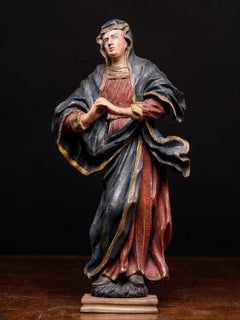
18th C Polychromed fruitwood carved statue depicting Maria Magdalena, Germany.
Located in brussel, BE
This beautiful polychrome and highly expressive statue 18th C statue represents Mary Magdalene in prayer, hands joined, eyes raised to the sky.It's of German origin
Category

Other Art Style 18th Century and Earlier Sculptures

Materials

Wood

Procession Ornament
Located in Palm Desert, CA
A Chinese Procession Ornament dating from the Liao Dynasty, from 907 to 1125 AD. The Liao Dynasty, also known as the Khitan Empire, was an empire in northern China that ruled over the regions of Manchuria, Mongolia, and parts of northern China proper. It was founded by the Yelu family of the Khitan people in the final years of the Tang Dynasty, even though its first ruler, Yelu Abaoji, did not declare an era name until 916. The Liao Empire was destroyed by the Jurchen of the Jin Dynasty in 1125. However, remnants of its people led by Yelu Dashi established the Xi (or Western) Liao Dynasty 1125 - 1220, also known as Kara - Khitan Khanate, which survived until the arrival of Genghis Khan...
Category

18th Century and Earlier Sculptures

Materials

Bronze

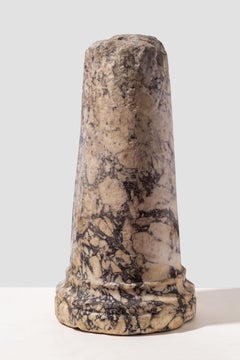
ANTIQUE ITALIAN ARCHITECTURAL FRAGMENT OF PLINTH IN BRECCIA MEDICEA MARBLE
Located in Milan, IT
BRECCIA FRAGMENT PLINTH Italy, 18th Century Breccia medicea 55 x d 25 cm 21 3/4 x d 9 3/4 in
Category

18th Century and Earlier Sculptures

Materials

Marble

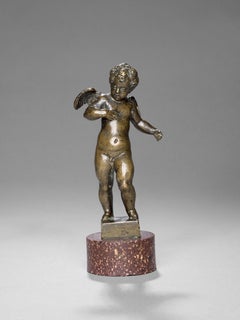
ITALIAN BRONZE FIGURE OF YOUNG CHERUB ON PORPHYRY BASE - ATT. TO ROCCATAGLIATA
Located in Milan, IT
Resting on a circular Egyptian porphyry base, this fascinating bronze figure of a young cherub is a striking example of the Venetian workmanship of the 16th Century. With the head tu...
Category

18th Century and Earlier Sculptures

Materials

Bronze

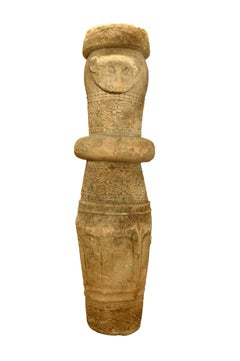
Offering Post- Aitos, INDONESIAN , Tetum People, Timor Island
Located in Palm Desert, CA
An Indonesian offer post from the Tetum people of Timor Island. The work is stone and is unsigned.
Category

Tribal 18th Century and Earlier Sculptures

Materials

Stone

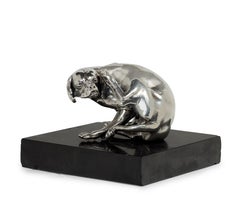
Dog scratching its ear
Located in PARIS, FR
This amusing naturalistic sculpture in silver-plated pewter was probably made in the 17th century by Georg Schweigger. Inspired by a model created by another Nuremberg sculptor, Peter Flötner, it bears witness to the persistence during the baroque era of the naturalistic taste that emerged in the Renaissance. Intended as an ornament for some Kunstkammer, or cabinet of curiosities, this sculpture was a great success, as can be seen from the presence of similar works in many European museums. 1. Georg Schweigger Georg Schweigger was a baroque sculptor and medal founder from Nuremberg, known mainly for his small-scale works in stone, carved wood and cast metal. His only large-scale work, the Neptune Fountain, has been in the Petershof Palace, the summer residence of the Tsars near St. Petersburg, since 1797. This monumental sculpture demonstrates his taste for the representation of movement, which we find in this small piece, inspired, as we shall see, by earlier models. 2. The success of a naturalistic theme As is often the case in the history of art, the source of the Dog scratching his ear theme probably comes from an engraving, and more precisely from one made in Strasbourg in 1480 or in Aschaffenburg in 1481 by the Master of the Housebook, an anonymous engraver working in southern Germany at the end of the 15th century. This engraving seems to have been Peter Flötner’s (1490 - 1546) source of inspiration. Peter Flötner was a sculptor and engraver who settled in Nuremberg in 1522. The Louvre Museum also has a gilded lead statuette dated between 1500 and 1515 (on deposit at the Musée de L'Œuvre in Strasbourg), which in turn is thought to have served as a model for other known statuettes. This model was later taken up by the Frenchman Barthélemy Prieur...
Category

Naturalistic 18th Century and Earlier Sculptures

Materials

Marble, Silver

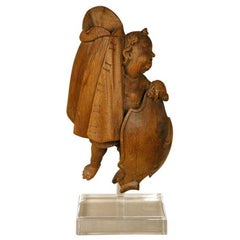
Flemish Oak Statue of a Putto
Located in Los Angeles, CA
Hand-carved, oak statue of a putto holding a flowing tapestry and a shield mounted on a custom, Lucite base.
Category

18th Century and Earlier Sculptures

Materials

Lucite, Oak

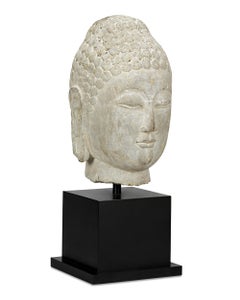
Limestone Buddha Head, 6th-Century Qi Dynasty
Located in New Orleans, LA
This limestone bust of the Buddha presents a picture of serenity and grace. A rare and striking image, it was sculpted in 6th-century Northern China during the Qi dynasty...
Category

18th Century and Earlier Sculptures

Materials

Limestone

Madonna
Located in Wien, Wien
MUSEUM SCULPTURE Master workshop Hans Klocker before 1474, possibly in Gais - After 1500 "CRESCENT MOON" Around 1480/90 Stone pine wood carved Original version Height 77 cm This ext...
Category

18th Century and Earlier Sculptures

Materials

Wood

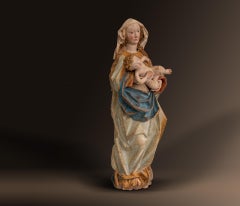
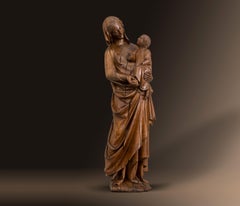
Madonna
Madonna
Price Upon Request
Madonna
Located in Wien, Wien
MADONNA Il DE FRANCE/PARIS Around 1270 Oak wood carved Height 79cm
Category

18th Century and Earlier Sculptures

Materials

Oak

Madonna
Madonna
Price Upon Request
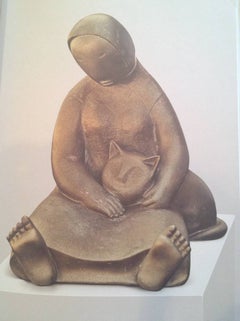
Sculpture -Bronze - Woman and Cat series No.4
Located in Los Angeles, CA
Contact Modern Art Etc to inquire availability and price Modern Art Etc presents internationally noted and rising Chinese star, Xie Ai Ge (b.1977). X...
Category

18th Century and Earlier Sculptures

Materials

Bronze

Read More

At Hosfelt Gallery, Bertoia Masterworks Complement Dynamic Contemporary Art

For nearly three decades, San Francisco–based Todd Hosfelt has curated against the grain — with a show on the legendary modernist Harry Bertoia the latest case in point.

This Weathered-Steel Sculpture Distills a Form of Protest into a Minimalist Monument

Part of Alejandro Vega Beuvrin’s “Barricada” series, the work is a subversive tribute to the street smarts of citizen activists.

How the Chunky, Funky Ceramics of 5 Mid-Century American Artists Balanced Out Slick Modernism

Get to know the innovators behind the pottery countercultural revolution.

Art Brings the Drama in These Intriguing 1stDibs 50 Spaces

The world’s top designers explain how they display art to elicit the natural (and supernatural) energy of home interiors.

Chryssa’s 1962 Neon Sculpture Was Way ahead of the Art-World Curve

By working with lettering, neon and Pop imagery, Chryssa pioneered several postmodern themes at a time when most male artists detested commercial mediums.

How to Spot a Fake KAWS Figure

KAWS art toys have developed an avid audience in recent decades, and as in any robust collectible market, counterfeiters have followed the mania. Of course, you don’t have to worry about that on 1stDibs, where all our sellers are highly vetted.

A Giant Wedding Cake Has Us Looking at Portuguese Tiles in a New Light

At Waddesdon Manor, artist Joana Vasconcelos has installed a three-tiered patisserie inspired by the narrative tile work of her homeland. We take a look at the cake sculpture and how Portuguese tiles have been used in architecture from the 17th century to today.

These Soft Sculptures Are Childhood Imaginary Friends Come to Life

Miami artist and designer Gabriela Noelle’s fantastical creations appeal to the Peter Pan in all of us.

Still Thinking About These?

All Recently Viewed