Figurine Sculptures

to
181
1,477
516
409
168
193
Overall Width
to
Overall Height
to
91
349
783
1,537
41
30
54
60
26
12
25
39
83
76
26
993
168
95
79
41
26
24
23
9
7
7
1
4,838
2,637
1,976
1,881
1,683
1,220
1,032
925
714
520
490
484
449
447
436
424
327
322
308
1,818
1,691
362
314
228
49
31
30
28
28
1
9
1,569
972
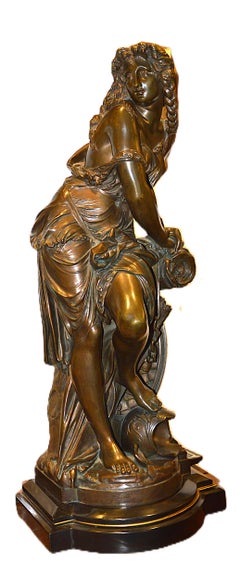
Art Subject: Figurine
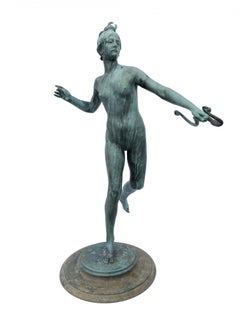
Diana the Huntress, 1890 Classical Bronze Sculpture of Nude Woman
Located in Beachwood, OH
Frederick William MacMonnies (American, 1863-1937) Diana, 1890 Bronze with green verdigris patina Signed and dated Copyright 1894 with Jaboeuf & Rouard, Paris foundry mark 31 x 21 x 17 inches A sculptor of classical figures, American-born Frederick MacMonnies...
Category

1890s Figurative Sculptures

Materials

Bronze

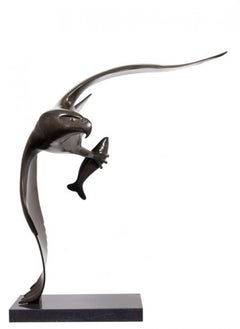
Roofvogel met vis no. 2 Bird of Prey with Fish Bronze Sculpture Animal
Located in Utrecht, NL
Roofvogel met vis no. 2 Bird of Prey with Fish Bronze Sculpture Animal Evert den Hartog (born in Groot-Ammers, The Netherlands in 1949) followed his education to be a sculptor at th...
Category

21st Century and Contemporary Contemporary Figurative Sculptures

Materials

Bronze

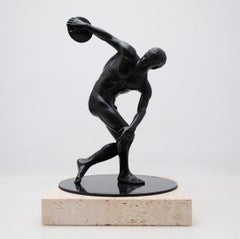
Discobólo Lancellotti
Located in Täby, SE
A sculpture inspired by the lancellotti version and created following a meticulous handcrafted process, backed by the notarised certificate that accompanies the piece by Skel Art in a limited edition. Original by Miron in 455 b...
Category

2010s Nude Sculptures

Materials

Bronze

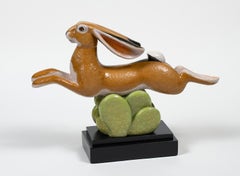
Marathon
Located in Dallas, TX
"Marathon" by artist David Everett is polychromed mahogany, and measures 17 1/4 x 23 1/2 x 6 1/2 inches. It is signed "© D EVERETT 2023". A jackrabbit and cactus are depicted. David...
Category

2010s Realist Sculptures

Materials

Mahogany, Paint

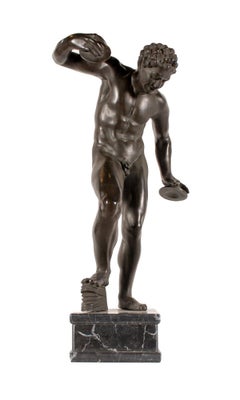
Satyr with Cymbals and Kroupezion, Grand Tour after the Antique, 19th century
Located in Beachwood, OH
19TH CENTURY CONTINENTAL SCHOOL Satyr with Cymbals and Kroupezion, Grand Tour after the Antique Bronze with marble base 26 in. h. x 15 in. w. x 10 in. d. This dancing faun is now mo...
Category

19th Century Figurative Sculptures

Materials

Marble, Bronze

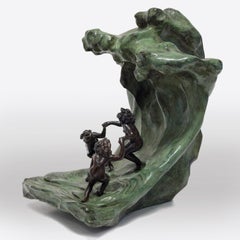
La Vague (The Wave)
Located in Palm Desert, CA
"La Vague (The Wave)" is a figurative abstract bronze sculpture created by Camillle Claudel. The artwork is 24 1/4 x 19 x 24 inches, weighing less than 50 lbs. It is signed "C. Claud...
Category

19th Century Impressionist Figurative Sculptures

Materials

Bronze

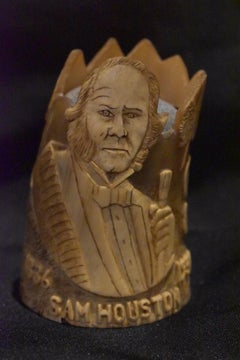
"SAM HOUSTON" HORN CARVING 1936 TEXAS CENTENNIAL AMAZING WORK
Located in San Antonio, TX
Dan Super "SAM HOUSTON" (1873-1953) Houston Artist Image Size: 3 3/4 inches tall Medium: Carved Horn of Sam Houston to celebrate the Texas Centennial. Texas Centennial 1936 "Sam Houston Pin Cushion Holder" Biography Dan Super (1873-1953) Dan E. Super, Jr. (1873 – 1953) Dan Super had the eye of a sculptor, envisioning and then creating hundreds of objects from the elongated form of a Texas Longhorn’s tusk. At the age of six, Dan Super carved his first drawing into a piece of the horn of a Texas Longhorn. Over the next 56 years, he made utilitarian pieces like pencil cups, pin cushions, and backscratchers, realistic replicas of animals and birds, and imaginative carvings of elegant nudes. While these carvings resemble the traditional art of scrimshaw, carvings from whale bone, we’ve not been able to identify another carver who used the Texas Longhorn as his material. “My work is done with an ordinary pocketknife, hacksaw file and rasp,” Super wrote in 1937. He used the horn in every way conceivable; whole, allowing the shape to define the object he was making, flattened to make mosaic or inlay work. He incised and pierced it and carved in the round. His own hands polished the horn to a sheen. Daniel Super, Jr. was born in Houston on August 22, 1873. His father owned stock years, D. Super and Brothers Co., providing the young Super with ready access to his raw material. Throughout his life, he worked in the businesses key to the identity and success of young, booming Houston, cattle, oil, real estate and rail. In 1896 he married Lula, and took over the family business, expanding it to include a grocery. He closed the company in 1912 and got into the oil business...
Category

1930s Realist Figurative Sculptures

Materials

Other Medium

NAOR - 35cm Porsche Tribute Teddy
Located in PARIS, FR
Naor is a French artist from Lyon born in 1988. Completely anchored in his time, he has always traveled a lot around the world. If travels form youth, Naor was inspired by it. From ...
Category

21st Century and Contemporary Pop Art Sculptures

Materials

Resin

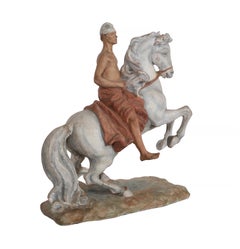
Man on Horse, Modern Terracotta Sculpture by Giorgio de Chirico
Located in Long Island City, NY
Giorgio de Chirico, Italian (1888 - 1978) - Man on Horse, Year: 1950, Medium: Terracotta Sculpture, signature inscribed on base, Size: 15 x 14.5 x 5 in. (38.1 x 36.83 x 12.7 cm)
Category

1950s Modern Figurative Sculptures

Materials

Terracotta

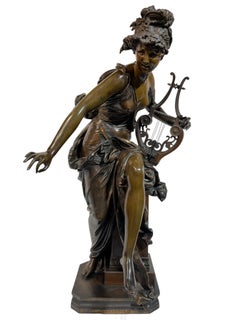
Albert Ernest Carrier-Belleuse A Figural Bronze Sculpture Melodie
Located in New York, NY
Albert-Ernest Carrier-Belleuse (1824 - 1887) Female Figural Bronze Sculpture Melodie (Melody)  A young lady with a lyre  in bronze with a dark green patina 19th Century  31" H x ...
Category

19th Century Figurative Sculptures

Materials

Bronze

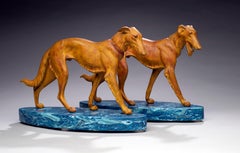
Antique Pair of Russian Wolf Hound/Borzoi Dog Portrait Sculptures circa 1930 s
Located in SANTA FE, NM
Antique Pair of Russian Wolfhounds/Borzois Dog Portrait Sculptures by Scalini (aka Scali; Italian, 20th century) circa 1930's Patinated spelter 9 x 14 inches (on bases) Though rath...
Category

1920s Art Deco Figurative Sculptures

Materials

Cast Stone, Bronze

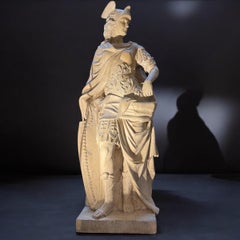
Magnificent Marble Sculpture of Roman Mythological Subject Minerva 1780
Located in Rome, IT
Finely carved mythological roman subject of Minerva in Marble Travertino . Excellent condition from an estate of Veneto. Measurements: Statue cm 180 . Minerva (Pallas Athena in Greek...
Category

Late 18th Century Academic Figurative Sculptures

Materials

Marble

Bust with Floral Top by Sydnie Jimenez (INV# NP3235)
Located in Morton Grove, IL
Sidney Jimenez Bust with Floral Top (INV# NP5235) stoneware, underglaze, and glaze 10.75 × 9 × 5.5” 2024 signed Sydnie Jimenez is a ceramic artist whose work centers on the figures ...
Category

2010s Contemporary Figurative Sculptures

Materials

Stoneware, Glaze, Underglaze

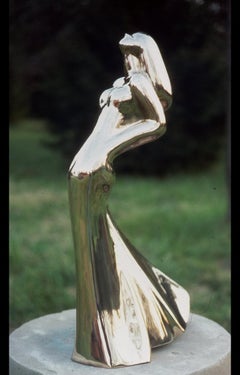
David Hostetler Dancer Gold Shiny Flowing Female Woman Figure By Commission
Located in Nantucket, MA
Now available by commission. Dancing Lady in polished bronze is sealed with Glasurit- it never needs to be polished. She is cast from a wood carving of Dancing Lady- an iconic Hostet...
Category

1980s Contemporary Figurative Sculptures

Materials

Bronze

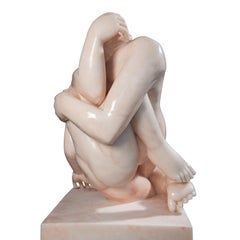
Bacio (Kiss) - hand carved Italian contemporary figurative rose marble sculpture
Located in San Francisco, CA
Bacio (Kiss) by Lorenzo Vignoli striking hand carved marble sculpture of rare Portuguese rosa marble by contemporary Italian sculptor Lorenzo Vignoli, incorporating classical refere...
Category

21st Century and Contemporary Contemporary Figurative Sculptures

Materials

Stone, Marble, Carrara Marble

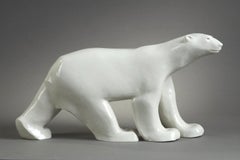
Polar Bear
Located in PARIS, FR
Polar Bear by François POMPON (1855-1933) An original edition sculpture made in white enameled porcelain biscuit. Stamped in the paste "S 1927 DN" (S for "Sèvres" – dated 1927 – DN...
Category

1920s Art Deco Figurative Sculptures

Materials

Ceramic

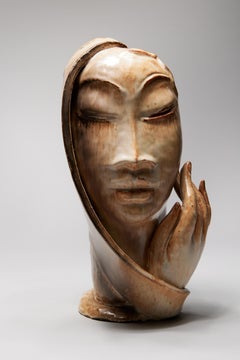
Bust of Josephine Baker, Mid-Century Ceramic Female Face
By Vally Wieselthier
Located in Beachwood, OH
Attributed to Vally Wieselthier (Austrian-American, 1895-1945) Bust of Josephine Baker, c. 1930 Ceramic Stamped on base 11.5 x 5.5 x 5.5 inches Vally Wieselthier (1895 Vienna--1945 ...
Category

1930s Figurative Sculptures

Materials

Ceramic

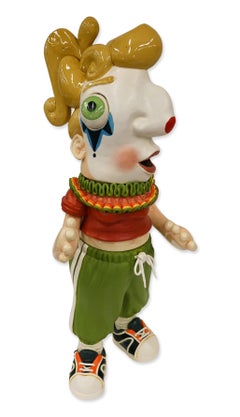
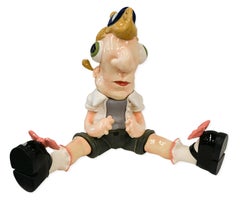
I am a clown (~38% OFF LIST PRICE - LIMITED TIME ONLY)
Located in Kansas City, MO
Hannah Schelb I am a clown (When are you going to start treating me like a joke?) 2025 Ceramic, Glaze, Cone 5 Oxidation, Aluminum Wire, Kanthal Wire 34 x 12 x 14.5 inches (86.4 x 30....
Category

2010s Contemporary Figurative Sculptures

Materials

Wire

Saltationus Casus Bronze Contemporary Sculpture Nude Boy Marble Stone
Located in Utrecht, NL
Saltationus Casus Bronze Contemporary Sculpture Nude Boy Marble Stone Wim van der Kant (1949, Kampen) is a selftaught artist. Next to his busy profession as a teacher at a high school, he intensively practises his profession as a sculptor. Only when his work would measure up to his own standards, he decided to present it to the rest of the world...
Category

21st Century and Contemporary Contemporary Nude Sculptures

Materials

Marble, Bronze

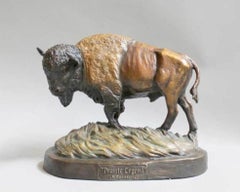
"PRAIRIE LEGEND" BISON BUFFALO
Located in San Antonio, TX
Marianne Texas Artist Image Size: 9 1/2 " tall by 12 " across Medium: Bronze "Prairie Legend"
Category

2010s Impressionist Figurative Sculptures

Materials

Bronze

This is Me (~35% OFF LIST PRICE - LIMITED TIME ONLY)
Located in Kansas City, MO
Hannah Schelb This is Me 2025 Ceramic, Glaze, Cone 5 Oxidation, Aluminum Wire, Kanthal Wire 26 x 24 x 38 inches (66 x 63.5 x 96.5 cm) Signed COA provided *Assembly required. Instruc...
Category

2010s Contemporary Figurative Sculptures

Materials

Wire

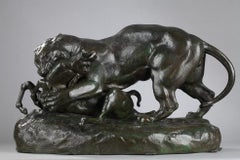
Tiger surprising an antelope
Located in PARIS, FR
Antoine-Louis BARYE (1796-1875) Tiger surprising an antelope Bronze with nuanced dark greenish brown patina Signed on the base " Barye " Cast by Barye's own workshop (conducted in t...
Category

1870s French School Figurative Sculptures

Materials

Bronze

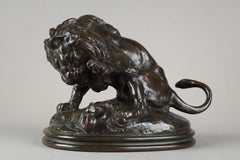
Lion and snake
Located in PARIS, FR
Lion and snake n°3 by Antoine-Louis Barye (1796-1875) Bronze sculpture with a nuanced dark greenish brown patina signed "Barye" on the base old edition cast – probably from the Bary...
Category

1860s French School Figurative Sculptures

Materials

Bronze

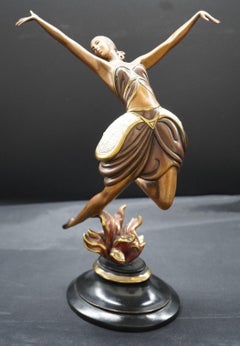
ERTE "LA DANSEUSE" 1986, BRONZE SCULPTURE
Located in Pembroke Pines, FL
"Femme de luxe" (Bronze) by Erte Type: Sculpture Media: Patina on Bronze Dimensions: 13 3/4" High Year Produced: 1986 Edition Size: 500 Numbered, 35 AP Edition Number: 13/500 In Exce...
Category

1980s Art Deco Figurative Sculptures

Materials

Bronze

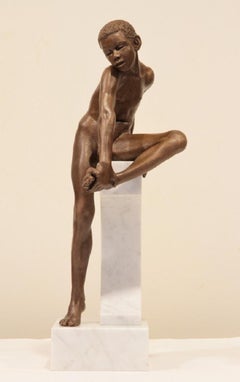
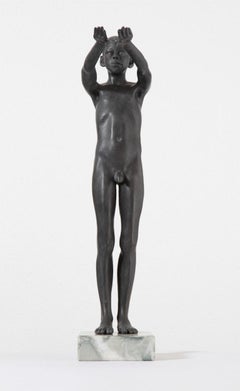
Volo Standing Male Nude Sculpture Figure Bronze Boy - In Stock
Located in Utrecht, NL
Volo Standing Male Nude Sculpture Figure Bronze Boy - In Stock Volo is a standing male nude figure in bronze, a boy reaching, in brown patina. This sculpture is suitable for indoors ...
Category

21st Century and Contemporary Contemporary Nude Sculptures

Materials

Bronze

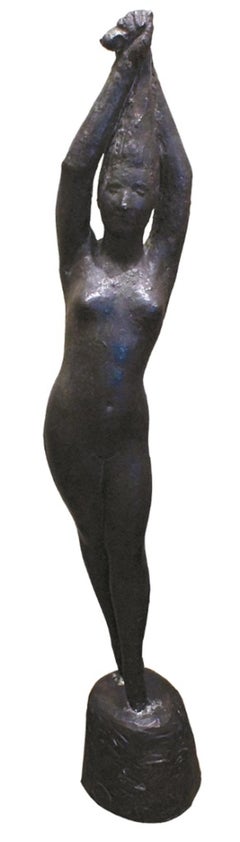
The Dancer - Sculpture by Giacomo Manzù - 1957
Located in Roma, IT
The Dancer is a sculpture realized by Giacomo Manzù in 1957. Unique piece. Exhibitions:  Manzù. L’Uomo e l’Artista, Palazzo Venezia, Roma 2002-2003 Manzù-Marino. Gli ultimi moderni,...
Category

1950s Modern Figurative Sculptures

Materials

Bronze

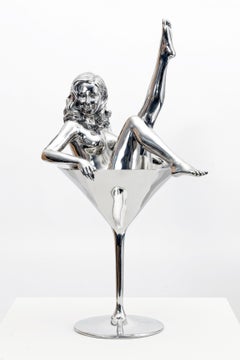
Modern Pop Art Dita Mel Ramos Stainless Steel Nude Sculpture
Located in Zug, CH
MEL RAMOS (1935-2018) Dita 2017 Cast and polished stainless steel 58 x 33 x 26 cm 22.83 x 12.99 x 10.24 inches Number 29 of 60, Edition of 60 + 6 A.P. Cast signature and number on b...
Category

20th Century Pop Art Nude Sculptures

Materials

Stainless Steel

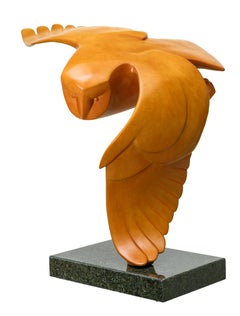
Opvliegende Uil no. 9 Flying Owl Bronze Sculpture Animal Bird Wild Life In Stock
Located in Utrecht, NL
Vliegende Uil no. 9 Flying Owl Bronze Sculpture Animal Bird Wild Life In Stock Evert den Hartog (born in Groot-Ammers, The Netherlands in 1949) followed his education to be a sculpt...
Category

21st Century and Contemporary Contemporary Figurative Sculptures

Materials

Bronze

KAWS SHARE Grey (KAWS companion)
By KAWS
Located in NEW YORK, NY
KAWS SHARE (Grey), new & unopened in its original packaging. KAWS SHARE first appeared in 'BLACKOUT' – the first London solo exhibition by KAWS (Skarstedt London 2019). In SHARE, KA...
Category

21st Century and Contemporary Contemporary Sculptures

Materials

Resin, Vinyl

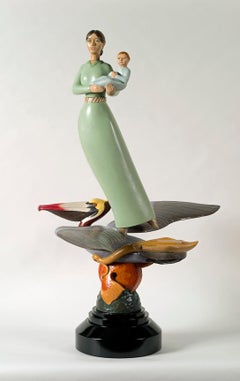
Stingaree
Located in Dallas, TX
"Stingaree" by artist David Everett is polychromed mahogany, and measures 43 3/8 x 40 1/4 x 21 1/2 inches. It is signed "© D EVERETT 2017". It depicts a mother and child, pelican and...
Category

2010s American Realist Figurative Sculptures

Materials

Mahogany, Paint

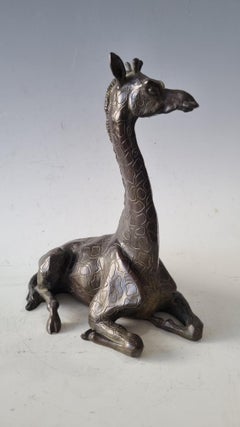
lying Giraffe Bronze by Sophie Martin 4/8
Located in Pasadena, CA
Lost wax bronze BBC (bronze Breith création 4/8) Animal sculptor Sophie MARTIN creates from inert clay a whole living animal kingdom. She freely observes the animal and captures and...
Category

2010s Contemporary Figurative Sculptures

Materials

Bronze

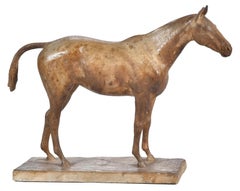
Finely rendered Equestrian Model Sculpture
Located in Greenwich, CT
a very fine Model Sculpture of a standing horse , finely rendered in patinated plaster, signed ‘MMM’ and dated 30 , w. rich burnished patina. Its quality and elegance are reminiscent...
Category

Early 20th Century Figurative Sculptures

Materials

Plaster

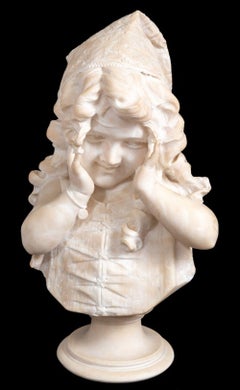
Neapolitan Girl
Located in Astoria, NY
Emilio Fiaschi (Italian, 1858-1941) Neapolitan Girl Alabaster Bust, late 19th century, depicting a young girl hiding her face behind her hands, on a socle, signed "E Fiaschi" to back...
Category

Late 19th Century Italian School Figurative Sculptures

Materials

Alabaster

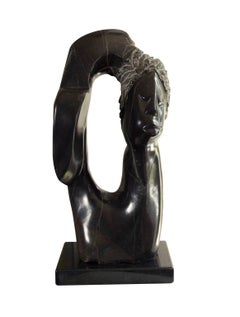
"Mermaid, " Carved Springstone by Farai Darare
Located in Milwaukee, WI
"Mermaid" is a unique springstone sculpture by the Shona artist Farai Darare. It depicts a woman's face and an abstracted body that loops around to frame an oval of negative space. This piece is expertly carved to showcase two textures from the same stone. This sculpture weighs 30 pounds (approximately 13.6 kg). 16 3/4" x 8" x 5 1/4" art 30 lbs Farai Walter Darare started working as a washer and polisher for his father's sculptures when he was seven years old. He worked and studied under the renowned Shona sculptors Chikumbirike, Runyanga, Muropa, and his father Casper Darare...
Category

Early 2000s Figurative Sculptures

Materials

Stone

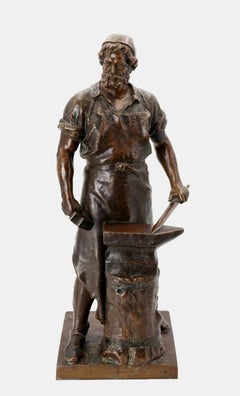
The Blacksmith of Solingen / - The Double-edged Sword -
Located in Berlin, DE
Wilhelm Albermann (1835 Werden an der Ruhr - 1913 Cologne), The Blacksmith of Solingen, after 1895. Bronze-color patinated zinc cast on plinth, 47 cm (height) x 20 cm (width) x 16 cm (depth), weight 5.5 kg. Signed “Albermann.” on the plinth and identified as a cast by “AKT.[TIEN] GES.[ELLSCHAFT] GLADENBECK BERLIN”. Dedication on the front: “Mr. Ing. F. Kuhlmann to the wedding. Management and officials of the Hannoversche Waggonfabrik. Aircraft construction department". - The zinc showing through in spots, the patina somewhat stained, the right upper arm under the sleeve retouched in black. - The Double-edged Sword - The figure is a reduction of Wilhelm Albermann's 1895 fountain figure of the armourer of Solingen, who has always been identified with the historical blacksmith Peter Hahn. In 1839, Karl Simrock wrote the poem “The Blacksmith of Solingen" and thus coined the legendary figure. The first and penultimate verses read: A blacksmith spoke to Solingen With every bayonet, That came to his diligence: "Oh, that Fritz had it!" The war took its course, Many battles were fought, Which often made him fearful and anxious In his soul. The blacksmith had given up his trade to fight for Frederick the Great. Not least because of his strength and will to fight, the battles were won. With his fountain sculpture, Albermann has given the legendary blacksmith a figurative form and at the same time created a landmark for the city of Solingen, which was once famous for the art of sword forging and today still stands for the production of high-quality knives. During the bombing raid in November 1944, the fountain was destroyed along with the entire old town of Solingen. Only the head remained. The broad-shouldered blacksmith stands securely behind his anvil, his leather apron tied around him, and has just finished a sword blade with his own "weapon" - the blacksmith's hammer. His entire body shows the strength with which he wields the hammer, but also the strain of this activity, as evidenced by the wide open shirt, the somewhat 'untidy' apron, and especially the furrowed face. However, the blacksmith does not look at the finished work, but resolutely and at the same time thoughtfully into the distance, in line with the quoted verse from Simrock's poem that the battles "often made him fearful and anxious in his soul". There is certainly something melancholy in his gaze, fed by the knowledge of the necessity of forging swords and taking up arms and their deadly use - experiences Albermann had to make during his own war missions. The flowing full beard gives his gaze into the distance an almost prophetic character. In keeping with the craft of the perfectly formed art of blacksmithing, the detailed casting reproduces the respective materials depicted in perfect form: the leather apron convincingly conveys the impression of leather and lies - also in the back view - like a second formed layer over the body, while the shirt and trousers illustrate their own textile qualities. Due to its masterful execution and profound content, the “Blacksmith of Solingen”, which has survived in its cast reproductions, remains Albermann's most famous work to this day. About the artist The son of a carpenter, Wilhelm Albermann began an apprenticeship as a joiner, but then followed his artistic calling and trained as a sculptor in Elberfeld. In 1855, at the age of twenty, he was drafted into the army in Berlin, where he served until 1857. Albermann attended the Berlin Art Academy on the side and began regular studies after his service. While still a student, he completed commissioned works for his teachers August Fischer and Hugo Hagen. His first independent commissions followed, enabling him to establish a flourishing sculpture studio in Cologne in 1865. His artistic activities were repeatedly interrupted by military service, and he took part in the German-Danish War in 1864, the war against Austria in 1866, and the Franco-Prussian War in 1870/71. After his last war service, Albermann, already a respected artist, founded a commercial drawing school at the request of the city government, where he taught the modeling class and served as director until 1896. In 1890 he also worked for the "Society for the Promotion of Sculpture in the Rhineland and Westphalia". Albermann was one of the most prolific sculptors in Cologne in the second half of the 19th century. He created numerous monuments, fountains, tomb sculptures, architectural ornaments, and domestic statues. At its peak, his workshop employed up to thirty sculptors and stonemasons at a time. GERMAN VERSION Wilhelm Albermann (1835 Werden an der Ruhr - 1913 Köln), Der Schmied von Solingen, nach 1895. Bronzefarben patinierter Zinkguss auf gegossener Plinthe, 47 cm (Höhe) x 20 cm (Breite) x 16 cm (Tiefe), Gewicht 5,5 kg. Auf der Plinthe mit „Albermann.“ signiert und als Guss der „AKT.[TIEN] GES.[ELLSCHAFT] GLADENBECK BERLIN“ ausgewiesen. Schauseitige Widmung: „Herrn Ing. F. Kuhlmann zur Vermählung. Direktion und Beamte der Hannoverschen Waggonfabrik. Abt. Flugzeugbau“. - Punktuelles Durchscheinen des Zinks, Patina etwas fleckig, der rechte Oberarm unter dem Ärmel schwarz retuschiert. - Die Zweischneidigkeit des Schwertes - Die Figur ist eine Reduktion von Wilhelm Albermanns 1895 geschaffener Brunnenfigur des Waffenschmieds von Solingen, der seit jeher mit dem historischen Schmied Peter Hahn identifiziert wurde. 1839 hatte Karl Simrock das Gedicht „Der Schmied von Solingen“ verfasst und damit die legendäre Figur geprägt. Die erste und die vorletzte Strophe lauten: Zu Solingen sprach ein Schmied Bei jedem Bajonette, Das seinem Fleiß geriet: »Ach, daß der Fritz es hätte!« Der Krieg ging seinen Gang, Man schlug noch viele Schlachten, Die oft ihm angst und bang' In seiner Seele machten. Der Schmied hatte sein Handwerk ruhen lassen, um selbst für Friedrich den Großen zu kämpfen. Nicht zuletzt durch seine Kraft und seinen Kampfeswillen verliefen die Schlachten siegreich. Dem legendären Schmied verlieht Albermann mit seiner Brunnenskulptur eine bildliche Gestalt und schuf damit zugleich ein Wahrzeichen der Stadt Solingen, die einst für die Kunst des Schwerterschmiedens berühmt war und bis heute für die Herstellung qualitätvoller Messer einsteht. Beim Bombenangriff im November 1944 wurde mit der gesamten Solinger Altstadt auch der Brunnen zerstört. Einzig der Kopf blieb erhalten. Mit sicherem Stand und umgebundener Lederschürze steht der breitschultrige Schmied hinter seinem Amboss und hat gerade mit seiner eigenen ‚Waffe‘ – dem Schmiedehammer – eine Schwertklinge fertiggestellt. Seinem gesamten Körper ist die Kraft abzulesen, mit der er den Hammer führt, aber auch die Anstrengung dieser Tätigkeit, wovon das weit geöffnete Hemd, die etwas ‚unordentlich‘ arrangierte Schürze und vor allem das zerfurchte Gesicht zeugen. Der Schmied schaut aber nicht auf das vollendete Werk, sondern entschlossen und zugleich sinnierend in die Ferne, entsprechend der zitierten Zeile von Simrocks Gedicht, dass die Schlachten „oft ihm angst und bang‘ in seiner Seele machten“. Der Blick hat durchaus etwas Melancholisches, dass sich aus dem Wissen um die Notwendigkeit, Schwerter zu schmieden und zu den Waffen zu greifen und deren tödlichem Einsatz speist – Erfahrungen, die Albermann bei seinen eigenen Kriegseinsätze machen musste. Der wallende Vollbart verleiht dem in die Ferne schauenden Blick einen beinahe prophetischen Charakter. Dem Handwerk der formvollendenden Schmiedekunst entsprechend, gibt der detaillierte Guss die jeweils dargestellten Materialien in vollendeter Ausformung wieder: Die Lederschürze vermittelt überzeugend den Eindruck des Leders und liegt – auch in der Rückenansicht – wie eine zweite ausgeformte Schicht über dem Körper, während das Hemd und die Hose...
Category

1890s Realist Figurative Sculptures

Materials

Metal

Francisco Zuniga Bronze Sculpture, 1964, "Desnudo Acostada"
Located in Phoenix, AZ
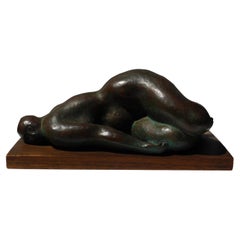
Francisco Zuniga bronze sculpture, Nude Lying Down. Edition: 3. #377 in the Zuniga catalog raisonne. Titled: "Desnudo Acostado". Measures: 6 7/8" H x 18" L x 19" W not including the...
Category

1960s Figurative Sculptures

Materials

Bronze

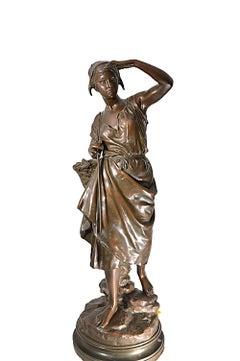
French antique bronze sculpture by Eutrope Bouret
Located in Berlin, DE
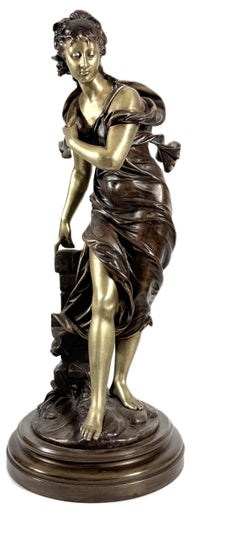
This is an outstanding bronze statue of Eutrope Bouret, signed on the base, by the very well-known French artist Eutrope Bouret (1833-1906). French antique bronze sculpture by Eutro...
Category

19th Century Art Nouveau Figurative Sculptures

Materials

Bronze

Amazone
Located in Berlin, DE
ALBERT-ERNEST CARRIER-BELLEUSE French 1824 - 1887 signed: A. CARRIER Bronze Marmor Albert-Ernest Carrier-Belleuse (1824–1887) was a prominent French sculptor of the 19th centur...
Category

1870s Art Nouveau Figurative Sculptures

Materials

Bronze

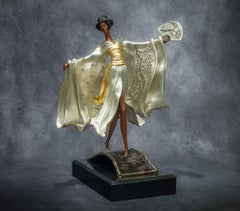
Asian Princess
Located in Greenwich, CT
Erté created many costumes and artworks inspired by his travels and experiences with the countries and cultures of the Asian world. In addition, the French music halls which were an ...
Category

20th Century Art Deco Figurative Sculptures

Materials

Bronze

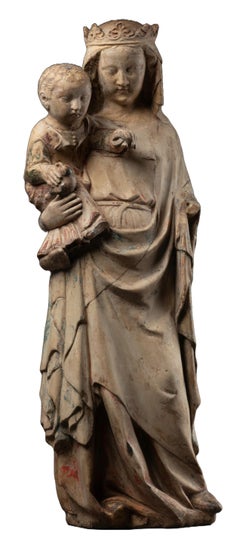
Limestone figure of Virgin and child, Lorraine, 14th century, French Gothic
Located in PARIS, FR
Virgin and Child with Goldfinch Workshops of Metz, Lorraine, circa 1330 Limestone carved in the round with remains of polychromy Height: 61 cm The sculpture of the Virgin and Child ...
Category

15th Century and Earlier Gothic Figurative Sculptures

Materials

Limestone

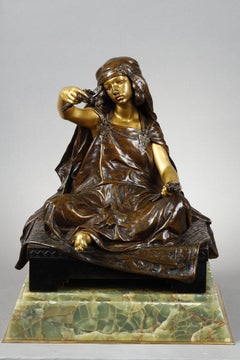
Young girl from Bou-Saada
Located in PARIS, FR
Young girl from Bou-Saada by Louis-Ernest BARRIAS (1841-1905) Rare bronze sculpture with a triple, dark brown, nuanced brown and gilded patina Signed on the base " E. Barrias " Cast...
Category

Early 1900s French School Figurative Sculptures

Materials

Bronze

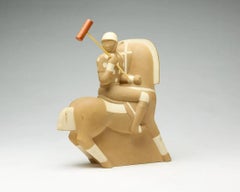
Early 20th Century Ceramic Sculpture of a Polo Player and Horse
By Waylande Gregory
Located in Beachwood, OH
Waylande Gregory (American, 1905-1971) Polo Player, c. 1930s Ceramic Inscribed signature on bottom 11 x 8.5 inches Waylande Gregory was considered a major American sculptor during the 1930's, although he worked in ceramics, rather than in the more traditional bronze or marble. Exhibiting his ceramic works at such significant American venues for sculpture as the Whitney Museum of American Art in New York City and at the venerable Pennsylvania Academy of the Fine Arts in Philadelphia, he also showed his ceramic sculptures at leading New York City galleries. Gregory was the first modern ceramist to create large scale ceramic sculptures, some measuring more than 70 inches in height. Similar to the technique developed by the ancient Etruscans, he fired his monumental ceramic sculptures only once. Gregory was born in 1905 in Baxter Springs, Kansas and was something of a prodigy. Growing up on a ranch near a Cherokee reservation, Gregory first became interested in ceramics as a child during a native American burial that he had witnessed. He was also musically inclined. In fact, his mother had been a concert pianist and had given her son lessons. At eleven, he was enrolled as a student at the Kansas State Teacher's College, where he studied carpentry and crafts, including ceramics. Gregory's early development as a sculptor was shaped by the encouragement and instruction of Lorado Taft, who was considered both a major American sculptor as well as a leading American sculpture instructor. In fact, Taft's earlier students included such significant sculptors as Bessie Potter Vonnoh and Janet Scudder. But, Taft and his students had primarily worked in bronze or stone, not in clay; and, Gregory's earliest sculptural works were also not in ceramics. In 1924, Gregory moved to Chicago where he caught the attention of Taft. Gregory was invited by Taft to study with him privately for 18 months and to live and work with him at his famed "Midway Studios." The elegant studio was a complex of 13 rooms that overlooked a courtyard. Taft may have been responsible for getting the young man interested in creating large scale sculpture. However, by the 1920's, Taft's brand of academic sculpture was no longer considered progressive. Instead, Gregory was attracted to the latest trends appearing in the United States and Europe. In 1928 he visited Europe with Taft and other students. "Kid Gregory," as he was called, was soon hired by Guy Cowan, the founder of the Cowan Pottery in Cleveland, Ohio, to become the company's only full time employee. From 1928 to 1932, Gregory served as the chief designer and sculptor at the Cowan Pottery. Just as Gregory learned about the process of creating sculpture from Taft, he literally learned about ceramics from Cowan. Cowan was one of the first graduates of Alfred, the New York School of Clayworking and Ceramics. Alfred had one of the first programs in production pottery. Cowan may have known about pottery production, but he had limited sculptural skills, as he was lacking training in sculpture. The focus of the Cowan Pottery would be on limited edition, table top or mantle sculptures. Two of the most successful of these were Gregory's "Nautch Dancer," (fig. 1) and his "Burlesque Dancer," (fig. 2). He based both sculptures on the dancing of Gilda Gray, a Ziegfield Follies girl. Gilda Gray was of Polish origin and came to the United States as a child. By 1922, she would become one of the most popular stars in the Follies. After losing her assets in the stock market crash of 1929, she accepted other bookings outside of New York, including Cleveland, which was where Gregory first saw her onstage. She allowed Gregory to make sketches of her performances from the wings of the theatre. She explained to Gregory, "I'm too restless to pose." Gray became noted for her nautch dance, an East Indian folk dance. A nautch is a tight, fitted dress that would curl at the bottom and act like a hoop. This sculpture does not focus on Gray's face at all, but is more of a portrait of her nautch dance. It is very curvilinear, really made of a series of arches that connect in a most feminine way. Gregory created his "Burlesque Dancer" at about the same time as "Nautch Dancer." As with the "Nautch Dancer," he focused on the movements of the body rather than on a facial portrait of Gray. Although Gregory never revealed the identity of his model for "Burlesque Dancer," a clue to her identity is revealed in the sculpture's earlier title, "Shimmy Dance." The dancer who was credited for creating the shimmy dance was also Gilda Gray. According to dance legend, Gray introduced the shimmy when she sang the "Star Spangled Banner" and forgot some of the lyrics, so, in her embarrassment, started shaking her shoulders and hips but she did not move her legs. Such movement seems to relate to the "Burlesque Dancer" sculpture, where repeated triangular forms extend from the upper torso and hips. This rapid movement suggests the influence of Italian Futurism, as well as the planar motion of Alexander Archipenko, a sculptor whom Gregory much admired. The Cowan Pottery was a victim of the great depression, and in 1932, Gregory changed careers as a sculptor in the ceramics industry to that of an instructor at the Cranbrook Academy in Bloomfield Hills, Michigan. Cranbrook was perhaps the most prestigious place to study modern design in America. Its faculty included the architect Eliel Saarinen and sculptor Carl Milles. Although Gregory was only at Cranbrook for one and one half years, he created some of his finest works there, including his "Kansas Madonna" (fig. 3). But, after arriving at Cranbrook, the Gregory's had to face emerging financial pressures. Although Gregory and his wife were provided with complimentary lodgings, all other income had to stem from the sale of artworks and tuition from students that he, himself, had to solicit. Gregory had many people assisting him with production methods at the Cowan Pottery, but now worked largely by himself. And although he still used molds, especially in creating porcelain works, many of his major new sculptures would be unique and sculpted by hand, as is true of "Kansas Madonna." The scale of Gregory's works were getting notably larger at Cranbrook than at Cowan. Gregory left the surface of "Kansas Madonna" totally unglazed. Although some might object to using a religious title to depict a horse nursing its colt, it was considered one of Gregory's most successful works. In fact, it had a whole color page illustration in an article about ceramic sculpture titled, "The Art with the Inferiority Complex," Fortune Magazine, December, 1937. The article notes the sculpture was romantic and expressive and the sculpture was priced at $1,500.00; the most expensive sculpture in the article. Gregory was from Kansas, and "Kansas Madonna" should be considered a major sculptural document of Regionalism. Gregory and his wife Yolande moved to New Jersey in the summer of 1933. And the artist began construction on his new home in the Watchung Mountains of Bound Brook (Warren today) in 1938. His enormous, custom kiln was probably constructed at the start of 1938. Gregory's new sculptures were the largest ceramic sculptures in western art, in modern times. To create these works of ceramic virtuosity, the artist developed a "honeycomb" technique, in which an infrastructure of compartments was covered by a ceramic "skin." Science and atomic energy were a theme in Gregory's most significant work, the "Fountain of the Atom" (fig. 4), at the 1939 New York's World Fair. This major work included twelve monumental ceramic figures at the fairground entrance from the newly constructed railway entrance, giving the work great visibility and prominence. The framework of the fountain itself was of steel and glass bricks. It consisted of a bluish green pool which was sixty five feet in diameter. Above it were two concentric circular tiers, or terraces, as Gregory called them; the first wider than the second. On the first terrace were eight "Electrons," comprised of four male and four female terra cotta figures, each approximately 48 inches high. These relate to the valance shell of the atom. Above them on a narrower terrace, were the much larger and heavier terra cotta figures depicting the four elements, each averaging about 78 inches in height and weighing about a ton and a half. Of the four, "Water" and "Air" were male, while "Earth" and "Fire" were female. This terrace represents the nucleus of the atom. In the center of the fountain, above the "Elements," was a central shaft comprised of sixteen glass tubes from which water tumbled down from tier to tier. At the top, a colorful flame burned constantly. The glass block tiers were lit from within, the whole creating a glowing and gurgling effect. Since the fair was temporary, the figures could be removed after its closing. But the credit for the design of the structure of the fountain belongs to collaborator Nembhard Culin, who was responsible for several other structures on the fair grounds as well. Although Gregory created a figure of "Fire" for the "Fountain of the Atom," he also executed a second, slightly smaller but more defined version which he exhibited at various locations (including Cranbrook, Baltimore Museum, etc.) in 1940-1941, during the second year of the fair (fig.5). Measuring 61 inches in height, "Fire" may be a metaphor for sexual energy, as well as atomic energy. Gregory stated, "Fire is represented by an aquiline female figure being consumed in endless arabesques of flame." Portraiture was also a significant focus of Gregory's sculpture. Gregory produced many commissioned portraits of local people as well as celebrities. He created Albert Einstein's portrait from life (fig. 6, ca. 1940) after Einstein had seen Gregory's "Fountain of the Atom." He also sculpted some of the leading figures in entertainment, including 2 sculptures of Henry Fonda, who became a personal friend. Gregory also sculpted a series of idealized female heads, both in terra cotta and in porcelain. These include "Girl with Olive" (ca. 1932) and "Cretan Girl;"(ca. 1937) both are very reductive and almost abstract works that call to mind Constantine Brancusi's "Mademoiselle Pogany" (1912, Philadelphia Museum of Art). But perhaps one of his most original female heads is "Head of a Child" (fig. 7, ca. 1933), a sensitive white glazed terra cotta portrayal with elaborately crafted braded hair, was originally created as one of a pair. Gregory also produced sculptural works for the Works Progress Administration. The WPA was a work relief project that greatly helped artists during the great depression. Founded by the Federal Government in 1935, an estimated 2500 murals were produced. Among these public works were the iconic post office murals. But, among the painted murals were also sculptural relief murals including Gregory's "R.F.D.," 1938, for the Columbus, Kansas Post Office. But, Gregory's largest WPA relief...
Category

1930s Figurative Sculptures

Materials

Ceramic

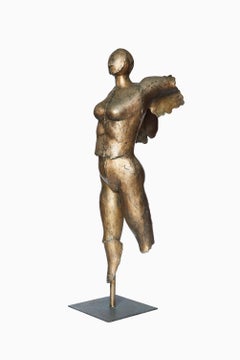
Large Nike Torso-Bronze Sculpture Ed. 1/6
Located in Zug, CH
Hermann Rastorfer was a draftsman, painter, sculptor, illustrator, ceramist, designer, poster artist, developer of advertising concepts and communication campaigns, inventor, and architect. He began as a typesetter in Salzburg. In the mid-1950s, he moved to Germany, where he soon founded his own studio for graphic design and advertising. His goal was always to give each product a distinctive, highly recognizable appearance. He designed his own design line for the German pharmaceutical company Boehringer Ingelheim, artistic cover images for numerous paperbacks from renowned publishers, and packaging for well-known products such as Ferrero Küsschen, Mon Chéri, Martell cognac...
Category

21st Century and Contemporary Modern Figurative Sculptures

Materials

Bronze

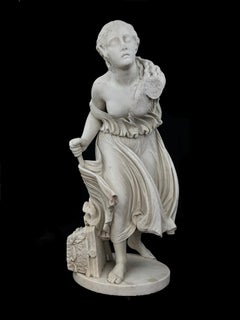
NYDIA, THE BLIND FLOWER GIRL OF POMPEII Marble Sculpture 1856-1870
Located in Soquel, CA
Randolph John Rogers (American, 1825 - 1892) Randolph Rogers' Nydia, the Blind Flower Girl of Pompeii debuted in 1856 to critical and public acclaim, solidifying Rogers’ position as a pre-eminent American sculptor and it remains one of the artist’s most celebrated works today. The subject of Nydia is drawn from Edward Bulwer-Lytton's The Last Days of Pompeii 1834. After touring the ruins of the ancient city in 1833, and inspired by the stories of blinding volcanic ash, he composed the tale of Nydia, a slave who led her master, Glaucus, to safety. Rogers depicts Nydia at the moment that she and Glaucus have become separated in their perilous journey through the rubble and Nydia seeks familiarity in the surrounding chaos, her distress evident in her pained expression. The grace of the sculpture is at odds with the turmoil portrayed; a toppled Corinthian capital lies at her feet and obstructs her next step, indicated by the tilt of her back foot and grip on her walking stick. Examples of this model can be found in major American collections, including The Metropolitan Museum of Art, the Art Institute of Chicago, the Detroit Institute of Arts, the Los Angeles County Museum of Art, and the Museum of Fine Arts, Boston. Literature, Millard F Rogers, Jr. Randolph Rogers, American Sculptor in Rome. University of Massachusetts Press, 1971, American Figurative Sculpture in the Museum of Fine Arts Boston. Museum of Fine Arts, Boston, 1986. Joyce K Schiller. "Nydia, A Forgotten Icon of the Nineteenth Century." Bulletin of the Detroit Institute of Arts, Born in Waterloo, New York, Randolph John Rogers became an expatriate* sculptor of idealized figures, portraits, and commemorative works in Neo-Classical* and Realist* styles. He worked in clay, plaster, marble and bronze, and lived both in Italy and the United States. He made 167 examples of Nydia in two sizes (varies depending on base height) 36" and 54'. Rogers was raised in Ann Arbor, Michigan, and as a young man did woodcuts* for the local newspaper, The Michigan Argus, and also worked as a baker's assistant and a dry goods clerk. In 1847, he moved to New York City, where he hoped to find work as an engraver*, but failing to do so, worked in a dry goods store owned by John Steward...
Category

1850s Italian School Figurative Sculptures

Materials

Marble

Antique Bronze Dog Portrait of a Cavalier King Charles "Thigley" circa 1905
Located in SANTA FE, NM
Antique Bronze Dog Portrait of a Cavalier King Charles "Thigley" French School (possibly Franck Burty Haviland) Lost wax bronze casting Circa 1910 5 7/8 x 9 x 3 1/4 A sophisticated bronze casting of a Cavalier King Charles spaniel made in lost wax casting (cire perdue) from the beginning of the 20th century by Valsuani Foundry. This an unusual bronze approached in its aesthetic that’s reminiscent of the work of great animal sculptors of the second half of the 19th century except in this presentation which is more avant-garde for the time with a much looser, more impressionistic execution. The patina is a superb bronze color, brown and slightly greenish, going in places towards a more antique green. The attitude of the dog is extremely well and sensitively rendered with the placement of material unlike the renderings of a bronze by Barye...
Category

Early 1900s French School Figurative Sculptures

Materials

Bronze

WTF
Located in Greenwich, CT
8.5 ft. version of Jim Rennert's sculpture "WTF." Edition of 3 American, b. 1958 Jim Rennert was born in 1958, and grew up in Las Vegas, Nevada, and Salt Lake City, Utah. After ten...
Category

2010s Contemporary Figurative Sculptures

Materials

Bronze

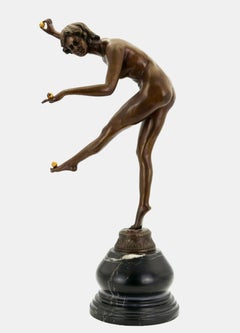
Juggler / - Artistic naturalness -
Located in Berlin, DE
Claire Jeanne Robertine Colinet (1880 Brussels - 1950 Asnières-sur-Seine), Juggler, around 1920. Brownish patinated bronze with gilded balls on a round, multi-profiled stone base (10...
Category

1920s Art Deco Nude Sculptures

Materials

Bronze

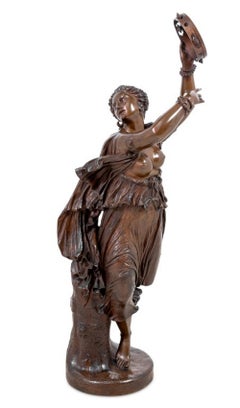
Jean Clesinger "Zingara" Patinated Bronze
Located in Astoria, NY
Jean Baptiste Clesinger (French, 1814-1883) "Zingara" Patinated Bronze Sculpture, 1857, cast by F. Barbedienne, the Neapolitan dancer upholding a tambourine, signed "J Clesinger, Rom...
Category

Late 19th Century Pre-Raphaelite Figurative Sculptures

Materials

Bronze

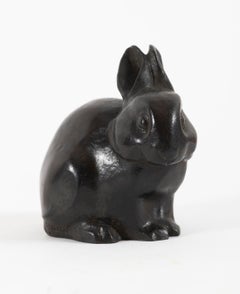
Lapin, by Sandoz, rabbit, animal, sculpture, bronze, 1910 s, swiss artist, cast
Located in Geneva, CH
Lapin, modèle 5, circa 1919-1921 Fondeur Susse Bronze with brown patina 6.5 x 4.9 x 6.5 cm Inscribed and foundry stamp : Ed.m.Sandoz, Susse Frères Editeurs Certificate of authentici...
Category

1910s Modern Figurative Sculptures

Materials

Bronze

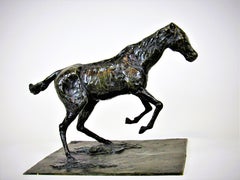
Edgard Degas: Horse Clearing an Obstacle (work 48 /certified by Comité Degas)
Located in Gent, VOV
Horse Clearing an Obstacle (work number 48) Bronze with dark brown green patina bearing the stamp of the signature "Degas", Numbered IV/IX and dated 1998 Posthumous lost wax casting as of 1998. Stamp of Valsuani. Signed Degas The work is a sought-after rarity in terms of Degas’ sculptures. This bronze is distinguished by the fact that it is a Valsuani bronze, meaning it faithfully records Degas’ wax version’s as it appeared at the time of its creation. Most Degas' bronzes that are found on the market were cast by Hébrard – these serialized bronzes are surmoulages, or “aftercasts,” that were cast from the modèle bronzes currently in the Norton Simon Museum (Pasadena). Because these Hebrard bronzes...
Category

1880s Impressionist Figurative Sculptures

Materials

Bronze

Eugène Laurent (1832-1898), The Beachcomber
Located in Berlin, DE
Eugène Laurent (1832-1898), The Beachcomber Inscribed "E. Laurent" on the base plate in the cast. H 63 cm Eugène Laurent studied at the École des Beaux-Arts in Paris and was awa...
Category

Early 19th Century Jugendstil Figurative Sculptures

Materials

Bronze

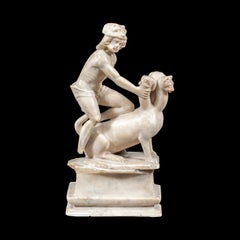
Baroque Roman sculptor - 17th century alabaster sculpture - Hercules Cerberus
Located in Varmo, IT
Alabaster sculpture - Hercules and Cerberus. Rome, 17th century. 18 x 9.5 x h 37 cm. Made entirely of carved alabaster. Separate alabaster base, missing left foot and arm, and othe...
Category

Mid-17th Century Baroque Figurative Sculptures

Materials

Alabaster

Demian Undressing
Located in London, GB
Bronze Numbered 1/10 66cm × 26cm × 36cm (incl. base) Ian Rank-Broadley is one of the foremost sculptors working today. His effigy of the late Queen Elizabeth II appears on all UK an...
Category

2010s English School Figurative Sculptures

Materials

Bronze

Homage a Colbert - mini
Located in PARIS, FR
" Omaggio a Colbert " 12 x 41 x 14 cm ed. 7/8 + 4 A.P. Bronze 2022 Stefano Bombardieri is known for large figurative sculptures of wild animal...
Category

21st Century and Contemporary Contemporary Figurative Sculptures

Materials

Bronze

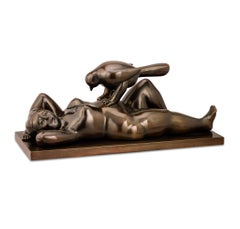
El Sueño by Fernando Botero
Located in New Orleans, LA
Fernando Botero 1932-2023 Colombian El Sueño (The Dream) Signed and numbered 4/6 Bronze Representing one of Fernando Botero's most coveted subjects and executed at the height of ...
Category

Late 20th Century Post-Modern Nude Sculptures

Materials

Bronze

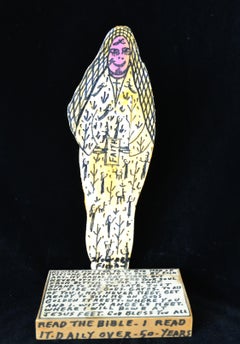
Howard Finster Signed Wooden Religious Cut-Out Sculpture, “Faith” 1991
Located in Chattahoochee Hills, GA
A deeply spiritual and visually symbolic wooden sculpture by revered folk artist and preacher Rev. Howard Finster (1916–2001), dated 1991 and numbered 21,000,267. This hand-painted c...
Category

1990s Folk Art Figurative Sculptures

Materials

Wood, Acrylic

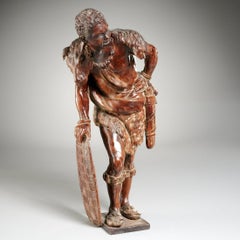
Orientalist African Hunter Leaning on His Shield 19th cent. Black Forest, German
Located in SANTA FE, NM
Orientalist African Hunter Leaning on His Shield Black Forest, School Switzerland  19th century Carved Wood 21 inches This is an exceptionally beautifu...
Category

19th Century Academic Figurative Sculptures

Materials

Wood

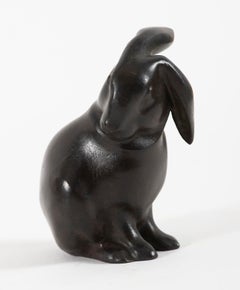
Lapin assis, tête tournée, Sandoz, 1910 s, bronze, animal, rabbits, rare proof
Located in Geneva, CH
Lapin assis, tête tournée, circa 1919-1921 Fondry Susse, Ed. 3/5 pcs circa 1919-1921 Rare bronze proof with a brown patina 8.5 x 5.5 x 6.5 cm Certificate of authenticity issued by th...
Category

1910s Modern Figurative Sculptures

Materials

Bronze

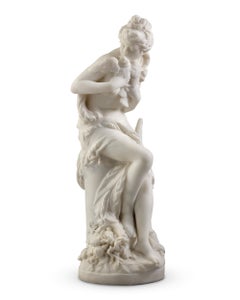
Allegory of Peace by Albert-Ernest Carrier-Belleuse
Located in New Orleans, LA
Albert-Ernest Carrier-Belleuse 1824–1887 French Allégorie de la Paix (Allegory of Peace) Signed “Carrier-Belleuse” White marble A vision of serenity and grace, Allégorie de la Pa...
Category

Late 19th Century Nude Sculptures

Materials

Marble

Ferdinand Preiss Hoop Girl And Sonny Boy Painted Bronze Figures
Located in Dallas, TX
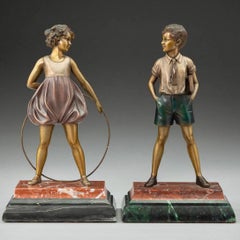
Ferdinand Preiss (German, 1882 - 1943) Hoop Girl & Sonny Boy Cold-painted bronze Circa 1930, Art Deco Period Dimensions: 8.18 Inches Tall x 4.65 Inches wide x 2.75 inches deep. ...
Category

1930s Art Deco Figurative Sculptures

Materials

Marble, Bronze

Read More

At Hosfelt Gallery, Bertoia Masterworks Complement Dynamic Contemporary Art

For nearly three decades, San Francisco–based Todd Hosfelt has curated against the grain — with a show on the legendary modernist Harry Bertoia the latest case in point.

This Weathered-Steel Sculpture Distills a Form of Protest into a Minimalist Monument

Part of Alejandro Vega Beuvrin’s “Barricada” series, the work is a subversive tribute to the street smarts of citizen activists.

How the Chunky, Funky Ceramics of 5 Mid-Century American Artists Balanced Out Slick Modernism

Get to know the innovators behind the pottery countercultural revolution.

Art Brings the Drama in These Intriguing 1stDibs 50 Spaces

The world’s top designers explain how they display art to elicit the natural (and supernatural) energy of home interiors.

Chryssa’s 1962 Neon Sculpture Was Way ahead of the Art-World Curve

By working with lettering, neon and Pop imagery, Chryssa pioneered several postmodern themes at a time when most male artists detested commercial mediums.

How to Spot a Fake KAWS Figure

KAWS art toys have developed an avid audience in recent decades, and as in any robust collectible market, counterfeiters have followed the mania. Of course, you don’t have to worry about that on 1stDibs, where all our sellers are highly vetted.

A Giant Wedding Cake Has Us Looking at Portuguese Tiles in a New Light

At Waddesdon Manor, artist Joana Vasconcelos has installed a three-tiered patisserie inspired by the narrative tile work of her homeland. We take a look at the cake sculpture and how Portuguese tiles have been used in architecture from the 17th century to today.

These Soft Sculptures Are Childhood Imaginary Friends Come to Life

Miami artist and designer Gabriela Noelle’s fantastical creations appeal to the Peter Pan in all of us.