Art Nouveau
to
146
785
221
155
94
170
Overall Width
to
Overall Height
to
1
541
783
100
208
93
105
73
8
9
17
9
12
16
115,057
64,994
57,828
27,234
14,964
9,437
6,413
5,734
4,189
3,065
2,524
2,379
2,235
652
910
245
18
935
642
331
300
287
183
182
173
159
123
114
92
80
69
59
59
58
48
47
42
679
213
191
143
121
87
38
35
34
29
266
215
701
621
Style: Art Nouveau
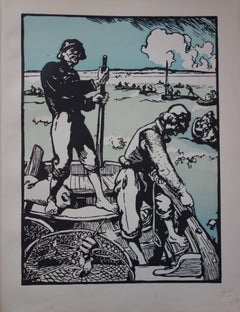
Fishermen - Original lithograph (1897/98)
Located in Paris, IDF
Auguste LEPERE (1849 - 1918)
Fishermen
Original litograph
1897/98
Printed on paper Vélin
Size 40 x 31 cm (c. 16 x 12")
INFORMATION : Published by 'Estampe Moderne, Paris, 1897-1...
Category
1890s Art Nouveau
Materials
Lithograph
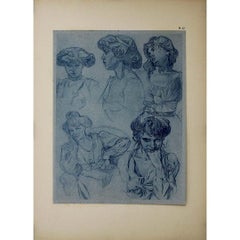
Alphonse Mucha
s 1902 Documents décoratifs - Planche 22
Located in PARIS, FR
Alphonse Mucha's name shines like that of a visionary artist who left an indelible mark on the aesthetics of the early 20th century. The year 1902 saw the publication of "Documents d...
Category
Early 1900s Art Nouveau
Materials
Paper, Lithograph
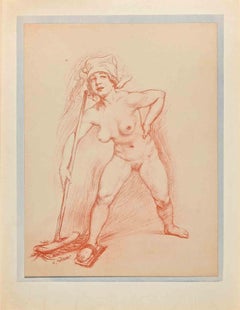
Cleaning Nude - Lithograph by Adolphe Willette - Early 20th Century
Located in Roma, IT
Cleaning Nude is an Original Lithograph realized by Willette (Adolphe Léon).
Good condition on a yellowed paper included a cardboard passpartout (33x25 cm).
Hand signed with sangui...
Category
Early 20th Century Art Nouveau
Materials
Lithograph
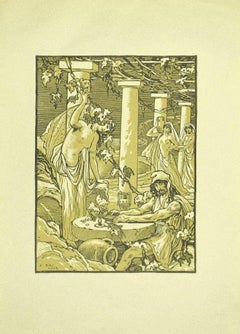
The Soldier and the Bacchants - Original Lithograph by Ferdinand Bac - 1922
Located in Roma, IT
The Soldier and the Bacchants is an original modern artwork realized by Ferdinand Bac (1859 - 1952) in 1922.
Signed and dated on plate on the lower left corner: F. Bac 1922.
Origin...
Category
1920s Art Nouveau
Materials
Lithograph
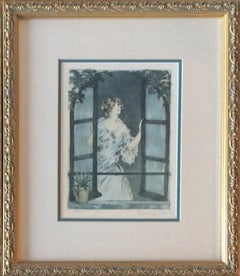
Spring, Art Nouveau Giclee Print after Louis Icart
By Louis Icart
Located in Long Island City, NY
Louis Icart, After, French (1888 - 1950) - Spring, Year: circa 1990, Medium: Giclee Print, numbered in pencil, Edition: 57/500, Size: 10 x 7.5 in. (25.4 x 19.05 cm), Frame Size: ...
Category
1990s Art Nouveau
Materials
Giclée
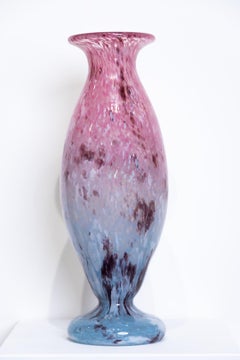
"Untitled Vase" Blown Glass, Pink
Blue, Speckled, Sparkling, Signed by Artist
Located in Detroit, MI
This speckled and sparkling glass vase is an exemplary piece of the Art Nouveau period of France and was created by legendary glass-smith Charles Schneider. The pink and blue speckle...
Category
Early 1900s Art Nouveau
Materials
Glass
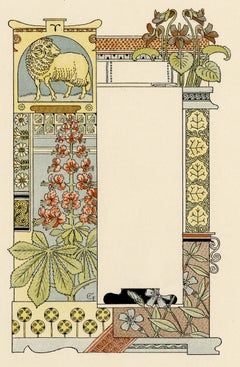
Aries-The Ram
Located in Fairlawn, OH
Signed with the artist's initials lower left
From: Les Douze Mois de 1889
As published in Vol. 9, No. 425 of Les Hommes d'Aujourd'hui.
Published by Sagot, Paris
Proof before letters...
Category
1880s Art Nouveau
Materials
Lithograph
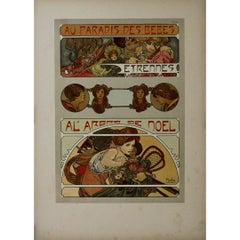
Alphonse Mucha
s 1902 Documents décoratifs - Pl 56 - Au paradis des bébés
Located in PARIS, FR
Alphonse Mucha's name shines like that of a visionary artist who left an indelible mark on the aesthetics of the early 20th century. The year 1902 saw the publication of "Documents d...
Category
Early 1900s Art Nouveau
Materials
Paper, Lithograph
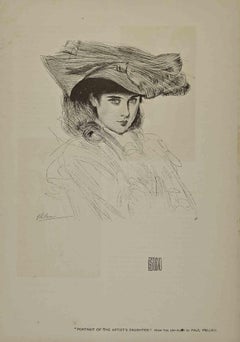
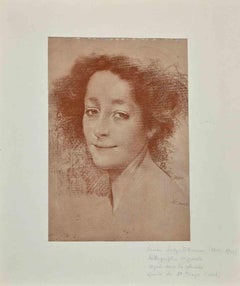
Portrait - Phototype after Paul César Helleu - Early-20th Century
Located in Roma, IT
Portrait is a phototype print realized by Paul Helleu in the Early-20th Century.
Good conditions .
The artwork is realized through deft expressive strokes.
Category
Early 20th Century Art Nouveau
Materials
Lithograph
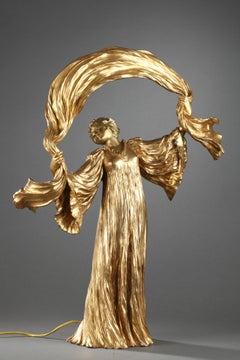
"Dancer with the scarf" lamp
Located in PARIS, FR
Agathon LÉONARD (1841–1923)
Lamp "Danseuse à L'Écharpe"
"Dancer with the scarf" lamp
A very rare sculpture forming a table lamp, made in gilded bronze
The scarf hides the light bulb
Signed on the side of the dress "A. Léonard Sclp"
Cast by Susse Frères (with founder stamp)
France
circa 1905
height 60 cm
A similar model is reproduced in "Les bronzes du XIXe siècle", P. Kjellberg, Les éditions de l'amateur, 2005, page 460.
Biography:
Léonard Agathon Van Weydeveldt, said Agathon Léonard (1841-1923) was a sculptor of Belgian origin naturalized French. After studying art at the Lille Academy of Fine Arts and then at the École des Beaux-Arts in Paris, Agathon Léonard settled in Paris for a long time, where after having exhibited at the Salon of 1868, he joined the Society of French artists in 1887, then to the National Society of Fine Arts in 1897. Very involved in the artistic movement of the Art Nouveau style, he exhibited many pieces (medallions, bronze statuettes and ceramics) finely worked.
Following an order from the Manufacture Nationale de Sèvres, dating from 1898, Agathon Léonard exhibited at the Universal Exhibition of 1900 in Paris his famous table centerpiece "Game of the scarf" in porcelain biscuit, composed of fifteen statuettes representing dancers with pleated dresses reminiscent of Loïe Fuller's choreographies or Neo-Greek dancers...
Category
Early 1900s Art Nouveau
Materials
Bronze
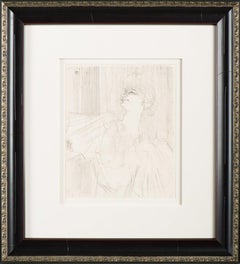
"Yvette Guilbert" by Toulouse-Lautrec
Located in Hinsdale, IL
TOULOUSE-LAUTREC, HENRI DE
(1864-1901)
"Yvette Guilbert – A Menilmontant de Bruant"
Delteil 255, Adhemar 311
Lithograph printed in black with beige t...
Category
1990s Art Nouveau
Materials
Lithograph
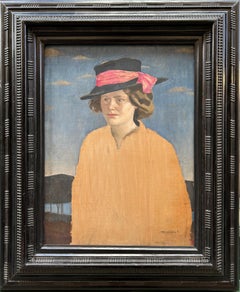
Portrait of Marguerite Folin, Gerald Brockhurst
Located in London, GB
Gerald Leslie Brockhurst
1890 – 1978
Portrait of Marguerite Folin
Oil on panel, signed lower right
Image size: 18 x 14 inches (45.7 x 34.3 cm)
Original frame
The sitter for this po...
Category
Early 20th Century Art Nouveau
Materials
Oil
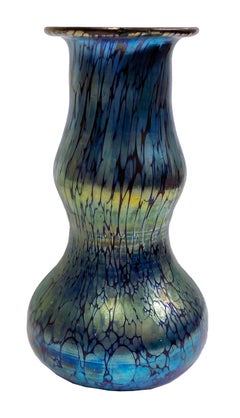
Diaspora Vase
By Loetz Glass
Located in Missouri, MO
Loetz
Diaspora Vase, c. 1900
Glass
Stamped on bottom
6 inches tall
3 inches diameter
This Loetz vase in the Papillon pattern has blue iridescent Papillon design covering the exterio...
Category
Early 20th Century Art Nouveau
Materials
Glass
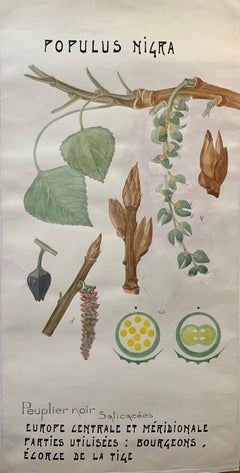
Early 20th C French Watercolor, botanical flowers from an University collection
Located in Woodbury, CT
Wonderful watercolor depicting a plant/flower. These were used at a Belgium University to teach the students about botany. Dating from the early 20th century. They are watercolor on ...
Category
Early 1900s Art Nouveau
Materials
Watercolor
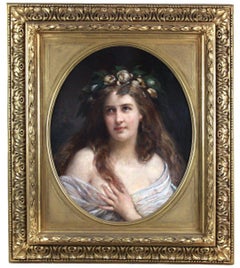
Oil On Canvas, Art Nouveau XIX century Portrait Lady With Oval Frame
Located in Gavere, BE
"Oil On Canvas, Art Nouveau XIX Portrait Lady With Oval Frame"
Oil on canvas Portrait of a lady, Art Nouveau style, signed Gustav Julius GRÜN (1823-1896)
German school of the 19th c...
Category
1880s Art Nouveau
Materials
Gold Leaf
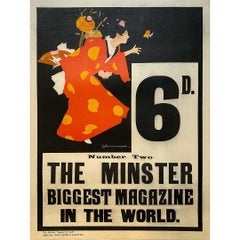
C. 1900 Original Poster The Minster biggest magazine in the world by Max Cowper
By Max Cowper
Located in PARIS, FR
Max Cowper 🏴(1860-1911) was a Dundee born painter. He was employed as an illustrator for the Dundee Courier before moving to London around 1901 to join the staff of the ...
Category
Early 1900s Art Nouveau
Materials
Linen, Paper, Lithograph
Style of Arthur B. Davies, Art Nouveau Muses, Reverse Glass Painting
Located in New York, NY
Style of Arthur B. Davies
Untitled (Muses), c. 1920
Reverse glass painting
19 x 24 in.
Reverse glass painting is a form of art that consists of applying paint to a piece of glass t...
Category
1920s Art Nouveau
Materials
Glass, Oil, Laid Paper
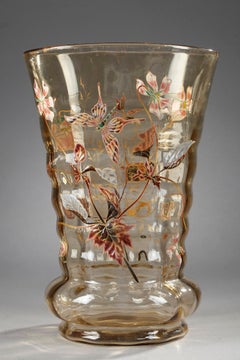
Vase Cristallerie with plants and butterfly
By Émile Gallé
Located in PARIS, FR
Cristallerie with plants and butterfly
by Emile GALLE (1846-1904)
Vase called "Cristallerie de Gallé"
with plants and butterfly decoration.
Gadrooned smoked glass,
decorated with op...
Category
Late 19th Century Art Nouveau
Materials
Glass
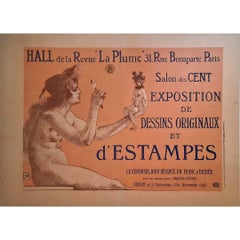
1896 original poster by Armand Rassenfosse Salon des cent
Located in PARIS, FR
In the heart of 19th-century Paris, the art scene flourished with an unparalleled vibrancy, attracting connoisseurs and creators from around the globe. One pivotal event that capture...
Category
1890s Art Nouveau
Materials
Linen, Paper, Lithograph
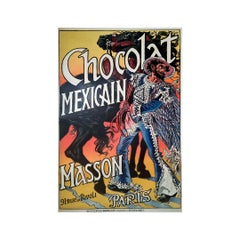
1892 Original poster by Eugène Grasset - Chocolat Mexicain Masson Paris
Located in PARIS, FR
Masson was a Parisian chocolatier who relied heavily on the Art Nouveau style to promote his products. His two favorite artists were Mucha and Grasset. "The Mexican Bandit," as this ...
Category
1890s Art Nouveau
Materials
Linen, Paper, Lithograph
Forest idyll / - Soulmate -
Located in Berlin, DE
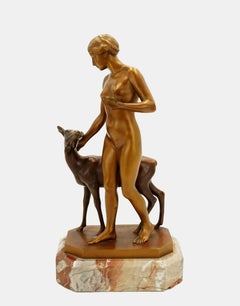
Rudolf Kaesbach (1873 Gladbach - 1955 Berlin), Forest idyll, around 1915. Bronze, gold and golden brown patina, with cast plinth, mounted on a marble base (5 cm high), total height 36 cm, dimensions of the bronze: 31 cm (height) x 17 cm (length) x 12 cm (width). Weight 4,6 kg, signed on the plinth "R.[udolf] KAESBACH".
- a few rubbed areas, overall in excellent condition for its age
- Soulmate -
The bronze sculpture depicts a young woman in an intimate exchange with a deer that accompanies her. The animal pauses to turn toward her, while the nude beauty slows her pace to look into the deer's eyes and tenderly caress it with her hand. The woman and the deer are in inner harmony. Even though her lips remain motionless, she speaks the language of the animal with which she is deeply connected.
The golden patina, which contrasts with the more naturalistic coloring of the deer, gives the young woman the appearance of a saint, even if she cannot be identified as such. At the same time, she evokes memories of Diana, the goddess of the hunt, or a nymph. But she lacks the ferocity. In her innocent naivety, she is more like a vestal virgin, who is not at home in the solitude of the forest. And yet, the young beauty, moving unclothed in the heart of nature, looks like a priestess with her hair tied up and a carefully carried bowl on her way to a sacred grove.
In order to open up the above-mentioned associations, Kaesbach deliberately designed the female figure in such a way that she cannot be identified as a specific person. He has created an allegory of natural femininity, characteristic of Art Nouveau, in which the deer is far more than a companion animal. It displays the same gracefulness as the young woman, and the inner resemblance between the two makes the deer appear as her other self. In animal terms, it embodies her inner being, which also gives the deer an allegorical character.
About the artist
Rudolf Kaesbach studied sculpture at the Hanau Academy and worked in a bronze foundry in Paris in 1900. In order to work as an independent artist, he opened a workshop in Düsseldorf, where he cast bronzes from models he designed. In 1902 he made his debut at the German National Art Exhibition in Düsseldorf. The following year Kaesbach went to the academy in Brussels. There he was inspired by contemporary Belgian sculpture, especially the work of Constantin Meunier. He moved to Berlin, where he opened a studio in the villa district of Grunewald and devoted himself to life-size marble sculptures and the design of bronzes. From 1911, he regularly presented his works at the major art exhibitions in Berlin, as well as in Düsseldorf and Malmö. Between 1936 and 1939, he also created models for the Rosenthal porcelain factory. From 1939 to 1944, Kaesbach was represented at the major German art exhibitions in Munich.
GERMAN VERSION
Rudolf Kaesbach (1873 Gladbach - 1955 Berlin), Waldidyll, um 1915. Gold und goldbraun patinierte Bronze mit gegossener Plinthe, auf einem Marmorsockel montiert (5 cm Höhe), Gesamthöhe 36 cm, Maße der Bronze: 31 cm (Höhe) x 17 cm (Länge) x 12 cm (Breite). Gewicht 4,6 kg, auf der Plinthe mit „R.[udolf] KAESBACH“ signiert.
- vereinzele beriebene Stellen, insgesamt in einem altersgemäß ausgezeichneten Zustand
- Seelenverwandtschaft -
Die Bronzeplastik veranschaulicht eine junge Frau im innigen Austausch mit einem sie begleitenden Reh. Das Tier hält inne, um sich zu ihr hochzuwenden, während die nackte Schönheit ihren Schritt verlangsamt, um dem Reh ebenfalls in die Augen zu schauen und es zärtlich mit der Hand zu liebkosen. Die Frau und das Reh sind in einem inneren Gleichklang. Auch wenn ihre Lippen unbewegt bleiben, spricht sie die Sprache des Tieres, mit dem sie auf eine tief empfundene Weise verbunden ist.
Die im Kontrast zur naturalistischeren Einfärbung des Rehs aufstrahlende goldfarbene Patina lässt die junge Frau wie eine Heilige erscheinen, auch wenn sich nicht als Heilige identifizierbar ist. Zugleich ruft sie Erinnerungen an die Jagdgöttin Diana oder eine Nymphe hervor. Dafür fehlt ihr allerdings die Wildheit. In ihrer unschuldigen Naivität gemahnt sie vielmehr an eine Vestalin, die freilich nicht in der Waldeinsamkeit zu Hause ist. Und doch wirkt die sich unbekleidet im Herzen der Natur bewegende junge Schönheit wie eine Priesterin, die sich mit hochgebundenem Haar und der vorsichtig getragenen Schale und dem Wege zu einem Heiligen Hain befindet.
Um die gennannten Assoziationen zu eröffnen, hat Kaesbach die Frauenfigur bewusst so gestaltet, dass sie nicht als konkrete Person identifizierbar ist. Damit hat er eine für den Jugendstil charakteristische Allegorie natürlicher Weiblichkeit geschaffen, bei der das Reh weit mehr als ein Begleittier ist. Es weist dieselbe grazile Anmut wie die junge Frau auf und der innere Gleichklag der beiden lässt das Reh als ihr anderen Ich erscheinen. Es verkörpert – ins Animalische übertragen - ihr inneres Wesen, wodurch auch dem Reh ein allegorischer Charakter zukommt.
zum Künstler
Rudolf Kaesbach studierte an der Akademie Hanau Bildhauerei und war im Jahr 1900 in einer Pariser Bronzegießerei tätig. Um sich als eigenständiger Künstler betätigen zu können, eröffnete er in Düsseldorf eine Werkstatt, in der er Bronzen nach selbstentworfenen Modellen goss. 1902 debütierte er auf der Deutschen Nationalen Kunstaustellung in Düsseldorf. Im Folgejahr ging Kaesbach an die Akademie nach Brüssel. Dort wurde er von der zeitgenössischen belgischen Bildhauerei, insbesondere vom Werk Constantin Meuniers, inspiriert. Zurückgekehrt zog er nach Berlin, wo er im Villenviertel Grunewald ein Atelier eröffnete und sich neben dem Entwurf für Bronzen der lebensgroßen Marmorbildhauerei widmete. Ab 1911 präsentierte er seine Werke regelmäßig auf den Großen Berliner Kunstausstellungen, aber auch in Düsseldorf und Malmö. Zwischen 1936 und 1939 fertigte er zudem Modelle für die Porzellan-Manufaktur Rosenthal an. Von 1939 bis 1944 war...
Category
1910s Art Nouveau
Materials
Bronze
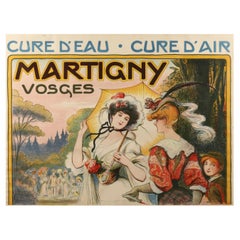
Martigny, Vosges
Located in Naples, Florida
Lucien Marie François Métivet (January 19, 1863 - July 16, 1932) [2] was a French poster artist, cartoonist, illustrator, and author who achieved notoriety during the Belle Epoque. B...
Category
Early 20th Century Art Nouveau
Materials
Lithograph
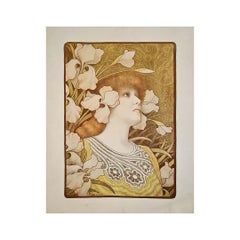
Paul Berthon - Sarah Bernhardt La Princesse Lointaine " The Faraway Princess "
By Paul Berthon
Located in PARIS, FR
Paul Emile Berthon ( 1872- 1909 ), was a French decorative artist.
He began studying painting in Villefranche. From 1893, he moved to Paris, where he attended the École normale d'enseignement du dessin. Among the courses taken at the time, those of the professor of decorative art Eugène Grasset had the greatest impact on him.
The first works of Paul Berthon (around 1896) show a style close to that of Grasset. By freeing himself from the style of his master, his own style develops based on a palette of autumnal pastels with sharp lines and contours.
This is his most famous lithograph, a portrait of Sarah Bernhardt in the title role of "La Princesse Lointaine...
Category
Early 1900s Art Nouveau
Materials
Linen, Paper, Lithograph
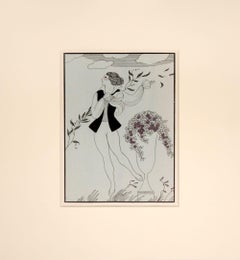
Nijinsky as
the poet
in Les Sylphides.
Located in London, London
BARBIER, George.
Nijinsky as 'the poet' in Les Sylphides.
London, C. W. Beaumont, 1913.
‘The designs, although somewhat fantastic in treatment, do convey the impression produced b...
Category
1910s Art Nouveau
Materials
Lithograph
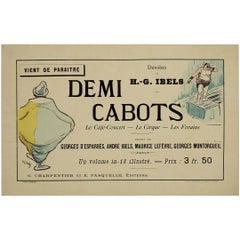
1896 poster by H. G. Ibels "Demi Cabots le café-concert le cirque les forains"
Located in PARIS, FR
The original 1896 poster by H. G. Ibels, titled "Demi Cabots le café-concert le cirque les forains," offers a vivid glimpse into the colorful world of Parisian café-concerts and circ...
Category
1890s Art Nouveau
Materials
Linen, Paper, Lithograph
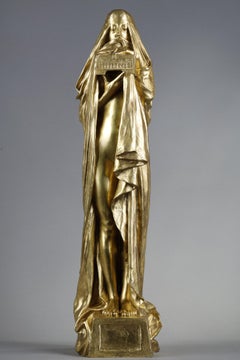
The Secret
Located in PARIS, FR
The Secret
by Pierre-Félix FIX-MASSEAU (1869-1937)
Sculpture in bronze with a gilded patina
Signed on the side " Fix-Masseau "
Cast by " Siot-Paris " (with the foundry mark)
France...
Category
Late 19th Century Art Nouveau
Materials
Bronze
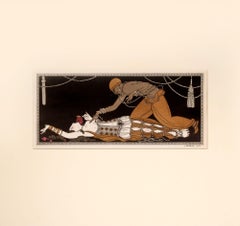
Nijinsky in Scheherazade.
Located in London, London
BARBIER, George.
Nijinsky in Scheherazade.
London, C. W. Beaumont, 1913.
‘The designs, although somewhat fantastic in treatment, do convey the impression produced by Nijinsky in h...
Category
1910s Art Nouveau
Materials
Lithograph
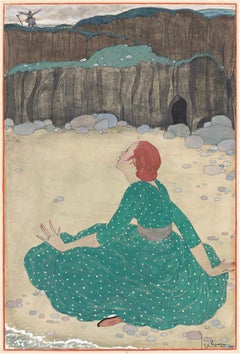
Art Nouveau Woman on Beach in Green Dress Romantic Story "Le Retour"
Located in Miami, FL
In this painting, Art Nouveau French illustrator Georges Lepape depicts a high moment of personal drama. He exquisitely renders a beautiful yet solitary woman sitting on the beach...
Category
1910s Art Nouveau
Materials
Silver
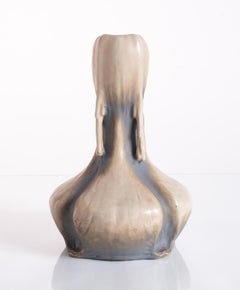
EDDA Icy Nordic Vase by RStK Amphora c. 1900
Located in Chicago, IL
Hard earthenware vase, matte white with blue-gray accents made to evoke ice and winter. The 1900 EDDA series from Amphora was named after two medieval Icelandic poems of Norse mythology...
Category
Early 1900s Art Nouveau
Materials
Stoneware
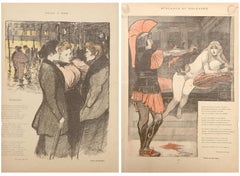
Femmes conversant dans la Rue, Art Nouveau Litho by Theophile Alexandre Steinlen
Located in Long Island City, NY
Theophile Alexandre Steinlen, French/Swiss (1859 - 1923) - Femmes conversant dans la Rue, Medium: Double Sided Lithograph, Size: 15 x 10.25 in. (38.1 x 26.04 cm), Description: From ...
Category
Early 20th Century Art Nouveau
Materials
Lithograph
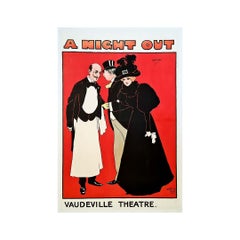
John Hassall A night out Circa 1900 Original Poster Theatre United Kingdom
By John Hassall
Located in PARIS, FR
Nice poster of the beginning of the century for the Vaudeville theater, entitled A night out and printed by David Allen & sons in London.
John Hassall ( 1...
Category
Early 20th Century Art Nouveau
Materials
Linen, Paper, Lithograph
Three Models - Stencil by Paul Iribe - 1908
By Paul Iribe
Located in Roma, IT
Three Models is an original lithograph realized by Paul Iribe, signed.
Sheet dimension: 31,5 x 27,5 cm.
With Passepartout dimension : 69 x 49 cm.
In excellent condition.
Here the...
Category
Early 1900s Art Nouveau
Materials
Stencil

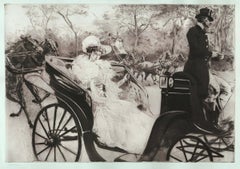
La Promenade
Located in Fairlawn, OH
La Promenade
Etching, soft-ground, aquatint & drypoint,
Signed in pencil lower left
Published by Edmund Sagot, Paris
Edition of 50 in black only, aside from the edition of 50 in co...
Category
Early 1900s Art Nouveau
Materials
Drypoint, Etching, Aquatint
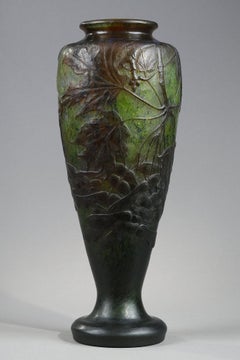
Vase "Erable plane"
By Émile Gallé
Located in PARIS, FR
"Norway maple" Vase
by Émile GALLE (1846-1904)
Rare baluster-shaped vase,
multi-layered glass with powder and gold foil inclusions.
Wheel-carved cameo decoration,
ornated with mapl...
Category
Early 1900s Art Nouveau
Materials
Blown Glass
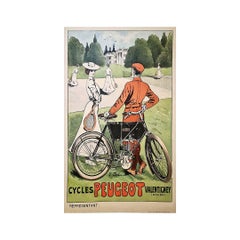
Cycles Peugeot Valentigney ( Doubs ) Circa 1900 - Original Poster - Art Nouveau
Located in PARIS, FR
Very beautiful poster of Thelem (Ernest BARTHÉLEMY LEM, 1869-1930) for the Peugeot cycles.
The Peugeot family began its rise to industrial power with the discovery of iron in the Do...
Category
Early 20th Century Art Nouveau
Materials
Linen, Paper, Lithograph
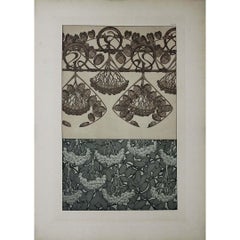
Alphonse Mucha
s 1902 Documents décoratifs - Planche 31
Located in PARIS, FR
Alphonse Mucha's name shines like that of a visionary artist who left an indelible mark on the aesthetics of the early 20th century. The year 1902 saw the publication of "Documents d...
Category
Early 1900s Art Nouveau
Materials
Paper, Lithograph
The Dancer Offset Print, Art Nouveau Style, Unframed, 17x17.75\"
Located in Brooklyn, NY
This reproduction of Gustav Klimt's The Dancer captures the essence of the original masterpiece, a work completed shortly before the artist's death in 1918. The Dancer is a mesmerizi...
Category
Early 2000s Art Nouveau
Materials
Offset

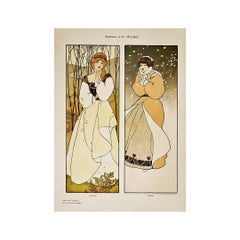
Art nouveau style poster by Lewis Baumer
Located in PARIS, FR
Beautiful art nouveau style poster by Lewis Baumer illustrating the seasons of fall and winter.
Lewis Christopher Edward Baumer is best known as an Engli...
Category
Early 1900s Art Nouveau
Materials
Paper, Lithograph
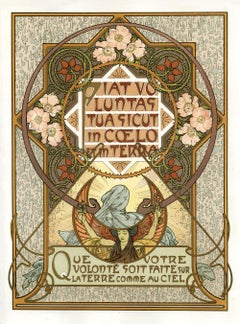
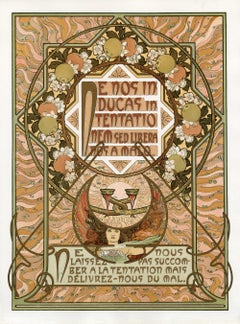
"On Earth as it is in Heaven" Original 1899 Color Lithograph by Alphonse Mucha
Located in Palm Beach, FL
Alphonse Mucha worked mainly as a poster artist and became an influential figure of Art Nouveau in late 1890s, when poster illustrations were emerging as popular art form and new pri...
Category
1890s Art Nouveau
Materials
Lithograph
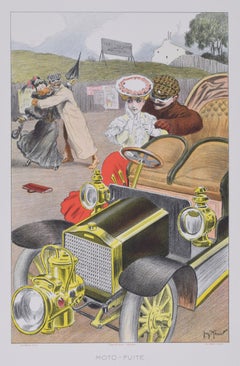
Moto-Fuite
Located in Fairlawn, OH
Moto-Fuite
Color lithograph, c. 1902
Signed in the stone lower right (see photo)
Published by Edmund Sagot (1857-1917), Paris
Printed by Atelier Chaix, Paris
Large edition with titl...
Category
Early 1900s Art Nouveau
Materials
Lithograph
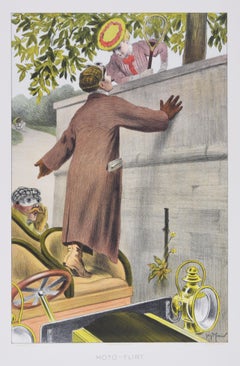
Moto-Flirt
Located in Fairlawn, OH
Moto-Flirt
Color lithograph, c. 1902
Signed in the stone lower right (see photo)
Published by Edmund Sagot (1857-1917), Paris
Printed by Atelier Chaix, Paris
Large edition with title...
Category
Early 1900s Art Nouveau
Materials
Lithograph
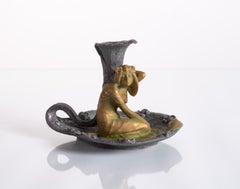
Ernst Wahliss Art Nouveau Iridescent Figural Candlestick
Located in Chicago, IL
Figural candlestick with a golden maiden on an iridescent form. This ceramic features a beautiful juxtaposition of the smooth texture of the woman against a psychedelic stone-like fl...
Category
1890s Art Nouveau
Materials
Ceramic
The Portrait - Lithograph by L. Levy-Dhurmer - 1909 ca.
Located in Roma, IT
The Portrait is an Original lithograph on paper realized by Lucien Lévy-Dhurmer (1865-1953) in 1909 ca.
Signed in the plate.
Good conditions.
Included a Passepartout: 42 x 35 cm
Category
1890s Art Nouveau
Materials
Lithograph
The Hair - Original lithograph - 1897
By Jules Leon Flandrin
Located in Paris, IDF
Jules FLANDRIN
The Hair
Original lithograph
1897/98
On vellum 40 x 31 cm (c. 16 x 12")
INFORMATION : Published by 'Estampe Moderne, Paris, 1897-1899 and printed by l'Imprimerie Cha...
Category
1890s Art Nouveau
Materials
Lithograph

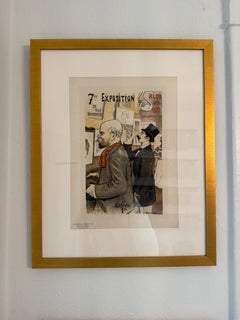
$299 Sale Price
28% Off
"Salon des Cent" from "Les Maitres de L
Affiche" series
Located in Hinsdale, IL
Frederic-Auguste Cazals
"Salon des Cent"
Original lithograph from "Les Maitres de L'Affiche" series
Printed by Imprimerie Chaix, Paris
Bearing MDL stamp lower right, from Issue #36...
Category
1890s Art Nouveau
Materials
Lithograph
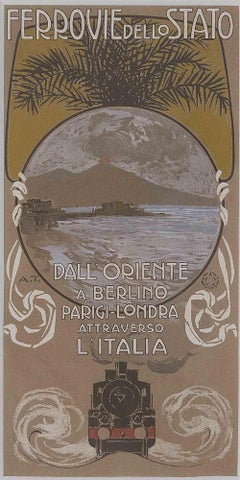
Italian State Railways - Lithograph by A. Terzi - Early 20th Century
Located in Roma, IT
Italian State Railways is an original artwork realized in the early century by Aleardo Terzi.
Mixed colored lithograph.
A vintage affiche depicting Ita...
Category
Early 20th Century Art Nouveau
Materials
Lithograph
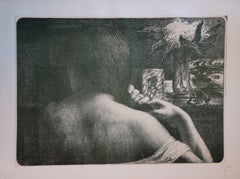
Veiled Woman - Original Lithograph by Ferdinand Bac - 1922
Located in Roma, IT
Veiled Woman is an original modern artwork realized by Ferdinand Bac (1859 - 1952) in 1922.
Signed and dated on plate on the lower left corner: F. Bac 19...
Category
1920s Art Nouveau
Materials
Lithograph
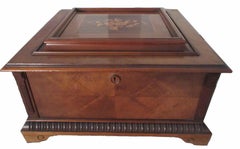
Polyphon Record Machine 1890-1900 Music
Located in Berlin, DE
Polyphon Record Automaton 1890-1900 Music
Large luxury model
Sounds beautiful in its original condition and has been retuned.
Records are approximately 40 cm in diameter.
Polyphon ...
Category
Late 19th Century Art Nouveau
Materials
Metal
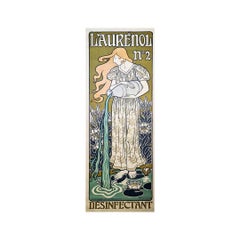
1898 Original Poster - Laurénol N°2 Désinfectant - Art Nouveau - Advertising
By Maurice Pillard Verneuil
Located in PARIS, FR
Very nice original poster from 1898 by Maurice Pillard Verneuil.
Standing on dark blue water lilies, a pretty woman with flowing orange hair pours water from a gray jug. The essence ...
Category
1890s Art Nouveau
Materials
Linen, Paper, Lithograph
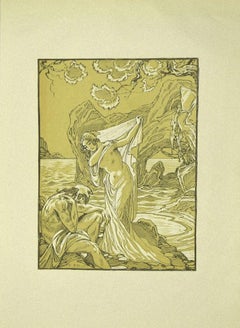
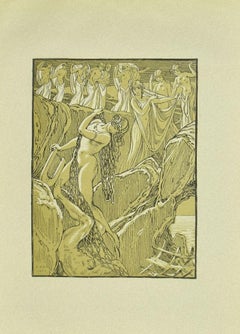
Bacchantes and Musicians - Original Lithograph by Ferdinand Bac - 1922
Located in Roma, IT
Bacchantes and Musicians is an original modern artwork realized by Ferdinand Bac (1859 - 1952) in 1923.
Signed and dated on plate on the lower left corn...
Category
1920s Art Nouveau
Materials
Lithograph
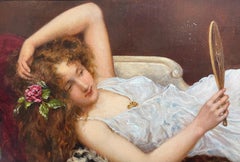
Antique Preraphealite Orientalist Painting of a Recumbent Empire Dresses Girl
Located in New York, NY
William Oliver was a British artist (1823-1901) that flourished in the areas of genre and figurative painting during the years 1867 to 1882. He speciali...
Category
1880s Art Nouveau
Materials
Oil
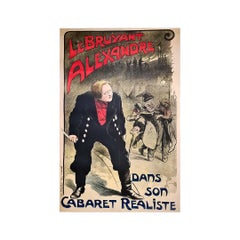
Art nouveau style poster presenting Le Bruyant Alexandre - Cabaret - Paris
Located in PARIS, FR
Art nouveau style poster from the beginning of the 20th century presenting Le Bruyant Alexandre in his realistic cabaret printed by the Thill printing ho...
Category
Early 1900s Art Nouveau
Materials
Linen, Paper, Lithograph
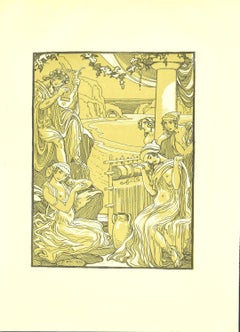
The Weaving - Original Lithograph by F. Bac - 1922
Located in Roma, IT
The Weaving is an original modern artwork realized by Ferdinand Bac (1859 - 1952) in 1922.
Original Lithograph on ivory paper.
Perfect conditions.
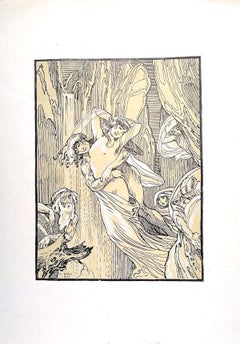
The Weaving is an very beautiful Liberty Style lithograph realized by the French artist Ferdinand Bac in the Second decade of the XX Century. The work depicts Penelope with the maids who sing and play ancient instruments. The background is characterized by a very calm sea and a cliff, in the central part we see the shaft of a column full of leaves and curtains.
This work has been realized the French artist Ferdinand Bac (1859 - 1952). Ferdinand-Sigismond Bach, known as Ferdinand Bac was a French cartoonist, artist and writer, son of an illegitimate nephew of the Emperor Napoleon. As a young man, he mixed in the fashionable world of Paris of the Belle Époque, and was known for his caricatures, which appeared in popular journals. He also traveled widely in Europe and the Mediterranean. In his fifties, he began a career as a landscape gardener. He attended Adolphe Thiers, Gambetta, Richard Wagner, Victor Hugo, Taine, Villiers de L'Isle-Adam, Paul Verlaine, Maurice Barrès, Barbey d'Aurevilly, Alphonse Daudet, Guy de Maupassant, Verdi, Gounod, Pierre de Nolhac, and many more other famous people of the time. He established himself as one of the first cartoonists and caricaturists of his time, as famous as Albert Robida...
Category
1920s Art Nouveau
Materials
Lithograph
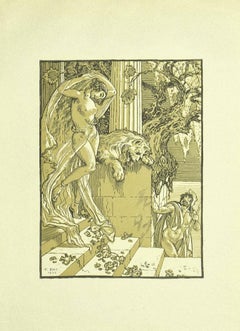
Female Nude Liberty - Original Lithograph by Ferdinand Bac - 1922
Located in Roma, IT
Female Nude Liberty is an original modern artwork realized by Ferdinand Bac (1859 - 1952) in 1922.
Signed and dated on plate on the lower left corner: F. Bac 1922.
Original Lith...
Category
1920s Art Nouveau
Materials
Lithograph
The Crying Women - Original Lithograph by Ferdinand Bac - 1922
Located in Roma, IT
The Falling Woman is an original modern artwork realized by Ferdinand Bac (1859 - 1952) in 1922.
Signed and dated on plate on the lower left corner: F. ...
Category
1920s Art Nouveau
Materials
Lithograph
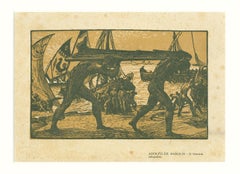
Il Timone - Woodcut by Adolfo De Karolis - Early 20th Century
Located in Roma, IT
Il Timone is an original woodcut on ivory-colored paper realized by Adolfo De Karolis.
The state of preservation is excellent.
Signed and titled, ...
Category
20th Century Art Nouveau
Materials
Woodcut
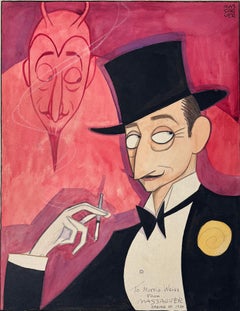
Cuban Artist - Caricature of Adolphe Menjou Debonair Devil
Located in Miami, FL
Framed Cuban Artist/Caricaturist Conrado Walter Massaguer presents Hollywood star Adolphe Menjou in a satirical dual portrait. In the foreground, the subject is seen in a dapper top hat, tux, fashionable cigarette and boutonnière, and is shown as being the epitome of being stylishly debonair. To make a larger point about this subject, Massaguer paints a cast shadow of Menjou as a burning red devil who studies his alter ego from above. Keeping with the artist's sarcasm, we see the good and bad in one image. Works by Massaguer are rare and this work is in keeping with his signature style. This work was most likely done on assignment for Life Magazine, Cosmopolitan, The New Yorker or Vanity Fair. Signed upper right. Inscribe lower right. Titled on verso. Unframed, Slight bend to board; toning to board; scattered faint foxing; pin point abrasions to margins, not affecting image. 19-1/2 x 15-1/8 inches board size.
Conrado Walter Massaguer y Diaz was a Cuban artist, political satirist, and magazine publisher. He is considered a student of the Art Nouveau. He was the first caricaturist in the world to broadcast his art on television.He was first caricaturist to exhibit on Fifth Avenue. He was the first caricaturist in the world to exhibit his caricatures on wood. He, and his brother Oscar, were the first magazine publishers in the world to use photolithographic printing.
Self portrait of Conrado Walter Massaguer, depicted on a carrousel ride, with the devil over his left shoulder and an angel over his right. (1945)
He created the magazine Social with his brother Oscar to showcase Cuban artistic talent. The duo later created the magazine Carteles, which became for a period the most popular magazine in Cuba, which was purchased by Miguel Ángel Quevedo in 1953.
In his life, he met and drew caricatures of Franklin D. Roosevelt, Walt Disney, Albert Einstein, the King of Spain, and many others.[ In sum total, he was the author of more than 28 thousand caricatures and drawings.Ernest Hemingway once had to refrain himself from punching Massaguer in the face after the artist drew an unflattering caricature of him. The dictator Gerardo Machado, however, did not punch Massaguer for his own unflattering caricature - he had the artist deported.
He was one of the most internationally renowned Cuban artists of his day, and his art is still regularly featured in galleries across the Western Hemisphere and Europe.
Early life
Massaguer was born on October 18, 1889, in Cárdenas, Cuba.[In 1892, his family moved to Havana.
When the Cuban War of Independence broke out, Massaguer's family escaped the country. From 1896 to 1908, he lived in Mérida, Mexico. However, during this time, his parents enrolled him in the New York Military Academy, where he stayed during school years.
In 1905, after graduating the military academy, he briefly attended the San Fernando school in Havana, where he was tutored by Ricardo de la Torriente and Leopoldo Romañach.
In 1906, less than a year later, he returned to the family home in Mexico.
Career as artist
Early career
While living in Yucatán, Mexico, Massaguer published his first caricatures in local newspapers and magazines. These included La Campana, La Arcadia, and the Diario Yucateco.
In 1908, he moved back to Havana. After returning to the island in 1908, Massaguer began mingling with Havana's aristocratic circles, forming close friendships with some of the city's most powerful and influential men, as well as winning the favor of many women who were quickly charmed by him. Massaguer, largely self-taught, honed his style using the avant-garde techniques he studied from the European and American magazines that were widely available in Cuba at the time.
Cover of the immensely popular Cuban magazine El Figaro, drawn by Massaguer in 1909. This cover depicts two bumbling, incompetent American tourists to the island.
He started drawing for El Fígaro, and was featured prominently on the cover in 1909.
After two years of refining his craft, Havana announced a poster contest aimed at attracting North American tourists to stay in the city during the winter months. Notable figures like Leopoldo Romañach, Armando Menocal, Rodríguez Morey, Jaime Valls, and others also entered the competition. The jury was particularly impressed by the modern execution and creative solution of one piece, signed by Massaguer, who was relatively unknown at the time.
The jury deliberations caused a great controversy.[5] The prize was ultimately awarded to the Galician painter Mariano Miguel, who had recently married the daughter of Nicolás Rivero, the wealthy owner of the conservative newspaper Diario de la Marina. Although Massaguer received only an honorable mention, the fraud scandal caused such an uproar that his name quickly entered the public spotlight, and he became an overnight sensation.
In 1910, he became co-owner of the advertising agency Mercurio, with Laureano Rodríguez Castells. At Mercurio, he led the Susini cigar campaign, and earned substantial wealth.
Massaguer has been described as a restless man, in both mind and body.After earning enough money from his art to begin traveling, he was almost always doing so. He constantly traveled between New York City and Havana, Mexico and France, Europe and the Americas.
In 1911, his reputation among the Havana socialites solidified when he organized his own first public caricature exhibit, and also the first Caricature Salon ever held in the Americas, hosted at Athenaeum of Havana (the Ateneo), and the Círculo de La Habana. Other exhibitors here included Maribona, Riverón, Portell Vilá, Valer, Botet, Barsó, García Cabrera, Carlos Fernández, Rafael Blanco, and Hamilton de Grau.
"Messaguer Visits Broadway." Caricatures of theatrical and literary figures. Elsie Janis, Raymond Hitchcock, S. Jay Kaufman (columnist), Ibanez, author of The Four Horsemen, and Frances White
In 1912, in the New York American Journal, he published his first Broadway drawings.
From 1913 to 1918, he was an editor for Gráfico.
Social
Main article: Social (magazine)
Cover of the magazine Social, July 7, 1923
In 1916, he created the magazine Social with his brother, Oscar H. Massaguer. Social's contributors included Guillén Carpentier, Chacón y Calvo, Enrique José Varona and others.Social has been described as Massaguer's great love in the magazine industry, and was the property that historians say he cared the most about. Social was an innovative magazine, being the first magazine in the world to use a modern printing process called photolithographic printing.
Social set cultural trends, not only in the fashion of Cuba, but in art, politics, and Cuban identity.[11] Social catered to a certain aesthetic in Cuba - that of the sophisticated elite socialite - but Massaguer would also use this magazine to ridicule and jibe against that same class of society when he found their personalities worthy of his contempt.
In Social, readers could find a variety of content, including short stories, avant-garde poetry, art reviews, philosophical essays, and serialized novels, as well as articles on interior design, haute couture, and fashion. Occasionally, the magazine also featured reports on sports such as motor racing, rowing, tennis, and horse riding.The cultural promotion efforts of both Massaguer and Emilio Roig de Leuchsenring are evident in the magazine. Notably, this period overlaps with their involvement in the Minorista Group, which was then at the forefront of the country's intellectual life.[5] Many contributors were devoted members of the group, leading some experts to consider Social as the cultural voice of the Minoristas.
One of the features of Social magazine was its section called "Massa Girls," which was a play on his own name, and pronounced with a glottal 'g' in a similar fashion to the letter in Massaguer.[12] Massaguer drew women as independent and free-thinking, and never drew the woman celebrity as a caricature of herself, but as a free agent surrounded by caricatures.[11] However, Massaguer himself has been described as a womanizer in his personal life, and hesitant to fully embrace every facet of women's liberation.
In 1916, he also established la Unión de Artes Gráficas and the advertising agency Kesevén Anuncios.[9]
The art critic Bernardo González Barroa wrote:
“Massaguer has solved the problem of working hard, living comfortably off what his art produces and not missing any artistic, sporting or social event. His broad, childish laugh, of a carefree individual who carries his luck hidden in a pocket, appears everywhere for the moment, disguising the pranks of pupils that lurk, mock and, finally, flash with satisfaction at finding the characteristic point after having analyzed a soul... Massaguer's personality is beginning to solidify now. He has been the best-known and most popular caricaturist for a long time, but his technique had not reached the security, the mastery of values that he presents in his latest works, which is very natural and explainable”[5]
Carteles
Main article: Carteles
Cover of the magazine Carteles, November 29, 1931
In 1919, Massaguer and his brother created the magazine Carteles.[9] Carteles gained the widest circulation of any magazine in Latin America, and the most popular magazine in Cuba for a time, until that title was claimed by Revista Bohemia. Carteles remained in print until July 1960.This magazine showcased Cuban commerce, art, sports, and social life before the revolution.
In 1924, Carteles took a more political turn, with articles criticizing Gerardo Machado's government. it became a prime example of the humor and graphic design employed by artists like Horacio Rodríguez Suria and Andrés García...
Category
1930s Art Nouveau
Materials
Ink, Watercolor, Illustration Board
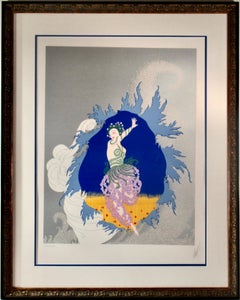
The Coming of the Spring
By Erté
Located in San Francisco, CA
This artwork titled "The Coming of Spring" 1982, is an original colors serigraph on Wove paper by renown Russian/French artist Erte, AKA Romain de Tirtoff, 1882-1990. It is hand sign...
Category
Late 20th Century Art Nouveau
Materials
Screen
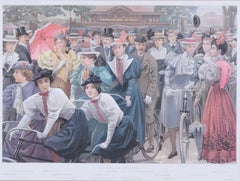
Au Bois De Boulogne (illustrating the congregation of French nobility outside
Located in Fairlawn, OH
Au Bois De Boulogne (illustrating the congregation of French nobility outside the Chalets du Cycle
Chromolithograph, 1897
Signed in the plate lower right corner
From the Special Supp...
Category
1890s Art Nouveau
Materials
Lithograph
"Lead Us Not Into Temptation" Original 1899 Color Lithograph by Alphonse Mucha
Located in Palm Beach, FL
Alphonse Mucha worked mainly as a poster artist and became an influential figure of Art Nouveau in late 1890s, when poster illustrations were emerging as popular art form and new pri...
Category
1890s Art Nouveau
Materials
Lithograph
Art Nouveau art for sale on 1stDibs.
Find a wide variety of authentic art Nouveau available for sale on 1stDibs. Works in this style were very popular during the 21st Century and Contemporary, but contemporary artists have continued to produce works inspired by this movement. If you’re looking to add art created in this style to introduce contrast in an otherwise neutral space in your home, the works available on 1stDibs include elements of yellow, orange, blue, green and other colors. Many Pop art paintings were created by popular artists on 1stDibs, including Alphonse Mucha, Jules Chéret, Henri de Toulouse-Lautrec, and Adolphe Willette. Frequently made by artists working with Lithograph, and Paper and other materials, all of these pieces for sale are unique and have attracted attention over the years. Not every interior allows for large Art Nouveau, so small editions measuring 1.58 inches across are also available. Prices for art made by famous or emerging artists can differ depending on medium, time period and other attributes. On 1stDibs, the price for these items starts at $1 and tops out at $198,500, while the average work sells for $1,683.
More Ways To Browse
Maggie Siner
Maplethorpe Calla
Marble Woman Head
Marcel Leprin
Mark Stock
Martin Hardie
Mauritz Lindstrom
Maximillien Luce
Michael Budden Central Park
Midcentury Matador Paintings
Mike Wright
Miracle On Ice
Mississippi River Painting
Monarch Of The Glen Painting
Moroccan Paintings Essaouira
Morpho Butterfly Art
Mount Tamalpais
Murray Dessner