Art Nouveau
to
146
785
221
155
94
170
Overall Width
to
Overall Height
to
1
541
783
100
208
93
105
73
8
9
17
9
12
16
115,057
64,994
57,828
27,234
14,964
9,437
6,413
5,734
4,189
3,065
2,524
2,379
2,235
652
910
245
18
935
642
331
300
287
183
182
173
159
123
114
92
80
69
59
59
58
48
47
42
679
213
191
143
121
87
38
35
34
29
266
215
701
621
Style: Art Nouveau
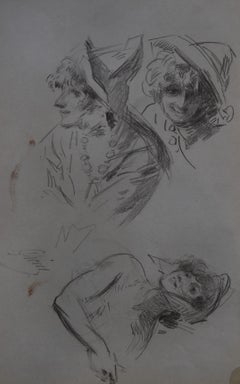
Jules Cheret (1836-1932) Three studies of women, original signed drawing
By Jules Chéret
Located in Paris, FR
Jules Cheret (1836-1932)
Three studies of women
charcoal on paper
signed on the bottom left
39 x 24.5 cm
This drawing of studies was part of the artist's workshop as so it bears the...
Category
1910s Art Nouveau
Materials
Charcoal
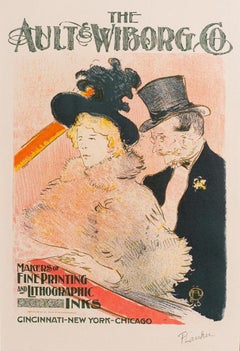
Au Concert
Located in Palm Beach, FL
Commissioned by The Ault & Wiborg Co., USA. Color Zincograph on wove paper, 1896. Hand-signed in black crayon. Wittrock C (of C) edition.
Reference: Wittrock; P28, vol. 2 pg 810.
...
Category
1890s Art Nouveau
Materials
Paper
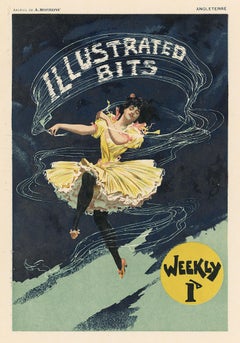
Albert Morrow
s Illustrated Bits, 1897 Art Nouveau lithograph on Japon paper
Located in Chicago, IL
Stone lithograph of Albert Morrow’s Illustrated Bits, printed by Imprimerie Chaix (Ateliers Chéret), Paris in 1897. This world-class example of lithography captures superior resoluti...
Category
1890s Art Nouveau
Materials
Lithograph
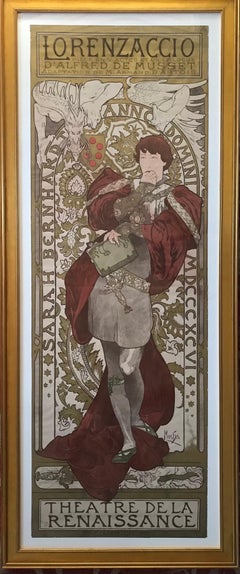
Alphonse Mucha 1896 Lorenzaccio Theatre De La Renaissance
Located in Dallas, TX
Alphonse Mucha (Czech, 1860-1939) Lorenzaccio
Printed: 1896
Printed By: F. Champenois, Paris
Hand signed in lower left.
Signed in plate; Mucha,
F. Champenois, Paris
Lithograph paper ...
Category
1890s Art Nouveau
Materials
Lithograph
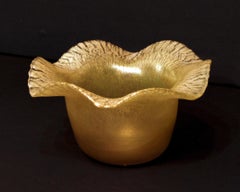
Gold Iridescent Favrile Art Glass Bowl
Located in Austin, TX
A delicate gold iridescent favrile art glass bowl by Tiffany and Co., featuring a flared and ruffled mouth.
Height: 3.25 in
Diameter: approx. 5.5 in.
Category
Early 20th Century Art Nouveau
Materials
Glass
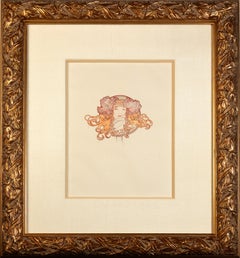
Late 19th century color lithograph art nouveau ornate bookplate female subject
Located in Milwaukee, WI
In 1897, Alphonse Mucha created illustrations for "Ilsee, Princesse de Tripoli." This double-sided print is a rare proof of an original color lithograph before any text from the story was added. This is a special edition print from edition 252 and is 12/35 on Chinese paper.
4.25" x 5.0625" image
20.75" x 17.5" frame
Alphonse Mucha was born in 1860 in what is now the Czech Republic. His career began in decorative painting for theater scenery...
Category
1890s Art Nouveau
Materials
Lithograph
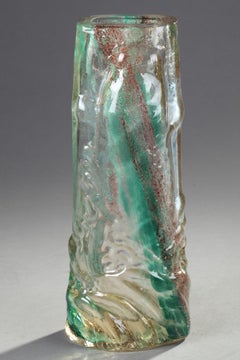
Vase with Carp
Located in PARIS, FR
Vase with Carp
by Eugène ROUSSEAU (1827-1890)
and Ernest LEVEILLE (1841–1913)
Sublime blown glass vase,
decorated in relief with a carp springing from the water.
Decorated with pol...
Category
1880s Art Nouveau
Materials
Glass
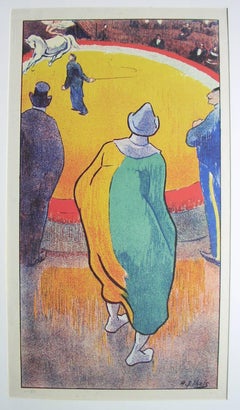
Au Cirque (At the Circus; also called Circus Ring).
Located in New York, NY
4 Color lithograph. 19 3/8 x 10 5/16; 23 x 16 5/16".
HG Ibels lower right on stone; No.86 lower left margin, pencil. Blind Stamp (upside down) upper left margin. Published by L...
Category
19th Century Art Nouveau
Materials
Lithograph
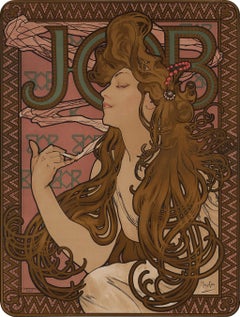
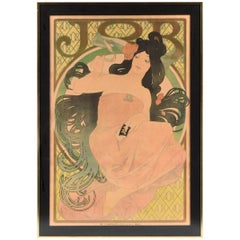
"Job" Alphonse Mucha, Art Nouveau, Female Form, Organic Flowing Design, Elegant
Located in New York, NY
Alphonse Mucha
Job, 1896
Signed lower right in plate
Lithograph printed in colors and metallic ink on wove paper
Image 20 3/8 x 15 1/4 inches
Sheet 20 1/4 x 15 1/2 inches
Provenance...
Category
1890s Art Nouveau
Materials
Paper, Ink, Lithograph
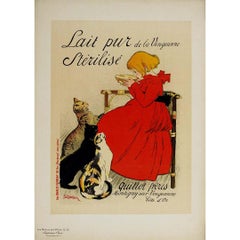
1897 Original Poster - Les Maîtres de l
affiche Pl. 95 Lait pur de la Vingeanne
Located in PARIS, FR
Théophile-Alexandre Steinlen's "Lait pur de la Vingeanne stérilisé" poster, created in 1897 for Les Maîtres de l'Affiche in plate number 95, is an outstanding...
Category
1890s Art Nouveau
Materials
Paper, Lithograph
Harper
s March (Plate 20)
Located in Greenwich, CT
Harper's March (Plate 20) is an 1886 lithograph of Edward Penfield's poster, printed at Imprimerie Chaix by Jules Chéret and included in the famed collection of Belle Époque posters...
Category
Late 19th Century Art Nouveau
Materials
Paper, Lithograph

"La Phalène des Isles de la Mer, " figurative art nouveau ornate print
Located in Milwaukee, WI
"La Phalène des Isles de la Mer" or "The Moth of the Islands of the Sea" is an original color lithograph by Franz Melchers. This piece was published in L'Estampe Moderne I, an Art No...
Category
1890s Art Nouveau
Materials
Lithograph
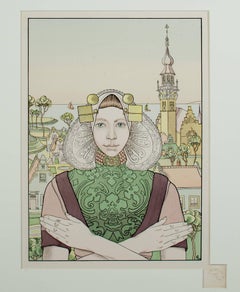
Late 19th century color lithograph art nouveau bookplate figure ornate text
Located in Milwaukee, WI
"From: Ilsée, Princess of Tripoli Ilsee's Vision" is an original color lithograph by Alphonse Mucha. Exquisite double-sided color lithographs from "Ilsee, Princesse de Tripoli," a ra...
Category
1890s Art Nouveau
Materials
Lithograph
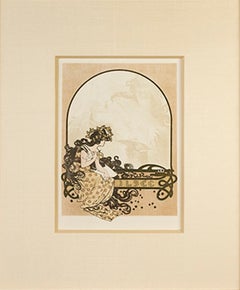
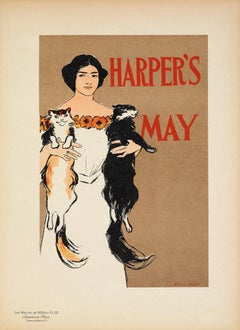
Harper
s May (Plate 115)
Located in Greenwich, CT
Harper's May (Plate 115) is an 1898 lithograph of Edward Penfield's poster, printed at Imprimerie Chaix by Jules Chéret and included in the famed collection of Belle Époque posters 'Les Maîtres de l'Affiche.' From the deluxe edition of 100 printed on japon - total edition size unknown. Framed in an ornate, gold-tone frame.
Designed by Edward Penfield for a May edition...
Category
Late 19th Century Art Nouveau
Materials
Paper, Lithograph
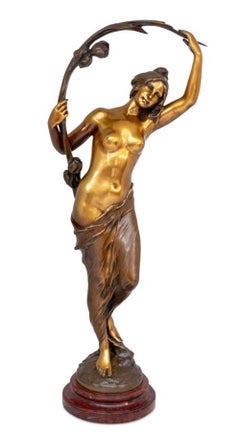
Charles Perron "Woman with Iris" Patinated Bronze
Located in Astoria, NY
Charles Theodore Perron (French, 1862-1934) "Woman with Iris" Gilt and Patinated Bronze Sculpture, late 19th century, the standing figure upholding Irises, on a circular base, signed...
Category
Late 19th Century Art Nouveau
Materials
Bronze
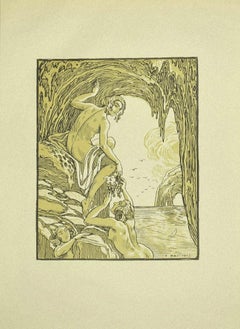
Bacchus and the Nymphs - Original Lithograph by Ferdinand Bac - 1922
Located in Roma, IT
Bacchus and the Nymphs is an original modern artwork realized by Ferdinand Bac (1859 - 1952) in 1922.
Signed and dated on plate on the lower right corner: F. Bac 1922.
Original Lit...
Category
1920s Art Nouveau
Materials
Lithograph
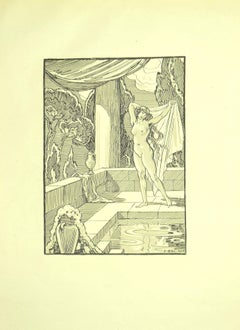
The Bath of Venus - Original Lithograph by F. Bac - 1922
Located in Roma, IT
The Bath of Venus is an original modern artwork realized by Ferdinand Bac (1859 - 1952) in 1922.
Original Lithograph on ivory paper.Image dimensions: 19 x 14 cm.
Signed and dated o...
Category
1920s Art Nouveau
Materials
Lithograph
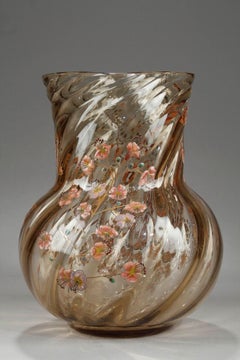
Cristallerie Vase with Cherry flower branches
By Émile Gallé
Located in PARIS, FR
Cristallerie Vase with Cherry flower branches
by Emile GALLE (1846-1904)
Vase called "Cristallerie de Gallé"
Vase with rounded body and squared collar,
Gadrooned smoked glass,
orna...
Category
Late 19th Century Art Nouveau
Materials
Glass
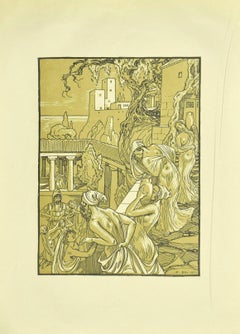
The Carriers of the Amphorae - Original Lithograph by F. Bac - 1922
Located in Roma, IT
The Carriers of Amphorae is an original modern artwork realized by Ferdinand Bac (1859 - 1952) in 1922.
Original Lithograph on ivory paper.
Signed and dated on plate on the lower right corner: F. Bac 1922.
Very good conditions.
The Carriers of Amphorae is an very beautiful Liberty Style lithograph realized by the French artist Ferdinand Bac in the Second decade of the XX Century. The work depicts some women carrying amphorae on their heads. Some of them cover up with their clothes and turn to a man. In the background we see a seascape with buildings and columns.
This work has been realized the French artist Ferdinand Bac (1859 - 1952). Ferdinand-Sigismond Bach, known as Ferdinand Bac was a French cartoonist, artist and writer, son of an illegitimate nephew of the Emperor Napoleon. As a young man, he mixed in the fashionable world of Paris of the Belle Époque, and was known for his caricatures, which appeared in popular journals. He also traveled widely in Europe and the Mediterranean. In his fifties, he began a career as a landscape gardener. He attended Adolphe Thiers, Gambetta, Richard Wagner, Victor Hugo, Taine, Villiers de L'Isle-Adam, Paul Verlaine, Maurice Barrès, Barbey d'Aurevilly, Alphonse Daudet, Guy de Maupassant, Verdi, Gounod, Pierre de Nolhac, and many more other famous people of the time. He established himself as one of the first cartoonists and caricaturists of his time, as famous as Albert Robida...
Category
1920s Art Nouveau
Materials
Lithograph
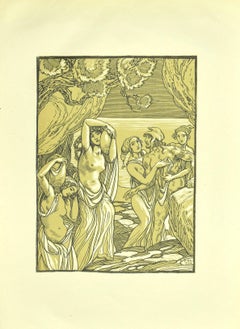
Women and Amphorae - Original Lithograph by F. Bac - 1922
Located in Roma, IT
Women and Amphorae is an original modern artwork realized by Ferdinand Bac (1859 - 1952) in 1922.
Original Lithograph on ivory paper.
Excellent conditions.
Women and Amphorae is ...
Category
1920s Art Nouveau
Materials
Lithograph
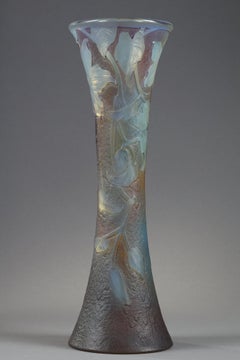
Vase with Clematis
By Daum
Located in PARIS, FR
Vase with Clematis
by DAUM
A diabolo-shaped vase
with opalescent Clematis decoration
Blown-molded multilayer glass
Acid-etched decor in reserve
Frosted background
Signed " Daum Na...
Category
Late 19th Century Art Nouveau
Materials
Blown Glass
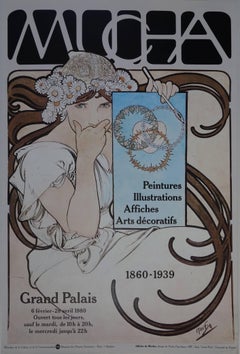
MUCHA, Art Deco - Vintage Exhibition Poster - Grand Palais, Paris 1980
Located in Paris, IDF
Alphonse MUCHA (after)
Exhibition "Grand Palais" in Paris, 1980
Vintage Exhibition Poster
Hi-Quality offset print
On nice paper 60 x 40 cm (c. 24 x 16in)
Very good condition, light...
Category
1980s Art Nouveau
Materials
Offset
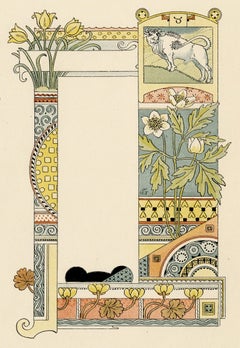
Taurus-The Bull
Located in Fairlawn, OH
From: Les Douze Mois de 1889
As published in Vol. 9, No. 425 of Les Hommes d'Aujourd'hui.
Published by Sagot, Paris
Proof before letters without the calendarium as published
Very ra...
Category
1880s Art Nouveau
Materials
Lithograph
Theatre Program for Les Fossiles
Located in New York, NY
Program for Les Fossiles. 29 November 1892. Second program
for the 1892-1893 Theatre Libre season. Very light horizontal and vertical fold,
otherwise in very good condition. Four-c...
Category
1890s Art Nouveau
Materials
Lithograph
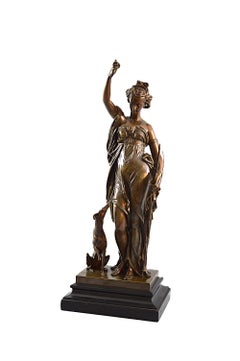
Eugene Laurent (French, 1832-1898) Diana the Huntress
Located in Berlin, DE
LAURENT, Eugene, (French, 1832-1898): Diana the Huntress, bronze,
64 cm high,
signed, resting on a black marble base, in an antique dress with her hunting dog.
Patinated bronze....
Category
Late 19th Century Art Nouveau
Materials
Bronze
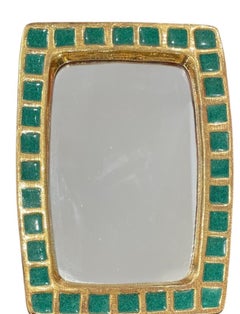
Miroir N°ESP210
Located in PARIS, FR
glazed ceramic made by Mithé Espelt
mirror
Category
20th Century Art Nouveau
Materials
Ceramic
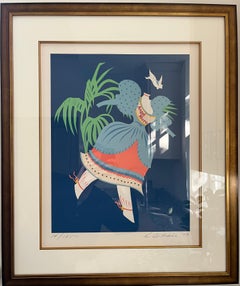
"Angel More" from Mother of Us All by Robert Indiana
Located in Hinsdale, IL
ROBERT INDIANA
Angel More
(Mother of Us All)
Screenprint in colors on Arches, 1977
Impression 14 of an edition of 150
Image Size: 18” x 14”
Signed, dated, and numbered in lower margin
Printed by Mourlot, Paris.
Intended for publication by Amiel, New York.
Sheehan 96-108.
The Mother of Us All, is an opera which imaginatively chronicles the story of Susan B. Anthony and the women's suffrage movement, written by Gertrude Stein and composed by Virgil Thompson in 1945. In 1976 Robert Indiana was hired to create the costumes and set design for the Santa Fe Opera Company’s production of The Mother to Us All. This collection of lithographs illustrates Indiana's costume designs for the Virgil Thomson-Gertrude Stein same-titled opera.
Robert Indiana is one of the most recognized names in Contemporary and Pop Art, his LOVE sculptures, paintings, and prints are by far his most iconic pieces. It all began in the summer of 1965, when The Museum of Modern Art commissioned Indiana to design its Christmas card. He submits LOVE in four color possibilities; the museum selects the red, blue, and green version. In 1967 he produces three serigraphs of LOVE, and two serigraphs of LOVE Wall. During the next two years, produces other serigraph variations on LOVE, with more following in 1972, 1973, 1975, 1982, and 1991. Indiana’s LOVE motif has since been translated into a US postage stamp...
Category
1970s Art Nouveau
Materials
Screen
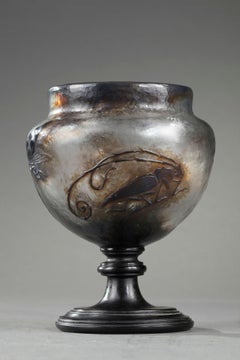
A "Tristesse" vase
By Émile Gallé
Located in PARIS, FR
A "Tristesse" vase
by Émile Gallé (1846-1904)
An exceptional and extremely rare vase known as "Vase de tristesse" ("Vase of Sadness"),
raised on a molded foot.
Made of double-layere...
Category
1880s Art Nouveau
Materials
Blown Glass
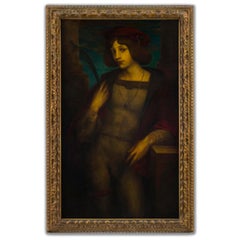
Portrait of a Young Man
Located in London, GB
Oil on canvas
124cm x 73cm, (142cm x 91cm framed)
Born in The Hague, he studied at the Academy of Fine Arts between 1891 and 1893. During this time, he started to use “Léonard” as h...
Category
Early 20th Century Art Nouveau
Materials
Canvas, Oil
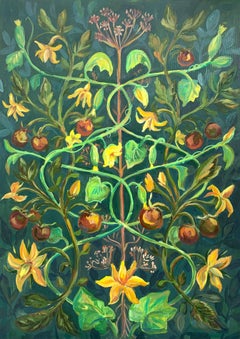
Tree of Life and Fertility, Vintage Oil Painting, Art Nouveau Style
Located in Zofingen, AG
Vintage pattern of vines and vegetables creating a colorful contrast on a dark green background
Original oil painting, unframed. The sides of the work are painted. Connected, signed...
Category
2010s Art Nouveau
Materials
Canvas, Oil
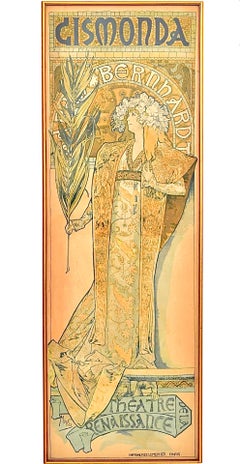
Alphonse Mucha Sarah Bernhardt Gismonda Lithograph 1895
Located in Dallas, TX
Alphonse Mucha
(Czech, 1860-1939)
Sarah Bernhardt "Gismonda", 1895 Original Lithograph
IMPRIMERIES LEMERCIER, PARIS
Paris, France
color lithograph
signed "Mucha" within the plate (lo...
Category
1890s Art Nouveau
Materials
Archival Paper
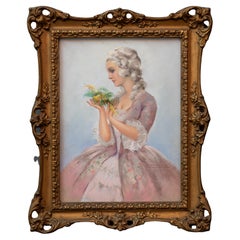
Period Framed Italian Portrait by Tito Corbella
By Tito Corbella
Located in Roma, IT
1930s painting by the important Italian artist Tito Corbella
Beautiful and rare work by the important Italian artist of the first half of the 20th century Tito Corbella. It depicts w...
Category
1930s Art Nouveau
Materials
Paper, Pastel
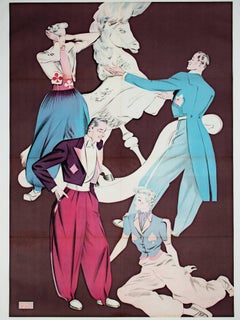
"Fashionable Boulevard Montmartre, " Original Lithograph Poster by Pierre Brenot
Located in Milwaukee, WI
"Fashionable Boulevard Montmartre" is an original lithograph poster by Pierre Laurent Brenot. This piece depicts four figures in fashionable costumes in a variety of dynamic poses. T...
Category
1940s Art Nouveau
Materials
Lithograph
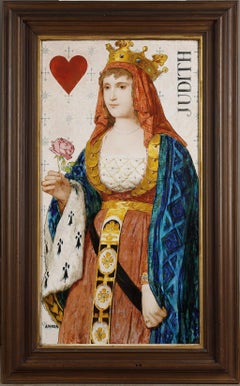
Plaque "Judith"
Located in PARIS, FR
"Judith"
by Théodore DECK (1823-1891)
and Albert ANKER (1831-1910)
Important and rare polychromatic enamelled earthenware pannel
Titled "Judith"
Signed in the decor "Anker".
Tripar...
Category
Late 19th Century Art Nouveau
Materials
Ceramic
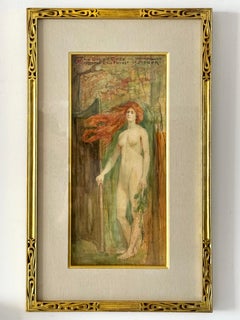
Art Nouveau Female Nude William Shakespeare - "The Dryad Tree Forest of Arden"
Located in Miami, FL
The Dryads… Ancient beings of old growth forests, with wisdom of ages long forgotten, knowing much of what us busy folk have forgotten.
The Forest of Arden is famously featured in S...
Category
Early 1900s Art Nouveau
Materials
Paper, Watercolor, Gouache
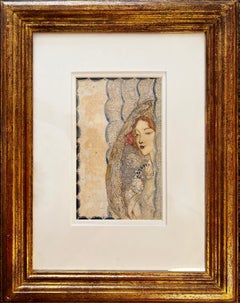
Bride - Scottish Female Glasgow School Art Nouveau, Aubrey Beardsley
Located in Miami, FL
Scottish female illustrator Annie French renders a charming cropped portrait of a bride in an Art Nouveau / Aubrey Beardsley style with curved theme borde...
Category
Early 1900s Art Nouveau
Materials
Paper, Ink, Watercolor
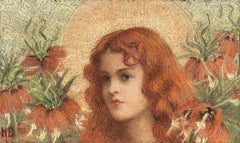
Imperial Beauty, British School 20th Century Pastel Portrait
Located in London, GB
Pastel on paper on canvas, initialled lower left "ND"
Image size: 13 ¾ x 22 ½ inches (35 x 57 cm)
Gilt frame
This fine Art Nouveau picture executed around 1900, depicts an auburn ha...
Category
Early 1900s Art Nouveau
Materials
Paper, Pastel
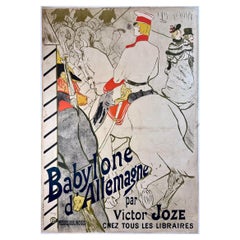
Henri De Toulouse Lautrec Babylone D’Allemagne 1894
Located in Dallas, TX
Henri De Toulouse-Lautrec (French 1864 - 1901)
BABYLONE D'ALLEMAGNE Printed in 1894
Lithograph printed in colors, 1894, on linen-backed wove paper, printed by Chaix, Paris, tasteful...
Category
1890s Art Nouveau
Materials
Paper
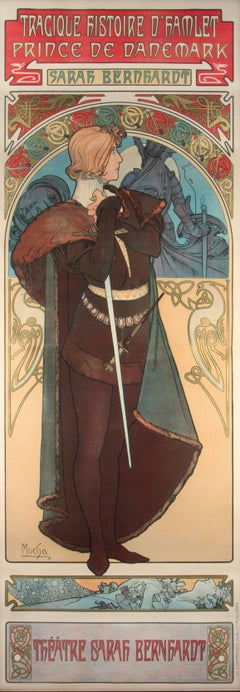
Hamlet
Located in Fort Washington, PA
Poster of Sarah Bernhart Playing Hamlet. Paris. Mint condition. Linen-backed.
Sarah Bernhardt's groundbreaking portrayal of Hamlet, performed in French, is masterfully captured in Alphonse Mucha's poster. Mucha emphasizes the play's themes of vengeance and mortality, depicting the ghost of Hamlet's murdered father haunting the ramparts of Elsinore in the background, while the tragic drowned Ophelia, adorned with flowers, rests in a coffin-like panel at Hamlet’s feet. This powerful image marks Mucha's final poster commission that depicts the celebrated French actress. The vintage poster is linen-backed and is in excellent condition.
Bernhardt famously played Hamlet in 1899, becoming the first woman to embody the role on stage and later in a film adaptation. Her bold interpretation challenged conventional gender roles and pushed the boundaries of performance, establishing her as a pioneer in both theater and early cinema...
Category
1890s Art Nouveau
Materials
Paper

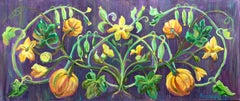
$45,000
Grace of the Vintage Oil Painting on Canvas, Signed, 70x30 cm
Located in Zofingen, AG
an exquisite vintage pattern of climbing plants and vegetables creating a colourful contrast on a dark purple background
- Original oil painting
- 70х30 cm (27.6 W x 11.8 H x 0.4 D ...
Category
2010s Art Nouveau
Materials
Canvas, Oil
Oil On Canvas "portrait of Mrs. Henroz-Simonis " by Herman Richir dated 1898
Located in Gavere, BE
Herman Richir ( 1866-1942 ) famous Belgian artist , portrait of Mme Henroz Simonis
This one fine example in the Art Nouveau style, very rare to find such a nice example of it .
Pain...
Category
1890s Art Nouveau
Materials
Canvas, Oil

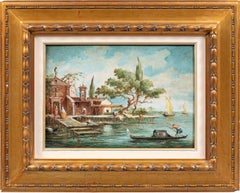
Lucia Ponga (Venetian painter) - 19th century landscape painting - Venice Signed
Located in Varmo, IT
Lucia Ponga degli Ancillo (Venice 1887 - 1966) - Venetian Capriccio.
25 x 35 cm without frame, 44.5 x 55 cm with frame.
Old oil painting on panel, in a wooden frame.
- Signed lowe...
Category
Early 20th Century Art Nouveau
Materials
Oil, Canvas
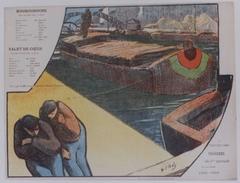
Program for Theatre Libre Boubouroche Valet De Coeur.
Located in New York, NY
Program for Theatre Libre Boubouroche Valet De Coeur. Sixth program for Le Theatre Libre, four-color lithograph, 1892-1893.
Ref: The Color Revolution 101: Artistes et Theatre d' Ava...
Category
Late 19th Century Art Nouveau
Materials
Lithograph
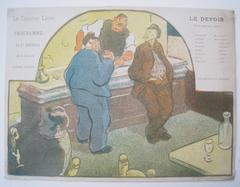
Le Devoir
Located in New York, NY
Ibels, Henri-Gabriel.."Le Devoir", fouth programme for Le Theatre Libre.
four-color lithograph, 1892-1893. 9 1/2 x 12 1/2".
Ref: Artistes et Theatre d' Avant-Gardes,
Programmes ...
Category
Late 19th Century Art Nouveau
Materials
Lithograph
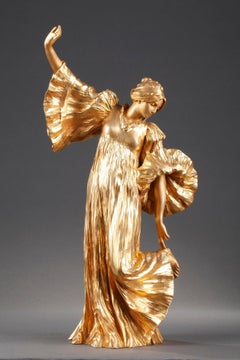
Dancer with platform shoes
Located in PARIS, FR
Dancer with platform shoes
by Agathon LÉONARD (1841–1923)
Sculpture made in gilded bronze
Signed on the dress "A. Léonard Sclp"
Cast by " Susse Frères éditeurs Paris " (with the fo...
Category
Early 1900s Art Nouveau
Materials
Bronze
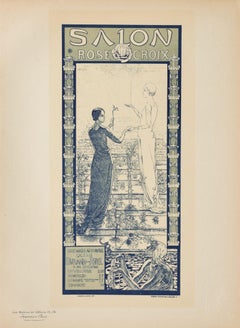
Exhibition of the Rose (Plate 74)
Located in Greenwich, CT
Exhibition of the Rose (Plate 74) is an 1887 lithograph of Carlos Schwabe's poster, printed at Imprimerie Chaix by Jules Chéret and included in the fame...
Category
1890s Art Nouveau
Materials
Paper, Lithograph
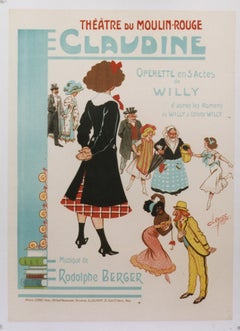
Claudine/Theatre du Moulin Rouge
Located in New York, NY
Freres. Clerice. Claudine 1910.On Linen. Color lithograph poster for the
Operette en 3 Actes de Willy. d'après les Romans de Willy & Colette Willy
with music by Rodolphe Berger. Ref. Broido No. 21
The Clerice Frères...
Category
1910s Art Nouveau
Materials
Lithograph
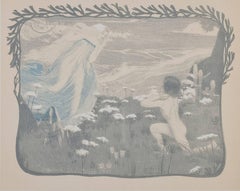
"H. L
Illusion (L
Estampe Moderne I), " Color Lithograph
Located in Milwaukee, WI
"H. L'Illusion (L'Estampe Moderne I)" is an original color lithograph by Henri Bellery-Desfontaines. This piece depicts a nude child before a dream-like woman in a blue translucent robe. This piece was published in the French Art Nouveau publication L'Estampe Moderne. Signed in plate.
15 3/4" x 12" art
Henri Bellery-Desfontaines , born with Paris in 1867 and dead the October 6th 1909, is a French Noveau artist Jack-of-All- Trades, who produced tables, illustrations, posters, lithographies, drawings of carpet, pieces of furniture and banknotes, and even dabbled with decoration & architecture.
In the 1900s, Paris was the perfect place for a group of young artists influenced by artistic currents like neogothic style or symbolism. Most of them started as painters and they switched later to decorative arts, attracted by the idea of an ever-present art, a lifeless art, a total art. Henri Bellery-Desfontaines was a member of this group and he started as as painter in Pierre-Victor Galland’s atelier. He entrusted him the decorative motifs which would frame Panthéon de Paris' drawings: Maillot, Bonnat, Humbert and specially Jean-Paul Laurens, who proposed him to join his atelier in l’École des Beaux-Arts de Paris. With him, he decorated l'Hôtel de Ville de Paris or Le Salon Lobau, Henri Bellery-Desfontaines is thought to have Luc-Olivier Merson (1846-1920) as a teacher.
During his years as a student, he started to illustrate magazines and books of tales and in 1895, Bellery-Desfontaines opted rapidly for illustration, probably due to financial problems, and he participated in magazines such as L’Image, L’Estampe Moderne or L’Almanach des Bibliophiles. This year, the Salon des Artistes Français hosted one of his design of tapestry.
From 1900 on, he gradually evolved toward an ambitious decorative artist, making tapestries and furniture for rich leaders and patrons. Bellery-Desfontaines was an important artist of his epoch, and he took part in numerous events like Bal de...
Category
1890s Art Nouveau
Materials
Lithograph
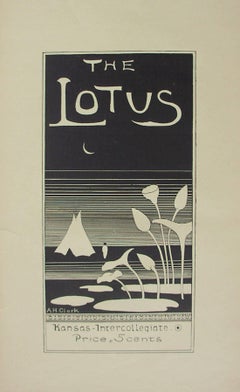
The Lotus.
Located in New York, NY
Clark, A.H. The Lotus. Ca 1890.Original Lithograph. 22 3/4 x 13" sheet,
26 1/2 x 17" on linen. Rare.
Category
1890s Art Nouveau
Materials
Lithograph
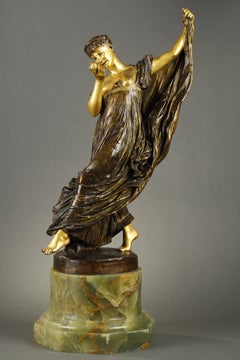
$1,650
Apple Dancer
Located in PARIS, FR
Apple Dancer
by Jean-Léon GEROME (1824-1904)
Bronze sculpture with a dual patina, brown and gilded
signed on the base "JL. GEROME"
cast by "Siot-Decauville Fondeur Paris" (foundry s...
Category
1890s Art Nouveau
Materials
Bronze
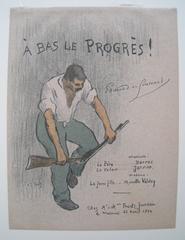
Program for A Bas Le Progres.
Located in New York, NY
Program for A Bas Le Progres. By Edmond de Concourt 1894. Four-color lithograph. 12 3/4 x 9 7/8" 25 April 1894. Signed in the stone. Rare.
Ibels’ images were powerful and heavily ...
Category
1890s Art Nouveau
Materials
Lithograph
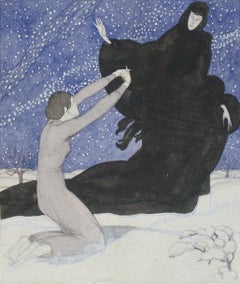
Im Schnee
Located in Wien, 9
The drawing by an anonymous artist, featuring a young woman in the snow, struggling to protect herself from a large figure in a black cout. This scene is framed by the tumultuous ele...
Category
Early 20th Century Art Nouveau
Materials
Paper, Gouache
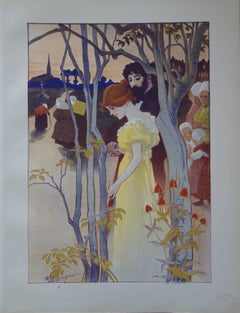
Symbolism : Twilight - Original lithograph (1897/98)
Located in Paris, IDF
Paul Balluriau
Symbolism : Twilight, 1897
Original lithograph (Champenois workshop)
Printed signature in the plate
On vellum, 40 x 31 cm (c. 16 x 12 in)
INFORMATION: Lithograph cre...
Category
1890s Art Nouveau
Materials
Lithograph
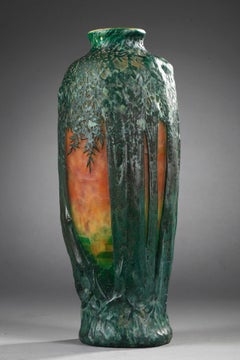
"Blown" glass vase with Trees
By Daum
Located in PARIS, FR
"Blown" vase with Trees
by DAUM
Multilayer blown glass vase
Decor of trees in relief and a village,
decor cleared with acid and taken up with a wheel,
On a background of green, yell...
Category
Early 1900s Art Nouveau
Materials
Blown Glass
Alphonse Mucha JOB Original Poster, 1898
Located in Dallas, TX
Alphonse Mucha 1898 "JOB" poster. Printed by: “Imp. F Champenois 66 Boul, St Michel, Paris” in 1898
Very good (A-) condition with toning throughout and less under matting.
Linen b...
Category
1890s Art Nouveau
Materials
Paper
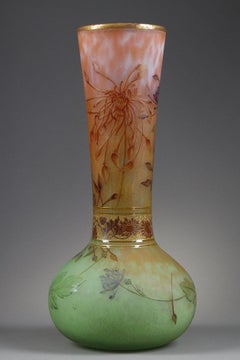
Vase with Chrysanthemums
By Daum
Located in PARIS, FR
Vase with Chrysanthemums
by DAUM
Large vase decorated with Chrysanthemums flowers
Multi-layer blown-molded glass
Glass colored by vitrification of powders
Decor in reserve acid-etch...
Category
Early 1900s Art Nouveau
Materials
Blown Glass
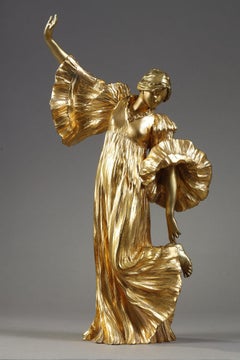
Dancer with platform shoes
Located in PARIS, FR
Dancer with platform shoes
by Agathon LÉONARD (1841–1923)
Sculpture made in gilded bronze
Signed on the dress "A. Léonard Sclp"
Cast by Susse Frères (with founder stamp)
Stamped wit...
Category
Early 1900s Art Nouveau
Materials
Bronze
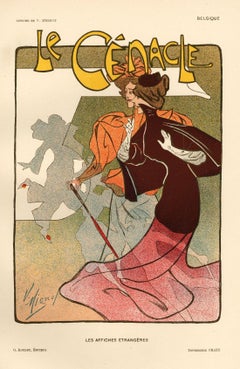
Le Cénacle
Located in Greenwich, CT
Le Cenacle is an 1897 chromolithograph of Victor Mignot's poster, printed at Imprimerie Chaix under the direction Ernest Maindron and G. Boudet for the lauded poster collection 'Les ...
Category
Late 19th Century Art Nouveau
Materials
Paper, Lithograph
$1,475
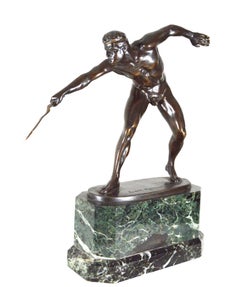
Antique bronze nude gladiator/ swordsman - Signed "Rudolf Marcuse" + "Gladenbeck
By Rudolf Marcuse
Located in Berlin, DE
Antique bronze nude gladiator/ swordsman - Signed "Rudolf Marcuse" + "Gladenbeck Berlin"
Dimensions:
Sculpture: 16.5 cm high
Base: 6.5 cm high
To...
Category
Early 20th Century Art Nouveau
Materials
Bronze
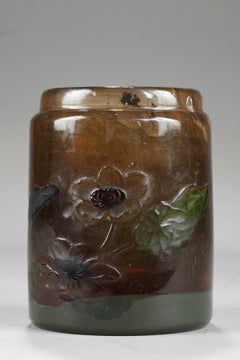
Little jar with Marsh-marigold
By Émile Gallé
Located in PARIS, FR
Little jar with Marsh-marigold
by Emile GALLE (1846-1904)
Little jar in brown blown-molded glass,
An inlaid and wheel-carved decor of Marsh-marigold.
Signed " Gallé "
Perfect con...
Category
1890s Art Nouveau
Materials
Blown Glass
Art Nouveau art for sale on 1stDibs.
Find a wide variety of authentic art Nouveau available for sale on 1stDibs. Works in this style were very popular during the 21st Century and Contemporary, but contemporary artists have continued to produce works inspired by this movement. If you’re looking to add art created in this style to introduce contrast in an otherwise neutral space in your home, the works available on 1stDibs include elements of yellow, orange, blue, green and other colors. Many Pop art paintings were created by popular artists on 1stDibs, including Alphonse Mucha, Jules Chéret, Henri de Toulouse-Lautrec, and Adolphe Willette. Frequently made by artists working with Lithograph, and Paper and other materials, all of these pieces for sale are unique and have attracted attention over the years. Not every interior allows for large Art Nouveau, so small editions measuring 1.58 inches across are also available. Prices for art made by famous or emerging artists can differ depending on medium, time period and other attributes. On 1stDibs, the price for these items starts at $1 and tops out at $198,500, while the average work sells for $1,683.
More Ways To Browse
Maggie Siner
Maplethorpe Calla
Marble Woman Head
Marcel Leprin
Mark Stock
Martin Hardie
Mauritz Lindstrom
Maximillien Luce
Michael Budden Central Park
Midcentury Matador Paintings
Mike Wright
Miracle On Ice
Mississippi River Painting
Monarch Of The Glen Painting
Moroccan Paintings Essaouira
Morpho Butterfly Art
Mount Tamalpais
Murray Dessner